William has Christmas sorted. He doesn’t know it, but he’s going to become a home-maker and possibly a shopkeeper.
By December 25th, William, my grandson, will be almost 18 months old. Time to learn how to keep house, then. His parents are planning to give him his very own kitchen. Here it is:
Play kitchen (IKEA Duktig)
It’s very different from the affair my son and his sisters had when they were small. Their appliances were fashioned from sturdy boxes and painted to look rather like the simplest of student kitchens.
His other grandparents are planning to stock this ultra-smart 2016 kitchen with pots and pans, teacups and plates. And my son, William’s dad, remembered that when he was small, I supplied him with home made play-food. He’s asked me to make a larder full for William.
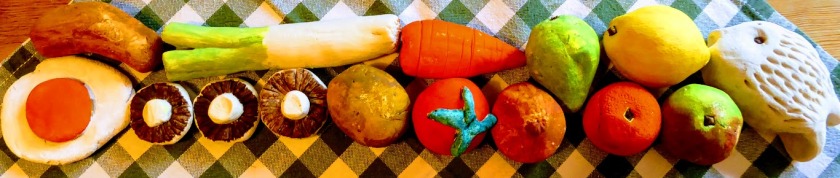
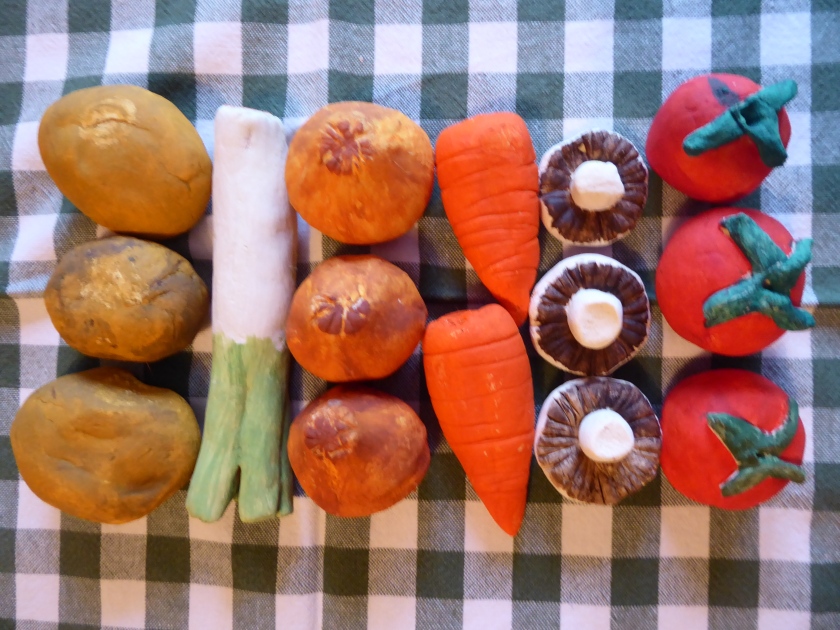
So here we are. For the past week or so, I’ve been kneading salt dough, and fashioning food of all kinds to bake in the oven, paint and then varnish.
If you call to see William in January, he may offer you a meal of fish and chips, sausage egg and chips (no fine dining here, I’m afraid) with oranges, lemons, apples or pears to follow.
Hmm. Pears proved tricky. But they look – slightly – better away from the glare of the camera.
If you want to cook instead, there are just potatoes, onions, leeks, mushrooms, tomatoes – cabbages are too unwieldy, peas too accident-prone.
I’ve had fun. Let’s hope William enjoys his kitchen, and turns out to be as good and creative a cook as his dad – and mum – are.
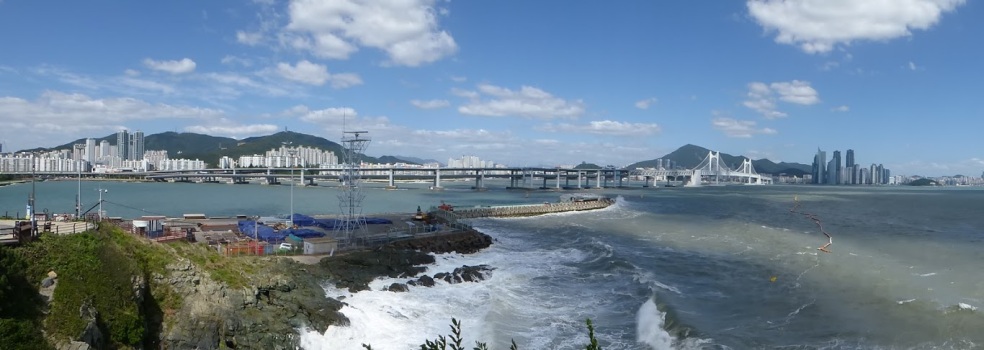
The view from the Igidae Trail to Busan and Haeundae
Life’s complicated just now. I don’t need any more challenges. But here I am, taking on one which is entirely self-imposed. It’ll help me reflect on the good moments in life, or at least on interesting times.
The challenge is one provoked weekly by WordPress, my blogging platform. Once a week, they provide a word. Just one. To respond, I and fellow bloggers choose one of our own photos to interpret the theme. Just one.
Imagine Busan, the city where Emily’s living just now. Imagine busy streets, crowded markets, streaming traffic, a high-rise metropolis of three and a half million people.
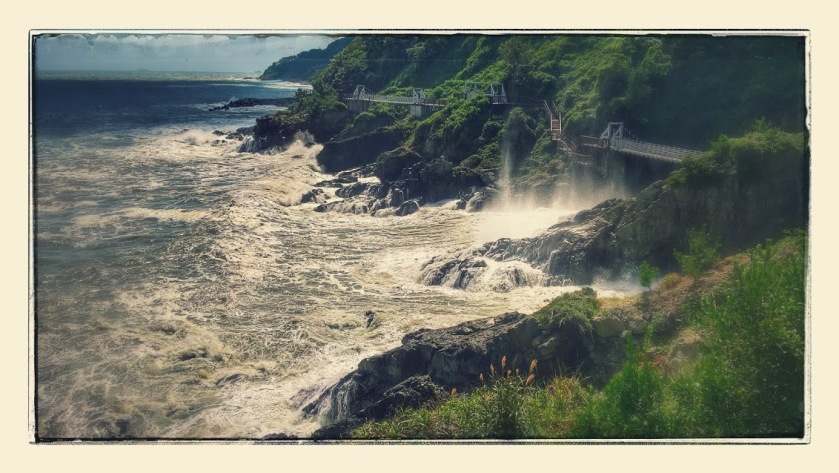
But it’s a coastal city too, and one day we took the path at Igidae. Here were views across the bay to those high-rise towers at Haeundae, to Gwangan Suspension Bridge, and to a jagged, rocky coastline.
As we walked away from Haeundae, we replaced city bustle with solitude, with crashing foaming waves, salty spray crusting our hair and faces, rugged paths leading us first up craggy cliffs then down again. The busy city was never more than minutes away, but we were at the edge of a primitive, savage untamed world, unchanging since time began. That was a kind of magic.
The sea crashes to the cliffs of the Igidae Trail
My challenge posts will appear on Sundays. Hence ‘Snapshot Sunday.’
Why go for a good long walk? Well, for the pleasures of the countryside of course. The views, the mulchy paths through woodland and across meadows: all the sights and sounds of The Great Outdoors. But for most of us, there’s another reason too. We want a decent bit of exercise. Get those legs into gear!
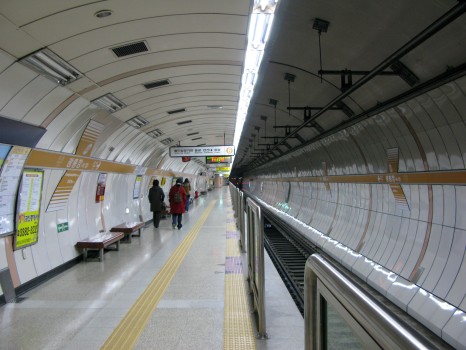
It’s no weather for walking at the moment, so in front of the fire, we fell to reminiscing about walking in South Korea. Not the mountain walks to hidden temples, secret waterfalls. No, we remembered walking in the metro systems of those mega-cities of Seoul and Busan.
It was courtesy of the subway that we got from A to B when we were tourists in those cities. Our command of hangul was so limited that the bus had disappeared round the corner before we’d decoded its destination.
Announcements on the stations were helpfully in Korean and English, and you knew which direction the train was heading in, because as it pulled into the station, a tune would play. Outward – one tune: inward, another. One of Busan’s tunes was a few bars from Vivaldi’s ‘Four Seasons’.
Seoul subway. Once in the carriage, we older travellers had a dedicated area where the younger commuter wouldn’t dare to sit, unless disabled or pregnant.
But all that’s for when you’d reached the platform – sorry – ‘tracks’. First find your platform. At one station in Busan, I found that once below ground, I still had a whole 750 metres to walk to get to the automatic ticket barrier marking the station entrance.
Here we are. Exit number 13
Some stations were vast, with up to 16 exits spread over a large geographical area. Leave by the wrong one and you could find yourself clueless, or stranded on the wrong side of an impenetrably busy highway. Within the station, distances can be so great that they’ve often installed travellators – not to mention three or even four long steep sets of escalators plunging far into the earth. Or a lift – sorry, elevator – four storeys deep. But it won’t get you out of walking, walking, walking, along sparklingly clean tunnels, unending platforms. No wonder every station has scrubbed and user-friendly public toilets for the weary traveller.
And who knew that stations can have more than one stop? If, for instance you need to transfer to another line at Eulji-ro in Seoul, you may need to catch a train to get to the line you’re changing to. And then there’ll still be a route march to get to the right platform.
Seoul metro system. There’s a pre-paid transport card that you can use country-wide, making day-to-day travel super-easy.
If your main interest in walking is to burn off the calories, I can recommend a trip to the metro system in South Korea. Plan a journey from one station to another, build in a couple of line changes, and you’ve more than got your 10,000 steps a day under your belt.
Here’s a challenge we spotted whilst walking down those the long station corridors. Guess the work of art inspiring this advert. Answers in ‘Comments’ please!
If you’d found yourself in the Studley Royal estate in the early 1700s, just along from the ruined Fountains Abbey, you’d have had a rather wild and rugged country walk along the valley of the River Skell, surrounded by woodlands. You might have been able to glimpse the abbey in the distance.
This was John Aislabie‘s estate. He’d inherited it in 1693, but was at that point in his life busy realising his political ambitions – in 1718 he became Chancellor of the Exchequer. Only two years later he was mired in the financial scandal of the South Sea Bubble, which ruined so many and shook the national economy. He was disgraced and expelled from parliament.
He returned to Yorkshire, and devoted his considerable energy and wealth to creating the first water garden of its kind seen in England. It owed a lot to formal French gardens of the time, and balances formal design with wonderful vistas set in an apparently natural landscape.
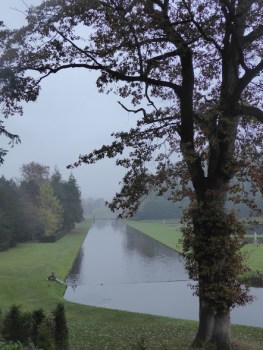
The canal at the centre of the water garden.
If you visit these days you’ll see a proper 18th century garden: the formal lakes, the temples and other follies, the carefully orchestrated views. Work continues year by year to rein the garden back to the detail of what those eighteenth century visitors would have seen. After all, trees grow taller and spawn saplings which grow in their turn. The river silts up. Land slips. Shrubs spread in an ungainly fashion. Unwanted invading plants make the place their home
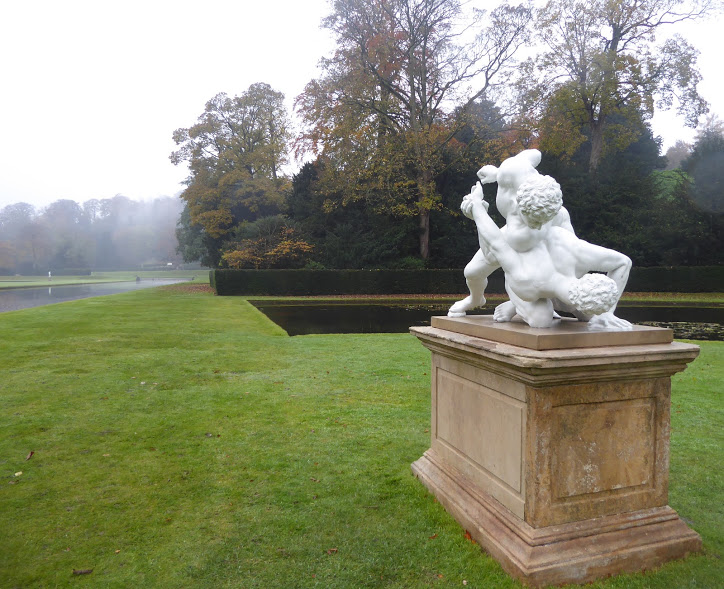
On Saturday, we went on a little tour to look at some recent work. The classical statues – wrestling gladiators and the like which have ornamented the gardens since the 18th century – are lead. Marble would have been nice, but lead’s cheaper, so when they were new, those statues would have been painted in marble-look-alike white.
Wrestling gladiators in front of the Moon Ponds
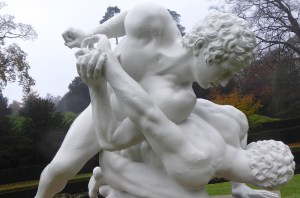
Now they’re white again. It wasn’t a question of slapping on the Dulux though. No, conservators hunted for evidence of the actual paints used by grubbing about in hidden groins and armpits for contemporary paint fragments, and experimented on discarded lead till they got the right shade, the right paint.
Wrestling gladiators newly painted white.
The formal ponds were once surrounded by planters and benches as well as statuary – contemporary paintings tell us that. These will be replaced, as well as a couple of statues sold in the 19th century when the estate fell on hard times.
Ungainly shrubberies will be knocked into shape and brought down to size. An informal garden will be planted with sweetly scented plants – roses, lavender and so on. Just the place to sit and view the Temple of Piety and the Moon ponds.
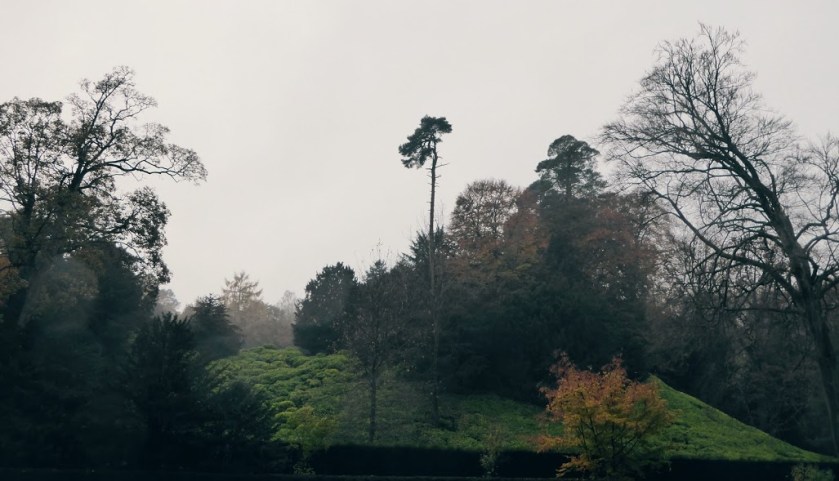
Tent Hill will live up to its name once more. The dense copse which covers it will be thinned out to make room for a tent something like an 18th century military campaign tent. Not for military campaigns of course, but to house entertainments of various kinds, just as it would have done back in the eighteenth century.
So much to do. But every piece of work brings Studley Royal even nearer to the intentions of John Aislabie, who first created this special place more than two ands a half centuries ago.
The Temple of Piety, Moon Ponds, and freshly painted statuary.
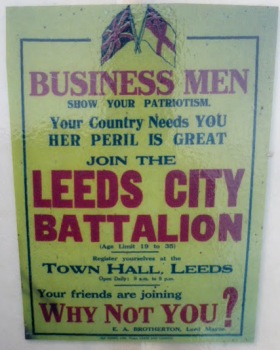
At the outbreak of the First World War, a top-level decision was made to recruit men to the Army by encouraging friends, neighbours and colleagues to volunteer together as locals, to fight shoulder to shoulder for the honour of Britain and the credit of their home town.
The men of Leeds answered the call. Carpenters, foundrymen, businessmen, men from the crowded streets of back-to-backs, men from the suburbs all joined up, bringing with them their brothers, their cousins, their neighbours and the men who worked alongside them .
They became the 15th Batallion of the West Yorkshire Regiment, commonly known as the Leeds Pals.
And they were sent up here to Colsterdale to train. There was a whole village waiting for them: a village that had been hastily built at the turn of the century to house the workers who’d been hired to construct the Colsterdale and Leighton Reservoirs, together with their families. At Breary Banks there were huts, shops, chapels – everything they needed for day-to-day life. Although the Colsterdale Reservoir had been abandoned in 1911, workers were still employed at Leighton and at first labourers and soldiers lived side-by-side.
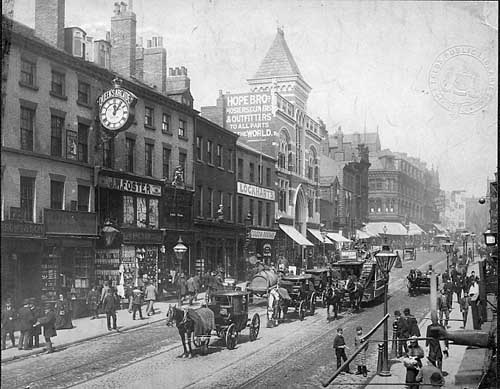
Briggate Leeds in the early 1900s (Leodis.net)
Leeds was a vast industrial conurbation. It was noisy, dirty, grimy, smoggy. Trams and those new-fangled trolley buses clanked and clattered their way round the streets. Arriving by train in Masham, the new recruits had no alternative but to march the six miles to Breary Banks, passing nothing but clean quiet villages, stock-filled fields with woodland, then heathery moorside beyond.
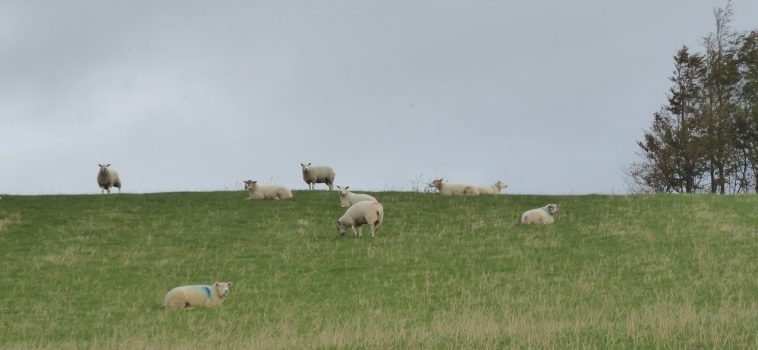
Sheep in Colsterdale
For many of these recruits, the time that they spent at Breary Banks was the best time of their lives. They had a regular routine, good food, good company and decent accommodation. They dug trenches and learned the weaponry skills it was thought they’d need when finally deployed in France.
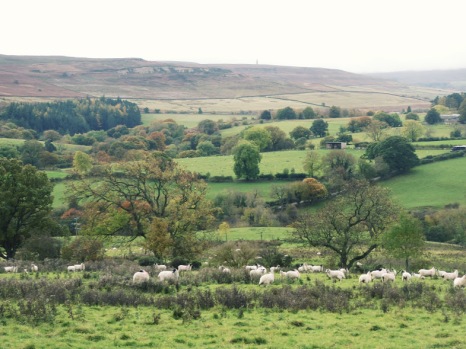
Colsterdale
In fact they first saw active service in 1915 and 1916 in Egypt and Gallipolli. Few of them were involved in direct action, and by early 1916, most of them embarked on troopships to the real focus of the war, France.
After further training behind the lines they were sent to the front, in readiness for the battle that was intended to change Allied fortunes, the Battle of the Somme.
And that is when parents, children, neighbours and work mates left behind in Leeds discovered what a truly terrible idea it had been to send whole communities into the same battle at the same moment.
‘It was the most ambitious attack of the war and they were among hundreds of thousands of Allied troops massed for the battle.
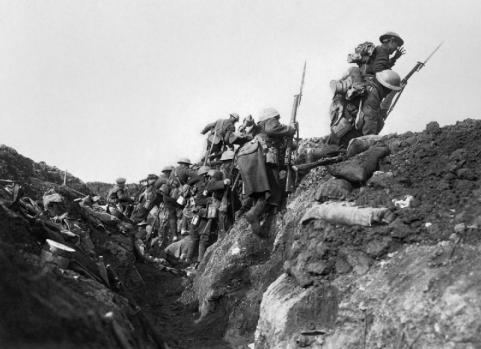
Their coats were mud-sodden, their legs were protected only by the inadequate cloth wrappings of the soldier’s uniform. In their hands they clutched rifles they would never use, for in moments a storm of bullets had cut through their soft clothes and weary bodies, and they were dead.
Going over the top, Battle of the Somme (Ivor Castle, Imperial War Museum, via Wikimedia Commons)
Our young Leeds men were not so much beaten as wiped out. At 7.20 am with fearful, pounding hearts, they began to run blindly at their enemy. By 7.30 am a city of mothers had lost their sons, wives were widows and children fatherless.
It was one of the bloodiest battles of the First World War. As the men surged over the top into no-man’s land they faced a murderous storm of artillery and machine gun fire directed against them with pitiless accuracy by German guns. It cut through them, they fell into the mud in waves.
Yet those in charge had expected it to be easy. In the days before the battle of the Somme, more than a million rounds had rained down on the German positions all the way along the front.
By the time it was over, the Allies believed that no-one could have survived such a bombardment. The men from Leeds, and all the places beyond, were meant to stroll across no-man’s land.
Not only did that not happen but the casualties are so great as to not really make sense. The first day’s slaughter claimed around 20,000 English and French lives, and almost 40,00 were wounded.
Yet the carnage was repeated the next day, and the next, and for every day after that until four mad months had passed.
The cost in lives has never been fully accounted, but of the more than 900 men recruited from Leeds, it is believed 750 died that day.’
Jayne Dawson, Yorkshire Evening Post, 11th November 2013
This is Private Pearson of the Leeds Pals’ own epitaph for his friends and colleagues:
‘We were two years in the making and ten minutes in the destroying.’
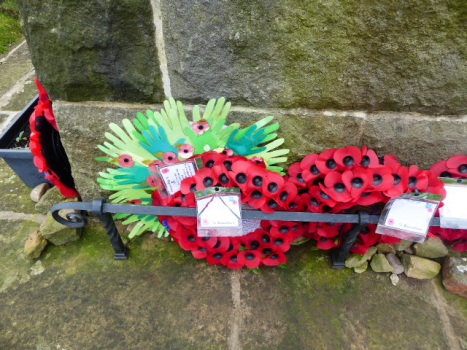
Poppies, always poppies at the foot of the memorial to Leeds Pals at Breary Banks, Colsterdale.
It’s my daughter’s birthday tomorrow. No, not that daughter. Not the one we’ve just visited in South Korea.
The other one. My Bonfire Night ‘Remember remember the Fifth of November: Gunpowder, Treason and Plot’ baby. The one whose twin boys find their way into my posts from time to time. The one whose husband died of cancer not seven months ago. This will be the first birthday in years that she can’t share with him.
She could do with him by her side more than ever at the moment, because she too has now been diagnosed with cancer.
Her blog has the byline ‘Recently widowed. Swears a lot.’ If that’s going to bother you, don’t read it.
But I suggest that you do look at it, and get an insight into what it might be like to be widowed, young, and have cancer.
Who in their right mind looks forward to cancer treatment? Me. I need a break. I can’t physically find the time to fit everything in, and the idea of lying in a hospital bed waiting to get my cancerous bap sliced open and stuffed with silicone, saline or pig fat is suddenly not without appeal. I’ve come a long way in a few weeks – before, the idea threw me into a blind panic, but I’m so tired, and so ready to accept offers of babysits, dog walks, and help around the house, that I give up. I’ll trade anything – even my left breast – for a good night’s sleep and some time off work and away from the boys, who are in the throes of grief for the third year running. They’re sapping every last scrap of energy I have, and testing my patience to its limits. I adore…
No, it’s Not Vital to visit the Yorkshire Sculpture Park on a perfect Autumn day, when the trees are at their burnished best, flaunting their chromatic colours just before the November squalls tug down their rusty leaves. It’s Not Vital at all. But it’s a brilliant way to spend a Sunday.
Once, the Yorkshire Sculpture Park was a stately home – the 18th century Bretton Hall – belonging to the Wentworth family. Just after the war it became a teacher training college specialising in the arts, until it was taken over by the University of Leeds. During those final years, The Yorkshire Sculpture Park was founded in the college parkland by Bretton Hall lecturer Peter Murray. When the college closed, Yorkshire Sculpture Park took over the estate grounds and lakes.
Bretton Hall and its surrounding parkland.
Some exhibits – particularly by those two sculptors who grew up so near to Bretton Hall, Henry Moore and Barbara Hepworth, are semi permanent. But most artists shown there exhibit for a season or so, and you’ll find their works placed all over the extensive parkland: on the lawns, overlooking the lakes, waiting to be discovered on a woodland walk. Art appreciation combines with views across the distant Pennines, and a good healthy work-out across shady woods, formal lawns, lakes, pastureland and country bridle paths.
Henry Moore’s ‘Draped Seated Woman’ looks down over the distant wooded lake.
And I’ve been teasing you. Not Vital is the name of one of those sculptors exhibiting at the moment. It’s his work ‘Pelvis’ that greeted us as we came into the park.
He was raised in a remote part of the Swiss Alps, and developed a strong affinity with nature. Much of his life has been nomadic, and he engages with the artisans he meets on his travels to create works from local materials, pushing known technologies to the limits.
Here’s The Moon, a highly polished stainless steel sphere which reflects the environment it’s placed in. Those craters are based on photos of the moon, and individually produced by Beijing craftsmen.
Not Vital: ‘The Moon’.
And here’s Hanging and Weighting, an unsettling plaster and steel construction that surely, surely is about to slide to the floor?
Not Vital: ‘Hanging and Weighting’.
I wish I’d taken more photos of his arresting and thought-provoking works – such as his self-portrait as a North Korean peasant, which is blank and faceless.
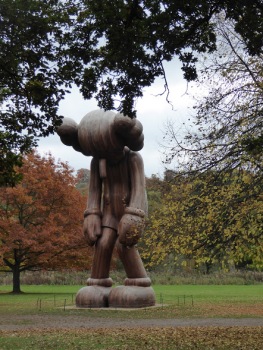
A taster of more on offer yesterday. Here’sKAWS‘Small Lie, a dramatic and monumental wooden sculpture of Pinocchio.
KAWS’ ‘Small Lie’.
Here’s Richard Long’sRed Slate Line, marching us inexorably forward – into the lake….
Richard Long’s ‘Red Slate Line’.
….. that’s if we haven’t tripped over Hemali Bhuta’sSpeed Breakers – bronze tree roots conceived to be stumbled upon as we explore the woods.
Hemali Bhuta’s ‘Speed Breakers’.
Come and have a virtual tour of the park. And if you get the chance, visit the real thing.
Julian Opie’s LED ‘Galloping Horse’.
David Nash’s ’71 Steps’.
A fungus-colonised tree near the lake.
A woodland path.
A view of Emley Moor transmitting tower from the woods.
Once upon a time, before 1066 and all that became the most famous date in British history, William of Normandy wanted to get his local French barons interested in helping him conquer England. Land was the answer. Vanquish those Anglo-Saxons and English lands would be there for the taking.
A lord called de Courson was one of those who answered that call and came to England, perhaps for the Battle of Hastings, perhaps a little later. He was rewarded by being given many acres in Derbyshire. Over the years, the family name became de Curzun, then Curzon, and the lands at Kedleston which had certainly been claimed by about 1150 have remained with the descendants ever since.
Now it’s one of life’s pleasures to visit the splendid buildings of Kedleston Hall, a classical showcase of fine paintings, sculpture and furniture*, and to stroll round the grounds.
And what grounds! When we arrived there the other day, it was sunny, with rain promised later, so we set off to make a three mile circuit of the so called ‘Long’ or ‘Ladies’ walk’. How natural and timeless the landscape seemed. A charming rustic bridge crosses a serpentine lake. Woodland was just becoming autumnal. Spacious meadows spread before us with grazing sheep. Just as nature intended.
Except it’s all a massive con-trick perpetrated by Robert Adam in 1758. Away with the out-moded formal geometric garden of Charles Bridgeman! He’d been the Royal Gardener, and only dead 20 years, but his work by then seemed suddenly hopelessly out of fashion.
In with the naturalistic ‘picturesque’ style promoted by Capability Brown. Out with the public road along which the village straggled untidily, far too near the Queen Anne redbrick house which has itself been replaced. Village and road were moved. A brook was dammed and excavated to become a lake, a stream, gently splashing weirs. Adam had a ha-ha built – an unseen ditch across which unwanted livestock couldn’t pass: so much more natural-looking than a fence or wall. Temples and other follies were built or planned, pleasure grounds too. Sadly today only the hermitage is still around, and even this thatched hut is currently being restored.
If you wanted an afternoon alone with your thoughts, your sketchpad or your book, this thatched hermitage was just the place
Our three mile walk was crammed with pleasure. There were waterbirds on the lake, Autumn leaves to enjoy, views across the park and surrounding countryside. Where did the grounds end and open countryside begin? We didn’t know and didn’t care. And we hadn’t even seen the house yet. You can get a taster here.
*There’s even a magnificent bedroom which has never been slept in and is currently being restored: designed to be used if ever the king should come to call…
I’ll be going a bit silent for the next week or so. I’m sporting a sling after long-awaited shoulder surgery (Four years ago in France, I tried a spot of unsupervised branch-sawing, and decided the resulting pain would go away on its own. I’m really not cut out for D-I-Y).
Advantages:
Plenty of time to read.
Plenty of excuses not to clean the house/iron.
Disadvantages:
Can’t really cook (knife-wielding is far too difficult)
Can’t drive.
Can only use the computer for a few minutes.
Even having a shower is a bit difficult.
I’m not very good at enforced laziness.
Right. That’s me then. I’m off to do my little-old-lady mobility exercises.
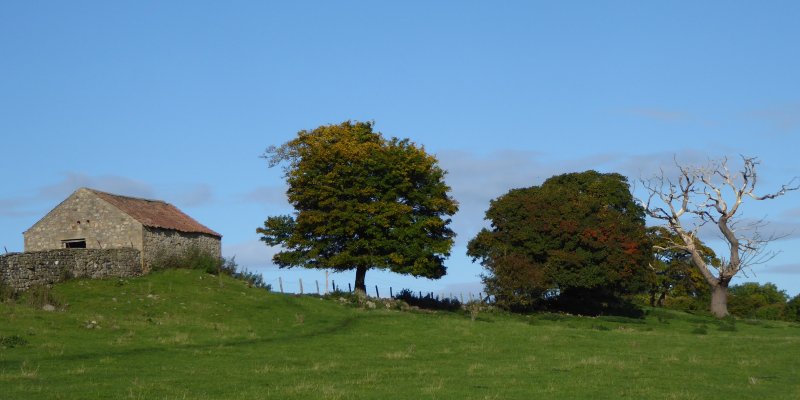
Back in England, it’s time to dust down our walking boots again. As we stepped out today, on a beautifully fresh and clear early Autumn morning, we contrasted our walk from nearby Masham with hikes we’d gone on in Korea.
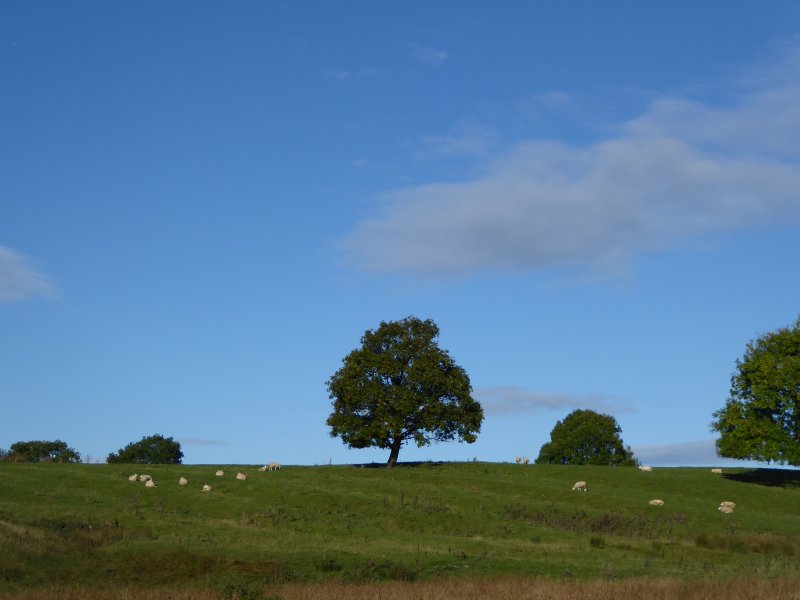
It was the weather we noticed first. Probably it’s colder there now too, but then, we wore t shirts and battled against the humidity. We wore fleeces today. We tramped through fungus-laden woodland in both countries. Here though, as we glanced at the tussocky meadowland near the River Ure, we saw sheep, sometimes cattle . There, valley floors were terraced with paddy fields, citric green with young rice.
Here, there were distant views of solid stone barns and farmhouses – even a country house, Clifton Castle. There, we were more likely to come upon a hidden Buddhist temple, its solid, yet graceful wooden form painted cinnabar, blue-green, white, yellow and black.
In Korea, woodland in the countryside is dominant once you get away from ‘civilisation’. Here, we drifted between woods, meadows, ploughed fields and ground by the open river .
We enjoyed the lot. But today, we appreciated saying ‘hello’ again to our familiar local landscape.
 William has Christmas sorted. He doesn’t know it, but he’s going to become a home-maker and possibly a shopkeeper.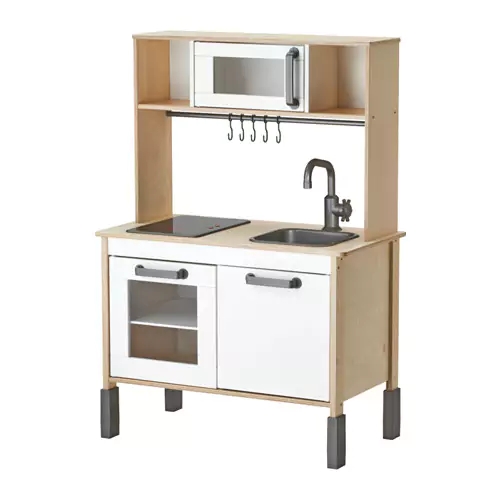













 From Pyrenees to Pennines
You must be logged in to post a comment.