A quick peek at Algeria

Last November, I joined L’Assocation Découverte Terres Lointaines, and wrote about it here.  This month, I’m really involved, up to the neck, because next week, at the library in Lavelenet, we’re taking over, and bringing Algeria to town. More later, then. But for now, have a look at some of our more relaxing moments during our preparations.
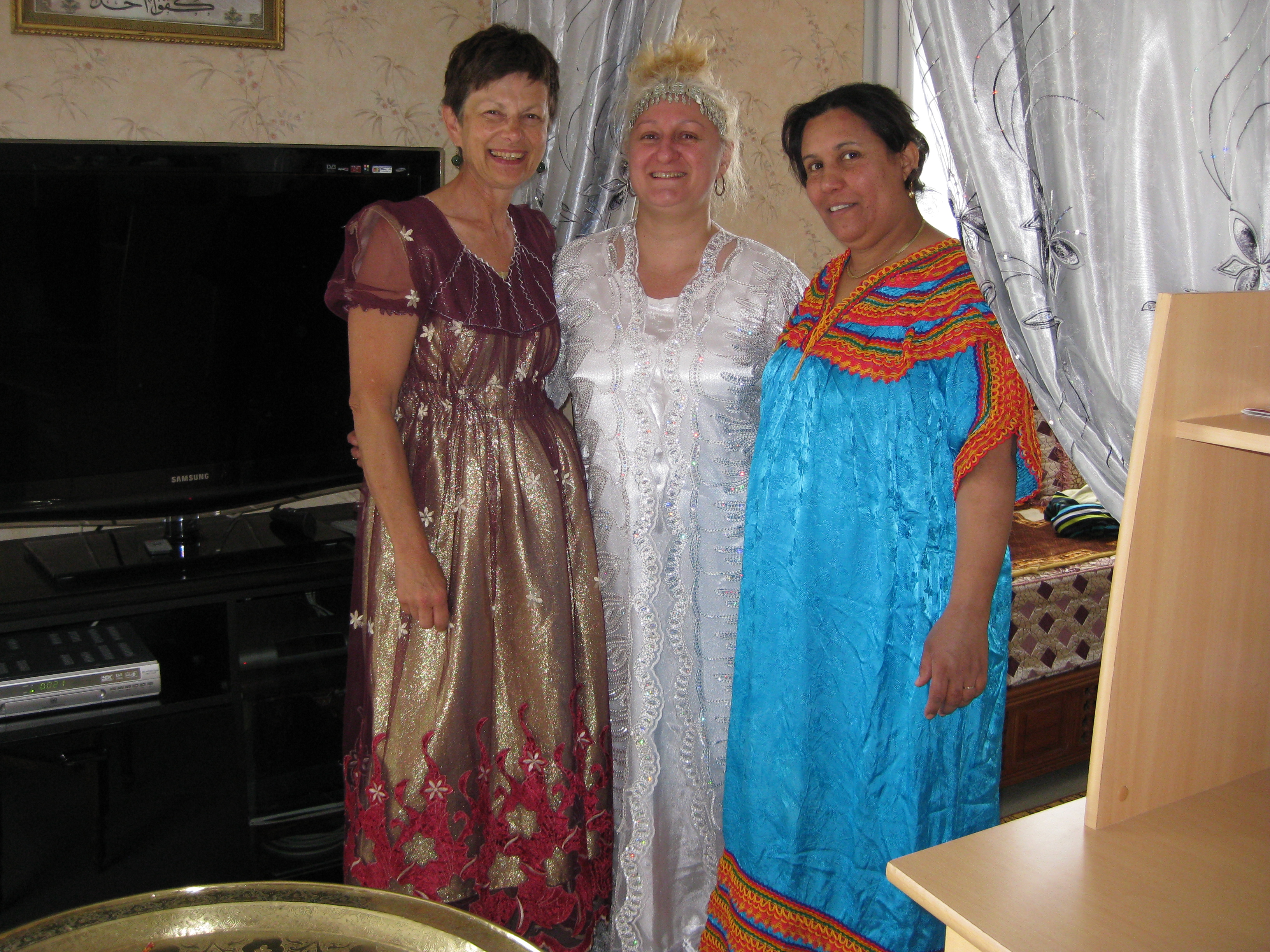
Were from England, Brazil, Algeria: but the clothes are all from Algeria

On Friday afternoon, Nadia invited us round and got out a tantalising bundle of her traditional Algerian clothes, many dating from the time of her wedding, for us to try on ahead of next week. Here’s what some of us eventually chose, after we’d struggled in and out of dresses each prettier than the last, elaborately embroidered, beaded and sequinned.  Just as well you can’t see us pirouetting around our workaday tee shirts and trousers discarded on the floor.

Before that, we’d been busy baking, selecting recipes to make for some of next week’s sessions.  Here’s my favourite, Basbousa.  Like most recipes from the area, quantities are expressed in volume rather than weight.

Basbousa

  • 2 cups fine semolina
  • 1 teaspoon baking powder
  • ½ teaspoon bicarbonate of soda
  • ½ cup unsalted butter
  • 1 cup sugar
  • 2 eggs
  • ½ cup water
  • about 20 blanched split almonds
  • 2 cups caster sugar
  • 1 cup water
  • Tablespoon of orange flower water or the juice of 1 lemon

Preheat the oven to 180°C, gas mark 4. Grease a rectangular cake tin, about 8” x 12”.

Sieve together the semolina, baking powder and bicarbonate of soda. Set aside.

Beat the butter and sugar together until creamy. Stir in the eggs with a little semolina to prevent curdling. Mix in ½ cup of water. Stir the sifted semolina in and beat until you have a smooth batter. Pour into the prepared cake tin. Score diagonal lines across the top of the cake creating diamond shapes. Place an almond in each diamond. Bake for about 30 minutes or until the cake is firm and golden.

Meanwhile place the caster sugar in a small saucepan with 1 cup of water. Heat gently until the sugar has dissolved then add the orange flower water or juice of the lemon and bring to the boil. Boil for about 10 minutes or until syrupy.

When the cake is removed from the oven, gently spoon the syrup over it. You may not need all the syrup: stop spooning when the cake has absorbed all it can. Allow to cool in the tin before turning out and serving sliced into diamonds.
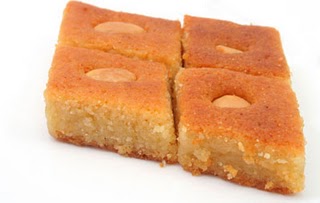
When I tested the recipe at home, I had no orange flower water, so used lemon juice.  Nadia said it wasn’t traditional…..but she liked it anyway.  It’s sweet, simple, and keeps well.  Worth having in the cake tin.
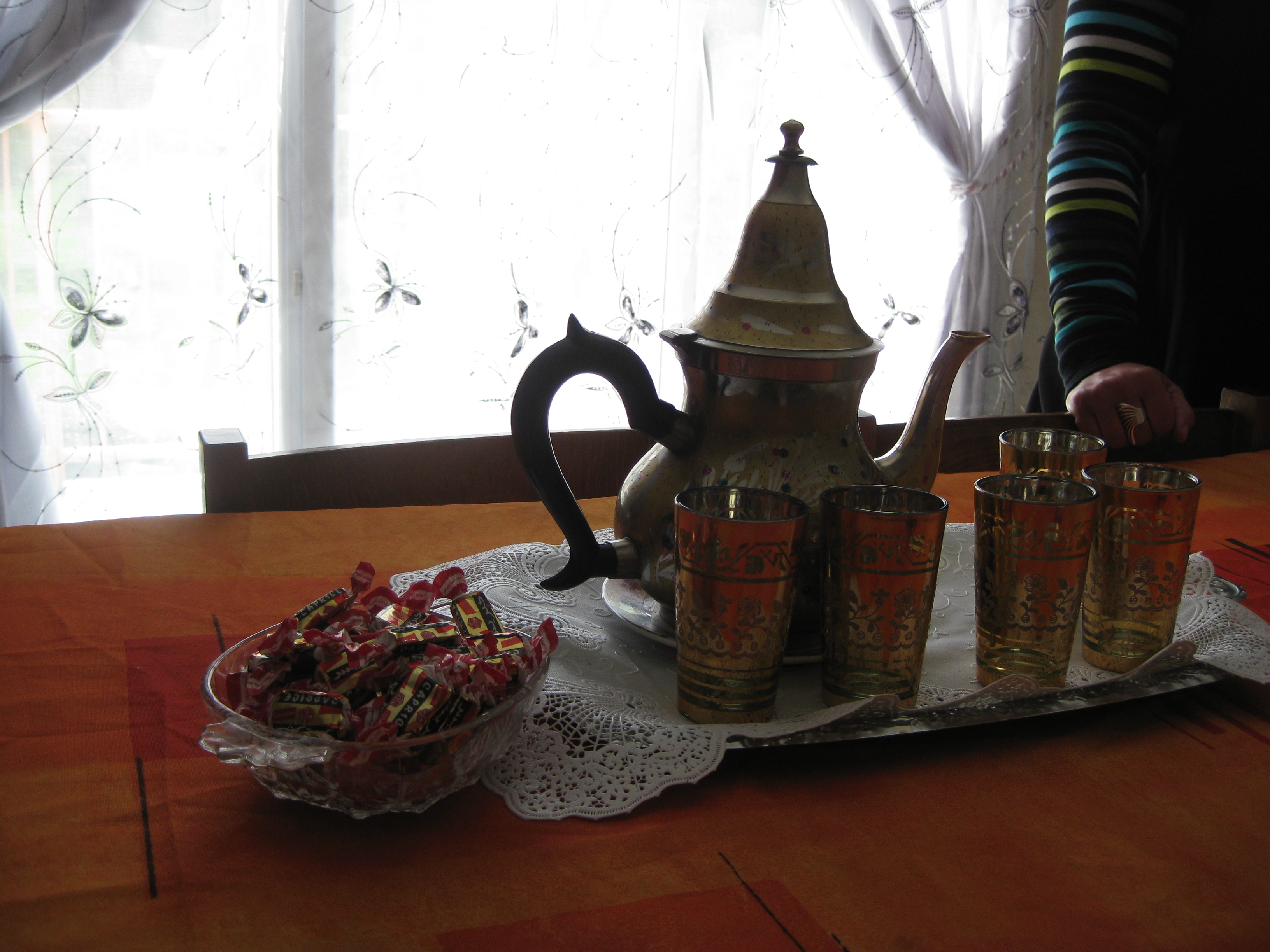
Nadia serves mint tea the traditional way, from this elegant pot in small decorated glasses

Food for free

In the UK, Richard Mabey’s the original, and still the best known proponent of foraging for good things to eat in the countryside.  Here in our patch of France, it’s Stéphane Martineau, and we spent yesterday afternoon with him, strolling down the lanes near Roquefort les Cascades, nibbling at petals, leaves and roots.

It was a free afternoon organised by Alptis, who provide us with the health insurance we need to complement the state-provided health service, and we enrolled as soon as the invitation came through the post.

Stéphane encouraged us to look carefully at each plant, at how it’s structured, what it feels like, what the crushed leaves smell like.  That afternoon, we found leaves that reminded us of mushroom, garlic, mint, cloves….

We began to understand how welcome the new spring growth must have been to villagers over the centuries.  After months and months of bland beans and turnips, the tasty bitterness of black bindweed, eaten raw or lightly cooked like asparagus must have been a real treat.  Its other name is l’asperge aux femmes battues – battered wives’ asparagus, because it’s also good at relieving bruising and swelling.

At this time of year, before many of the plants have flowered, and growth is young and fresh, there are so many tasty additions to the salad bowl.  Garlic mustard has both leaves and flowers to offer.  Hedge woundwort has nettle like leaves and a slight mushroomy odour.  Primula gives a pleasantly bitter taste so use it sparingly, and creeping Charlie  makes a lively addition to a salad, or an unusual addition to soup or lasagne.

Nettles are of course the kings of country flowers, packed with vitamins, minerals and even proteins.  They can be eaten raw (with a thick and tasty dressing) lightly cooked, or included in sauces and stews and baking.  Fermented, they make an all-round fertiliser, and gardeners dig them into the ground too, to enrich the soil.

We found plants to cure warts, substitutes for aspirin and for the cloves that we’re supposed to tuck next to a throbbing tooth.  We even learnt that horsetail, just as it first thrusts above the ground, makes a good mineral-tasting asparagus substitute. Failing that, once it’s matured, a big bunch tied together is a good pan scourer.

Just one plant was completely new to me: purple toothwort.  It’s a mauve parasitic plant, looking rather like a small clutch of rhodedendrons in bud, and modestly hidden under grasses at the foot of trees.

I’ve got pages of notes about plants I plan to look out for and try: using only a few specimens from each patch, of course, and just taking  a few of the very youngest leaves, as instructed.
Just before we all headed off home, we shared a foraged snack which Stéphane had prepared earlier.  Nettle blinis, Douglas fir cordial, various jams and jellies.  Good stuff, this food for free.

This slideshow requires JavaScript.

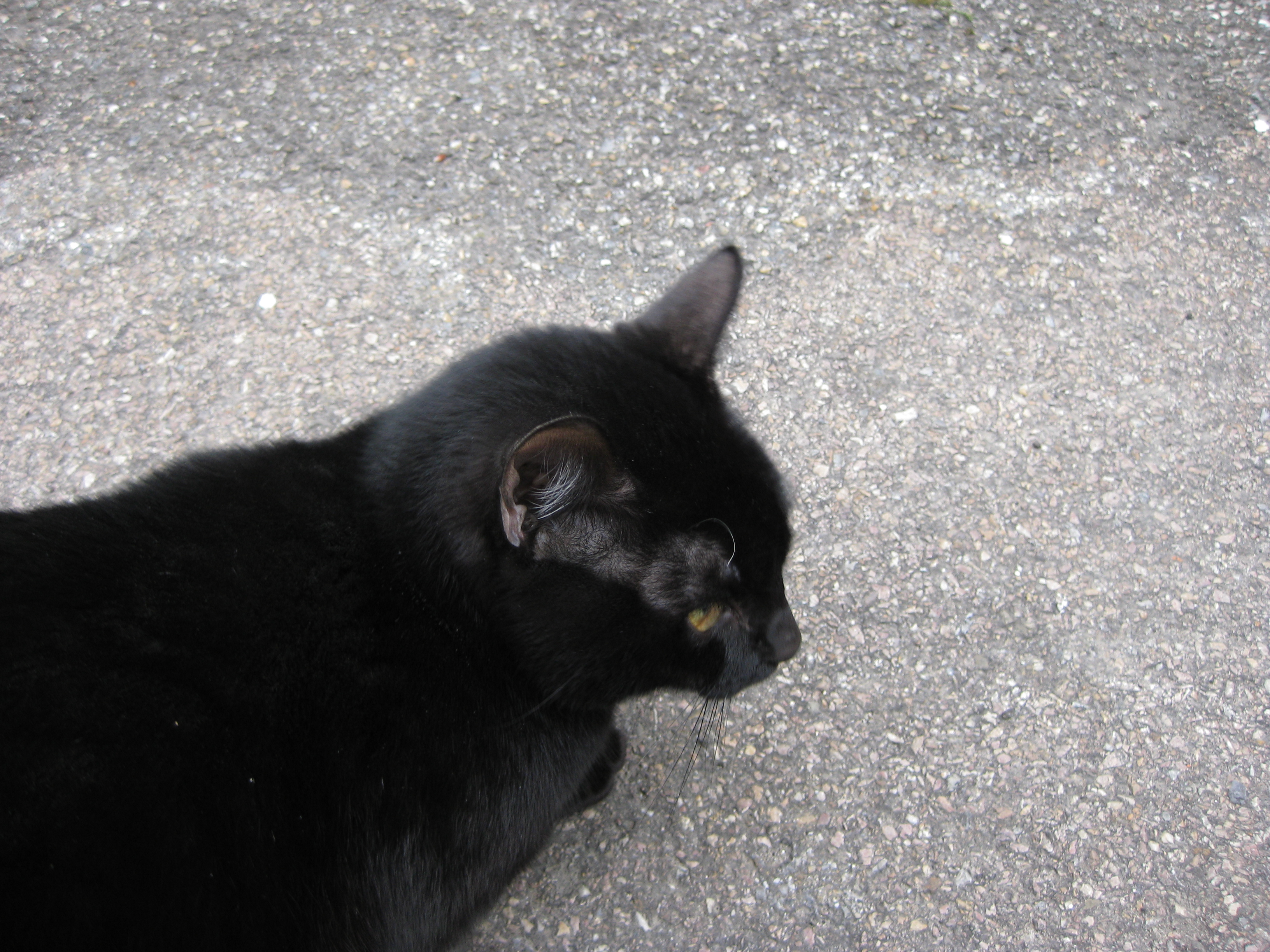
Young, handsome male cat WLTM genuine loving family for possible long term relationship

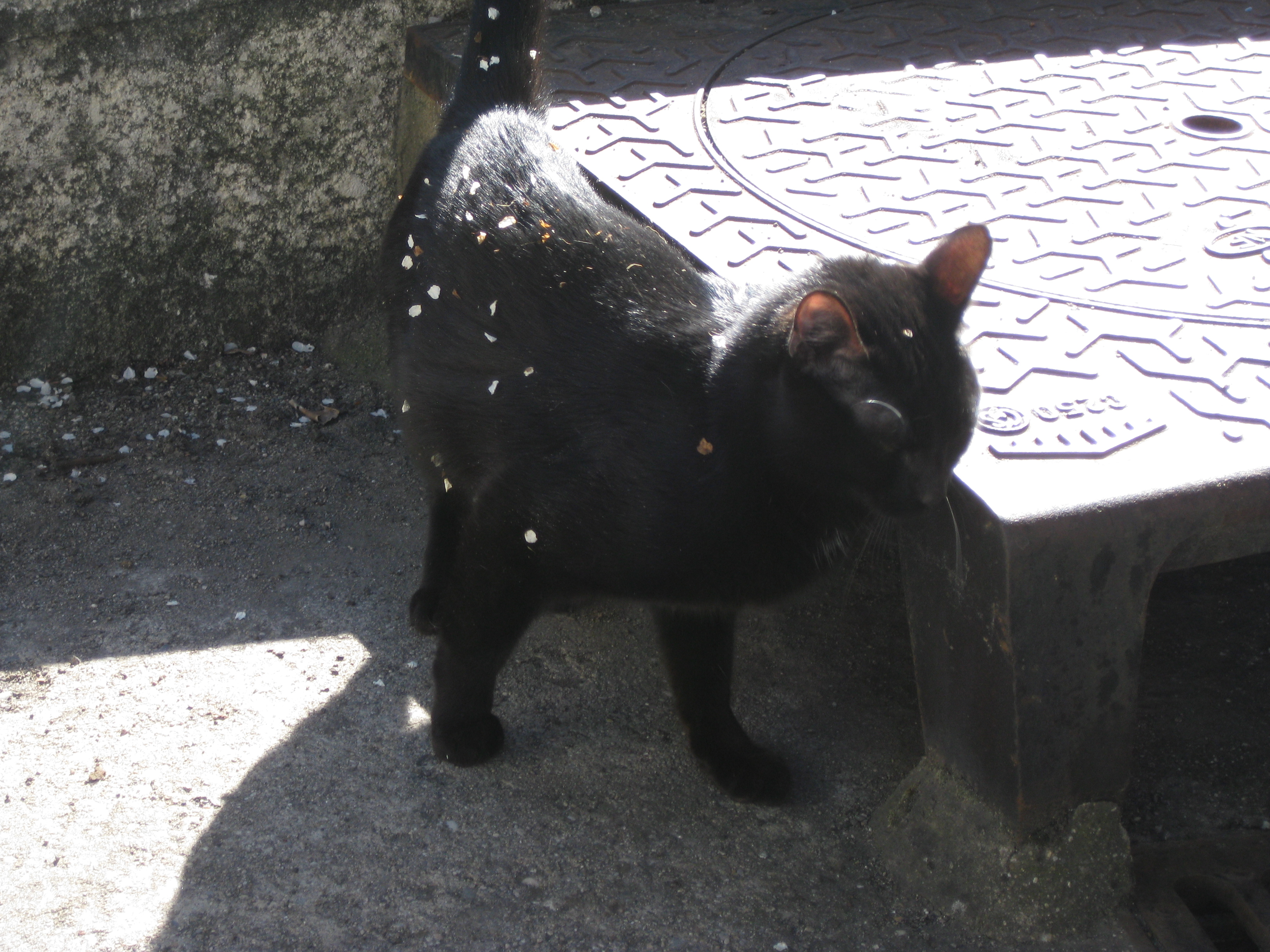
It was about 10 days  ago.  When I left the house bright and early for the bread, there he was.  A slim, handsome, very black cat.  I came back.  He was still there, cowering under a drain cover whenever anybody passed.

He soon became the talk of the street, because as the hours and then the days passed, there he still was, nervous and uncertain, hungry too.  The drain cover had become his home. He seemed to crave human company, and to fear it too.  Gradually the story emerged.  Some new people on the street had turned him out.  They didn’t want him back.

We’re away too much to take him in ourselves, though his good looks and charming character made him a tempting proposition.  I advertised him instead on the local English-speaking internet  network.…and got a reply, from a couple we slightly know who were still in Britain and not back in the area till next week.  And because they know they need to go back to the UK in the autumn, if they took him, they would need his rabies jab done now, so he could have his pet passport in time.

Their neighbours rallied round.   Today they came and collected him.  They’ll take him to the vet and foster him for a week.  I’m miffed to report that having been so nervy and reluctant with me all these days, he went straight to them, straight to their cat basket, and uncomplainingly into their car.  The day we tried to foster him till his new owners returned to France, he struggled straight out of the house and over the garden fence.

His new name is, it seems, Rocquie.  He’s from Laroque you see.

This evening, when I popped out for something, there was another unknown black cat, a female this time, sitting eating the food that friendly neighbours have been leaving for ‘our’ cat.  What next I wonder?

The cat's home by the drain

Spring has sprung

All over Europe it seems, people are shedding their woolly pullies and revelling in the  balmy air, as plants unfurl new leaves and flowers, and animals mate and give birth.

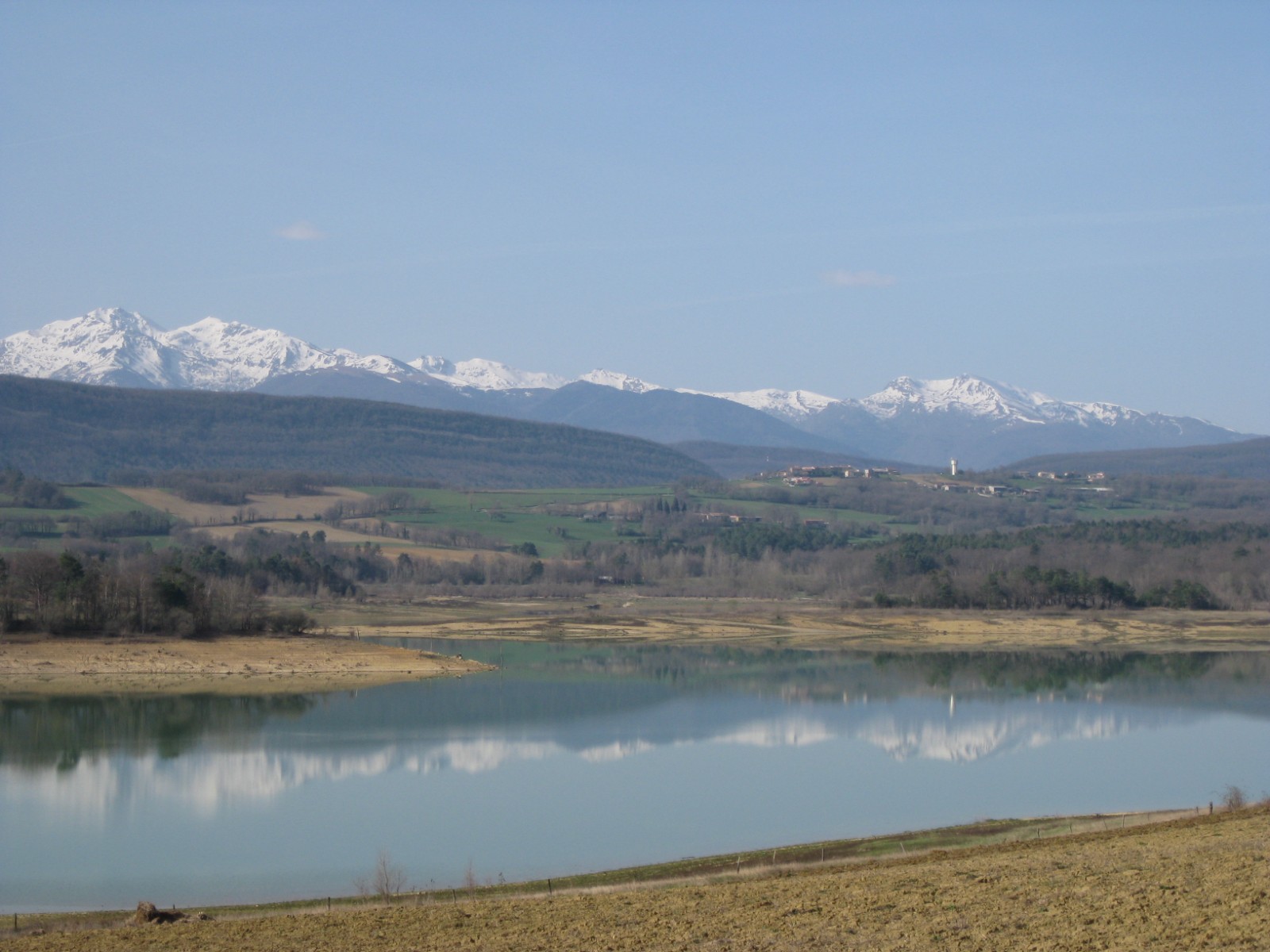
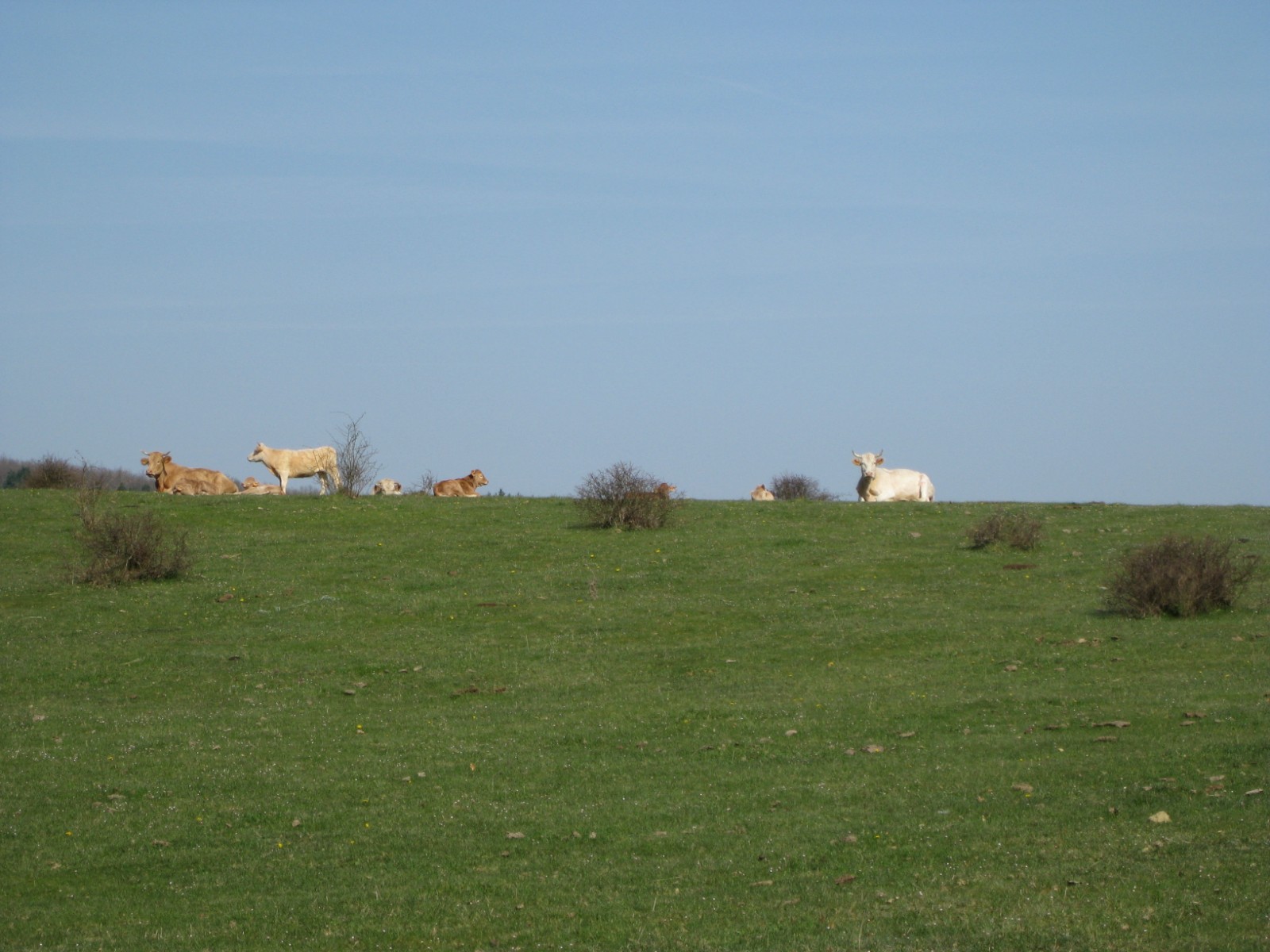
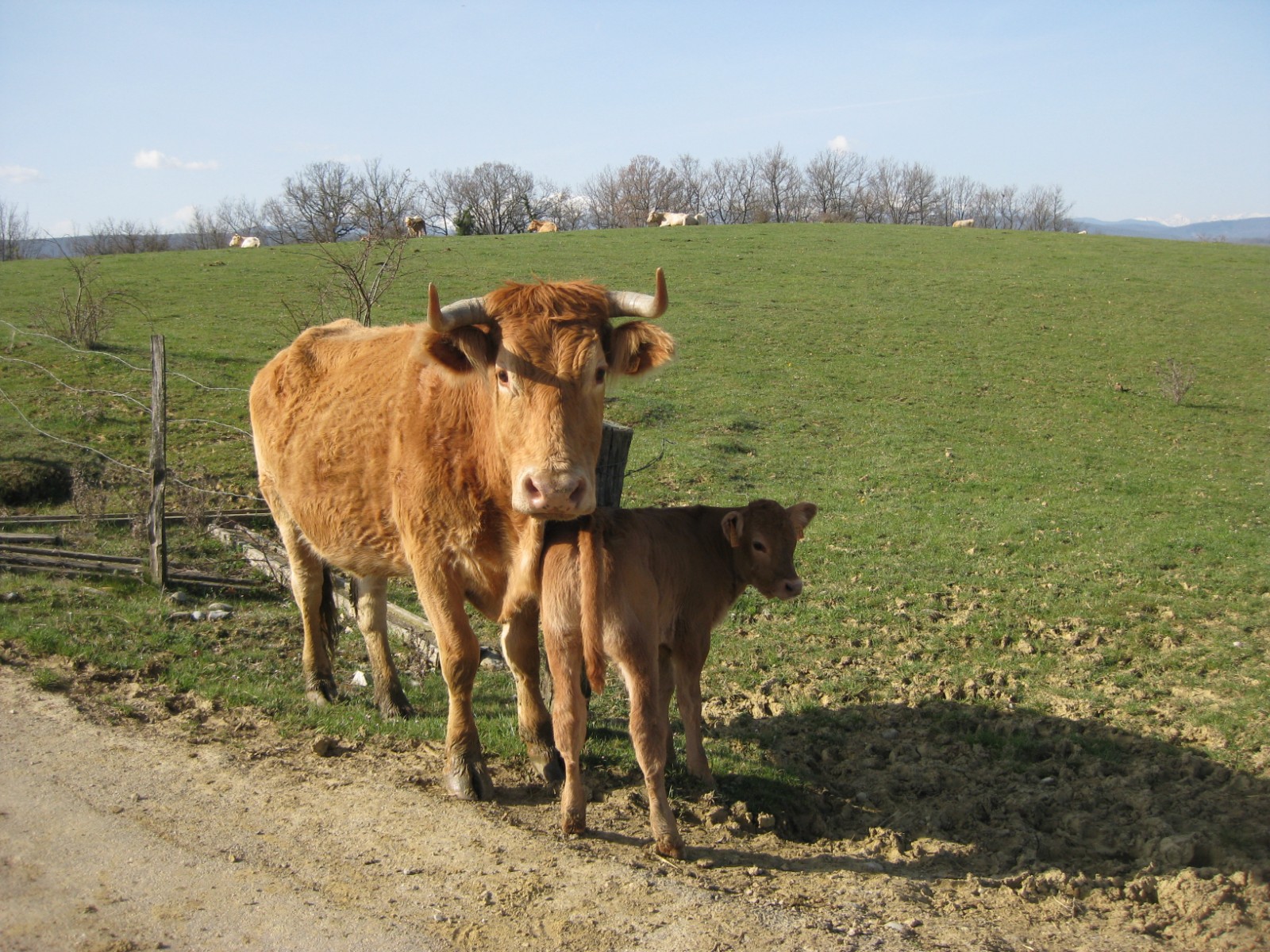
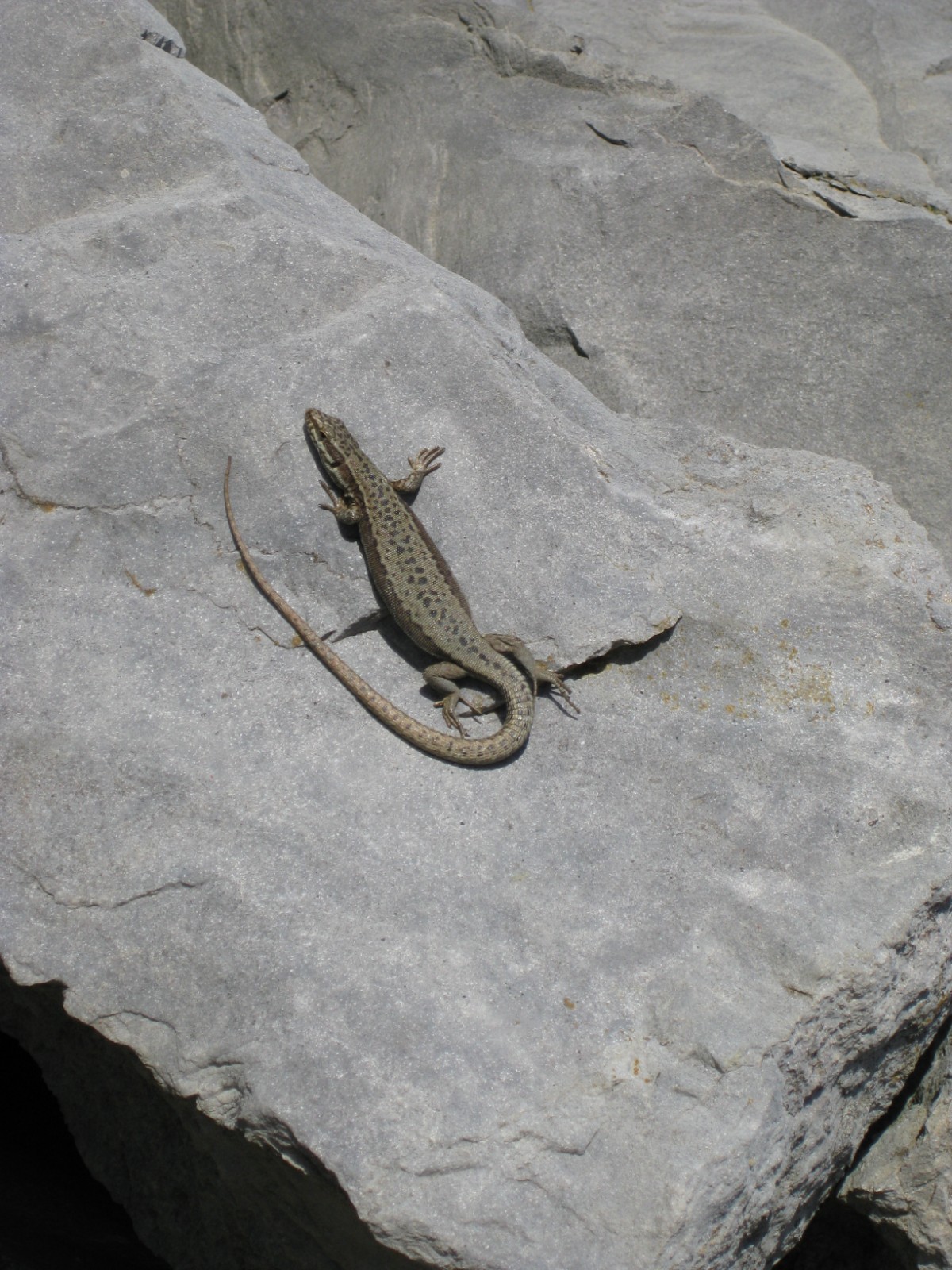
This was the lac de Montbel at the very end of last week.We enjoyed the views.  The cows enjoyed the views.Though this mother preferred to keep her calf safe at her side.Dozens of lizards sunbathed on the newly warmed rocks.  Here’s one.And here’s some sloe blossom.  I’ll be back in the Autumn for the mouth-puckeringly sour fruits  to make sloe gin or vodka.There’s only one problem.  The warm weather has brought out all the biting insects.  They soon found me.

A Walk with the Pine Processionary Caterpillars

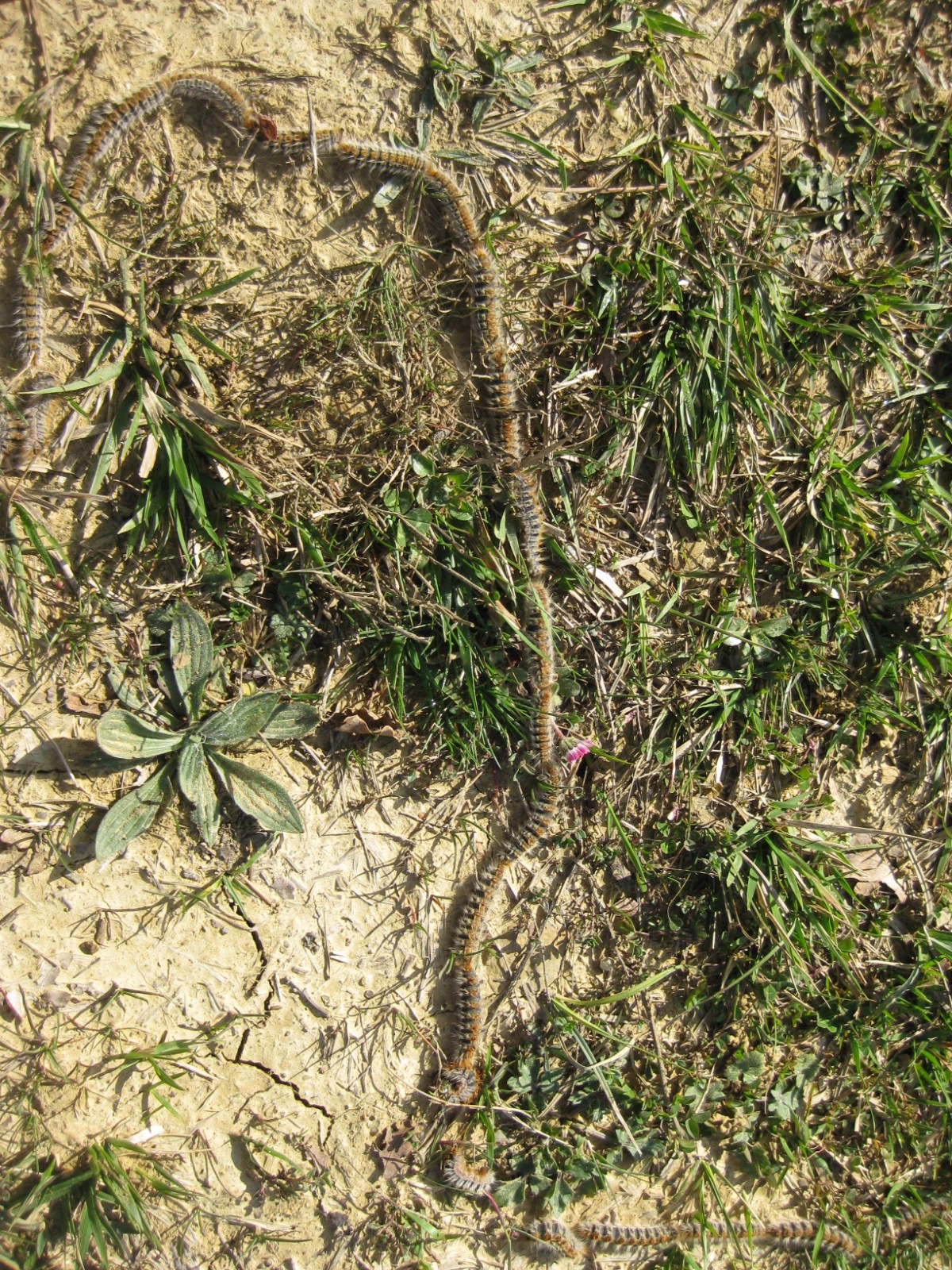
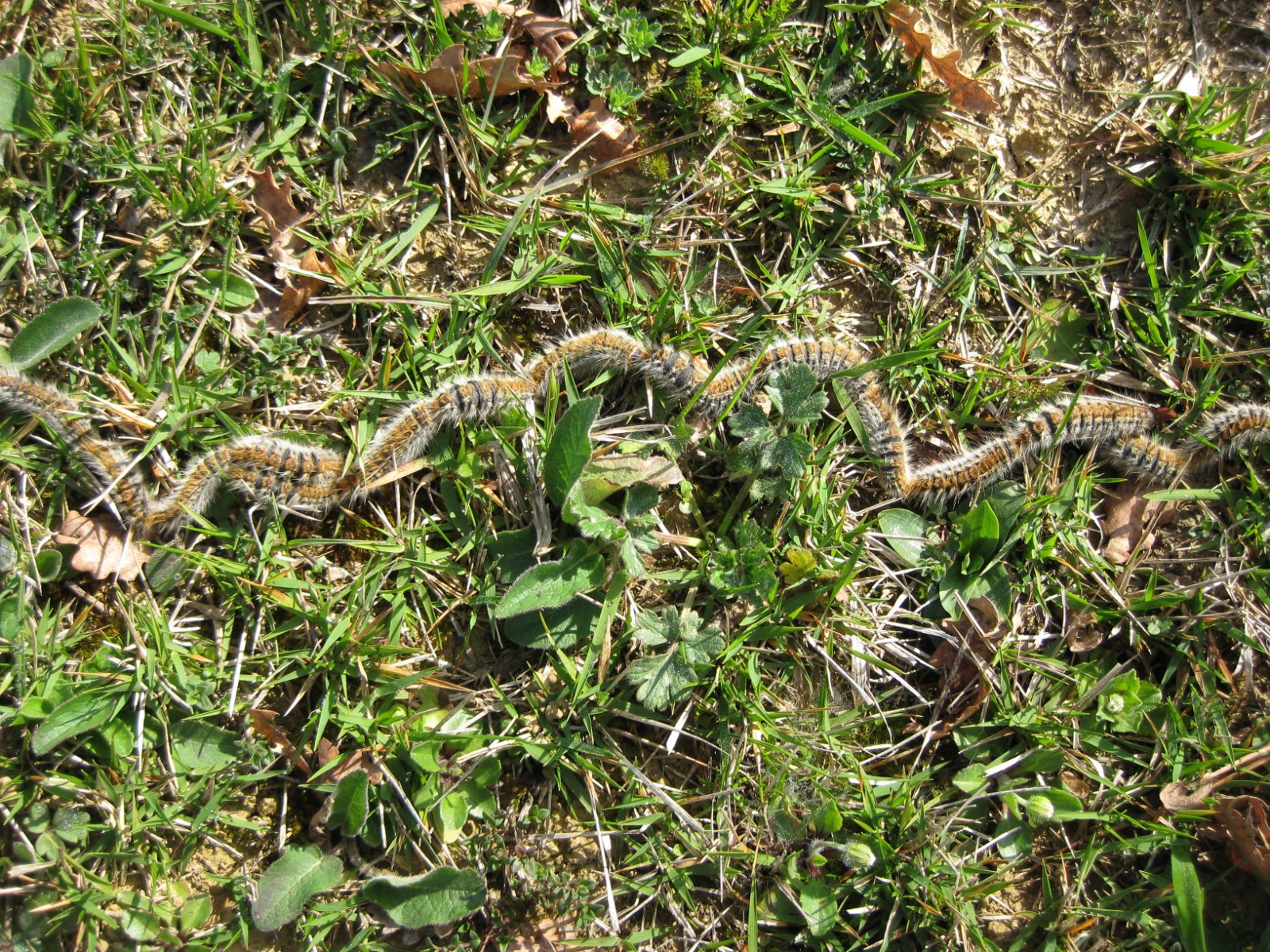
Out for a walk yesterday, we met about 600 caterpillars, also out for a walk.  Pine processionary caterpillars.  They’re extraordinary creatures, brown and hairy, that travel in long undulating lines, head to tail, looking for sandy earth to burrow into.  We saw 2 processions in as many minutes, each more than 6 metres long. It’s quite an impressive sight, and at first glance, looks exactly like a long, thin, sinuous snake.

A caterpillar that somehow becomes isolated from the one in front writhes about in agitation until it manages to absorb itself into the group again.  Something about these dependent creatures reminds me of those tragic World War One pictures of blinded soldiers advancing unsurely forward by hanging onto the shoulders of the man in front.

Don’t be seduced into thinking they’re rather sweet though.  They’re a real danger, especially if you’re a curious small child or dog.  When humans and our pets come into contact with the barbed and easily shed hairs, they can suffer reactions ranging from mild inflammation and irritation to severe anaphylactic shock.  Some victims have even died.

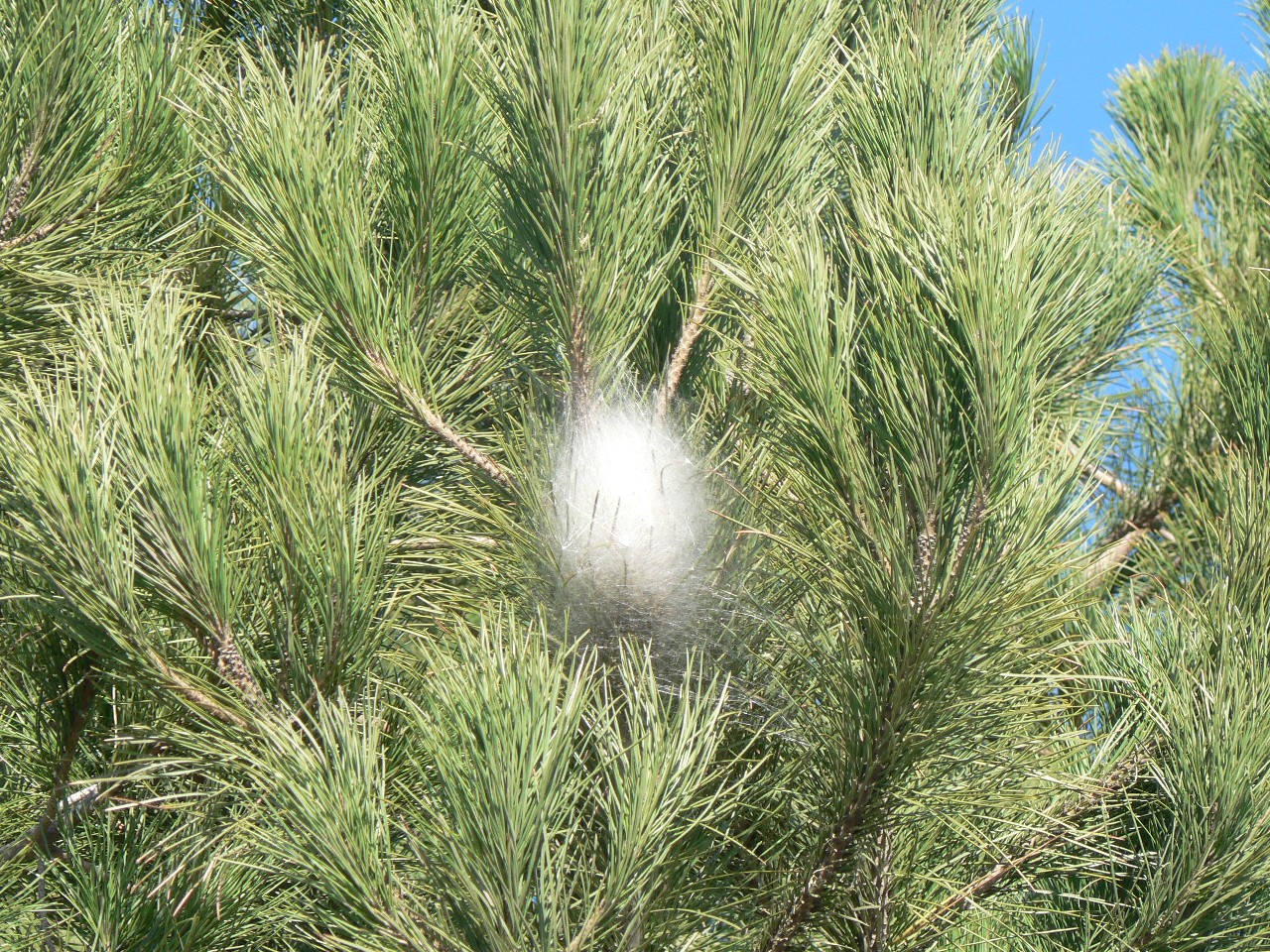
If you’ve ever walked in the countryside here, you’ve almost certainly seen them, even if you’ve never come across a procession.  Those candy-floss balls of delicate spun silk in so many pine trees round here are their nests and their original home as they developed from eggs to caterpillars.

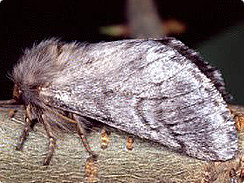
When they grow up, they’ll be harmless and rather dull moths.  You probably won’t even notice them.

SOS Air Ambulance

Poor Micheline.  Her pain, her distress was our Sunday Soap Opera.

We’d gone walking with our Rando del’Aubo friends, near Nébias again.  We’d yomped up a mountainside, 2 hours of it, and were looking forward to lunch in – oooh, maybe 10 minutes.  That’s when Micheline fell over a tree root.

It was bad.  Very bad. Broken ankle?  Knee? We still don’t know.  Anny, who has GPS, ran off to find some kind of reception for her mobile, so she could ring emergency services, and give them our exact reference.

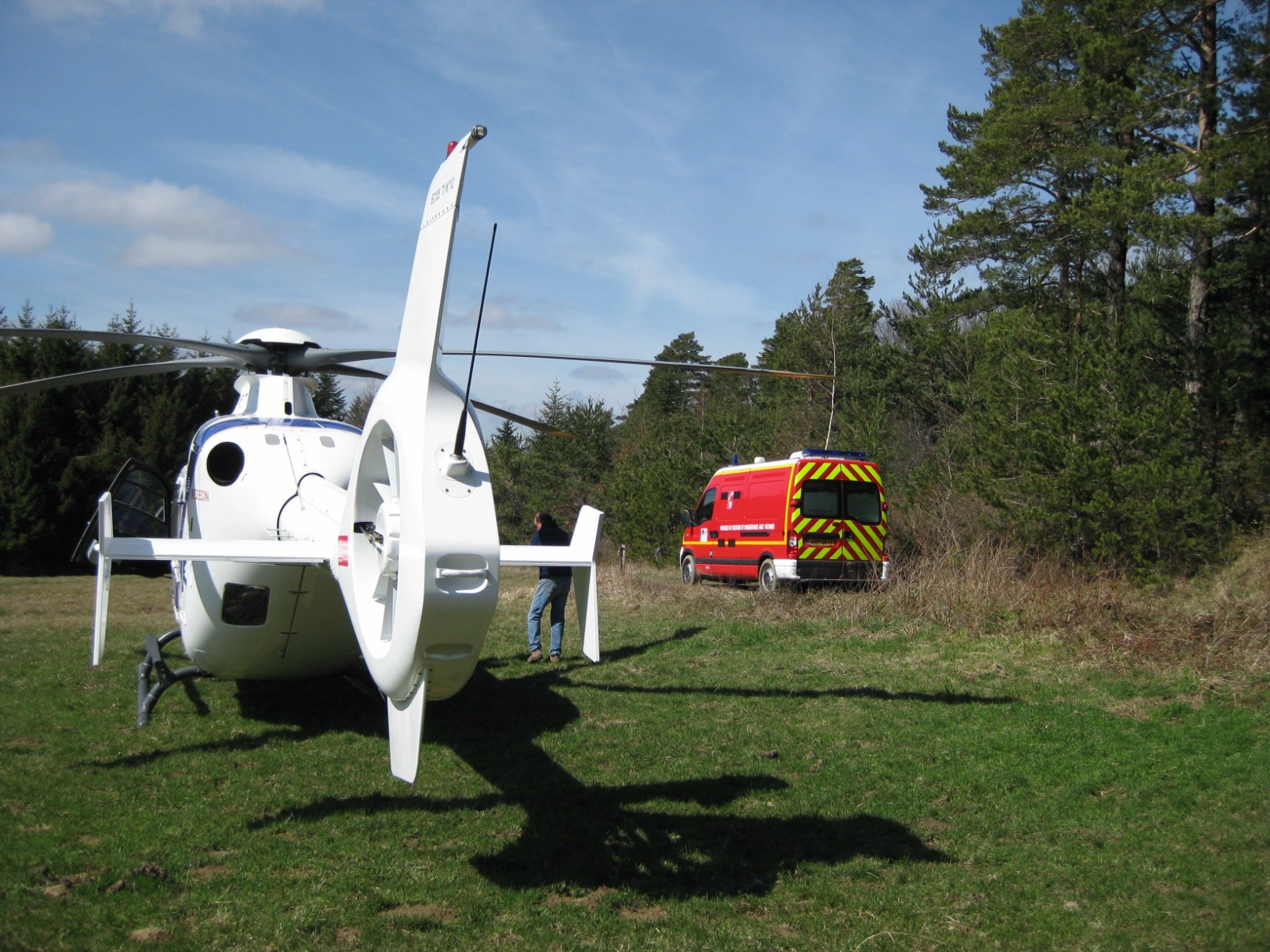
Pretty quickly, it became exciting.  We were fairly inaccessible, though not as badly so as we might have been, considering we were almost at the top of a (smallish) mountain, because there was, for the first time that morning, open land nearby.  A bright red ambulance service 4×4 came into view, then an ambulance, tossing about on the rutted track.  The sapeurs pompiers had to walk down into the woods, carrying all their equipment and a stretcher, to see Micheline, who was now in quite a lot of pain.  Then – wow!  A helicopter air ambulance hovered overhead, looking for a landing spot.

The pictures show the efficient and organised crew (11 of them, sapeurs pompiers, nurses, pilot) doing what they had to do in muddy, dirty conditions to get Micheline sedated and sorted and ready to be air-lifted to Carcassonne Hospital.  They don’t show the 4×4 being ignominiously towed out of the mud by a local farmer.

Despite our compassion for Micheline and the acute pain and discomfort she was in, we were quietly excited to be part of such a drama, the first apparently, in Rando del’Aubo’s long history of weekend walks.  No news from Micheline yet:  but she won’t be at work tomorrow.

Carnival at Laroque

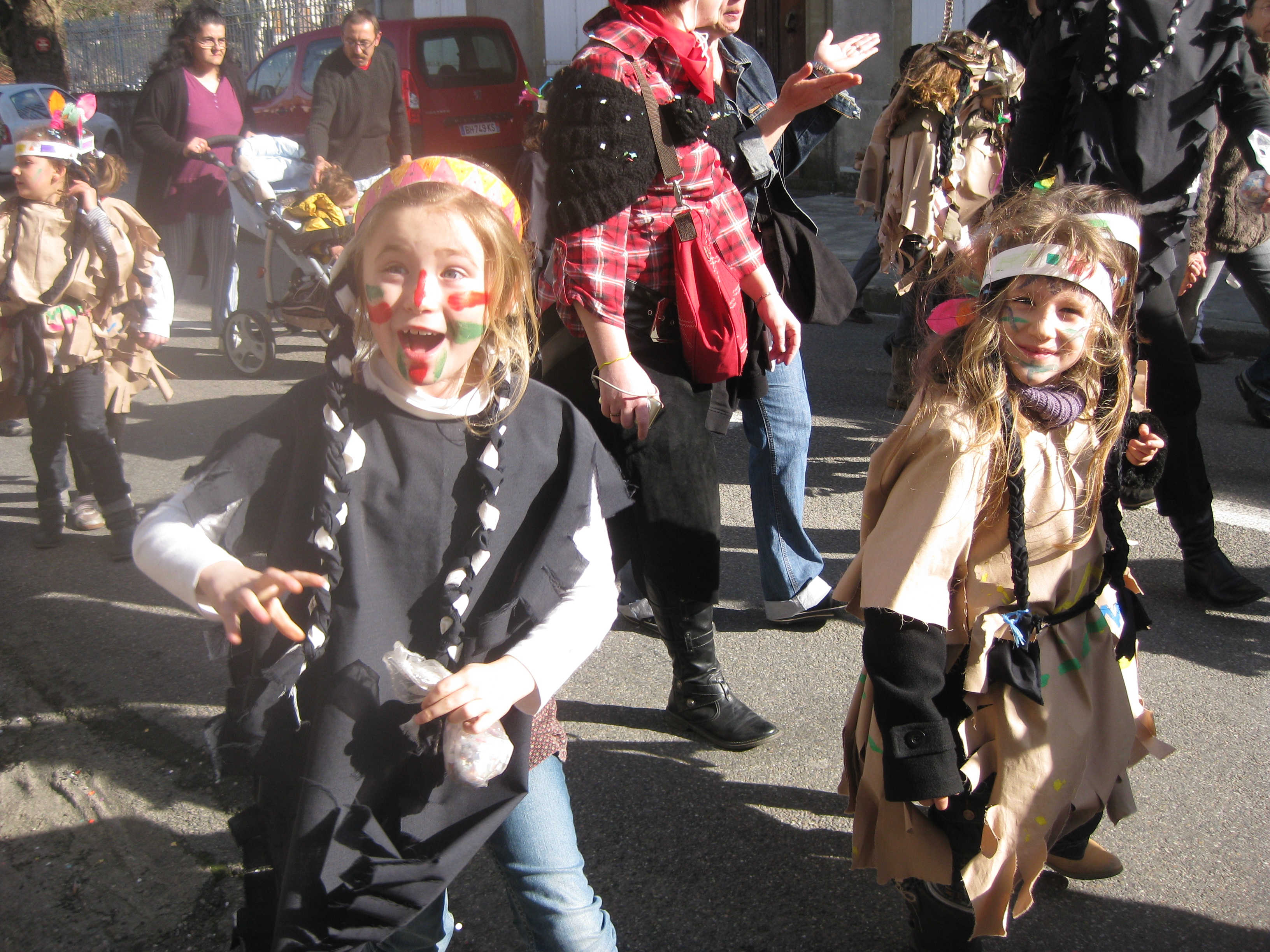
Lydia: our favourite Native American

But don’t get too excited.  It’s only dear old Laroque, and little old Laroque falls between two stools.  It’s not small enough to get every single person in the community involved in some way in this local festivity.  Nor is it big enough, or rich enough, to throw money at it.

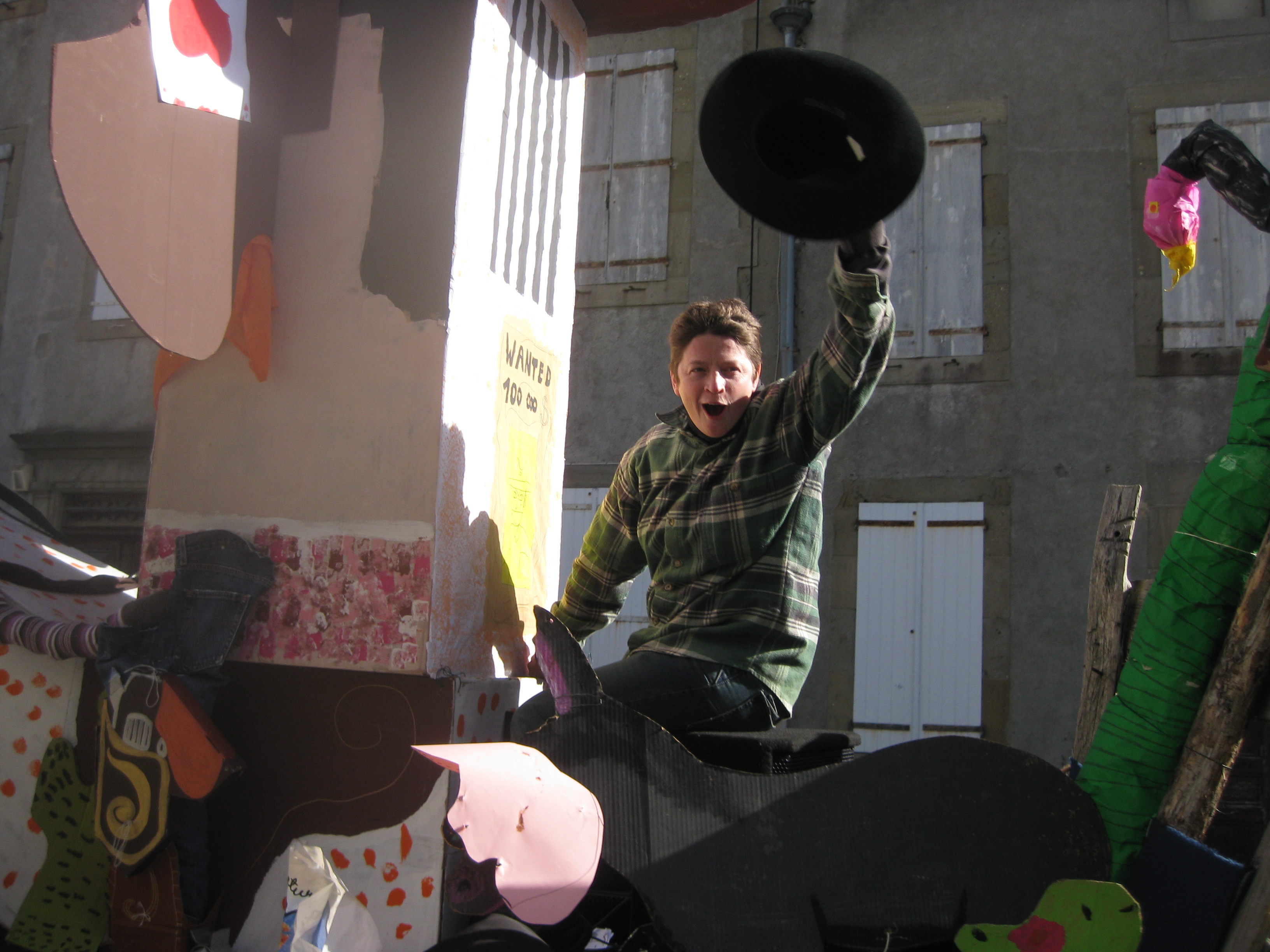
Miriam atop a float

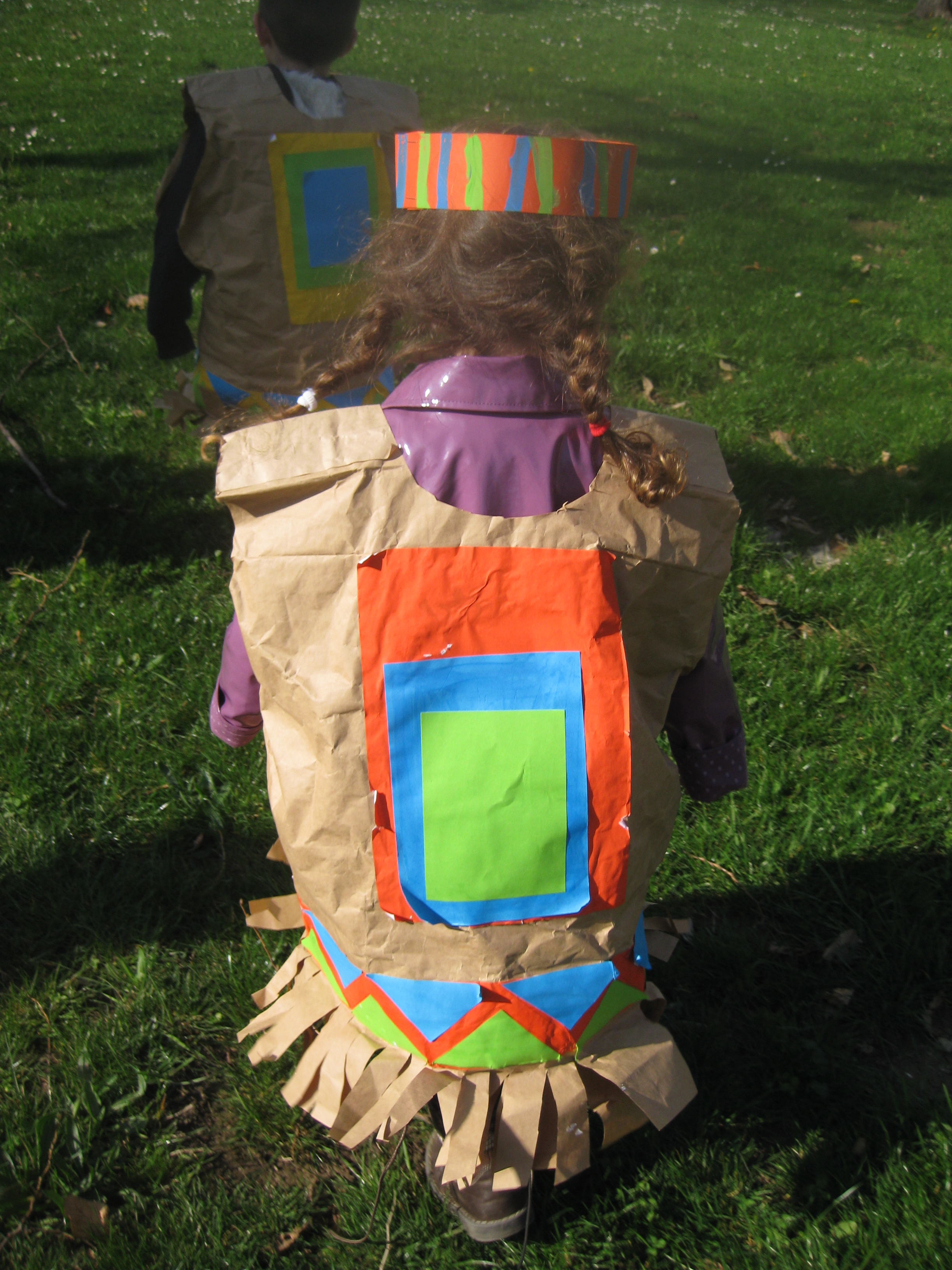
So the primary school is the key.  For several weeks the children have been focusing on the ‘Far West’, and making Native American costumes, cowboy outfits, totem poles and so on, and learning songs and music to fit in with the theme.

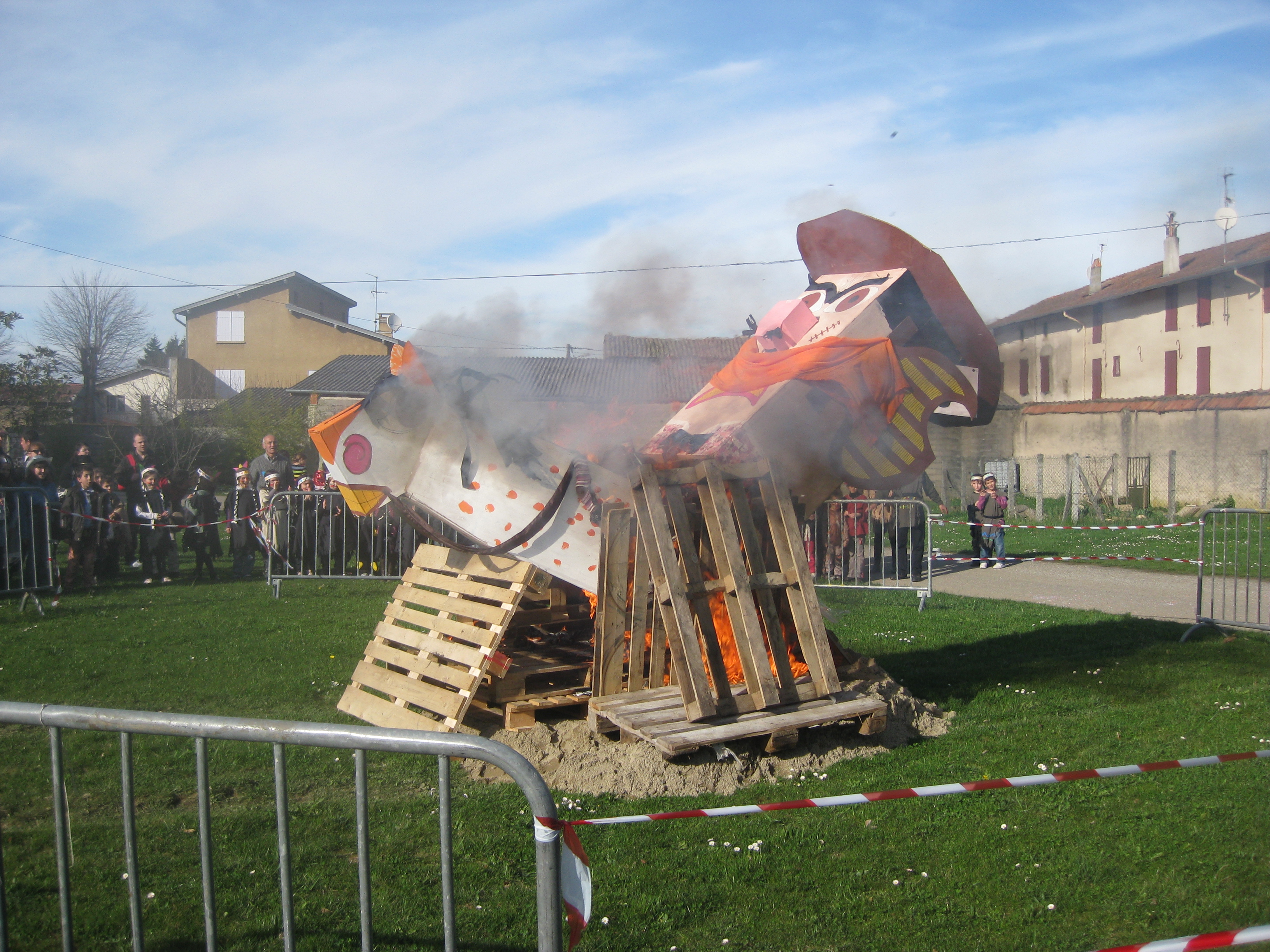
Today was the day they put it all on show.  They processed round town.  Tractors with floats trundled round the streets  and into the grounds of the Château.  The poor old cardboard cowboy on his horse the children had so painstakingly made became a sort of Guy Fawkes figure burning on a bonfire.  The schoolchildren sang their songs.  Grillades (a barbecue).  As darkness fell, everyone moved off to the MJC (Maison de Jeunes et Culture).  More grillades, more bands, dancing.  A concert featuring our Music Centre.  General merriment, a late night for the children.  A good time had by all.

The end of the road for this poor old cowboy

Nigel Slater arrives in France

He’s here now.  Not in person of course.  But his books, nearly all of them, arrived with the removal van that brought much of our stuff over from England.

I love Nigel Slater. As a cook, I mean.  He takes such pleasure in all the messier aspects of making and eating food, as I do. Greasy fingers from extracting those last little bits of chicken flesh from an already picked-clean carcass.  Sticky hands from rhythmically kneading and transforming dough from a tacky, gluey lump into barrel-shaped silken responsive mass.  Spoons and fingers to lick after a cake and biscuit-making session.  Weirdly, I even enjoy, if it’s not TOO bad, the burning eyes I get when I absent-mindedly rub them after I’ve been chopping chillies.

During this kind of cooking session, Malcolm and I look at each other with mutual incomprehension.  ‘Want to lick the bowl?’  I ask.  ‘Ergh, no. Shall I get you some rubber gloves so you can keep your hands clean?’  He thinks I’m facing up with commendable fortitude to jobs on a par with sorting out a couple of messy toddlers after a glue-and-paint session. I think he’s missing out.

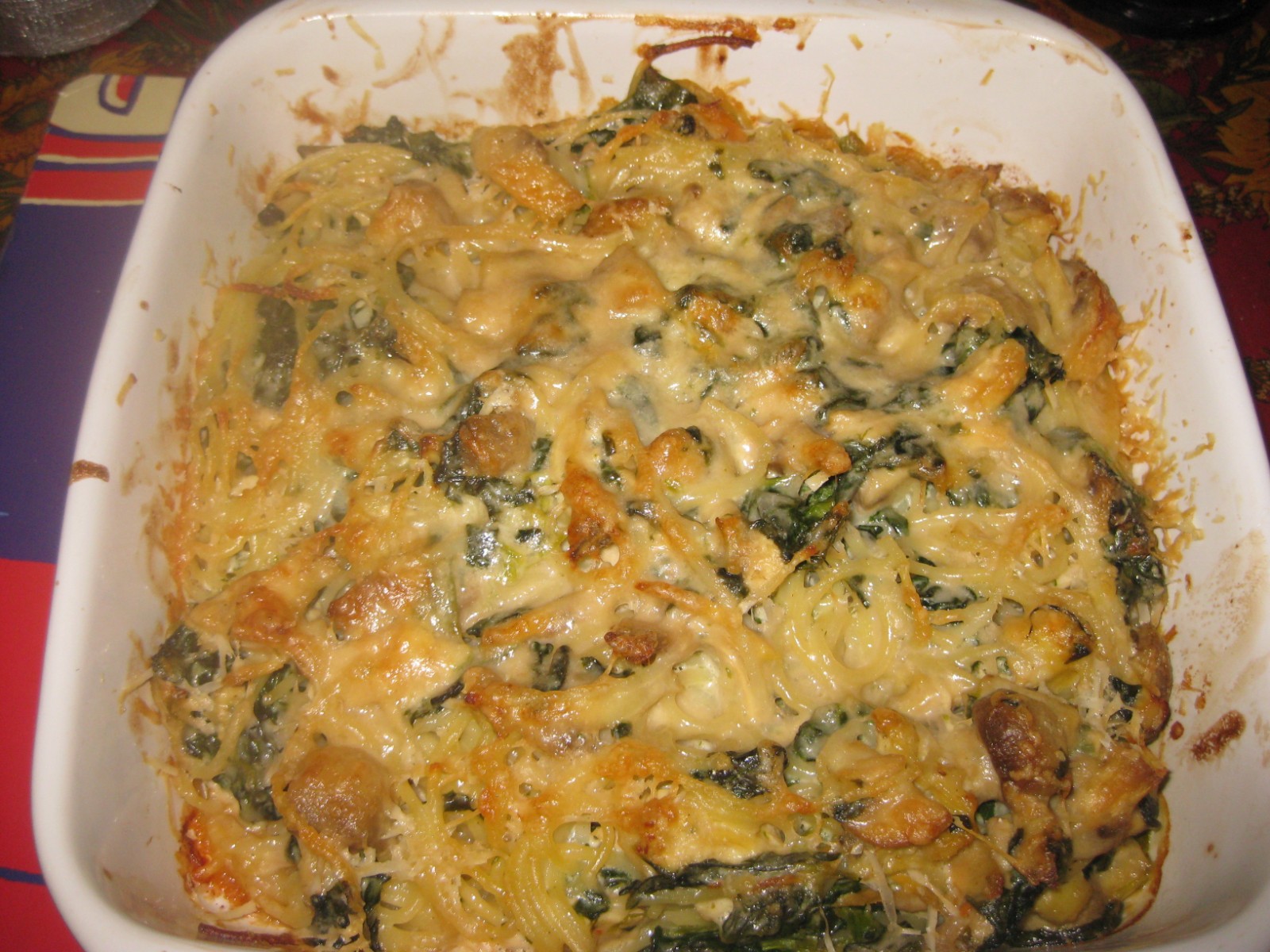
In the end though, it’s Nigel’s recipes I come back to.  He rarely worries about precise quantities, tasting and adjusting as he goes till the dish seems right. But he does celebrate ingredients in their season.  Here’s what I made the other evening from the remnants of one of Is@’s chickens, and a bag full of the spinach included in our panier of vegetables:  I found the recipe in Tender: A Cook and his Vegetable Patch, Volume 1

Chicken Spinach and Pasta Pie.

Nigel reckons it serves 4.  I reckon 6 wouldn’t go hungry if they sat down to this lot.

spaghetti – 350g
cooked chicken – 500g (boned weight), roughly shredded
mushrooms – 300g
butter – a thick slice
olive oil – 3 tbs
double cream – 450ml
white wine – 2 glasses
spinach – 200g
parmesan – 140g + 50g

Cook the spaghetti in deep, generously salted boiling water. Drain and set aside. (A little olive oil will stop it sticking together.) Set the oven at 180C/gas 4.

Cut the mushrooms into quarters. Warm the oil and butter in a deep pan and add the mushrooms, letting them colour nicely here and there. Add the cooked chicken meat and then pour in the wine.

Bring to the boil, scraping away at the sticky remains at the bottom of the pan: they will add much flavour to the sauce.

Pour the cream into the pan, bring back to the boil and turn off the heat. Wash the spinach and put it, still wet from rinsing, into a pan with a tight-fitting lid. Let the spinach cook for a minute or 2 in its own steam, then drain it, squeeze it to remove excess water and chop it roughly.

Fold the cooked spaghetti, mushroom and chicken sauce and spinach together then stir in two-thirds of the grated parmesan and tip into a large baking dish. Scatter the remaining cheese on top and bake for 35 minutes until the top is crisp and golden.

Euskal Herria meets the Yorkshire Dales

This week was a first for us, when we made a quick visit to the Basque country (Euskal Herria), way over to the west .  When we got there, there were no frontier posts, but we knew immediately that we’d arrived.  Suddenly, houses, instead of being colour-washed in creams and beiges and ochres, or not at all, were  all tidily painted white, every single one, with ox-blood coloured shutters and paintwork.  Place names were in French and Basque, and quite a lot of other signage too.

But the thing is, despite all that, we thought we’d arrived in Yorkshire, or Lancashire, or somewhere in England at any rate.  Softly rambling ranges of hills, so very green, and studded with sheep.  Roads which preferred to ramble gently round the contours instead of going straight in the French style.  Take away the Pyrénées in the background, their jagged peaks still white with fresh snow, add in a few drystone walls, and – voilà! – the Yorkshire Dales.

After all the hard work back at the house, we needed the peace of the countryside, so we’d chosen to stay at an Accueil Paysan farm. We knew that  meant that we’d be welcomed into simple comfortable accommodation at the farmer’s house, and share a family meal with them in the evening.  Always good value in all sorts of ways.

The welcoming committee in this case turned out to be six cheerily noisy pigs, a gang of chickens, and a sheep dog.  The humans were no less friendly, and we settled in by exploring the small farm with its 30 or so cattle, and about 300 sheep.  Sheep’s cheese is the big thing round here, and throughout the autumn and spring, when there’s plenty of milk, this family makes cheese every morning (far too early for us to be there, it turned out: all over by 7 o’clock) in their fine new cheese-production shed.

Our hosts are Basque speakers.  Their children only learnt French when they went to school.  Now that one of these children has a son of his own, he and his wife (who’s not a Basque speaker) have chosen to have the boy educated at one of the many Basque-medium schools, so that he will be among the 30% of Basques who are comfortable using their language.  It’s an impenetrable and complex one.  Its roots are a bit of a mystery, and certainly it’s not Indo-European.  With French, Italian and Latin at out disposal, we can make a good stab at understanding Occitan, the language of our region, but Basque remains impenetrable to anyone who hasn’t been immersed in it.

The next day, we explored St. Jean Pied de Port. From before the time of the Romans, it’s been a market town, an important jumping off point for Spain.  It’s been a garrison too, and an important stop-over for pilgrims on their way to Compostella.  Now it’s a tourist centre too, for walkers in the region.  It’s an attractive town, surrounded by ramparts.  We pottered around, enjoying views from the ramparts, pilgrim-spotting, ancient doorways, and watching the river, before setting off for a leisurely journey home.

And next time we stay, we’ll make it much longer than 36 hours.

This slideshow requires JavaScript.

The Principality of the Brothers Grimm. And Stone Soup.

Sunday. We went to Nébias in the Aude. Just outside the village, you’ll find The Labyrinthe Verte, a natural maze, with winding pathways through a forest, where rocks and plants have created a bewildering array of natural passageways which are both beautiful and fun to explore. These paths are cut deep through limestone, often shoulder height.  Somehow, we’ve never visited.  But today, thanks to the Rando del’Aubo, our walking group, we did.

It’s been a lovely bright spring day today, but the forested labyrinth is never really sunny.  Trees, their trunks and branches bearded with feathery fronds of moss and lichen, crowd the limestone crags and fissured passageways.  Deprived of light and space, they assume crippled and fanciful shapes, or else aim straight for the sun, their thin trunks competing with each other for a place to establish their roots.  It’s not eerie however.  On this warm March day, we wouldn’t have been surprised to meet an ethereal band of fairies whirling through the dampened glades: on a bad night in November, perhaps a gnarled and wicked hag from the tales of the Brothers Grimm.

Every time of year has its own magic apparently.  On the coldest days of winter, the mosses and lichens are white and crisp with frost, making the forest fit for a Snow Queen

At lunch time, since we were in France and eating’s important, the darkened passages unexpectedly cleared.  Suddenly, beneath blue skies and bright sunshine there was a fissured limestone pavement, providing surfaces and seating for our lunchtime picnic.  Which Malcolm didn’t have with him.  The members of the group magicked their very own version of Stone Soup for him.  A mustardy ham baguette, some home cured sausage, a chunk of bread, a chocolate pudding, and apple….within half a minute, Malcolm had more food then the rest of the group put together.

The afternoon was different.  Walking away from the enchanting and enchanted labyrinth, we came to more open country, where we passed first farmland, then the edges of forest with tracks showing where wildboar and deer had recently passed.  Finally, we climbed, and had views across to the mountains and the walks we’ve enjoyed there on other Sunday rambles, finishing up listening to the lively splashing of a waterfall.

This slideshow requires JavaScript.