Goodbye Córdoba – hello Málaga

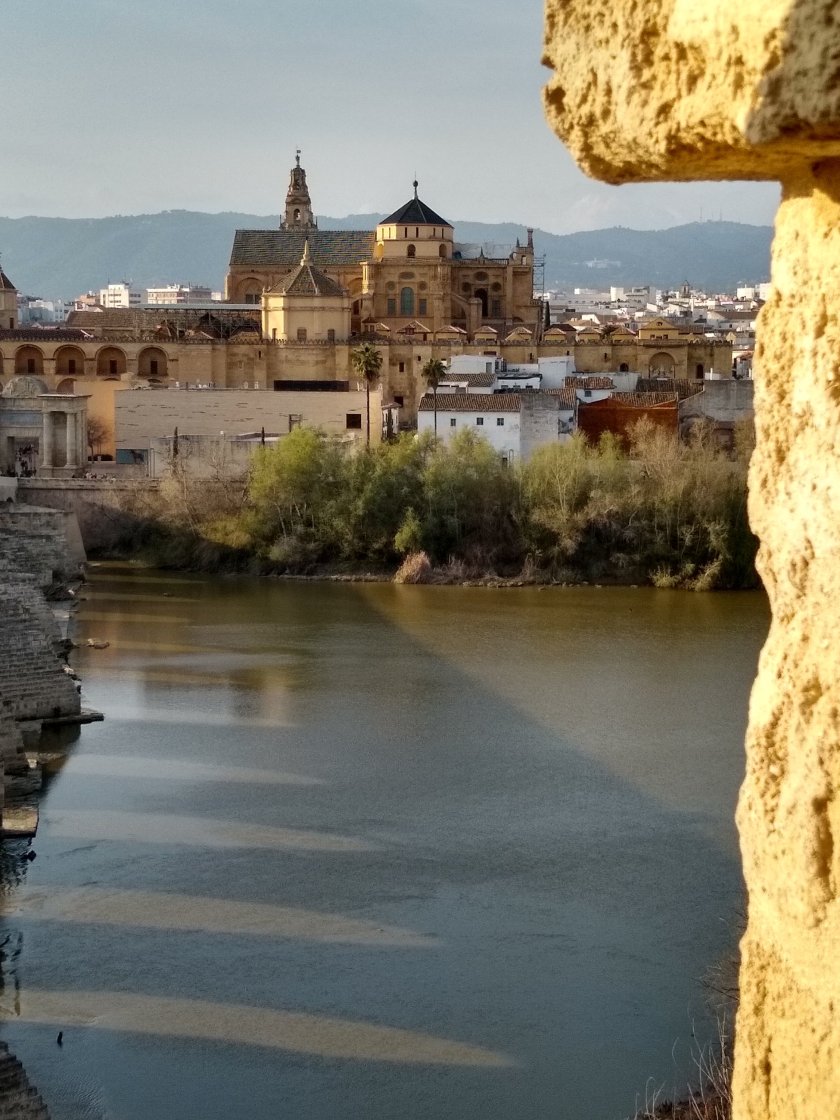
Córdoba, seen from the Torre del Calahorra, and looking across the Guadalquivir.

The thing is, we lost our hearts to Córdoba. It’s drenched in history from the Romans onwards. Even the bus station is an archaeological site. We stayed in a pleasantly ordinary part of town, only ten minutes from the old historic centre, but with not a tourist in sight. Our hostess, who’s lived in the city all her life, wanted us to love the place as much as she does. Apart from tourist tips, she told us how to get the best from her ‘patch’, explained where the locals ate, and generally wanted us to feel at home.

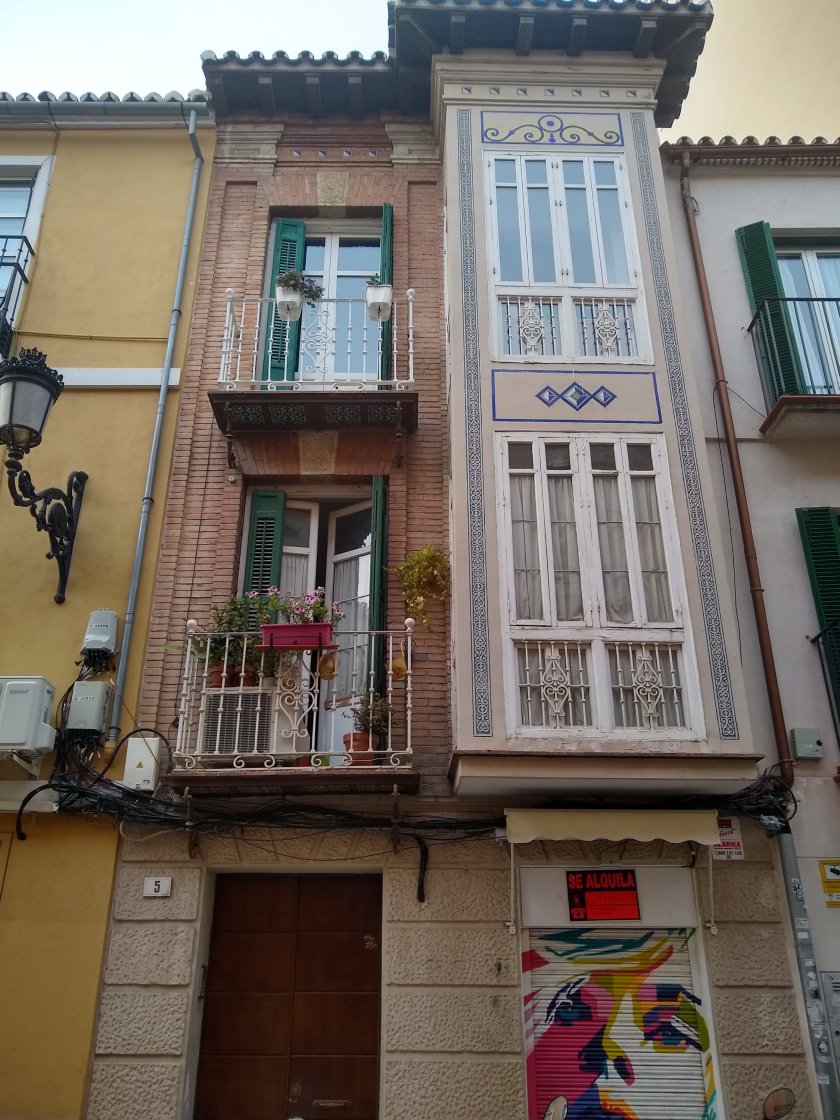
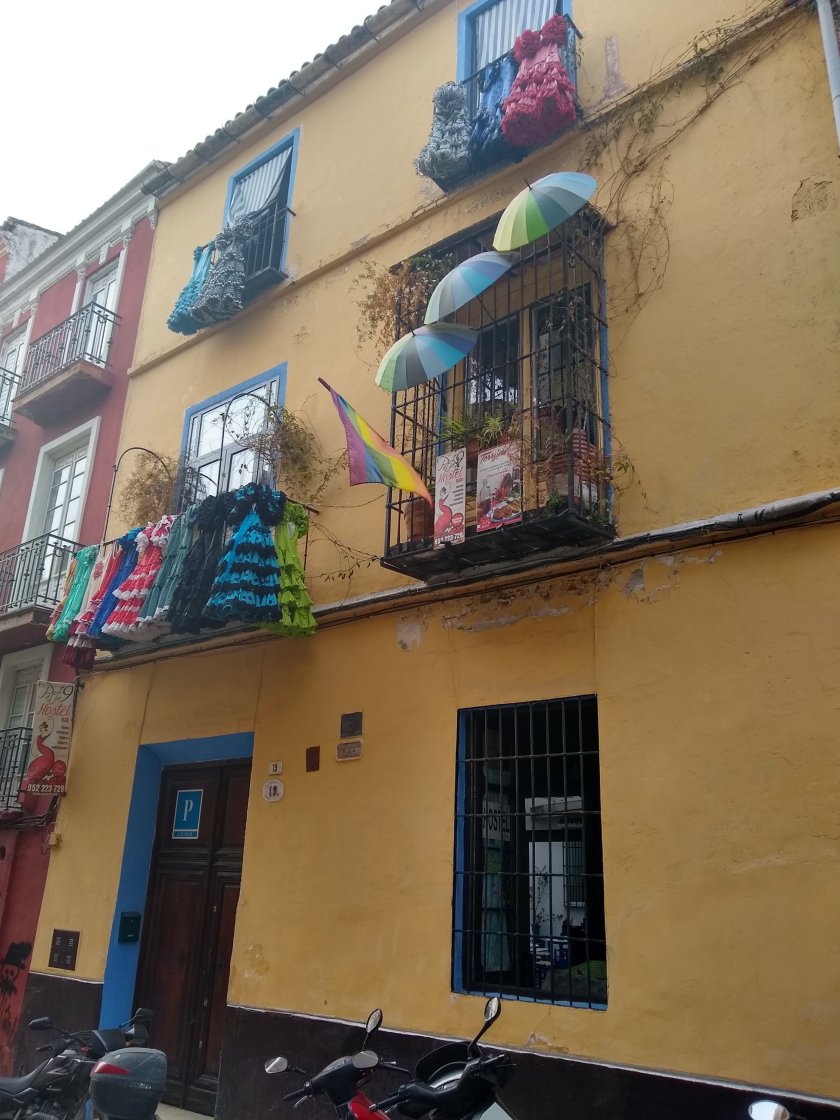
Here in Málaga we’ve ended up in a zone full of holiday apartments – yes, I know we’re part of the problem. It’s a part of town that’s achingly hip, self-consciously shabby-chic, and doesn’t seem to cater for every day shopping needs like bread and fruit. It reminds us that we are in fact tourists.

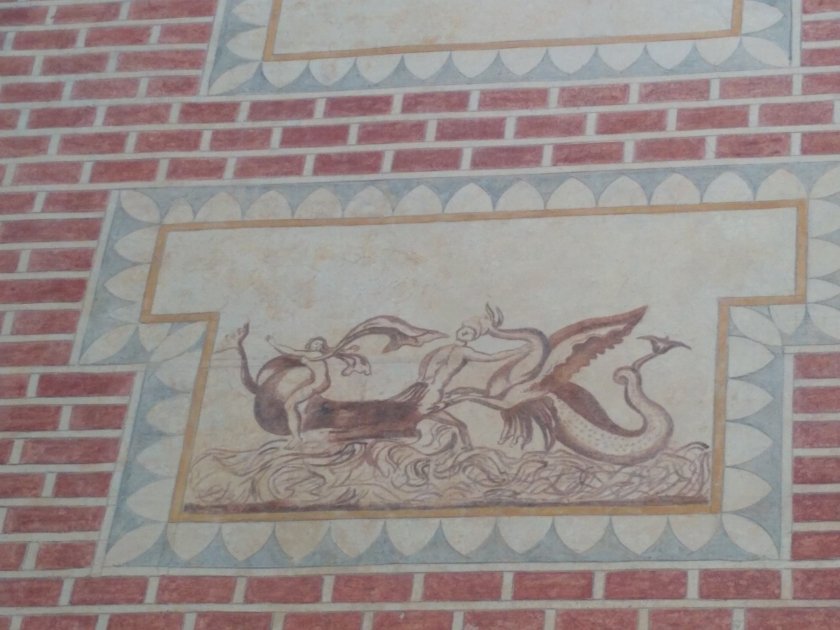
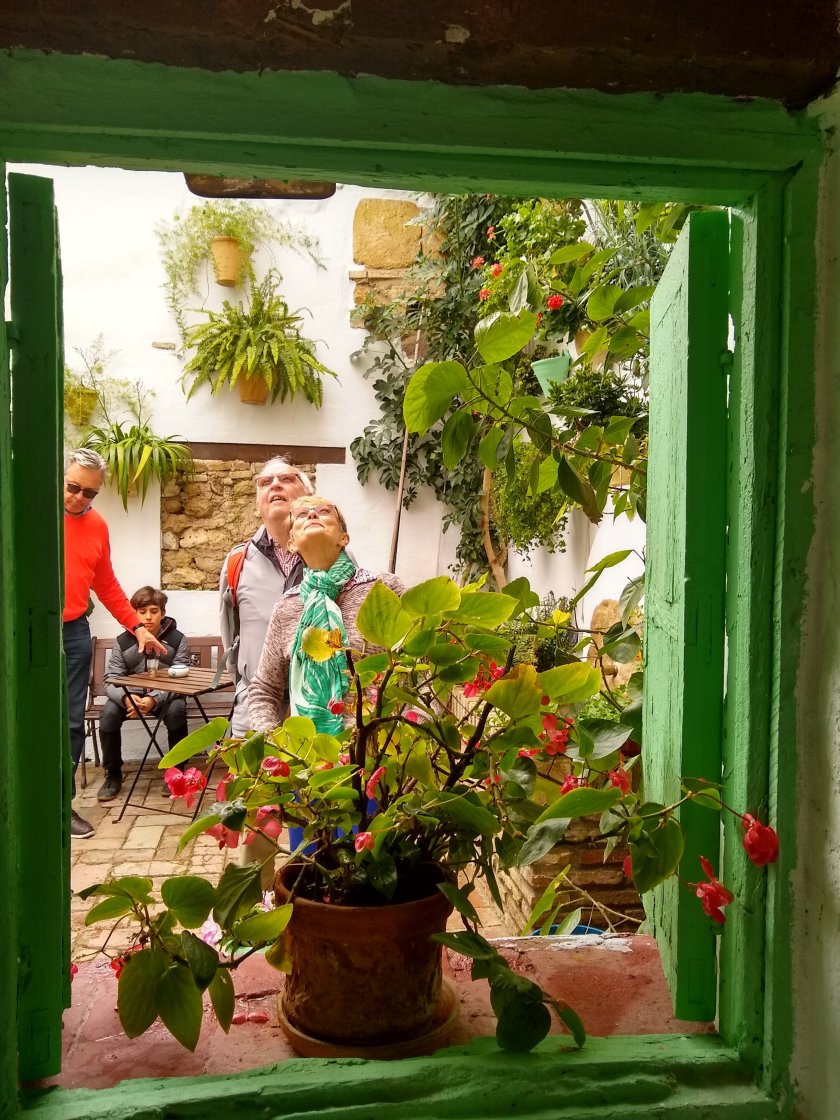
Still, let’s not complain. First world problems and all that. Here are a few shots to show that there will actually be plenty to discover and enjoy in our final few days.
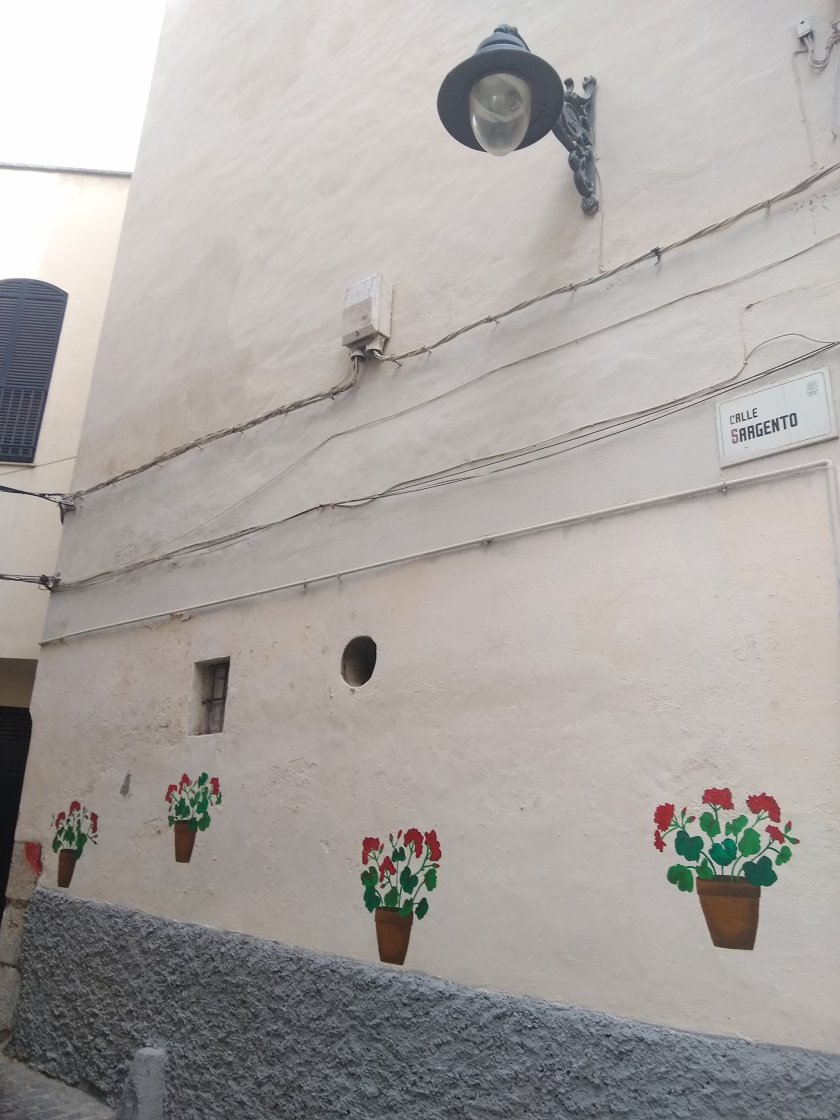
Los Patios de San Basilio

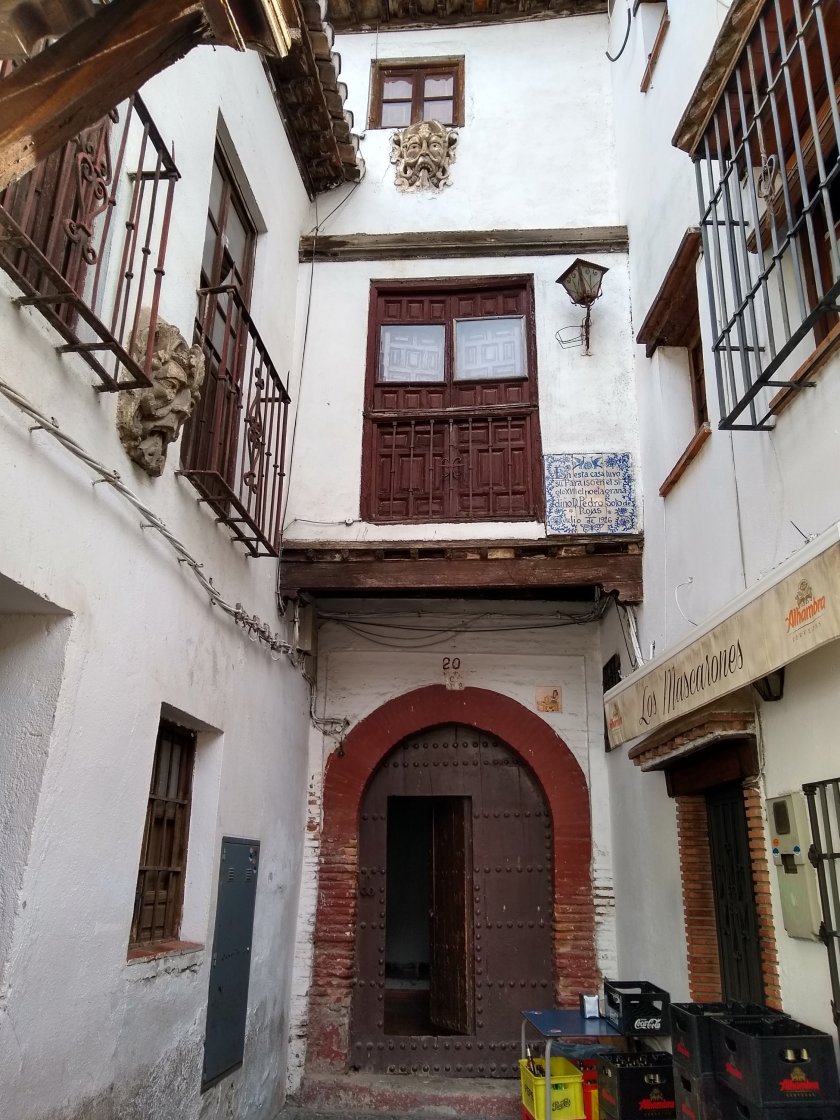
We travelled to the 13th century today. We went to whitewashed houses, organised Arab style around central courtyards, ranged along – for the period – wide streets, designed to accommodate wheeled traffic. These were houses at one time lived in by crossbowmen and their families, ready to defend Córdoba as and when. Before that Jewish converts lived there, and later, Catholic working families.

What pleasant houses! Just right for a modern family! No, not so. These houses accommodated up to ten families, one to each room. Maybe a hundred people then….

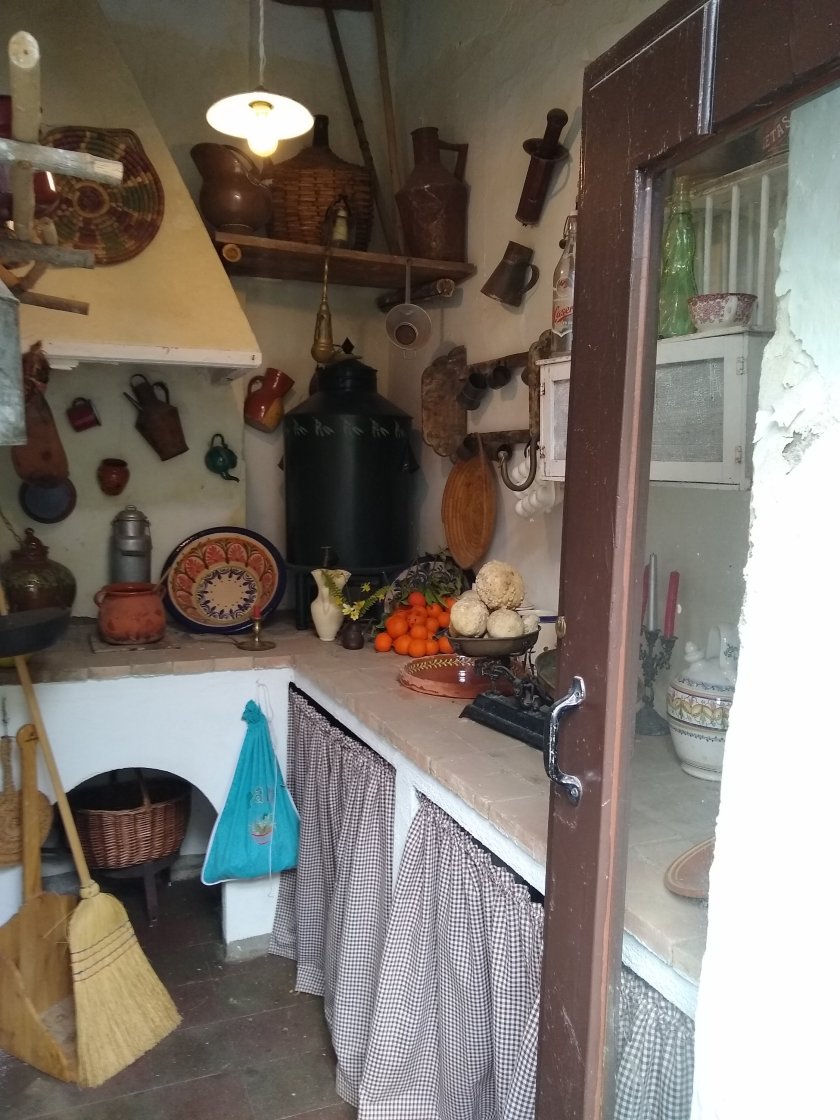
Each house had a well. Each house had three or so small shared kitchens. Each house had a laundry room. And each house decorated its courtyard with flowers. I suggested that this was a modern idea, but was assured that the evidence is that these houses were always bright with cheerful blooms – the women’s job.

We visited several houses, all different. Here are some housekeeping tips.

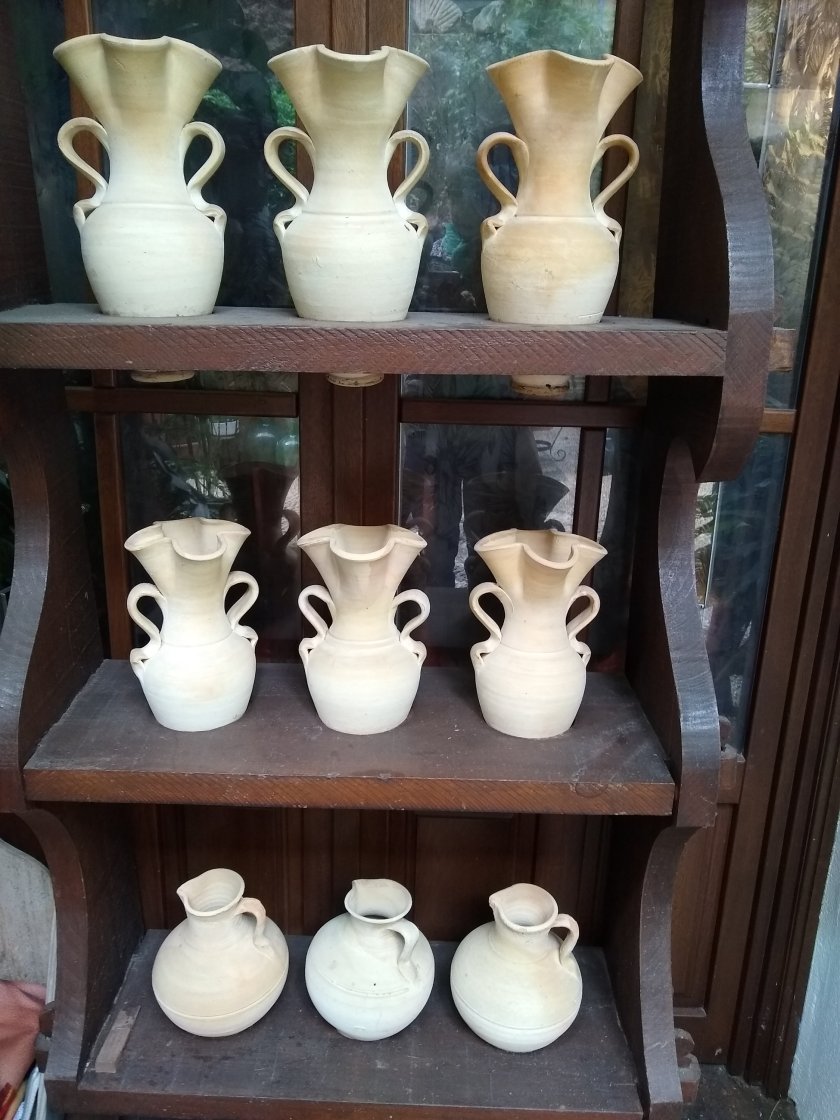
Look. These are unglazed jugs. Water gradually drips from the top ones to the layer below, then the layer below that. At each stage the water becomes purer and cooler. Drink from the lowest jug.

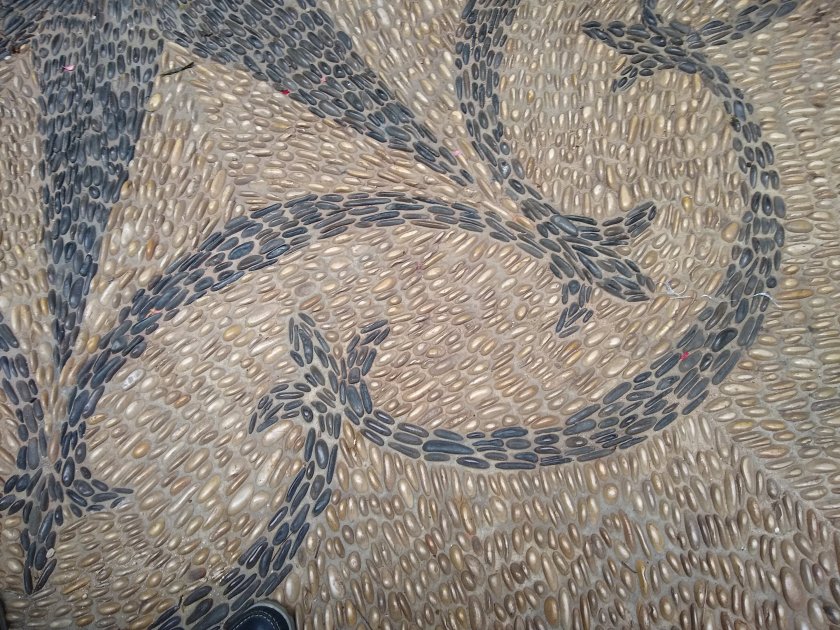
Here are cobbles from a fairly affluent household. These are river stones, and arranged like this so that on the rare occasions that it rains, your feet will stay dry.

These overcrowded houses can’t have been as pleasant as they seem now. But given the choice between one of them and a tenement in Manchester during England’s Industrial Revolution, I know what I’d choose.

Hungry?

My recent blog posts have been a bit of a guide book. Perhaps I should be working for Lonely Planet.

Let’s get back to basics. Food.

We’ve been beginning the day as the Spanish do. In a coffee shop. Emily’s boyfriend wouldn’t consider eating breakfast at home, and neither do we. A huge glass of freshly squeezed orange juice. Maybe a roll, with jamon, or cheese, or sobrasada (a Mallorcan spreading sausage) or simply olive oil, then lightly toasted. Coffee, obviously.

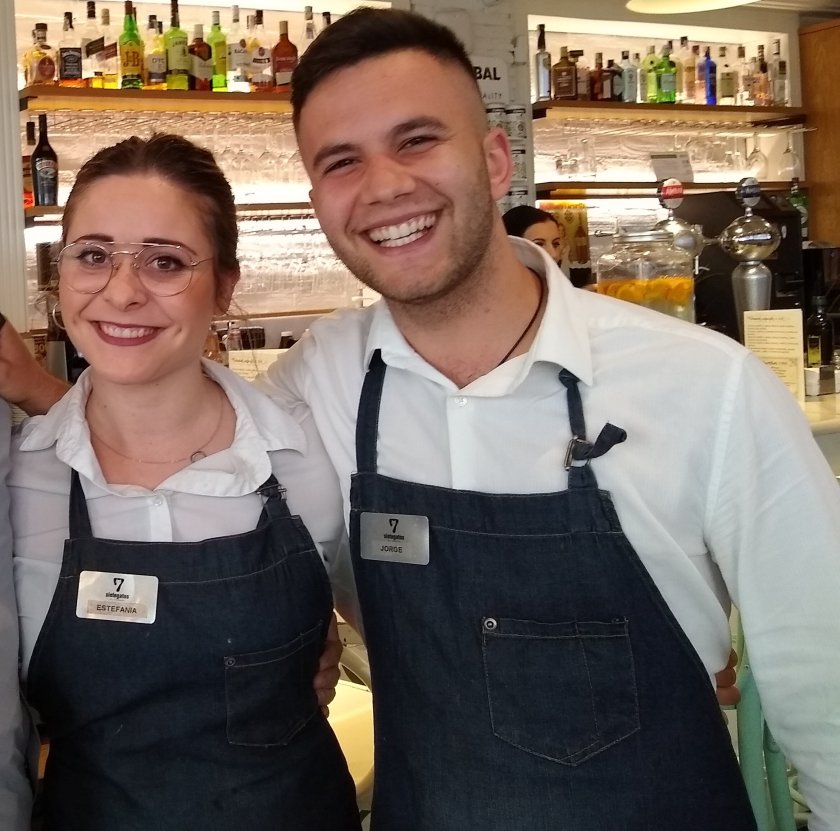
Our favourite camareros from Los Siete Gatos in Granada.
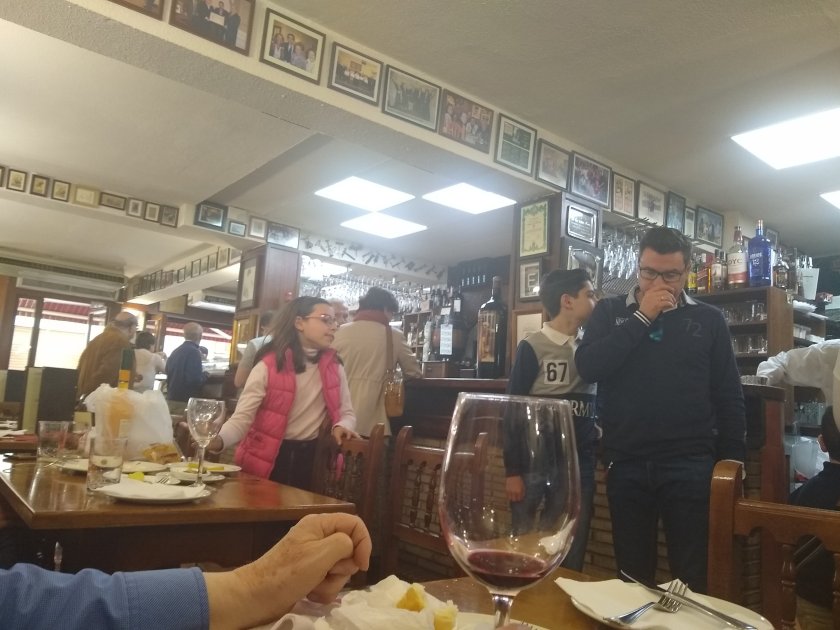
It’s hard to resist tapas later on. Order a drink, and you’ll be served with a tapa too. Olives maybe, or patatas bravas. You may get a choice. Maybe not. It’s easy to knock up enough food for a light meal by ordering another drink.

A busy tapas bar.

We’ve been struck by the difference between the food in Granada and that in Córdoba. Granada celebrates making delicious treats out of very little: patatas a lo pobre – potatoes with onions and peppers. Migas – fried stale breadcrumbs with peppers, onion, garlic and fatty bacon. Both simple. Both good.

Both cities celebrate the pig and lamb in many forms: lots of piggy sausage dishes. Lots of chick peas too.

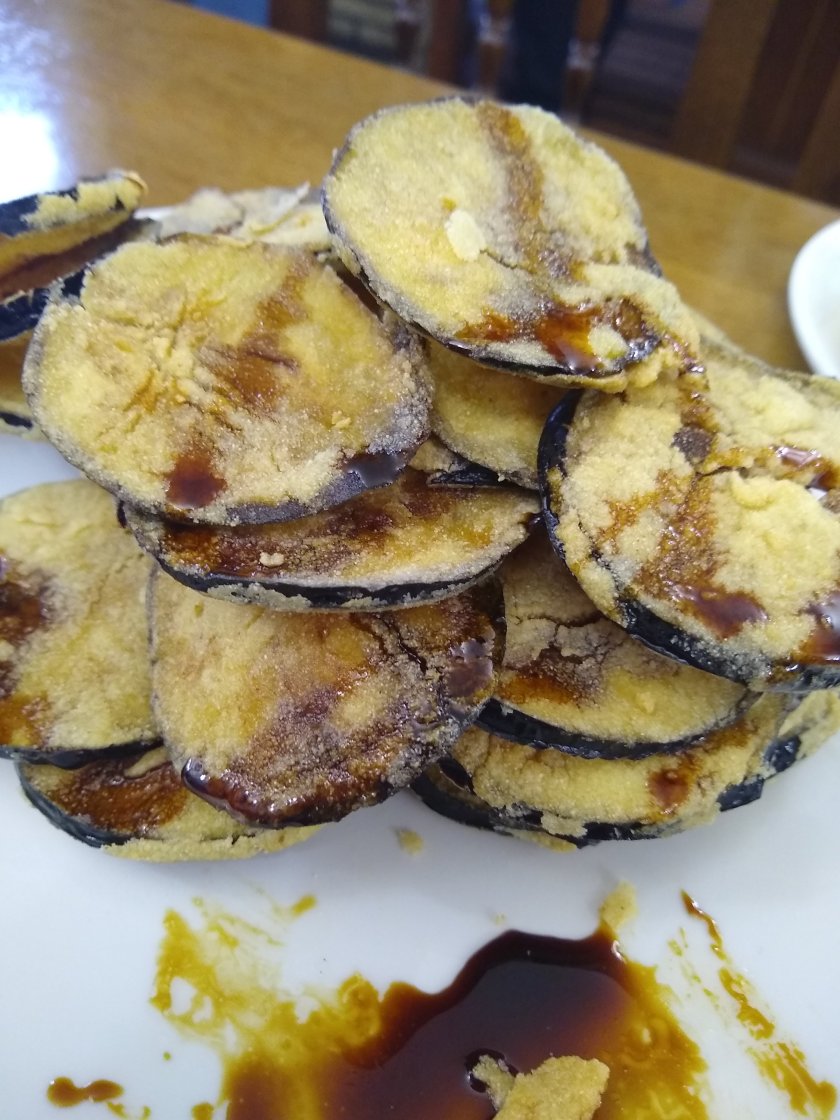
Córdoba pushes you in the direction of berenjenas – aubergine slices deep fried in batter and drizzled in honey. Every restaurant here has an oxtail dish, and is proud to tell you that the city is a foodie capital.

Berenjenas con miel.
Every shopping street has a selection of independent greengrocers. Just as well. After all that stomach-lining food, a piece or two of fruit is more than welcome.

Ragtag Saturday: a Temple, a Church, a Mosque, then a Church…

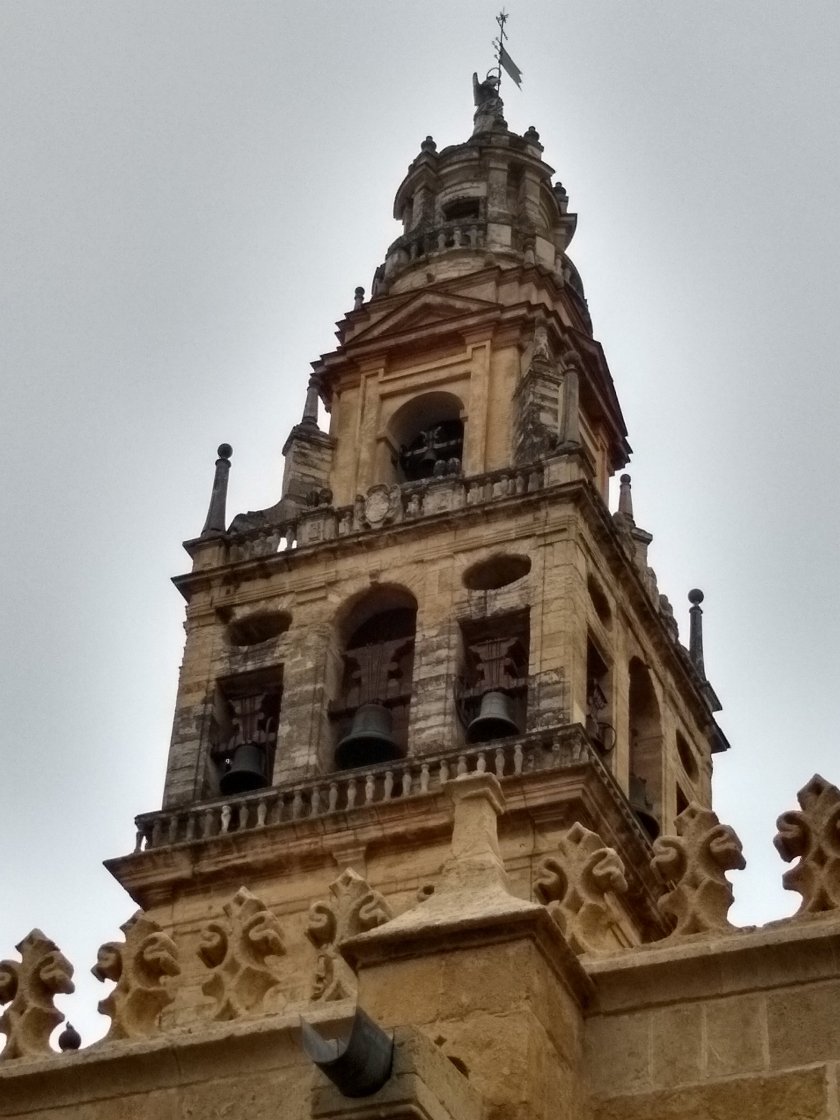
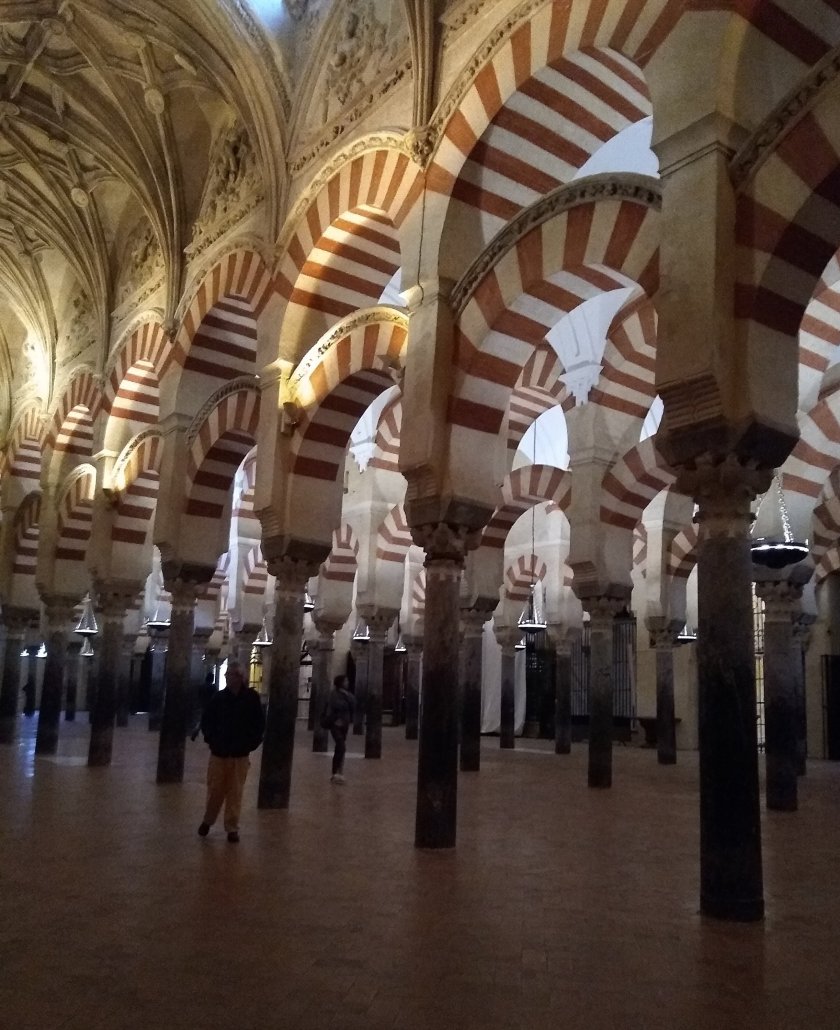
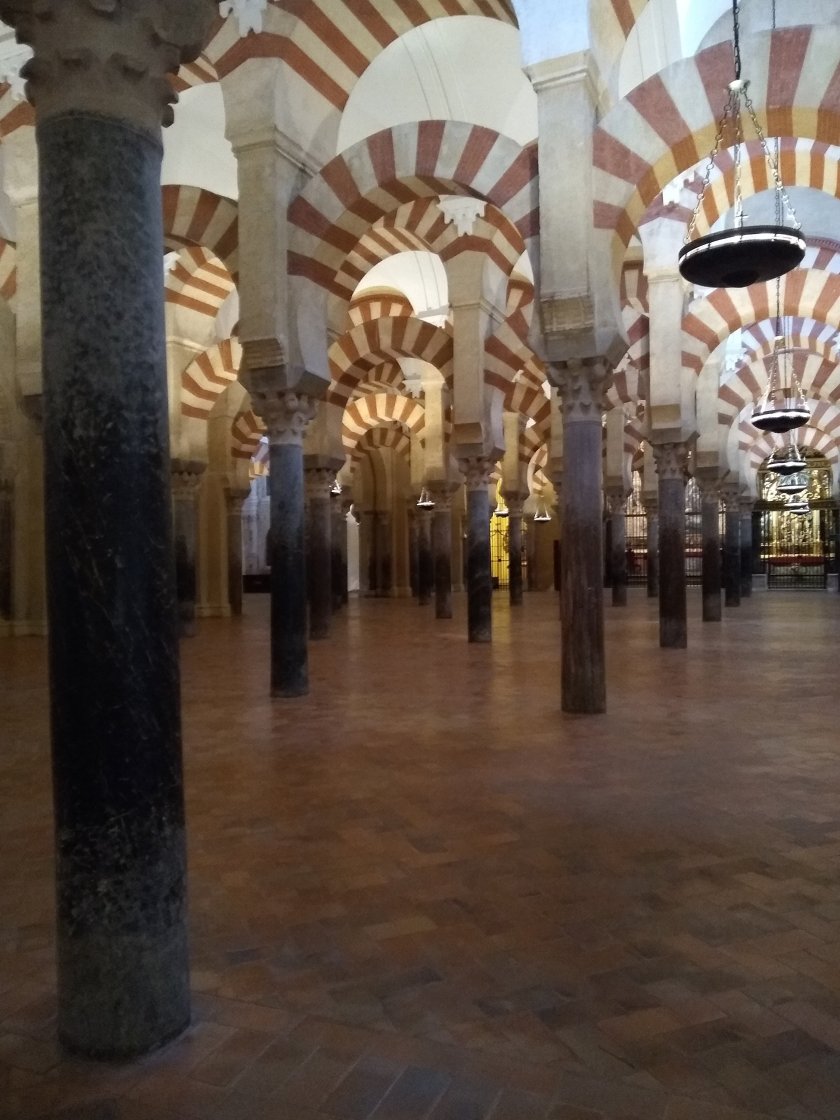
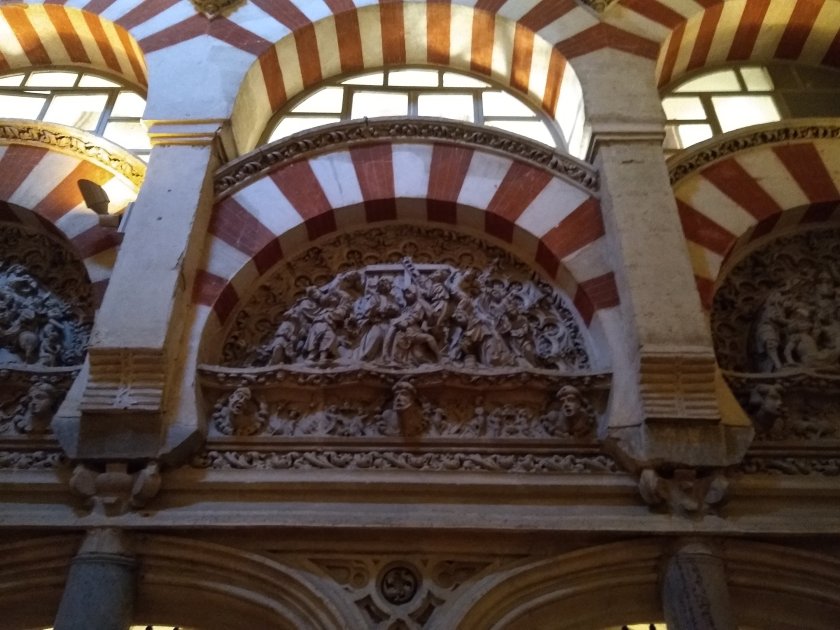
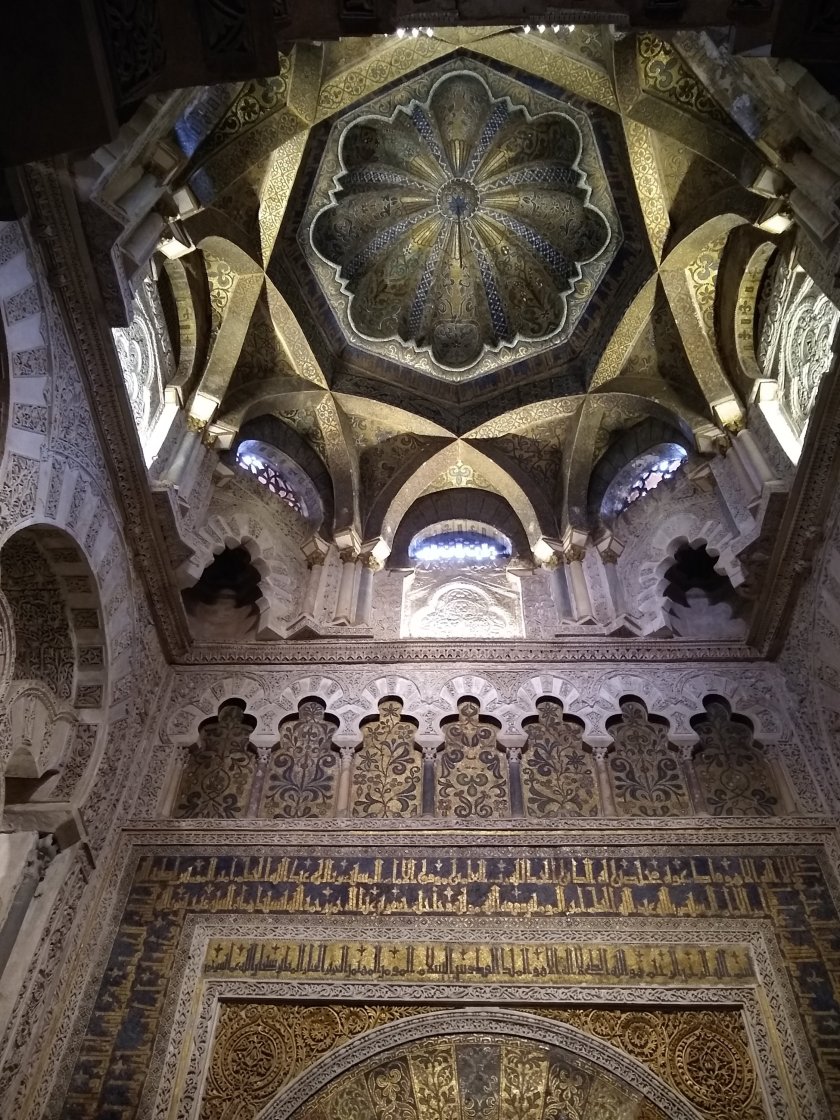
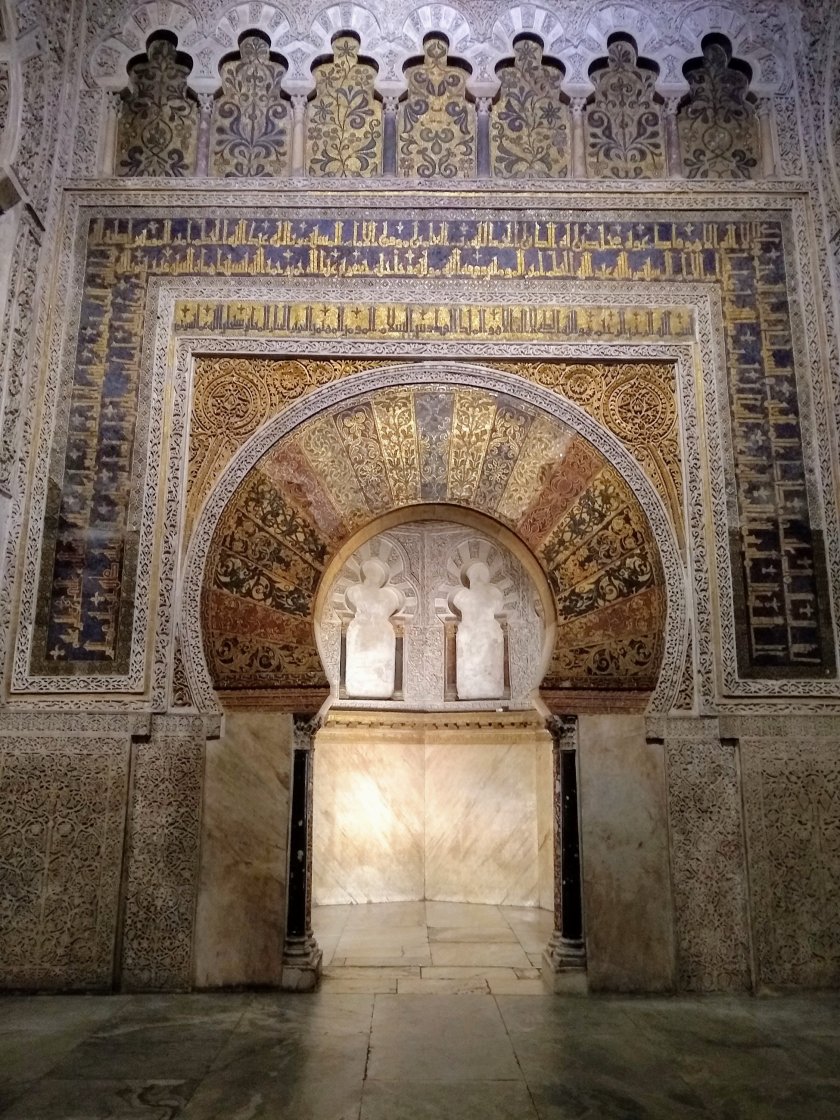
The Mezquita in Córdoba. It’s been a religious site since before recorded history. Ancient gods were worshipped here. Then the Visigoths came and built a church. Then, round about the 7th century, Christians and Muslims agreed to share this space, until the site was bought by Emir Abd al-Rahman in 784. This was the beginning of the vast place of worship we visited today.

When Córdoba was conquered for Christianity in 1236, the mosque became a Catholic cathedral. But it’s basically a gracious, imposing and immense Arab building with unsatisfactory Christian icing. To walk through the forest of Moorish columns, gazing upwards at Gothic ceilings is a slightly strange experience.

Spanish Muslims are petitioning for the right to worship here once more. With the Mezquita’s long-established history of shared worship and borrowed architecture, I hope they succeed.

Today’s Ragtag Challenge though, is ‘irridescence’. Let me show you a few irridescent details. https://wp.me/p9YcOU-zi

Flamenco

We first came across flamenco not in Spain but in France at a local festival. We’d always assumed it was just an opportunity to dress up in colourful costume, wield a few pairs of castanets and amuse the tourists. It’s not, is it?

On that evening in Pamiers, we were mesmerised by the dancers’ extraordinary balance between being both controlled and uninhibited, expressive yet disciplined, and profoundly emotional and erotic. We’ve never forgotten it.

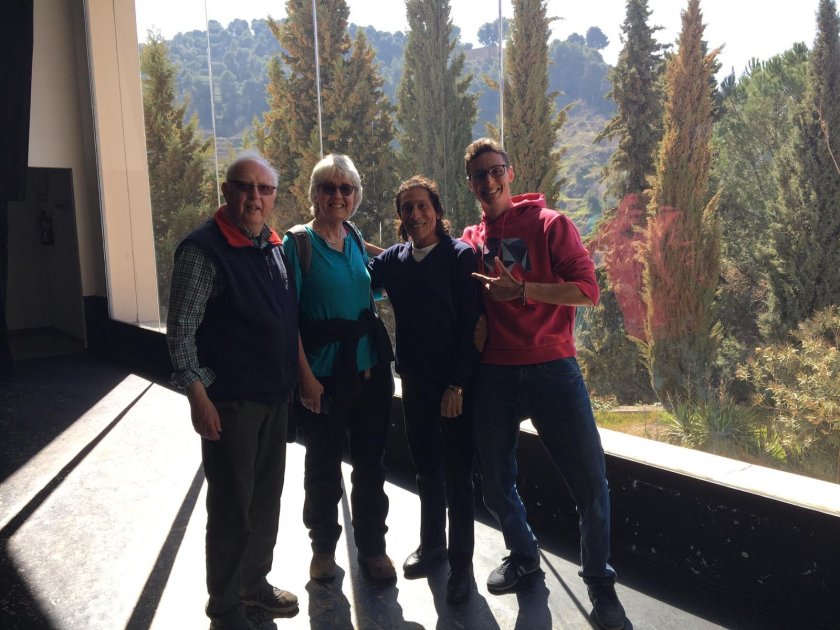
Yesterday, Javi took us on one of his walks. I mentioned it in my post. I didn’t say we got lost at one point, finding ourselves in what turned out to be the grounds of the Escuela International de Flamenco Manolete. A caretaker came out to put us right. Only he wasn’t a caretaker. He was Manolete, one of the greatest living exponents of flamenco.

He showed us round: we saw the performing space, backed not with curtains, but with a plate glass window looking straight out onto a view of the Alhambra.

Malcolm, Jane, Manolete and Javi on stage: not dancing though.

He wasn’t performing that day, but another troupe was, in another part of Sacromonte.

We got tickets. We went. My picture can’t convey the involving, sensuous unbridled yet contained emotion displayed by a small troupe of performers who danced, clicked vibrated and stamped their feet while others sang, chanted, clapped in sustained and complicated rhythm, and played guitar. Mesmerising.

Postcards from Granada

Our last full day in Granada. A taxi ride took us to the hills just beyond the city.

Views, always views, then a country walk down towards the town.

An unscheduled meeting with a flamenco – dancing legend: more of that tomorrow.

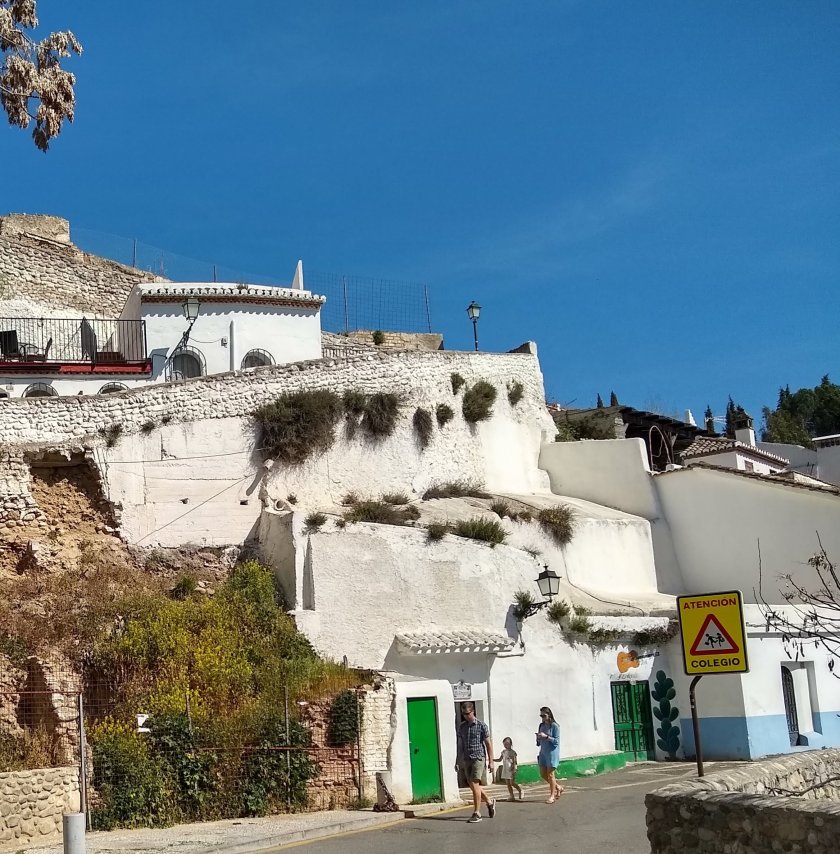
Sacromonte – an area of long-inhabited and quirky caves. A convivial and cheap set of tapas for a late lunch.

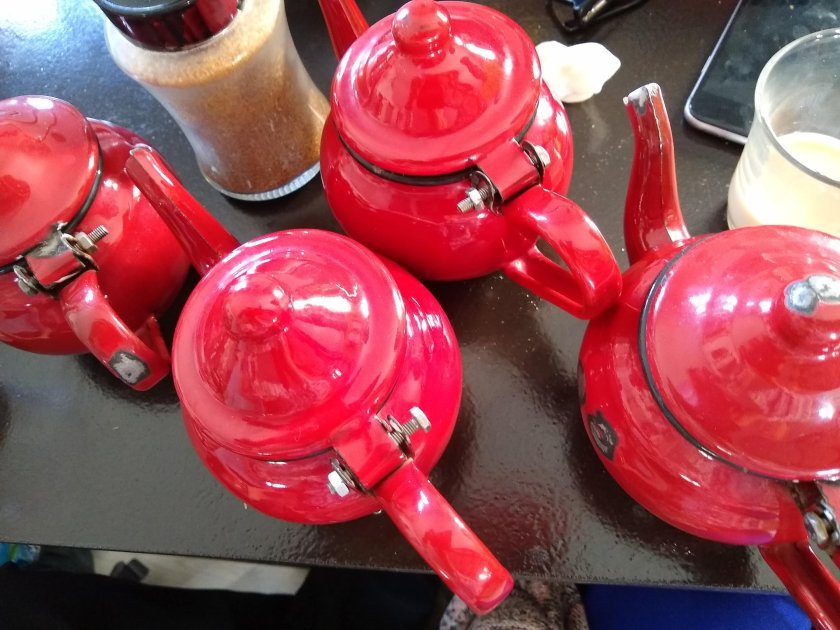
A teteria, or teahouse, to sample teas and sticky Arab pastries.

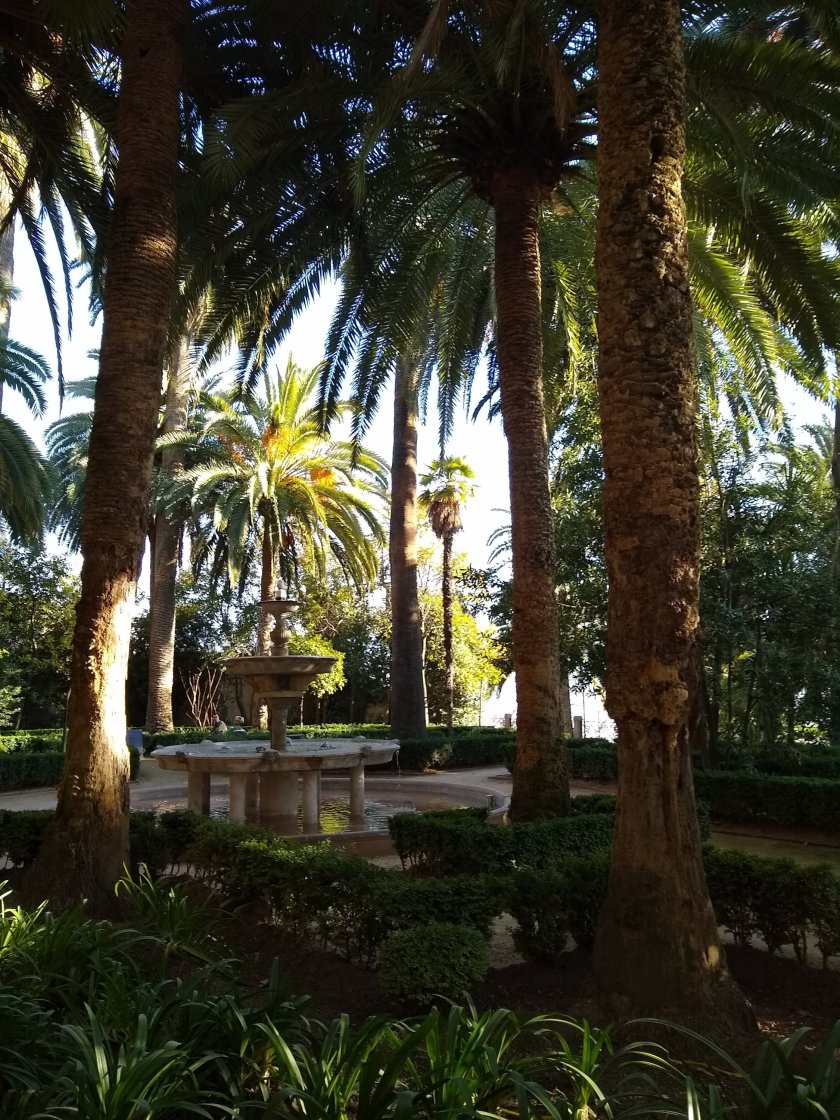
A quick trog up in the direction of the Alhambra to visit the Carmen de los Martires and its cool garden. Will that do? We’re not done yet. More tomorrow……..

….. en el quinto pino*

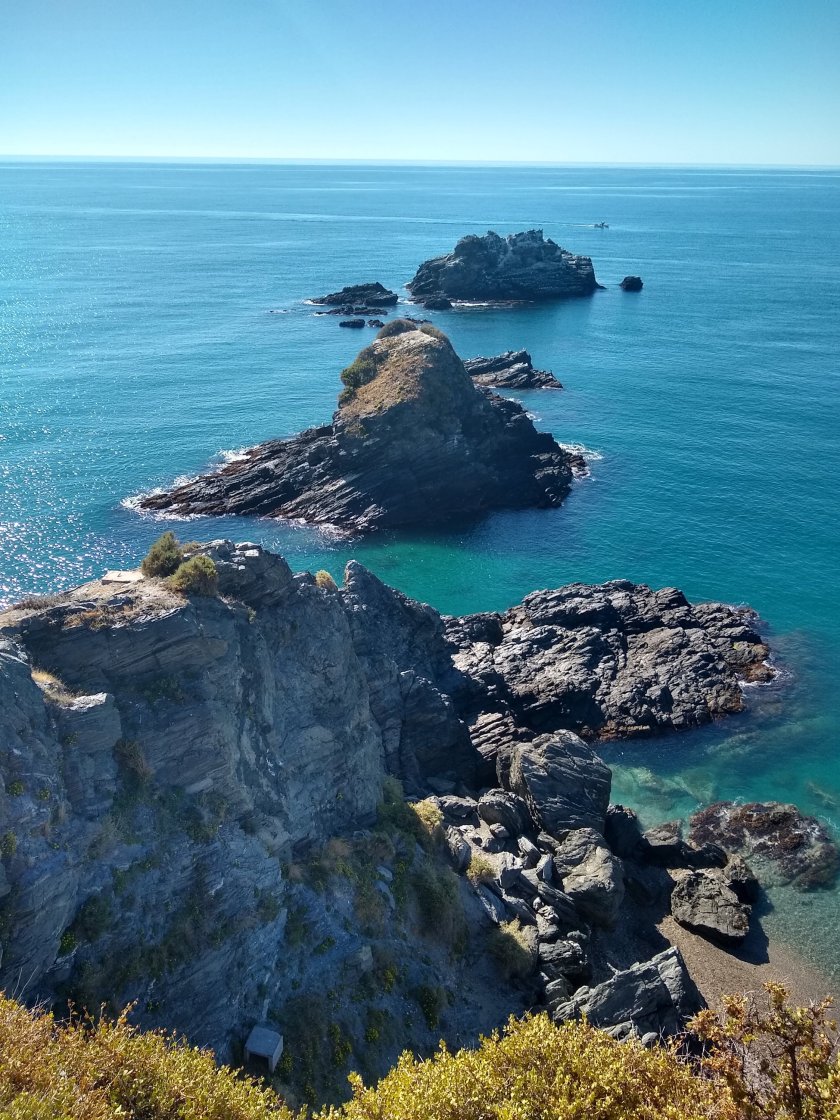
That’s where we were today. Miles away. A morning at the seaside at Almuñécar, just enjoying listening to the sea gently dragging and pushing at the pebbled beach. Just enjoying the sun, the bluest of skies, while Javi did a few bits of business.

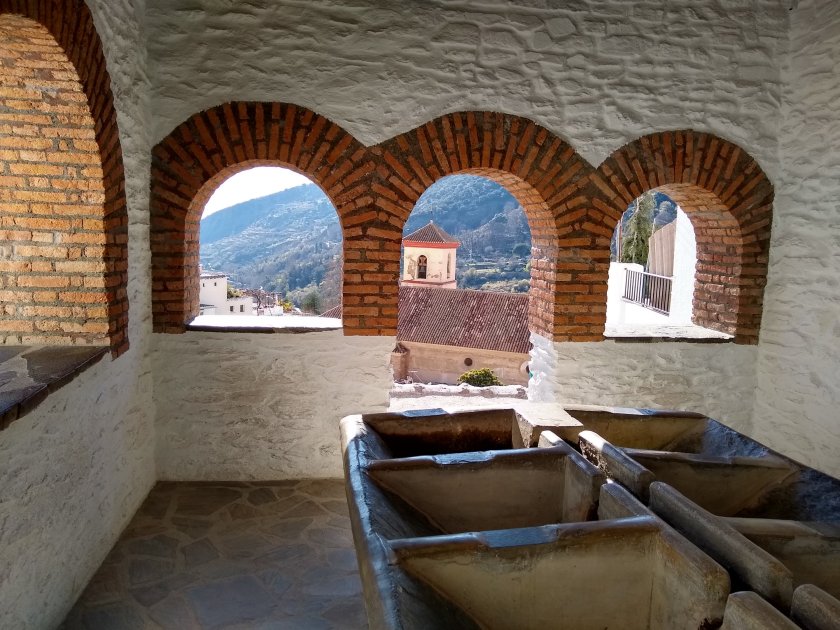
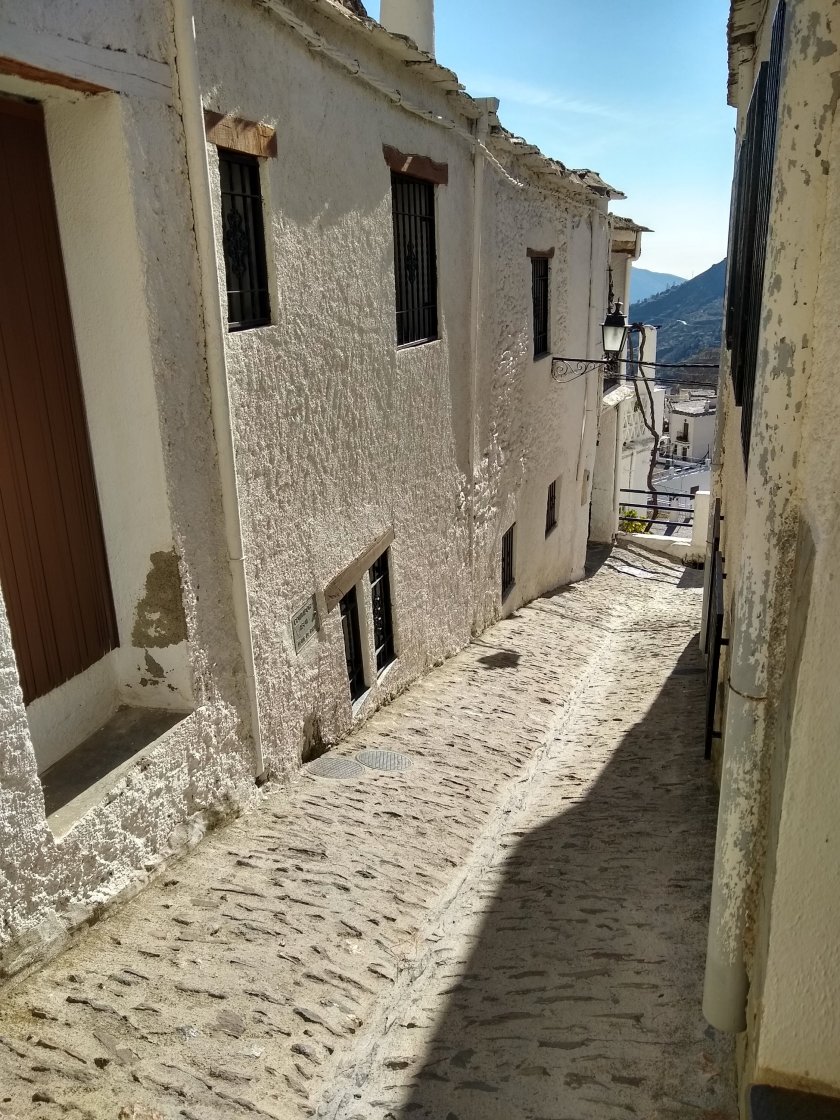
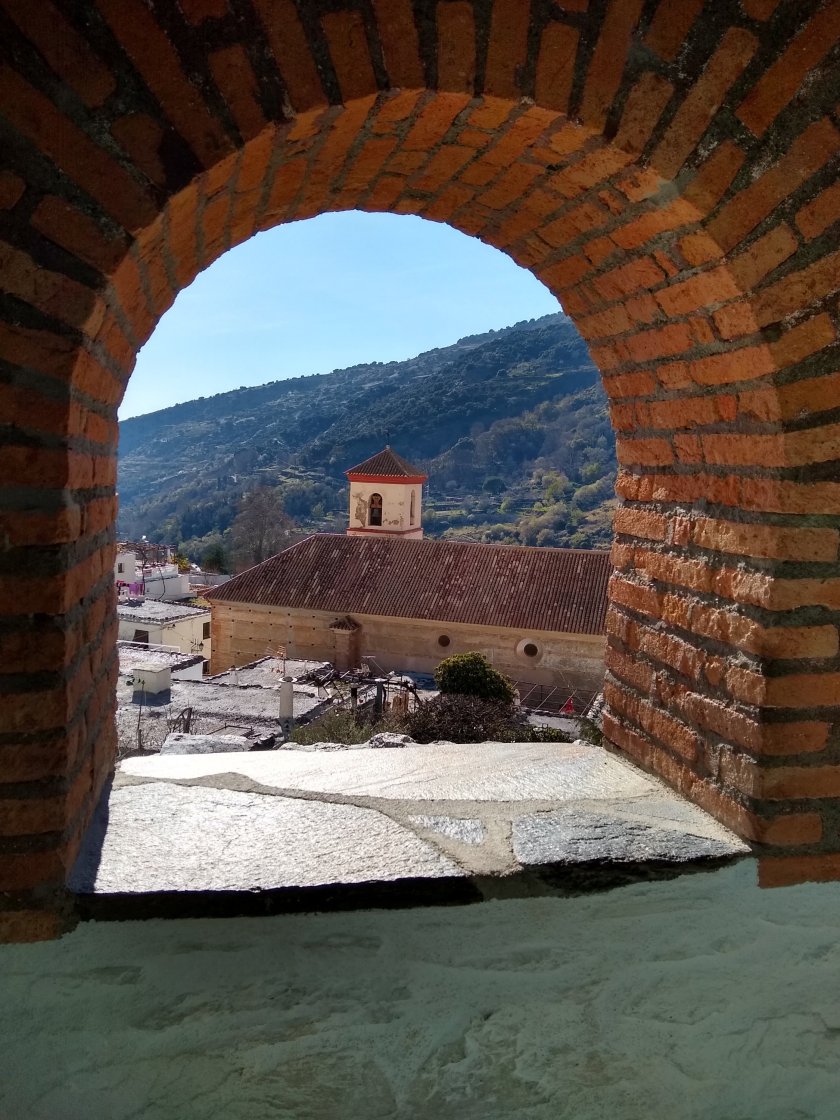
Javi’s next job was to introduce us to the Alpujarras, the southern mountains flanking the Sierra Nevada. Its deep flanked rivers and gorges are fertile, terraced by man, but irrigated by meltwater from winter snows. These days it houses holidaying walkers more than workers of the land. Its few white villages were once the last bastion of the Moorish population. As their traditional Berber building style – white boxy houses with flat rooves – still demonstrates. We explored Pampaneira, which houses farmers, workers in the tourist industry, and second-homers. Here are its homes, its ancient wash-house, and its views.

*Estar en el quinto pino: to be at the 5th pine tree – a long way from home

The foothills of the Sierra Nevada

Today we went to a poor man’s Alhambra. We sought jaw-dropping beauty, tumbling cascading water, refreshing cool…. and peace. Javi delivered us a day in which, only some 12 km from Granada, we experienced soul-soothing quiet, dramatic views – and just a touch of adventure. And not a tourist in sight.

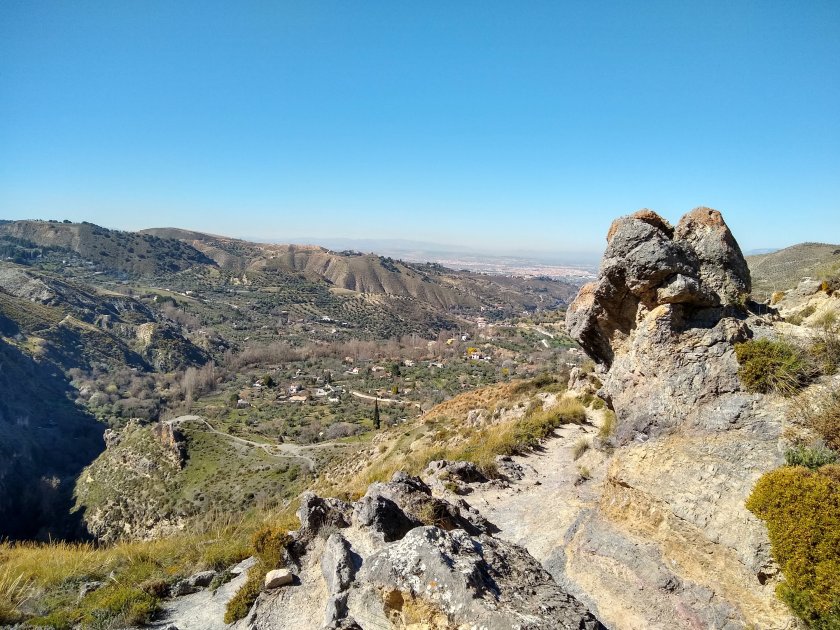
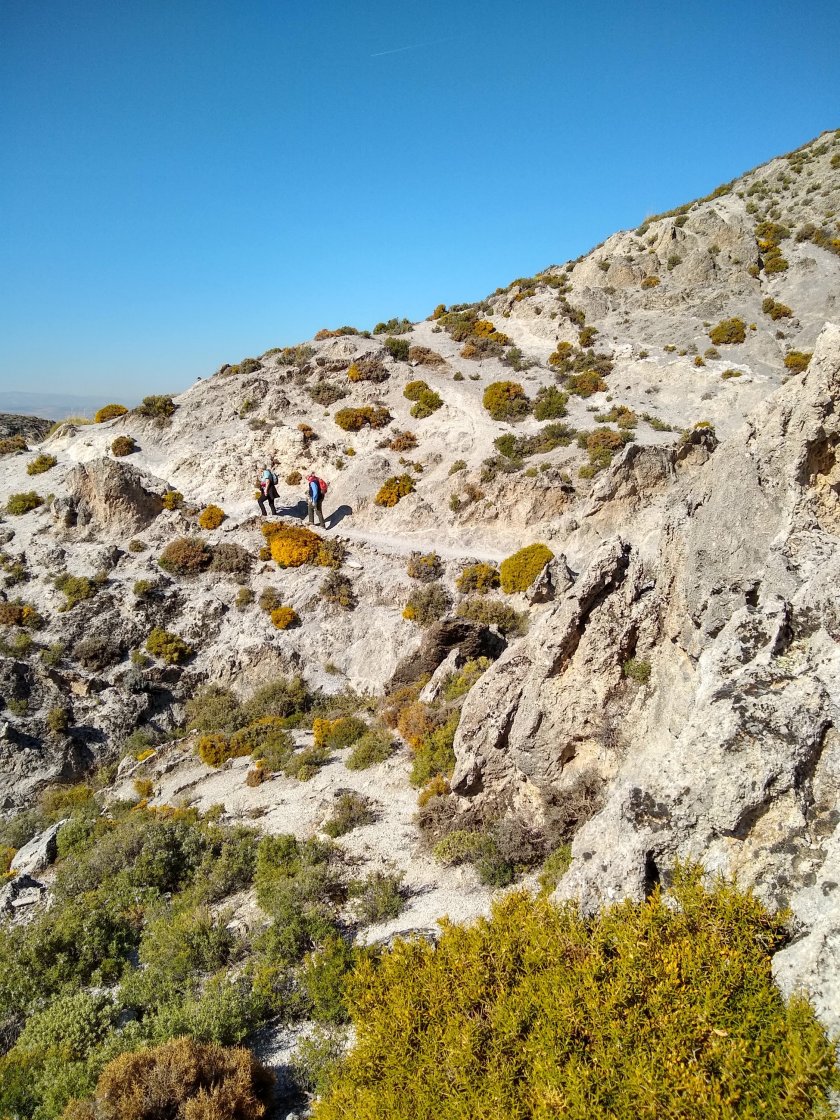
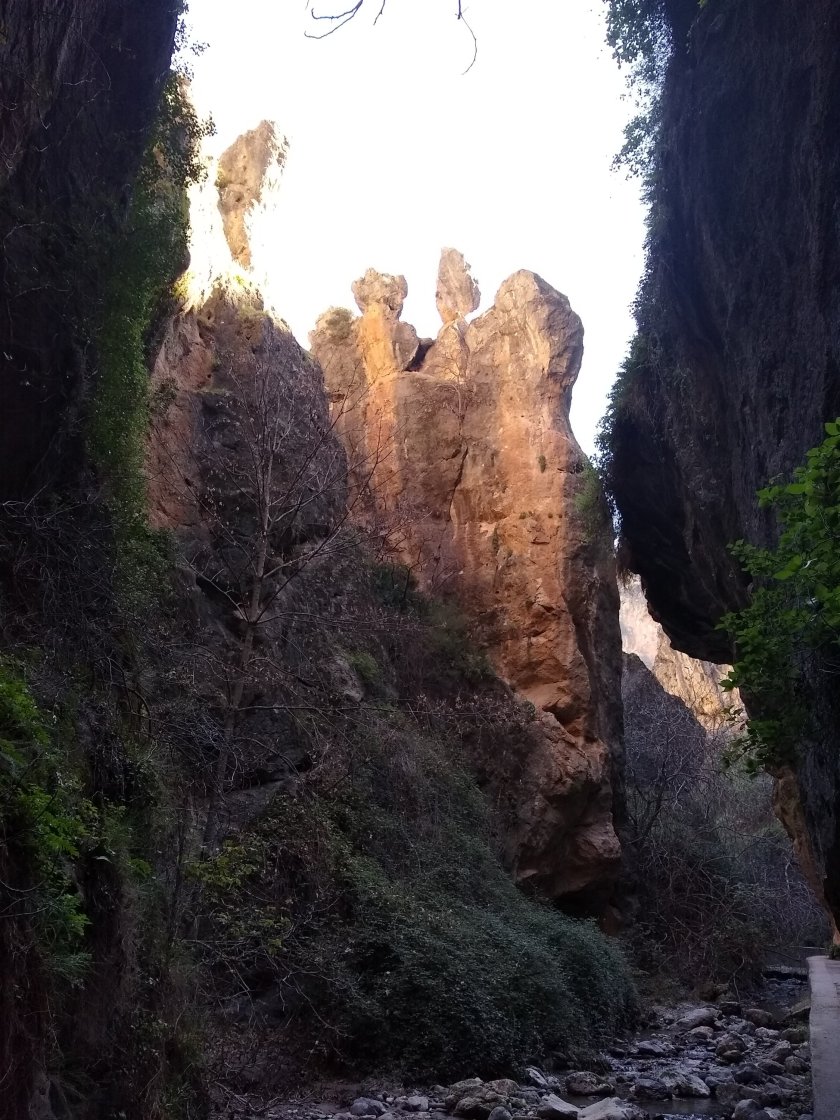
We started our day climbing from Monachil, a village set among arid yellow and red tinted slopes. As we went on, dramatic rock formations scrambled high above us.

Our path narrowed. We were obliged to hang onto nearly sheer rock and manoeuvre ourselves along a route whose path followed a stream. Swaying bridges too.

As our gorge widened, there were different views, and a grassy plain for a mid-morning rest. We watched choughs wheeling high above us, preparing to nest high on the mountainside.

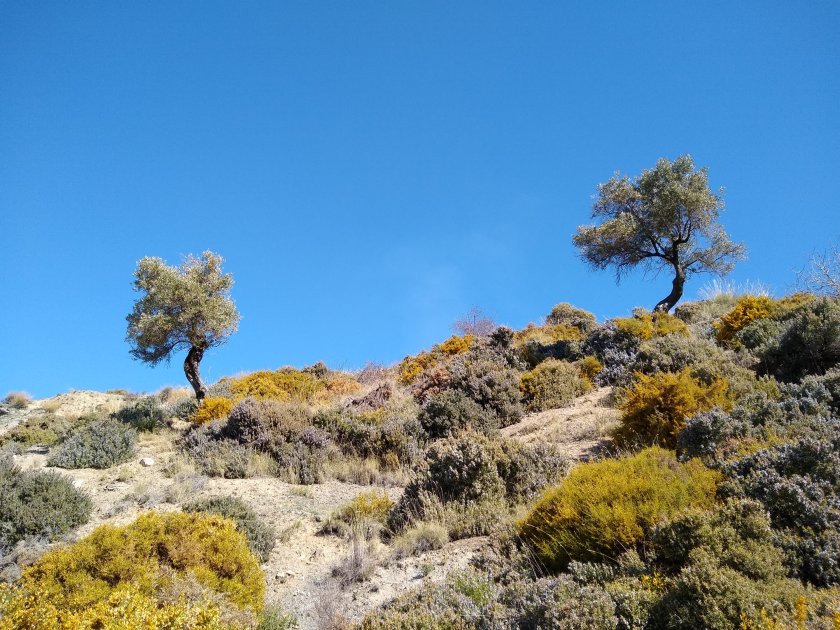
There were Mediterranean herbs, gorse, butterflies. And suddenly, over there in the distance, Granada.

Our circuit was almost complete. We’re refreshed, invigorated and renewed. Especially after our tapas, eaten sitting in a sunny riverside bar in Monachil. Don’t choose. Get what you’re given. Perfect.

Here we are. One of Jo’s Monday Walks on a Tuesday…https://restlessjo.me/jos-monday-walk/

The Alhambra

What can I say about the Alhambra in Granada that hasn’t been written a hundred times before? I shan’t even try. Since the 9th century this striking hillside site just outside Granada has been a fortress, an Islamic palace, a Royal palace, gardens, a whole city. It’s even been an abandoned ruin. Javi’s grandmother used to come up to this abandoned place with her friends for picnics.

Now it’s a UNESCO World Heritage Site.

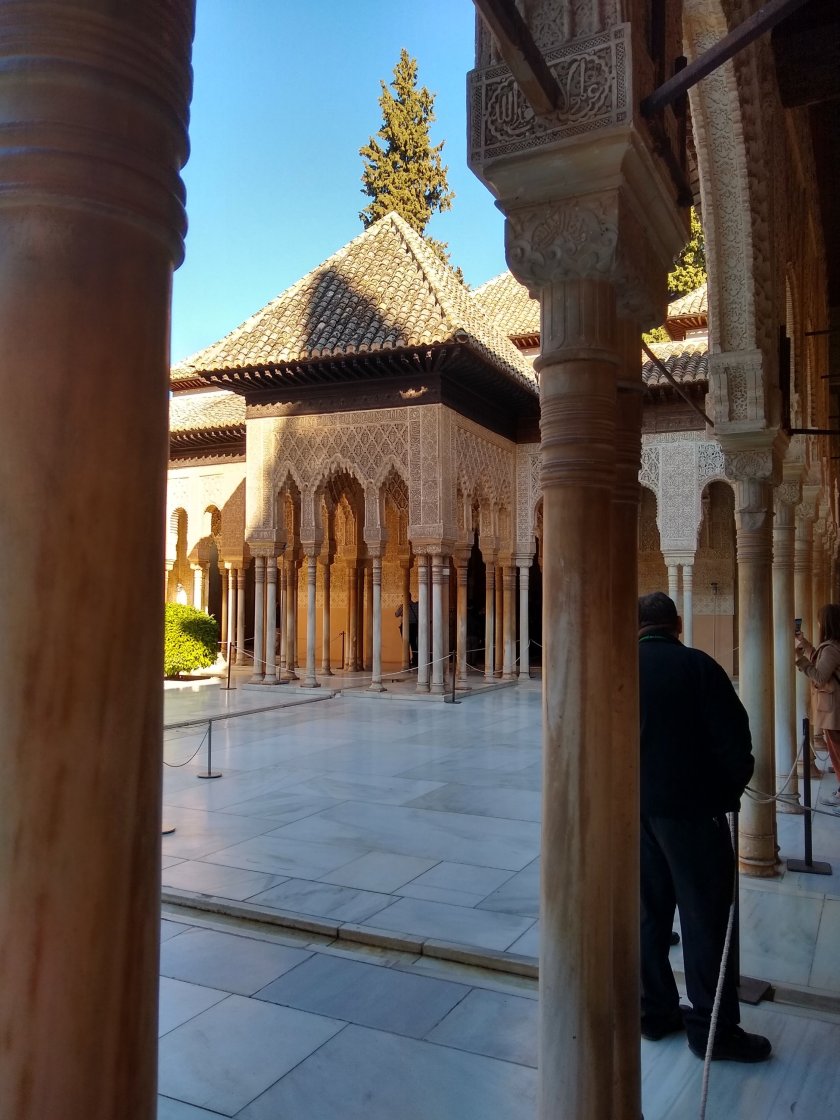
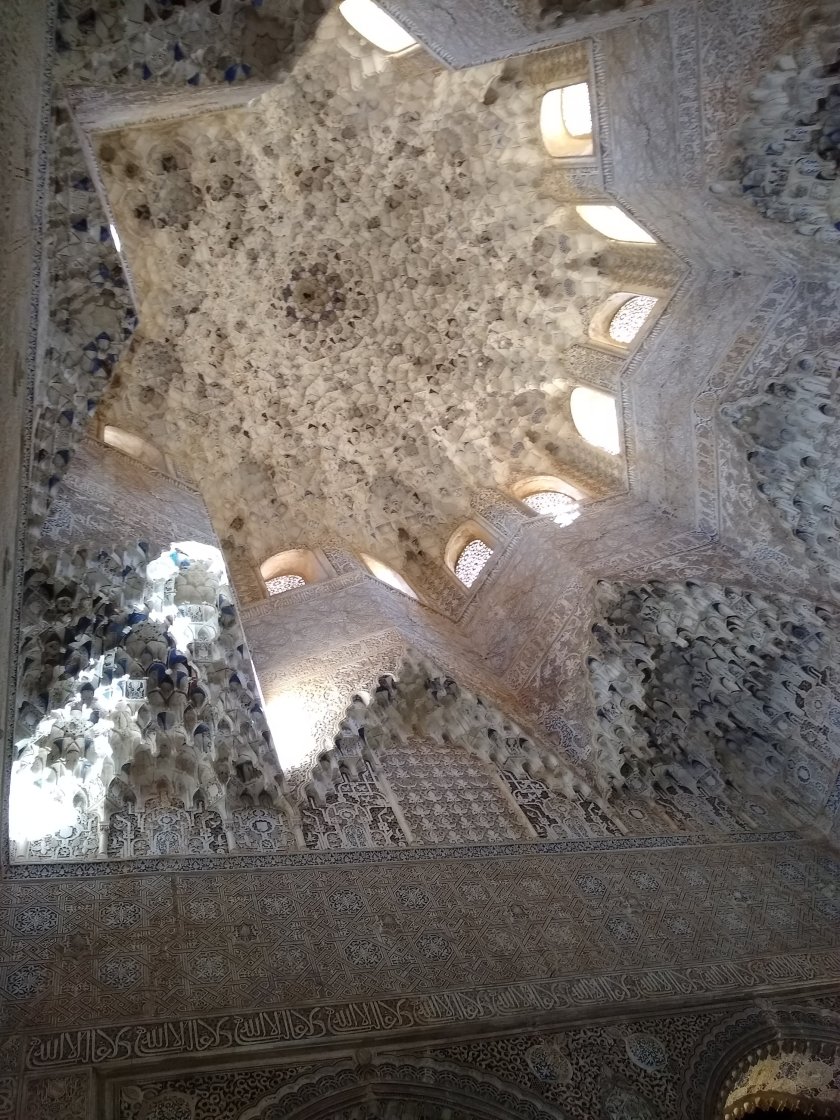
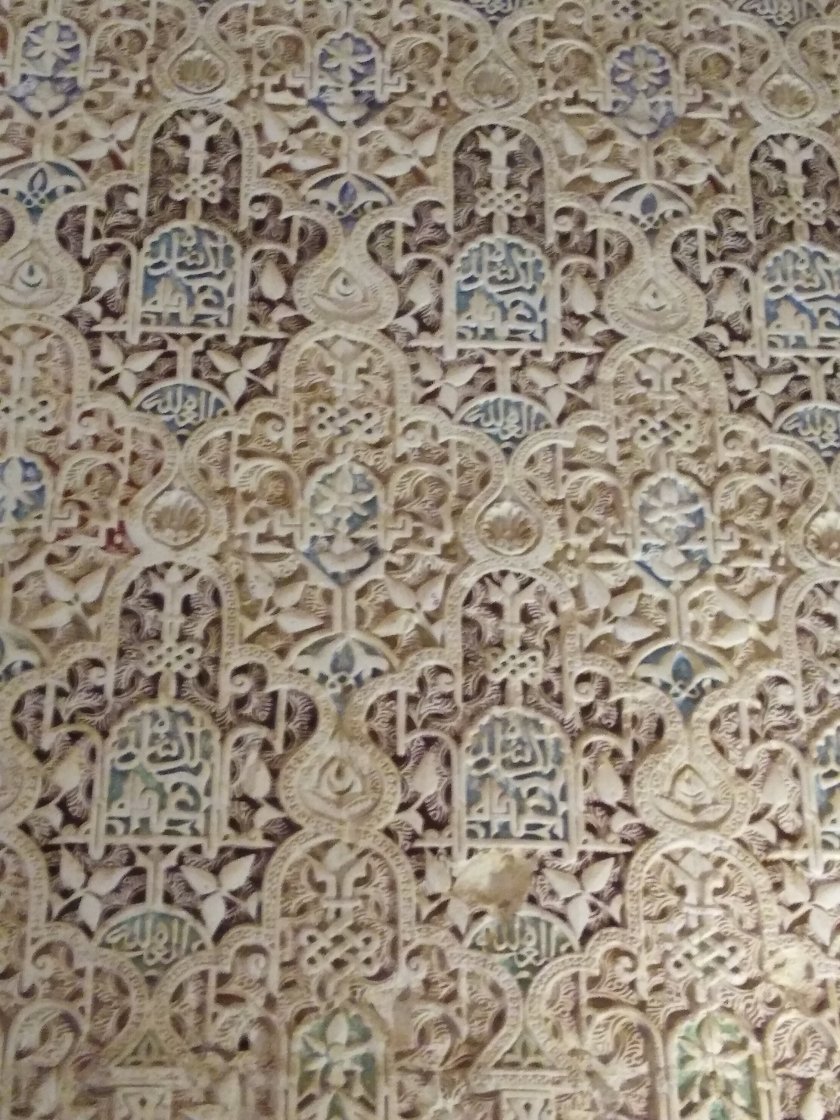
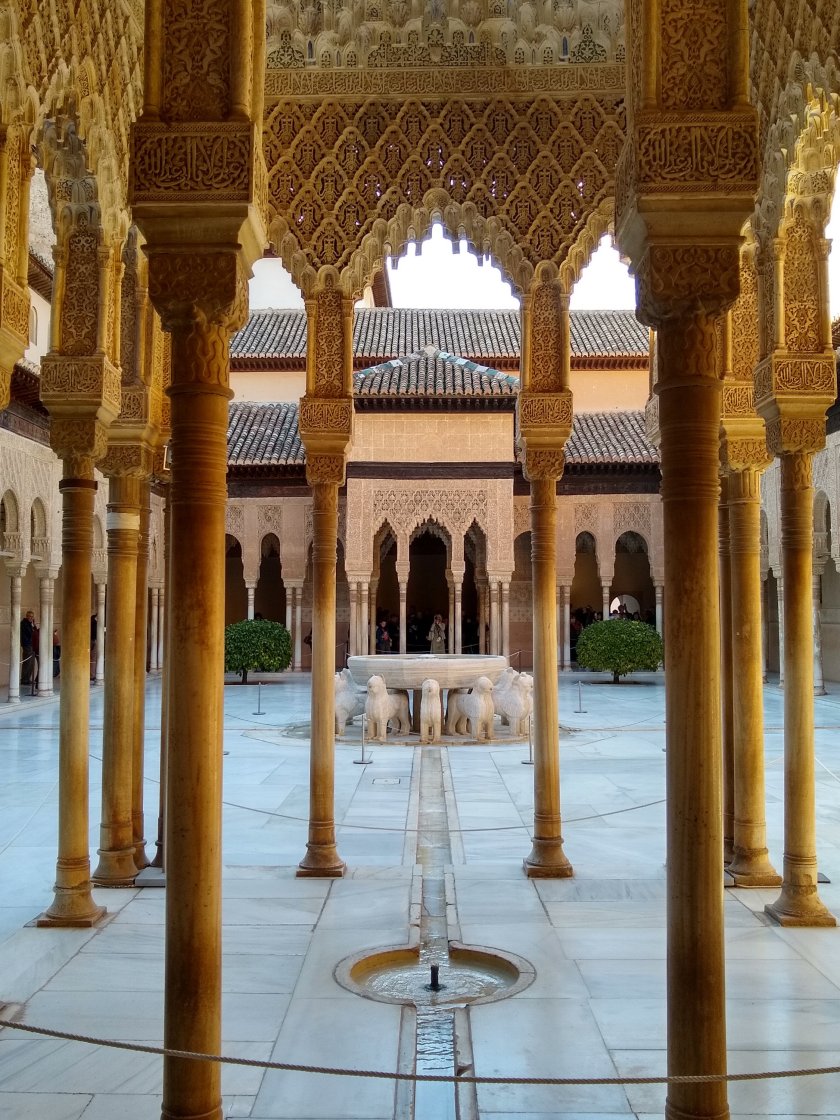
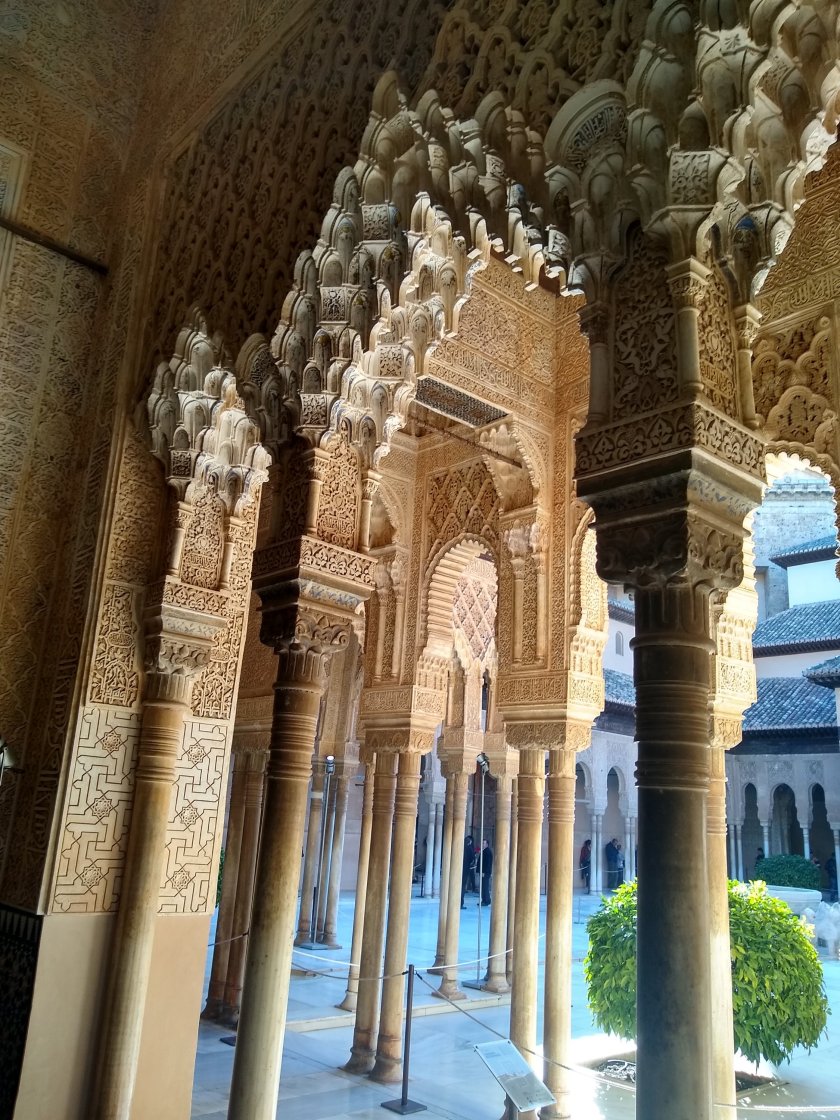
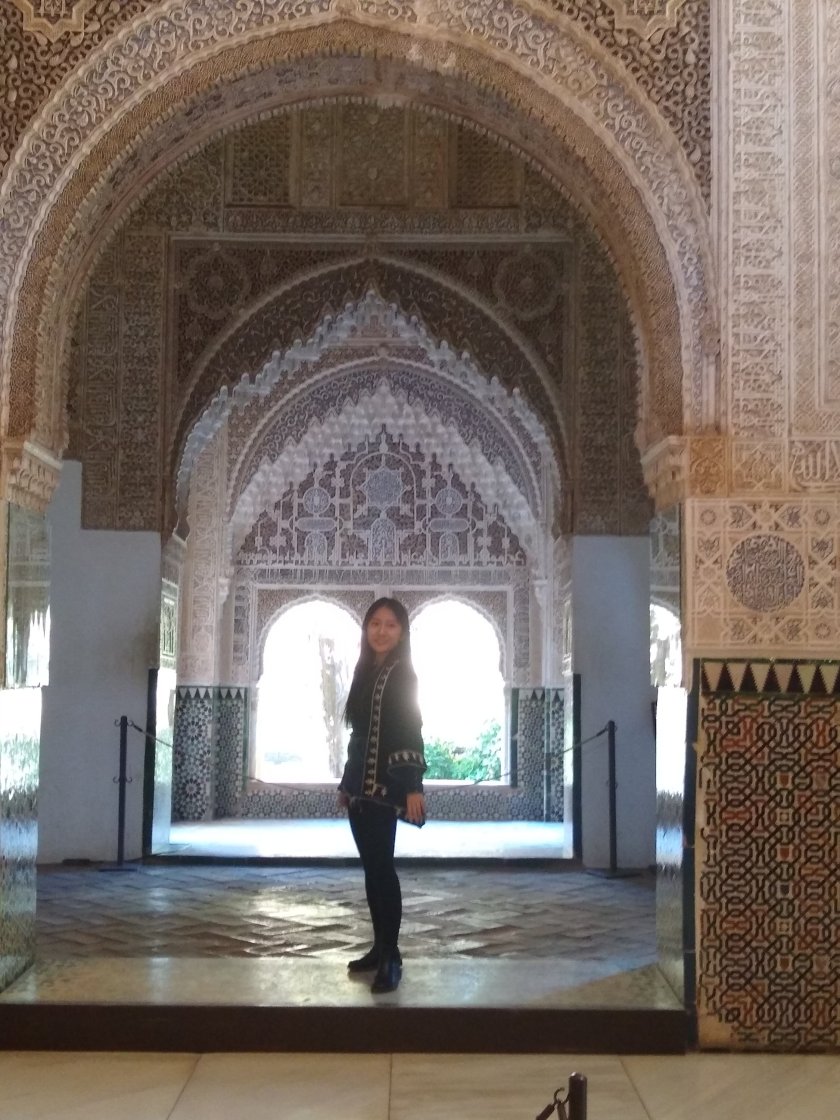
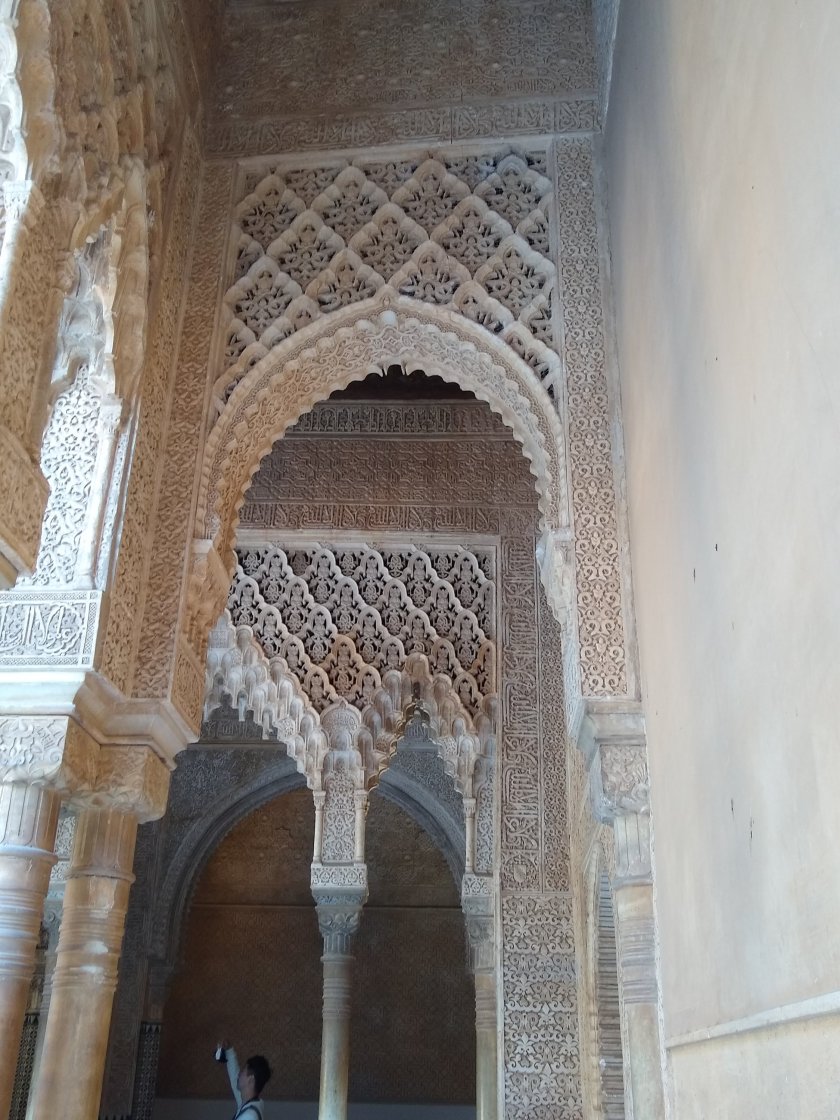
We tried to imagine what this place meant to those who lived here over the centuries. Southern Spain is hot. For months it’s rarely cool, even at night. Here are cool courtyards; formal canals and ponds; trickling or cascading fountains; elegant chambers with exquisitely, delicately carved tracery; slender columns; magically evanescent roof spaces reaching heavenwards.

I offer you a scrapbook of images. You can find history lessons, detailed descriptions elsewhere. I don’t offer you selfies. I left that to the – mainly younger – visitors who wanted only to pose and pose and pose again for yet another image against a beautifully wrought backdrop to which they paid no attention whatever.

Arab Granada

Southern Spain once upon a time was Muslim territory. So Javi’s mum decided we should begin getting to know Granada by visiting Albaícin.

This was a quarter, then outside the main city walls, developed by the Muslims between the 6th and 15th centuries. It’s a warren of tiny characterful streets interspersed with grander dwellings, ‘carmen’. These houses had large courtyards at their core, planted with vines, with fruit trees, with sweet smelling climbing shrubs. Cooling fountains played.

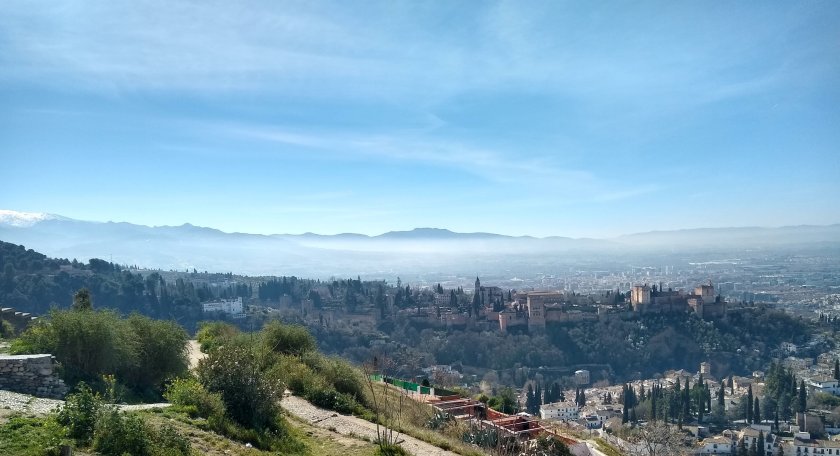
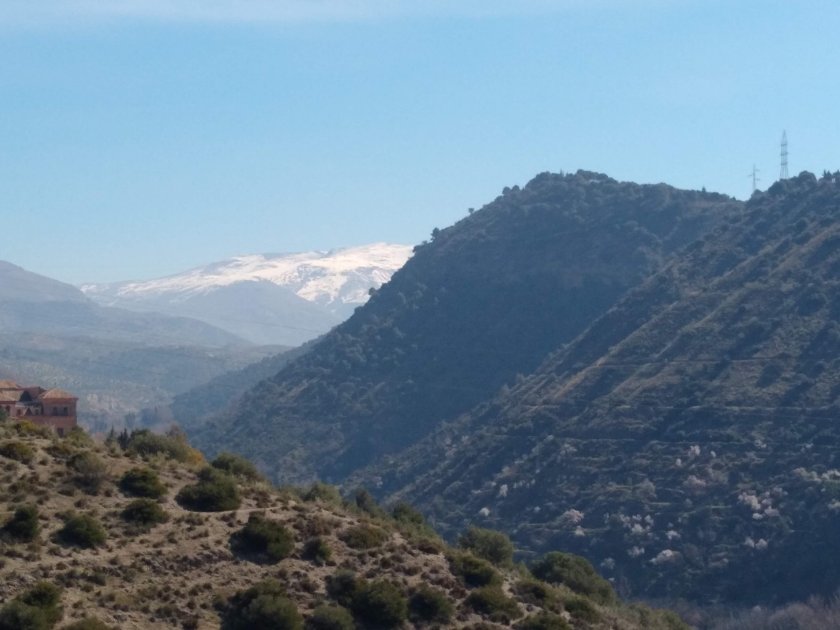
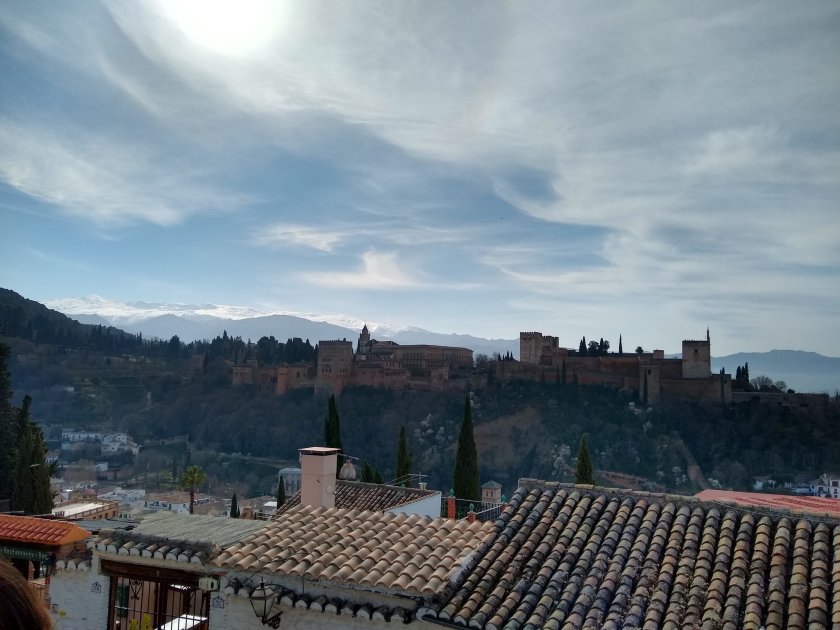
And for us there were views too, across to the snow-crusted Sierra Nevada, and to the Alhambra. That’s where we’ll go tomorrow.