This week’s pictures hint at two or more stories: at that of the life of Jesus, from whose life and teaching spring one of the world’s great religions. And at the building of La Sagrada Familia, Antoni Gaudí’s cathedral celebrating Jesus’ family, created by thousands of craftspeople with special stories to tell, gathered over the last 136 years …. maybe only another eight or so to go.
‘Story’ is this week’s WordPress photo challenge. Click on any image to view full size.
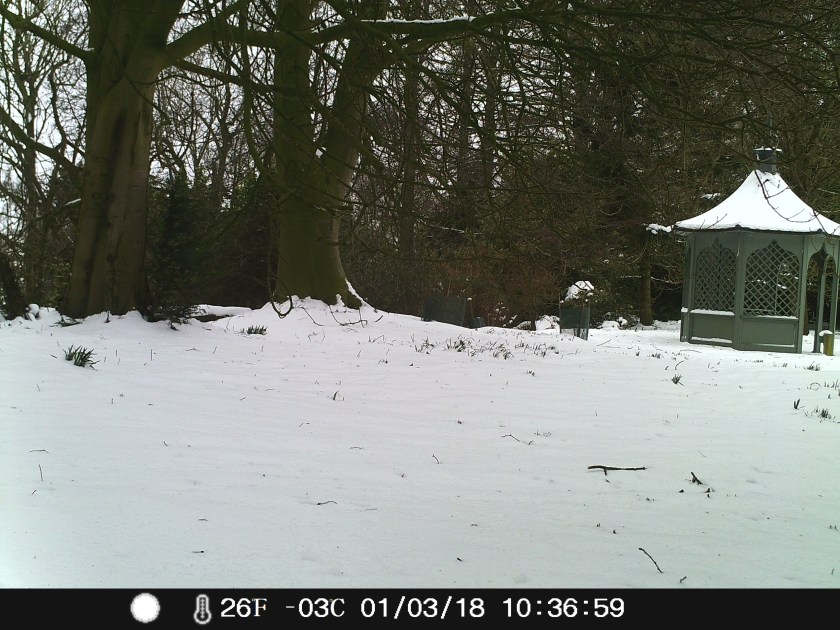
For comparison purposes, here is the garden by day. In a moment, you and the rabbit will see it by night.
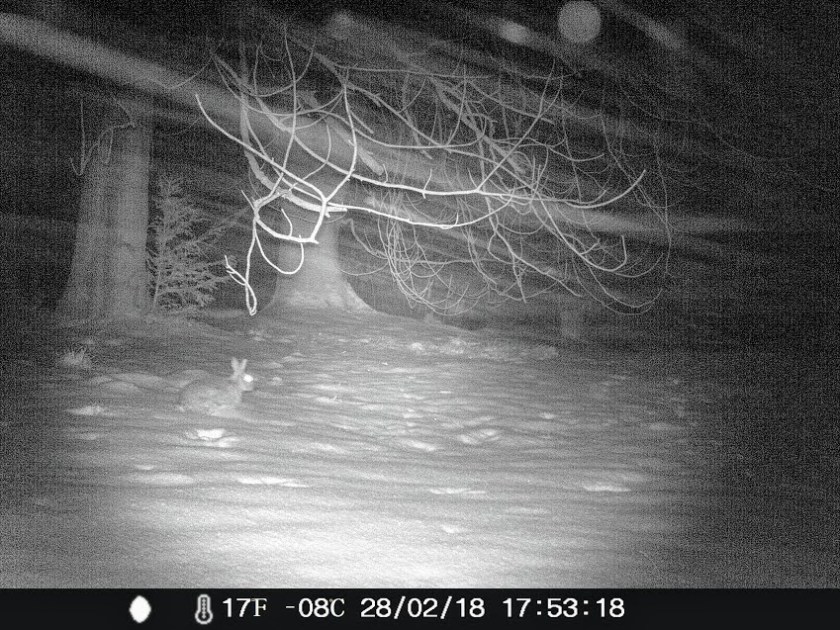
At Christmas, Tom & Sarah gave us a night camera, so we could see what went on in the garden after dark. So far no bears, wolves or lynx have revealed themselves. Sadly, no foxes, badgers or deer either, though we know they’re there: we just have to find the right spot.
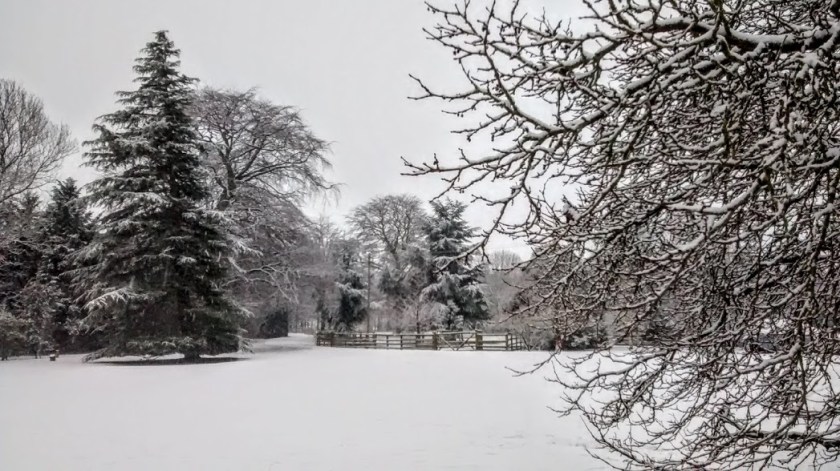
This week however, with all the snow, the garden took on an other-worldly aspect. And the rabbits came out as little as possible. But here’s one who braved the cold. Please note the temperature.
Rabbit in a hurry.
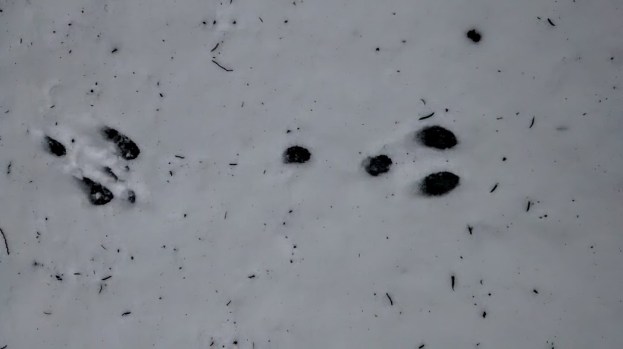
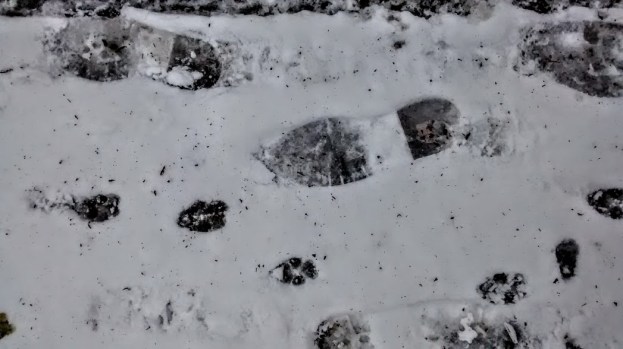
And in the morning, as short periods of sunshine briefly melted the snow, we spotted, apart from rabbit prints…
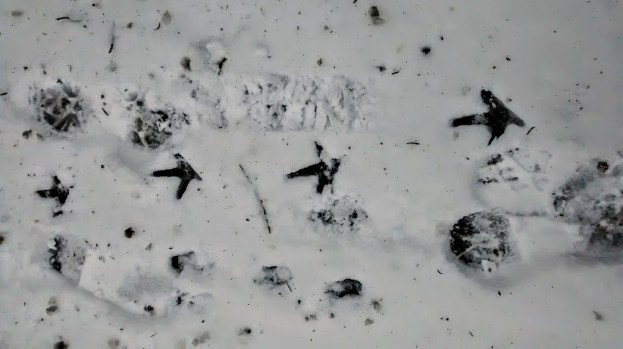
…. and pheasant prints …..
….. human bootprints too.
Although I rather liked these ghostly negative image prints. I thought they looked out of this world.
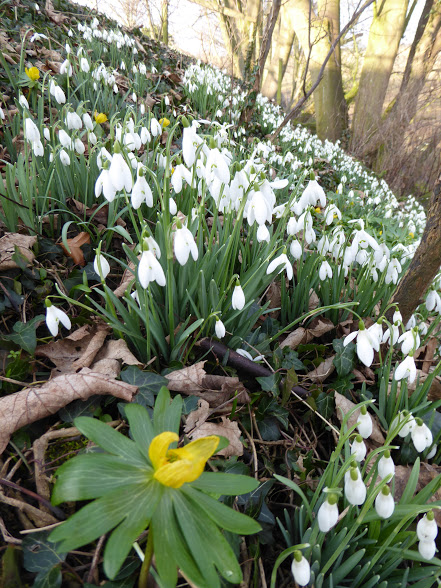
In the woods beyond our house it’s impossible to walk without risking crushing snowdrops beneath our feet. They’re everywhere. They thrust through the ivy, the mosses and last autumn’s fallen leaves, promising longer days and new life.
But they don’t prevent quite everything from getting a look in. Just occasionally, a few aconites muscle in, their sunny faces a contrast with that crowd of snowy-white blooms.
A response to this week’s WordPress Photo Challenge: A Face in the Crowd. I haven’t really stuck to the brief:
‘Create an image that represents being “a face in the crowd.” Explore silhouettes, shadows, orientation, and other ways to mask your subject. As you hide the defining characteristics of your model, notice which traits continue to stand out.’ I haven’t learnt not to be shy about including solitary strangers as I point my lens.
This photo appeals to the part of me that can’t resist a good scavenge. The part of me that as a four year old, willingly got up at four o’clock to go mushrooming with my mother on the abandoned wartime airfield near Sandhutton.
The part that went gathering rosehips at school in the autumn to send away to be made into Delrosa rosehip syrup; and has always gathered blackberries in season, to jam, jelly or quite simply devour whilst picking.
We discovered that the inhabitants of rural France think just the same way. Nobody ever leaves home without an ‘au cas où‘ bag – ‘just in case’ they find some walnuts, almonds, mushrooms, wild cherries or mirabelles. And neither did we- that bag was often full by the time we got home.
Now we’re back, we hunt down the biggest, purplest sloes to lay down bottles of sloe gin for winter evenings.
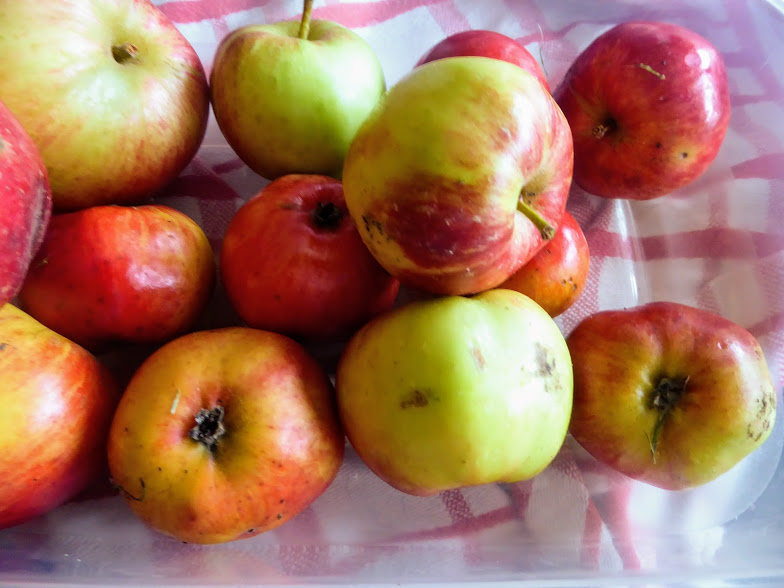
And in autumn we never walk through the village without rescuing windfall apples from the path, disregarded by the trees’ owners because they quite simply have too much fruit in their own gardens.
Here’s some of last autumn’s haul, being transformed into blackberry and apple jelly to spread on toast after a chilly winter walk.
Ripon has been a city for well over 1300 years. Founded by a saint – Wilfred – it’s been under the control of the Vikings, the Normans, and more recently Harrogate Borough Council. It’s been a religious centre, a market town, a textile town. These days it’s no longer so important. But those of us who live here tend to like this quiet unassuming place with a past to be proud of.
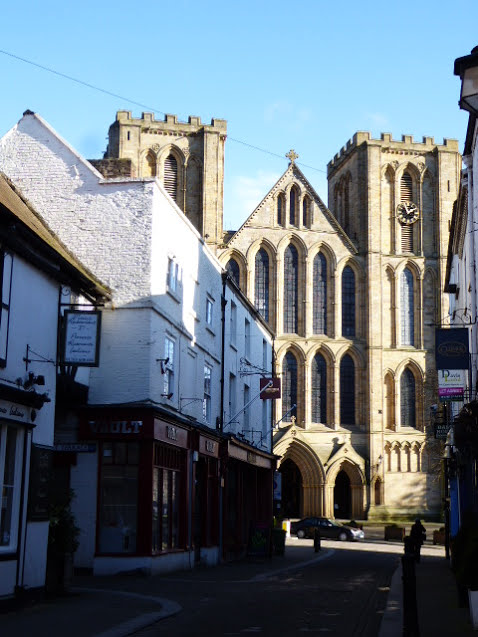
Come for a day trip, and you’ll head straight for the Cathedral, built and destroyed and rebuilt several times from the 7th to the 15th centuries.
Ripon Cathedral, now as in the past peeps from behind ancient narrow streets.
After that though, we could go and look for a Ripon not mentioned in the guidebooks. It was by chance that I found a charming oasis of calm, tucked away yards from the city centre and known to few. It once housed a non conformist early 19th century ‘Temple’, of which all that remains is the Dissenters’ Graveyard. A secret, quiet place, you’ll have it all to yourself.
Walk further up the road and you’ll find The Crescent, set back from the road behind a spacious gardens. Now as then, back in the 19th century when the houses were built, it’s a fine address. Lewis Carroll thought so, He used to visit friends here, and compose songs and stories for their daughters. There’s a blue plaque to prove it.
Day trippers tend to go home for supper. Which is a pity. Wednesday visitors could go and watch bellringing practice in the belltower of the Cathedral. Hearing the bells tolling rhythmically and tunefully for practices, weddings, and on Sundays is one of the joys of Ripon life.
The bells swinging during practice – very noisy: earplugs will be worn!
Hard work, rhythmical work.
There are a lot of them….
Day visitors miss out too on seeing the Ripon Hornblower setting the watch, as the postholder has done every single night since 886 and the time of Alfred the Great. The Wakeman, employed by the city, blows his horn in all four corners of the market square to announce the watch is set and that citizens can sleep safe in their beds (these days the watch is provided by North Yorkshire Police I suppose). Then he goes off to tell the mayor, who may be watching tv, having a bath or an evening down at the pub, or at the cinema … no matter. The mayor needs to know.
The Market Square, where the Wakeman does his job.
Wakeman at work.
I could show you the Leper chapel, or the house where Wilfred Owen lived. I could take you down ancient ginnels, or along the canal which was Ripon’s transport hub once upon a time. Or you could make your own discoveries. It’s a city you can enjoy exploring in your own time.
This week’s WordPress photo challenge is called Tour Guide. Click on any image to see it full size.
This post is for you, Ros. You’re a friend I would never have met except through blogging. And you’re coming to visit us soon. Where shall we explore first?
The WordPress photo challenge this week is ‘Beloved’.
I don’t think the humans in my life whom I love would be happy for me to plaster their images all over the blogosphere. I have no pets, beloved or otherwise. So I’ll have to look a little further.
Here’s a little miscellany of images, beloved images:
The Yorkshire Dales, whose rolling hills, bisected by ancient drystone walls I missed so much during our years in France.
The Pyrenees, from their richly flowered springtime meadows through to winter, when their rocky slopes are covered in deep snow, and which I now miss every single day. I’ll miss the shared picnics on our walks together, when our French friends pooled resources, and we ate everybody’s offerings of home-cured sausage, local cheeses, bread, home-baked cakes together with wine and somebody’s grandfather’s very special eau de vie.
Springtime daffodils. Every year I go into deep mourning when they wither, die and finally become untidy heaps of dying leaves. I’m happier now as they thrust their sheathed stems through the hard soil, promising to flower soon- but not quite yet.
There are books: I need a pile beside my bed to get me through the night.
A single, perfect cup of coffee from Bean and Bud in Harrogate.
Skeins of geese flying overhead mark the seasons here, and I love their haunting, raucous cries.
And so on….
The Pyrenees seen from St. Julien de Gras Capou in summertime.
A shared picnic near Montaillou, in March.
The Nidderdale Way.
Near Pateley Bridge.
We’ve already seen our first daffodils in North Stainley this year.
Just a random pile of books. I don’t think I’ve read most of these.
Our beloved Bean and Bud,
Geese flying uncharacteristically untidily over Marfield Wetlands.
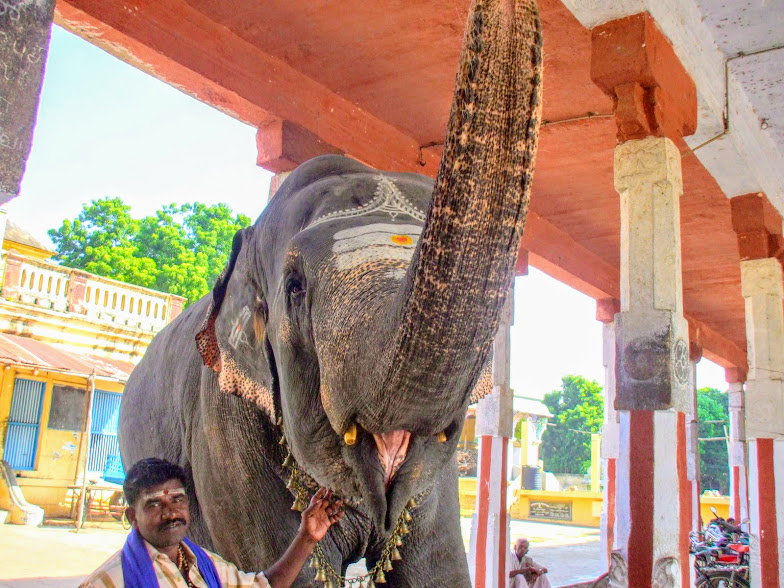
I’ll end though with this. I wasn’t beloved of this elephant in Kumbakonam, Tamil Nadu, who was only doing his job when I visited him ten years ago on my Indian Adventure. But I felt beloved and very special when he raised his trunk and brought it down upon my shoulder – his very distinctive way of blessing me.
Elephant in the temple of Adi Kumbeswarar, Kumbakonam, ready to give me his blessing.
Click on any image to see a slideshow of the photos, full-size.
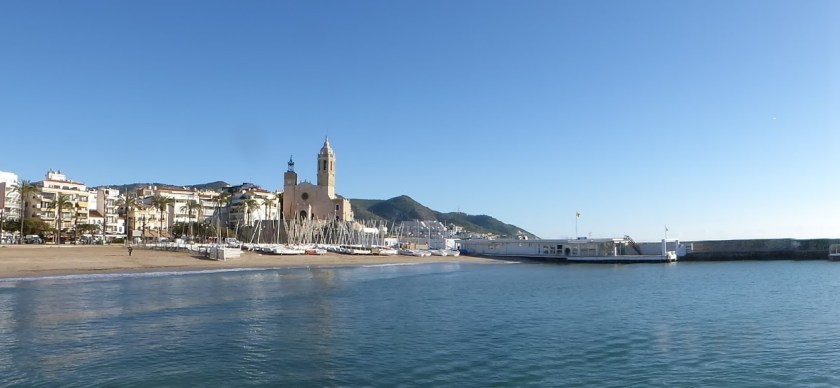
Last month, as faithful readers know, we had a day in Sitges. It was perfect. The sun shone, the sea sparkled, and we sauntered along its clean wide sandy beaches.
All was not as it seemed though. In just five minutes, from the apparently uncontaminated sands, we recovered these: mainly plastic straws and bottle tops, many disintegrating into the shards and fragments now wreaking such havoc in our oceans. And this is a ‘clean’ beach.
On a happier note, here’s a parakeet in a palm tree. The high prices of housing in this fashionable holiday destination don’t worry him. He has all he needs to build a home simply by fossicking around among the palm trees’ tall fronds.
Our Spanish holiday ended in Alicante, some 550 km from Barcelona, and was all to do with our flight home. Don’t ask.
My second impression of Alicante, and Malcolm’s first, was that it’s a lovely town. It’s suffered a bit in English eyes from its proximity to Benidorm, the British home of sun, sand, sangria and sex (and that’s probably a bit unfair too). Actually, it’s a fairly wealthy town, a historic Mediterranean port, and strolling round its historic centre, and along its seafront and esplanades was a pleasant experience.
I struggled to find much that was weathered, for this week’s WordPress Photo challenge, but here is a nicely picturesque house above the old town, and a slightly sun-battered detail from the Basilica de Santa Maria.
My other snapshots (click on any of them to see a slideshow) display a busy, prosperous town which we’ll happily return to. Especially if we can enjoy lunch outside in temperatures of 17 degrees in the middle of January.
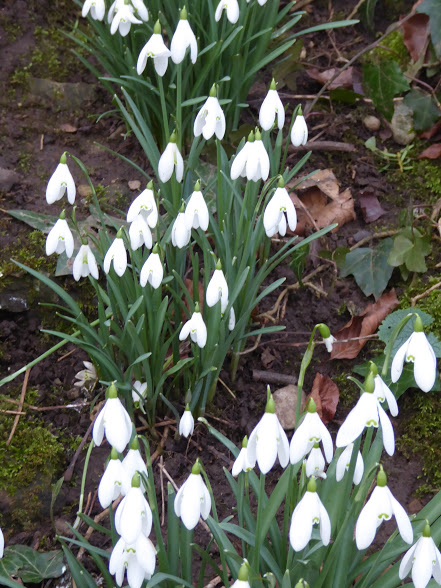
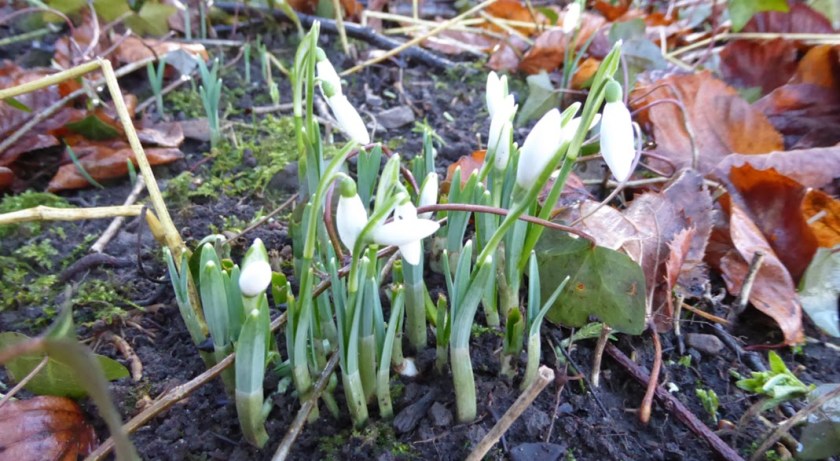
As it is, I now realise just how special those early hardy little shoots are. That little patch of snowdrops I showed you was alone, quite alone on a sea of bare earth, creeping ivy and a few shriveled Autumn leaves.
Let’s fast forward maybe four weeks. This is what the garden and surrounding woodlands will look like after all the hundreds and thousands of local snowdrops have grown, pushing themselves forth through the chilly frozen earth. Our annual miracle.
February 2017. All the local snowdrops have arrived.
















 From Pyrenees to Pennines
You must be logged in to post a comment.