Those builders hard at work just beyond my hotel room in Pondicherry weren’t the only slice of life I saw through my window there. The featured photo shows the view I had just after midnight every night (I told you I didn’t sleep), My camera – or the way I handled it anyway – wasn’t good at night-time vision, but I like the dream-like quality of this scene.
Can you see a group of five women – four of them in blue, seated in the road? Until just before I took this shot, they’d been busily sweeping all the streets round and about, equipped only with short brooms of the kind that witches in western fairy tales normally use . They made cheerful conversation, calling to each other so they could hear and be heard. Now though, it was time for a break, and the women simply sat down and rested in the road, their voices falling to a rippling murmur of chatter and laughter.
This intimate moment, sharing something with these women who were certainly unaware they were being observed, remains one of my treasured memories of India. These women, I’m sure, had little enough, and yet their easy relaxed movements suggested contentment with what their lives gave them. And above them is a washing line. All that day’s washing was blue, apparently.
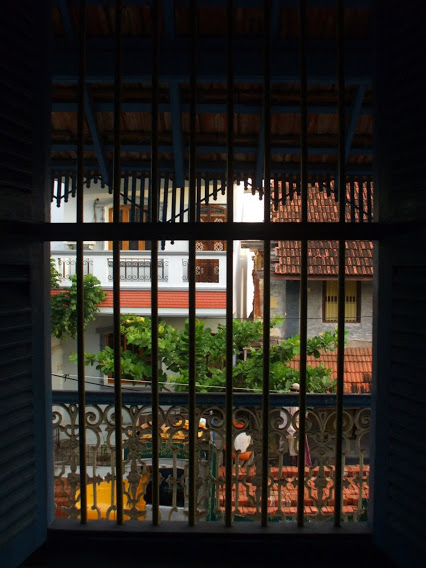
Here are the windows through which I observed the scene.
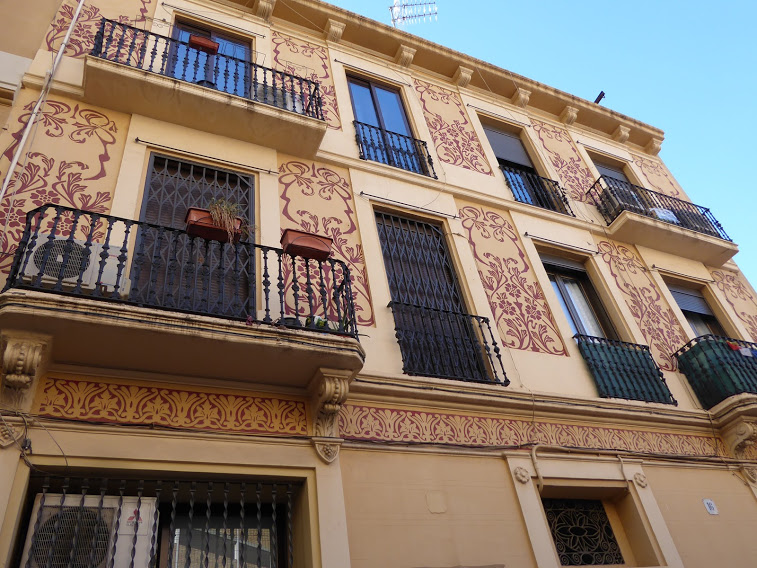
About three years ago, we were in Sants, Barcelona. The flat where Emily and Miquel then lived was too small to accommodate us for too prolonged a stay, so an apartment in Sants it was – a part of the city we didn’t knw at all, but came to like a lot.
Once a village, by the nineteenth century it was industrialised – the textile industry – and home to Barcelona’s biggest textile factory. Now it’s home to Barcelona’s biggest station and travel interchange.
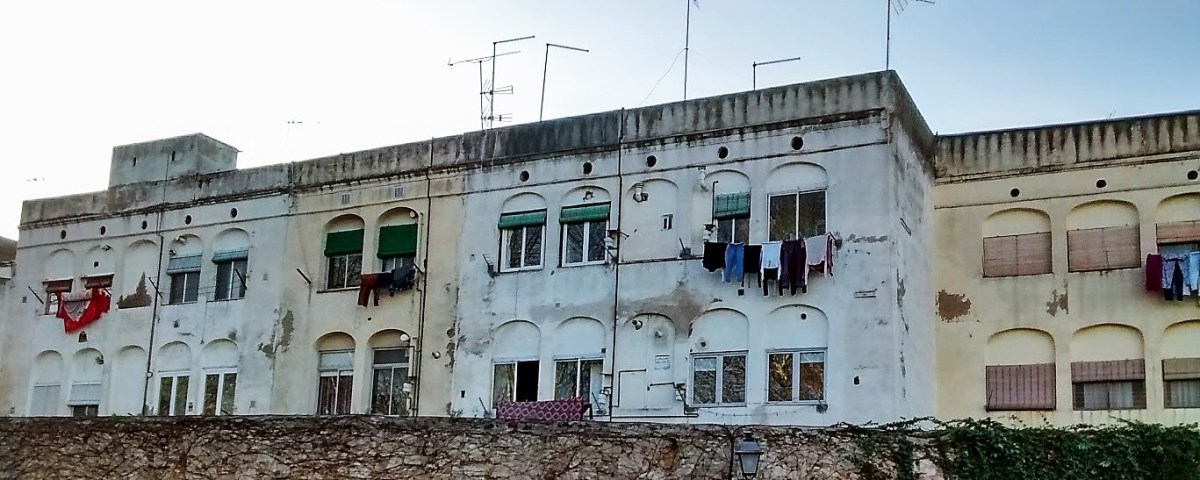
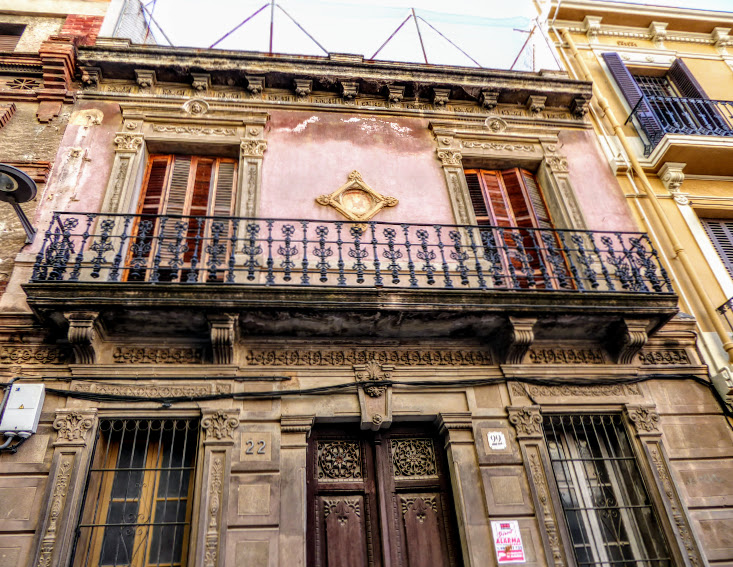
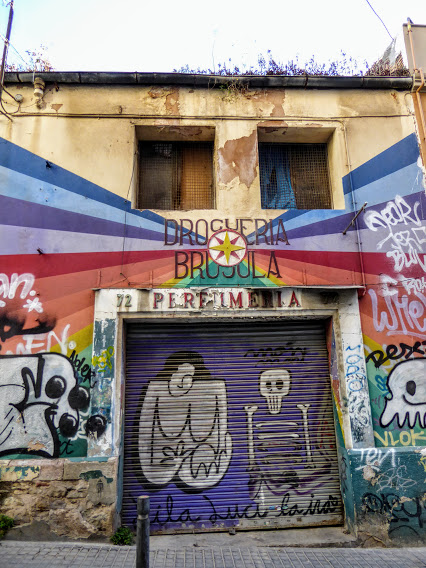
For us though, it was simply a busy working community, full of independent shops, a market, housing old and new. Let’s go and walk the streets for a while, and admire the often elegant windows. And as the feature photo shows, there’s washing. There’s always washing to hang out.
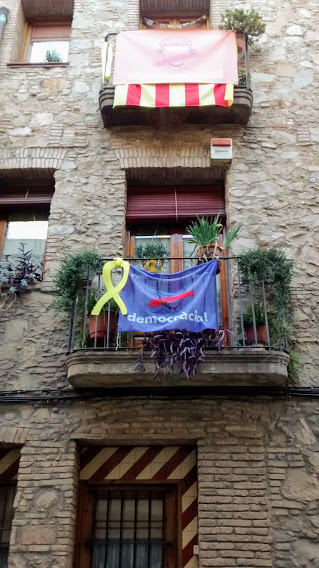
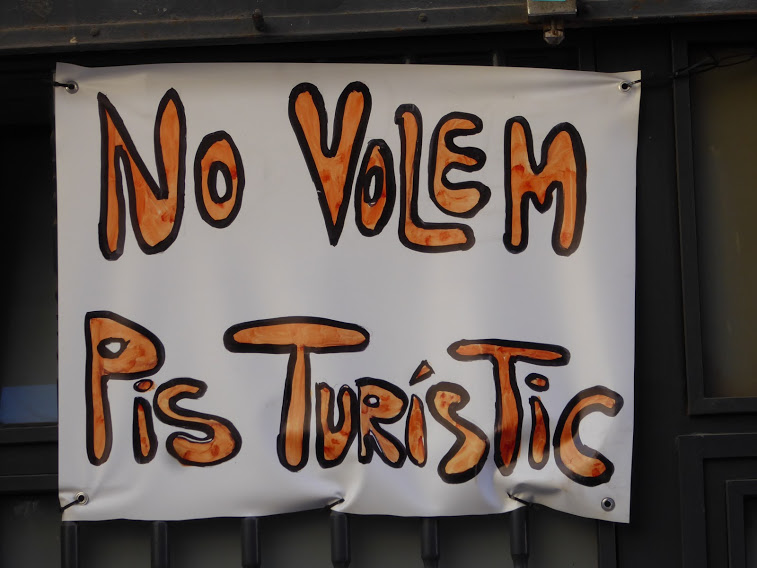
It’s an assertively independista part of the city: hence the Catalan flags and yellow ribbons. And they don’t welcome the destruction of their community by tourists that come and go. So we did our best to spend in neighbourhood shops bars and restaurants, and also hoped that, since we’re all-but Catalan in-laws now (and now, even Spanish grandparents), we might pass muster.
I am giving you two different people for Just One Person Around the World this time: both of them are auto-rickshaw drivers in India. Here we are in Chennai. Just discharged from hospital, I’m on the first leg of my journey home to England. Look out of the front window of this auto-rickshaw and you’ll see the crowded streets that were more or less my last view of India.
My rickshaw driver in Chennai
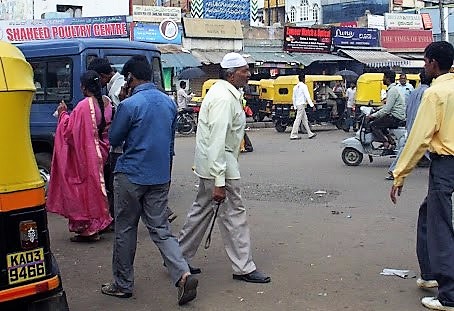
This driver was an amiable enough companion, but on my very first day in India, jet-lagged and more than thirty hours without sleep it was a different rickshaw driver who offered me my first taste of Indian hospitality and friendship as I tried to come to terms with the impossibly busy streets of Bengaluru. You’ve seen this photo before, but my first friend deserves his fifteen minutes of fame.
My first friend in Bangalore: the rickshaw driver who took me on a tour of the city, standing in front of ‘his’ Parliament Building
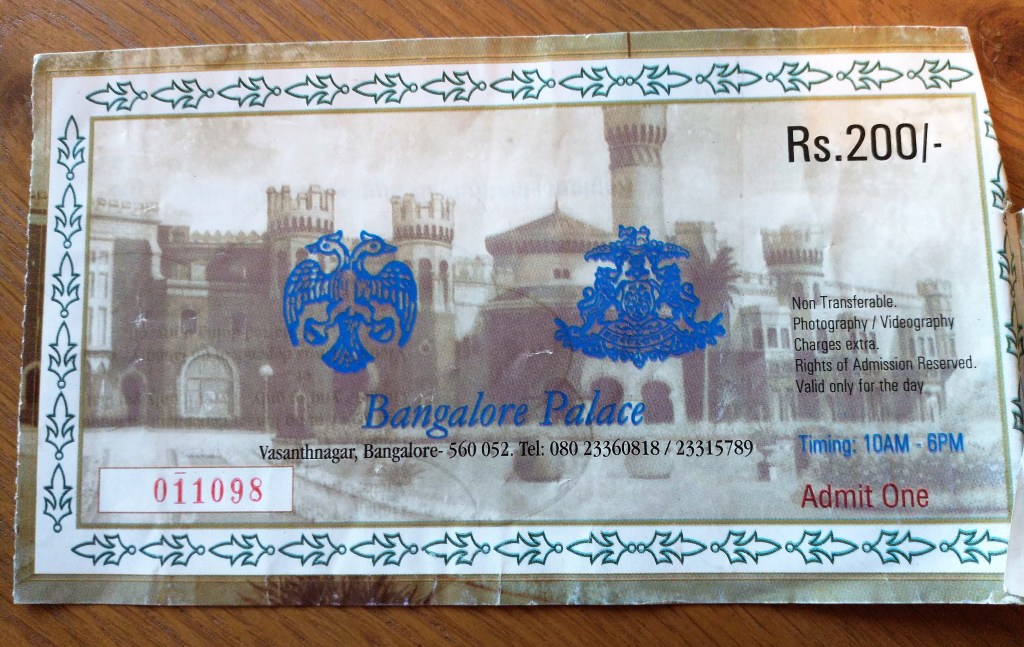
Here’s what I wrote in my diary that day. ‘When I finally set off with the intention of exploring for the morning, I hadn’t gone too far when I was picked up by an auto-rickshaw driver. He could see ‘Arrived this morning’ tattooed across my forehead. He offered to show me round for Rs 10. Well, I wasn’t so green as to believe that’s all I’d spend, but I was exhausted and it wasn’t an unattractive proposition. It was such fun! He proved an amiable guide, whose English, while obviously hugely better than my Kannada often led to mutual incomprehension. He had an endearing habit of describing all the sites we passed as his; ‘This is my Parliament Building … This is my Royal Palace’. He hared me round a variety of sites, and waited while I ‘did’ Bengaluru Palace’ – slightly seedy and where I was personally shown round by an Aged Retainer, and where I noticed a herd of cows in the Royal Gardens.
You see the price? RS 200? Well, my driver in the end asked for Rs. 100, for showing me round for three hours. I gave him twice that and I still got a tremendous bargain.
It was that morning that I discovered that all auto-rickshaw drivers have entered into Arrangements With Shops. The kind of shops, selling textiles, carvings, carpets, jewellery that tourists are expected to make use of. It is their duty to take unwitting passengers there. Reader, I got off lightly (though I did buy something, and kept my friend happy), and learned an important lesson, that ‘No’ must be said with conviction, especially on Day One of a one month trip. What backpacker can lug bedspreads all over South India for four weeks? Later that day, a less accommodating rickshaw driver, on realising that it was fruitless to try to tempt me out shopping dumped me without warning in the middle of a poor part of town (Where? Where?) and left me to get on with it.
Nevertheless, I greatly enjoyed this somewhat basic mode of transport. My friend had had his for fifteen years, and I see no reason why it won’t still be going strong.
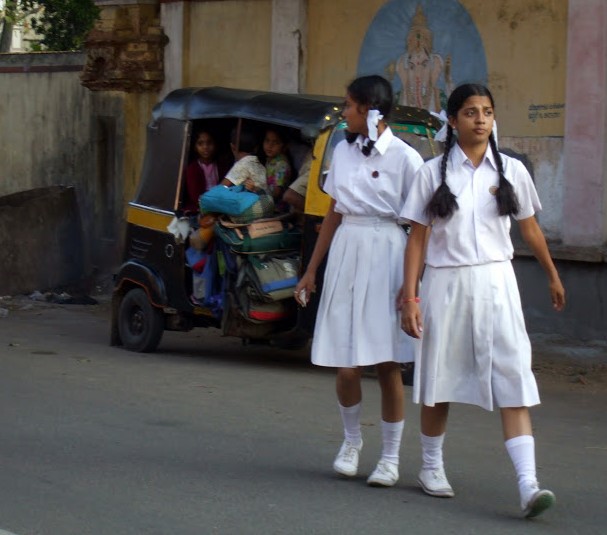
It was only a week later that I found myself sharing an auto- rickshaw, designed to take two passengers at most, with three other people. But really, we weren’t trying. Any morning that I was out and about as school started, I would see auto-rickshaws, in total denial of any kind of Health and Safety considerations, disgorging four, six, even ten children at the school gates. Look at the rickshaw here, behind those smartly turned out schoolgirls.
Schoolgirls
Later, when I visited Thanjavur, I found traditional rickshaws drawn usually by one very wiry, elderly man on a bicycle. While understanding their need to work, I couldn’t bring myself to have them haul me around, and in any case, the town was manageable enough on foot.
I look back on this mode of transport with great affection. Nippy, affordable, and with opportunities for cheery conversation, I can’t think of a better way of getting round the confusion which is an Indian city.
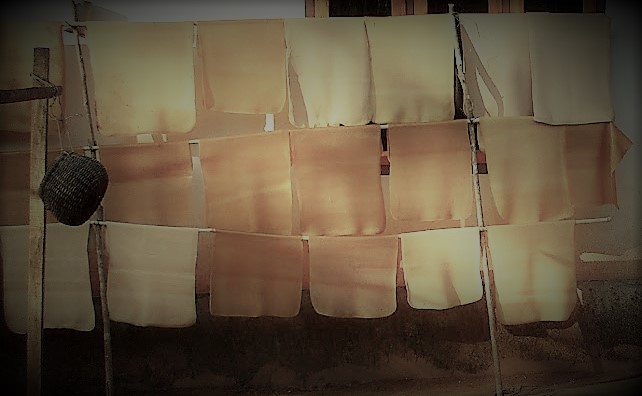
What’s this? Some dirty dusters? Or some rather dingy dishcloths? No. Despite appearances to the contrary, this isn’t washing hanging out to dry. It’s sheets of latex, recently tapped from nearby rubber trees and poured into moulds and yes, now hanging out to dry.
Latex sheets drying outside a cottage
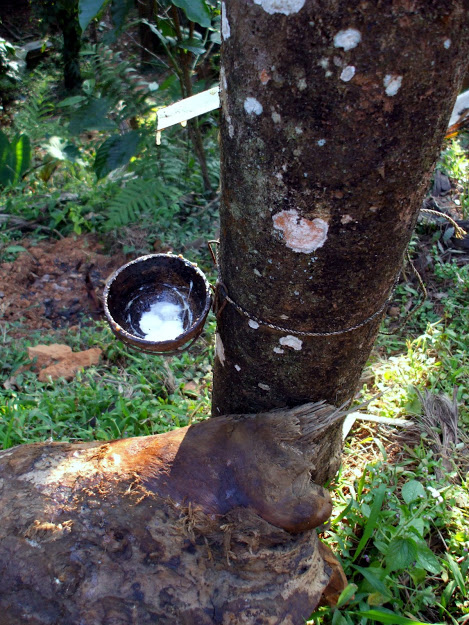
Collecting cup on a rubber plant
I was in in India, in Kerala, at Gurukula Botanical Sanctuary. Nearby was a village, where every household was growing some kind of cash crop: tea, coffee, bitter gourds, bananas … and maybe rubber trees. One household certainly was. They’d harvested the latex as shown in the second photos. They’d have collected about a cupful from each tree, every few days, before pouring it into trays in a thin layer to set, And now it was hanging out to dry properly before being sent away for further processing
In Kerala, while I as there, the monsoon had not long finished, and I rather like the evidence spotted through an open window back in Gurukula itself that had we been there then, it might have been just a little – wet.
Spotted through the window: umbrellas resting after the monsoon
This time two years ago, we were in Barcelona. One of our ports of call was the first house Antoni Gaudí ever designed, Casa Vicens. Once a spacious site beyond the city limits, it’s now squashed into narrow city streets, some of its garden space sold off. But it’s definitely worth a visit, and you can have a virtual look round here.
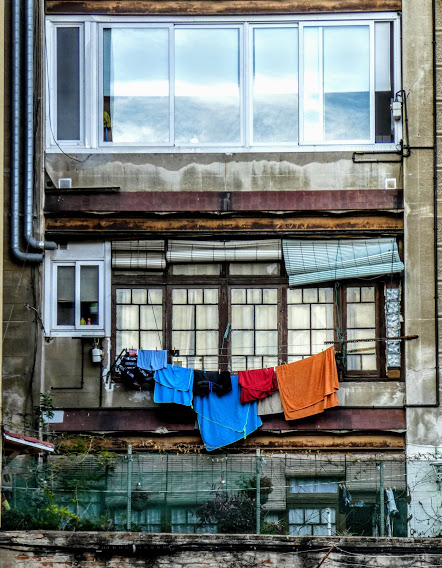
What the official site won’t show you is the views from the windows, and one thing I enjoyed, as I always do, was the sight of the Monday washing drying on the balconies of nearby flats.
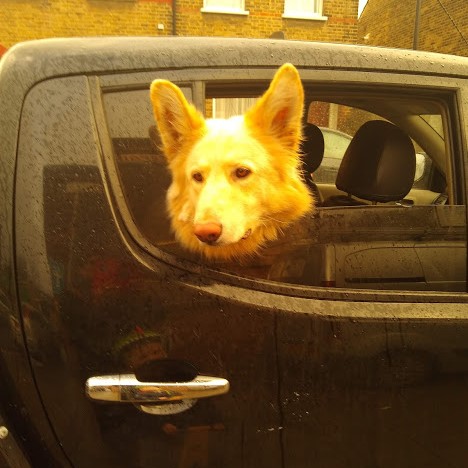
A dog whose owner had parked up near the station looked us up and down through the open car window, then changed his mind, and looked up the street instead.
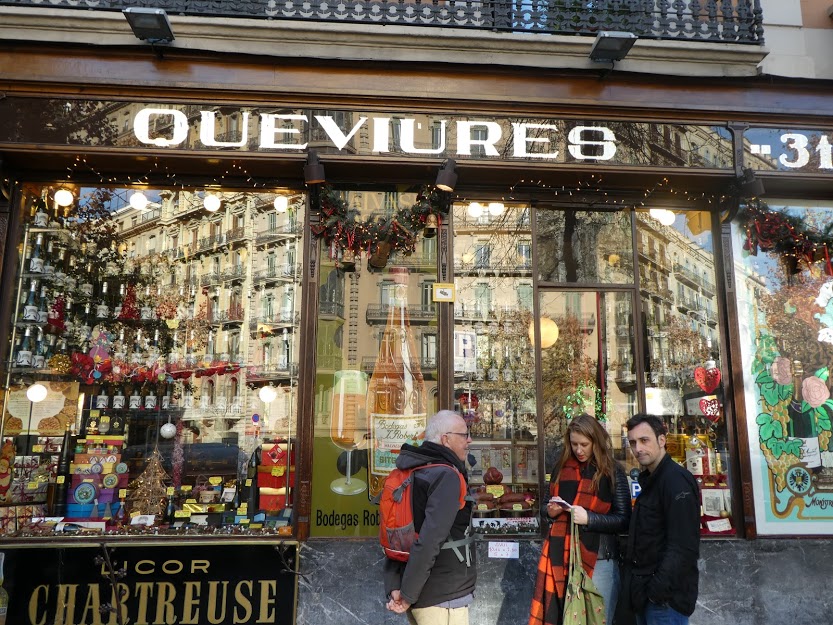
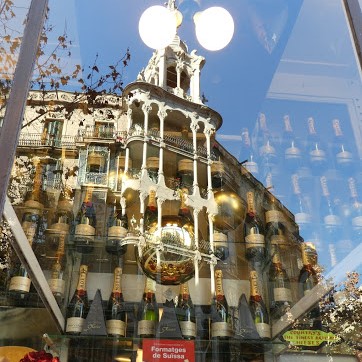
This time last year, we were in Barcelona to spend Reyes – the Festival of the Three Kings, and traditionally a bigger deal than Christmas (Presents! From the kings!) – with Emily’s Catalan family. Here we are outside what’s considered the best grocer’s shop in town, all gussied up for festive shopping.
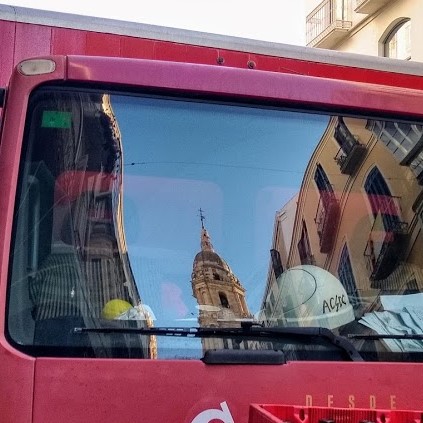
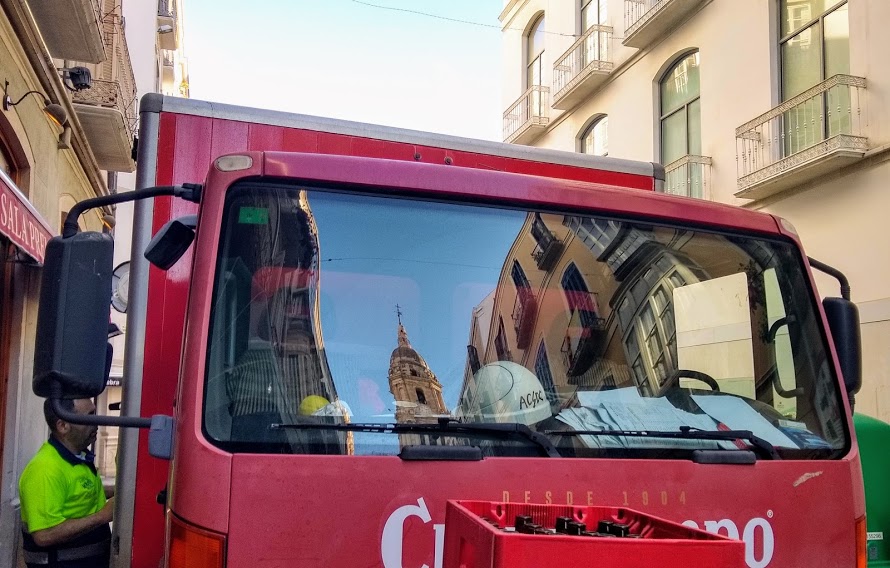
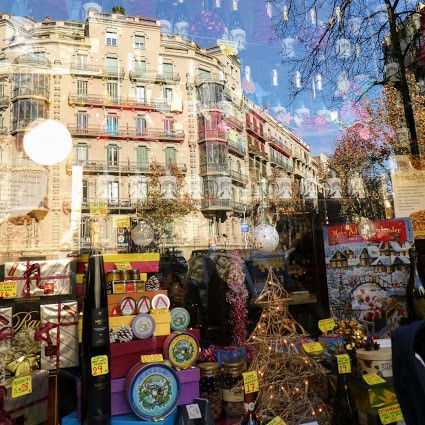
If you think I’ve muddled up my photos: well, the shop window did that, by reflecting the street scene as well as allowing us to see the goods on offer.
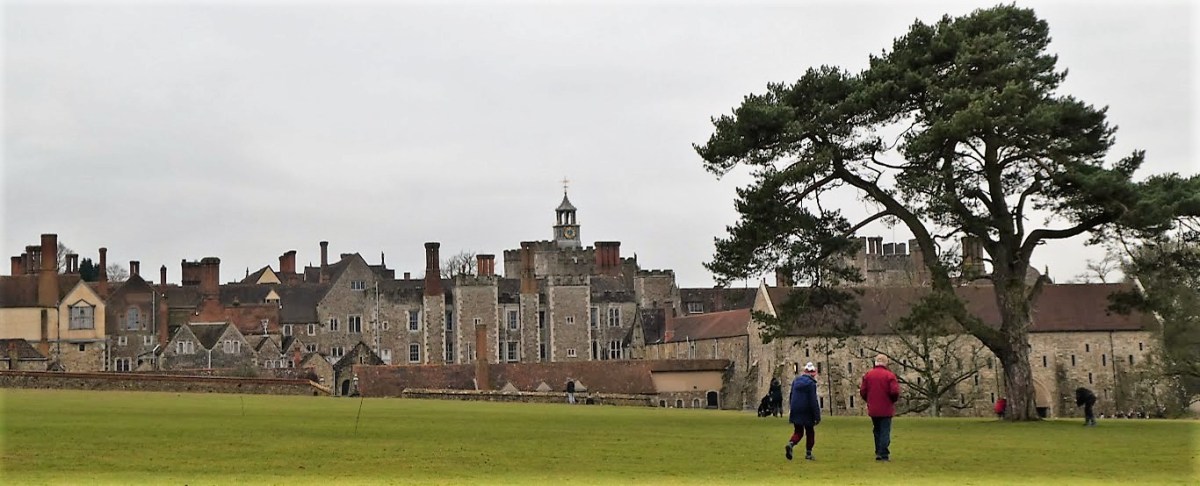
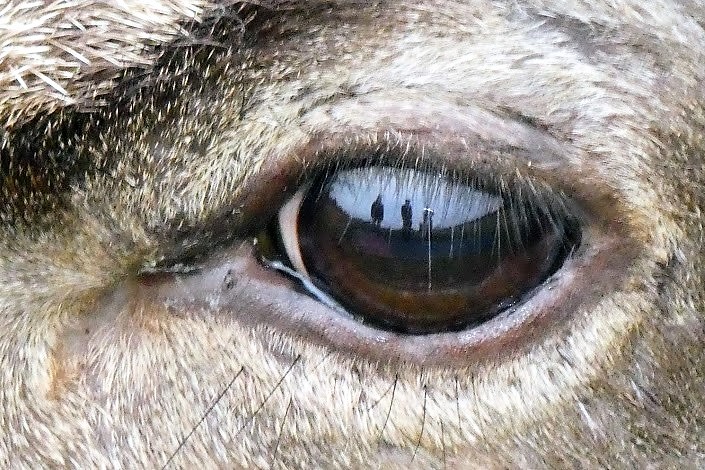
It’s been a strange Not-Quite-Christmas – in our case quite an enjoyable one, and today I’m going to offer a Not-Quite-Monday-Window. Why not? Eyes, it’s said, are the windows to your soul, and we saw plenty of eyes when we visited Knole Park the other Christmas with Team London. Those eyes belonged to some rather over-friendly sika deer. I’m not clear about whether deer have souls, but they they certainly provided a different sort of window through which we could remember our visit. Here’s a picture of me with my son and his son, as seen through the eyes of a passing deer.















 From Pyrenees to Pennines
You must be logged in to post a comment.