Three Books. Three Good Reads

Considering that reading is such an important part of my life, it’s perhaps strange that I rarely blog about books.  Thanks to Sandra, writing from A Corner of Cornwall, I’m going to put that right this week.  She in her turn responds to Sam, at Taking on a World of Words.  Every week, she poses this question:

What are you currently reading?
What did you recently finish reading?
What do you think you’ll read next?

I can answer that.

I’m reading Benjamin Myers’ The Offing.  I first met this writer  Under the Rock, his poetically written book about his home patch in Mytholmroyd, West Yorkshire, and which simply defies categorisation – autobiography, geology, true crime, edgelands, poetry … it’s all here.
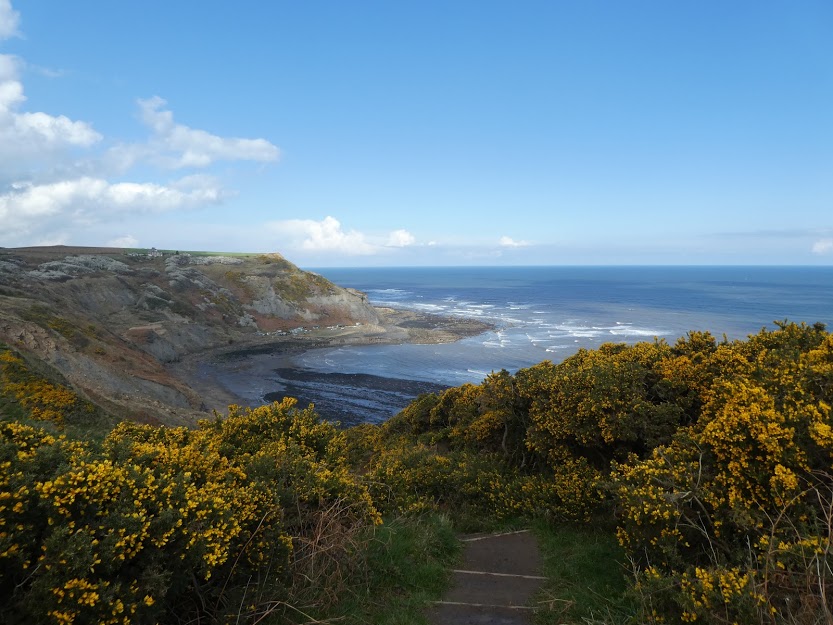
The setting for ‘The Offing’: the coast near Robin Hood’s Bay.

The Offing though, is fiction.  It tells the story of Robert, the sixteen year old son of a Durham coal miner, on the cusp of adulthood, as he foot-slogs slowly southwards just after the Second World War.  His simple hand-to-mouth existence changes when he meets Dulcie, who’s older, eccentric, from a very different world, and who opens her home to him. I won’t tell you more, because you may like to join the long queue of would-be-borrowers at your local library.  Here you will find an involving story, lyrically told, by an author who’s immersed in the sights, scents and images of the northern countryside he knows and loves, and who paints his characters well.

It follows on well from the book I’ve not long finished:  Julian Hoffman’s Irreplaceable.  I was led to this book by Bookish Beck.  It’s her book of the year.  It may be mine too.  Its subject matter is urgent:  the destruction of our planet.  Hoffman visits marshland in Kent that’s been under frequent threat of becoming another London airport.  He visits Indonesian islands whose unique coral habitats have been partially destroyed through mining.  He visits allotments outside London; a Macedonian National Park; Kansas prairie land … and so many more.  Such variety, and all so threatened in different ways.  Some of these stories end well, others badly, and yet others … who knows?  This is though, a call to arms. Hoffman makes it clear that our future lies not only in the hands of ‘experts’, but in indefatigable ordinary people battling for their own communities, their own treasured landscape.  And it’s not simply a battle between Progress and Tradition.  Life is more nuanced than that.  Sometimes, compromises may be needed.  But what kind of compromises?
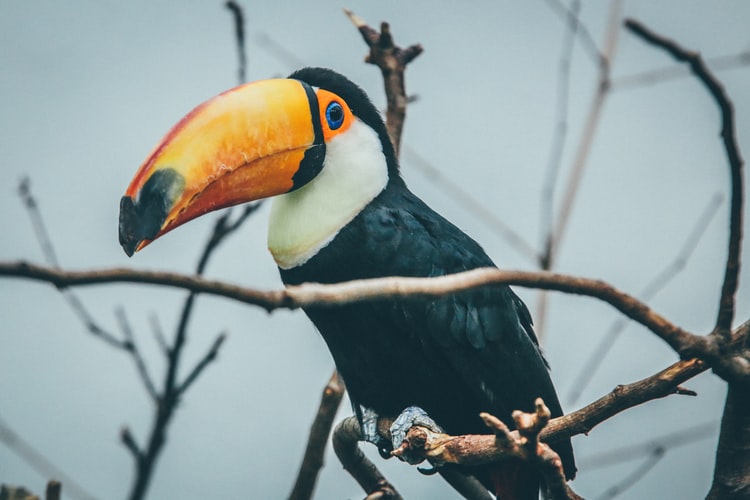
Now. Why have I chosen a photo of a toucan to accompany my thoughts on Irreplaceable? You’ll have to read the book to find out. (Photo from Nick Karvounis , Unsplash)

Though a fairly long book, this is an accessible one.  The prose is evocative and to be lingered over and savoured.  It’s an excellent, beautiful read as well as an important one.

And the next one to read?  This time, that’s easy.  Book Group is coming up: best get this month’s choice under my belt.  An American Marriage, by Tayari Jones.  If Barak Obama describes it as ‘moving’, one of his favourite summer reads of 2018, that’s good enough for me.  I wonder what Donald Trump’s favourite book is?
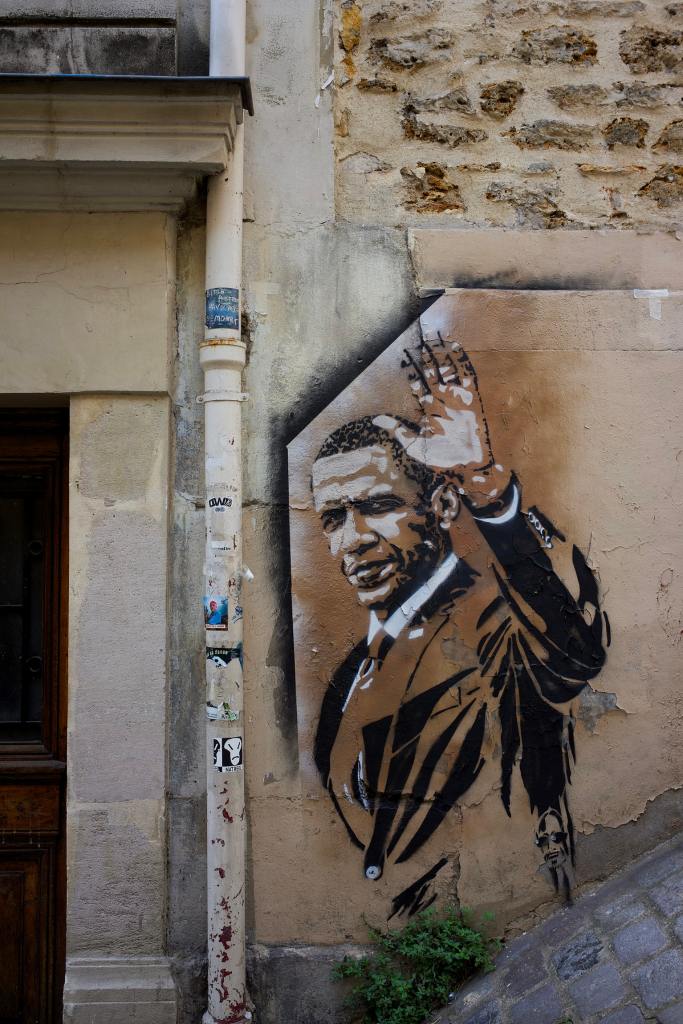
Barak Obama – street art in Montmartre (Lubo Minar: Unsplash)


The Pyrenees and their biggest fan.

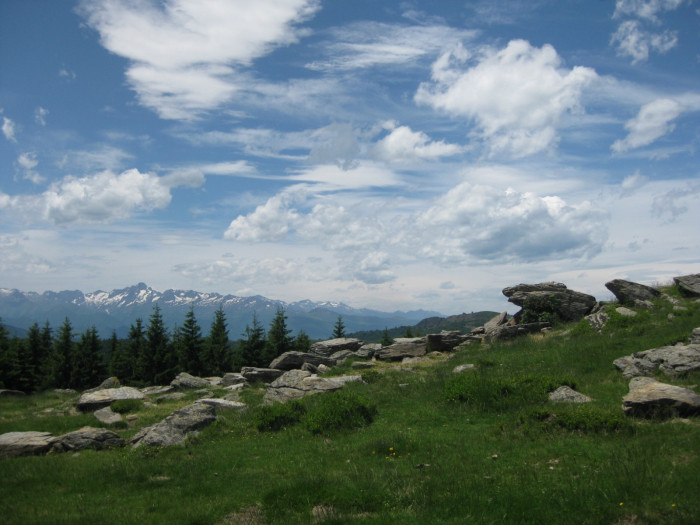
We’ve been invited this week, in the Lens-Artists Challenge #65 to pick a place that’s captured our hearts.  I barely had to stop and think.  The Pyrenees has the power, even more than my beloved Yorkshire Dales, to stir my soul, to inspire and awe, to soothe and quieten me.

Le Cap du Carmil.

These mountains formed the backdrop to our lives in France.  We were in the foothills, but even a twenty minute drive had us steadily climbing to the higher peaks.  Here was where we spent our Sundays with our walking friends, getting our heartbeats up with stoical climbs in the morning, before a leisurely picnic with those slopes all around us: craggy, alive with butterflies, bugs and beetles  and sturdy yet delicate wildflowers: then an afternoon dropping down once more to the valley.

Here was where, for much of the year, we could see snow-covered peaks in the distance, while nearby were meadows with gentians, impossible numbers of orchids, poppies, and early in the spring, wild daffodils.

A drive over to see Emily in Barcelona meant crossing the very highest peaks: dizzying climbs, vertiginous descents.  Our own ‘patch’ was less demanding, more homely, with sheep, cattle and donkeys grazing the meadows among beech and oak wooded slopes.

There was history here: the revivalist Christian Cathars flourished.  There was industry – talc mining, textiles, now all gone.  Farming and tourism are what remains.  And the Pyrenees always provided a barrier and a stronghold in times of conflict.  For us though, for more than six years, it was simply … home.


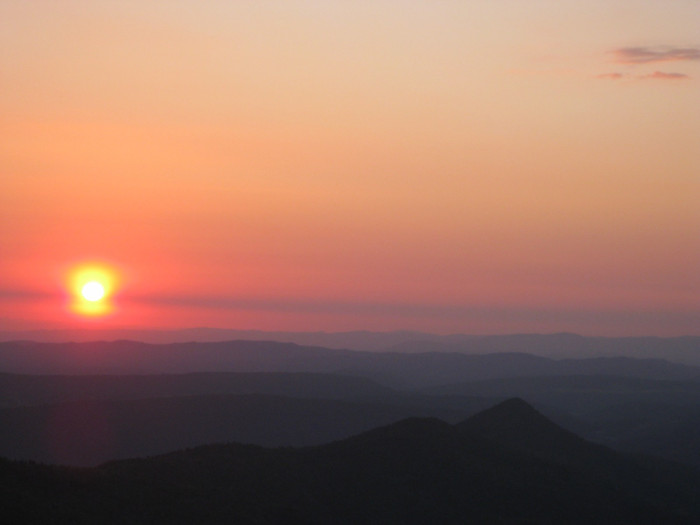
The midsummer solstice: sunrise from Montsegur.

An entry for Lens-Artists Challenge #65: Pick a place

And also for Fan of …# 35

A Dock, an Art Gallery: Liverpool

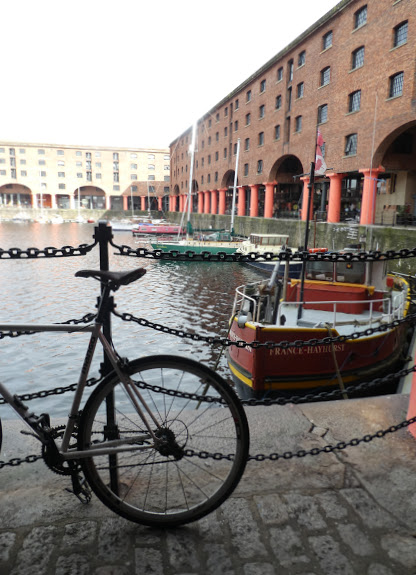
Liverpool’s tourist Mecca:  the Albert Dock.

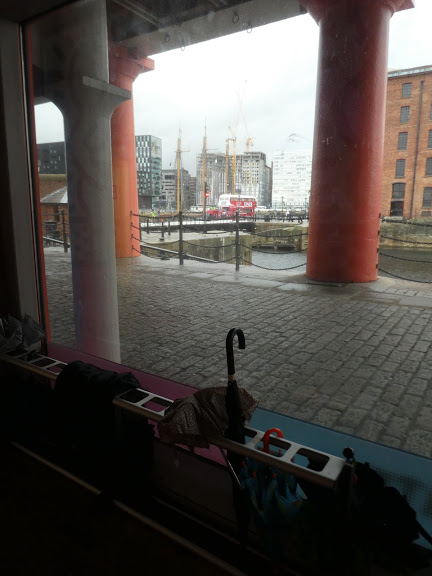
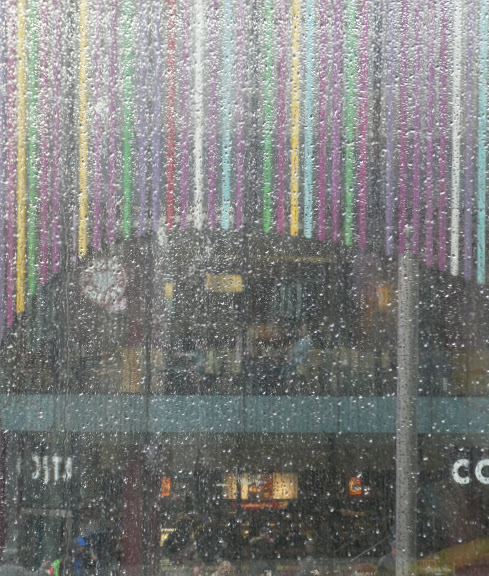
Tate Liverpool: park your umbrella inside….

Beyond the gallery window: industrial life.

Snow? Shifting perspectives? Infinite space?
Concentric lines, unsettled steps – careful! Zobop!

Jim Lambie: Zobop 1999

Arte Povera: a classical figure commentates.

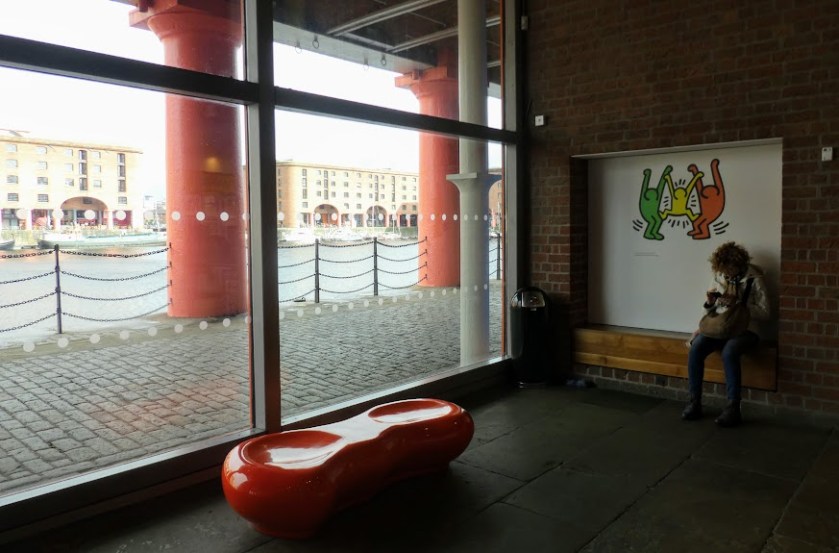
Water within, water without: a view, a statue.

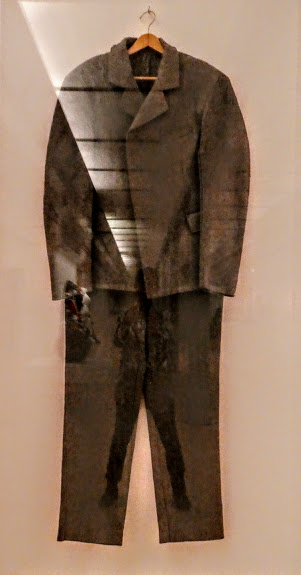
Beuys/me: two self-portaits in one.

Josef Beuys: Felt suit, 1970.

Time for a smartphone moment: Sue?

And a bike moment:  Sue again?

And a pause for reflection.

Before the rains came…. yet again.

An entry for Six Word Saturday – on Sunday…

Returning to my roots

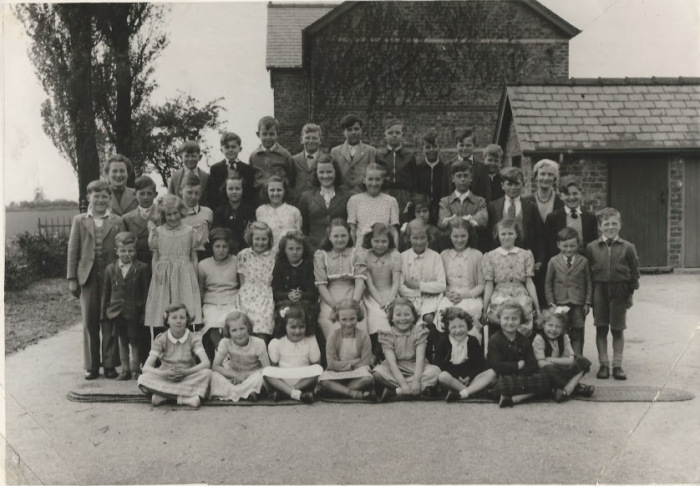
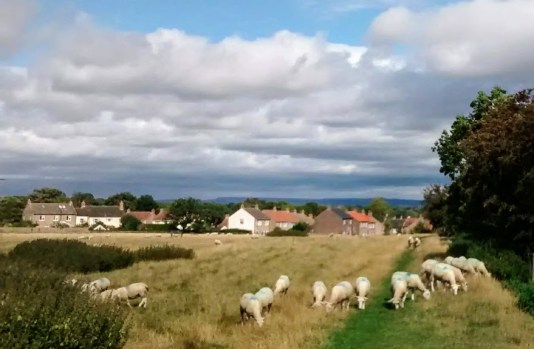
My life has come full circle.  Many of my earliest memories come from Sandhutton, current population 260, where my mother was head teacher of a two-teacher school which educated all the village children between five and fifteen years old.  These days I visit the village weekly – it’s less than ten miles away.  The school no longer exists, but my Spanish teacher lives there.

There we are. Sandhutton School, c.1951, just before I started there.

When I was five, my life changed a bit.  We went to live in London (current population 8.13 million).

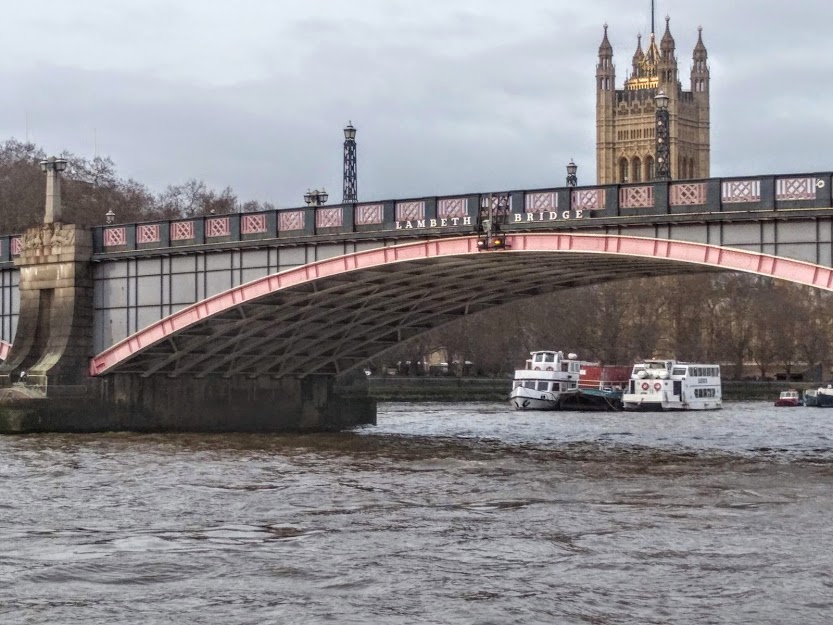
A trip down the Thames: nearly at Westminster now.

I was a student in Manchester (538,000).  Then I went on to live in Portsmouth, in Wakefield, in Sheffield, in Leeds: all cities numbering their citizens in the tens,or even hundreds of thousands.  I loved city life.  I relished the opportunities only a city could usually offer, and the diverse populations living in them.

One of my favourite places in Manchester: The John Rylands Library. Who wouldn’t feel a real scholar in these surroundings?

When we moved to Harrogate, some twenty years ago, I announced we were moving to a small town.  A mere 75,000 people lived there.

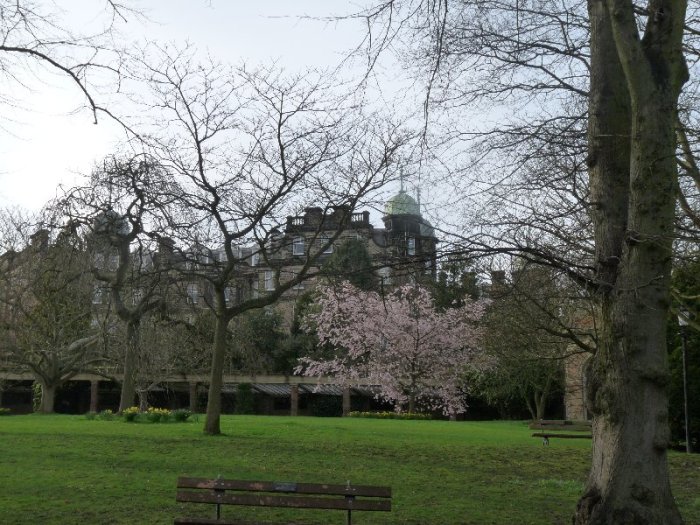
Harrogate: one of its many open spaces: the Valley Gardens.

But that was before we went to France.  Laroque d’Olmes has a population of some 2,000 people, and its county town, Foix, has only 10,000. We came to appreciate small town life: its neighbourliness and our sense of belonging – the space to appreciate the countryside and mountains beyond.

The street near the church in Laroque, with the Pyrenees in the distance.

When we came back to England, that small town of Harrogate suddenly seemed horribly large, traffic-infested and in every way untenable, despite its green spaces and lively community life.  So here we are in North Stainley, population 730.

In fact we’re not even in the village, but in a little enclave just outside, with that walled garden I showed you last week.  Population 8.  It’s perfect.

One of North Stainley’s three village ponds.


Lens Artists Photo Challenge #64: Countryside or small towns.

Magical Meditative Moments

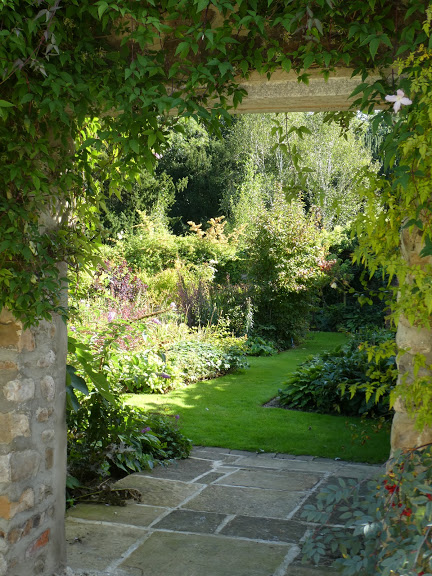
Come with me.  Come with me into the walled garden.  It doesn’t belong to us – it’s our landlord’s.  But it’s his joy, and his joy to share it with us.  We can see it – look – from our kitchen window.

So whenever the weather’s on our side, as it is today, that’s where we’ll be.

Where shall we sit?  Here? Right in the centre, where there’s space for friends as well?

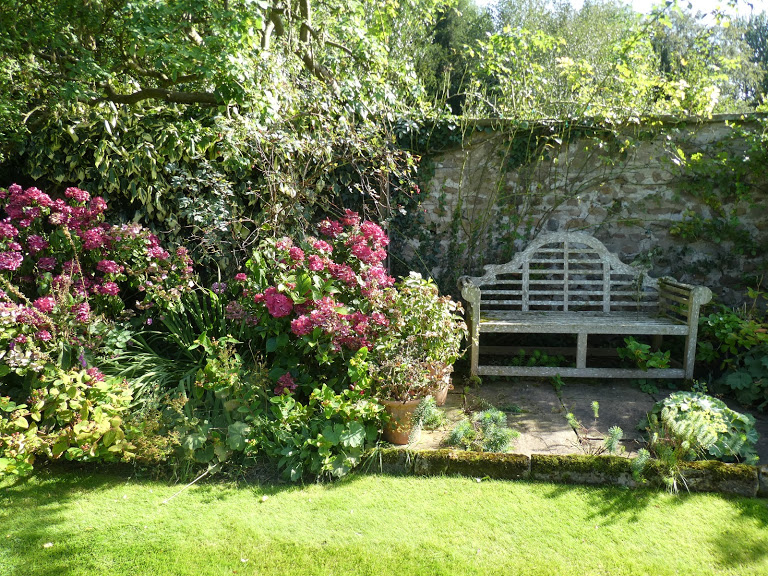
Maybe here at the side.

Or tucked away at the very back.

Here there is utter peace: the flowers and shrubs, the main events changing now from high summer to autumn: the bees, fuzzing and humming in the background: the background birds – perhaps a skein of geese will fly squawking overhead on their way to our local nature reserve, then onward, onward to their winter residence.

It’s our magical place.  It’s where all thoughts of the dire state that our country is in are banished, and we live in the moment.


My entry for Lens-Artist Photo Challenge #63: Magical