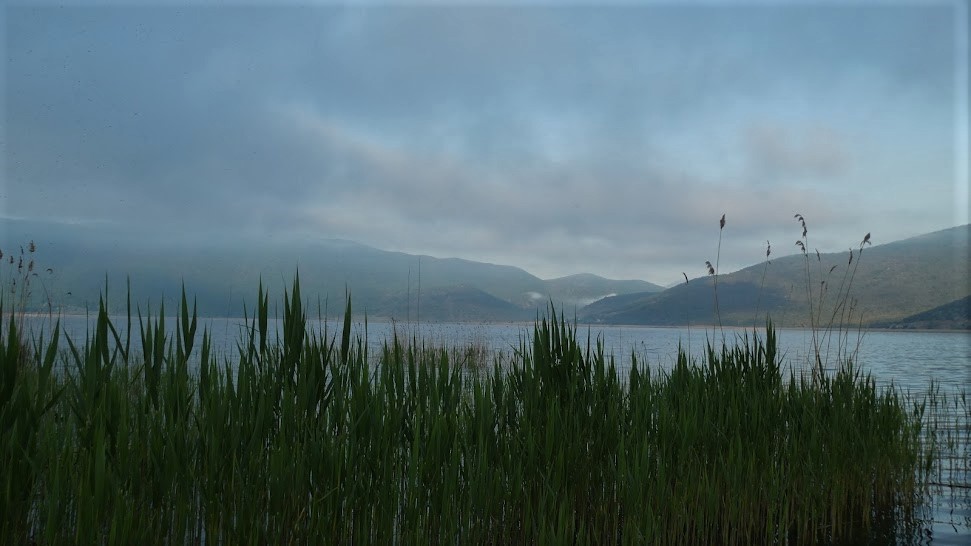
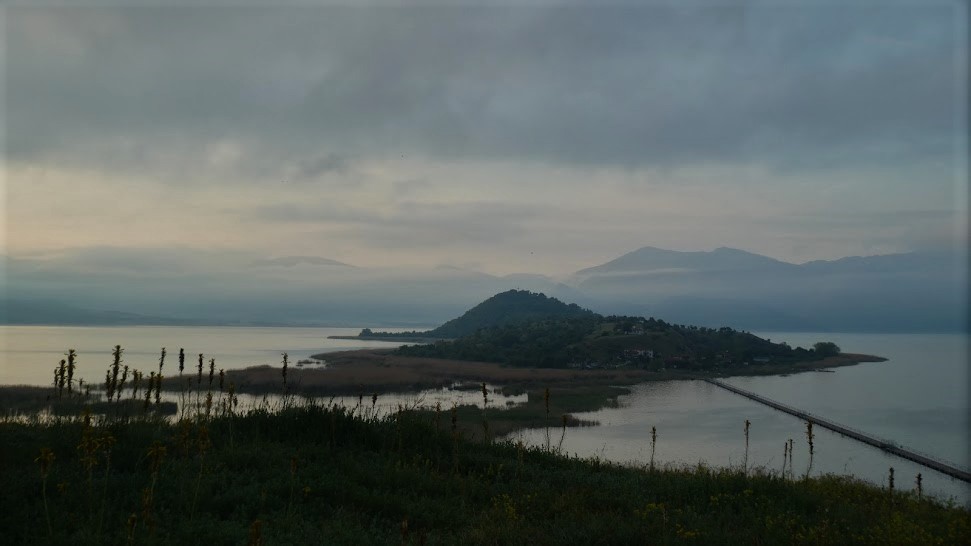
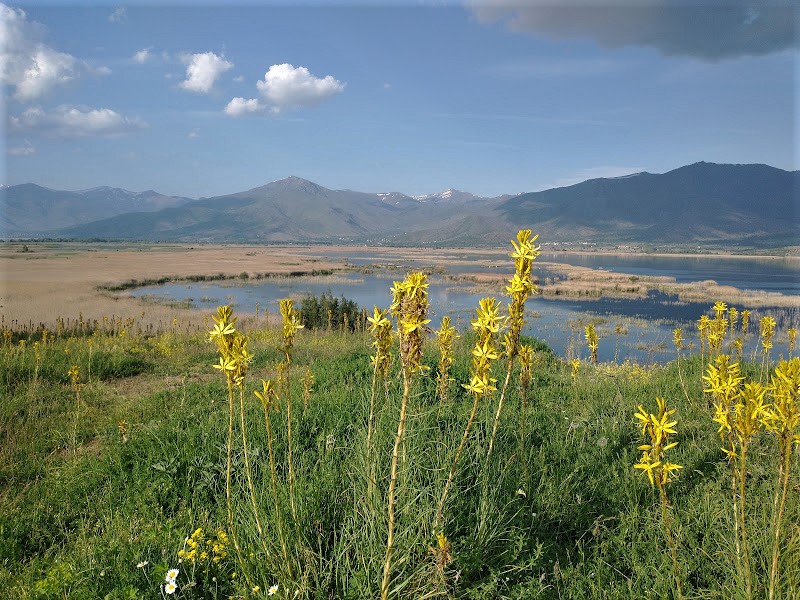
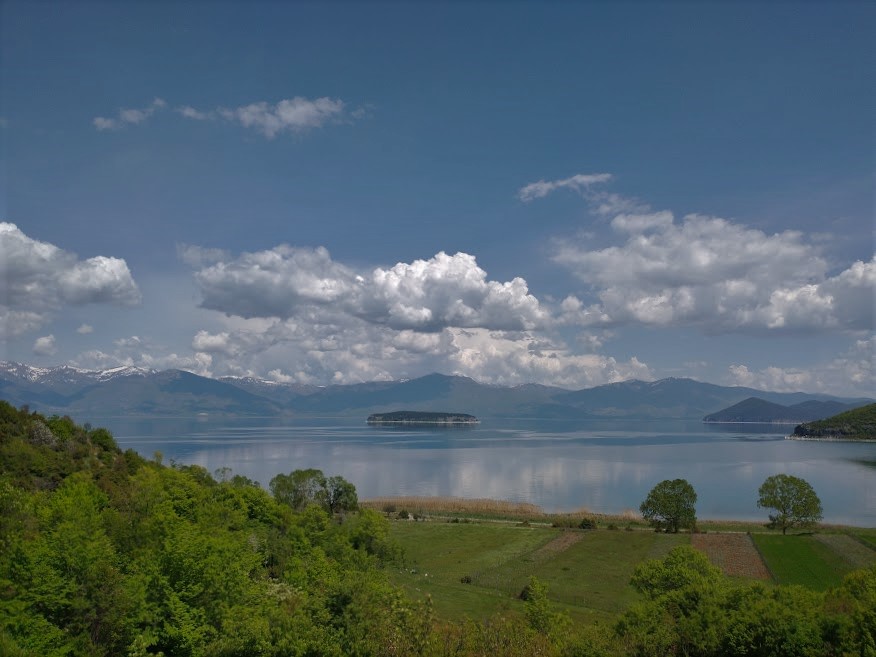
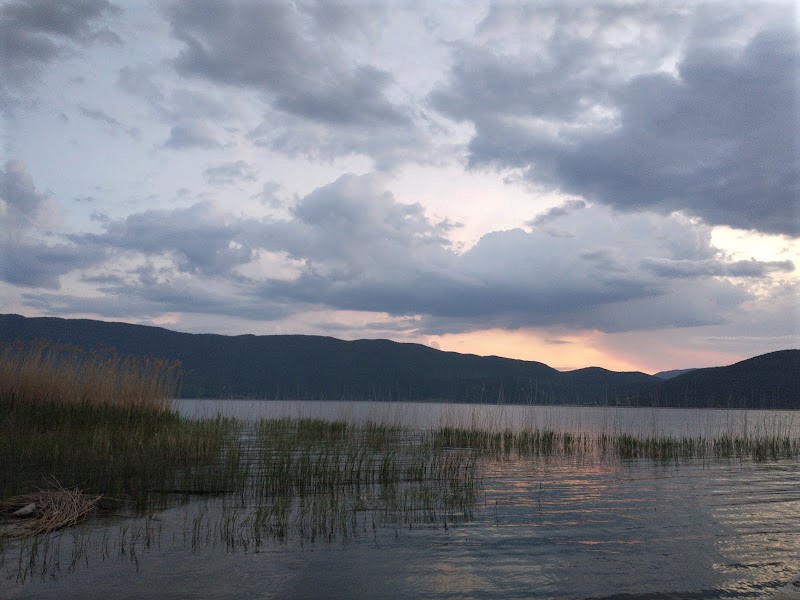
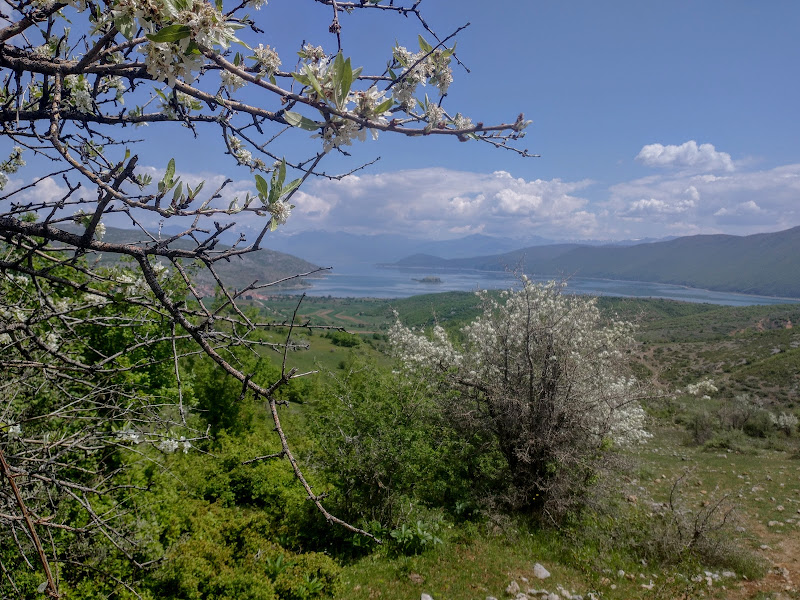
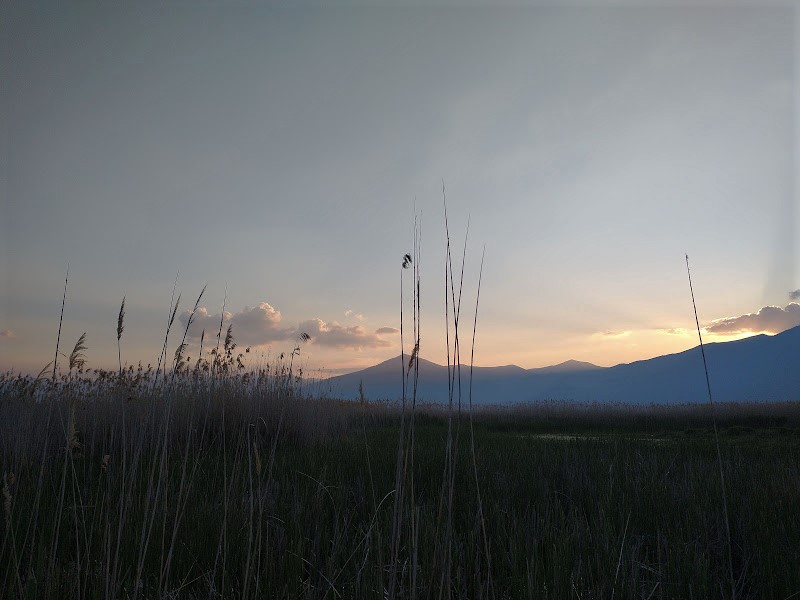
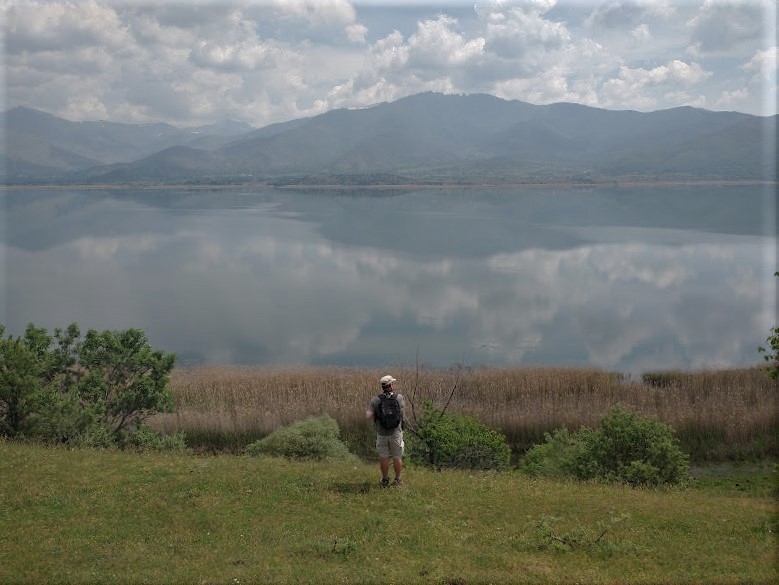
Last month, I introduced Lake Prespa, which has shores in Albania, North Macedonia and Greece. I told various tales, and there are more to come. But I haven’t given you the chance simply to enjoy it, as we did, in the early morning and evening, as the sun arrived and departed.
Most of these photos were taken on or near the island of Agios Achillios.
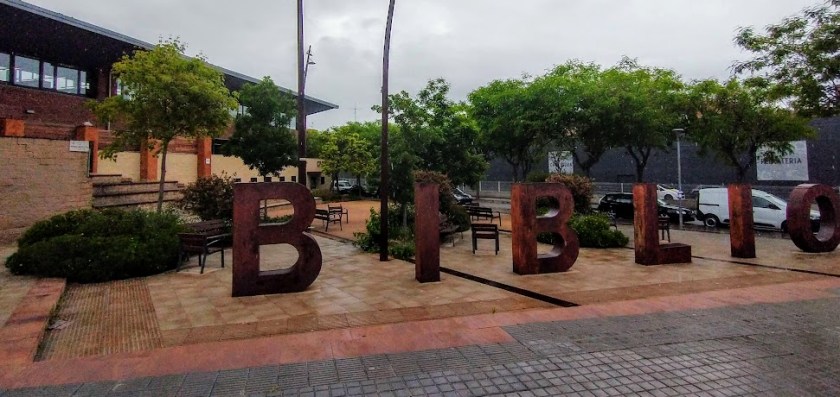
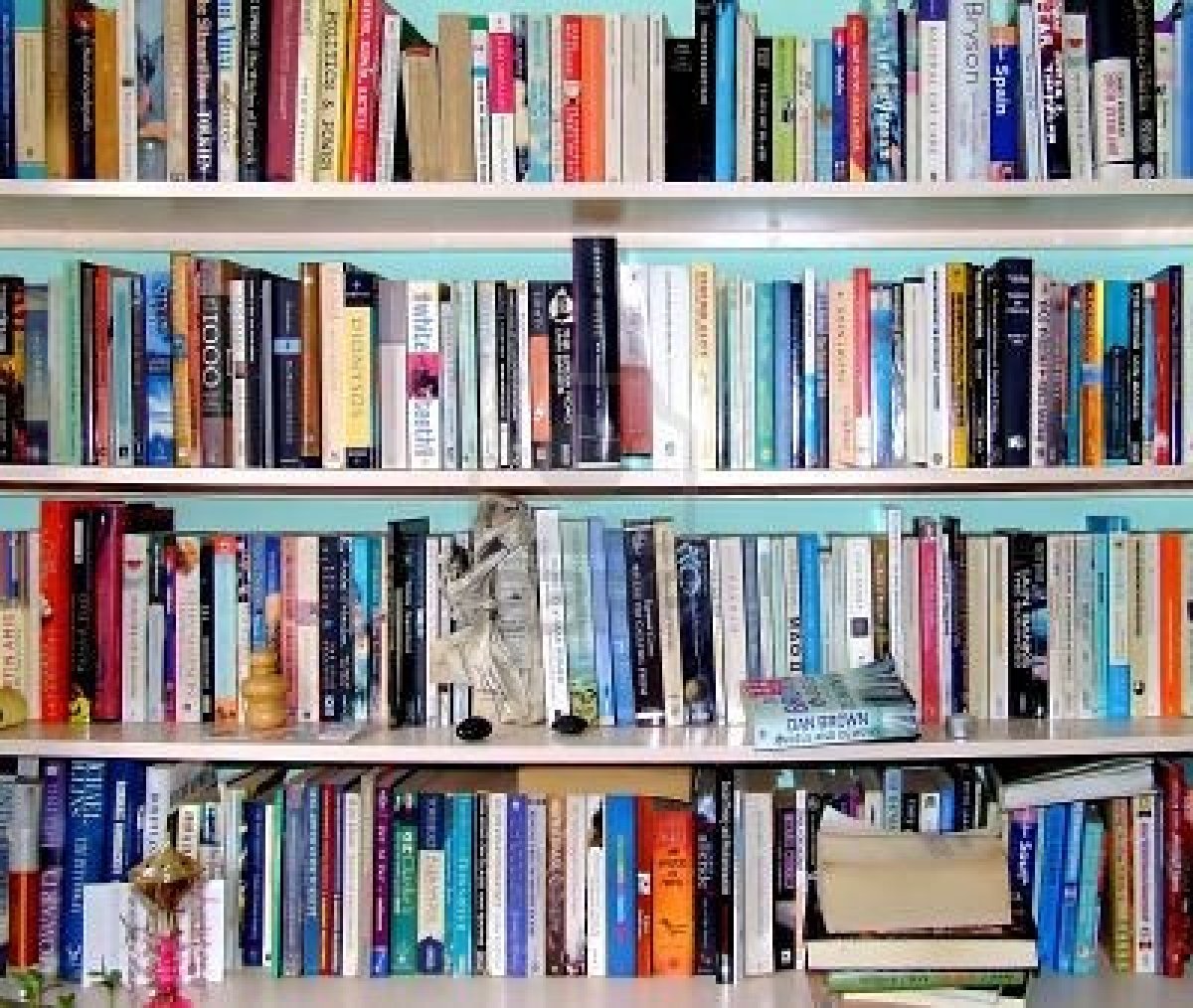
Last time I took you to a library, it was a rainy day. During our month away, we had just one day of rain – more like a couple of hours – when we were staying with Emily and family in Premià de Mar. She was at work. Miquel was at work. Anaïs was at nursery. Reader, we went to the library.
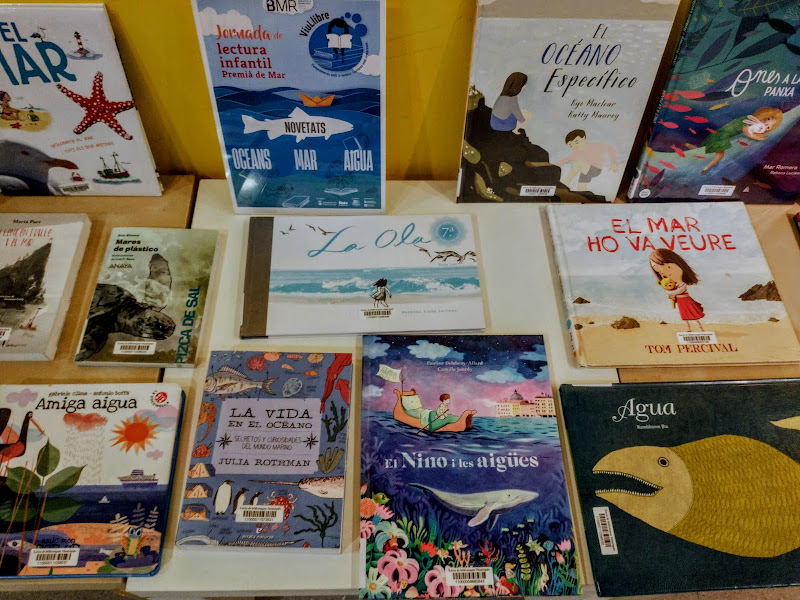
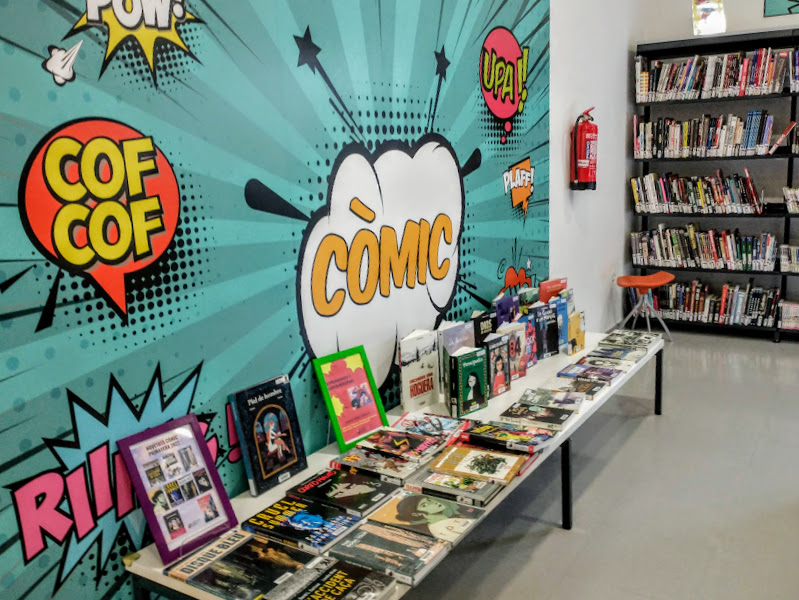
We found plenty to do. There was the display of children’s books about the sea. And another one of graphic fiction.
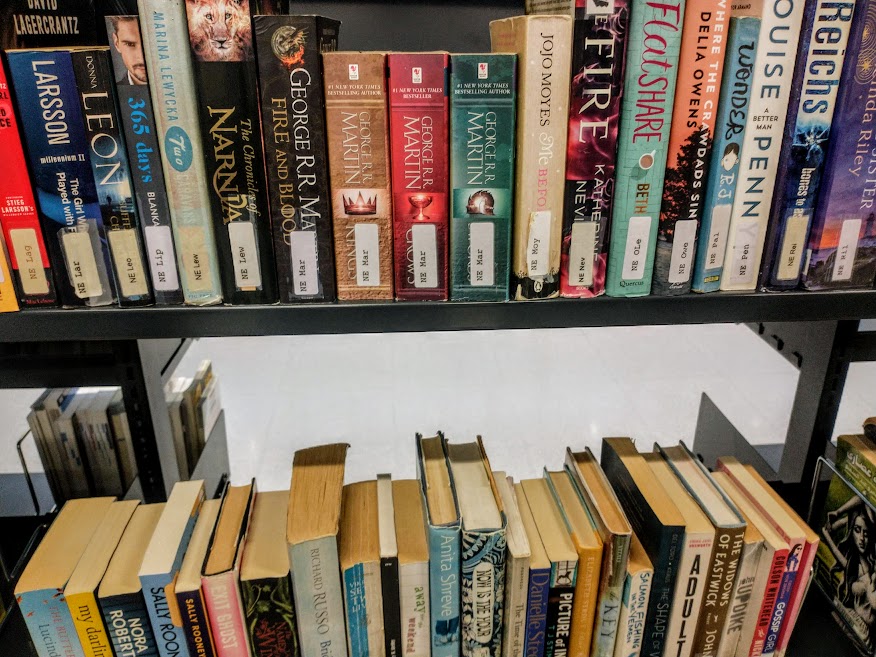
There was the stock of English books. Lots for learners – quite impressive. The English language fiction was less so, though it was better than our library’s collection of Spanish books (and we have none in Catalan, unsurprisingly).
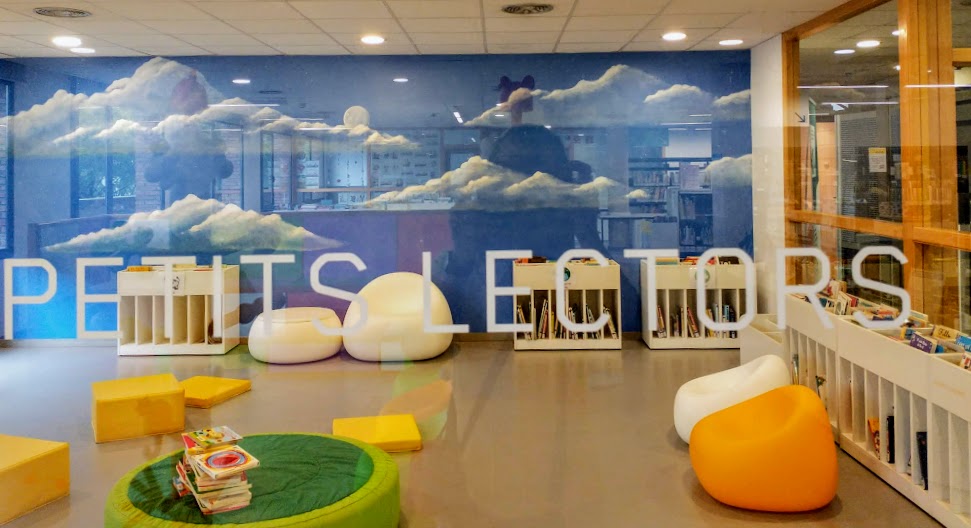
With everyone at school, the children’s library was empty. But there was a dedicated room for the youngest borrowers, so they could make all the noise they wanted during story-time sessions. There was a lecture hall, a roof-top performance space. In fact we were impressed.
And as we left, we spotted this poster in Catalan. Go on. Have a go. If you’ve ever learnt any French, or Italian or Spanish for that matter, I think this piece will be accessible to you. And you won’t have trouble agreeing with its sentiments.
For Rebecca’s Love your Library, a monthly challenge for … of course, library-lovers.
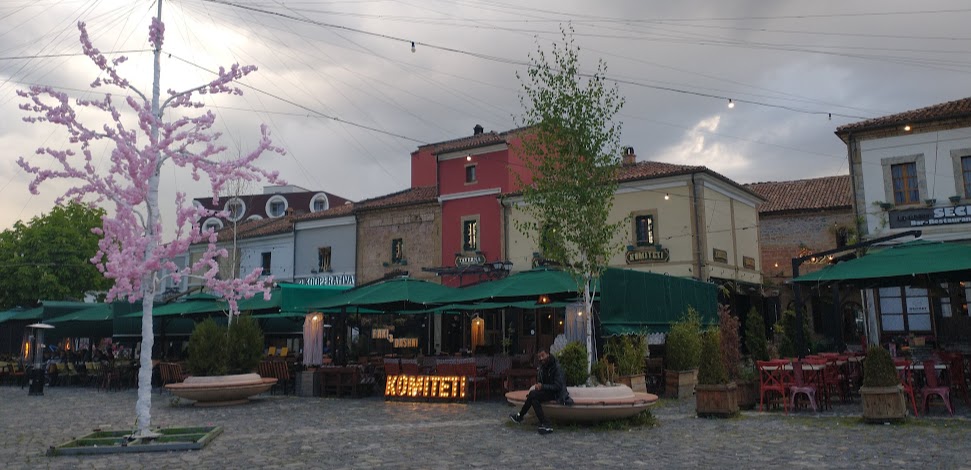
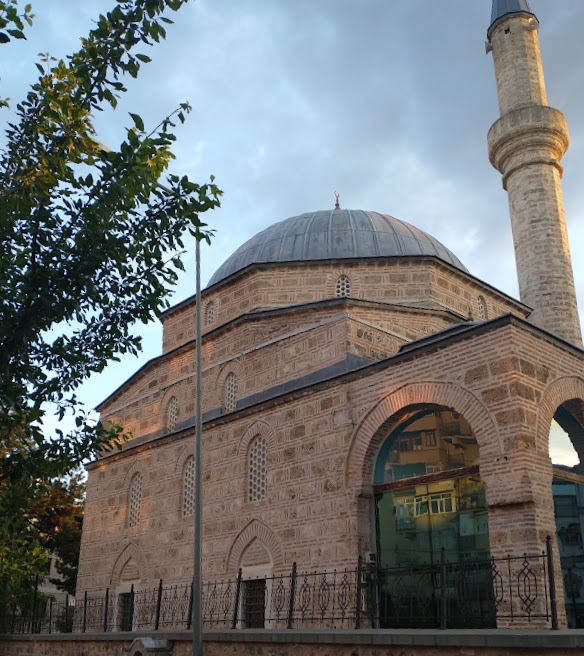
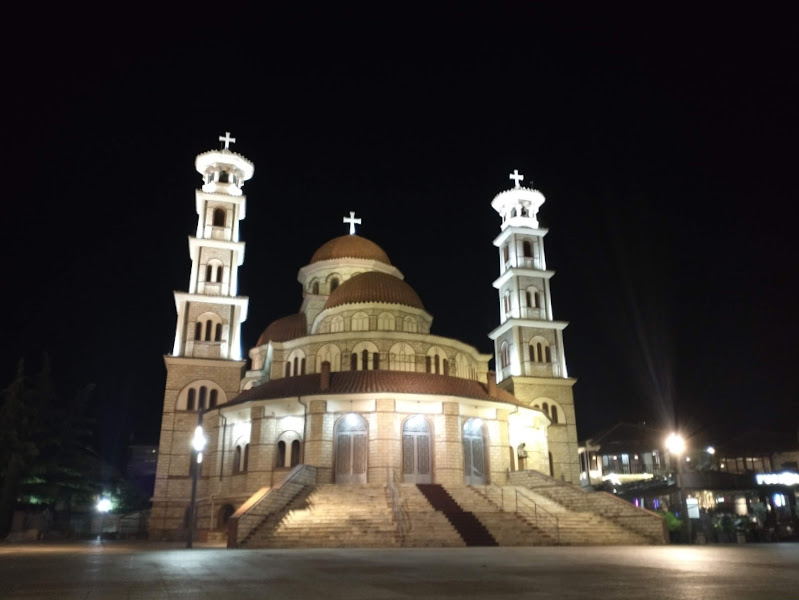
Korçë in Albania has been a Muslim town, an Orthodox Christian town, a Communist town; ethnically Aromanian, ethnically Greek, ethnically Albanian: variously under the rule or occupation of Ottomans, Greeks, French, Italians, Communists … and now Albanians. Its history is so complex and diverse that I don’t know where to start. So instead I’ll show you its old bazaar, now become a tourist area of restaurants and cafes; its 15th century mosque, and its Resurrection Orthodox Cathedral, built only in 1995, to replace the one destroyed in the Communist era.
The bazaar area, rather quiet and un-bazaar like now it’s lost its main reason for being.The Mirahori MosqueResurrection Cathedral
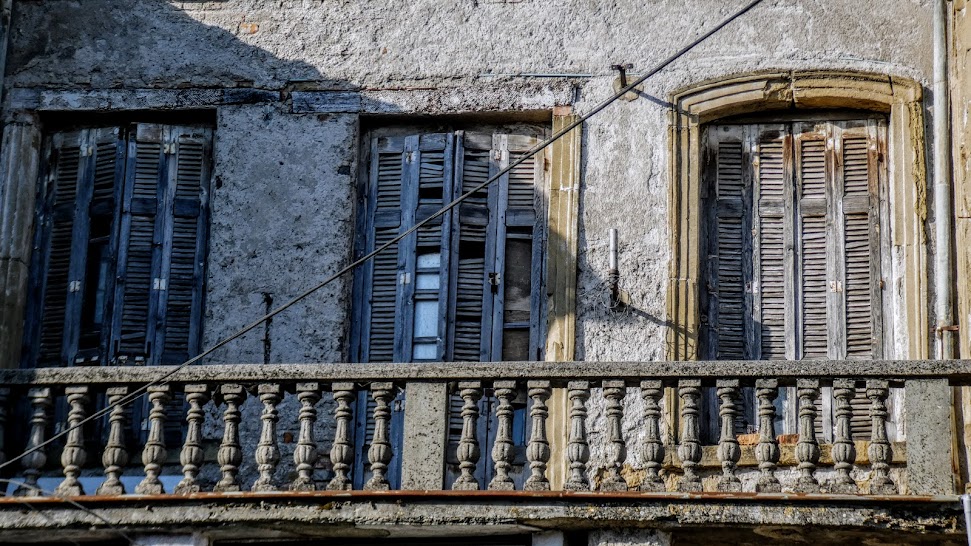
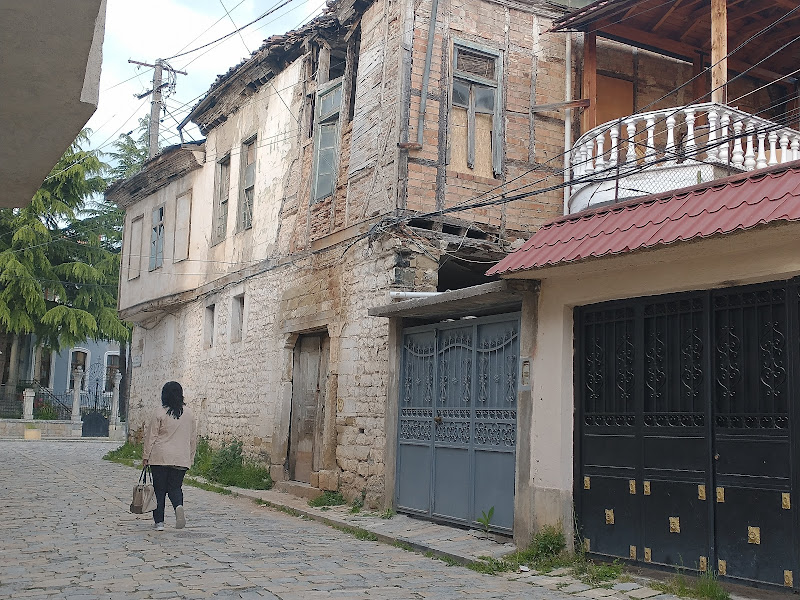
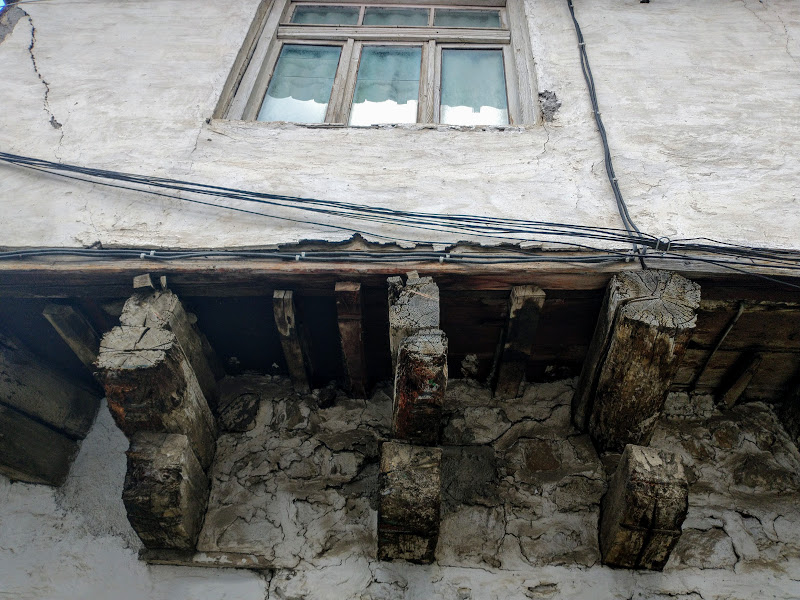
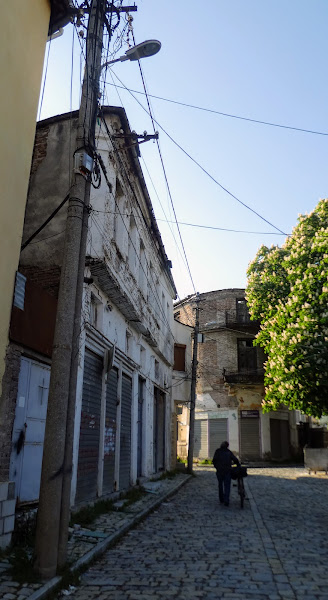
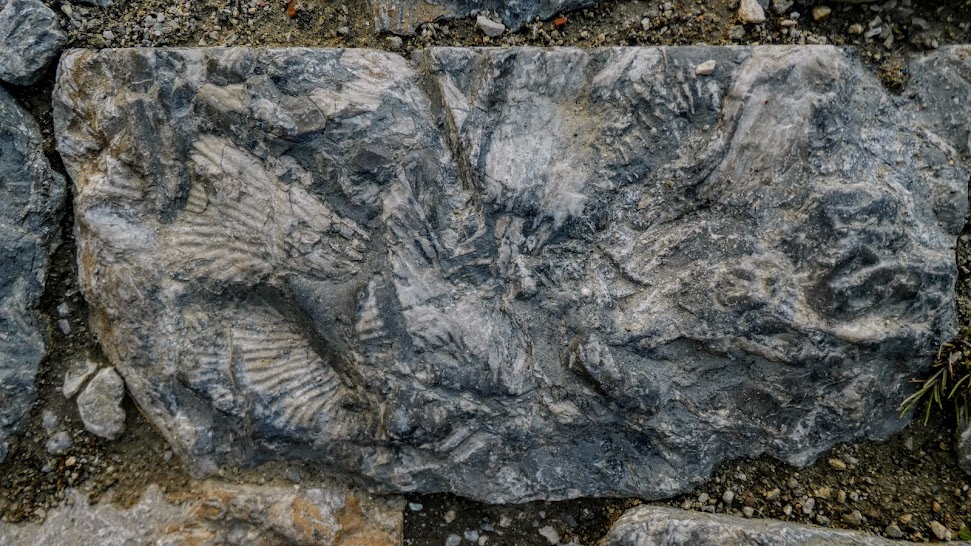
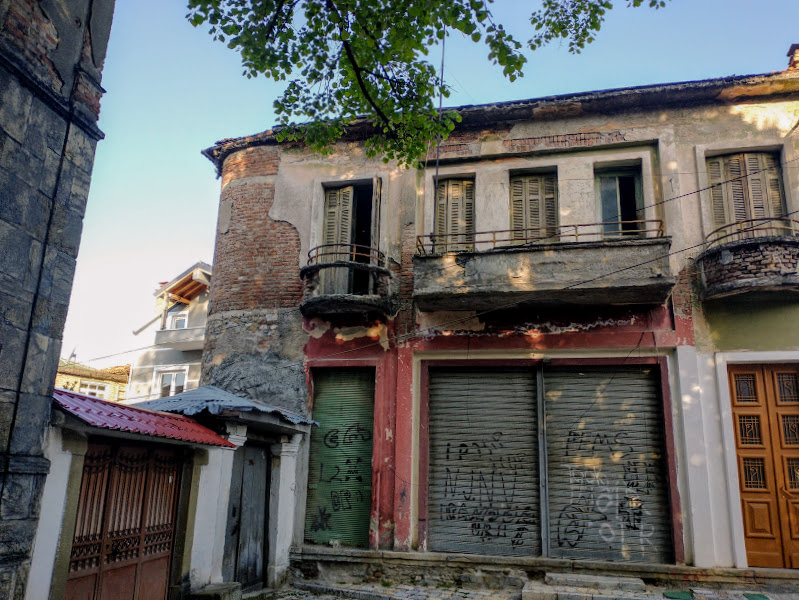
Then we’ll mooch round the old town near where we stayed. This was a prosperous place during the later Ottoman period, but as its residents decamped to safer places, such as the United States during the early years of the twentieth century, the area became neglected. I hope this will change. These attractive houses set along cobbled streets (note the fossils in the cobbles!) are well worth saving.
I’d visit Korçë again, for its easy charm, its appetising restaurants, its museums. I wish I could take you round the icon museum, The National Museum of Mediaeval Art, but photography was forbidden. Two days wasn’t enough to explore this town.
I think my header photo, from the old town, deserves a place in Ludwig’s Monday Window.
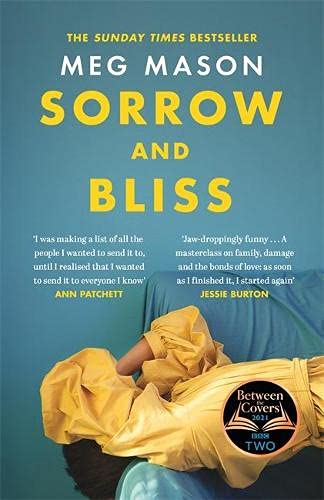
On the first Saturday of every month, a book is chosen as a starting point and linked to six other books to form a chain. Readers and bloggers are invited to join in by creating their own ‘chain’ leading from the selected book.
Regular readers know that I’ve spent the last month in the Balkans and Barcelona, where copies of this month’s starter book, Meg Mason‘s Sorrow and Bliss weren’t readily available. So I haven’t read it. But I will.
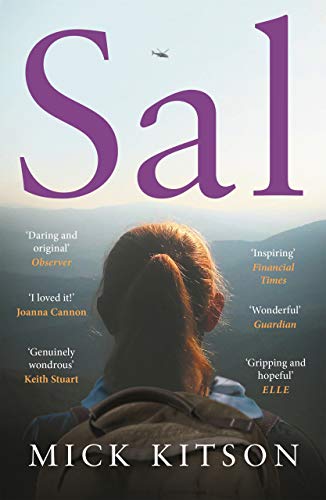
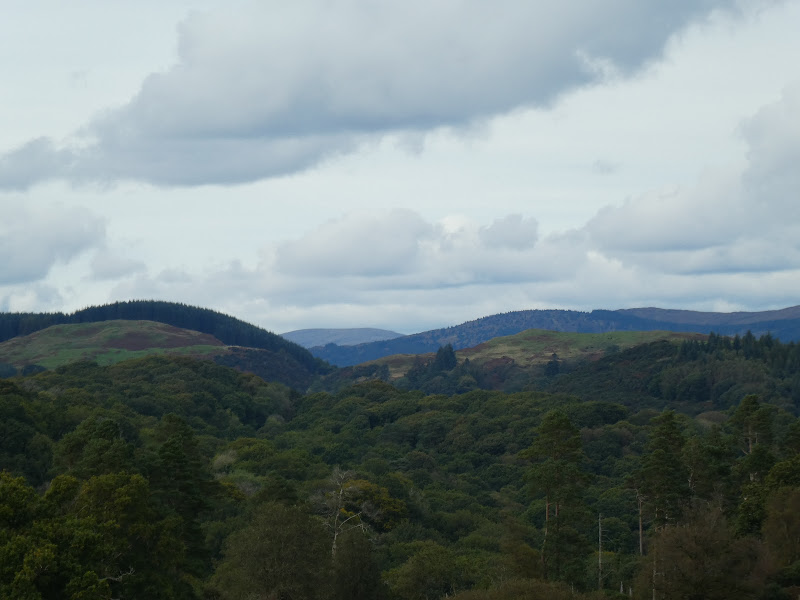
It appears to be about a woman struggling with mental illness. So I’ll go for my first link to the struggles of a teenage girl, Sal, by Mick Kitson. This is the story of Sal and her half sister Peppa’s escape from life with their alcoholic mother and abusive step-father. Thirteen year old Sal, who narrates the story, has long planned this escape, making use of carefully learnt bush skills to live rough in Galloway Forest Park Scotland. Circumstances have made her wise beyond her years, though failing at school. It’s an incredible, yet credible story of the consequences of one man’s unremitting abuse, and of a mother totally unable to protect her daughters. An involving read both for an adult and YA audience.
A Scottish landscape known to Sal?
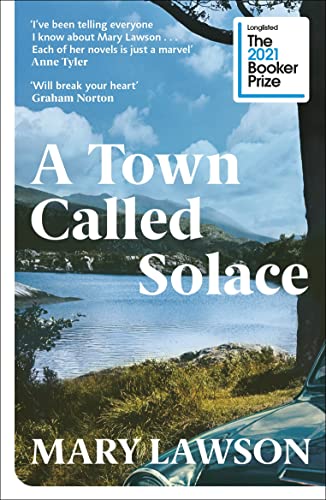
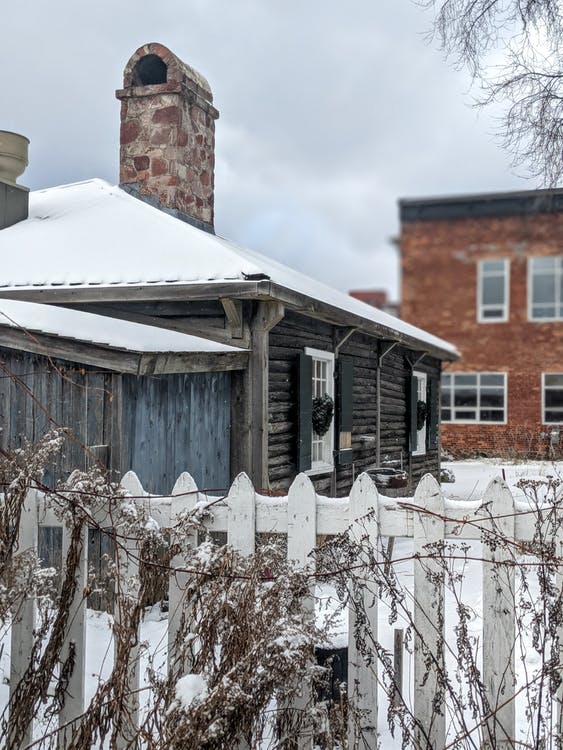
I’ll link this to Mary Lawson‘s A Town called Solace. This is a small, fictional town in Northern Ontario, where it’s easy to imagine that life is simple, perhaps a little dull. But 7 year old Clara’s rebellious but much-loved older sister has run away – disappeared completely. Clara’s responsible for feeding her elderly neighbour Elizabeth’s cat during a hospital stay. And during this time, an unknown man, who turns out to be called Liam, seems to be moving into Elizabeth’s home. Clara, Elizabeth and Liam each have a story which develops told from their own perspective. It’s multi-layered: in their own ways these characters are dealing with grief, bewilderment and remorse. They have secrets they’re reluctant to share, and have lost faith in at least some of their fellows. They’re richly developed as complex, satisfyingly likeable characters. This is a book to savour.
House in Northern Ontario.JL Fizzell, Pexels
The next character has a simple and apparently dull life too, just like Solace. She appears in Convenience Store Woman by Sakaya Murata. Our heroine, Keiko, despite her university education, has contentedly spent her whole 18 year career working in a convenience store. She lives for her work there, striving to be a dependable employee. No husband, boyfriend, or child: she doesn’t feel the lack of these, though her family worries. She’s a misfit, a cog, but a contented one. And then …. A quick and quirky read, though one which poses questions to ponder after the last page has been turned.
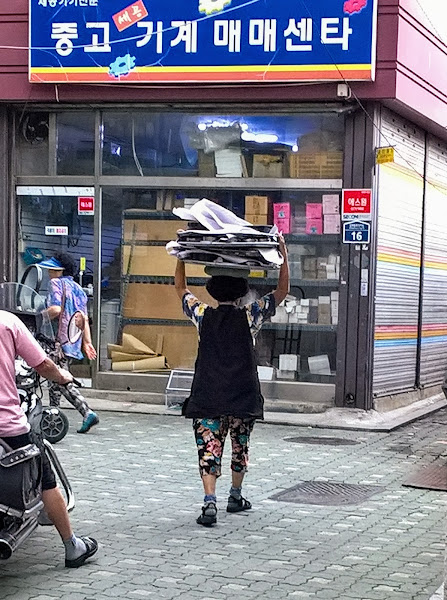
This is a Korean street scene. I believe the shopping experience is similar in South Korea and Japan
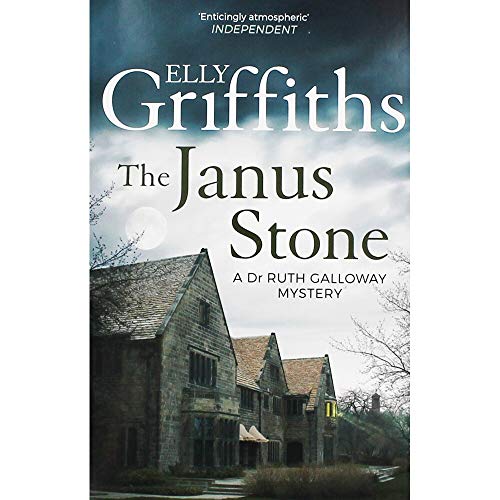
Another loner is the hero of The Janus Stone, by Elly Griffiths. The second book in the series featuring forensic archaeologist Ruth Galloway lives up to the promise of the first. The character of Ruth herself, and the detective with whom she works on this case continues to develop in an interesting way. The plot, involving the discovery of the bones of a child on a site currently being redeveloped is intricate enough to be intriguing, without being over-complicated. I took this book with me on holiday. Ideal reading in the circumstances.
Archaeologists, not in Norfolk, but near Hadrian’s Wall
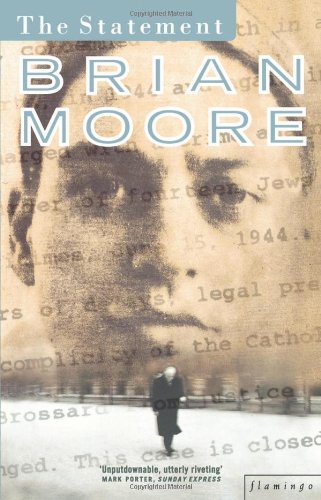
A long-ago crime brings me to my next link. The Statement by Brian Moore. My recent life in France had made me familiar with tales of the Resistance in WWII France, as well as knowing something of the unpalatable doings of the Vichy Government and their unpleasant foot soldiers, the Milice. So I was eager to read this story, based on a true one, of one man’s unsavoury war time crimes and of his post-war protection by the Catholic church. Will he escape justice in the end? This is a clever, complex thriller leaving us in little doubt as to Moore’s feelings about the Catholic hierarchy. There are twists till the very last page. To be read perhaps more than once for full impact.
Although we’ll stay with WWII, we’ll lighten the mood. Operation Mincemeat by Ben MacIntyre. A really absorbing and interesting read. This book tells the story of an ultimately successful attempt by the British to deceive the Nazis about their plans to invade in Southern Europe. Such an attempt is bound to be complex, involving political acumen, spying know-how, involvement of those in high places and yet secrecy at every level. Ben Macintyre handles his material and the wealth of characters skillfully, and turns out a rollicking tale. Yet he does not ignore the pathos surrounding the life of the almost unknown Welshman who is at the centre of this story: you’ll have to read the book to find out what I mean.
WWII Museum in Gdansk
Next month’s starting book is one that formed part of the very first Six Degrees chain that I ever joined in on. It’s Katherine May‘s Wintering. And very appropriate for the less than sunny British summer we’re currently experiencing here.
Finally, an apology. Last month, hardly any of you who commented on my post received replies. I’m so sorry. I planned to write these on my return from Europe, but WordPress decided otherwise and firmly closed comments, despite my best efforts to open them again.
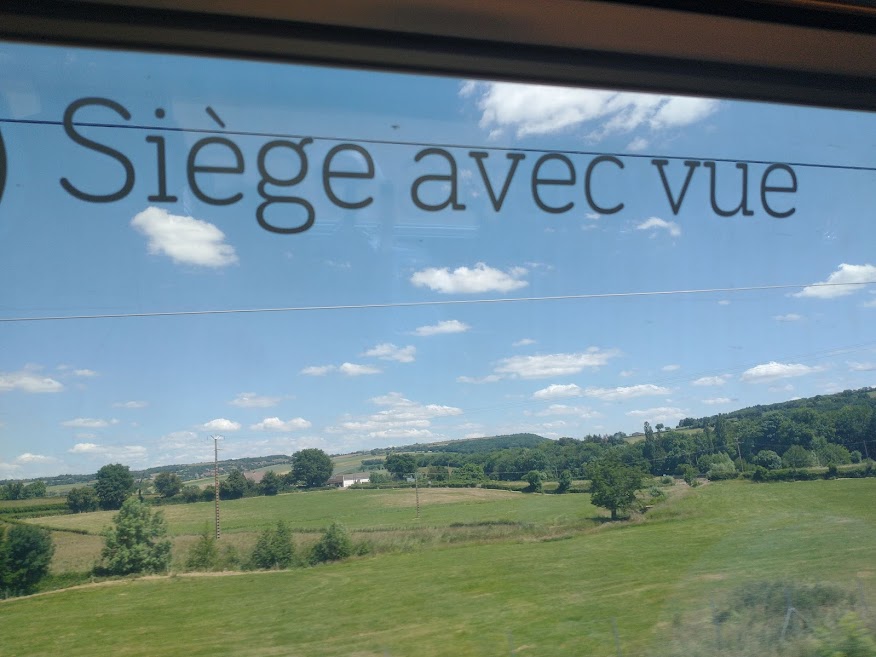
… and a suitable swan song for my postcards from Europe. This was taken on the TGV train from Barcelona Sants to Paris Gare de Lyon the day before yesterday, somewhere north of Lyon.
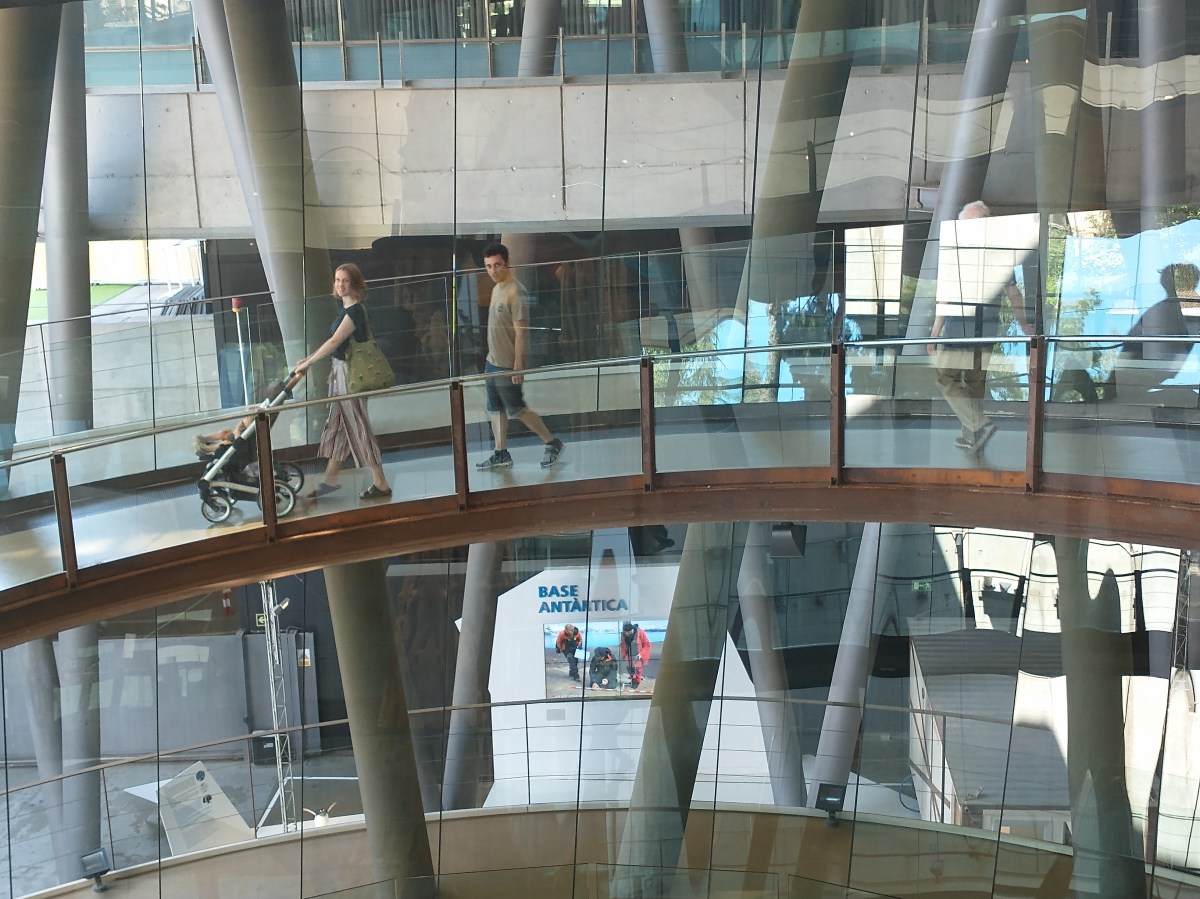
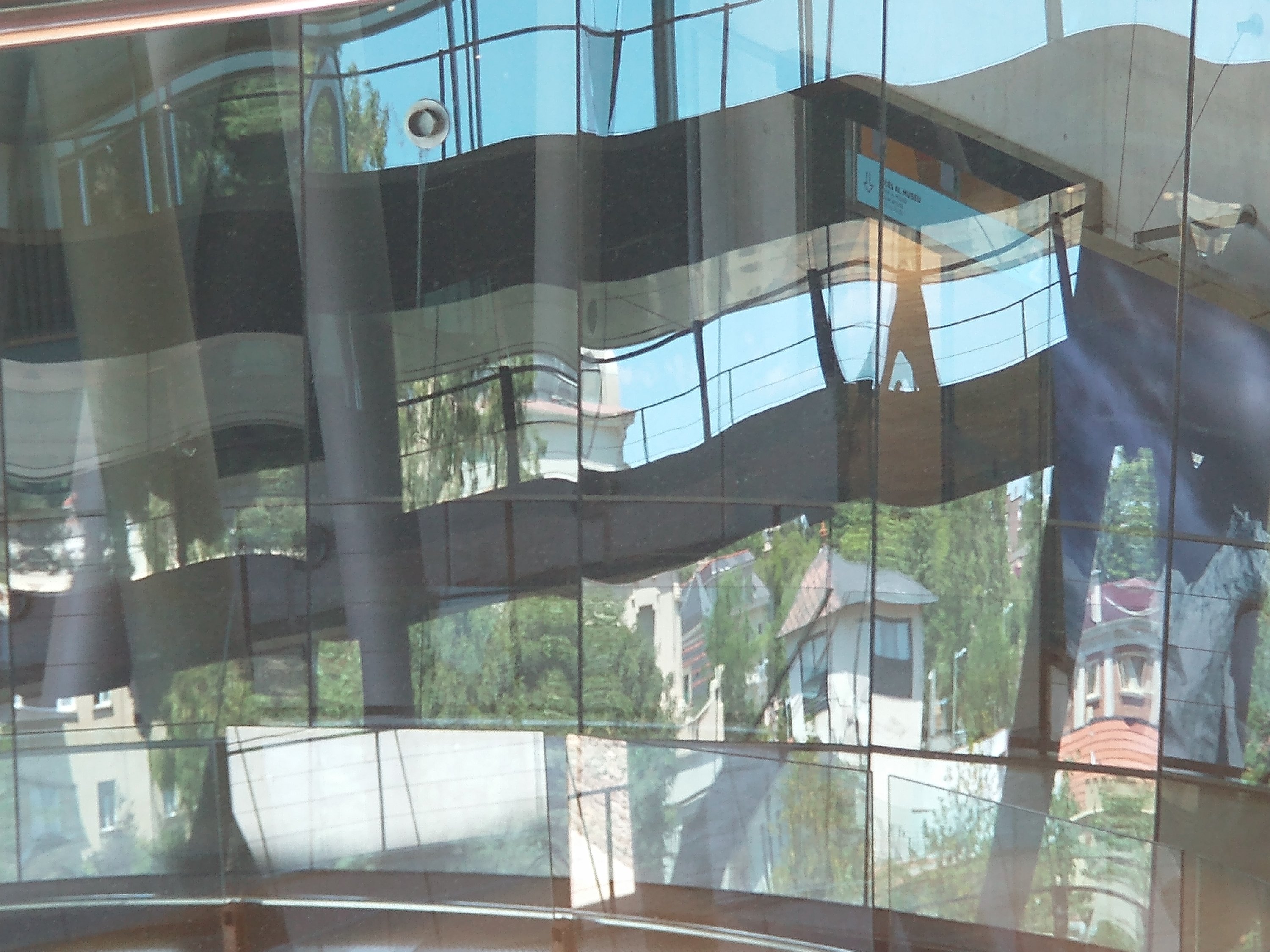
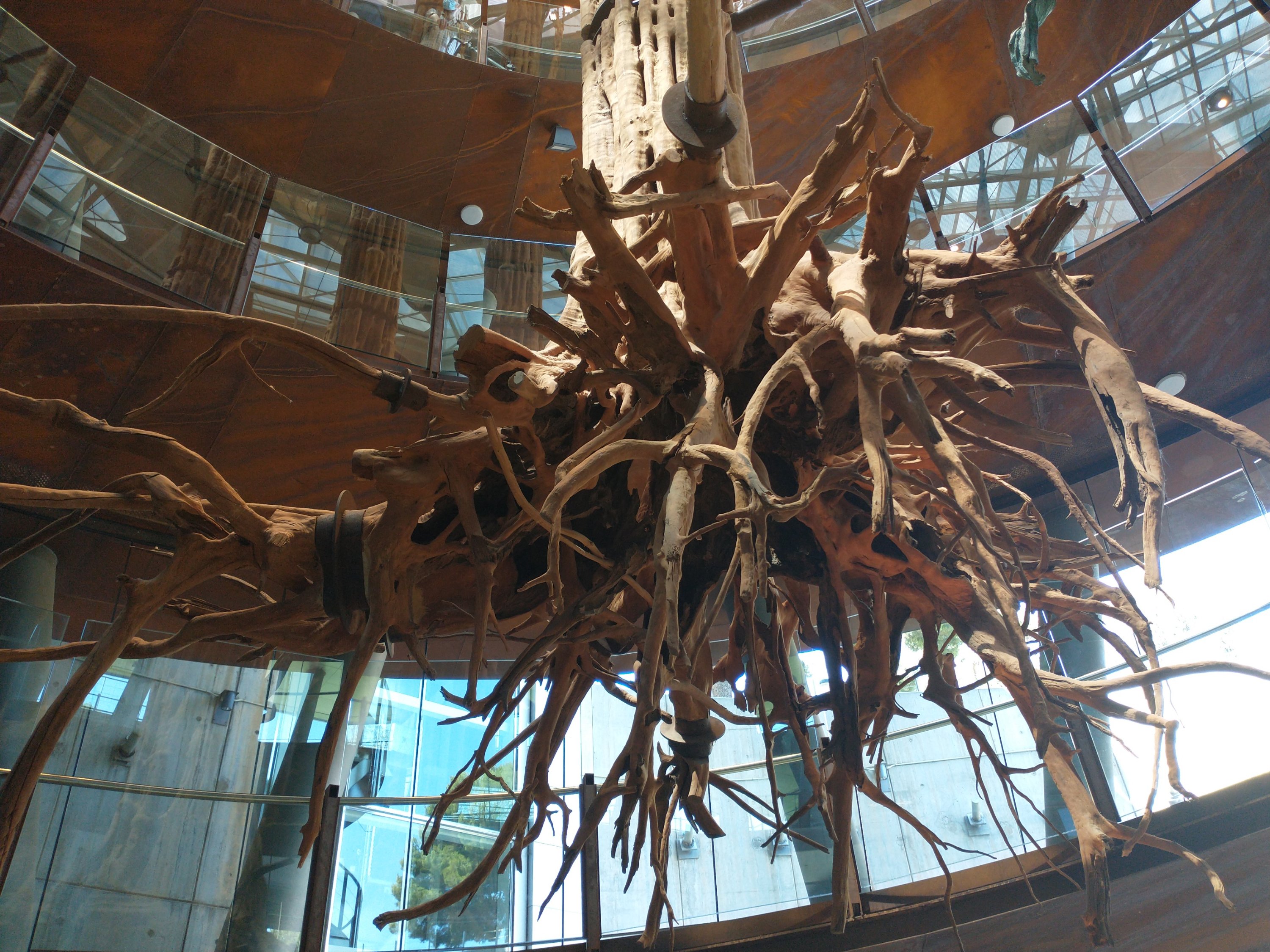
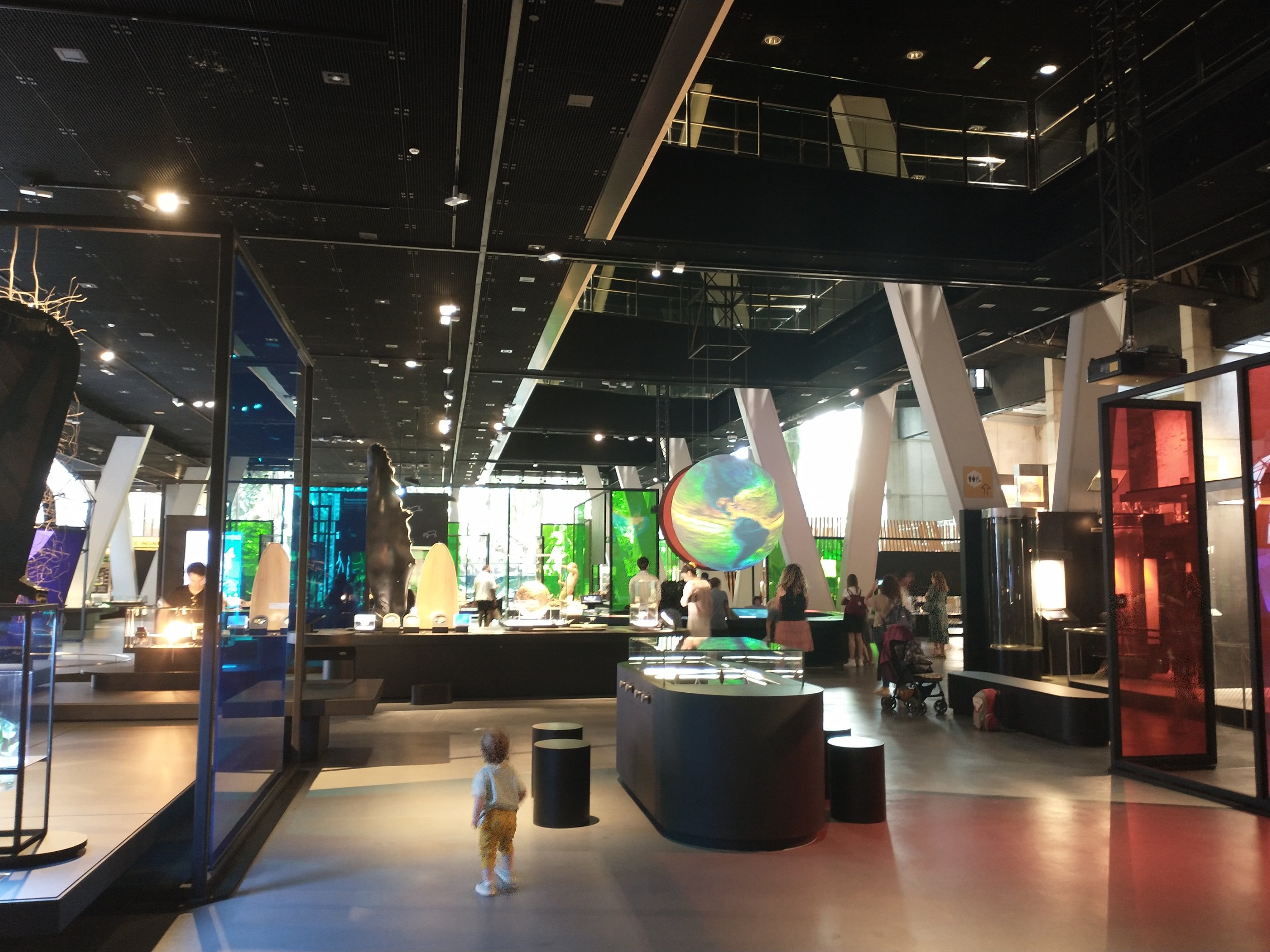
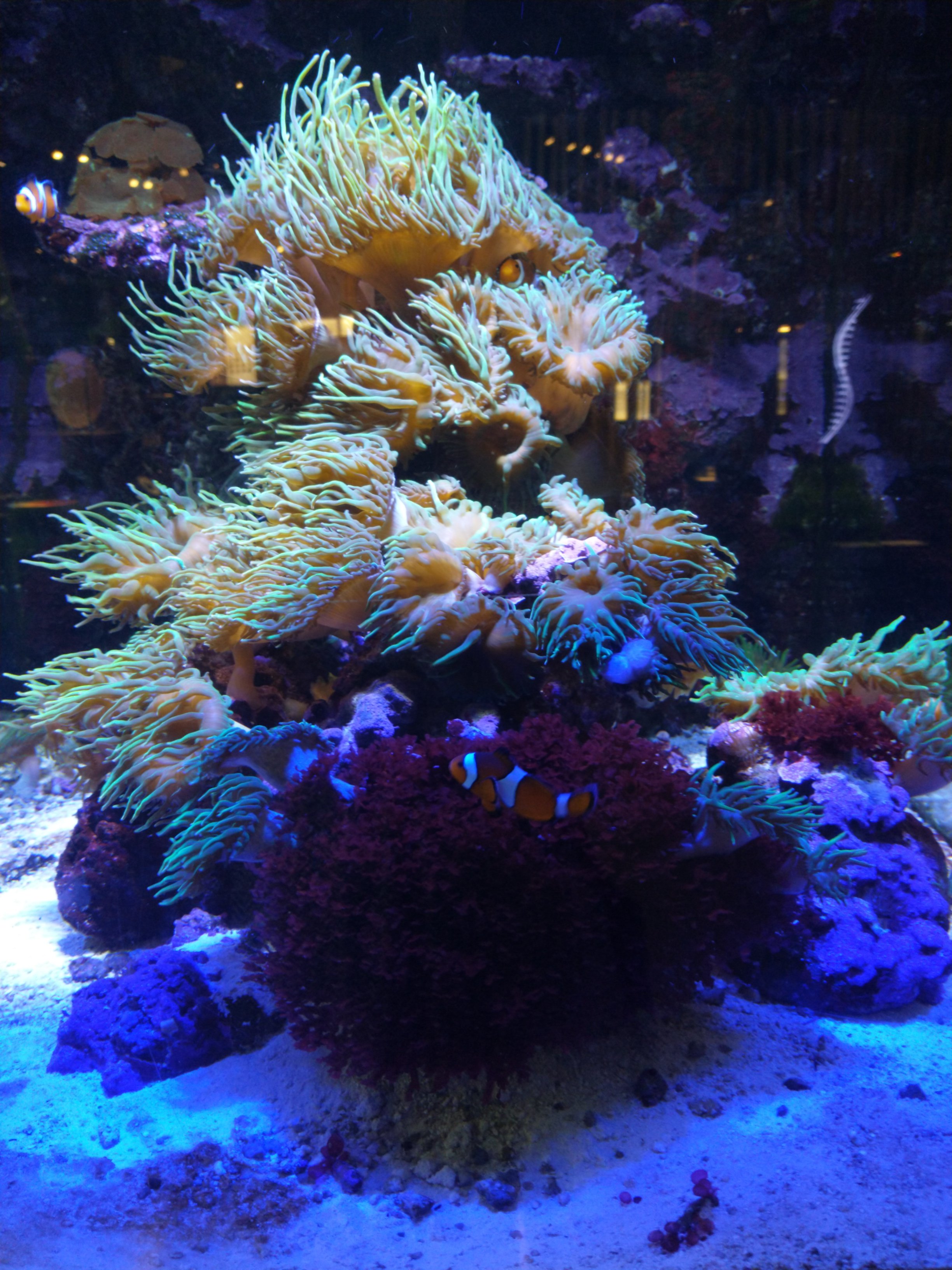
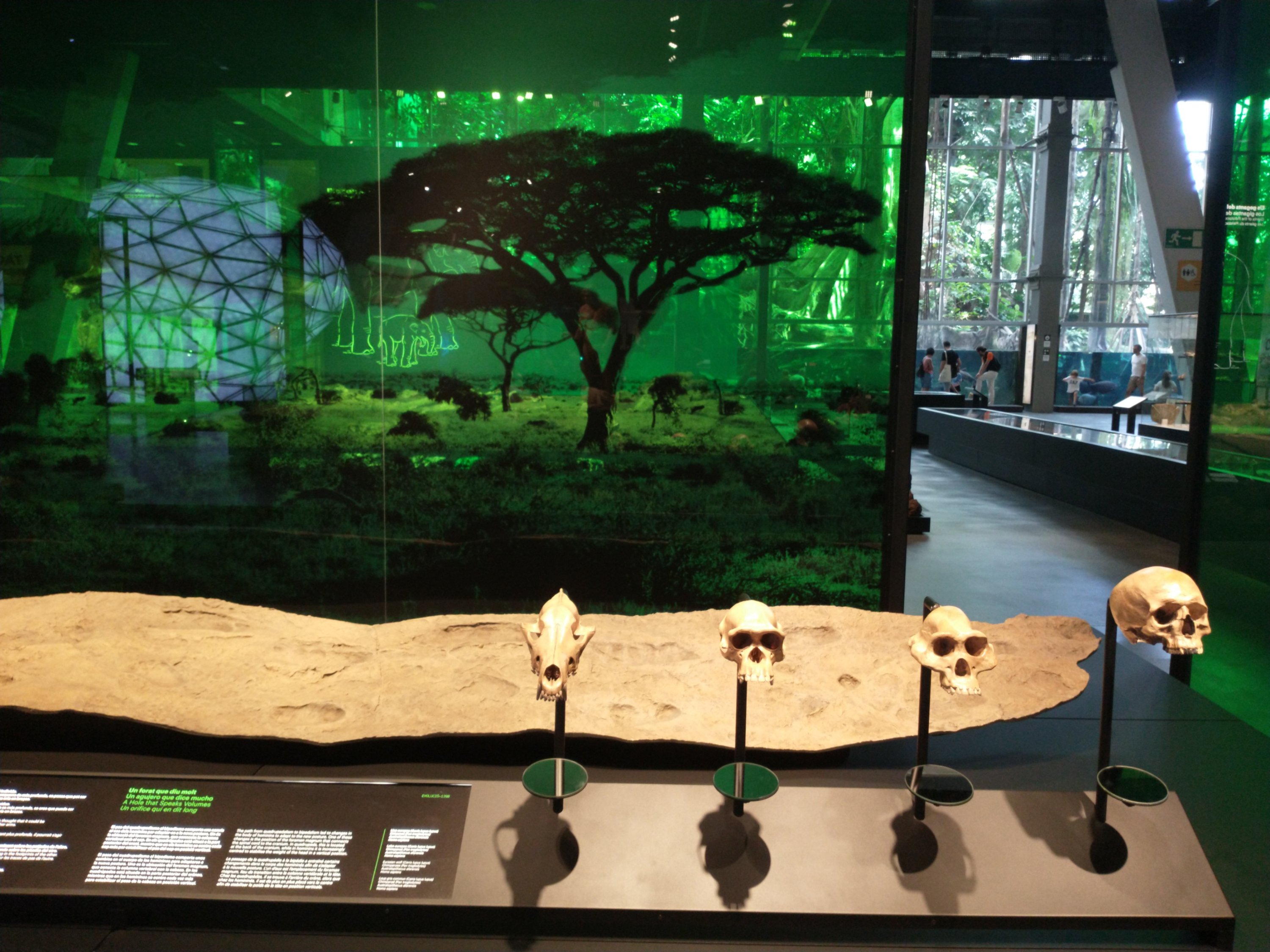
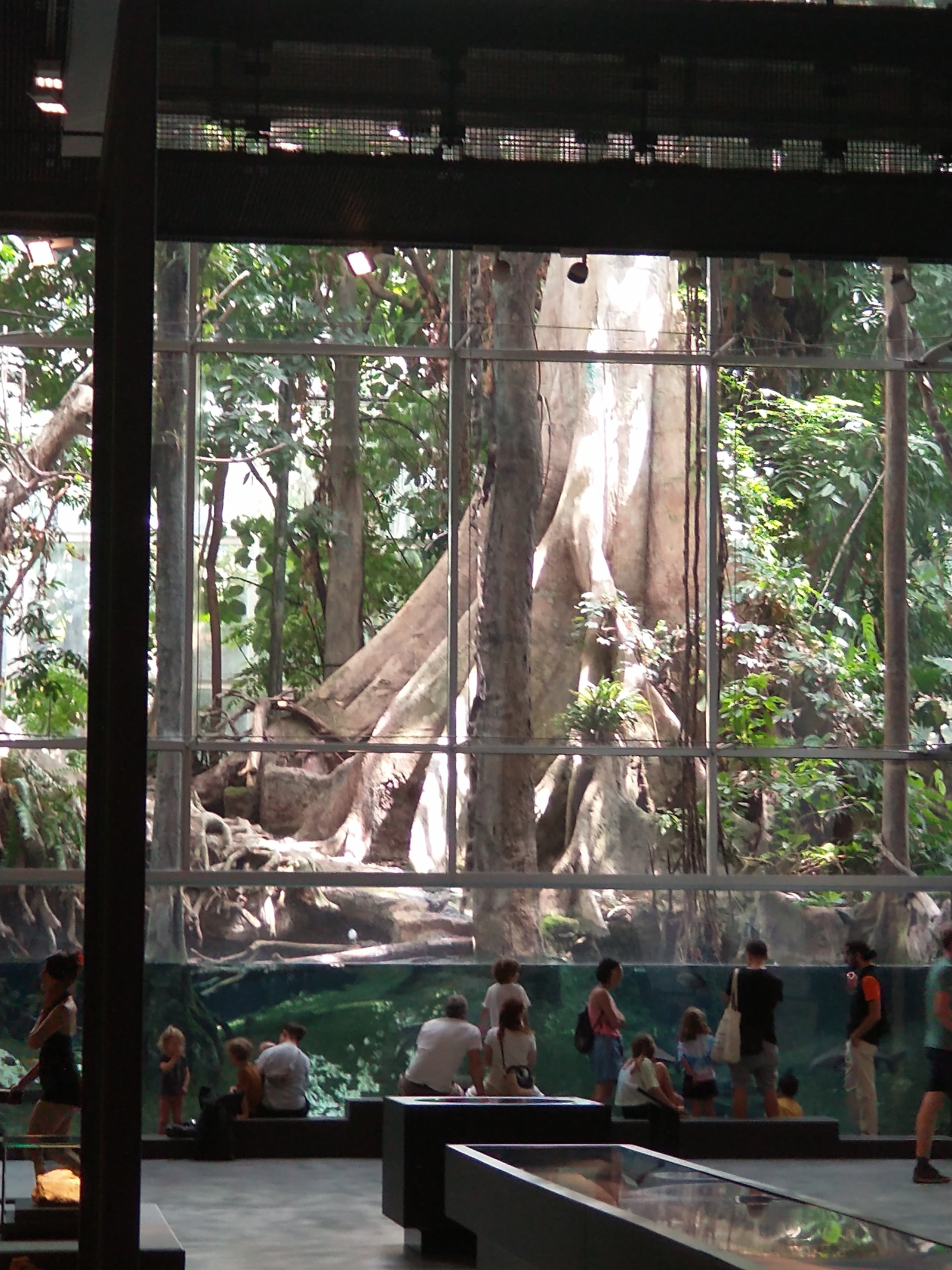
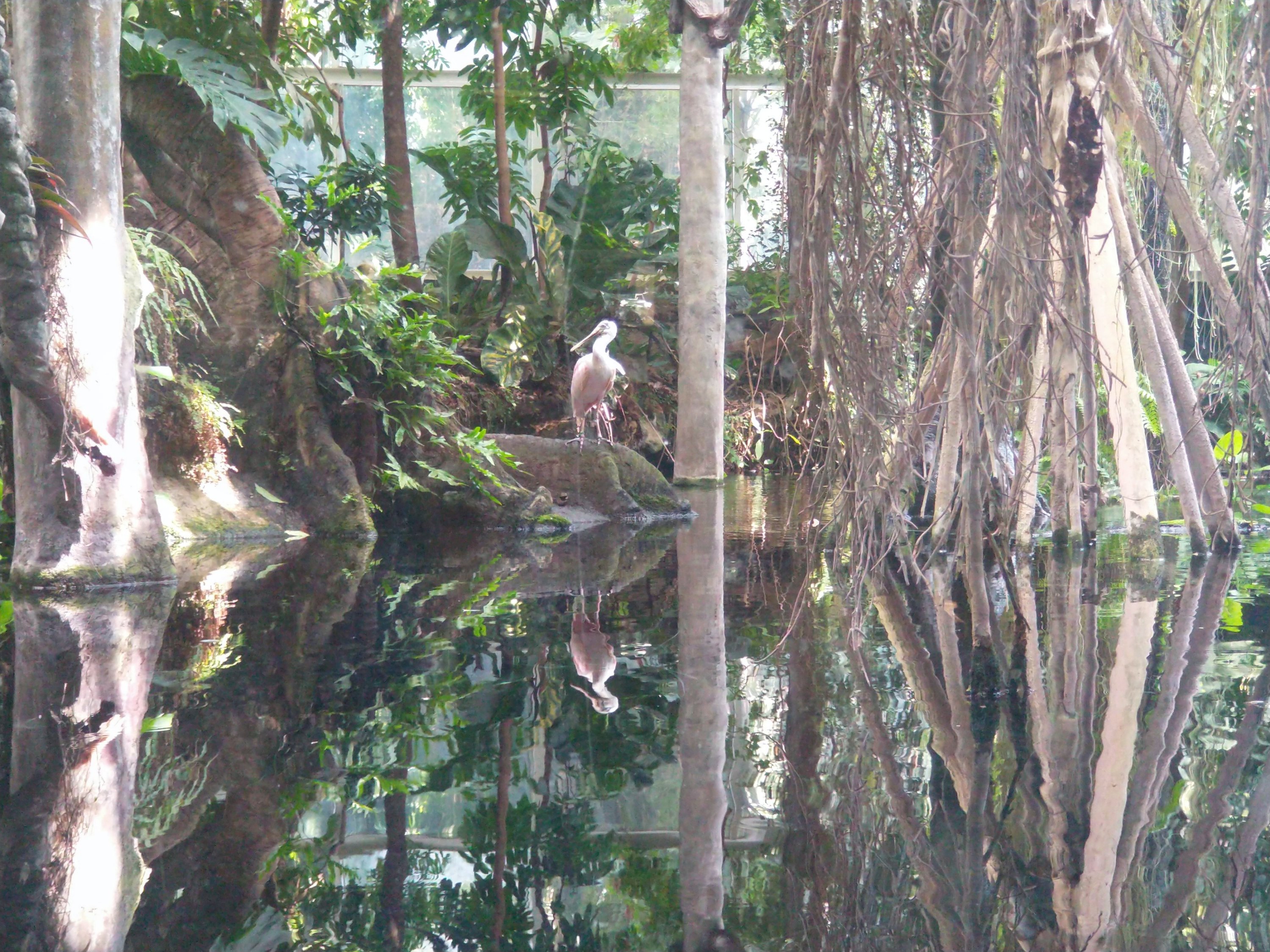
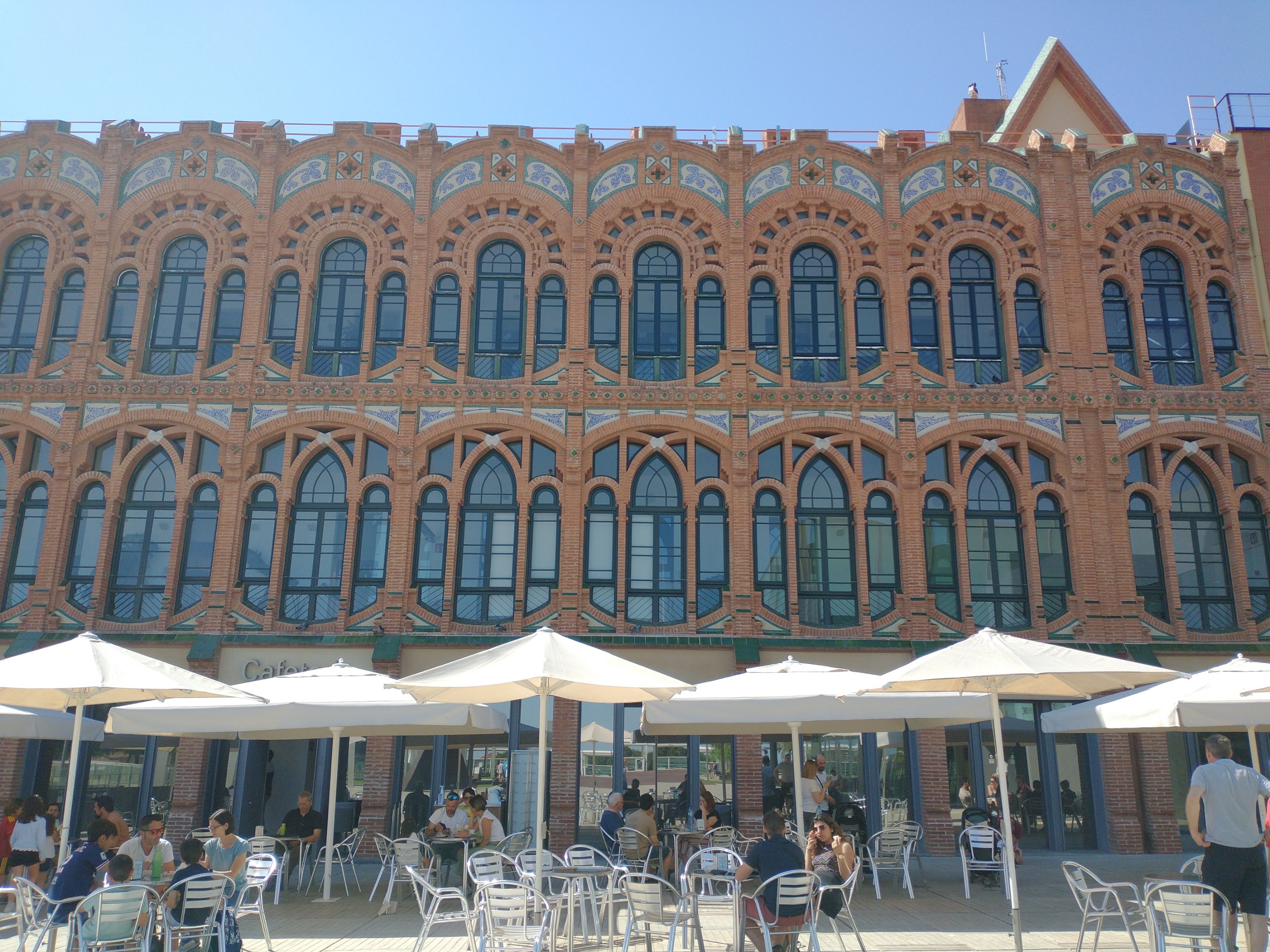
Today we went to Cosmo Caixa. It is, quite simply the best science museum we have ever been to. Interactive, engaging, visually stimulating, informative. Even Anaïs, at 16 months old was kept interested.
I’m sending you some postcards with no attempt to explain anything,but in hopes that one day, you to will have the chance to visit.
A well earned drink and ice cream at the end.
And that’s it… tomorrow night we’ll be in England, and on Tuesday, home. It’s been quite an adventure. We’re not really ready for it to end …
From Premià de Mar, you could go south west to Barcelona, or northeast to Mataró, a town of some 120,000, and that’s what we did today.
It used to be a textile manufacturing town. It saw the very first railway in the whole of Spain run between here and Barcelona in 1848. It’s still a prosperous and busy town.
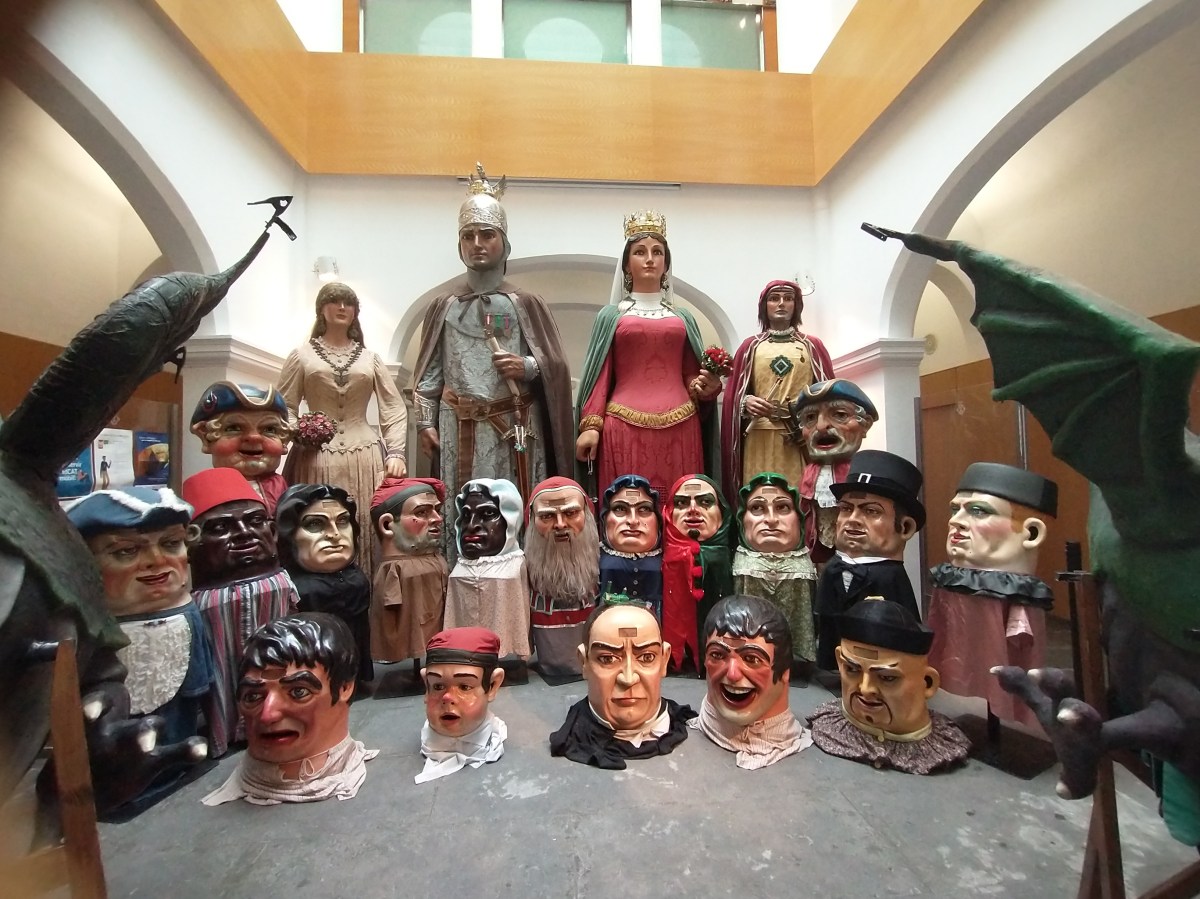
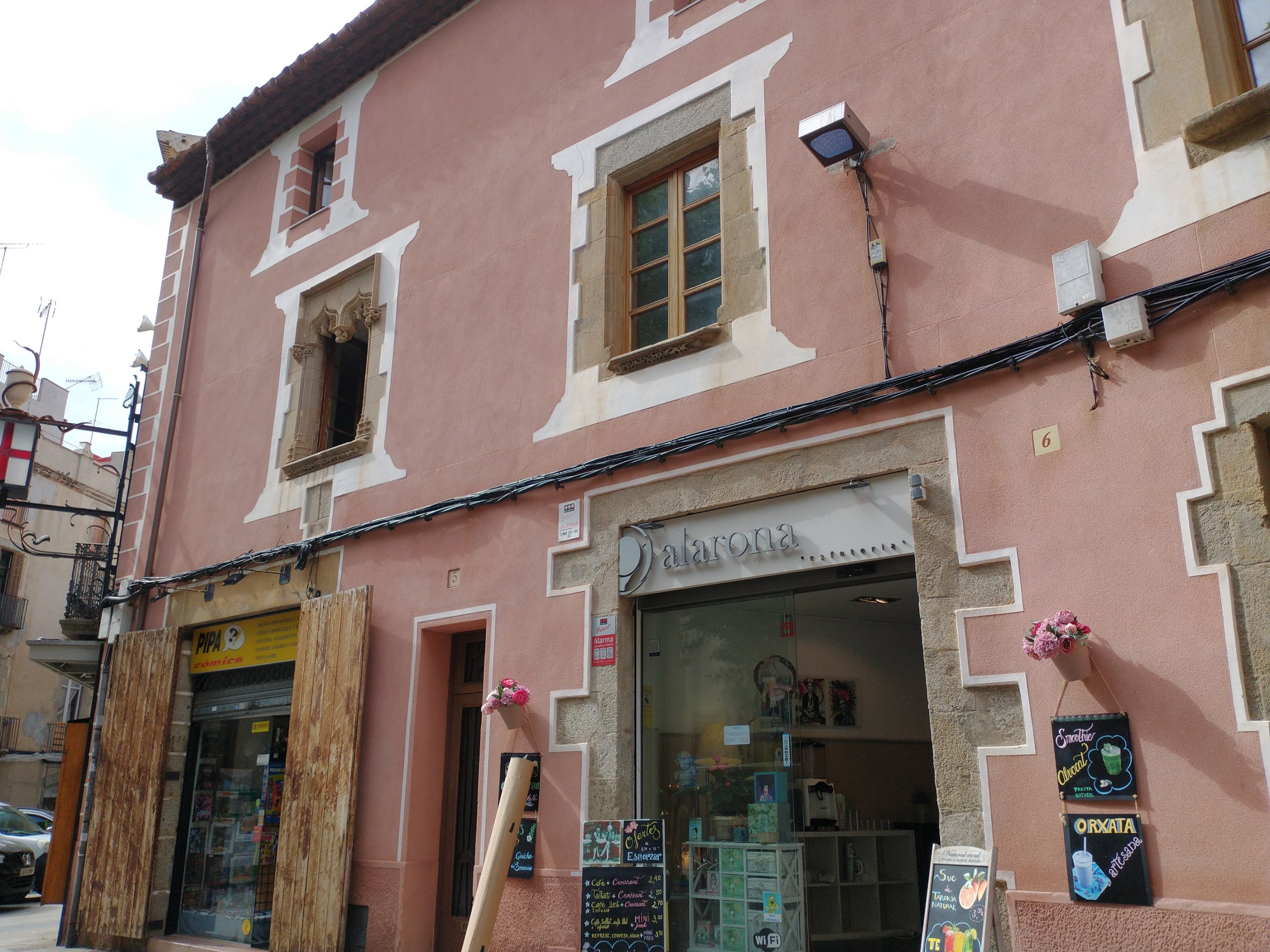
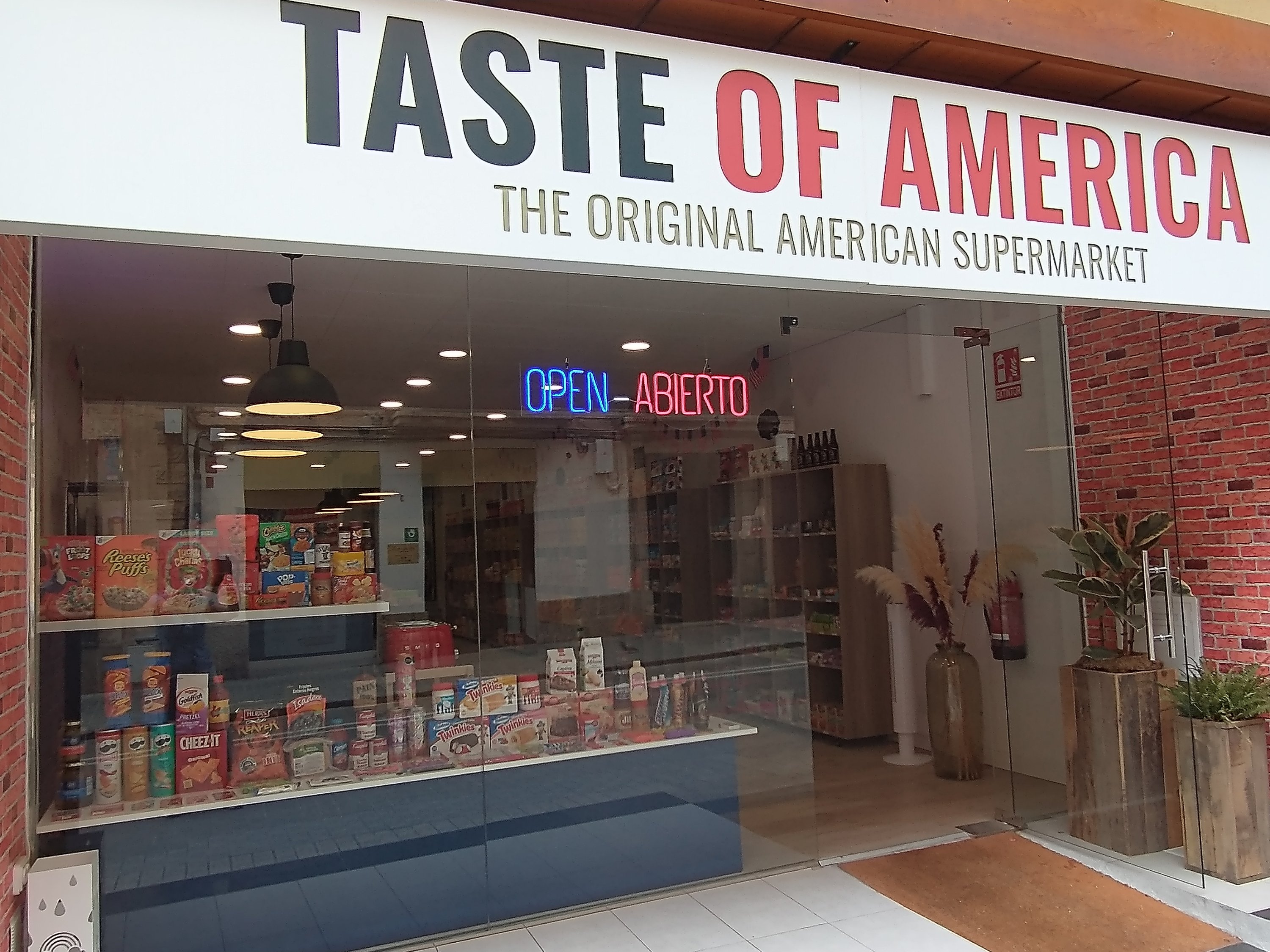
We saw an exhibition of Catalan gigantes, those colossal figurines and heads processing on ceremonial occasions through the town, and later, in local shops, gigantic Playmobil figures on display, for – er – Playmobil week. Mainly we hunted down Modernista architecture. But that’s for another day …
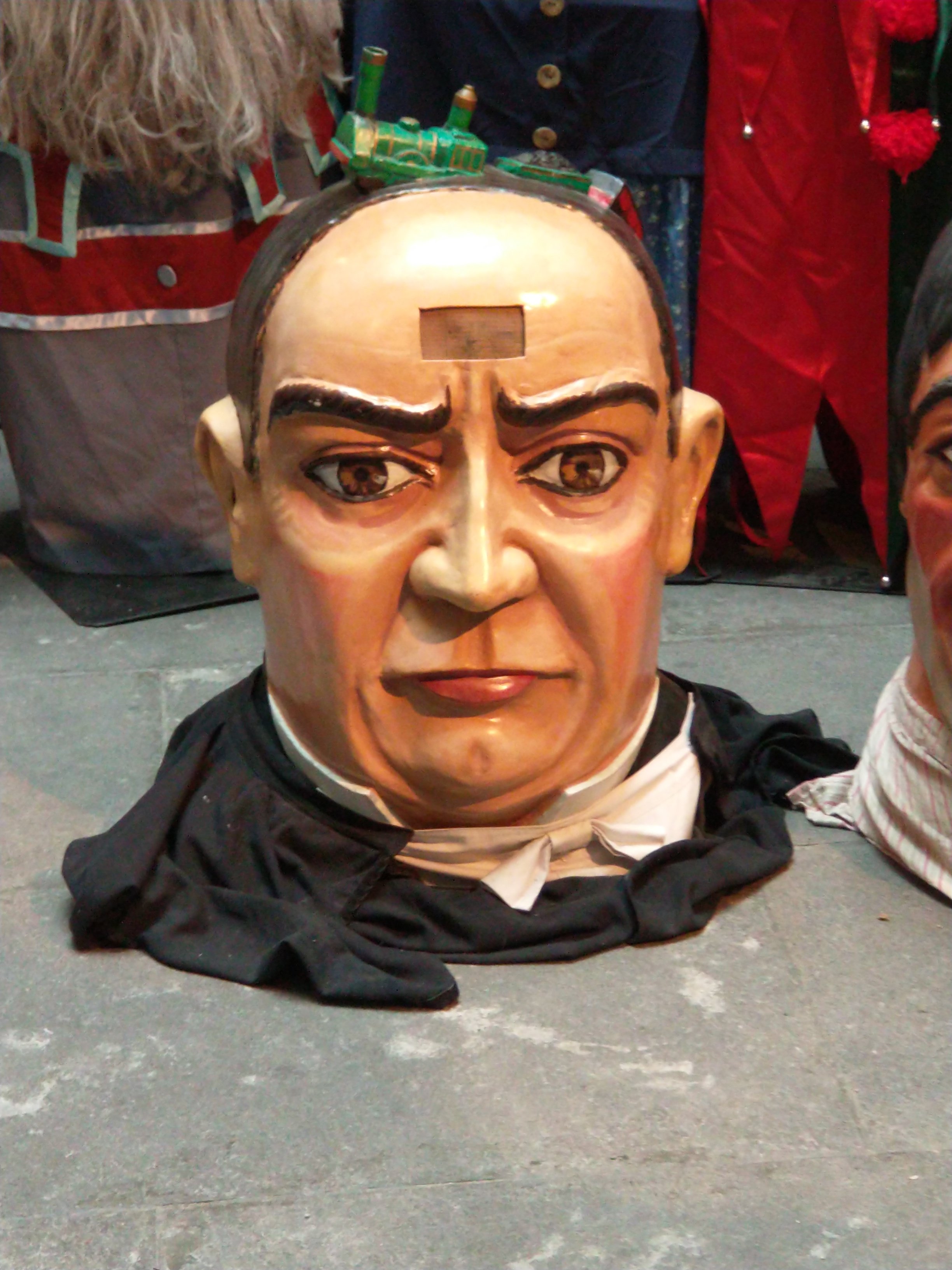
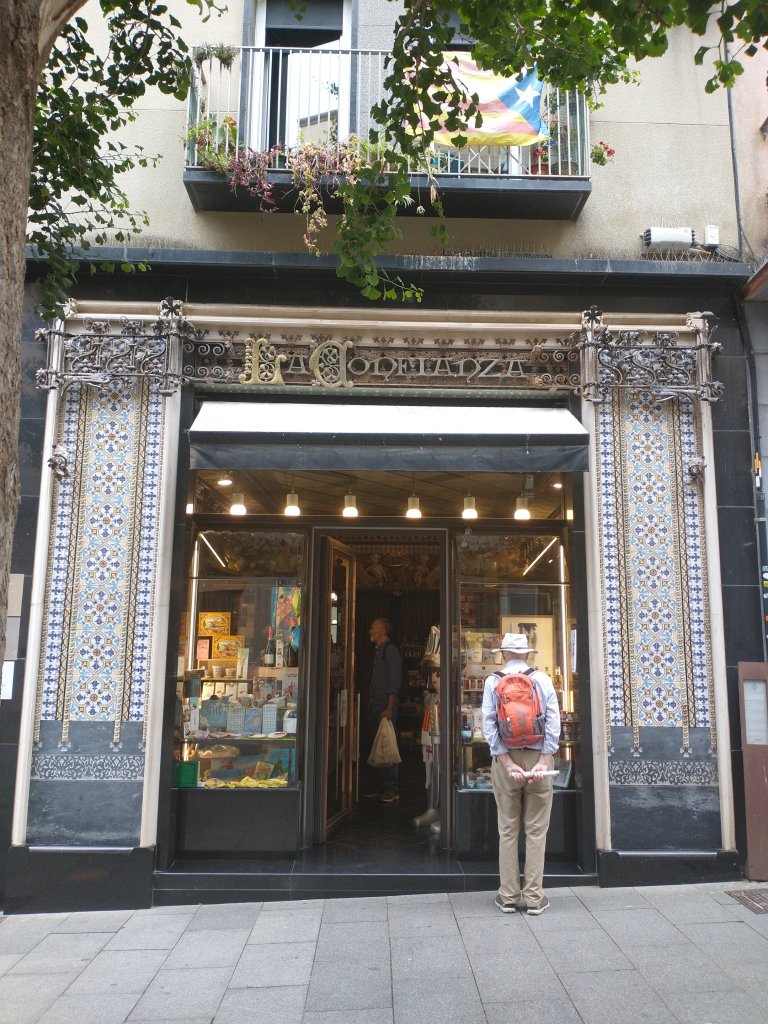
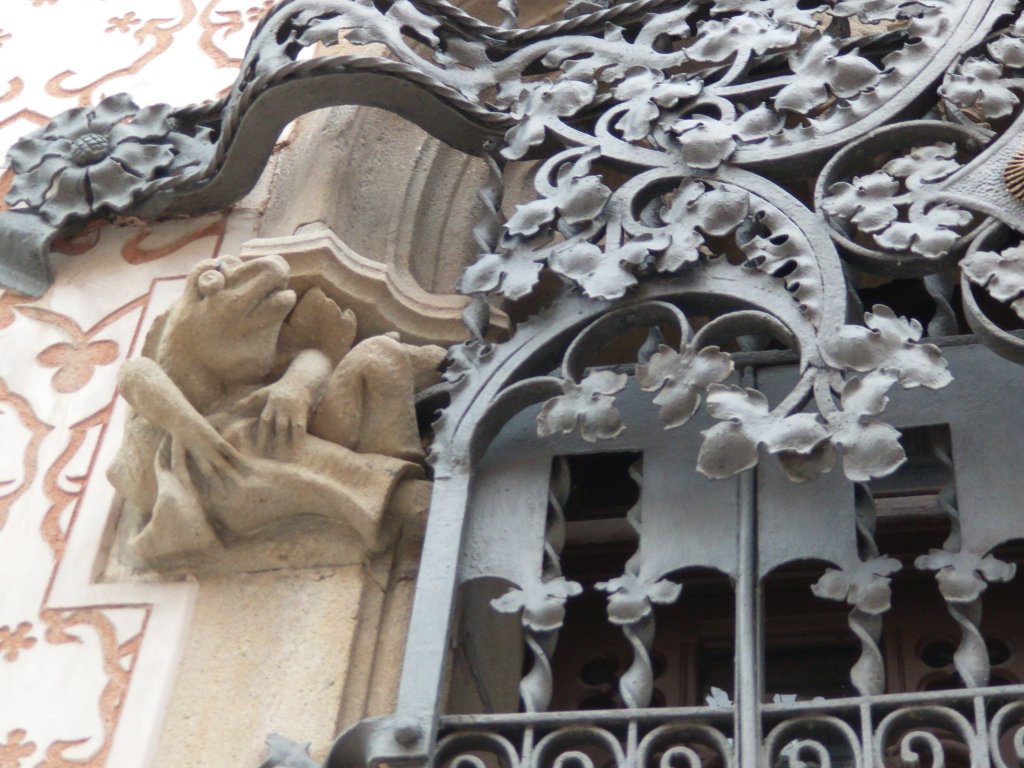
This giant head, topped with a steam train celebrates Mataró’s place in railway history.The best shop in town?Spot the Gothic window.A cheese shop guarded by a Playmobil figure for one week onlyThe most surprising shop we found.A detail from a special house, Casa Coll i Regas.
We’re having a quiet day. We’re exploring Premià’s change from fishing village to dormitory town via its skirmish with industrialisation in the 19th century. Few signs are left of its days as a textile town, like many in Catalonia.
Fishermen’s cottages built round about 1839, just before industry arrived and expanded the town.
But here’s something we can’t get our heads round. The textile and gas industries depended on coal. And the coal was transported from Barcelona by rail, on the very first trainline in Spain, opened in 1848.
But where did the coal come from? Asturias, some of it. But most of it came by sea from England. Just think: England, all the way down the coast of France to the Iberian peninsula which had to be skirted virtually in its entirety. It seems economic madness, but it can’t have been.
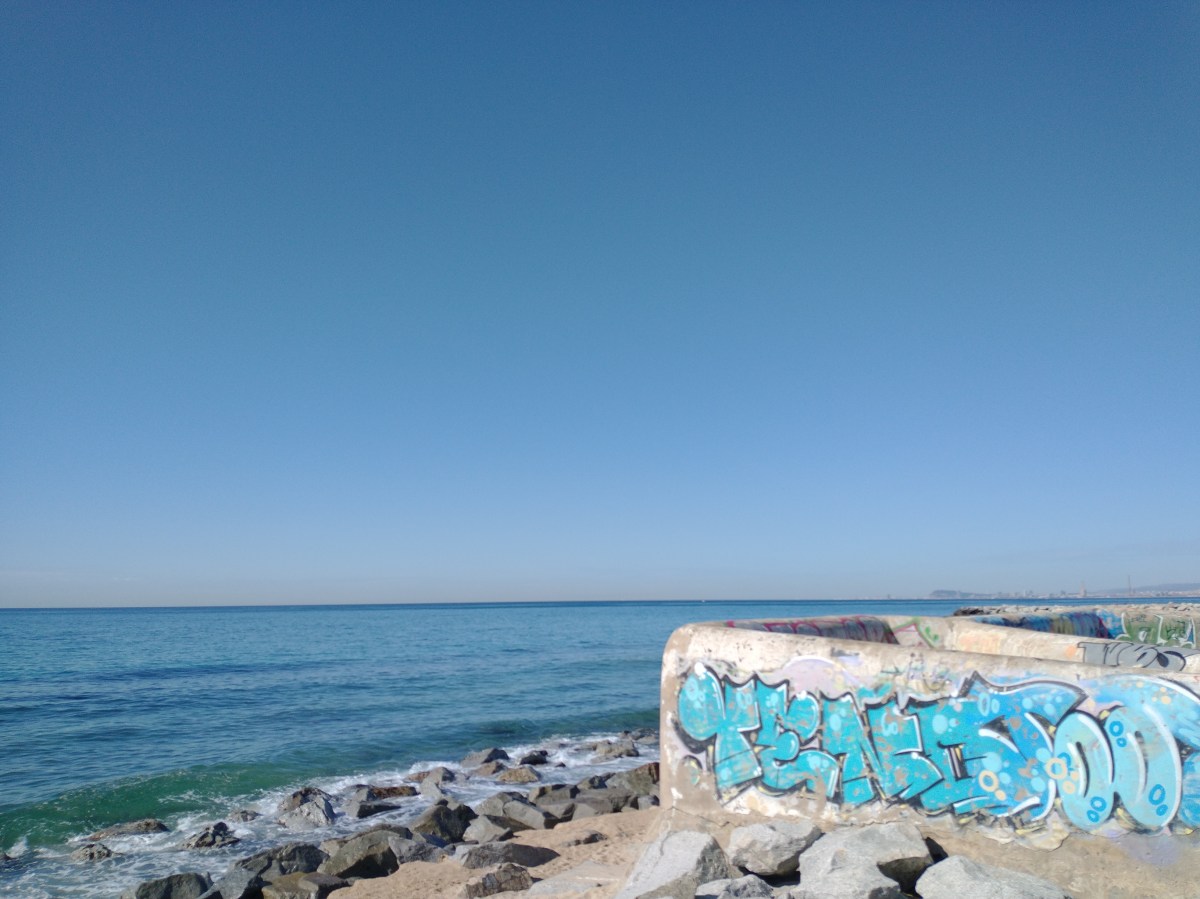
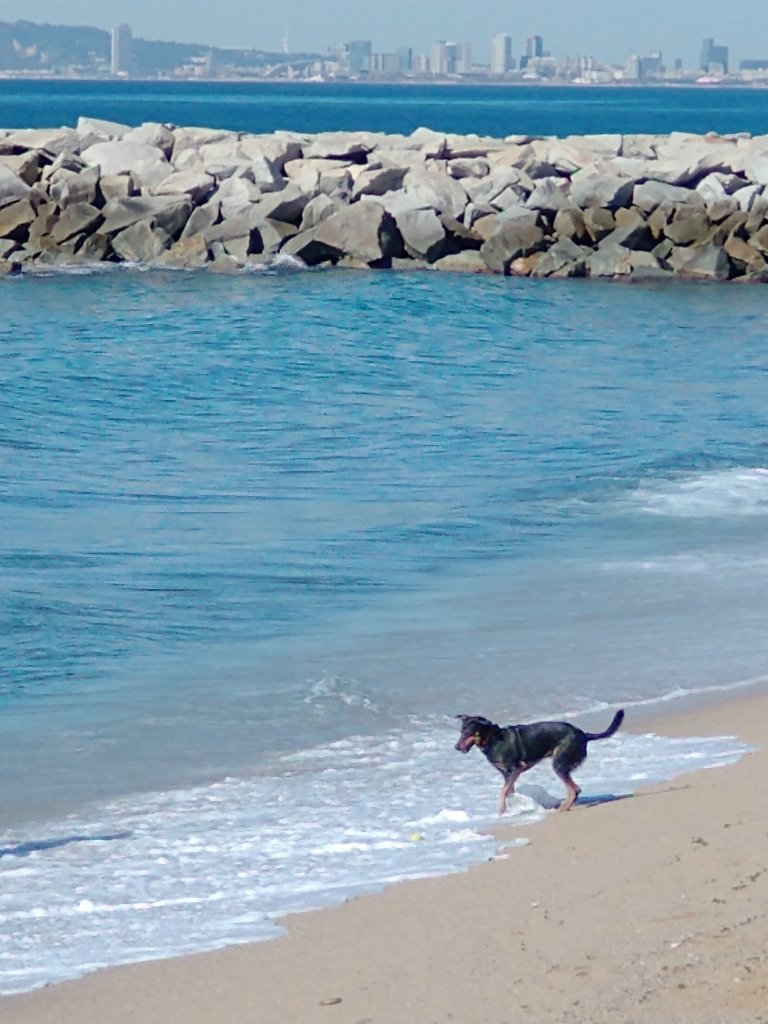
The station still exists. The nearby docks hardly at all. One man and his dog play in the shallows of la Descàrrega. I’m sure they don’t give a thought either of this area’s industrial past, nor of its more recent role in the Spanish Civil War. Bunkers were erected here to protect the railway signals from attack by Francoist troops, and you can see their remains in the featured photo..
One happy dog. His master’s having a swim. That’s Barcelona in the distance.
Daughter Emily has lived in and around Barcelona for ten years now, so we feel well-versed in its tourist destinations. It’s fun for a change to get to know different neighbourhoods.
Today, we explored Sant Andreu, which was until the later 19th century an entirely separate town, a textile town, the home of Fabra i Coats (surely you or your mum had a sewing box full of brightly coloured Coats threads, though they won’t have come via Spain?). This factory complex is now an arts centre, not very busy this rainy day. And at Christmas time, it’s transformed into a toy factory for the Three Kings to collect the gifts they’ll deliver to the children of Barcelona at Epiphanytide. It’s a popular family destination at that time of year.
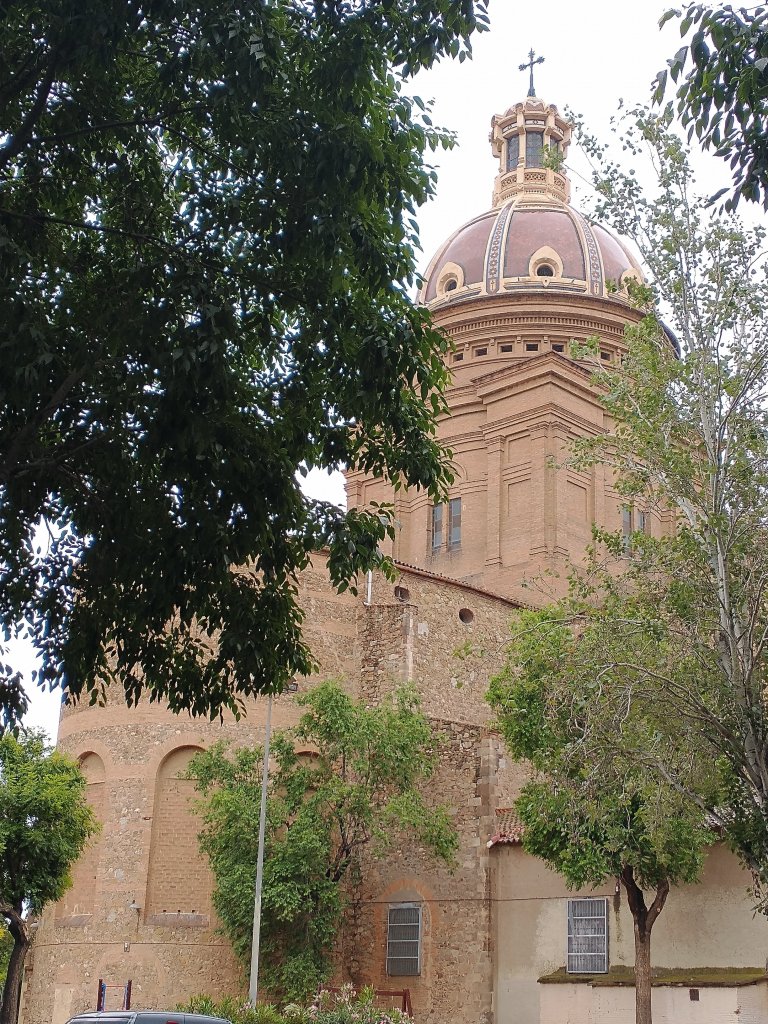
Our explorations began and ended with churches. First the church of Saint Andreu de Palomar of course, which gives the area its name …
This 19th century church has its beginnings in the 10th century. We’d like to have explored it more.
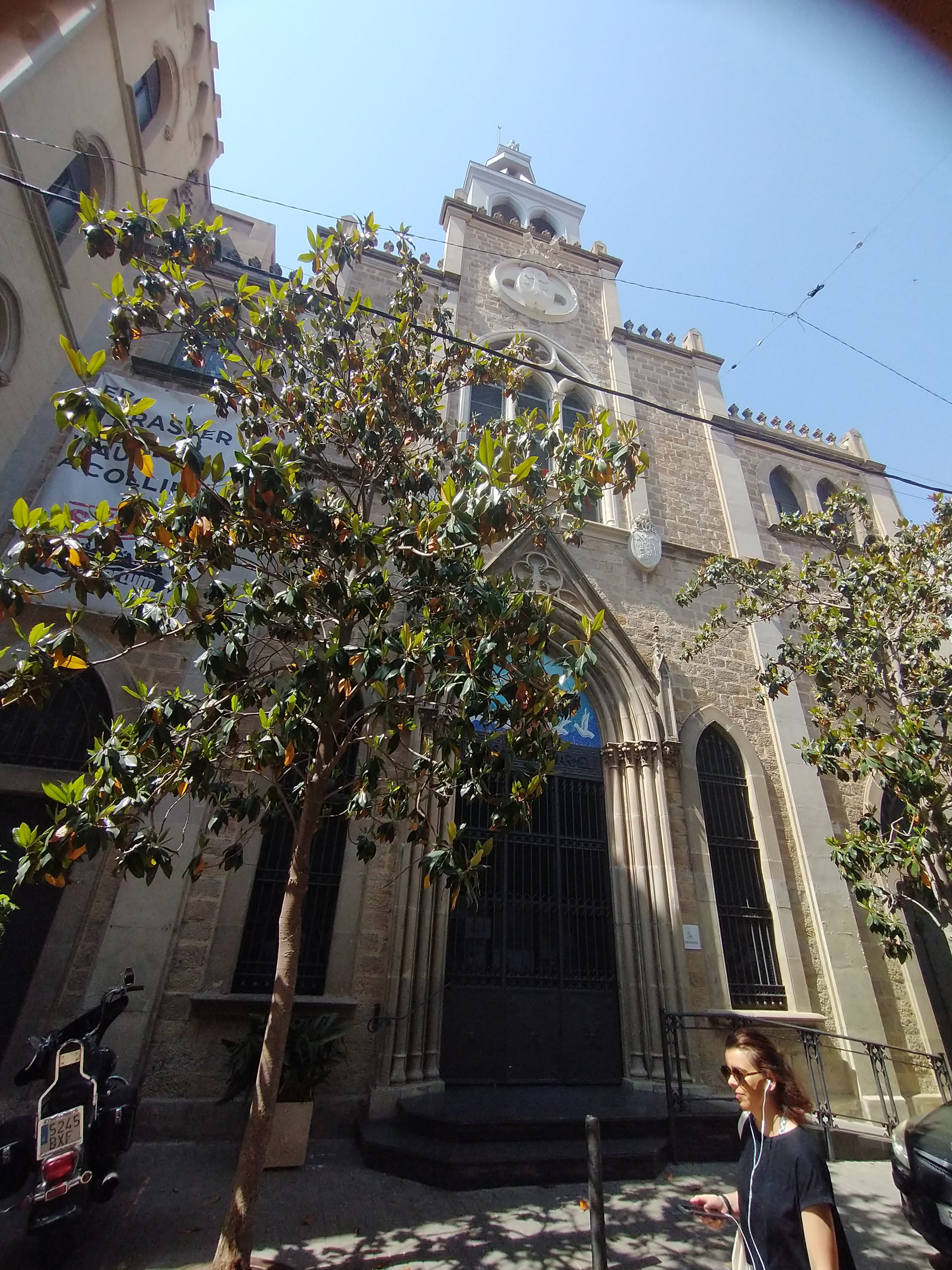
… and then Sant Pacià, which we were keen to see, as its mosaic floor was created by Gaudí in his early days. Irritatingly, both buildings were shut.
Sant Pacià. Firmly shut. Another Gothic Revival church.
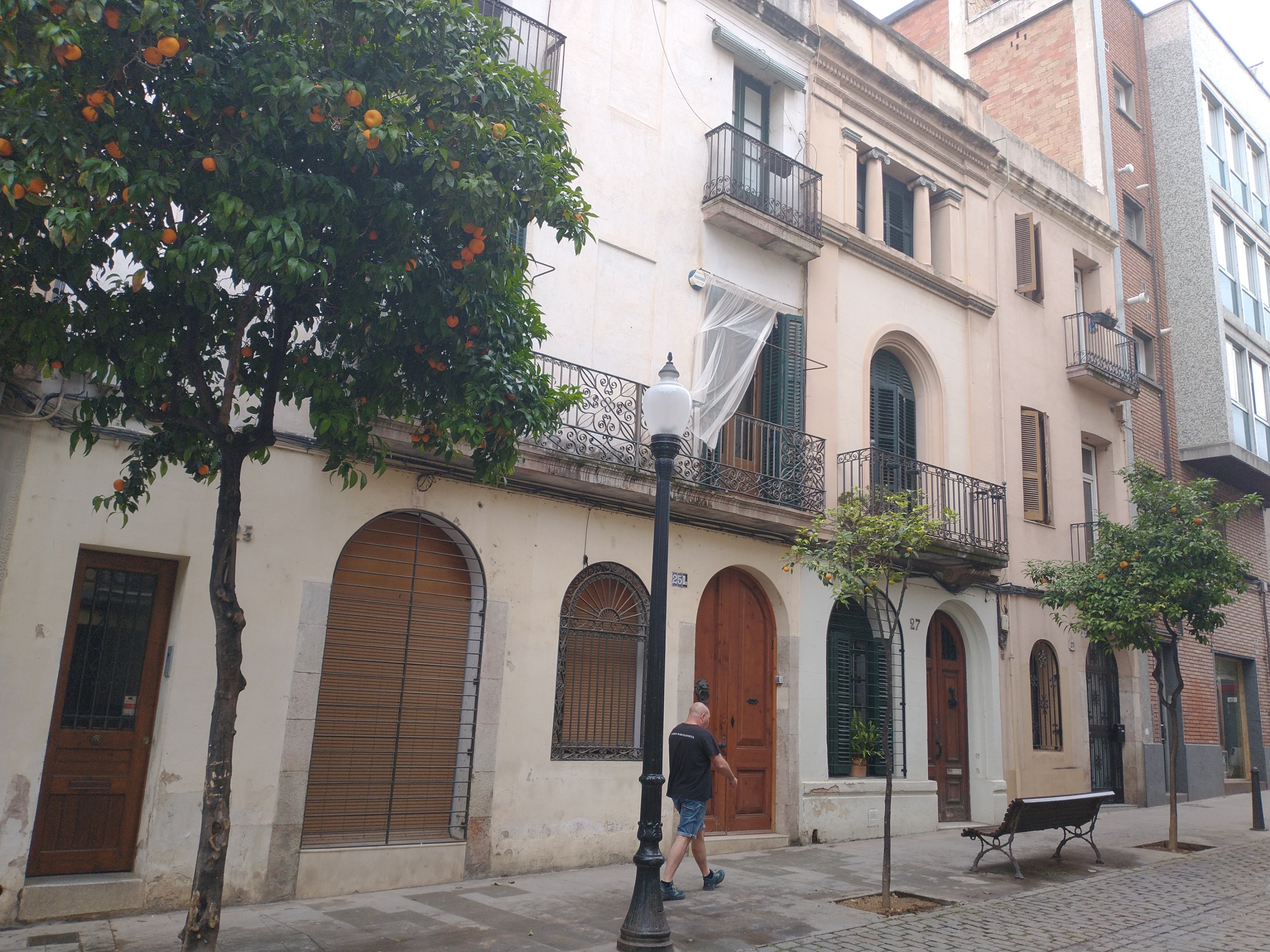
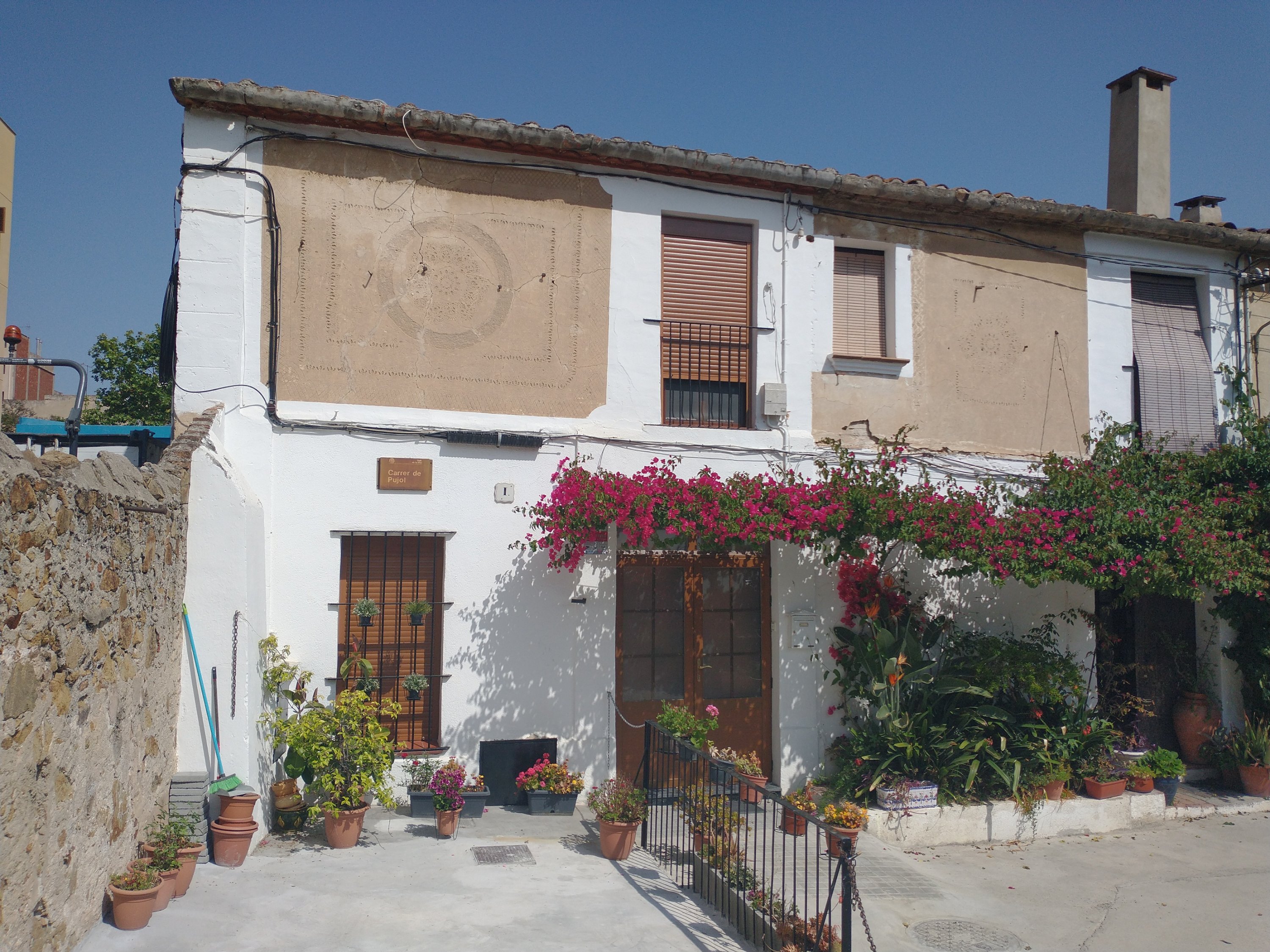
Never mind. Mooch about with us and enjoy the cobbled streets of the old town, its Modernista buildings and independent shops: orange tree lined and bougainvillea bedecked. The area has a great feeling of community. We’d cheerfully live here.
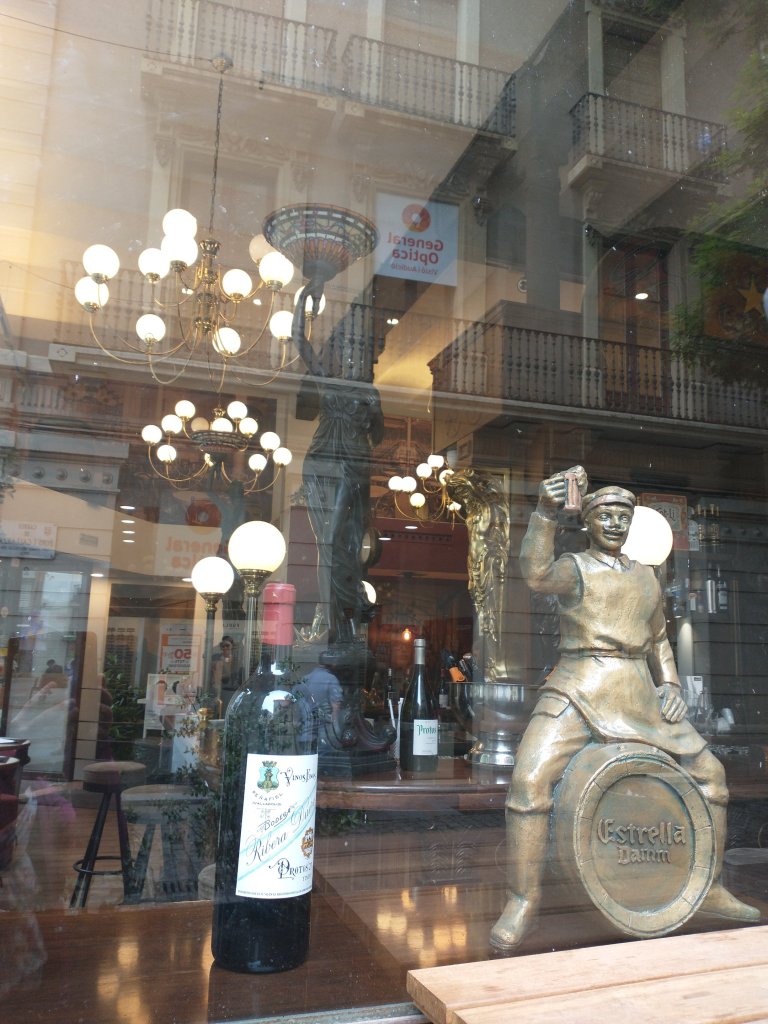
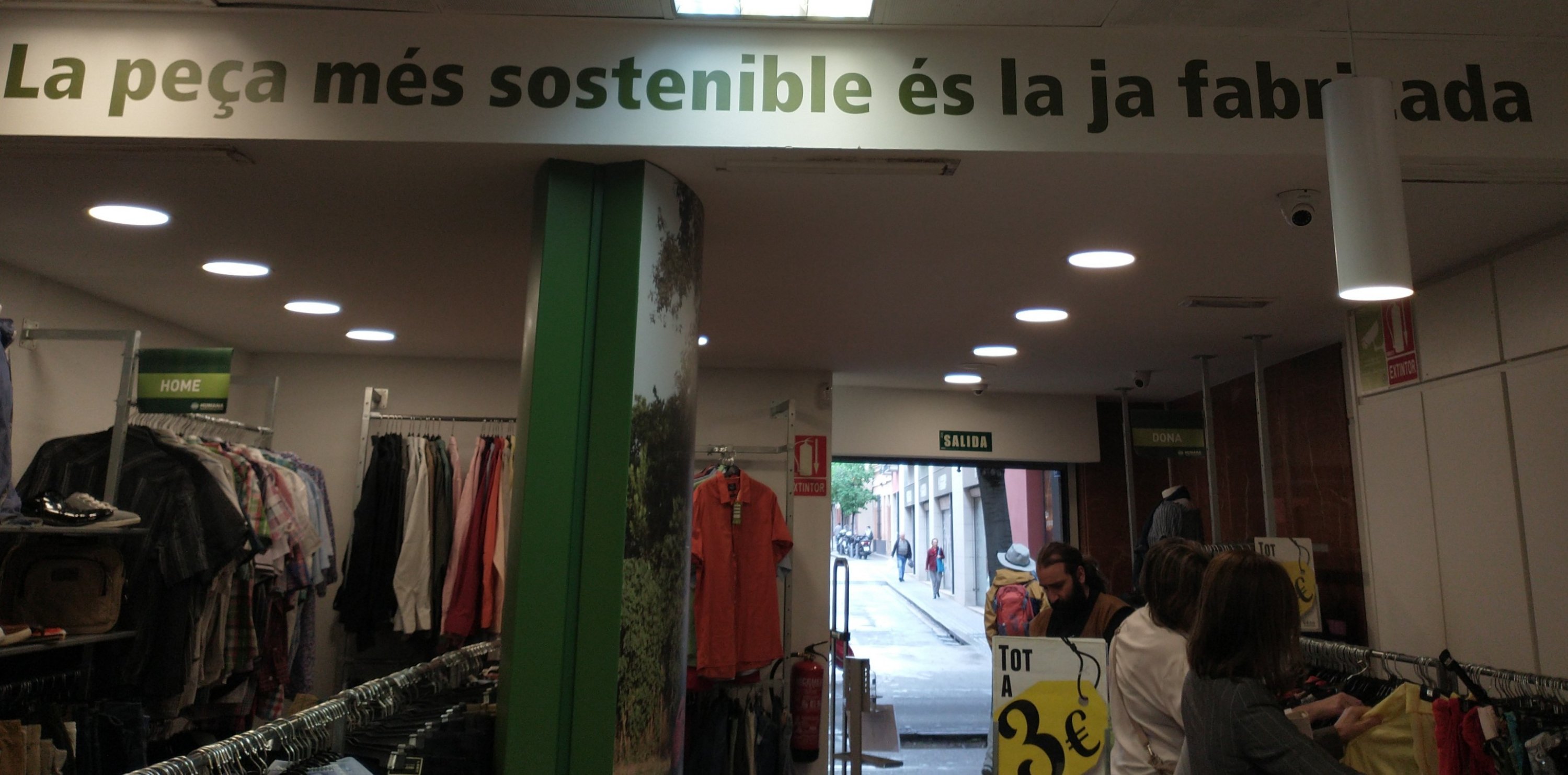
Versalles, the oldest bar in town, and a fine Modernista buildingPeering in through Versalles’ windows. We’d only just had lunch and weren’t up for further refreshmentA typically decorated house.Lunch stop at Several, a friendly café.Charity shops barely exist here, but this is one. ‘The most sustainable piece is the one that’s been made already’.An ordinary street.
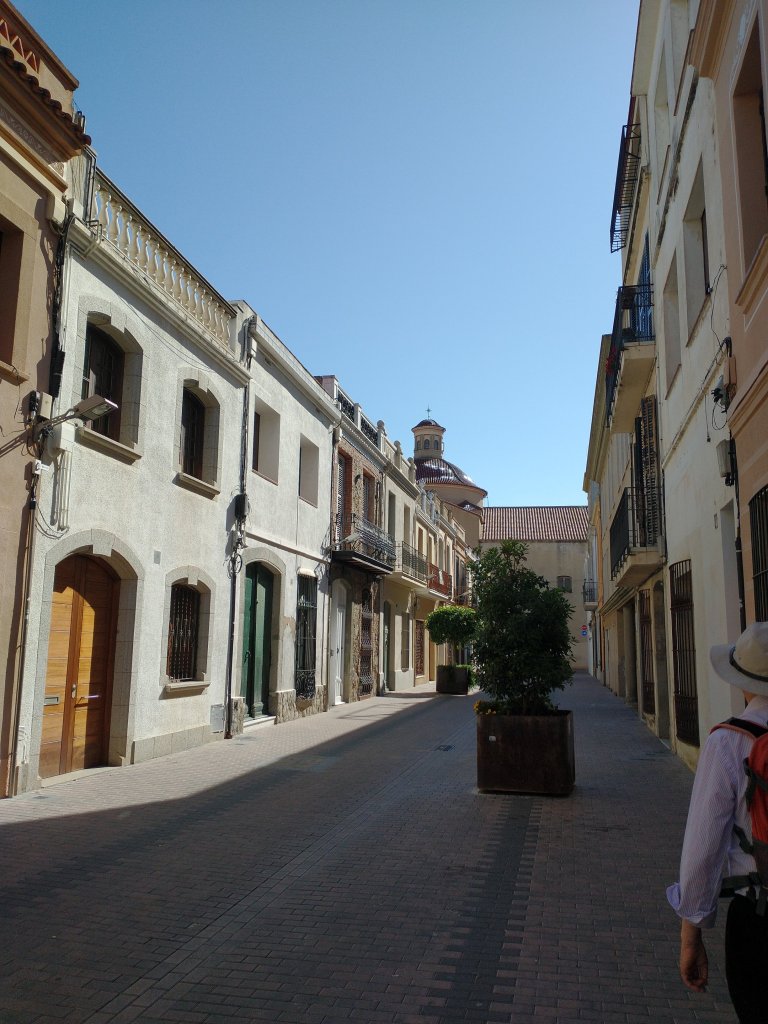
We love our time with the family in Premià de Mar. Their home here is only some twelve miles from Barcelona, and well connected by rail and road. But it’s a world away. Strictly no tourists. Just everyday people living everyday lives.
Sometimes we venture into neighbouring towns for more of the same. Today it was Badalona and its charming Old Town – Dalt de la Vila. But no town in Catalonia can hold its head up high if it’s not protesting about something. Today we witnessed …
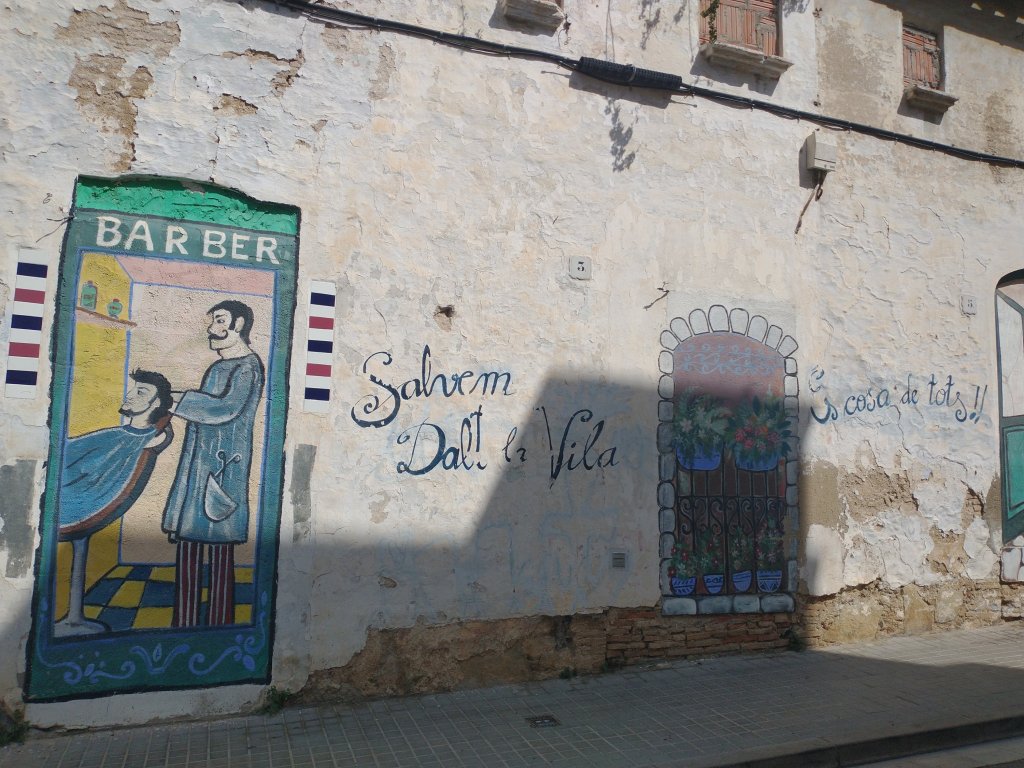
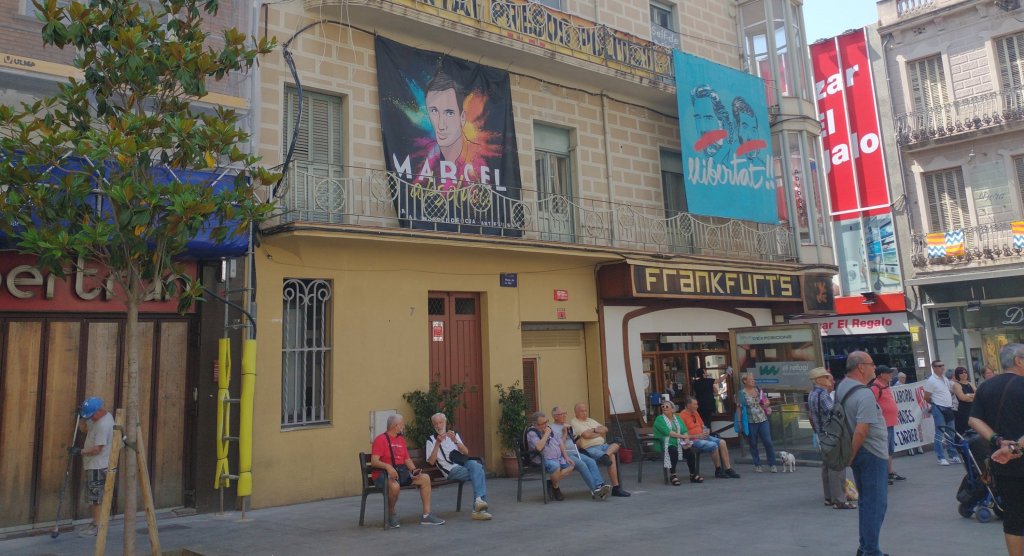
… painted protests against the projected destruction of some of this quarter’s oldest buildings …
… a small protest by and for pensioners (are you sitting comfortably?) …
… a poster near the beach: your struggle has secured freedom for others. We must continue the fight.
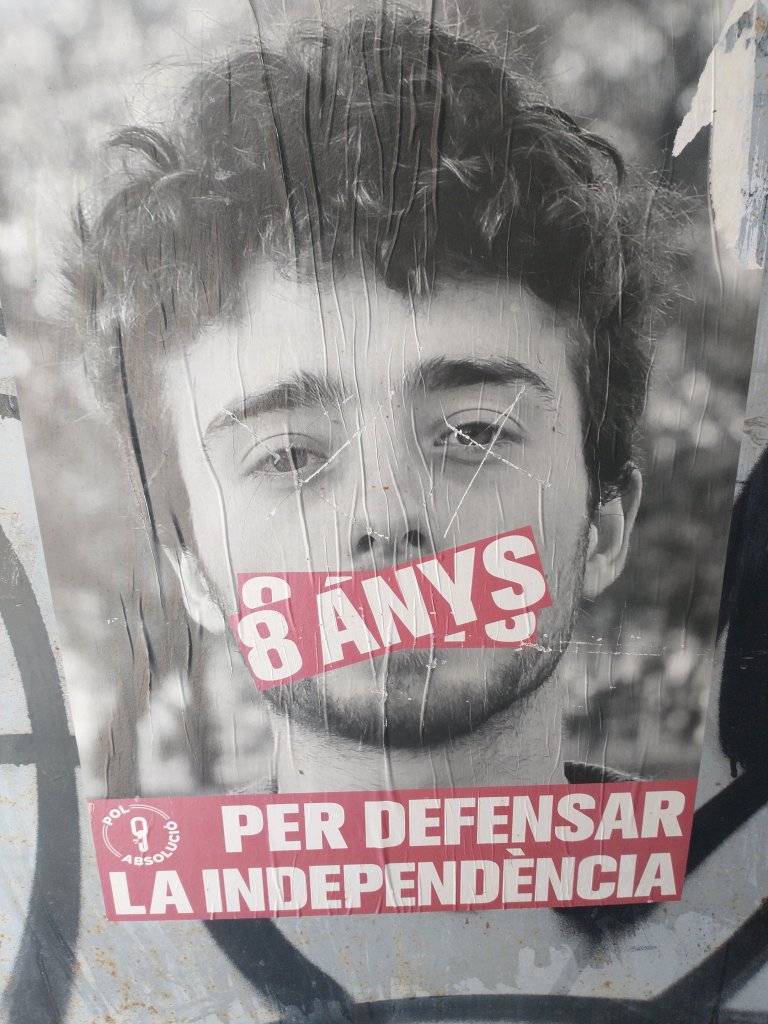
… and the inevitable posters proclaiming the need for Catalan independence.
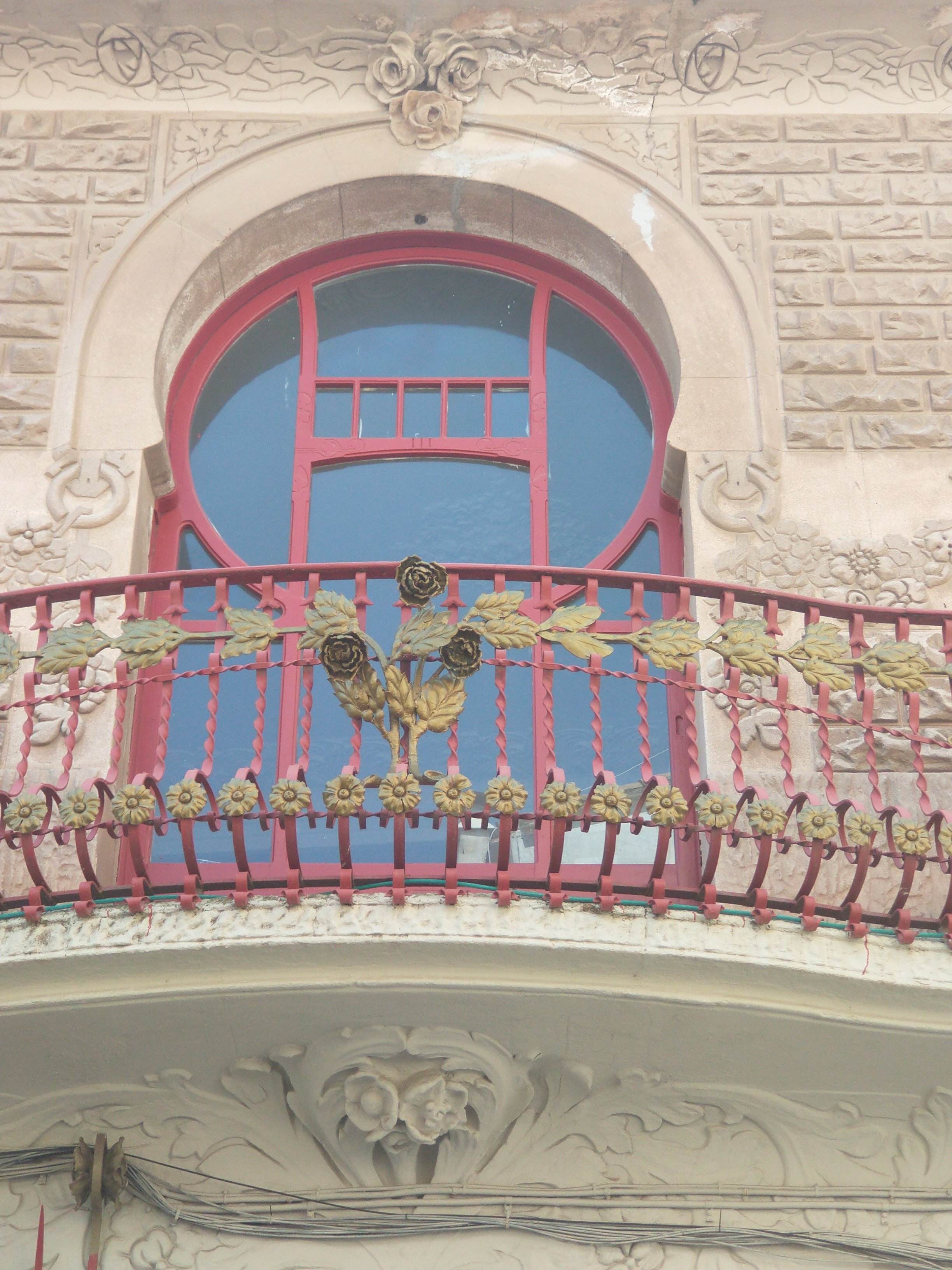
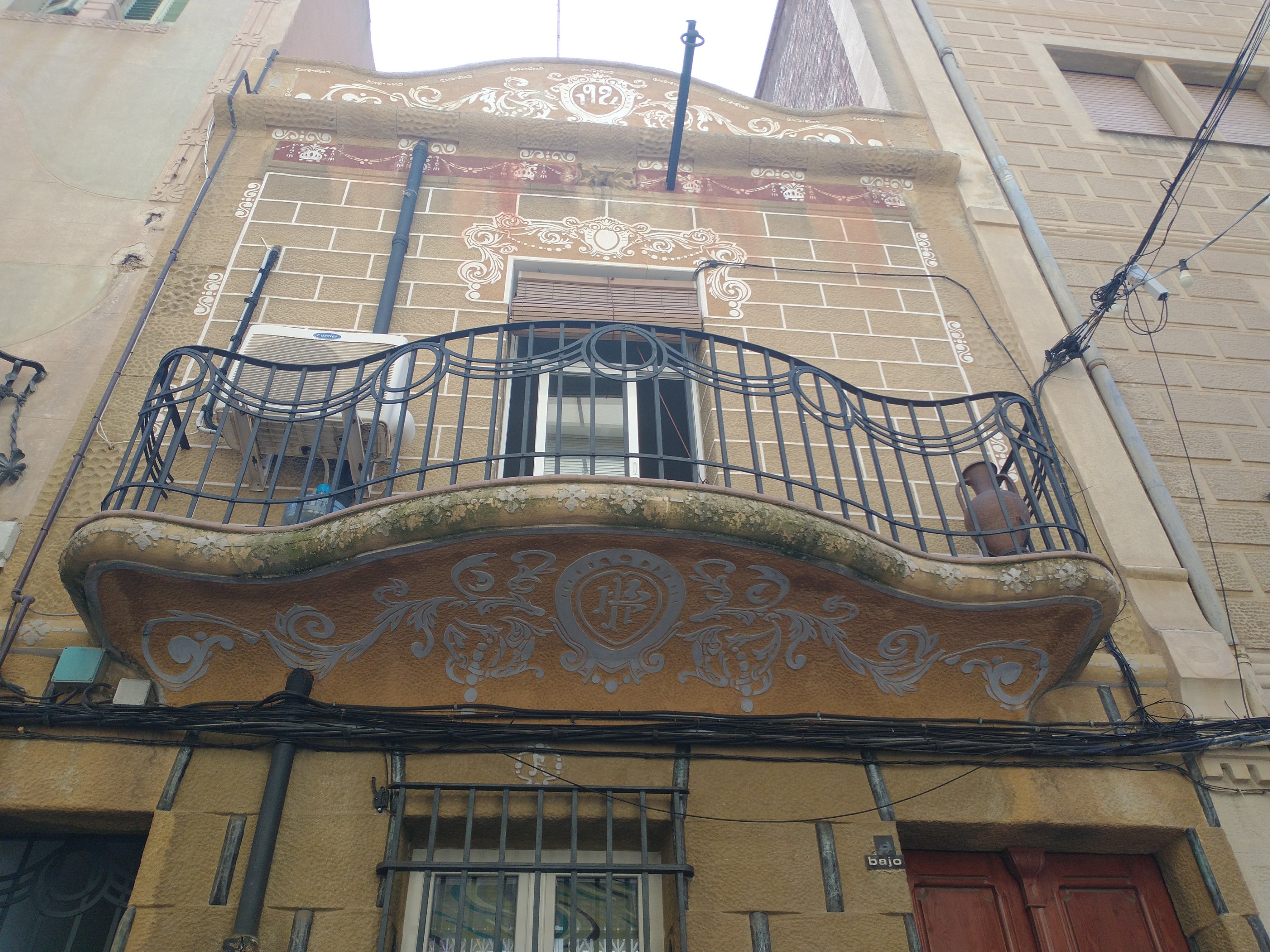
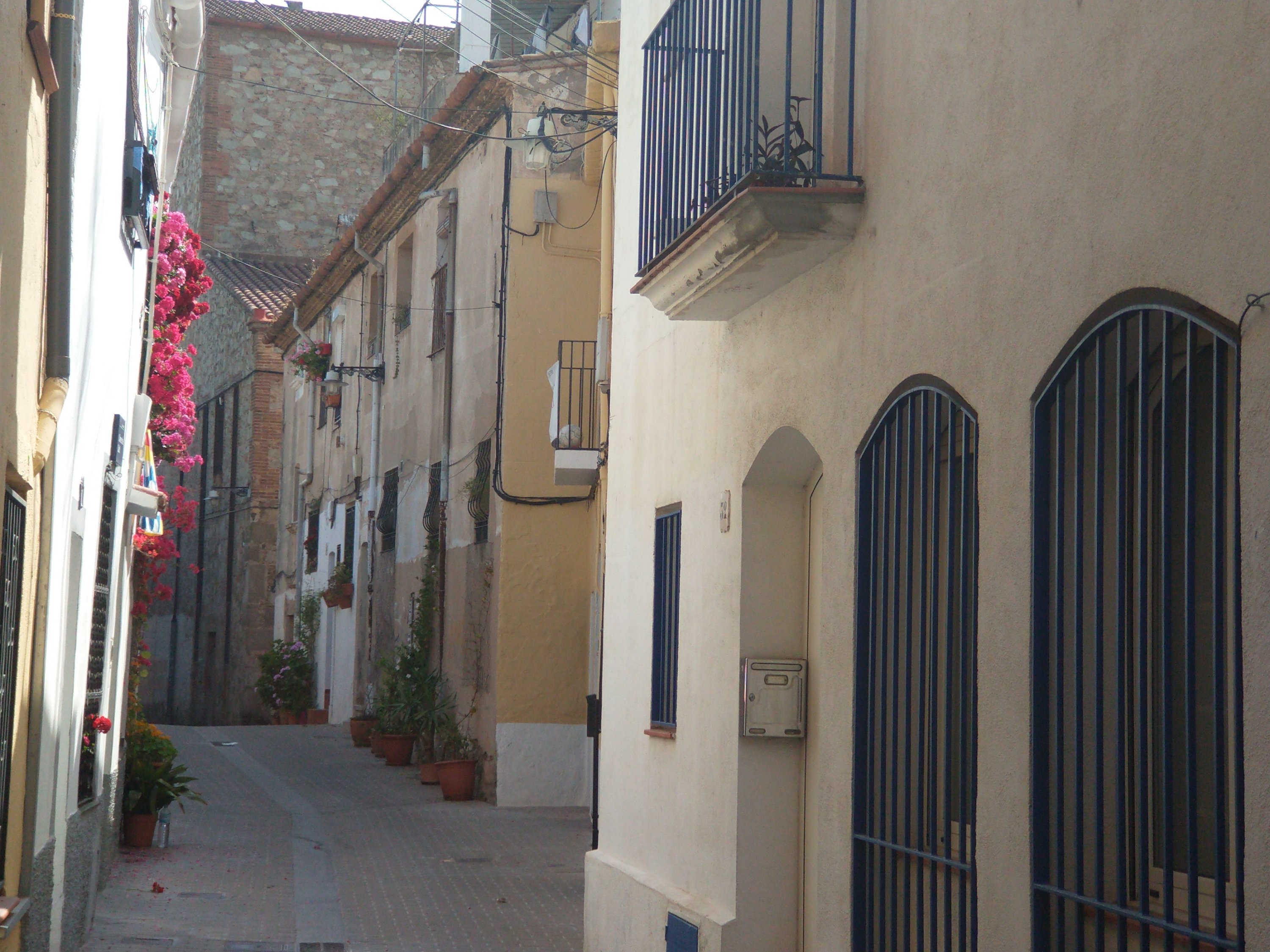
Let’s finish with a few shots demonstrating some of the charms of Dalt de la Vila.
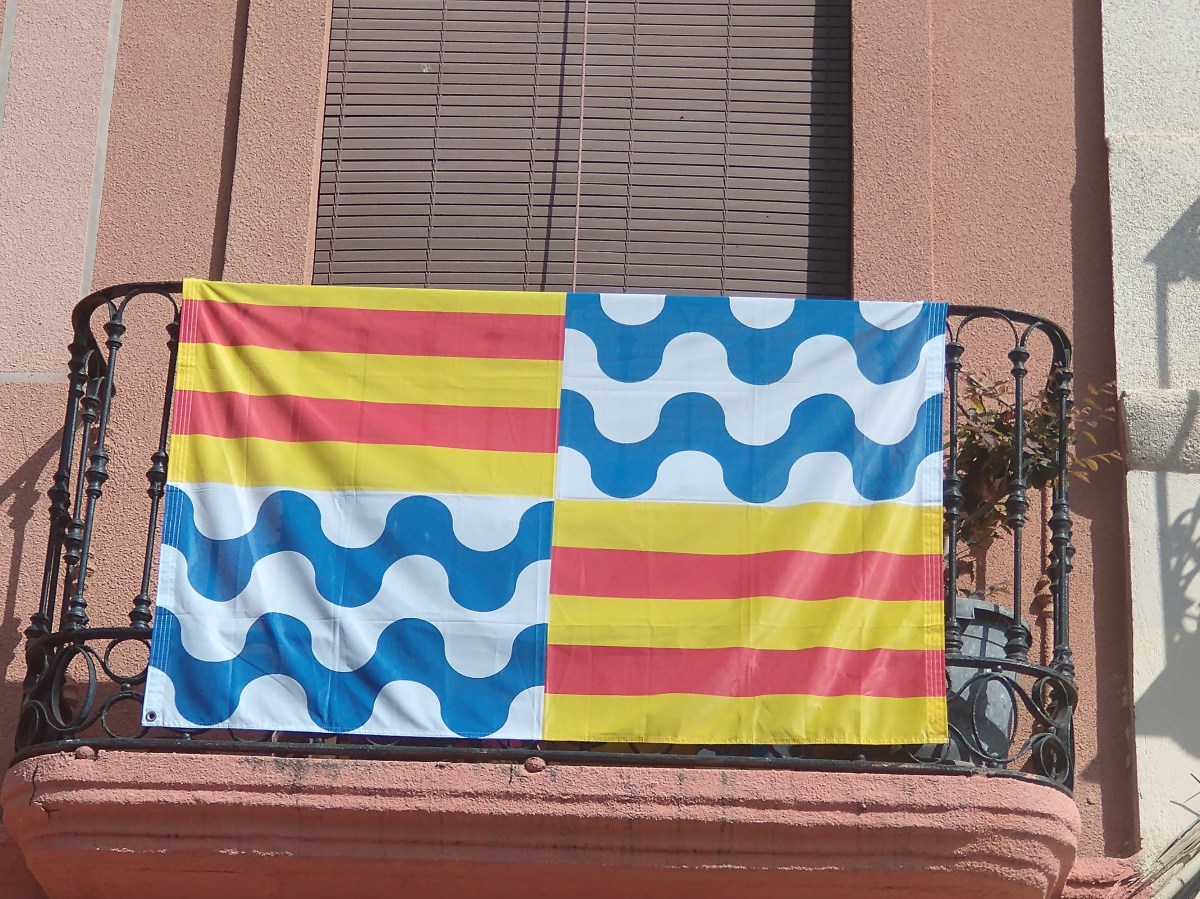
The featured photo, by the way, is of Badalona’s town flag.
























You must be logged in to post a comment.