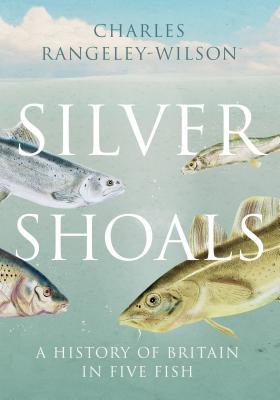
One of the things I most enjoy about being a volunteer at my local library is the chance it gives to poke about on shelves I’d never normally look at. Without having had to shelve books after someone else had read and returned them, I’d never have found this:
I was entirely and unexpectedly engaged by this book, an exploration of our nation’s iconic fish: cod, carp, eels, salmon and herring. This is a story of the fish themselves; of fishermen; of the consequences of greed and the way back from it; of geology; meteorology; our nation’s social history as it relates to food and farming; of corruption and political will. Combining research and personal experiences, this book both absorbed and enthralled me. And I’d never have found it, because 799.1094 is not one of my Dewey numbers of choice. And it was the cover that did it for me.
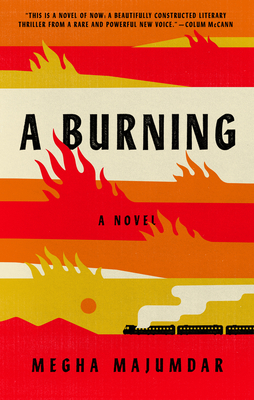
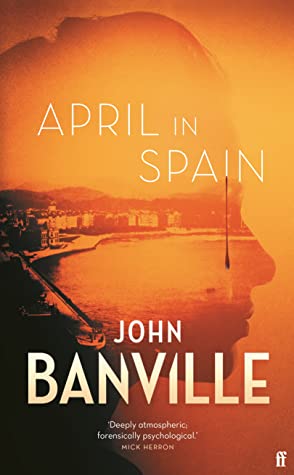
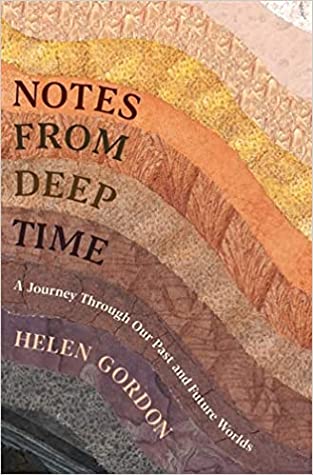
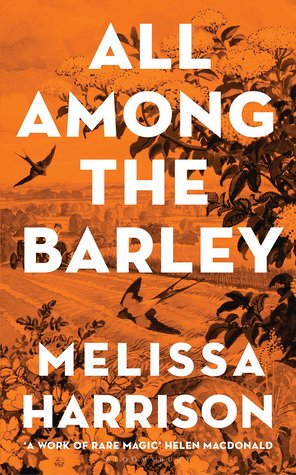
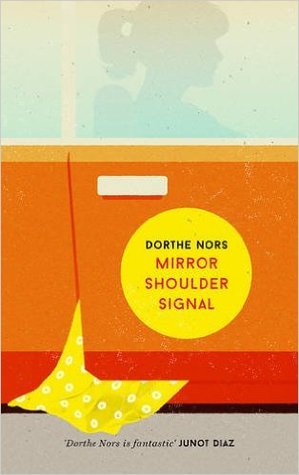
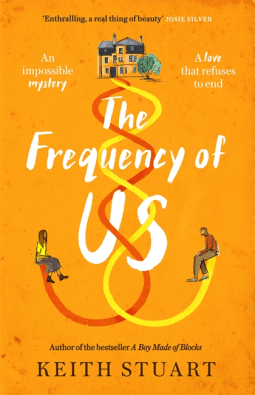
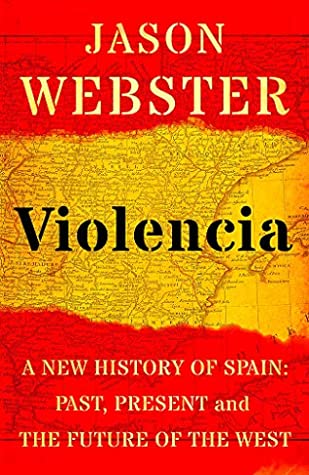
And it’s the cover that often makes me pause and look. Just to show how random- yet satisfying – these choices can be, I’m picking some of the orange-covered books I’ve found – and read – from the library in response to the challenge ‘Hazy and Hot’ Friday Face Off, brought to my attention by Words and Peace. Yes, I know it’s no longer Friday. But I’m fewer than 9 hours late.
All reasons to Love your Library, a monthly celebration hosted by Bookish Beck.
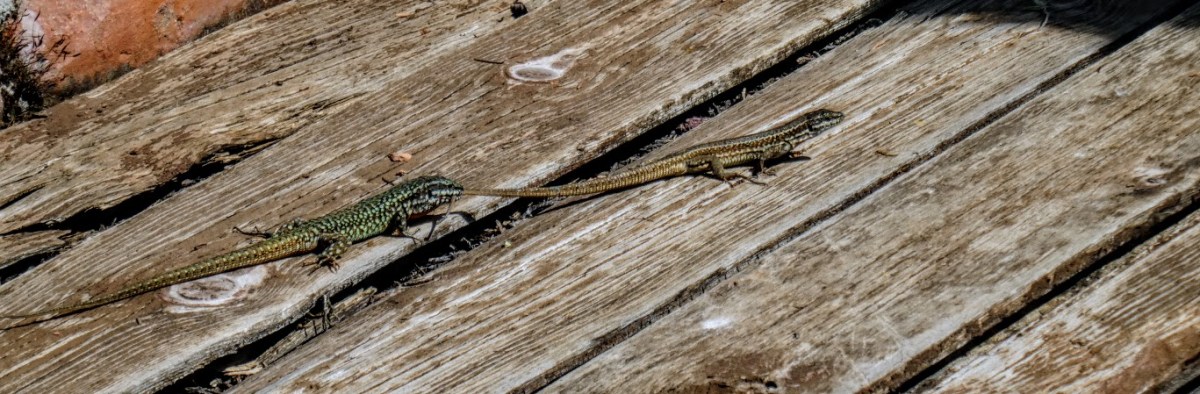
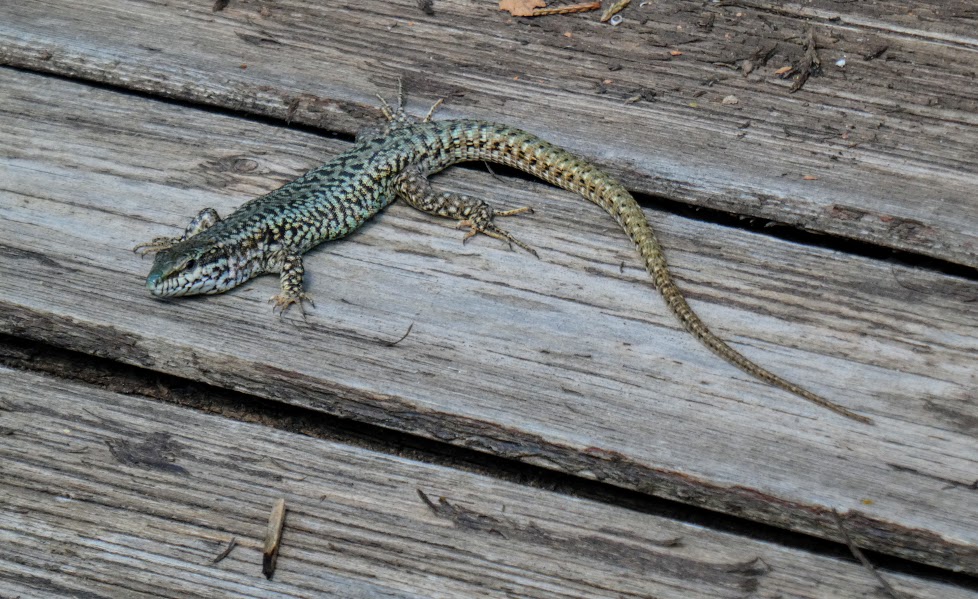
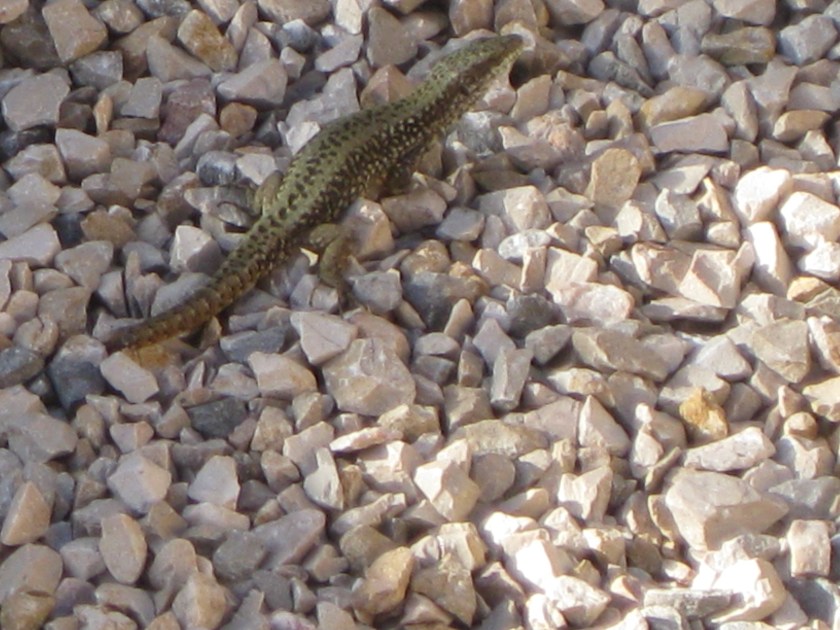
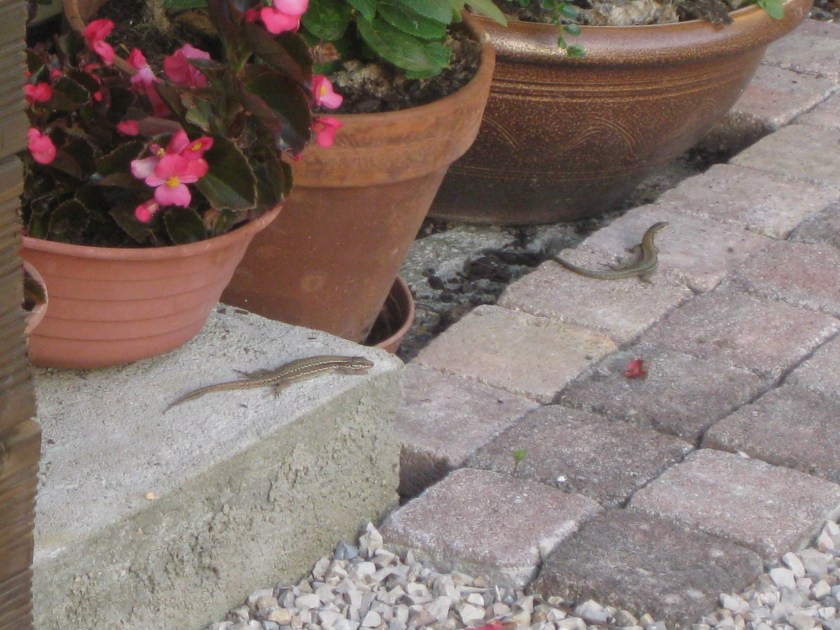
With what joy we greeted the lizards we encountered on our recent Balkan Journey! How we miss the companions who shared our daily life in France, during the summer months, at least.
Here‘s what I wrote about them, ten whole years ago:
Summer’s arrived: well, this week anyway. So from before breakfast until long after the evening meal we’re spending as much time as we can out in the garden. And we have plenty of company. Lizards. Common wall lizards, podarcis muralis. They are indeed spectacularly common here. We have no idea exactly where they live, but there are plenty who call our garden ‘home’. We’re beginning to get to know a few.
Easily the most identifiable is Ms. Forktail, she of the two tails. She’s the only one we’ve been able to sex conclusively as well, because we caught her ‘in flagrante’ with Mr. Big behind the gas bottles recently. And then the next day she was making eyes at a younger, lither specimen, and the day after that it was someone else. She’s lowering the moral tone of our back yard.
Then there’s Longstump, who’s lost a tiny portion of tail, and Mr. Stumpy, who hasn’t got one at all, though it seems not to bother him. Redthroat has a patch of crimson under her chin. There are several youngsters who zip around with enthusiasm and incredible speed.
Longstump
In fact they all divide their time between sitting motionless for many minutes on end, and suddenly accelerating, at top speed and usually for no apparent reason, from one end of the garden to the other, or vertically up the wall that supports our young wisteria. On hot days like this (36 degrees and counting) they’ll seem to be waving at us. Really they’re just cooling a foot, sizzled on the hot wood or concrete. Sometimes you’ll see them chomping their way through some insect they’ve hunted, but often they’ll step carelessly and without interest over an ant or other miniature creepy-crawly in their path.
‘Our’ lizards on their personal sun-loungers
Mainly they ignore one another, but sometimes there are tussles. These may end with an uneasy standoff, or with the two concerned knotted briefly together in what could scarcely be described as an act of love.
Happy hour for Longstump
We could spend hours watching them, and sometimes we do. But there is still a bathroom to build, a workroom to fit out, and a pergola to design. The kings and queens of the yard have no such worries. They can do anything: they choose not to.
Have I really not taken a photograph since last Sunday? Apparently not. But my last snapshot is a good souvenir. It’s the final event in Ripon’s first Theatre Festival, and here we all are, all 500 of us, at Fountains Abbey, waiting for Shakespeare’s A Midsummer Night’s Dream played by the spirited and energetic Illyria to begin.
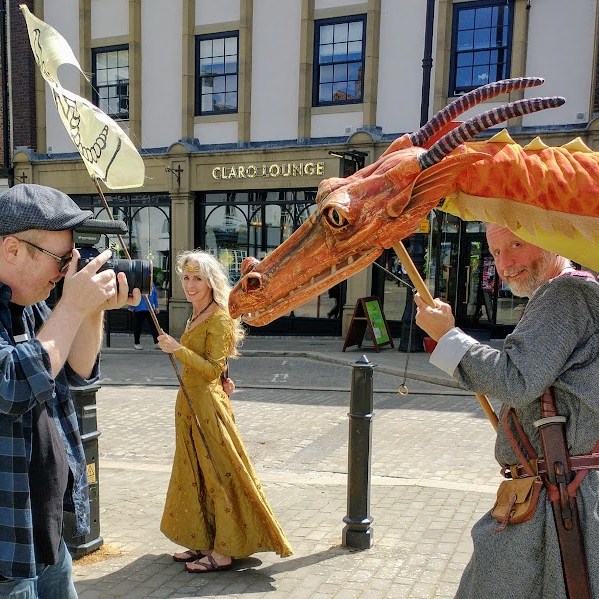
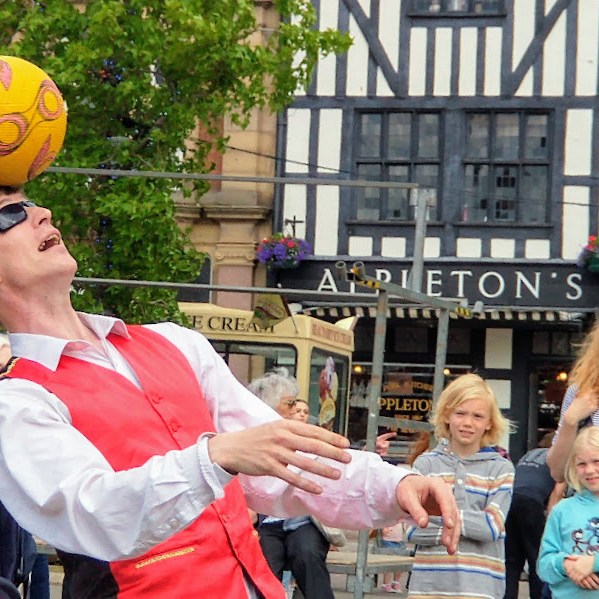
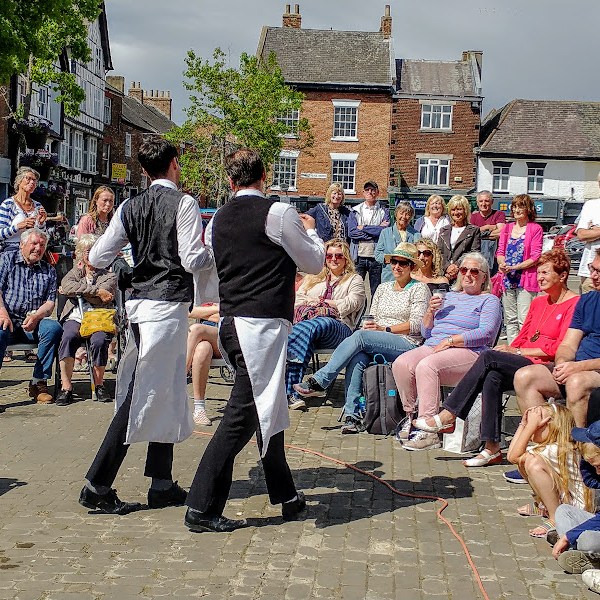
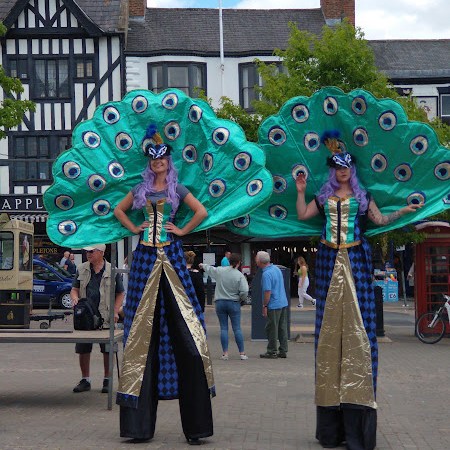
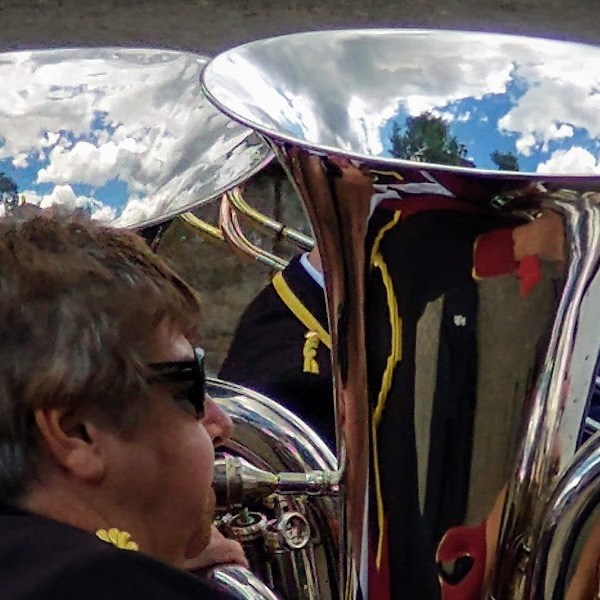
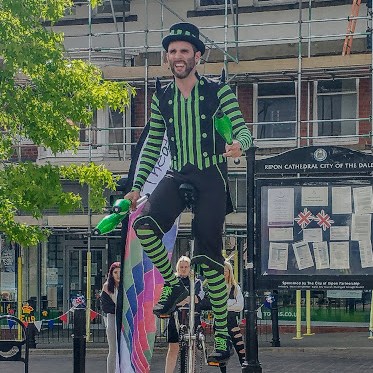
For Brian’s Last on the Card challenge, I’m only supposed you show my last photo, and without commentary at that, but why shouldn’t I give you a flavour of Saturday in the Market Square, with its bands, its jugglers, its stilt walkers, its slapstick entertainers?
My choir was part of the Fringe too, and sang a cappella at the bandstand in the Spa Gardens bright and early on the Saturday. But I couldn’t take a photo and sing too. You can take multi-tasking too far.
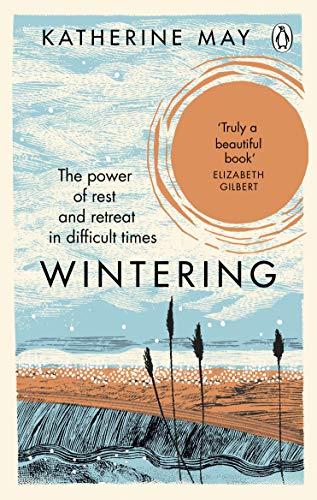
On the first Saturday of every month, a book is chosen as a starting point and linked to six other books to form a chain. Readers and bloggers are invited to join in by creating their own ‘chain’ leading from the selected book.
Wintering by Katherine May is this month’s Starter-for-Six book. It also happens to be a book which I included in my first ever contribution to Six Degrees of Separation, back in August 2020. Here’s what I said then: ‘This book, part memoir, part researched observation shows how winter can bring strength, and inspiration as we bring different ways of coping to this most demanding of seasons. May looks at the animal world (bees for instance), at different cultures who know a lot about winter (the Finns for example), and at her own experiences to show that winter can be far from negative. Instead, it can be one of healing, renewal, acceptance and a source of strength.’
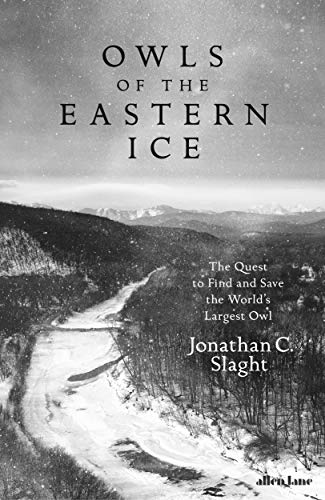
Let’s find another book where winter is star of the show: Owls of the Eastern Ice by Jonathan Slaght. This is an extraordinary book, detailing an extraordinary piece of research. Fish owls are the largest owls on the planet, and they’re endangered, as much as anything by loss of habitat. One of the areas they frequent is the extreme eastern edge of Russia, and it’s here that PhD student from Minnesota, Jonathan Slaght conducts his research, winter after frozen winter, with a changing team of Russian characters with whom he shares cramped cars, freezing tents and the hospitality of forest-dwelling loners. They battle the dangers and difficulties of non-existent roads, early spring melts, and the necessity of spending evenings drinking 95% ethanol – refusing to join in is not an option. So this is a good yarn. But underneath is serious, difficult research, pinning down sites where this elusive owl lives, and eventually trapping specimens to place recorders on them: all of that can and does go wrong. He’s done a good job of detailing the conditions these elusive birds require in order to survive, and now the next stage of encouraging a conservation strategy goes on. This non-scientist was entirely fascinated.
Fish Owl: Wikipedia Tokumi – オリジナル Tokumiが撮影
We’ll stay in Russia now. Russia and Ukraine – I readKate Quinn‘s The Diamond Eye before the current war. It’s a book which begins when Hitler was invading Russia and Ukraine. Mila Pavlichenko, bookish student, and a young mother already estranged from her husband volunteers for the Army, and becomes a deadly sniper: though because she’s a woman, it takes a while for her special skills to be recognised. Quinn paints a graphic picture of the battlefields that are Pavichenko’s new home: the blood and wounds, danger and downright exhaustion are unremitting, day after day. It’s here that profound relationships are forged with colleagues. At a time when she’s exhausted and devastated by loss she’s sent as a delegate on a goodwill mission appealing for support, to America. She makes an unlikely but real friendship with Eleanor Roosevelt. And finds that in the war-free land of plenty that is America, there’s even more danger from foes old and new than there was on the battlefield. A thrilling tale, based on the real life that was Mila Pavlichenko’s: mother, student and soldier who played her part in changing the face of modern history.
I learnt a lot about WWI I as it affected Eastern Europe and Russia from the Museum of the Second World War in Gdansk
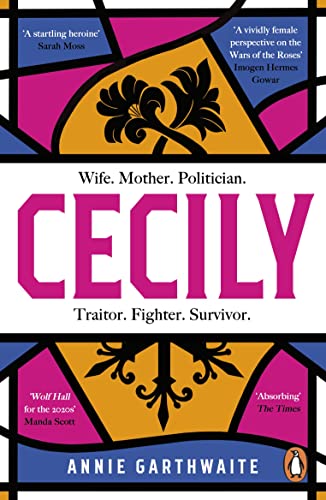
A strong woman in time of conflict. That’s Annie Garthwaite‘s Cecily. Read this book, and you will enter into a different world. A fifteenth century world. One in which bloodline counts. One in which it matters what alliances you make, which families you choose to link with yours as you marry off your sons and daughters. You will enter the world inhabited by Cecily, wife of Richard Duke of York. Garthwaite’s book will dispel any notion you might have had that high-born women’s lot was to spend the day at their needlework. On the contrary, women like Cecily were politically engaged, working with their husbands to secure status and power, both for themselves and their children. Women like Cecily inevitably bore many children: twelve in her case, of whom five died in infancy, while husbands inevitably went off in battle, changing alliances and allegiances as the political wind changed. This absorbing book, given immediacy by its use of the present tense shows us Cecily fiercely promoting her family’s interests, while she brings child after child into the world. We are present in 15th Century England.
Rouen: a city where Cecily spent some of her early married life. Pexels, Daniel Vorndran
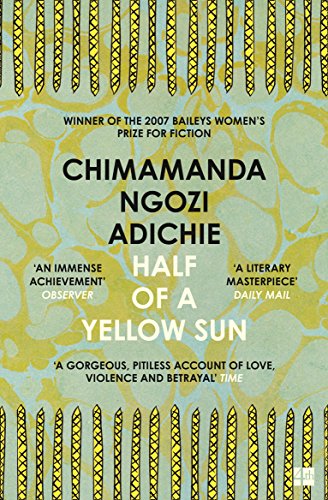
More conflict in Half of a Yellow Sun, by Chimamanda Ngozi Adichie. This is a richly evocative book telling the story of the creation, rise and fall of Biafra, through the eyes of three separate yet connected groups of people. There’s Ugwu, from a traditional village, houseboy to Odenigbo, an Igbo academic. There are Olanna, Odenigbo’s partner and her twin sister Kainene, and her English partner Richard. Their structured lives fall apart as Nigeria itself does, as Biafra emerges as a nation and civil war threatens to destroy them. I’m ashamed at how little I knew of this conflict, remembering it only because of the famine caused by war. Now, an interplay of characters dealing with loyalties, often conflicting, moral responsibility, colonialism and its aftermath brings this piece of history vividly to life, the more so because the author’s family lived through this devastating time. A marvellous and involving read.
Back to conflict in Ancient Greece in Madeline Miller‘s Achilles. I’ve loved the Greek myths since my childhood, so this take on the Iliad was for me a fresh and vibrant re-imagining of the story. I was slightly disbelieving of the strength of the bond between Patroclus and Achilles portrayed by Miller – they were such very different characters – but on the other hand, appreciated the rounding out of these two individuals into fallible human beings. The legendary Achilles is something of a rock star, and he knows it, in the tale as told by Homer. Here, he’s simply a flawed human being who happens to be an excellent warrior. The book brought the ancient conflict to life, and will send me back to the Iliad to read it again.
Greek funerary statue from the Archaeological Museum, Thessaloniki
My last book deals not with war, but with its aftermath: Harvest by Georgina Harding. This is a carefully painted picture of a family, a family accommodating to a tragedy which occurred some twenty years before – the brutal death of the father, a man who had clearly been deeply affected by WWII, though he never speaks of it. It’s set during the 1970s on the family farm in Norfolk, and its landscape and mores are built up, layering scenes from the present with scenes from the past. Younger son Jonathan, who’s been living for a couple of years in Japan invites his Japanese girlfriend Kumiko for an extended stay. She gets on well with his mother Claire, and is a bright and colourful presence. But somehow, her being there opens cracks. Untold secrets are slowly exposed, and are as out of the family’s control as is the harvest, dependent as it is entirely on the vagaries of the weather. This is a compassionate and sympathetic book, and examines the human heart and its dark and unwilling-to-be-exposed corners. It’s also the last in a trilogy. I was unaware of this as I started to read. And I don’t believe it mattered for my understanding of the story. But I’m now keen to read the two preceding volumes: The Gun Room & The Land of the Living.
I got from winter to Russia to war and more war. It’s all a bit of a stretch. But this time I can wholeheartedly recommend every book I mention, so I make no apologies.
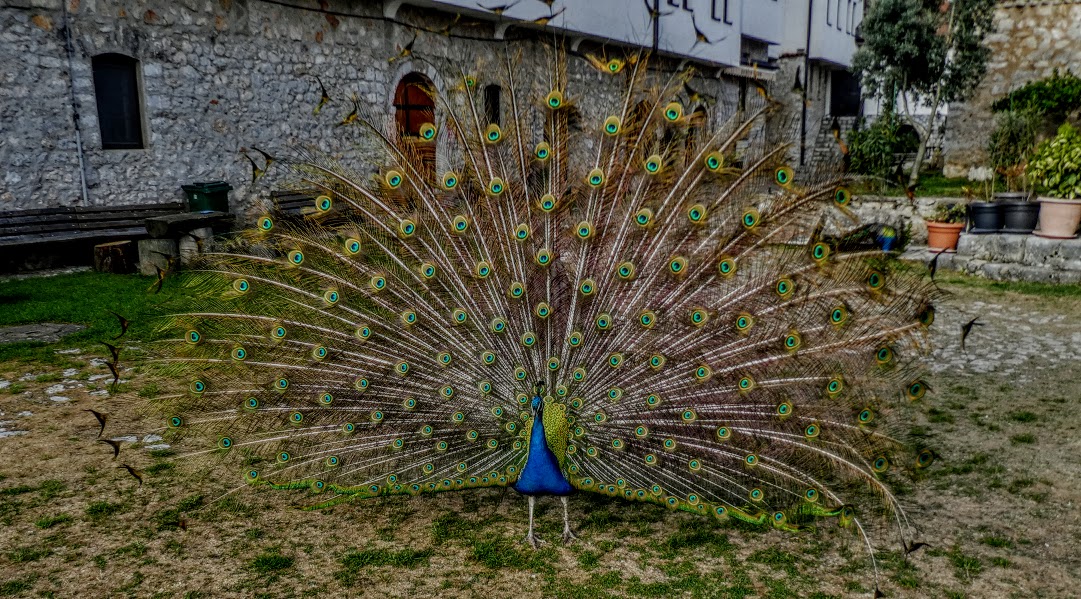
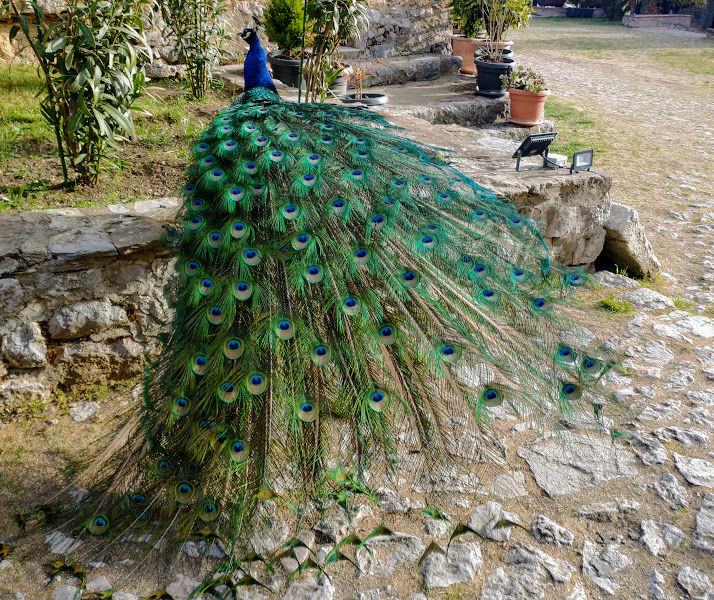
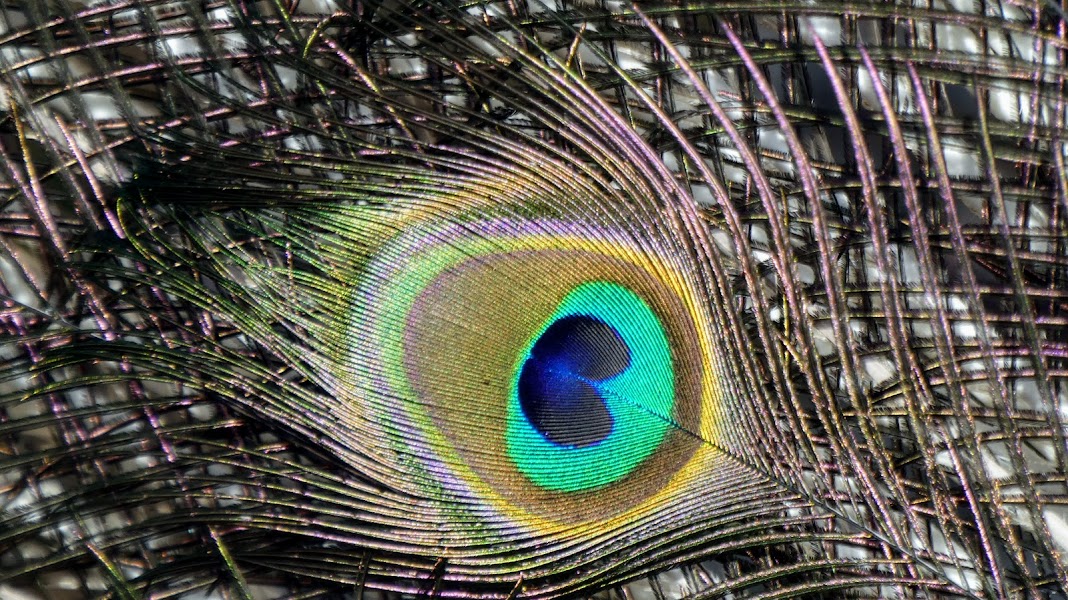
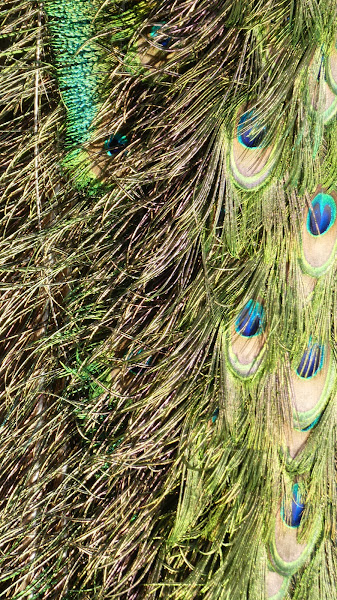
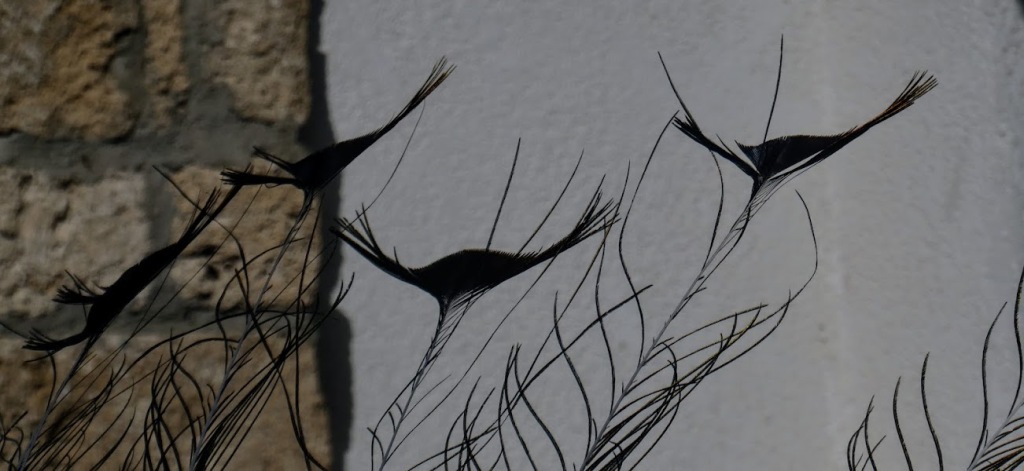
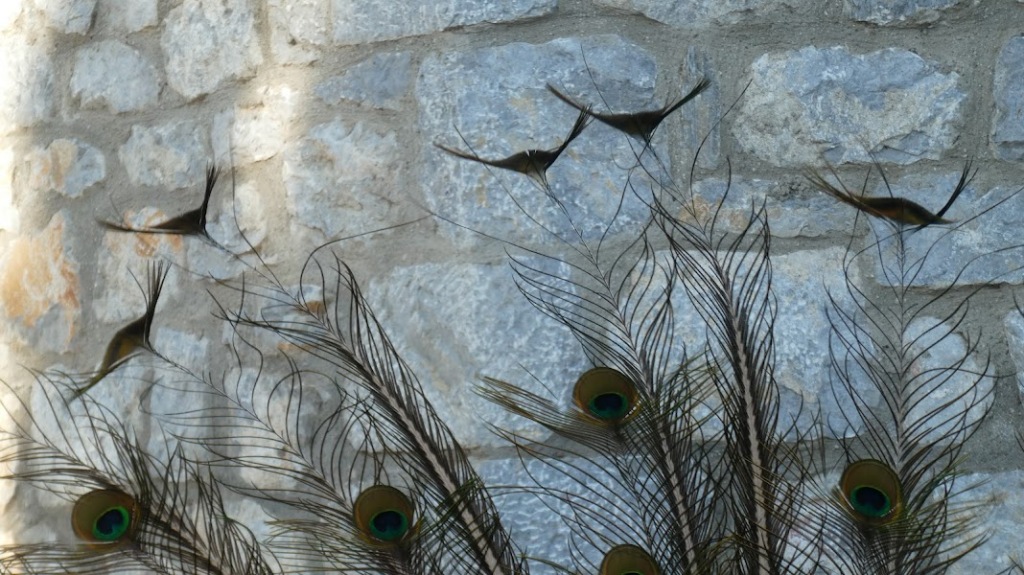
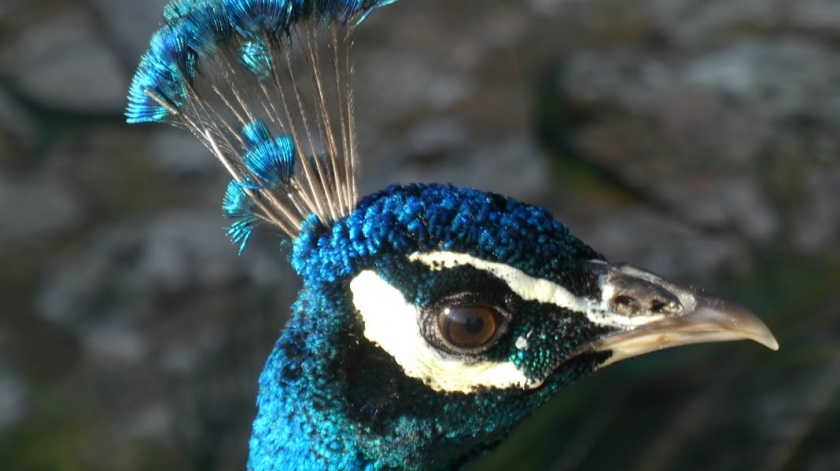
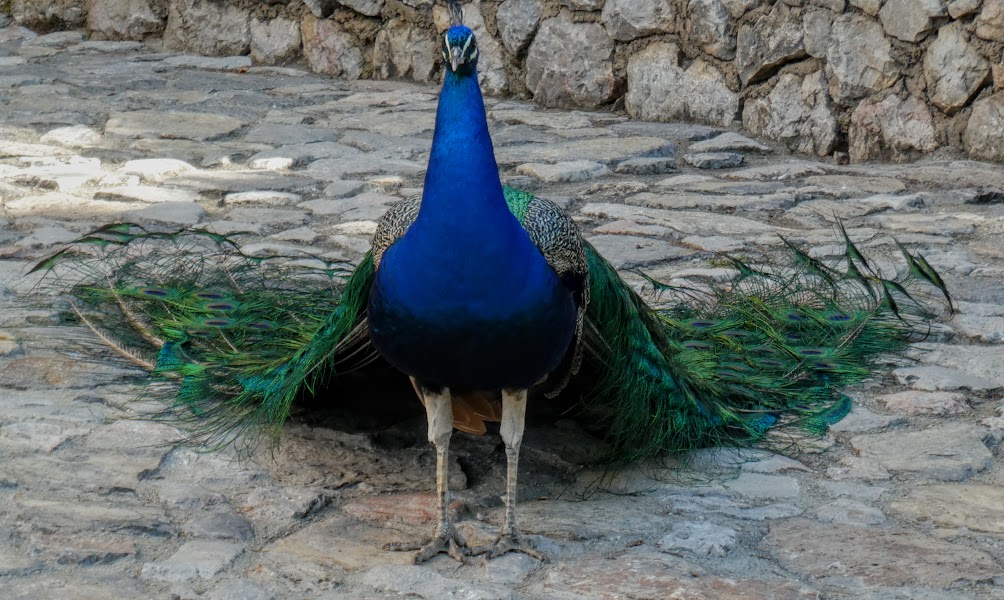
These peacocks live in North Macedonia, where they have, uninvited but none the less welcome, taken up residence at the hotel we stayed at on the shores of Lake Ohrid, St. Naum. I think they can speak for themselves – as they did, very noisily, every morning.
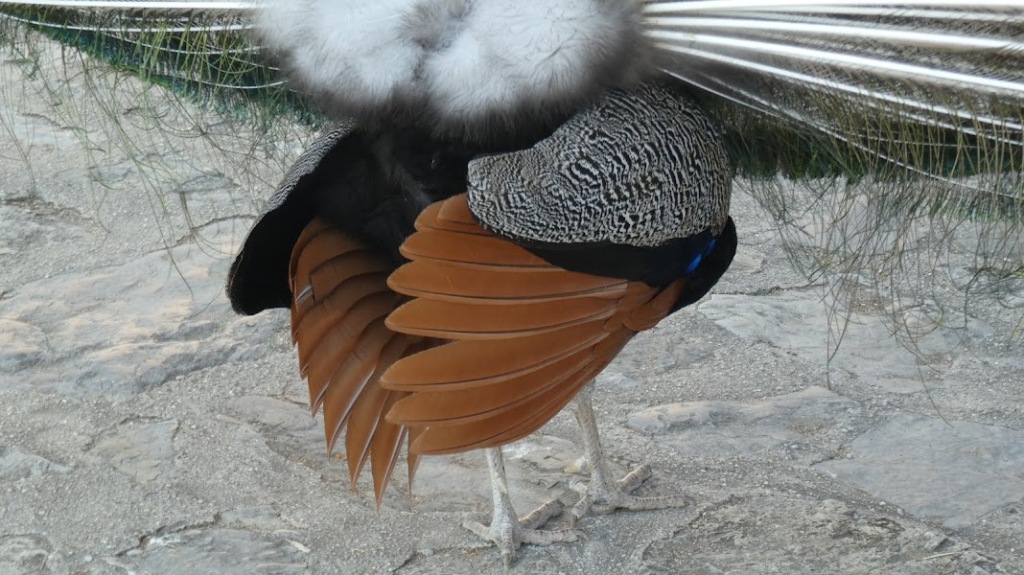
The rear view proved just as interesting as that draped tail.
… for a few moments – at rest.
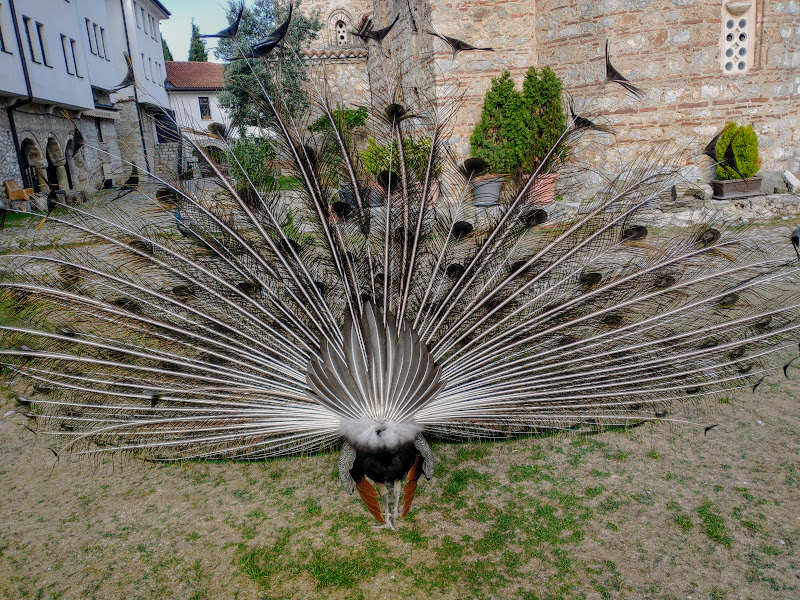
And now … a peacock in action. Not for nothing is one of its collective nouns an Ostentation of Peacocks.
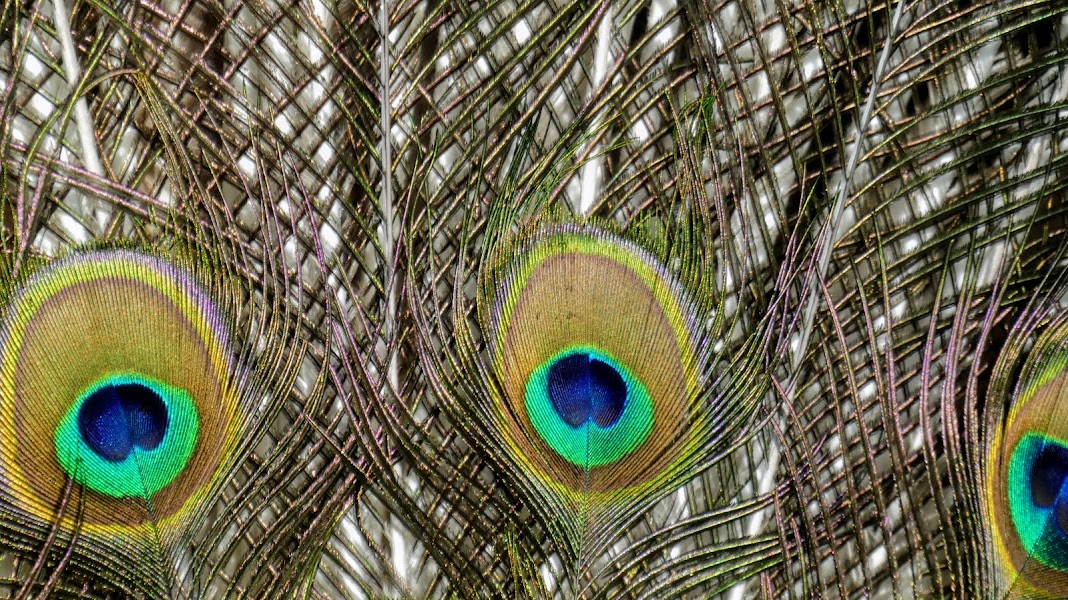
I’ll be honest. I conceived and wrote this post as a Monday Portrait. But then Tina’s Lens-Artists Challenge dropped into my in-box: ‘The eyes have it’. I’m not entirely sure she had peacocks in mind, but the hundreds of ‘eyes’ that make up the peacock’s tail, and that slightly penetrating gaze displayed in that head shot allowed me to think I might get away with including this post in the challenge.
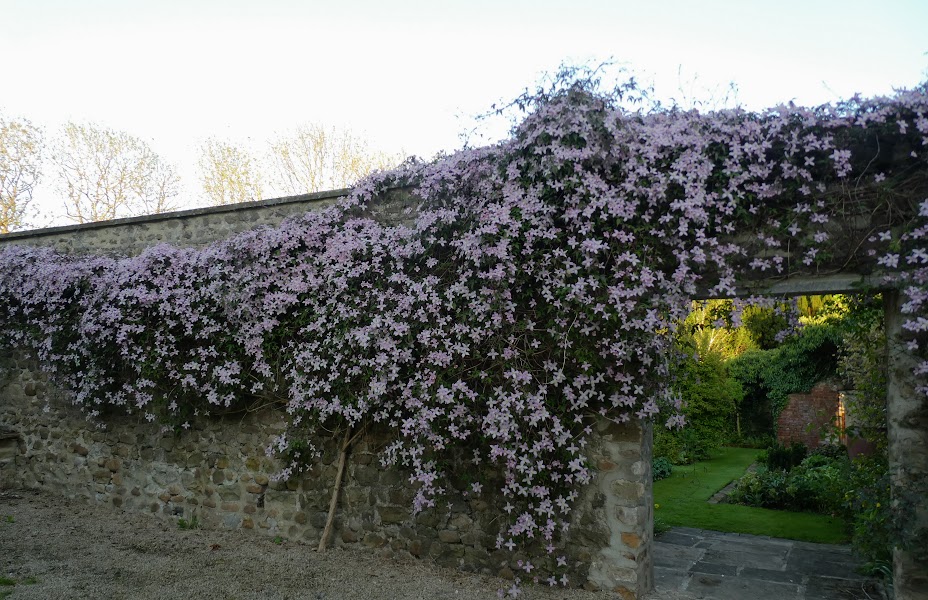
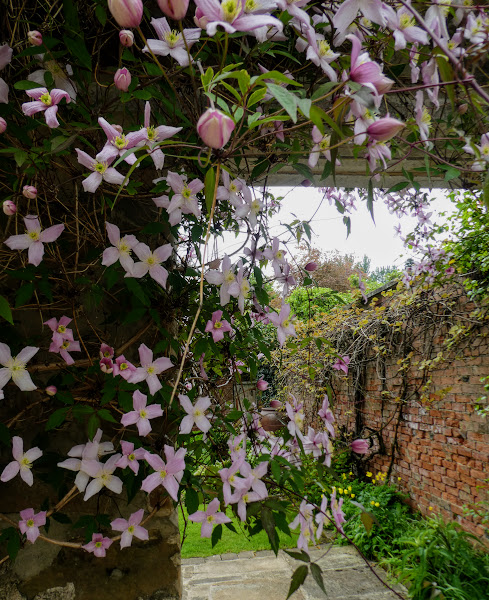
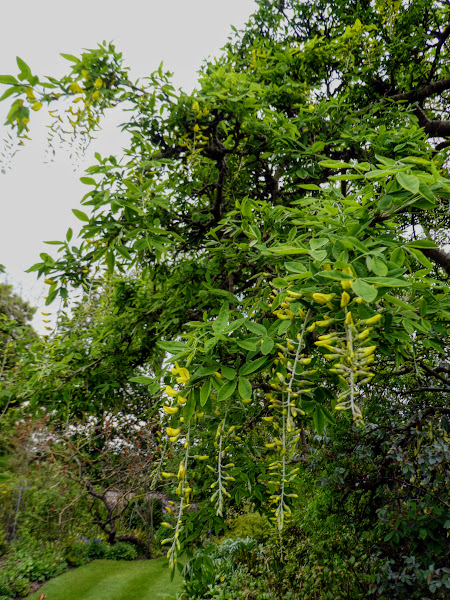
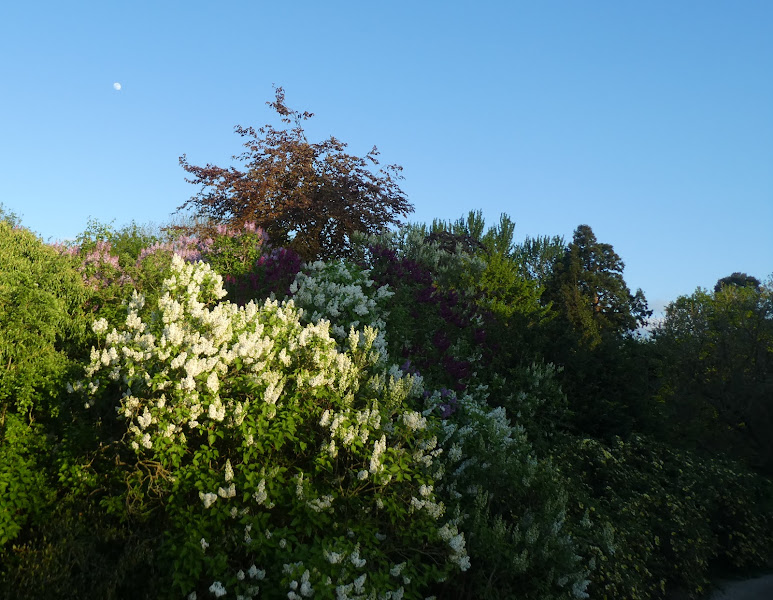
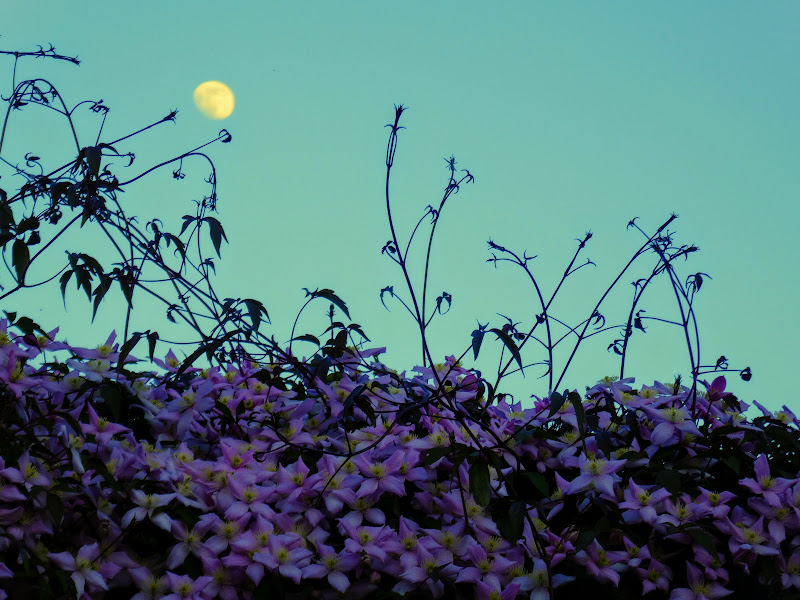
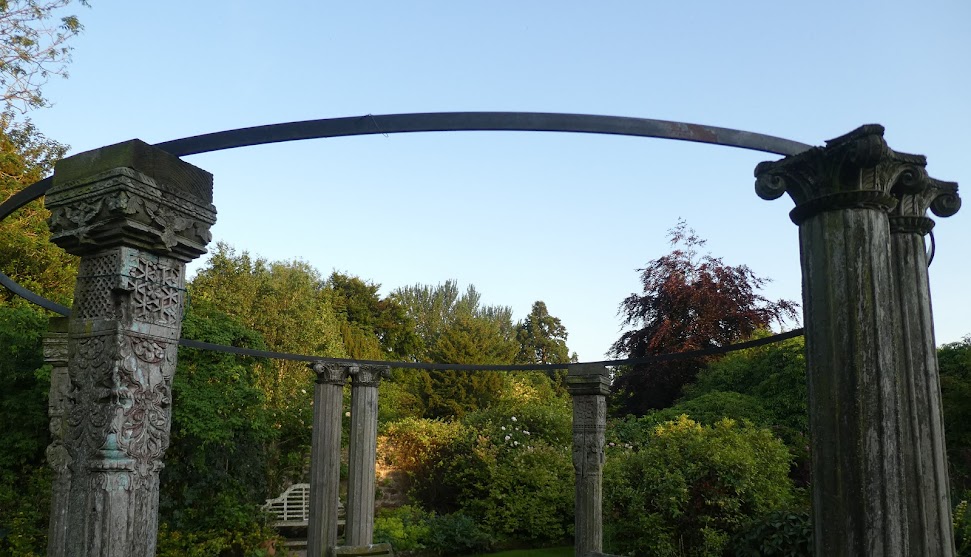
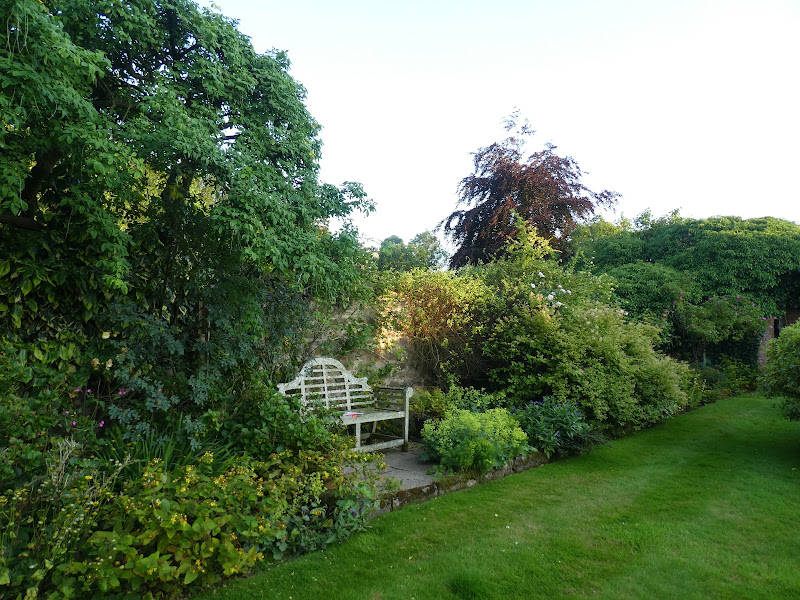
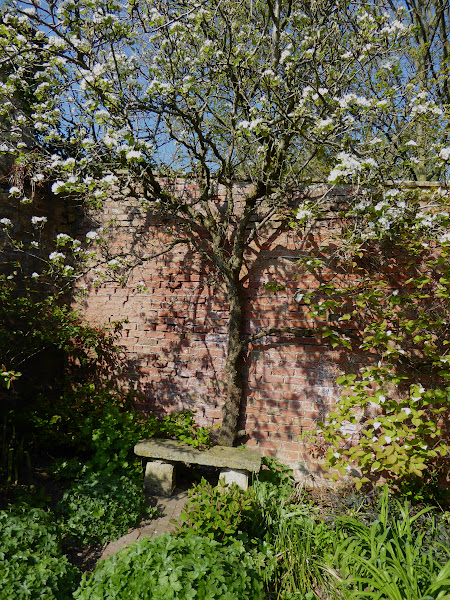
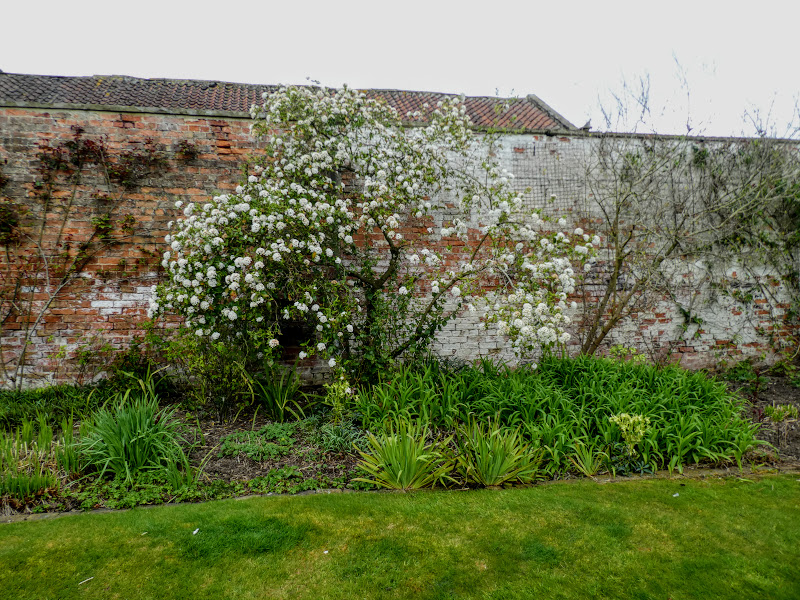
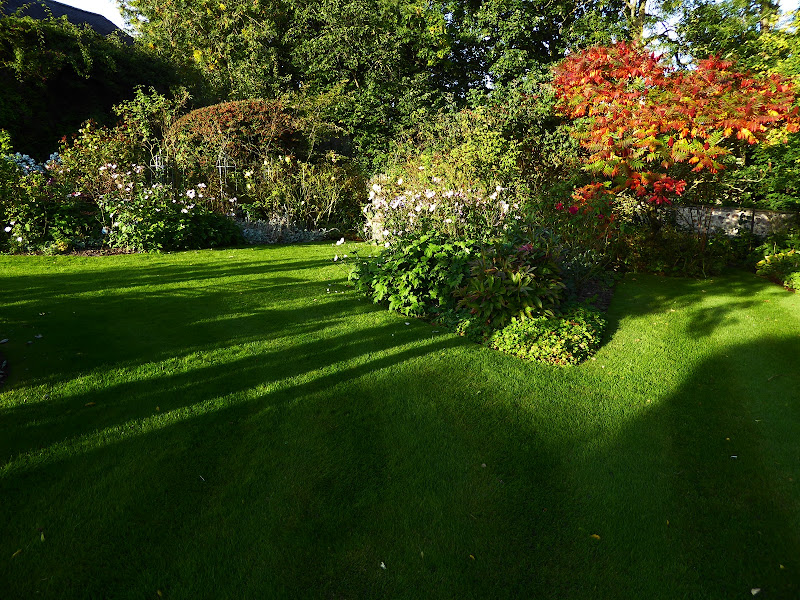
This week’s Lens-Artists Challenge invites us to stay local. After a bumper month of travelling, that’s not at all a bad idea. But how local is local? I decided I’d confine myself to the sights we see just a few metres from our house: or as Boris Johnson might say, a few yards.
When we came back from France eight years ago, we needed a base from which to hunt for our Forever Home. We found something interesting to rent at the edge of a village just beyond Ripon. It ticked not a single box: it wasn’t within walking distance of shops and amenities; it had no garage (for junk-storage, not the car), and it had no garden of its own. Still, for a few months, it would be fine. We’re still here, and have no plans whatsoever to move on. And one of the reasons we love it so much here is that we share the use of this walled garden with our landlords.
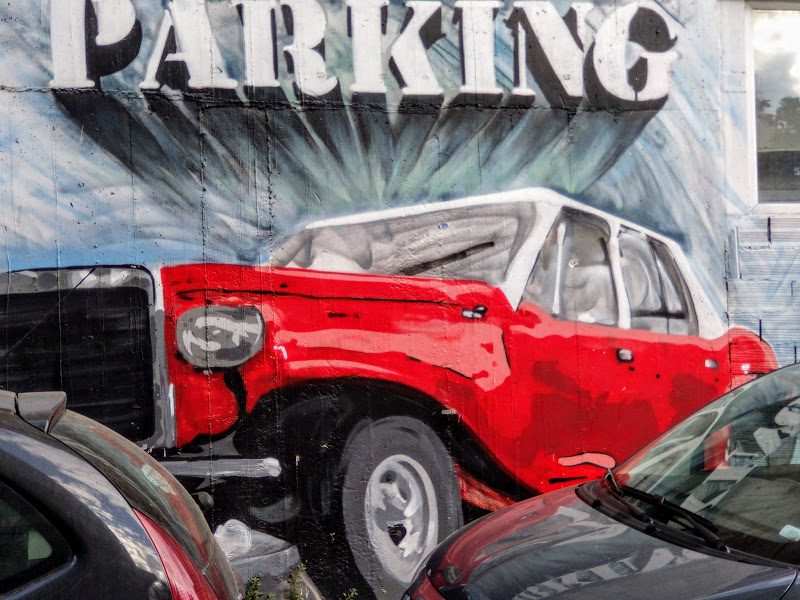
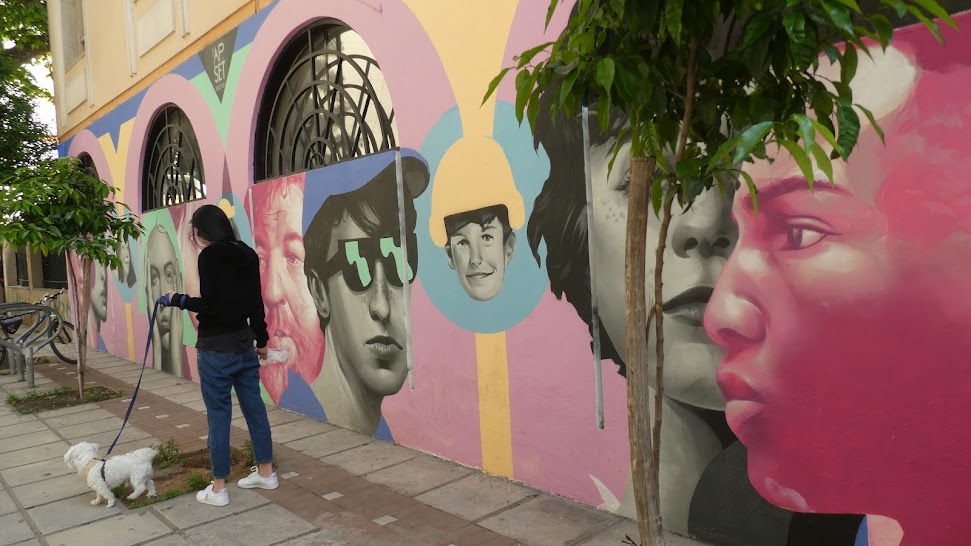
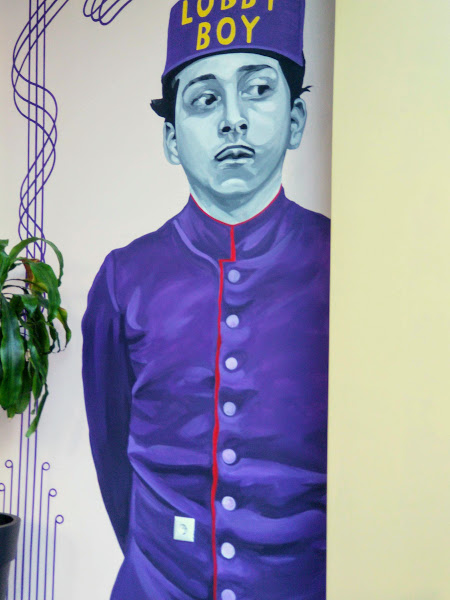
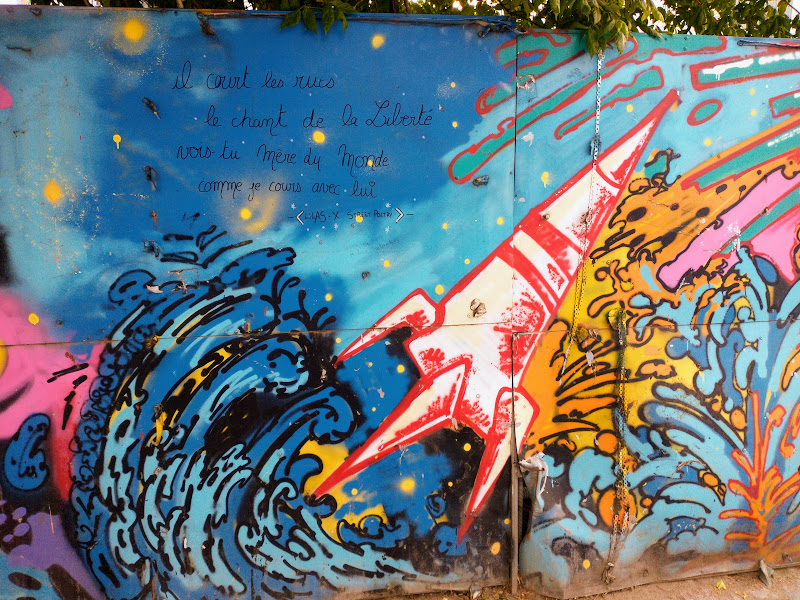
Well, Thessaloniki has a long and distinguished ancient history taking in Greek, Roman, Byzantine, Ottoman civilisations. And what do I show you first? Street art – and one graffito. From the sublime …

























You must be logged in to post a comment.