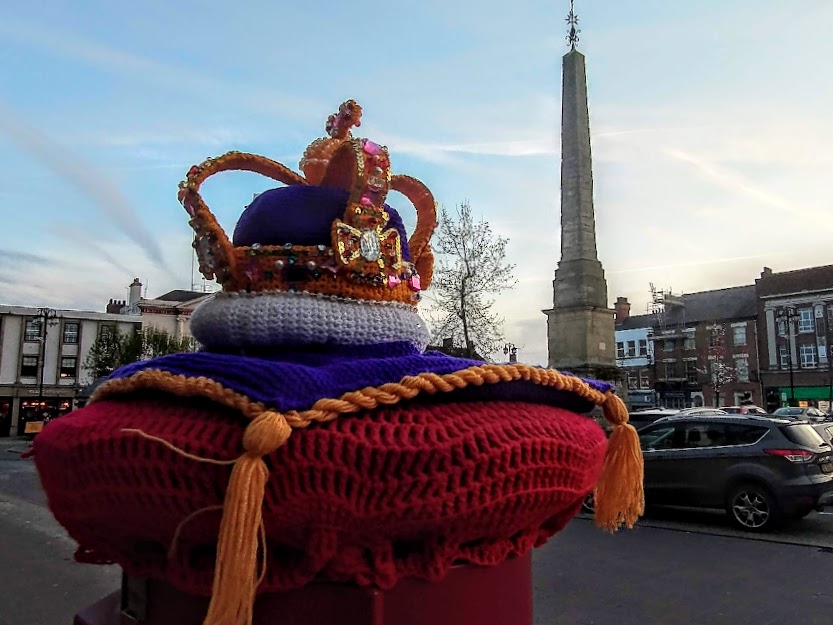
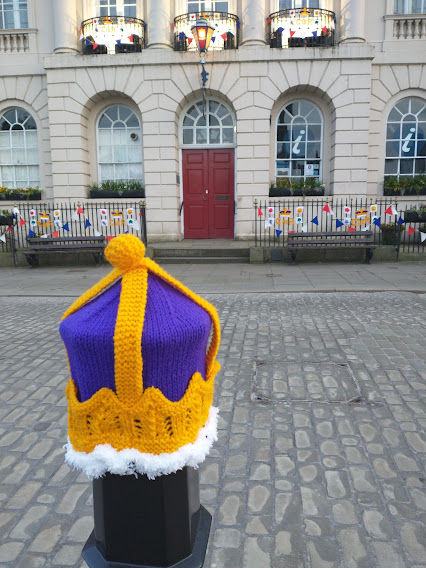
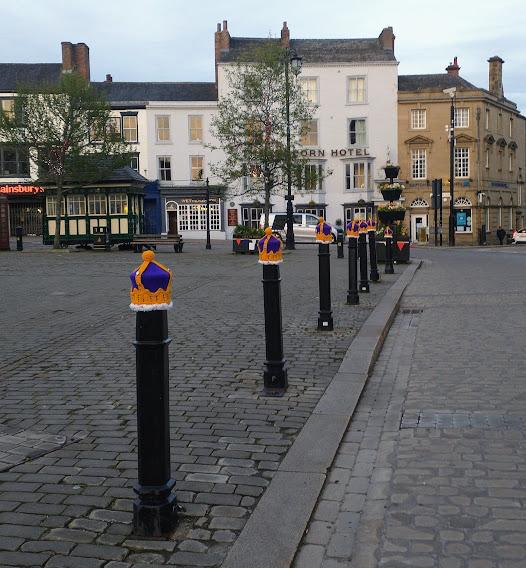
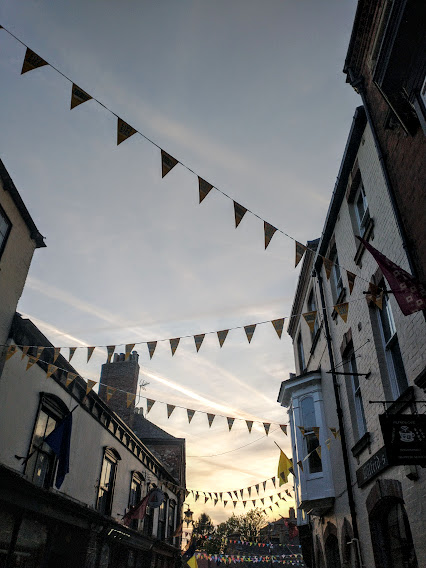
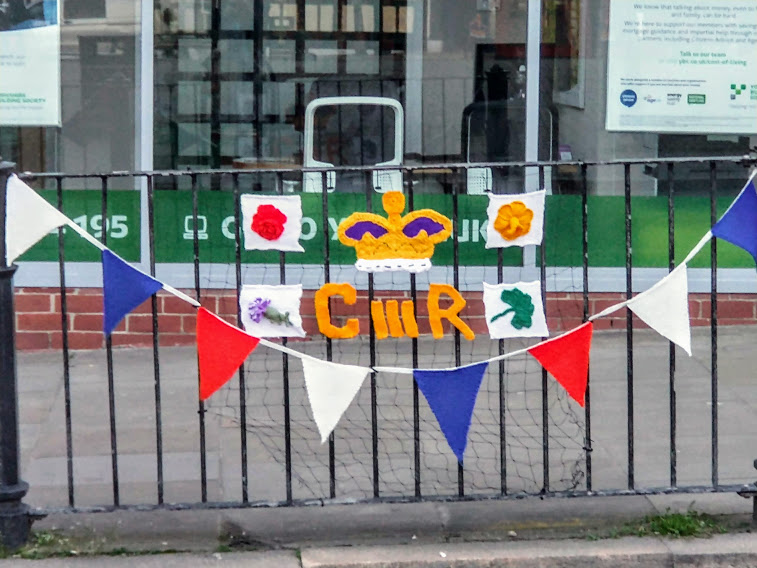
It’s only 8.05 a.m., and even on a music station like Radio 3 there’s no escape from unremitting Coronation fever. Before I go and hide, I’ll share images I took the other evening in Ripon, which has chosen to celebrate by yarn bombing the city centre.
While I was in town, the cathedral bell-ringers were practising for today. Can’t beat English bell-ringing.
Ripon Cathedral bell-ringers
Ripon’s not alone. Nearby Thirsk seems to have gone whimsical, rather than respectful. I think we’ll have to pop along and see for ourselves.
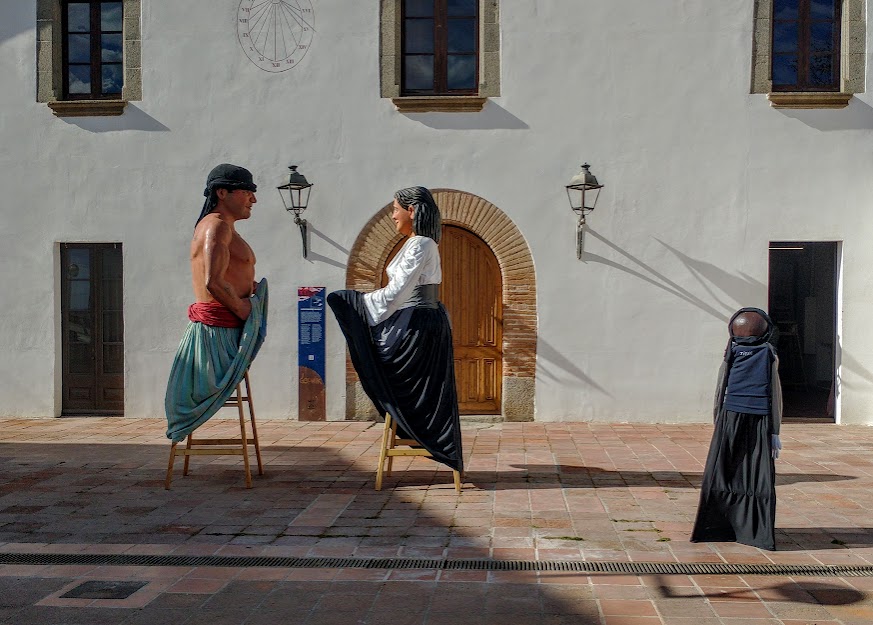
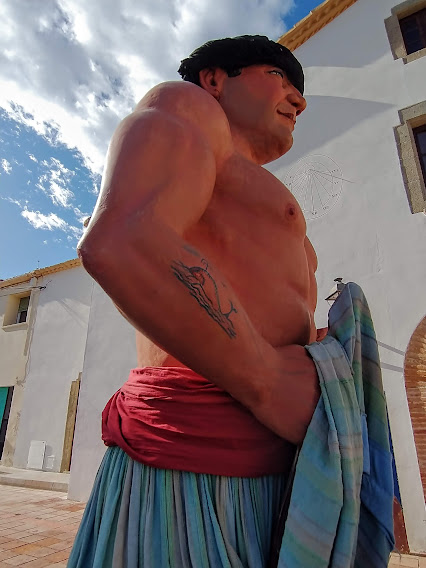
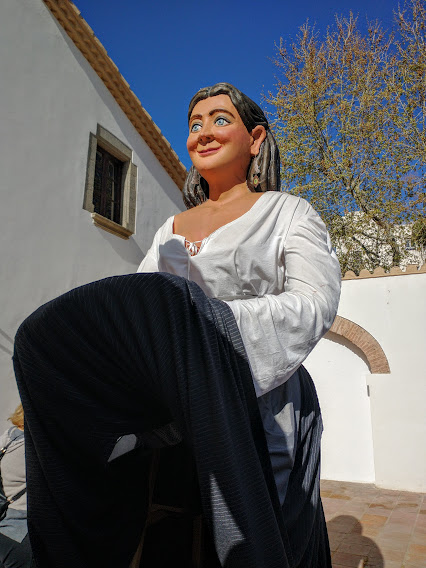
Visit Catalonia while there’s some kind of festival going on, and you might be lucky enough to see Gegants. They’re huge and heavy figures which, during festivals, are carried by some poor – unseen – soul probably sweating and longing for the moment when he (and it’s invariably a ‘he’) can put his burden down and disappear for a drink. They usually represent various traditional characters, though in the early days, way back in the 15th century, they had the job of telling Bible stories.
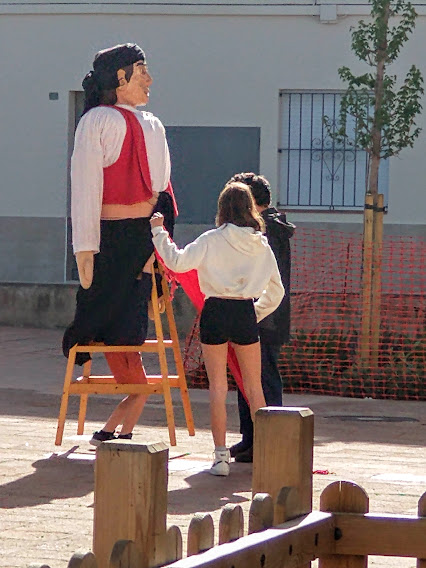
Can you spot the boy underneath the gegant? He’s about to try, and almost fail, to lift it onto his shoulders.
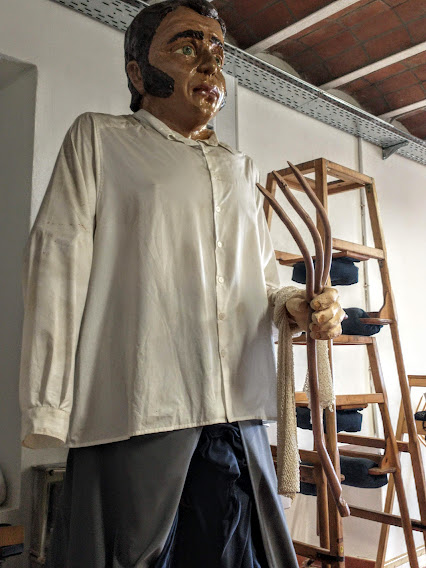
While we were staying with daughter-and-family in Premià de Mar over Easter, Malcolm and I, out with granddaughter Anaïs, had a piece of luck. A small band of people were hauling the local gegants out of store, and generally checking them over . They invited us to look round the store if we wanted, and we did. I find some of these creatures a little on the creepy side: all the same, I was a bit disappointed that we couldn’t be around on the day that these lumbering giants stalked the streets of the town for one day only.
Come and have a look round the store room with us …
I’ve a feeling that this time, a love story was on the cards. The sort where the Hunk and the Kind and Virtuous Maid live happily ever after.
It’s spring. It must be. Wild garlic has – almost overnight – started rampaging through the woodlands near our house. A light tang of garlic pervades the air. And I go foraging. This is the season for:
Wild garlic and potato soup

Wild garlic pesto

Shredded fine and tossed at the last moment into scrambled egg.

Shredded and tossed into risotto at the last moment
Have you any favourite recipes?
And have you got a secret piece of ancient woodland where ransoms – the other name for wild garlic – flourish? If so, you’re probably as lucky as me, because wild garlic is often quickly followed by bluebells.
I took my feature photo yesterday, so it qualifies for Brian’s Last on the Card. Accompanying text is rather frowned upon. Tough. This is my post, and I’ll write if I want to.
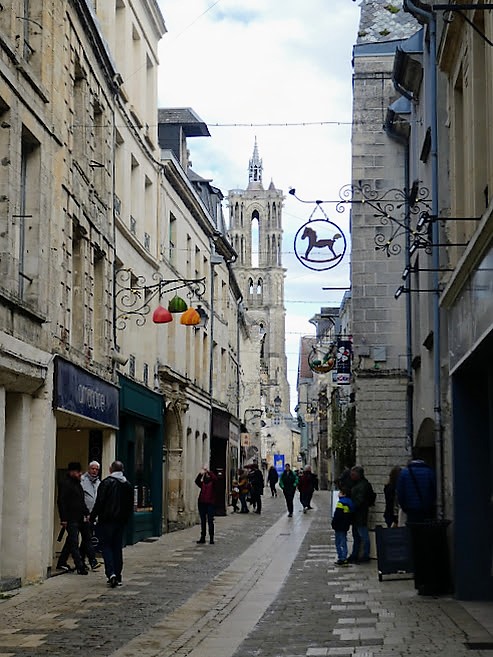
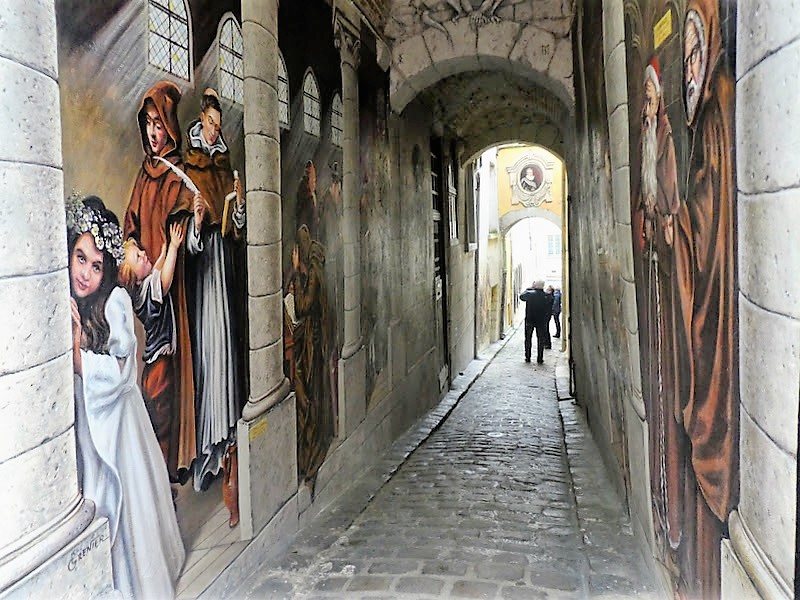
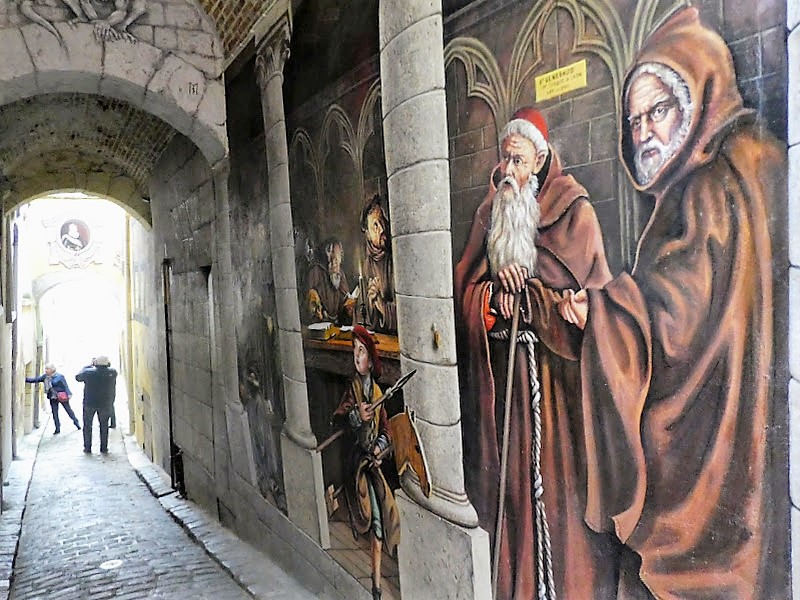
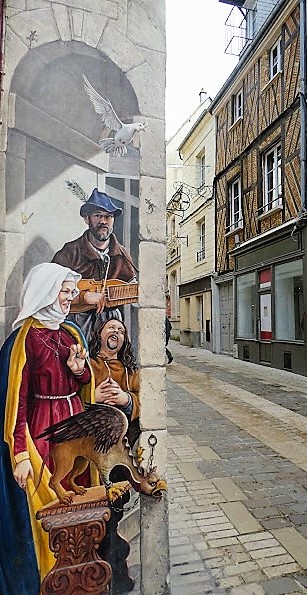
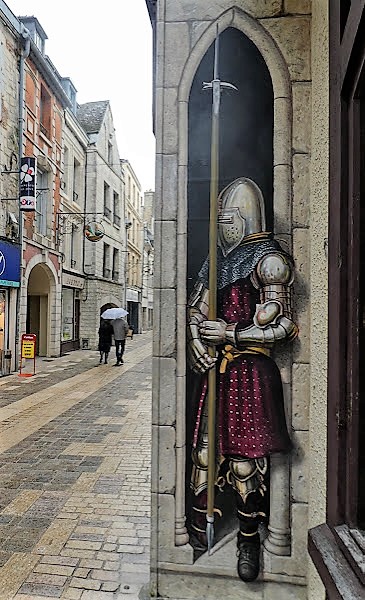
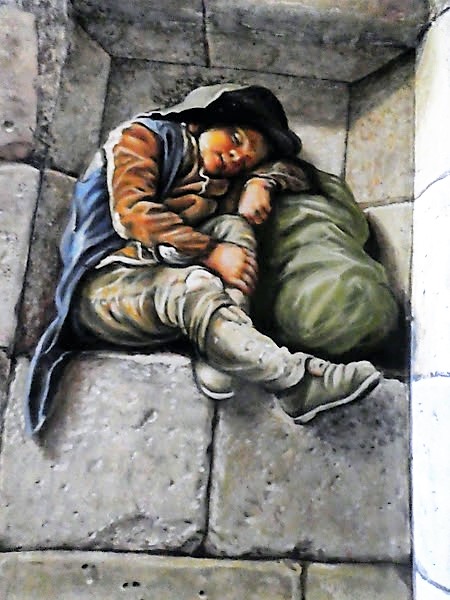
Our peregrination through France a few weeks ago took us to Laon, a city in Picardy and not too far from Reims. I wanted to see its cathedral, and we did. But we spent more time pottering about the streets of this walled city, its prosperity dating from the 12th century. We were particularly taken by its street art, perhaps more formal and commissioned than most …
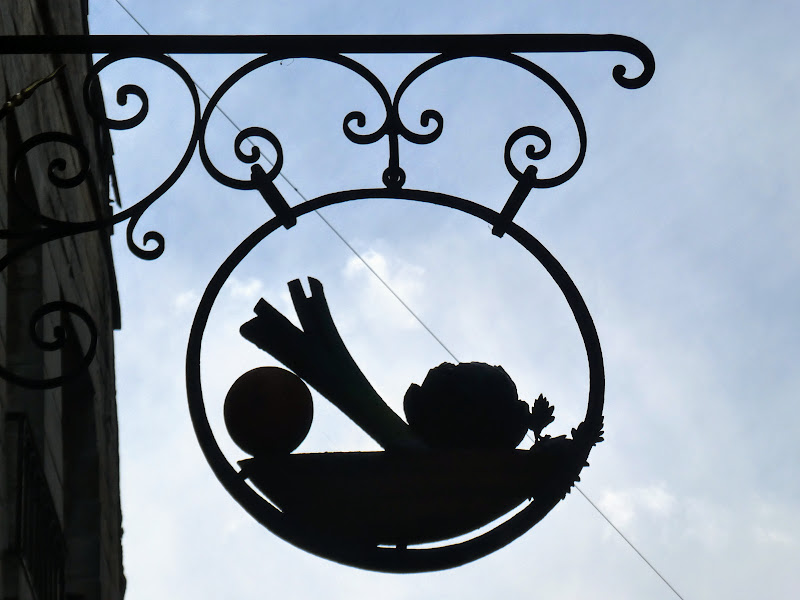
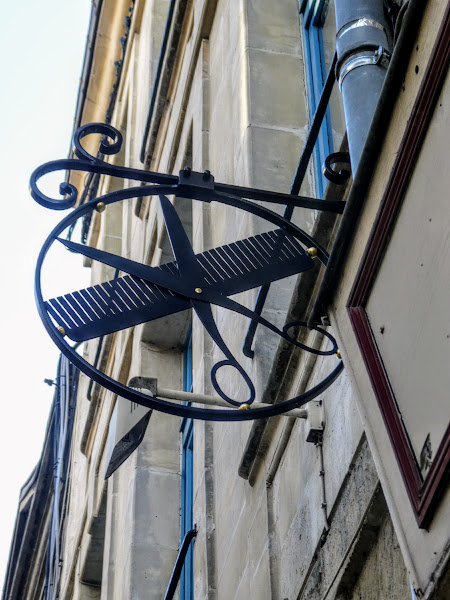
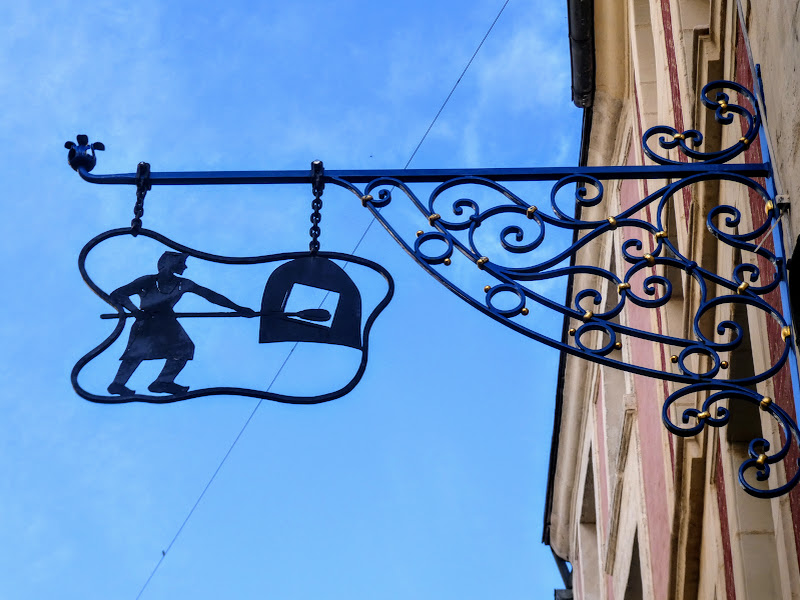
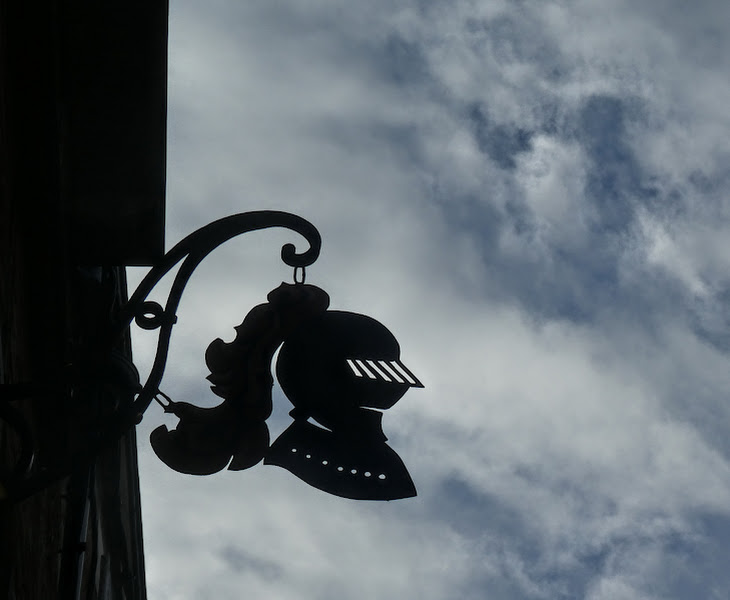
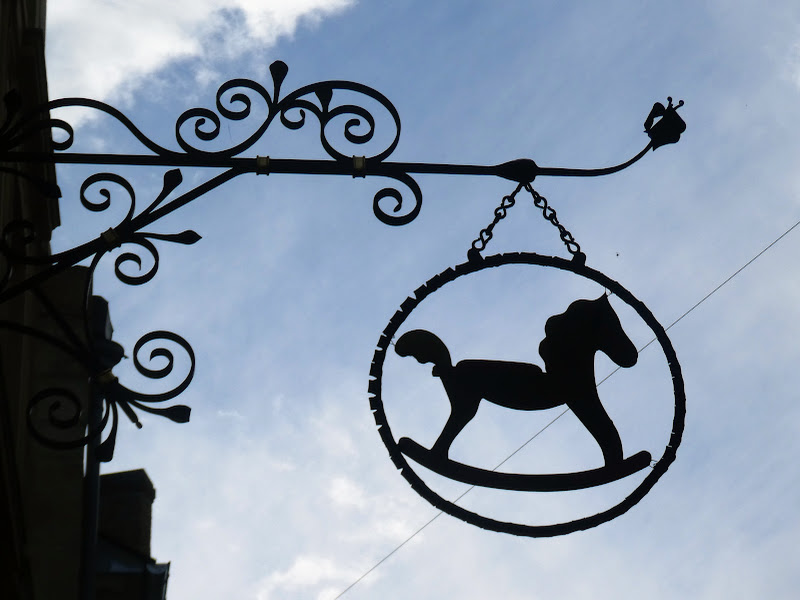
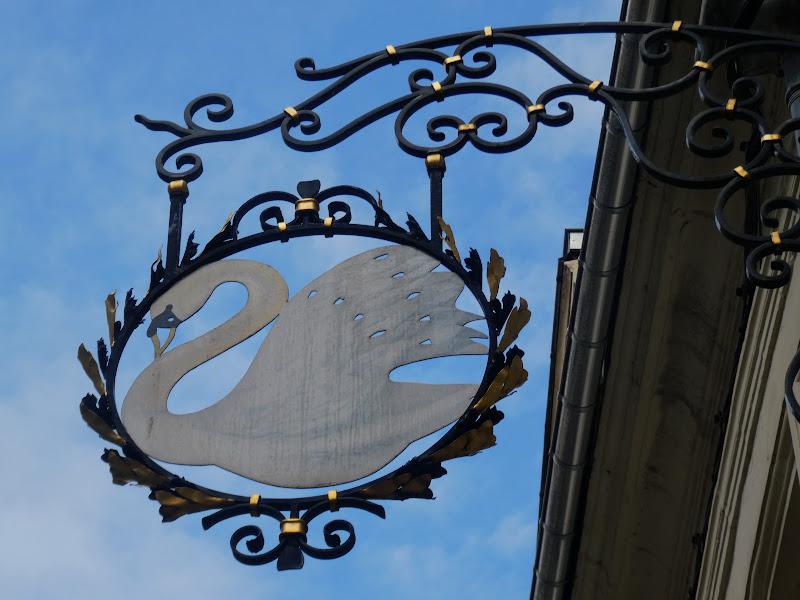
… and by one of its characterful main shopping streets in the Old Town, where every shop had a metal sign above it, describing in the mediaeval manner what kind of an enterprise it was. You can have a guess for yourselves, but in a couple of cases, I’ve forgotten the answers.
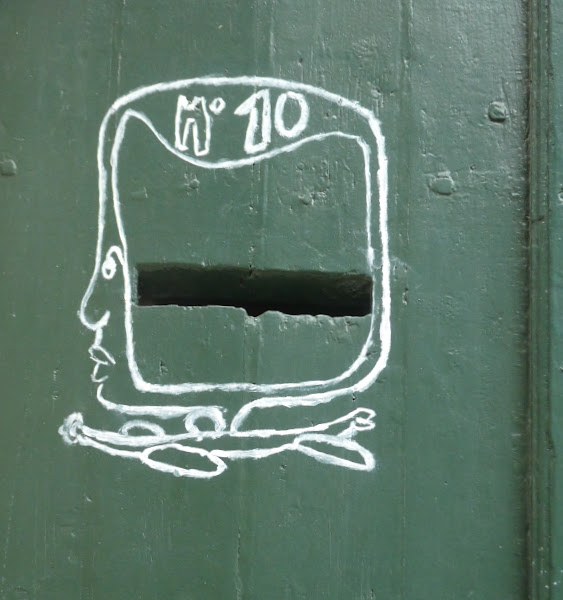
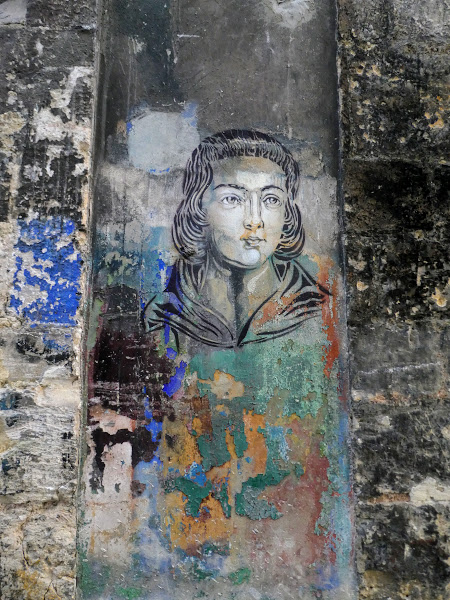
And then there were always the little touches of whimsy: as in this letter-box in a front door down a back street, and a slightly battered wall with a portrait of some inhabitant from centuries ago …
We liked Laon a lot. We’d go again. Lots more to explore.
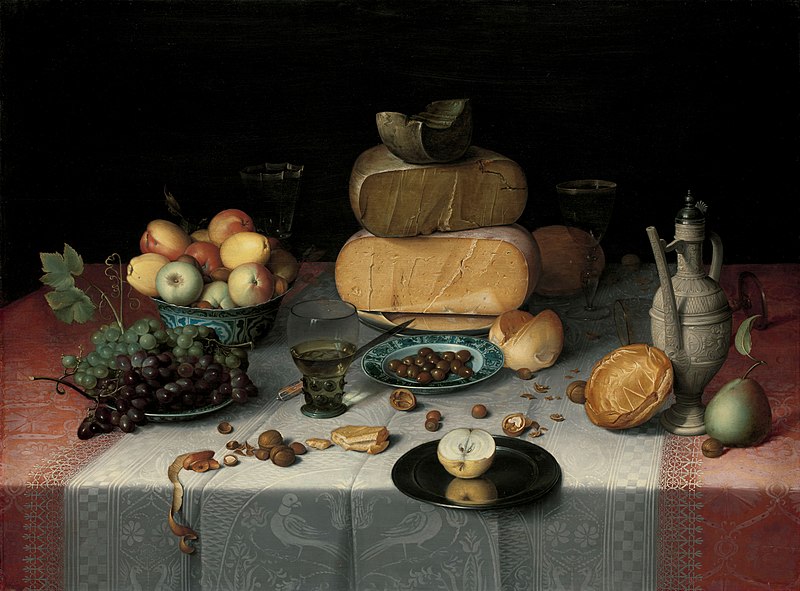
If I said ‘Still life‘ to you, I’d bet you’d immediately think of those ultra-realistic studies of fruits, cheeses and other good things cascading artfully from a shelf or plate in a painting by one of those 17th and 18th century Dutch painters who specialised in painting them. Like this, for instance, by Floris van Dijk in the Rijksmuseum:
Patti, who’s challenged us to produce still life images for this week’s Lens-Artists Challenge #246 isn’t going to be a bit impressed by anyone who blogs only about images of Old Masters whose work happens to be in the public domain. She wants our own efforts. We can compose them; or we can find them, the unselfconscious efforts of others which we’ve spotted, and seized, and made our own.
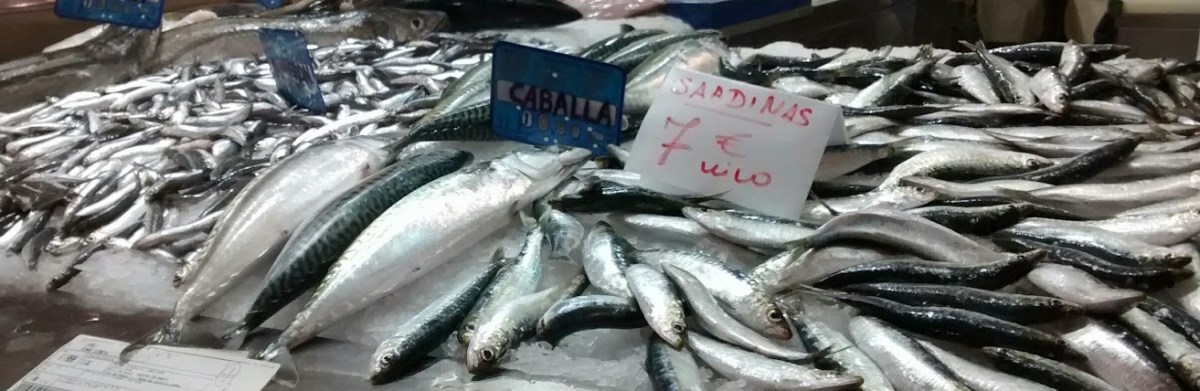
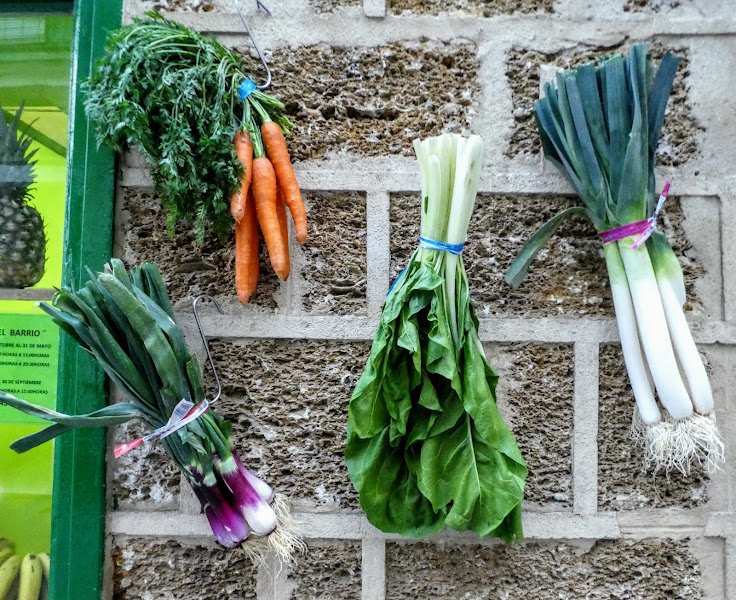
I’ve got a rag-bag of images for her. The fish stall in Valencia which is my feature photo. The marvellous greengrocer in Cádiz, who daily displayed on the wall outside his tiny shop a tableau of some of the goods he had to offer:
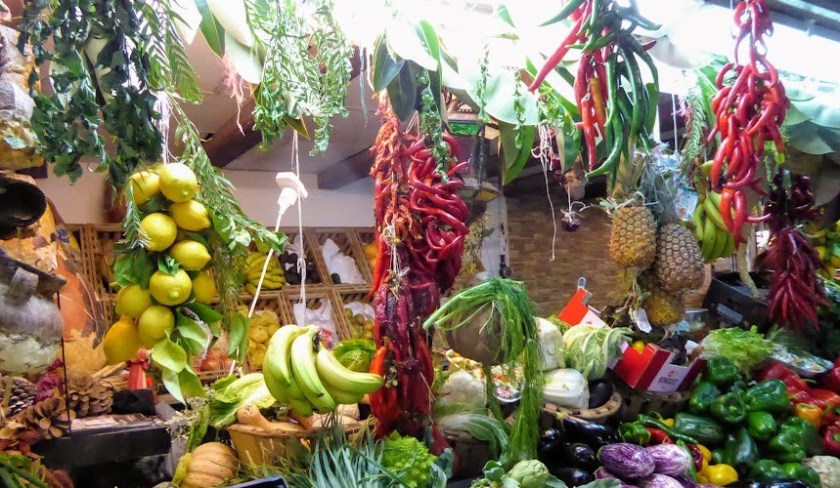
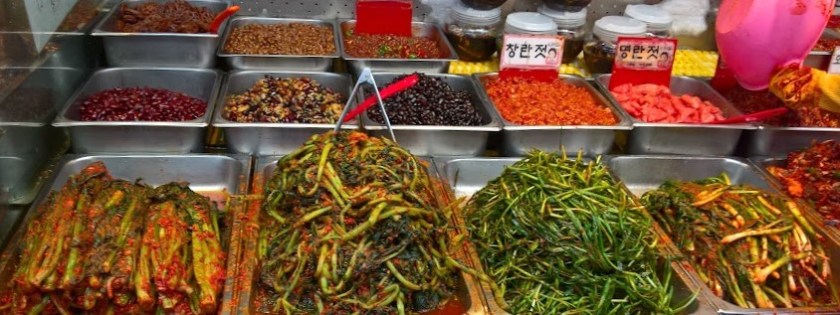
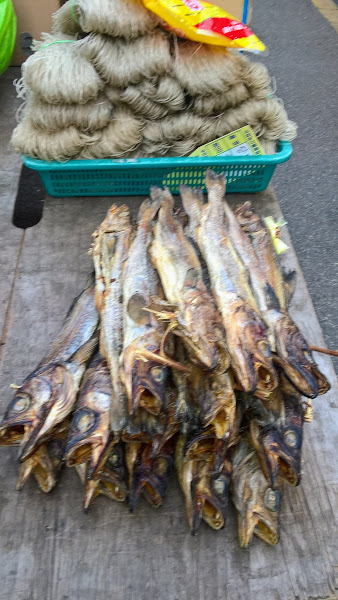
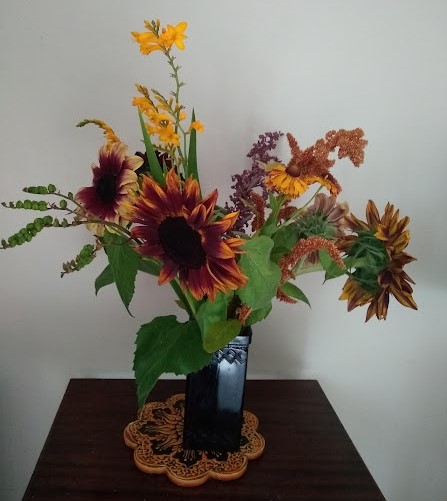
Fruit and veg. from Spain; fermented and pickled vegetables from South Korea; and dried fish from there too. As well as a vase of flowers from home. All these in homage to Dutch Old Masters.
Market in Alicante
Market in Busan
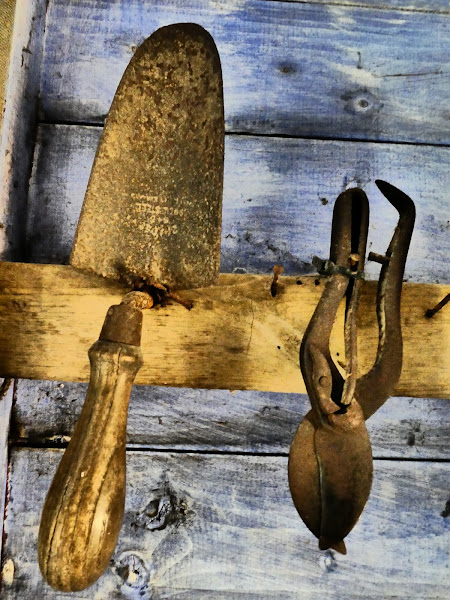
Harlow Carr Gardens in Harrogate, England has a display in an Edwardian gardener’s shed. I was rather taken by these rusted tools.
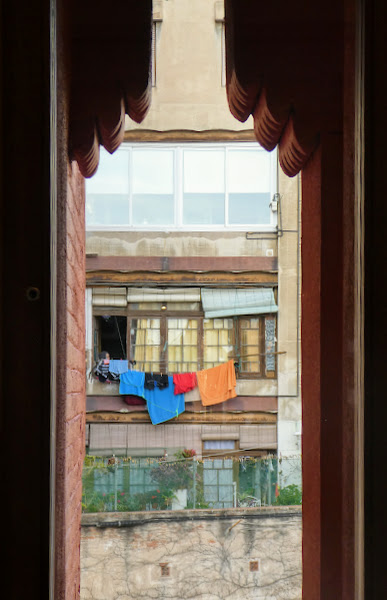
In Barcelona, temporarily totally ignoring all the wonders on display in Gaudi’s Casa Vicens, I glanced out of the window to see a washing line still life:
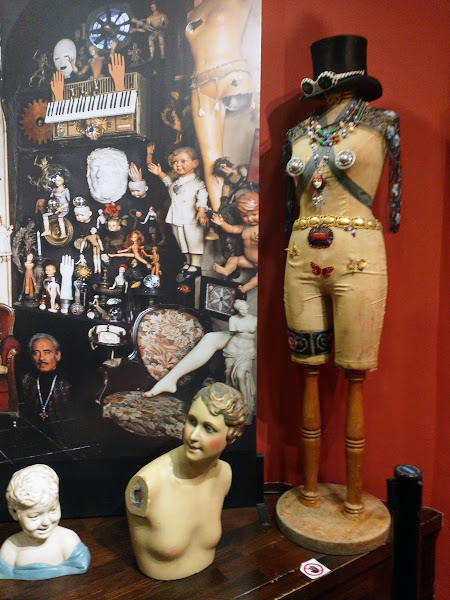
And only the other week, in Canet de Mar, Catalonia, in the museum dedicated to Lluis Domenech i Montaner (Note to self: get that post about him written), I found an extraordinary still life with which to finish this post: the ephemera gathered into the studio of early 20th century photographer Eugenie Forcano.
Well, Patti, I can’t speak for anyone else, but I’ve had a lot of fun. Thanks.
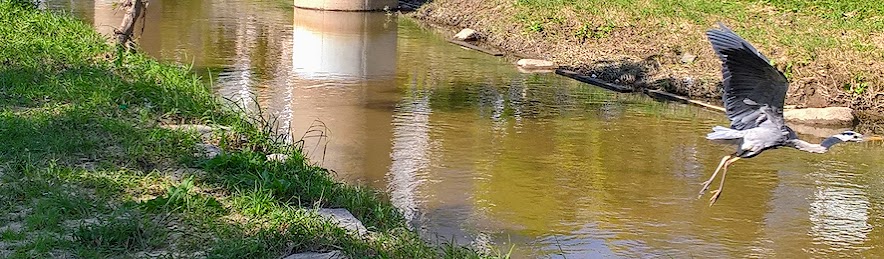
So I’m going to book-end my post with herons, omnipresent herons, seen in every continent but Antarctica, almost anywhere where there is fresh water. I could have shown you one of our local birds, patiently fishing in the River Ure. Instead, I feature one seen in urban Busan, South Korea, and finish with one surveying the evening scene from his look-out post in l’Albufera, Valencia, Spain.
Let’s stay in Spain, and showcase a stork supervising the nest a-top a church in Tudela, Navarre.
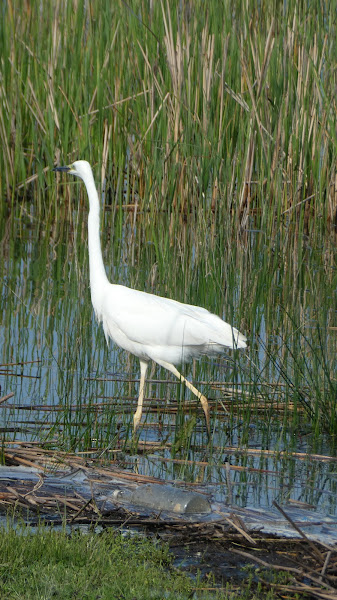
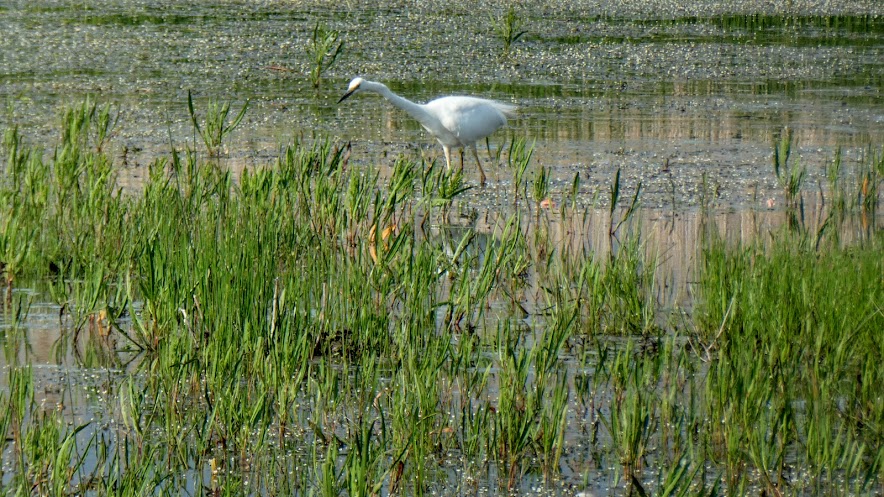
Now Greece, and another member of the heron family, the egret, hunting for breakfast.
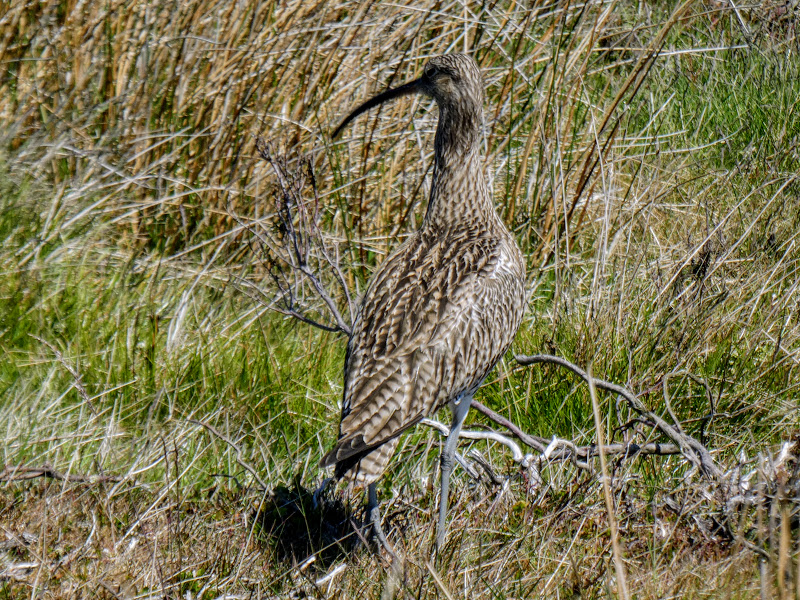
Just as Lockdown came to an end, we ventured once more into the Yorkshire Dales, and found curlews, so newly unaccustomed to traffic that as we parked ready to go on our walk, they stayed nearby, unconcerned.
The patterned curlew blends in so well with the less-than patterned grasses. Especially the legs. Keep looking – you’ll find them.
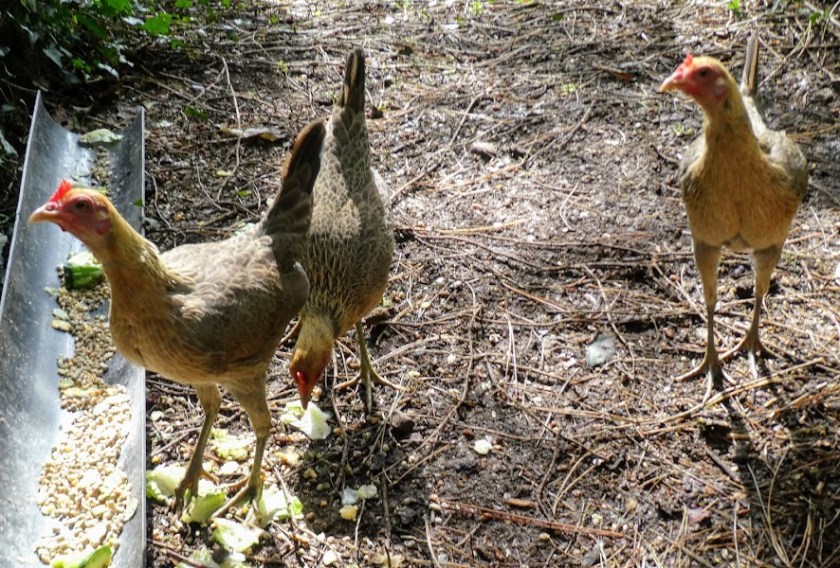
I bet you wouldn’t expect to find a hen in this post. But our neighbour’s chickens have long legs. And they lay the smallest hens’ eggs ever.
And finally, as promised, here’s our Spanish heron.
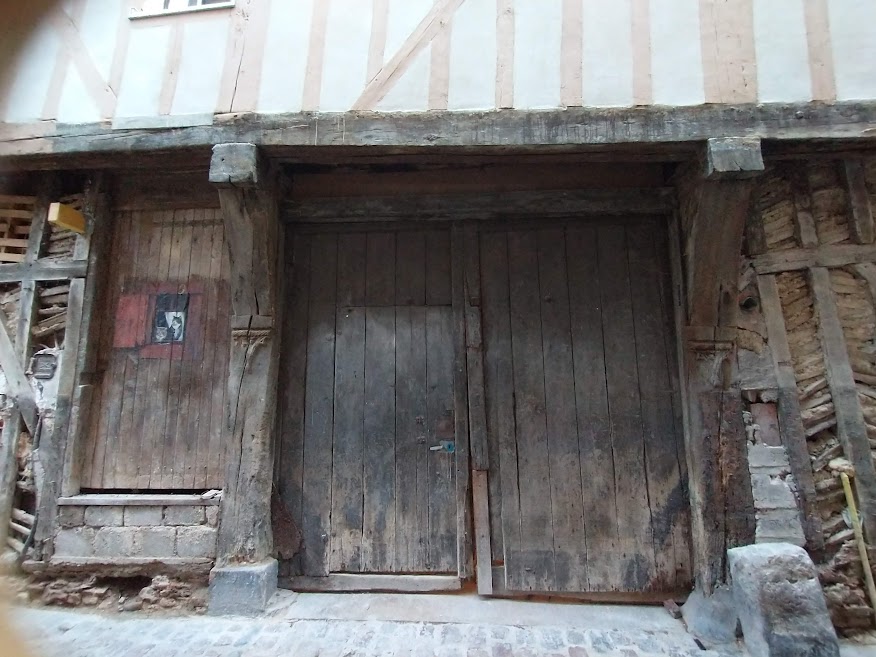
Loyal readers may remember a post of mine from three weeks ago, when I shared my enthusiasm for half-timbered Troyes. It was impressive that so many houses were still, despite lurching at improbable angles in some cases, in excellent repair and condition.
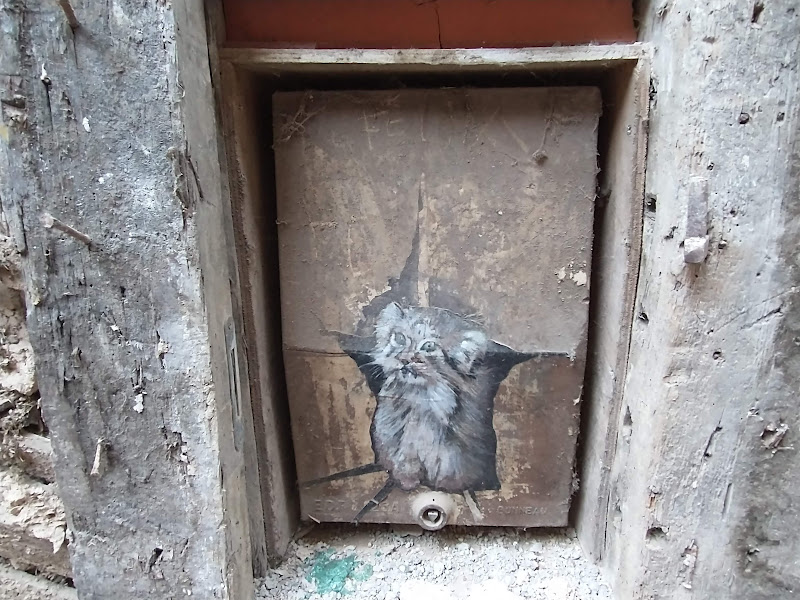
Not all though. One of our walks, back from an early evening drink found us wandering down a narrow old street which wasn’t in good nick. It gave us the opportunity to study old building techniques: wattle and daub, and wooden nails.
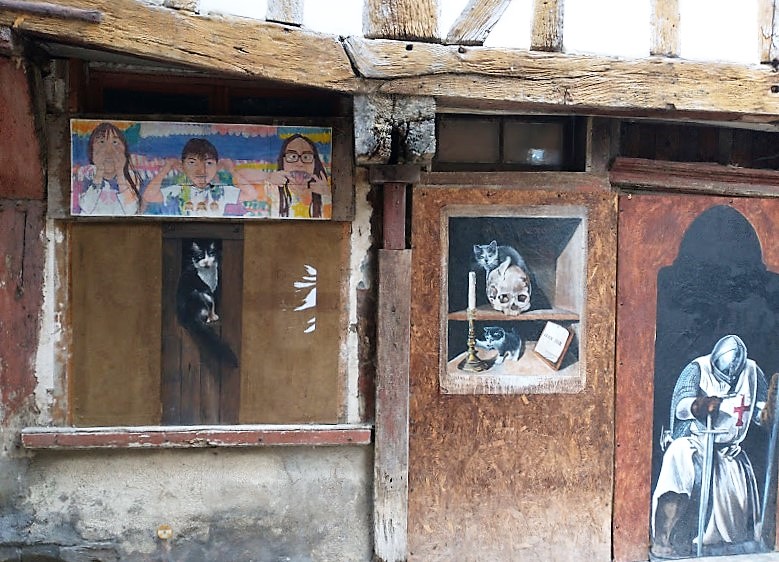
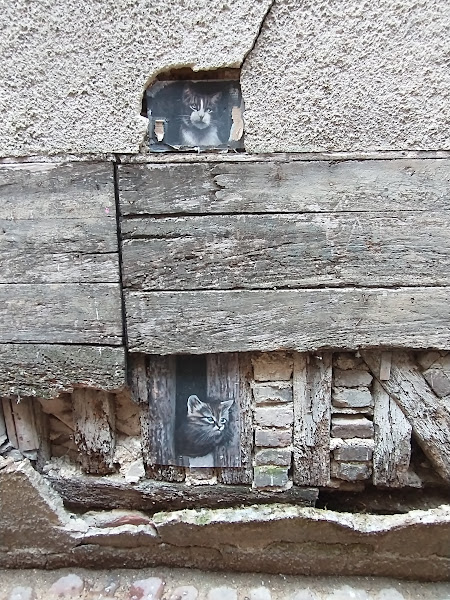
But that wasn’t all. This street was filled with one obvious piece of street art – the header photo – then many others, mainly cats, which had to be hunted for by looking up, down, and all along.
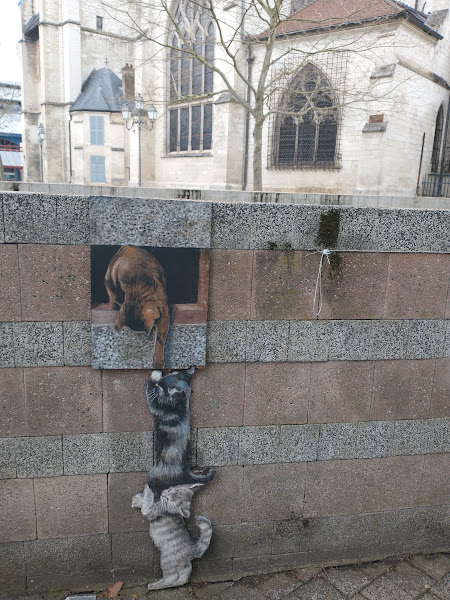
Even that wasn’t all. An elderly dog walker, noticing our interest, urged us to nip back along to the square we’d just left and look at the wall to the side of the underground car park. So we did.
Reims and its cathedral has already qualified for a post on my blog. So has one of the images. But much as the architecture, the stained glass, the stone carving of these mediaeval cathedrals inspires awe, I just as much enjoy inspecting what the stonemasons got up to often in more hidden areas. Instead of saints, characters from the bible, earthly donors who needed their memorial, those masons seem to have relished chipping away to celebrate the more characterful inhabitants of the planet. And such statues often get more weather-beaten than most. Stacked on pallets and away from public view, I found this little lot hidden in an outside corner, awaiting a spot of restoration. They made my day.
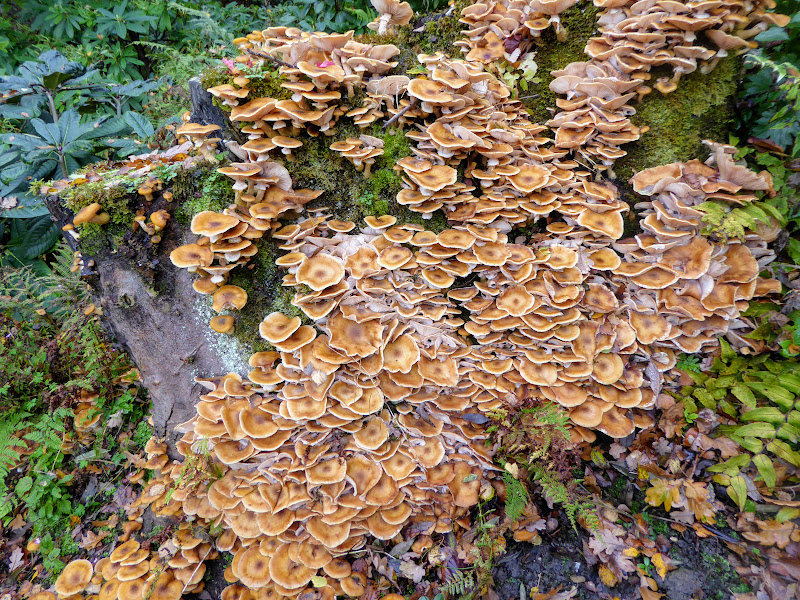
It’s not really the time of year for fungi here in Europe, but we’ve just come back from Spain, and more importantly France, where at the right time of year, fungus-foraging is by way of being a national obsession. Find a secret cache in the woodlands, and no right thinking Frenchman will share its location with anyone: not brother, cousin, or best friend. An elderly man who lived up the road from us, back when we lived in the Ariège, took the knowledge of where his secret foraging-place was to his grave.
I too forage, as I was brought up doing. One of my earliest memories is of being got up by my mother at perhaps 5’clock to go to the local American airfield, disused since the war, to harvest field mushrooms and puffballs. I still forage – but very carefully. I’m sure only of field mushrooms and the unmistakeable puffball, as well as shaggy inkcaps and chanterelles.
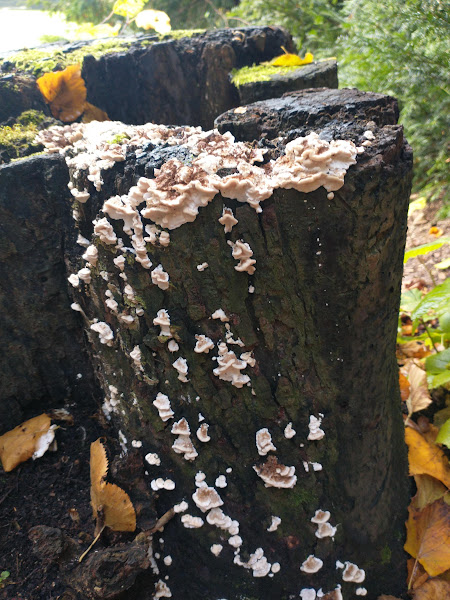
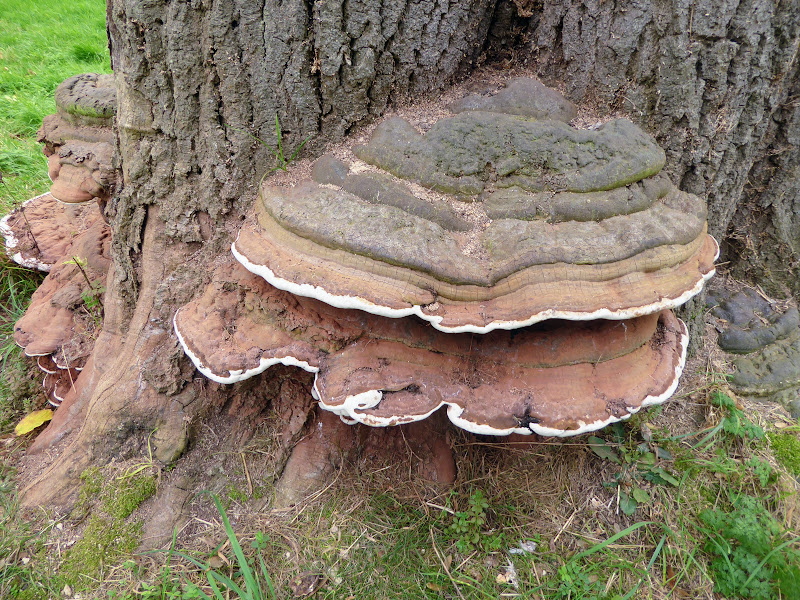
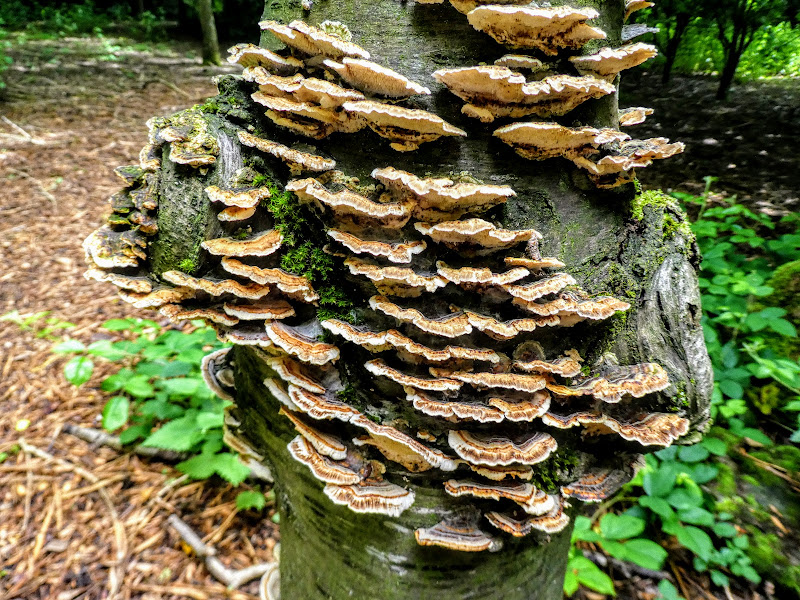
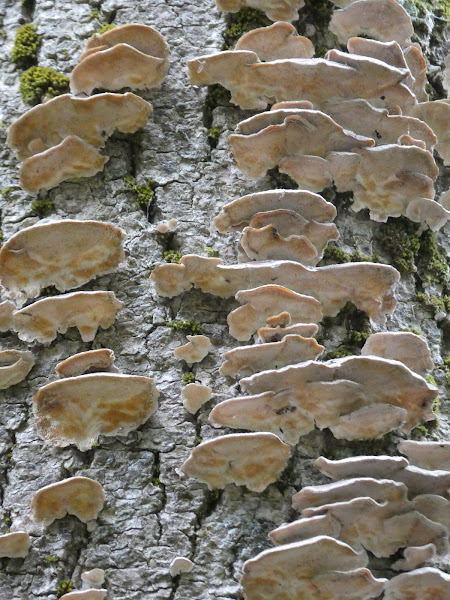
Today though, for Denzil’s Nature Photo Challenge #8: Fascinating Fungi, I’m sharing pictures of the definitely inedible. Here are bracket fungi, and others that thrive on tree trunks and fallen timbers. I’m ashamed to say I don’t know the names of a single one: can anyone help? But there are no mushrooms-on-toast opportunities here!


























 From Pyrenees to Pennines
You must be logged in to post a comment.