I Spy with my Little Eye …

something beginning with H. That’s what Sarah of Travel with Me wants from us today for Leanne’s Monochrome Madness.

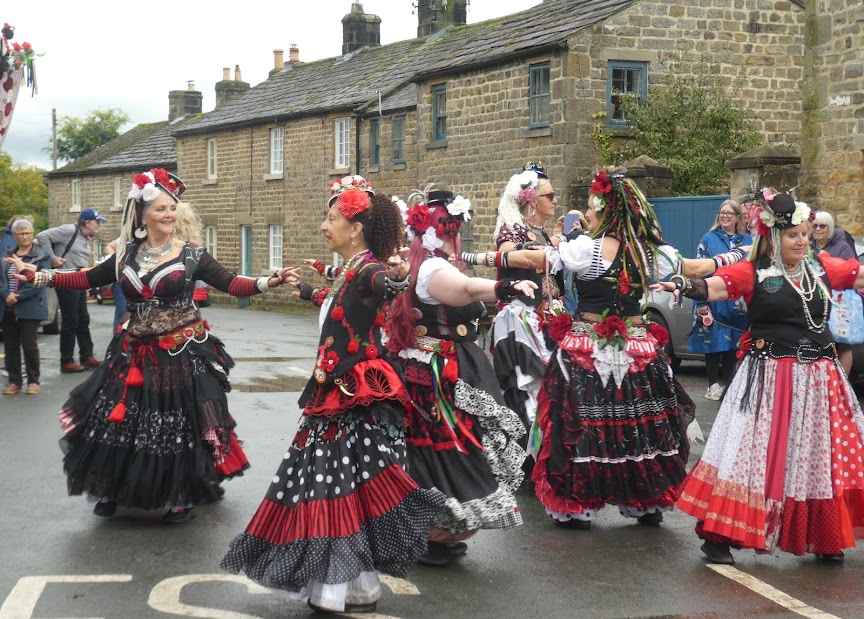
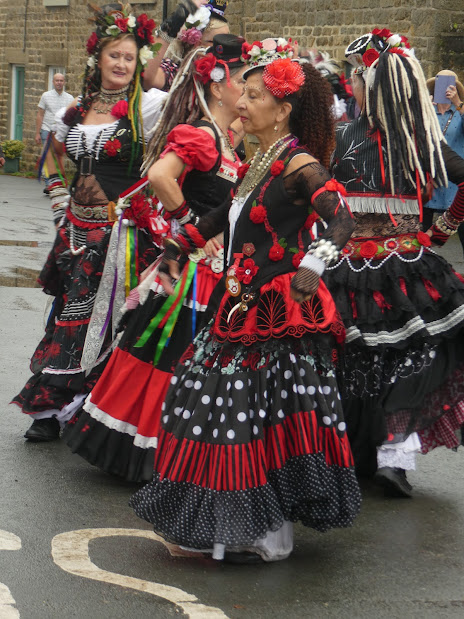
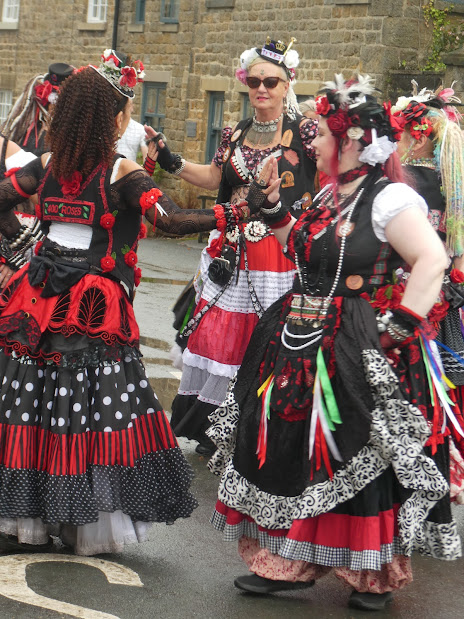
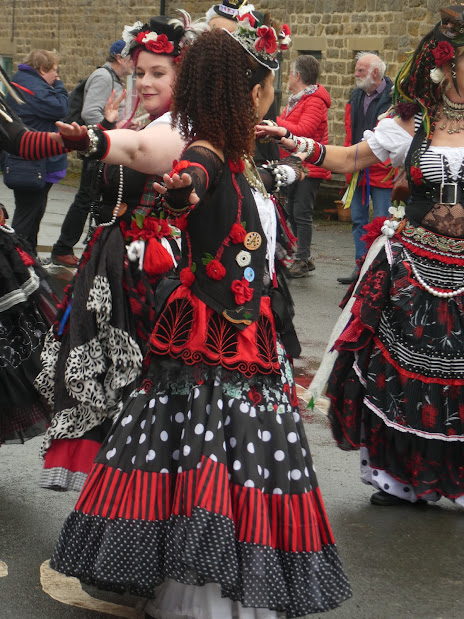
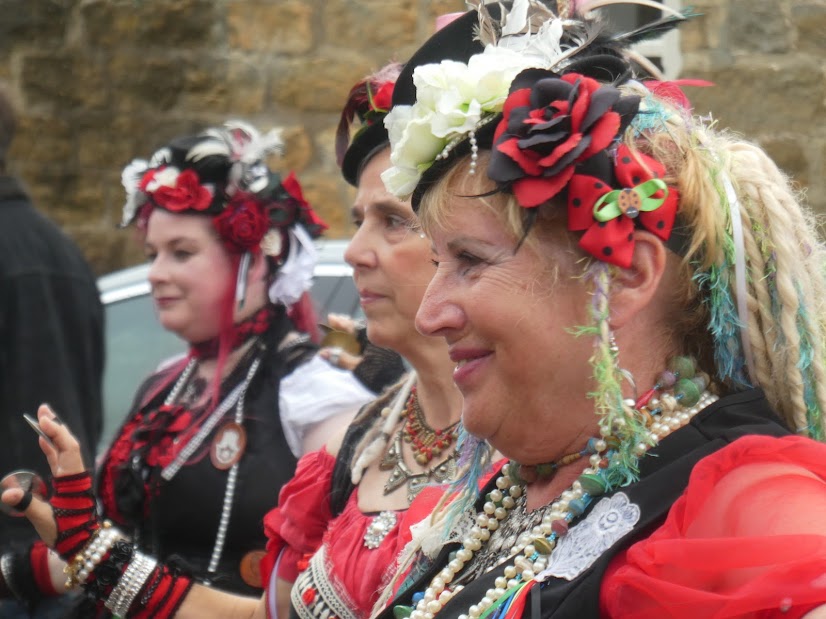
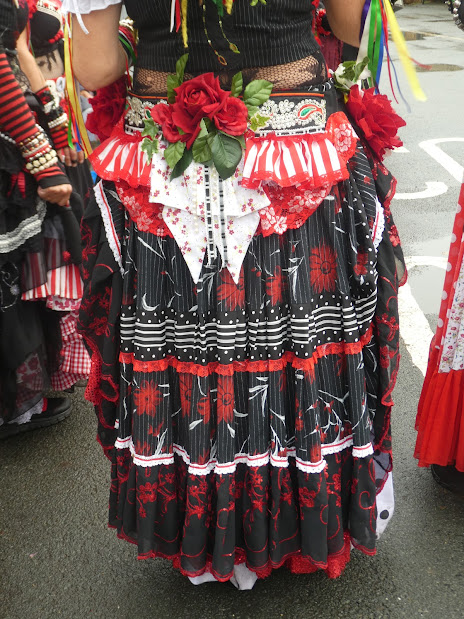
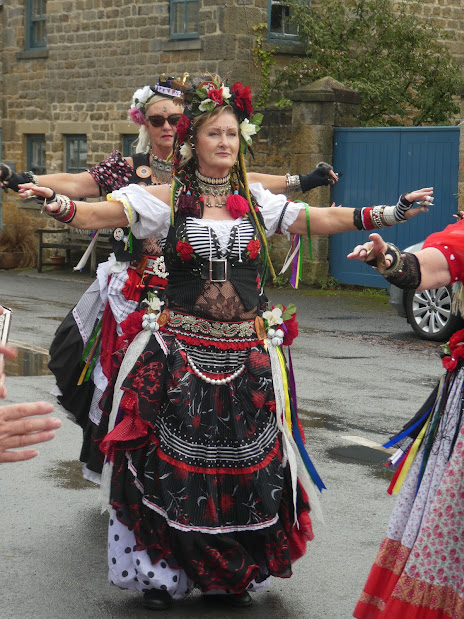
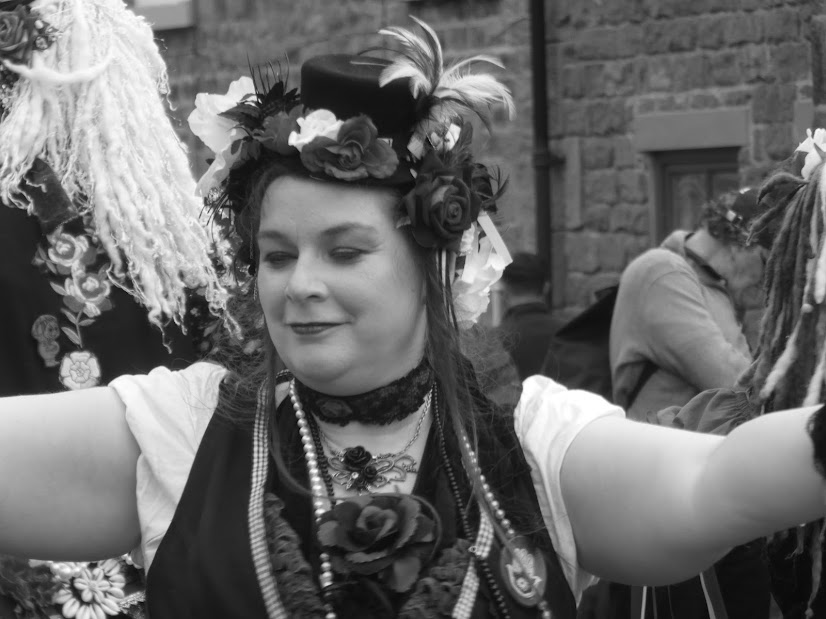
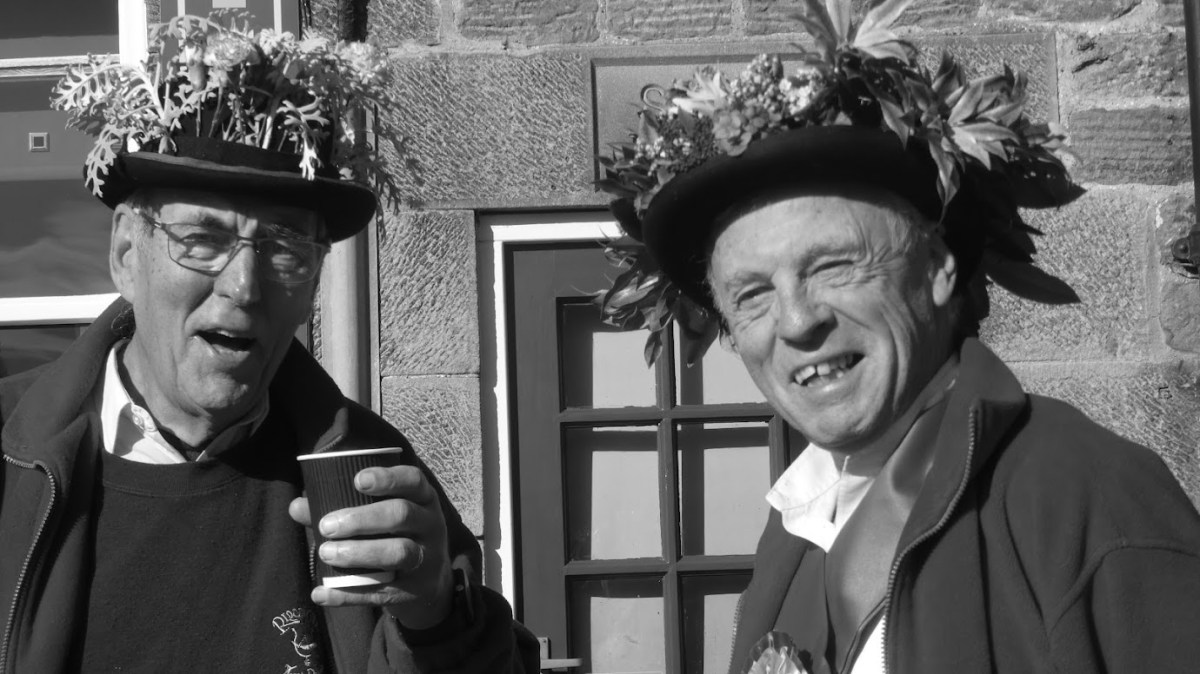
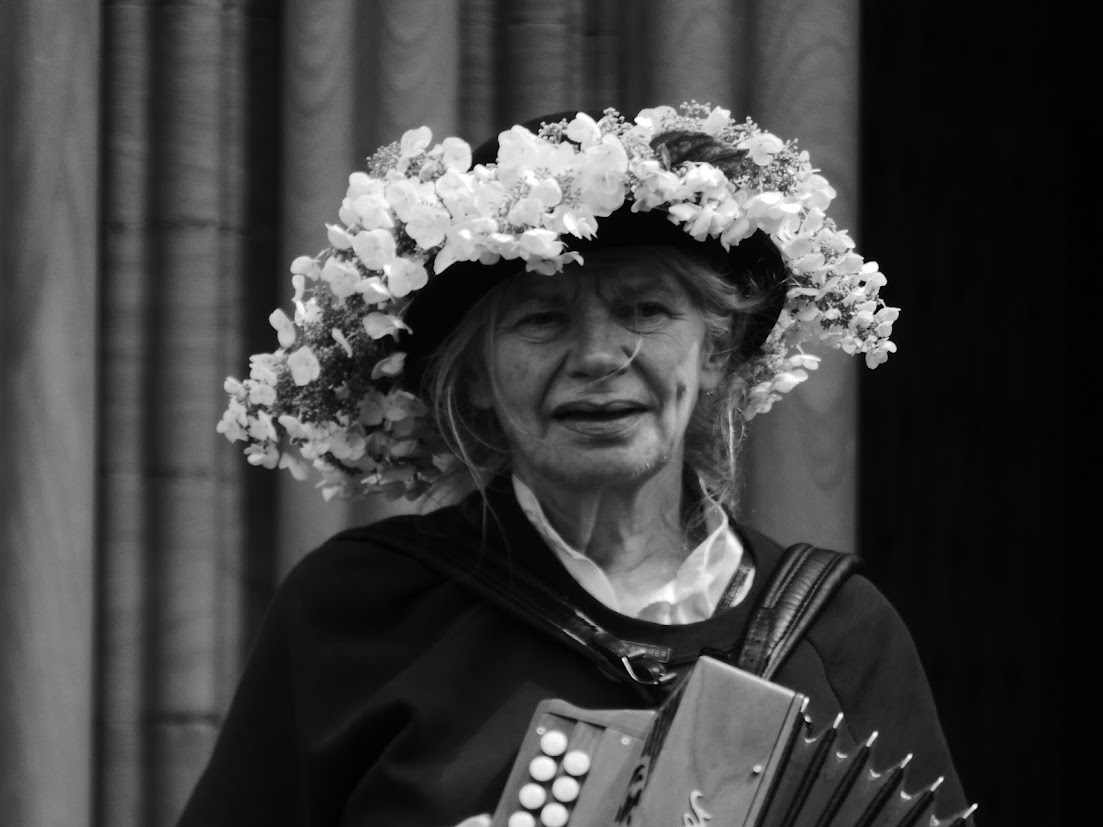
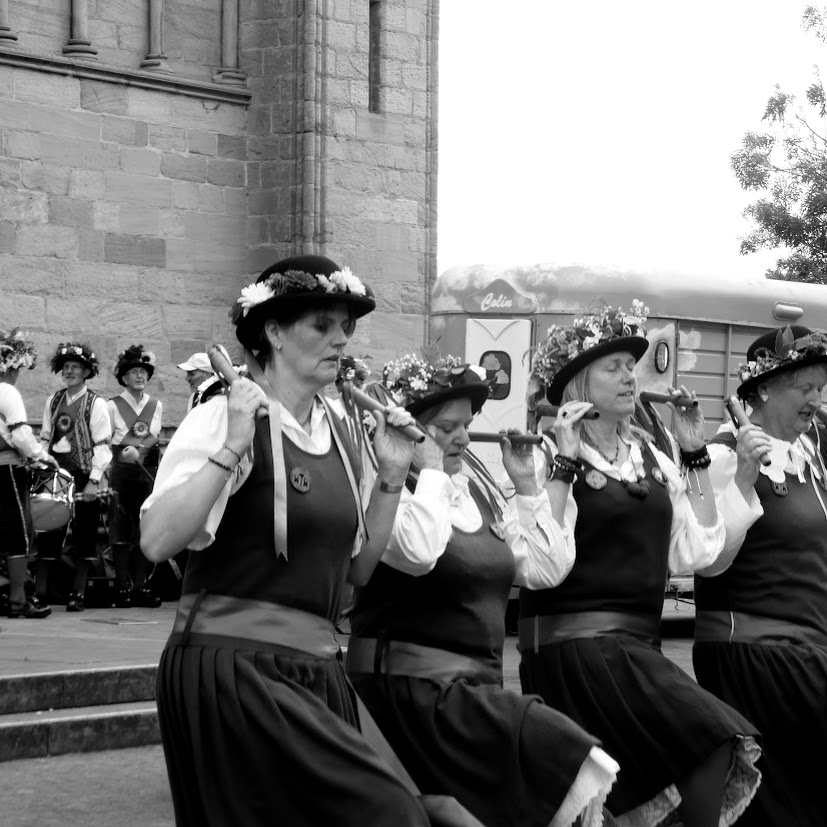
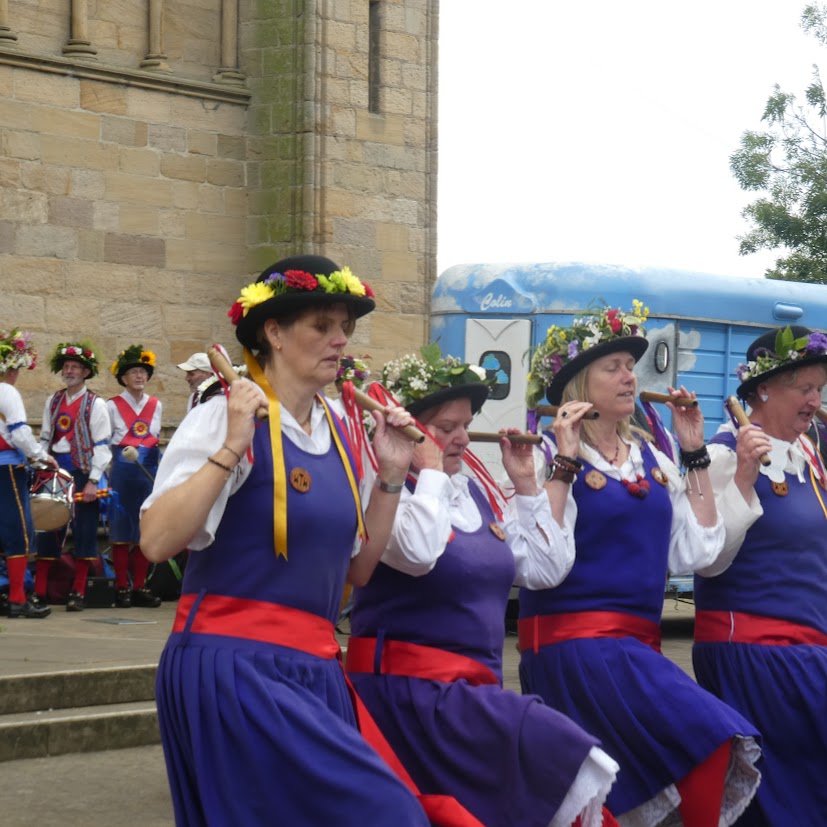
Well, in among all the other acts, Ripon’s Theatre Festival included a few sets of Morris dancers – just as likely to be women as men these days. And they all flaunt terrific Headgear on their Heads. I mean… Hats. Here are a couple: and including two more in the featured photo.

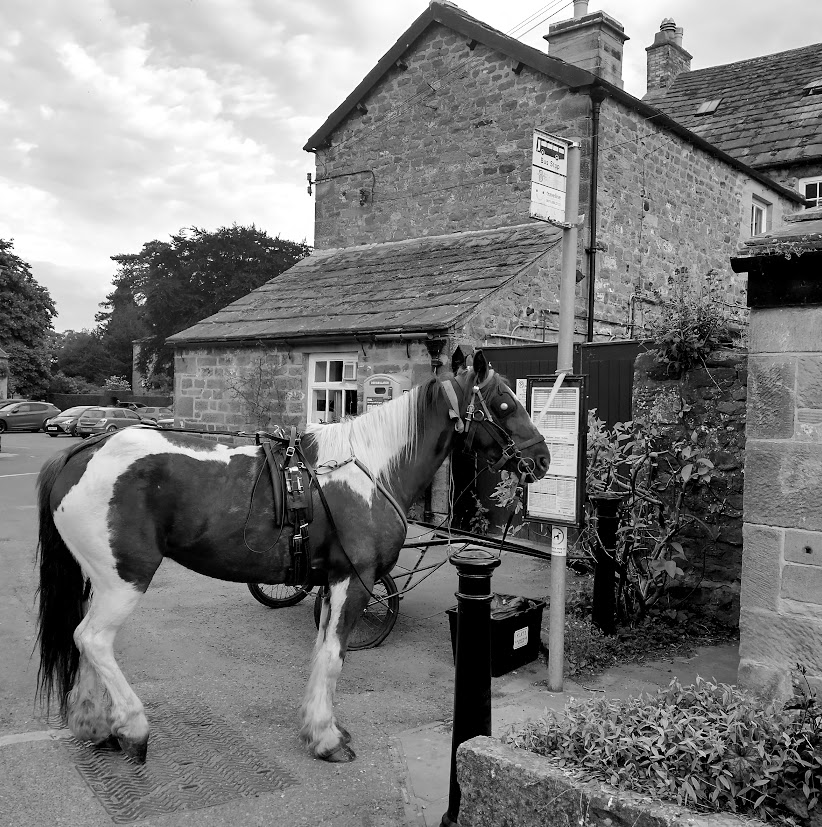
Horses. I won’t show you show-jumpers, or mares with their foals in bucolic meadows. Here’s one waiting patiently for the 159 in Masham one evening as we were on our way to Photo Club. The last bus had left an hour and a half before. In truth, she was on the way to Appleby Horse Fair, an event that. although centuries old, isn’t as long-established as Morris dancing. This horse was one of dozens of horses and vardoes we see making their slow way there in the weeks before.
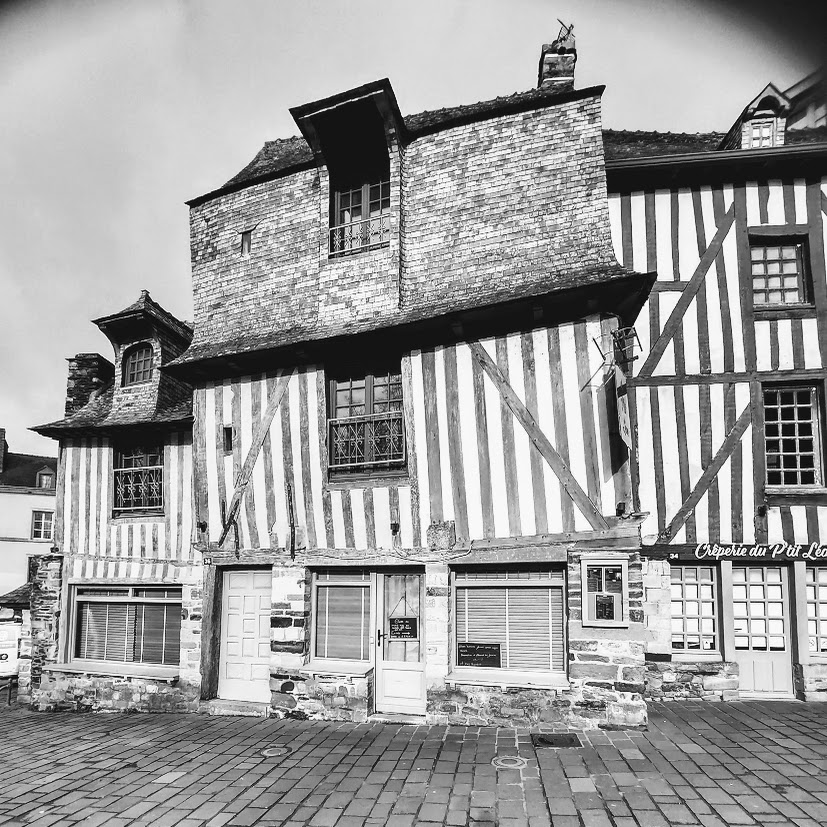
Let’s continue to be a little Olde Worlde. Here’s a House spotted last year in Vitré in Brittany, a town which boasts almost no other housing style.
Or shall we go for a little Hut in the grounds of Sleningford Old Hall, or a tiny House, fairies-for-the-use-of, in Nidd Hall?


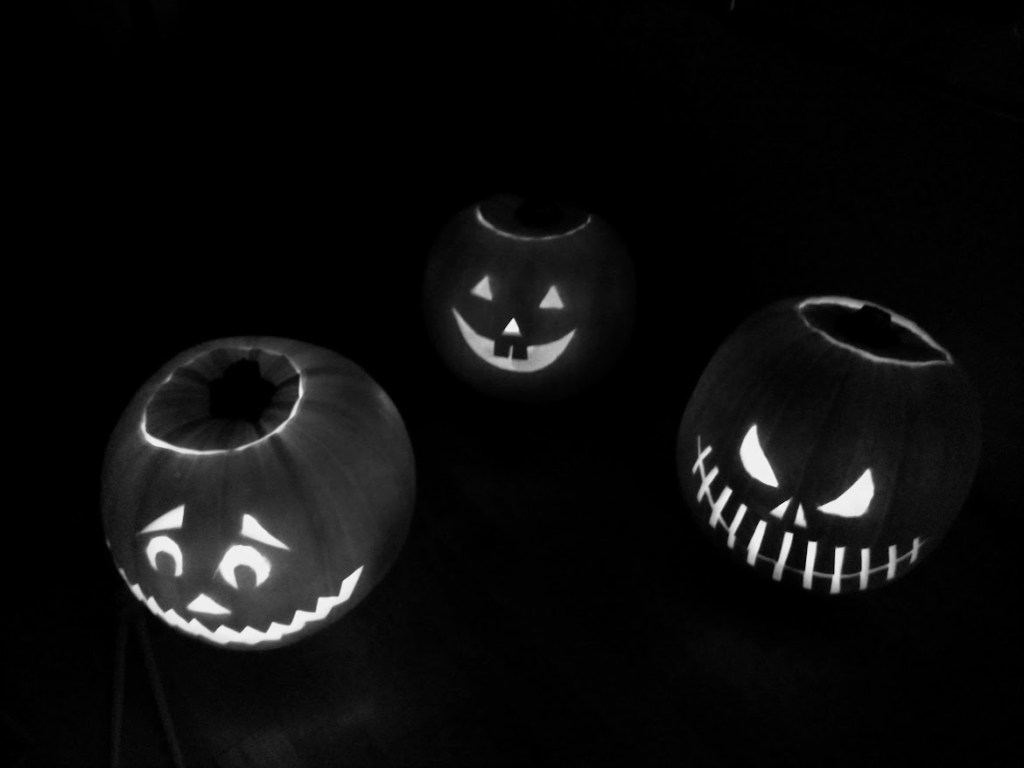
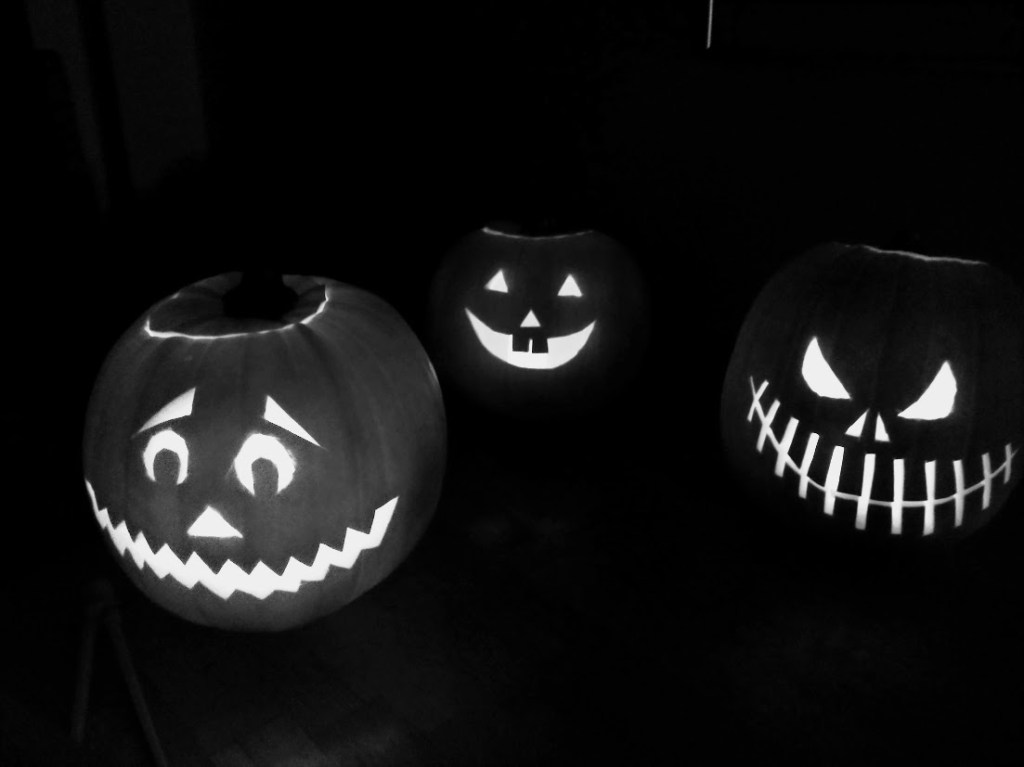
Fairies make me think of other out-of this world creatures, as seen at Hallowe’en.
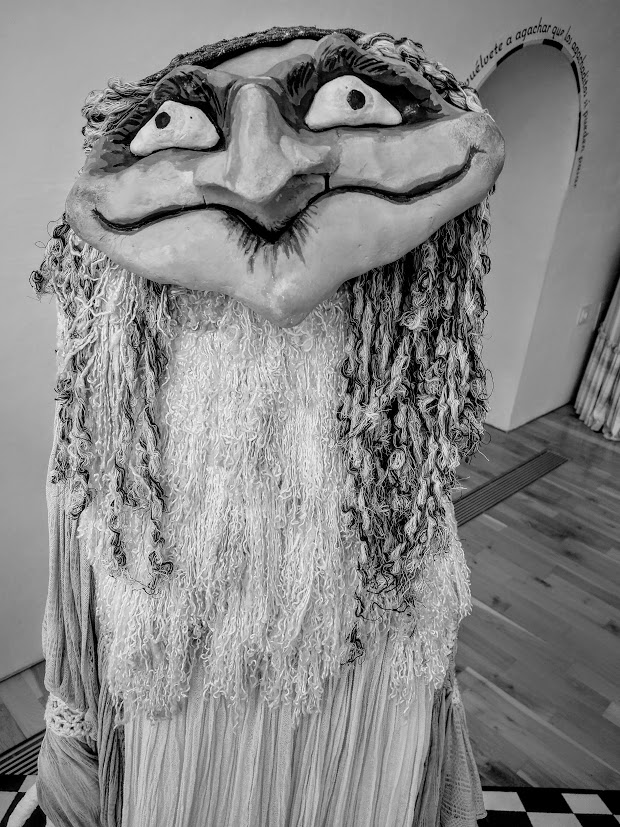
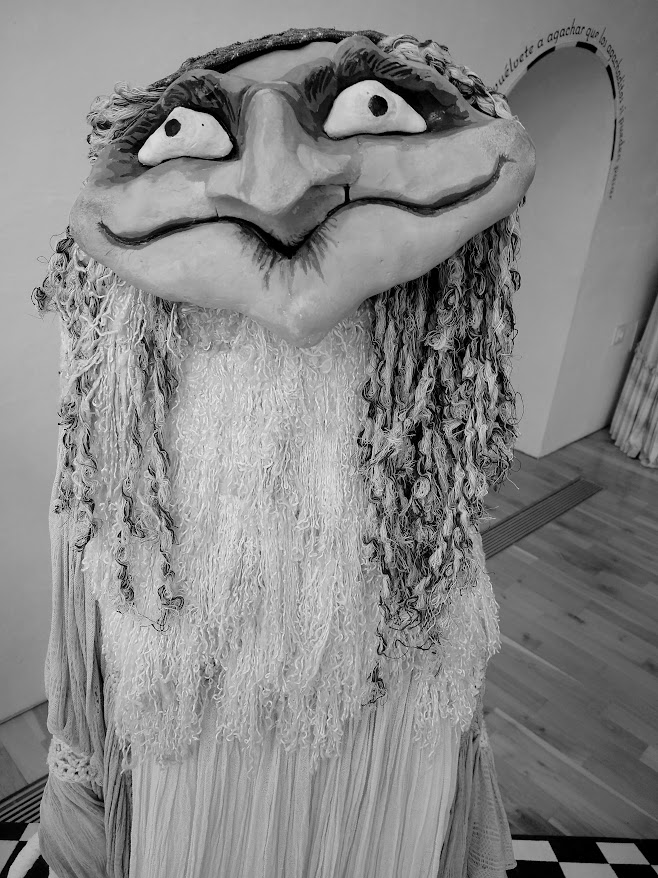
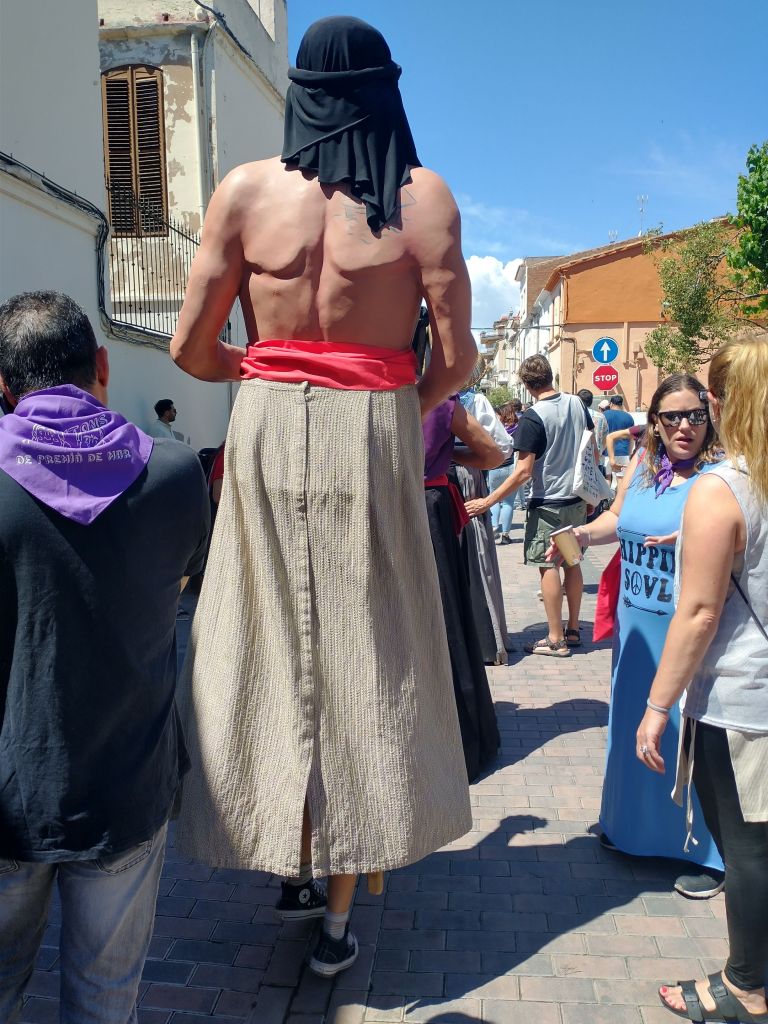
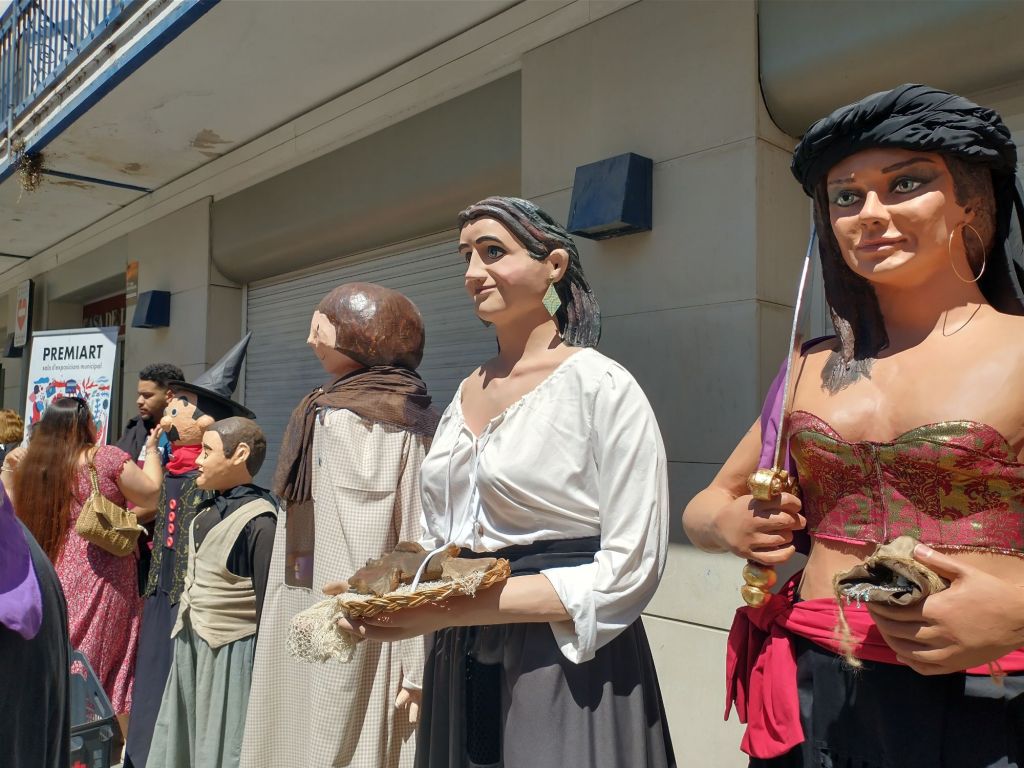
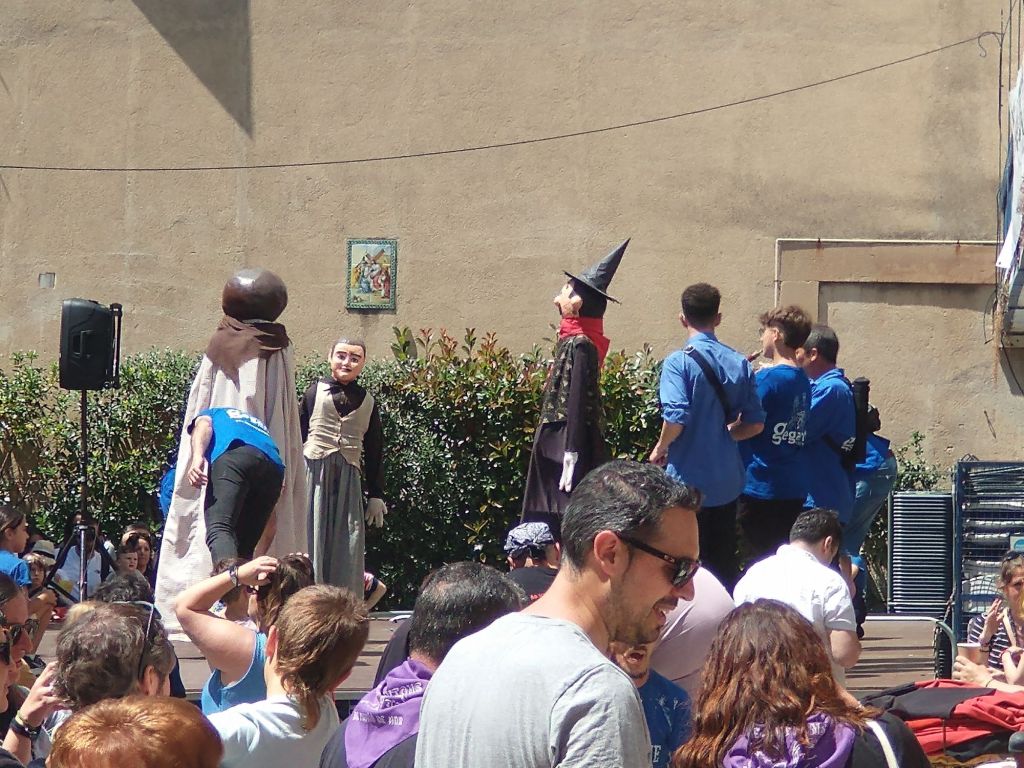
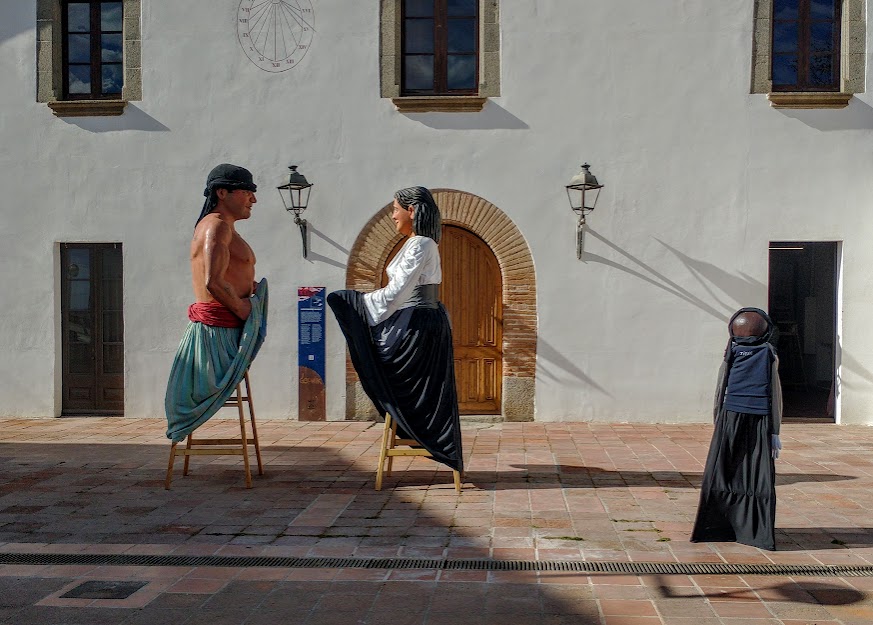
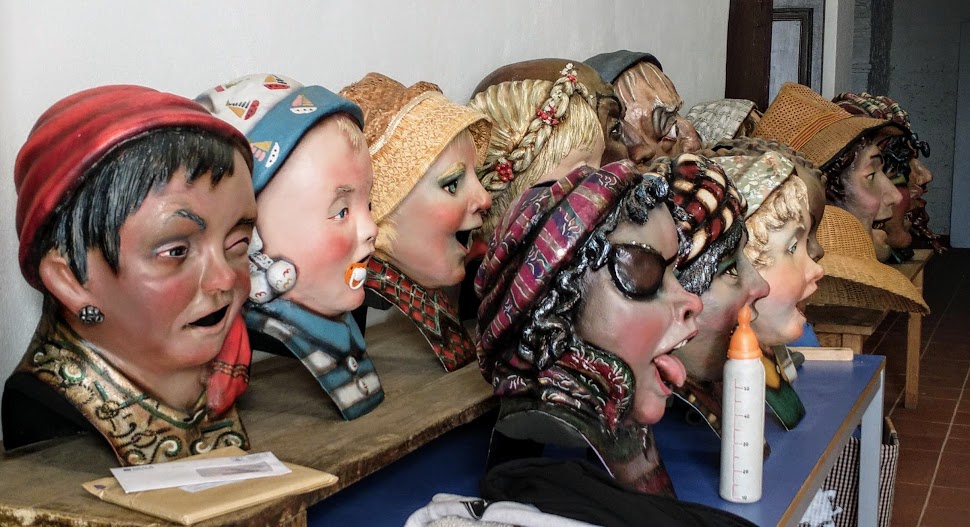
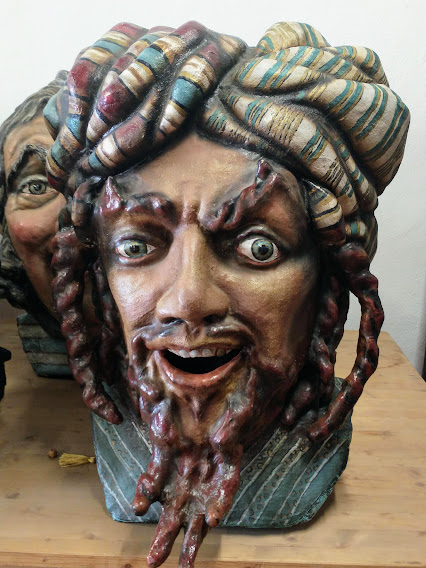
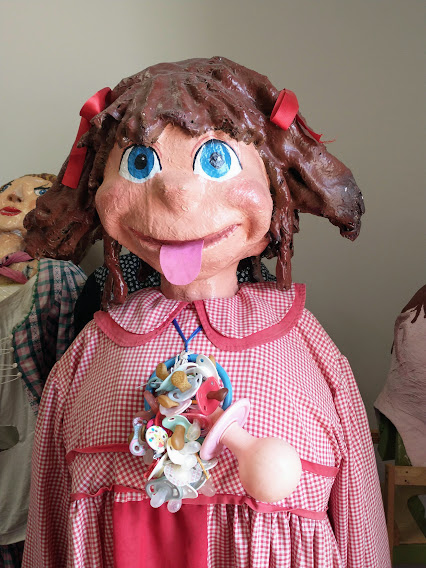
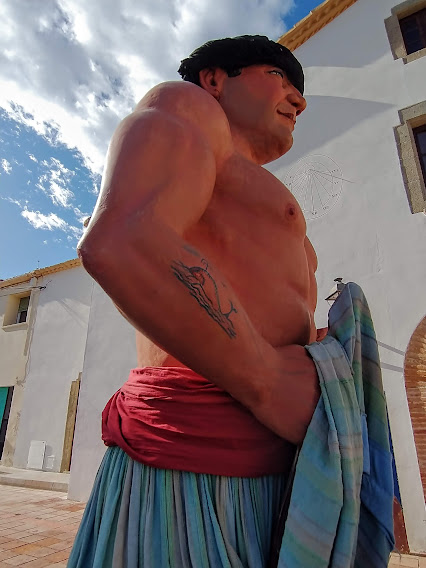
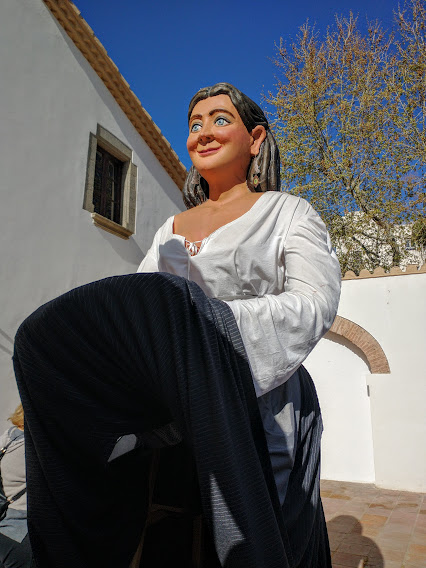
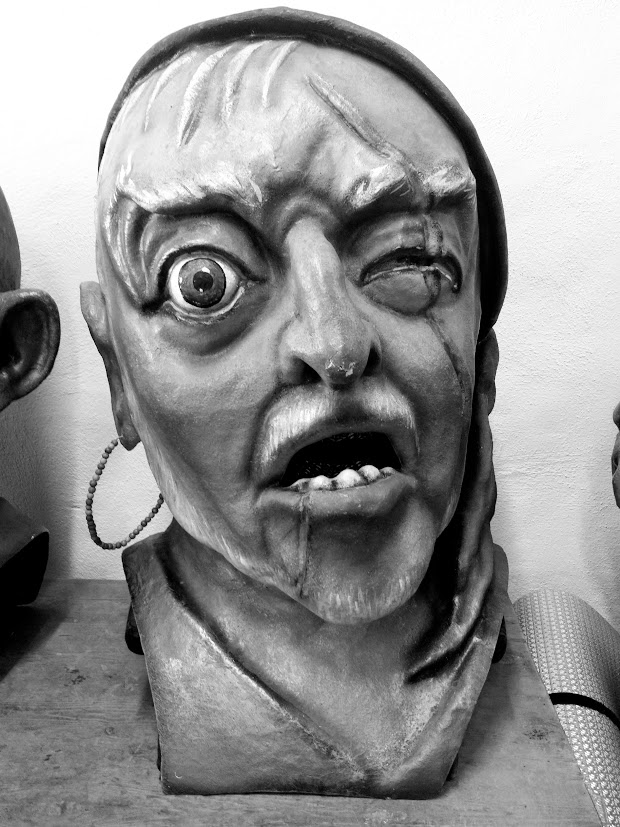
Not frightened yet? I can sort that out. Here’s the Hideous Head of a Gegant in Premià de Mar , and a Haunting Harridan from the Puppet Museum in Cádiz.
I don’t want to leave you quivering though. Let’s go back to Morris Dancing and Hats of course, and let the Slubbing Billys cheer you up. In black and white, and in Glorious Technicolor With Red Highlights for Becky’s #SimplyRed Squares.
Last on the Card

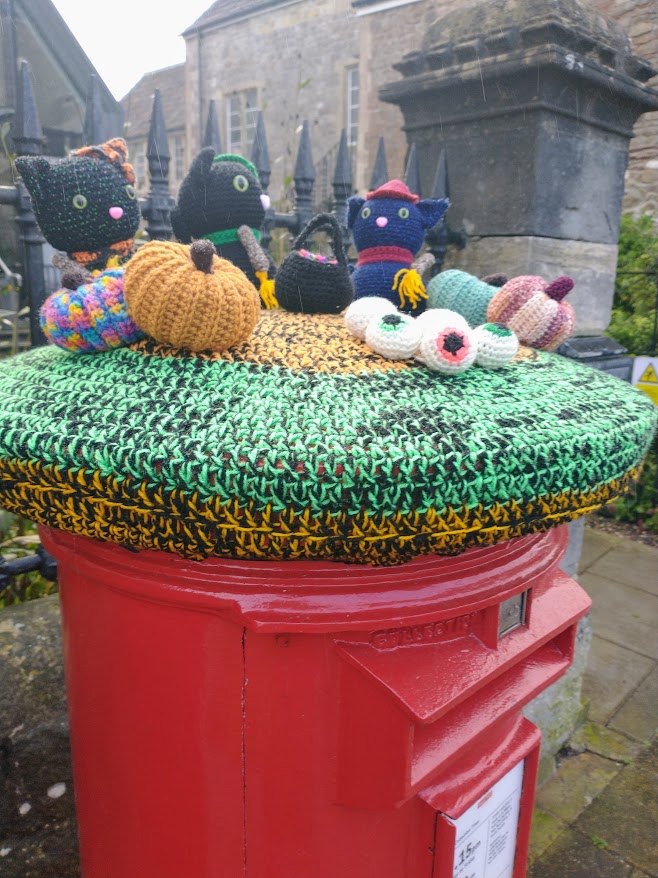
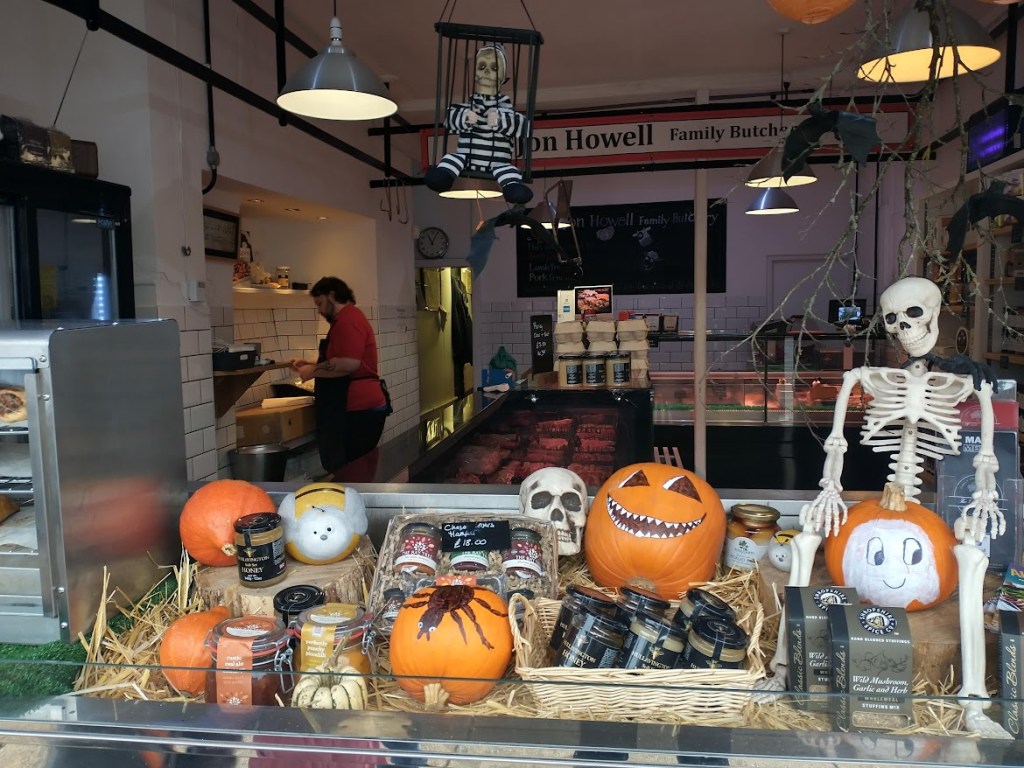
My last photo on my phone this month was taken a few days ago. Chipping Sodbury’s shopkeepers were celebrating Hallowe’en Big Time. And then we spotted the post box. It seems the cats and kittens were celebrating too. Perhaps I can get away with showing my next-to-last photo too: the baker’s shop window.

For Brian’s Last on the Card.

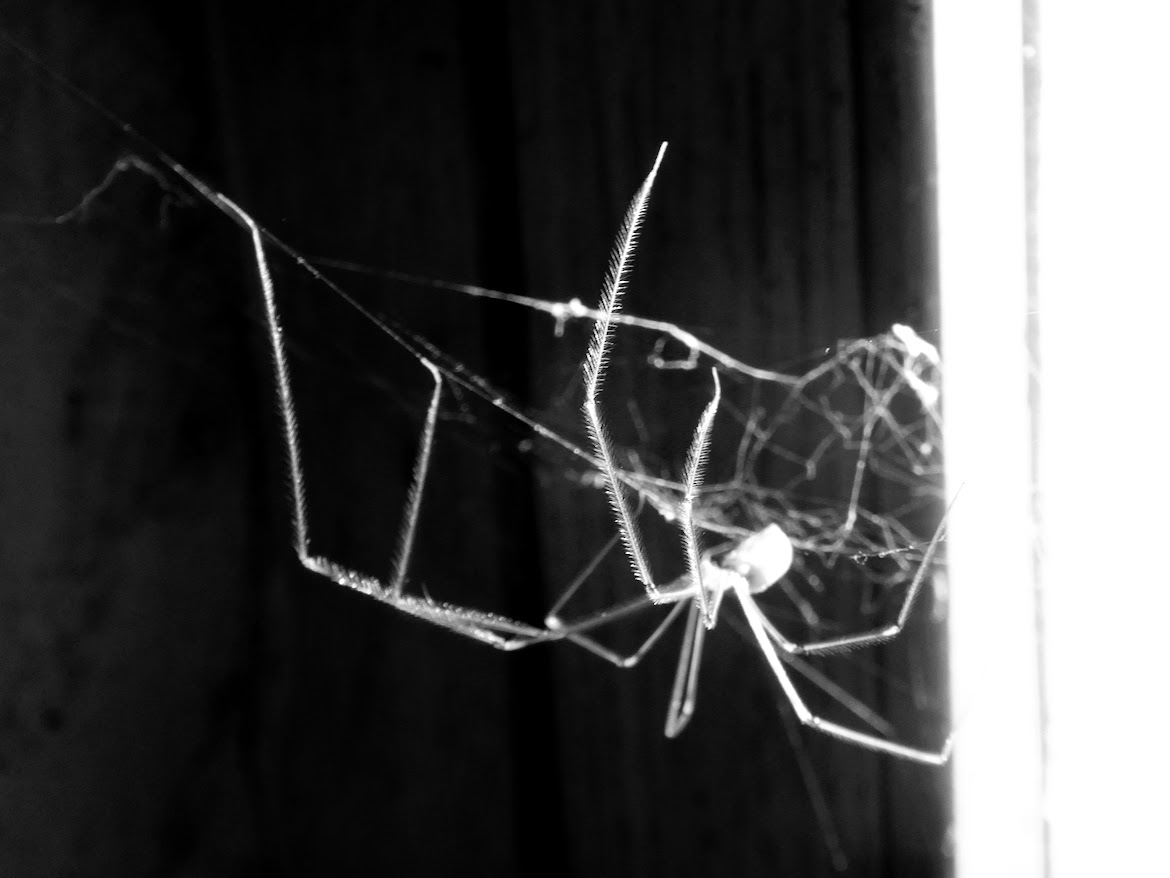
Spooky? Perhaps … Eerie?

Hallowe’en turns me into a Grumpy Old Woman. Not the event and its history. I like the fact that here, its roots lie deep in the Celtic festival of Samhain. As harvest ended and winter began, the veil between the living and the dead grew thinner, making it easier for spirits to return.

By the Middle Ages, the church had appropriated the days for its own ends, and made All Saints Eve (‘Hallowe’en’) a day for honouring the dead. And over the years, various merry-making traditions grew up round it: Trick or Treat; dressing up as witches, ghouls and ghosts; carving Jack-o’-Lanterns (from swedes in my day. Can you imagine the hard work involved?); and games such as apple-bobbing. Yes, all that I liked: community-based home-spun entertainment just right for this miserable time of year when clock-change plunges us all into night from about 4 o’clock onwards.

What I don’t like is that, these days, from September onwards, shops are crammed with Hallowe’en souvenirs of every kind – all plastic and ultra-transient, and cheap and tacky costumes, not even slightly bio-degradable, to be worn – for one night only – by marauding hordes of children descending on the neighbourhood demanding sweets without number from about four o’clock onwards. I can still remember the night we gave out more than 200 treats before firmly shutting up shop and closing the front door against all comers (We had an American base nearby – they taught our children well).

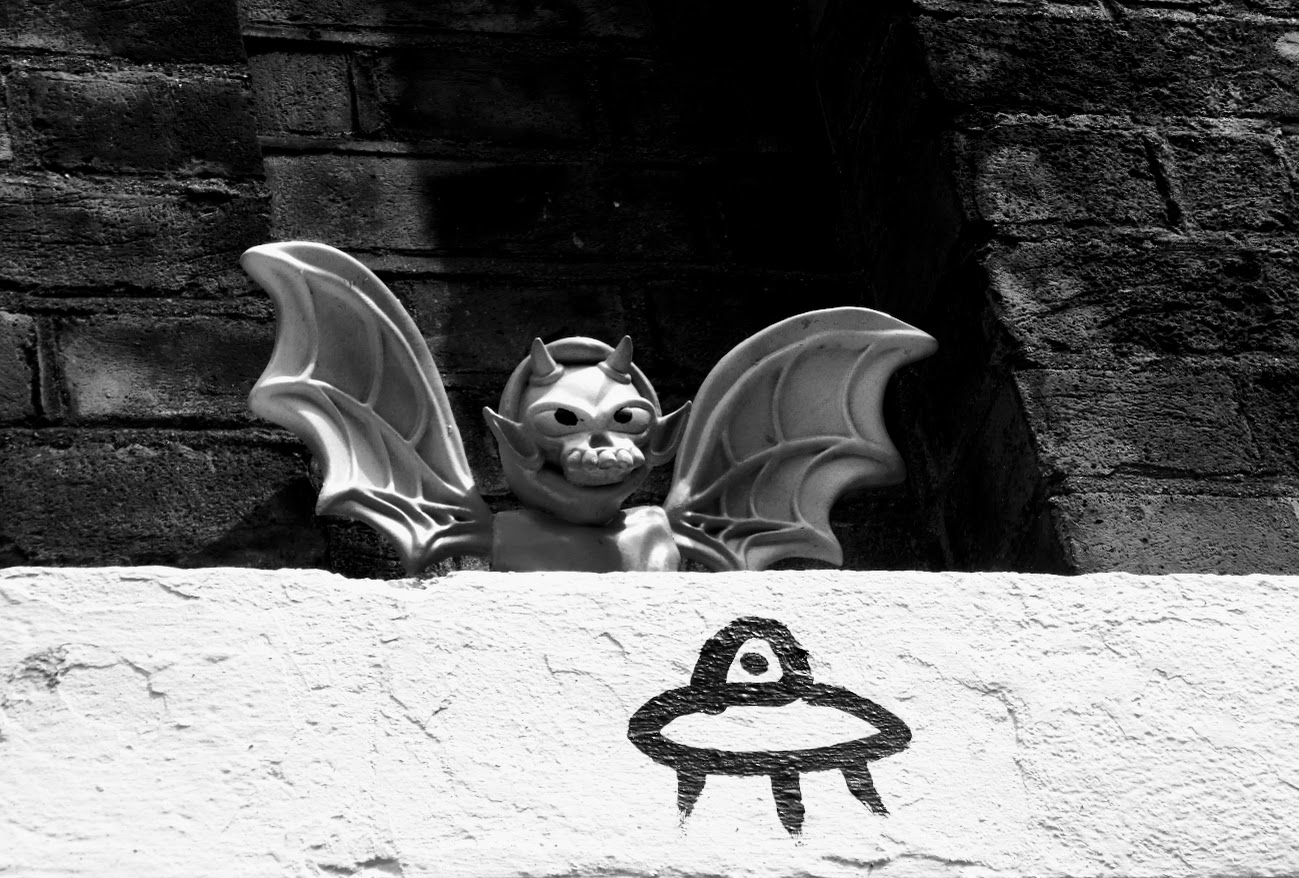
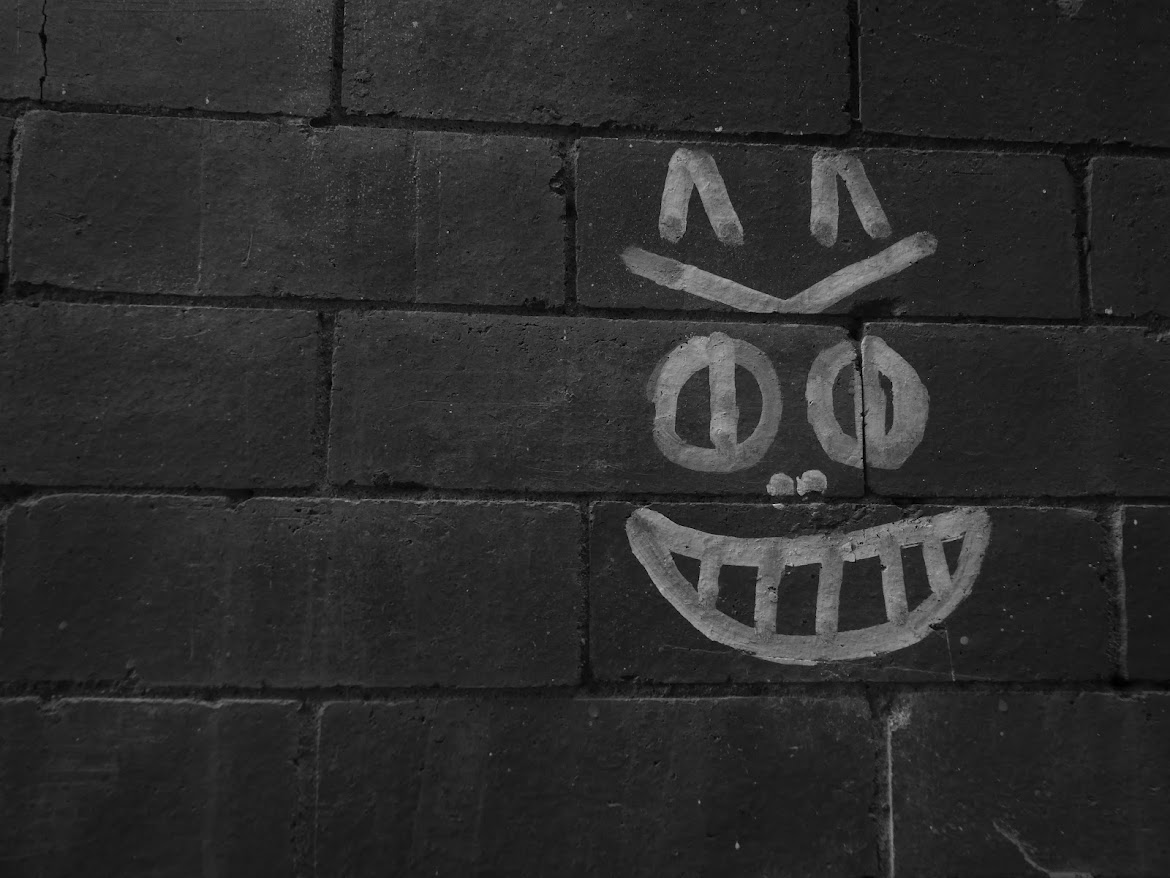
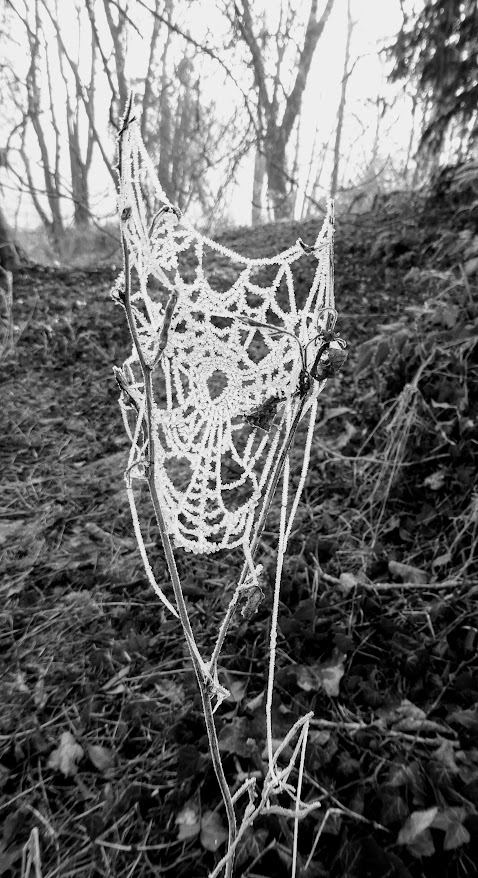
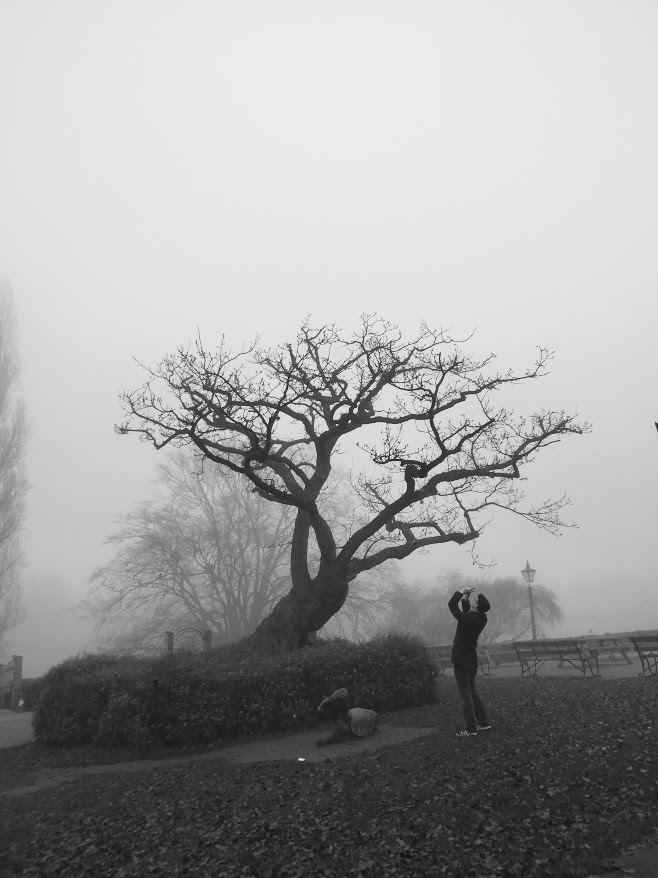
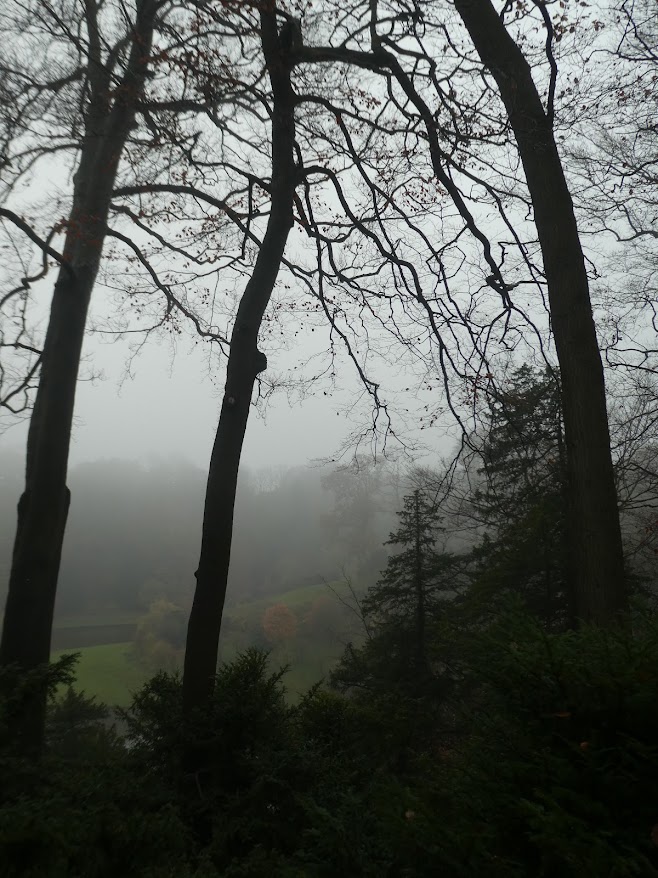
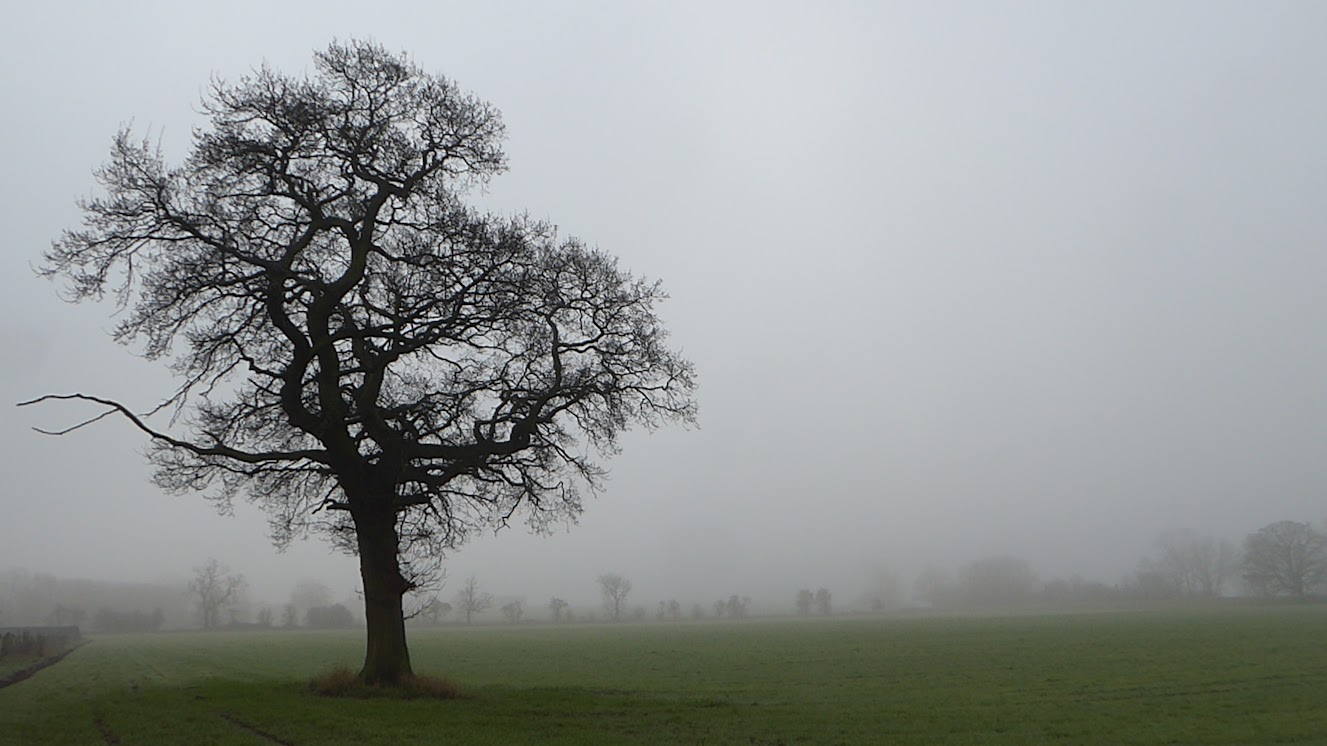
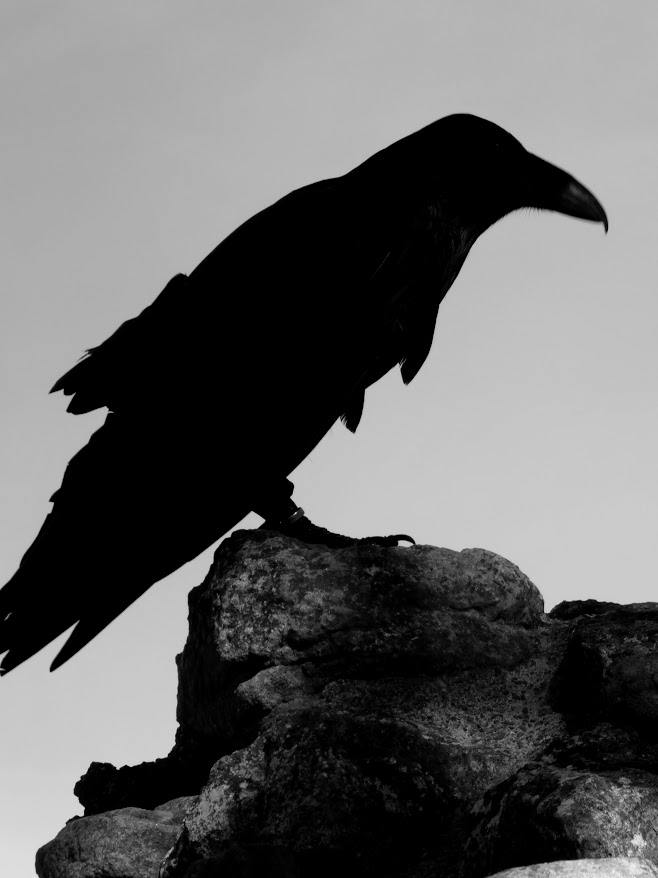
So the images I offer for this week’s Monochrome Madness: Spooky, as suggested by Dawn are perhaps eerie rather than spooky, and come from the natural world, or at least a world-gone-by. Apart from my header photo. This is a puppet from the Puppet Museum (Museo del Titere) in Cádiz and spooky enough to terrify anybody. And two bits of street-fun: one from Brick Lane, the other from Newcastle.

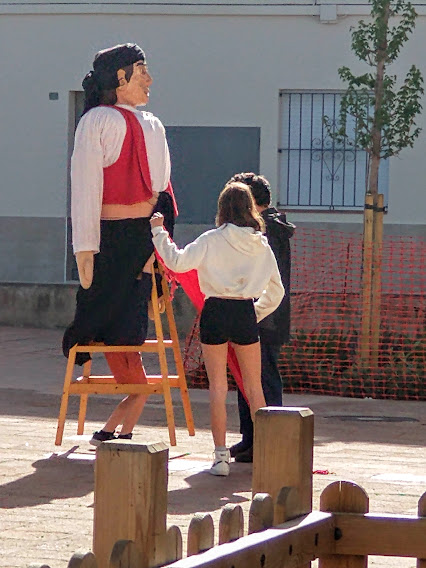
The Gegants are Coming!

Gegants – huge human-type figures propelled by actual humans hidden within them – have been a feature of Catalan festive life since the 15th century. Then, they were part of a religious tradition. From the 19th century, they became more and more a celebration of the lives of the community they sprang from. So here in Premià de Mar – Premià-on-Sea – they represent piratical derring-do.

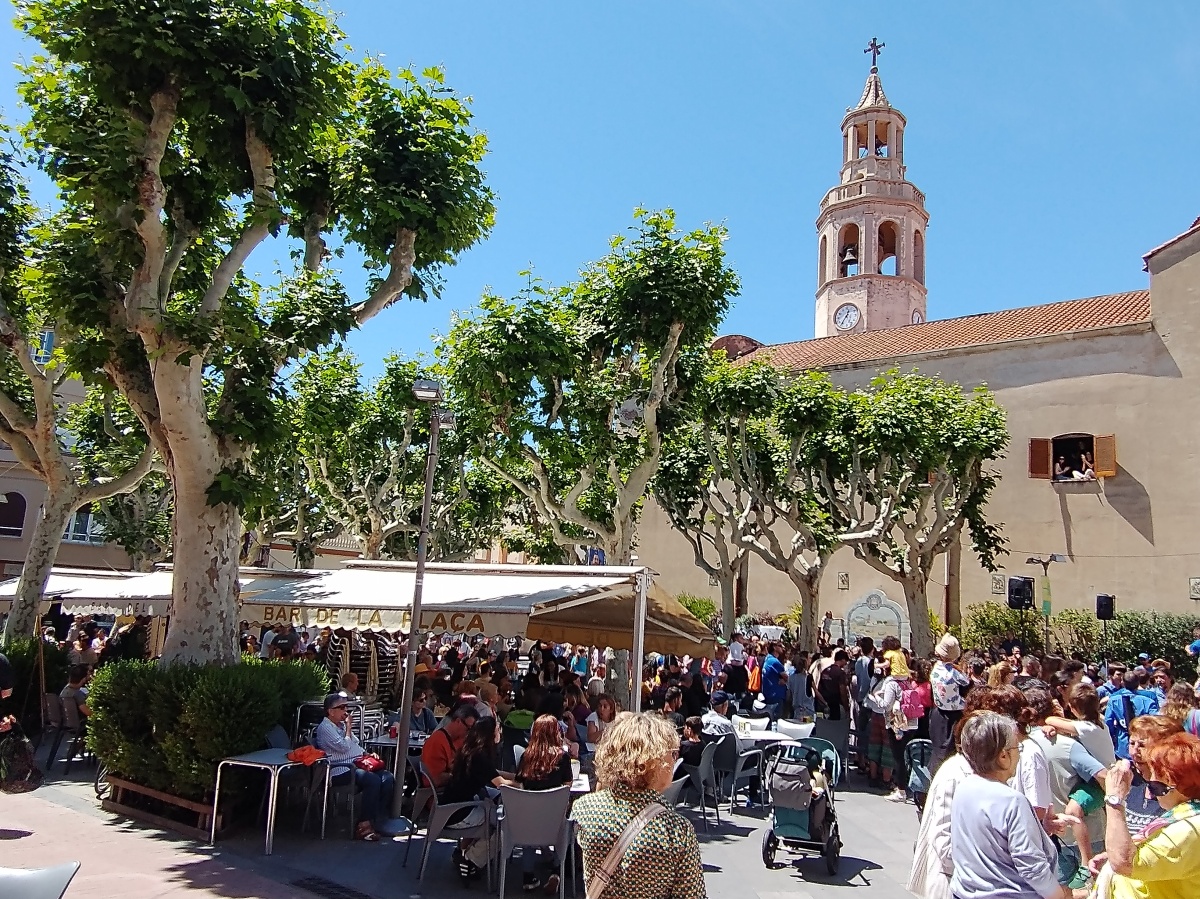
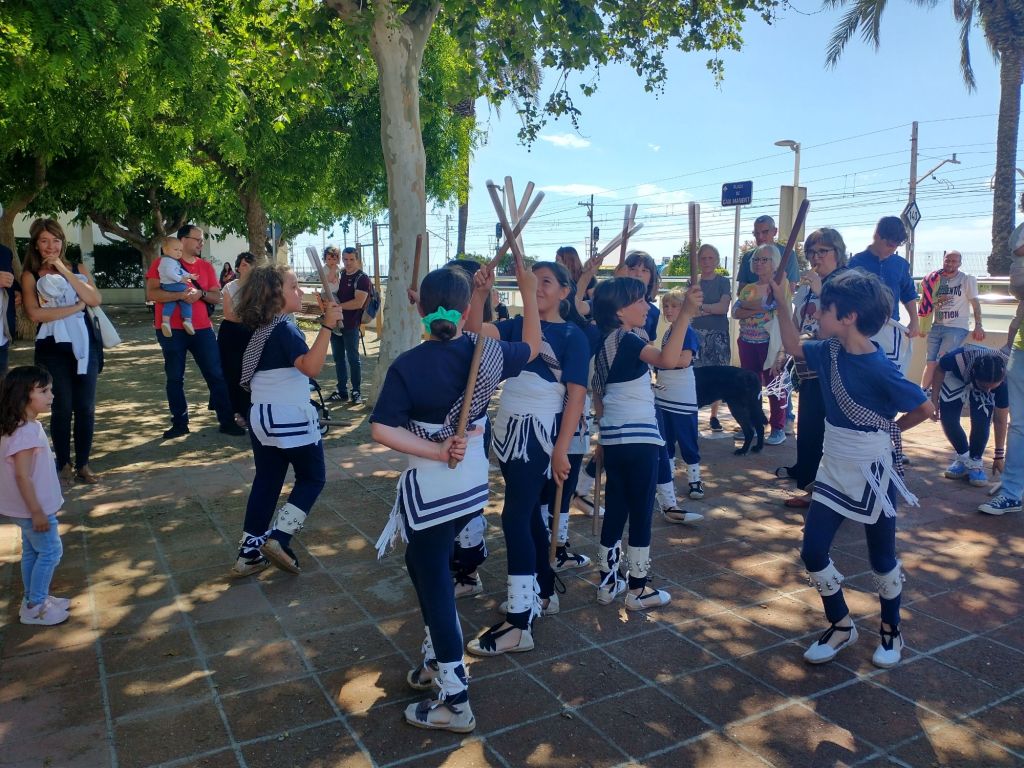
And the Gegants came out to play today as part of a low-key local folk festival, Rebombori. They took over the streets of the town, as did cohorts of child drummers, child dancers, child comperes and slightly disconcerting child Gegants.  And we the townsfolk followed wherever they led, coming across more and more friends as the morning turned into afternoon: an excellent time was had by all.

These were all taken on my phone, and better shots are – I hope – to be found on my camera. But phone-posting is my lot at the moment, so … make do with these please, for now.

Four Hundred Roses

When I showed you all the fun to be had at Masham Sheep Fair in Monday’s post, I included a couple of shots of dancers. Dancers who really didn’t give of their best in black and white. These are the 400 Roses.
They’re a group of women dancers from West Yorkshire. They’re folk dancers. But it’s not as simple as that. They combine Morris dancing with – yes – belly dancing, with a nod perhaps to steampunk. Their gloriously extravagant red, black and white costumes feature – among other things – red and white roses to celebrate their Yorkshire and Lancashire origins . Those of you who are not from these parts may not know that the red rose is the symbol for Lancashire, the white rose, that of Yorkshire. The Red Roses are accompanied by their energetically engaging band t’Thorns. Come and have a look.
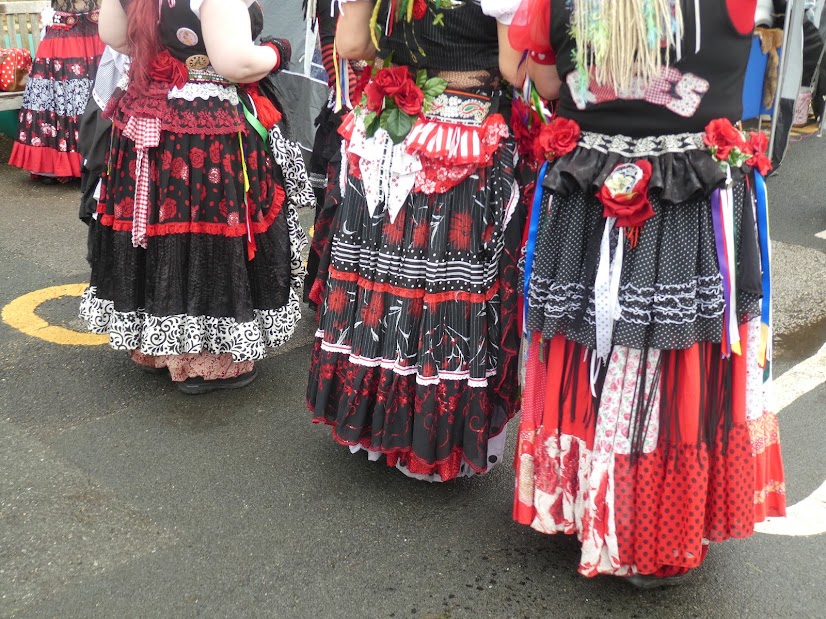
And a close-up of the skirts of their dresses, every one different.

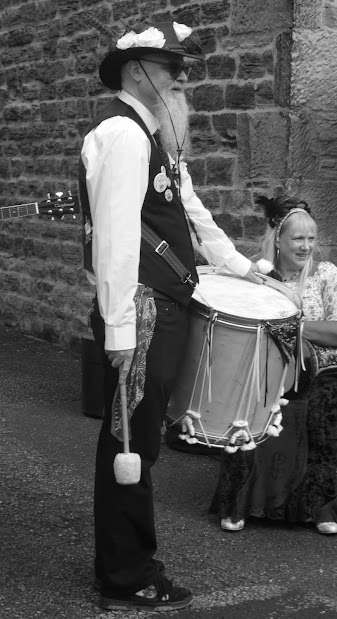
I couldn’t resist two black and white portraits though: one of a dancer, one of a bandsman.

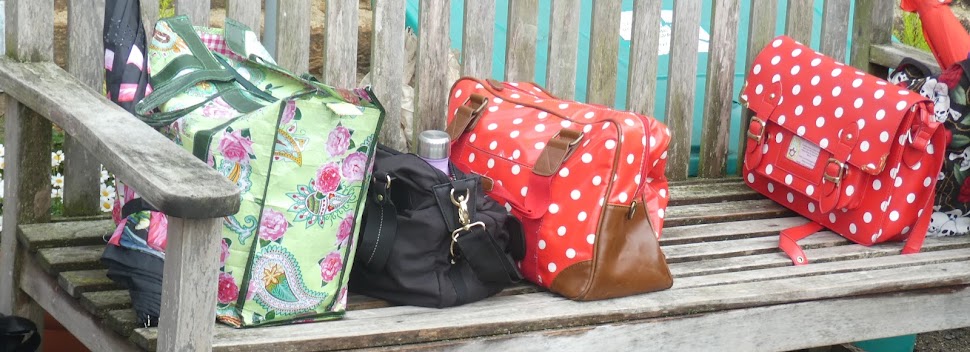
And even one of the cheerful bags that accompanied them to where they were dancing.

Thank you, 400 Roses. We’ll come and watch you now whenever we can. I think you enjoyed yourselves as much as we your audience did.

An optional extra for Ann-Christine’s Lens-Artists Challenge: On Display.

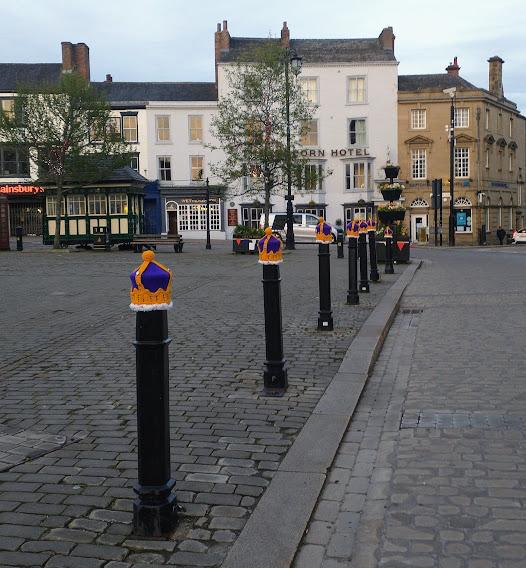
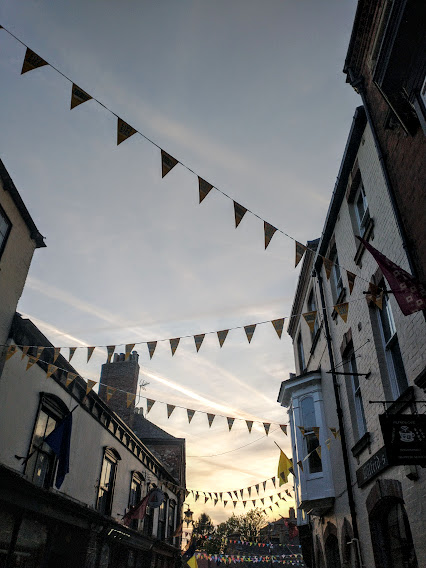
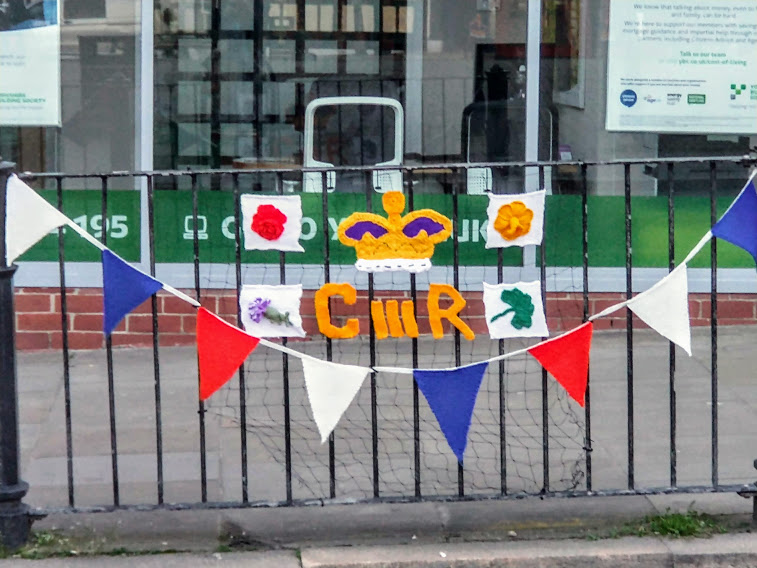
Ripon Yarn Bombs for the King

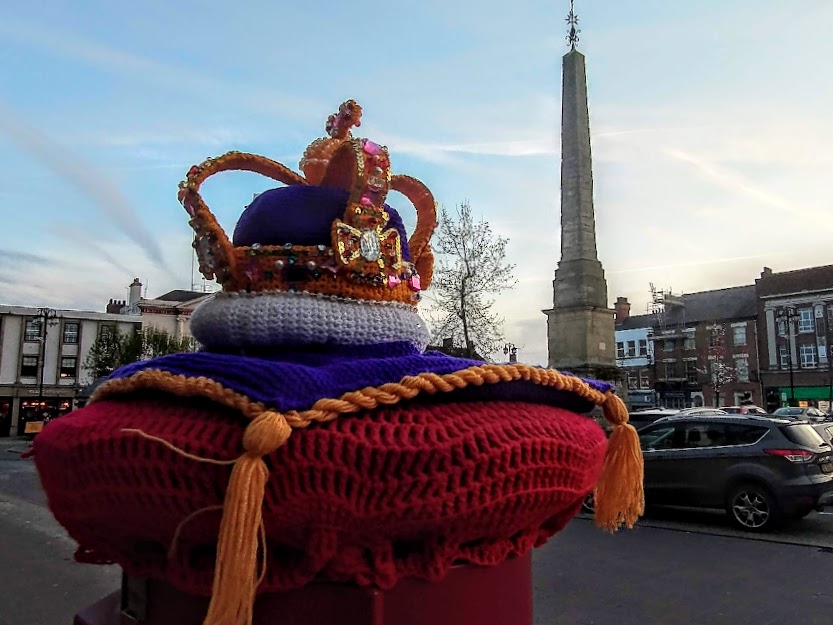
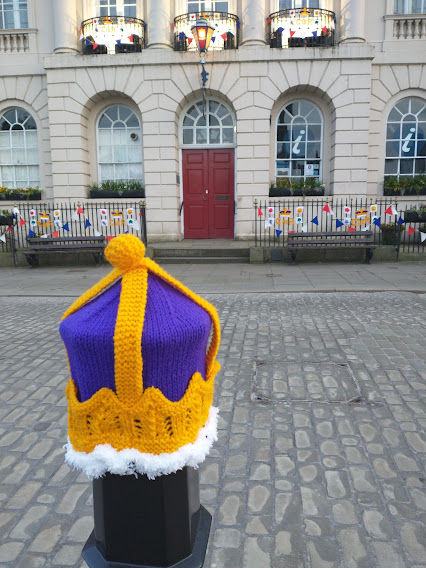
It’s only 8.05 a.m., and even on a music station like Radio 3 there’s no escape from unremitting Coronation fever. Before I go and hide, I’ll share images I took the other evening in Ripon, which has chosen to celebrate by yarn bombing the city centre.

While I was in town, the cathedral bell-ringers were practising for today. Can’t beat English bell-ringing.

Ripon Cathedral bell-ringers

Ripon’s not alone. Nearby Thirsk seems to have gone whimsical, rather than respectful. I think we’ll have to pop along and see for ourselves.

For Debbie’s Six Word Saturday.

The Gegants of Catalonia

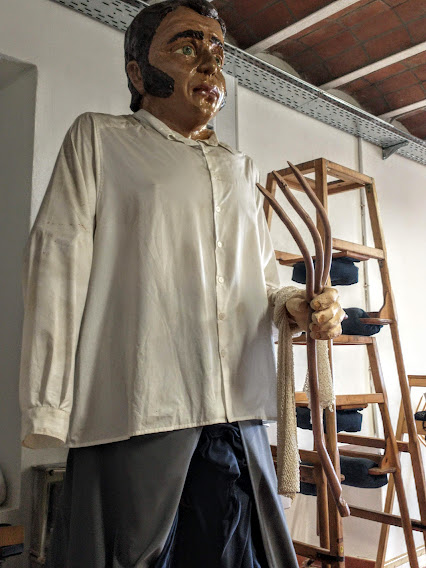
Visit Catalonia while there’s some kind of festival going on, and you might be lucky enough to see Gegants. They’re huge and heavy figures which, during festivals, are carried by some poor – unseen – soul probably sweating and longing for the moment when he (and it’s invariably a ‘he’) can put his burden down and disappear for a drink. They usually represent various traditional characters, though in the early days, way back in the 15th century, they had the job of telling Bible stories.

Can you spot the boy underneath the gegant? He’s about to try, and almost fail, to lift it onto his shoulders.

While we were staying with daughter-and-family in Premià de Mar over Easter, Malcolm and I, out with granddaughter Anaïs, had a piece of luck. A small band of people were hauling the local gegants out of store, and generally checking them over . They invited us to look round the store if we wanted, and we did. I find some of these creatures a little on the creepy side: all the same, I was a bit disappointed that we couldn’t be around on the day that these lumbering giants stalked the streets of the town for one day only.

Come and have a look round the store room with us …

I’ve a feeling that this time, a love story was on the cards. The sort where the Hunk and the Kind and Virtuous Maid live happily ever after.

Do you agree?

For Natalie’s Exploring Public Art Challenge – again.

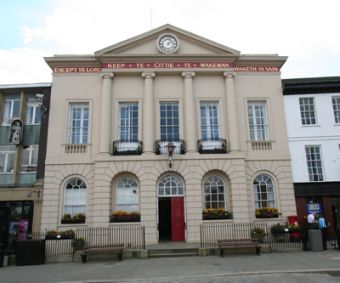
‘Except ye Lord keep ye Cittie, ye Wakeman waketh in vain’ revisited

Ten years ago today, long before we imagined we’d one day be living here, we were having a short break from our lives in France here in Ripon. And this is what we saw…

July 2012

‘Except ye Lord keep ye Cittie, ye Wakeman waketh in vain’

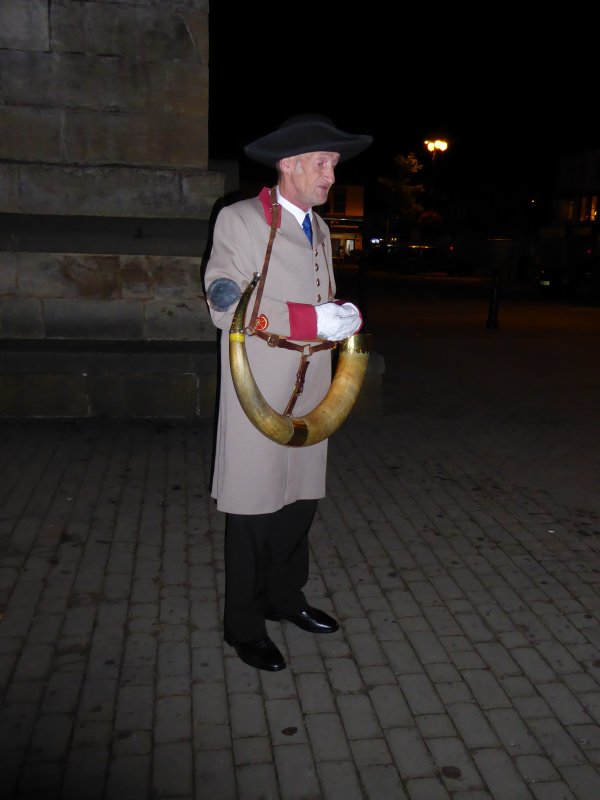
That’s the  verse from the Psalms, inscribed above the town hall in Ripon, where we’re spending the next few weeks to avoid the cold and rain of the south of France (no, really, they’ve got the heating on over there).  It reminds us that every evening – EVERY evening – for well over a thousand years, the Ripon Wakeman has sounded his horn to the 4 corners of the city to announce that all is well.

We had to go and check it out yesterday evening.

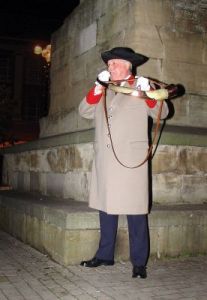
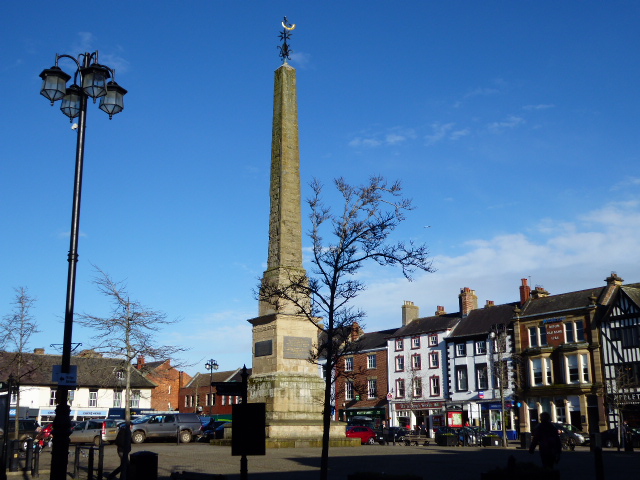
Promptly at 9, a smartly dressed individual in buff coloured hunting coat, tricorn hat and white gloves took his place before the obelisk on the Market Square and sounded his horn 4 times, once at each corner of the obelisk – one long mournful note each time.

Then he grinned at us, a small crowd of 20.  ”Want to hear a bit of history?’  Well, of course we did.  He made us introduce ourselves, and we found we too came from, well, about 3 corners of the world: Catalonia, Italy, Australia, even South Shields and Merton.  And here’s some of what he told us:

In 886, Alfred the Great, 37 year-old warrior king, was travelling his kingdom to defeat the Vikings and to drum up support.  Arriving at the small settlement of Ripon, he liked what he saw and granted a Royal Charter.  He lacked the wherewithal to produce an appropriate document, and so gave a horn which is still safely locked in the town hall.

‘You need to be more vigilant, there are Vikings about’. Alfred warned.  So the people appointed a wakeman to guard the settlement through hours of darkness, and he put that horn to use by sounding it at the 4 corners of the Market Cross to announce that all was well as he began his watch.  The city’s now on its 4th horn.

If you want to know more, our current Wakeman, George Pickles,  has written the whole tale for the BBC website.  It’s a good yarn.  Read it when you have a moment.

The Market Square, where the Wakeman does his job.

2022 Update: These days there’s a team of three Wakemen, and one of them is a woman. Only Lockdown – sort of – interrupted the tradition, when the nightly task was performed from the comfort of the duty-Wakeman’s garden at home, courtesy of Facebook.

For Fandango’s Flashback Friday

Bon Sant Jordi i Happy Saint George’s Day!

Saint George is patron saint of England, Catalonia, Portugal, Ethiopia, and probably a few others besides. And today is Saint George’s Day. We tend not to celebrate him much here in England, perhaps partly because the flag of Saint George has largely been appropriated by the EDL and similar extremist political groups, and drunken football fans.

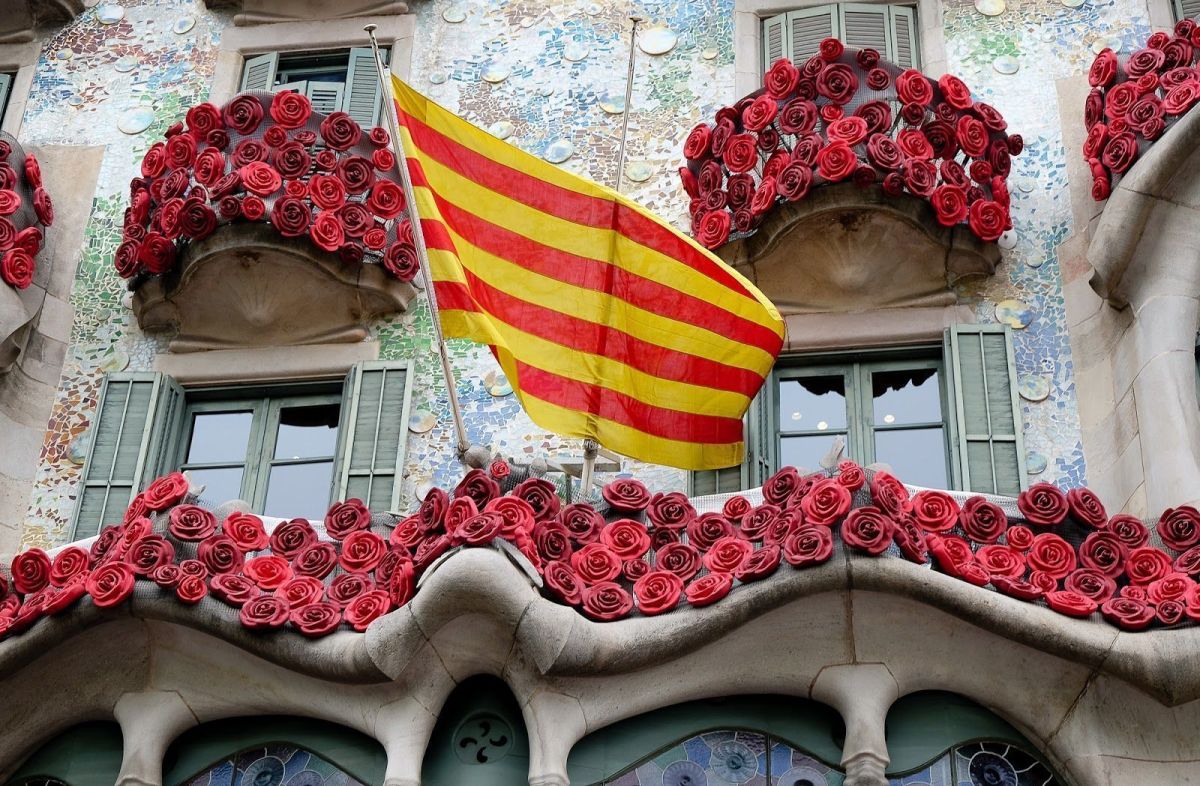
That’s not the case in Catalonia though. No! It’s a national holiday (Catalonia clings fiercely to its independence). Men will give a single red rose to the women they love – not just sweethearts and wives, but their sister, their aunt or their friend and colleague at work. Women will respond by offering a book. That’s because in 1995, UNESCO declared 23rd April as a world-wide day to celebrate books and reading, choosing this day because it’s the one on which both William Shakespeare and Miguel de Cervantes died in 1616. England has to be different, and celebrate the day in March.

Here’s a short video catching something of the party atmosphere in Barcelona, in happier times before That Pandemic. I’ll bet it’s a bit quieter this year.

And why offer a red rose? Well, that’s all down to the legend of Saint George and the Dragon. Here’s an explanation in Spanish. You don’t speak Spanish? Don’t worry. I think you’ll understand almost every word.

Featured image courtesy of BCN Apartment Rentals. No copyright infringement is intended.

An odd symbol of new growth …

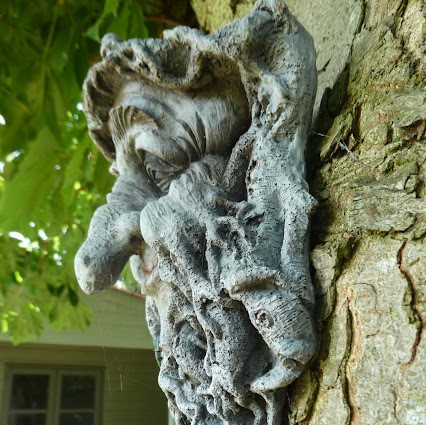
Following the destruction caused by Storm Eunice here in the UK yesterday, and in northern Europe today, let’s call upon the Green Man.

He’s a symbol of the new growth that occurs every spring. Look! His beard is composed of twigs and branches, and he even has mushrooms tucked under his hair. You’ll find him on secular buildings, on churches, or even, as here, in the place where this odd fellow may be happiest, in a garden.

For Becky’s Square Odds…

… and Debbie’s Six Word Saturday