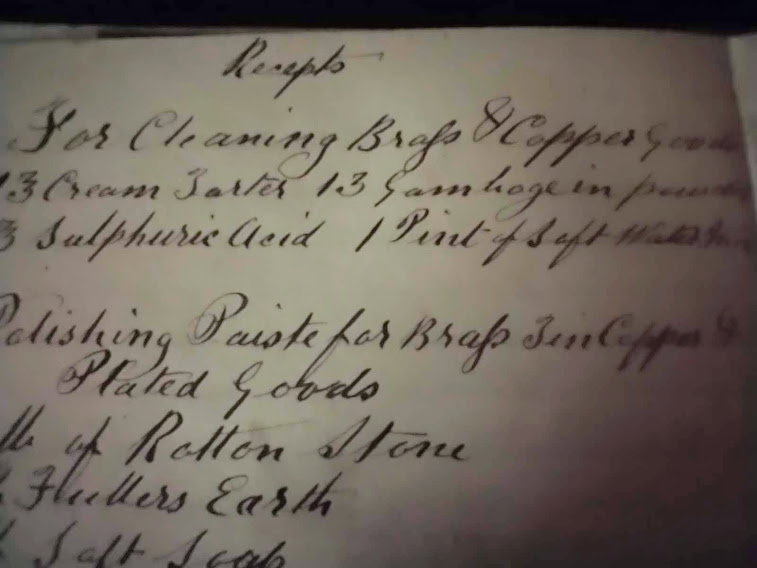
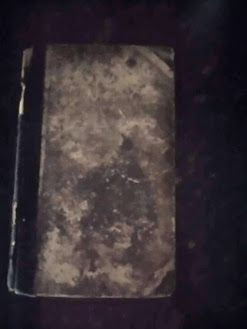
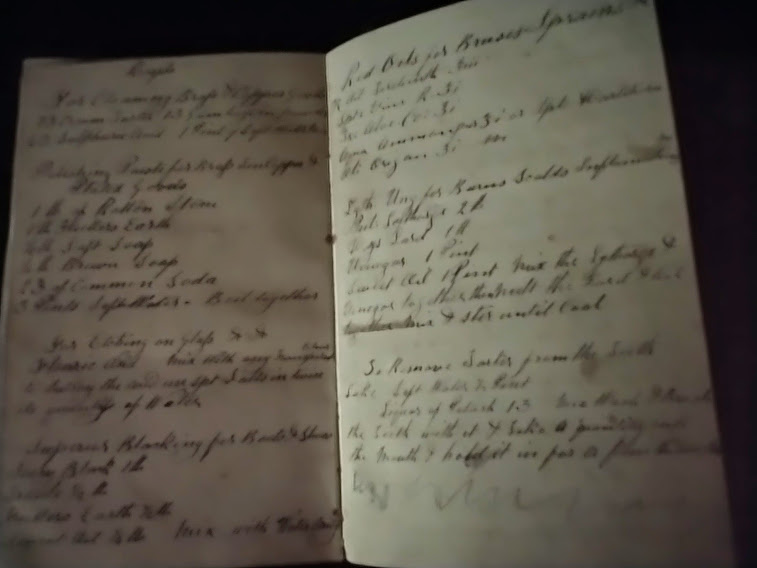
I have a very old hand-written recipe book. Not your usual sort of collection of well-loved family puddings, cakes and stews. This book, handed down from the Yorkshire/Lancashire branch of the family contains not one edible item. Instead, it’s full of tips on how to clean brass, make ink, and cure cholera. It must be very old indeed. Often the letter s is expressed as an f. I think it must date from the days before census entries from the 19th century indicate that many of my family members were involved in trade, or in reasonably supervisory positions in the textile mills. They tended to live in respectable but simple terraces houses in the likes of Batley and Colne.
Oddly, the first few and the last few pages of my little book are blank, but here’s a list of the contents:
Naptha Polish
Crimson Colour for (?) Show Bottles
Deep red
Cure for the Cholera
For Cleaning Brass and Copper Goods
Polishing Paiste(sic)for Brass, Tin, Copper and Plated Goods
For Etching on Glass etc. etc.
Superior Blacking for Boots and Shoes
Red Oils for Bruses (sic)Sprains etc.
Lyth Ung for Burns Scalds Inflammations
To remove Tarter (sic) from the Teeth
Blacking
Witworth Red Bottle
An Efficacious Receipt for the Rheumatism
The Original Family Receipt for a good Stomach Pill
A comprehensive guide for the householder, I think you’ll agree? I’ll publish a few of the recipes over the next few weeks. Now, which ones do you need?
By the way, I took these photos rather quickly, with my phone. I’ll do them the honour of much better attempts for any further posts.
Just before winter kicks in and we all hunker down, let’s have a trip to the shops, and spot a few windows.
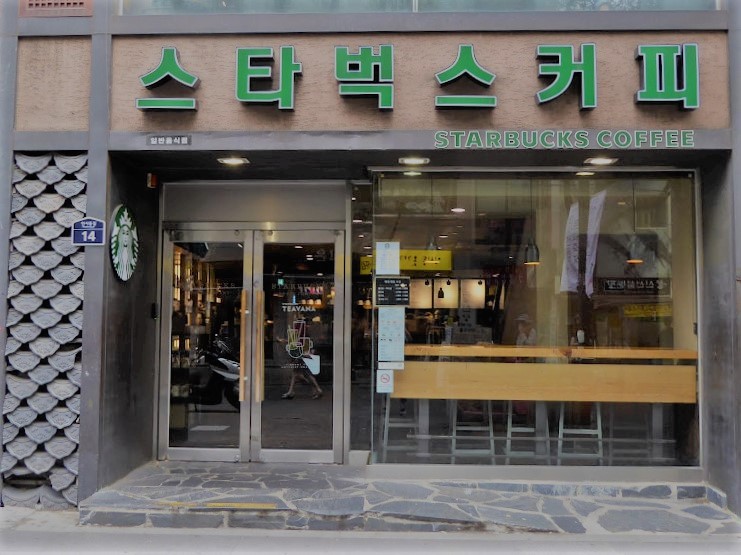
Are there enough windows here for you, in the featured photo, at the entrance to one of South Korea’s bigger shopping complexes? Once we’ve looked round, it’ll be time for a coffee: who knew that Starbucks had spread its reach so far? Not that we actually went inside here – independent coffee shops for us, every time.
Gyeongju, South Korea
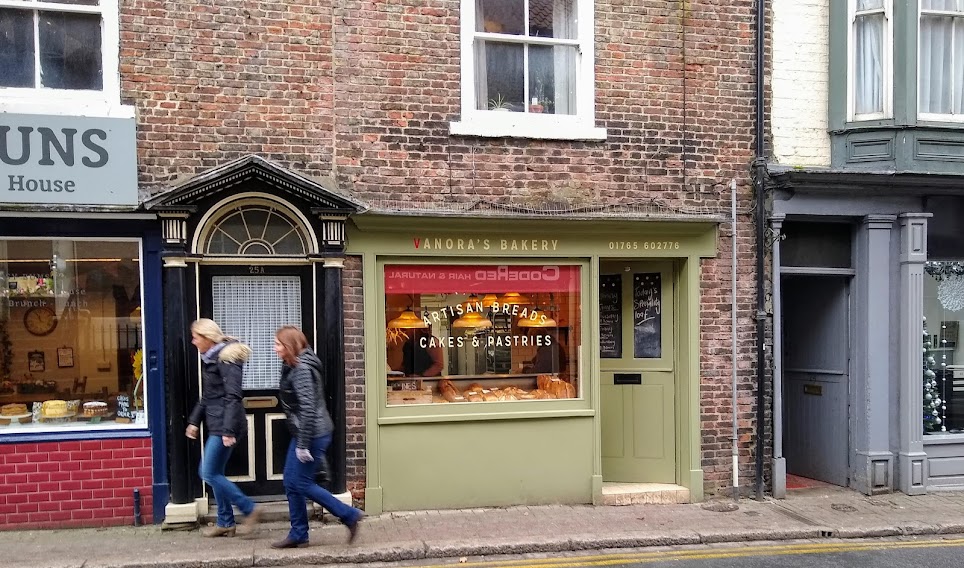
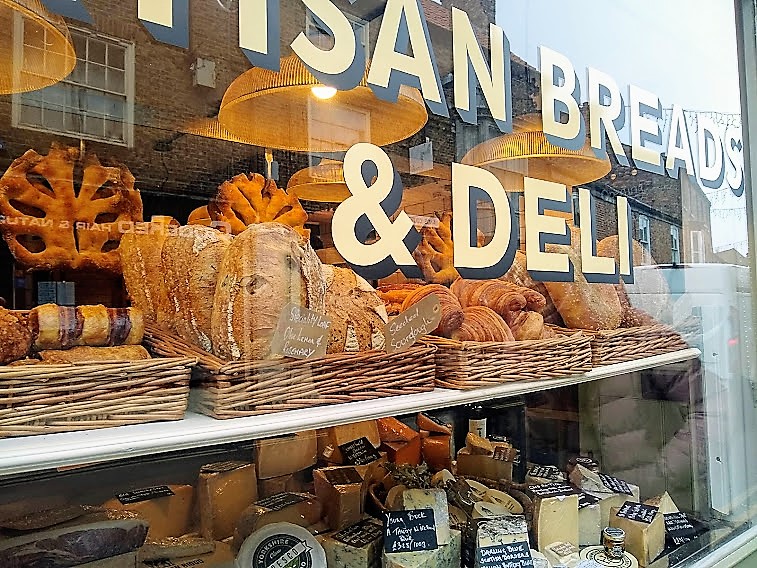
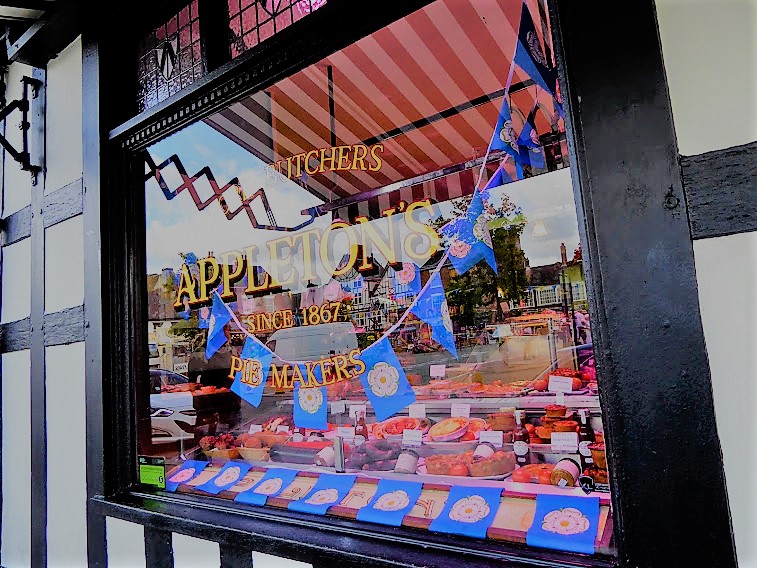
Let’s come back to England now, and stay local, in Ripon. We’ll pop into our favourite bakery, then saunter along to the pie shop. In both cases, reflections will offer us views of the street too.
Vanora’s, Westgate, Ripon, and Appleton’s, Market Square, Ripon
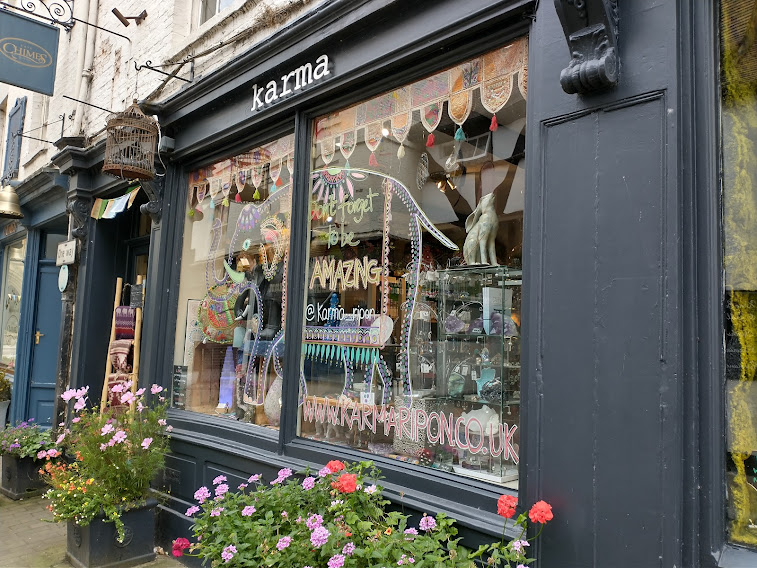
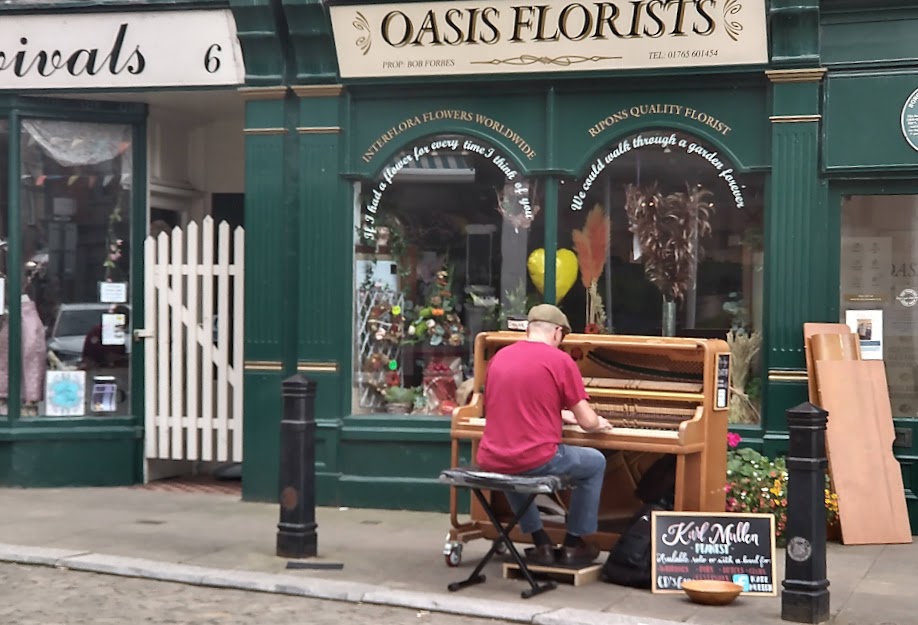
Let’s go to Kirkgate, and more independent shops: You’ll get a mood-improving slogan at Karma, and if you’re lucky, live music to cheer you along.
Scenes from Kirkgate, Ripon.
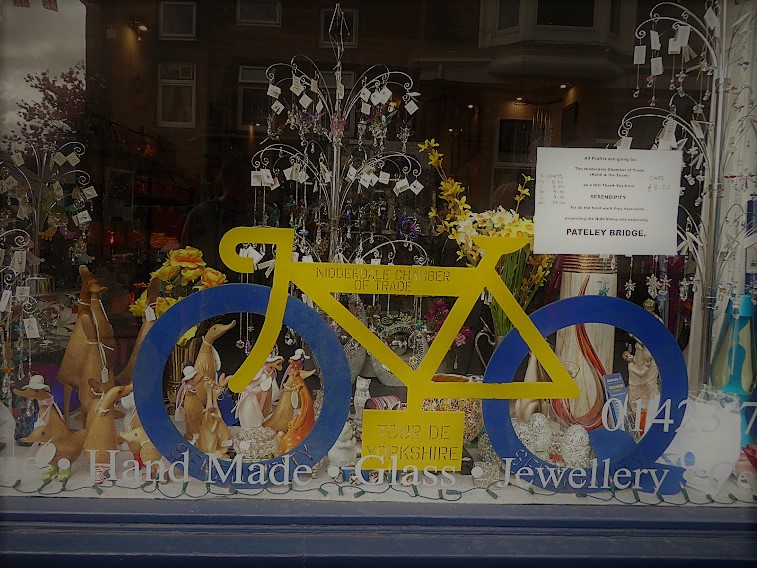
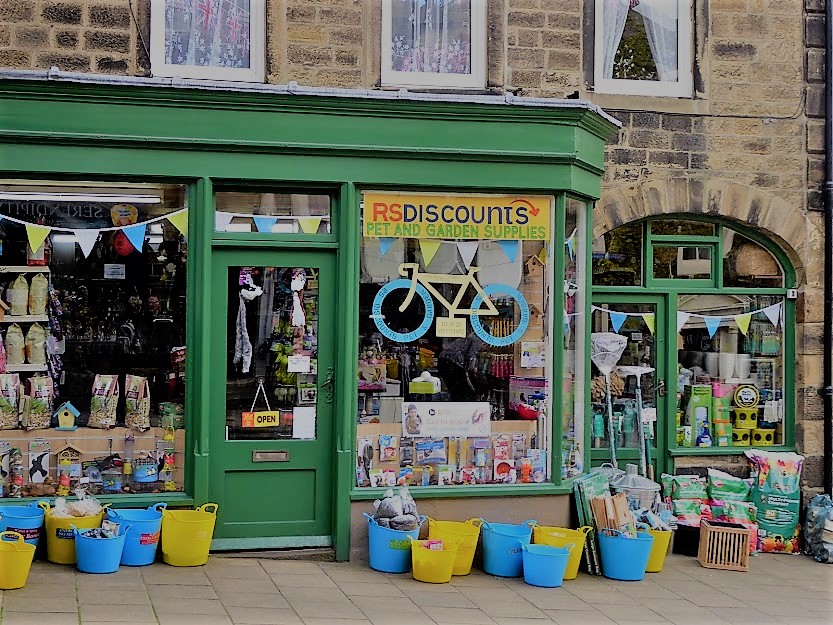
A few miles away is Pateley Bridge. I wonder if the shops there still have the displays they had when the Tour de Yorkshire was in town?
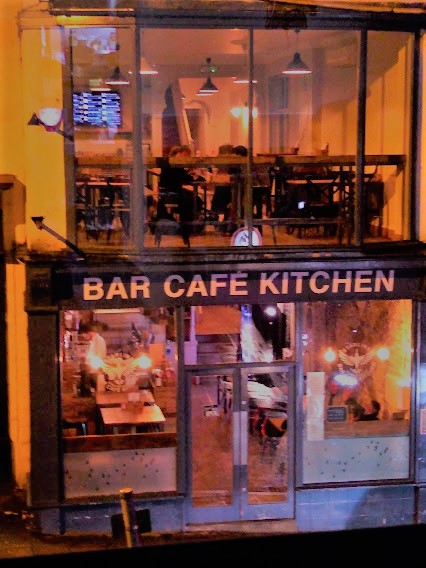
We’ll finish off by going to Harrogate. From behind other shop windows, we can get a snapshot of Starlings, the bar where we could finish our day with a drink and a very tasty pizza.
For today’s Fandango’s Flashback Friday,here are two – yes two posts from previous Septembers – one from 2011, the next from the same day in 2013. One’s a quick and useful French lesson, and the next might already be history. Who knows what first names are doing the rounds in France now?
Voilà!
September 2011
Voilà! The most useful word in the French language.
Here’s what happened at the baker’s this morning. Translations appear in brackets.
Me: Oh! Isn’t the pain bio ready yet?]
Madame: Voilà! (Nope. Quite right)
Me: So if I call in after 9, you’ll have some? Could you please save me a loaf?
Madame: Voilà! (Yes, and yes). Would you like to pay now, then it’ll be all done and dusted?
Me: Voilà! (Makes sense. I’ll do that)
By the way, I was all grottily dressed inmy oldest paint-spattered, holes-in-the-knee-ready-to-face-a-morning’s-tiling gear. This is Laroque after all: no shame in working clothes here.
Madame: You’re looking very chic today, if I may say so!
Me: Voilà! (And don’t I know it).
Why bother to learn more French? Voilà donc!
What’s in a Name?
September 2013
When I was at school, my French text books were peopled by characters such as Jean-Claude, Jean-Charles, Jean-Paul, Jacques and Georges. There were Marie, Marie-France, Marianne, Jeanne and Jeanette.
My own classmates answered to names such as Valerie, Jean, Judith, Janet, Susan and Mary while the boys’ school along the road had types like Alan, Norman, Brian, Keith, Bob (not Robert or Rob), Bill (not William or Will) and inevitably, John.
These names identify us firmly as children of the 1950’s.
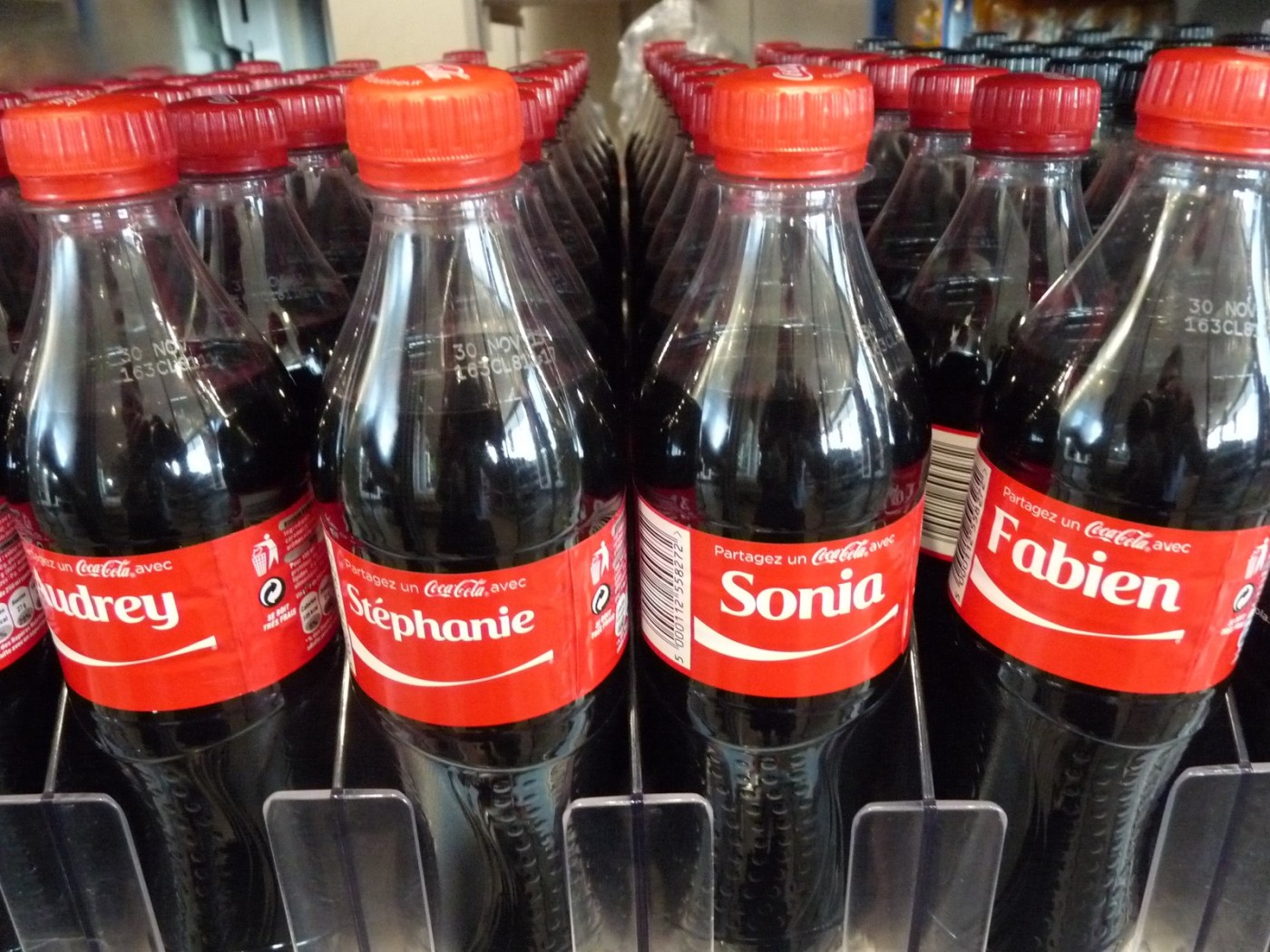
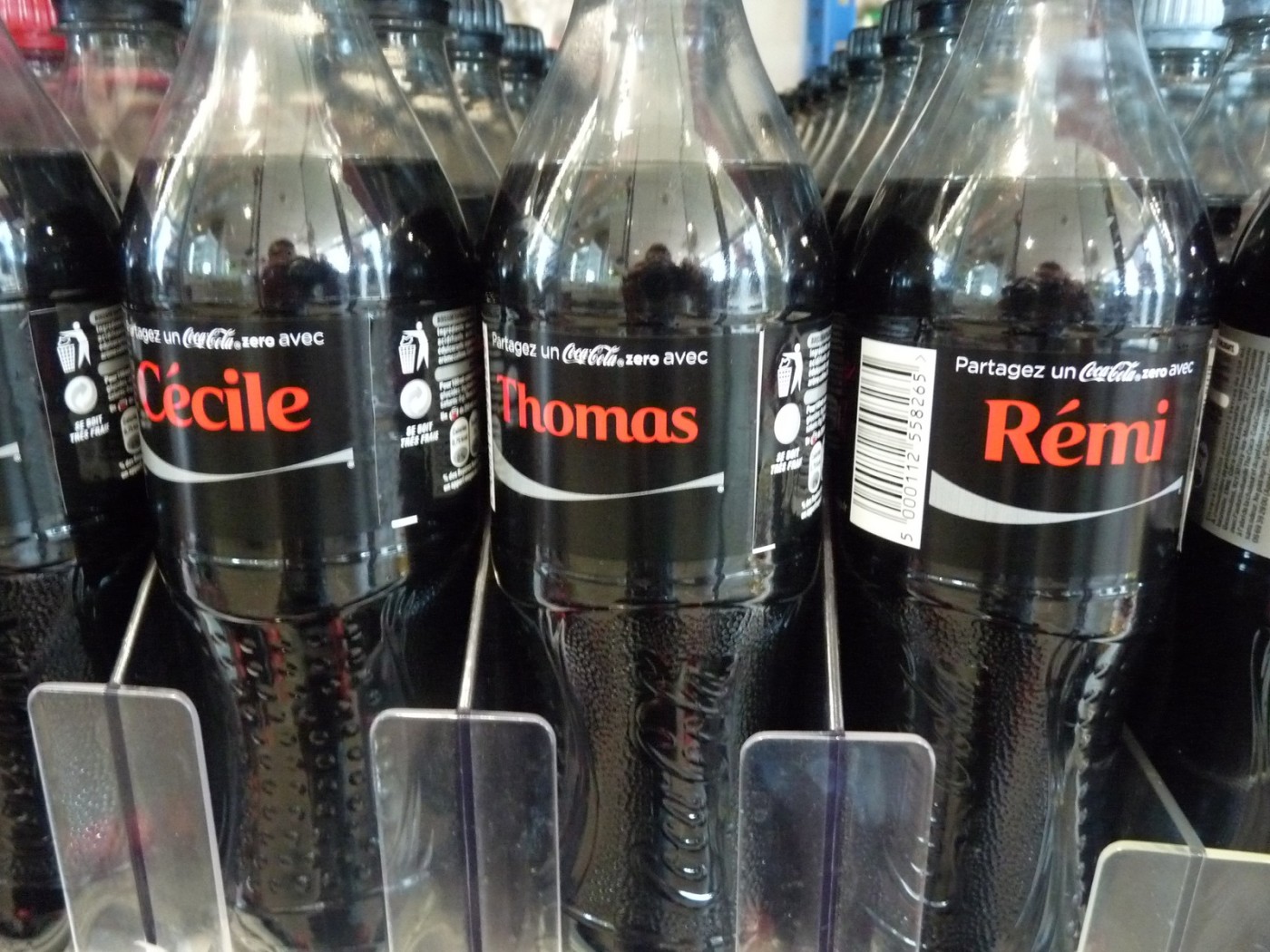
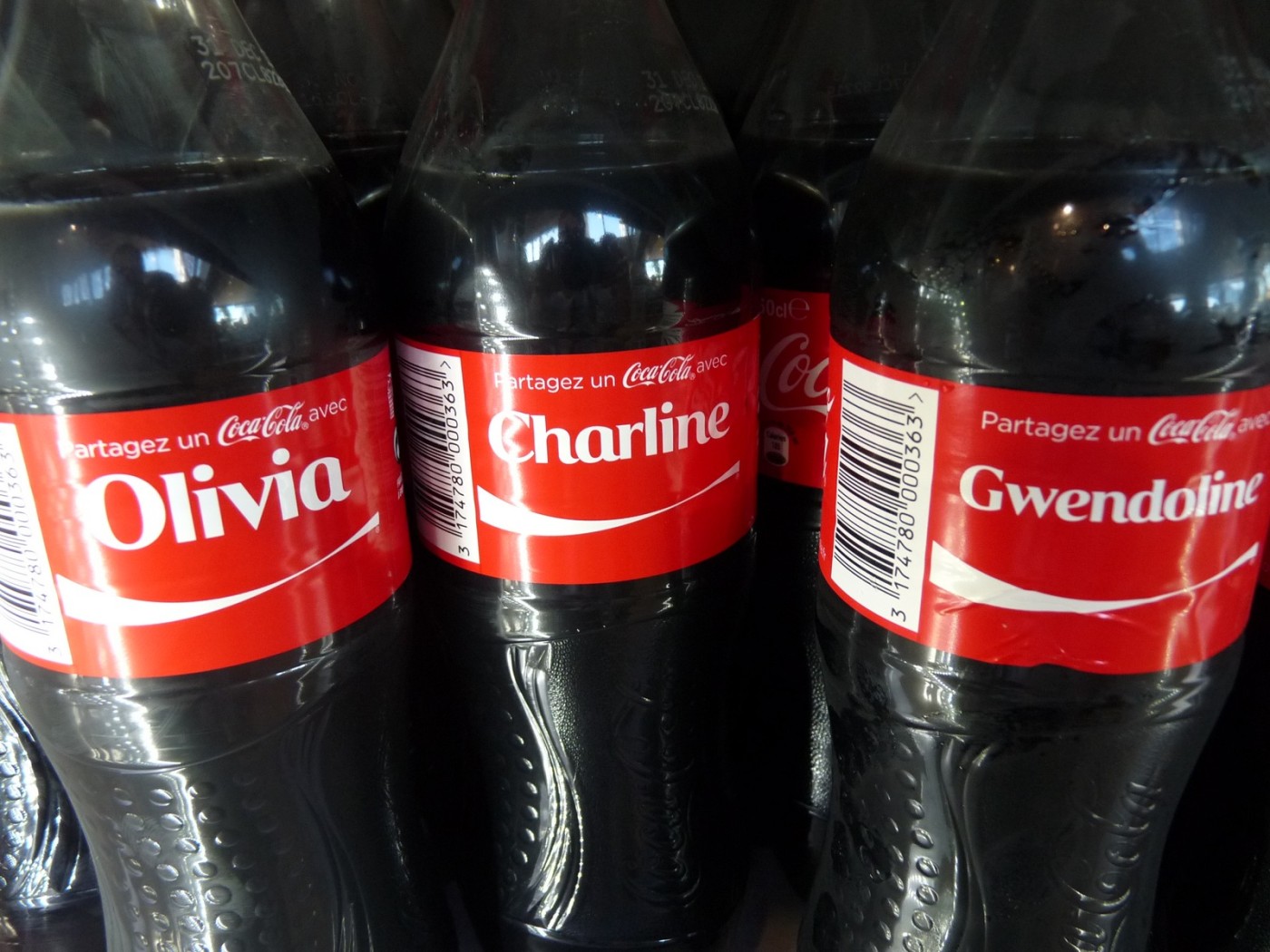
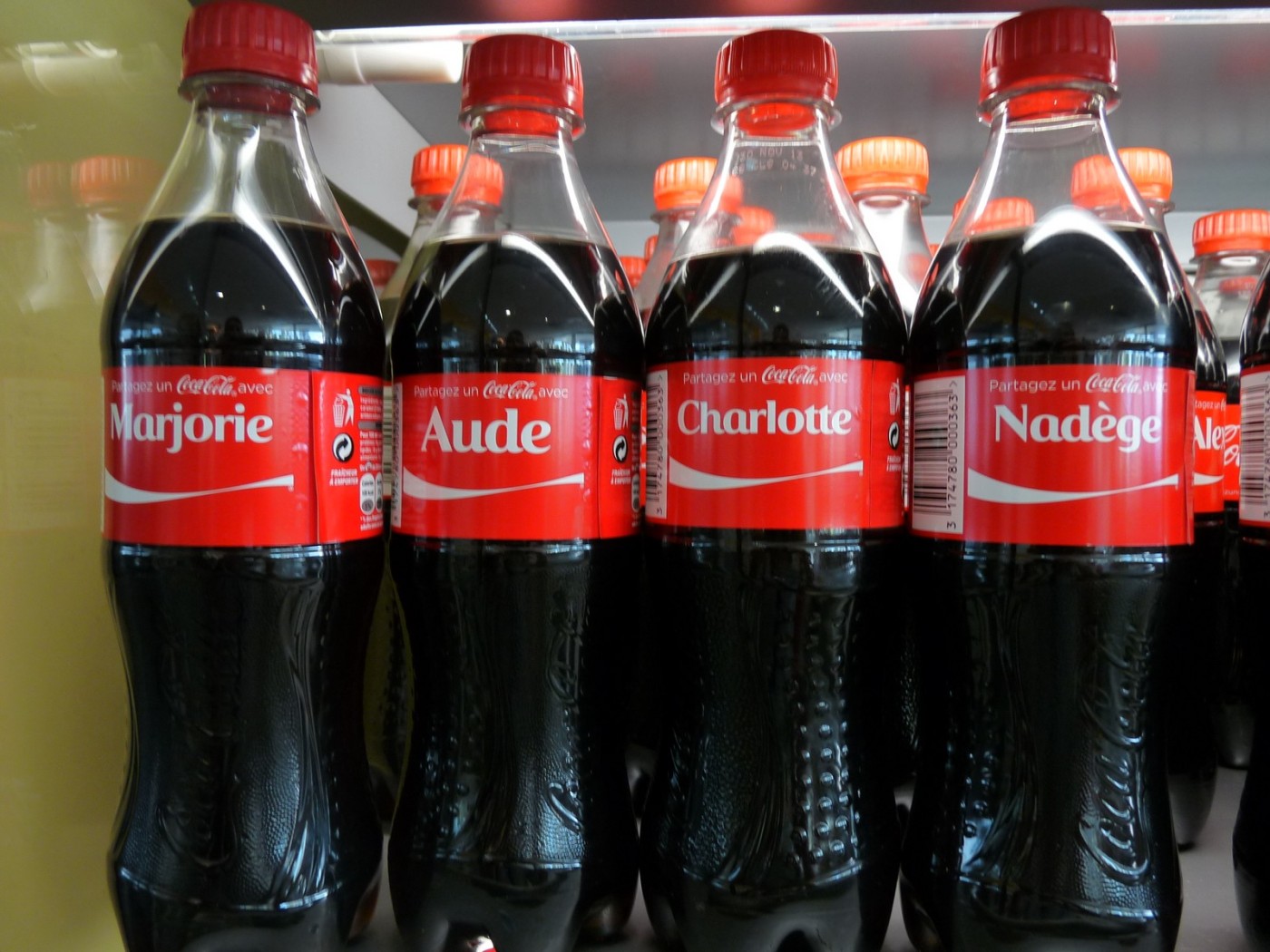
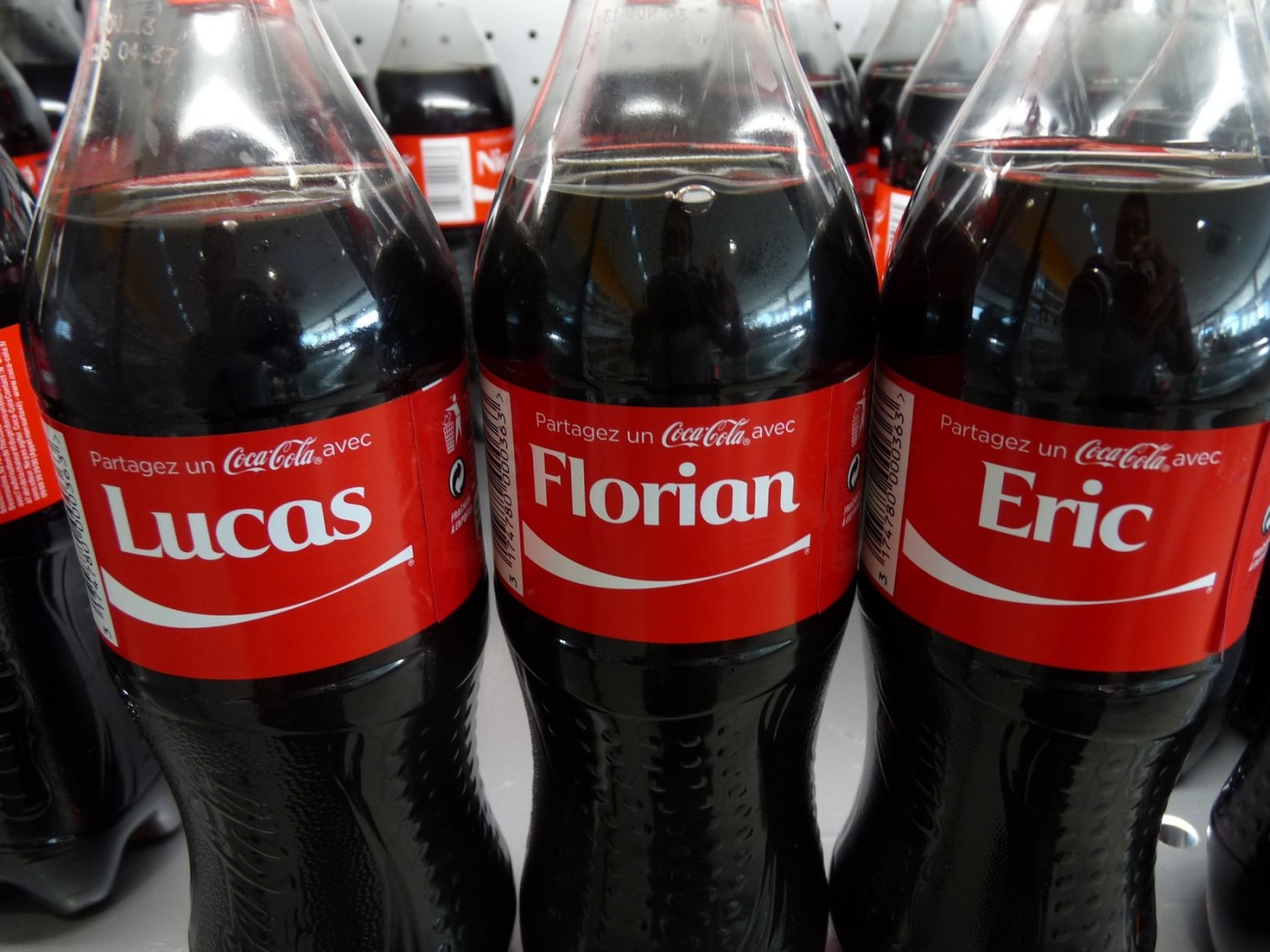
So over the last week, on our journey through France, I’ve had fun looking for evidence of the latest trends in French first names, via Coca-Cola’s latest marketing scheme of personalising drinks bottles with the current most popular given-names.
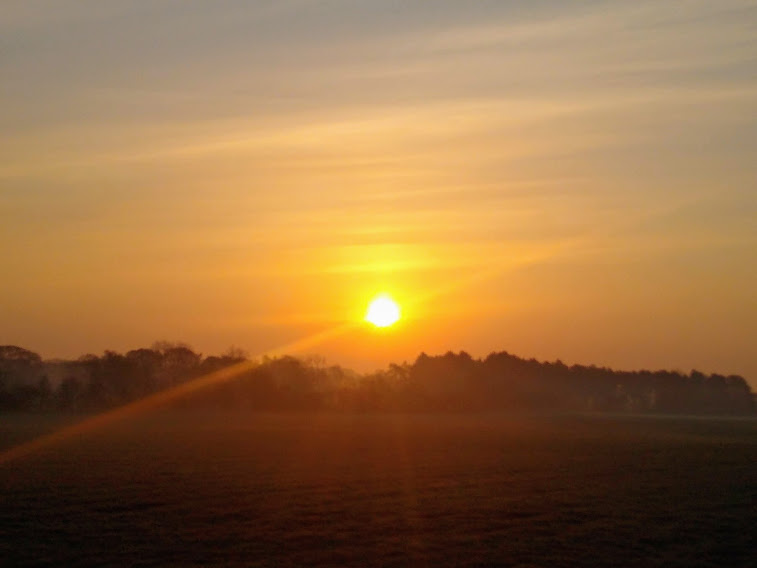
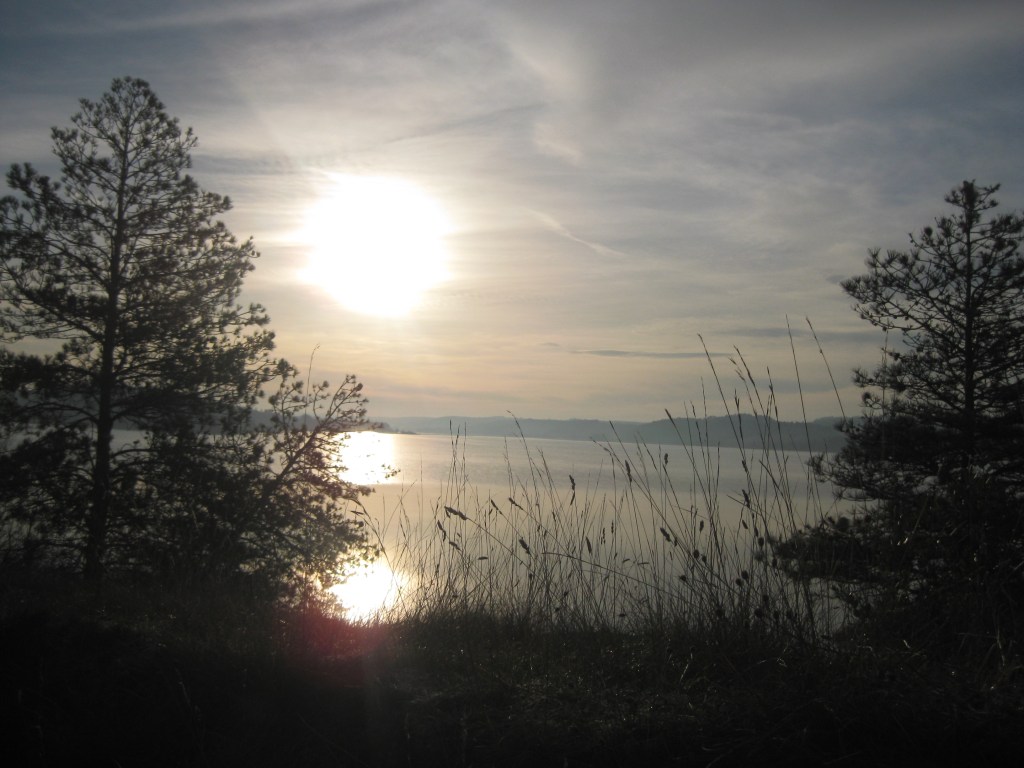
My last couple of posts have not been light-hearted. I took you for a walk across a stark and austere landscape. I invited you to read a number of stark and austere books. Since Jude’s Life in Colour is all about gold this month, I thought I’d hunt out – not very original of me, I know – a few sunrises and sunsets. These can get their golden vibe by being yellowish rather than reddish, but they’re gleaming, resplendent, hopeful, bright.
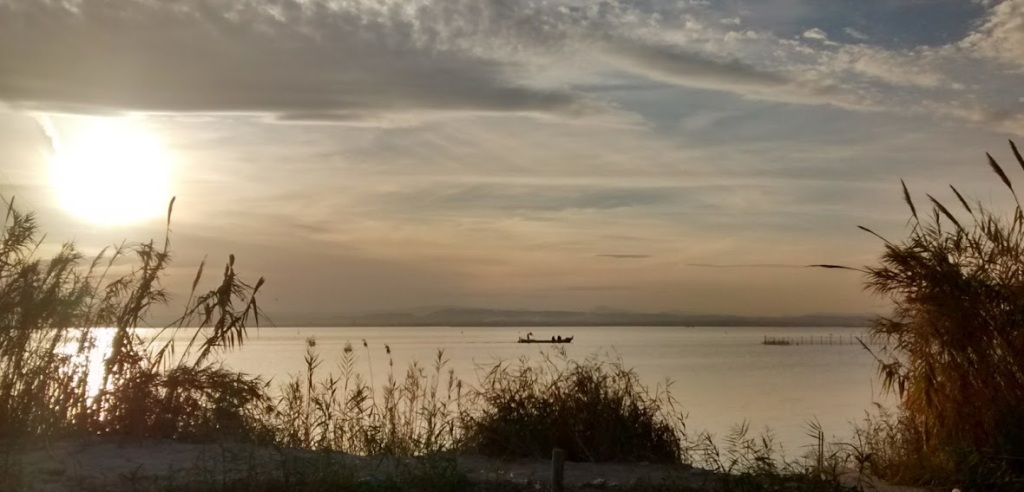
My featured photo, and the one below come from L’Albufera de València, a natural freshwater lagoon that is home to thousands of birds – and fish too of course. Its sunsets are a wonder on any day of the year. But I particularly like the understated dirty-golden glow in these two shots.
L’Albufera de València
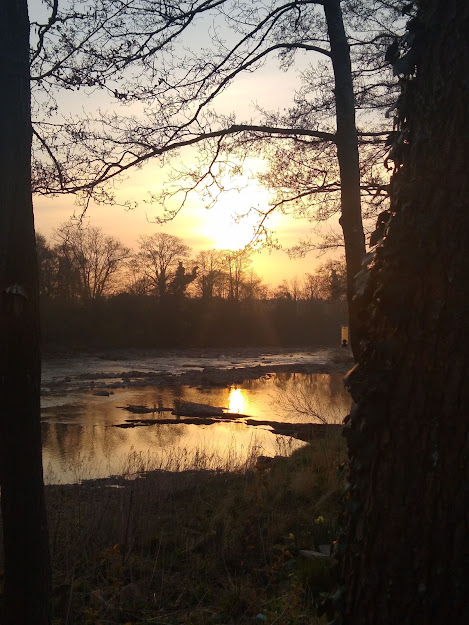
Travelling’s tough these days. Better to stay local and get up early, and enjoy the sunrise just near the house. These two shots show our river, the Ure, at daybreak in spring.
Sunrise over the River Ure, Sleningford
Or just a little later, in the parkland of Sleningford Hall …
Sleningford Hall
You’d still sooner be abroad? Best take a ferry then …
Rotterdam- Hull ferry: a view from the deck.
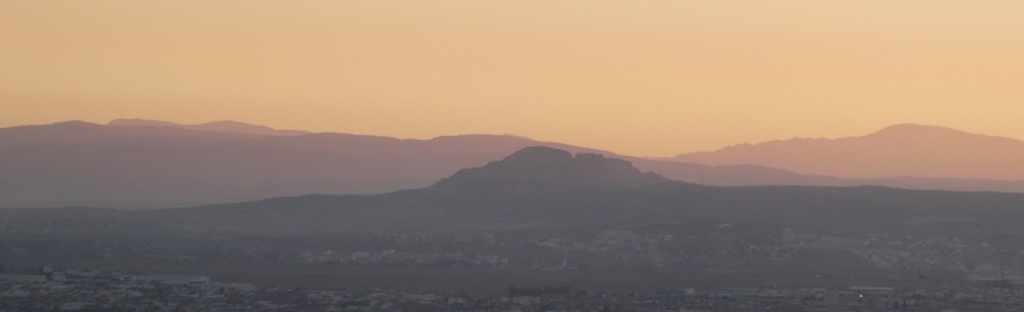
And we’ll head straight for Granada. We might get there just in time for the sunset.
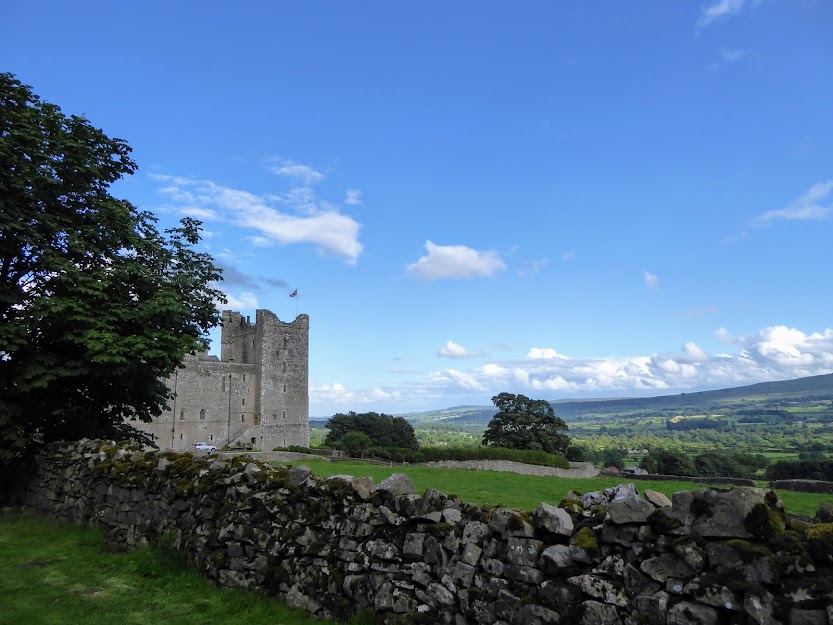
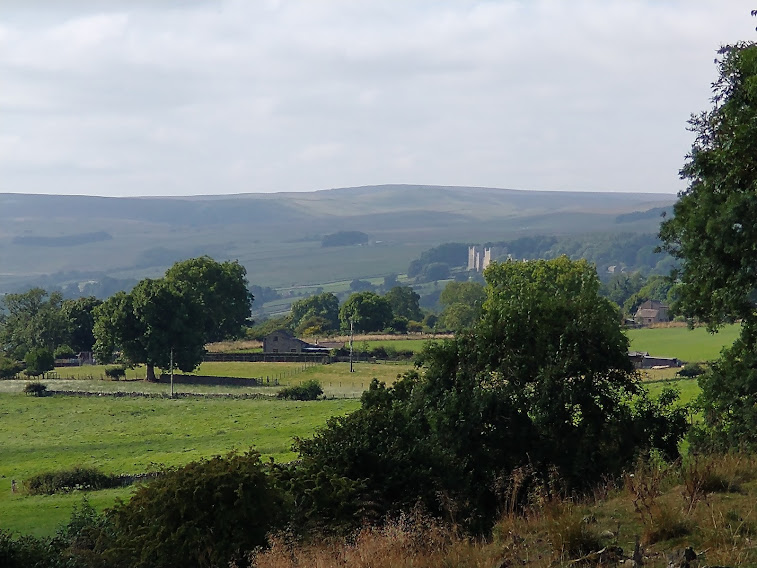
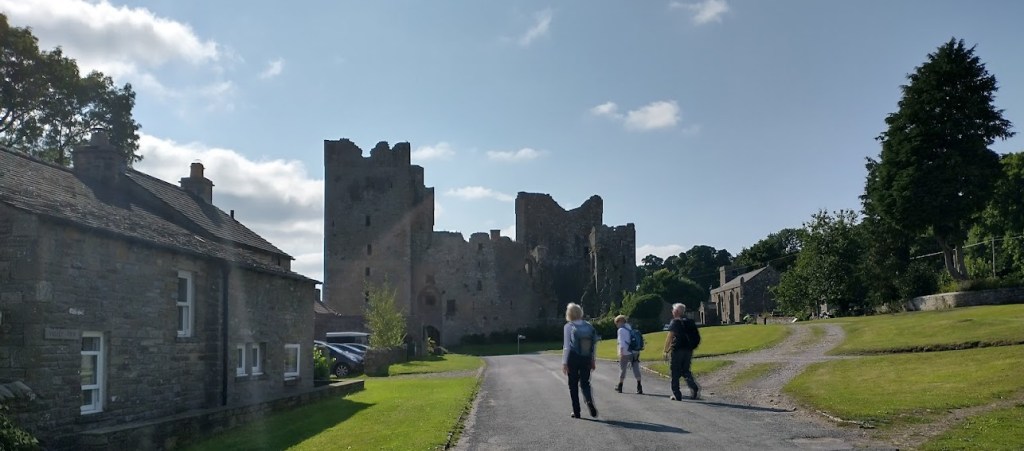
The landscape in the featured photo shows the bucolic beauty of Wensleydale, still green and welcoming at this time of year. And look! Here’s Bolton Castle, one time prison of Mary Queen of Scots: where she was obliged to stay for six months with a retinue of 30 servants, permitted to go hunting, and receive English lessons This is where we began and ended our walk last week.
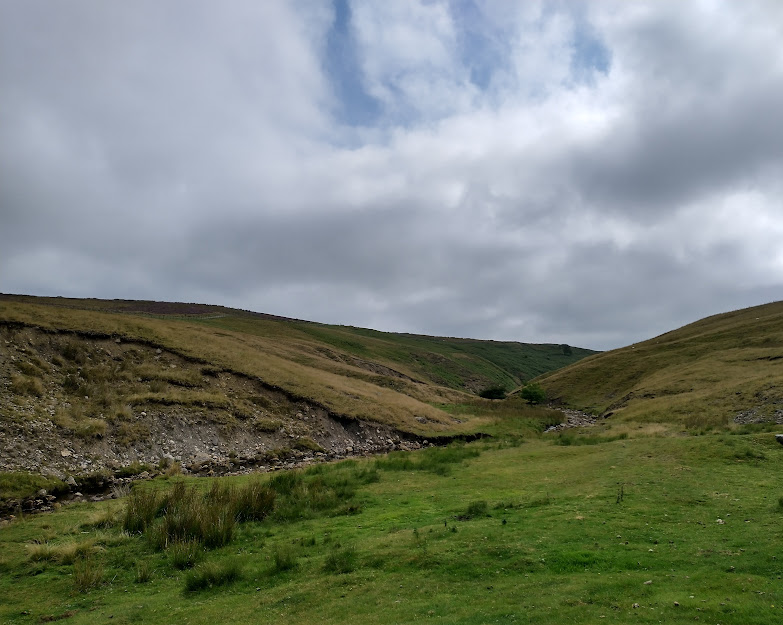
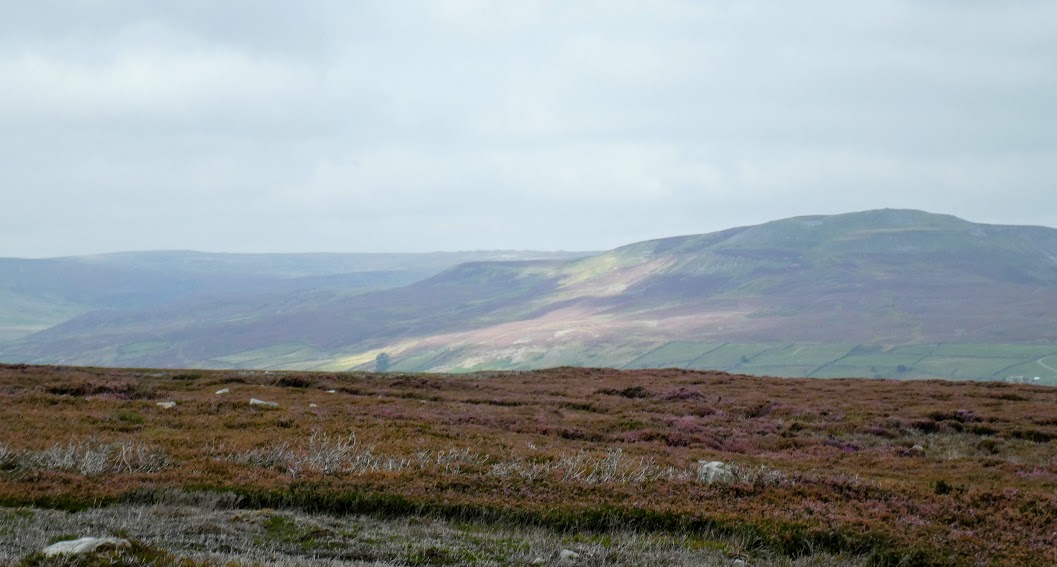
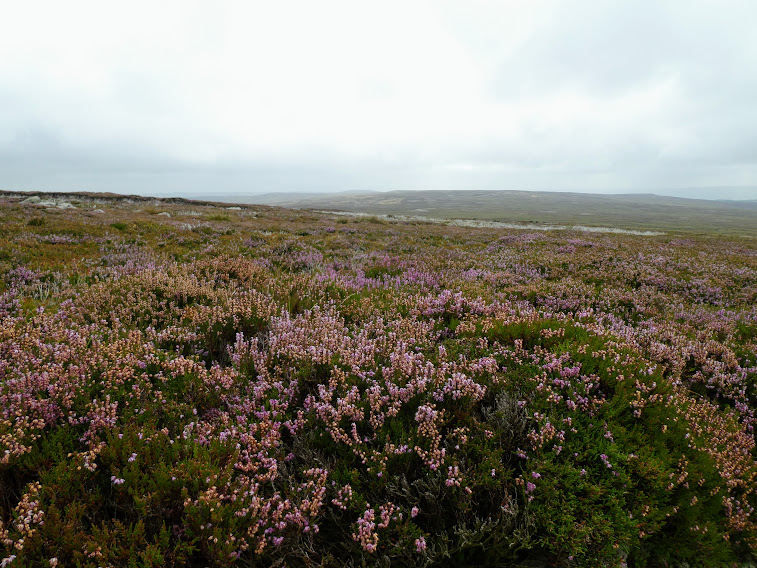
Most of our hike wasn’t in such favoured countryside. We slogged up to the bleaker moorland where once lead was mined, and no farmer could make any kind of living, unless he kept sheep. Here there are no villages, no houses or farms, and few roads.
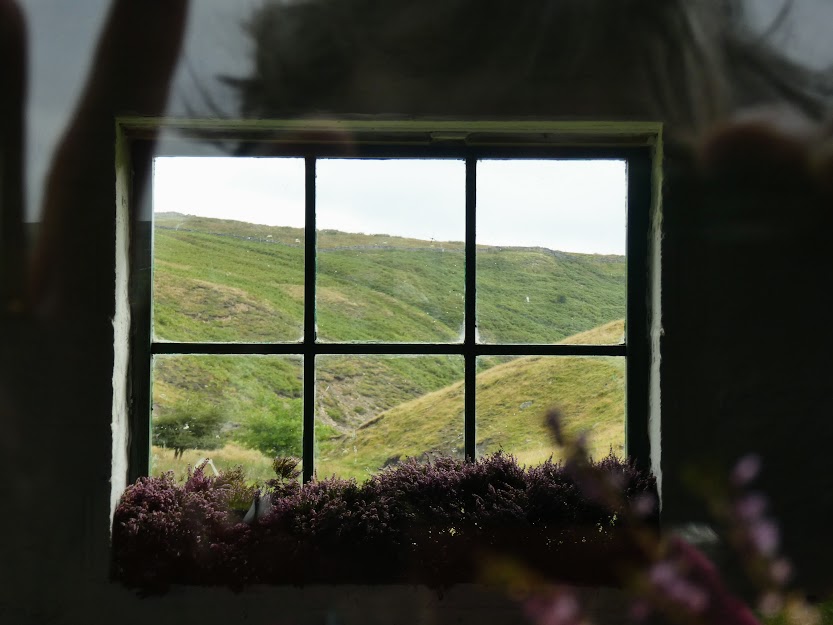
We’d hardly been going more than a mile when we came upon a shooting lodge, now set up as a resting place for the weary traveller. Here’s the view through one of the windows:
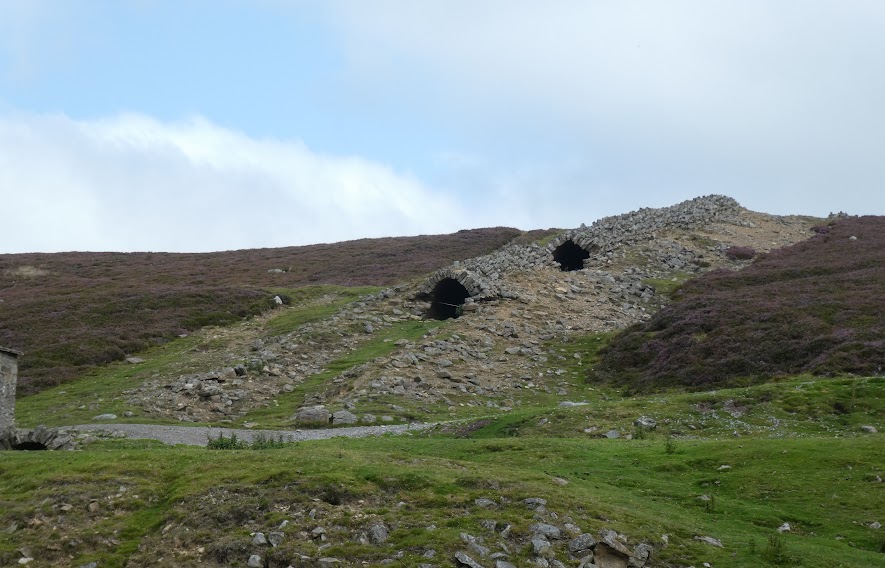
There was buffeting wind, and the smallest hint of rain, so we were glad to shelter for a few moments, and look at the view from inside, through that welcome window . But then out we went again, to the windswept landscape. It’s easy to see traces of the old lead mining industry: the grassed over spoil heaps, the ruined stone sheds, the pits where once a mine was sunk.
Lead was found here long before the Romans came. By the Middle Ages, blocks of land known as meers – roughly the size of a cricket pitch – were leased out to the miners who, if they were lucky, could find lead almost at the surface: or by running shafts below ground. The process only became industrialised, and mining companies developed in the 18th century. The last mine in the Dales closed in 1912, and for the first time in hundreds and hundreds of years, no one quarried for lead.
This is a bleak landscape, austere and unforgiving: open to winds coursing across the Dales, and to lashing rain. I love its ascetic grimness and the beauty to be found in its treeless simplicity. The time of year when the hillsides are cloaked in purple heather – August – is not to be missed. We caught the end of this glorious display.
Though our day had been one of grey skies, at the end the sun came out, as was fitting for the gentler Wensleydale landscape near Bolton Castle
‘On the first Saturday of every month, a book is chosen as a starting point and linked to six other books to form a chain. Readers and bloggers are invited to join in by creating their own ‘chain’ leading from the selected book.‘
This month, the chain begins with Rachel Cusk’sSecond Place. The narrator is M, living out in a remote country landscape with her second husband Tony, invites celebrated painter L to stay in the second cottage they own: she is powerfully attracted to his work. We’re witness to M’s inner monologues, as she worries about her relationship with her daughter, her husband and L’s antipathy towards her, manifesting itself in calculated rudeness. Cusk acknowledges the book as a re-write of Mieko Kawakami’s memoir of DH Lawrence, Lorenzo in Taos, but I haven’t read this. M could be thought obsessive, over-analytical, though much of what she thinks is beautifully expressed. Insightful? Pretentious? Only you can decide.
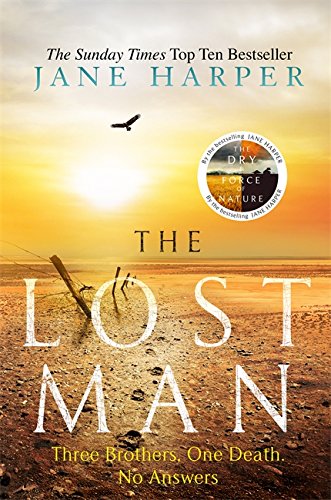
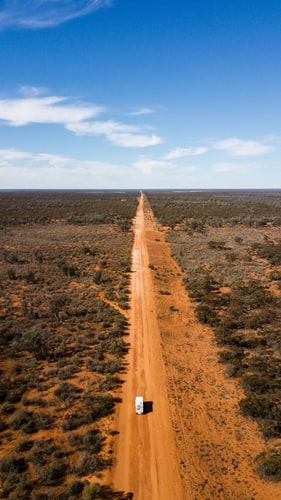
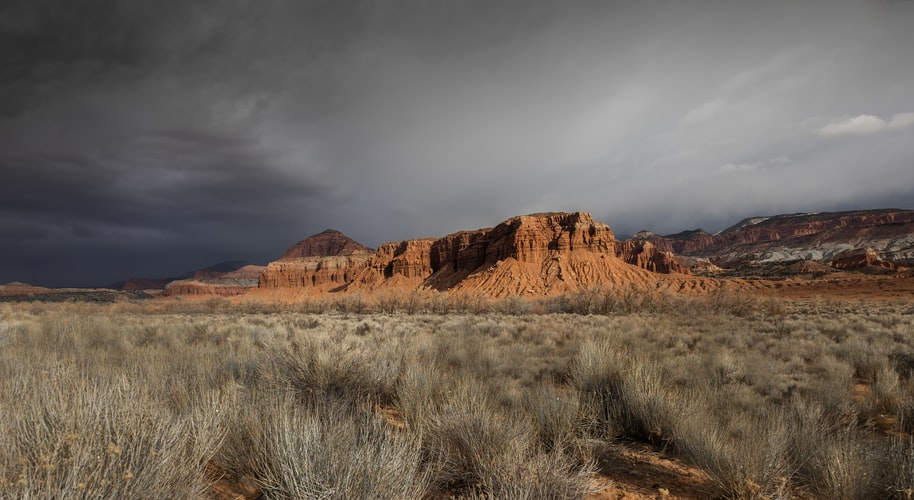
Some weeks on from reading Second Place, my lasting impression is of a lonely setting, and of characters who are ultimately alone. So the first link in my chain is Jane Harper’s The Lost Man. This story is set in the Australian outback, and for me the central character in the novel. Understanding the vastness, the harshness, the loneliness and unforgiving nature of this landscape was what I took from this book. It’s the story of a family, of three brothers who live next door to one another (by which you need to understand that they each live at least three hours drive from each other), and what happens after Nathan finds Cameron dead one day, by the grave of a long-dead stockman, in upsetting circumstances. The wider family unravels, then ravels again in a satisfyingly realised story, in which the ending was possibly just a little too neat. But it’s a great story, well told and visualised.
Dylan Shaw: Unsplash
Loneliness of a different kind is at the heart of Javier Marías’ Berta Isla. Berta and Tomás fall in love while still at school together. Anglo-Spanish, Tomás goes to university in Oxford, to further his extraordinary gift for languages, while Berta studies in Madrid. At Oxford, Tomás makes a mistake which obliges him to make his choice of career to work for the British secret service. It changes his and Berta’s relationship for ever. This is the story of a marriage in which the husband is largely absent to his wife, to his children and to the world at large. It takes in – at a distance – the Irish Troubles, the Falklands War, and Franco’s dictatorship.
At one point Berta herself quotes from Dickens’ Tale of Two Cities: ‘…every human creature is destined to be a profound secret and mystery to every other creature’. That’s what this book is about. A thoughtful, discursive book which will remain with me for a long time.
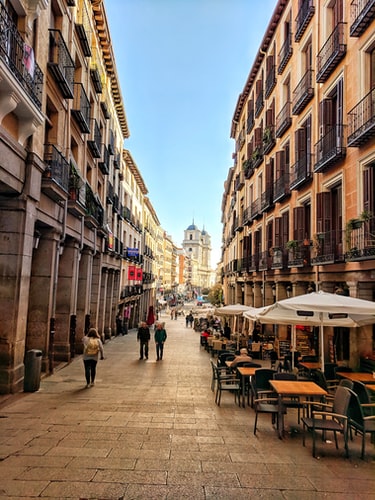
A quiet bar in Madrid (Igor Olyarnik: Unsplash)
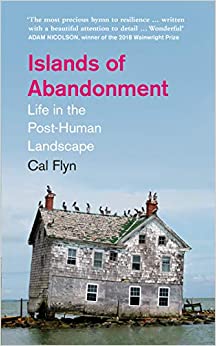
Let’s look at loneliness of a different kind: Islands of Abandonment by Cal Flynn. This is a book about what man has done to various places on earth, and what happens when man ceases to interfere: when the mining stops; the botanical garden is left to its own devices; the fatally damaged nuclear reactor is fenced off; the WWI chemical weapons site locked and the farmland abandoned. Nature begins to take over once more. Maybe not quite in the form that it had previously, but insidiously, by adapting and making do. The wilderness revives.
This beautiful, even lyrically written book celebrates Nature’s power to recover, even when to the average aesthete the results are not conventionally pretty. It may be almost too late. There is much to be concerned, horrified and terrified about as man continues to despoil the planet. But Flyn finds hope in nature’s power to take back control. A book I am pleased to have read: and one which gave me plenty to think about, and plenty to appreciate in the quality of Flyn’s writing.
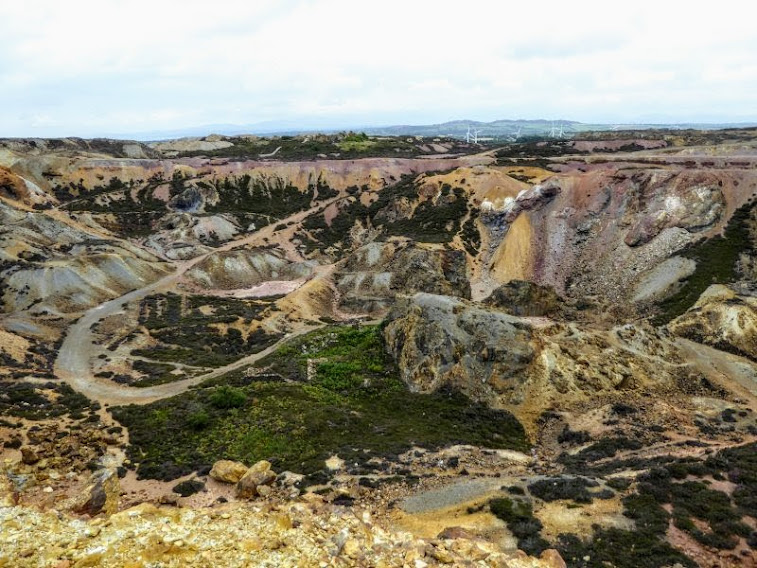
Flyn didn’t write about the desolate but strangely beautiful industrial spoilheap that is Parys Mountain in Anglesey. But she very well could have.
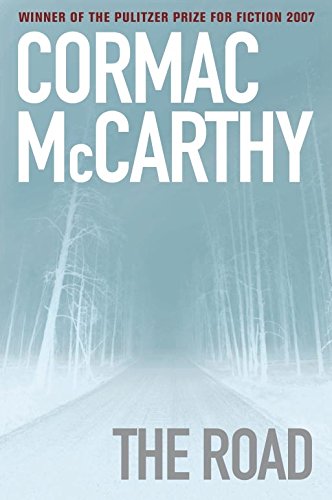
Back to fiction, to Cormac McCarthy’s The Road, the tale of a father and son trudging through post-Apocalypse America. This is a land where nothing grows, no small animals are there for the hunting: where communities and dwellings are deserted and long-since looted for anything that might sustain life a few more days: where other humans might prove peaceable, but might instead be evil and dangerous. This book is bleakly, sparely written. Conversations between father and son are clipped, necessary. No speech marks. Sometimes little punctuation. Every ounce of energy is needed for the business of staying alive. This book, in which nobody lives happily-ever-after will stay with me for a long time.
Jasper Gronewold, Unsplash
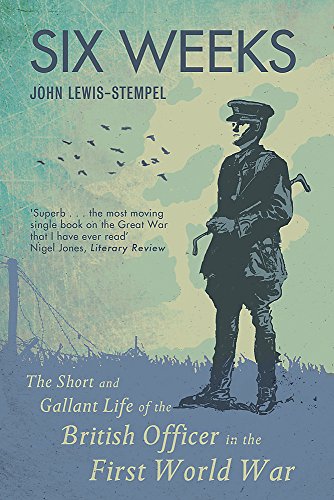
An apocalypse of a different kind is described in John Lewis-Stempel’s Six Weeks: The Short and Gallant Life of the British Officer in the First World War. I thought I was pretty clued up about the social history of World War I, but this book was a revelation. It describes the war, and life in the trenches and beyond from the point of view of the young subalterns who, in leading their men at the Front, had a life expectancy once there of six weeks. These young men, some no older than 17, had been equipped by their education in public schools to be team players, leaders, and military men through their membership of the OTC. They rose to the occasion, leading men often old enough to be their fathers, commanding their respect and even love. Some of these men became officers in their turn, because the public school men, frankly, were mainly all killed. Marlborough School, for example, lost 400 men in the Great War. This is about their short lives, and the lives of the men they led. Brilliant.
From a son et lumière at Ripon Cathedral in 2018 to commemorate the end of WWI a hundred years before
Oh goodness, this has been quite a dark month of book choices. Let’s lighten the mood for my final choice, in a book about that moment in our lives when we’re all finally alone … death. Waiting for the Last Bus by Richard Holloway. This is an excellent, thought provoking book written with a light, amusing touch. I’ve reached the stage in life where reflections on life and death seem appropriate, and this is a book I’ll read again. Holloway considers our fears of death, both for ourselves, and for those whom we love. He looks at what comes next, both for the deceased and for those left behind. A former monk, agnostic, and bishop, Holloway has written a book which is accessible to us all, not just Christians. Highly recommended, and not at all depressing.
A suitable bus to accompany this book – spotted in India. Click to view full image.
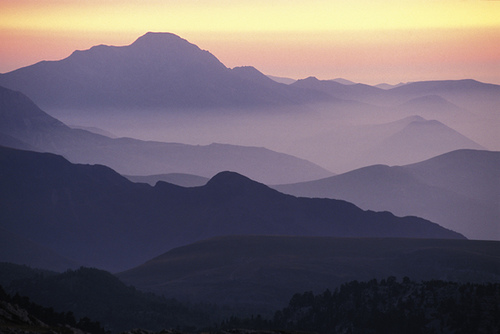
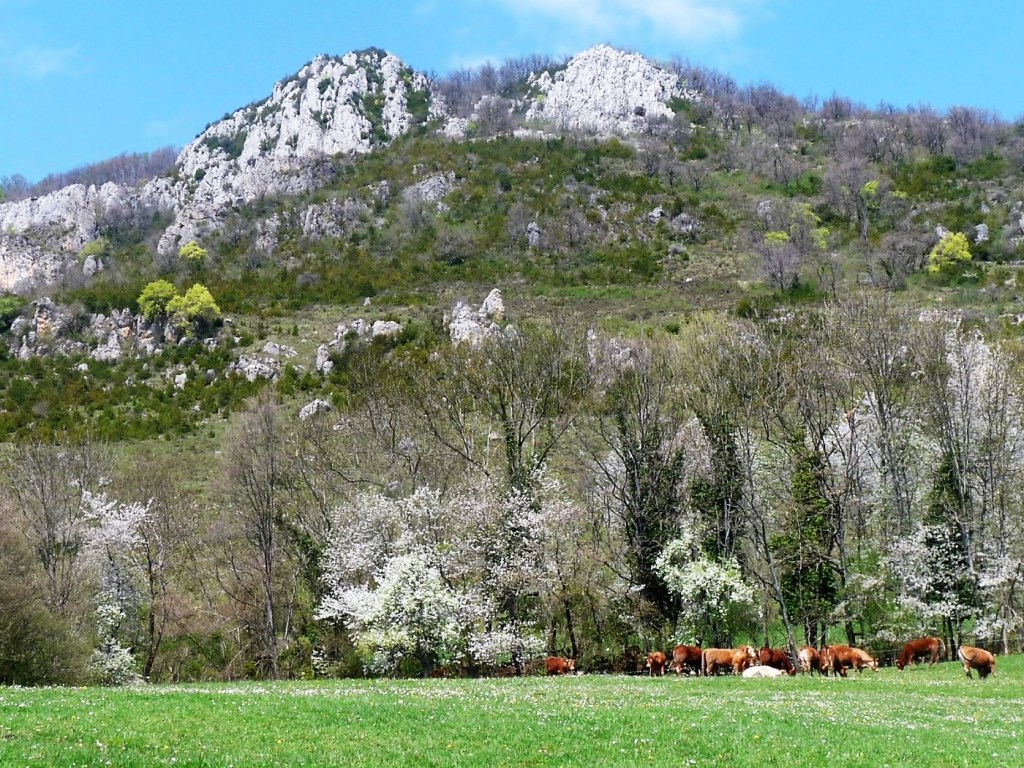
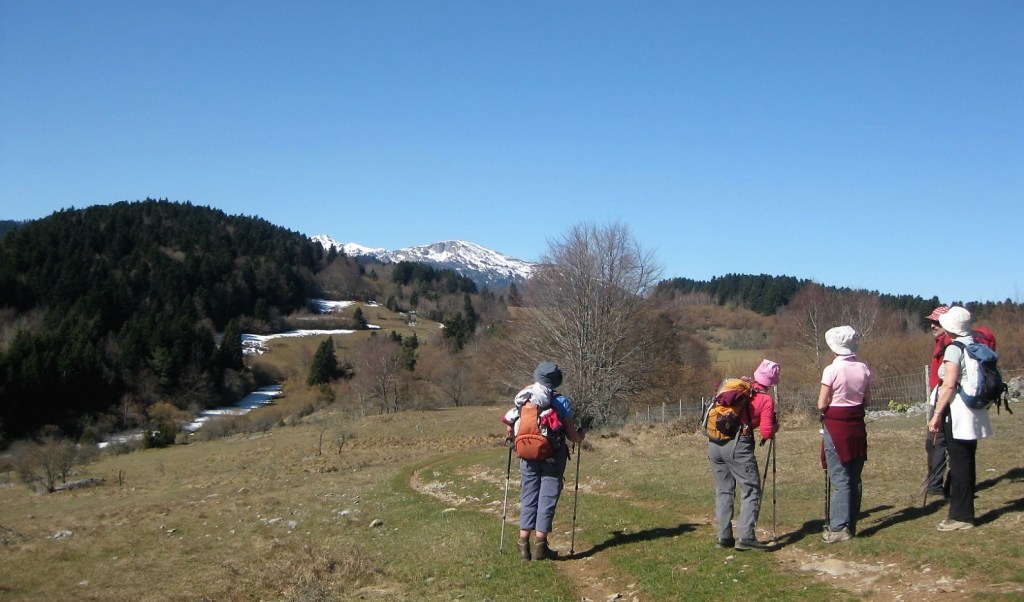
I’ve only been a walker – a proper walker, yomping over moor and mountain, hill and dale – for the last fifteen years or so. It happened when we went to live in France. What better way to discover the secret paths of the Pyrenees, and get to know our French neighbours, and improve our French too, than join the local walking group?
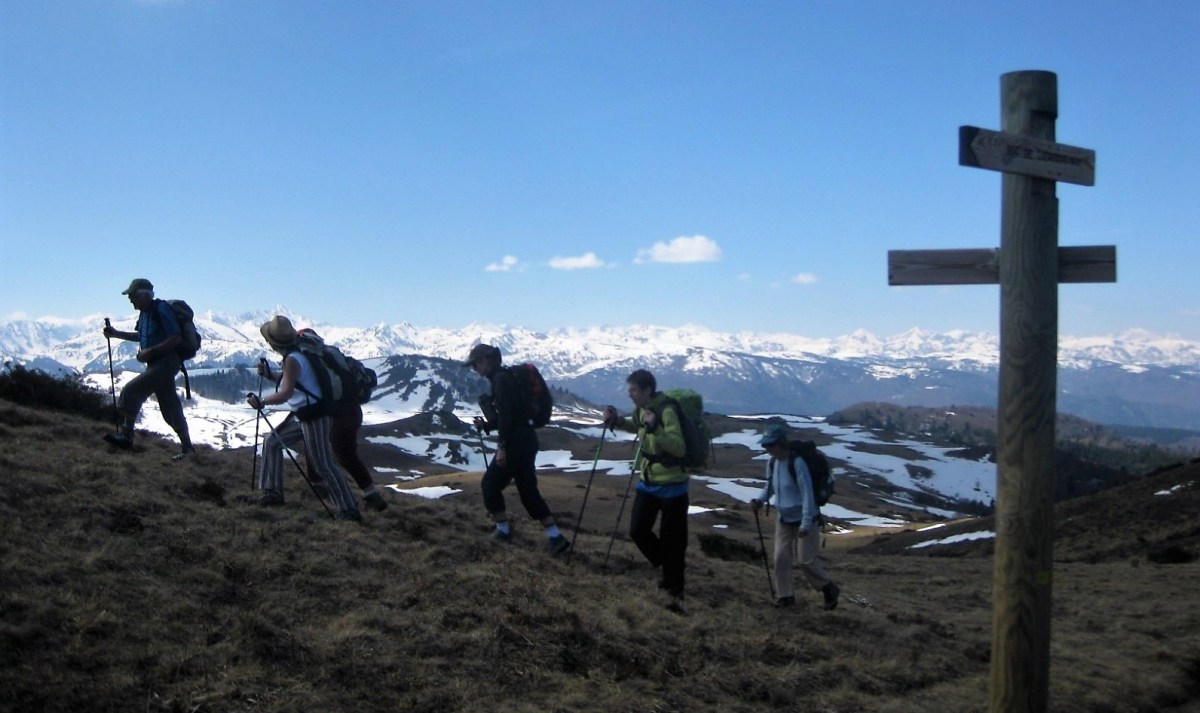
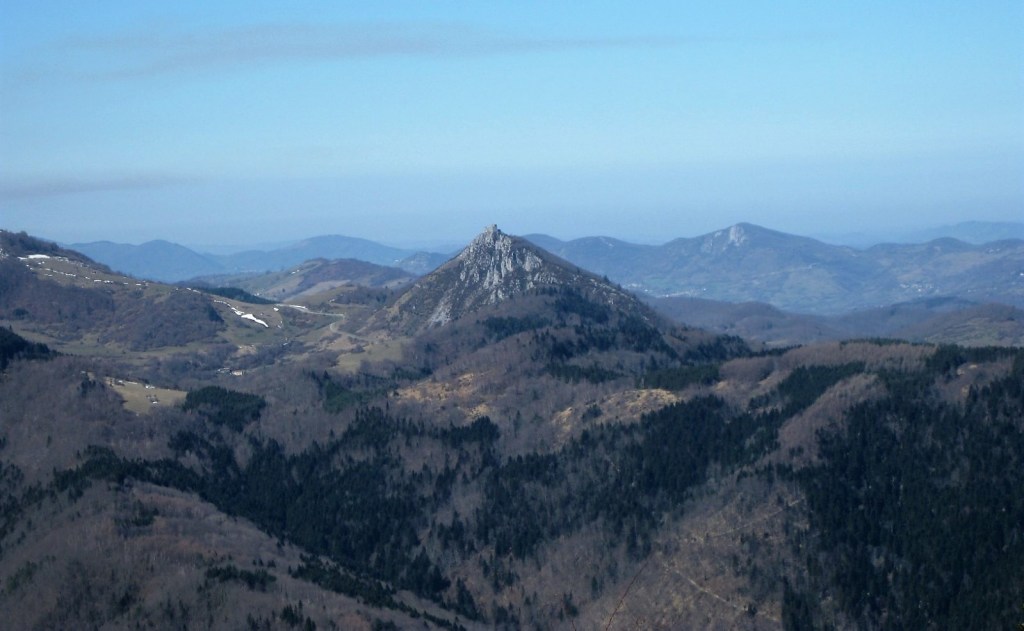
So we did. At first it was les Randos de’Aubo in nearby Mirepoix. We explored the foothills and higher slopes of the Pyrenees, we investigated the nearby Aude, and enjoyed the fellowship of scouting new paths together. What I remember most was the achievement of climbing, climbing, often through seven or eight hundred metres before lunch, while constantly rewarded by mountain views, colourful plant life and changing vistas. Because of these calorie-busting achievements, we might walk as few at five or six miles. But it was harder – much harder – than walking ten to twelve miles round here, and I know I couldn’t do it now. But after the effort, there was a shared picnic lunch with a splendid view thrown in, a downhill walk back to base, and a convivial drink, in whatever bar was to hand near the end of our walk.
Walking soon after dawn at la Ganguise, Aude
Rewarded by mist rising from the lake
And this is the other end of the same day
On Thursdays I went walking with a smaller group – mainly women – who’d got to know each other either through walking or singing together – I ticked both boxes.
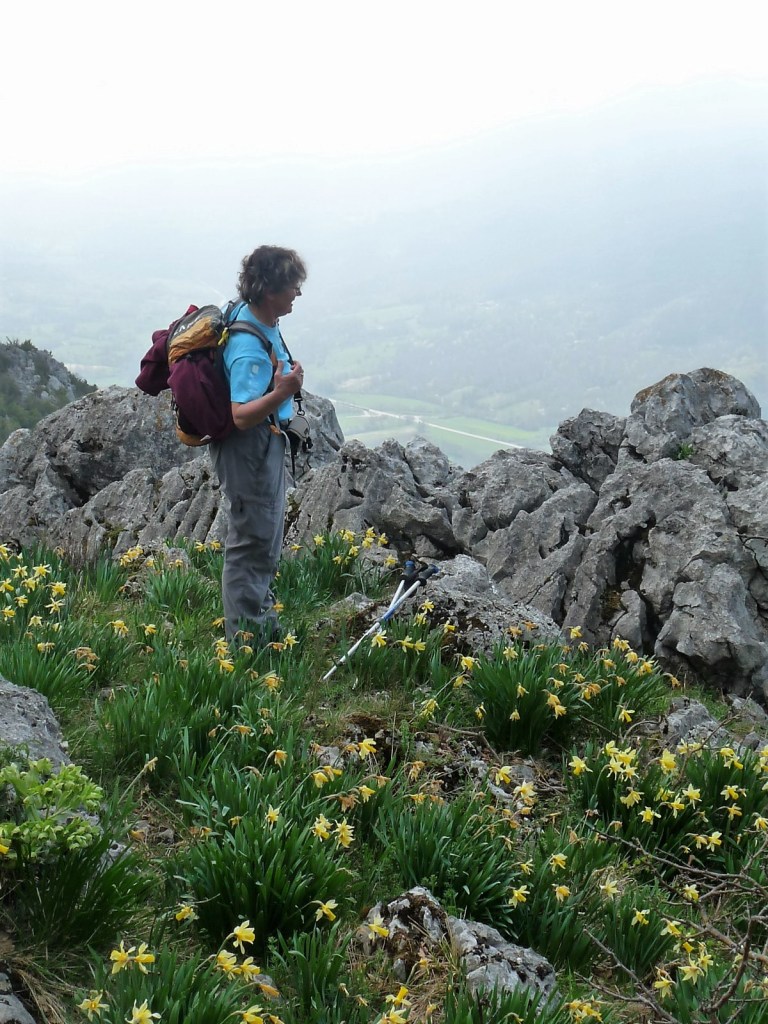
Overlooking Foix in the3 distance …
… Maguy enjoys the view …
… before we continue on our way.
A special day among the daffodils in the Dolomies, near Foix.
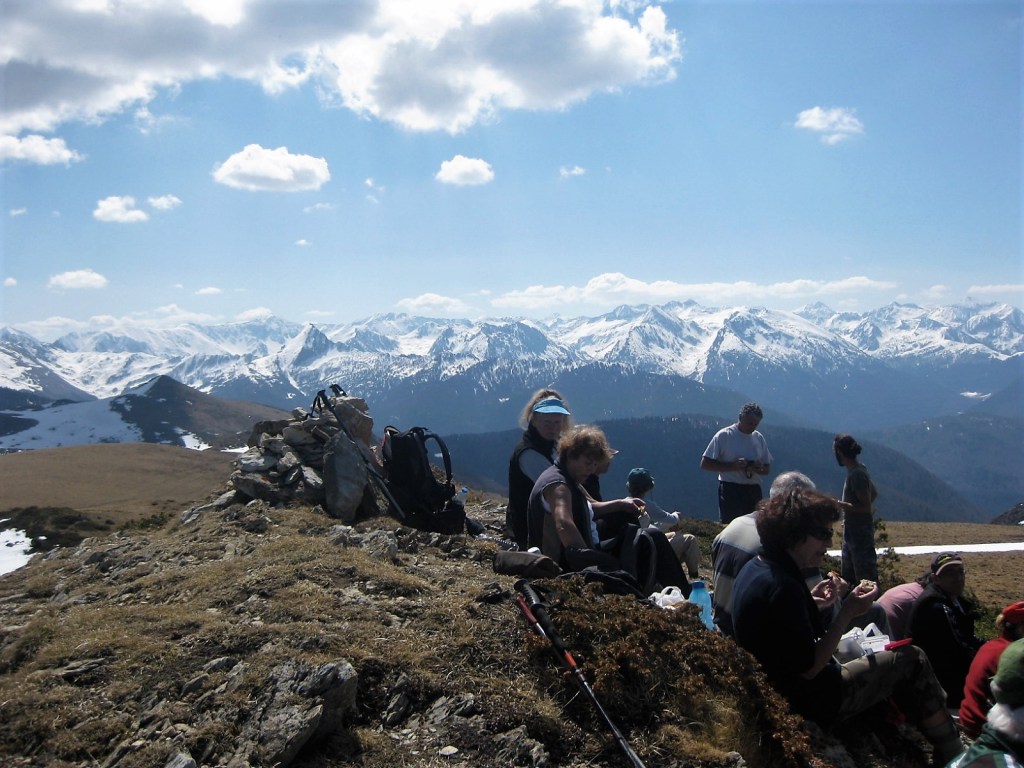
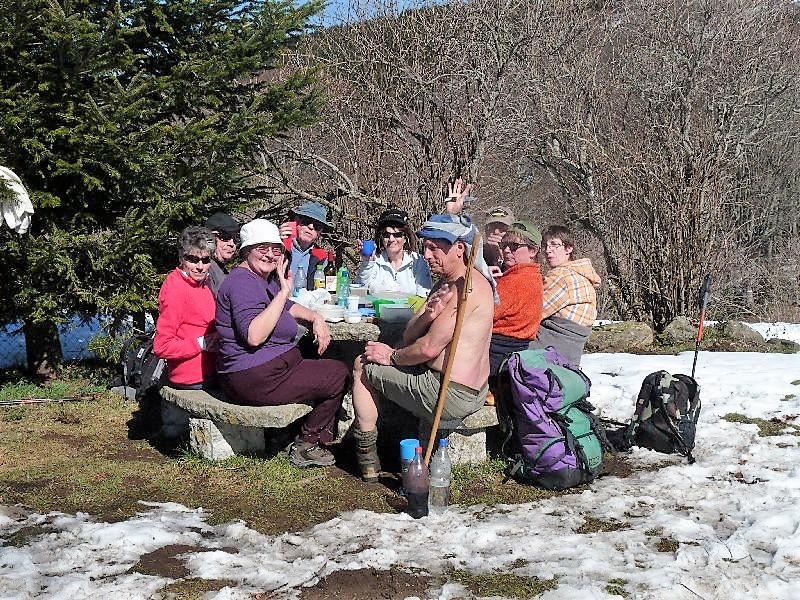
Then we were among the founders of the walking group that developed in our own community, Laroque d’Olmes. We had the confidence by then to offer to reconnoitre and lead walks ourselves. And this group had even better picnic ideas than the last one. Marcel, our local butcher brought sausage to share, as did a local amateur charcuterie enthusiast Michel. Sylvie’s daughter was a sheep farmer, so she’d bring along sheep’s cheese. Someone brought a few baguettes, Yvette and I always had homemade cake. Jean-Charles had a bottomless bottle of wine in his rucksack. And everyone brought sugar lumps. Sugar lumps? Well, yes. Someone or other would bring a bottle of grandfather’s home-made digestif, heavy on alcohol and locally harvested fruit, and would dribble just a few drops of it onto your sugar lump for you to finish off your feast in style. And we would sit for an hour or more, chatting and relaxing before continuing our hike. I miss those moments as much as I miss the countryside and mountain views we shared together.
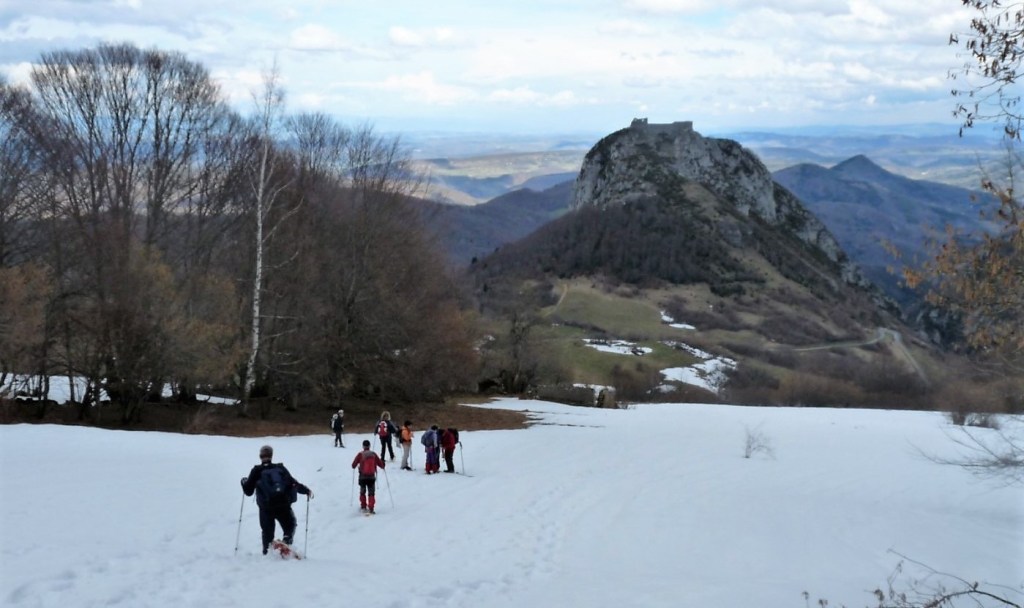
Snowshoeing near Montségur …
… and this was one of our paths.
Picnic near Montaillou one April
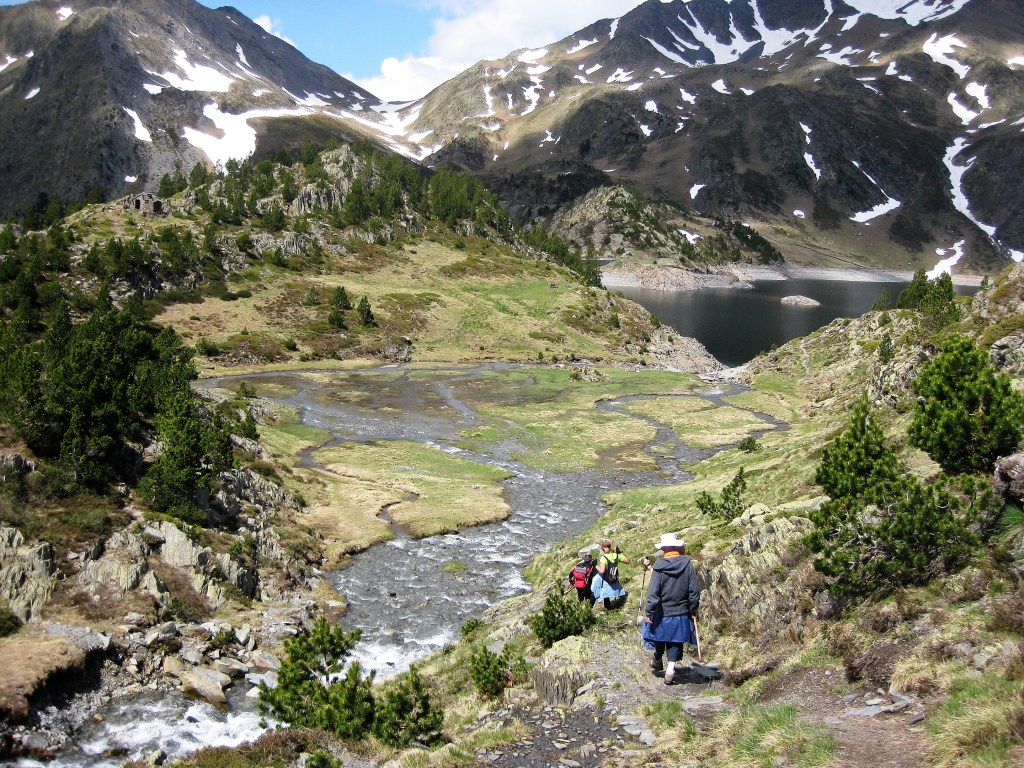
Lanoux in June
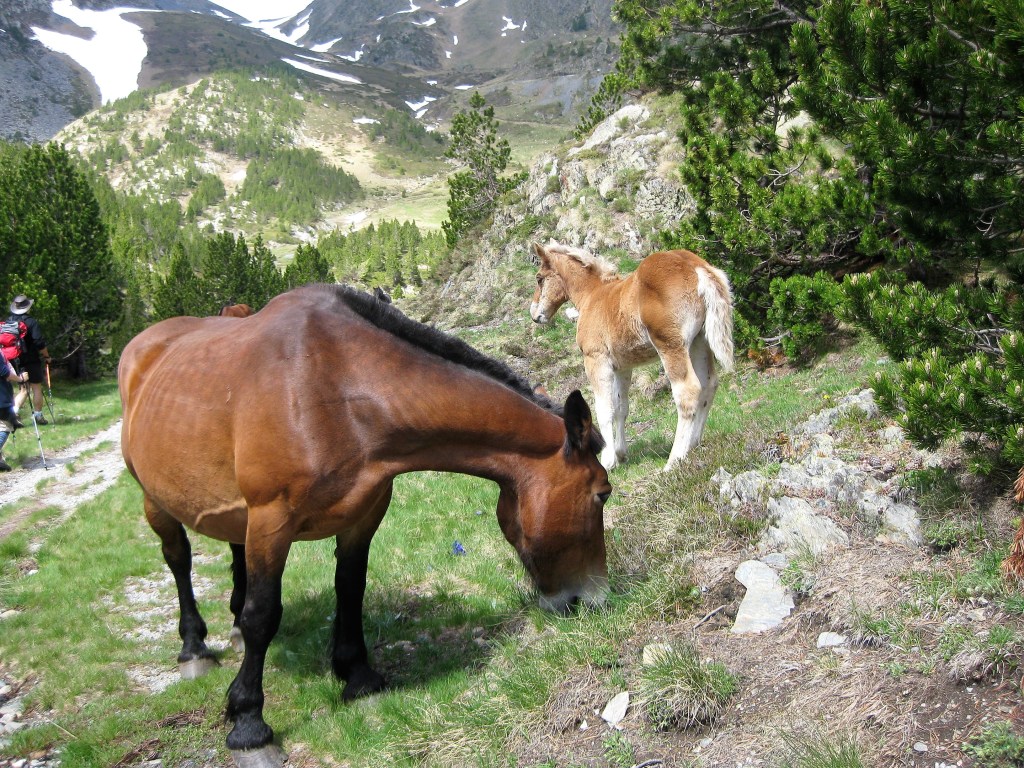
Wild horses near Lanoux
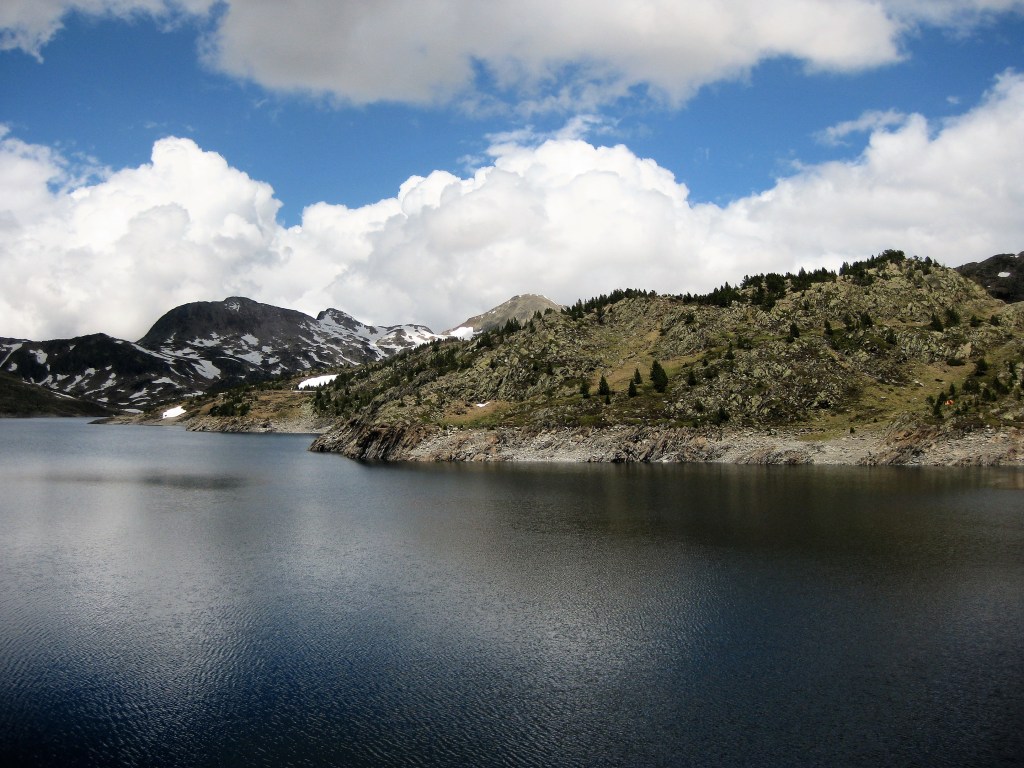
The mountain top reservoir near Lanoux
The path to Etang des Truites, Mont d’Olmes
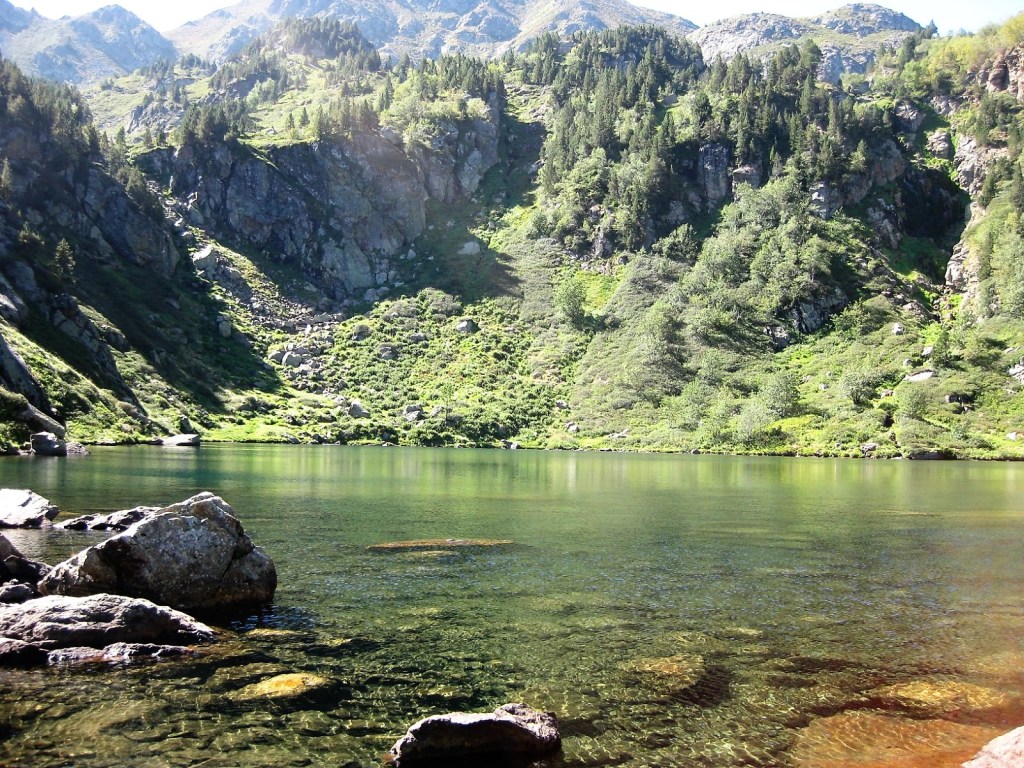
Etang des Truites, site of a hiking picnic
Saint Julien de Gras Capou
Walking on the Plateau de Sault …
… with a view of Montségur
Our very last picnic, on our very last walk
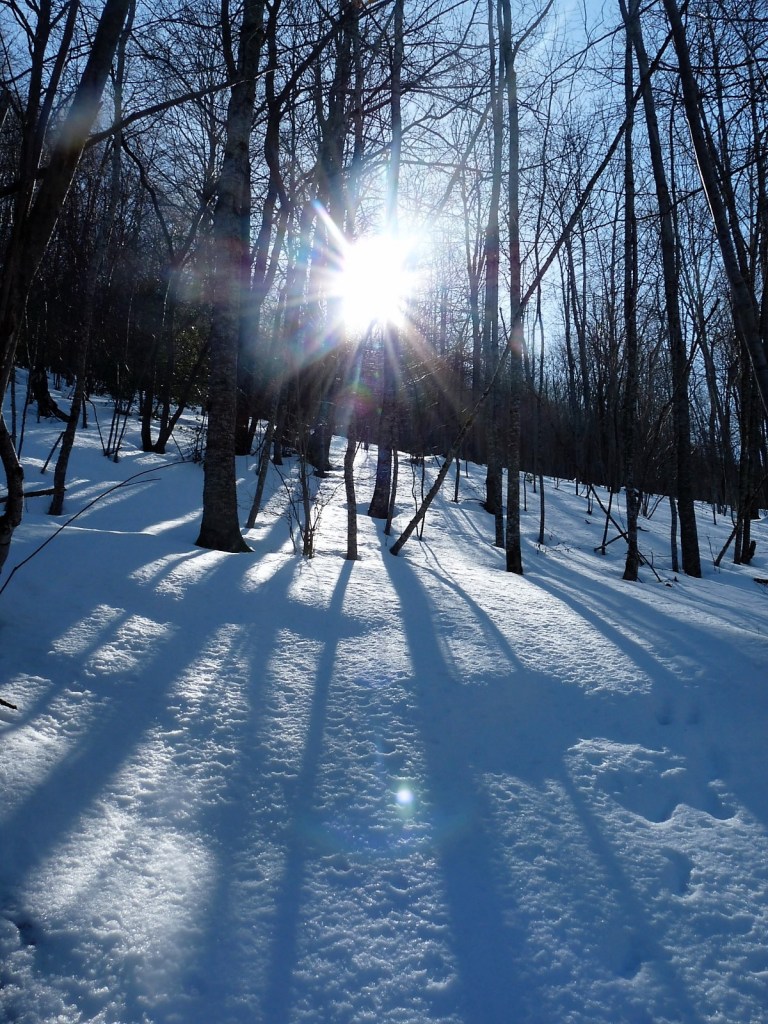
Walking in every season of the year
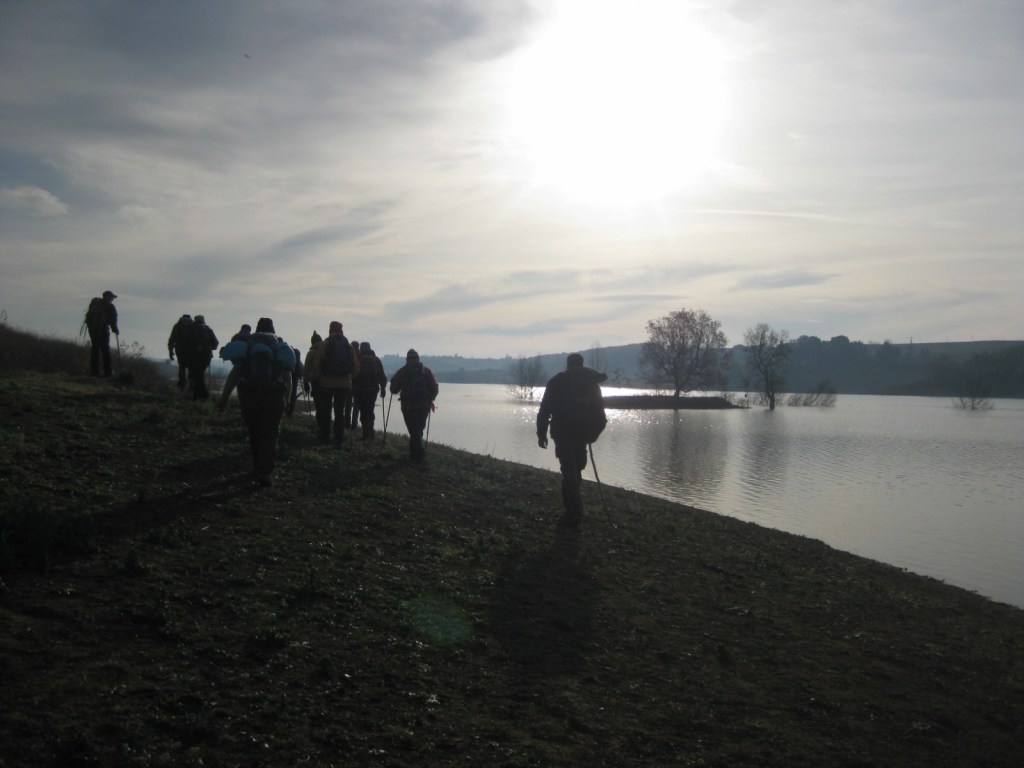
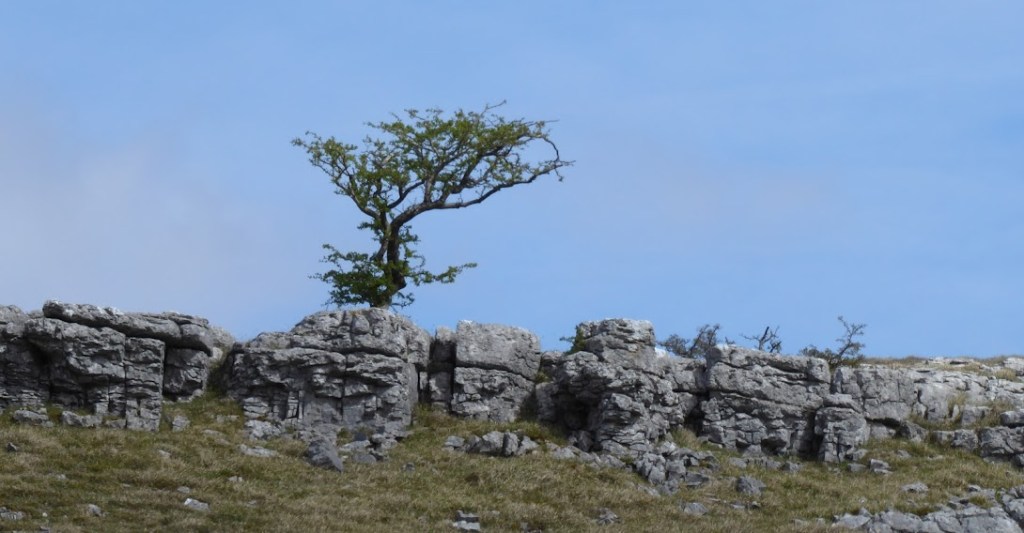
Now we’re in our local walking group here in Yorkshire. Again, we wanted to discover Yorkshire better by walking its footpaths. At midday, we eat our own pack of sandwiches and that’s that. But the comradeship is as good as it was in France.
Wharfedale
Near Grassington
The Nidderdale Way
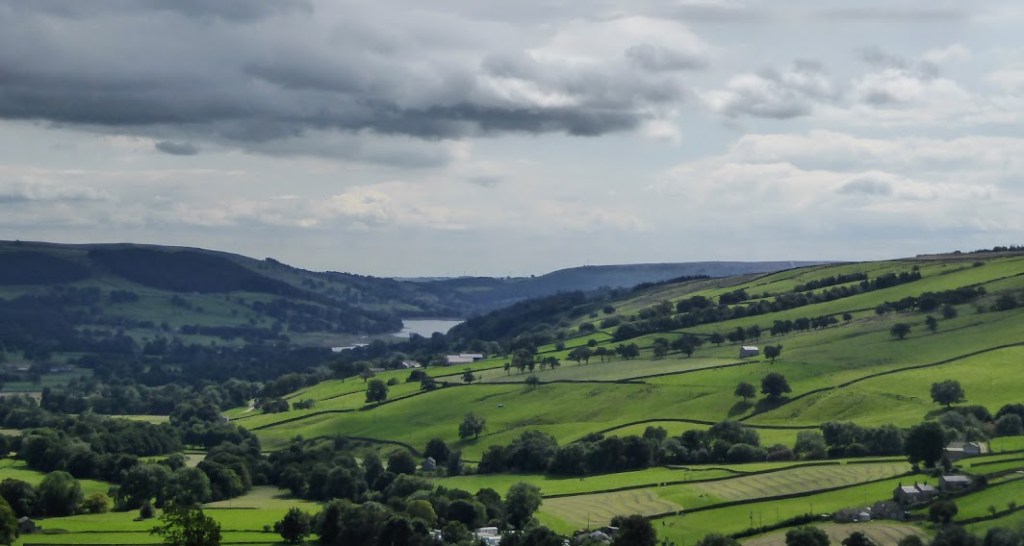
Some of the Dales in Yorkshire
Since lockdown, I’ve appreciated the pleasures of walking alone. Undistracted by companions, I notice the sounds around me – the calling birds, the running water, the sighing wind, and observe more closely the changing seasons. While I’ll always enjoy a walk with a friend, I suspect that my love of solitary walking will continue.
Nosterfield Nature Reserve
The Ripon Rowel near West Tanfield
Local woodland
It was Amy who invited us to Keep Walking! for this week’sLens-Artists’ Photo Challenge #143. Thanks for this opportunity to indulge in a spot of nostalgia, Amy.
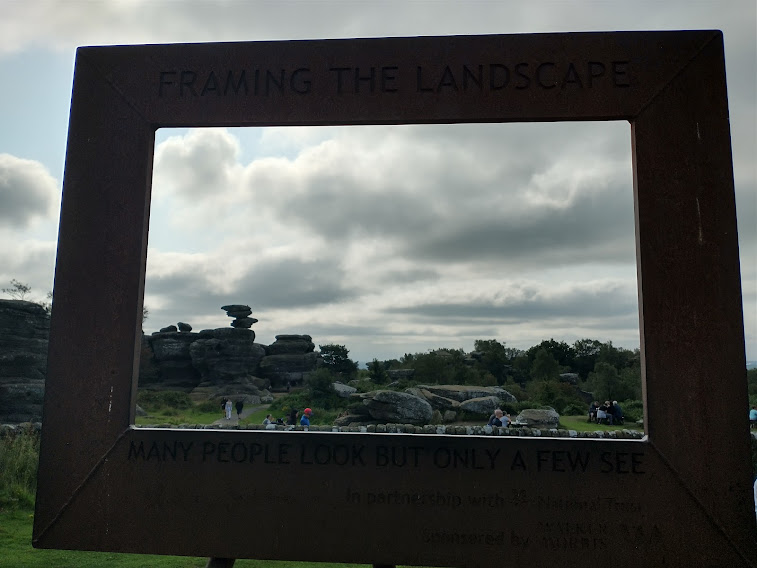
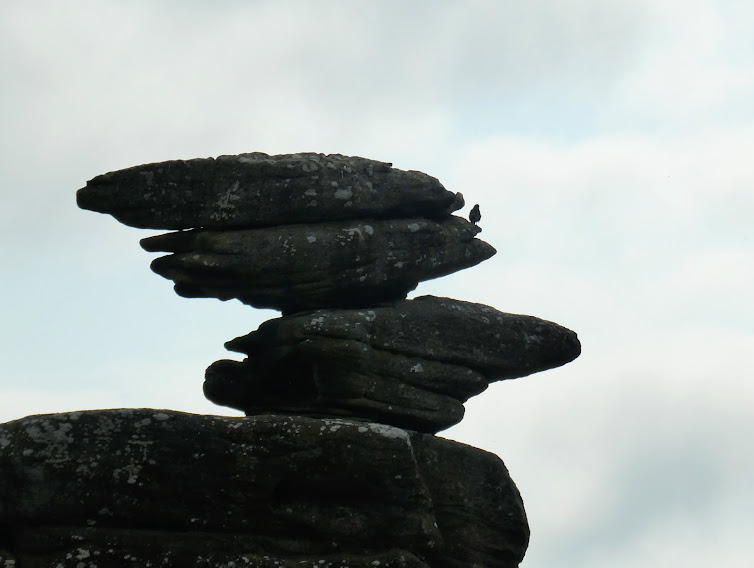
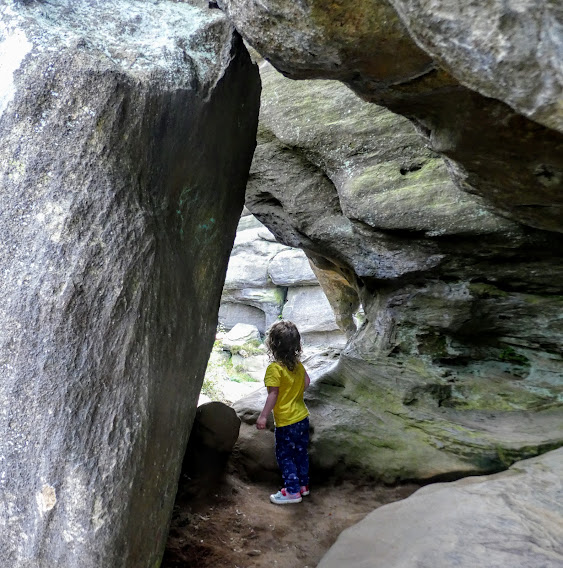
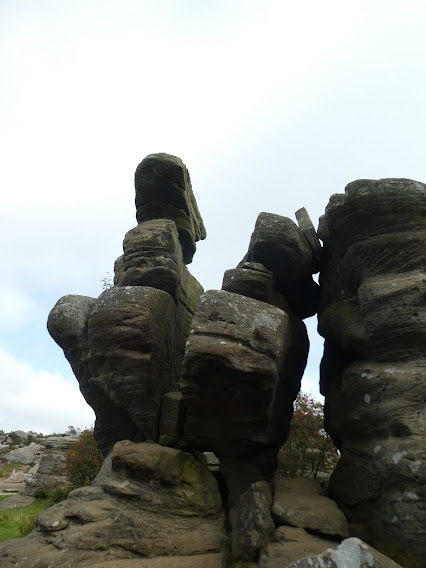
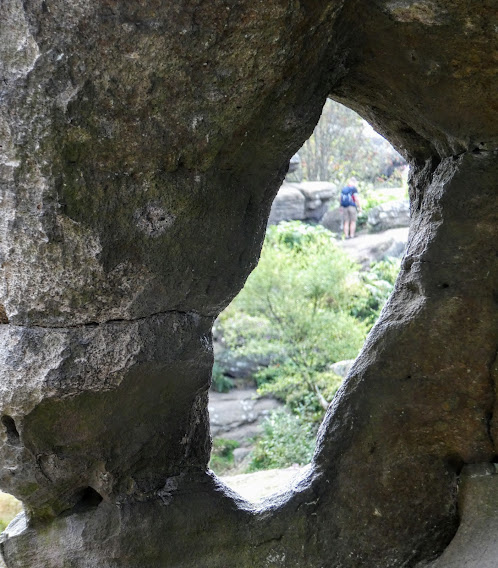
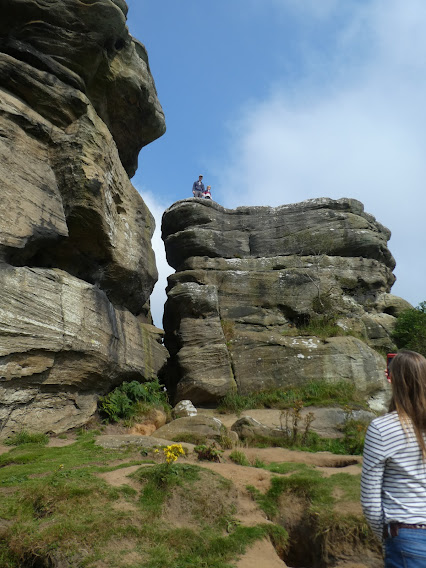
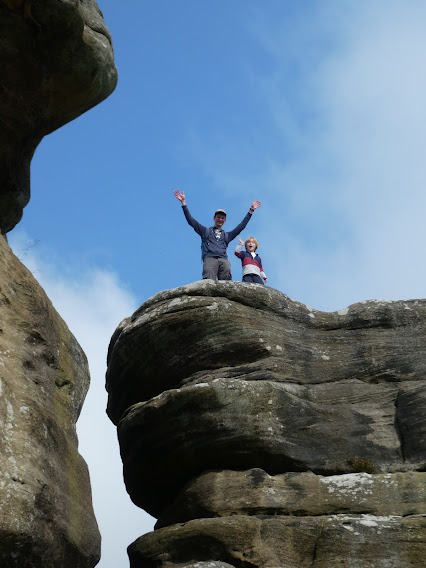
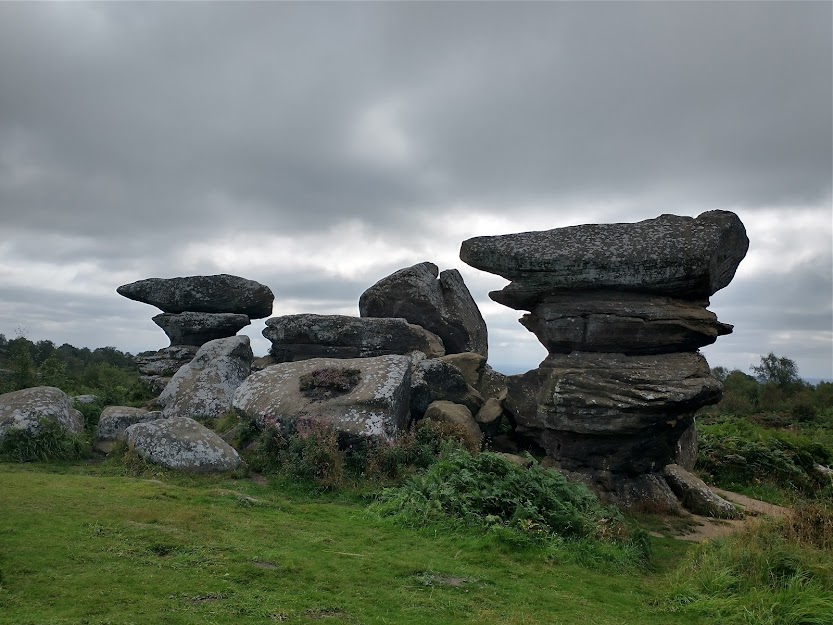
Brimham Rocks. A must-visit destination near where we live, simply to marvel at the unlikely tottering piles of fantastically shaped rocks gathered there, or, if you’re athletic and in touch with your inner-child, a challenging climbing frame.
These sandstone blocks were laid down and formed during the last 100,000 years – before, during and since the last Ice Age. Glacial action, weathering and water erosion have fashioned the rocks, leaving some apparently precariously balanced, as wind blasting continues to sculpt their contours.
During the 18th and 19th centuries, many believed that Druida could have been responsible for carving them. It was only in the 20th century that their origins became well understood, and we also came to recognise the wealth of natural life flourishing here: it’s now a Site of Special Scientific Interest.
Not that William and Zoë cared when they visited last week. For them, this visit was an adventure. William climbed and Zoë looked for natural windows to gaze through. And asked to come again next time they visit.
This post from August 2016 reflects the melancholy I always feel at this time of year: that summer is departing, and with it the long days and short nights whose absence so depresses me each winter. So I’m choosing it for this week’s Fandango’s Flashback Friday, particularly because it brings with it memories too, of the beauty of Anglesey in Wales.
BRITISH SUMMER TIME: THE FINAL DAYS
August 2016
We’re more than half way through August. It ought to be high summer, but autumn’s on its way. As we walked down the road yesterday, a few crisp brown leaves blew across our path. Mornings start later, night comes sooner. The combine harvesters trundling round the fields seem almost to have completed their work. The shops are full of neat school uniforms and bright pencil cases ready for the new academic year.
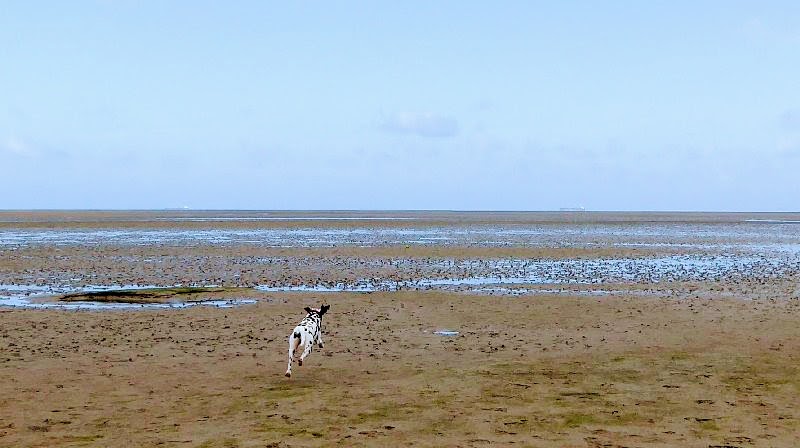
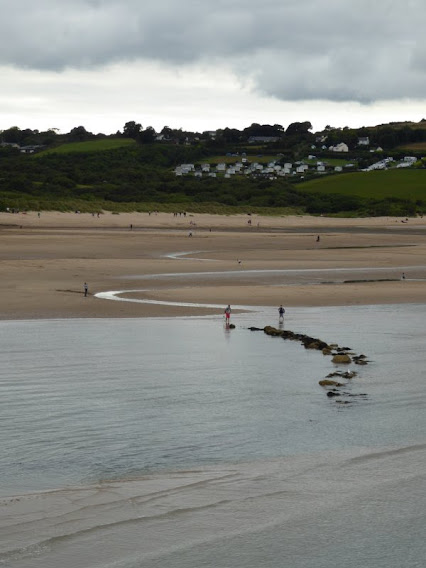
Before it’s too late, here are some summer time views, from Moelfre in Anglesey. And because it’s British Summer time, the sea isn’t always blue and nor is the sky. But that’s fine: we expect that here in the UK.































 From Pyrenees to Pennines
You must be logged in to post a comment.