Six Degrees of Separation: from Life of M to Raising Hare

On the first Saturday of every month, a book is chosen as a starting point and linked to six other books to form a chain. Readers and bloggers are invited to join in by creating their own ‘chain’ leading from the selected book.

Kate:  Books are my Favourite and Best
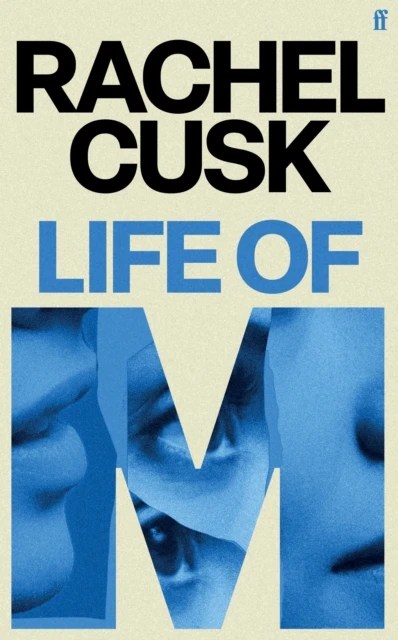
This month’s Starter -for-Six is Rachel Cusk‘s Life of M. I haven’t read it, it’s not on the TBR, but apparently an unnamed writer proposes writing the autobiography of M, a globally famous film star who has lived in the public eye since childhood. M casually tells her to ‘just make it up’. And that, apparently, is exactly what happens.
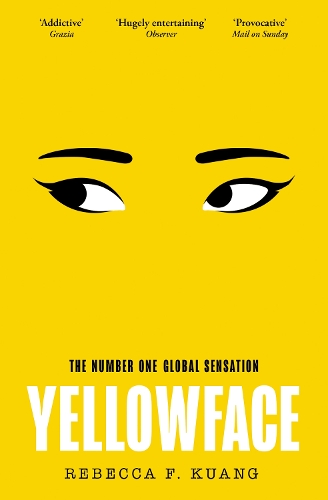
I bet I’m not alone in making my first link RF Kuang‘s Yellowface. Here’s a book I raced through: a book which dissects the publishing world. Or that part of the world ruled by social media in any case: books likely to seize the popular imagination with a theme that chimes in with the current zeitgeist. Our heroine, June, is a young and rather unsuccessful young author, who has a sort-of friendship with another young, but wildly successful author. Who dies unexpectedly. Our heroine seizes a chance, purloins the manuscript of the deceased: spends time researching and re-working it, and then presents it as her own. It has a Chinese WWI theme, and when it’s accepted for publication, her publishers find ways of Chinese-ifying her name (Juniper Song).  Sales become stratospherically huge. Throughout, the ground keeps shifting. Juniper’s self justification for her plagiarism is often convincing, as is the sheer nastiness of some of the social media battles she faces. It’s a melodrama. It’s a thriller. It’s a window on racial diversity as seen through the eyes of a social media and publishing world totally lacking in nuance. It’s a comic novel. It’s clever, leaving you with lots to think about as you flip-flop from ‘getting’ Juniper’s take on her theft , and finding her morally indefensible. It’s entertaining too. Shall I read more by Kuang? Much as I raced through this book, eager to find how the story ends – probably not. I was exhausted.
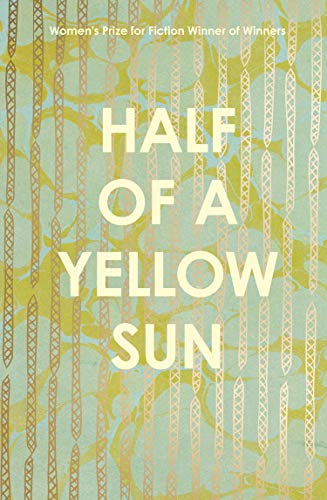
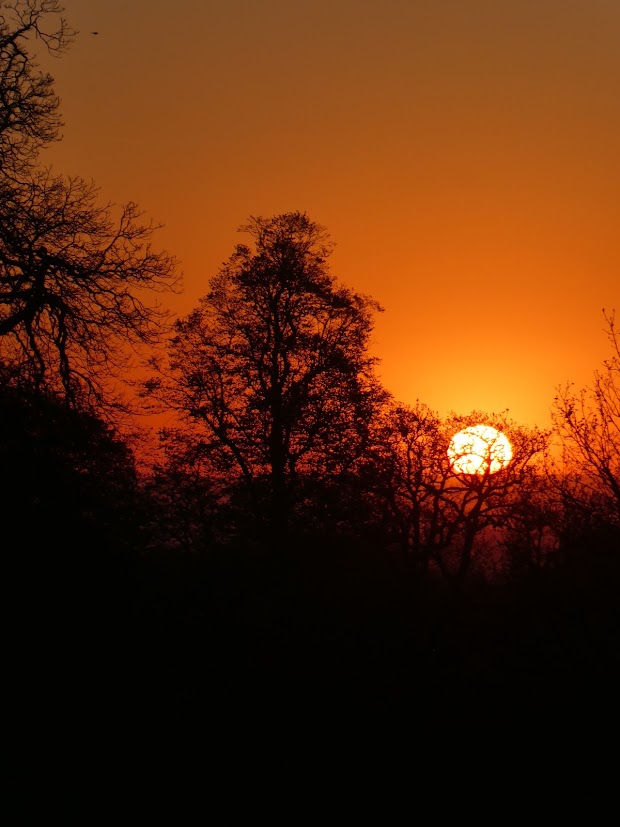
From a yellow face to a yellow sun: Half of a Yellow Sun by Chimamanda Ngozi Adichie. A richly evocative book telling the story of the creation, rise and fall of Biafra, through the eyes of three separate yet connected groups of people. There’s Ugwu, from a traditional village, houseboy to Odenigbo, an Igbo academic. There are Olanna, Odenigbo’s partner and her twin sister Kainene, and her English partner Richard. Their structured lives fall apart as Nigeria itself does, as Biafra emerges as a nation and civil war threatens to destroy them. I’m ashamed at how little I knew of this conflict, remembering it only because of the famine caused by war. Now, an interplay of characters dealing with loyalties, often conflicting, moral responsibility, colonialism and its aftermath brings this piece of history vividly to life, the more so because the author’s family lived through this devastating time. A marvellous and involving read.
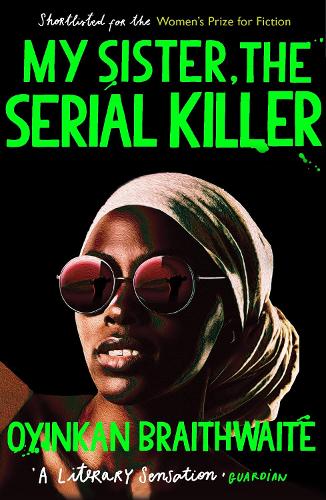
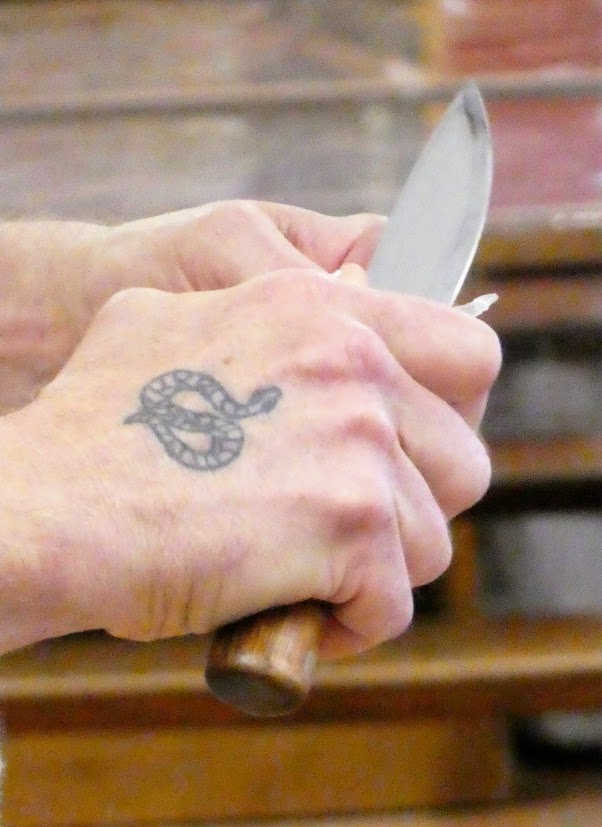
Let’s stay in Nigeria and read My Sister, the Serial Killer by Oyinkan Braithwaite. What did I think of this book? Well, it was a quick read, an easy read, and at no point did I think of not finishing reading this story. But – and perhaps I’m not entering into the spirit of things here – a story in which the writer’s sister gets into a routine of killing her boyfriends, while the writer colludes with her deception just left me cold. The short sharp chapters, and the action which jumped hither and thither kept my interest, as did the back story of a controlling, brutal father. But in the end, it was a slightly distasteful read as far as I was concerned.
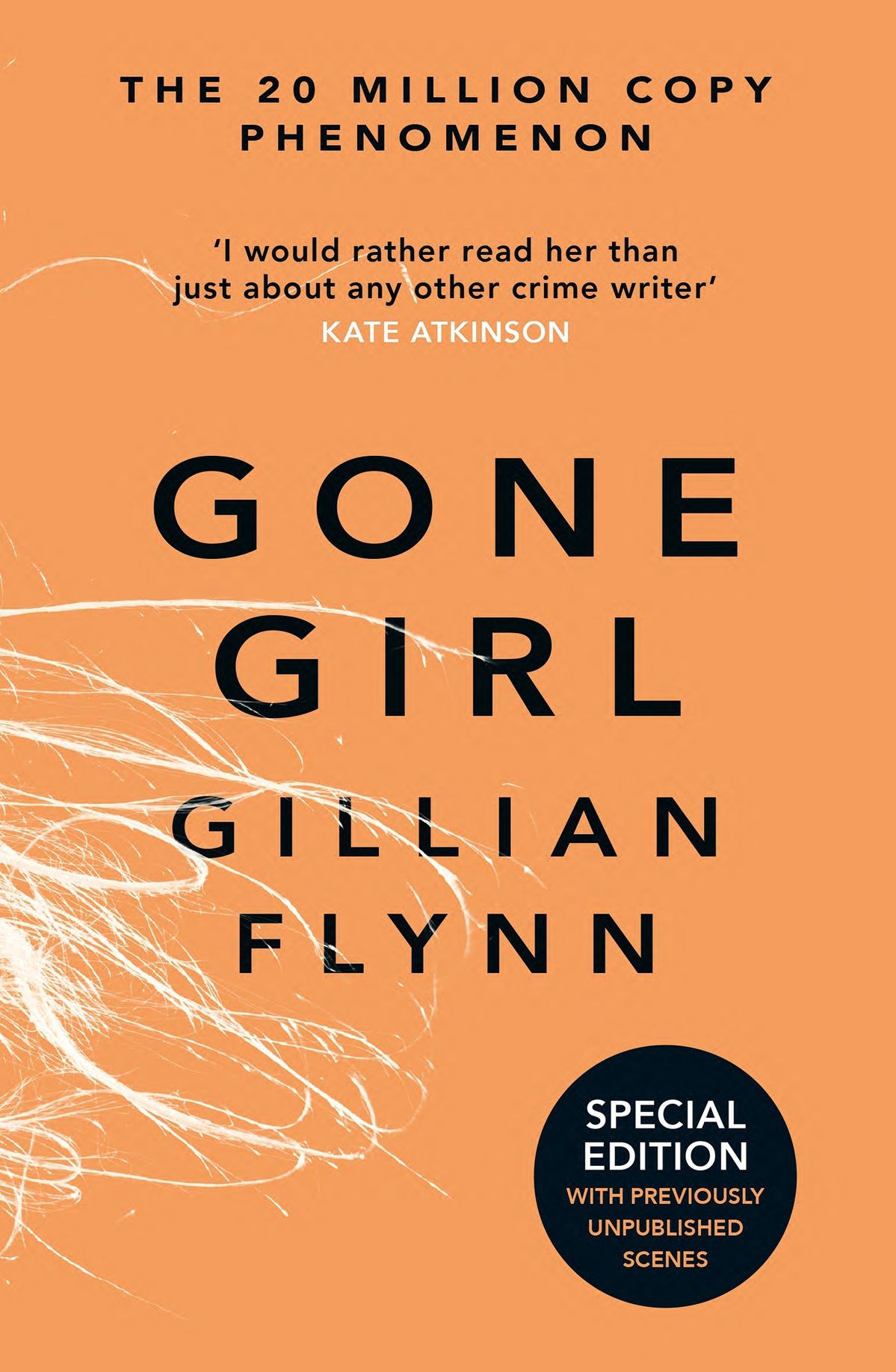
My next book is a story in which a murder of an – allegedly – loved one does not actually take place. Amy Dunne disappears on her 5th wedding anniversary, then fakes her own murder to implicate her husband Nick. She eventually returns home and … things can obviously only get worse. This is Gillian Flynn‘s Gone Girl. I’m actually not sure why I decided to read this book. After all, I’d seen, and been thoroughly disturbed by the film. Why put myself through it twice? Perhaps because I’d been assured that both book and film (Flynn wrote the screenplay) were equally well done. Early on I wondered whether I was right to bother. But then, those details which no film can really get to grips with – tiny vignettes, and thoughts from the innermost workings of those two messed-up heads – started to enrich the narrative. How could I go on willing the ending to be different when I knew perfectly well what it would be? A creepy read, with a thoroughly disturbing ending.
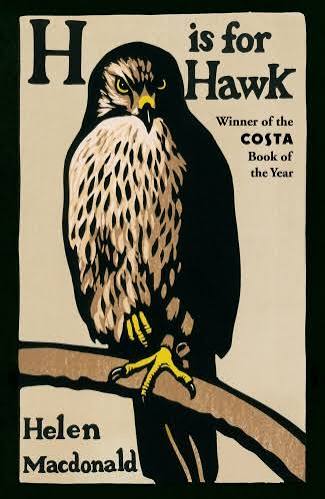
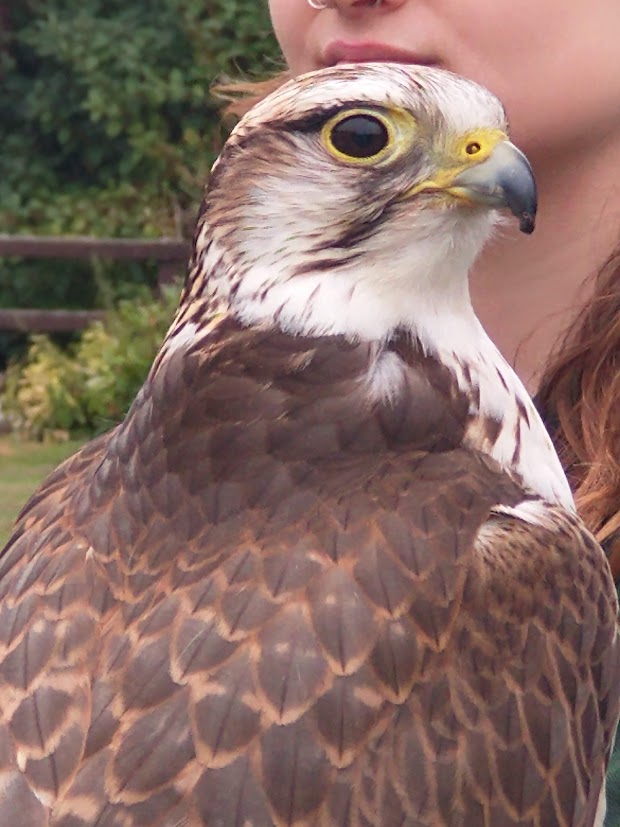
Another, and very different book which prompted a film, which I was disappointed to miss when it was doing the rounds: H is for Hawk by Helen MacDonald. Back in the day, I had resisted reading the book simply because it had become, according to the critics, a ‘must-read’. But …read it. It’s part nature writing – sumptuous, evocative, richly descriptive, each word carefully chosen: part autobiography of a woman overturned by grief at the death of her father; part biography of TH White, author of Sword in the Stone and The Goshawk, and so much more; part manual on learning to fly a goshawk – I now now for sure this is something way beyond my capabilities and my patience. This is a splendid book for the richness of its prose, and the chance it offers to see two wholly unknown worlds: that of the falconer, and that of TH White.
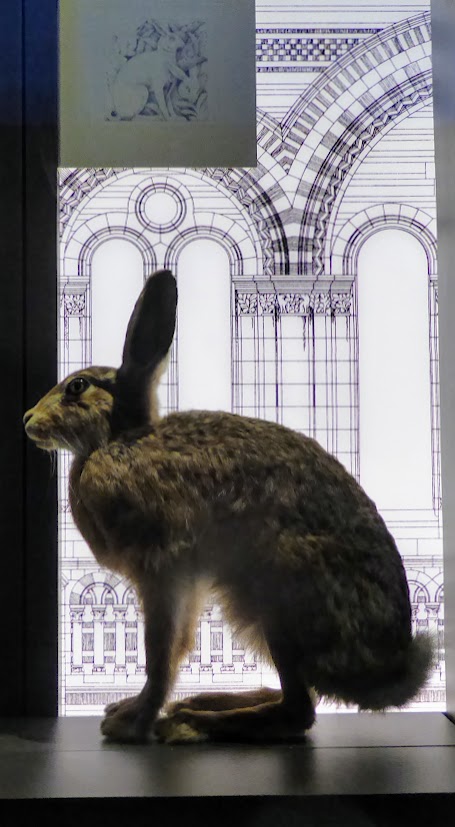
And finally, another book in which a woman becomes intimately involved in te life of a wild creature – Chloe Dalton‘s Raising Hare. Confined to her country retreat during lockdown, Dalton, a high-powered political adviser finds a small, apparently abandoned leveret.This is her story. Of how she treads a difficult path of wishing to help it survive to adulthood, while respecting its wildness. While it is her house-guest, she never treats the creature as her pet, or even names it. Against the odds, it survives to maturity, and continues to include her house, inside and out, as its territory.But the creature has a profound effect on Dalton. She is sensitive and observant, and describes beautifully its changing appearance as it matures through the seasons; their ‘language’ together. Just as the hare is not quite living a normal life, she too is changed. She re-evaluates her career. It’s still important, but no longer so all-consuming. The hare makes her infinitely more connected to and aware of the natural world where her home is situated. This book strives to restore a sense of the sacred and to meet an animal on its own terms.

Well, the chain links book-to-book I hope, but is there an over-arching theme? Not a chance. Let’s see what next month brings. Kate suggests we start things off with a novella of our choice, to celebrate the popular Novellas in November, hosted by Becky of Bookish Beck and Cathy of 746 Books.
Six Degrees of Separation: from A Family Matter to The Master

On the first Saturday of every month, a book is chosen as a starting point and linked to six other books to form a chain. Readers and bloggers are invited to join in by creating their own ‘chain’ leading from the selected book.

Kate:  Books are my Favourite and Best

This month, Kate invites us to start our chain with our latest book group choice. As our group has just read (and highly rated) Virginia Evans‘ The Correspondent, which began our chain in April, I looked a little further back, and am beginning instead with A Family Matter, by Clare Lynch. A short novel, which packs a lot in, and powerfully. There’s a dual timeline: which invoves a 1980s lesbian affair, and a present day timeline which reveals the story of Maggie, whom the ‘outed’ lesbian mother Dawn is forced to abandon, and Dawn herself. An engagingly written and well-developed story throwing a spotlight on those many people who were victims of the prejudice of ‘different times’, and about whose injustices I knew little at the time.

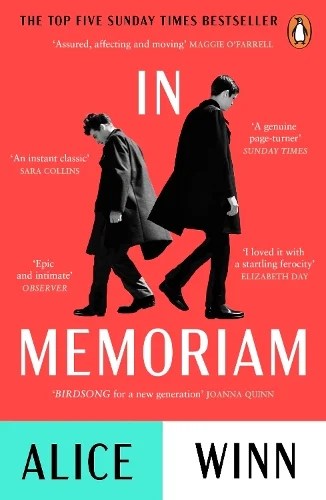
More ‘different times’ in Alice Winn‘s In Memoriam. Here is a book with a varied cast of characters, chief among whom are Stanley Ellwood and Henry Gaunt, both of whom have been exploring their homosexuality whilst still at school. They exchange their privileged lives for the grim reality of battle, and Winn uses telling detail to underpin how truly frightening and beastly in every sense this is, both for the men themselves, and in different ways, for the wider community. A moving and deeply affecting book. I’m quite well-versed in WWI literature, but this has perhaps brought the full horror of that war, and its long-reaching effects before me in a way that few other books have done.

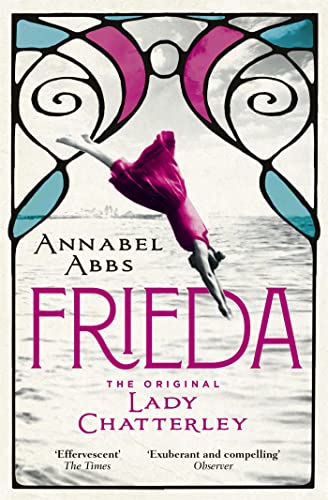
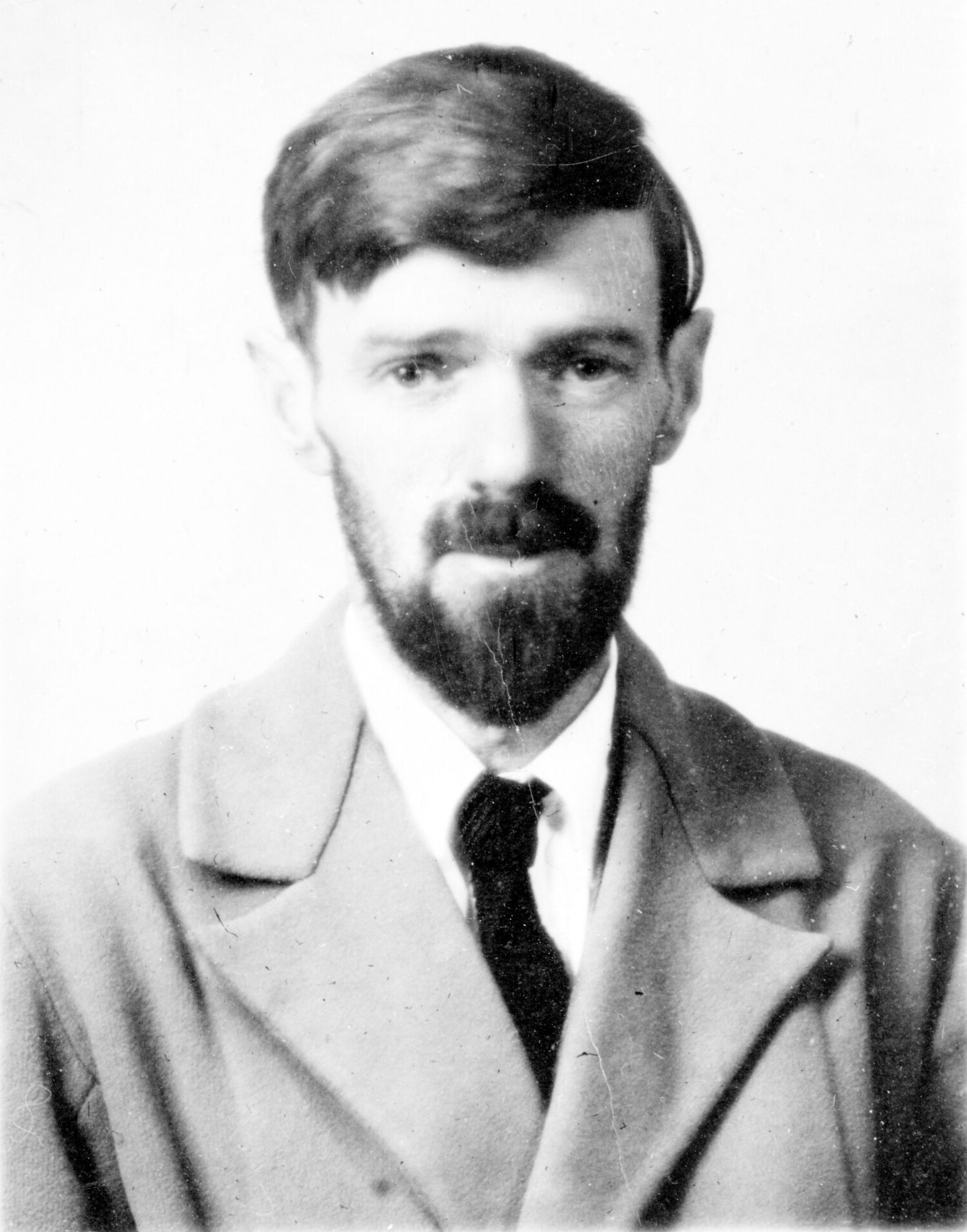
Next? Frieda: The Original Lady Chatterley by Annabel Abbs. This is an engaging – and fictionalised – account of the marriages of Frieda von Richthofen, a German aristrocrat by birth who first married an English academic, Ernest Weekley, with whom she had three children, before unleashing her sexual potential during a visit to Germany. Frieda was encouraged by her sister to have an affair with the radical Austrian psychoanalyst Otto Gross, who deeply influenced her views on sexual freedom. Ernest’s sexual repression then became increasingly unsatisfactory to her. When she met Ernest’s pupil, DH Lawrence, she embarked on a torrid affair in which he increasily came to control her the more she mourned the loss of her children, whom the terms of her divorce from Ernest prevented her from seeing (she was an adulteress after all…). All this is recounted in Abb’s sympathetic portrait of a lonely woman who discovers her joy in abandoned sexual experimentation, as much as in her profound love of her children. A highly readable account.

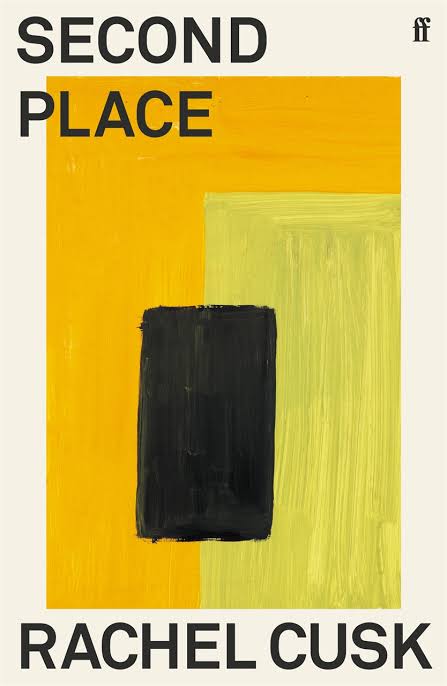
Now to another book in which DH Lawrence plays a secondary but crucial role: Rachel Cusk‘s Second Place. M, living out in a remote country landscape with her second husband Tony, invites celebrated painter L to stay in the second cottage they own: she is powerfully attracted to his work. Daughter and daughter’s boyfriend are already staying for a while. L arrives with his not-girlfriend Brett, and M’s inner monologue continues, as she worries about her relationship with her daughter, her husband, L’s antipathy towards her in a way, manifesting itself in calculated rudeness. M could be thought obsessive, over-analytical, though much of what she thinks is beautifully expressed, But I found it hard to distinguish between insightful and pretentious. Cusk acknowledges the book as a re-write of Mieko Kawakami‘s memoir of DH Lawrence, Lorenzo in Taos, but I haven’t read this. Perhaps I should, and return to the Cusk again, as I’m clearly not appreciating what so many other readers have found in this book.

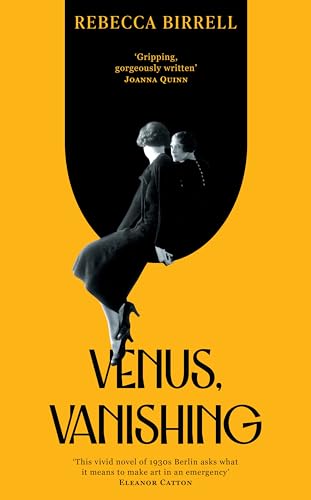
Another book about a practising painter. Venus, Vanishing by Rebecca Birrell. Hannah, our narrator, and a seamstress like her mother, is a young Jew raised in Berlin during the days of the Weimar Republic. She runs away to escape an arranged marriage, and slowly but surely develops her talents as an artist, alongside her seamstress-ing. She also takes two lovers: Saul, a museum curator, and Charlotte, a dancer at a lesbian bar where Hannah likes to sketch. As the Great Depression starts to bite, Hannah comes to the attention of a wealthy older woman, Elke Grese, who sees Hannah’s art and makes an offer of patronage. But it turns out that Elke wants Hannah to use her skills in ways that are increasingly distasteful. How can Hannah refuse? Birrell, an art historian, brings Hannah vividly to life as an artist by weaving allusions to the work of other painters alive and dead vividly into the narrative. We don’t get to know the other main characters anything like so well. It doesn’t matter all that much, but it would have enriched the story even further had we come to know them better. The final section of the book ups the action considerably … let’s stop there. An involving and immersive story, bringing to life an important yet distasteful period of Germany’s recent history.

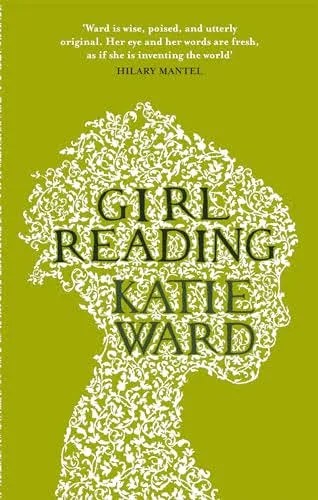
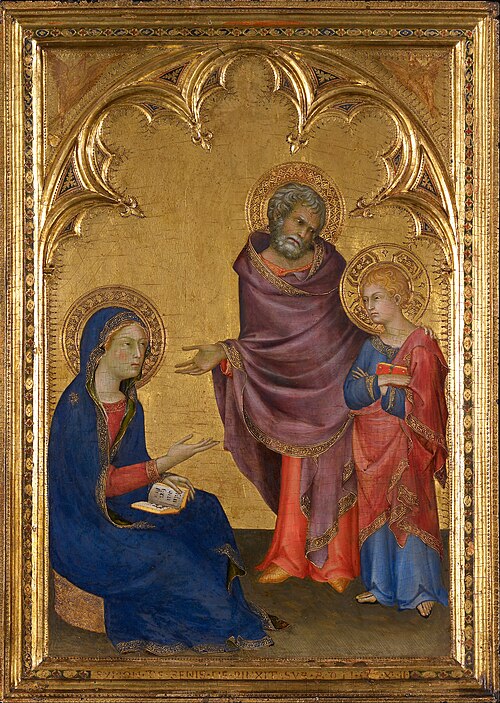
And so to more painters, more sitters in Katie Ward‘s Girl Reading. This book self-describes as ‘a novel’. It isn’t. It’s seven chapters, each focussed on a different period of history and telling the story of a real or imagined woman who is part of the story of someone who has made the pages of history. The first scene for instance tells about orphan Laura Agnelli, being instructed to pose for the artist Simone Martini for his altarpiece panel commissioned for Siena Cathedral. 14th century ecclesiastical and temporal intrigue are deftly explored, and the tale ends enigmatically when we learn that Martini and his wife are unable to conceive, whereas the fifteen year old Laura is hiding an unwanted pregnancy…. Each fresh chapter brings a new painter, new sitters. An interesting look at the precarious position of women throughout European history, in which the voice of each period is brought convincingly to life. Yet for all that, this is a book of largely unrelated episodes – well researched, well told, but with no thread that brings them all together. In the end, despite its strengths, it didn’t satisfy me and I struggled to finish it.

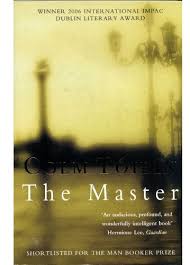
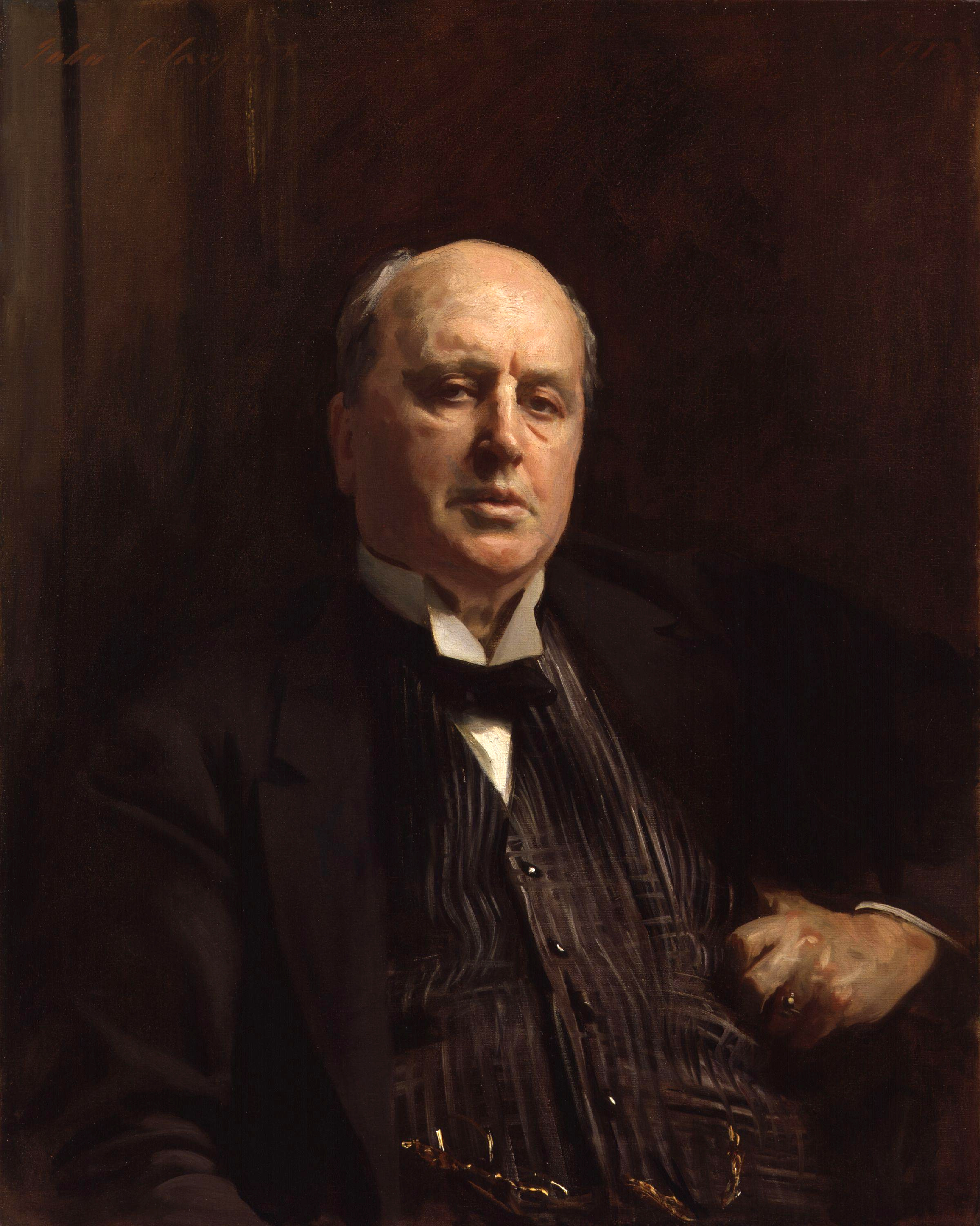
I’ll stay with fictionalised accounts of creative types: a writer again this time. My last is a book that’s on my TBR, but so far unread: The Master by Colm Tóibín. I have a copy on my bookshelves. Here’s what the Guardian says ‘Tóibín’s novel covers just five years of Henry James’s expatriate life – from the disastrous debut of his play Guy Domville in London in January 1895 to January 1900, when his brother William leaves Henry’s home in Rye. Henry writes, he travels, he recalls various losses. Asked on the cusp of the new century what he intends to write next, Henry says, ‘I am a poor storyteller … a romancer, interested in dramatic niceties … Once I wrote about youth and America and now I am left with exile and middle age and stories of disappointment …’

Well, this chain took on a life of its own. Starting with sexuality in some of its many guises, we move on to creative people, both writers and artists, real and fictional. Can I link back to the starter book? Almost certainly not. And next month? The chain will start with Rachel Cusk‘s latest novel, Life of M. Why not join in?


It’s time for Six Degrees of Separation … in September…

‘On the first Saturday of every month, a book is chosen as a starting point and linked to six other books to form a chain. Readers and bloggers are invited to join in by creating their own ‘chain’ leading from the selected book.‘

Six Degrees of Separation: Kate W

This month, the chain begins with Rachel Cusk’s Second Place. The narrator is M, living out in a remote country landscape with her second husband Tony, invites celebrated painter L to stay in the second cottage they own: she is powerfully attracted to his work. We’re witness to M’s inner monologues, as she worries about her relationship with her daughter, her husband and L’s antipathy towards her, manifesting itself in calculated rudeness. Cusk acknowledges the book as a re-write of Mieko Kawakami’s memoir of DH Lawrence, Lorenzo in Taos, but I haven’t read this. M could be thought obsessive, over-analytical, though much of what she thinks is beautifully expressed.  Insightful?  Pretentious?  Only you can decide.

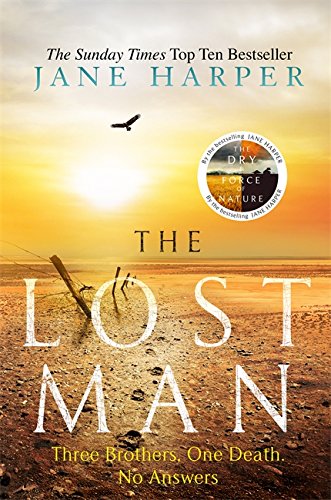
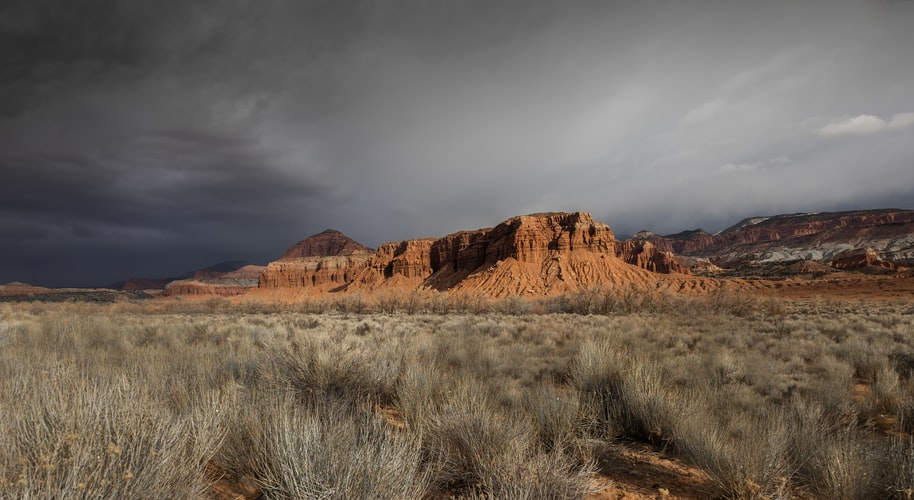
Some weeks on from reading Second Place, my lasting impression is of a lonely setting, and of characters who are ultimately alone.  So the first link in my chain is Jane Harper’s The Lost Man.   This story is set in the Australian outback, and for me the central character in the novel. Understanding the vastness, the harshness, the loneliness and unforgiving nature of this landscape was what I took from this book. It’s the story of a family, of three brothers who live next door to one another (by which you need to understand that they each live at least three hours drive from each other), and what happens after Nathan finds Cameron dead one day, by the grave of a long-dead stockman, in upsetting circumstances.  The wider family unravels, then ravels again in a satisfyingly realised story, in which the ending was possibly just a little too neat.  But it’s a great story, well told and visualised.

Loneliness of a different kind is at the heart of Javier Marías’ Berta Isla. Berta and Tomás fall in love while still at school together. Anglo-Spanish, Tomás goes to university in Oxford, to further his extraordinary gift for languages, while Berta studies in Madrid. At Oxford, Tomás makes a mistake which obliges him to make his choice of career to work for the British secret service. It changes his and Berta’s relationship for ever. This is the story of a marriage in which the husband is largely absent to his wife, to his children and to the world at large. It takes in – at a distance – the Irish Troubles, the Falklands War, and Franco’s dictatorship.

 At one point Berta herself quotes from Dickens’ Tale of Two Cities: ‘…every human creature is destined to be a profound secret and mystery to every other creature’. That’s what this book is about.  A thoughtful, discursive book which will remain with me for a long time.

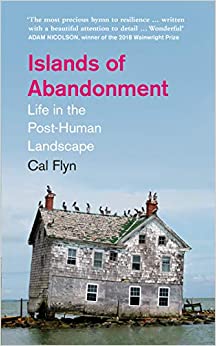
Let’s look at loneliness of a different kind: Islands of Abandonment by Cal Flynn. This is a book about what man has done to various places on earth, and what happens when man ceases to interfere: when the mining stops; the botanical garden is left to its own devices; the fatally damaged nuclear reactor is fenced off; the WWI chemical weapons site locked and the farmland abandoned. Nature begins to take over once more. Maybe not quite in the form that it had previously, but insidiously, by adapting and making do. The wilderness revives.

This beautiful, even lyrically written book celebrates Nature’s power to recover, even when to the average aesthete the results are not conventionally pretty. It may be almost too late. There is much to be concerned, horrified and terrified about as man continues to despoil the planet. But Flyn finds hope in nature’s power to take back control. A book I am pleased to have read: and one which gave me plenty to think about, and plenty to appreciate in the quality of Flyn’s writing.

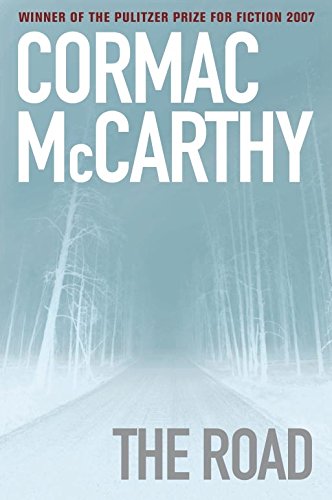
Back to fiction, to Cormac McCarthy’s The Road, the tale of a father and son trudging through post-Apocalypse America. This is a land where nothing grows, no small animals are there for the hunting: where communities and dwellings are deserted and long-since looted for anything that might sustain life a few more days: where other humans might prove peaceable, but might instead be evil and dangerous. This book is bleakly, sparely written. Conversations between father and son are clipped, necessary. No speech marks. Sometimes little punctuation. Every ounce of energy is needed for the business of staying alive. This book, in which nobody lives happily-ever-after will stay with me for a long time.

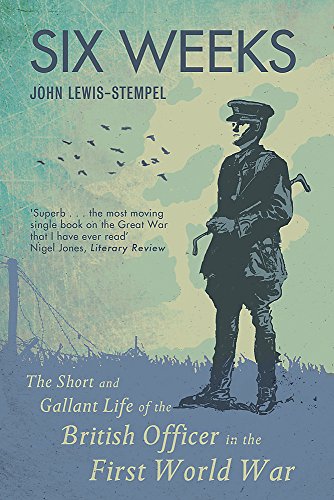
An apocalypse of a different kind is described in  John Lewis-Stempel’s Six Weeks: The Short and Gallant Life of the British Officer in the First World War. I thought I was pretty clued up about the social history of World War I, but this book was a revelation. It describes the war, and life in the trenches and beyond from the point of view of the young subalterns who, in leading their men at the Front, had a life expectancy once there of six weeks. These young men, some no older than 17, had been equipped by their education in public schools to be team players, leaders, and military men through their membership of the OTC. They rose to the occasion, leading men often old enough to be their fathers, commanding their respect and even love. Some of these men became officers in their turn, because the public school men, frankly, were mainly all killed. Marlborough School, for example, lost 400 men in the Great War.  This is about their short lives, and the lives of the men they led.  Brilliant.

Oh goodness, this has been quite a dark month of book choices.  Let’s lighten the mood for my final choice, in a book about that moment in our lives when we’re all finally alone … death.  Waiting for the Last Bus by Richard Holloway. This is an excellent, thought provoking book written with a light, amusing touch. I’ve reached the stage in life where reflections on life and death seem appropriate, and this is a book I’ll read again. Holloway considers our fears of death, both for ourselves, and for those whom we love. He looks at what comes next, both for the deceased and for those left behind. A former monk, agnostic, and bishop, Holloway has written a book which is accessible to us all, not just Christians.  Highly recommended, and not at all depressing.