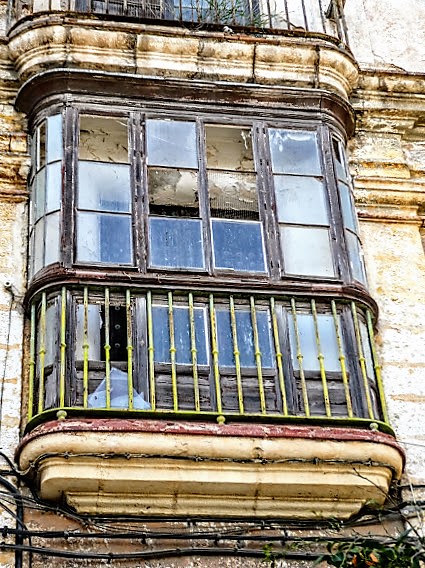
Tomorrow, for our regular Tuesday Day Out, we’re taking (another) trip to Cádiz. We’re going to spend time near the sea and pop to a couple of places in town. But today I want to take you instead to Plaza de España. Here is a handsome house in a handsome area. But now it’s down on its uppers. No longer smart, it’s still extremely characterful. I thought it deserved its fifteen minutes of fame.
It’s Six Degrees of Separation time again, and this month, we all begin with Are you there God? It’s me, Margaret. I read Daughter Number One’s copy of this thirty years ago, and then twenty years ago read it all over again when it was Daughter Number Two’s turn. Judy Blume was every tweenage girl’s author of choice. An issue-led author, talking about puberty, boys, periods, while at the same time telling an involving story – how could this ground-breaking author fail to be popular among young people – and their mothers?
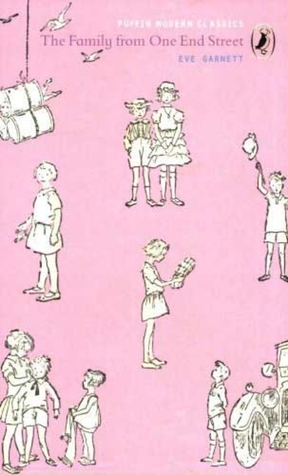
It was so different from the books I enjoyed at roughly the same part of my childhood. And yet one I remember was also ground-breaking, in a different way. Eve Garnett’s The Family from One End Street told stories from the happy lives of the Ruggles children. But this family was exceptional at the time – they were working class! Their father was a dustman! Yet this book was first published in 1938, and has rarely been out of print since then.
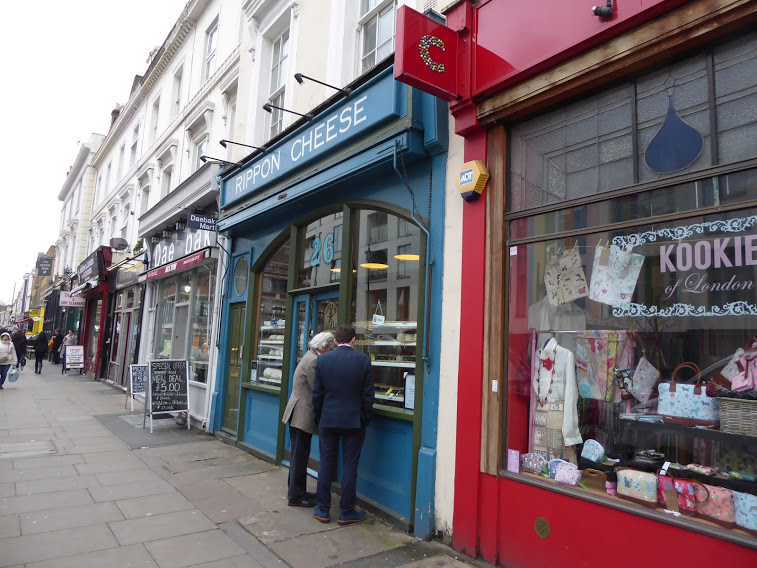
Perhaps this street, now fashionable, might have once been the ordinary sort of street where the Ruggles family shopped?
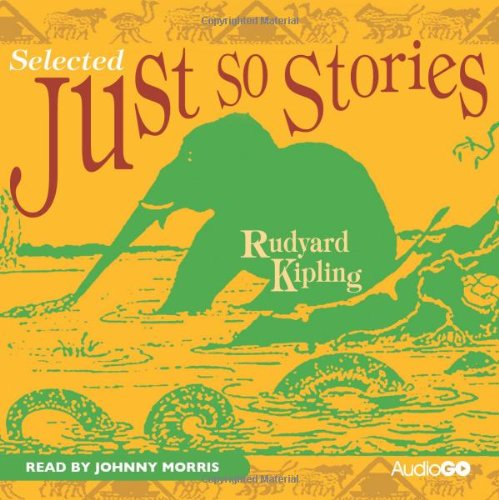
My children didn’t read about the Ruggles family. But a book I, and each of them, loved for years was Rudyard Kipling’s Just So Stories. Where would long car journeys have been without endless replayings of Johnny Morris reading The Elephant’s Child or How the Rhinoceros got his Skin?
An elephant I saw in India
What about more modern books we all shared together? One that stands out is Quentin Blake’s Mr. Magnolia. All of us know every word of it, and will still cheerfully chant …
Mr Magnolia has only one boot.
He has an old trumpet that goes rooty-toot –
And two lovely sisters who play on the flute –
But Mr Magnolia has only one boot.
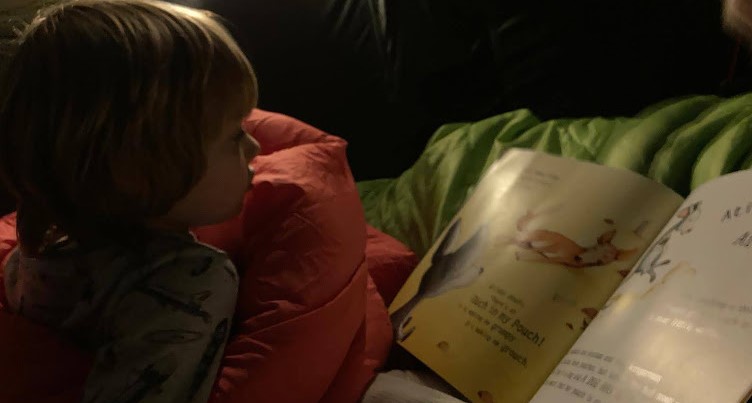
… at the least provocation, even though it’s maybe nearly thirty years ago that we last curled up in bed together to read it with my younger daughter. Well, it’s the grandchildren’s turn now.
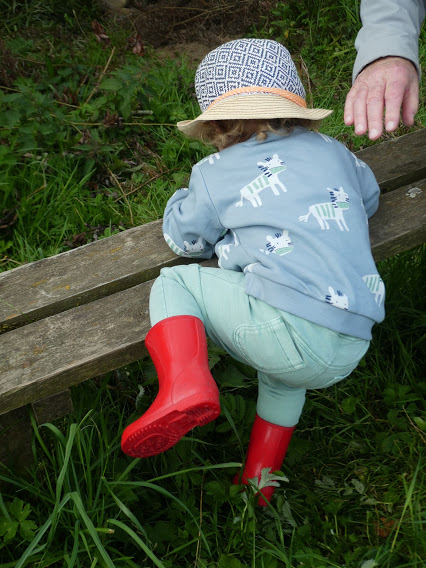
Would one of Zoë’s boots help Mr. Magnolia?
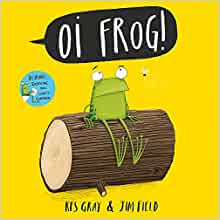
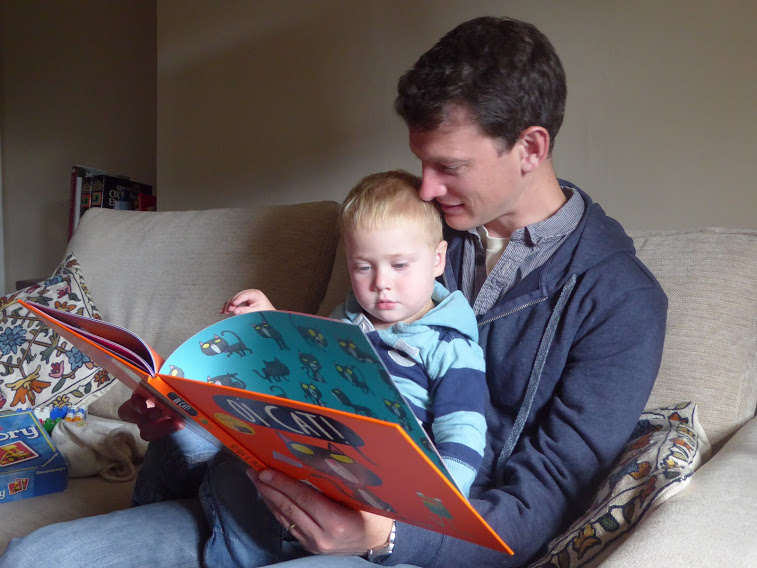
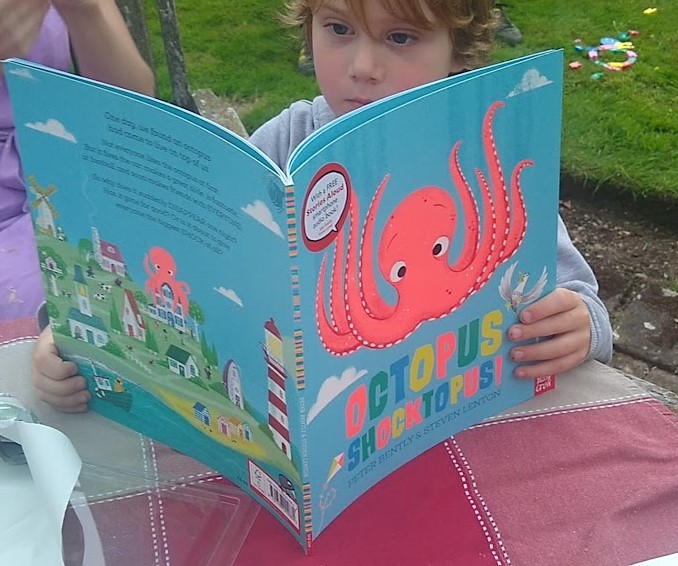
And we depend upon the grandchildren to keep us up with newer children’s books. Our lives would definitely be the poorer without Kes Gray and Jim Field’s Oi Frog! (and Oi Cat!Oi Dog! and all the rest …) From which we learn that …
Cats sit on mats, hares sit on chairs, mules sit on stools and gophers sit on sofas.
Tiny children, big children and adults alike can all indulge in a bit of silly word play from time to time.
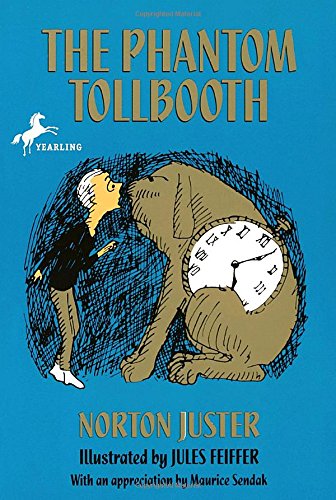
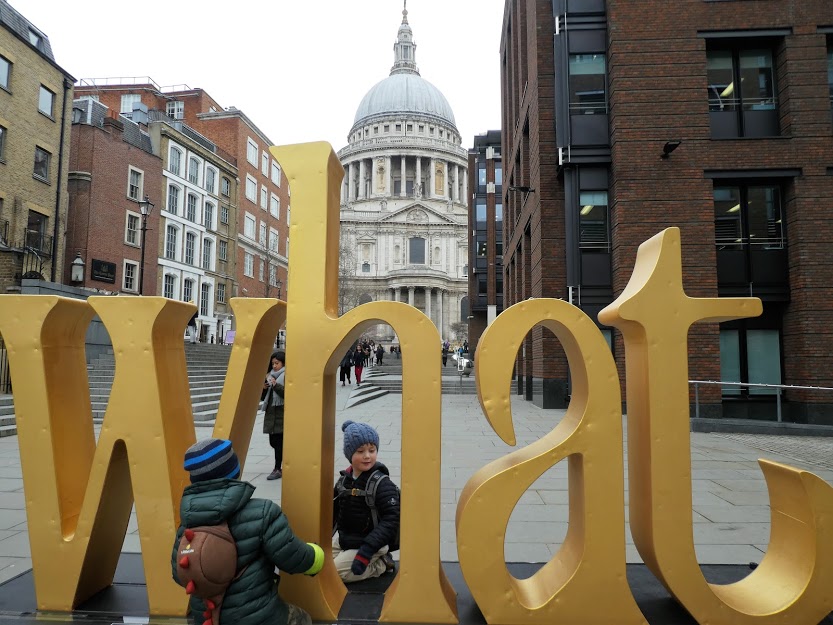
Which leads me back to an old favourite, another one from my own childhood and which my children, and now five year old William is now enjoying in his turn: the Phantom Tollbooth, by Norton Juster. This adventure leads bored Milo to discover the power of words, and of numbers in the cities of Dictionopolis and Digitopolis as he meets characters such as King Azad the Unabridged, and Tock the Watchdog, while discovering that eating subtraction stew just makes you hungrier, and that while it’s very easy to jump to the island called Conclusions, it’s hard to escape.
William discovers the power of words outside St. Paul’s Cathedral
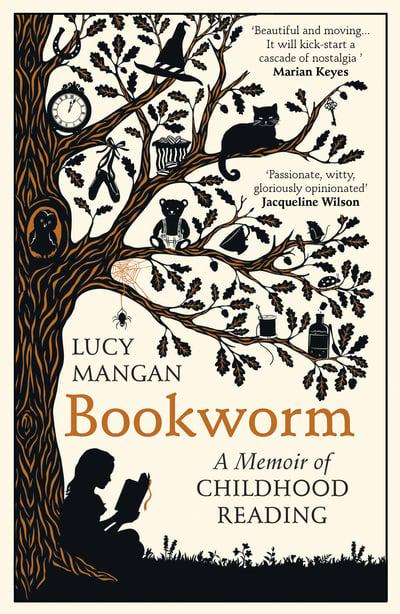
And so to my final link, one that encompasses all these books and many more; Lucy Mangan’s Bookworm: a Memoir of Childhood Reading. She’s younger than me, but she too was a bookish child. Her reading choices were my reading choices, and this book brings back memories of much loved favourites, some of which I’d forgotten about. All British bookworms should have this on their Christmas list.
I keep on referring to myself as Country Mouse. That’s because I am, and have been for the last thirteen years or so. But it’s not always been like that. Here’s my back-story, written during our last weeks in France, back in 2013.
We were Christmas shopping in Toulouse yesterday. A day in this, the fourth largest city in France, is always a treat. And yet….By about half past three, we’re footsore, weary and confused like Aesop’s poor dear Country Mouse who decided the simple, yet safe country life was preferable to the riches and dangers of life in the city. We want to go home.
Roofscape from Lafayette
Old buldings, new uses
Always plenty of interest if you keep your eyes open. Silk stockings were made here
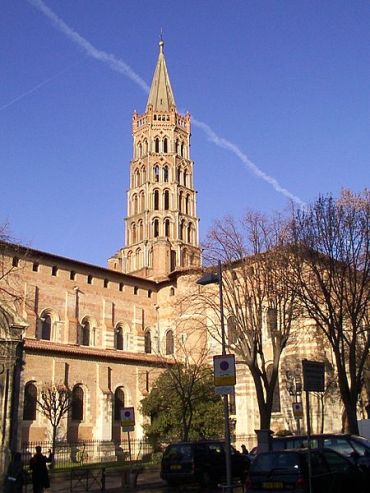
St. Sernin
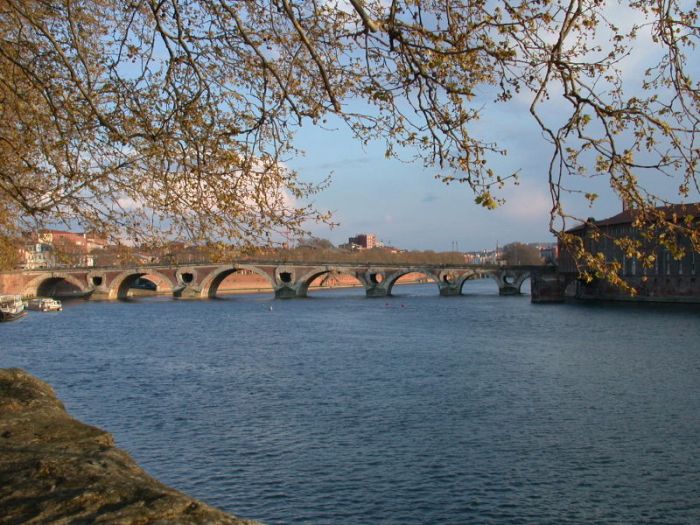
The Garonne
The Capitol at night
A couple of more recent Pearly Kings
I was nearly always a city girl. Raised in London, after pre-school years in rural Yorkshire, I had a childhood enriched by Sunday afternoons at the Natural History Museum or frenetically pushing buttons at the Science Museum. We’d go to watch the Changing of the Guard at Horseguards Parade, nose round hidden corners of the city, still scarred in those days by the aftermath of wartime bombing. We’d go on our weekly shop to Sainsbury’s: not a supermarket then but an old-fashioned grocery store, with young assistants bagging up sugar in thick blue – er – sugar paper, or expertly using wooden butter pats to carve up large yellow blocks of butter. If we were lucky, there would be a Pearly King and Queen outside collecting for some charity.
It was Manchester for my university years. I loved those proud dark red Victorian buildings celebrating the city’s 19th century status as Cottonopolis, as well as the more understated areas once populated by the workers and managers of those cotton mills, but developed during my time there as Student Central. I loved the buzz of city life, the buzz of 60’s student life.
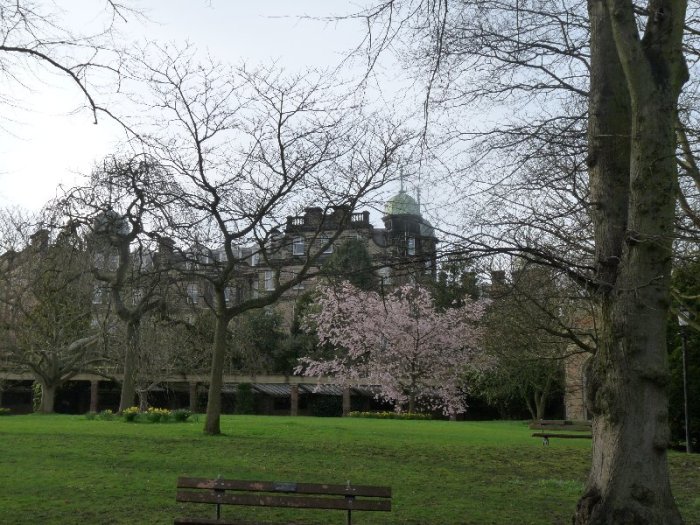
The not-so-crowded Valley Gardens, Harrogate
Then it was Portsmouth. Then Wakefield, and Sheffield, and Leeds. City life meant living with up to 750,00 neighbours. And I thrived on it. I never felt too far from wide open spaces, yet a short bus ride brought me theatres, cinemas, exhibitions, shops, choices of schools for my children. When we moved in 1997 to Harrogate, with a mere 75, 000 inhabitants, it felt small.
In 2007, we came to the Ariège, to Laroque, population just over 2,000. The largest town in the whole area is Pamiers, with a mere 19,000 inhabitants. How could we still think of Harrogate as really rather tiny? So we needed to change the way we saw things. We’re accustomed now to at least recognising most of the people whom we see round and about. We enjoy the fact that we count many people in the community as friends, and that we all turn up to the same events. We relish the space, the more relaxed pace of life, the sense of belonging that we have here.
These are the kind of traffic conditions we got used to
Now, as we plan our return to England, the idea of the clogged roads of the Harrogate rush hour is unattractive, the busy streets unappealing. Ripon, where we more recently lived is much more like it: 14,000 people. But we ask ourselves – is even a town this size too big and scary for Country Mice? Should we continue as we’ve started? Perhaps we should look at Galphay, Gargrave, Greenhow or Grewelthorpe, average populations about 400? Or Masham, about 1,250? All of these are near our centre of gravity, Ripon.
So much to think about. But wherever we end up, we’ll still want the odd sortie to The Big City. Toulouse hasn’t seen the back of us yet.
And reader, we did end up in a village near Ripon. North Stainley. Population 700
Photos 4, 5, 6 0f the Toulouse series; the Pearly Kings and Harrogate’s Valley Gardens courtesy of Wikimedia Commons
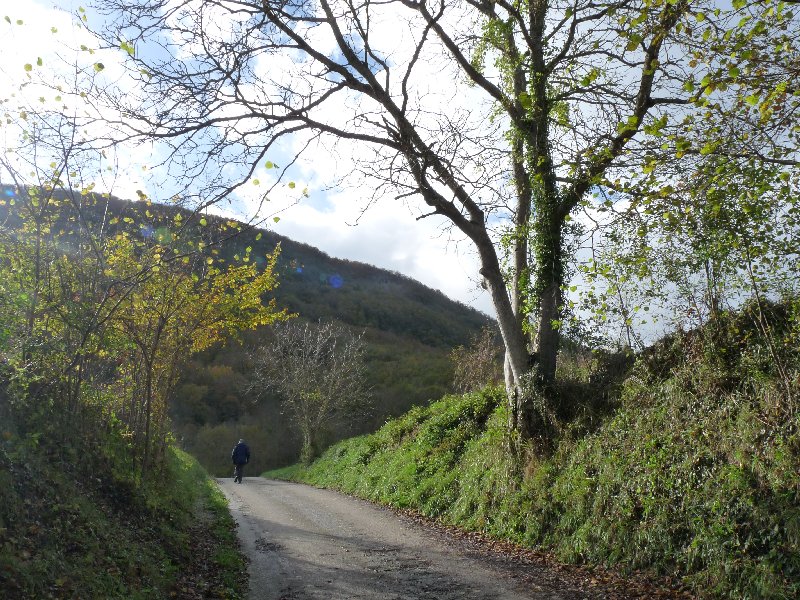
Today I’ve decided on a virtual visit to South Korea, a country we visited four years ago when our daughter was working there. I’m not – on the whole – going to take you to national monuments this week. We could go on the metro – there’s a station in the featured photo, just as clean, high-tech and efficient as you probably expected. Some metro stations are so extensive that you have to catch a train from one platform to the next when you need to change lines.
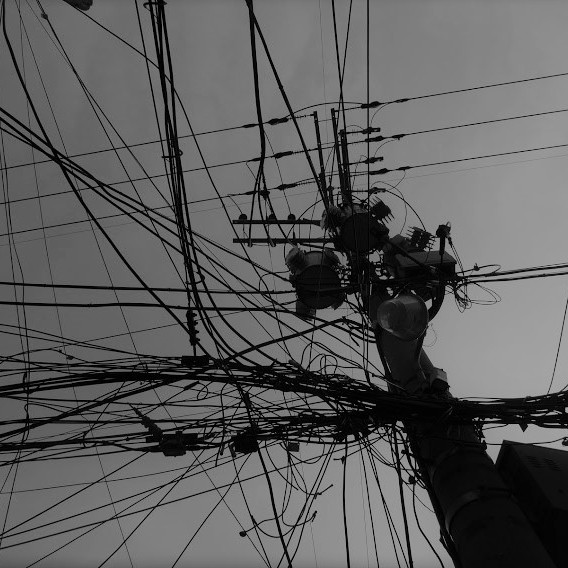
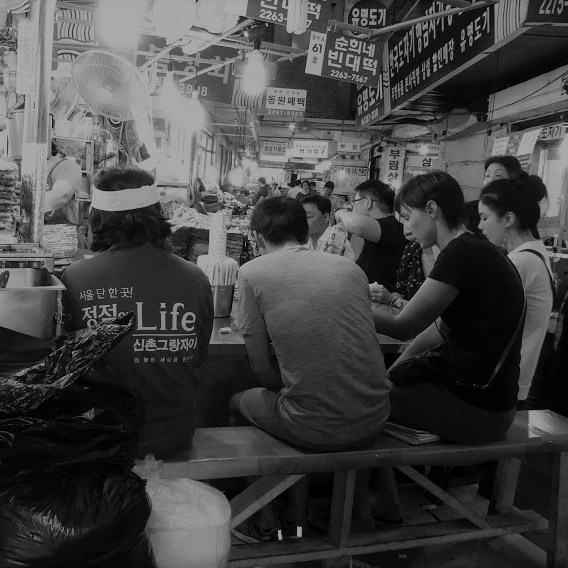
Let’s walk the streets of Seoul, where the very first thing that will strike you is the astonishing tangled knitting that is the overhead electrical wiring. We could visit the market area. Whole streets are devoted to the sale of just one product – rubber bands say (yes, really!), electrical wiring, cardboard packaging … or even spam. Since the Korean War, Americans – and spam – have enjoyed an enviable reputation. In a country where western tourists are still not all that common, we often profited from being thought of as American. In among all these workaday offerings are spacious and elegant jewellery shops – whole department stores devoted to nothing but that. We popped into one – and popped right out again.
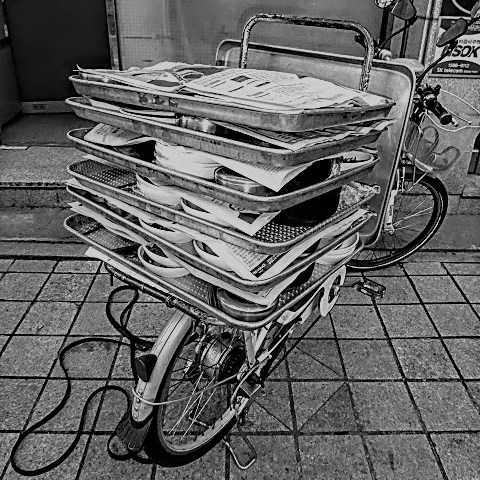
Towards lunchtime, we could peer into tiny kitchens, and watch meals being prepared, packed up, and stacked onto trays. They’ll be delivered to workers in shops and offices on bikes, or on the heads of purposeful delivery women, who’ll later collect the empties.
But let’s glimpse through a window from in one palace, at least: Seoul’s Changdeokgung Palace. You can read a short account of the troubled history of South Korea’s cultural heritage here
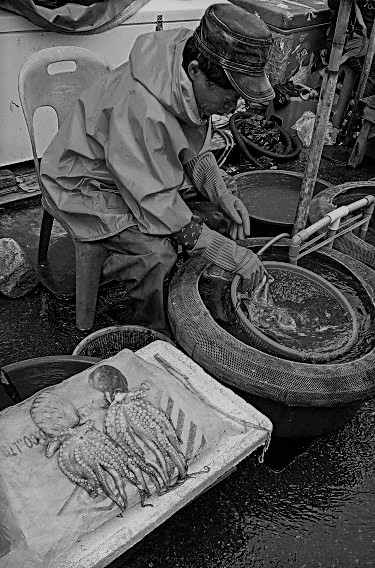
And now let’s travel south to South Korea’s second city, Busan: a coastal city and port, and Emily’s home for that year. It has one of the biggest fish markets in the world, Jagalchi Fish Market. You’ll rarely see anywhere so many fish gathered together in one place – I posted about them here.
I’ve a feeling I may have an occasional South Korean season coming on, and maybe next time in glorious technicolour. Thanks to Sarah at Travel with Me for putting the idea into my head, and to Jude, whose photo challenge this week constrains us to think of the urban environment. Country Mouse hasn’t been to town for weeks,
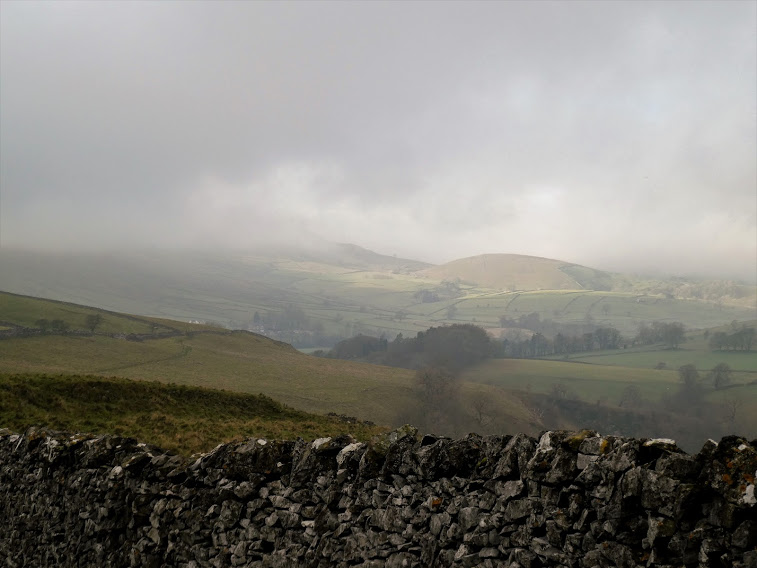
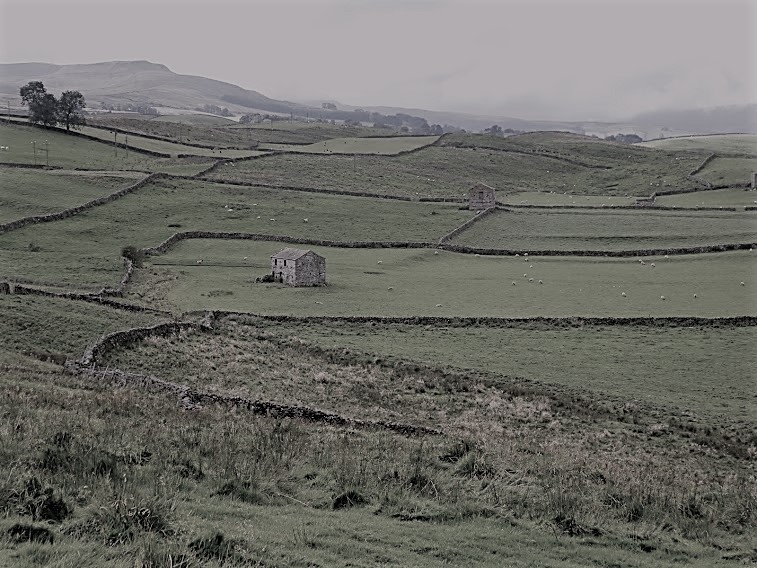
Weather forecast. Cold, but bright and sunny. That sounded perfect for a walk in Wharfedale. Starting and finishing at the forbiddingly-named Grimwith Reservoir, and taking a fine circular route to and from Burnsall would give us extensive panoramas over the hills of the Yorkshire Dales.
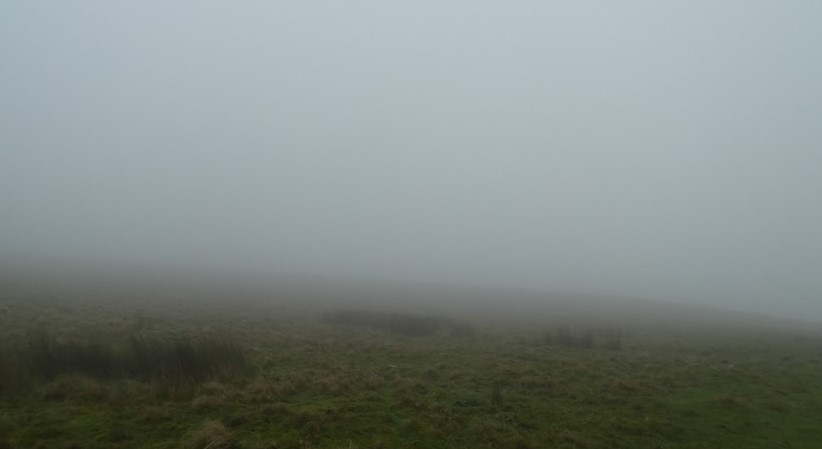
Except that on the way there, an impenetrable curtain of fog descended. To walk? Or not to walk? My friend and I had both made the effort to get there. So we’d walk.
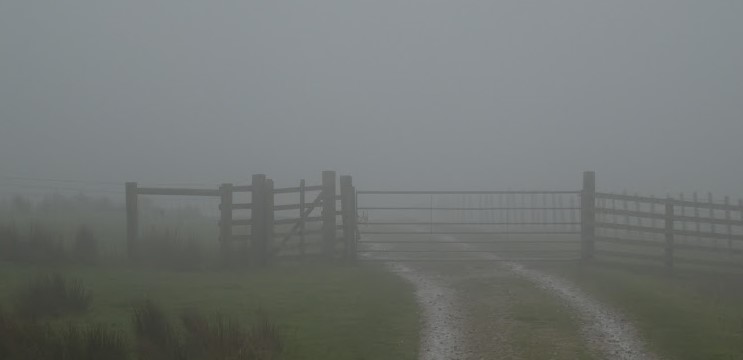
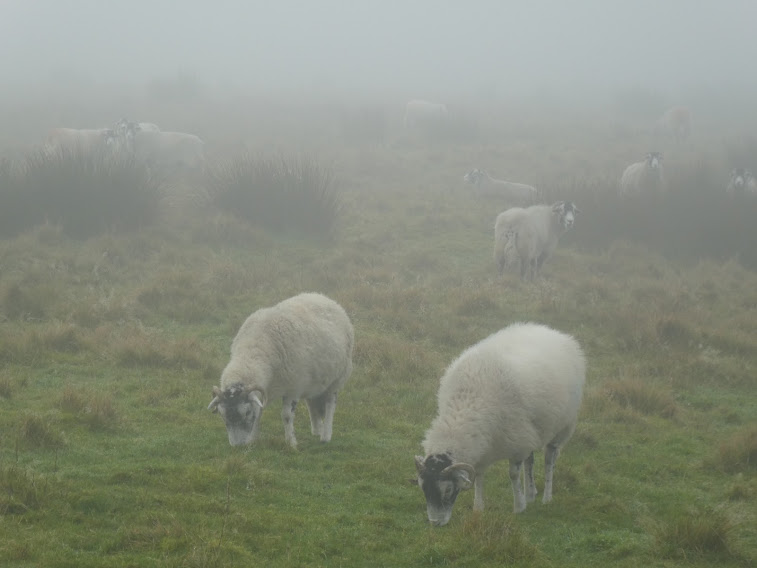
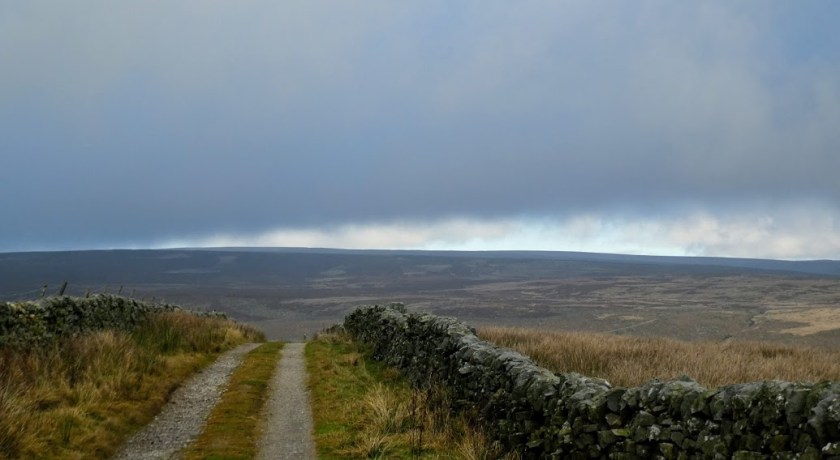
And for nearly an hour, this was our landscape. No hills, no dales, but just the occasional gate, or tussocky grass, or – sometimes – sheep.
Then – suddenly it seemed – this.
The sky lightened and brightened, and the countryside we’d come to see developed before our eyes like those Polaroid photos that once seemed so exciting.
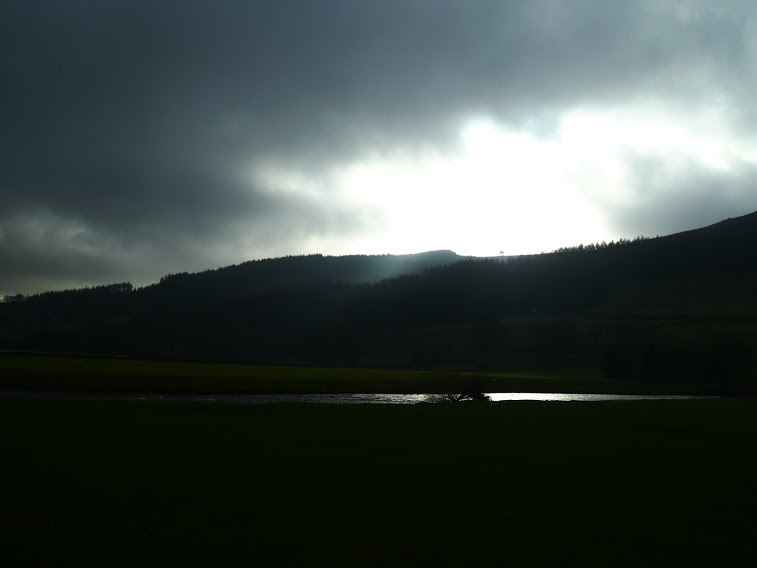
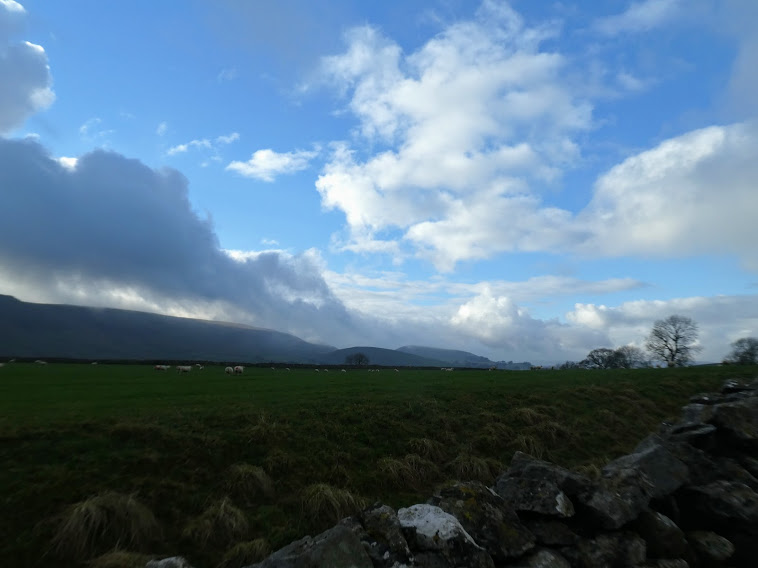
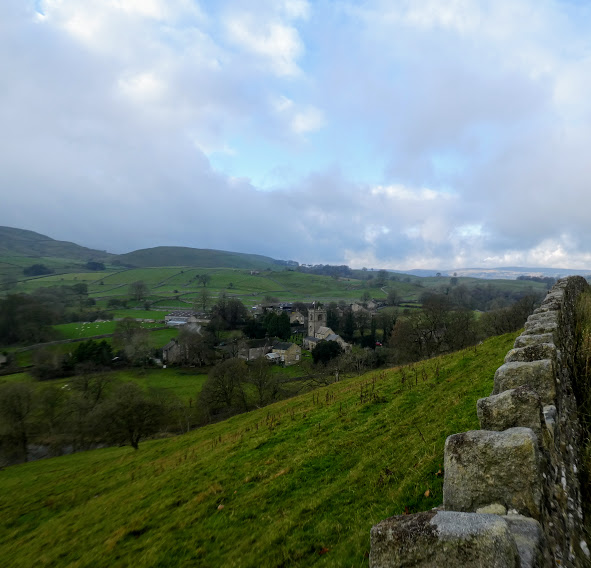
Soon we were at Burnsall, our half-way mark. A hearty yomp up hill brought us to a bench, where we saw in turn black skies, grey skies, blue skies: and views, always with the village below us.
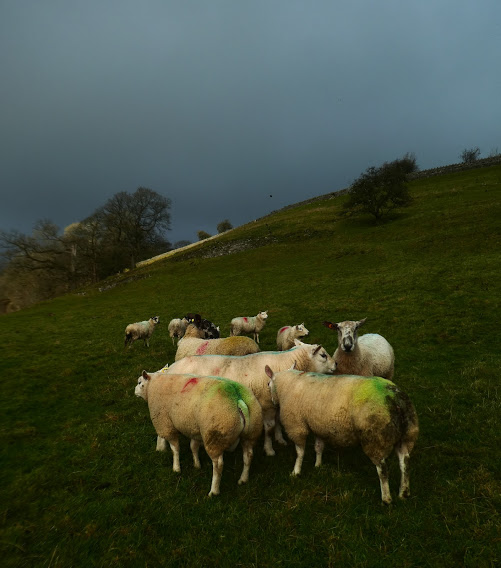
Our lunch time views of Wharfedale, the River Wharfe glinting below, a few curious sheep, and Burnsall.
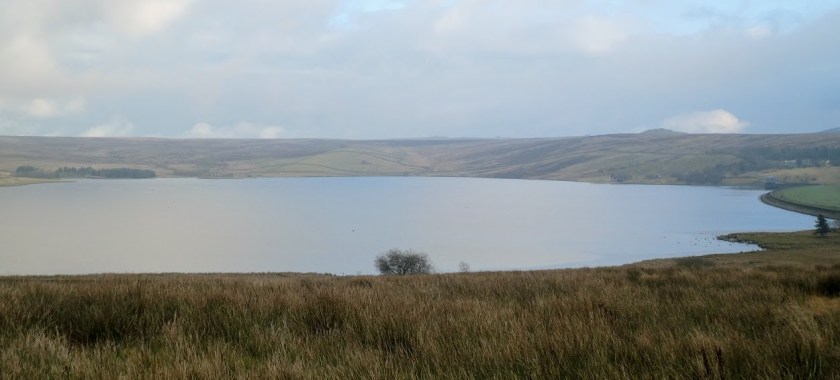
After lunch, a further climb, and then level walking back to where we’d begun our day. But this time we had the views we’d come to see, and at the end, the quiet tints of the reservoir.
It’s almost the end of the month and I haven’t yet revisited a post from our years in France. Becky introduced her readers to Flashback Friday. That’ll do me. Especially in the week of the Great British Bake-off final.
‘LET THEM EAT CAKE’ 27th November 2012
Back in the UK, I hear everyone’s gone baking mad, that the entire nation was glued to its screens to watch the final of ‘The Great British Bake-off’. Here in France, it’s the one branch of cookery in which the average French person will allow the average Brit some supremacy.
The French are rightly proud of their high-end patisserie, the delectable tarts and gâteaux which traditionally come to the table at the end of a family celebration or Sunday lunch: from the baker’s naturally, no shame in that.
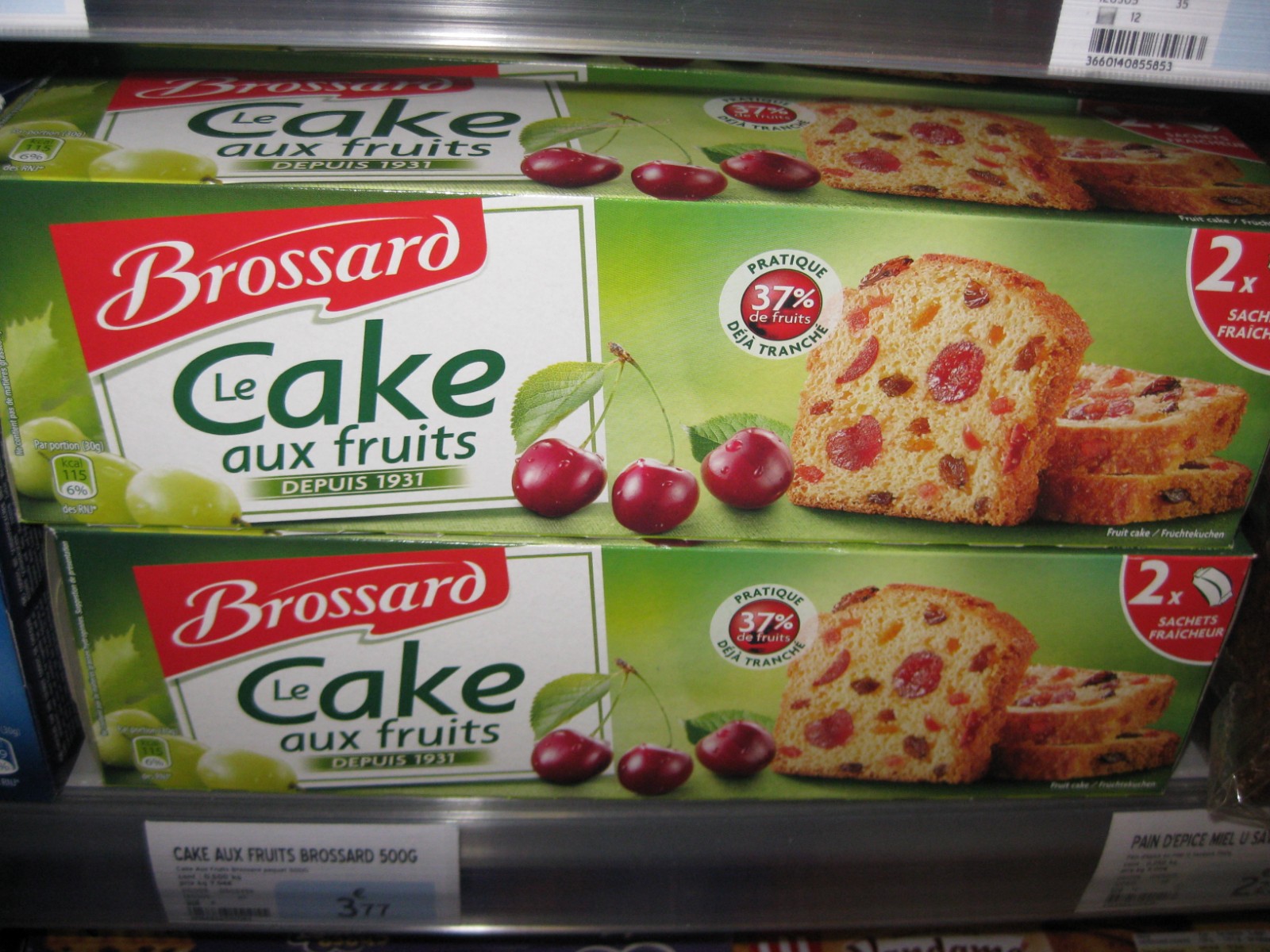
More day-to-day baking is a different matter, however. Plainish cakes, loaf-shaped and known in France as ‘cake’, are a big disappointment, especially if they’re from the supermarket. I find them over-dry, over-sugared, too strongly flavoured with something, such as vanilla, that should be a subtle undertone. I never thought I’d find myself saying this, but even cakes available in any old British supermarket can be quite a treat in comparison.
McVitie’s Jamaican ginger cake, for example, dark and sticky, is just the thing with a hot cuppa after a brisk country walk in winter: it even has its own website. And while I’m not sure that Mr. Kipling makes exceedingly good cakes, they’re – well – not too bad.
No wonder then, that when we run our cookery workshops at Découvertes Terres Lointaines, and announce that we’ll be turning our hands to British tea-time treats, the group is immediately oversubscribed . Scones, coffee and walnut cake and a nice of cup of tea anyone?
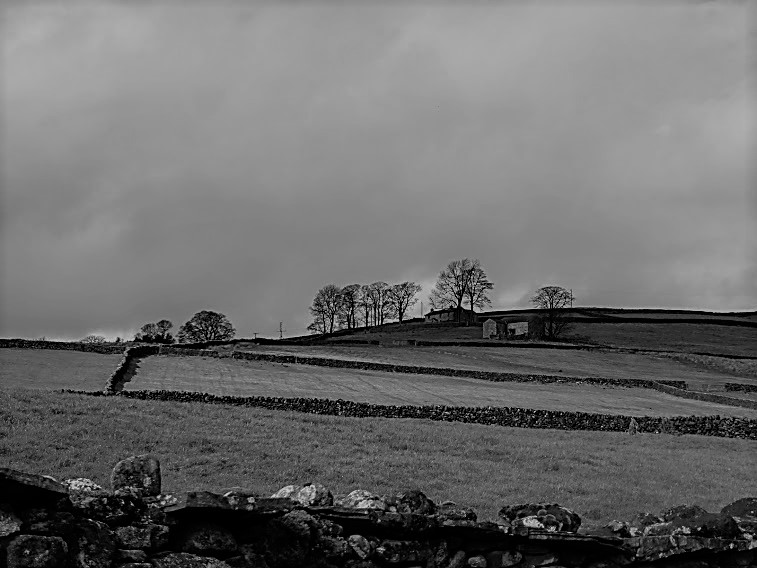
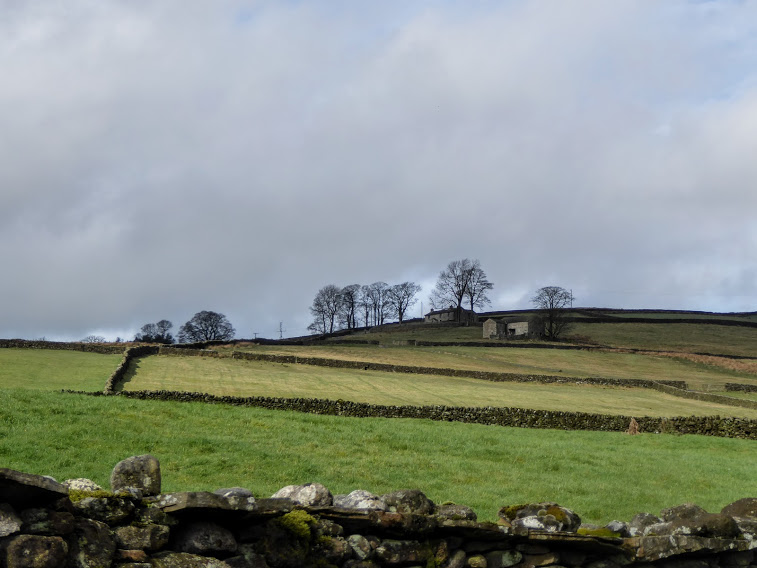
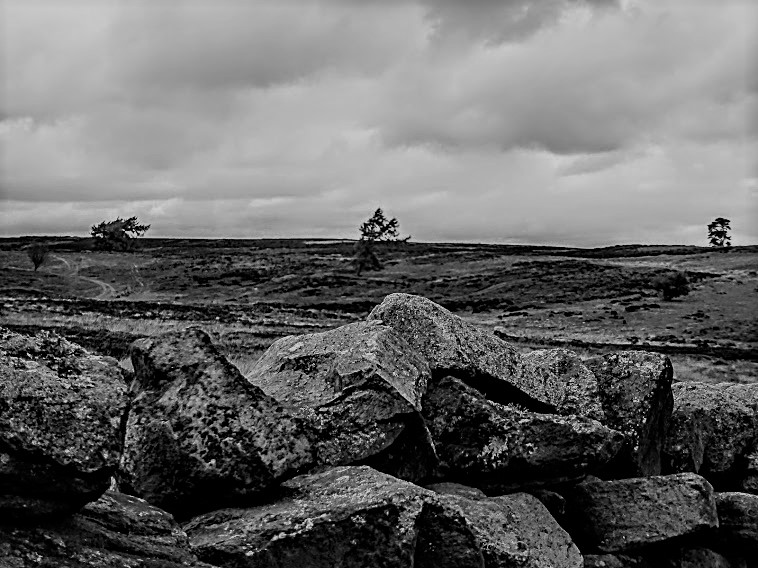
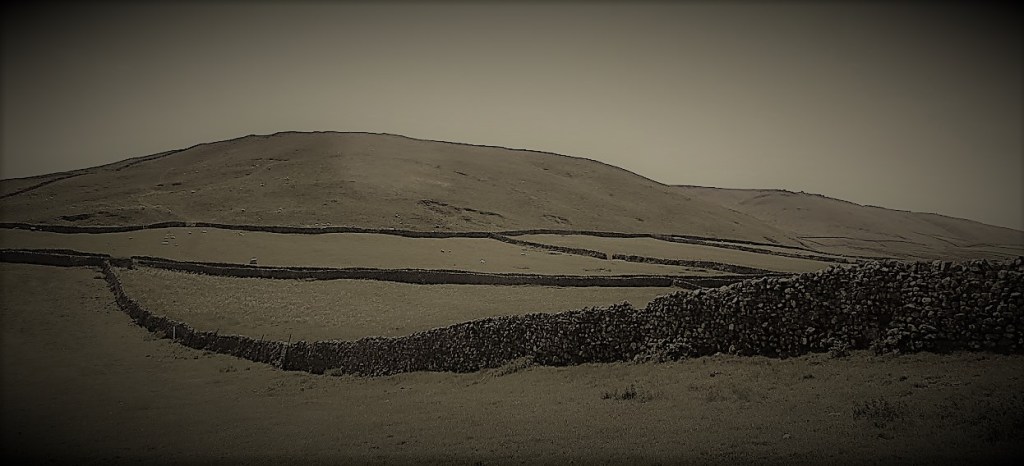
You can’t live near the Yorkshire Dales and not love a drystone wall, carving up the landscape into pasture-sized segments. But are they better photographed in black and white or colour? They are after all, fairly monochrome themselves, Only you can decide …
Near Grassington, Wharfedale
Near Hebden, Wharfedale
Enough of decisions. Here are a couple in good old-fashioned black and white.
Near Slipstone Crags, Colsterdale
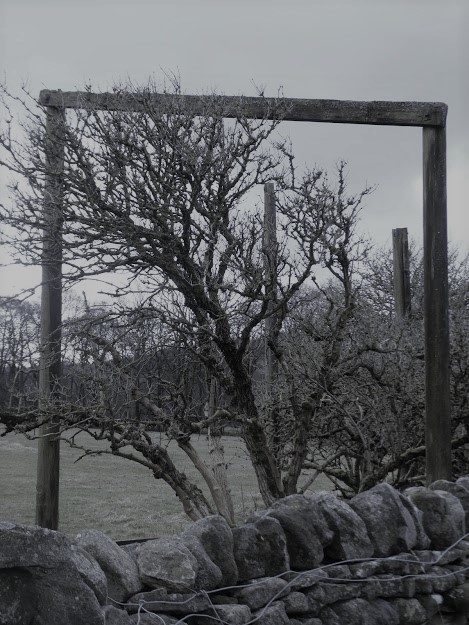
This one’s for Monday Window. It’s not often you see a window above a dry stone wall. And this one’s not quite in the right place. The view could have been better framed. And a bit of double glazing wouldn’t come amiss.
Near Lofthouse, Nidderdale.
And finally…
Near Burnsall, Wharfedale
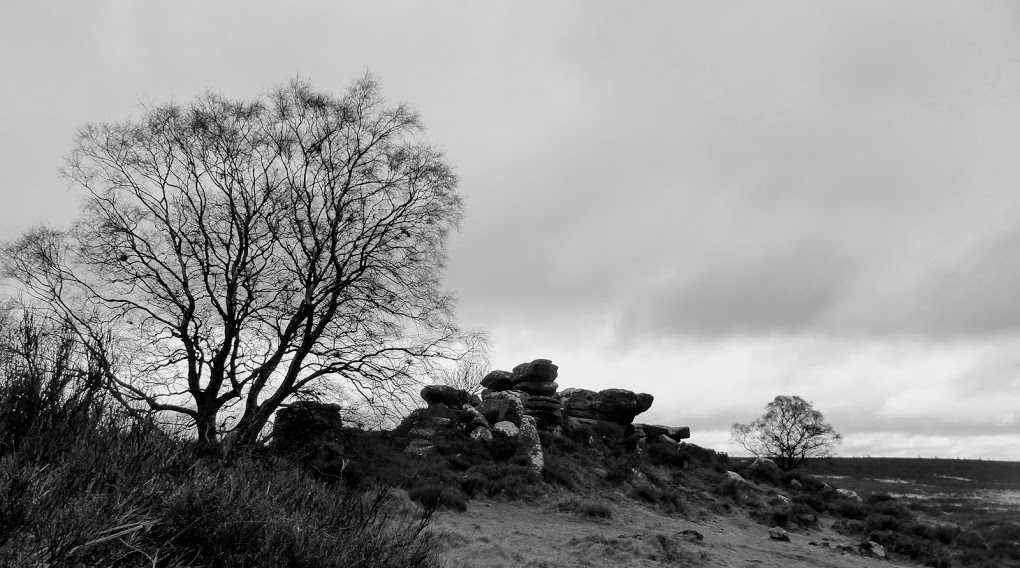
The featured photo shows part of Brimham Rocks, Nidderdale
Lockdown again. Forensic exploration of our own neighbourhood again, as we set off for daily exercise. Yet one way or another, I’ve posted dozens of shots of the area I call home, and I can’t expect others to delight in it as I do. The other day though I noticed, as I hadn’t since the car-free spring lockdown when birds were vying for territory and nesting, distant birdsong.
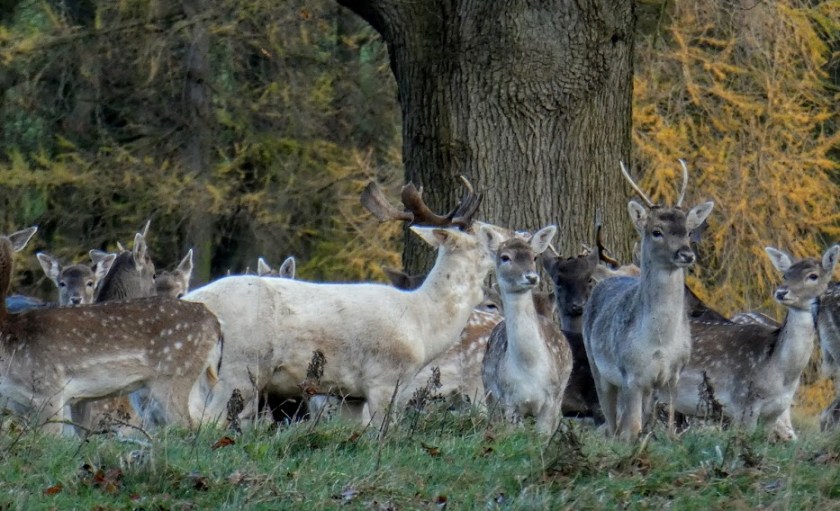
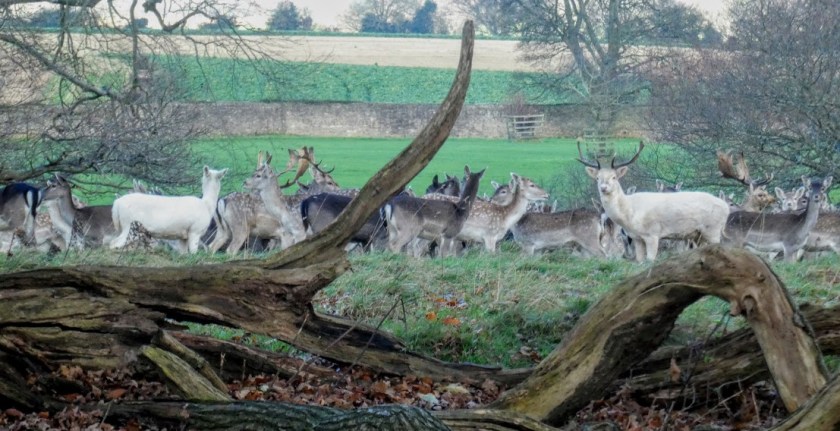
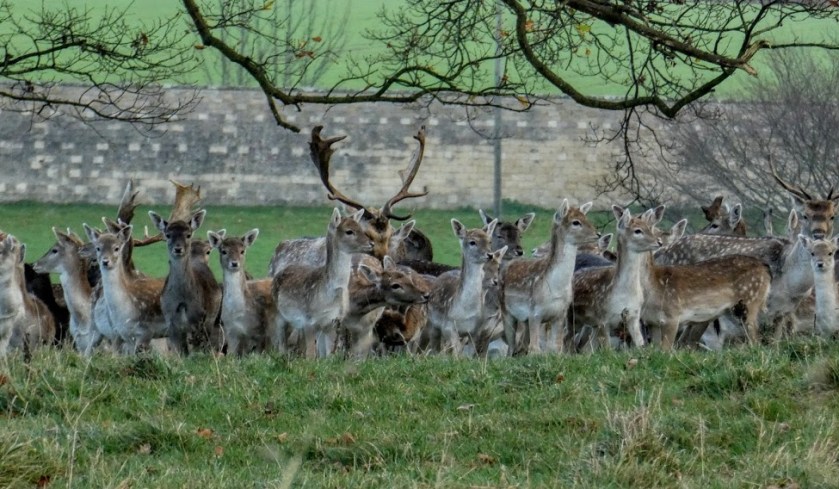
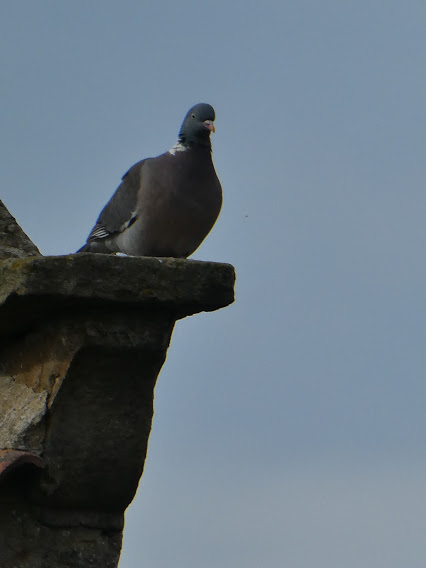
It made me think about the creatures who share our daily round. Not the elusive ones – the stoats, weasels, foxes, deer who decline to stick around as you get your camera out. The types like Basil and Brenda, as our neighbours call the over-sexed pigeons who stomp across their roof, noisily indulging their passion at 6.00 a.m.
Basil? Brenda? Who knows?
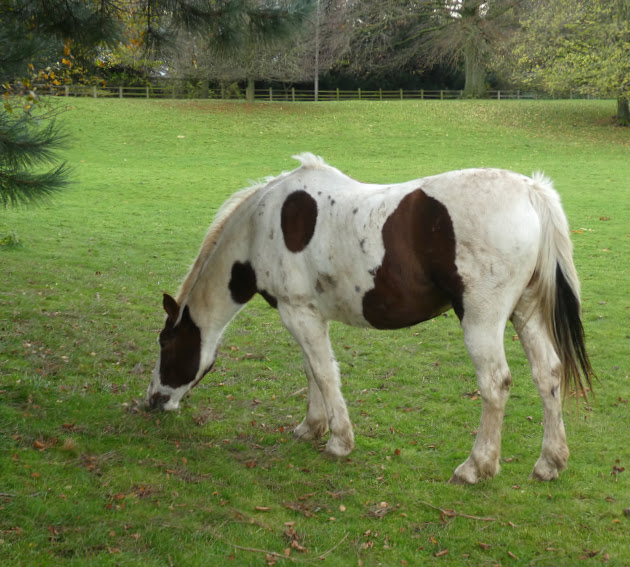
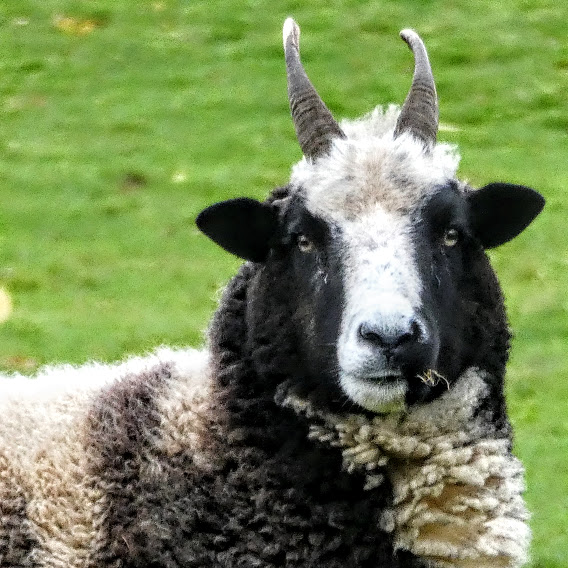
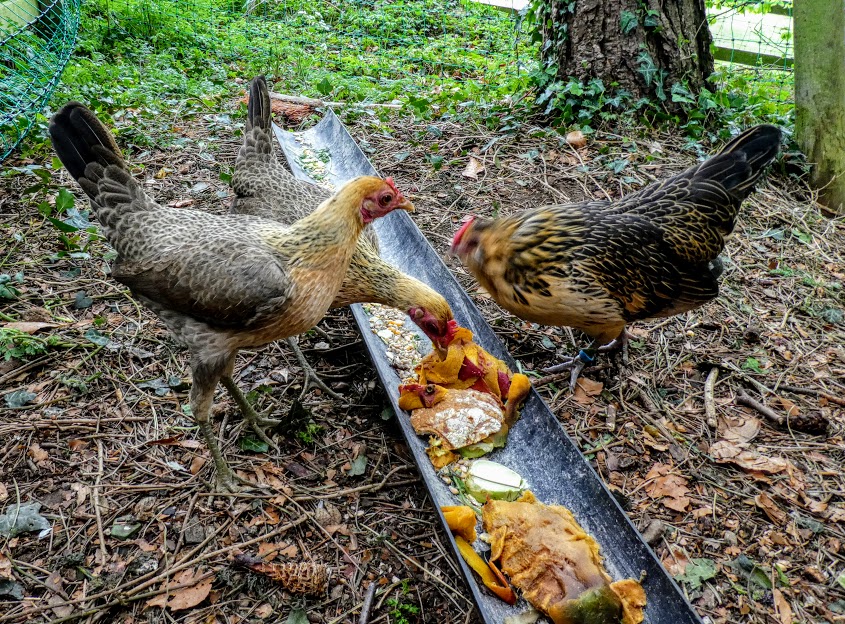
The horse who moved in with the Jacob sheep in the next field at the beginning of lockdown when her stables closed for business. She’s still here. The hens next door, who sometimes deliver eggs for our breakfast.
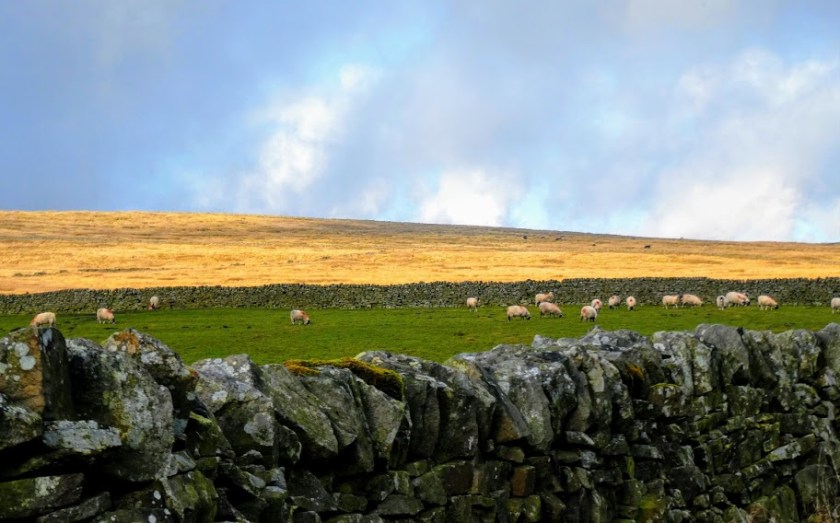
The large flocks of sheep who are part of every farmer’s daily round in these parts – no cattle for us..
The heron who nicks fish from our landlord’s pond.
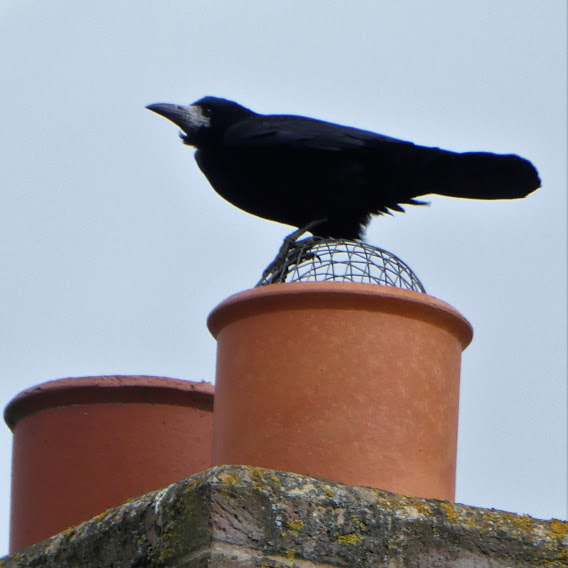
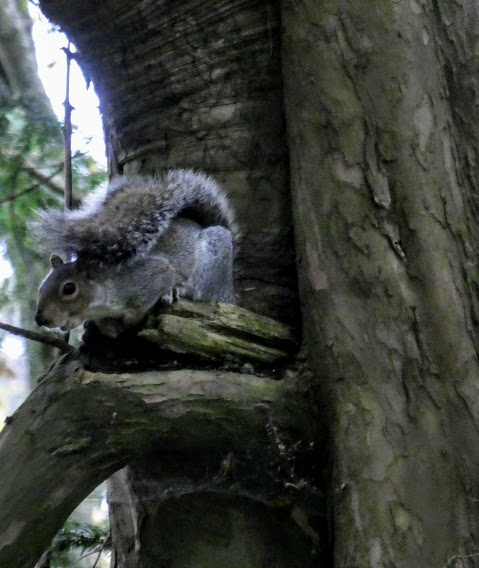
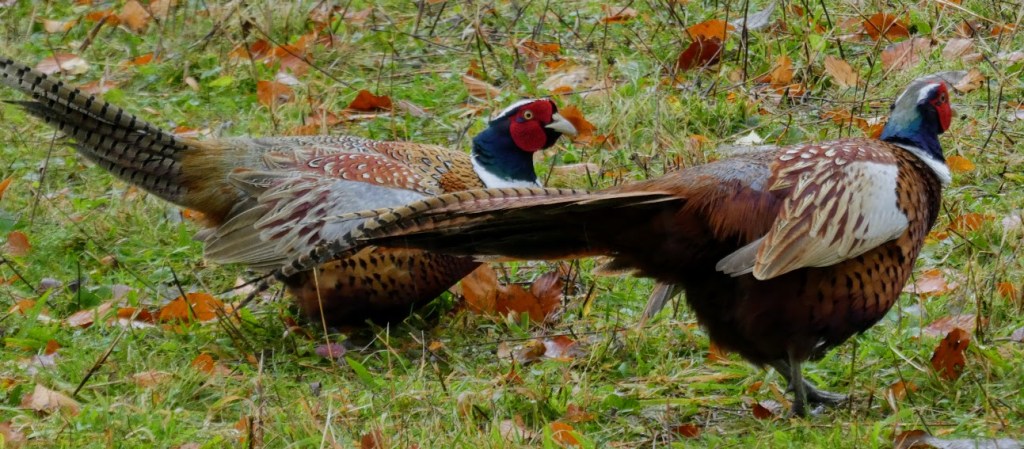
The mallards on the village pond, and the crows on the rooftops. The squirrels dashing across our path and up the nearest tree. The pheasants who are even more abundant this year, as lockdown’s put a stop to the shooting parties they were specifically bred for. Rabbits too. So many rabbits. Why haven’t I got any photos of them?
The featured photos shows our much-frequented path through Sleningford Hall at Easter time, with all the new lambs.




























You must be logged in to post a comment.