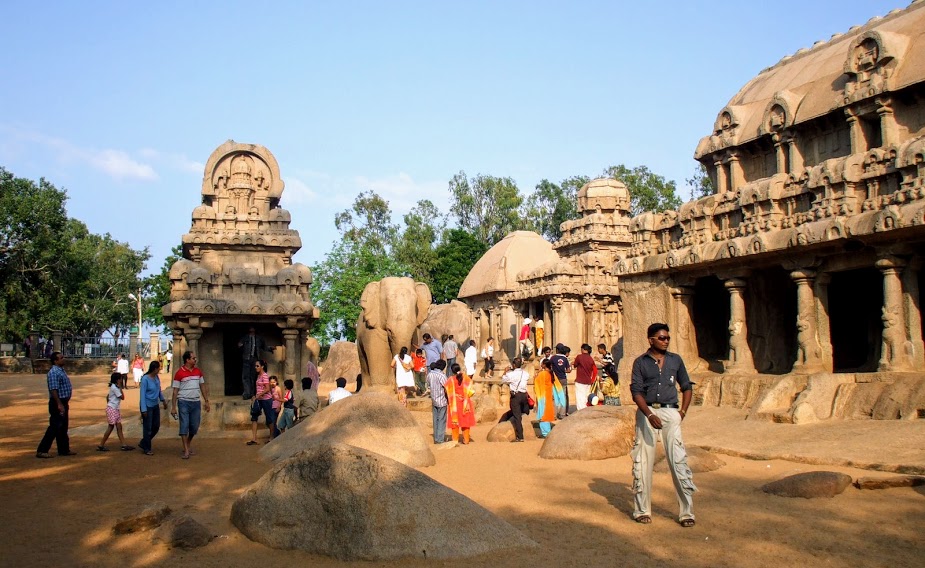
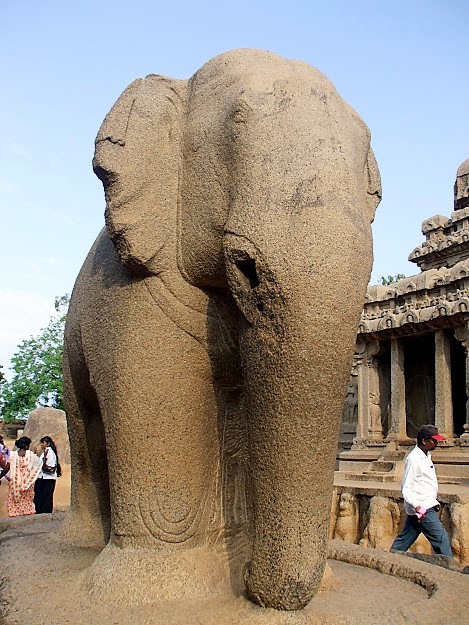
Our destination yesterday was Mamallapuram, in the Indian state of Tamil Nadu. An ancient seaport, it’s a wonderful place to wander round exploring its temples, its carvings – all those elephants! – near the long sandy beach lined with fishing boats, and a small friendly town.
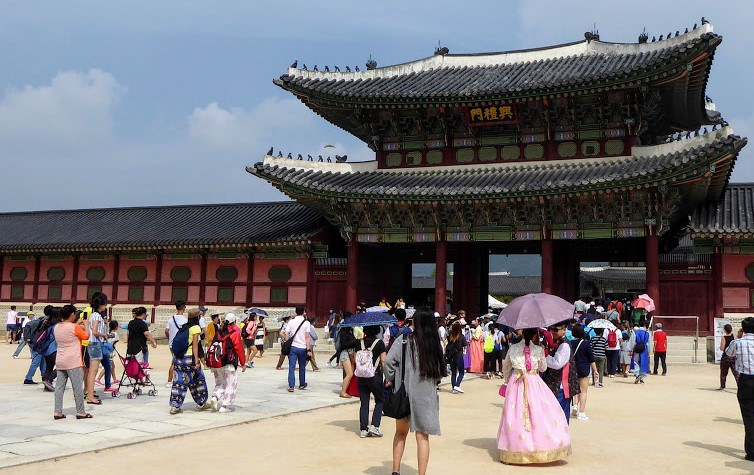
And today we’ll remain outside Europe. But where? Your best clue in narrowing it down may be in the featured photo. The woman in pink in the foreground is wearing the traditional dress of that country.
Andrew of Have Bag, Will Travel invited me to join him and other bloggers to post one favourite travel picture a day for ten days without explanation, then each day, nominate someone new to join in on the same terms. It’s getting awfully near Christmas, so this is the last time I’m going to ask someone specific to join in: and I’m asking you, Susan Rushton. No pressure at all, but if you do decide to join in, I don’t think it’ll count against you if you don’t post during the Christmas season.
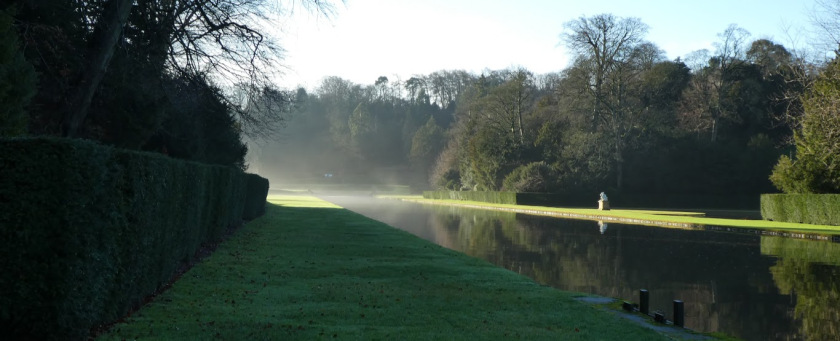
I thought yesterday’s post was the easier for regular followers of my blog, and some of you agreed. It showed the formal gardens of Studley Royal, and the deer park beyond, and the photos came from this post of two years ago, when I celebrated having a new camera by walking the grounds of Fountains Abbey and Studley Royal one misty December morning.
Today I’m taking you to another UNESCO World Heritage site. But where?
Andrew of Have Bag, Will Travel invited me to join him and other bloggers to post one favourite travel picture a day for ten days without explanation, then each day, nominate someone new to join in on the same terms. Today I’m asking Nes Felicio Photography – you’re very well travelled and share wonderful photos on your blog. No pressure if it’s not for you, especially as it’s holiday season. Link back to this post if you decide to have a go.
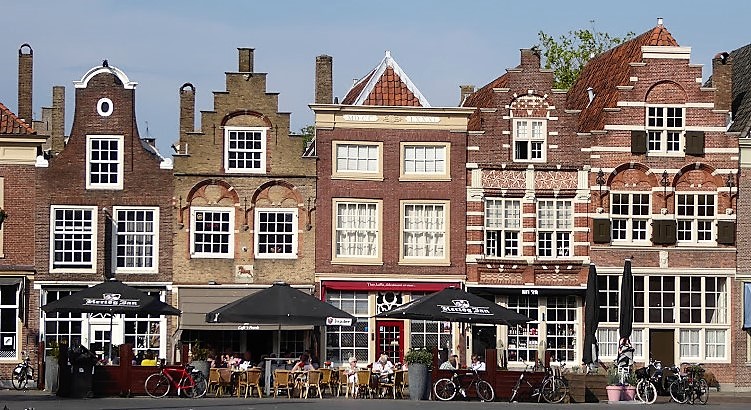
Really rather a lot of you realised we’d taken a trip to the Netherlands yesterday. It’s unsurprising that nobody recognised Dordrecht, a city we found ourselves in purely by happenstance a couple of years ago, and which we planned to revisit in a leisurely fashion this year. Plans, 2020 style …. I’m confident though that regular readers will know exactly where we are today. These photos come from a post exactly two years ago today, so I’ll enter them into Fandango’s Flashback Friday. I shan’t link back to my original post until tomorrow. It would reveal the answer to that ‘Wherever …?’ question. And that would never do.
Andrew of Have Bag, Will Travel invited me to join him and other bloggers to post one favourite travel picture a day for ten days without explanation, then each day, nominate someone new to join in on the same terms. Today I’m asking I J Khanewala of Don’t hold your breath – you’re pretty well travelled, both in India and beyond. No pressure if it’s not for you, but you do take most interesting photos. Link back to this post if you decide to have a go.
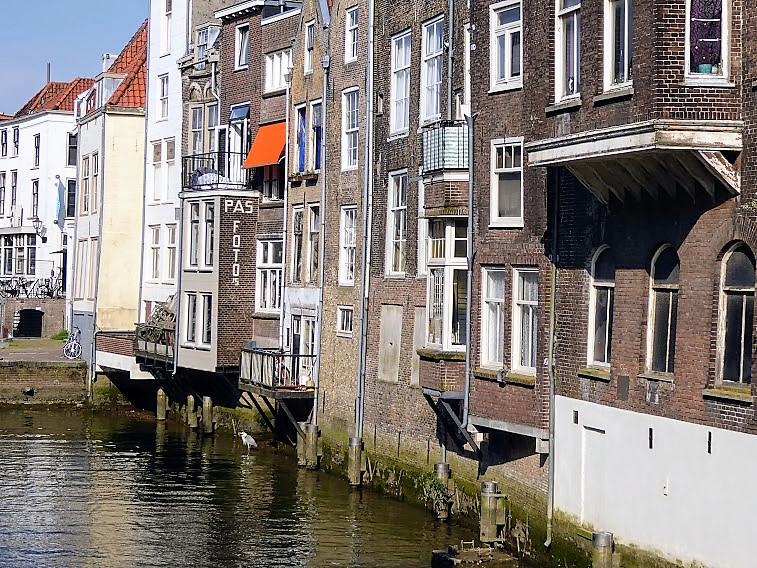
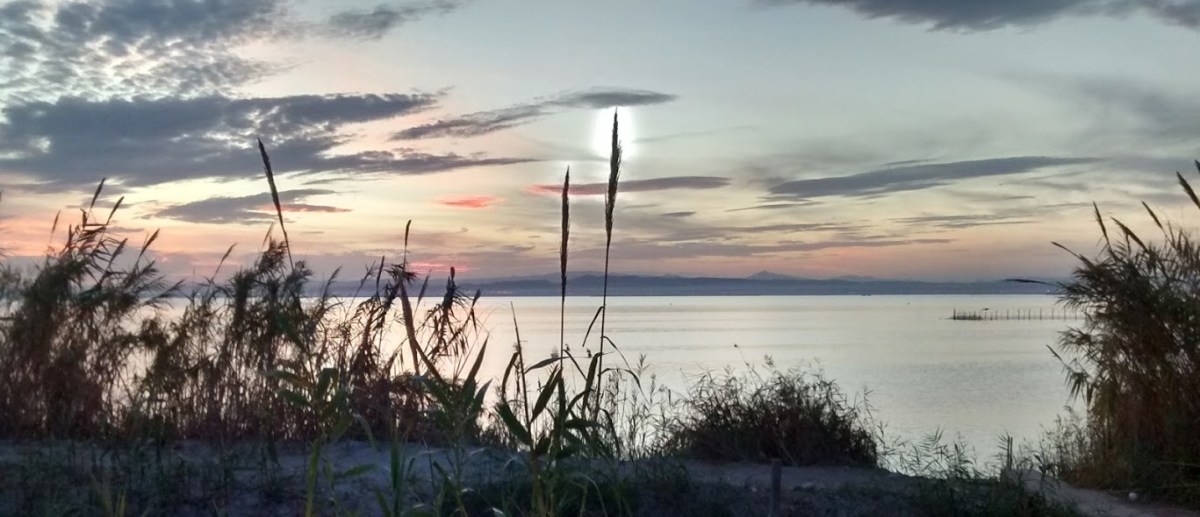
Yesterday‘s image was a difficult one to crack. But Agnes did it! It was taken in one of the most peaceful places I know, l’Albufera Natural Park, an area of freshwater lagoons near Valencia, Spain. Today, we’ll stick with a watery theme. Can you see the heron here, enjoying urban life? Maybe identifying the town is a stretch too far. But which country are we in?
Andrew of Have Bag, Will Travel invited me to join him and other bloggers to post one favourite travel picture a day for ten days without explanation, then each day, nominate someone new to join in on the same terms. Judith, of Beyond the Window Box – any chance you’d like to join in? No pressure if it’s not for you, but you do take the most evocative photos. Link back to this post if you decide to have a go.
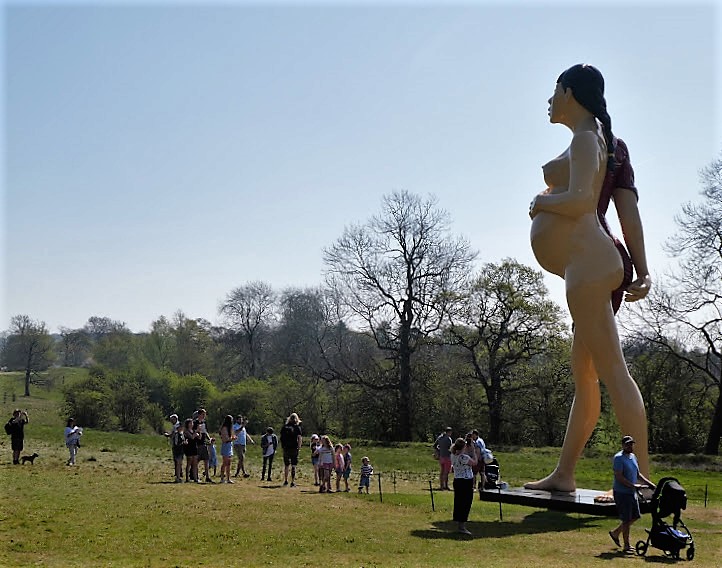
Several of you guessed yesterday‘s photo was of the Yorkshire Sculpture Park, though if you recognised that monumental woman as a Damián Hirst, you weren’t letting on. Unsurprisingly, all three of you who knew the view can find your way round the north of England.
OK. Where today?
The photo was taken at this time of year. That’s all I’m saying.
Andrew of Have Bag, Will Travelinvited me to join him and other bloggers to post one favourite travel picture a day for ten days without explanation, then each day, nominate someone new to join in on the same terms. Sarah, of Travel with Me: any chance you’d like to join in? No pressure if it’s not for you, but you are well-travelled! Link back to this post if you decide to have a go.
Today I’m sending a postcard, as I’ve been doing every Tuesday for a while. But because it’s part of my Around the World collection, I shan’t tell you where it’s from until tomorrow. As part of Jude’s 2020 Photo Challenge, I’m choosing a subject that has mass and volume, and where you will be in no doubt what’s centre stage.
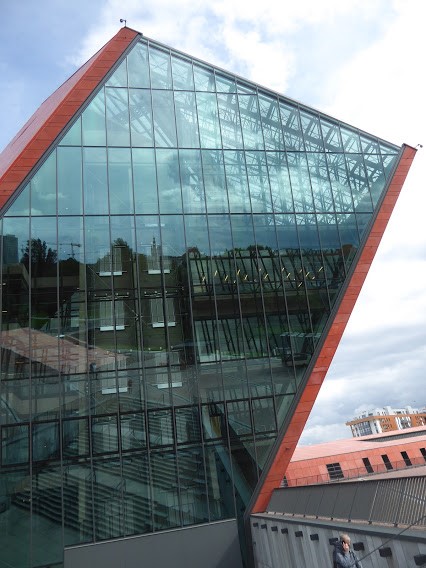
Yesterday‘s photo was a tough one. But Peter got it! Well done, Peter of Peter’s Pondering. You’re quite right. It’s the World War II Museum in Gdansk, Poland. We spent much of the day here when we visited. It’s an absorbing, unsettling collection, showing all too graphically the hardships endured by the citizens of Easter Europe before, during and after the conflict. Here’s my account. Highly recommended, as is Gdansk itself.
Andrew of Have Bag, Will Travel invited me to join him and other bloggers to post one favourite travel picture a day for ten days without explanation, then each day, nominate someone new to join in on the same terms. Elke, of Pictures Imperfect , I’m inviting you today. No pressure if it’s not for you though.
There’s this blogging challenge doing the rounds. I don’t know where it started, but it’s already made a showing with Brian at Bushboy, with Su at Zimmerbitch, and then yesterday morning with Andrew at Have Bag, Will Travel. And he invited me to be next.
This is how it works. Person Number One posts a different travel picture on ten consecutive days. And on each of those days, they ask a fellow-blogger to join in too. So on Day Two, Persons One and Two post a picture, and each invites another person to join in. On Day Three …. you get the idea. I can’t fathom how to do the maths, but it seems to me it wouldn’t take long for a million people to be involved. Any ideas about the numbers involved, anybody?
So I’ll post a photo each day for ten days. No comment, no strapline. If you want to guess where it is, tell me in the comments, and I’ll reveal the answer the following day. As today is a Monday, we’ll make the shot one of a window. I think this one’s quite hard.
Who next? Life … One Big Adventure. Do you fancy joining the party? No pressure if you’re not interested. Please link to me if you do decide to join in, just so I know.
These days, while travelling’s discouraged, and normal day-today life often seems difficult, many of us have come to rely on our local shops, recognising what a blow it would be if they were to disappear. Here’s a post I wrote ten years ago in France, celebrating independent shops. It feels dated in some ways. ‘Saturday girls’ seem to belong to a different era.
A NATION OF SHOPKEEPERS…OR A SMALL TOWN WITH SMALL SHOPS
11th December 2010
Depending on your point of view, it was either Napoleon or Adam Smith who first called England ‘a Nation of Shopkeepers’. But it was only after I came to settle here in France that I started to think of shopkeeping and market trading as skilled occupations, and realise just what is involved in keeping the customer happy.
It’s probably because it was just so much easier, where we lived in England, to nip down to the supermarket. There weren’t too many independent shops on our daily round: so much for a nation of shopkeepers. Mind you, we loved it when Emily was a Saturday girl at the French patissier who was then in Harrogate, Dumouchel. She would often be sent home with a couple of unsold petits gateaux for us to enjoy, or some slowly-fermented sourdough bread. It was small shop, and quite expensive, so she learnt quickly to value customers and to treat them well, so they’d come back. She learnt too that while most of the people she served were friendly and appreciative, customers could be curmudgeonly too.
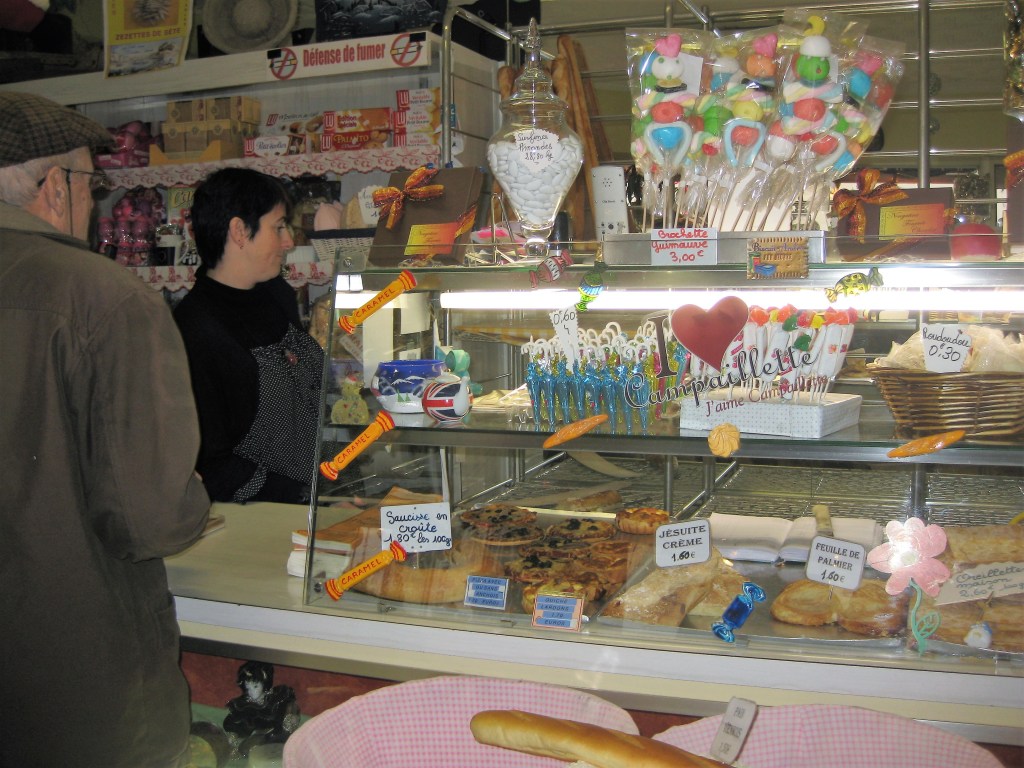
So who are the good commerçants here? Well, down at the bakers, they’ll often put aside our much-loved pain noir without being asked if I’m not in bright and early, knowing we’d be disappointed if they sold out.
The baker’s shop, closed since 2018. Though there are other bakers in the town still.
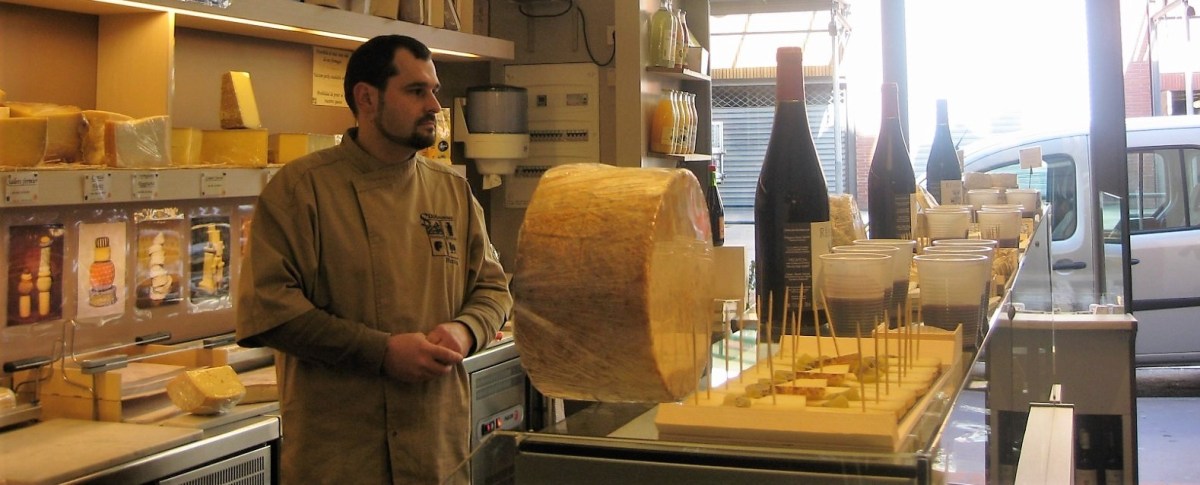
Today at the market, madame who runs the cheese and charcuterie stall had printed off some recipes specially for me, because she knew I might enjoy trying them out.
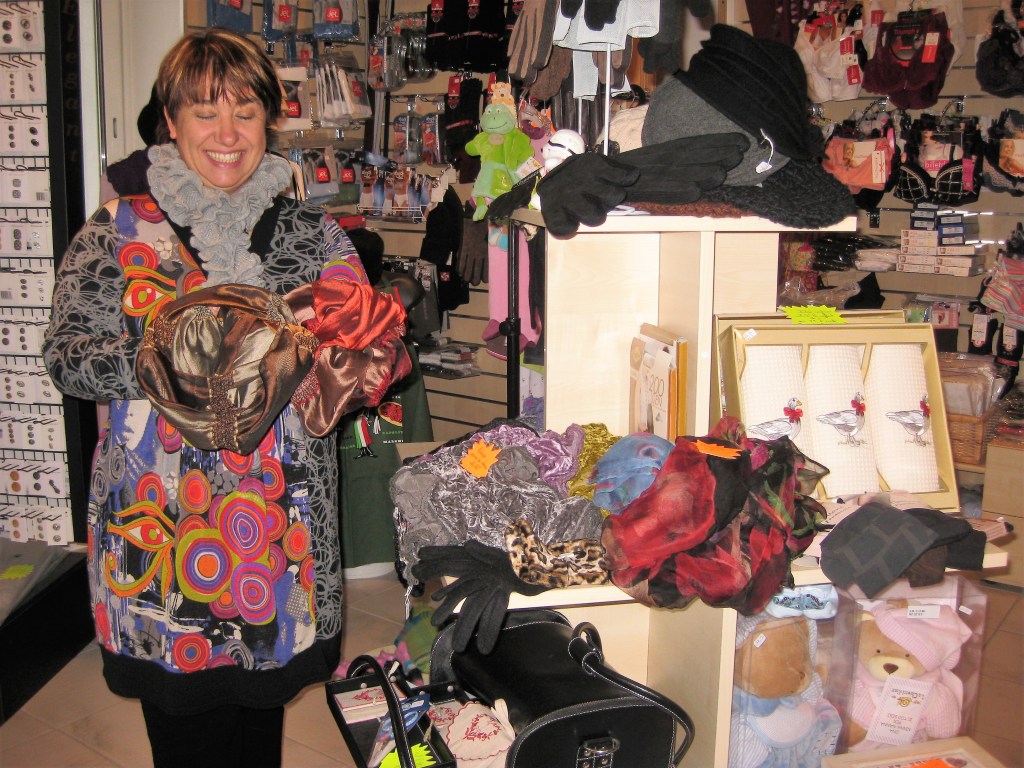
Down at Bobines et Fantaisies, the owner goes to Toulouse most weeks to seek out unusual scarves and accessories, so there’s always something new and worth trying at her tiny shop. ‘Let her try it on. If she doesn’t like it, bring it back!’, she’ll insist, as you dither between a couple of scarves and a chic but cosy winter hat. These shopkeepers remember us, our tastes, our whims and foibles. They welcome us, and chat cheerfully with us, even if we leave the shop empty-handed.
Madame at Bobines et Fantaisies
There’s just one shop here that doesn’t cut the mustard. ‘Il n’est pas commerçant’ we all grumble. Those of us outside the select band are routinely ignored, and as we feel our custom isn’t valued, some of us now go elsewhere.
But not to the supermarket. Oh no. Yesterday we DID pop into one, but as the muzak system was belting out a schmaltzy version of ‘Auld lang syne’ in what passed for English, we very soon shot out again. Small Shops Rule OK.
The featured image is of a cheesemonger in Toulouse.
This post is a contribution to Fandango’s Flashback Friday. Have you got a post you wrote in the past on this particular day? The world might be glad to see it – either for the first time – or again if they’re long-time loyal readers.
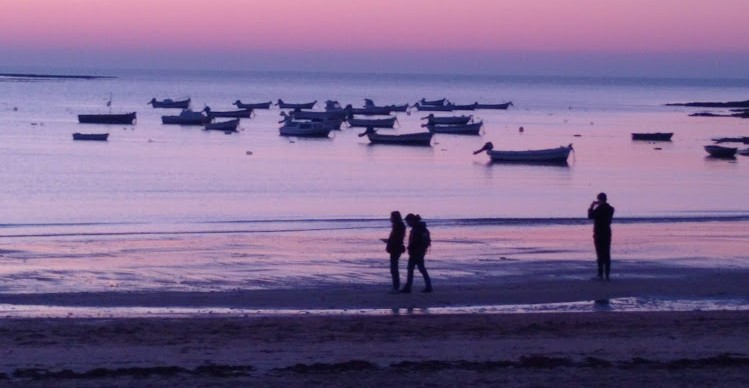
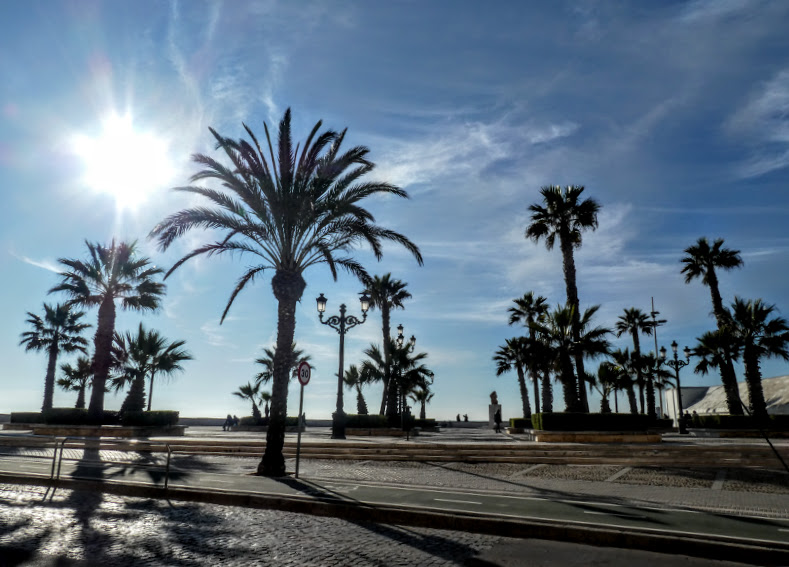
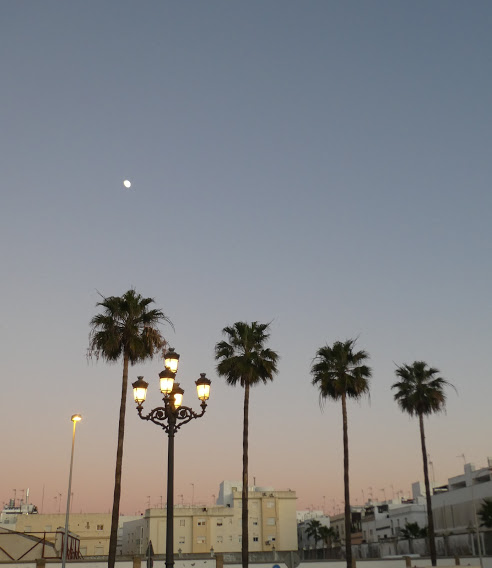
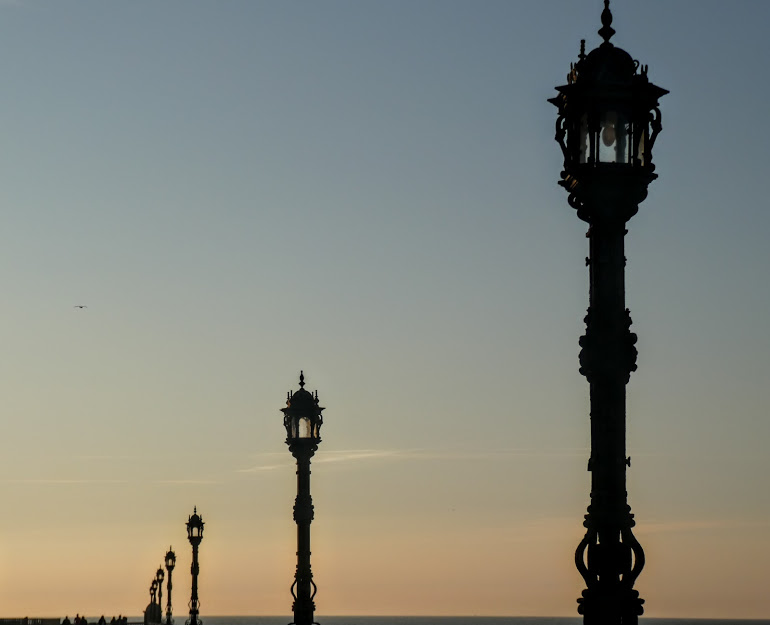
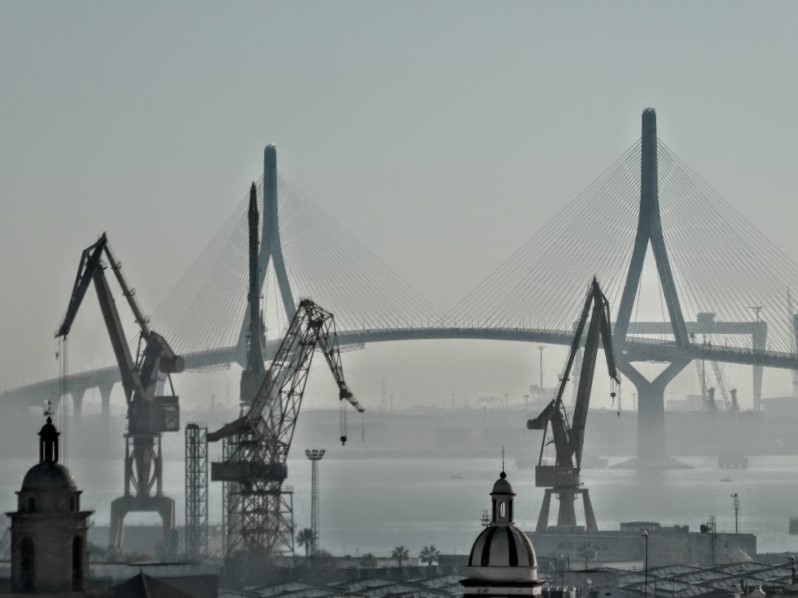
I have said it before, and I expect I shall say it again, but our few days in Cádiz earlier this year – this year! – are part of another life – a life I want to remember and treasure. And Jude provides an opportunity in her Travel Challenge. She’s hoping that outline, rather than three dimensional qualities will come to the fore in our choices of photo. As I looked through my archive, I realised that Cádiz fits the bill, yet again.
It’s nearly all about the seafront. Those palm trees! Those street lights!
Or we could look beyond the old city to industry and modern life in the distance.
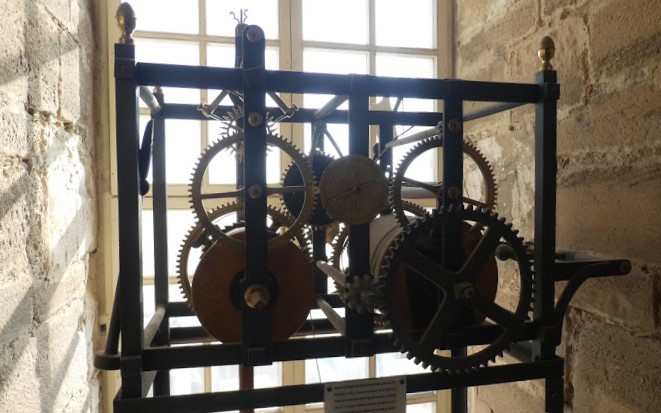
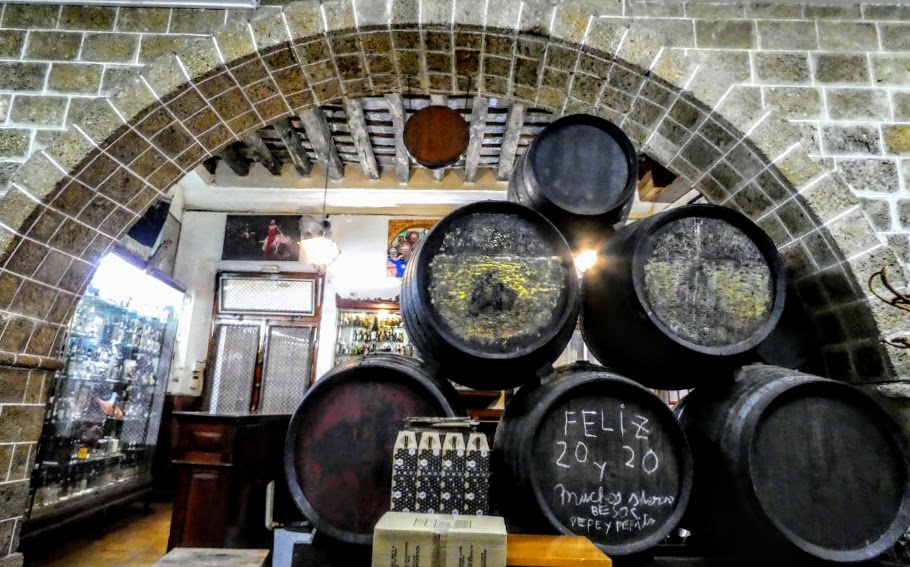
Or we could go indoors – first to climb the Cathedral tower and to inspect the old clock workings: before going to a traditional sherry bar, Manzanilla, to enjoy a quiet drink and a snack surrounded by those barrels of maturing sherry ¡Salud!





You must be logged in to post a comment.