I haven’t seen a live hedgehog all year. Last summer, for almost a month, we had one who came every afternoon and fossicked for grubs and worms somewhere near the study window. She (he?) kept it up for about a month, then, suddenly … nothing. No more hedgehog.
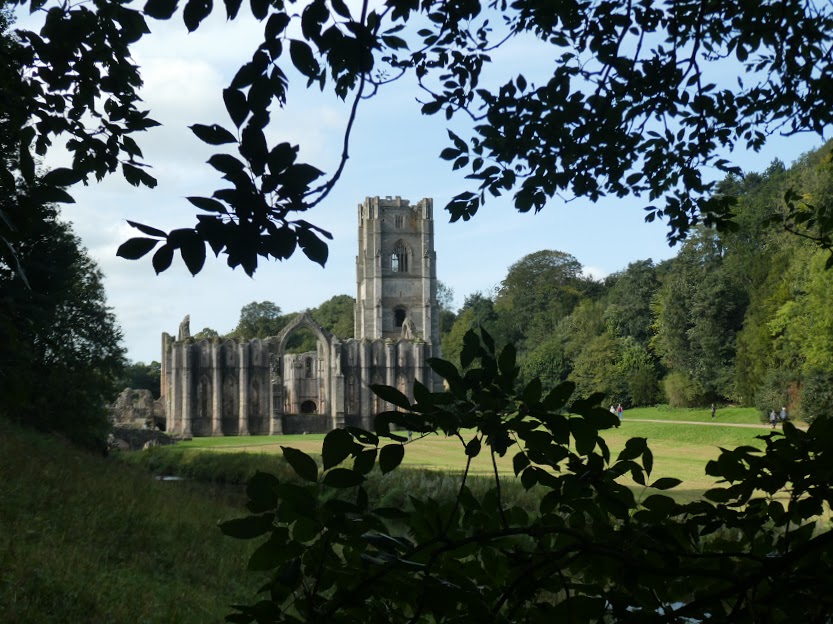
This year, I’ve seen only road kill. Yesterday though, on volunteer duty at Fountains Abbey, I noticed something very un-pheasant like among all the pheasants cruising on a lawn near the Banqueting House. It was a hedgehog. She (he?) delighted me . Like most people, I take very kindly to these charming – and now endangered – creatures.
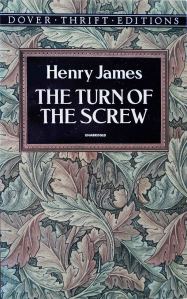
Our starting point for this month’s Six Degrees of Separation Challenge isThe Turn of the Screwby Henry James. Our job as participants is to show how one book leads to another, each link taking us further and further from the original (maybe).
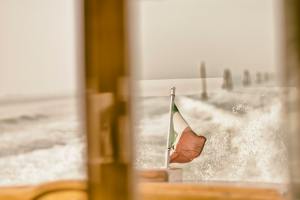
I’m linking Turn of the Screw with a detective story set in present-day Venice. Bear with me. I’m a big fan of Commissario Brunetti who lives there with his family. Enjoying the moments that Brunetti spends at home or ranging round the city he loves for all its faults are a real reason for reading Donna Leon’s books. Brunetti’s wife Paola teaches at the university, and she’s a big fan of Henry James’ writing. I’ll put Trace Elements into the mix, as it’s the last Donna Leon I read.
Brunetti’s Venice: often seen from a Police launch while speeding to the scene of crime (Gabriele Diwald, Unsplash)
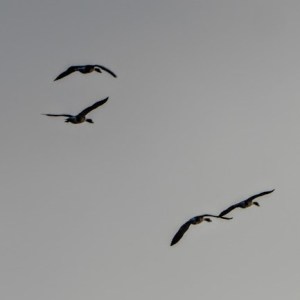
I like Leon’s writing because she summons up Venice and day-to-day life there so vividly. Graham Hurley has a similar talent. His detective, Joe Faraday, lives in Portsmouth, as I once did. Faraday’s life is one of juggling crime, endless paperwork, a bitty personal life, and birdwatching. It feels very real.Turnstone is the first, but by no means the only one of his books that I’ve read.
Gulls seen from a cross-channel ferry – probably Faraday spotted them too.
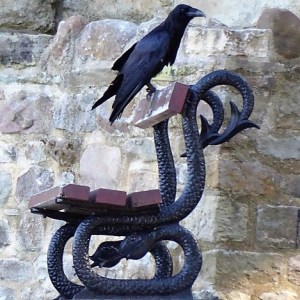
Birdwatching had me remembering A Shadow Above. The author, Joe Shute loves ravens. Part natural history; part history; part an exploration of the many legends that this bird has fostered; part investigative journalism; part personal history, this is an engaging, immersive read that goes a long way towards explaining why ravens have a special place in our history.
One of the tame ravens often to be seen near Knaresborough Castle, North Yorkshire.
And so to another author who’s immersed in the natural world – Melissa Harrison. The first book of hers that I read was a novel: At Hawthorn Time. Even more than the involving story following the lives of a couple with a dissolving marriage newly arrived at the village; a near-vagrant and a disaffected young man, I relished her descriptions of the countryside, whether observations of plant and bird life or a litter strewn roadside edge. Her characters rang true, as well as her clear-eyed descriptions of village life.
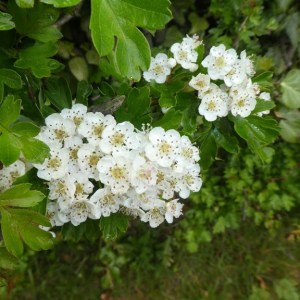
What else but hawthorn blossom?
This reminded me of a non-fiction book, a real good read:A Buzz in the Meadow: the Natural History of a French Farm, by Dave Goulson. This is a delight. The catalyst for writing it is his home in the Charente, bought so he could provide home, in the form of an extensive meadow, to a huge variety of wildlife, specifically insects. This is no Aga-saga of a Brit in France, but a mixture of reminiscence, hard scientific fact, vivid stories of his own experiments and research, and the work of others. It’s a page turner and a tale well told with humour, and an eye for the telling detail. I’m no scientist, but I was absorbed from start to finish.
This praying mantis was spotted not in France, but in Spain, during a family holiday in Catalonia.
Goulson knows his home patch intimately. Lara Maiklem knows the London Thames intimately. She’s a mudlarker, who scours the banks of the river looking for its hidden history whenever she can. World War weaponry, Victorian toys, Georgian clay pipes, Tudor buttons, Roman pottery, even Neolithic flints are all there, waiting to be found. In Mudlarking, Maiklem writes an entertaining account of her finds and adventures, stitching them into a readable history of London itself: the growth of the city and its changing fortunes.
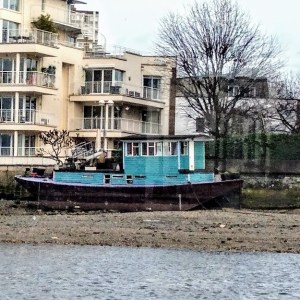
Mudlarking territory along the Thames shoreline.
So there we have it. Six books following no kind of theme. But they’re the kinds of book I’ve liked and have enjoyed over the last year or so.
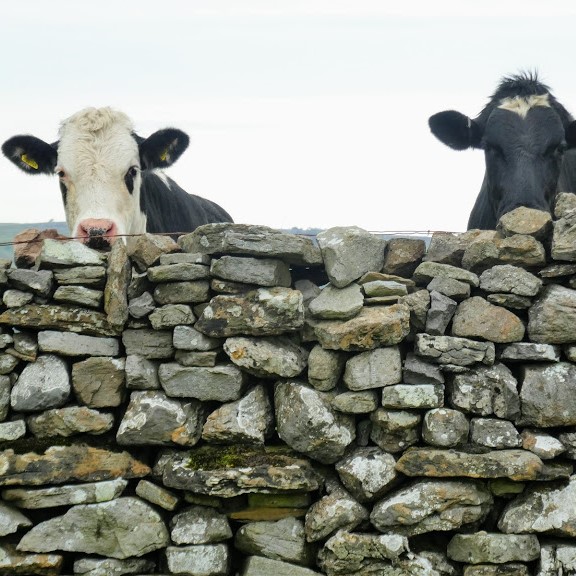
As we began our walk in Wensleydale this week, we were inspected by these curious cows. With two cow-related deaths in the news last week, I was glad they were safely tucked behind a drystone wall. I’m kind of wary these days.
Two tombs, jagged and skeletal, lie at the top of a narrow country road in Dumfries and Galloway. Cairn Holy 1 and Cairn Holy 2. They’re two of akind: the final resting places of notable people living some 5000 years ago. Might one of them have been the tomb of the legendary King Galdus? Probably not, but we shall never know.
What’s astonishing though is the wealth that these tombs once contained. Particularly amazing is a jadeite axe. This mineral is not found locally, but comes from the Alps, 1500 km away. Imagine having the wealth and power in Neolithic times to import such an exotic artefact!
These tombs didn’t originally have the standing-stone appearance they now have. The stones originally totally covering them have been plundered for building over the centuries. But standing stark against the landscape they announce themselves as being yet another sign of the ancient history which is still so visible in this part of Scotland.
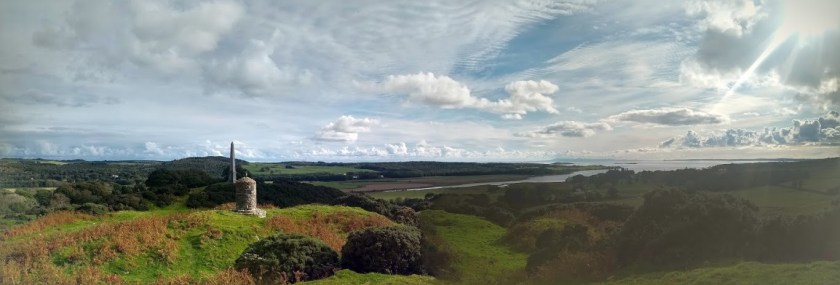
This composite image of my walk was automatically generated by Google. I think it’s grasped the sweep of this landscape quite well.
A sortie to find some carved Pictish stones on what might once have been a royal fort, followed by a climb to visit a local landmark, the obelisk to the Reverend Samuel Rutherford seemed like a plan for a late afternoon last week. It was only a three and a half mile walk after all.
What I hadn’t taken into account was that this is rough, undulating landscape, and entirely beautiful. It demands we take the time to stand and stare. So I did.
Trusty’s Hill proved to be a chance for a first viewing of the Rutherford Monument, as well as an opportunity to peer at Pictish carvings. This site was the site of an ancient fire so fierce that the stone there vitrified. The hill might, round about 600 AD, have been a citadel. It was certainly a fine vantage point from which to view what could once have been the lost Scottish kingdom of Rheged.
The view from Trusty’s Hill
Pictish symbols…
… and more, clearly visible at the top of the hill.
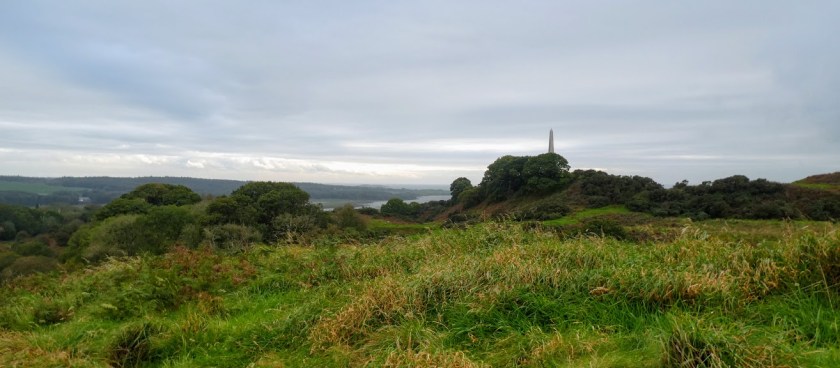
Onwards to the Rutherford Monument, built by grateful parishioners to honour the memory of a priest who, though an academic, a thinker and a teacher, cared for his flock in practical as well as spiritual ways and who was constantly at odds with the establishment to the extent that he was awaiting being tried for treason at his death. These days, there’s a Millennium Cairn, detailing all the ministers of Anwoth and Girthon since 1560 , and a trig point on two adjacent hills. All three provide splendid views to the Fleet estuary far below and the hills beyond.
This composite image of my walk was automatically generated by Google. I think it’s grasped the sweep of this landscape quite well.
Looking towards the hills…
Looking towards the Fleet Firth…
The clouds became quite dramatic.
Another view of the Firth
Looking down from the Monument.
… and up to the Monument.
Another view from the Cairn.
And a view from the Trig point.
Looking down from the Trig point.
Then it was down, down through a wooded trail to reach Anwoth Church, now roofless and ruined, before coming back to Gatehouse of Fleet along a quiet county track.
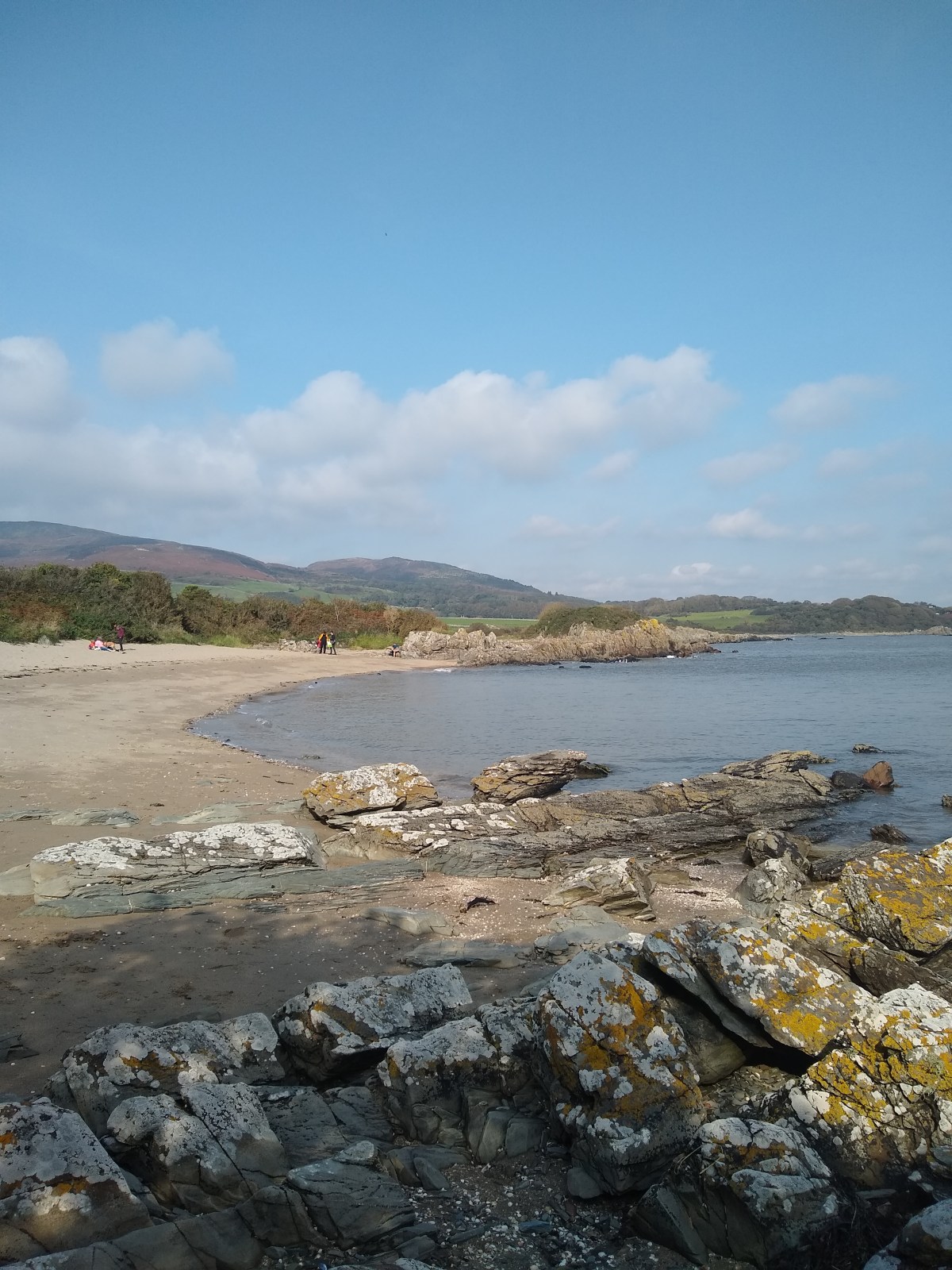
Dumfries & Galloway is our new favourite place. We felt as though we’d discovered it and had it all to ourselves. We explored the wildly beautiful and seemingly remote Cairnsmore of Fleet National Natural Nature Reserve. We found ancient cairns. We slogged up hills for the sake of views over the Solway Firth. And we enjoyed the beaches. We’ll take a virtual seaside trip today: there’s not a fairground ride, amusement arcade or kiss-me-quick hat in sight. There’s not even a chippie. Just us, the rocky shore, and the sea, advancing or retreating with the tide.
Let’s begin at Mossyard Bay. I sent you a postcard from there just last Thursday.
A rocky shore
So many shells.
The tide’s just gone out.
There’s sand as well as rock.
This seemingly ancient labyrinth was constructed in 1990 on a small island that develops every time the tide comes into Mossyard Bay.
Plants cling to any dry shard of rock.
Near Mutehill, Kirkudbright, early one morning.
Finally, Carsethorne, near Dumfries. It’s a small hamlet now, but it used to be a busy port, shipping people to Liverpool, to the Isle of Man and to Ireland on their way to a new life in the New World.
‘Having a wonderful time’. That’s what you say on postcards, isn’t it? But it’s true. Here we are in Dumfries and Galloway. This is Mossyard. Near Gatehouse of Fleet. Stories later, once we’re back home.
In her Photo Challenge this week, Jude asks us to look upwards, and shoot our subject from below.
Somehow this instruction reminded me of the first period of lockdown, when staying isolated and close to home was fresh and new: when we country-dwellers had the small pleasures of watching the spring unfold. Each day’s main event was watching the subtle changes in the nearby verges and fields, and in the trees and clouds.
With no job-plus-childcare to juggle, no worries about actually losing an income, this simple period, when the spring weather was almost unfailingly sunny and warm, was a time of some happiness.
Since then, things have fallen apart somewhat. Compliance, and confidence in the government’s competence and probity plummets, and nobody regards the prospect of a long hard winter ahead with anything better than disaffected resignation if they’re lucky, real fear if they’re not.
For one day only then, let’s look upwards – and backwards – to the spring 0f 2020.
Sheep – always sheep round here .. near Masham …
… near Tanfield, with her lamb …
…and another sheep and lamb in Tanfield.
Spring catkins.
Spring grasses in a field near West Tanfield.
And crops, long before the recent harvest.
And cow parsley … everywhere.
Poppies sneak a prime spot on the bridge at West Tanfield.
Poppies in a nearby field in early summer.
This thrush was our constant background summer during the month of May.
Our neighbours aren’t sure if this is Basil or Brenda, the resident woodpgeons.













 From Pyrenees to Pennines
You must be logged in to post a comment.