England comes to Laroque d’Olmes

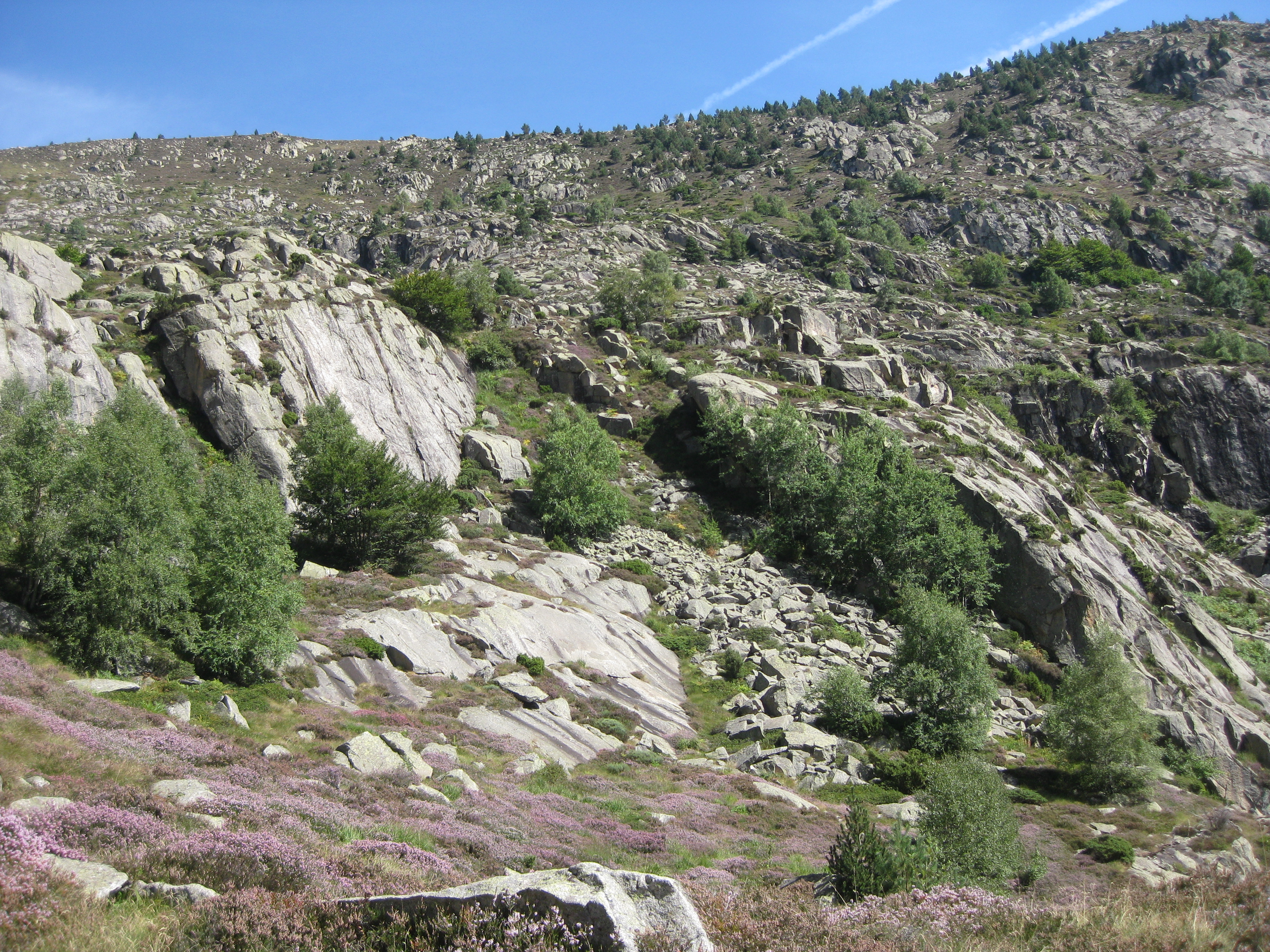
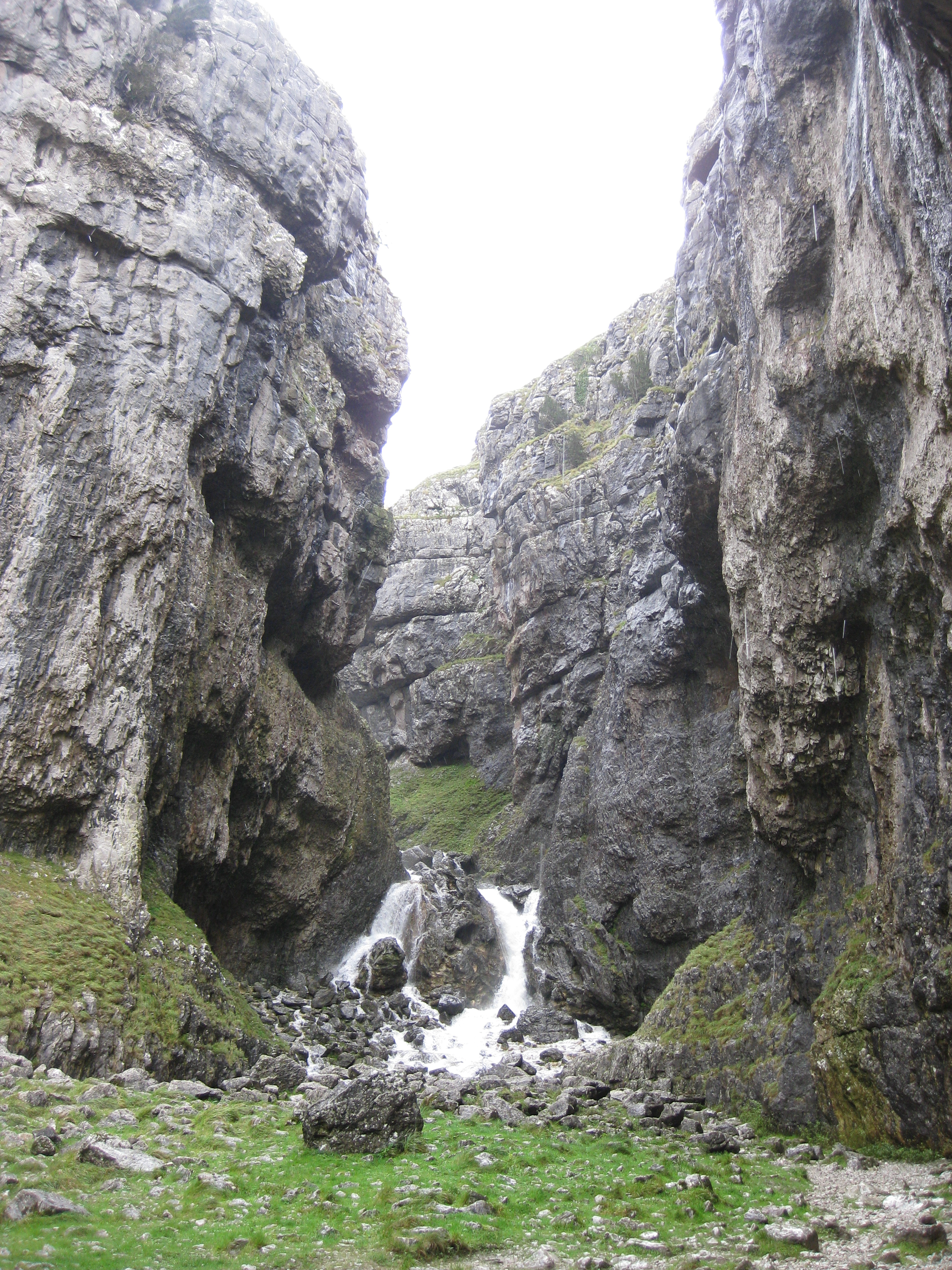
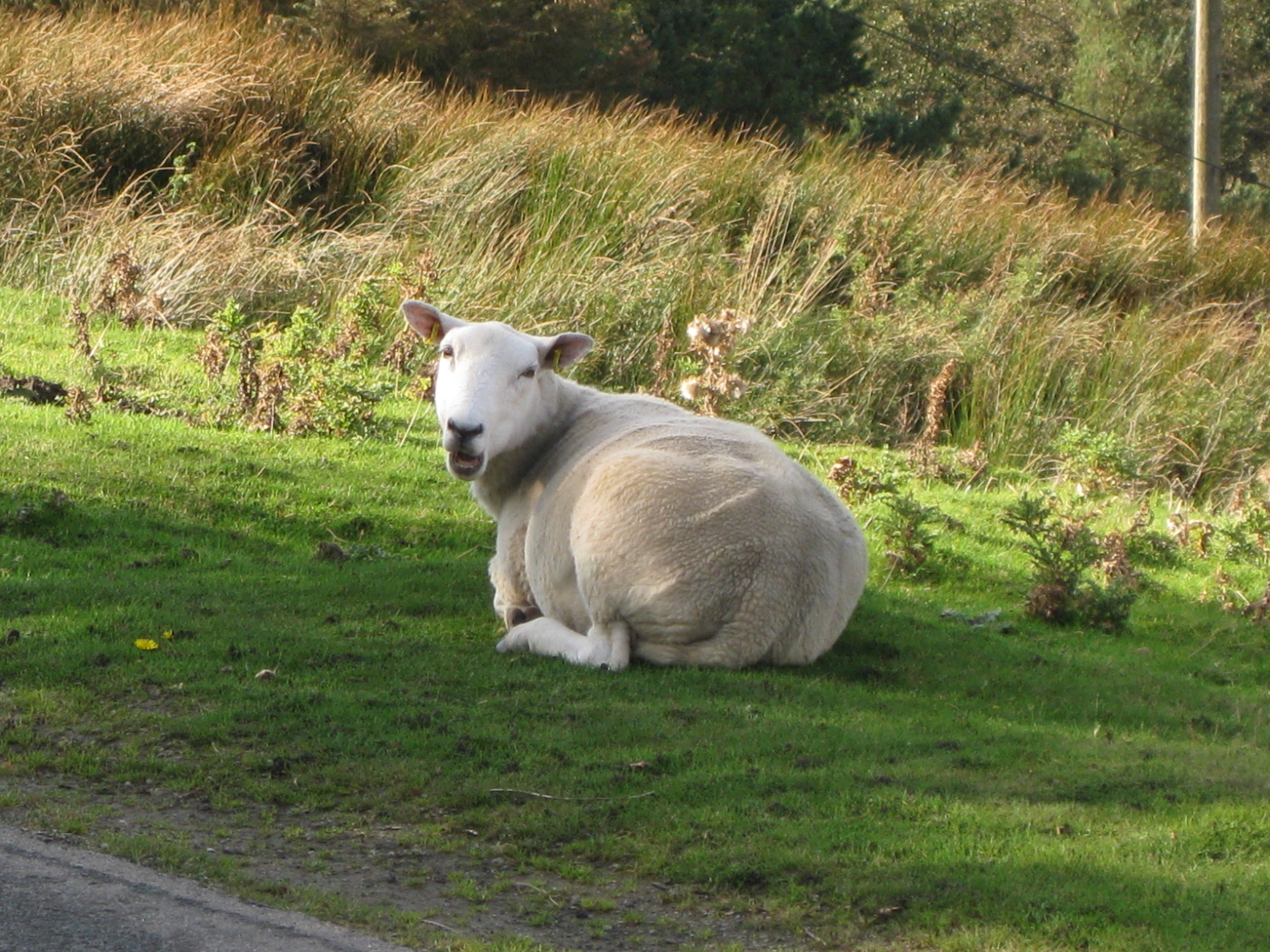
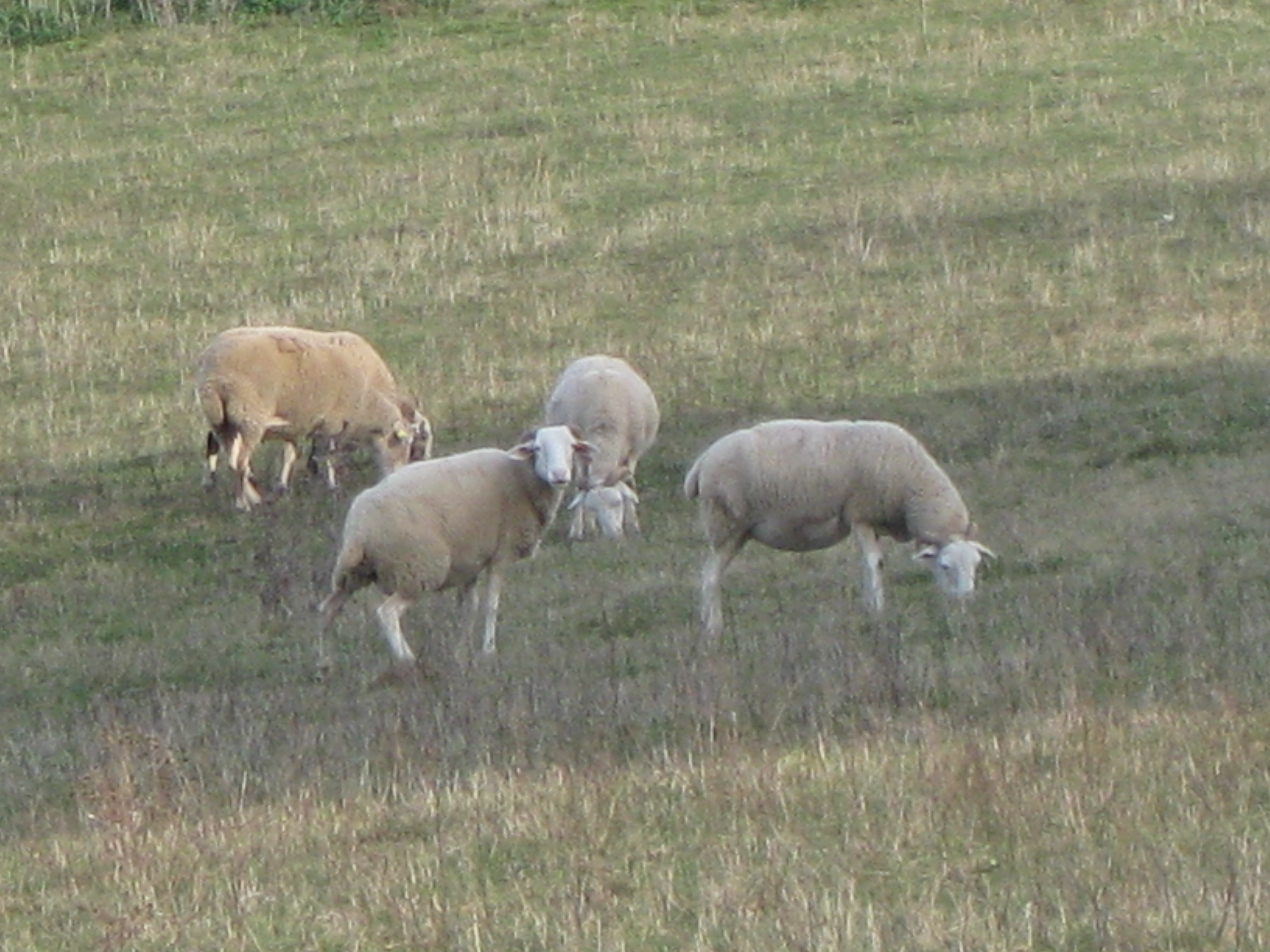
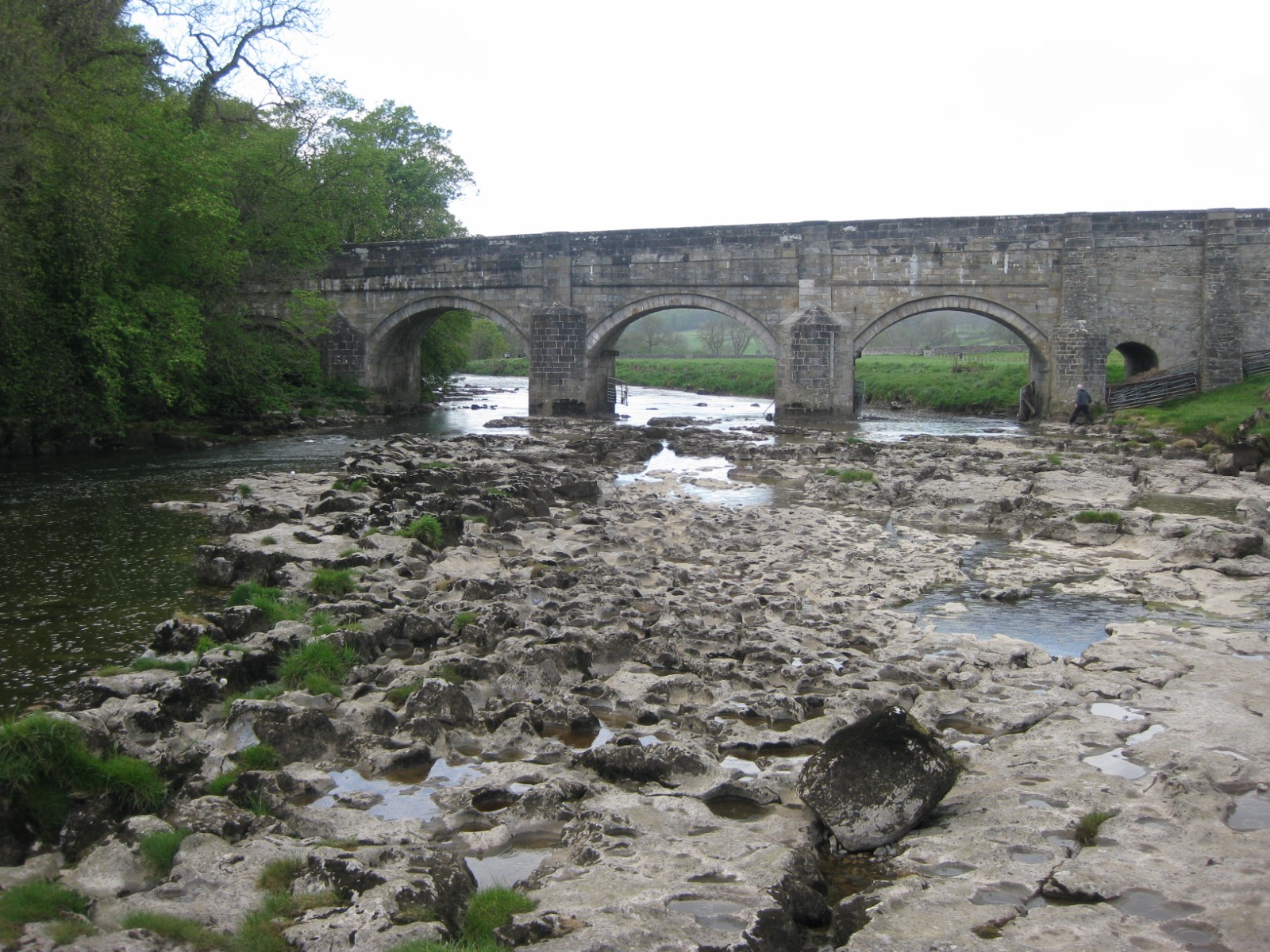
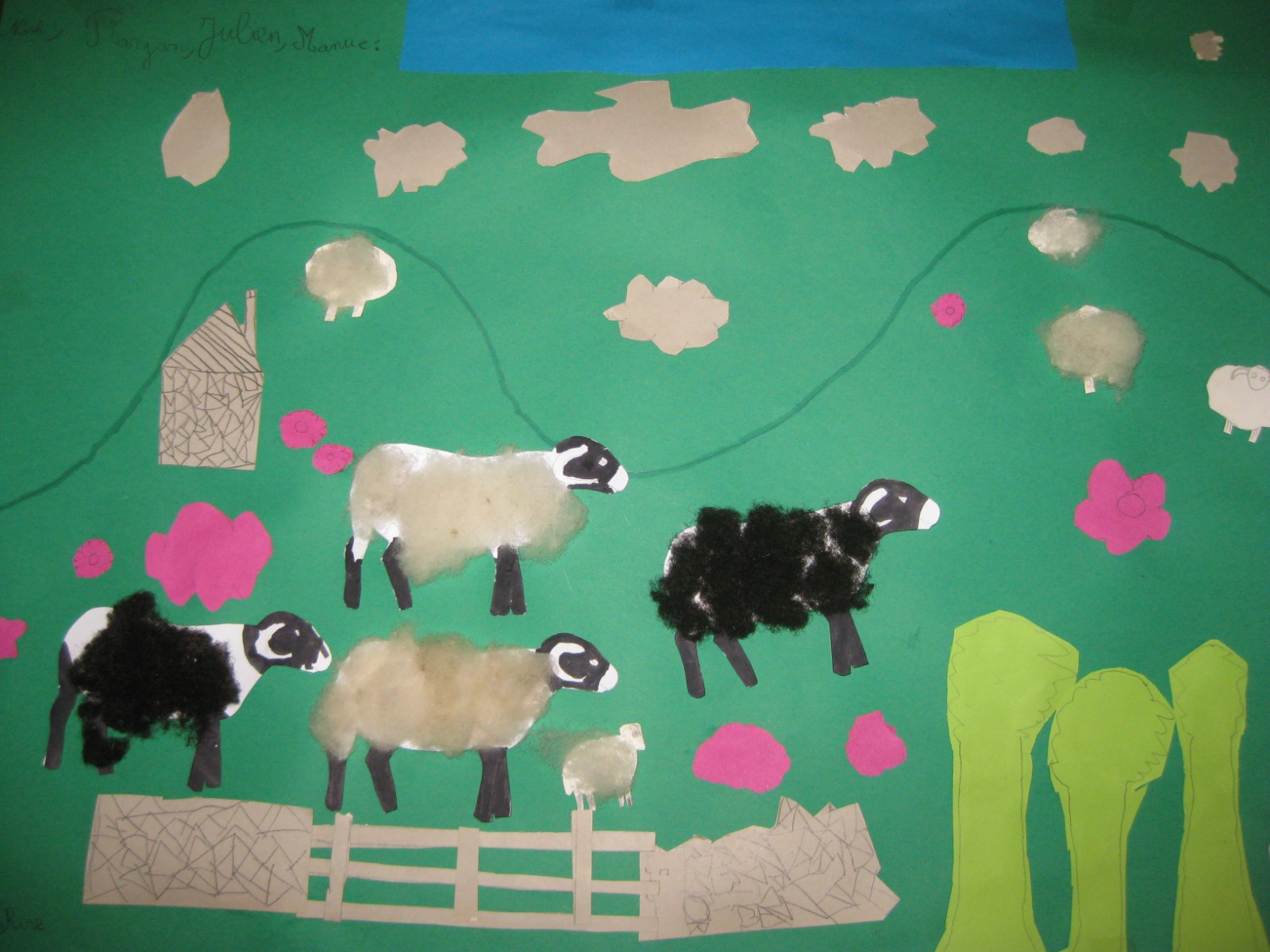
Yorkshire Dales: as interpreted by the children at the Centre de Loisirs, Laroque.

Yesterday afternoon was the best fun.  20 odd-children (that’s ‘about 20 children’, not ‘Twenty Odd Children’) here in Laroque spent the day in England, courtesy of  ‘Découverte Terres Lointaines’,  without setting foot outside town.

These children spend their Wednesdays, a no-school day, at the Centre de Loisirs.  Their parents are probably out at work, and here is somewhere they can spend the day having purposeful fun, without its costing their parents too much.

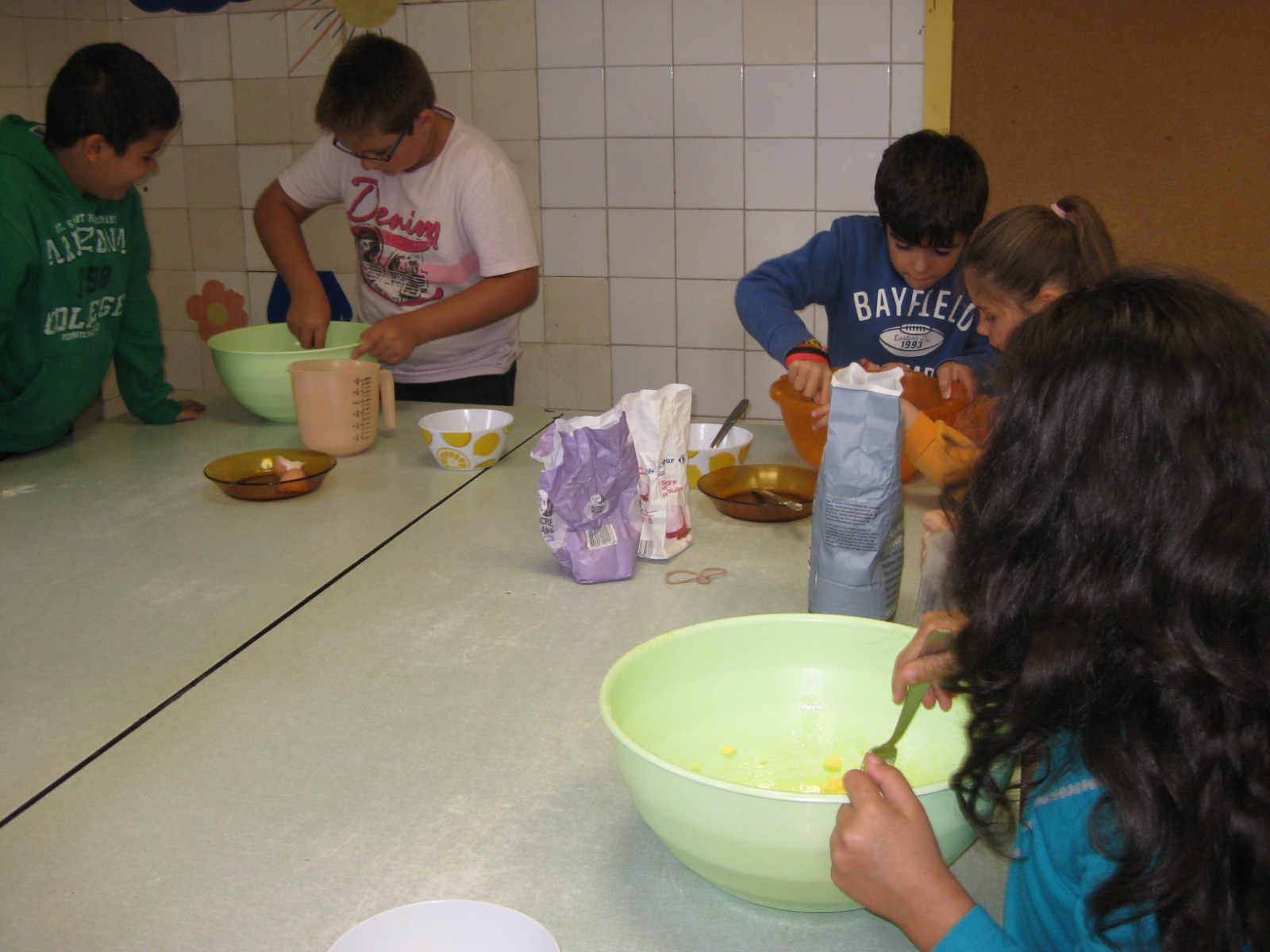
We turned up with bag full of groceries, and spent half the morning baking biscuits, basic English everyday crunchy biscuits.  It was great to see them, girls and boys alike carefully measuring out flour, sugar, butter and so on, stirring, mixing, watching a dough come together from these simple ingredients.

Let the baking begin.

A bag full of cutters and a rolling pin meant that they could transform the mixture into stars and circles, miniature gingerbread-style people, bells and flowers.

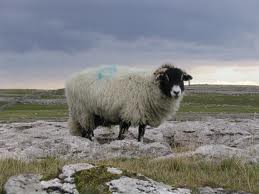
Upstairs, another group had been talking about the green moorlands of the Yorkshire Dales, then making a mural of a Daleside landscape, complete with Swaledale sheep, farm gates, and obligatory grey cloud (it’s England after all).

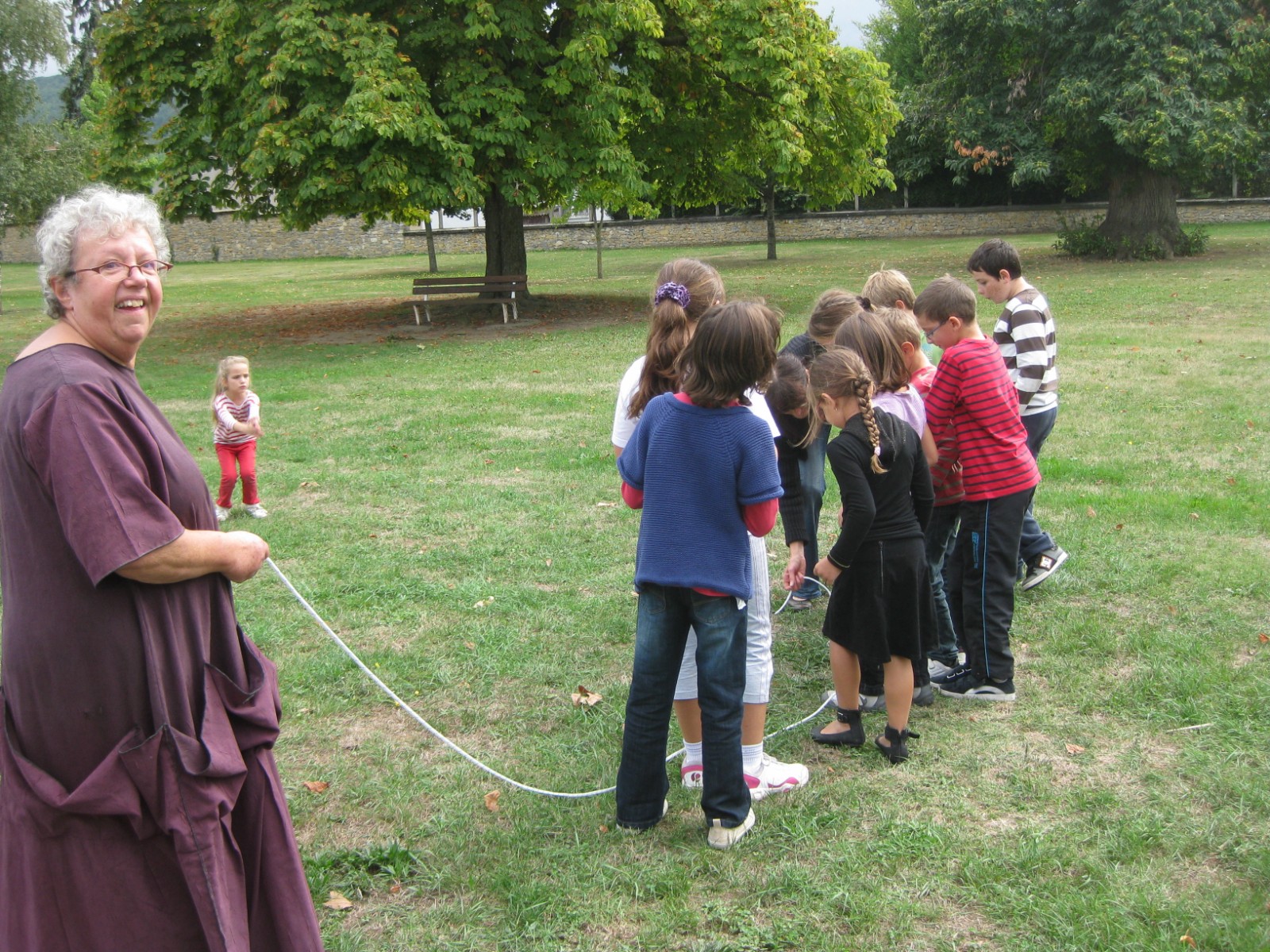
Lunch break.  Afterwards, the children came to see our long-prepared exhibition looking at North Yorkshire, which has so many features in common with the Ariège: mountains (OK, the best Yorkshire can manage is Whernside’s  736 metres.  Ariège’s Pic d’Estats is 3143m); textile and mining industries past their glory days; wide open spaces home only to sheep…. and so on.  They enjoyed an extract from Roald Dahl’s ‘George’s Marvellous Medicine’, and then it was back to the Centre de Loisirs.  Where we produced a long skipping rope with the idea of teaching them a couple of English skipping games…

‘I like coffee, I like tea

I’d like, er, Nadine, to jump with me’.

Getting started with skipping.

They loved it.  Unfortunately they couldn’t skip at all and tripped and fell all over the place, and all the adults mourned that it was a lost art. As in England (Is that so?  Not sure.) children don’t skip any more.

Back into the kitchen, it was time to decorate those biscuits.  They tinted their bowls of icing in lurid shades, and made free with all the sugary decorations we provided.  ‘Glorious Technicolor’ doesn’t begin to do it justice.  Once decorated, they ate the lot, and we sent them off to their parents for the evening crammed full of enough e-numbers to see them through the week.  One lad, as he set off home, was heard to say ‘I’ve had a great day’.  So had we.

Glorious Technicolor biscuits.

‘I remember, I remember the House where I was born….’ *

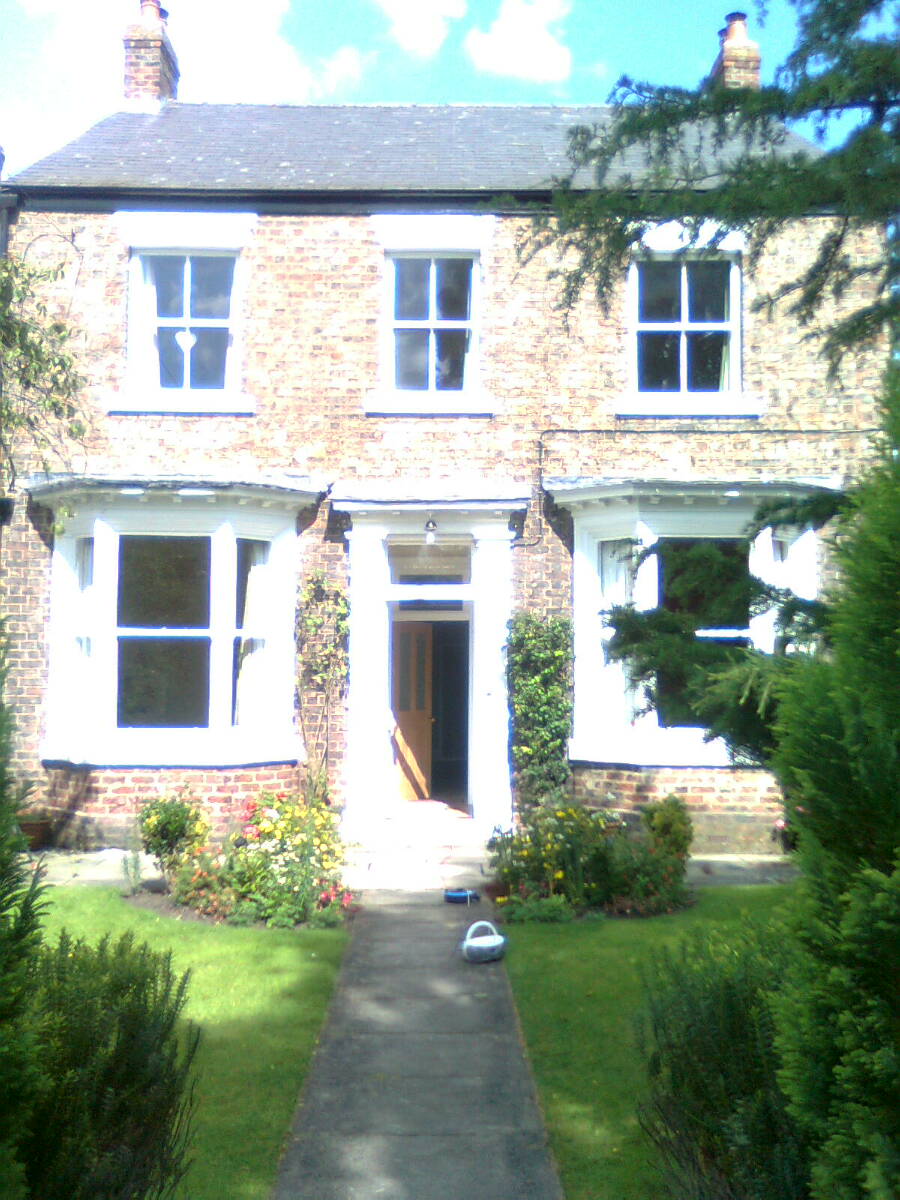
The house where I lived in Alne

I don’t actually.  I was only six months old when we moved away from York to Alne, near Easingwold in North Yorkshire.  And today I visited Alne again.

I lived there till I was 4, and my earliest memories come from there.  I remember our house having a long garden, with an espalier apricot tree growing against an ancient brick wall.  I remember my father gardening and growing vegetables towards the bottom of the garden, spending hours doing this hated task because he couldn’t find paid work.  My mother had no choice but to be the only breadwinner, and as a female teacher, earned less than her male counterparts.  Every weekday, she would cycle the 12 mile journey to York, where she taught, with me strapped firmly behind her.
 
My very earliest memory of all dates from the time when, aged about 2, I wanted to pick my mother a bunch of flowers from the garden.  I chose the best tulips, and carefully snapped them off with about an inch of stem attached.  I couldn’t understand my mother’s fury and the hiding that followed from my father.  I must eventually have been forgiven though.  When I came downstairs on my 4th birthday, there was a home-made swing hanging from the branches of the apple tree.  I used to spend hours playing on it, but then, as now, I never learnt to propel myself up and down in a satisfying rhythmic swinging motion.

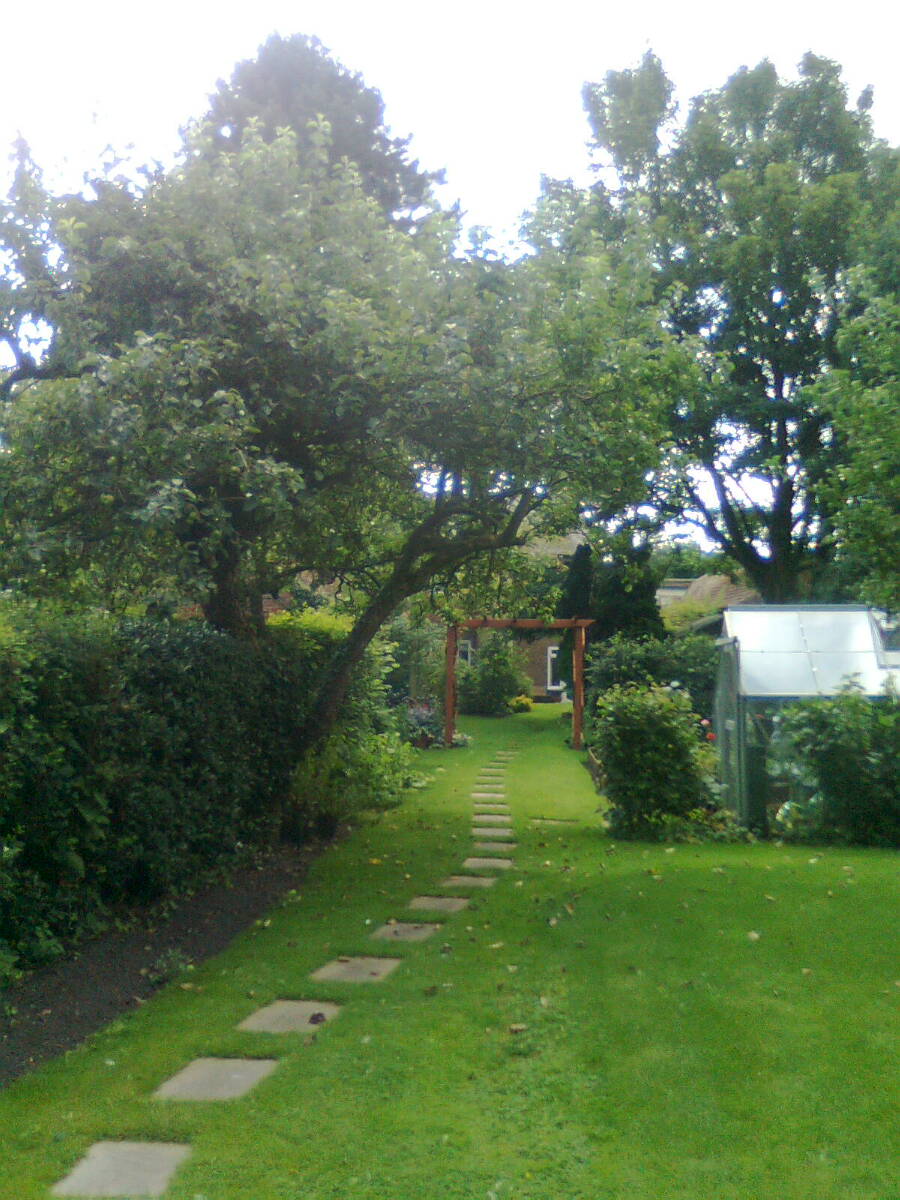
The back garden today: not so very different from the back garden I remember.
 
We weren’t at all well off, but this house, like so many others in the village is now only affordable by someone with means.  When we found it today, the owners were out, but a painter was tackling the garden gate and invited us to look round the garden.  He assured us the owners wouldn’t mind.  The old stone-flagged kitchen, where my mother had to skin the rabbits my father used to catch must have been re-vamped, and there’s a modern extension at the back of the house.  The fields at the bottom of the garden have been built over.
 
Some things remain.  The Village Hall is still there.  I can just remember that about twice a year, a mobile cinema came to the village.  I was too young to see the films, but I remember everybody turning to to arrange hard wooden benches in the hall so the villagers could gather round the screen.  I remember too the very occasional visit of an ice-cream van.  Cornets or ‘sandwiches’, 2 flavours, vanilla or ‘pink’ (Yes, I do mean ‘pink’.  ‘Strawberry’ doesn’t cover it at all).  There was a wood at the edge of the village, and it’s this wood that to this day illustrates the tales of Hansel and Gretel or Little Red Riding Hood in my imagination.  I used to half long for, half be scared witless by the prospect of being irrevocably lost in this forest, which I now realise was little more than a glade of trees.
 
Alne’s become quite ‘twee’ commuter country I think.  Back then it was a fairly isolated community offering housing to farm labourers and other country workers.  I’ve just found our old home on Rightmove, because it changed hands some 5 years ago, and there’s not a chance we, or anyone else in our family could afford to think of living there now.
* Thomas Hood

Above us only skylarks

Every Thursday, Anny leads us on a walk. We might go eastwards to the Aude, south towards the higher  Pyrénées….or indeed travel in any direction, certain of a wonderful day’s walking.

Today we met just beyond Foix, and still in our cars, climbed…and climbed…and climbed,  steadily for 9 miles.  And at the highest point of the Col d’Uscla (1260 metres), we parked. Then we laced up our walking boots, slipped on our rucksacks, and climbed…and climbed…. and climbed.

It was steady rather than challenging, and several times, Malcolm and I remarked that if it were not for the  Pyrénées beyond, we could have been on the North York Moors, with added altitude and sunshine.  Endless expanses of bilberry plants added to the illusion. Each hill we climbed promised to be the last: but as we reached each summit, another hillside appeared in view.

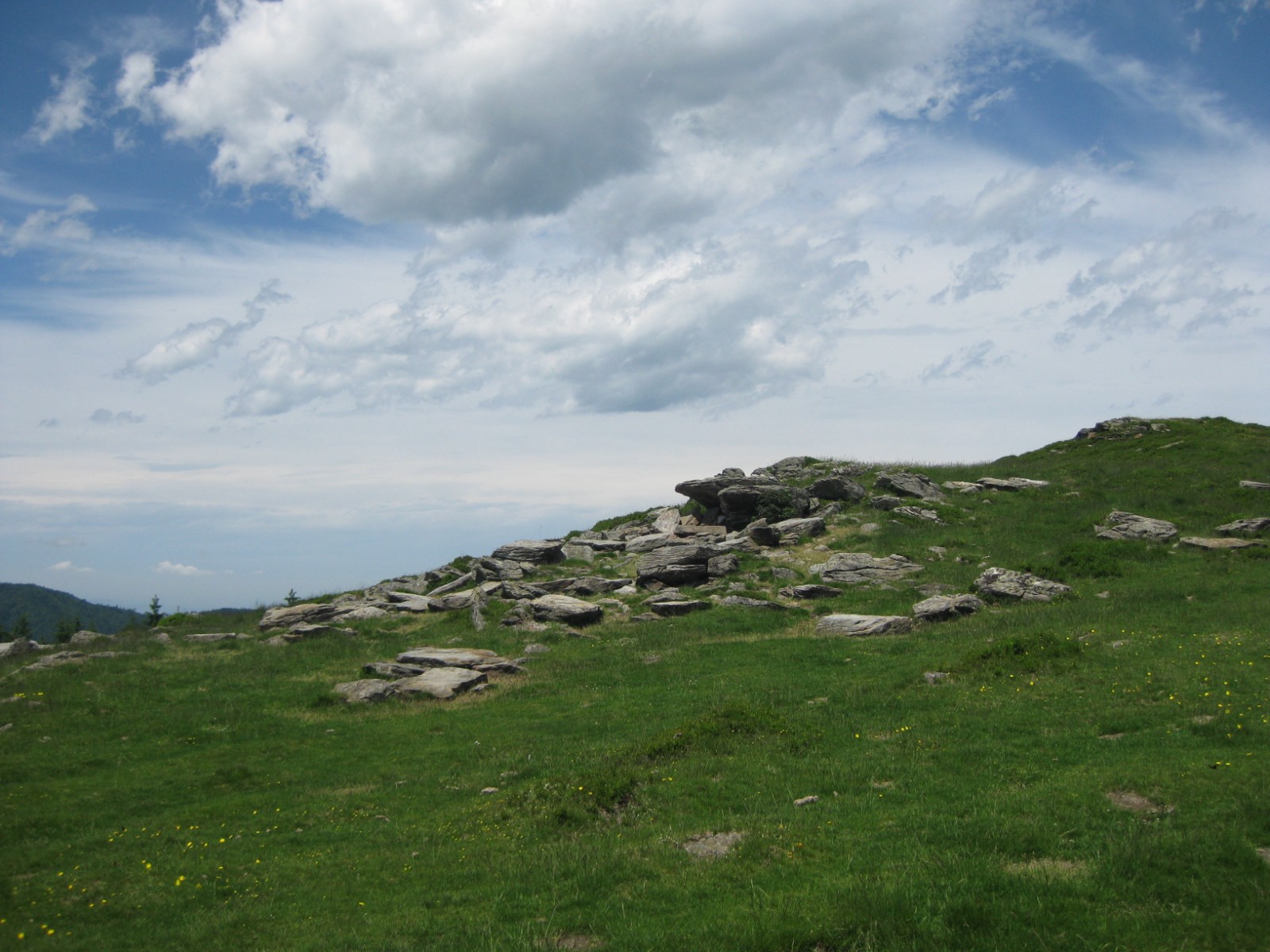
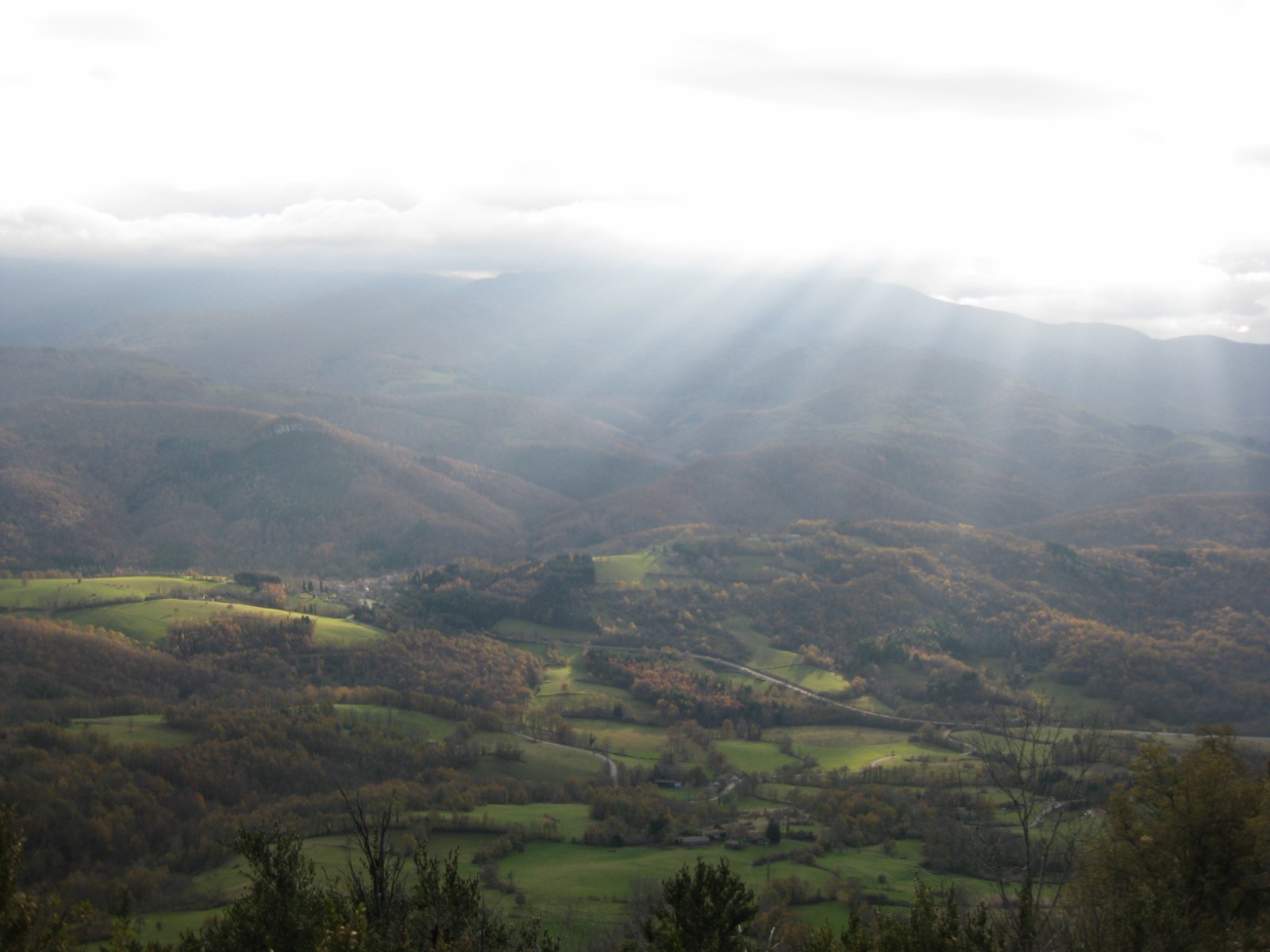
Our eventual reward was at the Cap-du-Carmil, at 1617 metres, with a 360 degree panorama of the  Pyrénées. It was quite, but not perfectly clear, yet we could probably see 50 miles or more in any direction. The only sounds were from the skylarks, joyfully singing way above our heads. I’ll let my pictures tell, slightly inadequately, the story.

Down through more wooded paths, there was the town of Massat below. Once the Ariège’s largest town, its isolated position and failing industrial life means it’s slightly forlorn now.  But not when you’re looking down on it, several hundred feet below.

A quick sortie to the Tour Lafont. This was built in the 1830’s, at a time when 12,000 French soldiers descended on the area to fight the ‘demoiselles’, local guerrillas disguised for some reason as women, determined to maintain their rights to collect wood for fuel, rather then allow it to be taken for the industrial economy slowly emerging throughout France. Despite their superior numbers, the soldiers lost the battles, and there are only odd reminders of their presence at the time in towers such as this one.

After lunch, on through the woods, until we rejoined once more our path with its open mountain views. Horses grazed the short grasses, and seemed only mildly curious about us.

And then it was over.  Boots and rucksacks off: cold juice, a moist and squidgy chocolate cake (thanks, Anny!), a final chat…. and back down that narrow uninhabited 9 mile road to civilisation , home and a cool shower.

A hearty walk, English style

Back in France, we go out with our walking group most Sundays.  ‘Most’, not ‘all’.  Some are just too damn’ tough, but more often, it’s because the walk’s been cancelled.  Rain stopped play.  Unlike their English counterparts, no French hiker wants to hole up behind some convenient rock at midday to fuel up on a damp spam sandwich.  No, lunchtime on a French walk is the opportunity for an extended picnic in some scenic spot, when someone will produce a pastis, someone else a home-made cake or chunks of chocolate, and the whole thing will be rounded off with sugar lumps soaked in some potent home made hooch.  And you can’t do that when the weather’s poor.

We English are made of sterner stuff.  As we discovered just after Christmas.  Our Friends Hatti and Paul arrange a post-festivity walk for about 20 of their friends each year.  It blows away the cobwebs and gets rid of some of those unwanted calories we all seem to absorb throughout December.

On the day, it was intermittently raining.  The wind was gusting and the sky was solidly grey.  Did anyone cancel?  Certainly not!  Instead we were all welcomed at our rendez-vous point with hot coffee or a warming nip of home made sloe gin, and route -maps to send us on our way.

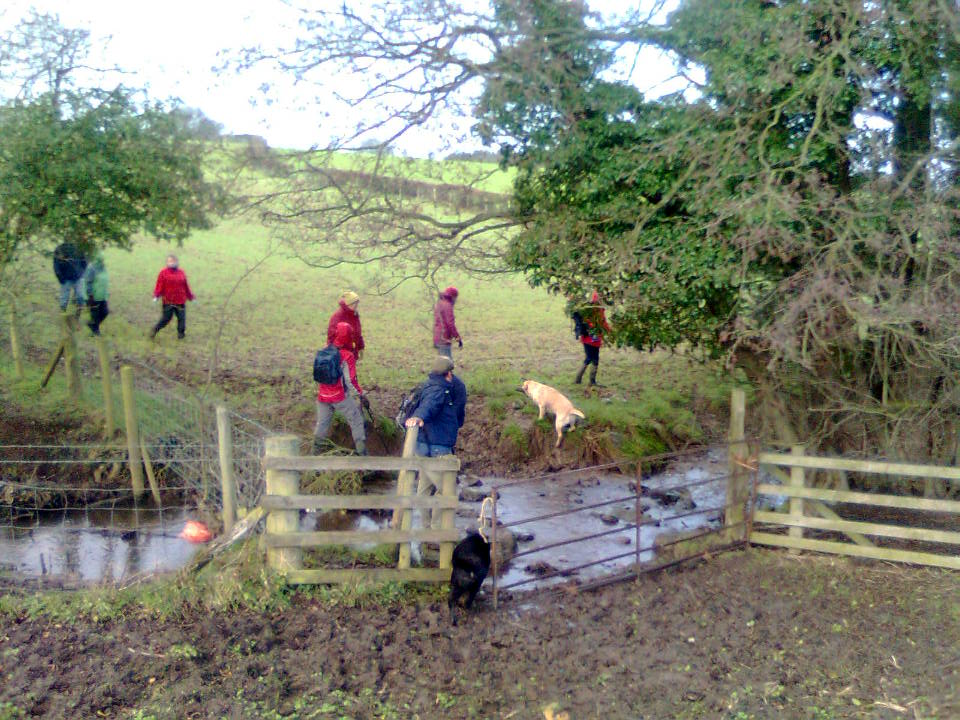
Fording our first stream

The walk itself was under 5 miles long.  But we got our work-out alright.  Leg muscles strained to heave limbs out of gloopy mud, or to leap from stepping stone to stepping stone across overrflowing streams.  Vocal chords often gave up the unequal struggle as wind whipped away shouted attempts at conversation.  Our feet became heavier and heavier with the weight of solid clay sticking to our boots .

But it was fine, dear French reader.  We had fun.  Along the route, we spotted a rainbow which accompanied our path for much of the journey. Welcome pauses in the wind and rain gave us the chance to appreciate the scenery: the skeletal trees set against the grey-green hillsides: the stone farm cottages and the folly at Azerley and the rushing tumbling streams which punctuated our journey.

Arriving at Kirkby Malzeard

No soggy spam sandwiches for us. At journey’s end, we were snug and warm in the Queen’s Head at Kirby Malzeard.  Paul and Hatti had organised sandwiches and chips to be be ready and waiting as we arrived.  And that, surely, is the perfect walk.  A good work-out in good company in lovely countryside, followed by the chance to relax and laugh with friends and food, knowing that nothing more taxing than a hot bath and cosy evening indoors remains to conclude a well-spent day.

From the Pyrénées to the Pennines: Chapter 1

Today, three friends from Lavelanet are coming to stay in Ripon (with friends of ours: we can’t cram them into our tiny flat).  They’re members of Découverte Terres Lointaines coming to Discover Yorkshire in Six Days.  Over the next few months, you’ll find out why.

But Yorkshire in 6 days?  That’s quite a challenge isn’t it?  Especially as it would be good to show something of what the Ariège and Yorkshire have in common: dairy and sheep farming, a textile industry long past its glory days, mining and quarrying ditto, a religious past coloured by conflict…. If you were Tour Guide, what would YOU choose?
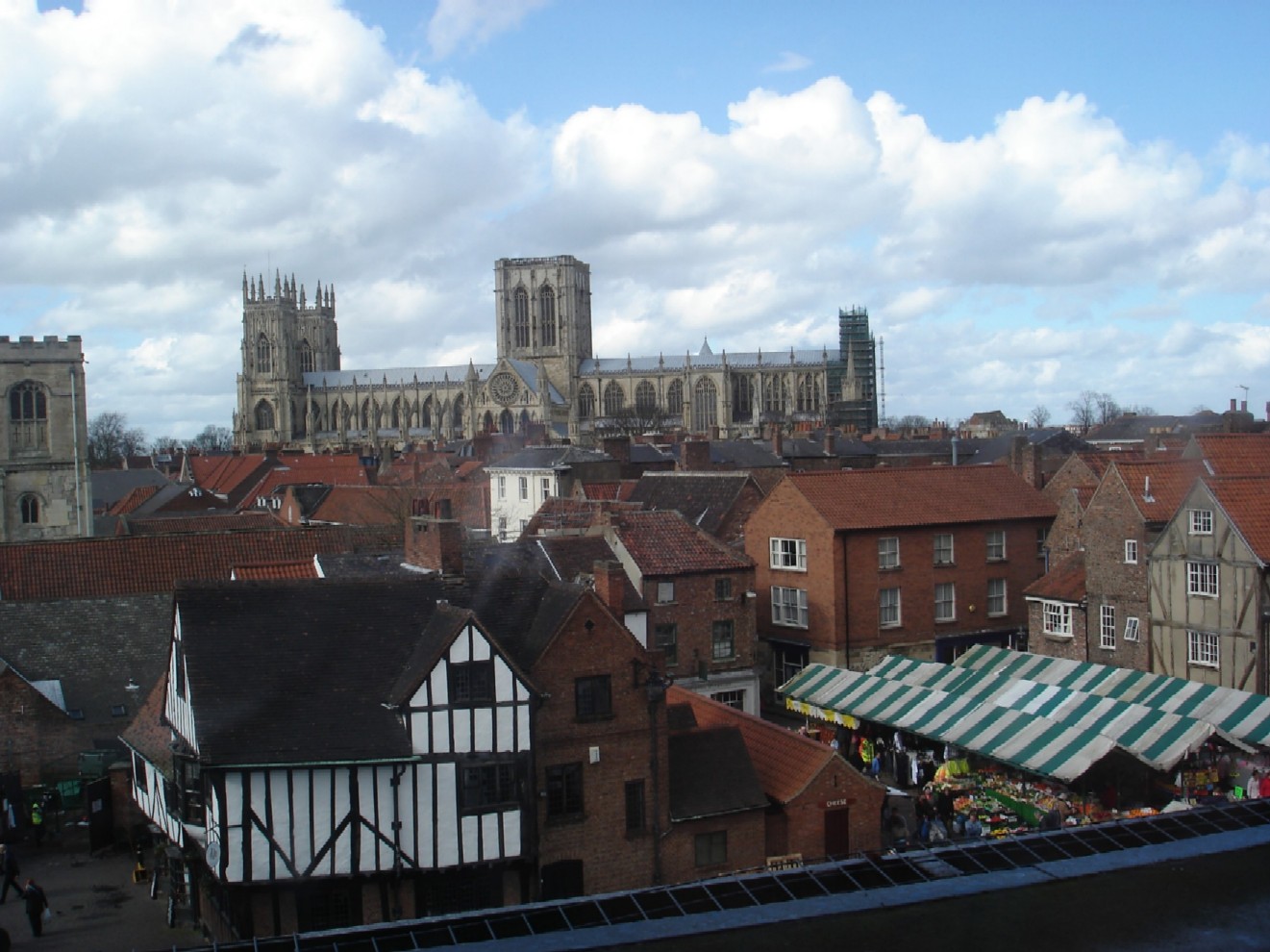
York: The Romans, the Vikings have all been here: a day won’t be long enough

The Dales?  Swaledale, Wharfedale, Nidderdale….etc.  Which is your favourite?

Swaledale

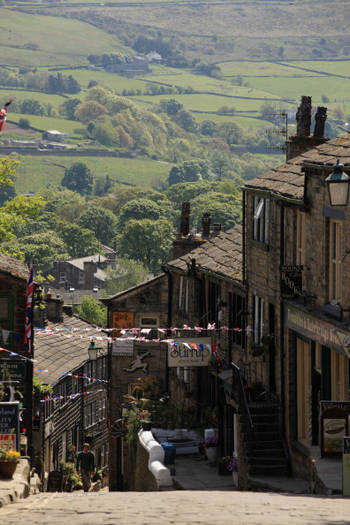
Hawarth: A chance to see a bit of the wonderfully bleak landscape, and visit the home of the Brontë family.

Hawarth

Bradford: its textile industry brought the workers from Pakistan and India who are now such a significant part of the town’s population

Textile Machinery at Bradford Industrial Museum

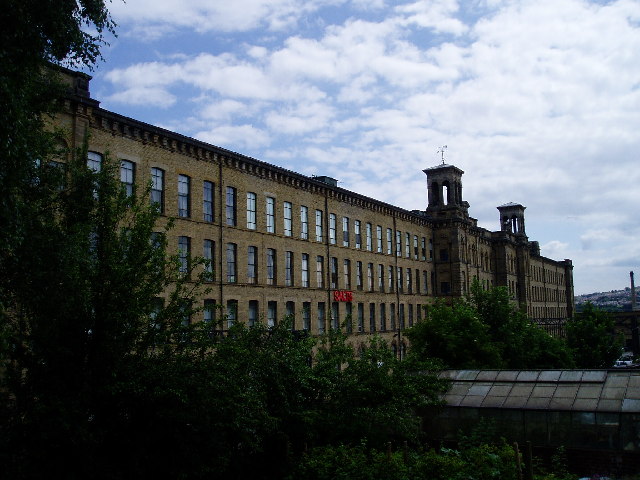
Saltaire: a model village built by philanthropist Titus Salt in the 19thcentury as a decent place for workers to live.  Philanthropists like Salt built others in the UK – such as Port Sunlight on the Wirral and New Earswick  inYork.

Salt’s Mill, Saltaire

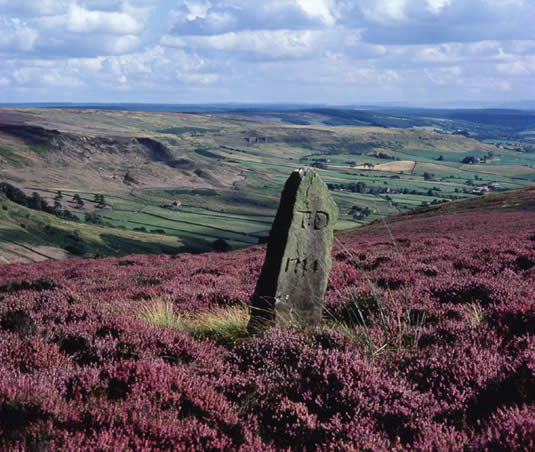
North York Moors:

Rosedale, North York Moors

we’ll see the views on our way to……………

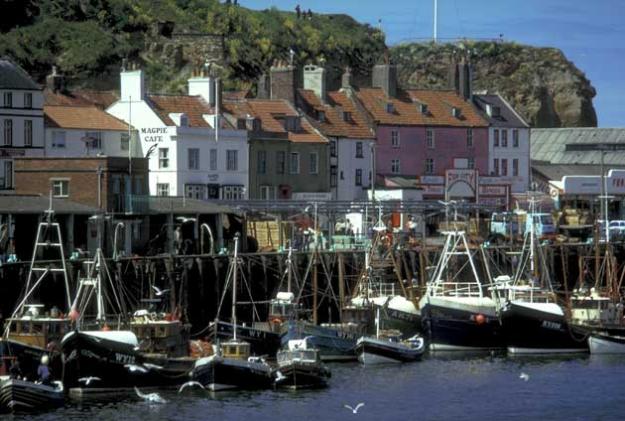
Whitby: fishing port and holiday resort

Whitby

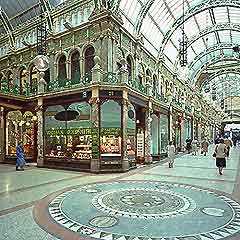
Leeds: the city centre – a mix of Victorian civic pride and modern business district.

Many of the Victorian Arcades are now an up-market shopping destination

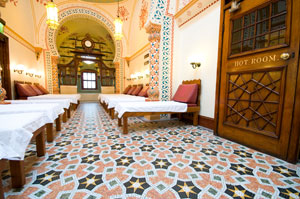
Harrogate Turkish Baths: time for us to relax and re-charge our batteries.

The Turkish Baths at Harrogate

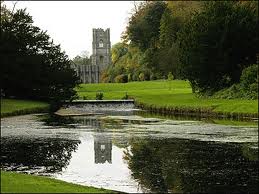
Fountains Abbey: this Cistercian monastery is, like Saltaire, a World Heritage site.  And a beautiful and peaceful place.

Fountains Abbey

We’ll need to include a pub, fish and chips, preferably eaten on the seafront out of soggy paper.  Curry too.  But why is the totally inauthentic chicken tikka masala apparently now our national dish?

I’m so looking forward to being a tourist in my own birth county.  I hope our friends enjoy it too.

Six weeks: a souvenir

Dear reader, perhaps you are feeling quite short-changed.  You subscribe to a blog called ‘Life in Laroque’, and for the last 6 weeks or so, have had nothing but news from England: Yorkshire, to be exact.

Well, we’re back in Laroque, where in our absence they’ve had bitter cold, driving rain lasting for days, and astonishing heatwaves in which the thermometer has topped 40 degrees.

But just before we abandon postings about England, here is a souvenir slideshow of our time there.  It’s a reminder for me really, so if dear reader, you decide to skip it on this occasion, I quite understand.

Normal service will be resumed in my next post.

This slideshow requires JavaScript.

Here we go round the blackberry bush…

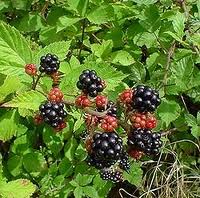
I’m so chuffed to be in England for the blackberry season.  Ariègeois blackberries baked in the hot sun are sweet, characterless and make a rather dull jam.  But then who goes to southern France to go blackberrying?

So yesterday I went out, meandered down a few nearby lanes, and came back with a bowl filled with large glossy, juicy, sweet and yet tart berries, a stained T shirt and fingers stuffed with tiny spines and tingling from nettle stings.  I was very happy.

I set my berries to simmer down with the early apples from Jonet and Richard’s tree, and then…. only then, remembered I had neither a  jelly bag nor a cache of jam jars ready waiting for the next stage.  Oddly, I do have a preserving pan.

So it’s been the moment for a little ingenuity.  An old clean T shirt ripped up made a jelly bag, and this morning we’ve been piling our toast with a week’s ration of marmalade, decanting apricot jam into a bowl, and scraping clean an almost-finished jar of honey.  So far so good.  But what happens when I need to make the next lot?

‘Except ye Lord keep ye cittie ye wakeman waketh in vain’

Ripon Town Hall

That’s the  verse from the Psalms, inscribed above the town hall in Ripon, where we’re spending the next few weeks to avoid the cold and rain of the south of France (no, really, they’ve got the heating on over there).  It reminds us that every evening – EVERY evening – for well over a thousand years, the Ripon Wakeman has sounded his horn to the 4 corners of the city to announce that all is well.

I had to go and check it out yesterday evening.

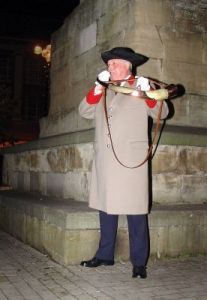
George Pickles, Wakeman, on duty

Promptly at 9, a smartly dressed individual in buff coloured hunting coat, tricorn hat and white gloves took his place before the obelisk on the Market Square and sounded his horn 4 times, once at each corner of the obelisk – one long mournful note each time.

Then he grinned at us, a small crowd of 20.  ”Want to hear a bit of history?’  Well, of course we did.  He made us introduce ourselves, and we found we too came from, well, about 3 corners of the world: Catalonia, Italy, Australia, even South Shields and Merton.  And here’s some of what he told us:

In 886, Alfred the Great, 37 year-old warrior king, was travelling his kingdom to defeat the Vikings, and to drum up support .  Arriving at the small settlement of Ripon, he liked what he saw and granted a Royal Charter.  He lacked the wherewithal to produce an appropriate document, and so gave a horn which is still safely locked in the town hall.

‘You need to be more vigilant, there are Vikings about’. Alfred warned.  So the people appointed a wakeman to guard the settlement through hours of darkness, and he put that horn to use by sounding it at the 4 corners of the Market Cross to announce that all was well as he began his watch.  The town’s now on its 4th horn.

If you want to know more, our current Wakeman, George Pickles,  has written the whole tale for the BBC website.  It’s a good yarn.  Read it when you have a moment

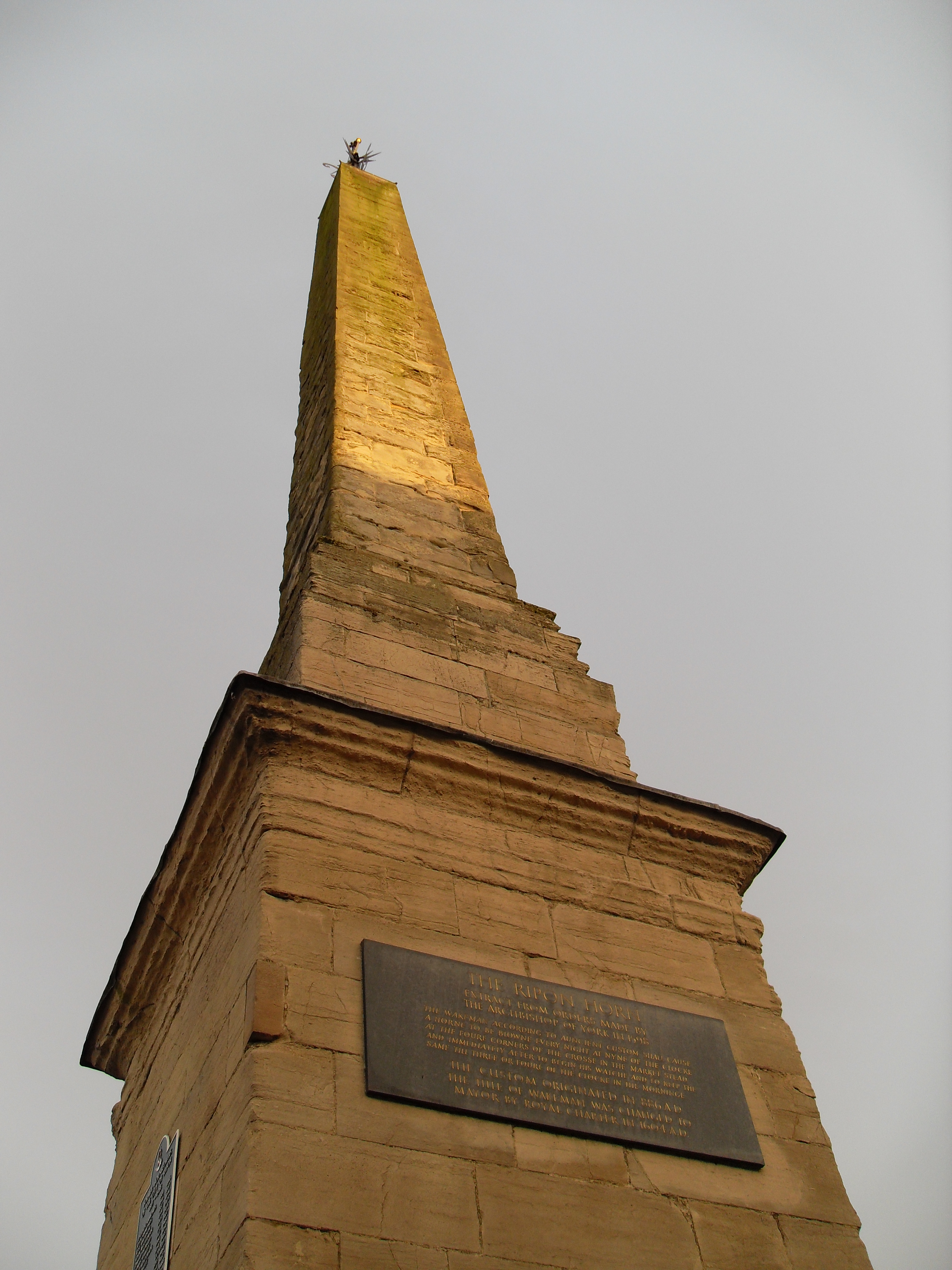
This is the obelisk the Wakeman visits each evening. It was erected by the then MP, William Aislabie in the 19th century, to commemorate his ….60 years as an MP