Walking on the radio

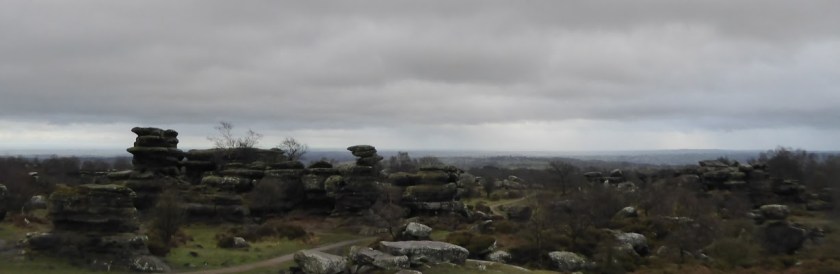
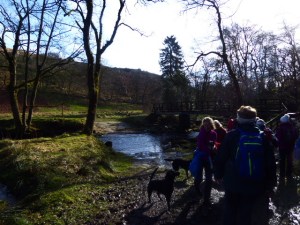
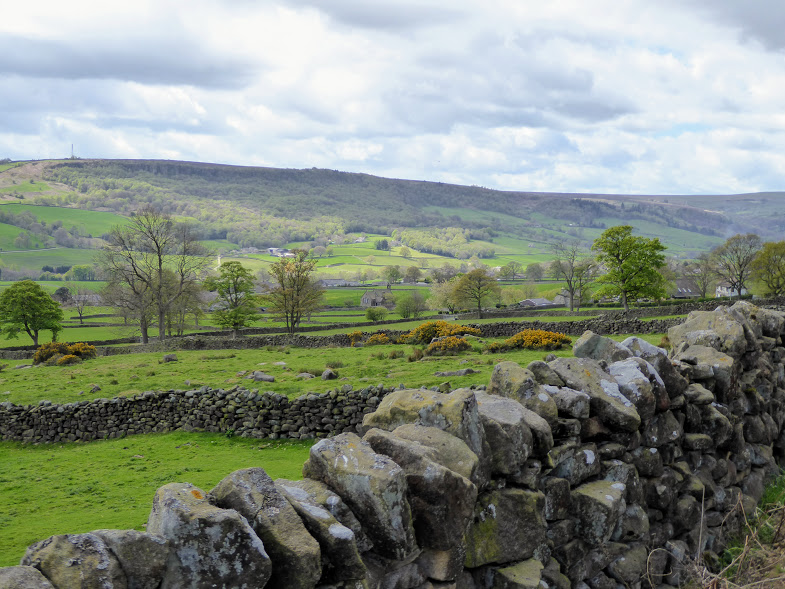
Looking across Nidderdale from the Nidderdale Way.

I’ve been out for the day with Clare Balding again, for BBC Radio 4’s ‘Ramblings’ programme.  Last time, her producer Lucy was looking for a local rambler to lead the Ripon to Ripley section of the Jarrow March, and she ended up with me.  Last time, as the walk finished we fell to talking about local long distance walks, such as The Nidderdale Way.

And lo!  Now they have a six-programme series in the bag, waiting to be transmitted in May and June, on …… the Nidderdale Way, all 53 miles of it.  She invited me to be part of the last leg, together with Chris and John.

Let me tell you how it works.  We walk.  We chat.  Lucy walks beside us with her muff-on-a-stick, recording little and often.  Clare stops from time to time and paints evocative word pictures of the scenery, the sights, smells and sounds, the passers by.  She chats to us about everything from geology, to history, to walking, to long-lost industries, to living near Nidderdale.

Lucy records Clare describing the countryside.

We see our local landscape through fresh eyes.  Instead of its being the backdrop to our daily lives, it becomes vivid again, and we remember the wonder and the intense pleasure we experienced when it was new to us too.
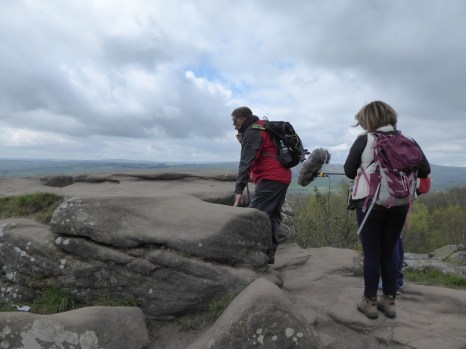
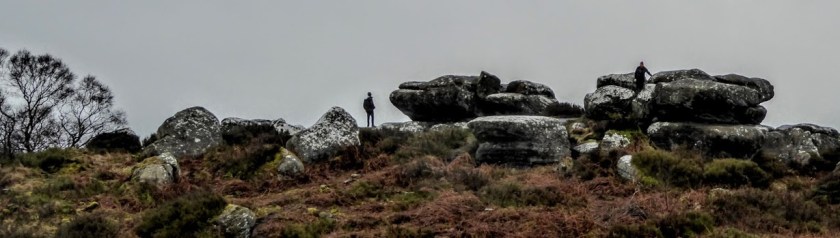
Lucy pursues John for a soundbite at Brimham Rocks.

Clare loves people.  At Brimham Rocks, where we insisted she take a detour, she chatted to children with their families and took part in their photos.  Later, she hung over a drystone walls and talked to a farmer.  She patted dogs and enjoyed a few moments with their owners.
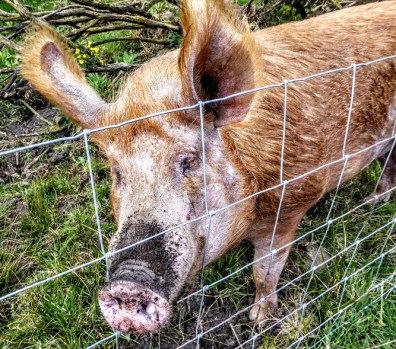
Clare even interviewed this pig. Well, she grunted for her, anyway.

Just as well she’s good at this sort of thing.  When we arrived at Pateley Bridge, she became a sort of stand-in for the Queen.  She was whisked from shop to shop, always leaving with a little local speciality -a pork pie, some home-made fudge.  With Lucy, she was given a newly-minted badge for completing the entire Nidderdale Way.  They got flowers, a book by a local historian, hugs and handshakes galore, and repaid all this attention with genuine interest and friendship.  Pateley Bridge by the way is in the thick of preparing for the Tour de Yorkshire 2017, which goes through the town – and past our front door – on Saturday 29th April.

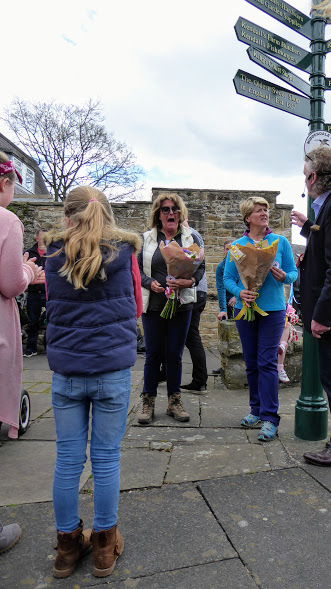
Flowers, badges, and a round of applause for Lucy and Clare.

Please listen to this series when it comes out: it’s available as a podcast even if you don’t live in the UK.  The first programme will be on BBC Radio 4 on  18th May, and the programme featuring our team will be transmitted on Thursday 22nd June.  You’ll make immediate plans for a holiday in Nidderdale after you’ve listened.

The shadow of a drystone wall on a stretch of road near Blazefield.

Snapshot Saturday: Earth Day in Colsterdale

The Earth.  It’s tempting, for this week’s WordPress Photo Challenge, to choose lush woodland, productive farmland, dramatic peaks, crashing ocean breakers, or a charming cottage garden crammed with colourful flowers, and on Earth Day, show it at its striking best.

The welcome committee greets us on the path to Ellingstring.

Instead, I want to take you to Colsterdale in Yorkshire.  The soil is thin, acid, peaty. Bitter winds scythe across the hilltops, bending to their will those hardy trees that make it to maturity.  Brackish ditches lurk below the juncus grass to catch out the unwary hiker. The hills, though beautiful, can look barren, apart from the heather which blushes an extravagant purple every August.

But Earth is clever.  This unpromising countryside nurtures thousands of sheep and lambs.  Curlews, plover and geese wheel through the sky.  Songbirds spring from the heather.  There is so much hidden wildlife that much of the area is a Site of Special Scientific Interest.

Today is Earth Day 2017.  I’ve chosen to celebrate the hidden dale so close to where we live.  Follow the WordPress Photo Challenge link to see what others have chosen.

In which William talks to the animals … and finds something from the Easter Bunny

William’s a London child.  His commute to nursery passes railway tracks and city streets, as well as a walk through a rather nice park. The animals my grandson sees on his daily round are dogs-on-leads, cats and urban foxes.

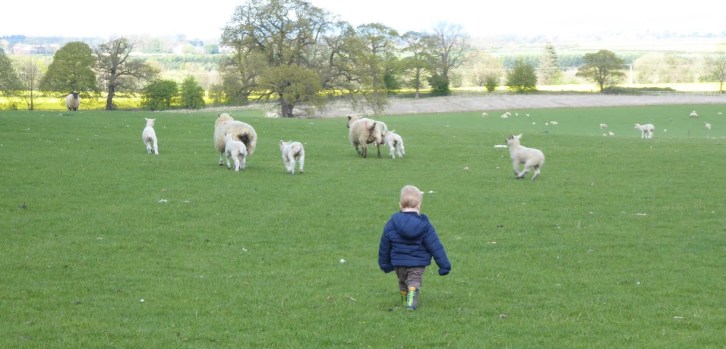
We wanted Yorkshire to offer him something different.  On his very first afternoon, we visited two-day-old lambs in the field at the end of the road, wobbly on their legs and clinging to their mothers.  Later we’d visit older lambs, confidently running and jumping across a public footpath as William wandered among them.

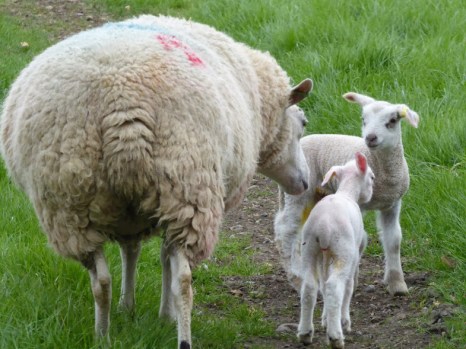
Newborn twin lambs with mum.


Confident lambs, confident William.

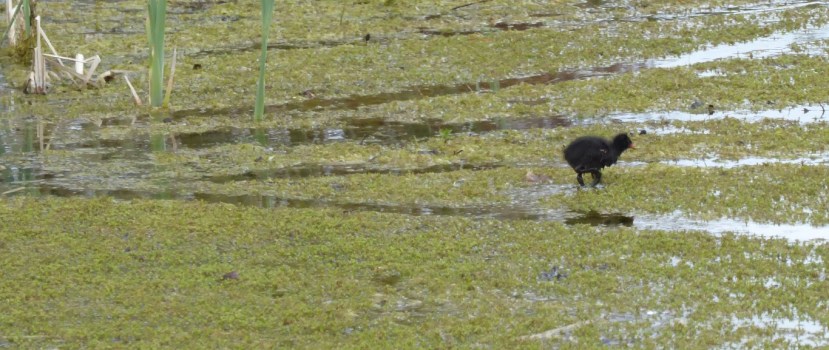
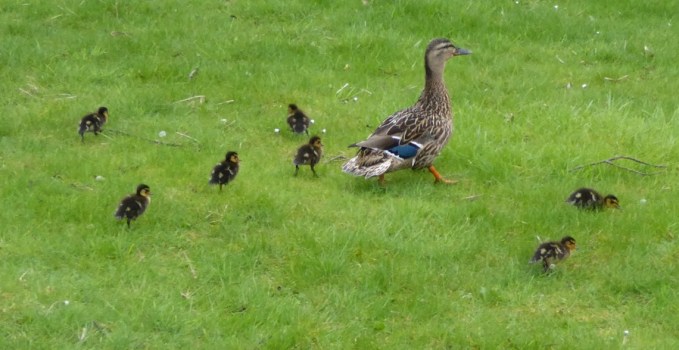
Then it was off to the duck pond.  Two Mrs. Moorhens had a chick each, so light that even pond weed could bear their weight: were they walking on water?  Mrs. Mallard had eight balls of fluff scuttling from land to pond to rushes – constantly on the move.

A moorhen chick walks on water.
A mother mallard and her eight babies.  Except the eighth is off-camera.

The next morning, good friends Gill and David invited us over.  There were puppies to pet, dogs and a cat to stroke.  And then there was Reggie, their grandson’s very own Thelwell pony.  Reggie turned out to be far too scary to ride, but perfectly good to take for a walk.

Gill, William and Sarah take Reggie walkabout.

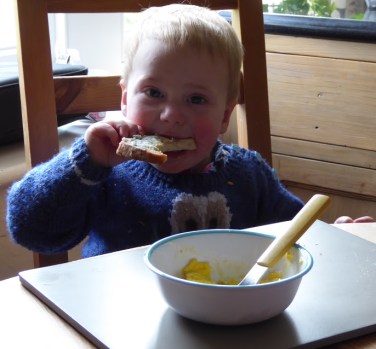
Then William was put to work, collecting eggs.  He didn’t break very many as he dropped them none too gently into his collecting basket.  Afterwards he fed the hens.  And we went home for scrambled eggs on toast.  Thank you William.  Thank you Gill, David and the hens.

William’s personally-gathered eggs for a scrambled egg lunch.  Mmm….

Late one afternoon, William and I went for a walk in the woods and saw rabbits, a dozen or more, grazing the grass on the other side of the fence.

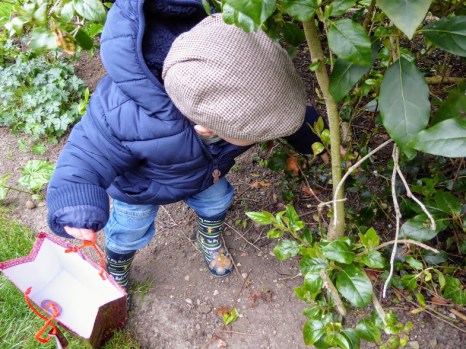
I wonder if it was one of them who left the chocolate eggs that William found in the garden when he went hunting for them on Easter Sunday?

Hunting for the Easter Bunny’s eggs.

Snapshot Saturday: Brimham Rocks – securely unchanging in inconstant times

Once, three hundred and twenty million years ago, a Norwegian river tumbled its way across the landmass then connecting it to Scotland and turned towards Yorkshire, pushing sand and grit before it.  Over the millennia, those sands aggregated to become millstone grit.

More millennia passed. Temperatures in Northern Europe tumbled: an Ice Age.  Glaciers ground and eroded the relatively soft stone which had been dumped so many centuries before. Seeping water froze, thawed, froze again, splitting the rocks.  Cold strong winds buffeted away at rough edges. Those rocks assumed strange shapes, balancing improbably in the landscape.
Time moved on.  Man arrived, farming too, and industry.  But this little patch of Yorkshire, known as Brimham Rocks remains itself, untamable, unchanging, offering a feeling of security that some things remain constant for those of us lucky enough to live nearby this weird and fantastical playground.
This is my contribution to this week’s WordPress Photo Challenge: Security

A lunch stop with sheep

I’m having a busy week.  I’ve got far too much to do to take a day out walking with friends.
Except that on Tuesday when I woke up, the sun was already bright and the sky was clear.  We haven’t had days like that in a while.  And John, who always knows a good walk, had planned to take us near Thruscros Reservoir.  The jobs could wait.

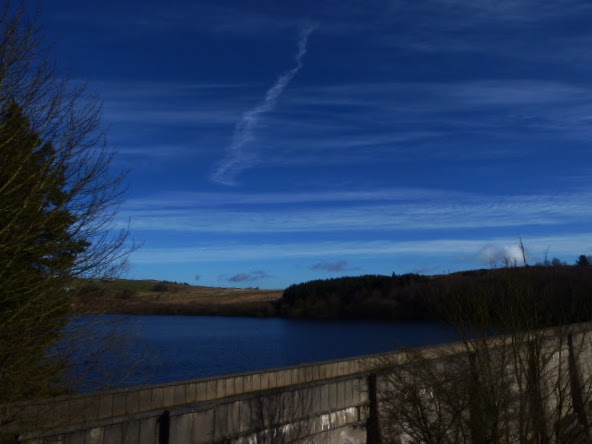
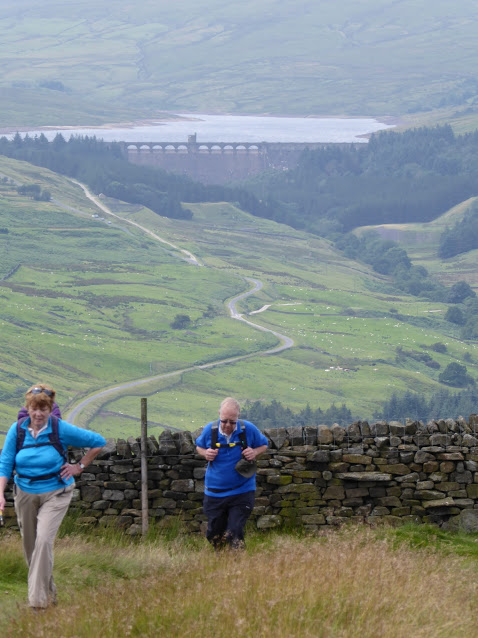
Here’s the reservoir, offering a home to wildlife, and panoramic views to us, while supplying clean water to the population of Leeds.

We walked through woodland and through Daleside pasture with moorland views beyond.

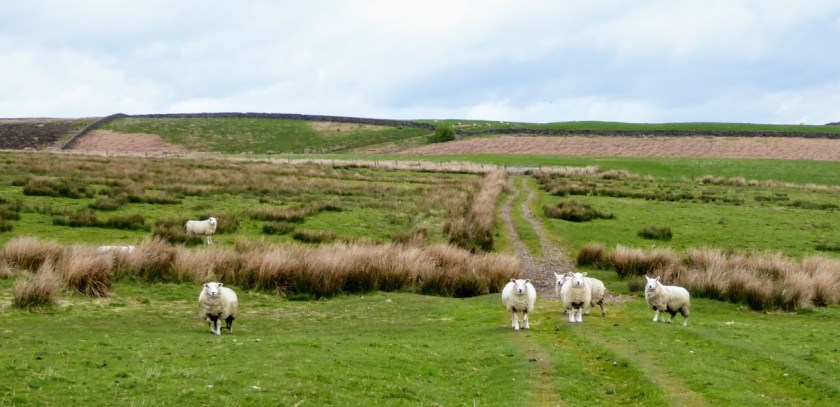
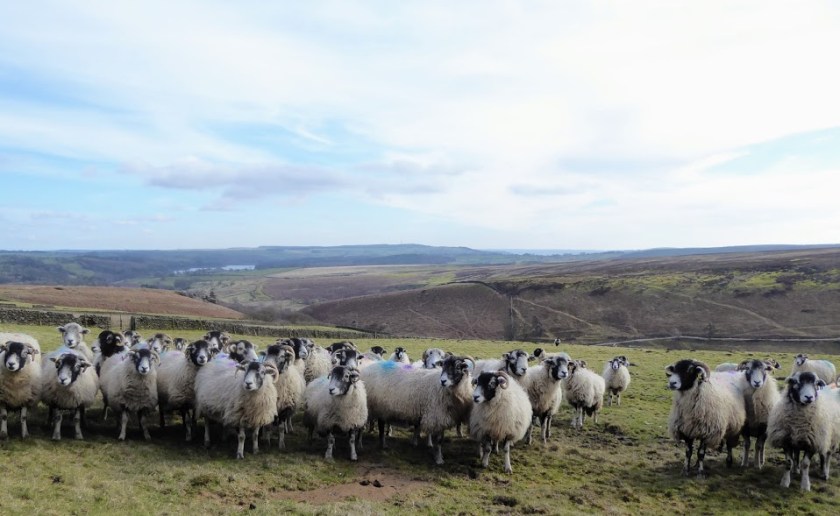
And at lunchtime, we found a sunny drystone wall to rest our backs against as we picnicked.  The local sheep were interested.  Picnics mean tasty snacks, perhaps.  They organised a mass silent and peaceful demonstration for food.  We resolutely ignored them, and finally they mooched off to nibble at their pastureland once more.

The morning had been all uphill, which meant the afternoon was all downhill (well done, John!).  Soon we were at the reservoir again.  A fine day’s walking was had by all.  And my jobs remain uncompleted.

Since writing my last post, I’ve discovered that my friend Janet Willoner has written a wonderful piece describing a murmuration of starlings, in Melissa Harrison’s equally wonderful anthology ‘Winter’.  Here’s the link.


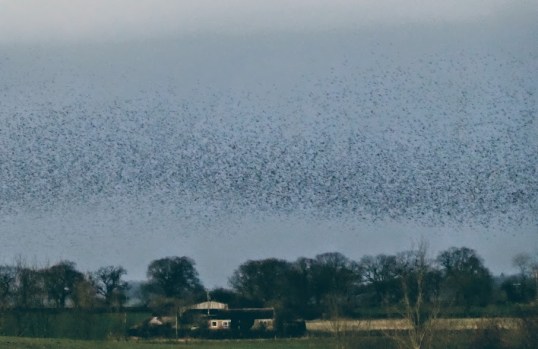
A murmuration of starlings

The bush telegraph was busy.  It’s that time of year, and starlings are murmurating.  Spotted south of Ripon, they’d also been seen at Nosterfield, only a couple of miles from us.

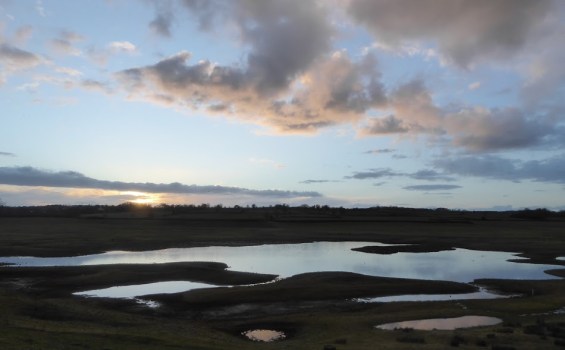
Sunset over Nosterfield Nature Reserve.

Down at the nature reserve, just at sunset, cars gathered.  Their occupants waited, enjoying the spectacle of the nightly sunset.  Then most of the cars  just – went.  What did they know that we didn’t?  Then Malcolm spotted what we’d come to see, over there in the north.

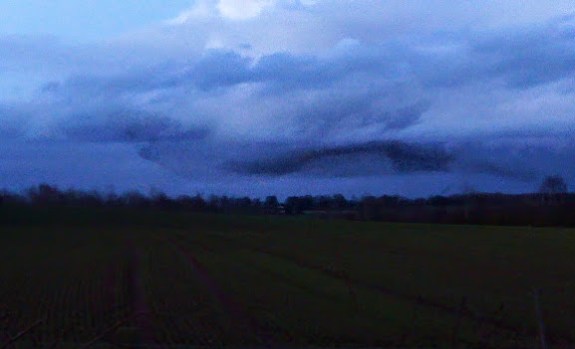
The starlings gather.

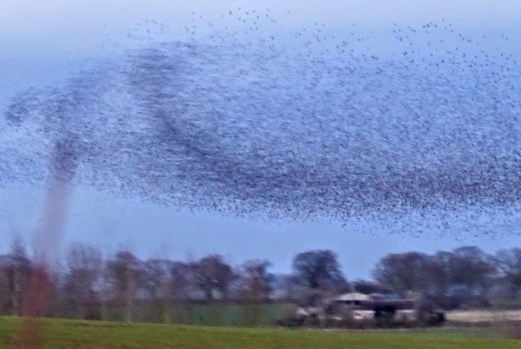
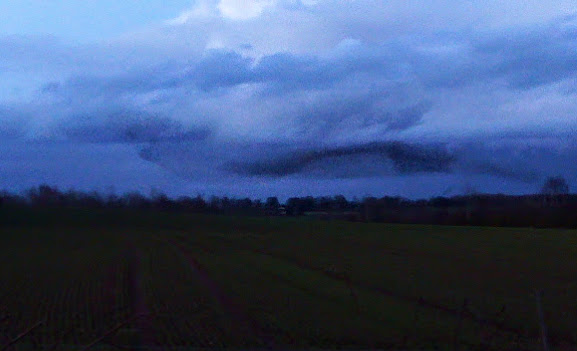
Thousands upon thousands of starlings in a dense cloud that spread, re-gathered, swooped, dived and soared  like one of those unending computer-graphic screen savers that used to be all the rage.

We left too,  We needed to be nearer.  And sure enough, there in a lay-by near Nosterfield village we re-grouped, our binoculars to the ready.  The starlings formed an immense cloud, sometimes dispersing to blend in with the grey cloud behind, sometimes wheeling together in sinuous black streaks of snake-like movement.  For half an hour we watched.

 Then this impressive partnership of birds pulsed lower, then lower, then dropped out of sight.  They’d finished their performance for the night.

Snapshot Saturday: The Road Taken through Colsterdale

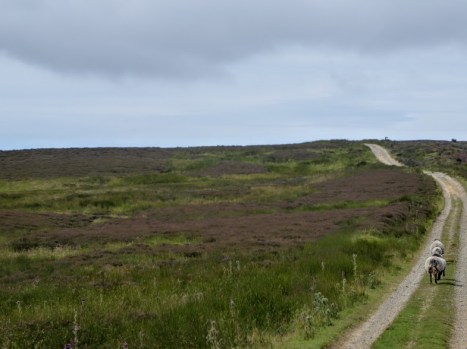
The road less taken from Scar House Reservoir
The road we could have taken to Scar House Reservoir

I love Colsterdale.  It may be my favourite Yorkshire dale.  It’s an isolated area, tucked away, north-west of Masham.  Not a single main road goes through it. There are no traffic jams here, just local cars (4x4s are useful), vans and tractors.

Walking these tracks, be prepared to share your route with a few sheep.

There are routes though.  Ancient routes forged as long ago as the 14th century, when there was a long-gone coal mine here, or more recently by stockmen driving their flocks over the harsh moorland landscape.  These days, it’s hikers and ramblers who are more likely to use these tracks. Perhaps they’re completing the Six Dales Trail, or finding out the history of the Leeds Pals.  Perhaps, like us, they’re enjoying a walk from Leighton Reservoir, and enjoying long distance views of Scar House Reservoir.

This week’s WordPress photo challenge: The Road Taken

Time travelling to the past in Nidderdale.

If you come for your holidays to Nidderdale in the Yorkshire Dales – and my goodness, I do recommend it – you’ll want to have an afternoon pottering around Pateley Bridge.  It’s just won Britain’s Best Village High Street 2016 award.

Pateley Bridge High Street (geograph.co.uk via Wikimedia Commons)

And if you come to Pateley Bridge, you jolly well ought to visit Nidderdale Museum.  Tucked behind the High Street near the Primary School and the Parish Church on the site of the former Workhouse,  it’s a little treasure trove.

A photo in the museum collection of Pateley Bridge High Street in the very early twentieth century.

This little museum is entirely staffed by volunteers who cherish each donation and display as many as they possibly can in an engaging and informative way.  You’ll punctuate your visit with delighted cries of ‘I remember that!  My granny had one!’  Or ‘Oooh, I never knew the railway went there.  I wonder where the station was?’. You’ll have an animated discussion with a fellow-visitor about being an ink-monitor at school, or about the mangle that was hauled out on washdays when you were a small child.

You’ll also see things that were not part of your own heritage, but which were an important part of Nidderdale’s past. You’ll discover that this pleasant rural area was once an industrial power-house, with textile workers by the score and lead mines dotted over the landscape. You’ll be reminded how very tough day-to-day life was on a Daleside small holding or farm.

Here’s a very quick tour:

We had a Ewbank carpet sweeper at home … and this splendid bed-warmer, simply heated by a light bulb … and a cream-maker.

We had inkwells like this at school, and I spent many painful hours in the company of copy books like these.

But look at this parlour:

I don't quite remember a room like this.
I don’t quite remember a room like this.

And this wholly intact cobbler’s shop, transferred to the Museum in its entirety.

I definitely remember a cobbler's shop like this.
I definitely remember a cobbler’s shop like this.

And here’s a glimpse of life on the farm, before labour-saving machinery came along.

Tools both heavy and huge in use on the farm.

We’ll be going again and again.  So much to see, to reminisce over, to learn from.  This engaging museum is a treasure in its own right.

My visit was one of the perks of being a National Trust volunteer. Brimham Rocks is Fountains Abbey’s nearest neighbour, and staff there organised this trip – thank you!  The museum is open at weekends until mid-March, then daily during summer months.  

From Masham to Marfield. And back.

mashamdec2016-003On Christmas day I posted a scene from our days living in the Ariège.  I felt very nostalgic for the Pyrenees, for snowy peaks silhouetted against clear blue skies, for cold clear air.

Today gave me the chance to remember that our countryside, though so very different, has its own charms and pleasures.  We walked from nearby Masham and past the gravel pits of Marfield, now home to water birds of every kind: though only Canada geese and a few proud swans got a look in this morning.

mashamdec2016-011

We passed stands of ancient oaks, saw stark lines of skeletal trees marching along the horizon, watched the sky turn from Pyreneen blue to moody grey and purple then back to cheerful blue again.  Sheep in late pregnancy cropped the short grass.  We stopped to chat with fellow walkers walking off a calorie-laden Christmas. The River Ure was never far away.  A pretty good morning’s work, actually.

A troop of horses and a herd or two of sheep.

Horses in Middleham
Horses in Middleham

Have you ever had a flutter on who might win the Grand National or The Derby?  If you have, there’s a very good chance that the horse you fancied might have trained at Middleham.

Middleham’s a small town in Wensleydale of 800 or so inhabitants. You’ll notice its fine castle (Richard III stayed here) even before you get there.

Middleham Castle

And when you arrive, you’re as likely to see – no, you’re likelier to see – horses rather than pedestrians.  The principal industry of this little place, since about 1730, is training horses.  There are some 15 training establishments in town, and each of them may have up to 150 horses or more, aiming to be among the next generation of racehorses.

Every day clusters of riders take their charges up onto The Gallops to exercise and train them.  We citizens who come to the area to walk and take in the views have to play second fiddle, at least during morning exercises.

the-gallopsWho cares? On Thursday, we were happy to share the views and skyscapes with such magnificent beasts as we strode across the moorland.

Later on, we walked through Coverdale, past Tupgill, upwards through the tiny hamlet of Caldbergh along wild and little-frequented tracks.  Then it was sheep who were obliged to share their pastureland with us.  They were sure we’d have mangel-wurzels to offer them and hurried towards us. We hadn’t.  They were unimpressed.

sheep-at-the-gate

We left them to it. We had a walk to finish, preferably before lunchtime. And we rather hoped for something more appetising to eat than mangel-wurzels.

sheep-in-a-landscape