For once, this week’s WordPress Photo Challenge – ‘glow’ – demanded no lateral thinking on my part. The image that came to me was one that many Brits shared on Tuesday.
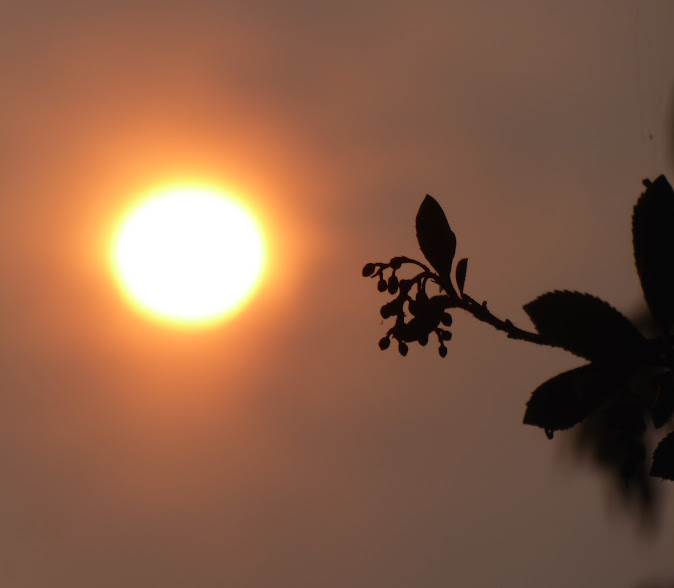
Hurricane Ophelia was doing its worst over in Ireland and on England’s west coast. In London, William and I weren’t feeling even a gentle breeze. But as morning became afternoon; as afternoon changed into evening then night long before the appointed time, the sky turned sepia, and the sun glowed.
Ophelia was sucking sand from the Sahara and throwing it to the English heavens. This was the result, at round about half past one in the afternoon:
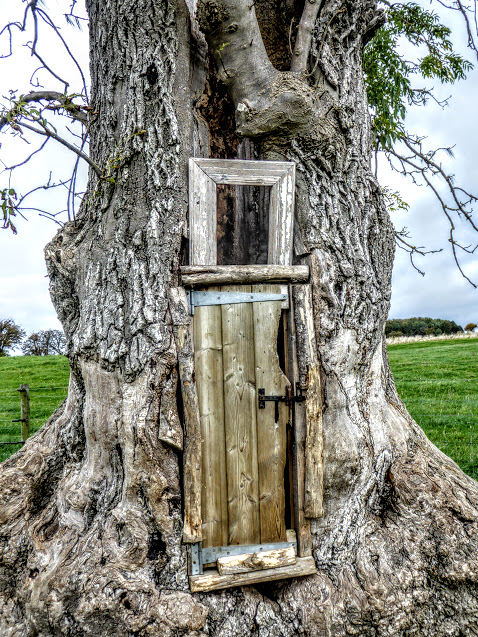
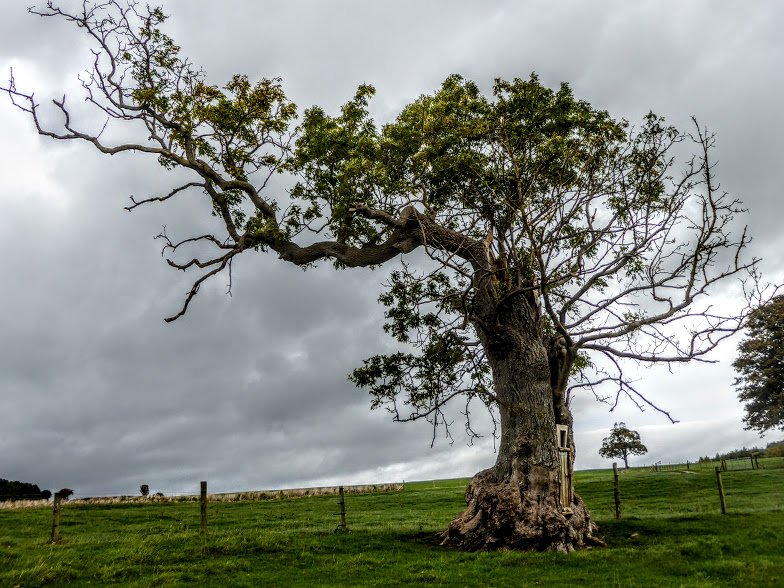
If you go walking in Wensleydale: if you go for a walk from Jervaulx to Jervaulx via Thornton Steward, you’ll come across this tree home, at the edge of a field, commanding views over the valley.
It’s pretty much in the middle of nowhere, but I always like to imagine a doting grandfather, tall and rangy from a tough life’s farming and probably reminiscent of the BFG, lovingly creating a little refuge for his grandchild in this hollow tree.
I couldn’t fit in it, neither could you. Perhaps the grandchild is too big now. It’s all a question of scale after all.
Berlin is the home of street art and creative graffiti. If you’ve been following my posts, you’ll already have glimpsed the East Side Gallery: though that is planned and curated.
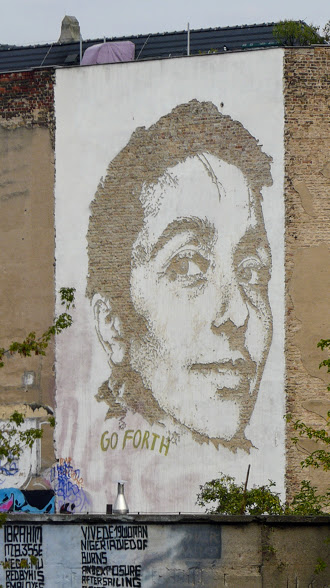
Away from the city centre, street art is so much a part of Berlin life that walking tour companies vie with each other to show visitors the edgiest and grittiest current manifestations of this vibrant art form. Even big companies climb on the band wagon. Back in the early years of this century, Nike paid for this piece.
I didn’t realise this is a Nike advert. So that didn’t work then…..
Somehow, global companies making use of a movement powered from the bottom up seems slightly to be missing the point.
Using spray cans; re-purposed fire extinguishers; transfers from images shot in night clubs, applied to city walls then doused in glitter, street artists come out at dead of night to brighten up favourite haunts. Bands of graffiti artists have thousands of followers on YouTube.
You, like me, can simply be a curious pedestrian in the streets of Berlin. Can you spot the example of yarn bombing?
We’re just back from our holiday – that epic journey through Poland and to Berlin. It feels like the beginnings of a voyage of discovery into a so far almost unknown part of my family history. And I may have a post or two to share still. You have been warned.
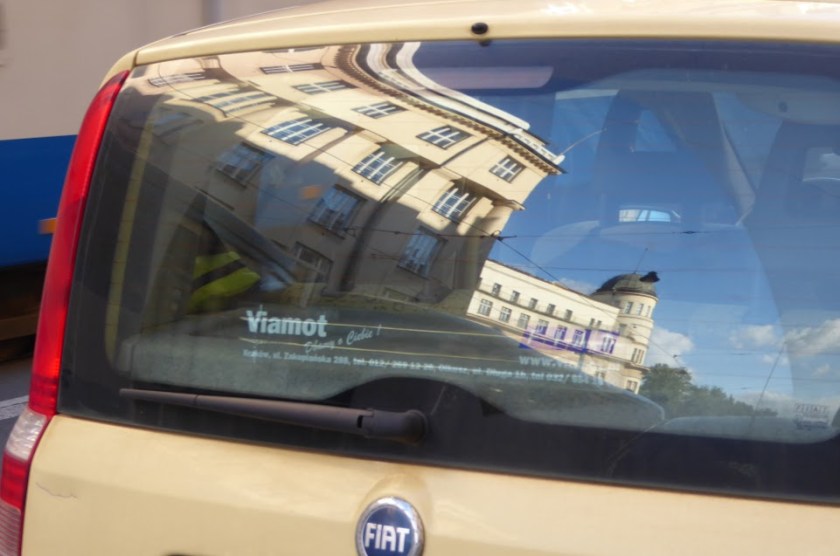
But here’s just a bit of fun. Walking down a street in Krakow the other day, I spotted the streetscape behind us reflected in the window of this car. Here it is:
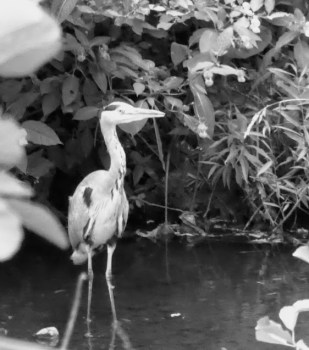
Waiting. That’s what herons do. Ever patient, they stand in the shallows, or on a handy rock: maybe even in the low branches of a sturdy riverside tree. Immobile unless frightened by the sight of a human passing too nearby, they’ll stand and stand until suddenly …..stab! That long spear of a beak plunges down and secures a fish dinner.
Here’s one we spotted on the River Wharfe near Grassington a few months ago.
A heron fishing on the River Wharfe.
This second photo is a bit out of focus, but I like it anyway. I took it only about a fortnight ago, walking along the River Skell one evening. The heron cocked his head and regarded us with some interest. He didn’t fly away, but looked at us looking at him. That’s quite unusual. In the end he flew off, empty-beaked. Perhaps he hadn’t picked a good spot.
I was at Fountains Abbey and Studley Royal. And it was raining. I stood beneath the shelter of the Temple of Piety, and enjoyed the gracious structured elegance of the Water Gardens. Centre stage was Neptune, Roman god of the waters, and of the Moon Ponds over which he presides.
And then I noticed that amid this ordered beauty, a coot family had built a ramshackle and highly unstructured nest. I think the gardens’ creators, John and William Aislabie would have enjoyed the water birds’ cheeky appropriation of this most peaceful of scenes.
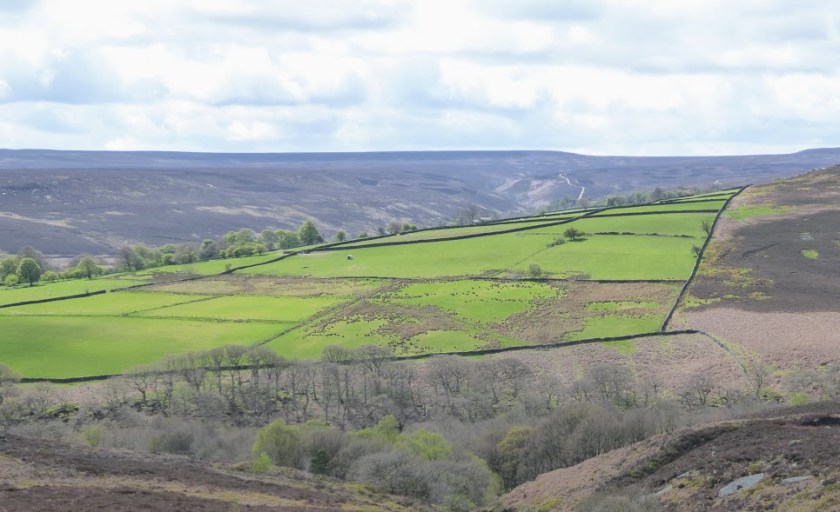
As you walk the fells, moors and dales of northern England, this is what you’ll see.
Masham Moor from Slipstone Crags.
Miles and miles of drystone wall. In the Yorkshire Dales alone, there are some 8000 km. of wall, compared with only 990 km. of hedgerow, and 250 km. of fencing. These walls keep flocks of sheep contained upon a single fell. They provide a boundary between moorland heather and bracken, and more productive farmland. They divide one farmer’s plot into more manageable fields.
Off they march down the fellside, turning a corner and skirting the valley bottom, before cornering again to march back up. Or they’ll make snug little criss-cross squares in an ancient family farm. Well maintained or slightly ramshackle, they make Yorkshire and the Pennine counties instantly recognisable. Here’s a selection:
This week’s WordPress Photo Challenge invites us to share images of those things that distract us from the important business of Getting On With Daily Life.
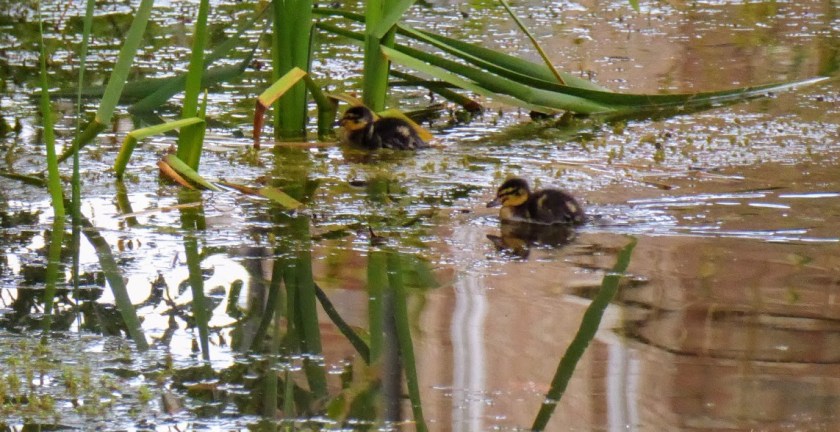
This is an easy one. Since about Easter, here in our village, the distraction has been ducklings. Sweet little balls of fluff that appeared at Easter, rapidly matured towards lankier childhood then … oh! …. vanished. A jealous mallard? A fox? Who knows? Another brood appeared soon after. Here are two of them.
Ducklings on a sparkling pond.
This time, they’ve managed to grow up. They sit around the pond in bored huddles in the manner of teenagers everywhere. They’re still charming enough to be distracting when they put their minds to it though.
But those moorhens who moved in. They’ve been nothing but a worry. One day, a chick broke its foot, and distressed us all by somehow rolling and dragging itself forward across the grass as its mother looked on with apparent indifference. Since that day, we’ve had occasional sightings of a lone parent, a lone chick. But the family seems to have scattered. This has been distracting too. But not in a good way.
Is this the moorhen chick who broke its foot? We’ll never know.
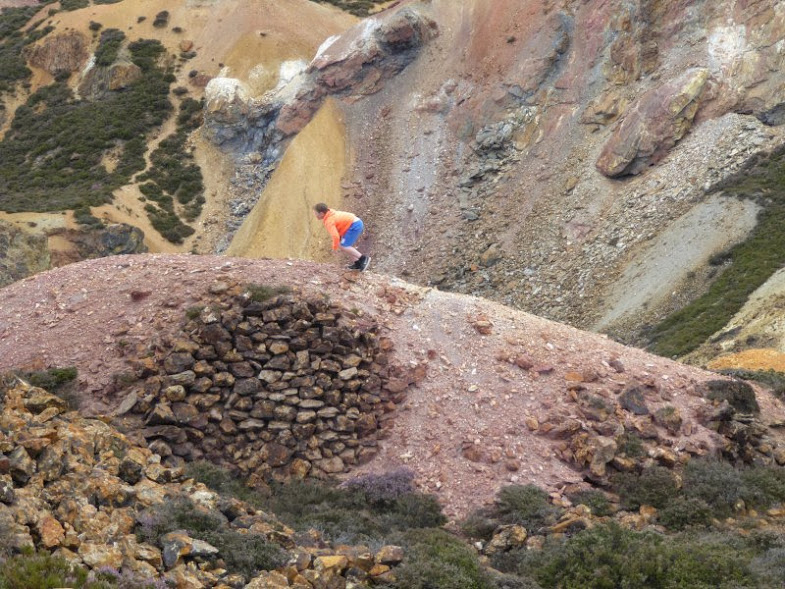
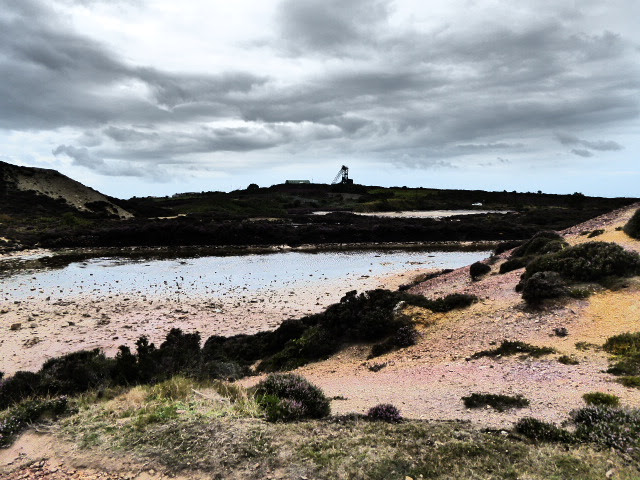
What an extraordinary place it is. Its landscape is brutal, ravaged, yet strangely compelling, stained and despoiled by centuries and centuries of mining . The copper ore found there was exploited as long ago as the Bronze Age. The Romans knew it. By the 1780s it was the largest copper mine in Europe, and the ore mined here was used to sheath the wooden hulks of the British Admiralty’s war ships, protecting them from seaweed, barnacles and shipworm. Eventually, as the copper seams became exhausted the site was largely abandoned. An industry that once employed up to 3,000 people was by 1840 giving work to a few men, underpaid, undernourished and ravaged by typhus. The site is stained by leaching ores and acids and pools of chemical waters. A few grittily determined plants make their home here.
There’s still copper . They’ve recently discovered zinc, lead, silver and gold. Work at this extraordinary place continues.
Last week, we were at the Bowes Museum. This place, with its unusual history and exhilarating present deserves a post all of its own soon.
It happened to be the first day of ‘Turkish Tulips’. This exhibition though, isn’t displayed in a dedicated space in the museum. Instead, the artworks chosen have been sited next to existing displays, situated on a grand staircase, or even smuggled into other exhibitions on display. It’s brilliant. These juxtapositions illuminate both the permanent collection and the works chosen for the exhibition.
Look at this. We found it in a room of paintings largely from the 17th and eighteenth centuries. Well, maybe this photo doesn’t convince, but in real life, in glowing, luminous detail, it did. It’s a Dutch 17th century still life, right?
Five tulips in a Wan-Li vase, Rob and Nick Carter, 2016.
Well, no. It was created not by a Dutchman in the 17th century, but by a British couple, Rob and Nick Carter in 2016. This is no oil painting on board or canvas, but an image on an iPad.
Five tulips in a Wan-Li vase, Rob & Nick Carter 2016.
Five tulips in a Wan-Li vase, Rob & Nick Carter 2016.
Stop. Look. Take your time. Watch as those tulips, with their waxy-textured petals and burnished stems gradually lose their lustre. Their colour fades. The stems become limp. Later still, those once glossy petals take on the texture and appearance of crisp autumn leaves as the exhausted stems slump slowly to the ground. In some 25 minutes you have watched the life and death of a vase of tulips, filmed over a ten day period.
That film might have been speeded up. But we, as viewers were slowed down. And having taken the time to watch this captivating film, we were ready to give other works in the same gallery our fuller attention too.
This is my response to this week’s WordPress photo challenge: textures. As photos, mine don’t really pass muster this week. Taking a photo of an iPad image in a public gallery is not really all that easy though.











 From Pyrenees to Pennines
You must be logged in to post a comment.