Azinat

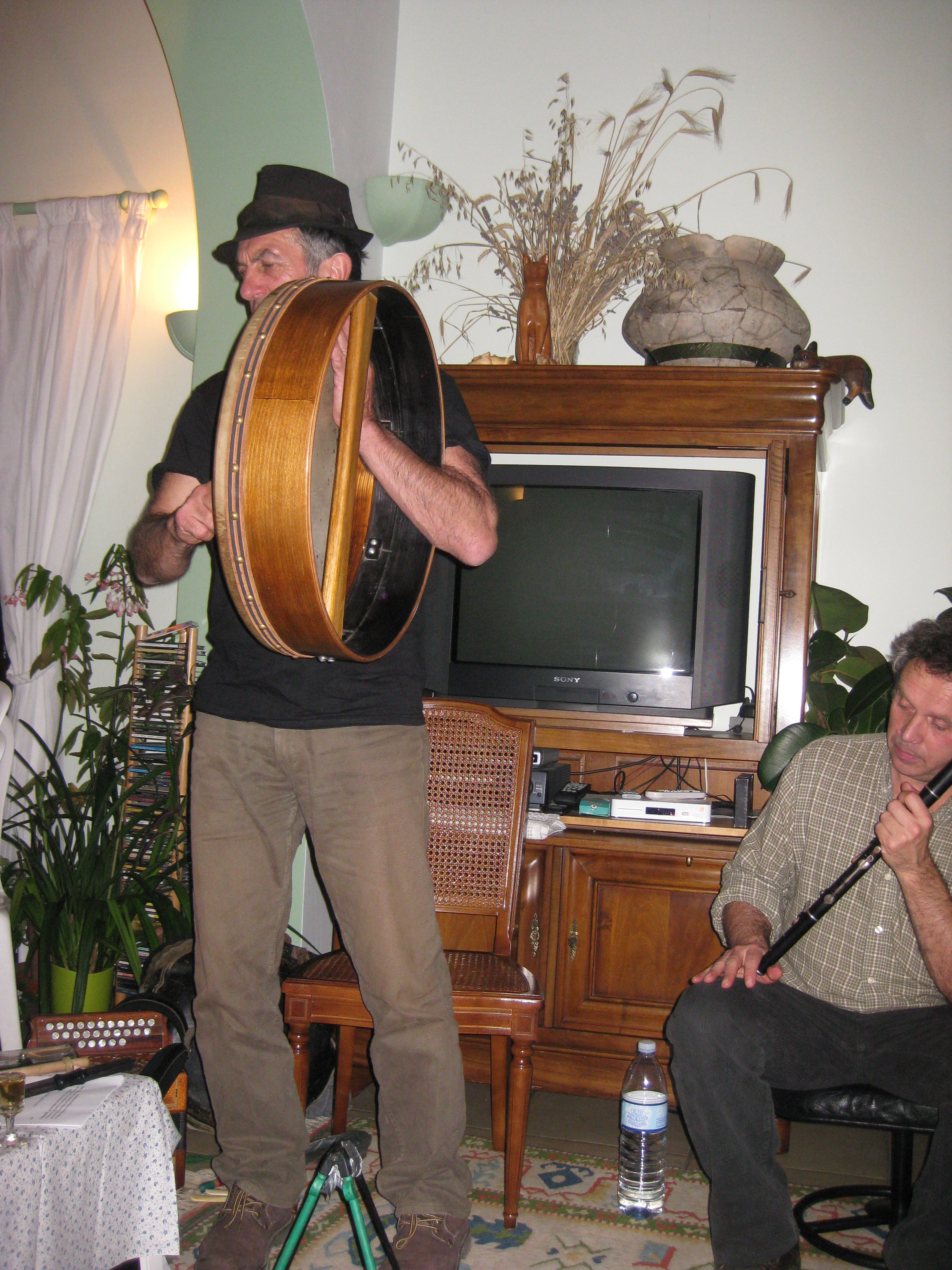
Bertrand and his bodhran

It’s town-twinning time again.  Our Breton friends were here in Laroque for a few days, and a Good Time Was Had By All.  It’s hard to describe the simple pleasure of this weekend.  Re-discovering the region through Breton eyes and getting to know our northern friends a bit better: getting to know our Laroquais friends and acquaintances better too: music – lots of it – thanks to the talented and eclectic musicians who always form part of the group – a singer and bodhran player, a flautist and a keyboard player: and shared eating, lots of it.

If you still think France is the land of sophisticated and fine dining, you’ve yet to discover the Ariège.  People lived close to the land, they were out with their stock, working the fields, or keeping the textile industry alive and successful.  Busy women put a pot of food on the fire in the morning and expected it to look after itself till hungry workers came in demanding nourishment.  And they were likely to get azinat.  Azinat with rouzolle.  That’s what about 80 of us sat down to on Saturday night,

I suggested it was a dish that was more than a bit troublesome to prepare.  Joscelyne, in her 70’s and a life-long Ariègeoise was having none of it.

‘No, it’s easy!  Take a large cabbage and blanch it for 5 minutes.  Meanwhile, chop your onions or leeks, carrots and any root vegetables you fancy, and sauté them gently.  Add some slices of belly pork, some sausages, a couple of bay leaves and the cabbage.  Throw in a couple of litres of water and simmer gently for at least a couple of hours.

Now throw in some large chunks of potato, some dried sausage, and the duck leg confit (these are portions of duck which have been preserved by salting the meat and cooking it slowly in its own fats) which you’ve browned gently in a frying pan to remove the excess fat, and continue to cook gently for another half hour or so.

Meanwhile, make the rouzolle.  Mix together chunky sausage meat, some chopped fatty bacon, eggs, milk, a couple of slices of bread, chives, parsley, garlic.  Form into a flat cake and fry on both sides.’

According to Joscelyne, the hungry family would have as their lunch the bouillon from the dish, poured over slices of bread generously sprinkled with grated cheese.  Cheap, filling and nourishing.
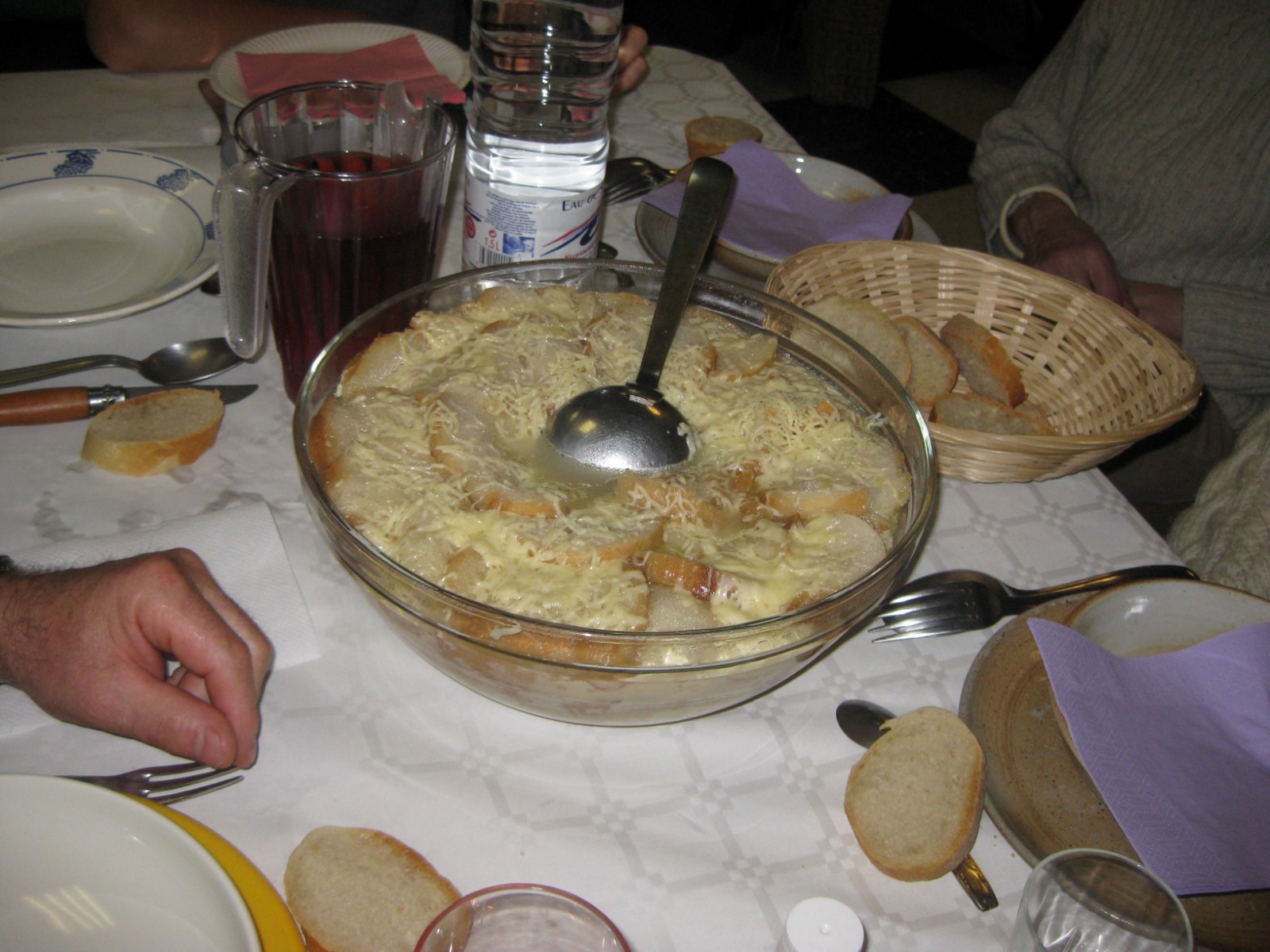
The deliciously soggy bouillon

Dinner, at the end of the day, would be all the meats and vegetables.
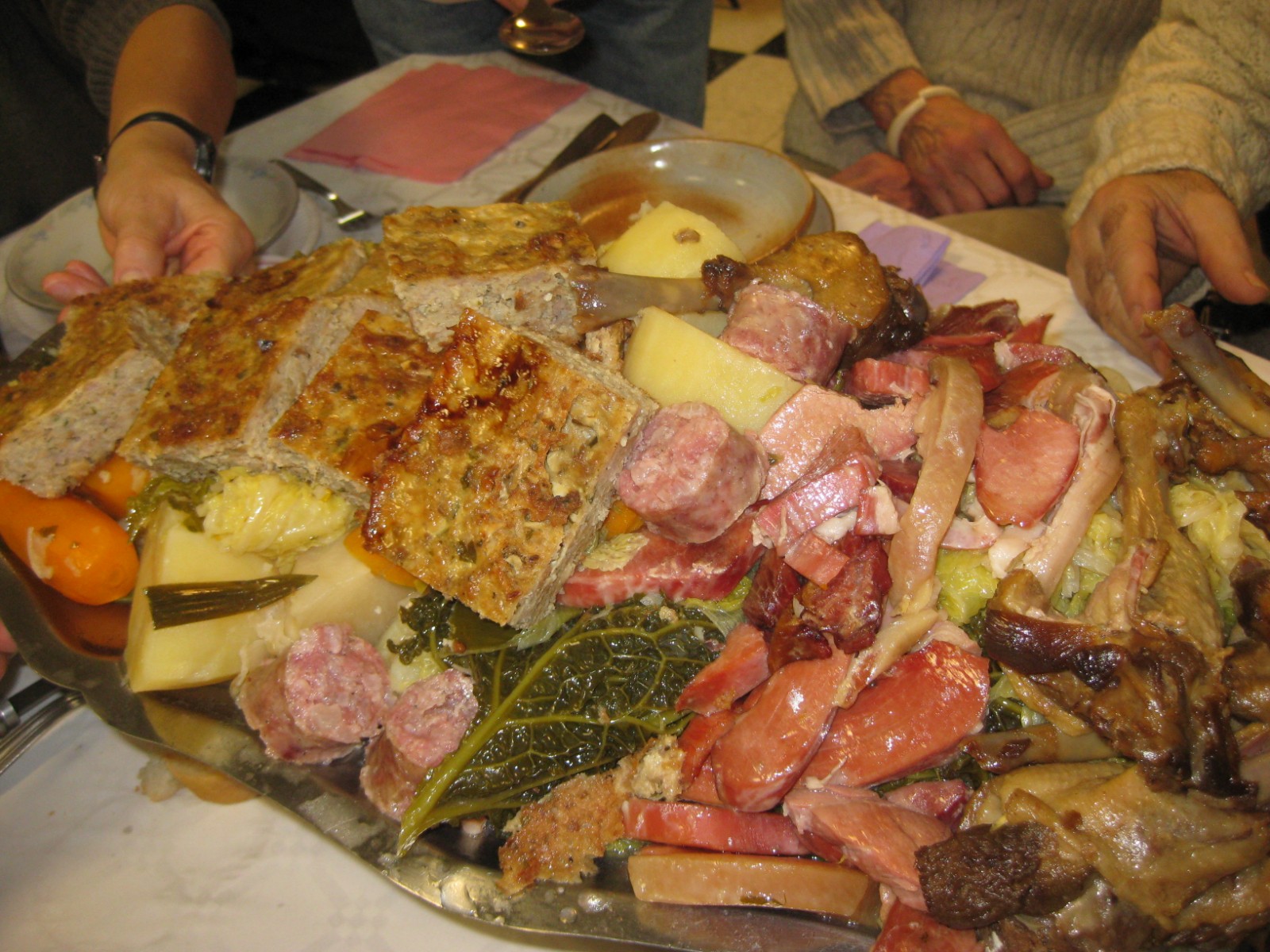
Azinat

That evening, we sat down to the soup, followed by the meats.  Followed by cheese.  Followed by croustade, the Ariègeois answer to apple pie.  Followed by membrillo – quince paste – and coffee.  Followed by an energetic evening of Breton dancing.  We needed to burn off those calories.
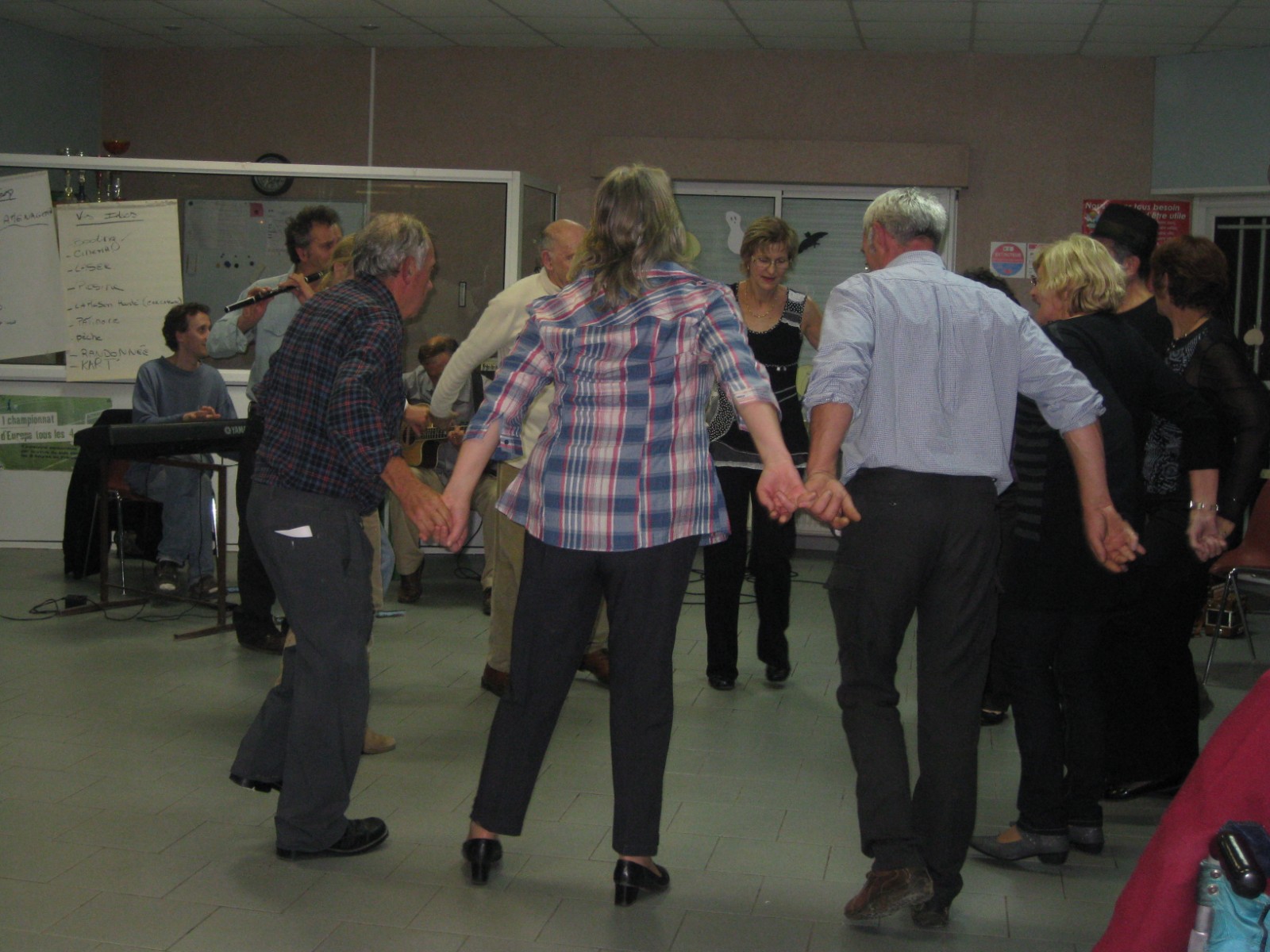
It took a while to get us all on the floor. But we all made it eventually. Even me.

Season of pumpkins and mellow fruitfulness

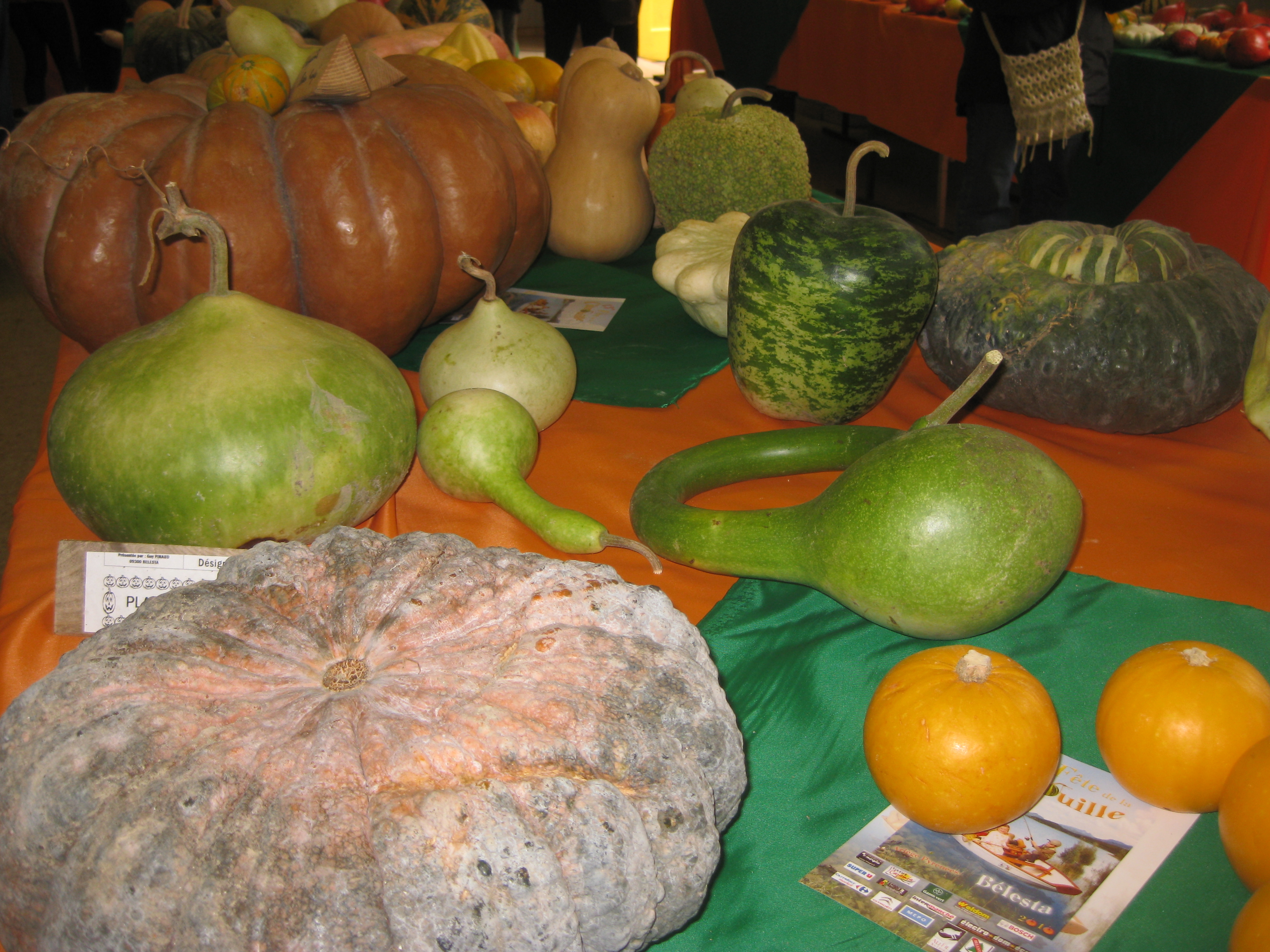
A few pumpkins on display last year at Belesta’s annual Fête de la Citrouille

Go to any veg. stall on a French market just now, and there’ll be at least one giant pumpkin.  The stall holder will sell you a portion if you like, using a hefty cleaver to wrest a kilo or so of orange flesh from this magnificent vegetable.  The market’s probably got at least one stall devoted to nothing but pumpkins: Turk’s head, musque de Provence, butternut, red kuri, rouge vif d’Etampes………

It’s not so very long ago in England that I’d be doing the rounds of all the supermarkets, the day after Hallowe’en, gathering up the last few Jack o’Lantern pumpkins at bargain-basement prices.

Jack o’Lantern dressed up for Hallowe’en

They’d been stocked for everyone to make their scarey Hallowe’en pumpkin faces with and that was all.

Hardly anybody used them to cook with (presumably not even the many Americans who live in Harrogate, with their apparent love of pumpkin pie), and Hallowe’en over, the unsold ones would be junked.

Hugh Fearnley-Whittingstall et al have put paid to that, and now the English love pumpkins as much as the French always have.

Here’s an easy and long-established soupy stew from round these parts (though I learned about it from Nigel Slater) to warm you up after a chilly day in the Great Winter Outdoors.

Hmm. We made short work of that.

When we first tasted it, we thought it nice enough, not earth-shattering though. It’s grown on us, and now we think it’s comfort food par excellence: especially those pillows of bread, soaked in scalding hot flavoursome juices.

Garbure Catalane

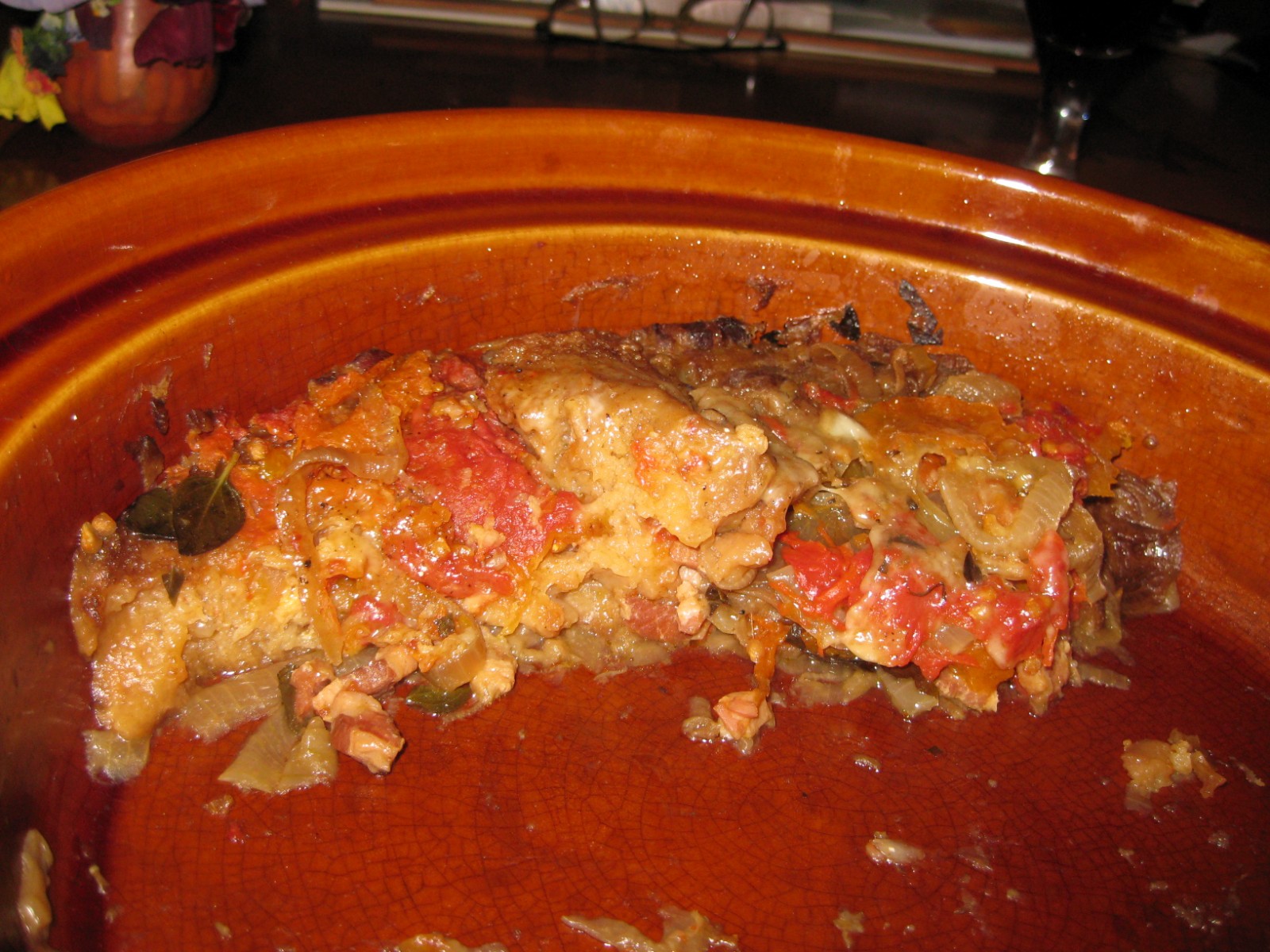
Toast thick slices of bread- preferably sourdough, and layer them up in a casserole or slow cooker with fried onions, garlic, marjoram, sliced skinned tomatoes, and thin slices of pumpkin.  Top the dish up with seasoned water and olive oil and bake for an hour or two in a slow oven (or most of the day in a slow cooker).  Take the lid off the dish for the last half hour or so and return to the oven with a crust of grated cheeses (parmesan is good to include in the mix, as it provides a welcome crispiness) for the last half hour or so.  Or grill for a few minutes if you’ve been using a slow cooker.

School dinners

I often stop outside the local primary schools in Lavelanet and Laroque as I pass by, to read the week’s menus posted on the notice board: I think I’d really like an invitation to eat there at midday.  There’s always an entrée, a main dish, a pudding and cheese or fruit, and it often sounds quite appetising stuff: roast turkey with sauce forestière, chicken wings à la dijonnais, stuffed tomatoes, velouté de legumes…..

But today I was horrified.  What am I to make of the British Day they’re planning one day next month?

Betteraves* et raisins

Fish stick

Petits pois à l’anglaise

Crème anglaise

Crumble.

*beetroot

Apart from the crumble, the latest must-eat pudding in France, it all looks pretty dire.  What exactly is this beetroot dish they’re starting with?  Google doesn’t have a clue.  No wonder the French think we English don’t have any good food.

Beetrooot waiting for a good recipe to come along

‘So British’. A French view of life in England.

Well, our French friends have been and gone.   It was a busy week full of discovery for us all.  Despite the almost unrelievedly awful weather,  Yorkshire’s sights, both rural and urban, gave a good account of themselves.  But here are one or two of the more unexpected discoveries our friends made.

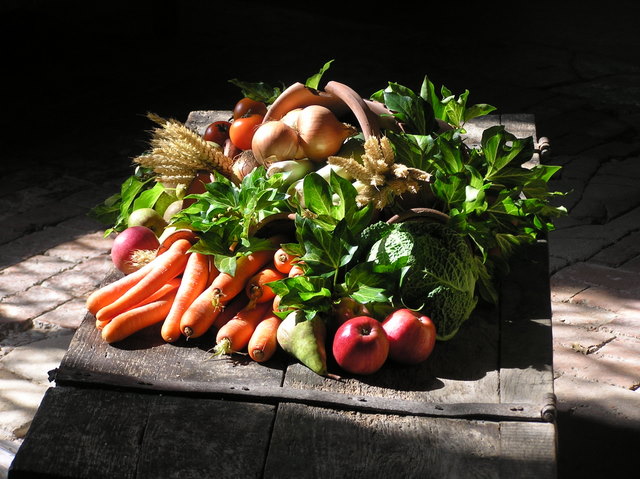
Harvest Festival.  Saturday evening found us in church for a very special concert by the St. Paulinus Singers, a Ripon Chamber choir.  As we entered, our friends were struck by the celebratory pile of pumpkins, cabbages, carrots and Autumn fruits assembled for harvest-time celebrations in church.  They’d never heard of  such a thing.  Oh, and the concert began dead on time too.  Another first for them.

Harvest Festival

Charity shops.  The French have little other than away-from-town-centre large warehouses given over to the sale of donated goods and run by Emmaus.  The often carefully dressed shops we’re so accustomed to on the British high street are unknown to them.

St. Michael’s Hospice shop, Ripon

Closed for business: open for business.  As we know, shops here tend to be open through the day.  But what a surprise for our French friends to see them closing for the day at 5.30 p.m. rather than around 7.00 p.m! To find supermarkets open in some cases 24/7 was even more astonishing.

Closed at the moment

Houses without shutters.  Evenings walking round town fascinated them.  Instead of shutters there were curtains, which might or might not be drawn.  How exciting to have glimpses of another set of lives!  This is denied to them in France as shutters are usually firmly closed there as night falls.

A night-time window

Buttered bread.  As born-and-bred Ariègeoises, our guests were unused to the idea of having butter AND cheese or ham or whatever on their bread.  They rather felt it was gilding the lily.  But they weren’t keen on the fact that bread is not produced routinely at the average British dinner table.  It’s odd,  we too have come to expect bread as part of a meal in France, but never in the UK

Milky coffee and tea.  The default position for both in France is black (strong coffee, weak tea)

At the butcher’s. Of course our guests wanted to cook a slap-up meal for us.  We all struggled a bit with this one, as French and English butchers cut their beasts up in different ways.  As a recently-lapsed vegetarian, I’m re-learning slowly all I ever thought I knew, and starting at page 1 in French butcher’s shops.

A Friesian: until recently, these were the cows I most frequently saw in England

The Little HelpX Book of Recipes

Marc and Vicki commandeer the kitchen

Our wonderful HelpXers, Vicki and Marc, enjoyed spending time in the kitchen. They cooked and cooked and made memorable meals: here are just three.

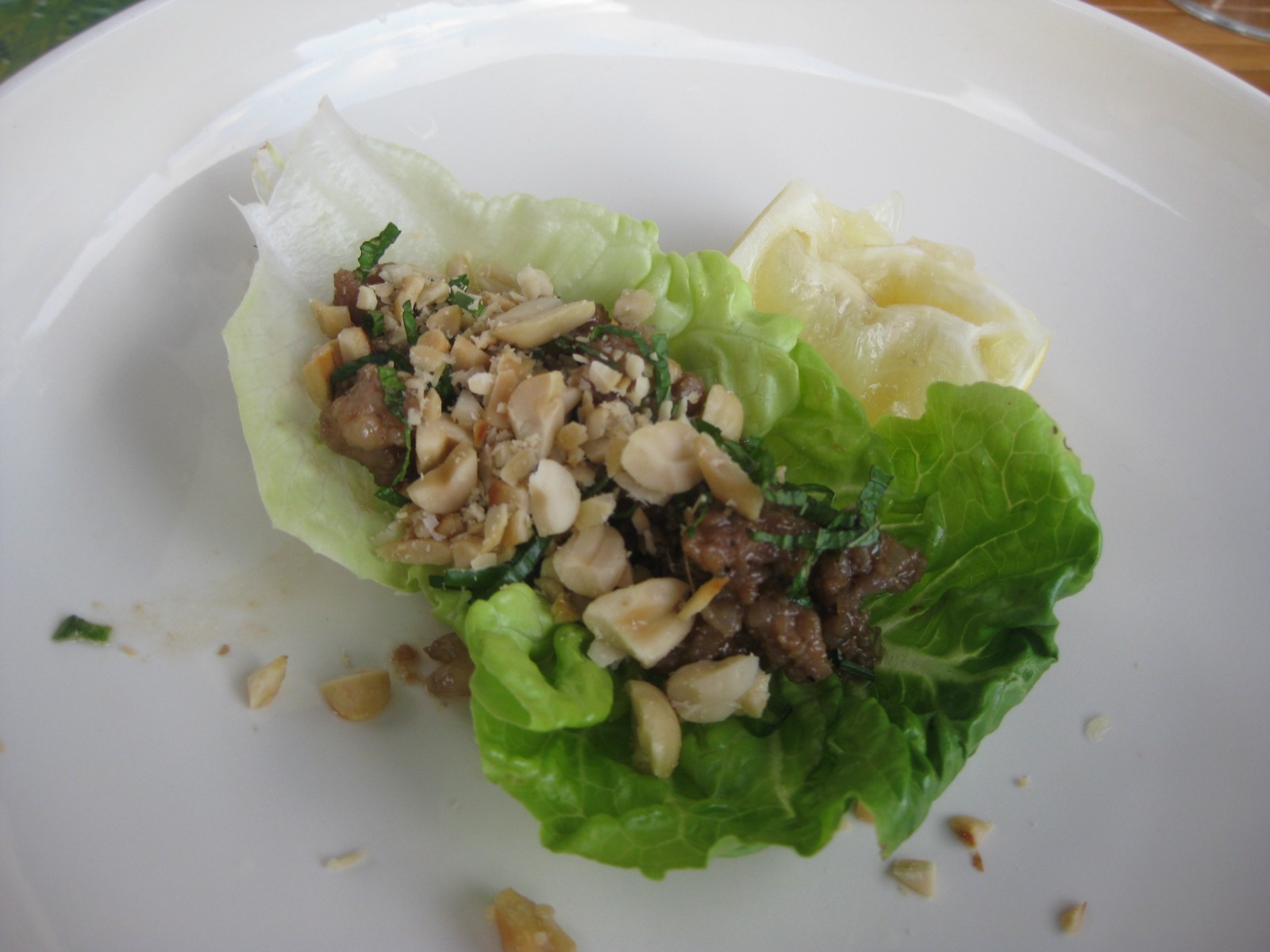
Vicki was keen to introduce us to this Chinese dish.  It’s fun to eat: use lettuce ‘wrapping’ to make your own pork parcels up, then garnish them with what you fancy from the bits and bobs on the side.

Sang choy bow

1 tbsp sunflower oil

Large piece fresh ginger, peeled and grated

2 cloves of garlic, crushed

2 red chillies , deseeded and finely sliced

500g minced pork

85 g light brown sugar

2 tbsp fish sauce

Juice from 1 lime

2  finely shredded lime leaves

Mix of lettuce leaves

Large handful mint and coriander leaves, very roughly chopped

handful toasted peanuts , roughly chopped

2 shallots finely sliced into rings shallots

1 lime, cut into wedges

Heat the oil in a large frying pan. Fry the ginger, garlic and chillies for 1 min. Add the mince, then cook on a high heat until golden brown, breaking it up with a wooden spoon as you go. Sprinkle over the brown sugar, fish sauce, lime juice and shredded lime leaves, then cook everything down until sticky.

Tip the mince into a serving bowl, then serve with a bowl of lettuce leaves for wrapping the mince in; the herbs, shallots and peanuts for scattering over; and the lime wedges for squeezing.

Sang choy bow: a little lettuce parcel just waiting to be eaten

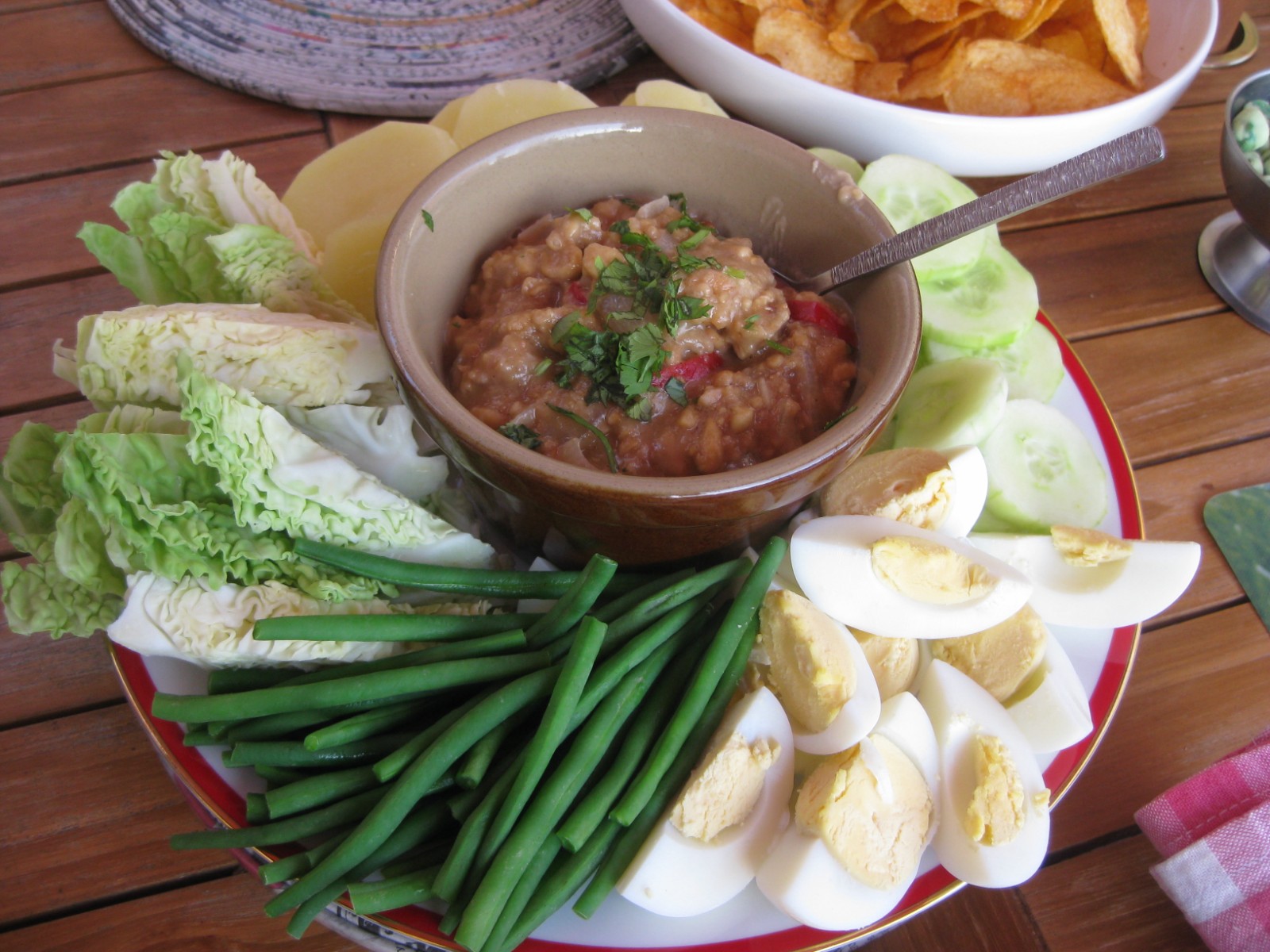
On their last evening, the night of the ‘Asian tapas-Smörgåsbord’ , Marc introduced us to the Vietnamese answer to crudités, Gado gado.  I wasn’t watching while he was cooking, and I forgot to get his recipe from him, so … Marc, if you’re reading … is this version OK?

Gado gado consists of a plate of various raw or lightly cooked vegetables to dunk into a peanut  sauce.  Marc served raw cabbage and cucumber, lightly steamed potato slices and french beans, and quartered hard-boiled eggs.

Peanut Dipping Sauce (Sambal Kacang)
3-4 cloves garlic, peeled

1 fresh green chili chopped, (use 1/2 for milder sauce, or leave it out)

Salt

200 g  roughly crushed peanuts

1 teaspoon brown sugar

2 tablespoon lime juice

450ml hot water

Place the garlic cloves, green chili and salt in a mortar and pestle and pound into a paste.

In a small bowl, add the garlic paste, crushed peanuts, sugar and lime juice. Pour in hot water a little at a time, while whisking the peanut butter. Stop pouring the hot water when the peanut butter forms a smooth, dippable sauce. You may not need to use all of the hot water.

Taste the peanut sauce and adjust salt, sugar and lime juice if needed. Serve with your selection of vegetable crudités

Gado gado

Vicki found this recipe in my copy of Dennis Cotter’ s ‘Paradiso Seasons’, a wonderful vegetarian cookbook.  If you explore the web, you’ll find he’s tweaked this recipe several times.  The original is pretty damn’ good.

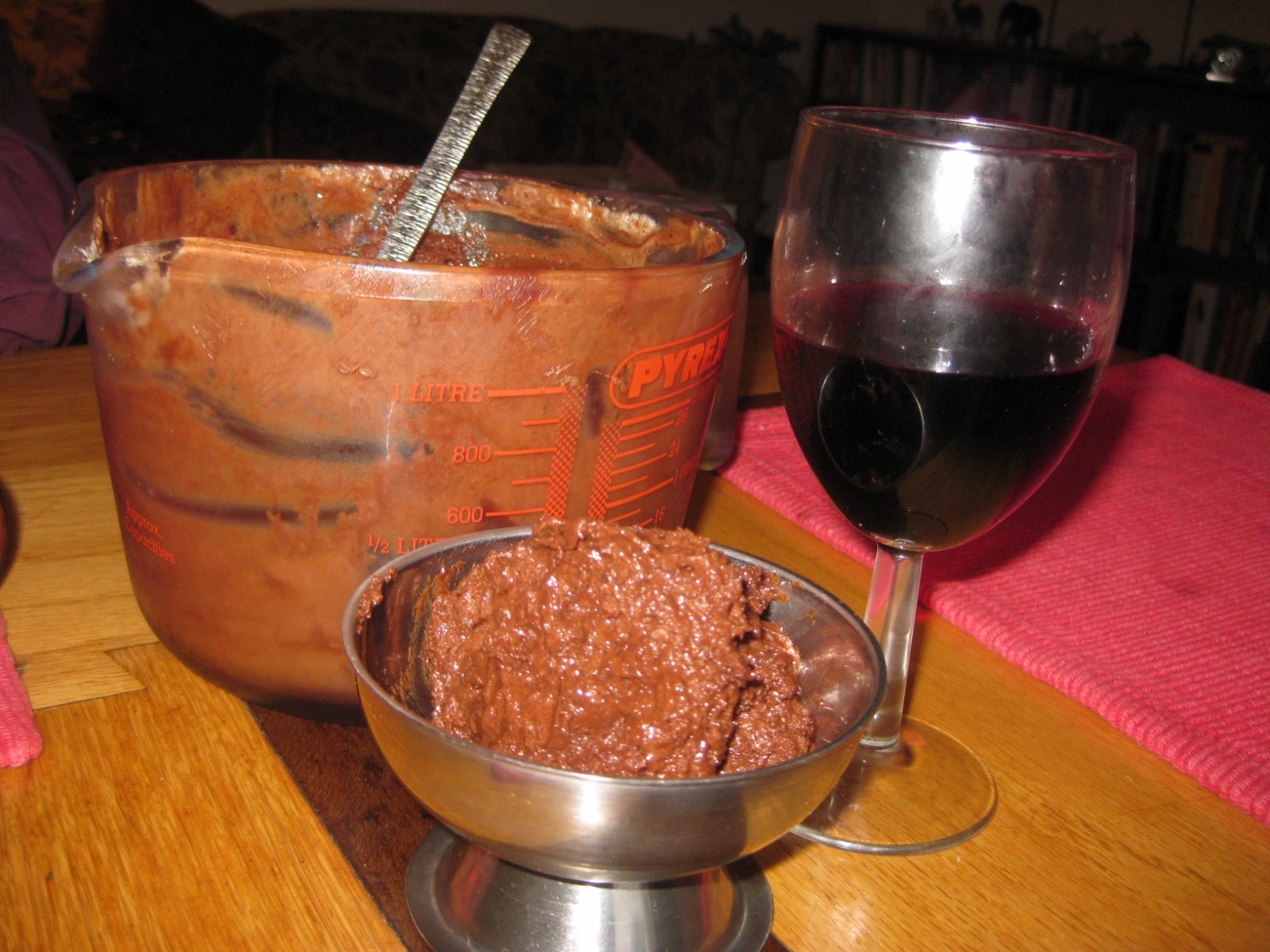
Chocolate-olive oil mousse

 150g. good dark chocolate

140 ml. olive oil

4 eggs separated

125 g. golden caster sugar

(1 tbspn. Cointreau or other orange liqueur)

Pinch salt

In a bowl over a pan of simmering water, melt the chocolate and slowly stir in the olive oil.  Beat the egg yolks with half the sugar until pale and fluffy.  Stir in the chocolate oil mix (and Cointreau if used).  Whisk the eggs with a pinch of salt until stiff, then continue whisking while adding the remaining sugar gradually in small batches.  Fold the egg white mixture and put the mousse into the fridge to chill for at least four hours.  It has a strong structure, and will easily keep overnight (but not if you taste it first…….)

It scarcely mattered that this chocolate mousse wasn't prettily presented: it disappeared rather quickly

The stars from HelpX

Despondent about your DIY? Ground down by your garden?  Then HelpX can help!

Its website says it’s ‘volunteer work in exchange for free accommodation and food on farms, backpacker hostels, lodges, horse stables and even sailing boats’.  Or even places like ours, apparently.

For the past 10 days, we’ve been sharing our home with HelpX-ers Vicki – Australian – and her English husband Marc.  It was a success from the very moment they landed outside our house with their laden motorbikes, fresh from working in Carcassonne and northern Italy.

Since they arrived they’ve rolled up their sleeves and cheerfully tiled and grouted most of our very awkward roof terrace, painted a stairwell, wrestled with brambles and ivy on the garden, solved computer problems…. and commandeered the kitchen.

Vicki and Marc travel the world, and many of their memories seem to be food related.  So they’ve cooked southern Asian dishes like sang choy bow & gado gado and Vicki’s wonderfully decadent and not-at-all Asian chocolate mousse: recipes to follow in a later blog.  The other evening – their final night – was the occasion for an ‘Asian tapas-Smörgåsbord’ of a dozen dishes masterminded by Marc.

Our memories of the week are of a happy, optimistic, funny and considerate couple who’ve worked hard and enthusiastically on our behalf, and whose company has been nothing but a pleasure.  We miss them.

Here we go round the blackberry bush…

I’m so chuffed to be in England for the blackberry season.  Ariègeois blackberries baked in the hot sun are sweet, characterless and make a rather dull jam.  But then who goes to southern France to go blackberrying?

So yesterday I went out, meandered down a few nearby lanes, and came back with a bowl filled with large glossy, juicy, sweet and yet tart berries, a stained T shirt and fingers stuffed with tiny spines and tingling from nettle stings.  I was very happy.

I set my berries to simmer down with the early apples from Jonet and Richard’s tree, and then…. only then, remembered I had neither a  jelly bag nor a cache of jam jars ready waiting for the next stage.  Oddly, I do have a preserving pan.

So it’s been the moment for a little ingenuity.  An old clean T shirt ripped up made a jelly bag, and this morning we’ve been piling our toast with a week’s ration of marmalade, decanting apricot jam into a bowl, and scraping clean an almost-finished jar of honey.  So far so good.  But what happens when I need to make the next lot?

Flour power

Returning from England to France, there’s generally a bag or two of various kinds of flour in the luggage.  ‘What?’ I hear you grumble.  ‘That woman who’s always banging on about buying local? The one who’s got no time for the English abroad who can’t exist without their mug of builder’s tea and a custard cream?’  Yes.  That’s me.  Guilty as charged.

Melting Moments

But the thing is, when in France, I sometimes have a happy hour or two baking English goodies – Melting Moments, Gingernuts, Marmalade Loaf Cake, that sort of thing – with or for French friends.  And as I discovered the other week, French flour is simply not right for the job.  Not better, not worse, just different.

I’d run out of my own supplies, so I nipped out and got a bag of good quality baking flour (because even more than in England, it’s important to buy the right type of flour for the job).  And my tried and trusted favourites turned out all wrong. Ginger biscuits, instead of being satisfyingly chewy, with a solid crunch between the teeth, were sandy and brittle.  Marmalade loaf cake, though light, was close-textured and almost crumbly.  It was so disappointing.  The answer, it seems, lies in the gluten content.  The average French flour is ‘softer’, and has a lower gluten content than the average English flour.

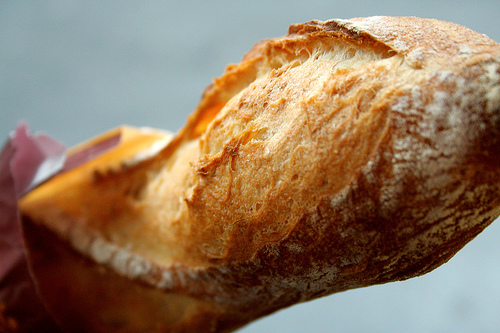
French baguette

So is it surprising that superior French bakers in England, such as Dumouchel, where my daughter used to work on Saturdays, send over to Normandy for supplies of authentic French flour?  Or that the average French stick, bought from the average English baker, in no way resembles its chewy French antecedent, the baguette.

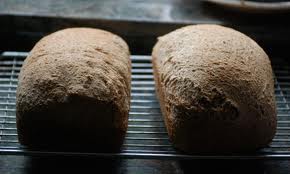
English wholemeal loaves, fresh out of the oven

On this visit to England, I’m appreciating the softer crust and slightly moister qualities of a well-made wholemeal loaf, just as over in France, I enjoy the the crustiness of crisply baked French bread.  Best to accept, I think, that both countries produce fine bakers and cake makers.  But neither could do a fine job using the flour preferred by the other.

If you want an introduction to some of the many flours on offer to the keen baker, Dan Lepard’s site is a good place to start

A quick peek at Algeria

Last November, I joined L’Assocation Découverte Terres Lointaines, and wrote about it here.  This month, I’m really involved, up to the neck, because next week, at the library in Lavelenet, we’re taking over, and bringing Algeria to town. More later, then. But for now, have a look at some of our more relaxing moments during our preparations.

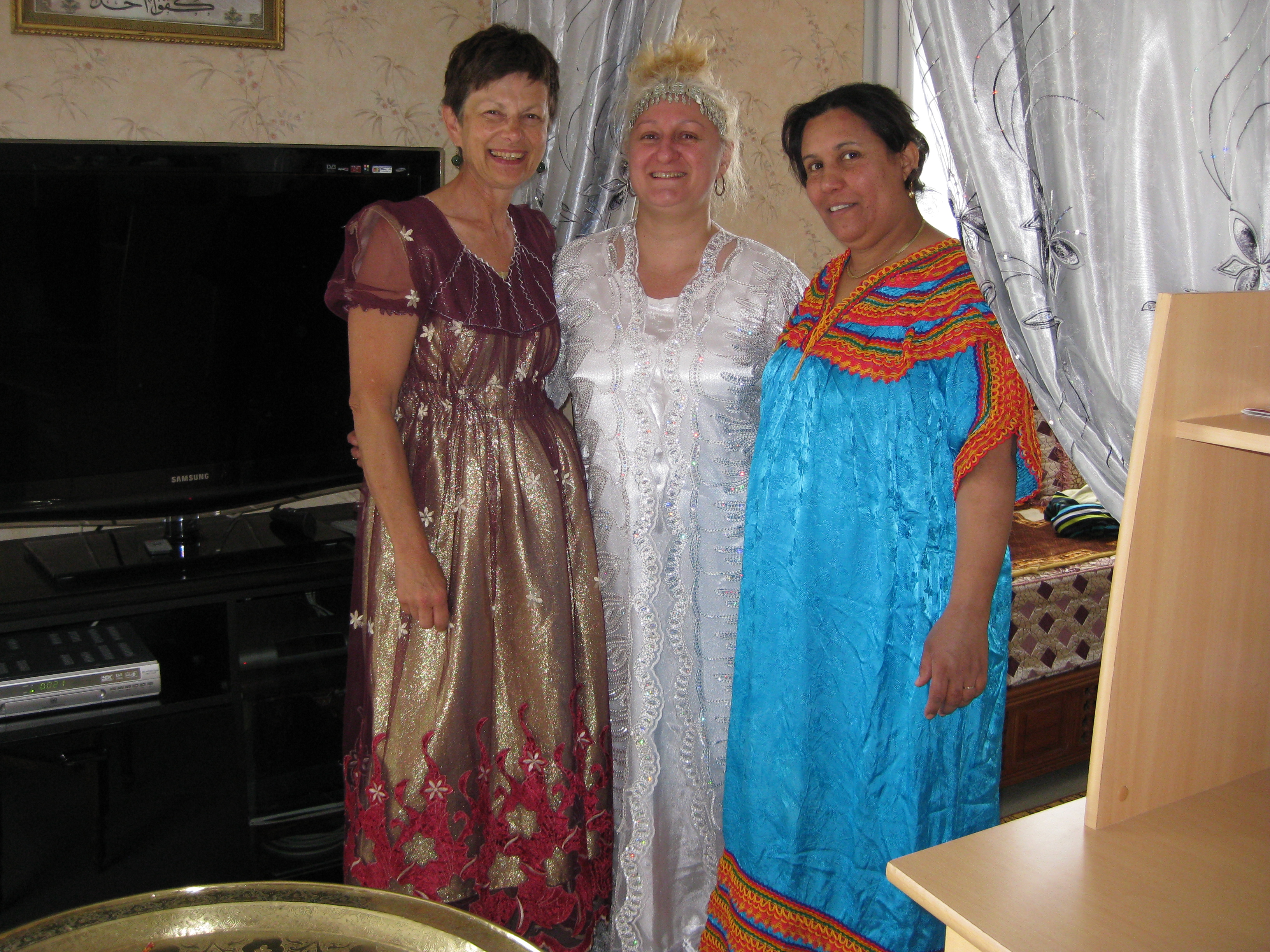
Were from England, Brazil, Algeria: but the clothes are all from Algeria

On Friday afternoon, Nadia invited us round and got out a tantalising bundle of her traditional Algerian clothes, many dating from the time of her wedding, for us to try on ahead of next week. Here’s what some of us eventually chose, after we’d struggled in and out of dresses each prettier than the last, elaborately embroidered, beaded and sequinned.  Just as well you can’t see us pirouetting around our workaday tee shirts and trousers discarded on the floor.

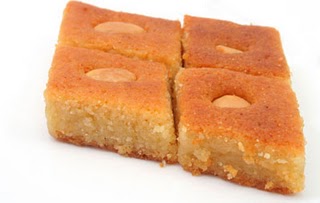
Before that, we’d been busy baking, selecting recipes to make for some of next week’s sessions.  Here’s my favourite, Basbousa.  Like most recipes from the area, quantities are expressed in volume rather than weight.

Basbousa

  • 2 cups fine semolina
  • 1 teaspoon baking powder
  • ½ teaspoon bicarbonate of soda
  • ½ cup unsalted butter
  • 1 cup sugar
  • 2 eggs
  • ½ cup water
  • about 20 blanched split almonds
  • 2 cups caster sugar
  • 1 cup water
  • Tablespoon of orange flower water or the juice of 1 lemon

Preheat the oven to 180°C, gas mark 4. Grease a rectangular cake tin, about 8” x 12”.

Sieve together the semolina, baking powder and bicarbonate of soda. Set aside.

Beat the butter and sugar together until creamy. Stir in the eggs with a little semolina to prevent curdling. Mix in ½ cup of water. Stir the sifted semolina in and beat until you have a smooth batter. Pour into the prepared cake tin. Score diagonal lines across the top of the cake creating diamond shapes. Place an almond in each diamond. Bake for about 30 minutes or until the cake is firm and golden.

Meanwhile place the caster sugar in a small saucepan with 1 cup of water. Heat gently until the sugar has dissolved then add the orange flower water or juice of the lemon and bring to the boil. Boil for about 10 minutes or until syrupy.

When the cake is removed from the oven, gently spoon the syrup over it. You may not need all the syrup: stop spooning when the cake has absorbed all it can. Allow to cool in the tin before turning out and serving sliced into diamonds.

When I tested the recipe at home, I had no orange flower water, so used lemon juice.  Nadia said it wasn’t traditional…..but she liked it anyway.  It’s sweet, simple, and keeps well.  Worth having in the cake tin.

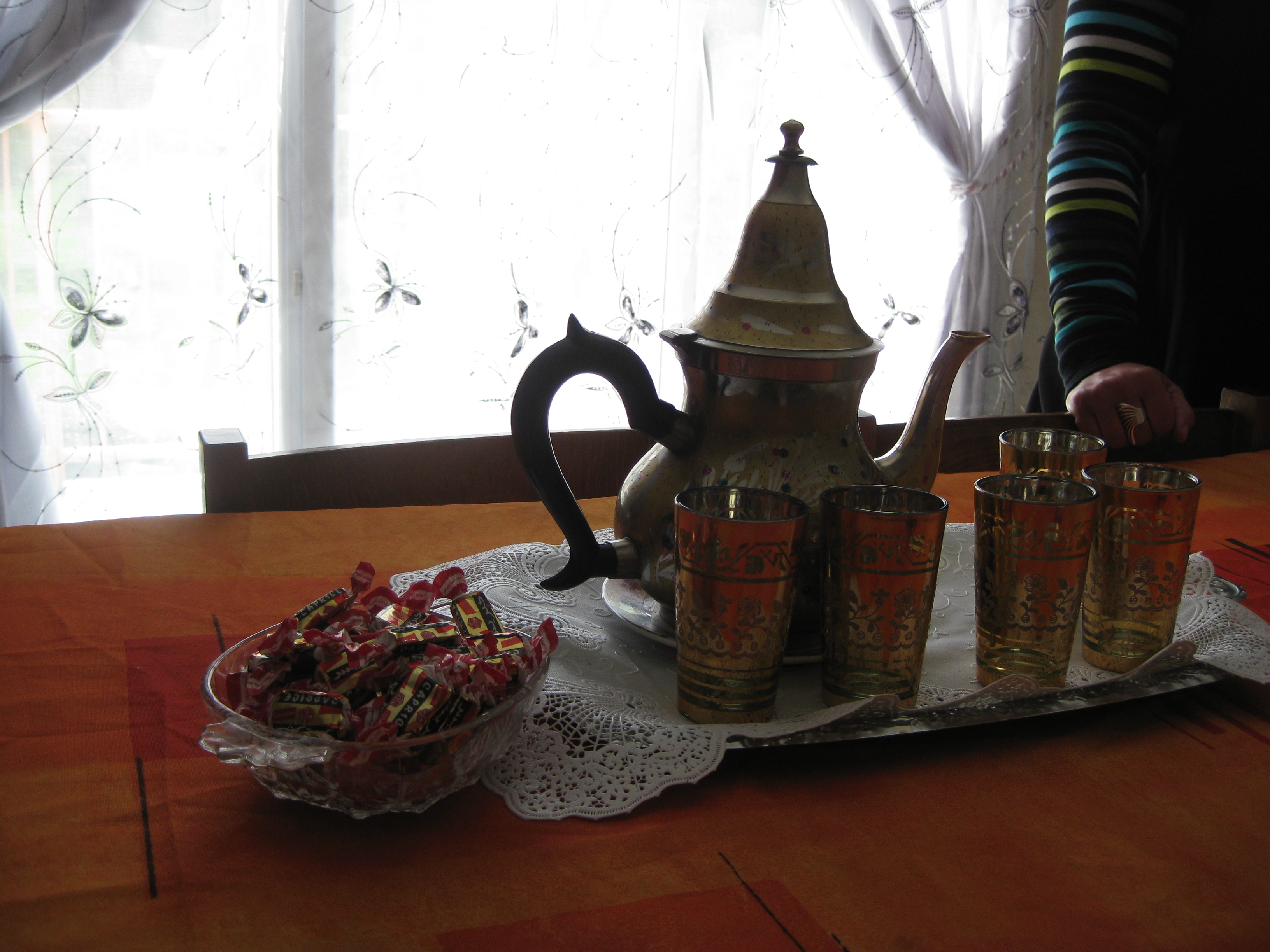
Nadia serves mint tea the traditional way, from this elegant pot in small decorated glasses

Nigel Slater arrives in France

He’s here now.  Not in person of course.  But his books, nearly all of them, arrived with the removal van that brought much of our stuff over from England.

I love Nigel Slater. As a cook, I mean.  He takes such pleasure in all the messier aspects of making and eating food, as I do. Greasy fingers from extracting those last little bits of chicken flesh from an already picked-clean carcass.  Sticky hands from rhythmically kneading and transforming dough from a tacky, gluey lump into barrel-shaped silken responsive mass.  Spoons and fingers to lick after a cake and biscuit-making session.  Weirdly, I even enjoy, if it’s not TOO bad, the burning eyes I get when I absent-mindedly rub them after I’ve been chopping chillies.
During this kind of cooking session, Malcolm and I look at each other with mutual incomprehension.  ‘Want to lick the bowl?’  I ask.  ‘Ergh, no. Shall I get you some rubber gloves so you can keep your hands clean?’  He thinks I’m facing up with commendable fortitude to jobs on a par with sorting out a couple of messy toddlers after a glue-and-paint session. I think he’s missing out.

In the end though, it’s Nigel’s recipes I come back to.  He rarely worries about precise quantities, tasting and adjusting as he goes till the dish seems right. But he does celebrate ingredients in their season.  Here’s what I made the other evening from the remnants of one of Is@’s chickens, and a bag full of the spinach included in our panier of vegetables:  I found the recipe in Tender: A Cook and his Vegetable Patch, Volume 1

Chicken Spinach and Pasta Pie.

Nigel reckons it serves 4.  I reckon 6 wouldn’t go hungry if they sat down to this lot.

spaghetti – 350g
cooked chicken – 500g (boned weight), roughly shredded
mushrooms – 300g
butter – a thick slice
olive oil – 3 tbs
double cream – 450ml
white wine – 2 glasses
spinach – 200g
parmesan – 140g + 50g

Cook the spaghetti in deep, generously salted boiling water. Drain and set aside. (A little olive oil will stop it sticking together.) Set the oven at 180C/gas 4.

Cut the mushrooms into quarters. Warm the oil and butter in a deep pan and add the mushrooms, letting them colour nicely here and there. Add the cooked chicken meat and then pour in the wine.
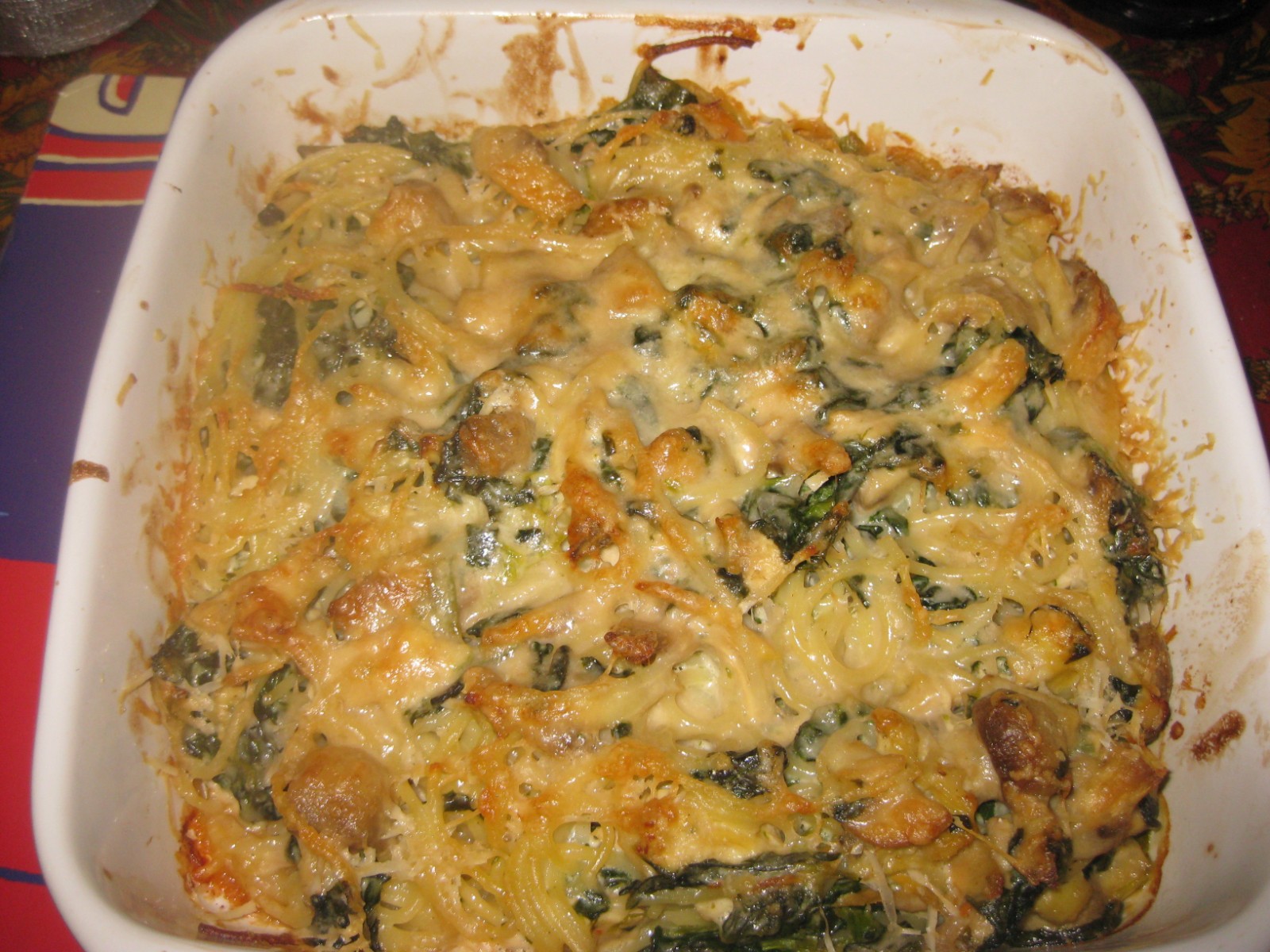
Bring to the boil, scraping away at the sticky remains at the bottom of the pan: they will add much flavour to the sauce.

Pour the cream into the pan, bring back to the boil and turn off the heat. Wash the spinach and put it, still wet from rinsing, into a pan with a tight-fitting lid. Let the spinach cook for a minute or 2 in its own steam, then drain it, squeeze it to remove excess water and chop it roughly.

Fold the cooked spaghetti, mushroom and chicken sauce and spinach together then stir in two-thirds of the grated parmesan and tip into a large baking dish. Scatter the remaining cheese on top and bake for 35 minutes until the top is crisp and golden.