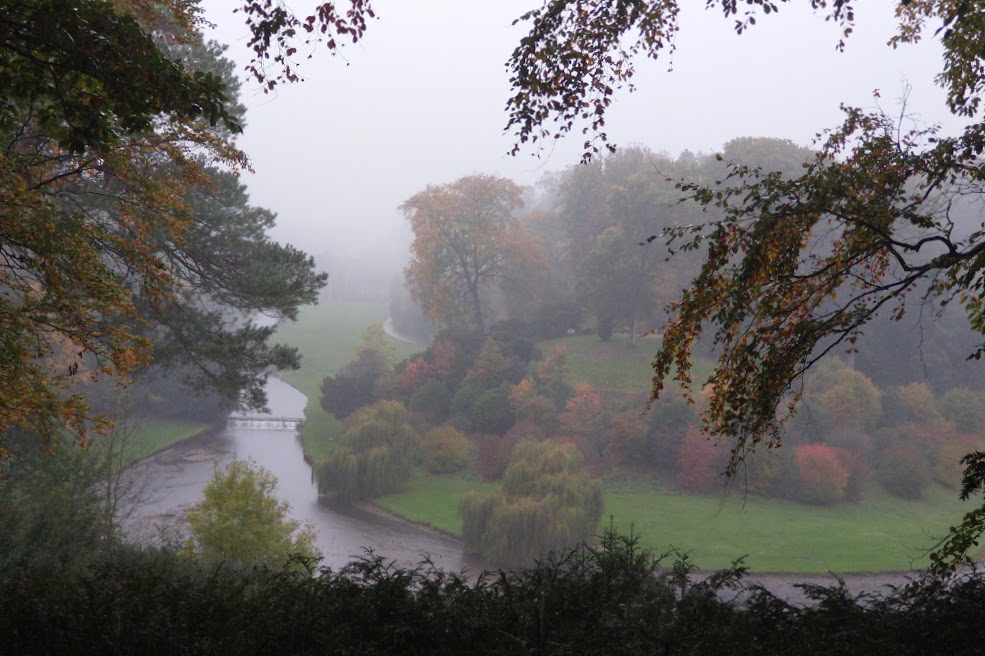
For Debbie’s Six Word Saturday.
For Debbie’s Six Word Saturday.
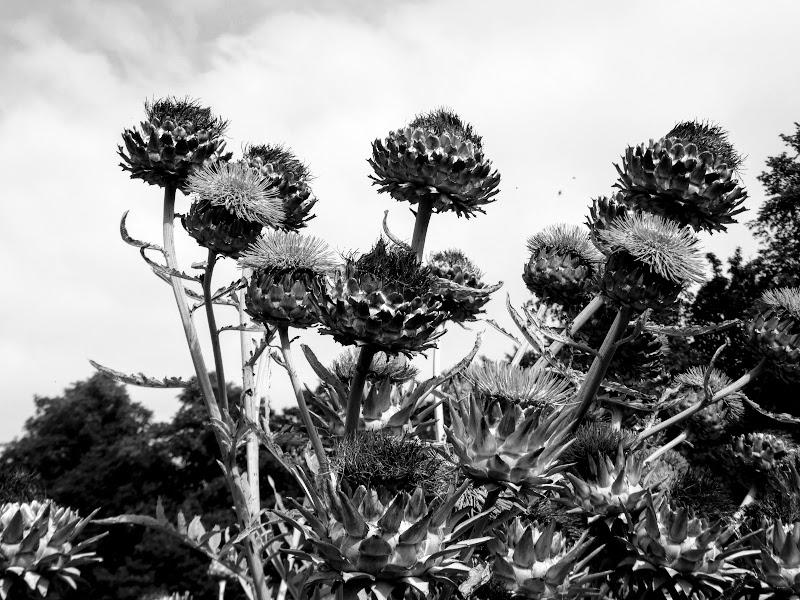
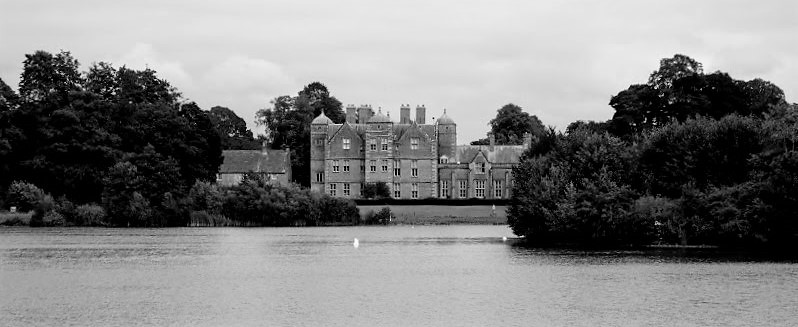
Kiplin Hall. That was our destination on Sunday. We first went there a few years ago for joyful Shakespeare productions, such as Romeo and Juliet, by the irrepressible Handlebards. These days, we go if we need a quiet few hours at a country house whose grounds are extensive enough to offer a walk, a view and coffee and cake after. Here are my picture postcards – monochrome, as picture postcards always used to be – for Mid-Week Monochrome #110 – and to send to Jo, of Jo’s Monday Walk fame.
Kiplin Hall was built as a hunting lodge in the 1620s by one George Calvert, who was Secretary of State to King James VI. American readers may like to know that he was made Baron Baltimore, and was granted a charter to found a colony in America. This colony became – the State of Maryland.
Here’s our first sight of the hall:
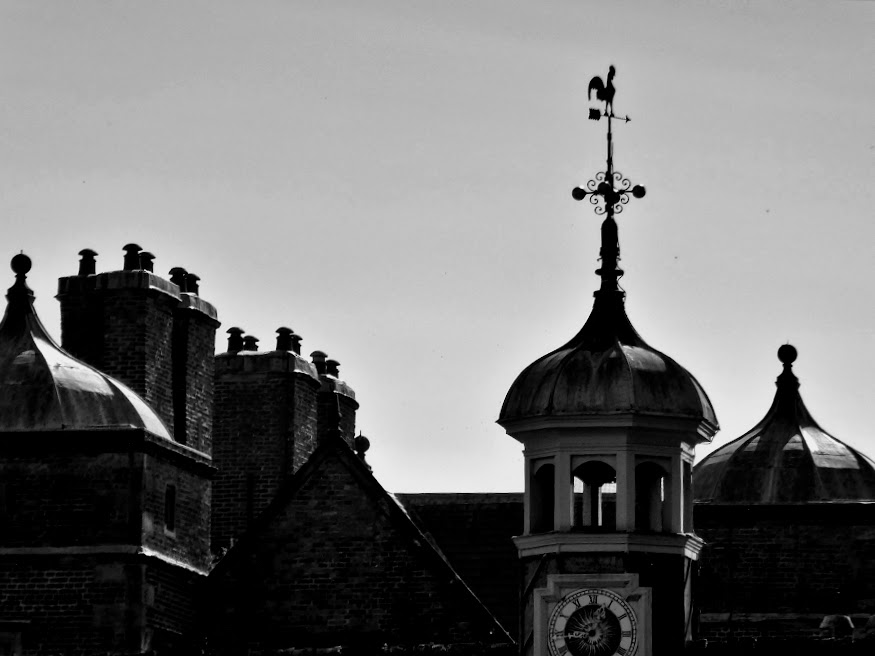
Goodness, it was breezy that day. But walk we would, all the way round the lake -into the wind at first – one of the images give an idea of the scudding waves. We set off to get various views of the lake and hall. Here’s a clutch of postcards.
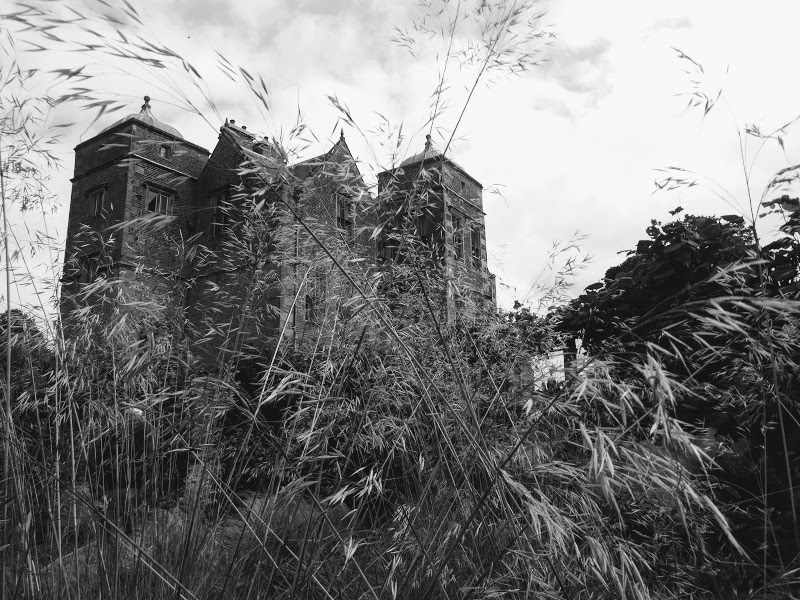
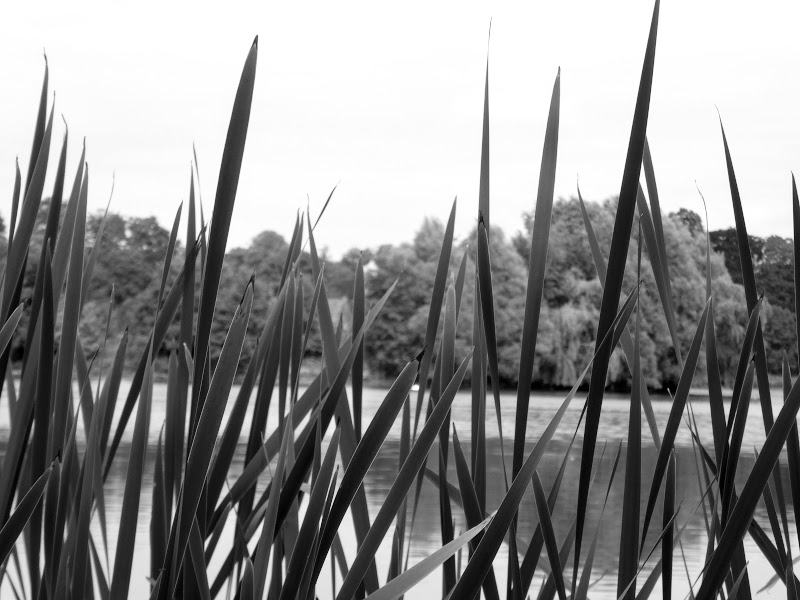

There are woodlands to explore: but the wind was picking up. Better to find shelter and explore the huge walled garden perhaps, where they grow all the fruit and vegetables used in their tearooms, and to make the jams, jellies and chutneys on sale. But wait! Suddenly it’s quite forbidding … Hallowe’en is on the way…
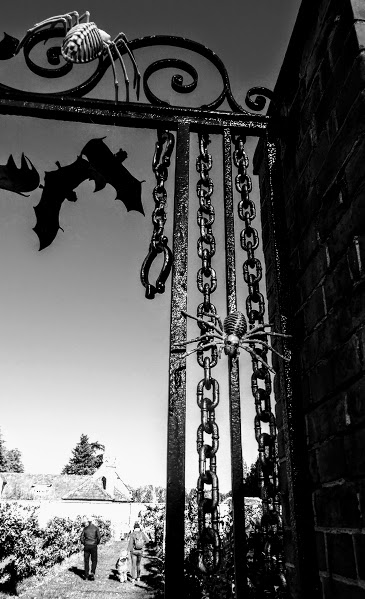
We’ll take our courage in both hands and enter anyway … there, that’s not so bad …

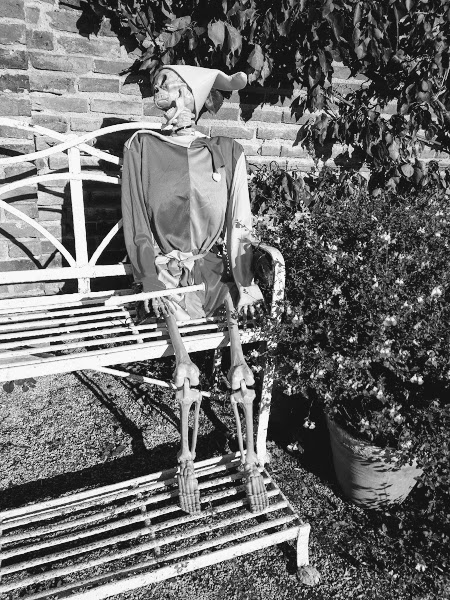
Although …. who’s that sitting on the bench over there?
We decided the tea room was a better option. Coffee, date and pecan cake anyone? No photo available. We ate every crumb before we gave the camera a thought.
Goodness, we all need some brightness in our lives just now. The unremitting bad news every time we turn on a news bulletin. The fiasco calling itself the British government. And if all that’s not bad enough, the clocks turn back at the end of the month, leaving us plunged into the darkness of winter.
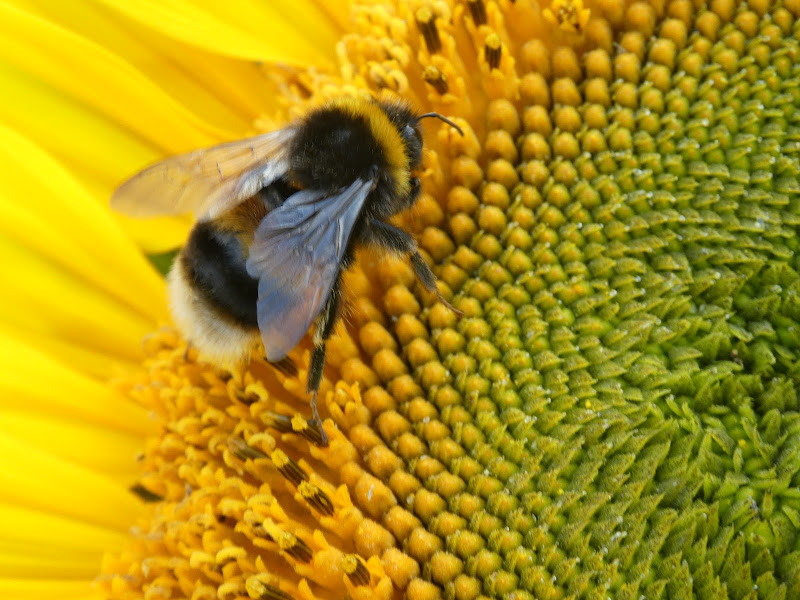
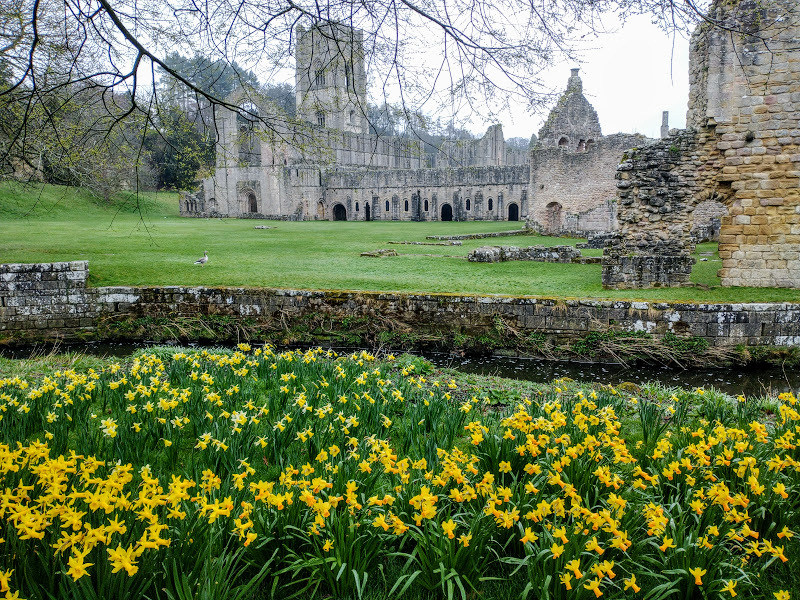
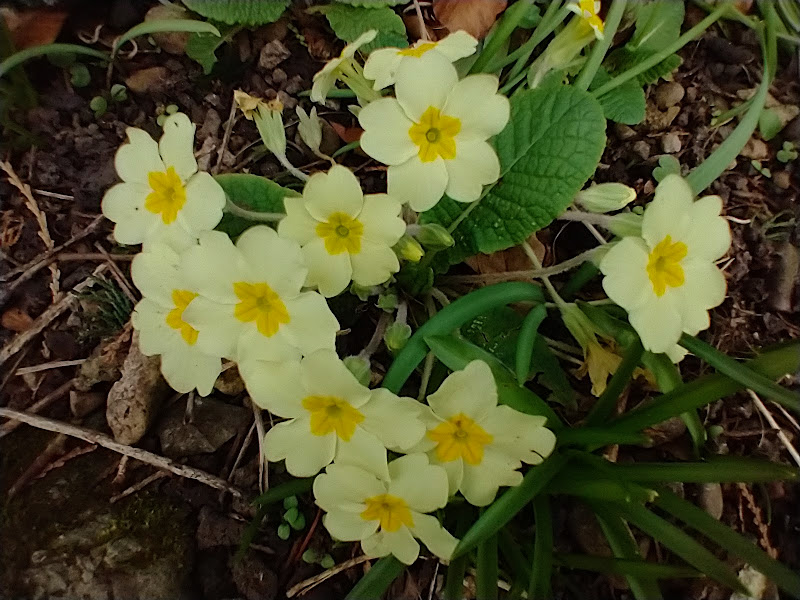
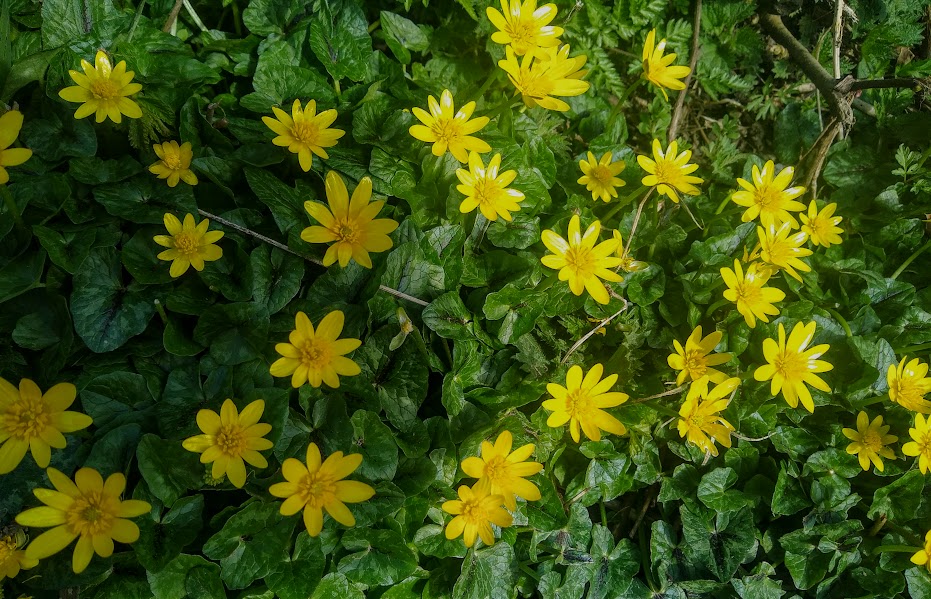
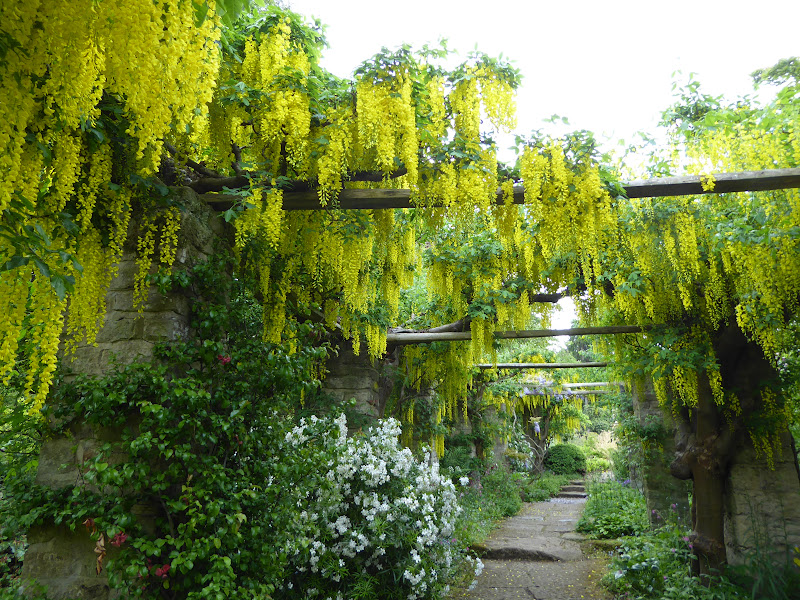
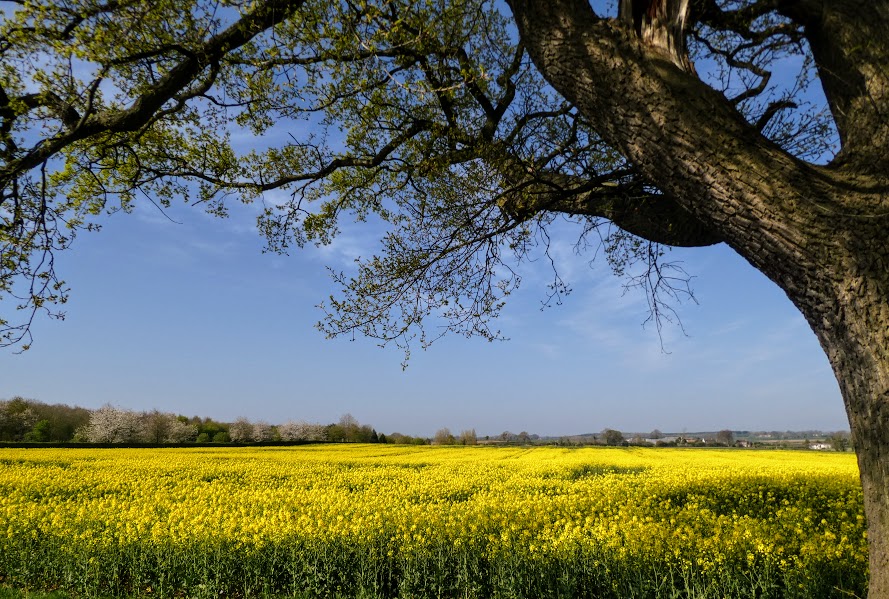
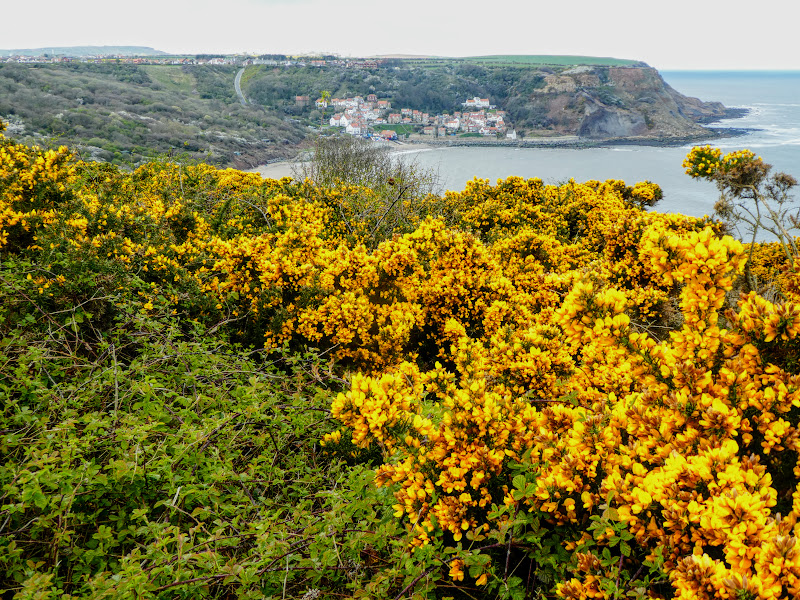
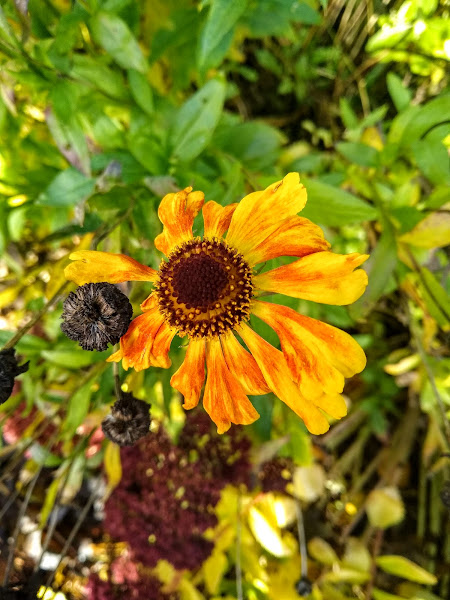
Leya’s Lens-Artists Photo Challenge #221 this week gives us an opportunity. Ann-Christine asks us to showcase our favourite flowers. Well, that’s a bit of a task. But what I do know is that a yellow flowers always brings me cheer. The earliest aconites. The first bright-faced daffodils poking through the ground at the beginning of spring. Primroses. Celandines. Even dandelions and fields of rape. Vivid gorse bushes pointing our way on a country or seaside walk. Or – and this is where we’ll begin, summer sunflowers. They always bring a smile to my face as they gradually turn their faces throughout the day to face the rays of the sun. Bees constantly scramble over the heads crammed with seed that will feed the birds – and us – over winter.
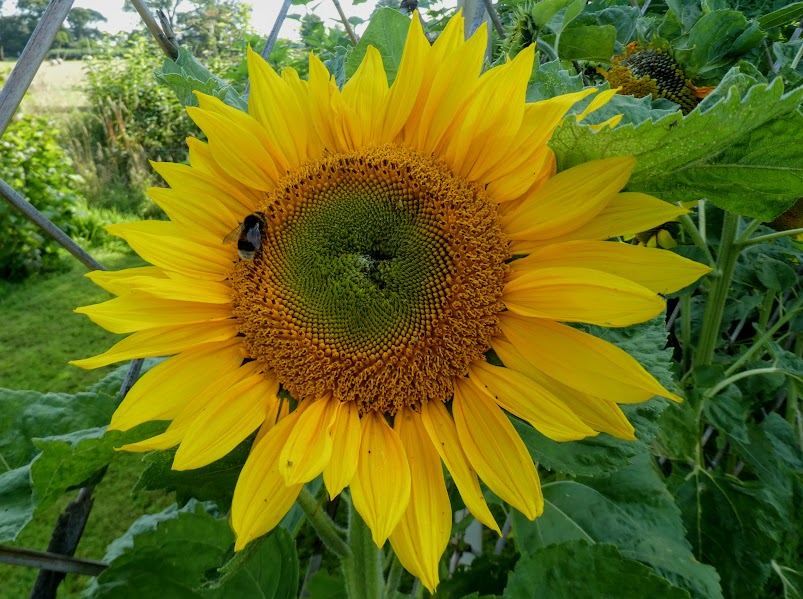


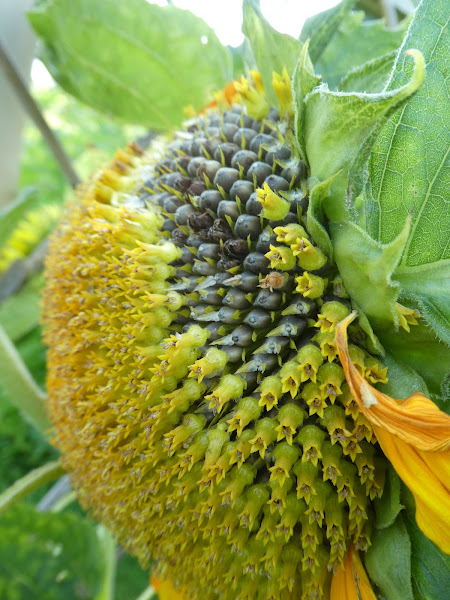
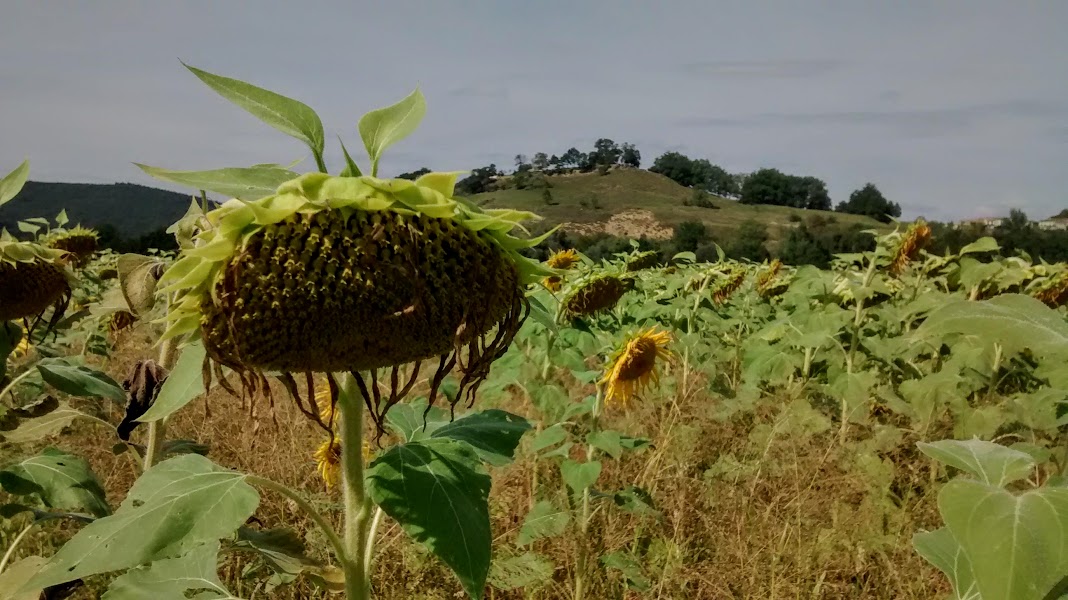
Even their hangdog look as they droop and die is characterful.
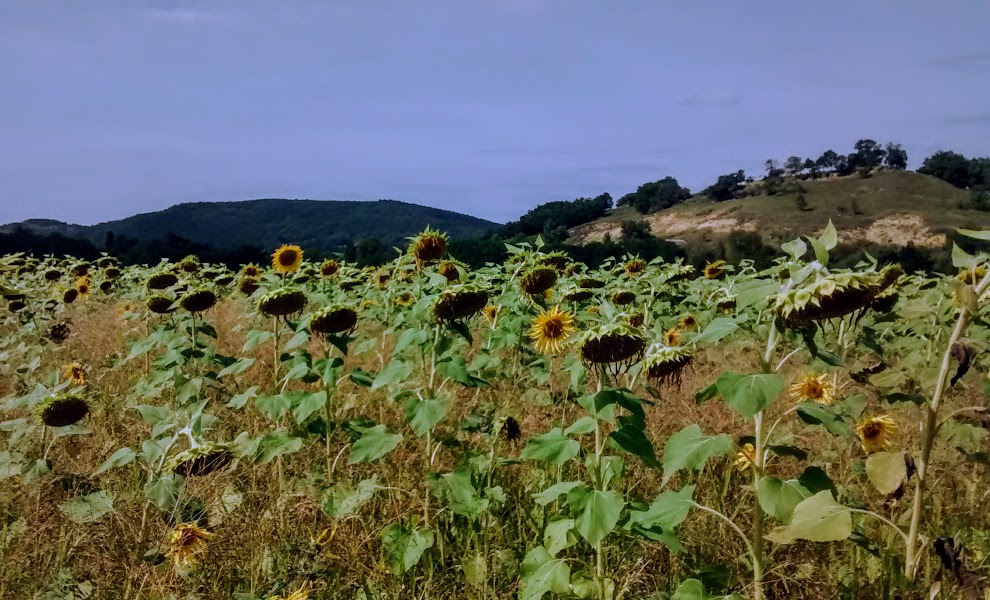
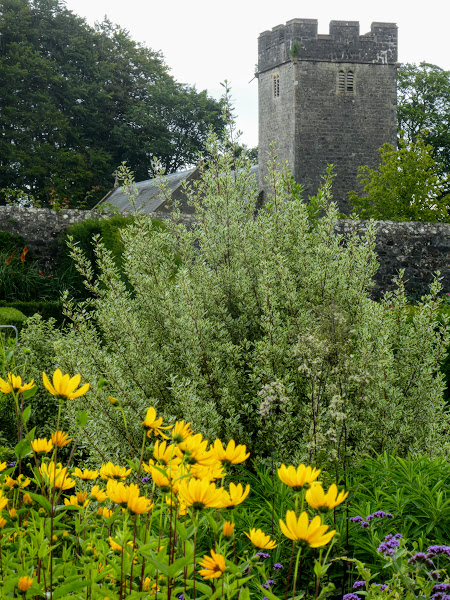
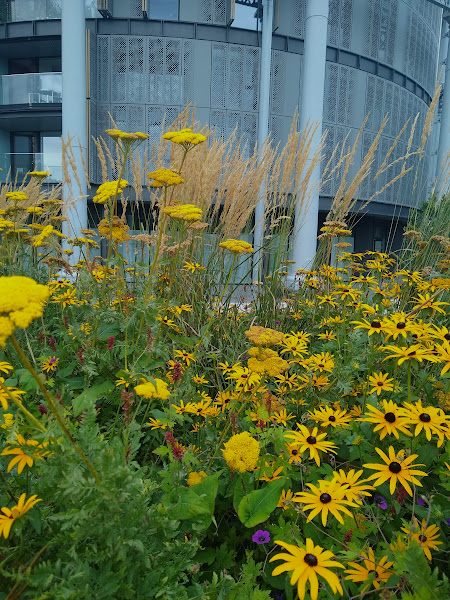
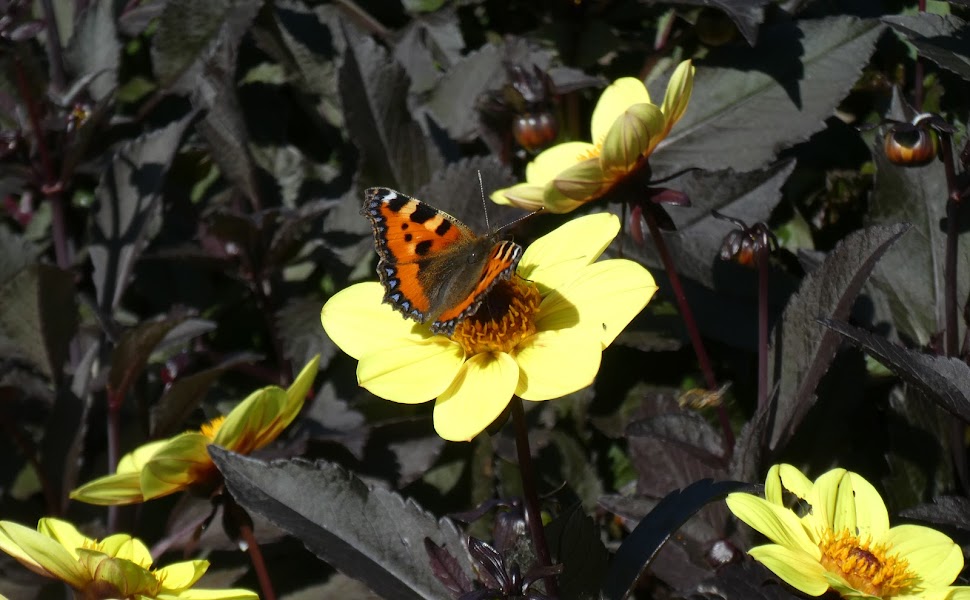
For the rest, I’ll just give you a small gallery of some of the yellow flowers that bring me cheer year after year, in public places, in gardens, in farmers’ fields and in city streets.

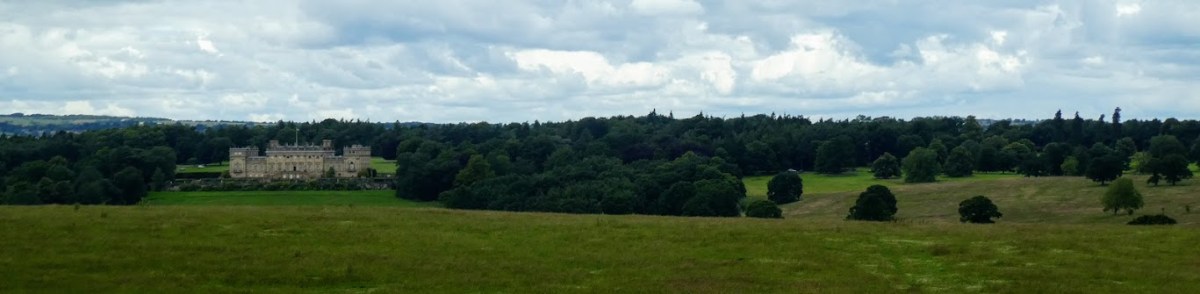
After visiting Harewood House, a visit to the grounds seems a good idea. Maybe the formal garden just beyond the house. Maybe the Bird Garden. Or maybe just a stroll in the managed landscape of Capability Brown, overlooking Wharfedale beyond. Come.
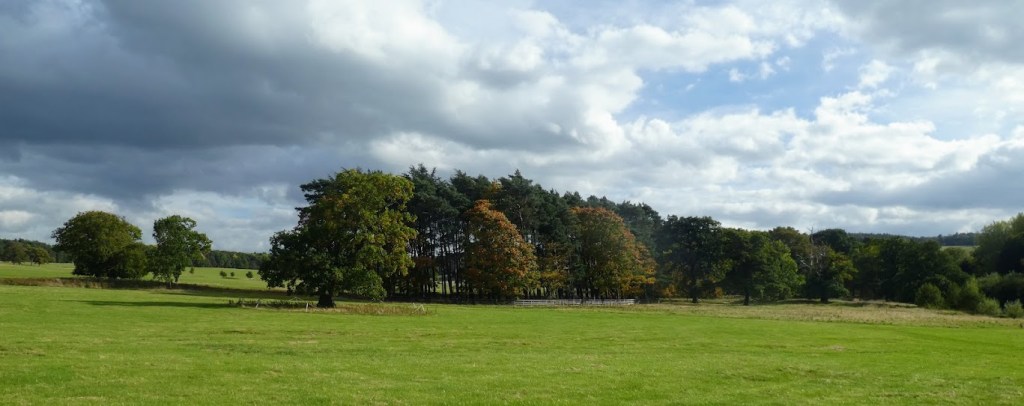
Let’s approach those trees. I wonder what we could see beyond?
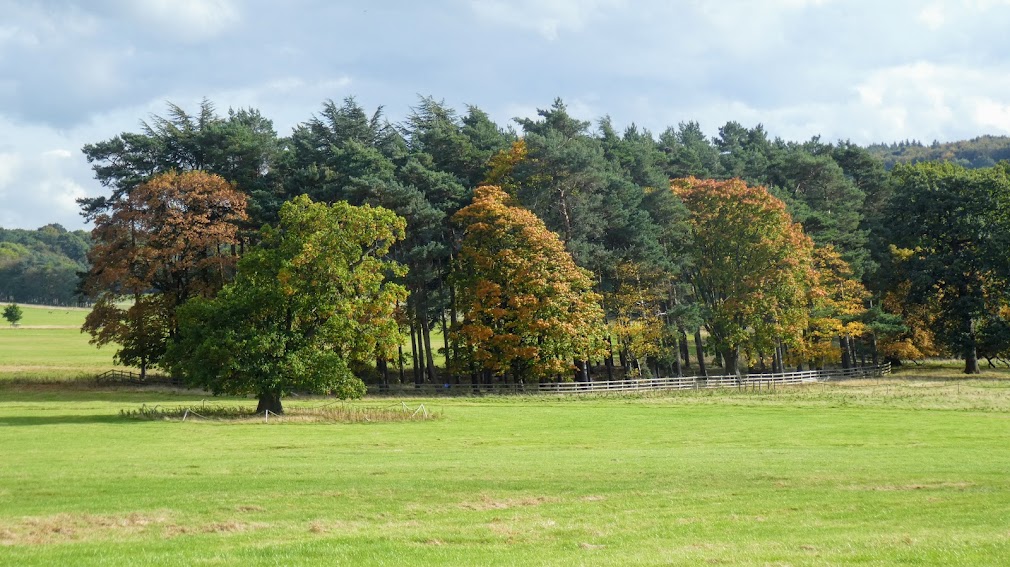
Keep walking ….
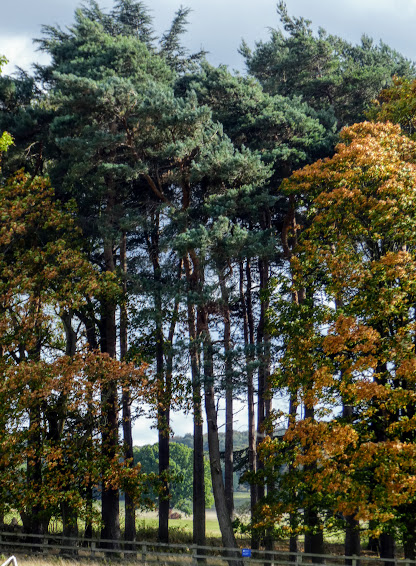
… closer …
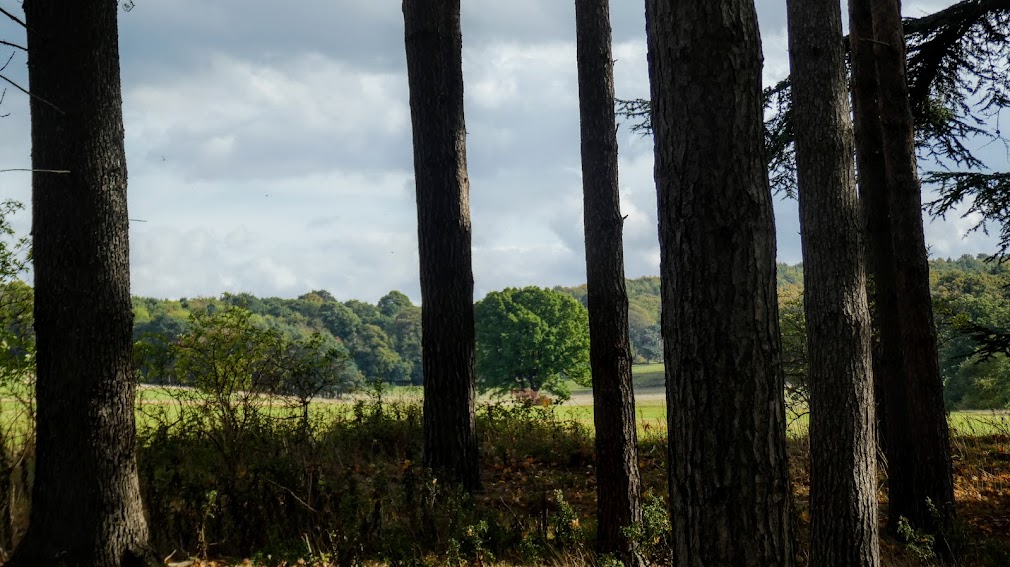
Ah! There’s a view …
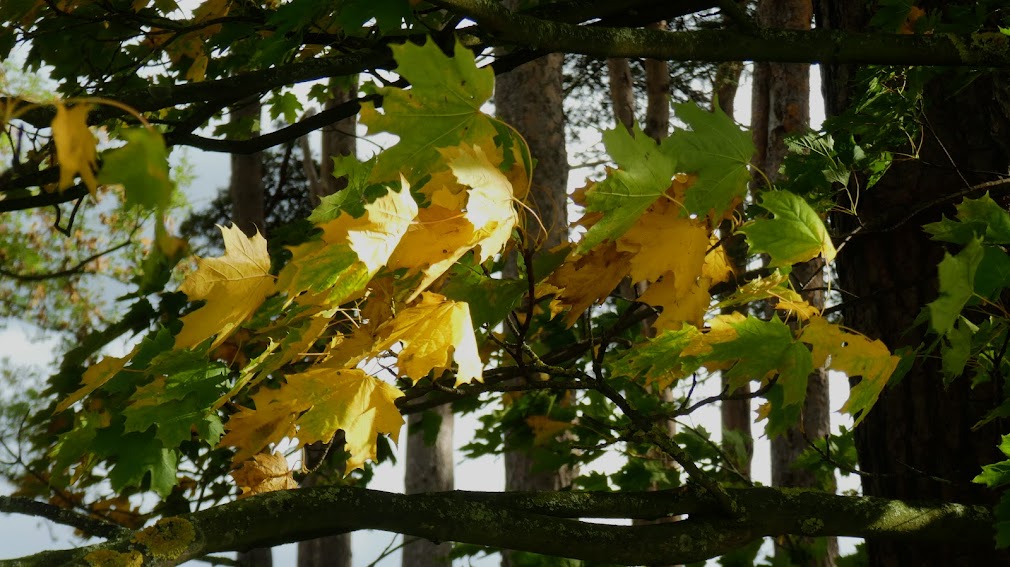
… or there was.
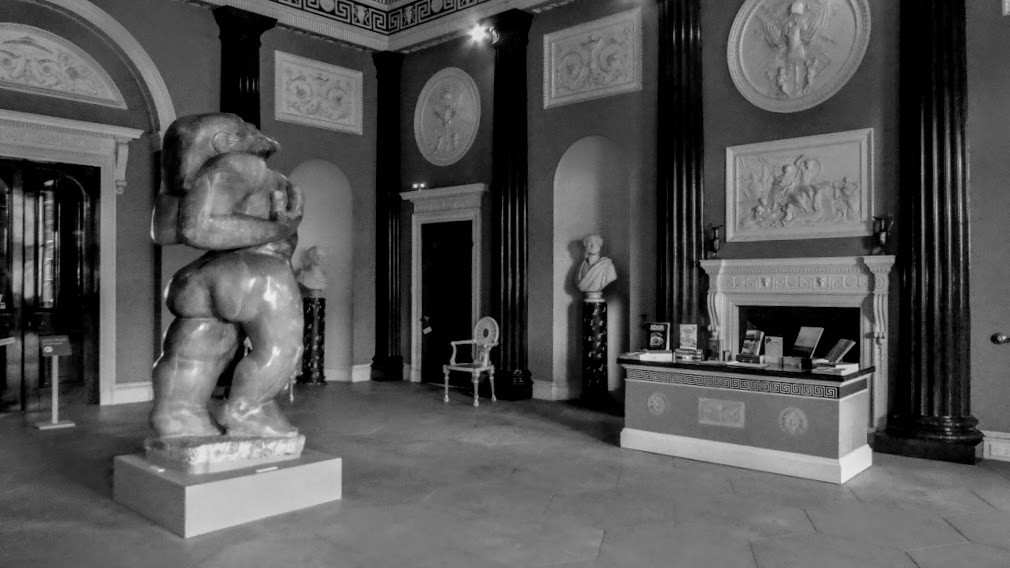
If you’re reading this, the chances are that you’ve also glanced at my previous post today, showcasing Jacob Epstein’s Adam at Harewood House. I’ve been playing with the photos, and have decided I would have done Adam more favours by showing him off, not in glorious technicolor, but in monochrome. What do you think?
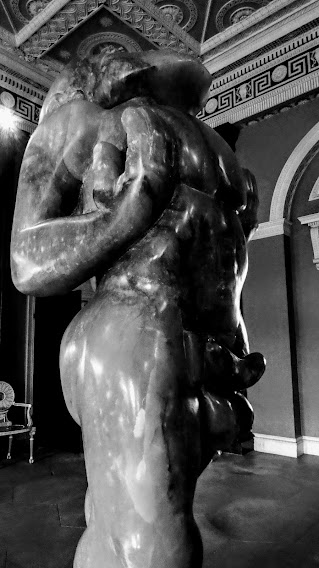
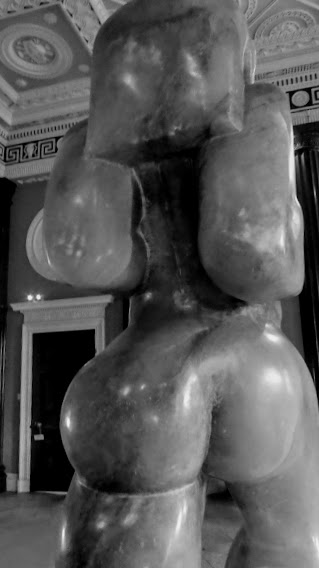
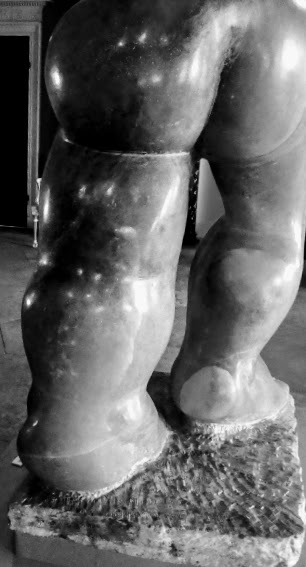
An addition to Lens-Artists Photo Challenge #220 One Subject Three Ways, and a contribution to Bren’s Mid-Week Monochrome #109.
You can have too much of a good thing, so I’ll hold back my other post from Harewood for a day or two.
Harewood House is the archetypical country house. Built for Edward Lascelles, the first Baron Harewood, in the mid eighteenth century to designs by John Carr and Robert Adam, it is set in one hundred acres of garden designed by Capability Brown. It’s among Yorkshire’s most prized treasures. These days, such treasure has lost some of its lustre as people remember that the Harewood family acquired their immense wealth from being slave owners and having plantations in West India. The present Harewood family can’t change that past, but their exhibition programme does what it can to redress the balance: this month there’s an exhibition on Windrush generation Arthur France, founder of Leeds West Indian Carnival.
I mention this, because as you enter the house, this is what you see:
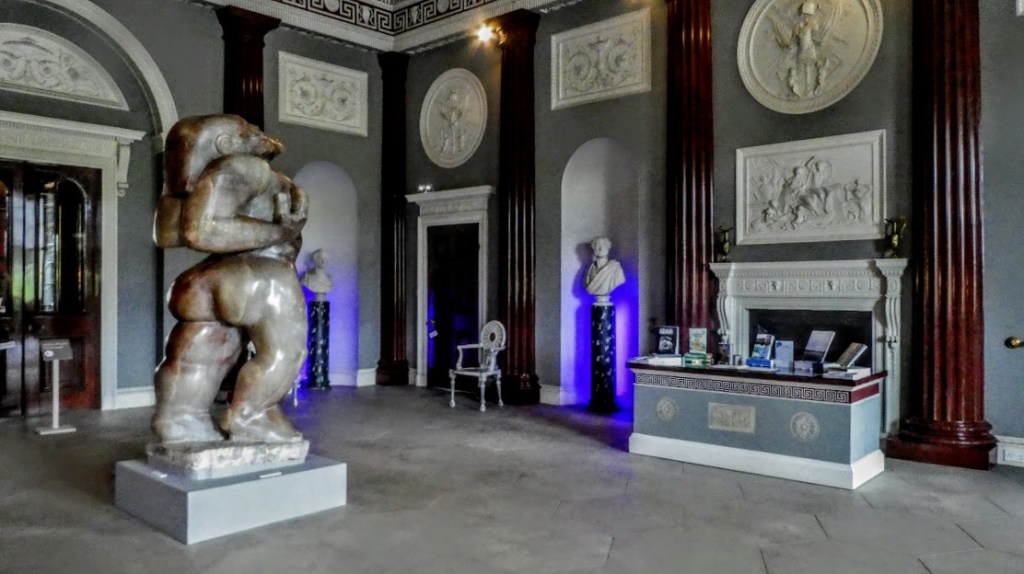
A spacious and gracious entrance hall: delicate plaster work, elegant columns: and slap bang in the centre, a mighty sculpture, monumental, assertive and demanding attention. This figure isn’t a slave: he’s not even Afro-Caribbean. No, this is a sculpture by Jacob Epstein, who was greatly influenced by what was in the early twentieth century thought of as ‘primitive’ art – that of Polynesia and Africa. This is Adam.
How he got here is a curious tale. Back in 1961 the then Lord Harewood saw this sculpture in of all places, a Tussaud’s peep show in Blackpool, together with other works by Epstein. A long and complicated story, but he eventually bought it, and now it’s recognised for the stirring and monumental piece that it is, rather than a grotesque to be laughed at. Do look at this post here to get a flavour of how Epstein’s work was regarded in its early days, at least as it was displayed in Blackpool. The short video below however places Adam in the context of Harewood House.
I wanted, for this week’s Lens-Artist Challenge #220 One Subject Three Ways by Patti, to observe Adam in several ways, to look at how this potent figure works in a space to which it seems in many ways unsuited. I found the lighting difficult and am not pleased with my results, but … I did it anyway. You’ve seen the first one already. Here are more…


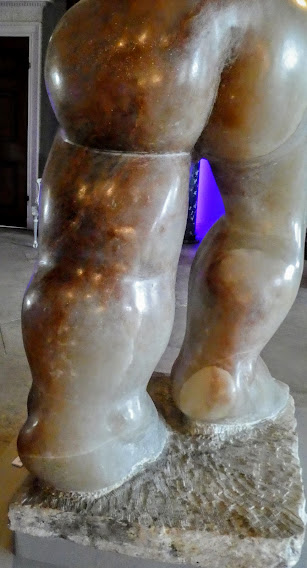
So … Adam. But knowing the story of Harewood and where the money came from to build it, I found this figure, which relies on an African, rather than an European artistic heritage, makes a powerful statement to those who enter this house to enjoy its treasures and its finely proportioned and handsome grandeur.
I’m going to have another go at the challenge, perhaps tomorrow, when I take a stroll in the artfully designed ‘natural’ landscape of Harewood House.
Just before they disappear irrevocably from view this year, let’s have a few late butterflies to cheer up this chilly Monday morning.
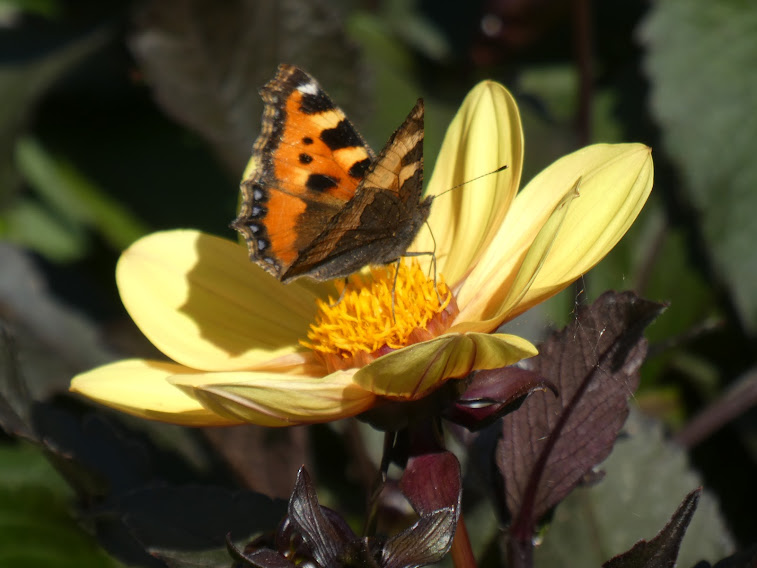
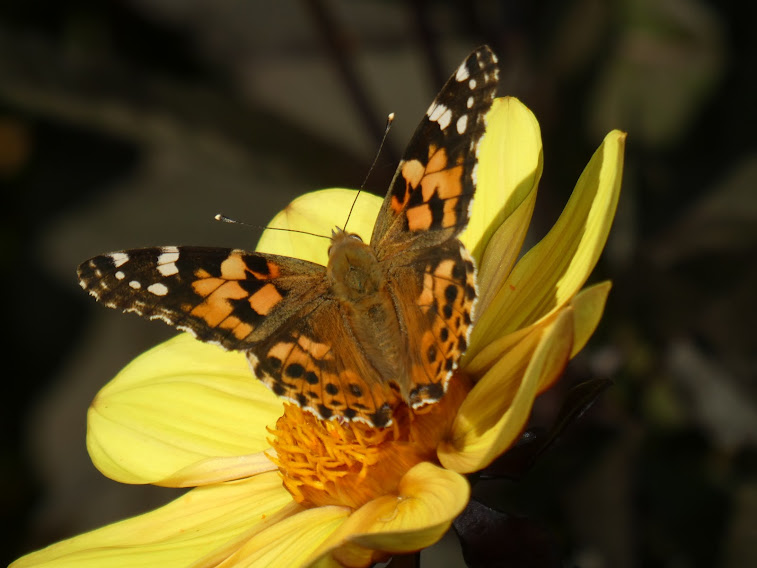
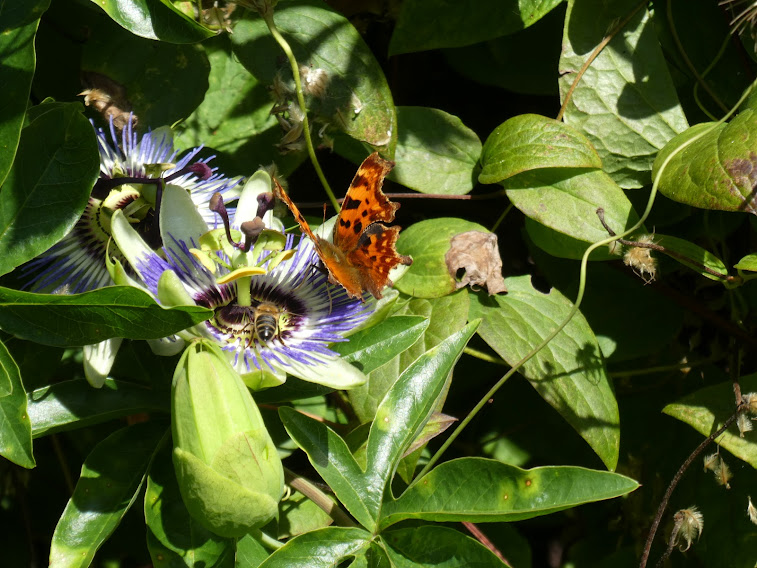

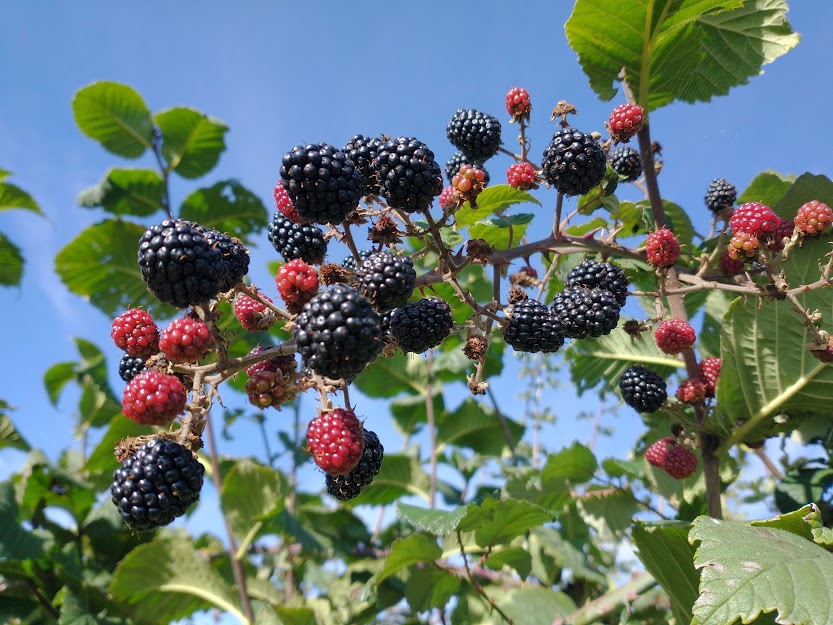
Seen (and eaten) today, 8th October. English (British?) tradition has it that on Michaelmas Day – 29th September – the Devil takes it upon himself to spit on all remaining blackberries, rendering them wizened and inedible.
For Debbie’s Six Word Saturday.
Well, this week, in all this rain, Tina’s sending us out on a Treasure Hunt for the Lens-Artists Photo Challenge #219. Here’s what she wants us to look out for …
A pet … , that’s going to be the dalmatian, Brian, who used to take Ellie, and sometimes us, for walks

The moon or the sun. I’m going for the moon, gently rising above the clematis crawling up the garden wall.

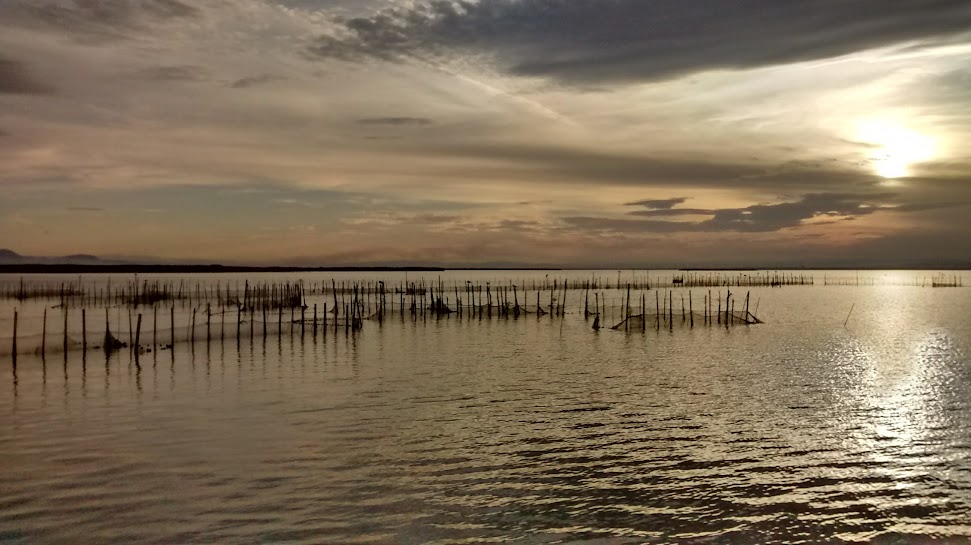
Clouds? We’ll choose an evening in l’Albufera, near Valencia.
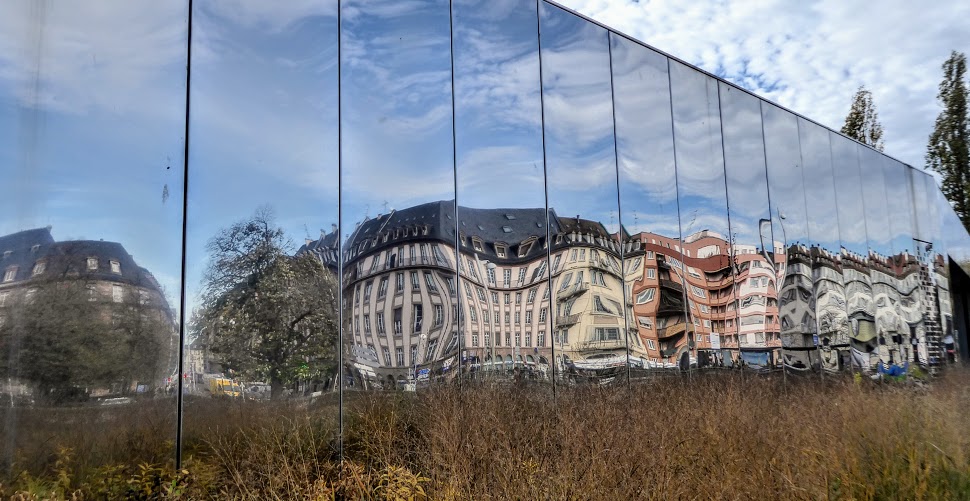
A reflection. My favourite shot was taken in Strasbourg. Not in the fabulous old city centre, but on a piece of waste ground near a municipal car park.
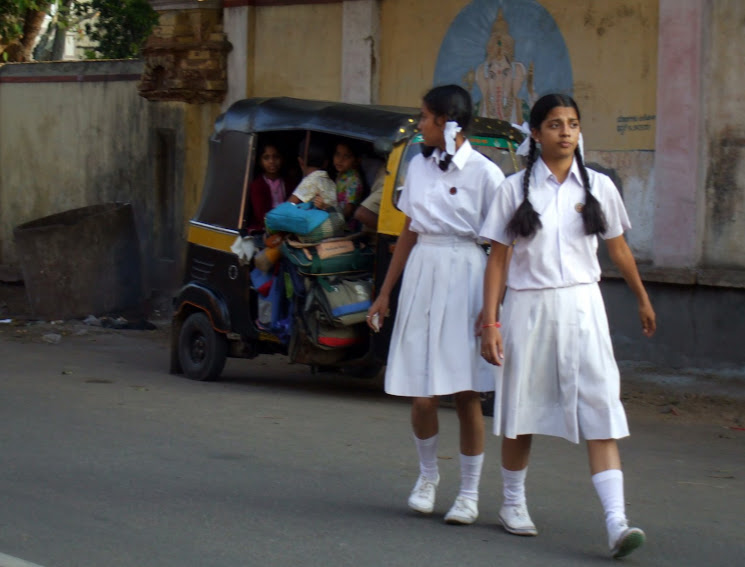
A child? Well, I think I’ll keep the family out of this, and instead go for two girls in Pondicherry, making their way to school.
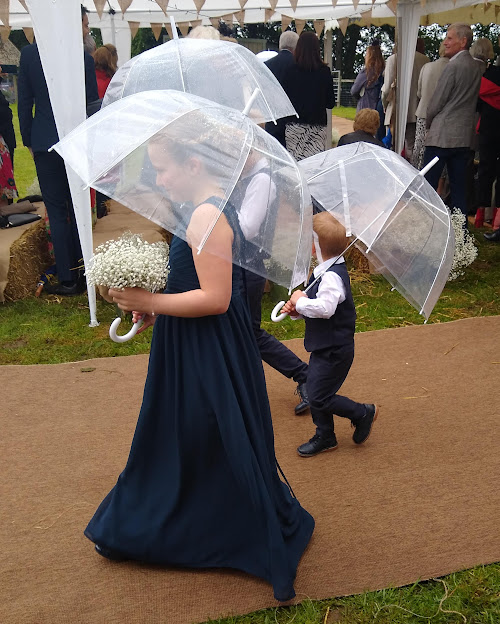
An umbrella? I’ve got several here, pressed into service at a friend’s wedding a couple of years ago. Well, as the French say: ‘Mariage pluvieux, mariage heureux’.
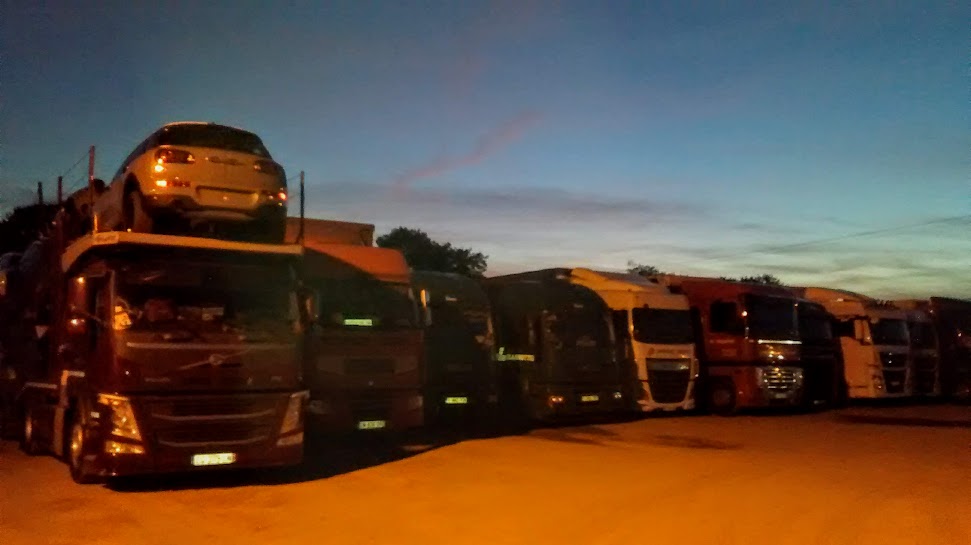
A truck. This shot was taken in a lorry park in Les Hayons in France at 5 o’clock in the morning, just before the truckers got on the road.
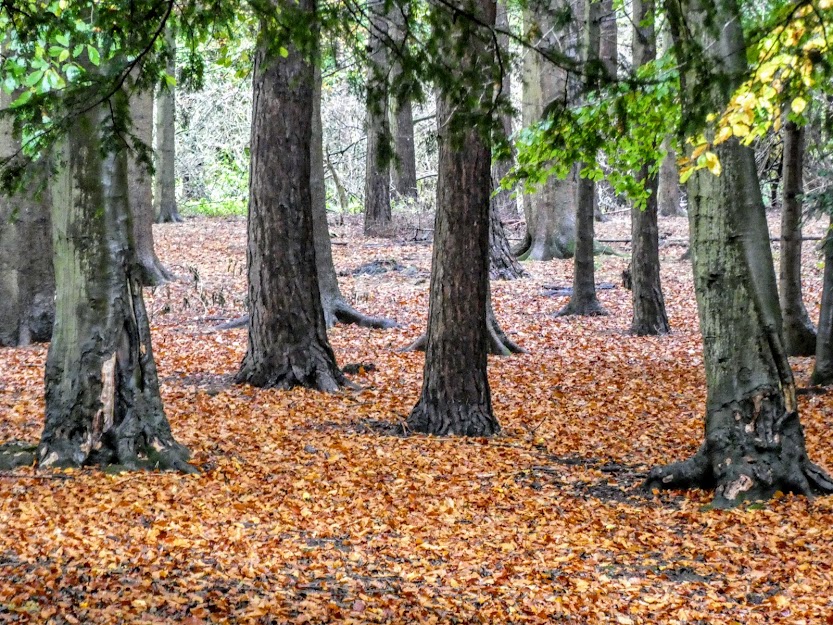
Autumn foliage. Any child will tell you that autumn foliage is best on the ground, where you can have a satisfactory walk kicking your way through it.
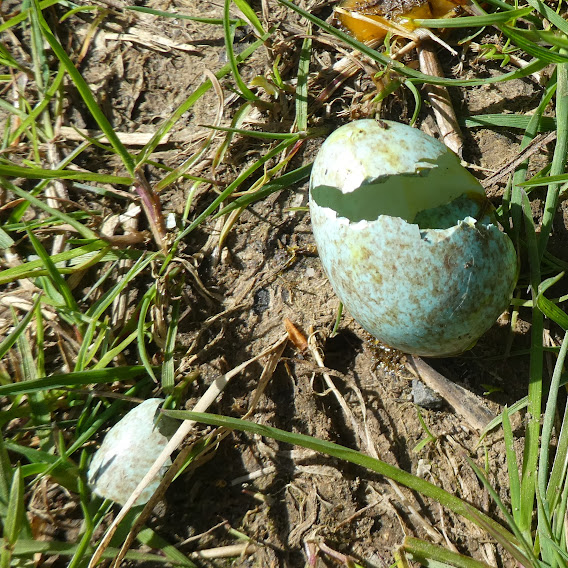
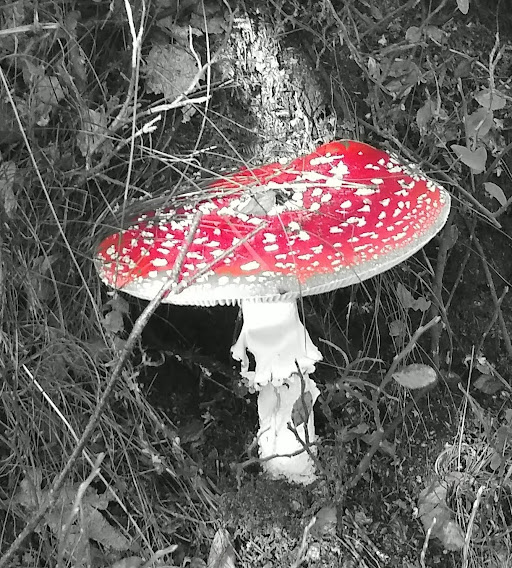
And the inner child is always looking for something interesting to find on a walk. Here are two things: a discarded blackbird’s egg, and a toadstool of the kind beloved by fairies and elves everywhere.
Just to wrap things up, and remind us that The Rainy Season has arrived, and not before time, I’ll pop a few raindrops into the featured photo.
On the first Saturday of every month, a book is chosen as a starting point and linked to six other books to form a chain. Readers and bloggers are invited to join in by creating their own ‘chain’ leading from the selected book.
Kate: Six Degrees of Separation
The starter book for this month’s chain is Zoë Heller’s Notes on a Scandal. Despite its being in many ways the shocking story of an affair between a teacher and her pupil, the book is in many ways memorable for having been narrated by a fellow teacher, who proves to be an unreliable narrator.

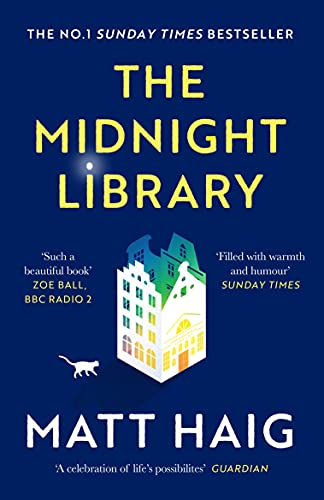
So I looked for another unreliable narrator, and found one in Matt Haig’s The Midnight Library. So much hype surrounded this book. And it is immensely readable. But this story of a young woman who gets the opportunity, through being transported to a magical library in the moments before she commits suicide morphs into an entertaining and – yes- thought-provoking manual to help her re-evaluate her life and its disappointments, and to explore some of the paths that might-have-been, in some ways disappoints. Of course her alternative lives, lasting only a few days each, aren’t going to work out since she isn’t given a back-story and knowledge of the participants. In the end I felt I was being given a parable of how to improve on living the life I have been given. And it didn’t quite live up to what I’ve come to expect of Matt Haigh.
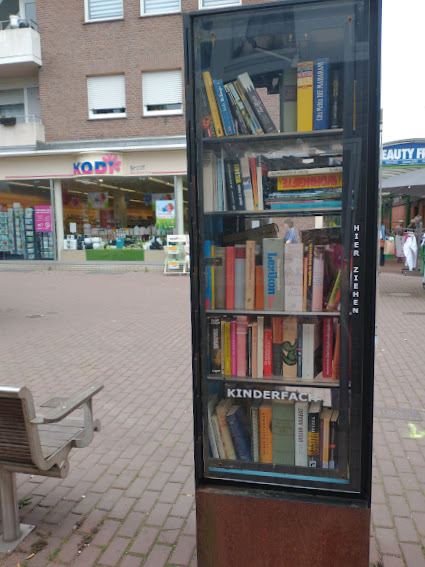
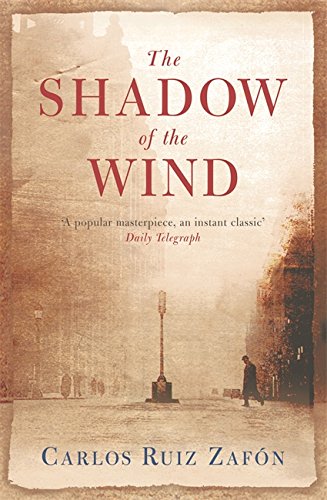
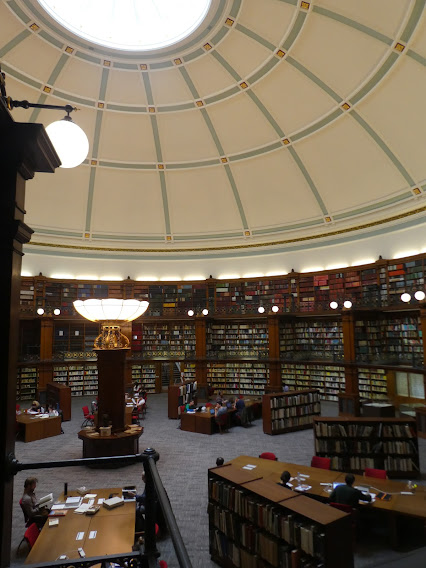
Libraries for the next link then: let’s go to Barcelona in 1945. Carlos Ruiz Zafón’s The Shadow of the Wind revolves around the mysteries of a little known author, Julian Carax. The main protagonist, Daniel, stumbles across him in a secret library of literature called the Cemetery of Forgotten books. From there it develops into a story of good versus evil; driven by jealousy and shrouded in the unknown.
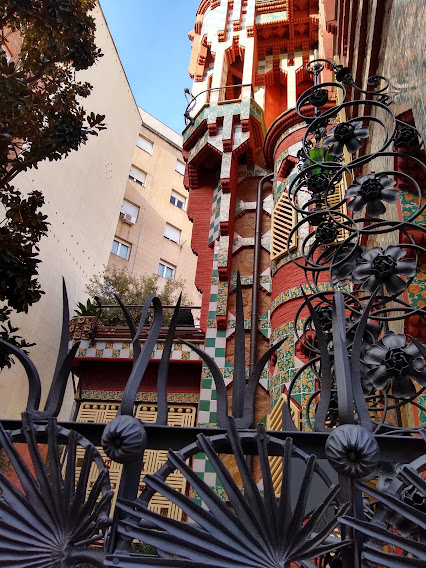
I’m all in favour of staying in Barcelona, armed with a copy of Robert Hughes’ Barcelona. This is a wonderful book, which tells Barcelona’s story through the last two thousand years – though its main focus is the last thousand. Hughes’ area of expertise is art and architecture, but in order to tell the story of Barcelona’s cultural past and present, he has painted a vivid picture of the city’s political and social past. Highly readable, this is a book so densely packed with information that it definitely merits a second, perhaps a third reading as an introduction to the history of this fascinating city.

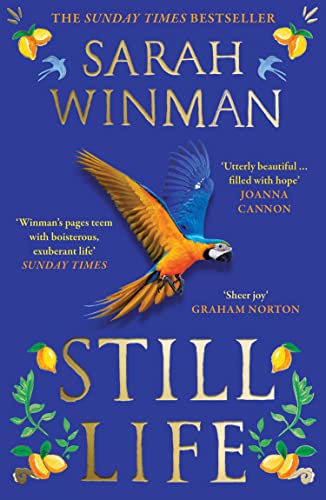
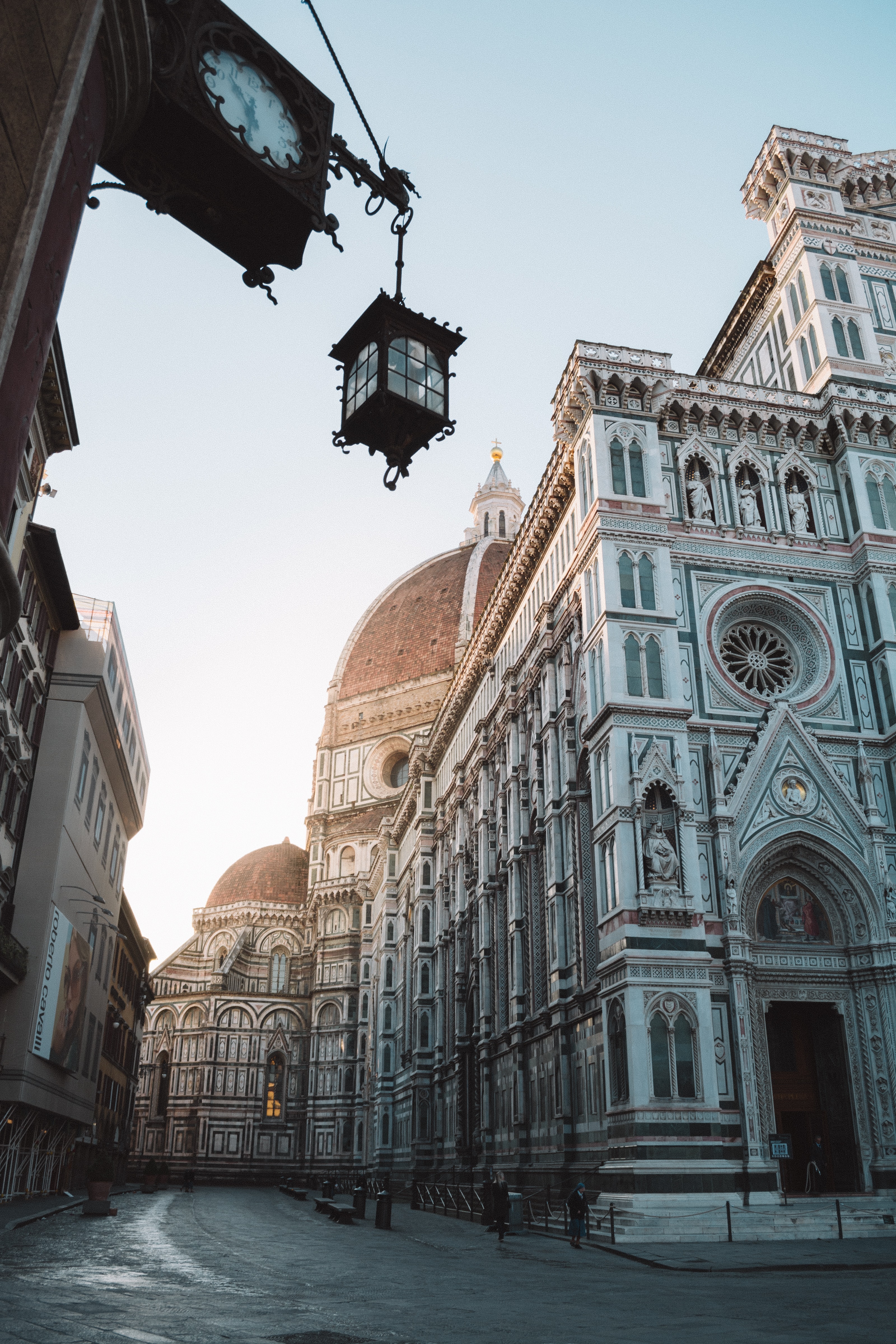
From Barcelona to Florence, another city I know well. Still Life by Sarah Winman is largely set there. A charming, uplifting book, about the power of loving friendships and community. It begins in Tuscany in WWII with a British soldier, Ulysses, and continues to London’s East End where Ulysses was brought up. An unexpected legacy takes Ulysses back to Tuscany, to live in Florence, where, little by little, his London friends and relations fetch up too. Over the three decades in which this novel takes place, these individuals and his new friends in Florence all live and work together as some large extended family. Florence – not tourist Florence – but a living, working, vibrant community – is star of the show, and since I lived there too for a year, not long after the 1966 floods which feature in the book, I took this story to my heart.
Another book where a city is centre stage, albeit an 18th century version of the city, is Andrew Miller’s Pure, set in Paris. Jean-Baptiste Baratte, a well qualified yet naïve young engineer, is sent to oversee the removal of the many thousands of bodies from the cemetery of Les Innocents in Paris, some 4 years before the French Revolution. Miller conjures a vivid picture of the daily round in this little part of eighteenth century Paris: the smells, whether of sour breath or rotting vegetables or a dusty church; and of a world about to change, in the destruction of the cemetery and church which has for so long been at the heart of the community Baratte finds himself in. Violence and death are ever present. Unsettled by the narrative, the reader is left with an impression of a world about to change, a world which is already changing in ways its citizens cannot comprehend. Uncertainty is what draws the reader in.


A capital city in time of trouble is portrayed in The Ashes of London, by Andrew Taylor. What did I enjoy about this book? The picture it evoked of London life in the immediate aftermath of the Great Fire of London. What didn’t I enjoy? The over complex plot, and the flimsy characterisation. The book is peopled by ‘goodies’ and ‘baddies’, and we know for sure which are which. I’m not minded to read the follow-up book, but I found the description of London at this difficult moment evocative and convincing.
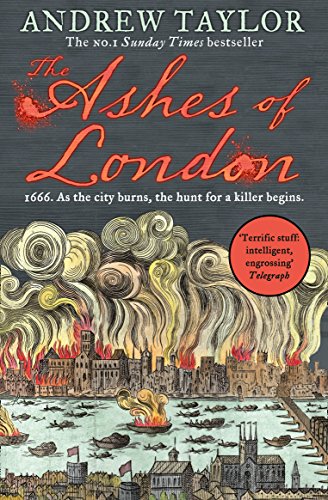
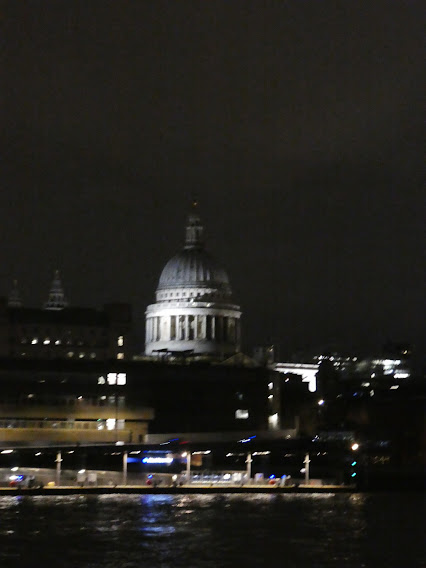
How did we get from a modern comprehensive school to seventeenth century London? As chains go, it’s a bit unlikely. Let’s see if next month, when we start with a cookery book, Jamie Oliver’s The Naked Chef, is a little more convincing.


 From Pyrenees to Pennines
You must be logged in to post a comment.