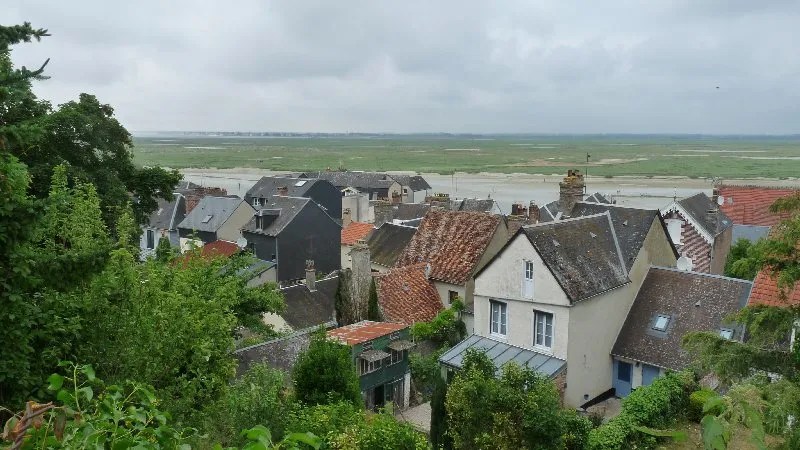
Saint Valery sur Somme Revisited

Exactly nine years ago today I wrote a post about a trip we’d only recently returned from. I thought I’d give it another outing.

Saint Valery sur Somme

24th June 2015

Here’s a town we Brits should know.  It’s where 1066 And All That really began.  William of Normandy and his troops set sail from here, landed on the English south coast and won the Battle of Hastings.  William became King of England, introduced a whole new French vocabulary into the English language (‘Pork or beef, madam?’), and his brother Odo commissioned the first strip cartoon, the Bayeux tapestry, to record and commemorate the event.  Later though, in 1431, the English held Joan of Arc captive here, before conveying her to Rouen to be burnt at the stake.

En route from France to England: a detail from the Bayeux Tapestry (Wikimedia Commons)

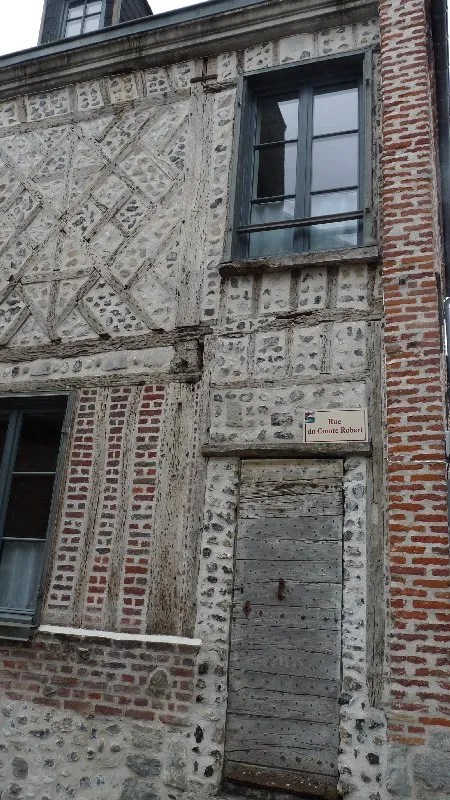
Even without those compelling reasons to make a pilgrimage, Saint Valery is worth a detour.  It was and is a harbour and a fishing town with a picturesque mediaeval centre.  Like many pretty towns on the coast, it’s popular with writers and artists: Victor Hugo, Jules Verne, Alfred Sisley and Edgar Degas  all had homes here, and we spent a pleasant day exploring, poking round the (rather touristy) Sunday market, choosing a restaurant-stop, and generally enjoying the pleasures of a seaside town.

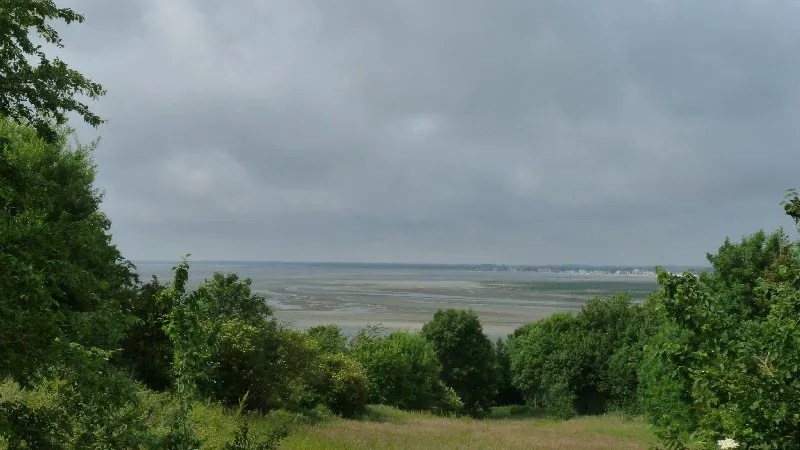
While we were there, something special happened.  After lunch (moules, what else?) we wandered down to the beach.  There, on the other side of the estuary, were sheep, paddling.  Dozens of sheep, scores of sheep, hundreds of sheep.  They’re unique.  They’re bred from English Suffolk and Hampshire sheep, and they spend their lives grazing the salt marshes., which gives them a highly regarded flavour, rich in mineral salts, and the name ‘Estran salt meadow lamb’.  The life of those sheep, and their shepherds, and sheep dogs, is an energetic one.  They have to keep moving each and every day to avoid getting stuck in the damp and boggy sand.  Their shepherds keep an eye on them, oiling their feet to prevent foot rot, and every night the flock returns to pens with fresh straw via a special tunnel under the road.

Sheep grazing at the estuary.

Before we left, we wandered through the harbour, and up to the Chapelle des Marins, a neo-Gothic building, built on the site where the hermit-saint Gualaric, who gave his name to the town, once lived.  It’s a good place from which to say ‘Goodbye’ to the town and get some final views of the bay.

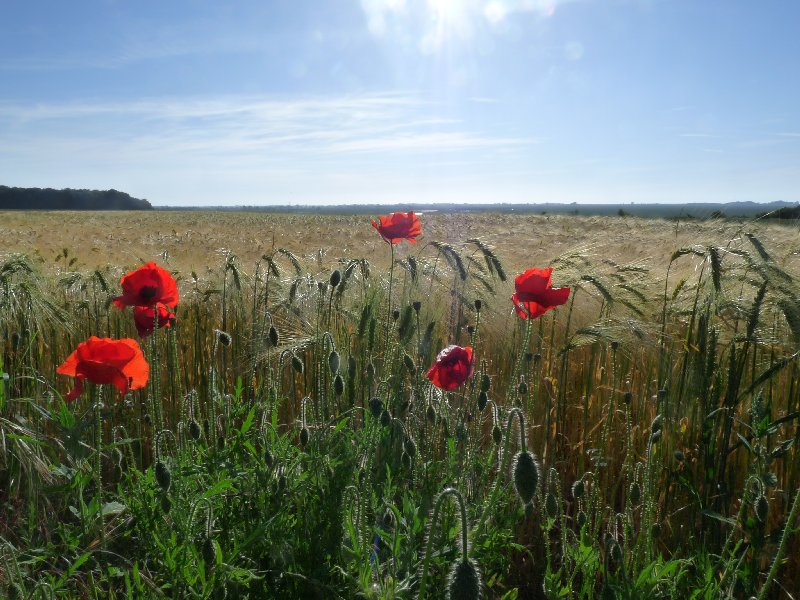
Farmland outside Saint-Valery-sur-Somme.

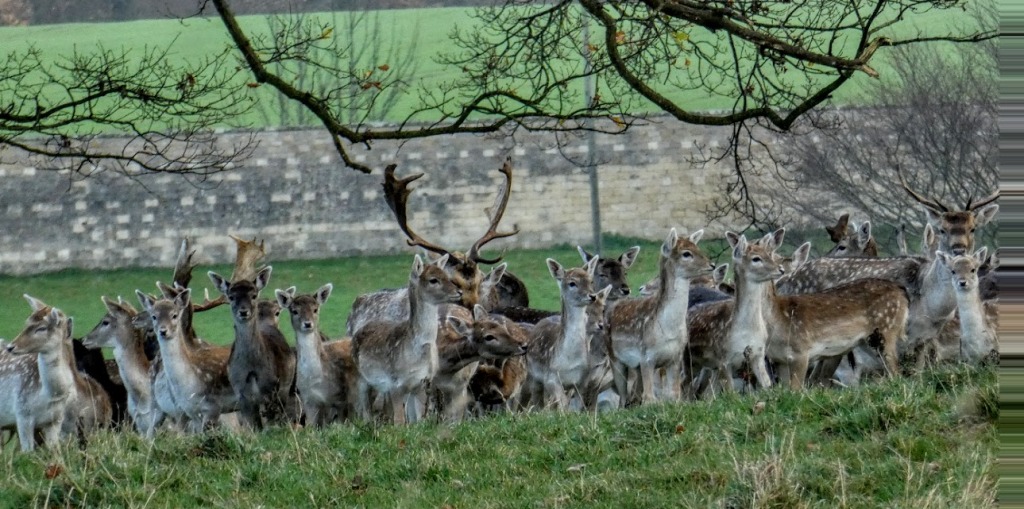
The Deer of Studley Royal

‘That woman. Seen her before. One of those volunteer Roaming Rangers isn’t she? I think she’s harmless.’

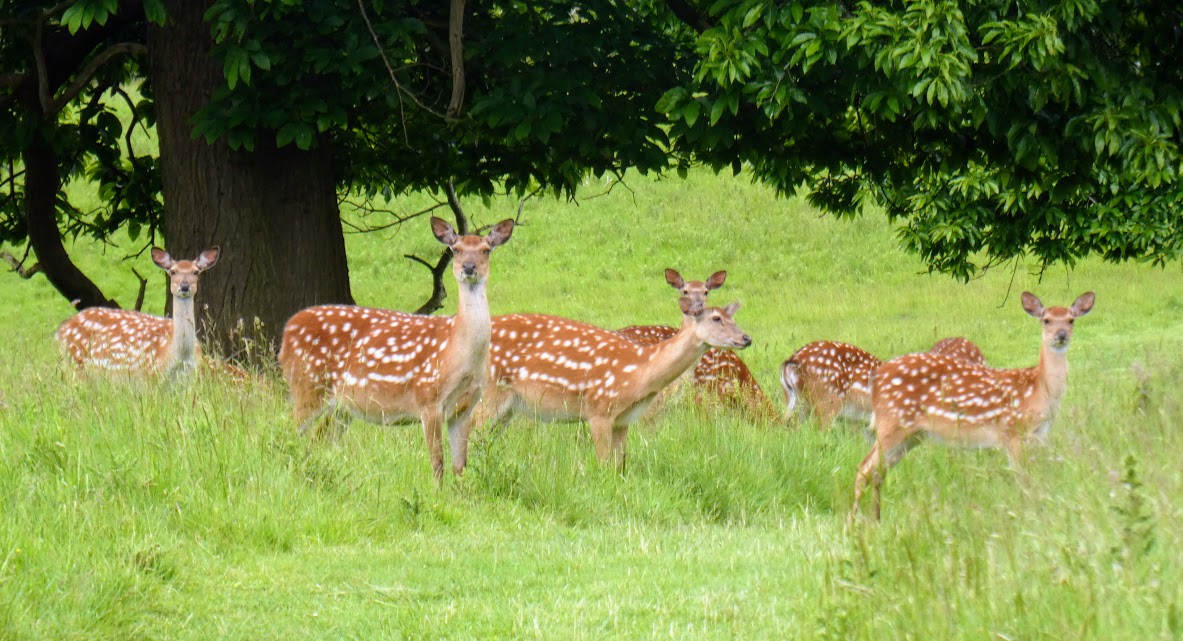
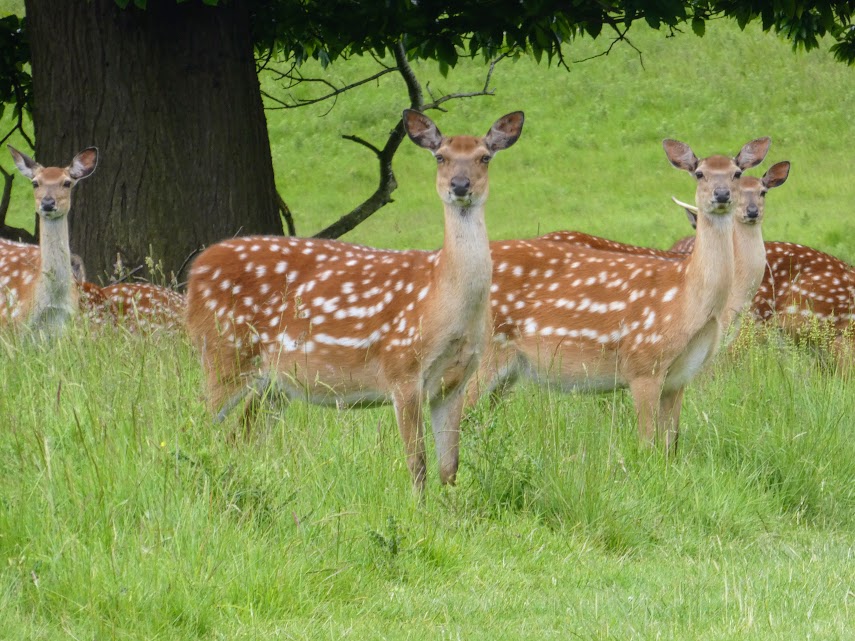
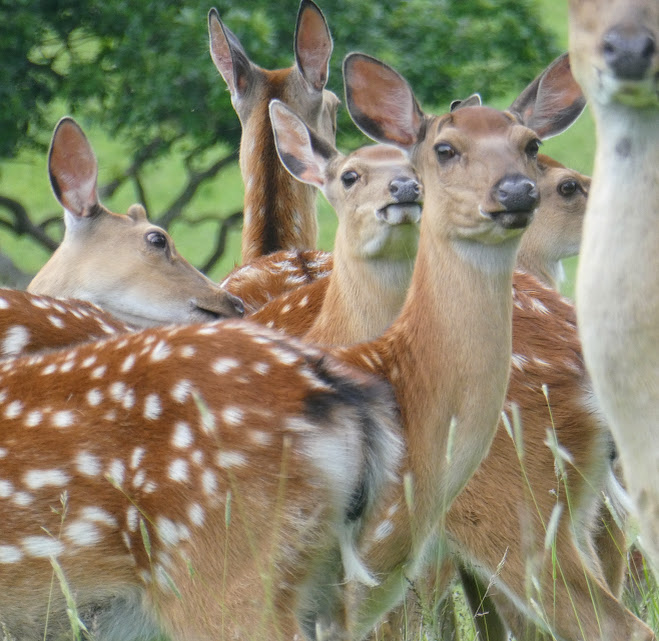
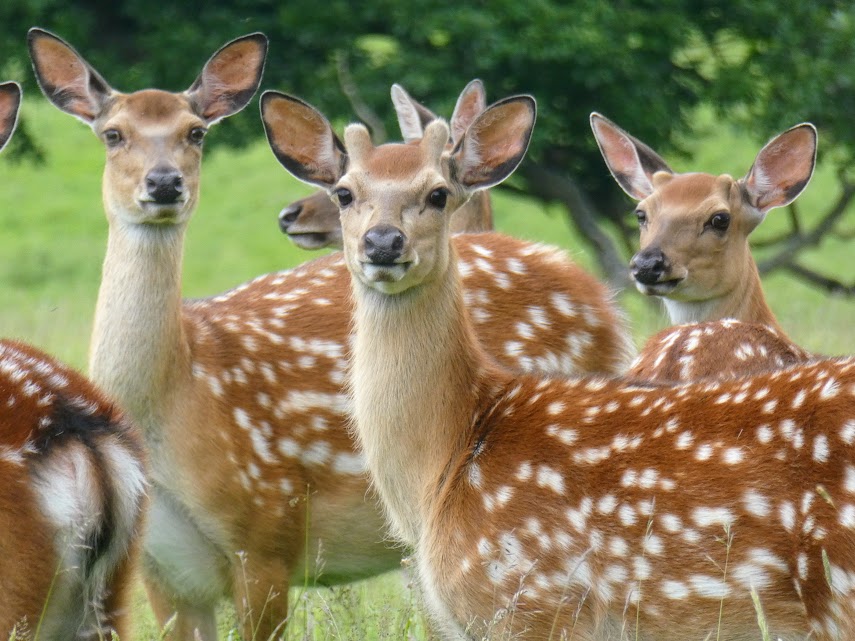
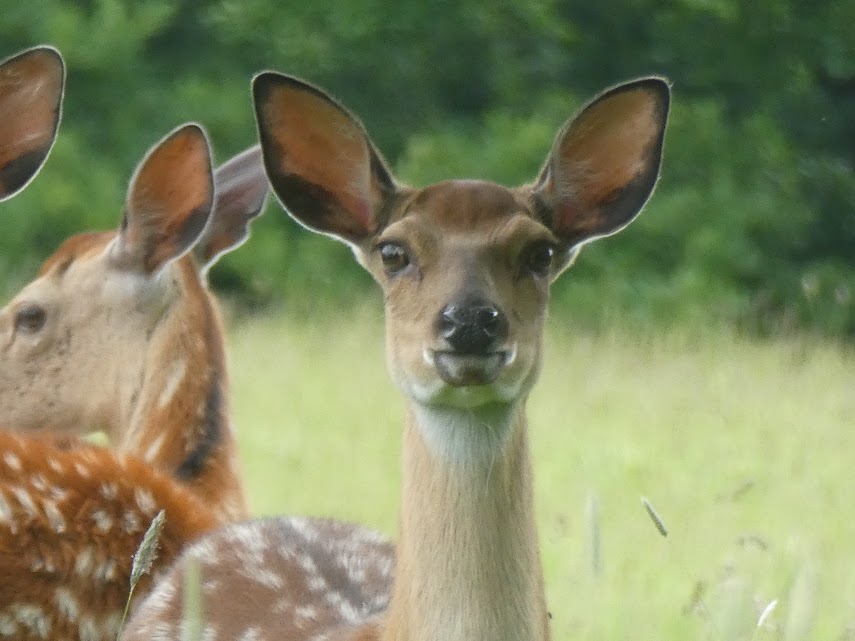
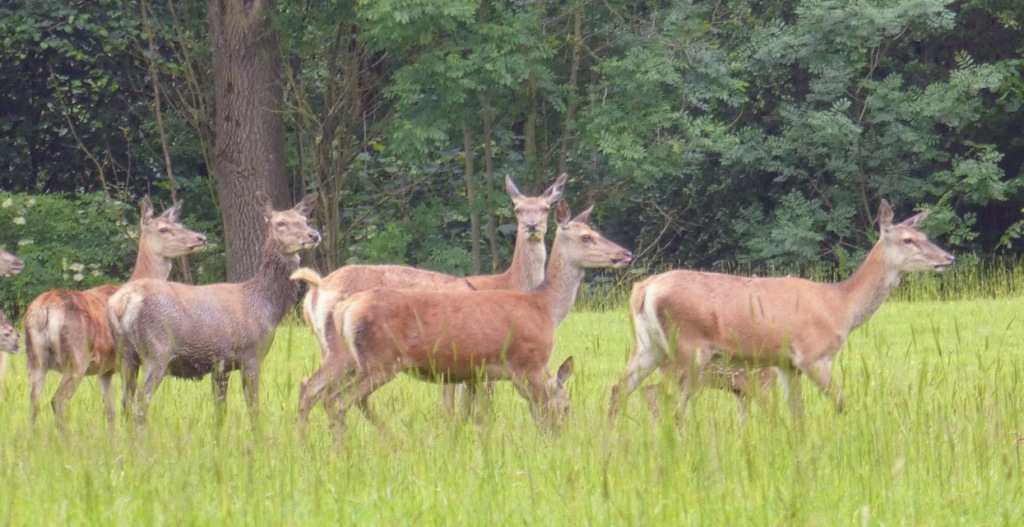
Sika hinds

‘I’m not sure. I’m off …’

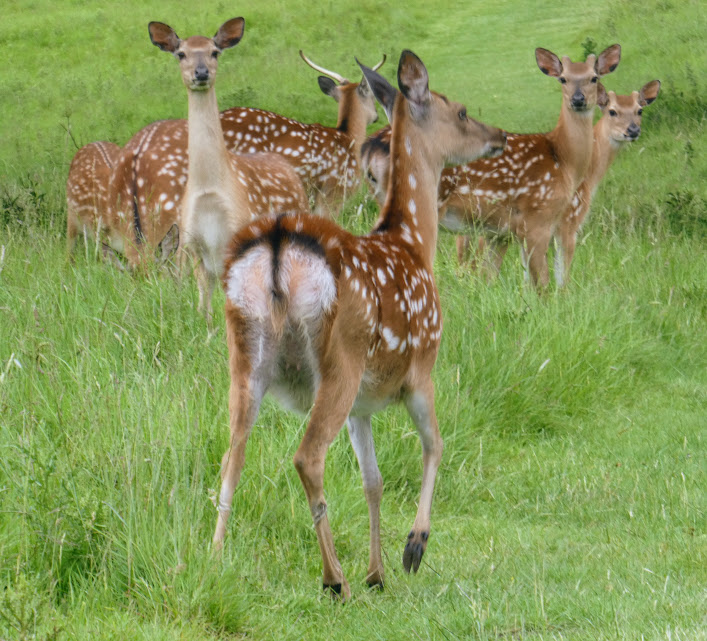
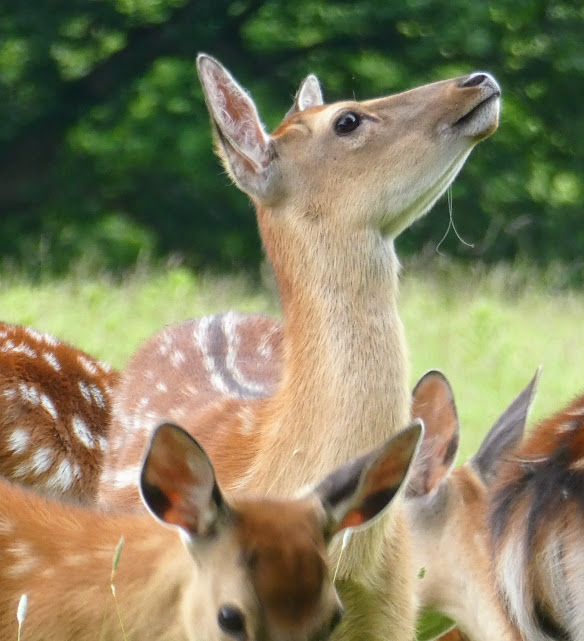
Sika hinds with just one young stag.

‘That one’s a scaredy-cat. Who’ll be back. We’ll just wait here and see what happens…’

‘There. Told you she means no harm. She’s off to see the red deer now…’

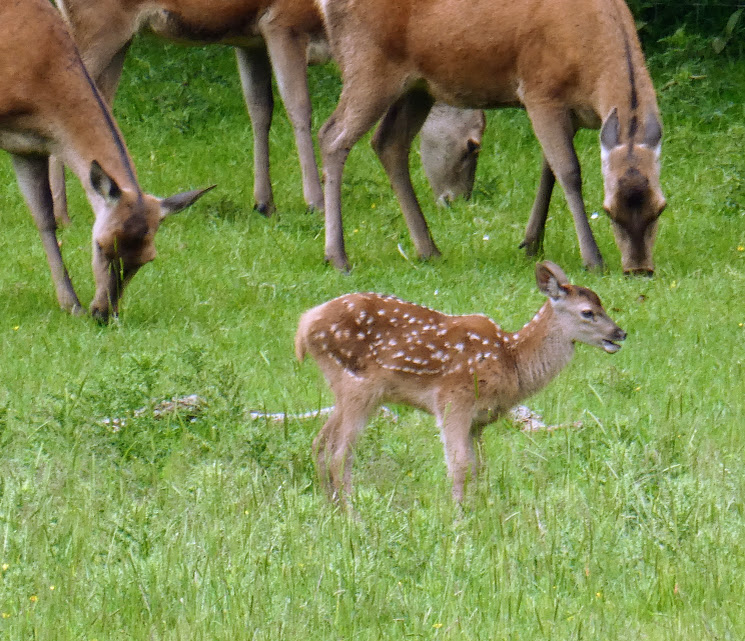
Wandering red deer hinds …

Just one calf …

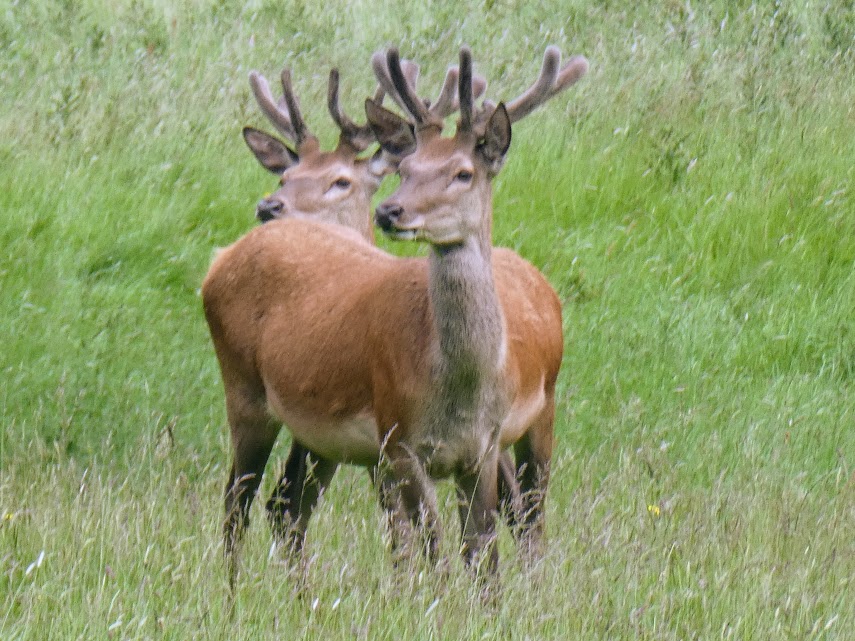
Young stags – no chance of breeding this year …

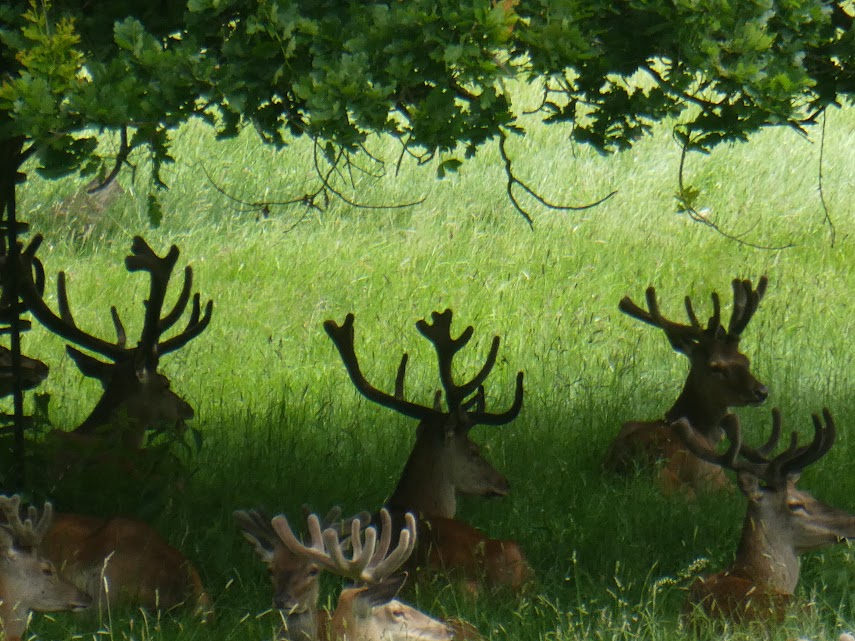
Ah, those antlers are more like it. Best rest now while they can … They’ll be battling it out in the rutting season.

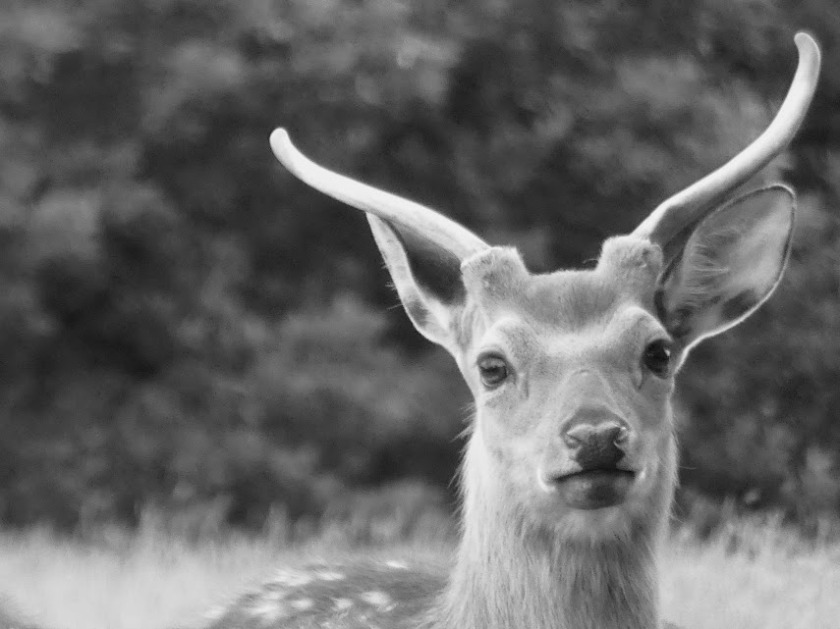
And just to finish off, here are two classic portraits of stags, for Leanne’s Monochrome Madness. The first is a young sika…

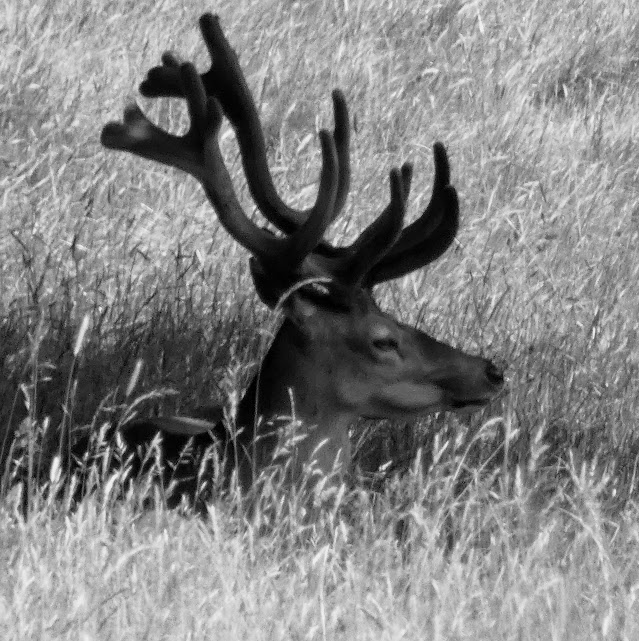
… the next a mature red deer.

Reflections

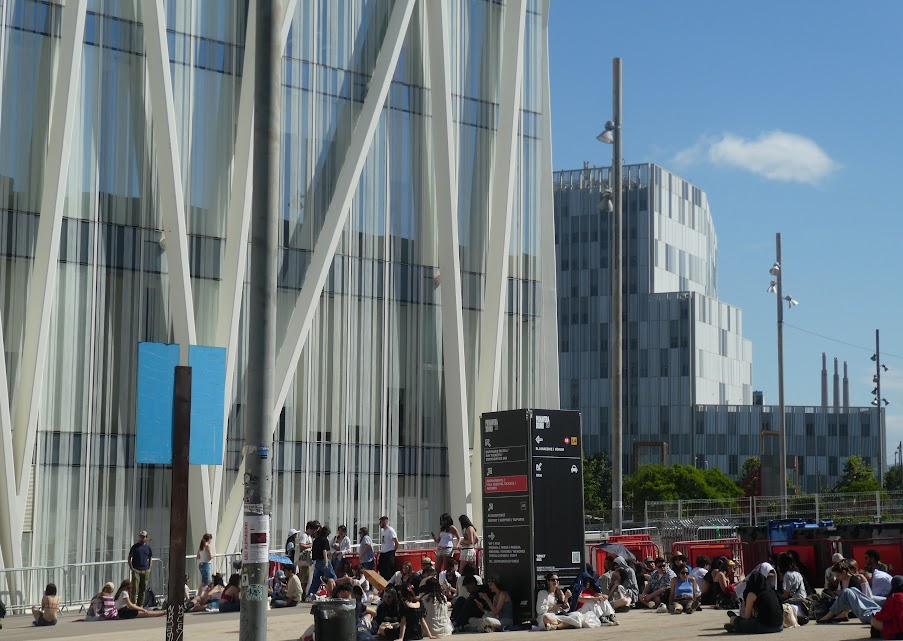
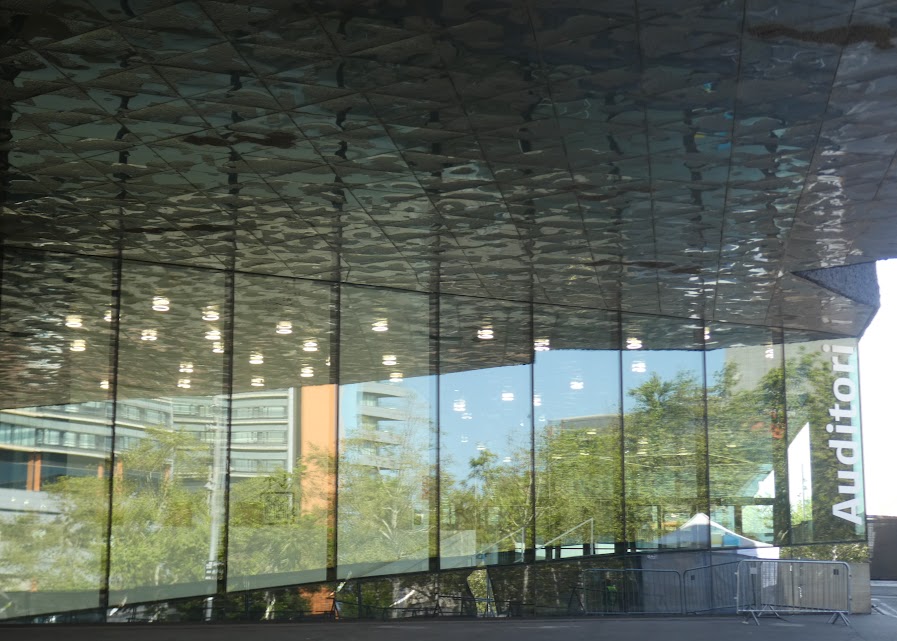
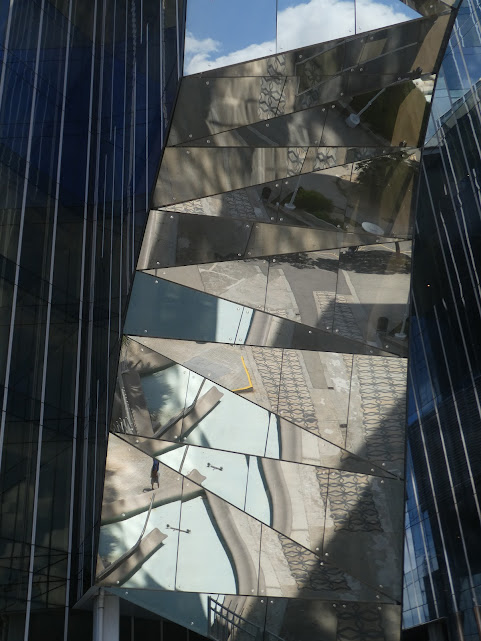
This post is just an excuse to share a few photos from the outside of Museu de Ciències Naturals de Barcelona and the modern buildings round and about. When I went, the music festival Primavera Sound was in full swing in the evenings – Emily and Miquel had been the night before – so whole swathes of the area were out of bounds. My plans to explore were curtailed.

So after I’d ‘done’ the museum (maybe worth a post later?) I caught a tram to the Port Olímpic.

Both areas are full of glass-clad buildings reflecting images of the space in which they stood. Connecting with them, just too late for me to pop them into Donna’s Lens-Artists Challenge: Connections. You can connect with me too – two and a half times – there I am in the last photo of all, snapping away.

For Ludwig’s Monday Window.

For Fake Flamenco

Here’s my offering this month for Rebecca of Fake Flamenco fame’s poetry challenge. If you look, you’ll see her visual prompt invites us to focus on swans, stained glass, flowers, or a family restaurant. I have chosen – er – not to focus on a swan and flowers.

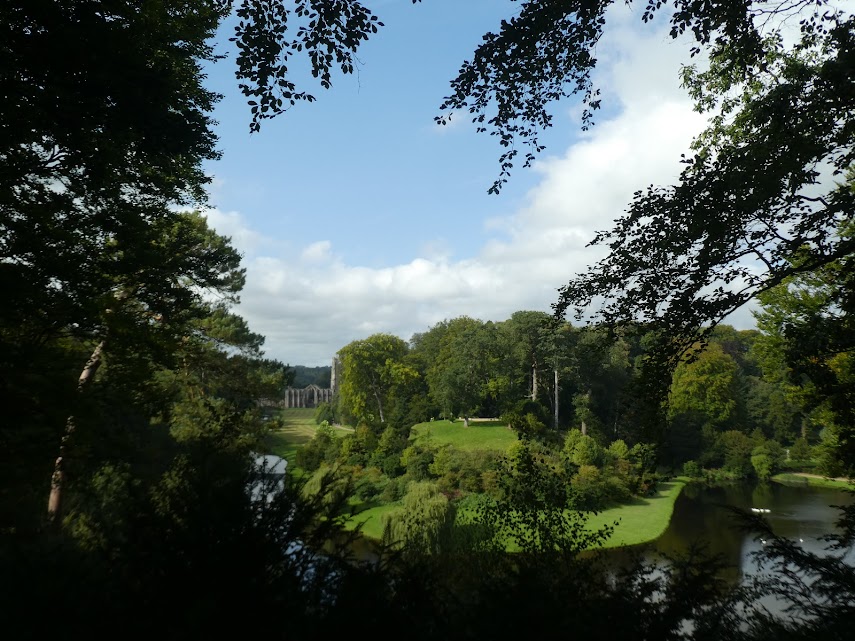
Studley Royal, early one summer’s morning

In summer, the gardens here
refrain from flowers.
Instead the trees, the hedges, lawns are
verdant, grassy, leafy, viridescent.

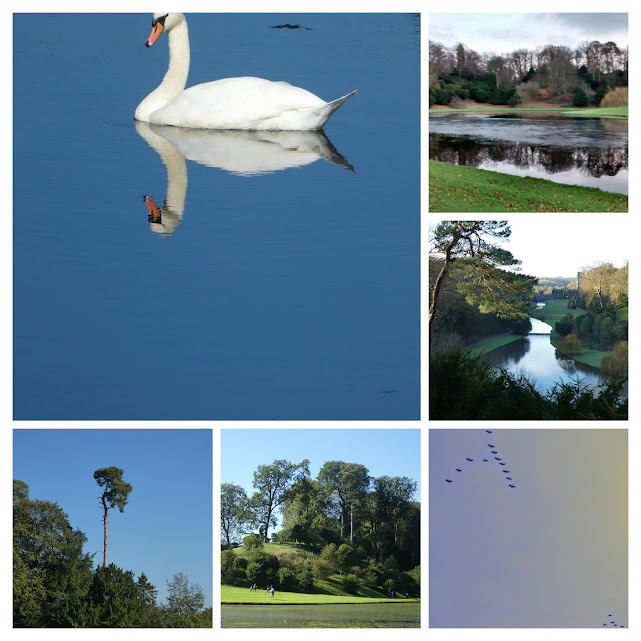
A swan glides silently along the Skell.
Birds carol, chirp & chatter.
Here is serenity and peace.

I have no idea why the swan’s head has been partly chopped off . It was there before …

Looking at Them Looking at Us

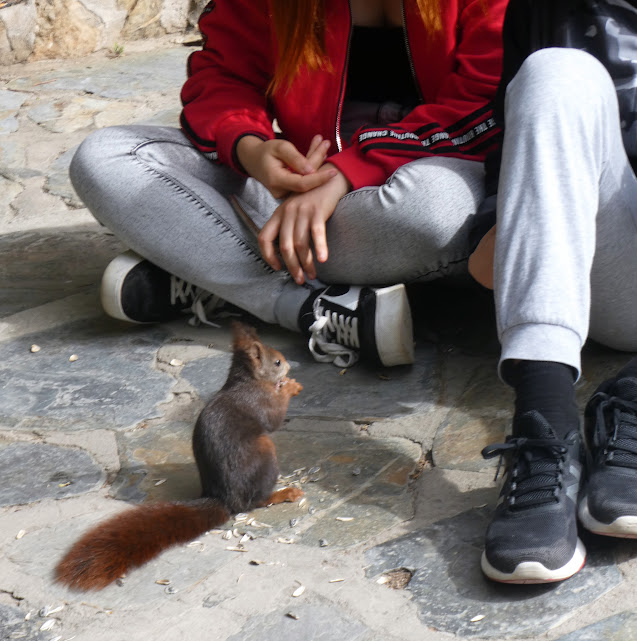
This week, for the Lens-Artists Challenge, Donna asks us to look for the connections we make in our lives. I’m going short and fairly light-hearted by looking at some of our connections with animal life. That feature photo, for instance, shows two children delighted by their squirrel companion in Málaga, while he is equally pleased about the free sunflower seeds.

Less pleased are these birds: an Arctic tern and a greylag goose. Both are warning me – or any other pesky human in the area – to leave well alone as far as their young chicks or goslings are concerned.

All my other images come from Down at the Farm.

Here are three curious creatures – two pigs and a cow – wanting to know if those human have anything to offer …

… while this small boy is pleased that the cow is willing to accept a mouthful of hay from him.

We have sheep living next door. Unusually, they’re rather fond of human company, and canter across to the fence hopefully whenever they see me pass. It’s all Cupboard Love of course, but I’m daft enough to fall for it and try to have a few cabbage stalks or something about my person to give to them.

And here’s a young girl desperately trying to make a friend of a hen. Who isn’t quite so sure.

For my last image, we’ll leave the farmyard in favour of the deer park at Studley Royal. The deer are as likely to be watching us as we are them. You can never quite trust humans, they think.

Just Looking …

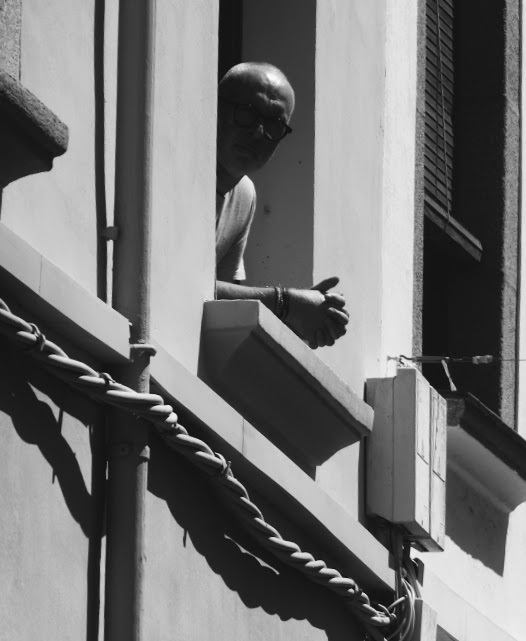
There were times during my recent trip to Spain when I was part of a street-side audience. But there were those who had a prime viewing spot. They lived in an apartment immediately above the action. I have a few shots of them peering down at the events below.

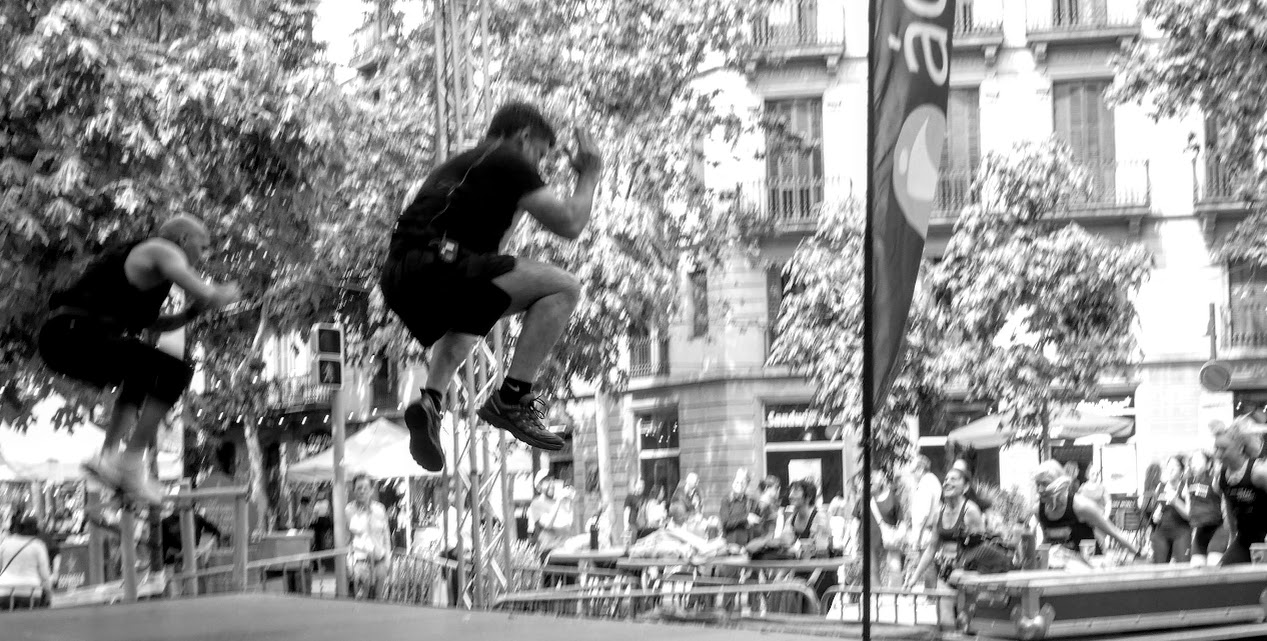
On my first Saturday, we popped over to Barcelona, for a neighbourhood festival: La Festa Major de la Esquerra de l’Exeimple. Early in the morning (well, early for Spain) we happened upon a communal keep-fit session. So did this older inhabitant, who chose to maintain her distance.

This is what she was missing:

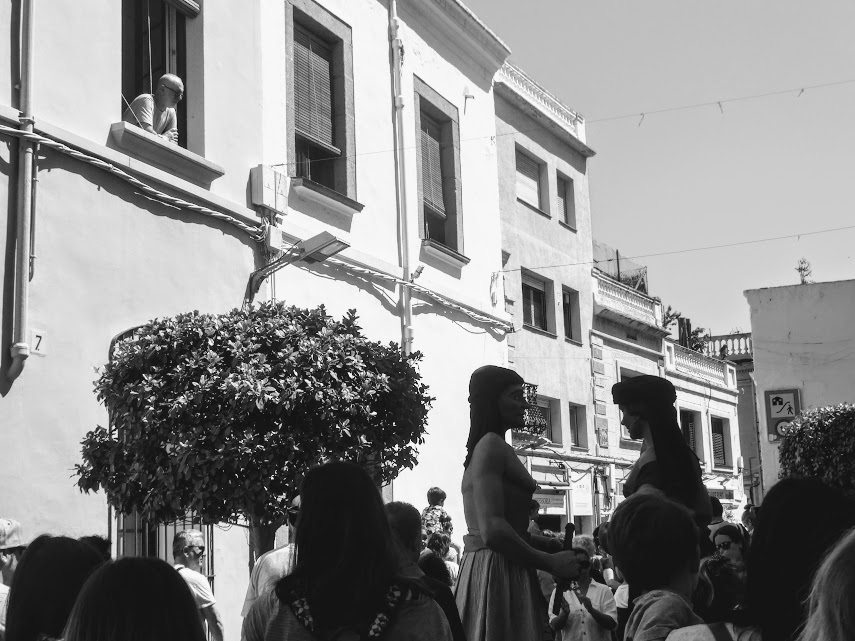
Then the next weekend, nearer home, was Rebombori, which I reported on here. As the gegants plodded through the streets, at least one chap had a ringside view.

And when they arrived in the town square, one set of young people had the best view of all:

My header photo is another from the Festa Major, when we were all ‘just looking’ at the Gegants de la Pedrera, the neighbourhood’s very own gegants, celebrating Antoni Gaudí, whose buildings are generously scattered throughout the area. And indeed at the locals who were adding a bit of colour (if not in this photo) by dressing up quite splendidly in Edwardian costume.

For Leanne’s Monochrome Madness, hosted this week by Sarah of Travel with Me.

Water, Water Everywhere … Perfect for a Dog Walk

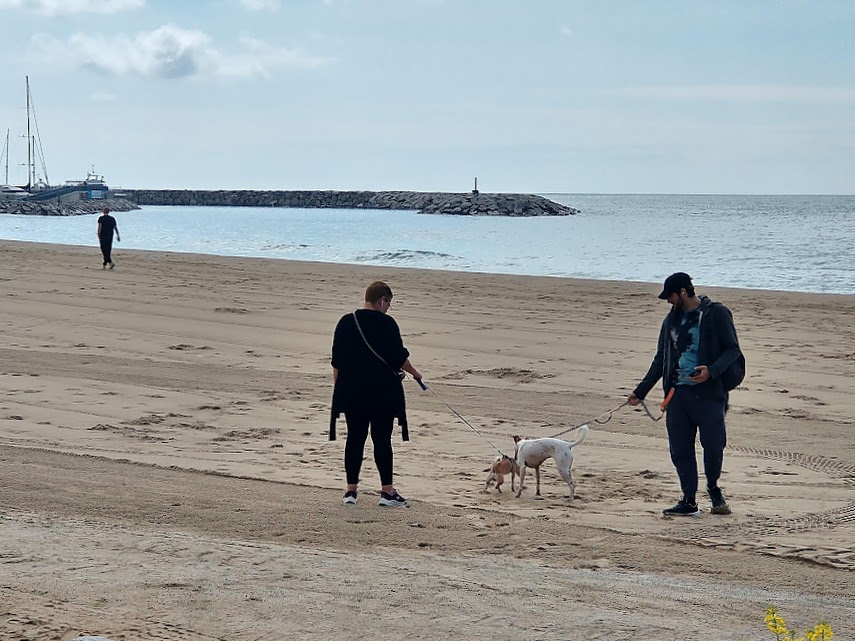
An early morning walk on the beach in Premià guarantees you’ll see the dog-walkers out in force. Perfect for that all-important daily exercise, for catching up with your friends, and for getting in some scrolling-time.

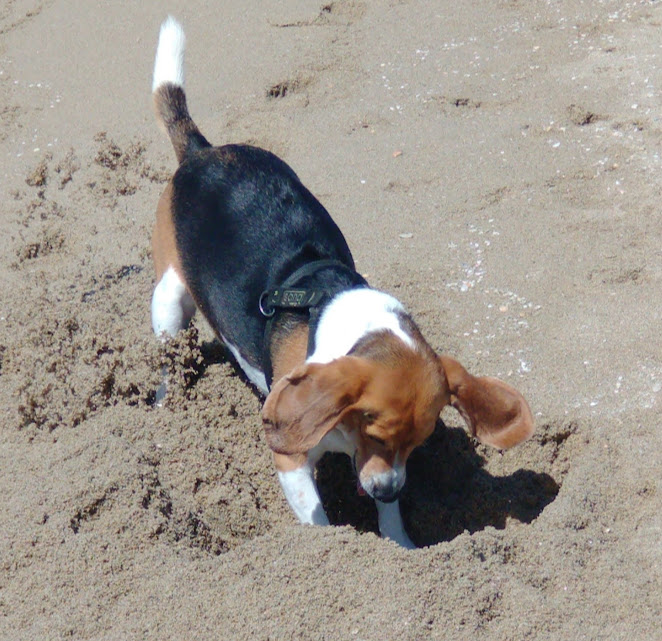
If I keep digging, I’m bound to strike water …

For Jez’s Water, Water Everywhere.

A History of a Flight in Ten Photos

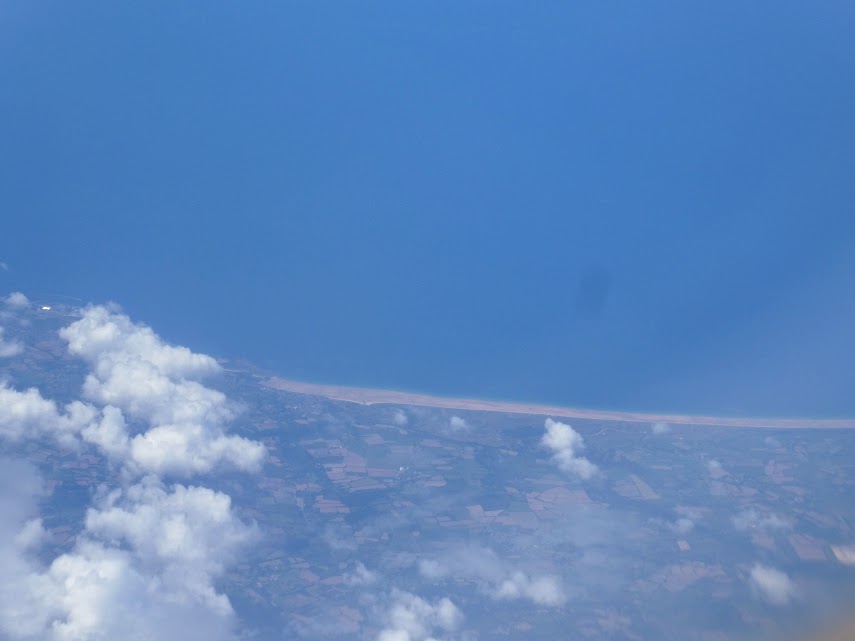
My flight home from Barcelona the other day was remarkable for two reasons. For one, I had a window seat; and for two, the earth below was visible almost every mile of the way. Here’s the story of a journey.

Oh, and here’s an eleventh photo, from terra firma: alongside the (static) travelator at Manchester Airport.

Sant Cristòfol de Premià

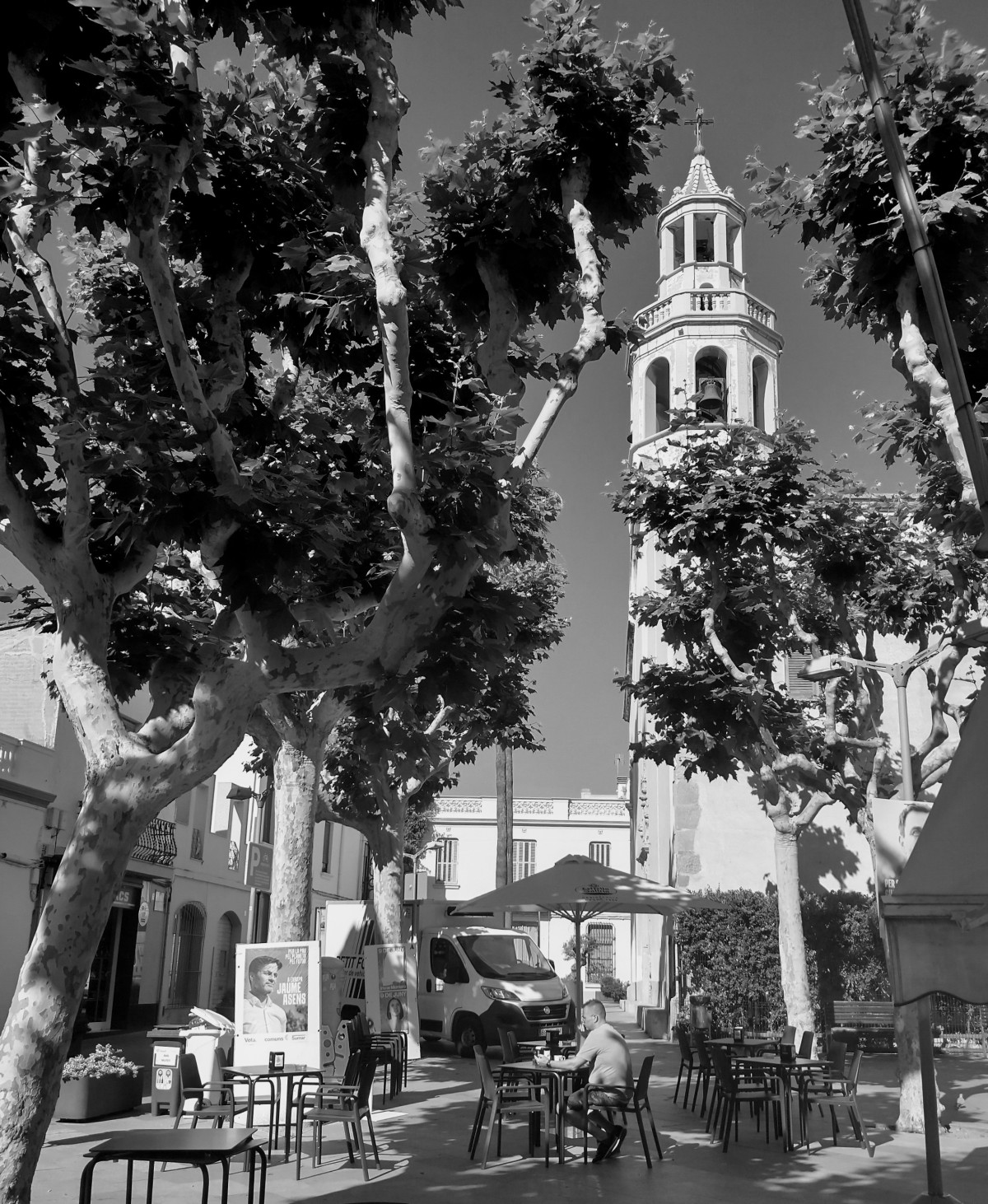
My last day in Premià for the time being, so of course I need a quick walk through my favourite square in town. The oldest church is here: though all is not as it seems. As you’ve probably guessed, it dates from the 18th century. As you probably haven’t guessed, this building is a copy of the original, which was completely destroyed by Franco’s forces during the Spanish Civil War. It’s been rebuilt: an exact copy. So here’s a single church with a double history.

For Leanne’s Monochrome Madness.