Moody Autumn

On Tuesday morning, I was quietly dreading my shift as volunteer Roaming Ranger in Studley Royal Deer Park. ‘Raining’ was an understatement. As I was driving over, the wipers sliced savagely across the windscreen, ineffectually sweeping away the rivers of rainwater cascading over the car. Signing in, we volunteers on various parts of the estate commiserated wanly with each other, and went our separate ways.

But outside, the rain had suddenly and unexpectedly decided to stop. Instead, familiar trees, now turning autumn gold and russset could just be perceived through the mist. A familiar autumn scene, especially here where we have three rivers in town to add to the general miasma of an October or November day.

Much later in the morning, as I was completing my shift in a much cheerier frame of mind, autumn’s third and best mood showed itself. Omnipresent autumn colour in the form of leaves cascaded to my feet to be eagerly shuffled and crunched through as I willingly connected with my inner child.

I offer a selection of photos to illustrate these different moods. I didn’t take my camera with me on Tuesday. The weather and the forecast were so very poor I just didn’t dare expose the poor thing to the elements. More fool me, to believe the weather forecast.

My featured photo is looking through our kitchen window on Tuesday morning. There’s more of the same on the way …

For Ann-Christine’s Lens-Artists Challenge #319: Setting a Mood

Six Degrees of Separation: from Long Island to A Girl’s Guide to Winning the War

On the first Saturday of every month, a book is chosen as a starting point and linked to six other books to form a chain. Readers and bloggers are invited to join in by creating their own ‘chain’ leading from the selected book.

Kate: Books are my Favourite and Best

I haven’t managed to read this month’s choice yet: Long Island by Colm Tóibín. I want to, because I loved its precursor, Brooklyn.

It’s about a young Irish woman who leaves Ireland to have a fresh start in America. I’ll begin my chain with a young Irish woman who leaves Ireland to have a fresh start in London. As told in Christine Dwyer Hickey‘s Our London Lives. This could easily turn out to be my Book of the Year. It features three main characters: Millie, who’s run away from Ireland; Pip, an aspiring boxer who drinks at the pub where Millie finds work; and London itself, seen at its best and its worst – its vibrancy, its diversity, but also its expense, its violence and its diminution as a community in the face of capitalist redevelopment.The chapters pass between Millie and Pip. Millie’s story begins in 1979; Pip’s not until 2017 when, a recovering alcoholic, he’s just been released from prison. We don’t read a continuous narrative. Rather it’s a series of vignettes, from which we are able to work out the un-narrated years for ourselves. Real events pepper the narrative: the release of the Guildford Four; the Grenfell Tower disaster, and this contrubutes to the novel’s very real sense of place. Here is a story of flawed individuals who make, and fail to make choices; who miss opportunities and fall through the cracks, but about whom we come to care. I was involved for every one of the book’s 500 pages.

My next book starts with a young girl born in London, Frida -in Flatlands, by Sue Hubbard. A quietly powerful piece of storytelling, set in the flatlands of Lincolnshire near the Wash during WWII. The narrative is divided between 12 year old Frida, evacuated to an impoverished and unfriendly farming couple whose house is also remote: and the more privileged young adult Philip, who as a consciencious objector is working as a farm labourer while developing his painting skills in his spare time. Despite their differences, the two have much in common – their loneliness, their apparent abandonment by those who should love them, their poverty. The wetlands which are their temporary home is also a character: their savage beauty, their harshness. A moving tale, well told.

My next book is also deeply rooted in the landscape, whose main character, the author, has barely moved at all. This is an intensely personal and lyrical memoir from poet Wendy Pratt. The Ghost Lake is embedded in two things: her deep connection to the part of East Yorkshire where she has lived her entire life; and the death, at the moment of her birth, of her much-wanted daughter. She focuses each chapter on a different community surrounding the Paleolake Flixton. This now-vanished lake provides an epicentre to her story. Throughout the book she dwells on its own history; and her own – though not in order. Her father’s decision not to continue the family tradition of farming; her own ‘oddity’ and inability to mix, to shine – despite her intelligence – at school; her chequered job and personal life; her conversion from working class girl to educated and successful – though always working class – career as a facilitator and poet. And always, threaded through the narrative, the much mourned dead baby daughter. A haunting, powerful and poetic memoir, bringing to life the natural world and landscape of her home patch, as well as exploring belonging, and loss.

Death is central to The World After Alice, by Lauren Aliza Green. On page one of this book, teenage Alice stands on a bridge … jumps … and dies. Then the story proper starts, 12 years later. Morgan, once Alice’s best friend is to marry Benji, Alice’s brother, after a courtship long kept secret. In a series of visits to the present day and flashbacks to the period both before and after Alice’s death, we gradually build up a picture of the turmoil her death effects in two increasingly disfunctional families and those who are closest to them – that of Alice, and that of Morgan. This is a story of family dynamics, of love, of loss, of secrets, of individuals who have lost their ability to trust, to communicate. A deftly written and immersive book, and not at all as irredeemably depressing as I have undoubtedly made it sound.

Another story about how life is complicated, and about how past events can cast a long shadow. John Boyne‘s Earth. ‘I became a different boy than the one I was supposed to be. I wanted to be a painter. I wanted to be good. I wanted to love someone, and to be loved in return. But none of those ambitions came to be.’
This is Evan, a young Irish would-be abstract painter – only he wasn’t good enough; impossibly handsome; gay. He’s a top-class football player, against his inclinations – but it brings him money and lots of it. One of his (sort of) friends in the team is Robbie, an arrogant young man whom Evan can’t take his eyes from, as heterosexual Robie is well aware of. After a party in Robbie’s flat, Evan is accused of filming his friend’s rape of a young woman. This is far from a simple narrative. It explores several themes: the long shadow of upbringing; class; homophobia; moral corruption; the way the legal system treats alleged sexual offences. In doing so, it drops several bombshells into the narrative, none more shocking than the one revealed in the last pages of the book. A thought-provoking and well-turned out read.

I’m choosing my final book, because perhaps we need to lighten up a bit. Life doesn’t always turn out as expected, but it doesn’t have to be awful. A Girl’s Guide to Winning the War, by Annie Lyons. This was an entertaining read, and the pages turned themselves easily enough. It’s about how clever, bookish but working class Peggy, and her titled side-kick Marigold become the darlings of the Ministry of Information with their writing and photographic skills, producing heart-warming books about aspects of the war as experienced by ordinary peple, whether serving in the forces or on the home front. Although I enjoyed it, I found the characterisation a bit stereotypical. Warm, loving working class family. Formal, buttoned up, emotionless public school types. Everyone however, if you look hard enough, has a Heart of Gold. A book to curl up with and race through on a foggy winter evening. And to bring us back to London, where I began my chain.

We’ve had a bit of a gallop through a series of books that in different ways touch the heart strings. Next month the chosen book is Intermezzo by Sally Rooney.

Reflections in Spain

A few weeks ago, I posted a picture of the Puente del Mar in Valencia. Today, my feature photo displays a different image of this bridge, because this week, Leanne has asked us to post reflections for Monochrome Madness .

And I’m going to stay in Spain, and take a stroll round maritime Barcelona. Yet not a watery reflection in sight.

And here are a couple taken inside the wonderful Cosmo Caixa Science Museum in the same city.

And we’ll finish where we began: at the Puente del Mar. A view from the other side of the bridge.
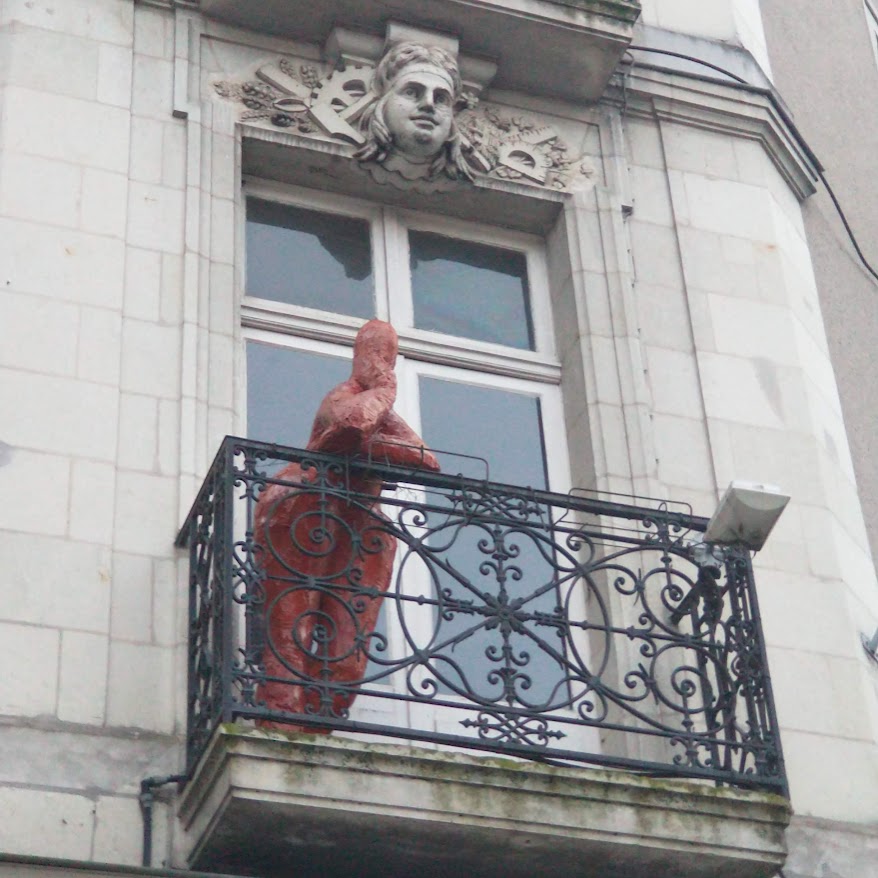
Last on the Card

It was Masham Sheep Fair at the weekend, so my camera and my phone worked overtime. More another day- maybe.

My feature photo – from my camera – is appropriate: one happy farmer at the end of the day displaying all the cups she’d won. The one below is from my phone, and shows my favourite 400 Roses taking to the floor – well, the town square.

For Brian – Bushboy’s – Last on the Card

Stones

Today sees the last Square of the month, in which Becky has challenged us to find images celebrating Seven. I’ve chosen something quintessentially English. Yes, other drystone walls are available, but the sight of them marching across the landscape, identifying ancient field and pasture patterns is something I’ll always associate with a northern English landcape.

Thank you, Becky, for a month of fun and fellowship. And Squares.

Our Little Neighbourhood

Just over ten years ago, we moved back to England from France. And we had a plan. We’d move to Ripon. It’s a smaller town than Harrogate, where we’d lived before, and which now seemed a scarily huge megalopolis (population 160, 000) compared with small-time Laroque d’Olmes (population 2,700). We were quite clear. We wanted to be in town, so we could make use of public transport and be within walking distance of shops and local amenities. But first of all, we’d rent somewhere so we could take our time choosing the right place.
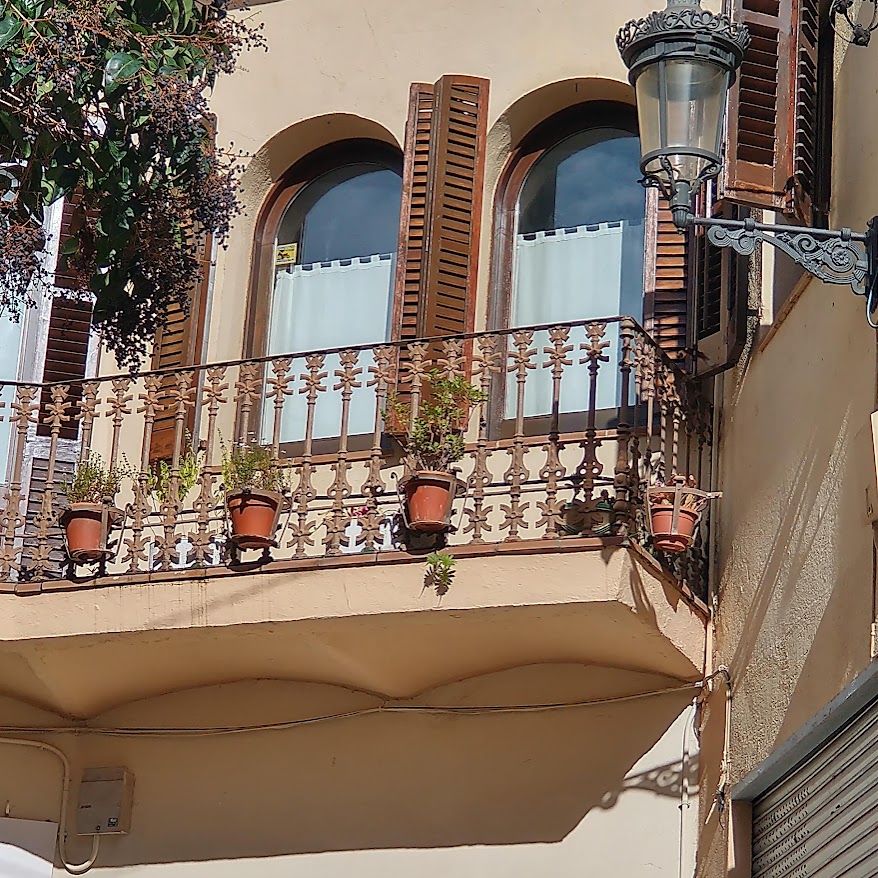
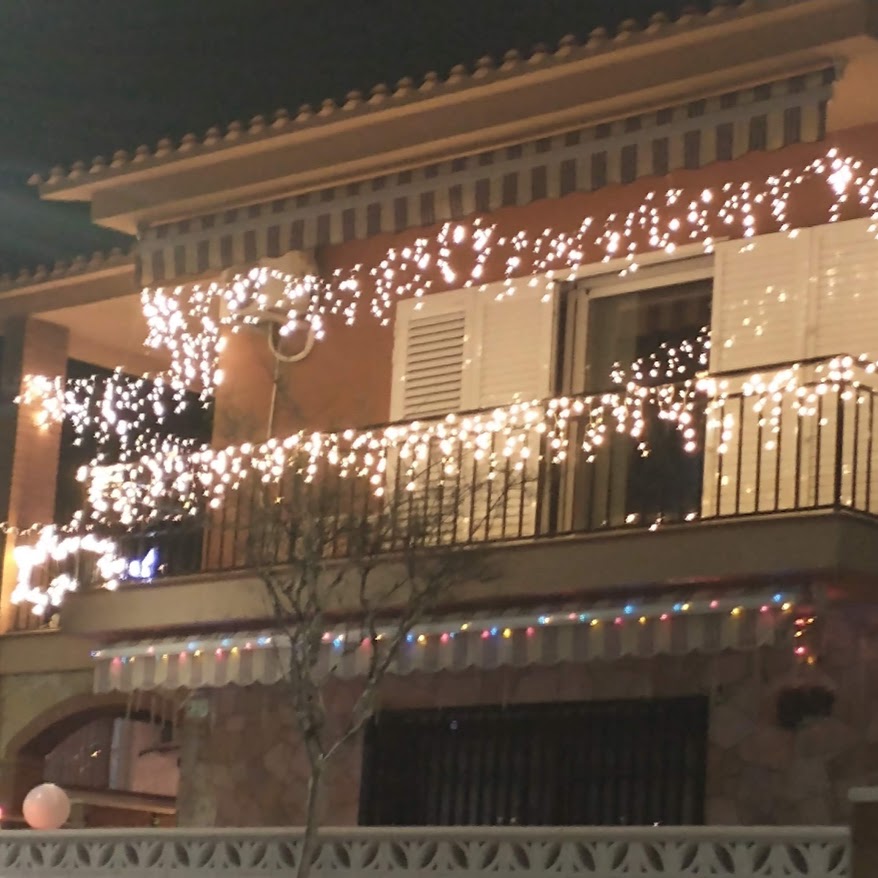
The very first place we looked at ticked none of those boxes. It was just outside a village with not so much as a shop, five miles from Ripon, has four buses a day, none in the evening and on Sunday. The place on offer was the upper floor of a house attached to a gracious 18th and 19th century country house, set among large gardens, a wooded area and pasture. We fell for it. And ten years later, we’re still here, with no plans to move on.

You can see the pitched roof of our house, attached to the bigger house next door.

The gardens, the woodland are not ours, but we can use them freely. Our landlord lives in another house on the same site, while other family members occupy the bigger house.

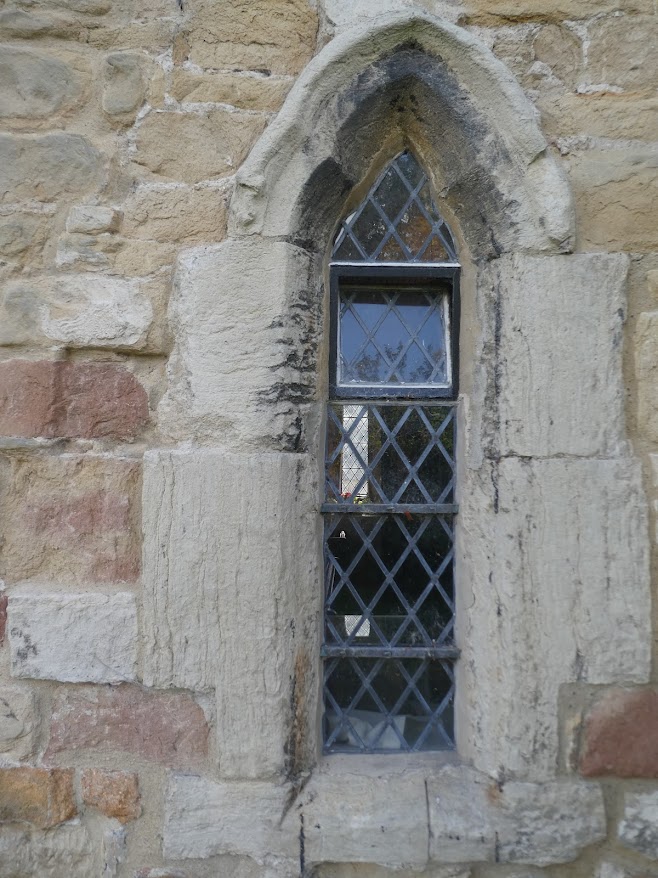
Our house is probably no longer recognisable as the dwelling it once was, but parts of the original are still here. It was occupied from the 1200s by lay brothers from Fountains Abbey, who managed sheep and some crops. They slept in a dormitory – the first floor. The house was only re-configured so that it had separate rooms in the Victorian era, when it provided living accommodation for the servants working for the residents of the house next door. So much history here, yet most of it remains unknown.

Views from various windows

Our nearest neighbours.

Why would we ever want to move?

For Tina’s Lens-Artists Challenge: Walking the Neighbourhood

Brolly Time

Any UK readers will have had plenty of occasions to recite a favourite childhood ditty this week.

Rain, rain, Go to Spain,
Never show your face again.

James Howell, an Anglo-Welsh historian added this verse to the traditional English rhyme ‘Rain, rain go away/Come again another day’, as a reminder of the failed invasion of the powerful Spanish Armada in 1588. They had intended to overthrow Queen Elizabeth I and restore Catholic rule over England.

Like now, for instance. But we’re all safely indoors, so let’s peer out at a few rainy shots. I hope you have an umbrella.

Count the brollies in these two shots, and they’ll add up to seven.

And here is an all-too-typical English shot.

For Leanne’s Monochrome Madness.

And Becky’s Seven for September.

A Bonus and Unexpected Seven

I volunteer at our local library most Monday mornings. First job of the day is the Pick List. A list of books reserved by readers in other parts of the county and held in our branch is circulated for types like me to find, then despatch in the next delivery van to the branches where they’re wanted.

And look what the first book on the list was yesterday. The Square of Sevens. Really? I knew nothing about it, but courtesy of Google, I can tell you that it’s a crowd-pleaser for lovers of historical novels, of crime novels and of thrillers. You can read all about it here.

Will Becky, Queen of Squares,put it on her reading list?

Seven Shaggy Inkcaps

Out for a walk the other day without my camera, or even my phone, there, at the edge of the woods I spotted – a ring of shaggy inkcaps*. Some had ‘gone over’, but about seven were still young and begging to be picked for lunch. I hurried home with my bounty: inkcaps famously dequilesce into a horrid black inky mess if not cooked immediately.

I sauted a small onion in butter with garlic, added the chopped inkcaps, and – voilà – mushrooms on toast for our lunch. An unexpected treat.

* Coprinus Comatus: also known as Shaggy Mane or Lawyer’s Wig Mushroom.

For Becky’s Seven for September.