I like BookCrossing. I love the idea of ‘releasing books into the wild’ for some lucky reader to find, and I love finding books in the same way. It brings me face to face with choices I wouldn’t normally consider when I’m browsing the shelves of my local bookshop, library or charity shop. Unfortunately, I’m not very good at releasing books. If I leave one in a café, an anxious waitress will scurry after me waving my latest offering. Leave them on a park bench, and the heavens open. And so on.
But I do have 3 outlets. The first was McQueen’s coffee shop in Knaresborough. For the first and only time in my history of BookCrossing, I heard from someone who’d found and enjoyed a book I’d left. She was writing to me from France. Result.
The next place is Le Rendezvous in Léran, a village near our house in Laroque. The bar is not an official BookCrossing site, but owners Marek and Shirley encourage people to browse the shelves of the overflowing bookcase and choose a book or two, leave a book or two. It’s a great resource of both English and French reading matter.
My third place is new to me. It’s in the adjacent block of flats to ours in Ripon. Calling on a friend there, I discovered a bookcase in the entrance hall to the block. Unofficial BookCrossing again: the great idea of one of my friend’s neighbours. I met her at his party on Friday and she told me her ideas of encouraging neighbours to share books has become popular, with paperbacks changing on an almost daily basis.
So now I’m deep in a gritty ‘policier’, set in Portsmouth, a town I thought until this weekend that I knew quite well. I’d never heard of Graham Hurley, or of ‘Angels passing’. Glad I have now.
Today, three friends from Lavelanet are coming to stay in Ripon (with friends of ours: we can’t cram them into our tiny flat). They’re members of Découverte Terres Lointaines coming to Discover Yorkshire in Six Days. Over the next few months, you’ll find out why.
But Yorkshire in 6 days? That’s quite a challenge isn’t it? Especially as it would be good to show something of what the Ariège and Yorkshire have in common: dairy and sheep farming, a textile industry long past its glory days, mining and quarrying ditto, a religious past coloured by conflict…. If you were Tour Guide, what would YOU choose?
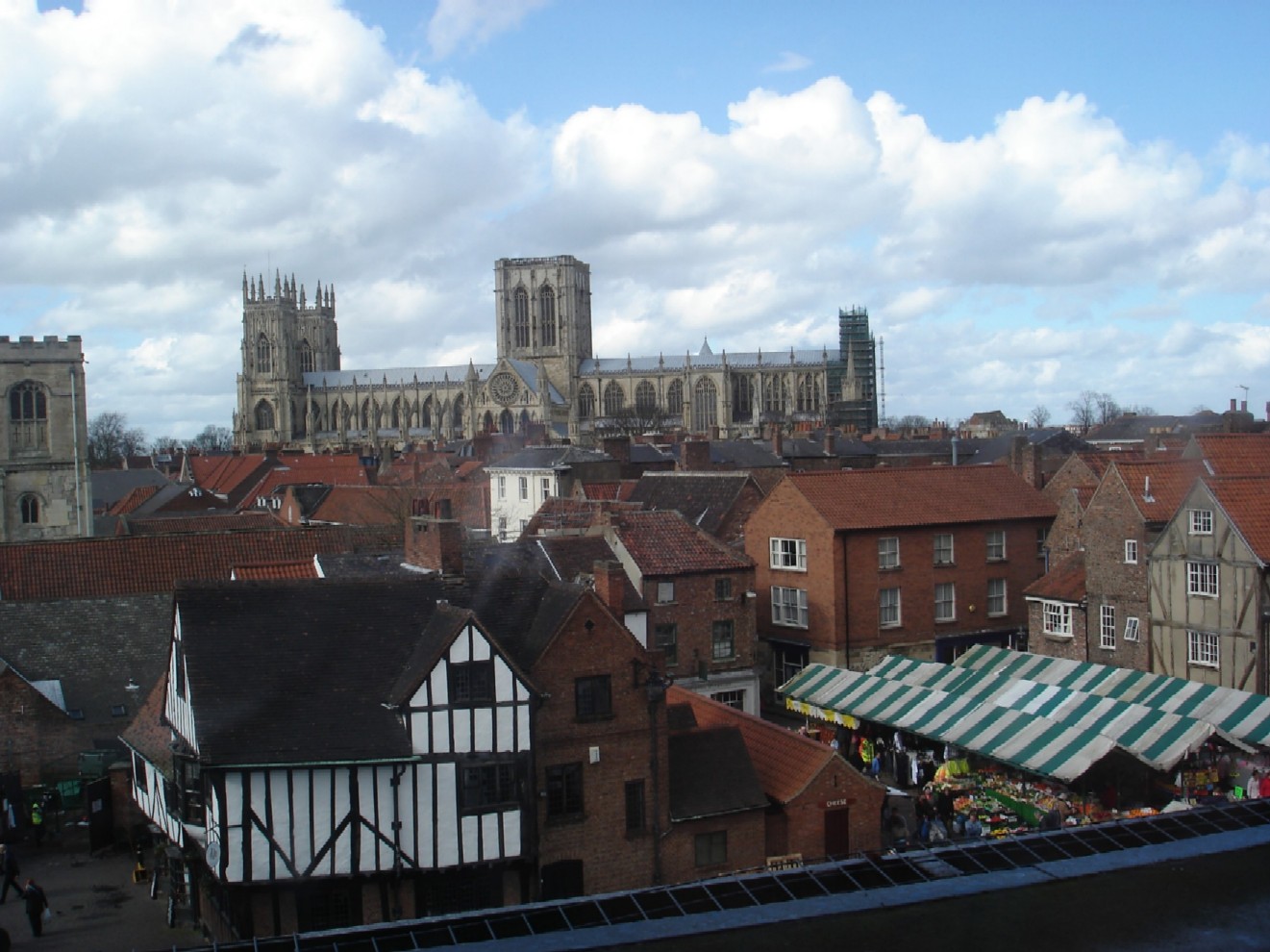
York: The Romans, the Vikings have all been here: a day won’t be long enough
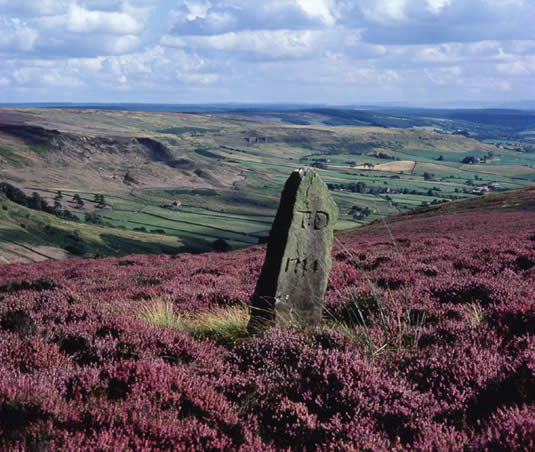
The Dales? Swaledale, Wharfedale, Nidderdale….etc. Which is your favourite?
Swaledale
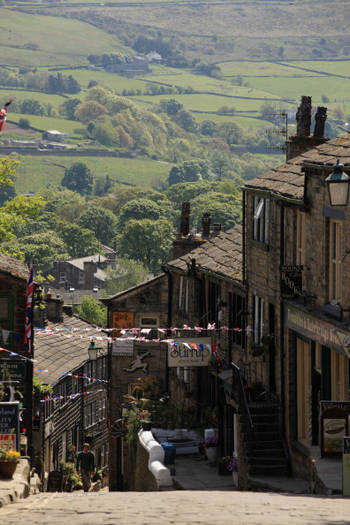
Hawarth: A chance to see a bit of the wonderfully bleak landscape, and visit the home of the Brontë family.
Hawarth
Bradford: its textile industry brought the workers from Pakistan and India who are now such a significant part of the town’s population
Textile Machinery at Bradford Industrial Museum
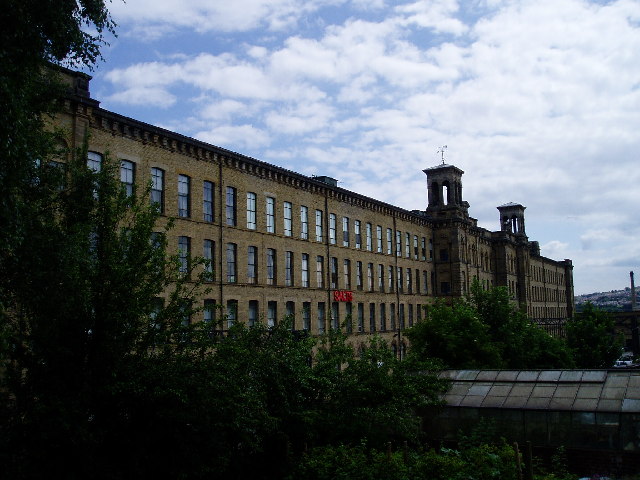
Saltaire: a model village built by philanthropist Titus Salt in the 19thcentury as a decent place for workers to live. Philanthropists like Salt built others in the UK – such as Port Sunlight on the Wirral and New Earswick inYork.
Salt’s Mill, Saltaire
North York Moors:
Rosedale, North York Moors
we’ll see the views on our way to……………
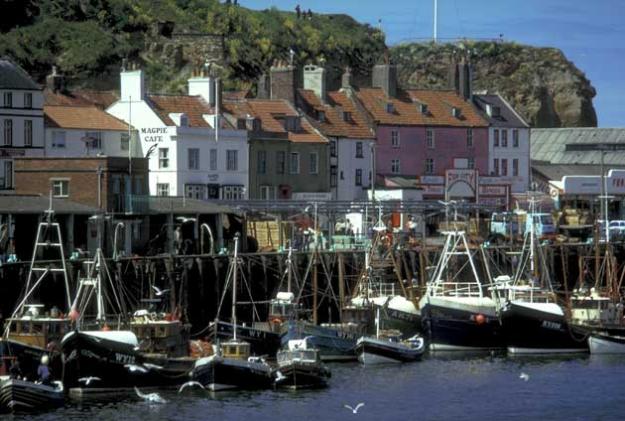
Whitby: fishing port and holiday resort
Whitby
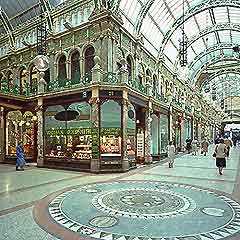
Leeds: the city centre – a mix of Victorian civic pride and modern business district.
Many of the Victorian Arcades are now an up-market shopping destination
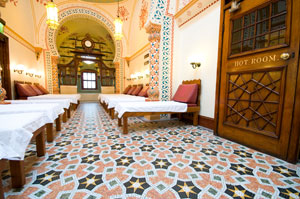
Harrogate Turkish Baths: time for us to relax and re-charge our batteries.
The Turkish Baths at Harrogate
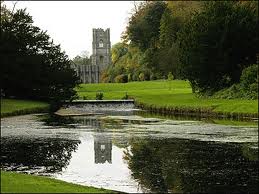
Fountains Abbey: this Cistercian monastery is, like Saltaire, a World Heritage site. And a beautiful and peaceful place.
Fountains Abbey
We’ll need to include a pub, fish and chips, preferably eaten on the seafront out of soggy paper. Curry too. But why is the totally inauthentic chicken tikka masala apparently now our national dish?
I’m so looking forward to being a tourist in my own birth county. I hope our friends enjoy it too.
When my generation graduated, back in the early 1970s, it never occurred to any of us that we wouldn’t get a half-way decent job in a field that interested us. By 2010, it was a different story. Emily’s first taste of work, post graduation, was as casual bar staff for a national pub chain. Mind you, these posts now seem to be exclusively reserved for young graduates and the occasional favoured undergraduate.
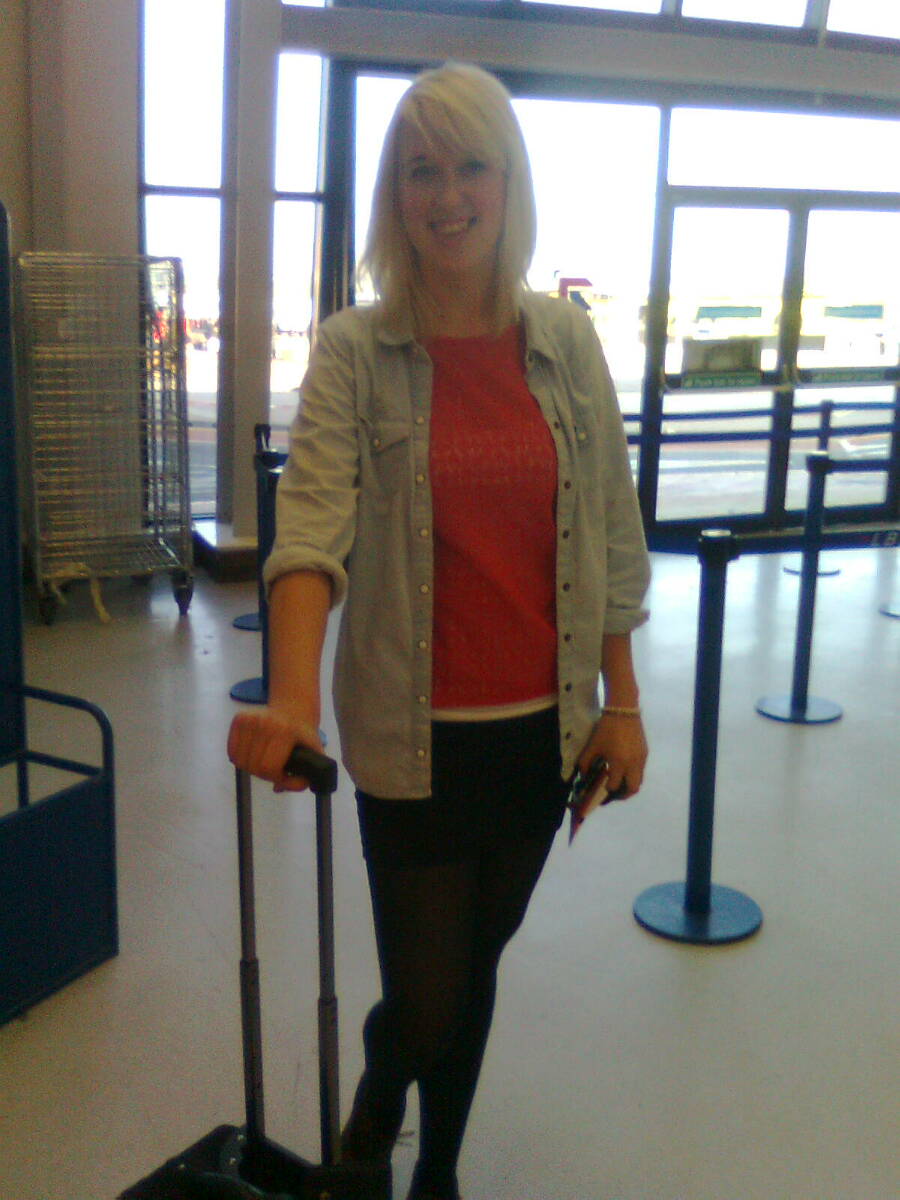
Emily all checked in and ready to go at Leeds-Bradford airport
After that, it was a bank: that was pretty soul-destroying too. Because all the time, what she really wanted to do was train as a teacher. And these days, you need lots of voluntary experience before they’ll even consider you. How do you get that alongside a day-job?
Then she had a lucky break. She spotted an advert from CAPS, an organisation supplying English Language Assistants to schools in Barcelona. She applied. She was accepted. And today – she went. She’s flying over, and she and the other successful candidates will spend a day (and a night) together, being briefed, before going tomorrow to meet the families they’ll be staying with. School on Monday.
She’s looking forward to meeting the people she’s staying with. She’ll be trading spending time with her six year old boy twin nephews, for staying with another family with 6 year old twins – girls this time. She’s wondering if the Spanish she’s managed to learn over the last few weeks will be any help at all – or whether only Catalan will do. She’s looking forward to being in Spain, to finding out if teaching really is for her, but most of all to the Big Barcelona Adventure she’s already started writing about in her blog
And we’re looking forward to a few excuses to go and visit her there.
Sagrada Familia: bound to be on Emily's visiting list
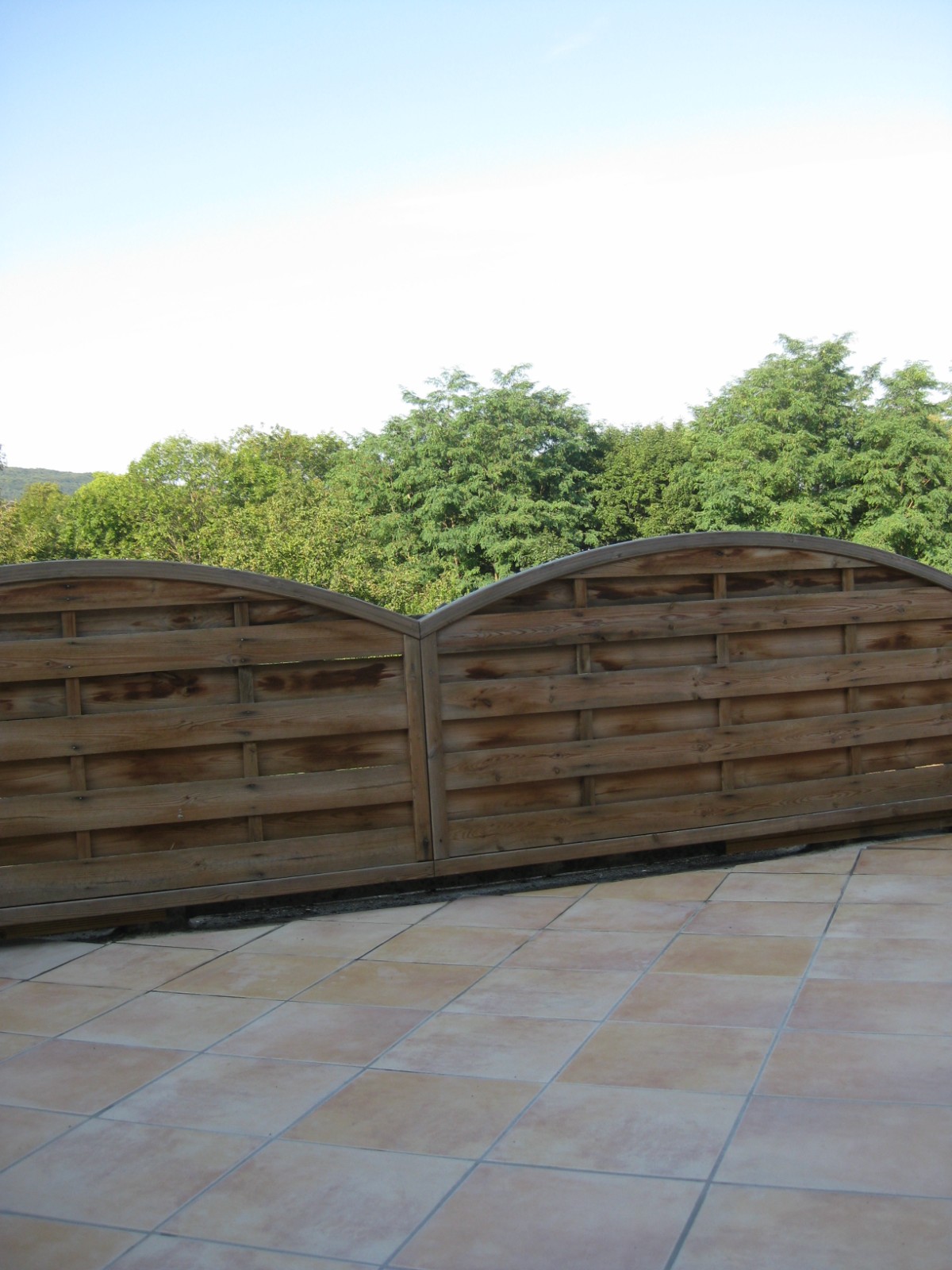
The floor tiling on the roof terrace. It’s finished. It’s usable. It’s looking rather good: ready to be kitted out with garden furniture and a few well-chosen plants. All that’s for sure. The other thing that’s certain is that neither of us will willingly do floor tiling ever again. Never. And Vicki and Marc aren’t all that keen either.
After cleaning the surface carefully, there’s the tile cement to mix. Even with a mixer attachment on the electric drill, this is punishing work. Ask Malcolm. In the manner of Goldilocks’ porridge, the mix must be not too thick, not too thin, but Just Right.
Job done
Then the laying of the tiles themselves. This involves long hours on creaking knees and dermatitis from the cement: gloves and tile laying don’t mix. Is the tile level? The spirit level says ‘no’. Yank it up and start again. Keep it the right distance from its neighbours with spacers which somehow get clarted up with cement. Work quickly! The sun is getting high in the sky, and soon we’ll have to knock off and erect complicated shelters so the cement doesn’t dry too quickly and crack.
Are the tiles clean of cement? No? Get it off quickly, before it sets and resists all attempts to shift it. Stop! Don’t press too hard – you’re de-stabilising the tiles! Oh. Too late.
Finished at last. Now we can uncurl our protesting bodies, clean the tools, and knock off for a couple of days while the cement sets good and hard.
Noooooo. Unexpected rain threatens. Quick! Improvise plastic sheeting, lengths of wood to prevent water getting under those tiles……
But now, 48 hours later, we’re ready to do the grouting. Same story. Grout mix is difficult to get Just Right, and it goes off in about 2 hours. Get the team going – one to force grout between the tiles, the other to clear, clean and check there are no air bubbles, troughs, mounds…..
By now, we feel as if we’ve been on a long pilgrimage on our knees in the manner of a medieval penitent, weary, sore and with aching and crippled backs as well.
Anyway, it’s done. Are we suffused with a satisfied glow of pleasure at a job well done? No, we’re simply relieved. Next time we come across a floor tiling job chez nous, we might just have to settle for lino.
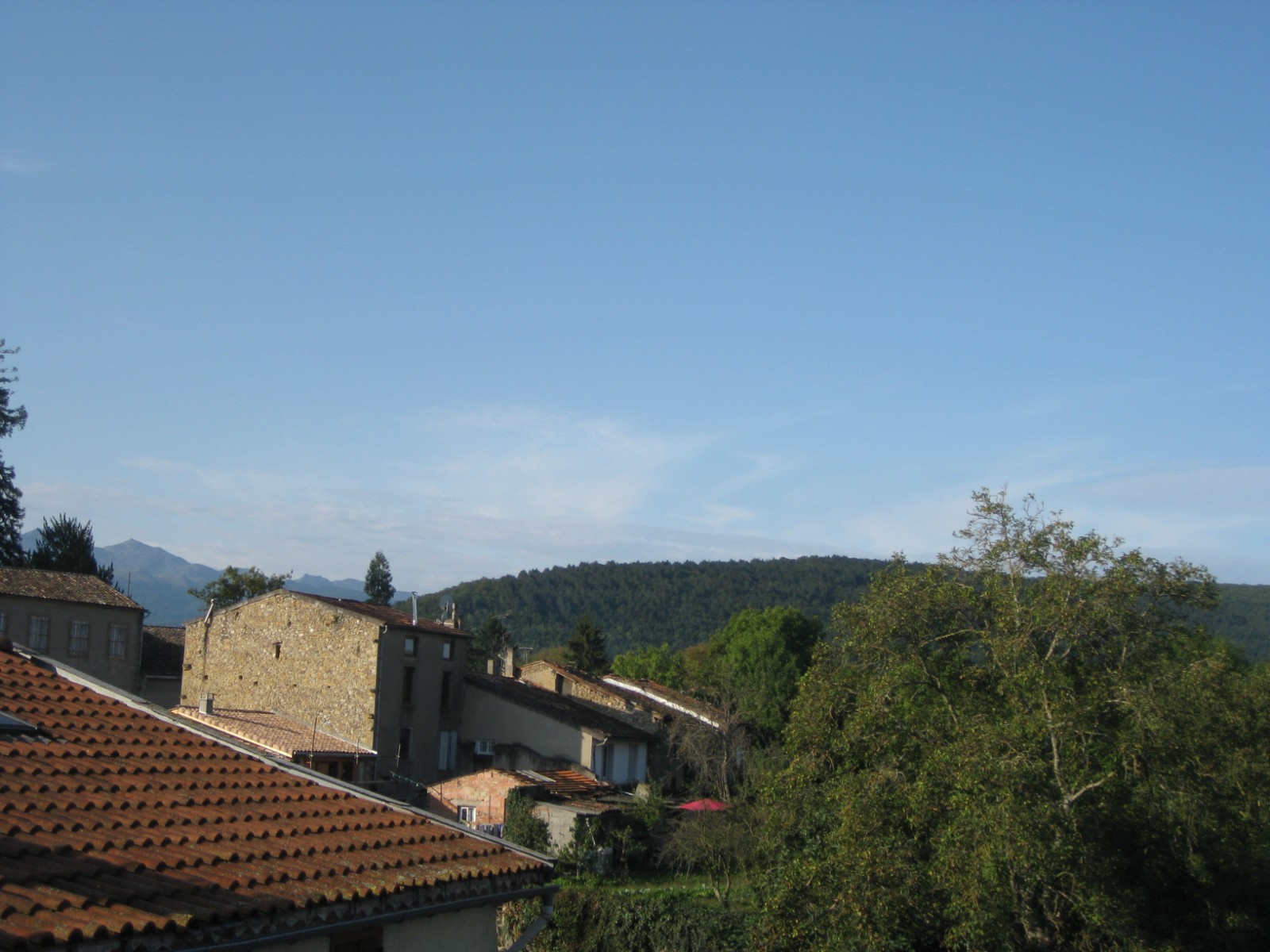
The view as we take morning coffee on the smart new terrace.
Our wonderful HelpXers, Vicki and Marc, enjoyed spending time in the kitchen. They cooked and cooked and made memorable meals: here are just three.
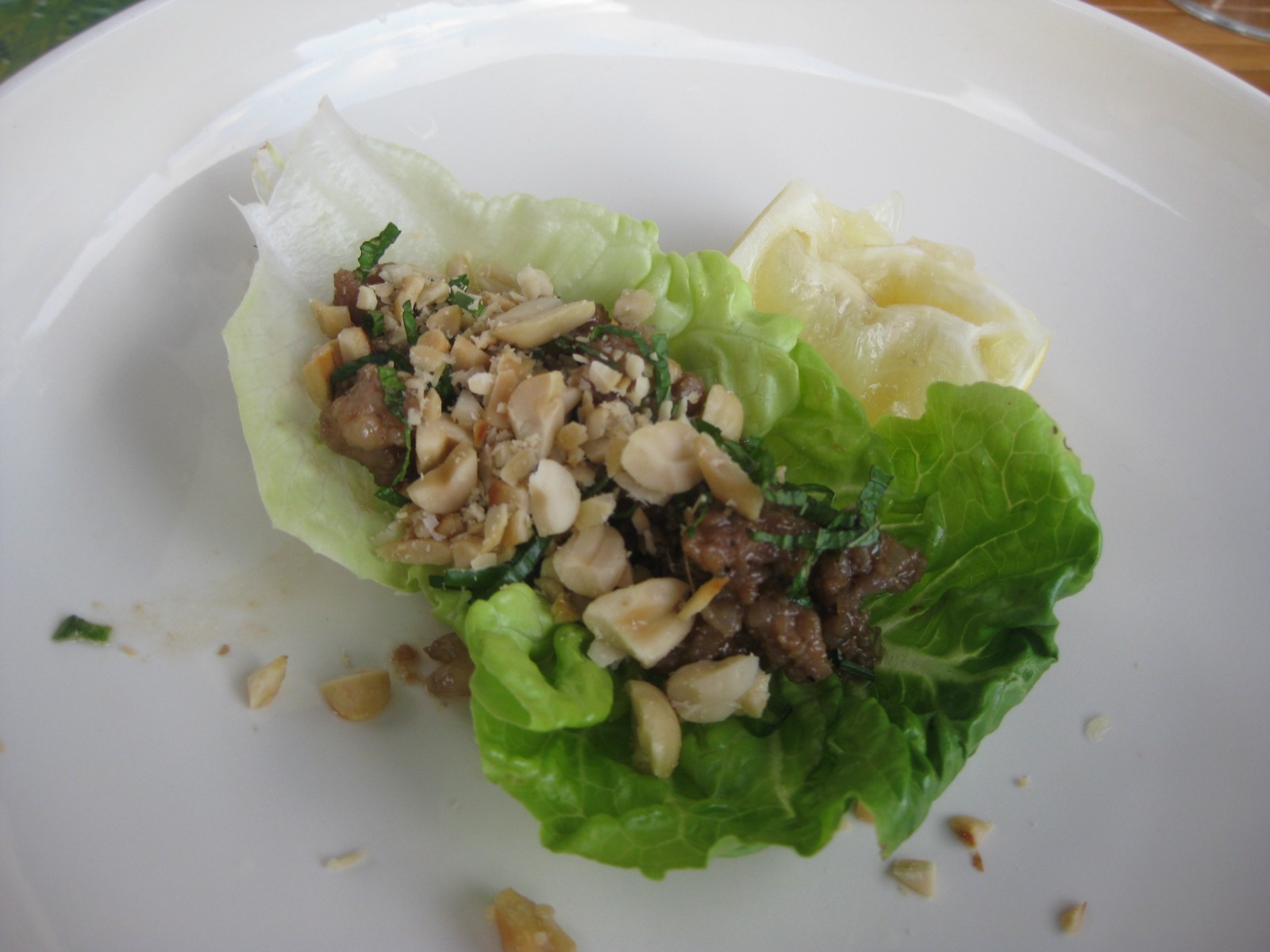
Vicki was keen to introduce us to this Chinese dish. It’s fun to eat: use lettuce ‘wrapping’ to make your own pork parcels up, then garnish them with what you fancy from the bits and bobs on the side.
Sang choy bow
1 tbsp sunflower oil
Large piece fresh ginger, peeled and grated
2 cloves of garlic, crushed
2 red chillies , deseeded and finely sliced
500g minced pork
85 g light brown sugar
2 tbsp fish sauce
Juice from 1 lime
2 finely shredded lime leaves
Mix of lettuce leaves
Large handful mint and coriander leaves, very roughly chopped
handful toasted peanuts , roughly chopped
2 shallots finely sliced into rings shallots
1 lime, cut into wedges
Heat the oil in a large frying pan. Fry the ginger, garlic and chillies for 1 min. Add the mince, then cook on a high heat until golden brown, breaking it up with a wooden spoon as you go. Sprinkle over the brown sugar, fish sauce, lime juice and shredded lime leaves, then cook everything down until sticky.
Tip the mince into a serving bowl, then serve with a bowl of lettuce leaves for wrapping the mince in; the herbs, shallots and peanuts for scattering over; and the lime wedges for squeezing.
Sang choy bow: a little lettuce parcel just waiting to be eaten
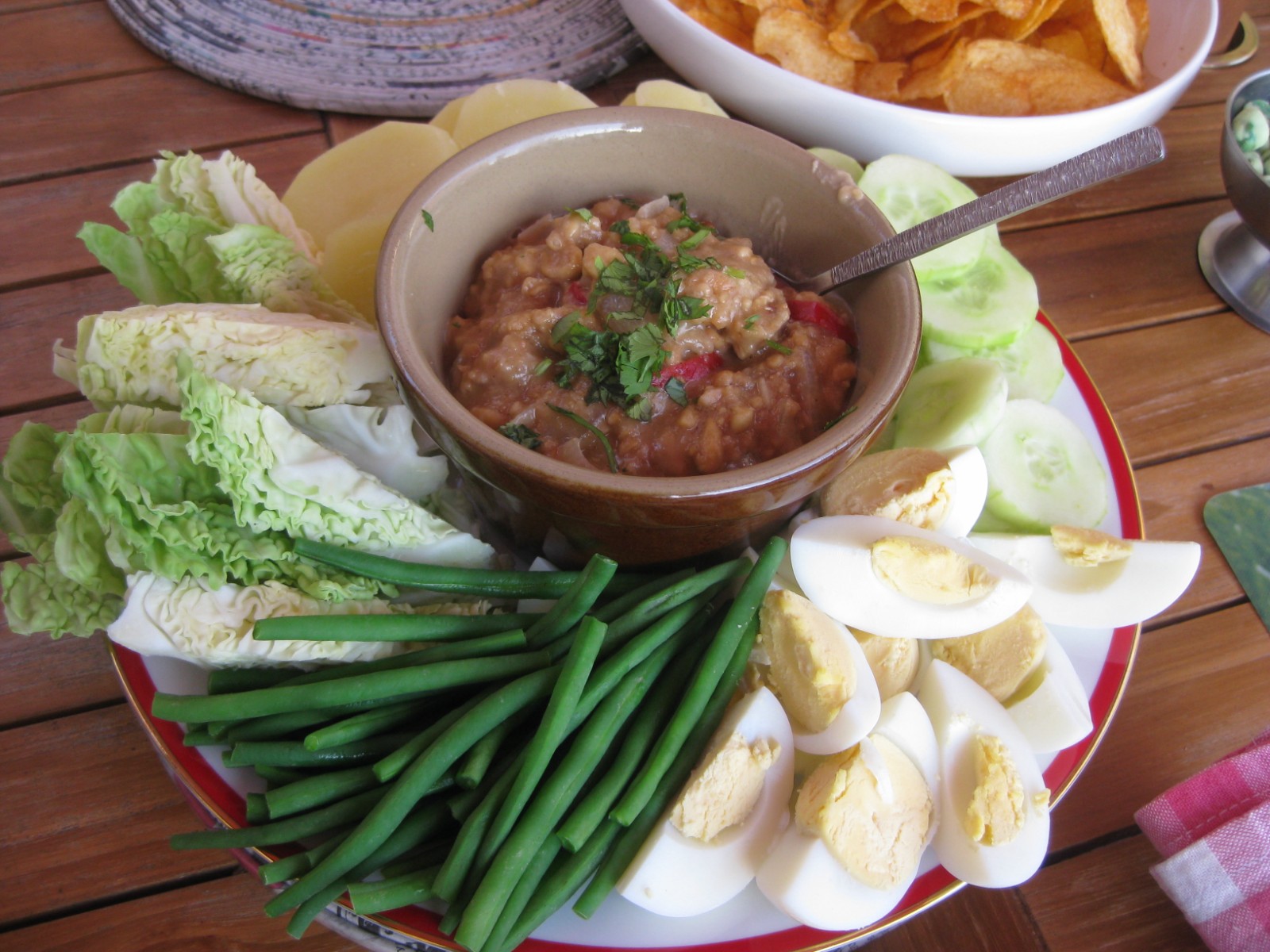
On their last evening, the night of the ‘Asian tapas-Smörgåsbord’ , Marc introduced us to the Vietnamese answer to crudités, Gado gado. I wasn’t watching while he was cooking, and I forgot to get his recipe from him, so … Marc, if you’re reading … is this version OK?
Gado gado consists of a plate of various raw or lightly cooked vegetables to dunk into a peanut sauce. Marc served raw cabbage and cucumber, lightly steamed potato slices and french beans, and quartered hard-boiled eggs.
1 fresh green chili chopped, (use 1/2 for milder sauce, or leave it out)
Salt
200 g roughly crushed peanuts
1 teaspoon brown sugar
2 tablespoon lime juice
450ml hot water
Place the garlic cloves, green chili and salt in a mortar and pestle and pound into a paste.
In a small bowl, add the garlic paste, crushed peanuts, sugar and lime juice. Pour in hot water a little at a time, while whisking the peanut butter. Stop pouring the hot water when the peanut butter forms a smooth, dippable sauce. You may not need to use all of the hot water.
Taste the peanut sauce and adjust salt, sugar and lime juice if needed. Serve with your selection of vegetable crudités
Gado gado
Vicki found this recipe in my copy of Dennis Cotter’ s ‘Paradiso Seasons’, a wonderful vegetarian cookbook. If you explore the web, you’ll find he’s tweaked this recipe several times. The original is pretty damn’ good.
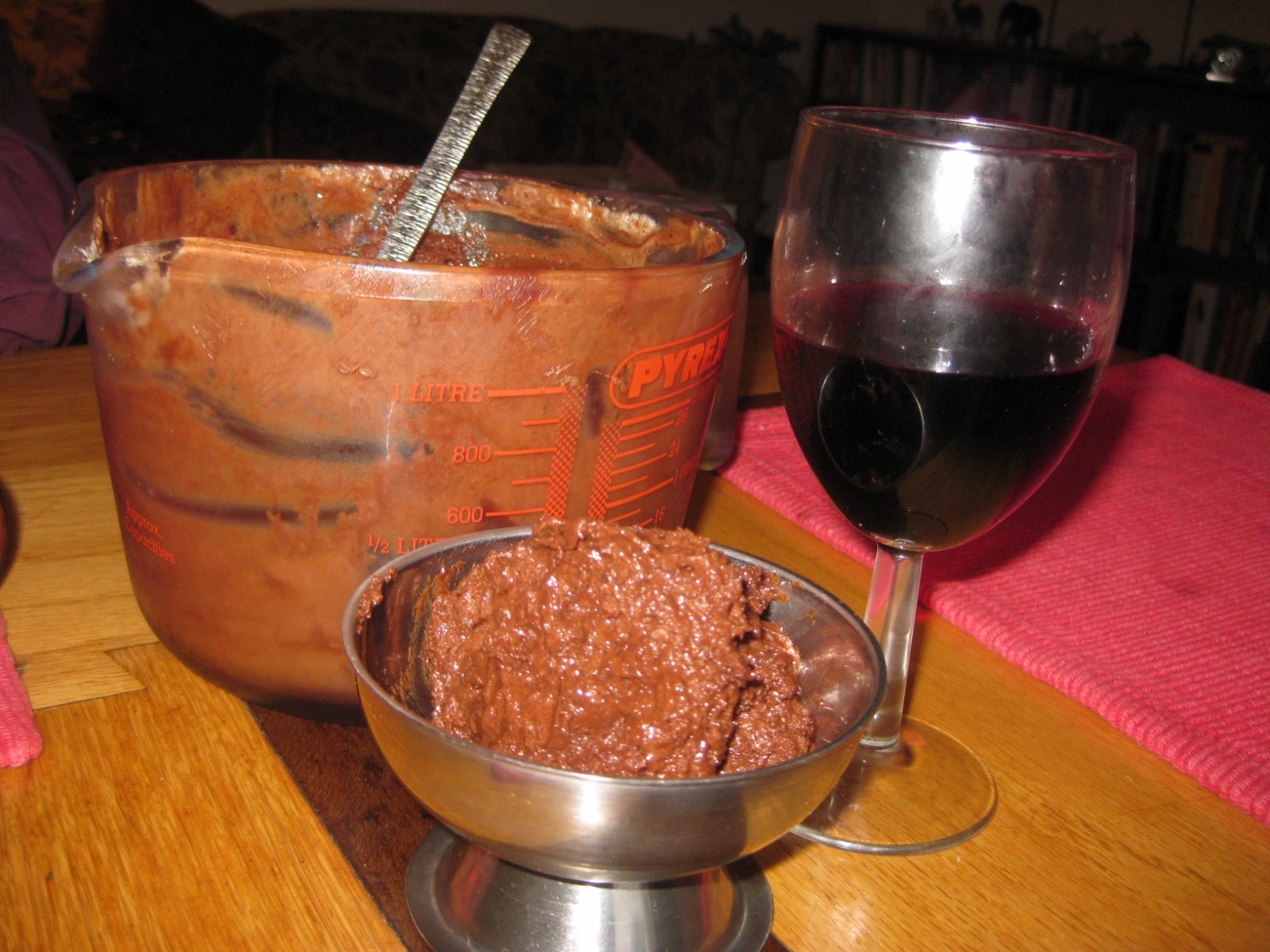
Chocolate-olive oil mousse
150g. good dark chocolate
140 ml. olive oil
4 eggs separated
125 g. golden caster sugar
(1 tbspn. Cointreau or other orange liqueur)
Pinch salt
In a bowl over a pan of simmering water, melt the chocolate and slowly stir in the olive oil. Beat the egg yolks with half the sugar until pale and fluffy. Stir in the chocolate oil mix (and Cointreau if used). Whisk the eggs with a pinch of salt until stiff, then continue whisking while adding the remaining sugar gradually in small batches. Fold the egg white mixture and put the mousse into the fridge to chill for at least four hours. It has a strong structure, and will easily keep overnight (but not if you taste it first…….)
It scarcely mattered that this chocolate mousse wasn't prettily presented: it disappeared rather quickly
Despondent about your DIY? Ground down by your garden? Then HelpX can help!
Its website says it’s ‘volunteer work in exchange for free accommodation and food on farms, backpacker hostels, lodges, horse stables and even sailing boats’. Or even places like ours, apparently.
For the past 10 days, we’ve been sharing our home with HelpX-ers Vicki – Australian – and her English husband Marc. It was a success from the very moment they landed outside our house with their laden motorbikes, fresh from working in Carcassonne and northern Italy.
Since they arrived they’ve rolled up their sleeves and cheerfully tiled and grouted most of our very awkward roof terrace, painted a stairwell, wrestled with brambles and ivy on the garden, solved computer problems…. and commandeered the kitchen.
Vicki and Marc travel the world, and many of their memories seem to be food related. So they’ve cooked southern Asian dishes like sang choy bow & gado gado and Vicki’s wonderfully decadent and not-at-all Asian chocolate mousse: recipes to follow in a later blog. The other evening – their final night – was the occasion for an ‘Asian tapas-Smörgåsbord’ of a dozen dishes masterminded by Marc.
Our memories of the week are of a happy, optimistic, funny and considerate couple who’ve worked hard and enthusiastically on our behalf, and whose company has been nothing but a pleasure. We miss them.
Voilà! The most useful word in the French language.
Here’s what happened at the baker’s this morning. Translations appear in brackets.
Me: Oh! Isn’t the pain bio ready yet?
Madame: Voilà! (Nope. Quite right)
Me: So if I call in after 9, you’ll have some? Could you please save me a loaf?
Madame: Voilà! (Yes, and yes). Would you like to pay now, then it’ll be all done and dusted?
Me: Voilà! (Makes sense. I’ll do that)
By the way, I was all grottily dressed in my oldest paint-spattered, holes-in-the-knee-ready-to-face-a-morning’s-tiling gear. This is Laroque after all: no shame in working clothes here.
Madame: You’re looking very chic today, if I may say so!
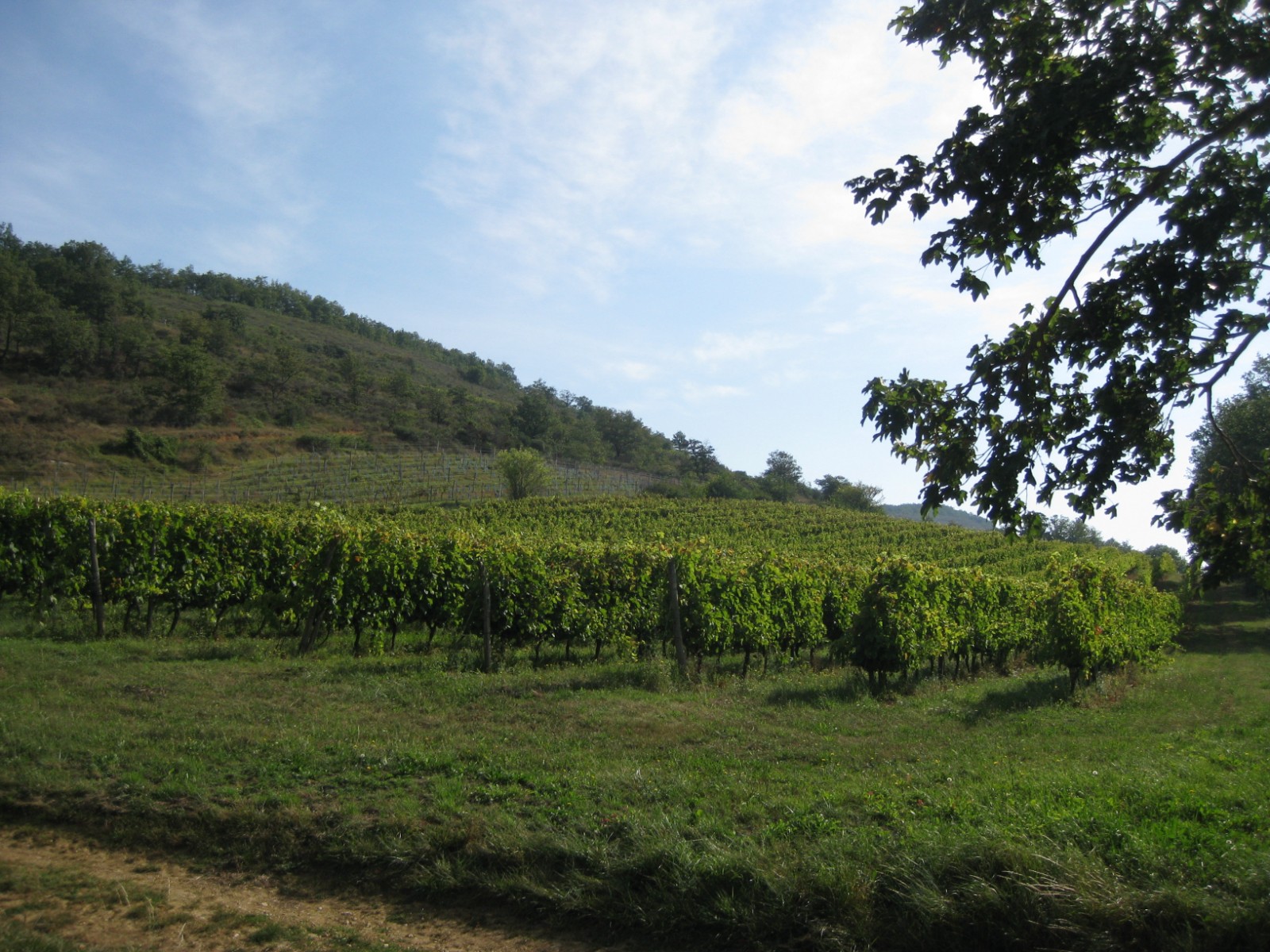
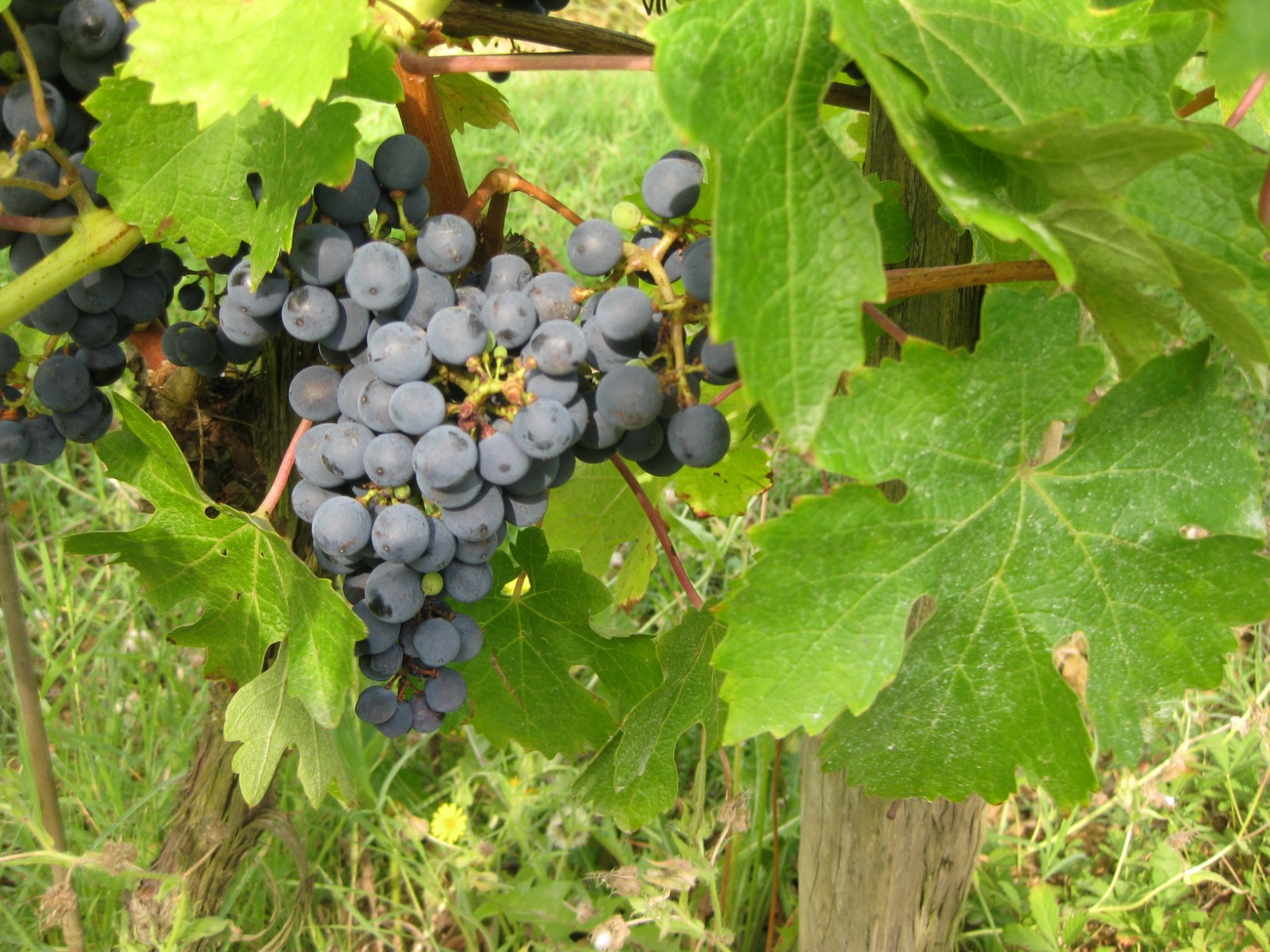
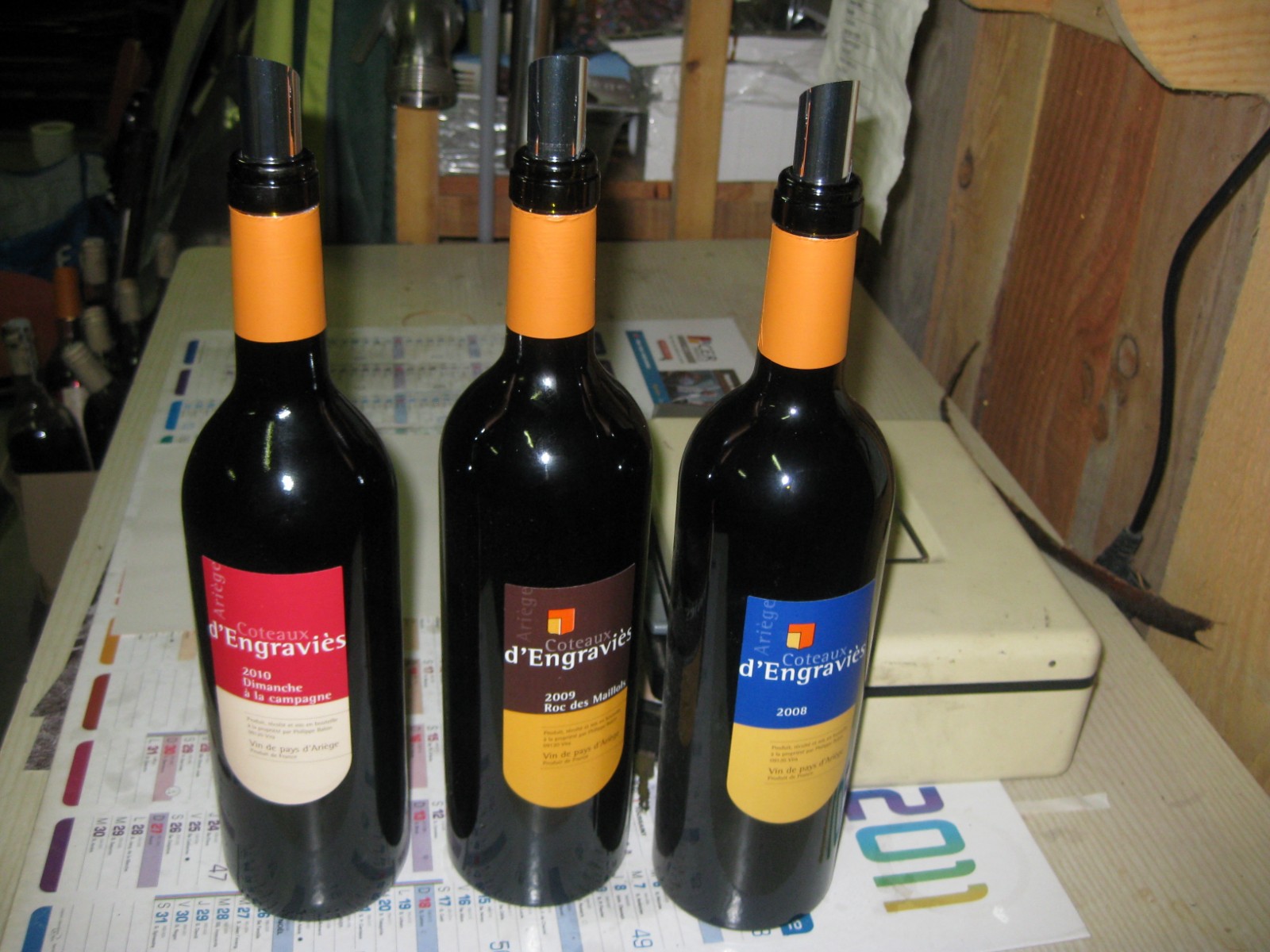
Last week, we had a morning at an organic vineyard, one of only 2 commercial vineyards in the whole of the Ariège. The vineyards at Coteaux d’Engraviès appeared on maps as long ago as 1310, and on later maps too, though eventually they disappeared. So the owner of the Domaine, Philippe Babin told us, anyway. He was the one who decided once again to cover the hillside in vines.
He introduced us to an Ariège from a time we couldn’t recognise. Now, we’re used to seeing fields of maize, sunflowers, food and fodder crops in addition to pastureland. Back in the Middle Ages, when Catharism was at its height, the area was covered in vines. Everyone produced wine for their own use. It wasn’t strong, maybe 5% or so, but it provided refreshment and nourishment for men, women and children alike. No neat rows here, the vines grew unsupported by trellising, higgledy piggledy. Over in Pamiers, from where any exportable wine was shipped, the notorious Bishop of Pamiers, later Pope, Jacques Fournier, received the taxes he imposed in the form of wine.
The Ariège was prosperous and, for the period, densely populated. Men made their living from mining and the forges, and their women and children reared stock in the high pastures. Only the Industrial Revolution, which arrived later in France than in the UK – just before the First World War in fact – put a stop to this, as the small scale of local operations were not suited to large-scale mechanisation. This, and the de-population that occurred when men failed to return from the trenches, began the Ariège’s descent into a less populated, often deprived area.
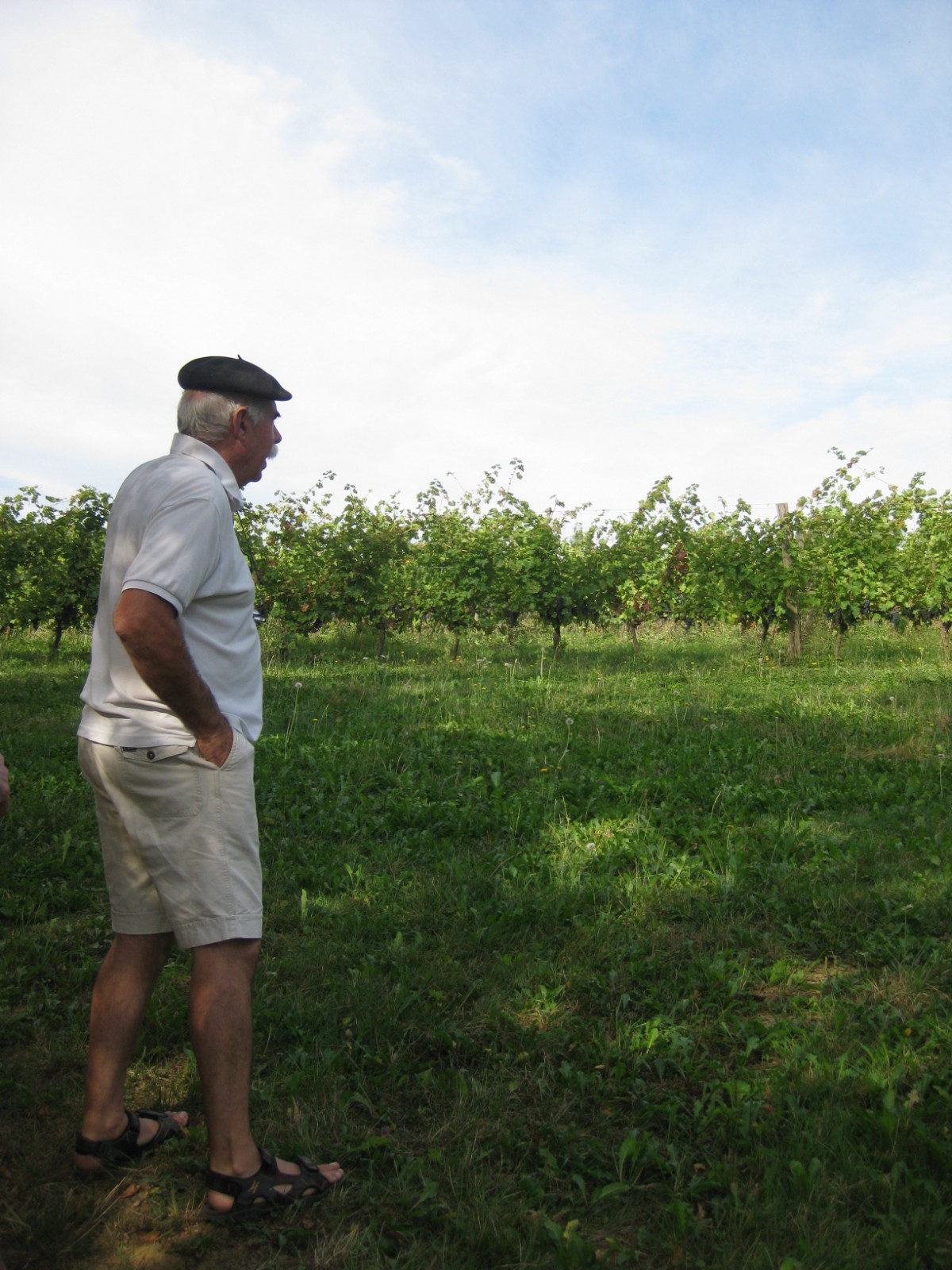
Philippe shares his expertise
Phylloxera saw the end of wine production in the Ariège. Vines, decimated in the 19th century throughout Europe, were gradually replaced elsewhere by resistant American varieties. The local domestic vines, most of which were fairly low quality, weren’t worth replacing, and people simply walked away from them, leaving them to die. Only within the last 30 years have a couple of producers recognised that parts of the area are suitable for developing once more a high-quality product, and with modern and traditional savoir-faire behind them, worked towards developing businesses of which they can be proud. Philippe Babin is one of these.
Philippe went on to tell us more about the vines themselves. They need rain, and they need sunshine for their leaves to absorb and enable the fruit to mature. Vines put roots deep down into the soil and rocky earth, particularly in the first 15 years of life. Philippe chooses to grow his vines organically, because he recognises that the particular composition of the soils and rocks beneath in the area – ‘terroir’ – inform the character of his vines: fertilisers and other products would change this balance. The vines themselves change as they mature, and those plants which are 80 – 100 years old (his are a long way from this) produce little, but what they do is very fine.
Pruning forces the vines to produce grapes, and therefore seeds. Unpruned, they grow hundreds of metres long, and see no need to seed themselves. Wild vines are therefore innocent of fruit.
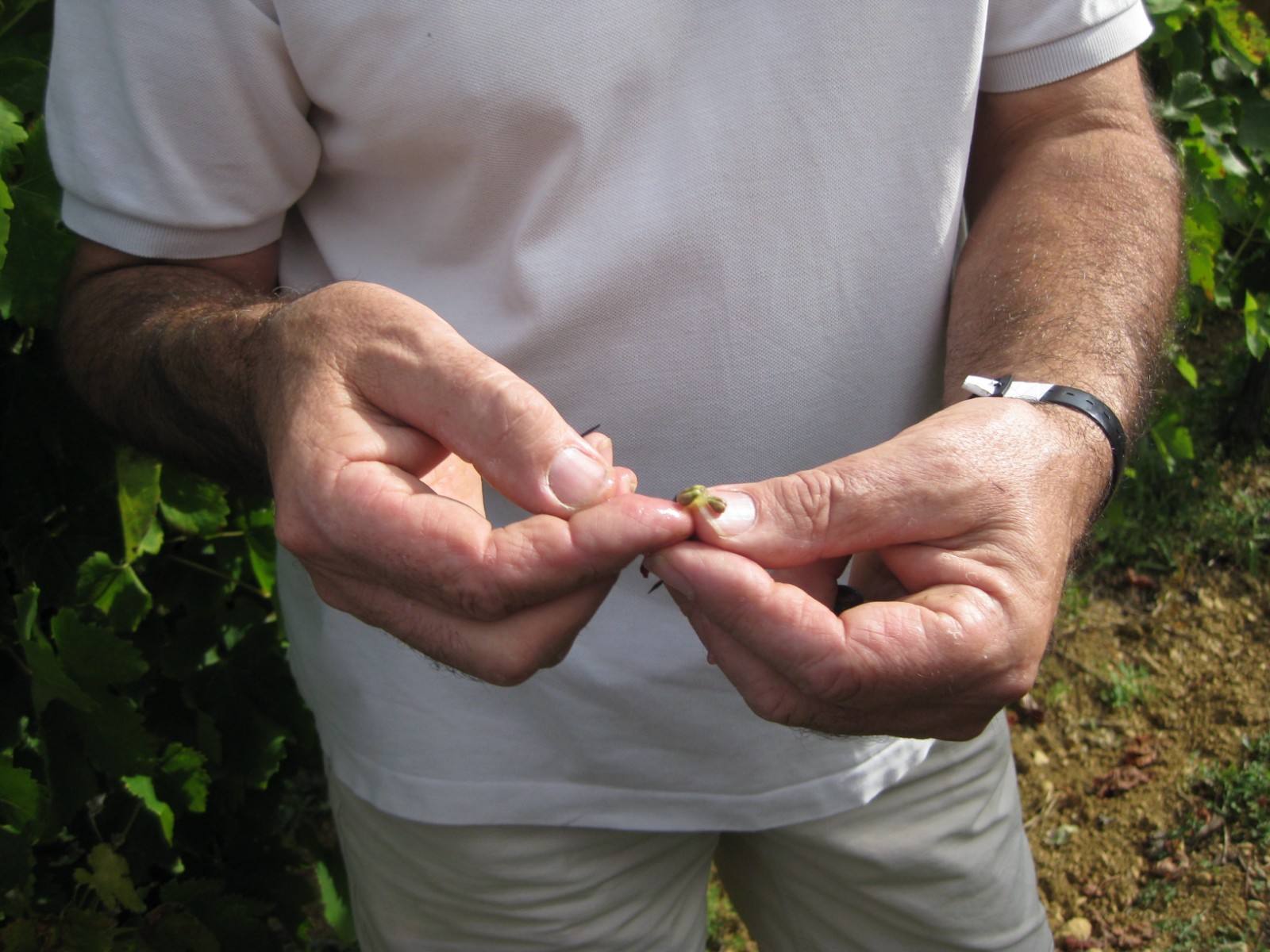
Examining grape pips for maturity
Then he showed us how to research a maturing grape. Does the skin peel easily from the fruit, and is it loosing its elasticity? If so, it’s ripening nicely. Have the seeds broken away from the ‘umbilical cord’ of the stalk and taken on a woodier appearance? Once that happens, the seeds are nearly ready to fall and have a go at germinating (they have a low germination rate). From now on, they’ll nourish themselves, like embryo chickens in an egg, from the flesh of the grape, which will wither as the seed digests it.
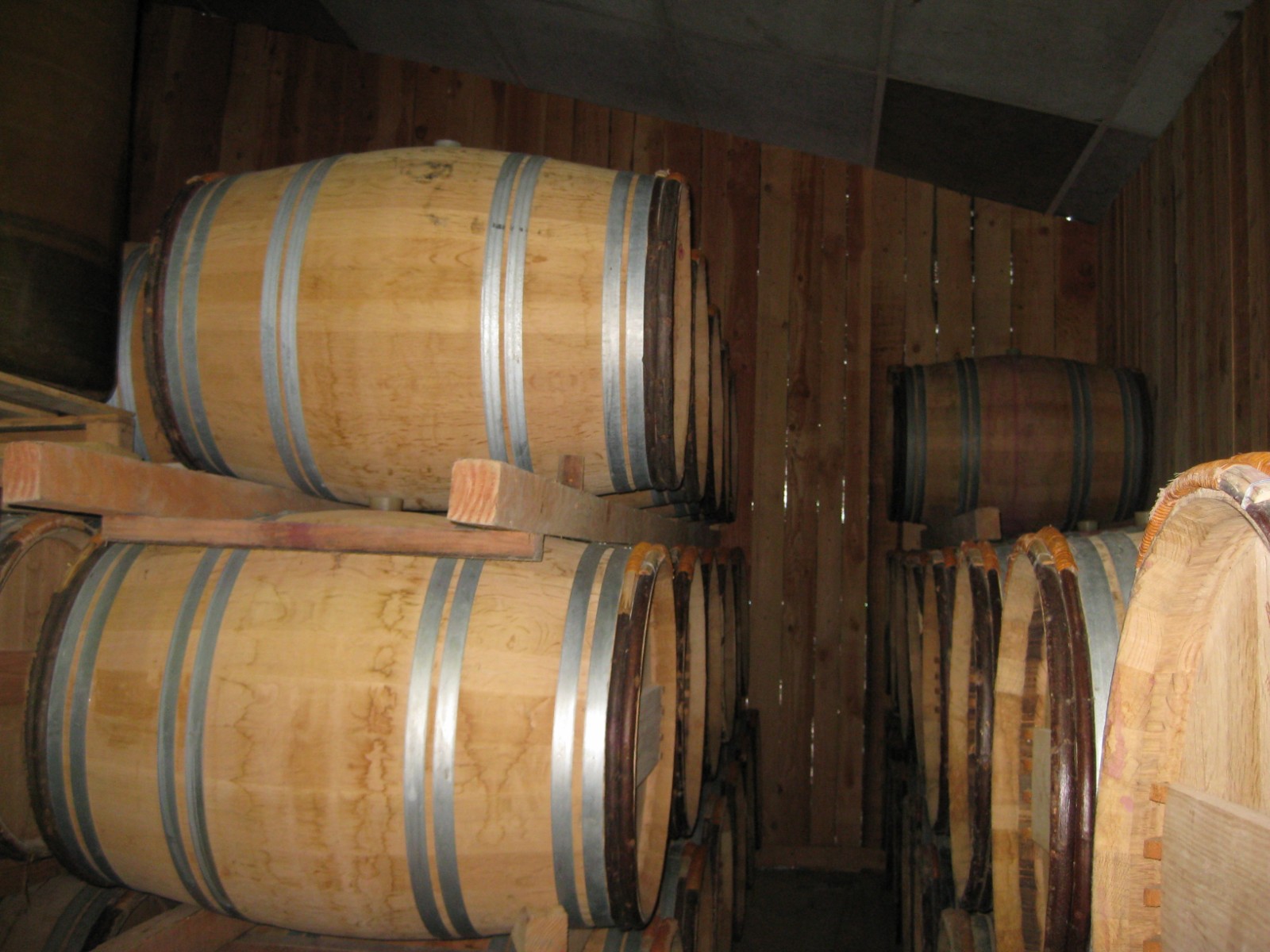
Barrels full of wine waiting to be bottled
Lesson over, we went back to the Cave. A small band of workers were working to bottle the last of the 2010 vintage to free up space for the harvest which will take place in maybe a fortnight or so. The barrels in which the wine matures must never be left empty, so this is a last minute job.
And finally….the tasting. An opportunity to compare three of the wines he produces. Every year his blends are slightly different, to arrive at a consistent product. Syrah, Merlot, Cabernet Sauvignon…all have their part to play in blending wines to make a perfect complement to an enjoyable meal, whether roasted, casseroled or preserved meats, or a plate of local cheeses.
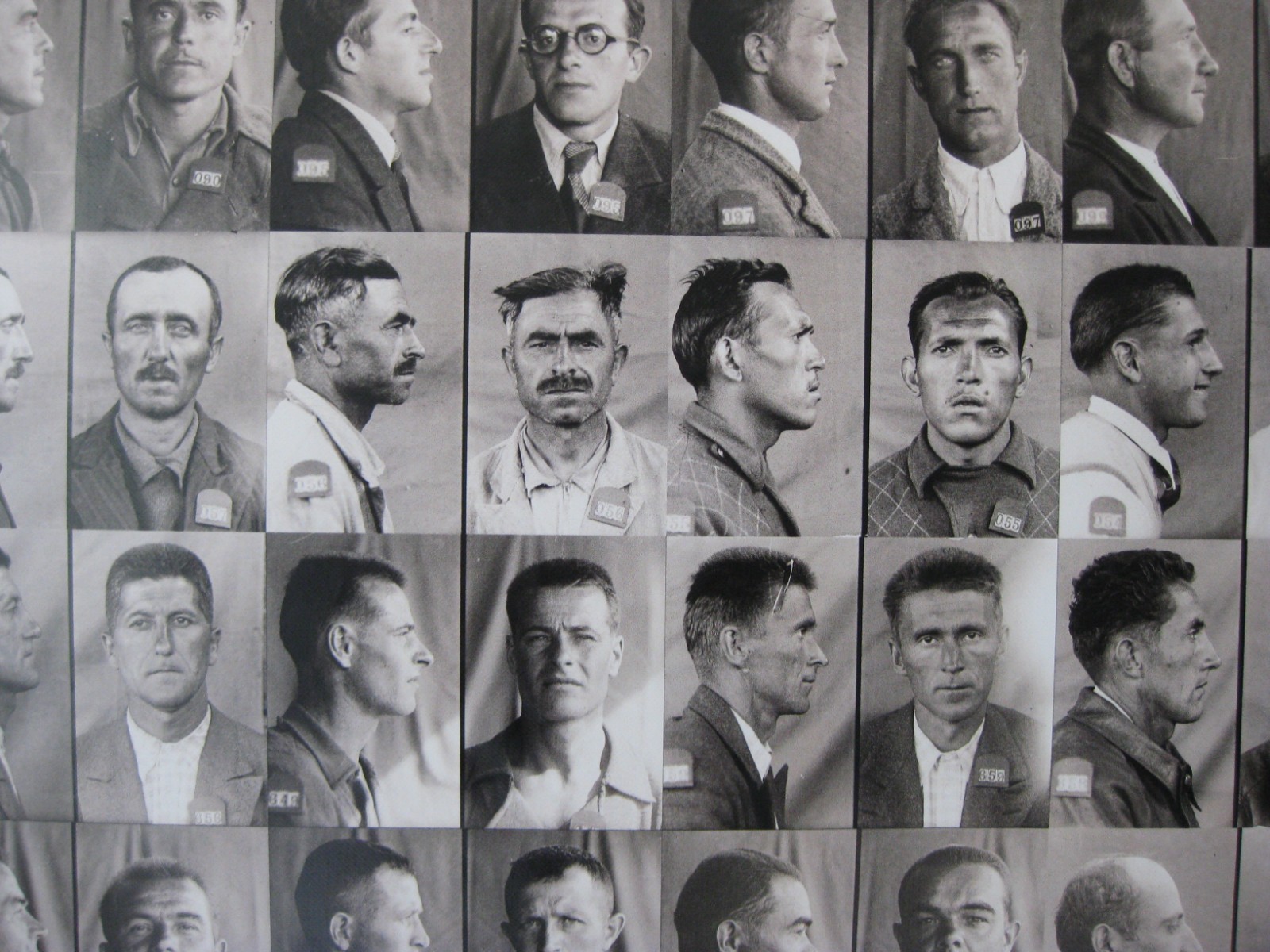
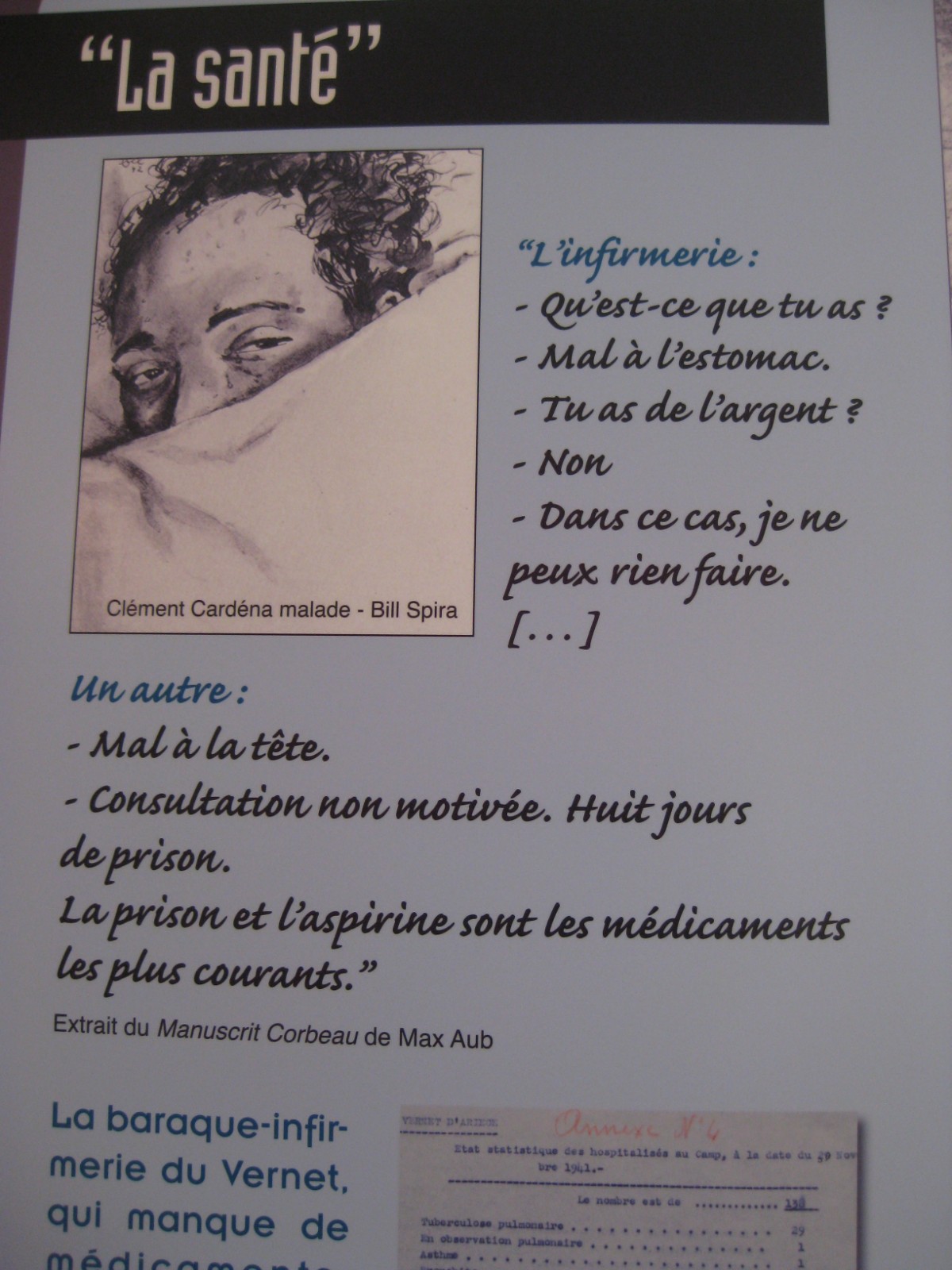
Starting in 1939, after the defeat of the Spanish Republic, the concentration camp at Le Vernet, near Pamiers, was used to detain the 12,000 Spanish combatants from the Durruti Division. At the declaration of war, ‘undesirable’ foreigners, anti-fascist intellectuals and members of the International Brigades were interned at Le Vernet under terrible conditions, described by the writer Arthur Koestler (himself interned there) in ‘Scum of the Earth’. In 1940 it became a repressive camp for interning all foreigners considered suspect or dangerous to the public order. At the time, it was known as ‘The French Dachau’.
Model showing part of the camp
From 1942 it served also as a transit camp for Jews arrested in the region. In June 1944, the last internees were evacuated and deported to Dachau in the ‘Ghost Train.’ In total about 40,000 people of 58 nationalities were interned in the camp.
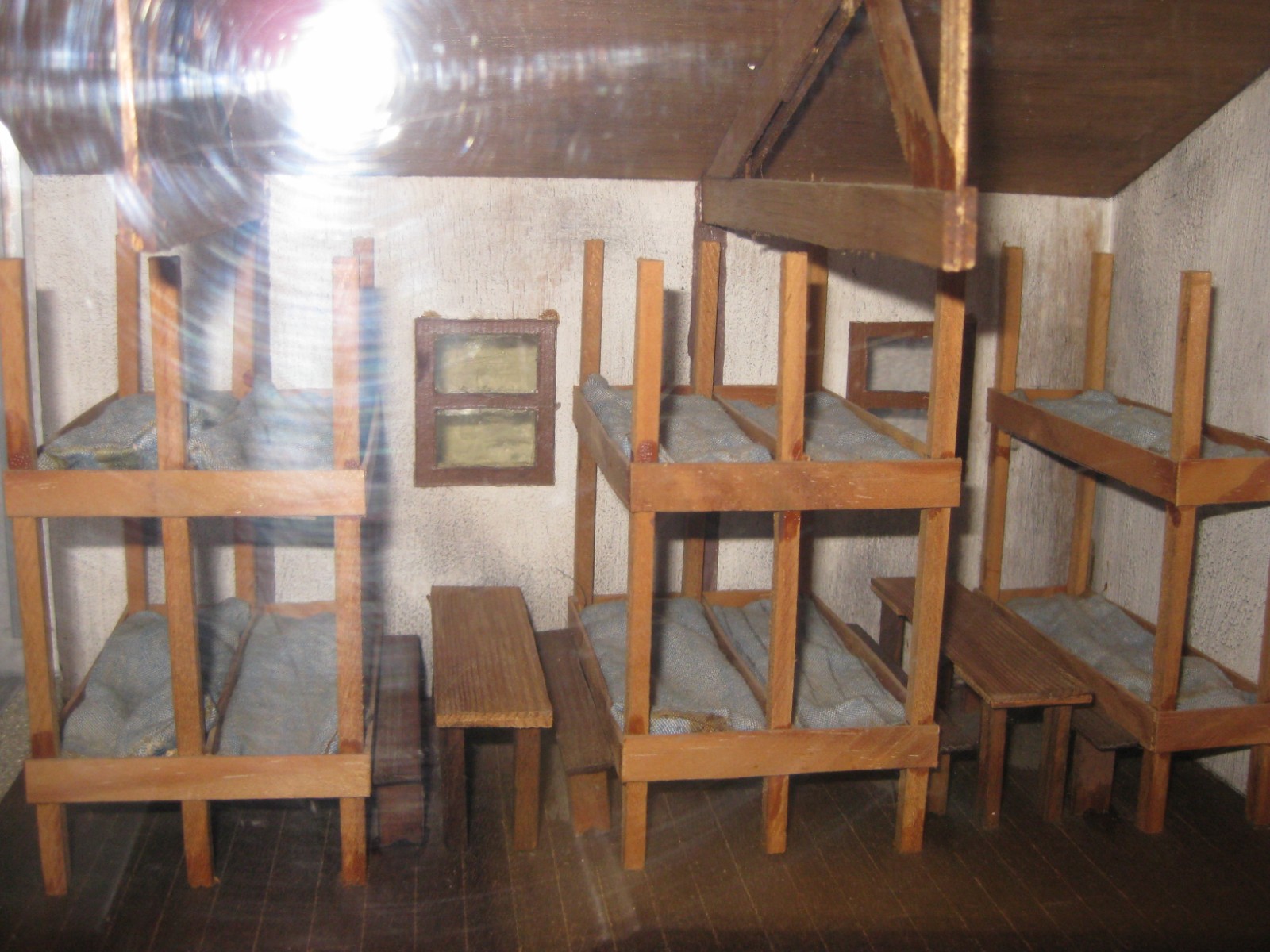
We were shown round by the Mayor of le Vernet. He has a passion for sharing this dreadful part of French history which only someone whose family has suffered its consequences could have. He showed us the models of a vast camp, now totally obliterated, and the cramped dormitories.
Model of a camp dormitory
He described the harsh conditions, when inadequately clothed and severely underfed men would have to stand outside, immobile, 4 times a day, during the extremely hard winters, for roll-call.
As a tiny baby, he was interned with his mother, a Spanish refugee, at a women’s and children’s camp, flimsily built and harshly managed, on the coast (Le Vernet was for men only). The women begged for clothing – their own was so flea-ridden it had to be burnt – and more food. The response was that they could return to Spain if they wanted. Some did, but many stayed.
As an adult, with a French wife and children, he wanted to take French nationality himself. ‘How did you arrive in France?’ ‘Via the concentration camp in Argelès.’ ‘There were no concentration camps in France, only accommodation centres.’ Such denial existed till quite recently – hence the total destruction of the site of this camp, the most repressive in France. Now however, largely because of people such as this mayor, the history of these camps, run and organized not by the Nazis, but by the French themselves, is at last being told.
Dear reader, perhaps you are feeling quite short-changed. You subscribe to a blog called ‘Life in Laroque’, and for the last 6 weeks or so, have had nothing but news from England: Yorkshire, to be exact.
Well, we’re back in Laroque, where in our absence they’ve had bitter cold, driving rain lasting for days, and astonishing heatwaves in which the thermometer has topped 40 degrees.
But just before we abandon postings about England, here is a souvenir slideshow of our time there. It’s a reminder for me really, so if dear reader, you decide to skip it on this occasion, I quite understand.
 I like BookCrossing. I love the idea of ‘releasing books into the wild’ for some lucky reader to find, and I love finding books in the same way. It brings me face to face with choices I wouldn’t normally consider when I’m browsing the shelves of my local bookshop, library or charity shop. Unfortunately, I’m not very good at releasing books. If I leave one in a café, an anxious waitress will scurry after me waving my latest offering. Leave them on a park bench, and the heavens open. And so on.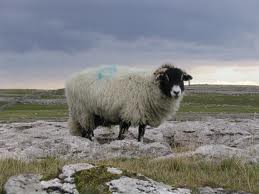










You must be logged in to post a comment.