Seen on a garden door in Ripon this morning.
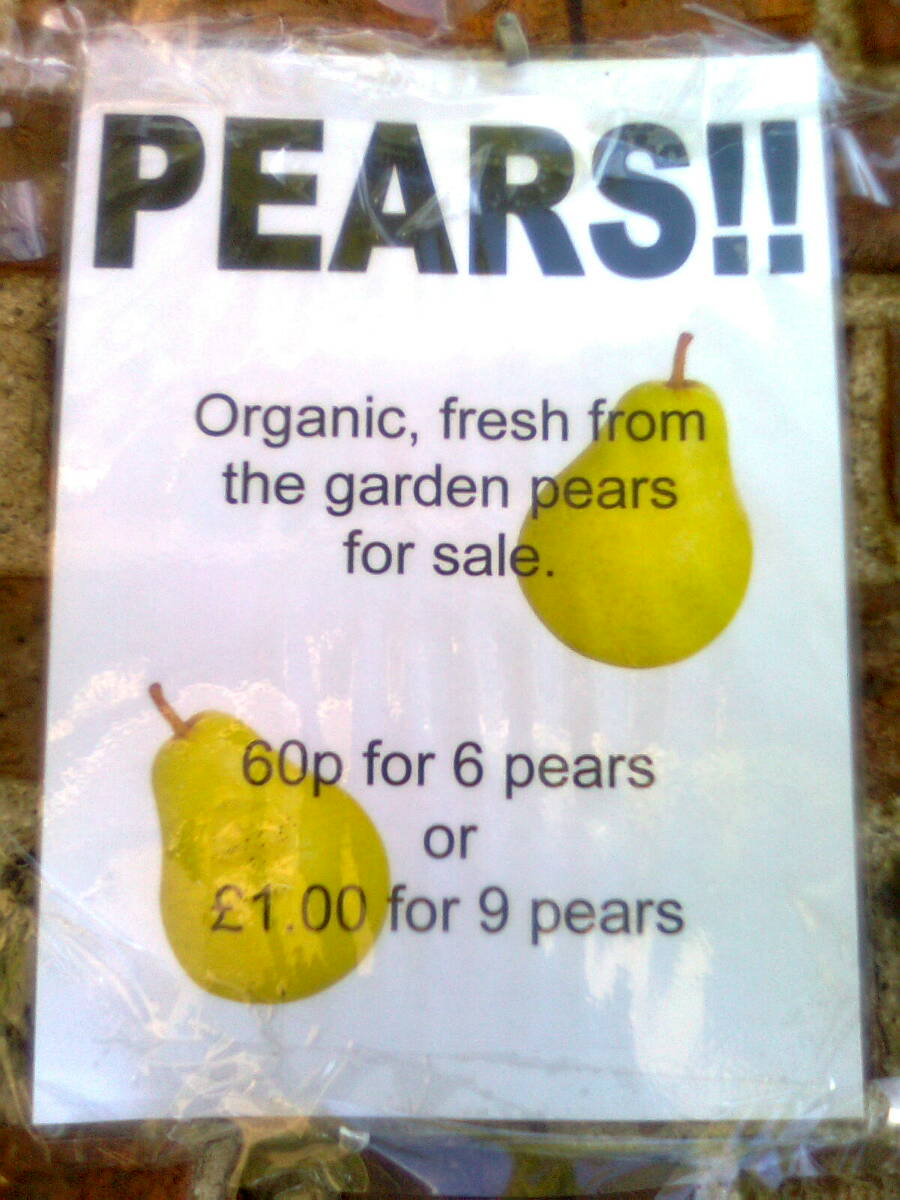
Um, am I missing something?
Seen on a garden door in Ripon this morning.
Um, am I missing something?
I’m so chuffed to be in England for the blackberry season. Ariègeois blackberries baked in the hot sun are sweet, characterless and make a rather dull jam. But then who goes to southern France to go blackberrying?
 So yesterday I went out, meandered down a few nearby lanes, and came back with a bowl filled with large glossy, juicy, sweet and yet tart berries, a stained T shirt and fingers stuffed with tiny spines and tingling from nettle stings. I was very happy.
I set my berries to simmer down with the early apples from Jonet and Richard’s tree, and then…. only then, remembered I had neither a jelly bag nor a cache of jam jars ready waiting for the next stage. Oddly, I do have a preserving pan.
 So it’s been the moment for a little ingenuity. An old clean T shirt ripped up made a jelly bag, and this morning we’ve been piling our toast with a week’s ration of marmalade, decanting apricot jam into a bowl, and scraping clean an almost-finished jar of honey. So far so good. But what happens when I need to make the next lot?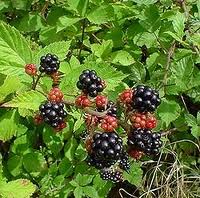
Returning from England to France, there’s generally a bag or two of various kinds of flour in the luggage. ‘What?’ I hear you grumble. ‘That woman who’s always banging on about buying local? The one who’s got no time for the English abroad who can’t exist without their mug of builder’s tea and a custard cream?’ Yes. That’s me. Guilty as charged.

But the thing is, when in France, I sometimes have a happy hour or two baking English goodies – Melting Moments, Gingernuts, Marmalade Loaf Cake, that sort of thing – with or for French friends. And as I discovered the other week, French flour is simply not right for the job. Not better, not worse, just different.
I’d run out of my own supplies, so I nipped out and got a bag of good quality baking flour (because even more than in England, it’s important to buy the right type of flour for the job). And my tried and trusted favourites turned out all wrong. Ginger biscuits, instead of being satisfyingly chewy, with a solid crunch between the teeth, were sandy and brittle. Marmalade loaf cake, though light, was close-textured and almost crumbly. It was so disappointing. The answer, it seems, lies in the gluten content. The average French flour is ‘softer’, and has a lower gluten content than the average English flour.
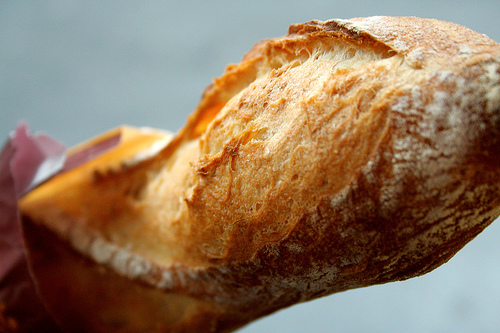
So is it surprising that superior French bakers in England, such as Dumouchel, where my daughter used to work on Saturdays, send over to Normandy for supplies of authentic French flour? Or that the average French stick, bought from the average English baker, in no way resembles its chewy French antecedent, the baguette.

On this visit to England, I’m appreciating the softer crust and slightly moister qualities of a well-made wholemeal loaf, just as over in France, I enjoy the the crustiness of crisply baked French bread. Best to accept, I think, that both countries produce fine bakers and cake makers. But neither could do a fine job using the flour preferred by the other.
If you want an introduction to some of the many flours on offer to the keen baker, Dan Lepard’s site is a good place to start
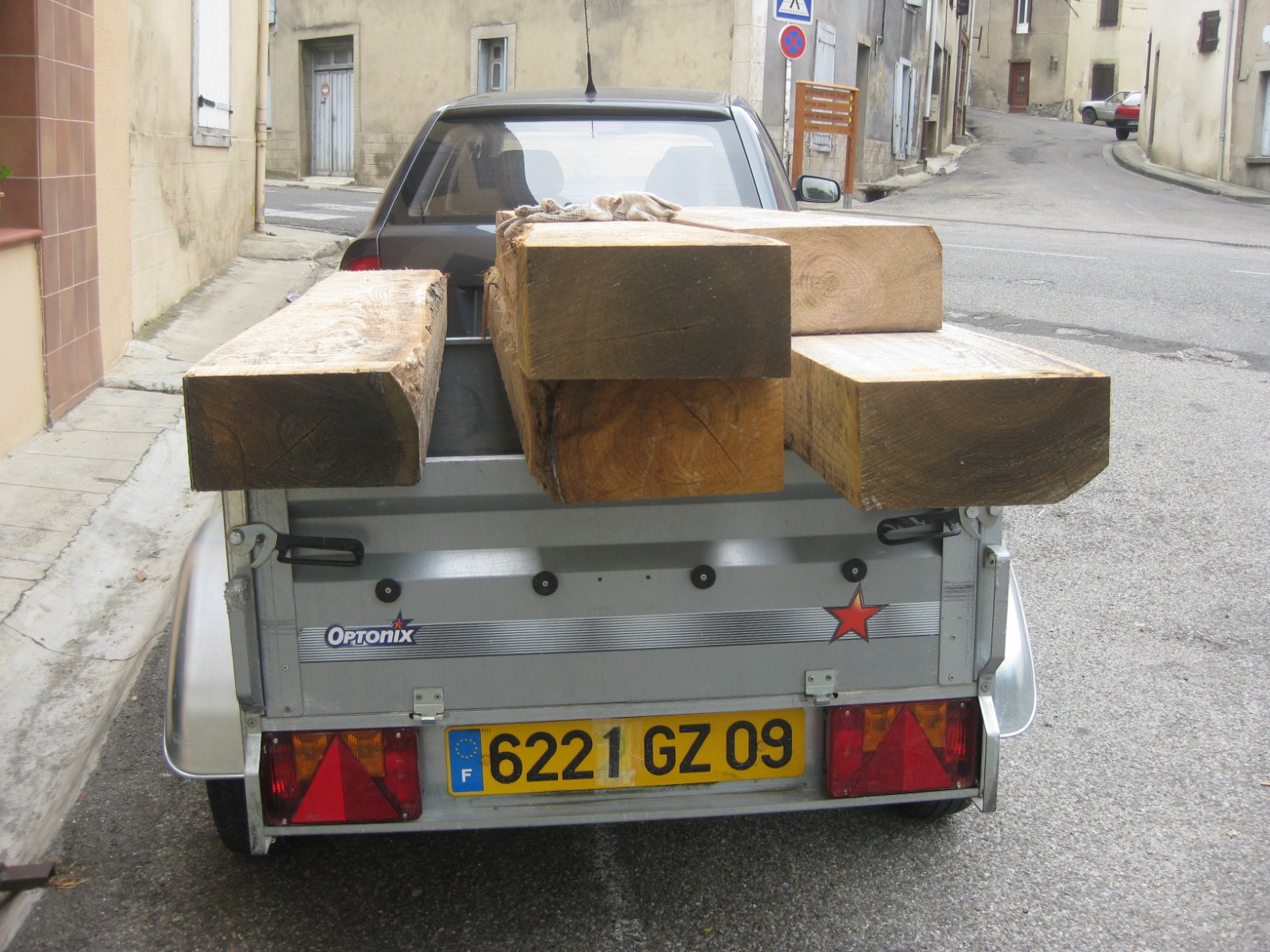
For months now, back in our thickly forested département, we’ve been looking for wood. Not to burn this time, nor for the workaday laths and planks which are the stuff of the average d-i-y project. No, we needed thick, dense lengths, something like the impressive beams you see in houses and barns throughout France. And given what a common sight these are, they’ve proved incredibly difficult to source. Kalba had the best idea. ‘Had you thought of Montcru?’. Well, no, it was so far away, beyond la Bastide de Serou, that we hadn’t even heard of it.
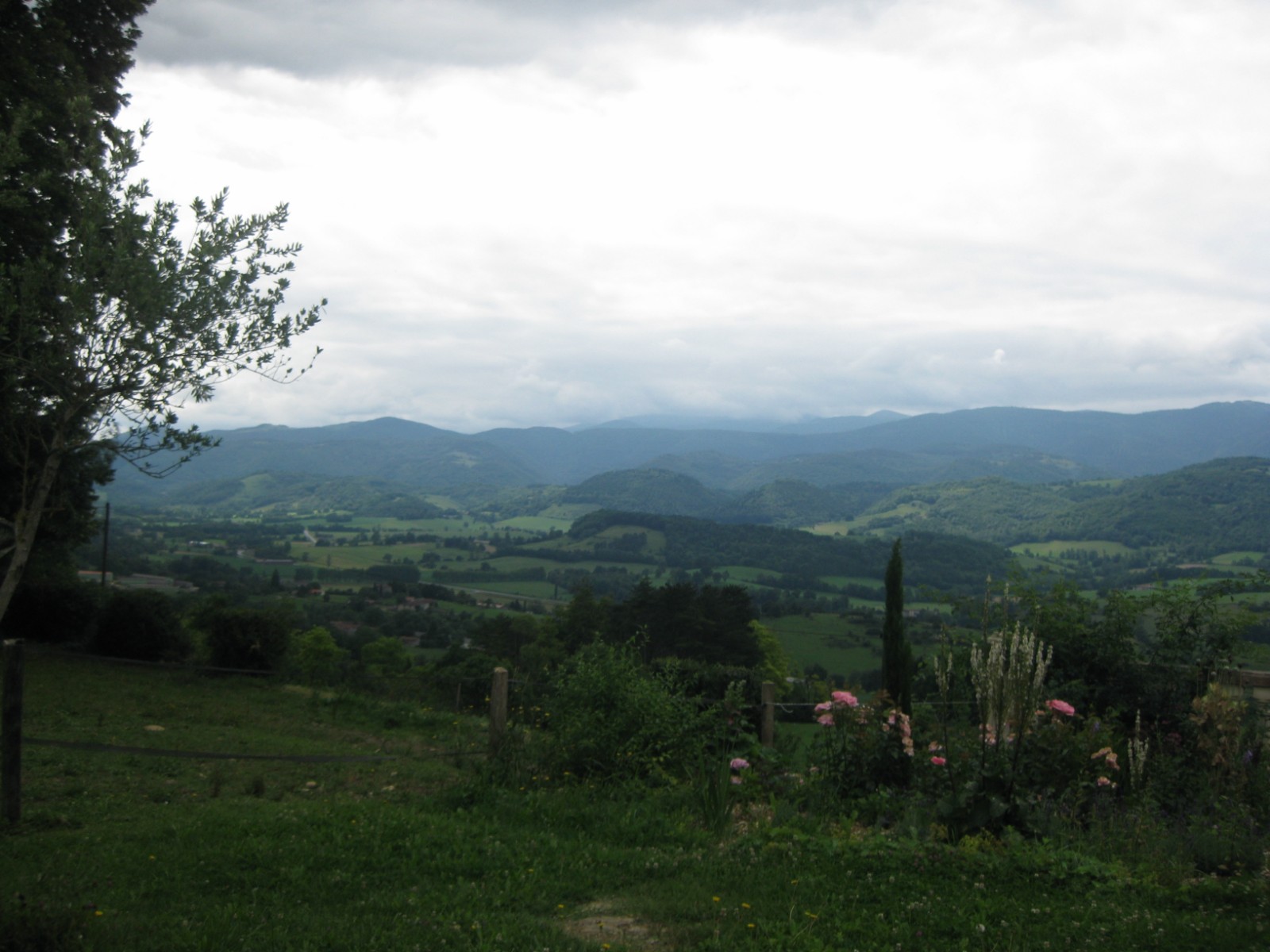
But it was worth a journey. We’ve never been to such a place. Miles from anywhere much except lovely Seronais scenery, Robert and his wife run an idyllic looking B&B with woodyard attached.
Buying wood here involves a detailed discussion of your needs.
Robert trundles off with his large pick-up to select likely-looking logs while you stay and play with the cheerfully energetic dogs. Then he hoists the wood into his wonderfully large cutting machine which he somehow manoeuvred over himself from Poland, measures everything you your exact specification, cuts, trims….and hoists it onto your trailer or whatever.
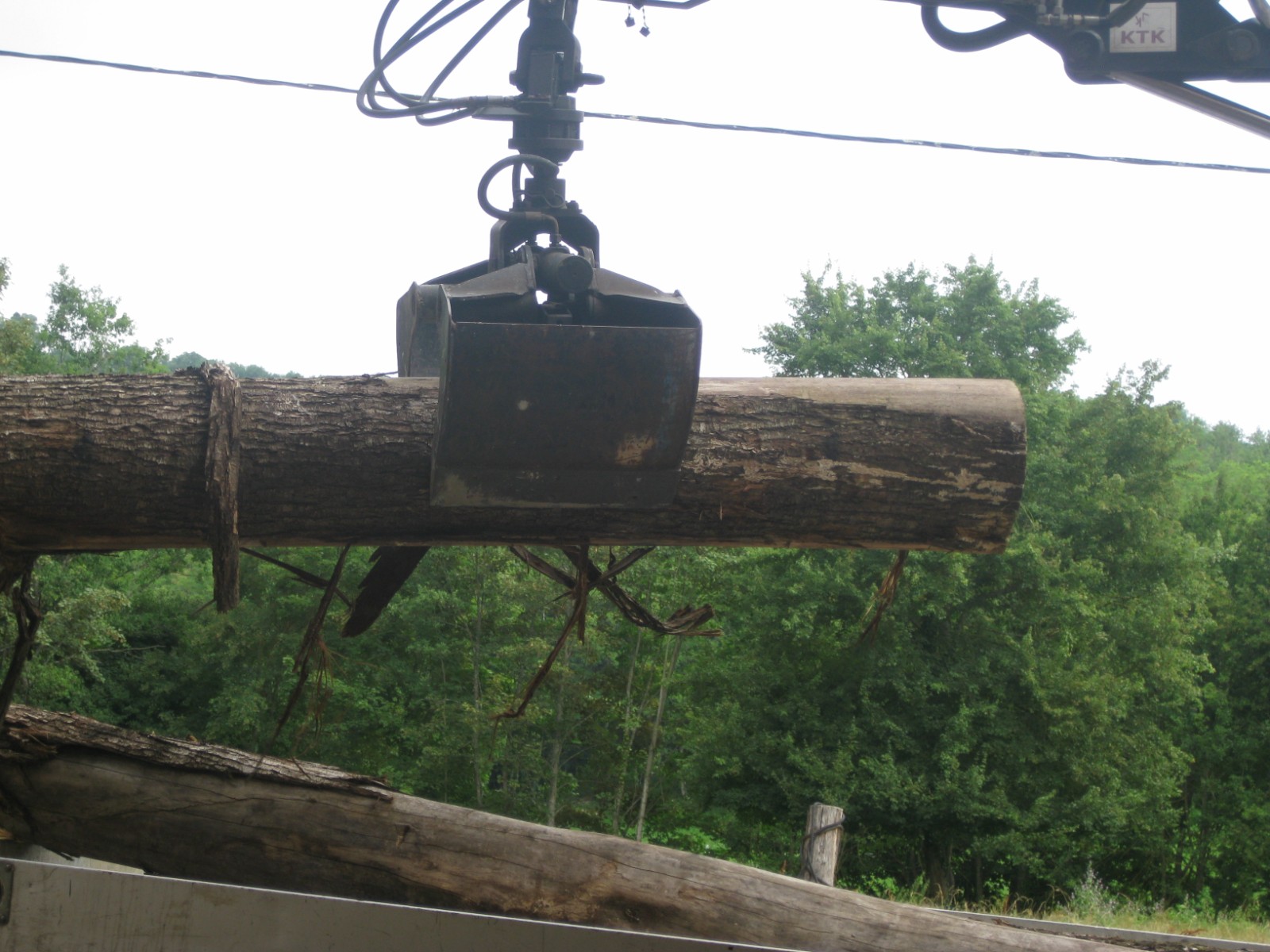
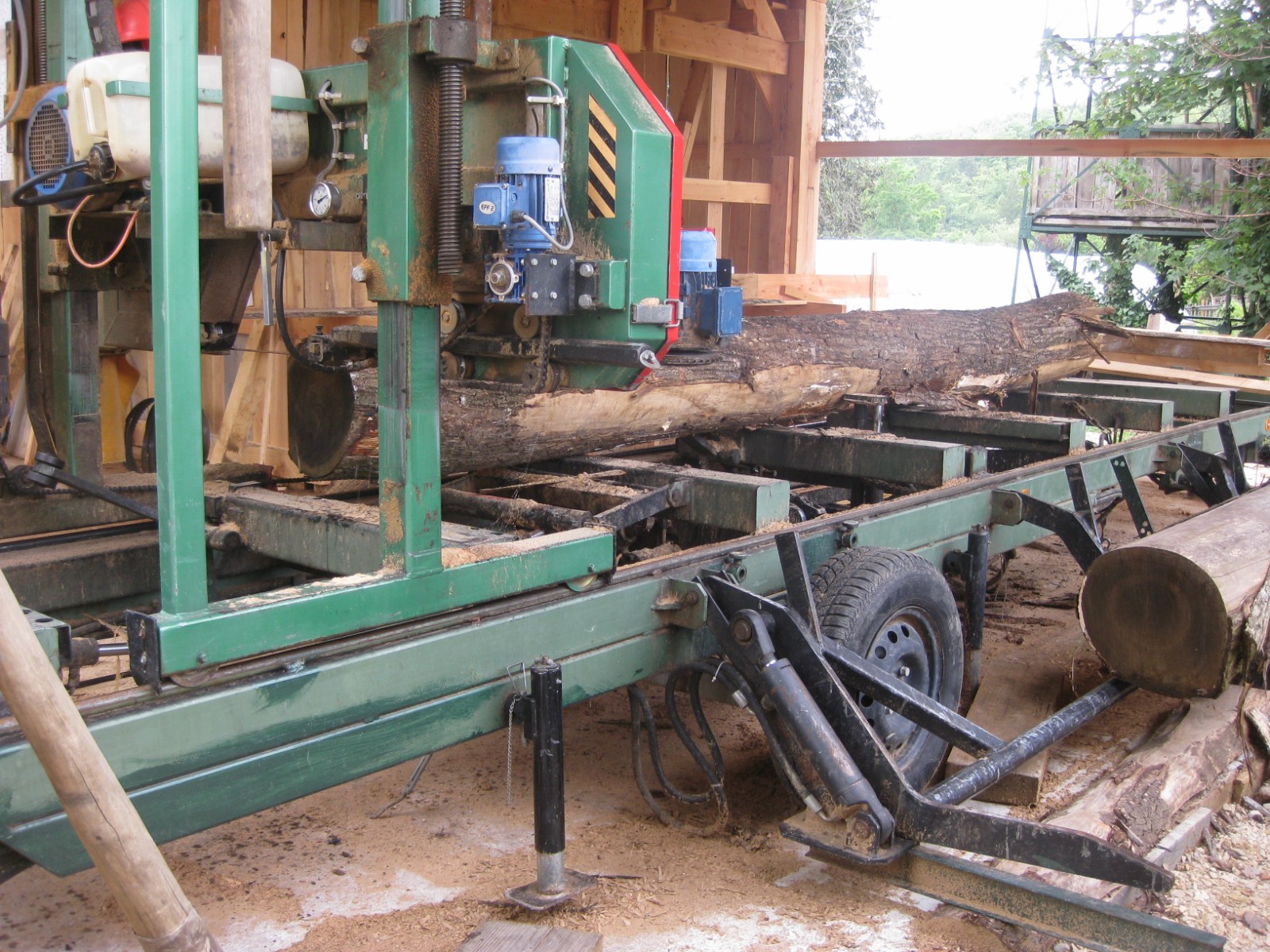
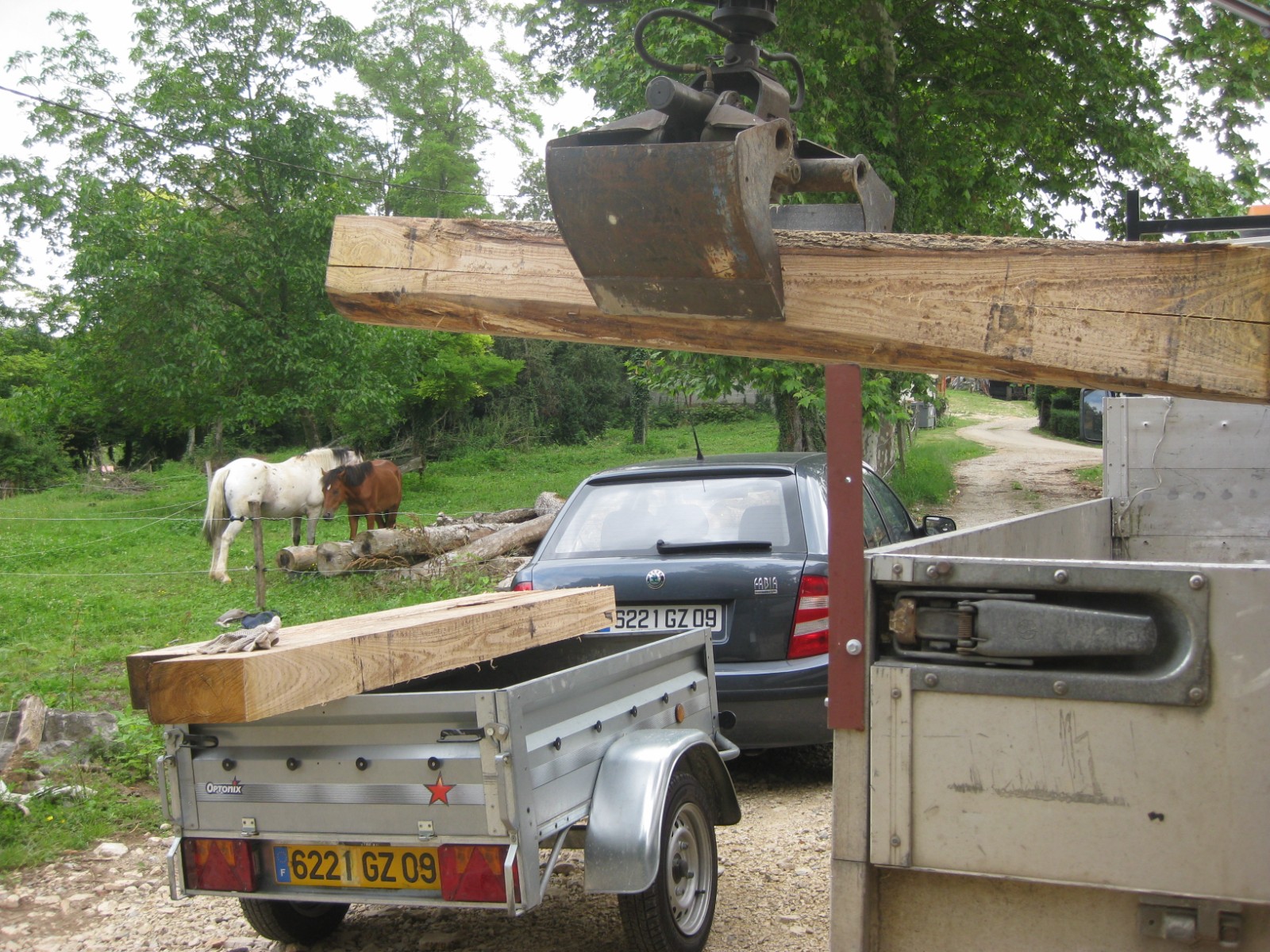
Two hours, a cup of coffee together as Robert worked out the bill, and we were off.
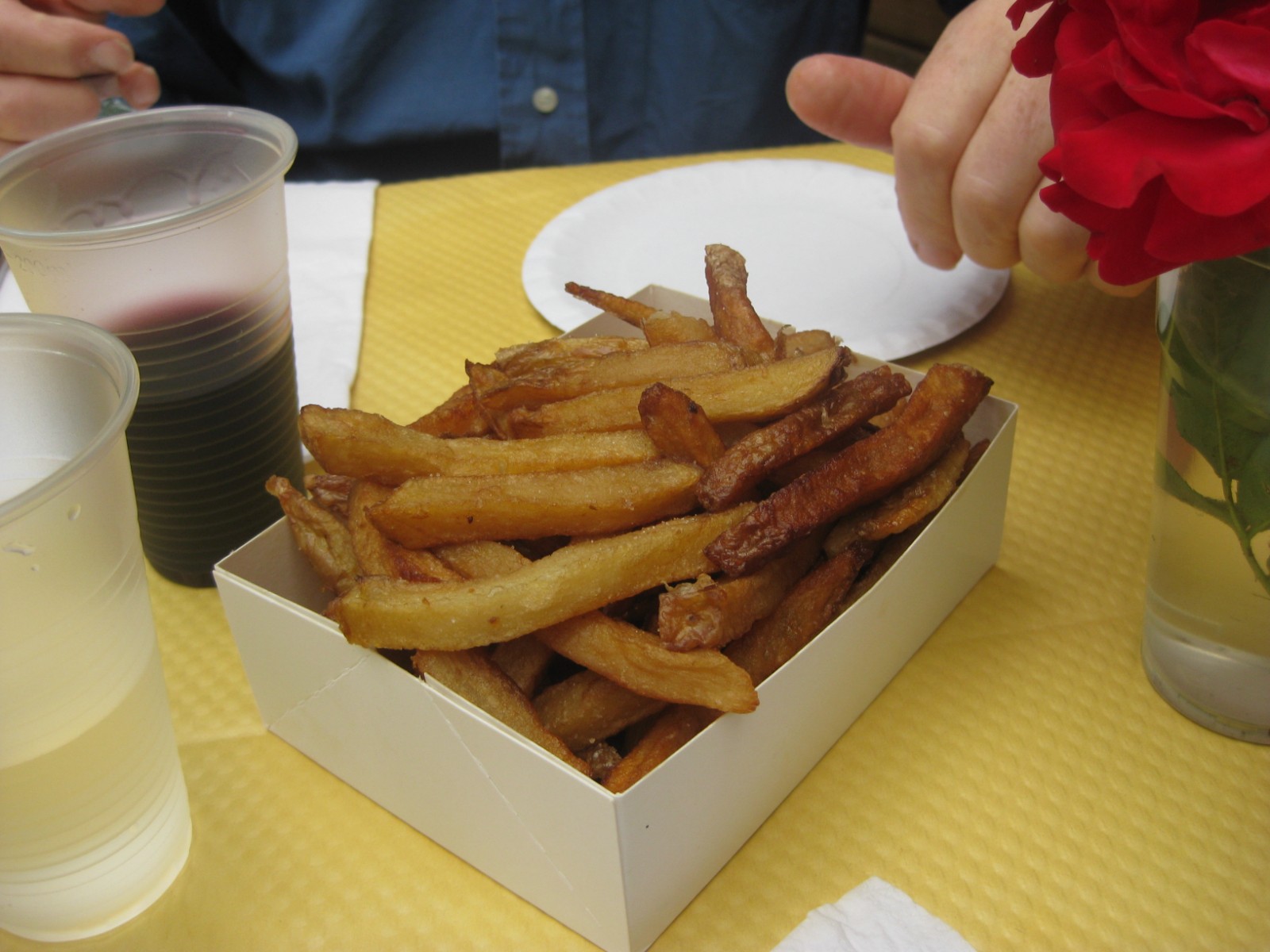
Time for lunch then though. L’Enso de Marichott. If the idea of eating in a shack in a car park doesn’t attract you, you’ve not been to l’Aire du Ségalas , near Castelnau-Durban. It’s a wooden chalet open only during the summer months, and almost the whole menu is based round duck – the ducks that the owners José and Jean-Luc raise themselves. In fact they grow much of what you eat, and almost all the rest is local, and organic at that. We had a quiet lunch, but weekend evenings are the time to go and party there, we’re told. Definitely worth a detour.

Then we drove home, v-e-r-y carefully.

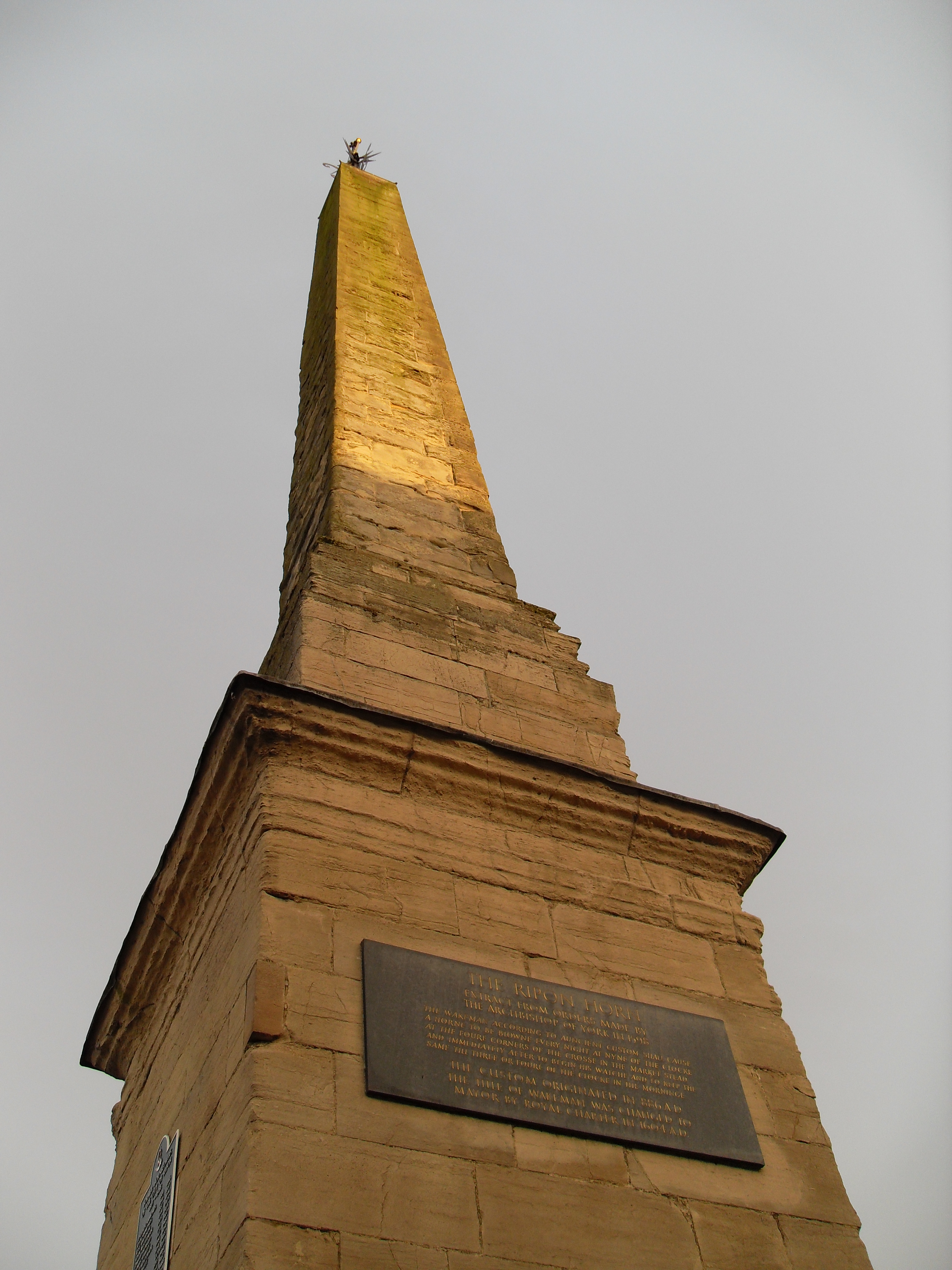
That’s the verse from the Psalms, inscribed above the town hall in Ripon, where we’re spending the next few weeks to avoid the cold and rain of the south of France (no, really, they’ve got the heating on over there). It reminds us that every evening – EVERY evening – for well over a thousand years, the Ripon Wakeman has sounded his horn to the 4 corners of the city to announce that all is well.
I had to go and check it out yesterday evening.
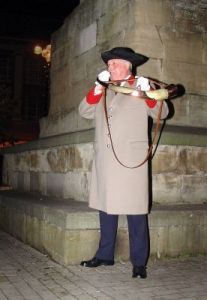
Promptly at 9, a smartly dressed individual in buff coloured hunting coat, tricorn hat and white gloves took his place before the obelisk on the Market Square and sounded his horn 4 times, once at each corner of the obelisk – one long mournful note each time.
Then he grinned at us, a small crowd of 20. ”Want to hear a bit of history?’ Well, of course we did. He made us introduce ourselves, and we found we too came from, well, about 3 corners of the world: Catalonia, Italy, Australia, even South Shields and Merton. And here’s some of what he told us:
In 886, Alfred the Great, 37 year-old warrior king, was travelling his kingdom to defeat the Vikings, and to drum up support . Arriving at the small settlement of Ripon, he liked what he saw and granted a Royal Charter. He lacked the wherewithal to produce an appropriate document, and so gave a horn which is still safely locked in the town hall.
‘You need to be more vigilant, there are Vikings about’. Alfred warned. So the people appointed a wakeman to guard the settlement through hours of darkness, and he put that horn to use by sounding it at the 4 corners of the Market Cross to announce that all was well as he began his watch. The town’s now on its 4th horn.
If you want to know more, our current Wakeman, George Pickles, has written the whole tale for the BBC website. It’s a good yarn. Read it when you have a moment
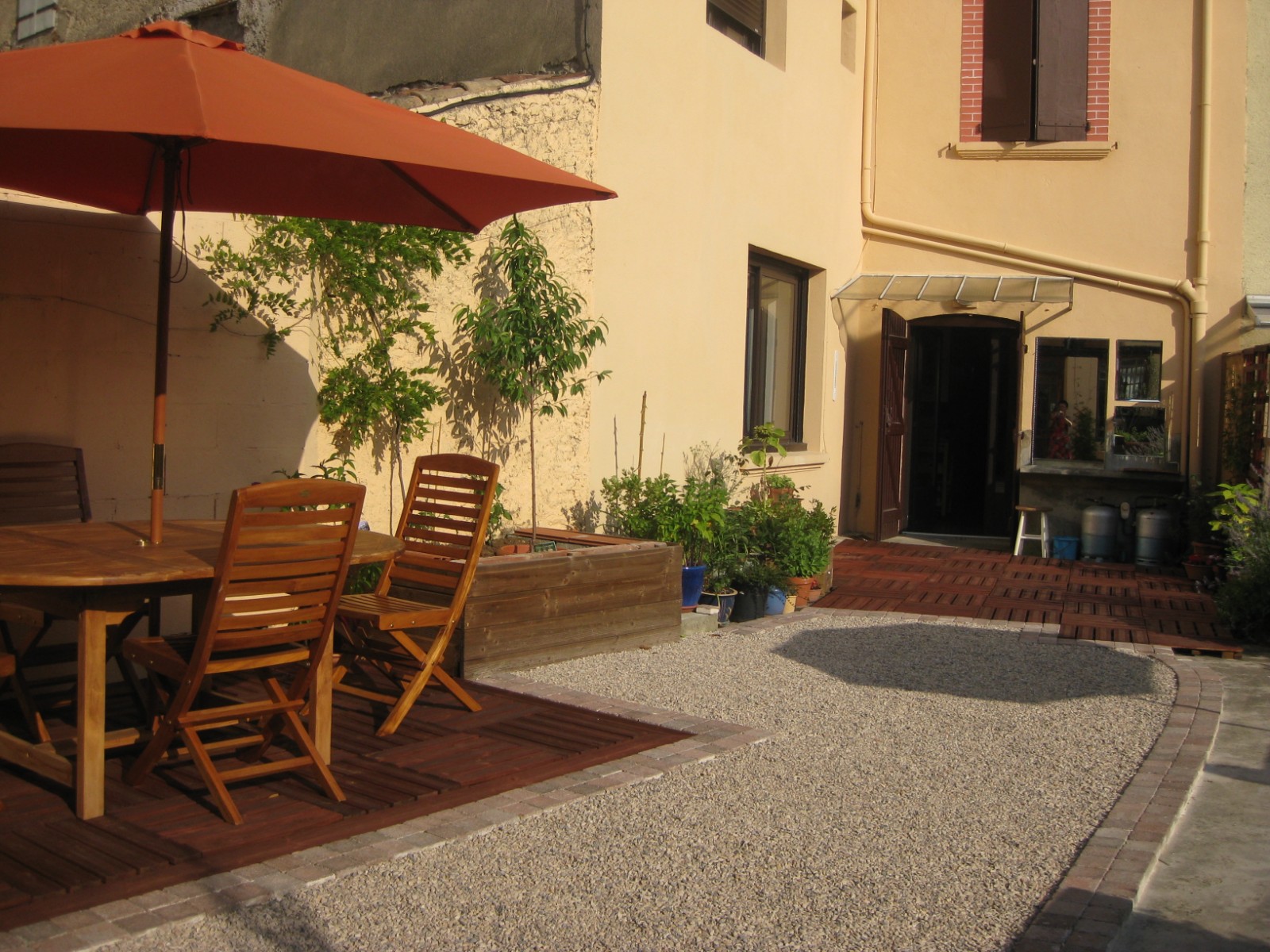
Even if you don’t normally click on links, please look at this one: It shows our house and yard both back in the Bad Old Days, and up until about a year ago. We think things have moved on again. Take a look.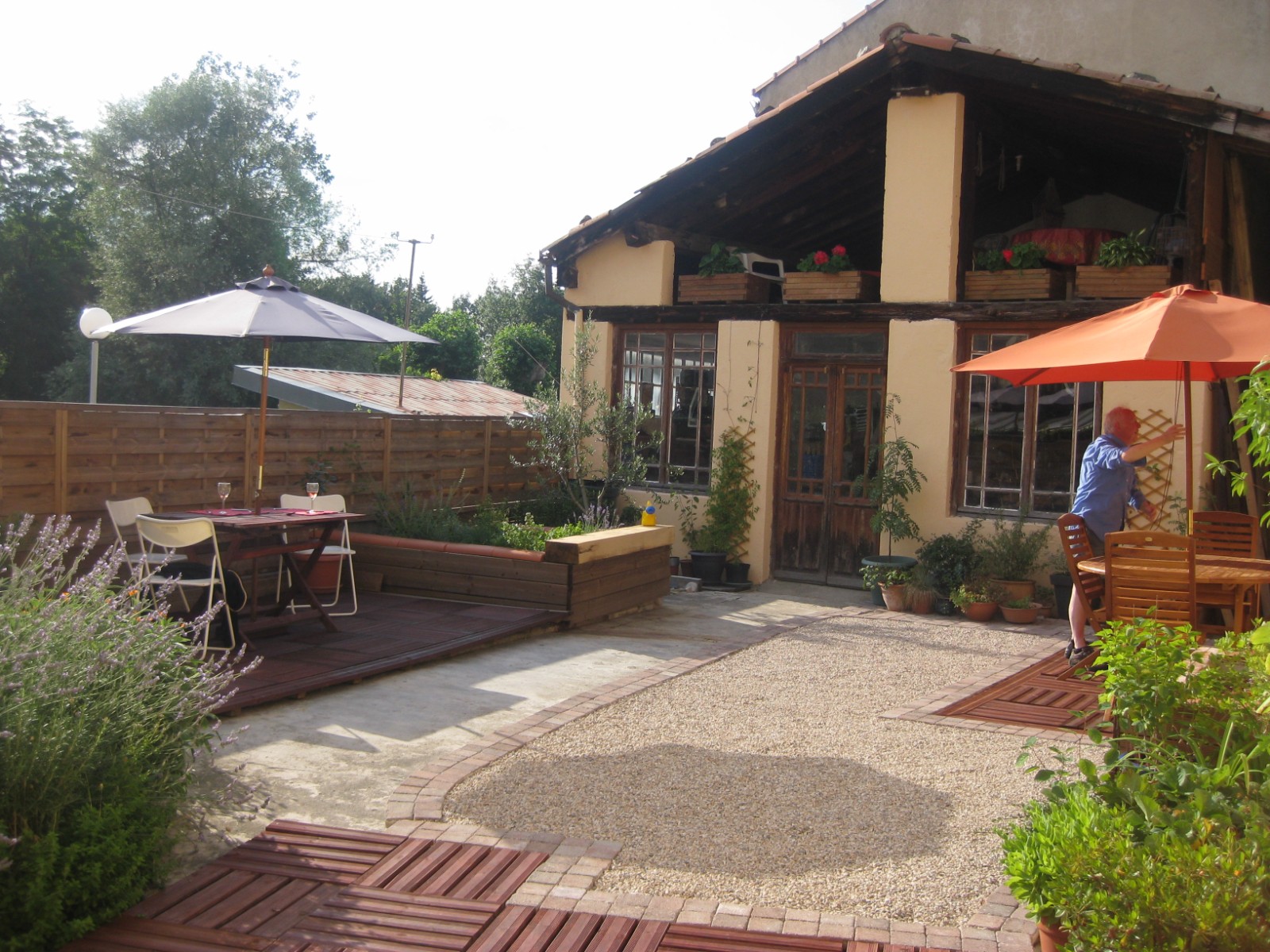 Over on the left is pretty much where we got up to last year.
Then we added another seating area, and wood to cover the ghastly concrete that we couldn’t dig up near the house. Have you spotted that gravel from Raissac yet?
 There it all is, seen from our bedroom window. There’s just one major job to do. And that’s to top off the two raised beds with large lengths of wood, so we can use them to sit on as we admire our peaceful outside space. Our day out to collect that wood is yet another story.
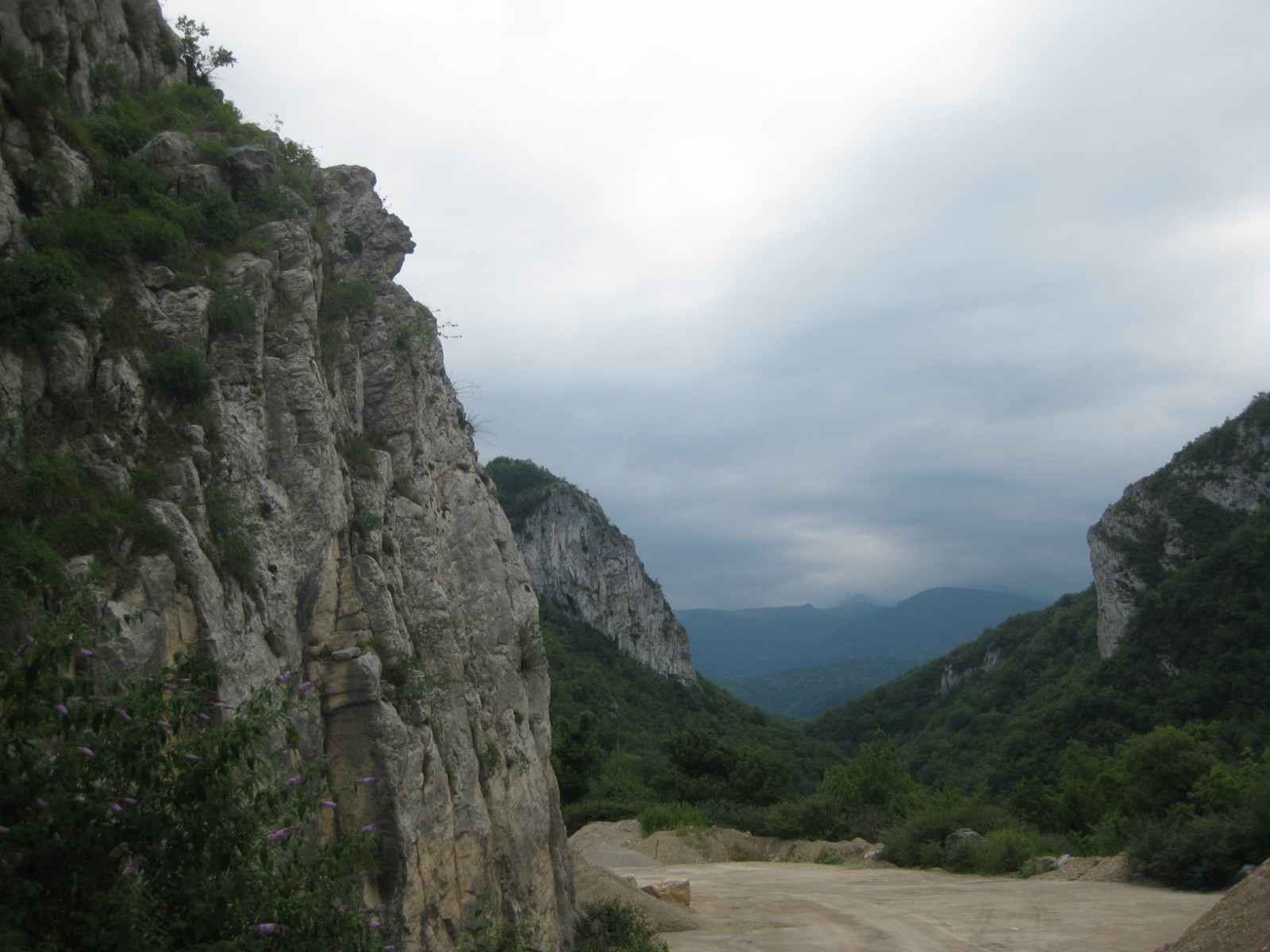
The other day, we went to Raissac There’s a quarry there:
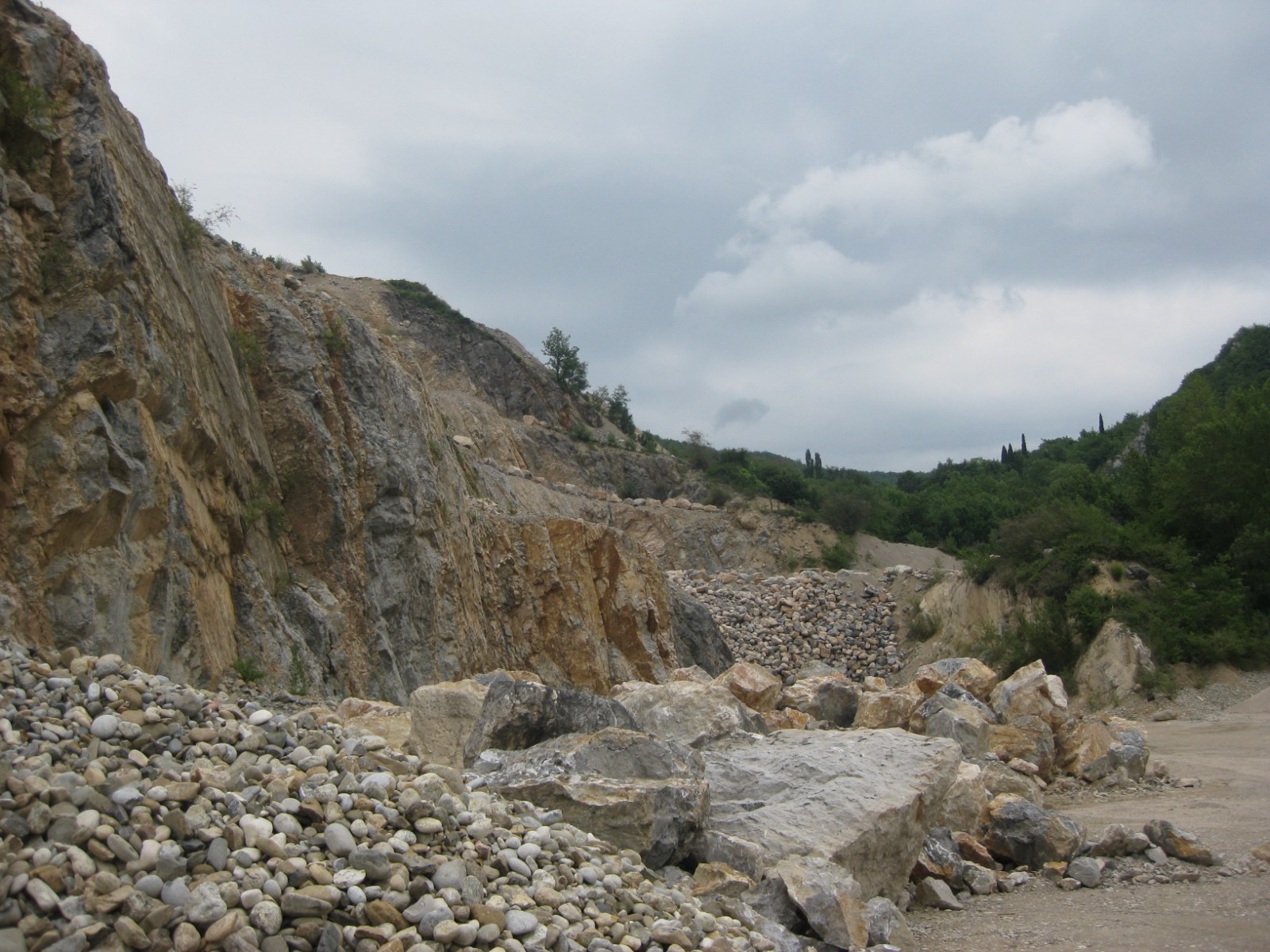
 We looked at rocks. We looked at big stones. We looked at smaller stones:
 We chose gravel.
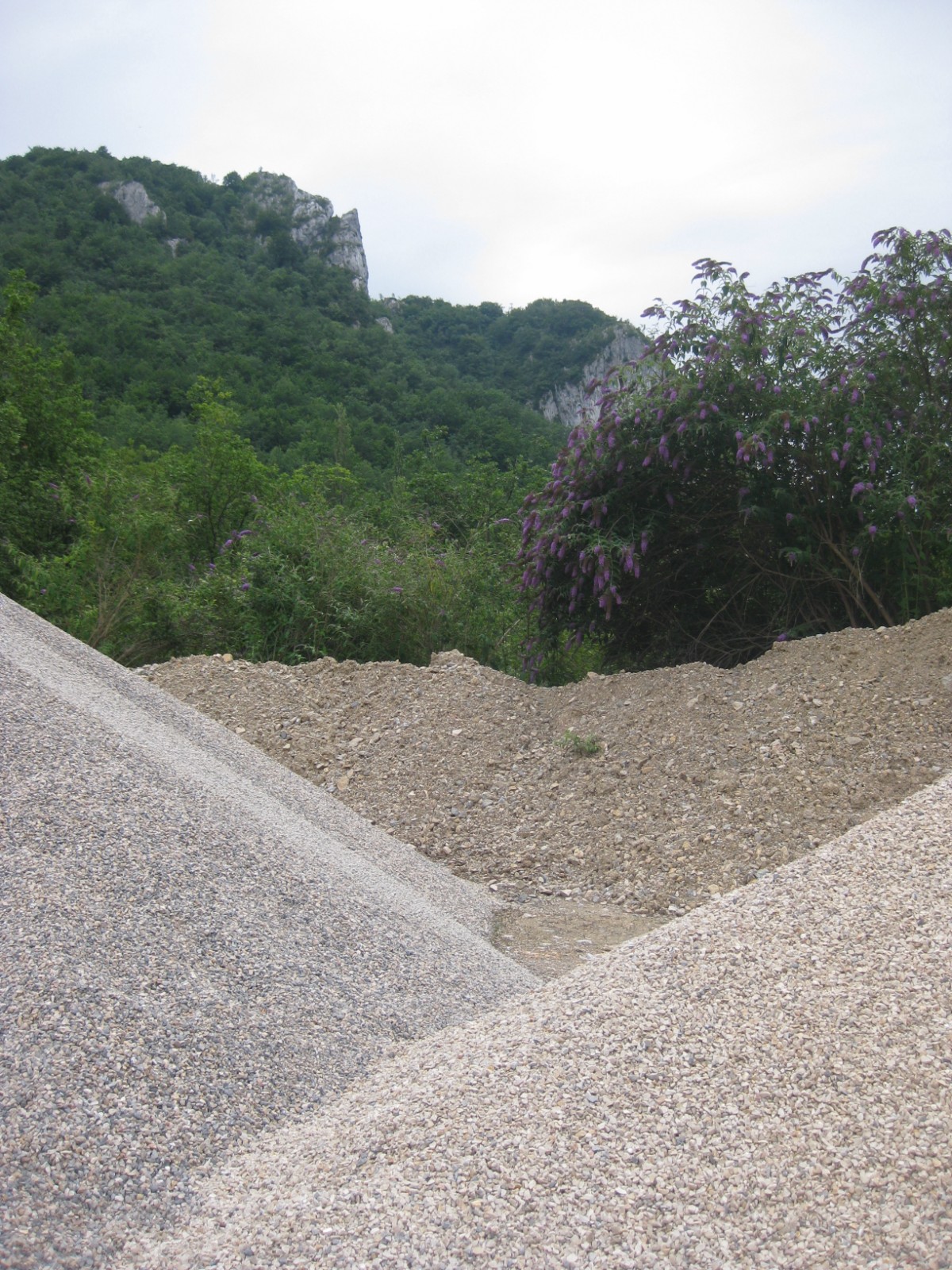 And a man (no, not Malcolm) with a grab scooped up the best part of 500 kilos of the stuff, and dumped it in our trailer, for us to drive cautiously home with.
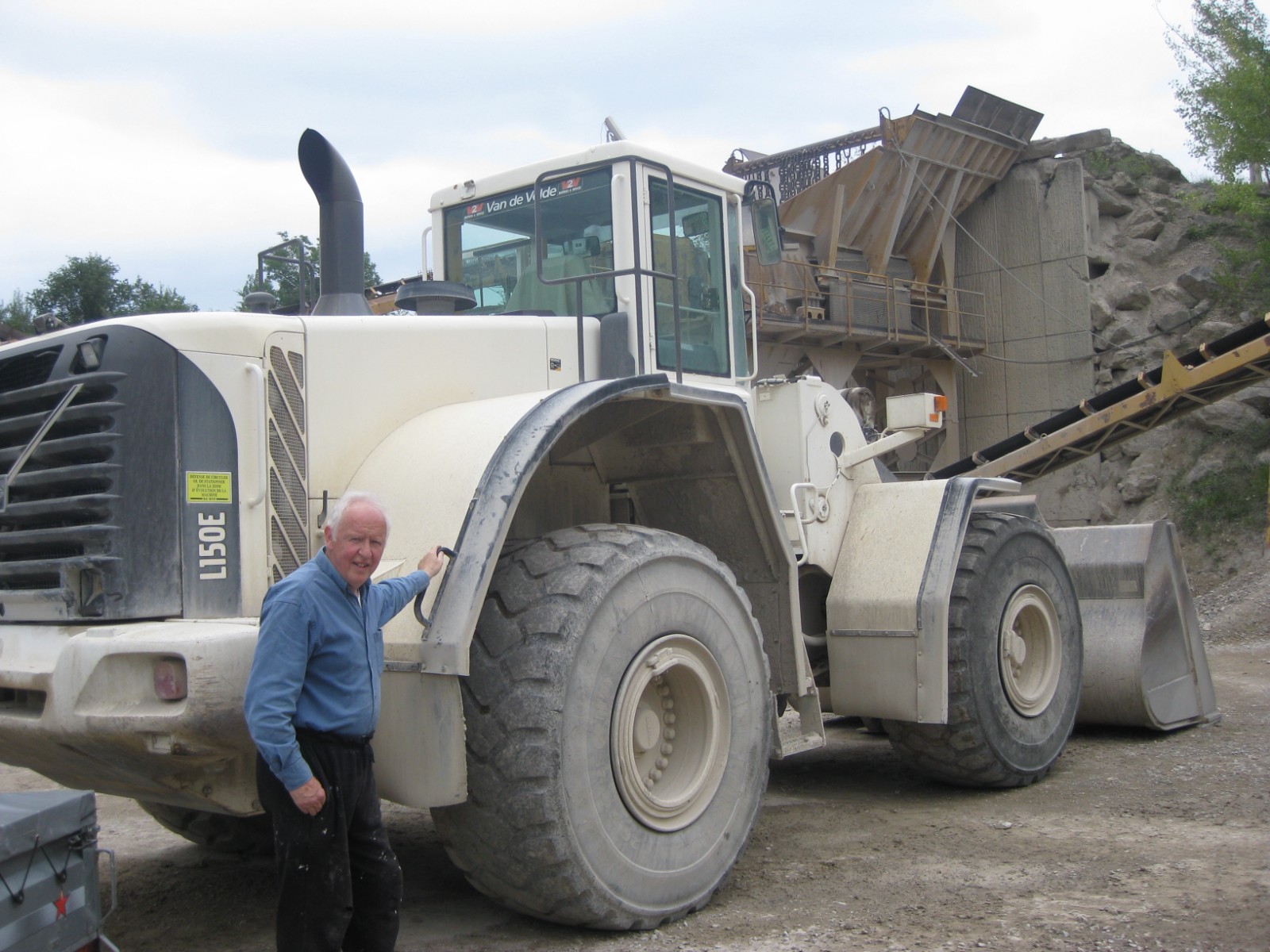 ‘How much do we owe you?’
Gallic shrug. ‘Whatever you feel like paying.’
‘We really have no idea. Give us a clue.’
’10 euros?’
Not bad, eh, for an almost unmanageable load of gravel
What do we need it for? Well, you’ll just have to wait and see
If you’re young, American, and living in Michigan, and if you like performing, you may be lucky enough to spend part of your summer at the Blue Lake Fine Arts Camp, a summer school of the arts located on a 1300 acre campus in the Manistee National Forest. If you’re really talented and work hard, you may one year be selected for one of the 8 or so ensembles that have been coming over for a European tour every year since 1969.
And if you live in Europe, you may be lucky enough to live in one of those towns that welcome these young people. Here at Laroque, we’re among those fortunate people.
The Blue Lake Jazz Ensemble first came here 2 years ago. Their director, David Jensen, and the leader of our own LDO Big Band, Michel Alvarez, hit it off. So when plans for this year were under way, both men were keen to see Laroque included in the itinerary.
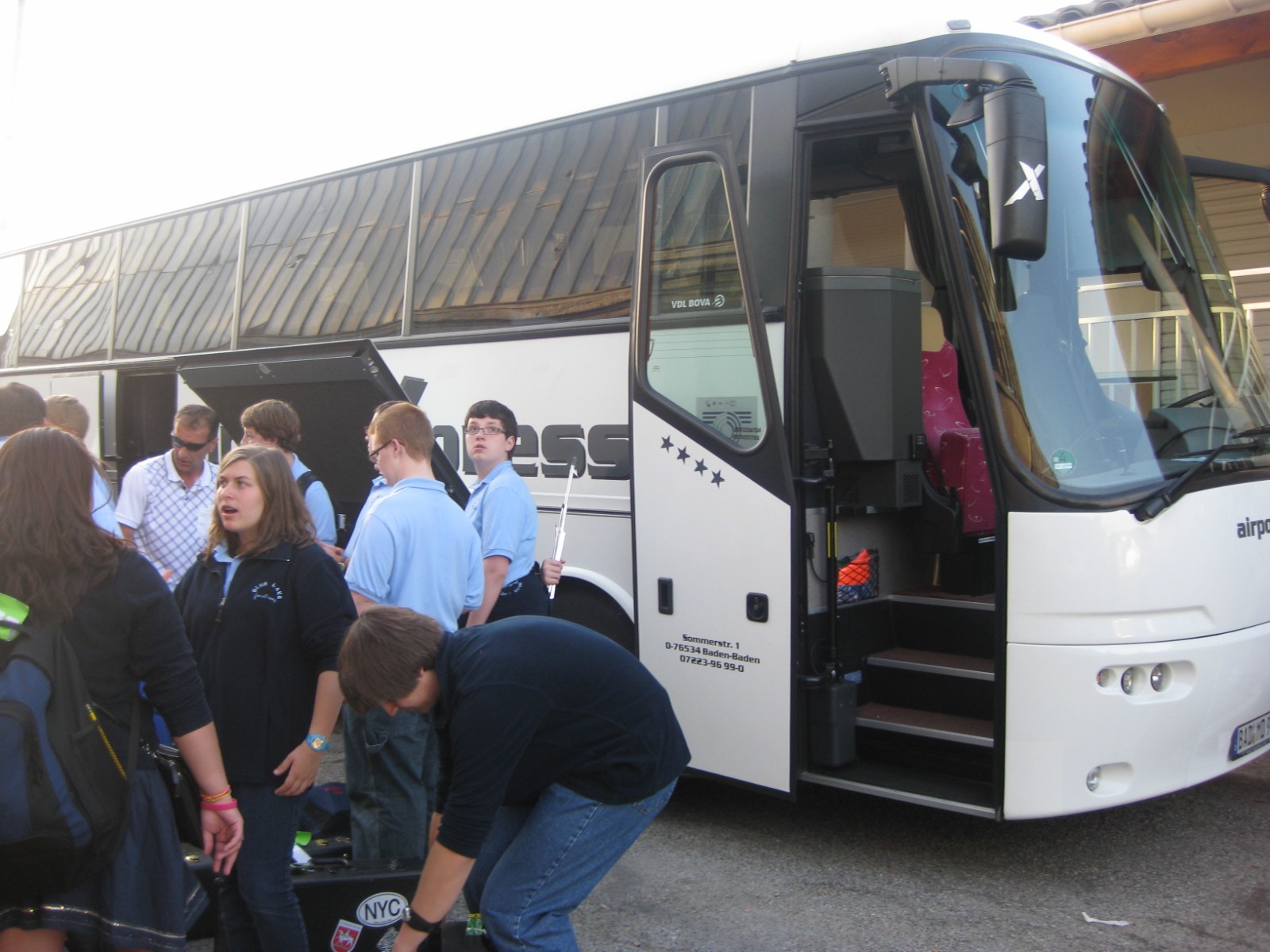
But what an itinerary! The band landed in Paris on 17th June. From Elbeuf in Normandy, they passed through Belgium to reach Germany, Denmark, Germany again, then Austria. Then they travelled 1588 km to reach Laroque d’Olmes, a coach journey that took a whole 24 hours. After staying with us, they were due to travel overnight to Paris and the plane home on July 9th.
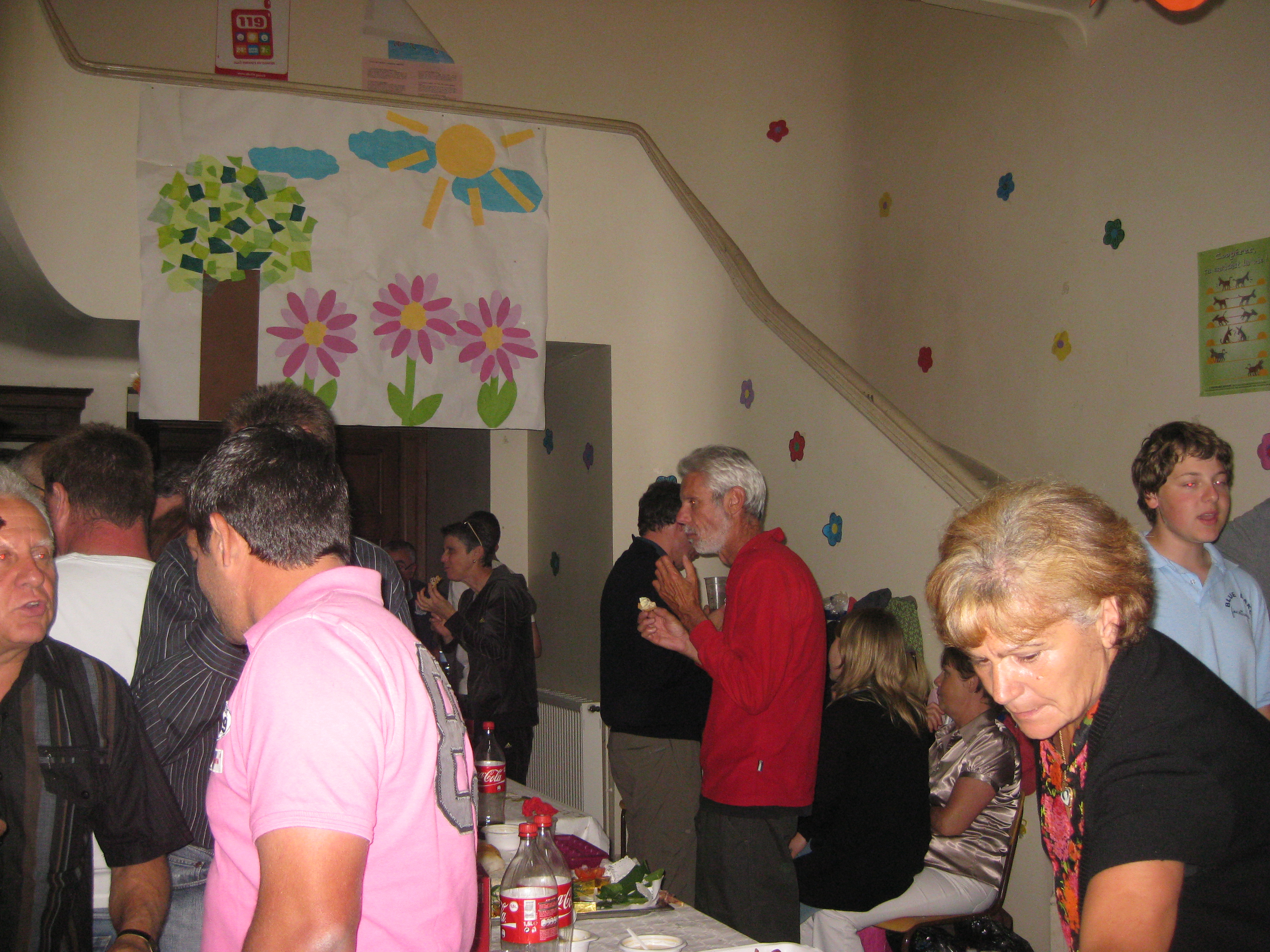
They might have been tired, punch-drunk with cultural variety and new experiences, but they had to be welcomed with a party. It was here they met their host families. What would two 16 year old boys make of the fact that they got to stay with us instead of a French family? Pleased, as it happens. Grappling with unknown languages – French, German, Danish over 3 weeks or so takes its toll. At least we were a bit of a rest.
The concert on Thursday evening was what we were all looking forward to. Well, not me so much. Malcolm had provided translation and interpreting services last time, so this year, he thought it should be my turn.
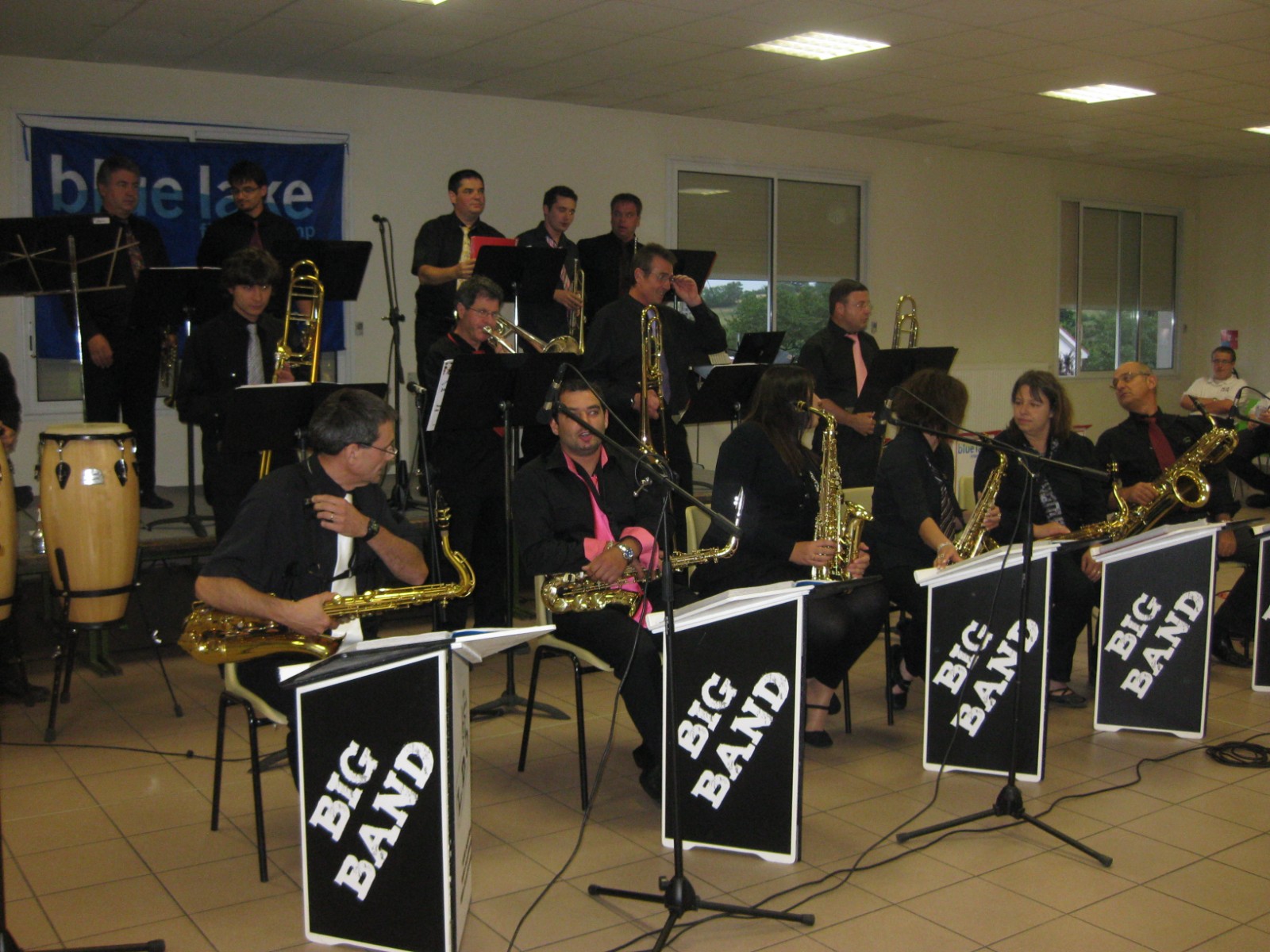
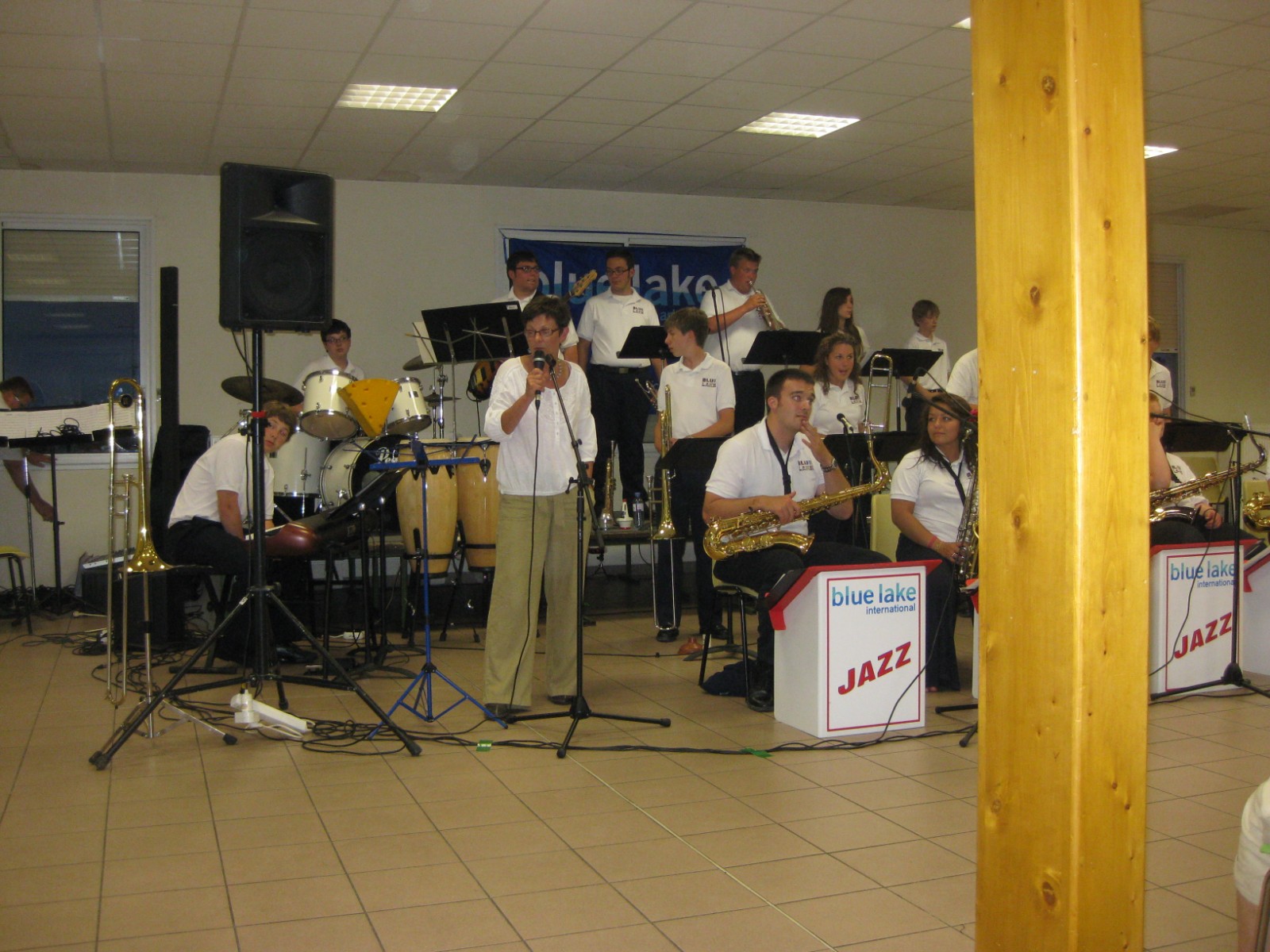
All went well at first: I’d seen Michel’s speech in advance, and David’s response contained no surprises. But when it came to introducing the pieces….well…what IS the French for ‘Dance of denial’? Or ‘Struttin’ with some barbecue’? We decided the titles didn’t matter; I bowed out, and then discovered the remaining repertoire was quite translatable, thank you.
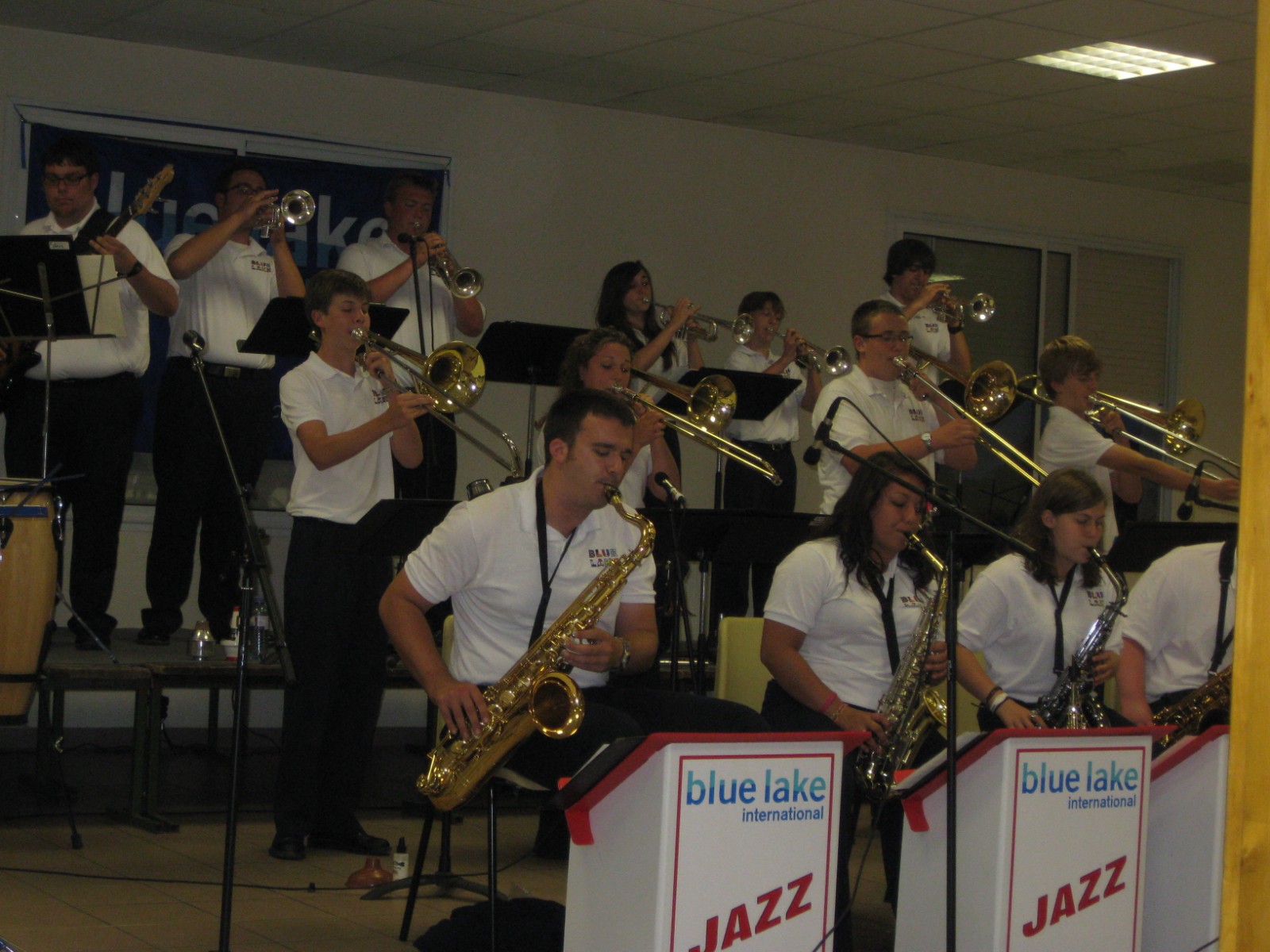
But those Americans! The performance they turned in was exciting, exhilarating, excellent, extraordinary. Impossible to believe that some of the group were only 13, and that few had left High School. They’re so professional. LDO Big Band was on form too, so the high spot of the evening was when the two bands came together to perform. Their pleasure and pride in working together communicated itself to an already delighted audience, and the evening ended on a high for us all.
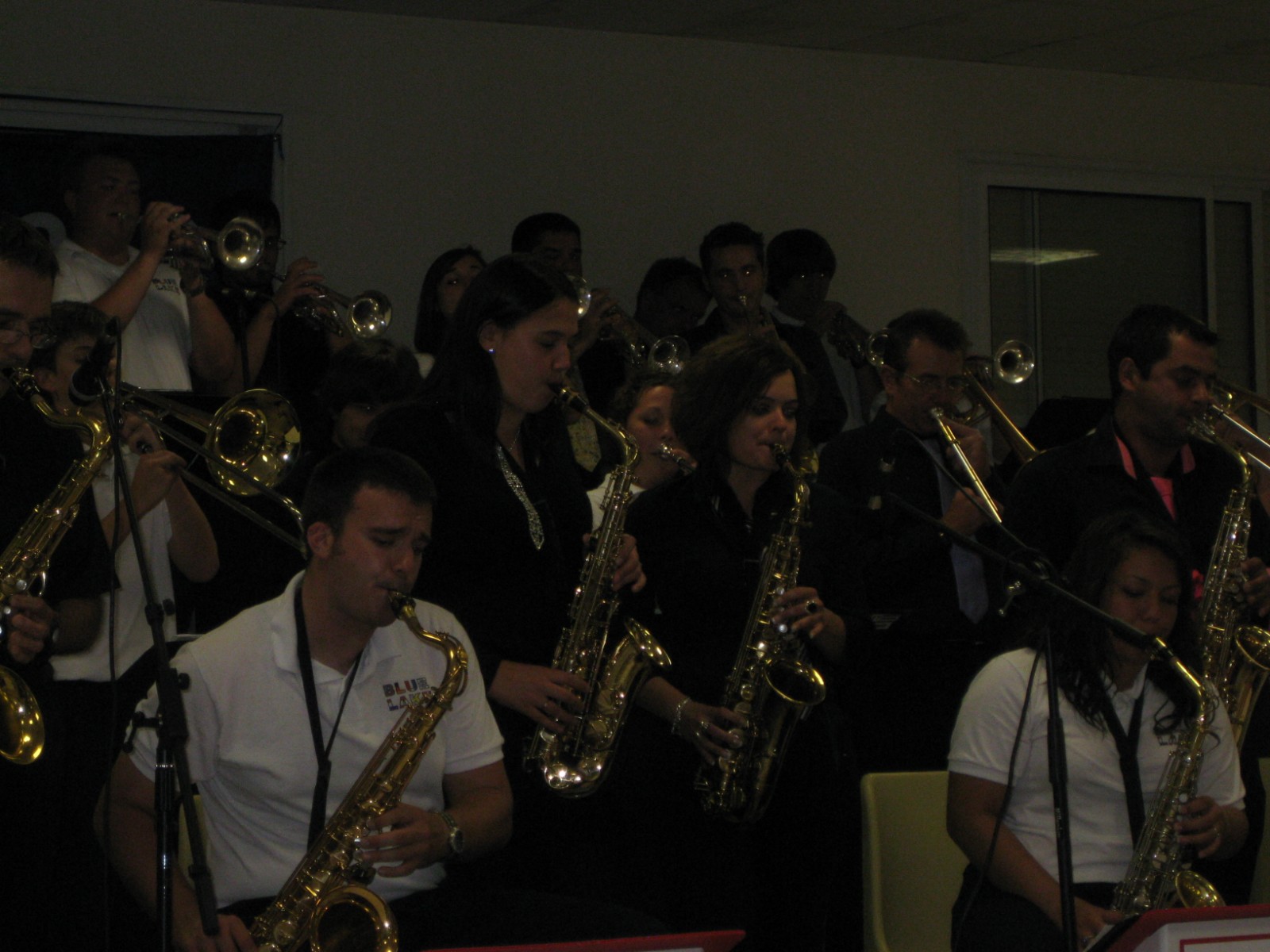
This opportunity to play together is apparently what makes little old Laroque worth the detour for the Blue Lake musicians: it’s not something they do elsewhere. They’d like to send a different band our way next year, David’s year off. It seems Laroque is now firmly on the Michigan map.
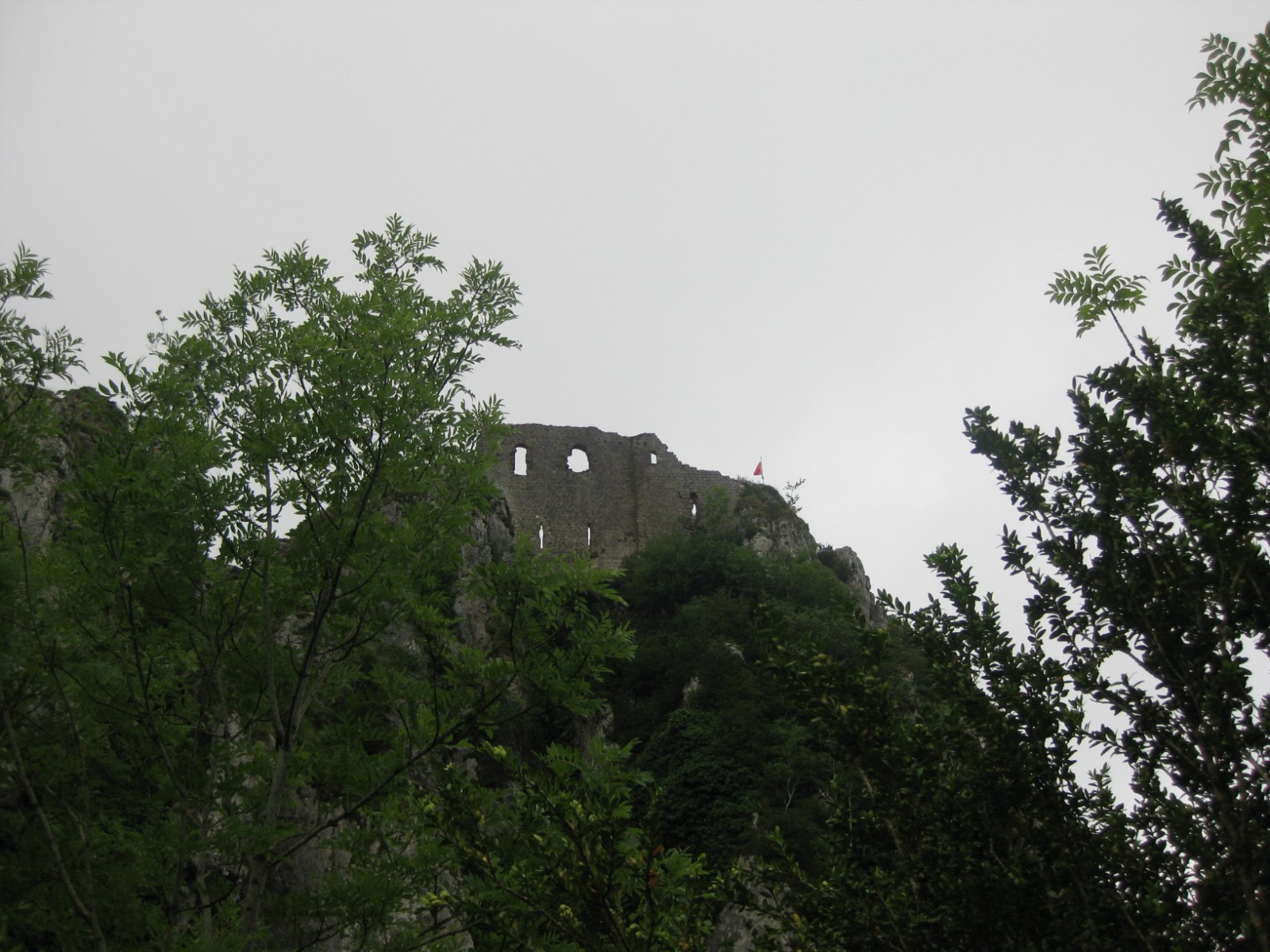
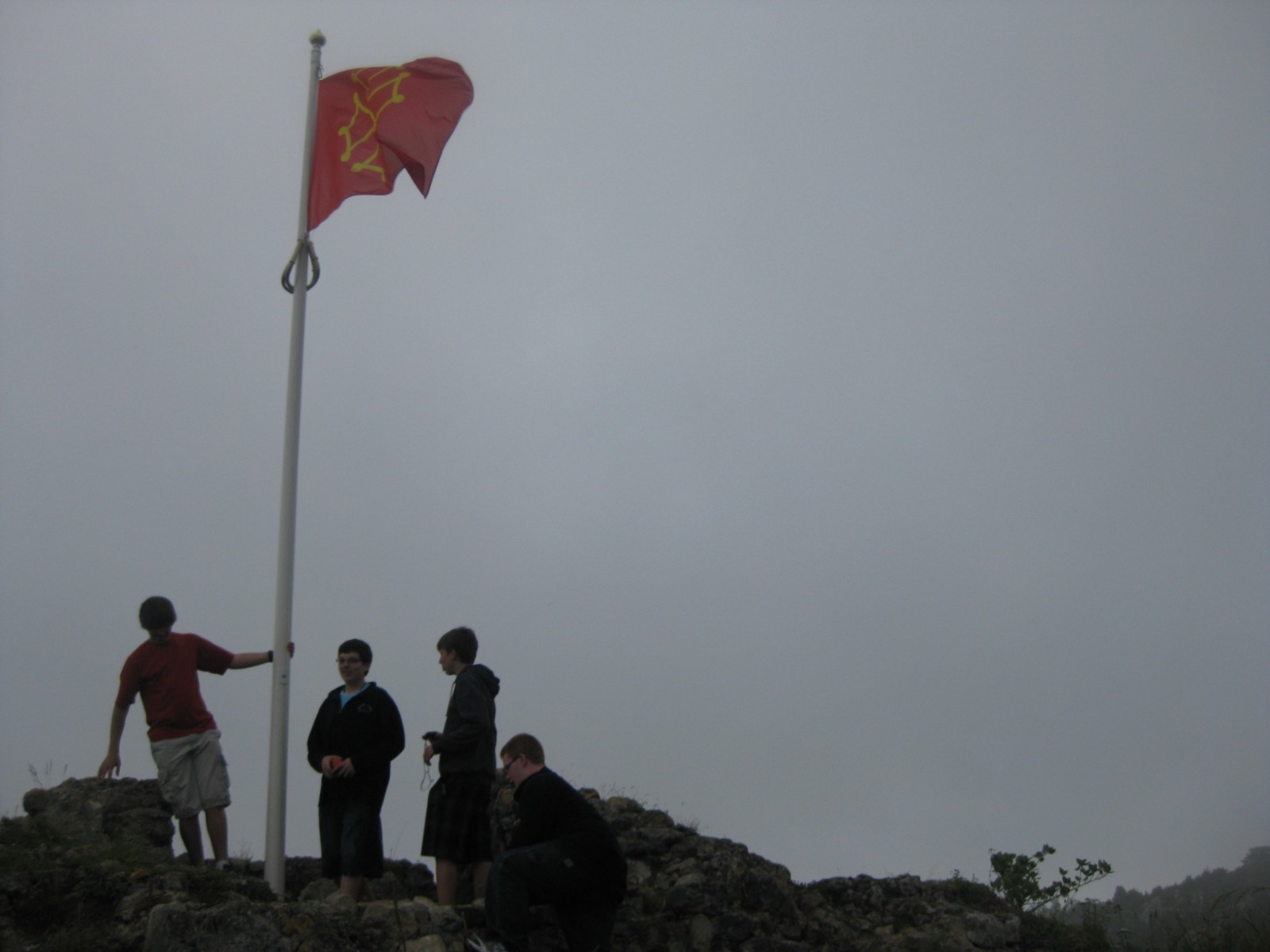
The rest of the stay was given over to sleep, lots of it, and sightseeing, rather less of that. We climbed Roquefixade to see a ruined castle, and took in the medieval town of Mirepoix. Others had different days-of-yore experiences: Foix and Carcassonne.
The trip ended on a sad note though. One of the group had lost her passport, and despite every effort, it couldn’t be replaced in time. She’s still here.
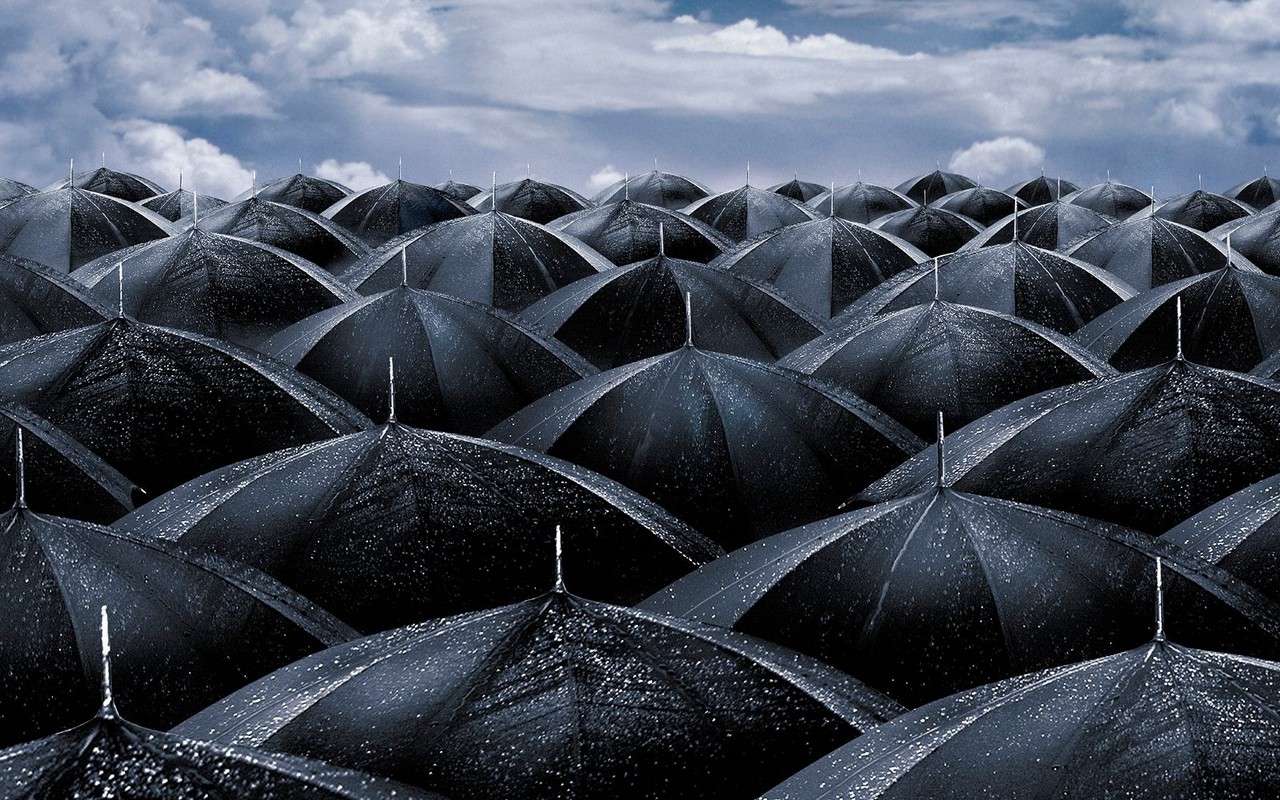
The rain it raineth every day
Upon the just and unjust fellah:
But more upon the just because
The unjust hath the just’s umbrella.
This daft ditty came into my head as a sudden shower threatened to stop our concreting efforts in the yard – we’re nearly ready to show you the final result – watch this space. And I thought – ‘If you, dear English reader of my blog, had been here with us, whether you know that verse or not, you’d probably have come up with some doggerel of your own – a nursery rhyme perhaps’:
Doctor Foster went to Gloucester
In a shower of rain.
He stepped in a puddle
Right up to his middle,
And never went there again.
And then I realised that if instead you’d been with me, dear French reader, I wouldn’t have been talking about ‘just and unjust fellahs’ at all: lost in translation doesn’t even begin to cover it. I’m finding that more and more, I’m missing that shared cultural experience. By culture, I don’t mean the literature, the art and so on. To an extent you can mug up your Molière, get up to date with Gavalda.
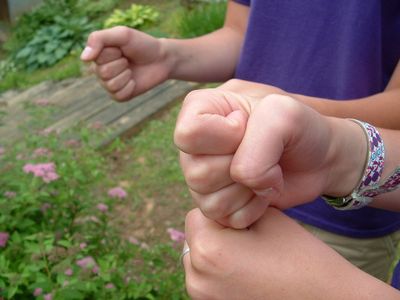
I mean the shared heritage we all grow up with from childhood. In France I don’t know the equivalent of that whole children’s choosing routine that involves ‘one potato, two potato, three potato, four…..’, or ‘ip dip dip, my little ship, sailing on the water, like a cup and saucer…..’
I don’t know how to criticise someone’s persistently down-beat attitude other than by telling them not to be such a Tony Hancock. Or a Grumpy Old Man.
Anyone in the UK, I guess, would immediately understand ‘I speak English. I learn it from a book’. That’s Manuel in Fawlty Towers. Astonishingly, a French woman actually said that to me last week. How could I have explained, if I’d given in to the almost uncontainable urge to burst out laughing?
Then there are all those people we feel we almost know, but who are probably unknown abroad. Anne Widdecombe and other politicians like her have gone from Scourge of The Left to National Treasure in the blink of an eye. In France, who cares? People like me rely on the likes of Nigel Slater and Nigella Lawson to come up with new ideas for Thursday’s meal. Who does the job in France?
I’ve not heard programmes like ‘The News Quiz’ on French radio. It would be lost on me if I had. But then I can read ‘Private Eye’ with some enjoyment and comprehension. ‘Le Canard Enchainé’? Not a chance
Mine is the popular culture of an already bygone age. I know cream’s ‘naughty but nice’, and that ‘life’s too short to stuff a mushroom’ (it isn’t), but in the right company, I understand and am understood. Of course I’m not really complaining that I can’t go round France talking in clichés. What I do mind is that here, I don’t recognise the allusions that I do hear, and I certainly can’t make them myself. It’ll simply have to remain a closed book (or switched off TV).
We intrepid randonneurs from the Rando del’Aubo had our physical workout last Sunday- read all about it in my last post. But travelling to the Cerdagne last Saturday we were tourists, and slightly lazy ones at that.
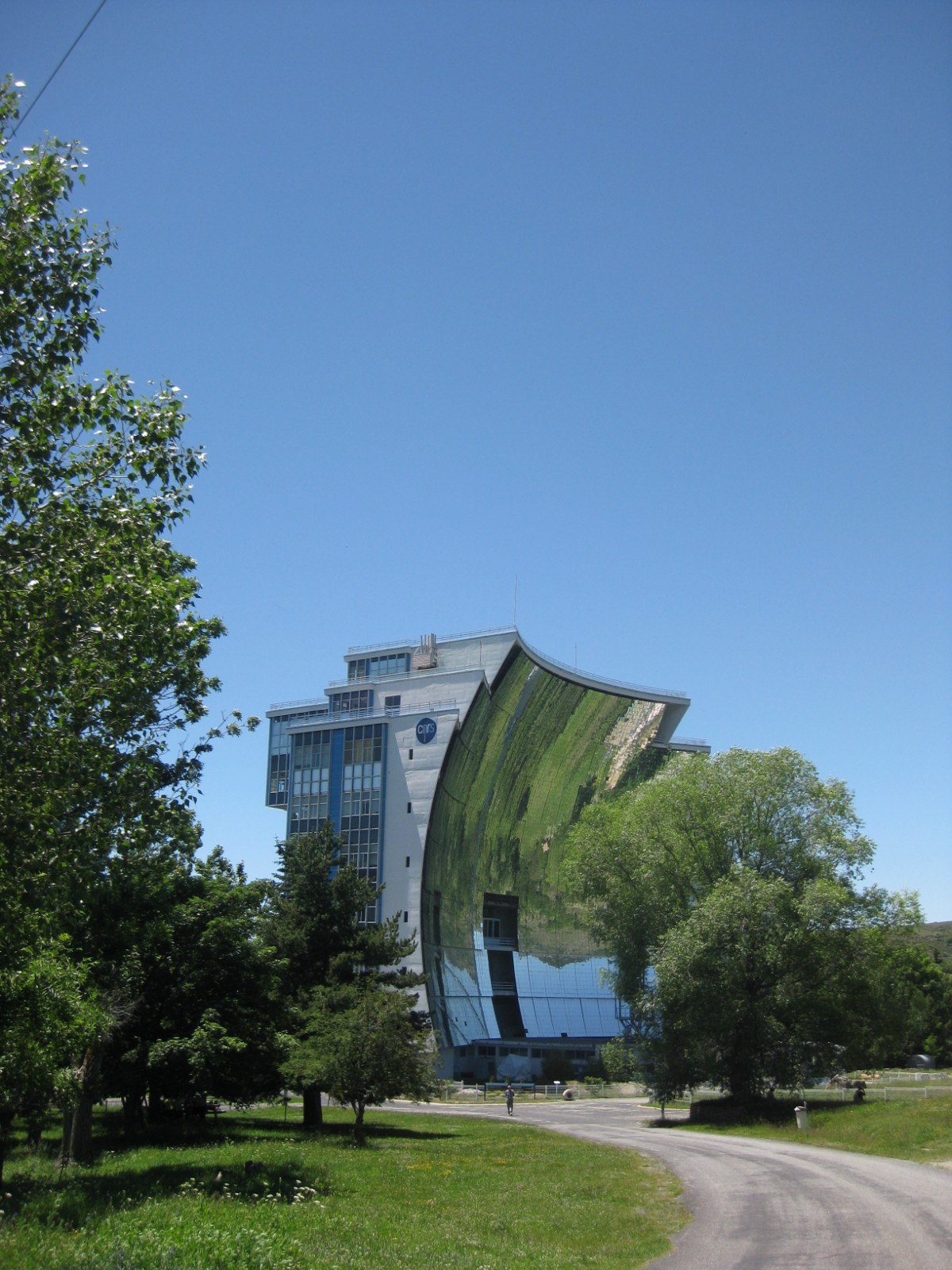

I’m so used to Patrimoine (Heritage) and the-great-outdoors being the reason to get out of bed on holiday here that I was quite unprepared for Héliodyssée. Built in 1968, it’s a series of gigantic solar panels whose purpose is to enable study of the possible applications of solar power, generating temperatures of up to…..3, 500 degrees. At this stage, it’s the space industry rather than you and me who are likely to benefit from the research, but one day, who knows? We admired the upside-down landscape views reflected in the solar panels, but decided against a scholarly visit.
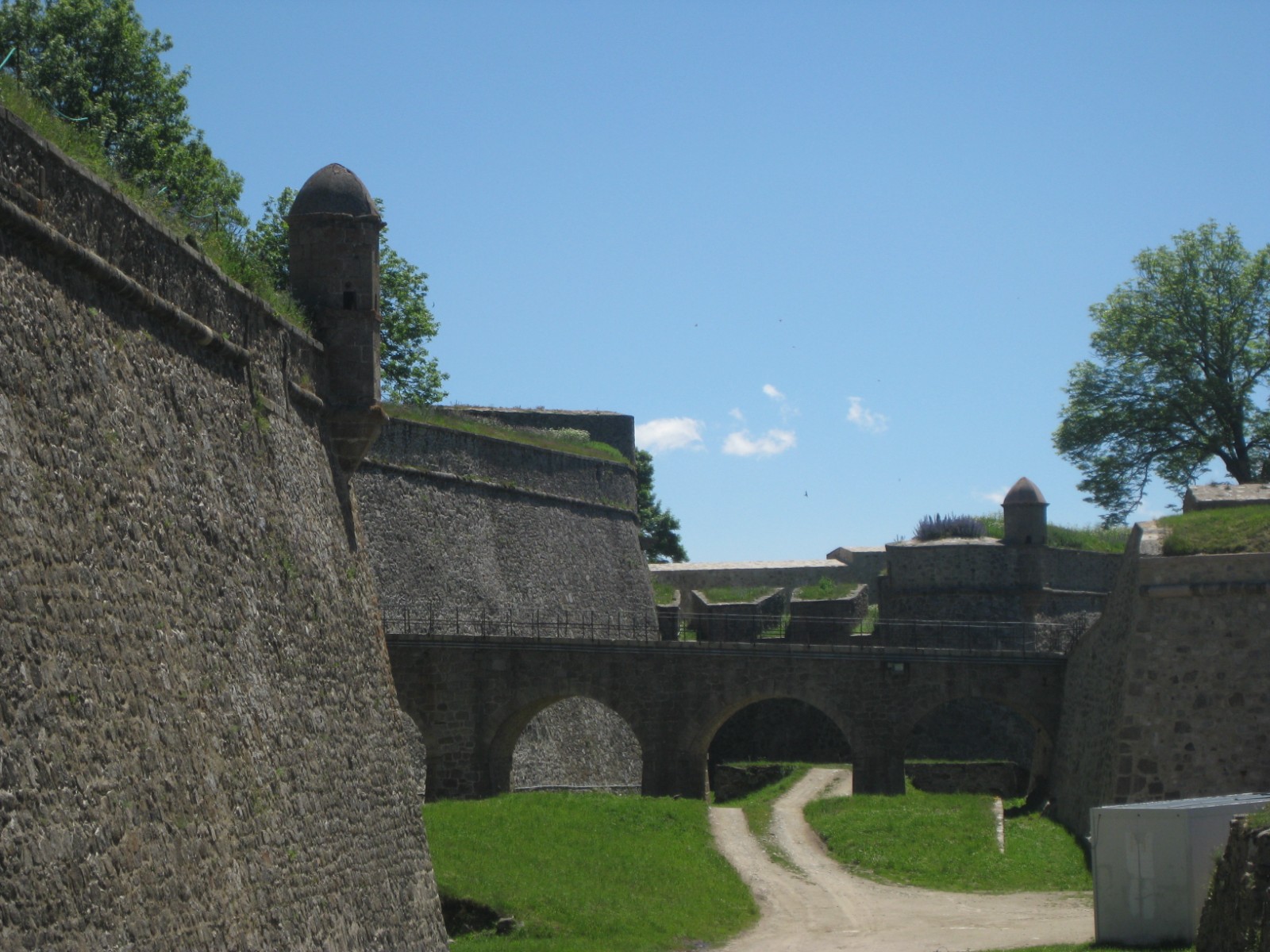
Off to Mont Louis then, and back to a real dose of Patrimoine. This town was built from scratch for Louis XIV as a military settlement in 1679. Vauban was the man in charge: marquis, engineer, town planner, philosopher, man of letters…and also military architect. 12 of his fortifications, Mont Louis included, were listed as World Heritage sites by UNESCO in 1998, so his significance and importance is in no doubt. This fortress, the highest in France, was needed as a result of the Treaty of the Pyrénées of 1659, establishing the border between France and Spain, although the walls which surround it seem rather low to protect against possible invasion.
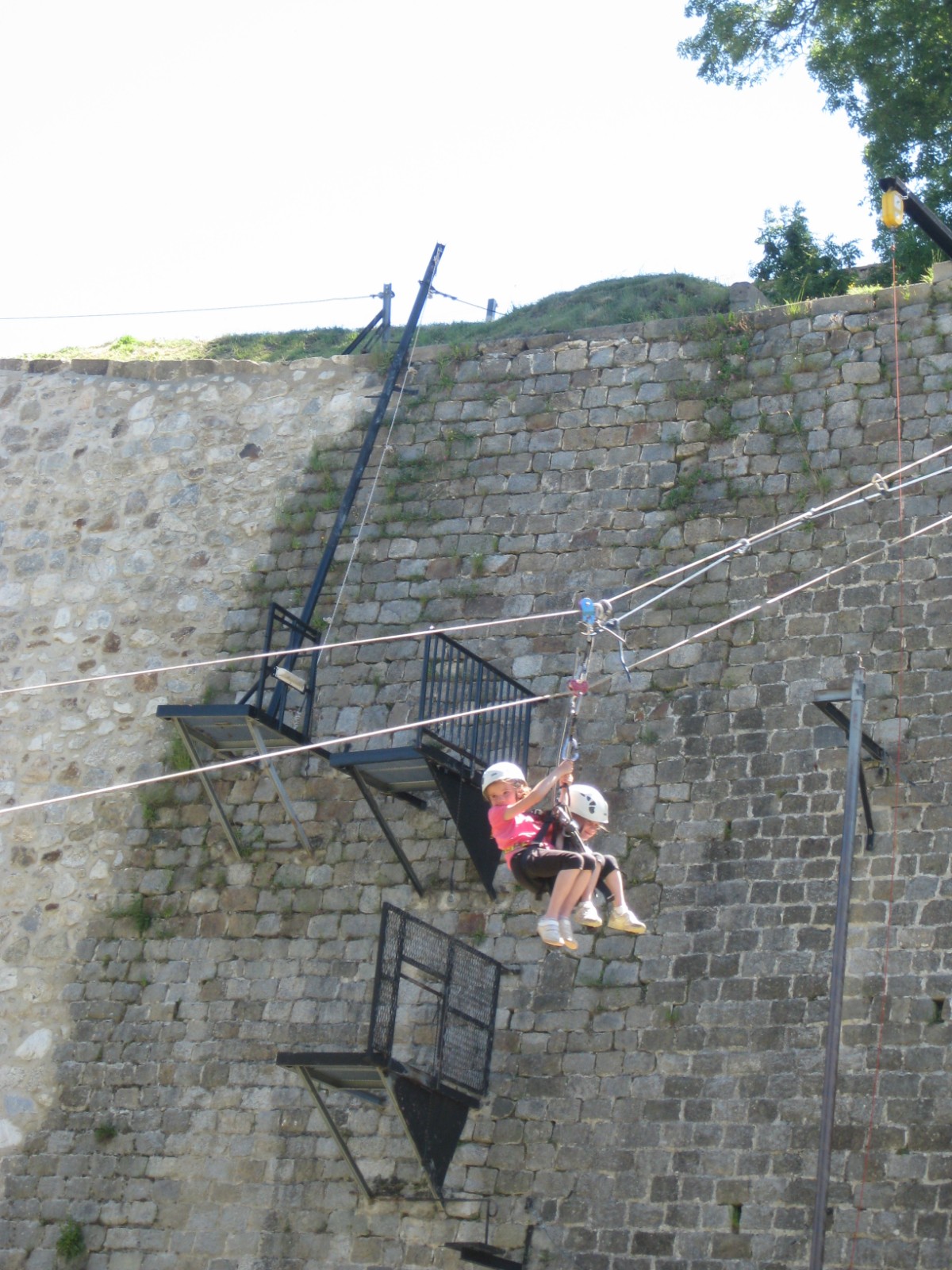
But it was these walls we circuited, enabling us to see from afar the world’s first Solar Oven (this area seems to be Solar Power Central). We watched children abseiling down from the ramparts, instructed by the soldiers who are still a real presence in the town, and enjoyed the contrast between the somewhat severe presence of the barracks, and the lush and mountainous countryside beyond. Many of the town and garrison’s historic buildings can only be visited by pre-booked visits, so we made do with a look in at the simple, rather dour little church which Vauban built for the townsfolk – there were other chapels up at the garrison. Then we retired to a bar for a drink.
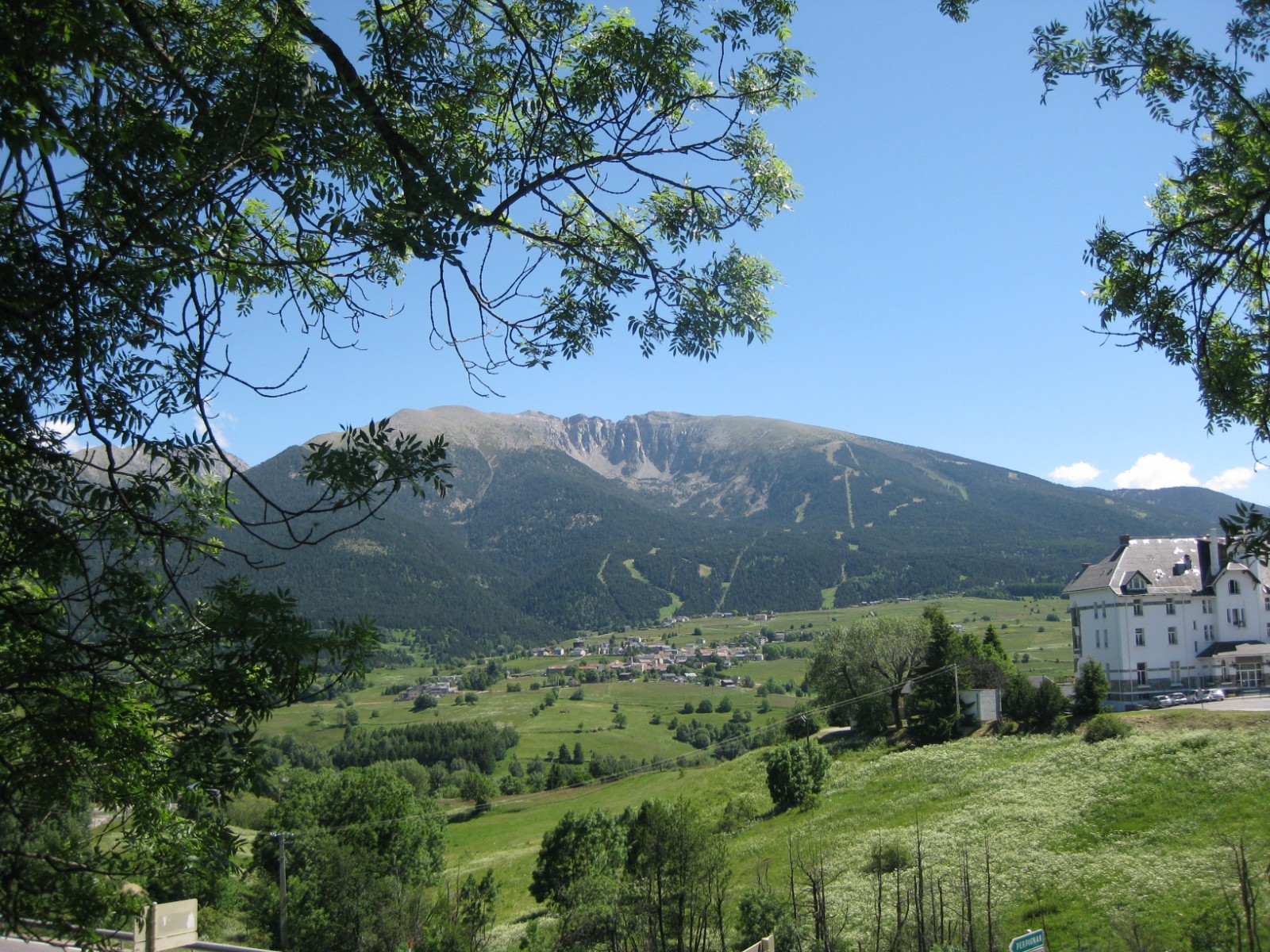
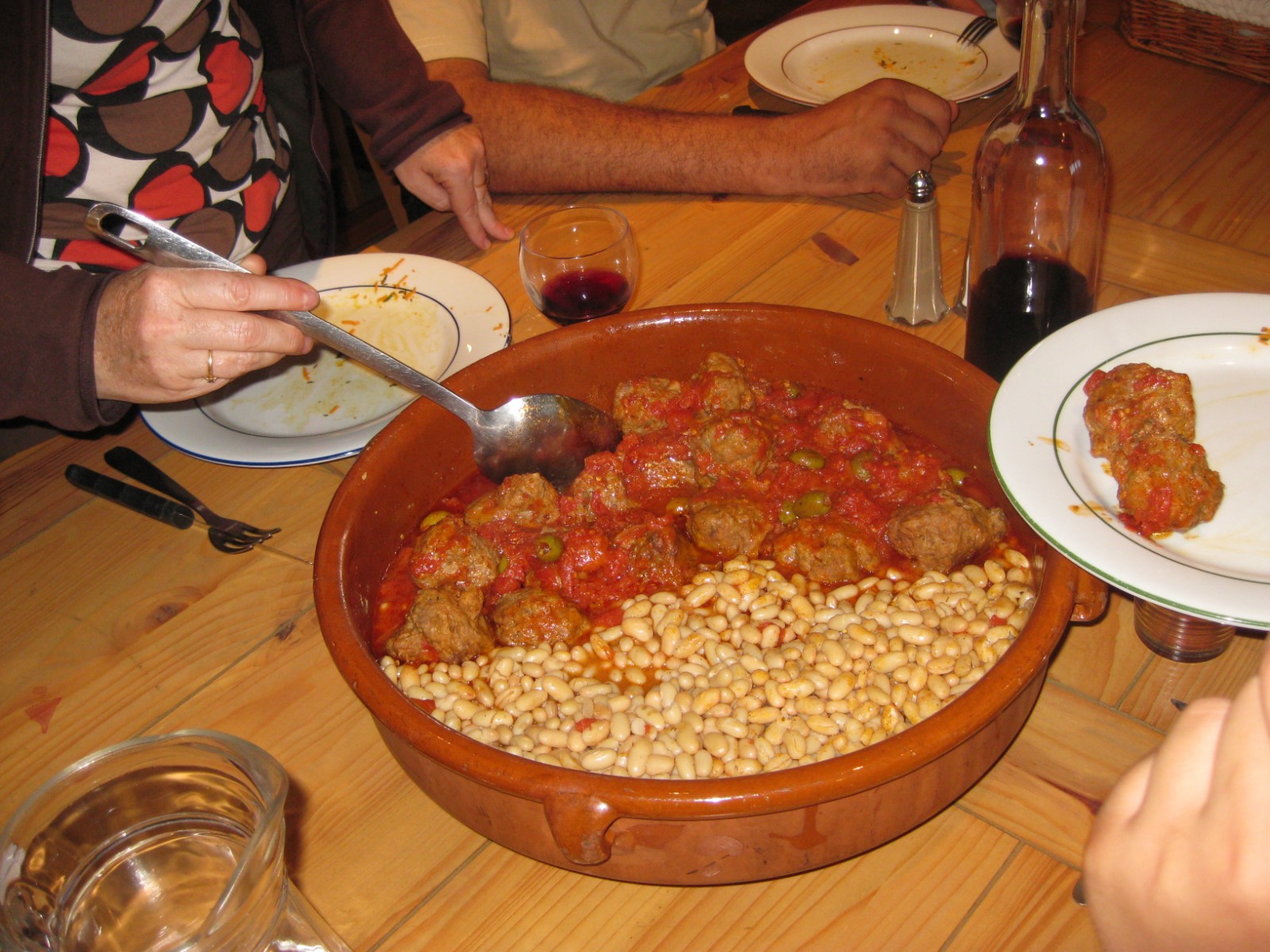
So then it was off to our lodgings for the night, les Ramiers in Bolquère. This area is popular all the year round – walkers in summer, skiers in winter. Les Ramiers supplies simple but comfortable accommodation to both. Our rooms were often quaint: Mal and I went direct into an en-suite shower room-come-study, and then climbed what amounted to a ladder to our attic bedroom. The welcome was cheerful, the views wonderful, and the food copious and tasty. We relaxed by taking a woodland walk most of the way to Font Romeu, enjoying that meal, and having a very early night. We knew we’d need all our energy at the Gorges next day.


You must be logged in to post a comment.