Slow paper is better than no paper

I’m not fully adapted to country life yet.  Forward planning – or lack of it –  is my failing.  I haven’t yet learned to anticipate whether we’ll need more milk, potatoes or whatever before the next planned trip to The Great Metropolis (aka Ripon), and quite often find myself grubbing around at the back of the cupboard for acceptable substitutes.

Saturday, though, is the day we treat ourselves and buy the paper.  There’s enough reading material there to get us through several days, and the sports section, discarded immediately,  is perfect for any number of little jobs such as lining the rubbish bin.  And yet today we had no excuse to visit Ripon, so would we have to go without our newspaper?

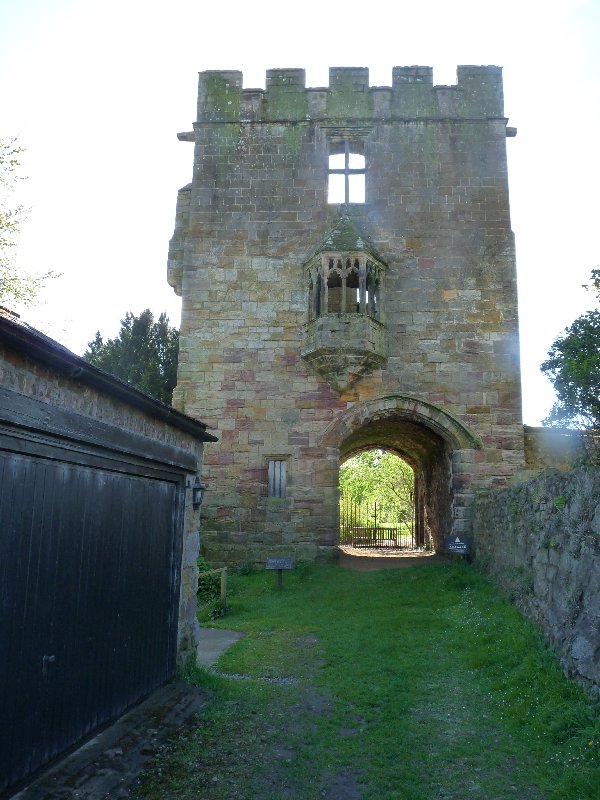
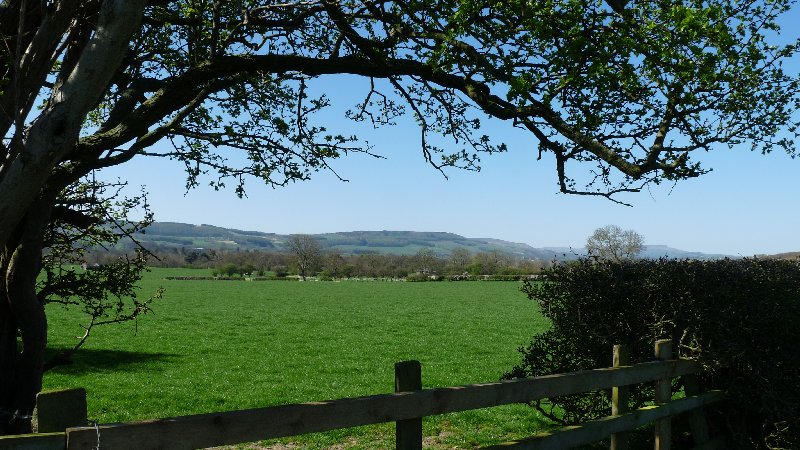
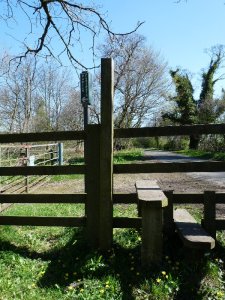
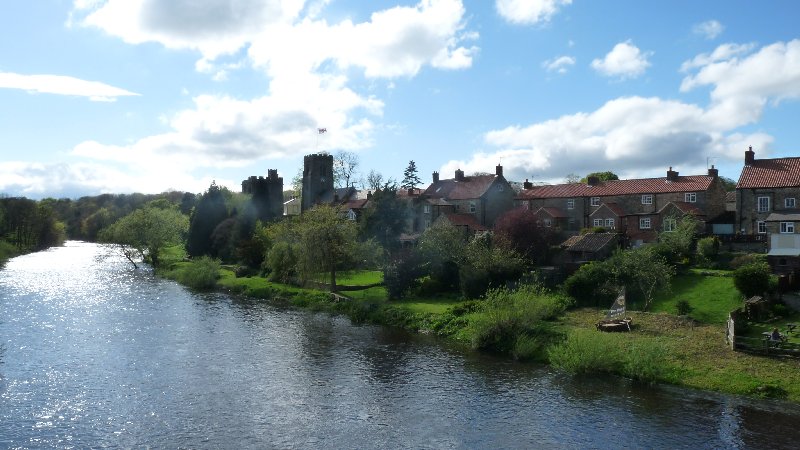
Well, no, there is another solution, but we have to reckon on leaving the house for well over an hour to complete the three and a half mile walk.  The round trip to the paper shop involves leaving home along the path through the woods, walking along the riverside path to Sleningford Mill caravan site, dallying by the weir for a few minutes, battling along the narrow path now surrounded by chest-high spring flowers, and finally reaching the bridge at West Tanfield.

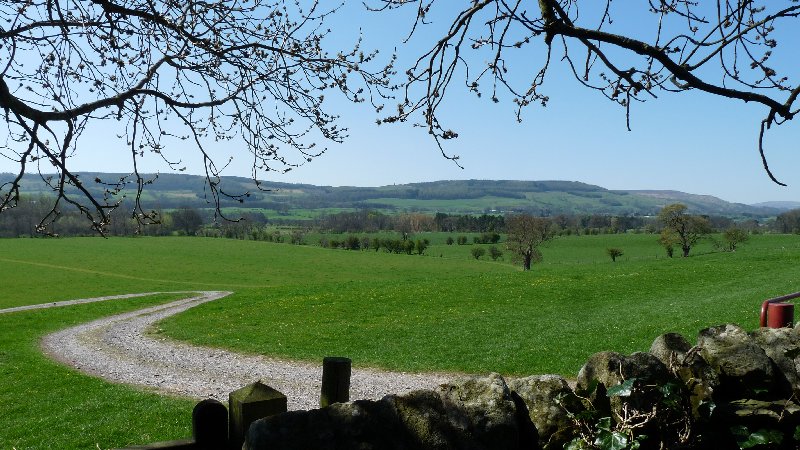
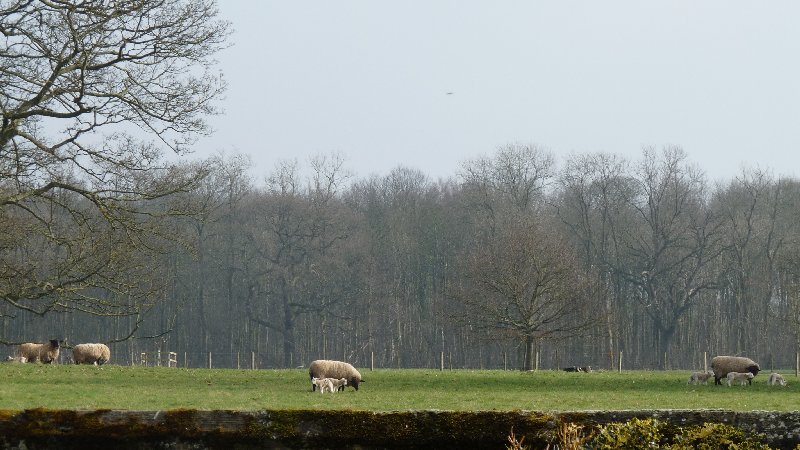
The shop in the village is where you’ll find most things.  There’s food, drink, first aid and stationery – and a Post Office.  There’s a community board where today I found news of someone selling chilli plants – I’ll be buying some of those .  And there are newspapers.  I bought our weekly fix.  Then I set off home by a different route.  Out of the village on the road, up the hill, turn right at a farm gate.  The path here’s been slightly diverted, because the farmer’s made wide beetle banks to boost the number of farmer-friendly insects and spiders on his land.  Through several fields of sheep, who come to inspect me, and along the drive of Sleningford Park, a country house.  A final yomp along paths running alongside fields of wheat and barley, and I’m home once more.

It wasn’t quick.  But I came home refreshed by the birdsong I’d heard; the sight of birds, rabbits, squirrels and sheep I’d passed; the flowers I’d spotted on the paths, different already from the ones I’d spotted only a few days ago; and all those country smells, from wild garlic to sheep dung to spring flowers.  I’d had a better morning, I reckoned, than if I’d either gone without, or jumped in the car to grab a newspaper at the petrol station four miles away.

Bread Actually

A man walks in to the bakery with a tray of eggs, newly laid by his hens.  He’s ‘paid’ in bread. A woman comes with a bag of rosemary from her garden: she too receives bread, still warm from the oven.  Over there, at the back, another woman is steadily getting an enormous batch of scones ready for the oven, while in another corner, someone else is weighing out the ingredients to make biscuits.

Margaret Number 3 makes scones

We’re in the market town of Bedale (population four and a half thousand).  More specifically, we’re at Bedale Community Bakery (or ‘Bread Actually’), tucked away behind the railway bridge next to the Big Cow Little Sheep educational farm.  This is no ordinary baker’s shop.  For a start, though there’s a busy team at work throughout the day, there are few paid staff.  This is a not-for-profit community venture.

The bakers are paid – they’re the ‘bread and butter’ of the organisation after all.  Then there’s hands-on Chairman Carol, and Sarah who seems to be involved in everything.  But all the biscuits, cakes, scones – the non-bread items – are made by a willing team of volunteers managed by retired baker Alan.  From today, Malcolm and I are part of that team.

Focaccia in waiting.

It was a wonderful experience.  From the first moment, we were expected to roll our sleeves up and turn to.  But the friendly welcome, the team spirit, the willingness to share and help each other, the generosity of spirit shown by everyone there made for an unforgettable first morning.  Malcolm washed up and sliced cakes into even portions, and I helped Margaret ( ‘Not another Margaret, there’s three of you now’) make an entire batch of about 210 Anzac biscuits, bake them, cool them, and package them for sale in cellophane sacks of 6, closed with yellow ribbon.  There was focaccia to part-prepare for the just-about-to-start Bedale BAMfest.  There was more washing up, and sweeping and cleaning.  And time for a coffee-stop of course.

They’re seeking to build up the customer base.  There’s a country house, a high-end hotel or so, and various other outlets who like the quality and range that the bakery offers.  There are locals of course, who know a good thing when they find it, because there are always samples of the bread to taste, people around to discuss ingredients and recipes, and a constantly changing repertoire.  Today there was multi-seeded bread; cheese, chilli and – oh, crumbs, I’ve forgotten what else – sourdough; rosemary and black pepper; cheese, chive and onion bread; harvester loaves….. and so on and so on.  This is Slow Food at its best, made with locally sourced flour from Crakehall Watermill with not a single flour improver, and proved gently over several hours to develop the flavour.  Recipes are carefully tested and recorded, and every opportunity is taken to use seasonal flavours and ingredients offered from the community: a glut of fruits or herbs, as well as those eggs and that rosemary.

Off-duty loaf tins.
Off-duty loaf tins.

I hope there’s plenty more to tell about this place.  We think it’s worth the 16 mile round trip to volunteer here (and be ‘paid’ in bread), but others come from much further afield: Redcar, the home of one of the team,  is nearly 40 miles away, and Saltburn, where another lives, 50 miles.  We all appreciate good bread, and recognise a worthwhile project which offers the chance to learn new skills in a supportive and ‘can-do’  environment.

Another day in the Dales

Burnsall –  Howgill –  Middle Skyrehome – Gill’s Laithe – Troller’s Gill – Appletreewick (often pronounced Aptrick locally) –  Kail Lane – Burnsall.

What’s not to like in a walk that passes through places with such enticing names?  It was Rosemary who led the Ripon Ramblers yesterday (we’ve firmly signed on the dotted line for membership) and she’d organised not only a splendid walk with varied Dales scenery, but a warm sunny day too.  Here are my picture postcards from the day: click on the images you’d like to see enlarged, or to have a slideshow

Camberwick Green

The way  to Camberwick Green?  Sadly not. This road sign was made by Countryways and stands by the Bluebell Railway in Sussex
The way to Camberwick Green? Sadly not. This road sign was made by Countryways and stands by the Bluebell Railway in Sussex

Hands up if you remember Trumptonshire!  If you were a child in the 1960s or 70s, or if you were the parent of such a child, chances are that you do remember your weekly visits to Trumpton or the smaller communities of Camberwick Green or Chigley.  For a blessed quarter of an hour after lunch you’d all sink yourselves in front of the TV to catch up with news from Trumpton fire station (‘Pugh, Pugh, Barney McGrew, Cuthbert, Dibble and Grub’), or Windy Miller’s windmill, or Lord Belborough and his steam engine of Winkstead Hall near Chigley.

Trumptonshire was a quiet and ordered little county.  And one of its communities, Camberwick Green, was the  picturesque village that embodied all that rural life is supposed to be about: the sense of community, the dramas that enliven everyday life and bring everyone together, the charming mixture of contemporary technology and Edwardian costume, the idiosyncratic mix of characters from every walk of life.

Reader, we’ve just moved to Camberwick Green.  Well, in fact our village is called North Stainley, but we’ve heard plenty of people who don’t live here refer to it disparagingly as ‘toy town’.  I can see why.  The traditionally designed houses clustered round the village green (home of the cricket club) are not old cottages, but have all been developed and built over the last few years.  The original village consisted of a very few houses near the main road, a small church and (now ex-) chapel, a tiny village school at risk of closure, and three duck ponds.

The local landowner, however, saw the potential of the community and gradually sold off land to developers, who built houses.  These developers however, didn’t throw up standard estates.  They grouped the new homes round existing open space and those duck ponds.  There’s a large, well-appointed and well-used village hall.  There’s an adventure playground for the children: because the village has plenty of children now and that tiny school is bursting at the seams: some classes take place in the village hall. And the families who moved in all bought into the idea of village life at its best.

This community has a regionally important cricket club, training the young players of the future.  There are women’s groups, a book group, a WI (obviously), a drama group, a social group which fundraises for the benefit of the young people in the community…. and so on.  Perhaps because most people can remember what it’s like to move to a community and know not a soul, they’re unusually welcoming to newcomers.  We’ve been made to feel at home amongst them, and encouraged to join in.

This morning, for instance, a large group of us were painting the walls of the long-closed village shop and garage, to smarten it up before the Tour de France passes through the village next month.  Tonight it’s the second and final night of the Arts Society’s production of Blood Brothers.  The village website demonstrates that this is a busy, sociable and purposeful community.  We’re very happy to be here.

In praise of am-dram

We’ve just had a marvellous few days.  We trooped over the Pennines, together with Emily-from-Barcelona, to see the Bolton branch of the family.

This was no run-of-the-mill visit though.  No, we’d chosen this particular weekend because 8-year-old grandson Alex was playing feisty little Gavroche in a production of ‘Les Miserables’.  Not only were the actors all amateurs, but all were young people under the age of 18.  They played to a packed house for five nights in a row.  Now you don’t get packed houses by relying on proud parents, devoted grannies, supportive uncles, aunts and cousins.  You get packed houses because there’s a wider public who recognise talent and commitment, and are prepared to pay to see it, even if it’s not a ‘professional’ production.

Here's Alex as Gavroche ((S &J Walkden Photography)
Here’s Alex as Gavroche (S &J Walkden Photography)

As the potted biographies in the programme demonstrated, many of the young people on stage last week hope to be the professional performers of the future.  They’ve already shown they have much of what it takes.  Like many professional actors, they rehearse during the evenings and at weekends so they can work round the day-job: in their case school.  Like professional companies, amateur groups use the ticket income generated to pay for sets costumes, publicity, printing and the like.  Many groups even perform in the same venues as their professional cousins. The distinctions between the two become ever hazier.

 Alex, like twin brother Ben, is a junior member of C.A.T.S., a youth theatre group in Bolton whose senior members put on two productions a year. It certainly turns out some talented performers, but that isn’t the main aim.  It’s much more about teaching children and teenagers new skills, and developing their confidence in a supportive environment.  Some young people may eventually find their interest lies more on the technical side: lighting and  so on, others in developing scenery.  Yet others will use the lessons learnt there in fields utterly unrelated to the stage. For both young and adult groups however, amateur dramatics, whether you’re acting, sewing costumes, selling tickets or stuck in the prompt corner, is a real means of being part of a purposeful, busy and enriching community.  Ben and Alex’s mum Elinor should know: she’s usually to be found engaged in some production or other in the thriving Bolton am-dram world.

I never came across amateur dramatics in France.  It seems a quintessentially English activity.  In the village where I now live, the Arts Society sits alongside WI membership, cricket, book groups and so on as a real focus for village life.  This weekend, everybody will be crowded in to the  hall as the Arts Society puts on ‘Blood Brothers’, for two nights only.

And afterwards, everyone has to come back to earth.  Adrenalin gone, late nights having taken their toll, it’s time to take a breather.  But only till the next time.  Am-dram is a drug, and addictive for performers and audience alike.

The grand finale of 'Les Miserables'. That's Alex, waving the flag. (S &J Walkden photography)
The grand finale of ‘Les Miserables’. That’s Alex, waving the flag. (S &J Walkden photography)

The Ramblers Return

About time too.  Five weeks in England, and still we hadn’t got out and done a Proper Walk.  With a Proper Group.  Blame the general business of unpacking, organising furniture, pots and pans, clothes, books, pictures and day-to-day Stuff in our new home.  Blame constant strings of communication with officials who Need-To-Know our new details.  Add in those who fail to respond, perhaps because they no longer have local offices and, understaffed,  are too overwhelmed with work (DVLA ?), and you have all, well, some of the excuses you need for our having failed to get a decent walk in.

There was a certain reluctance too.  So many of our happiest times in France were spent discovering the region with our Sunday and Thursday walking friends. Apart from the scenery, we remember with so much nostalgia the conviviality and the leisurely picnics, as we all produced cheeses, charcuterie, bottles of wine and home-made cakes to share at the lengthy midday pause.

All the same, we shouldn’t have worried.  Yesterday we met members from a local group, unsurprisingly the one from Ripon.  We got ourselves to Wensleydale, to a picturesque village called West Burton, and had a hearty, but not too hearty, walk across to Aysgarth, before winding our way back.  We loved it.  The group was welcoming and friendly.  The walk had just the right amount of challenge – we have become just a bit unfit – and the views were all we hoped for.  The weather was good too.  Breezy, but not cold, and plenty of sunshine.

There was only one small disappointment.  At lunch time, British walkers sit with their own personal sandwich, get it eaten, then move on again.  But even that disappointment was relieved when at the end, Our Leader spotted a tea shop.  Sitting round over a large pot of tea, cakes for some, as we reviewed the day was a pretty good end to a pretty good walk.

P1120727

A stroll in the park, a cup of tea.

When I was younger, I couldn’t be doing with formal displays in civic parks: the unwieldy floral clock, or the town’s name picked out in vividly orange French marigolds, or the little red begonias marching stiffly round a perfectly rectangular flowerbed.  I felt sorry for the poor over-disciplined flowers and longed to release them to grow more freely under the trees.

These days, however, I quite enjoy the burst of colour that these formal displays offer as they welcome you into the park.  I sense they aren’t quite the rigidly organised affairs of a few years back, and certainly they attract attention.

Yesterday, for instance, whilst in Ripon to do some jobs, Malcolm and I made a detour to idle away a little time in Ripon Spa Gardens, a really rather small park that’s a real oasis of relaxation very near the  town centre.

Flowers round the bandstand.

There are those colourful beds to meander through.  There’s some trunks of thinned out cypress trees which have been transformed into a celebration of Alice ‘s Adventures in Wonderland.  This is where grandparents stop to reminisce about this classic of childhood, whilst their grandchildren make it into an impromptu climbing frame.  The Ripon connection with ‘Alice’ is that Dodgson was at one time Canon-in-Residence at the Cathedral here.

Alice's Adventures in Ripon Spa Gardens.
Alice’s Adventures in Ripon Spa Gardens.

There are trees fringing the edges of the park, making it seem larger and more extensive than it really is.  There’s crazy golf, and a bowling green.  There’s a bandstand.  And best of all, there is a café.

I was resistant to calling in for a cup of tea.  Cafés in parks are often dismal affairs, lowest-common-factor places offering indifferent tea, cheap fizzy drinks and industrial biscuits.  But Malcolm was correct in insisting we try it out.  He rightly pointed out that a café with this wonderfully quirky bicycle parked outside, sporting knitted versions of everything on the café‘s menu couldn’t be all bad.

Fine publicity for a fine caff.

In fact it’s all good.  The Sun Parlour Café is cheerily decorated in yellow, and already anticipating le Tour de France’s visit to Yorkshire by having lines of tiny knitted jerseys strung at every window.

Jolly jerseys at the windows.

There’s a choice of a dozen or more home-made cakes or biscuits (coffee and walnut for Malcolm please, orange-and-lemon for me), and freshly baked scones all at unbeatable prices.

Which cake to choose?

Every day they offer  a roast dinner and hot pudding with a drink for an excellent value £9.00.  It’s run by a lively and welcoming woman who answers to the name of ‘Lefty’ (‘My surname was Wright before I married’, she explained).  She clearly has regular customers.  She’s just acquired two more.

Ripon’s living up to expectations.  We’ve now added the Spa Gardens to its list of attractions.

Time to go home.  Nobody's relaxing on that park bench.
Time to go home. Nobody’s relaxing on that park bench.

The pirates return

Alex and Ben rush down the gangplank of the pirate ship.

This post probably won’t make much sense if you’re not from the UK.  It won’t make sense even if you’re British if you’re not at least in your mid- 50’s.  You won’t know of a world where your radio listening choices were limited to the Home Service (much like Radio 4), the Light Programme (much like  Radio 2) and the Third Programme ( much like…. yes, Radio 3).  What’s missing from this list?  Yes, indeed, Radio One.

If you were a teenager before the mid 1960s, you weren’t going to get much joy listening out for a diet of pop music by choosing the BBC.  The only option was to tune in to the commercial Radio Luxembourg.  The amount of music it offered grew rapidly throughout the ’60s, but anyone from my generation will remember the commercials too.  Hands up anyone who can remember Horace Batchelor’s ‘Infra-Draw’ method for winning the football pools, turning the previously obscure Bristol suburb of Keynsham, ‘spelt K-E-Y-N-S-H-A-M’ into a household name?

I’d listen whilst allegedly doing my homework, but in 1964, along came another listening choice, broadcast, for goodness’ sake, from a ship anchored four miles off the coast of southern England.  This was Radio Caroline.  By broadcasting from the waters, it avoided the need to be licensed, and that’s why it quickly became known as a ‘pirate’ radio station. The single southern ship was augmented by others broadcasting from around the British coast .  The tag-line was ‘Your all-day music station’, and like Radio Luxembourg and certain American stations, the top 40 was the usual diet, presented by names who later became the mainstay of mainstream radio:  Tony Blackburn, Simon Dee, Johnny Walker……..

By insisting that the broadcasts potentially interfered with radio messages to shipping, legislation succeeded in making the pirates illegal in 1967.  They continued nevertheless, but their hey day was over, because the BBC gave in.  Radio One was born (and Two, Three, Four, and later Five), and most young people exchanged patchy reception from the pirates for the more certain transmissions of the BBC.

Why the history lesson?  Because this last month celebrated the 50th birthday of Radio Caroline.  It still broadcasts via the internet, but up in Liverpool, for one month only Radio Caroline North set itself up on Lightship LV23, in Albert Dock, for a 1960s and 1970s nostalgia-fest.  DJs from the era were wheeled out to have fun and give listeners fun too, playing old favourites and patently enjoying themselves as they chatted over the airwaves.

And one of those presenters was my son-in-law, Phil Sayer.  If you lived near Manchester in the 1980s, you might remember him as one of the presenters  of BBC North West, and later he was on radio stations such as Piccadilly Radio and Smooth FM.  These days he and my daughter run a successful voice-over business, but both still enjoy a chance to do a spot of work on the radio when the chance arises.

We all made a trip to Liverpool on Radio Caroline North’s last Saturday: daughter Elinor, the twins, Malcolm and me.  On the way over in the car we demanded, and got, a mention on air. Once on board ship we clambered up narrow stairways  to get to the cramped studio with its blast-from-the-past transmitting equipment, and found ourselves in the company of radio-geeks and nostalgia seekers from all over the north-west .  Fun all round.  And here are some pictures as a souvenir.

Ransoms and bluebells

Wild garlic in the woods

Little tells me more forcefully than a walk through the woods at this time of year that we are back in England.  Instead of crisp brown leaves underfoot, from the Autumn before and the Autumn before that, there are narrow damp paths through the rich carpet of undergrowth.

Wild garlic, ransoms, bear's garlic, ramps
Wild garlic, ransoms, bear’s garlic, ramps

And that smell!  As you walk, inevitably bruising the leaves that crowd onto your path, you’ll smell the pungent notes of garlic: because those leaves, topped off by a mass of star-shaped flowers, are wild garlic (or ransoms, ramps or bear’s garlic), and they’re unknown in the part of France where we lived.  In among, competing for the sun which dapples in through the tree canopy, are bluebells.  At the moment, they’re largely still in bud but give them a few days and they too will carpet the woodland floor in a shimmering violet-blue.  And these are our English bluebells.  They’re more graceful than the upright, paler Spanish bluebells that we sometimes saw in France.

Bluebells
Bluebells

The blogosphere is crammed with suggestions for making use of the garlic, among the earliest greenstuffs available after the winter months.  Here‘s what David Lebovitz suggests.

Well, I rely on David to supply ideas for delicious grub, so off into the woods I went for garlic leaves.  I was careful to pick only leaves, rather than yank up entire plants with their tiny bulbs, so that they would grow again next year, though a few bulbs crept into my harvest despite my efforts.  I’d taken my haul  in any case from the woodland edge, as the garlic plants made an escape bid into nearby fields.

And here’s the resulting pasta dish.  Frankly, we were a little disappointed.  It wasn’t the most interesting dish we’d ever eaten.  But I could see the charm of these leaves to those who’d struggled through the winter months on a diet of beans, swede, and the odd bit of salted pork.  Wild garlic has a bright, ‘green’ flavour, mildly garlicky of course, and I will try it again, maybe substituting it for spinach in a tart with walnuts and a sharp cheese for instance.  I always enjoy an excuse to forage for food.

Wild garlic pasta, David Lebovitz style.

Our Bank Holiday excursion: Castle Howard

Stately homes.  Back in the day, they were home to the landed gentry, and were local employers par excellence, what with large households to cook, clean, furbish and refurbish for, ornamental and vegetable gardens and even farmland to nurture, children to rear and educate, hunting grounds to stock and maintain, guests to cater for.

Nowadays, they’re where the English like to go on a Bank Holiday.  They provide the chance to get a glimpse of other, very different lives, to learn a little history and to enjoy a stroll round gardens on such a different scale from that little patch you potter around back home. And because it’s a Bank Holiday, a little entertainment doesn’t go amiss either.  People arrive in their hundreds, expecting to spend the entire day exploring house and gardens, snacking rather well in one of several tea rooms, mooching round the gift shop and having a little bit of extra fun too.

Castle Howard
Castle Howard

Emily had come over from Barcelona to visit, with boyfriend Miquel in tow.  Castle Howard seemed a good place to spend a day. Thanks to its frequent starring role in TV costume dramas and films, there can be few Brits who aren’t familiar with Castle Howard, even those who haven’t ventured north of Watford Gap.  Me, I’m the ‘Brideshead Revisited’ generation, and back in 1981, Tuesday evenings (I think) were put on hold for weeks and weeks as we turned the television to ITV and followed the Evelyn Waugh saga, feeding our nostalgia for a very different  pre-Second World War Britain.  Castle Howard was pretty much star of the show.

And really, why not? You can read its history here, but just spend a little time strolling round with us, as we re-discovered the parkland; the woodland; the walled gardens; the splendid 19th century Atlas fountain;  The Great Hall – where columns & arches covered with carved decorations rise towards the splendidly painted dome; the chapel decorated by Burne-Jones… and so on.


But because we went on a Bank Holiday we had extra things to do.  There were sheep dog displays.  We admired the skill of those so-well-trained dogs as they expertly rounded up not only sheep, but a gaggle of geese and a fussy line of ducks.

Sheep dog rounding up geese for a change.

There were falconry displays.  Here is the splendid and majestic Ferruginous Buzzard who made a break for it and got away: last seen in a distant field, regarding us all with thorough disdain.  I hope handler Ben found him again: he was a very handsome beast indeed, as were all the birds of prey we saw that afternoon.

Ferruginous buzzard, contemplating his get-out plan.

A final wander round the grounds, the walled garden, then we too made our excuses and left, just before closing time and the mass-escape for the car park.  We’d had a fine day.

A final glance at the parkland surrounding the house.