A history mystery

Acting the facts (Pad Dawson)

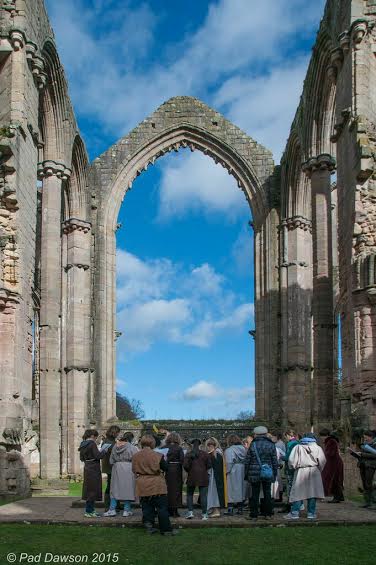
When teachers bring parties of children to Fountains Abbey, we often tog them all up in monastic robes, and explore the site with them .We want them to get a feel of the day-to-day life of a mediaeval monk. What? Prayers eight times a day? No underclothes? No talking? No heating? They’re impressed, in a horrified kind of way.

Then they go away, with only brief notions of the story the Abbey itself has to tell. Or why the place is a roofless ruin.

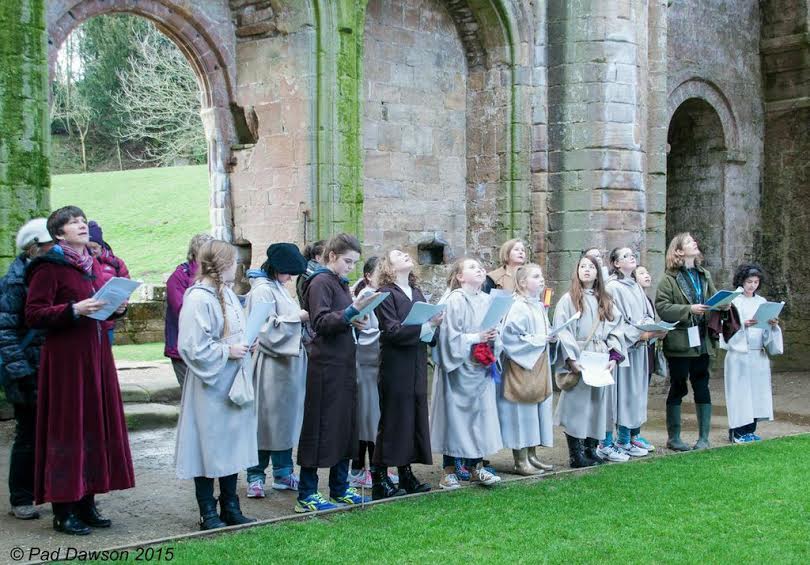
Until this year. Now they can come with their teachers and ‘Act the Facts’. They’re given props – perhaps a simple cape, a feathered cap, a woollen robe, a crown . These turn them into an early monk, a master mason, an Italian wool merchant, a dastardly baron, or even Henry VIII.

They have a script. It’s a melodramatic pastiche telling the Abbey’s turbulent history. Simple God-fearing beginnings, then powerful prosperity, then war, plague and corruption all leading to the final action. Henry VIII dissolves the monasteries.

The question at the beginning of the play is –

‘Who destroyed the Abbey?’

Acting it out, the children lose their places, stumble over words like ‘Cistercian’ and ‘lavatorium’, and forget which character they’re playing.

Honestly, what’s the point? It’s too complicated. They’re learning nothing.

Then they reach the end. We ask them to line themselves up. Twelfth century characters first, then thirteenth… and so on, through to those who bring the story to an end in 1540. We ask them which century was best.

And that’s when we realise how much they’ve learnt. They talk passionately about the simple piety of the early days set against the laxity of later centuries. They discuss austerity versus comfort. They talk feelingly about the plague, and the reasons for the Dissolution of the Monasteries.

And in telling the story of the Dissolution, they’ve solved the mystery of why Fountains Abbey is a roofless ruin.

Back at school, there’s so much for their teachers to build on. The ruin has brought history to life.

Come and see it for yourselves.  We can’t promise you a feathered cap, or a cardboard crown, but you could join one of the regular tours.  You’ll get a real taste of history as you soak up the special atmosphere of this special site.
(Pad Dawson)
(Pad Dawson)


Finding my Feet

Look, I promise I won’t just reblog my daughter’s blogs from South Korea every time she publishes one. You’re quite capable of ‘following’ her yourselves after all. But I ‘m so excited that her first month there has been such a positive experience. And if everyday life includes ballet yoga on Wednesdays, and kimchi jjigae on any day of the week, it’s worth reading about, I think.

savagearts's avatarSpeaking Konglish

I can’t believe it’s almost been a month since I arrived in South Korea. I expected to be wailing under the covers by this time, sniffling and puffy-eyed because I missed home. Not true in the slightest. These few weeks have been very strange for me…mostly because I don’t feel strange here.

I imagined complete culture shock, foodshock, and oh-God-what-am-I-doing-with-my-life shock. Aside from the latter, which is felt by most people on a regular basis, I have yet to really experience any kind of shock. The language barrier is certainly very real, but it hasn’t been a cause for any kind of trauma (yet), apart from a shouty taxi driver who pretended not to know where I was going. 5 minutes later, we pulled up outside my local metro station – I get the feeling he only pretended not to know so he could drive around the block for that extra 200…

View original post 886 more words

Planning my planting for 2017

AllotmentsBoroughbridgeMarch2016 013

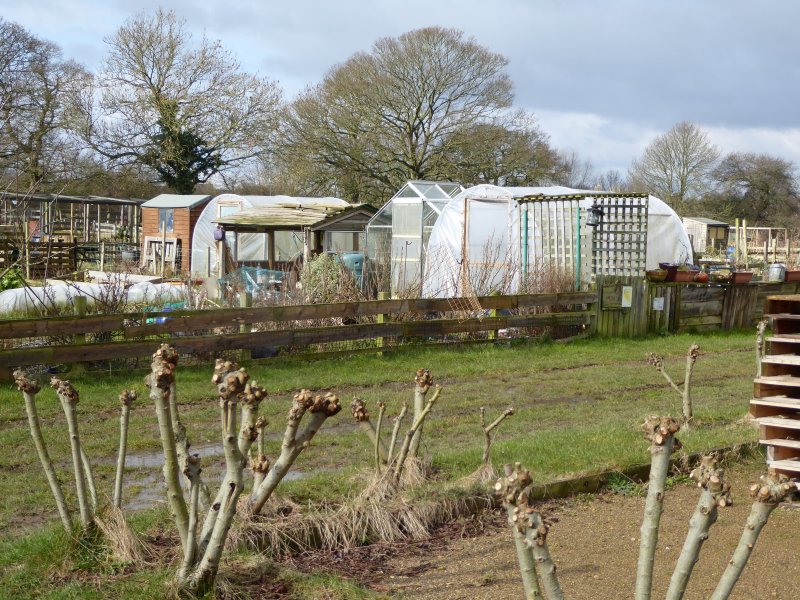
I love allotments.  I love those productive shanty towns that you often see at the side of housing estates, edging railway lines, or just beyond the local sewage works.  I relish the make-do-and-mend of gardeners’ huts fashioned from lengths-of-wood-and-bits-and-bobs, set alongside neat little cabins bought from B&Q.  I enjoy contrasting planting styles.  Here – neat meticulous rows of cabbages, beets, carrots and potatoes: there – less organised plots with discarded tyres serving as planters for courgettes and beans set among a hotchpotch of gooseberry and redcurrant bushes.  I love the camaraderie of the allotment community – the willingness to share hard-earned knowledge, tips, seeds, cuttings, and even muscle-power.  So much more fun that a solitary afternoon battling with weeds.

In Harrogate, I had an allotment.  I was the disorganised type, always running from behind, because work and family life got in the way.  In France, our vegetable garden was too far away to get the attention it deserved.  Here in North Stainley, there are no allotments …..

….. until now.

A few years ago, some villagers decided to initiate an allotment project.  They worked hard, but progress was slow.  Surrounded by countryside, even identifying a suitable site proved difficult.

I heard about the plans and asked to become involved just as the group reached a turning point.  The local landowner has offered to rent out a plot large enough for ten full-sized allotments.  An allotment is ten poles (or rods or perches) large.  That’s the size of a doubles tennis court.  We reckon most people will be happy with a half plot.  Twenty allotments then.

Our allotments-to-be.

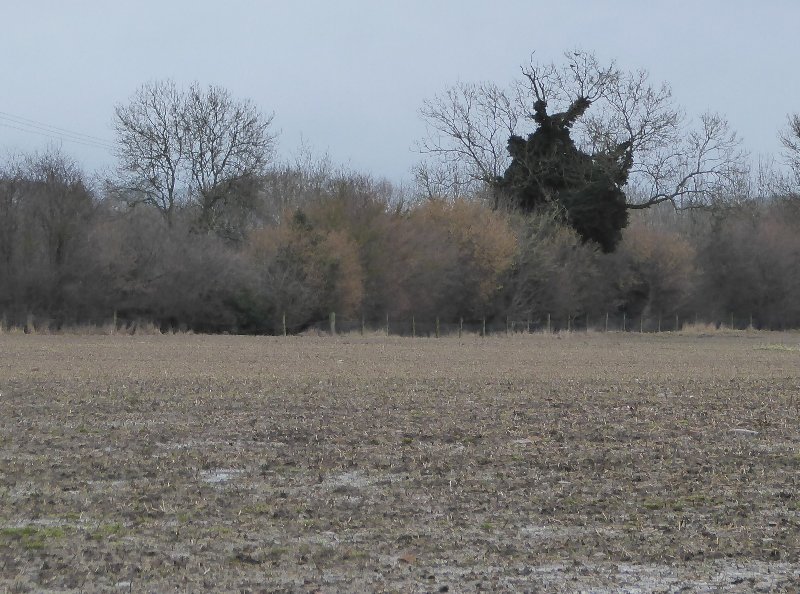
So last Saturday we went to look at the land.  It’s a large chunk at the end of a productive field, and it’s currently rather wet, like just about every other field in England.  Promising though.

AllotmentsBoroughbridgeMarch2016 011

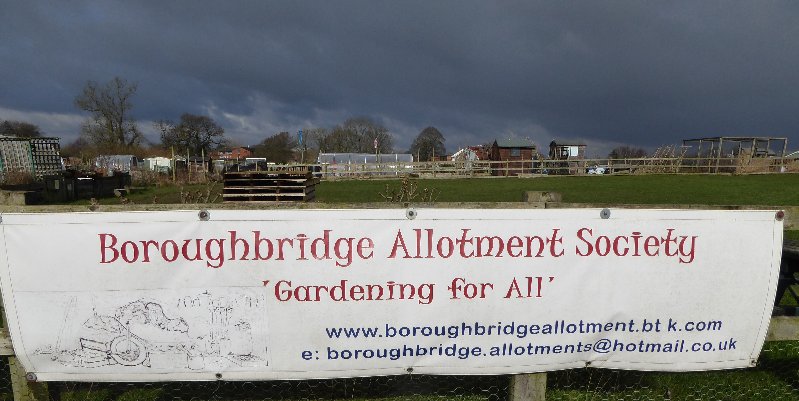
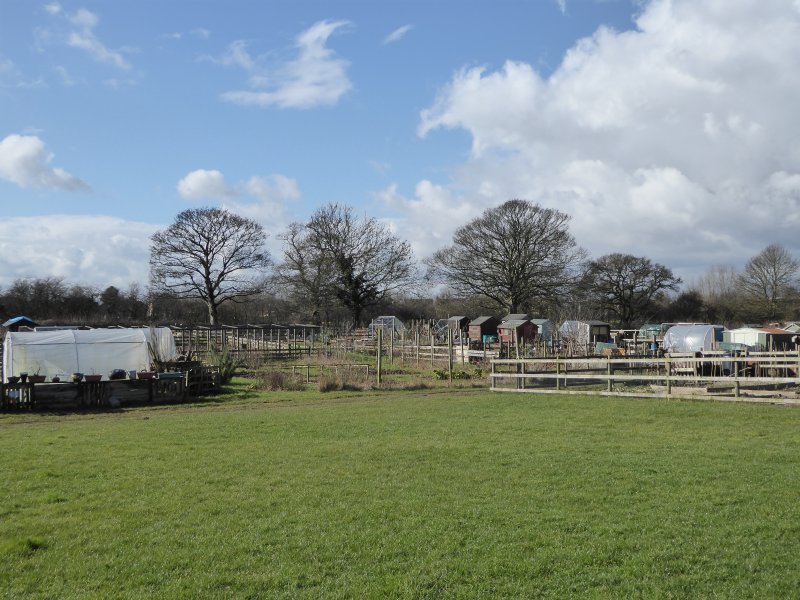
Then we went along to neighbouring Boroughbridge, where they’ve had an Allotments Society for the last 6 years or so.  They were friendly and generous with their time.  So much to think about though.  Paying for water to be piped to the site.  Thinking about car-parking and access to individual plots.  Keeping pesky rabbits at bay.  What to do with allotment tenants who grow only weeds.  Establishing a fair rent and knowing what that rent has to pay for.  We’ll be lucky to be up and running for next winter.  There’ll certainly be no planting before 2017…

Six years ago, this was a field as unpromising as ours. There's hope, then.
Six years ago, this was a field as unpromising as ours. There’s hope, then.


The non-newsworthy walk

The story is – there is no story to tell about our walk near East Witton.

EastWitton28Feb2016 006

It was cold, frosty but bright so we stepped out energetically.  The day went on to be warm, breezy and sunny.  There was only one stile to climb over.  The ground was firm and frosty, but neither icy nor muddy.  Nobody slipped or fell over or got injured.

EastWitton28Feb2016 015

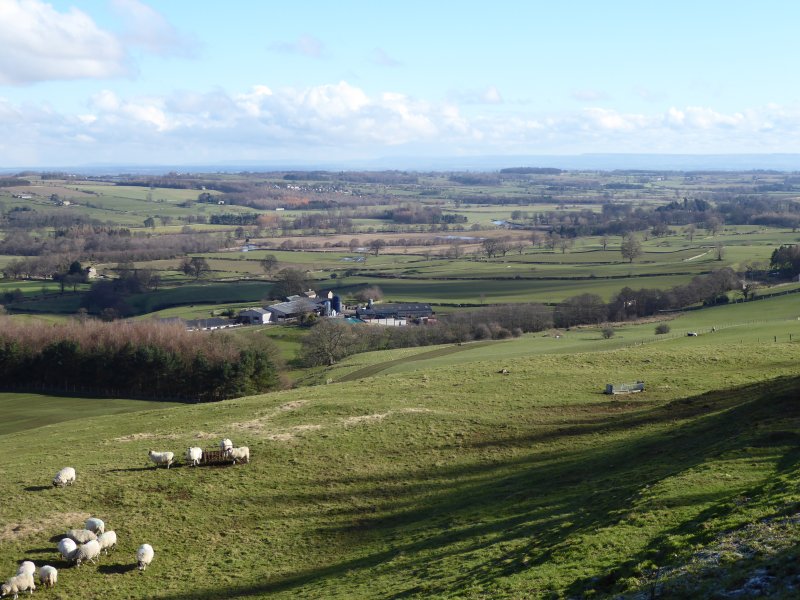
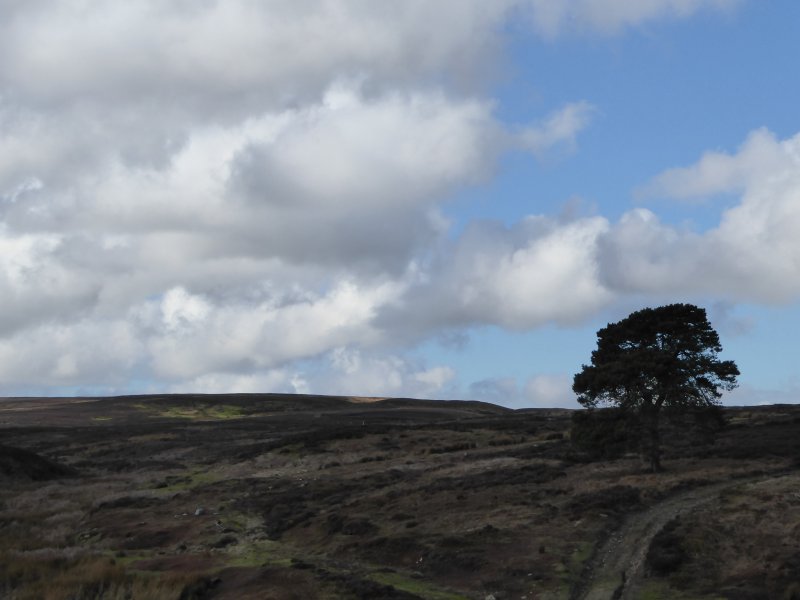
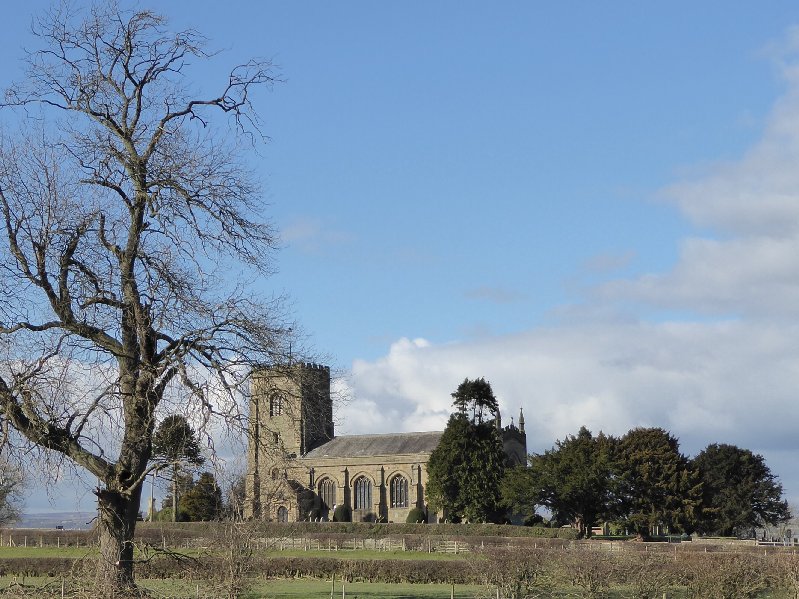
The landscape was just right.  The gently undulating farmland of the Yorkshire Dales gave way to moorland whose picturesque bleakness was enhanced by the occasional lonely tree. We’d pause to take in the long-distance views across the Dales.  And as we returned through woodland to East Witton once more, there was a proper English parish church just asking to be photographed.  Nobody was displeased by the views.

EastWitton28Feb2016 032

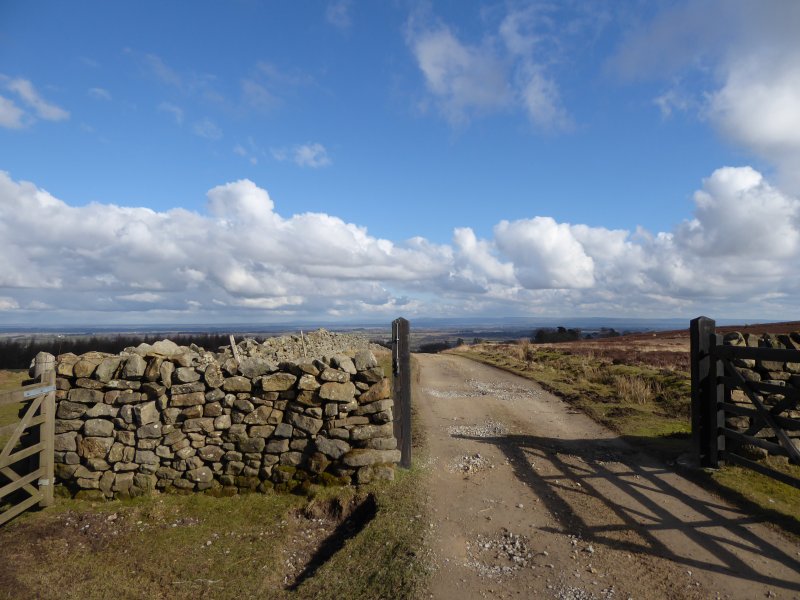
Our two pauses were ideal.  Mid morning, we had picture-postcard moorland views in front of us, and  the solid protection of a sturdy drystone wall behind.  We ate our lunchtime sandwiches in sheltered bosky woodland, with convenient benches in the form of tree trunks.  Nobody got cold, or wet, or lost their sandwiches.

EastWitton28Feb2016 028

The energetic uphill stretches were all before lunch.  Our path afterwards returned us gently to the valley floor. So we got back to base after a gently-challenging workout.  Nobody was exhausted or fed up.

EastWitton28Feb2016 018

So there’s nothing at all to tell you.

Oh hang on.  This will have to serve as our banner news headline.  ‘Hiker loses gloves on Wensleydale walk’.  That was me.  First one glove vanished, then the other.  But as anyone who knows me will tell you, this is not news at all.  It’s what I do most weeks during the winter.

EastWitton28Feb2016 014

In which we are blindfolded and visit Fountains Abbey

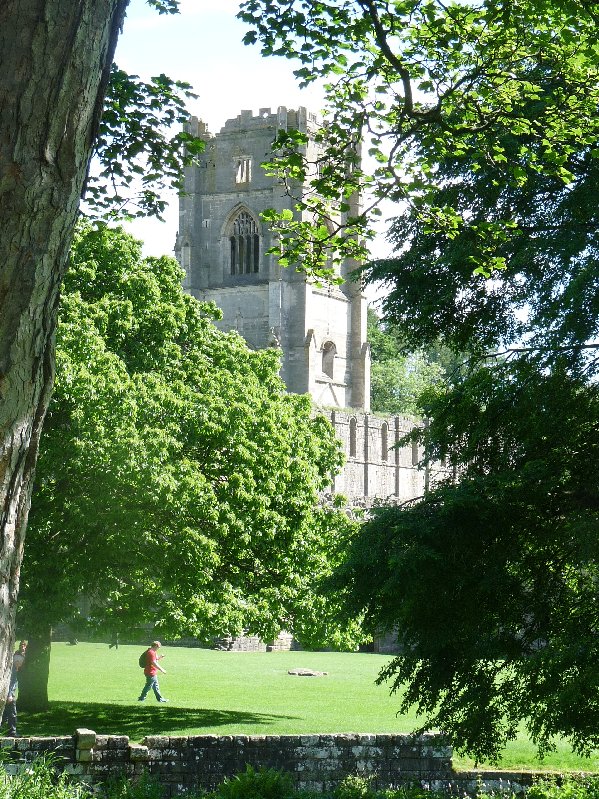
What if you and I were strolling through the grounds of Fountains Abbey, or some other national treasure, and I asked you what you most appreciate about the chance to visit to somewhere like this .  What would you say?  What about ‘I enjoy seeing…’, ‘It’s a chance to look at….’, ‘I like to watch….’?  I know I would.  That first sight of Huby’s Tower for instance,  as I tramp down towards Fountains Abbey on a cold and frosty morning, or on a bright and promising summer day, or on a dusky day in late Autumn or Winter, never fails to stir my soul.

Huby's tower glimpsed through the trees on a summer's day.
Huby’s tower glimpsed through the trees on a summer’s day.

But what if I couldn’t see it?  What if I were one of the two million visually impaired people who live in the UK?  Would that mean I’d simply have to count myself out of a family trip there, stay at home and go without that experience?

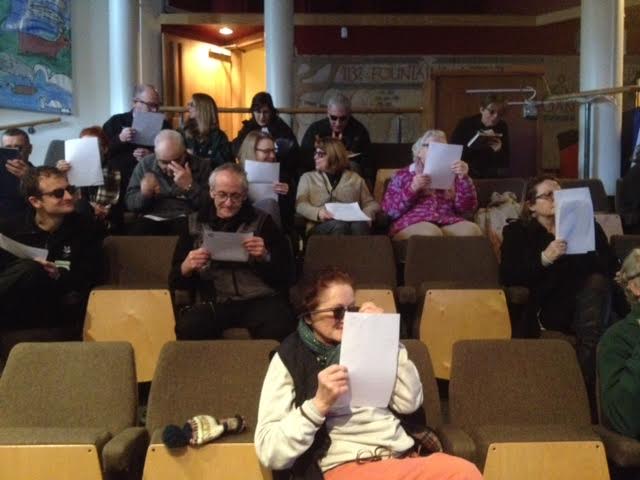
At Fountains Abbey and Studley Royal, we rather hope not. Last week, staff and volunteers alike crowded into the lecture hall to get a taste of what it’s like to live with visual impairment, and to begin to understand what kind of support this section of the population – only 4% of whom are fully blind – actually needs, in order to live rich and active lives.  Afterwards about a dozen volunteers remained behind to begin a journey towards becoming Community Sighted Guides.

Struggling to overcome the visual impairment of special glasses mimicking various forms of visual impairment. (Photo courtesy of Emma Manners)

We thought about what ‘visual impairment’ means.  To some, it means ‘seeing’ the world as if through thickly frosted glass.  To others, it’s putting up with the limited view you would have if squinting down a drinking straw.  Others find their view constantly defaced by blotches in their field of vision.  And so on.  We tried on special glasses which mimicked these effects, and experienced the frustration of never getting things quite in focus, or of not being able to get visual cues from conversations going on around us, of not being able to read the material there in front of us.

And then we thought about what we ourselves appreciate about visiting our own and other properties.  We talked about listening to birdsong, to leaves and to gravel scrunching beneath our feet, to the River Skell tumbling and burbling past the monastic buildings.  We remembered savouring the smells of the damp earth early in the day, the tang of wild garlic, the musky smell of dry Autumn leaves.  We observed that we like to touch the ancient stones of the Abbey: to run our hands over tree bark, noticing how some trunks are smooth, some rough and knotted.  We often sit down for a while on a rough wooden bench, a cold stone seat or the damp cool grass.  So much to enjoy and appreciate, even without the use of our eyes.  Yes, we’d like to come on a day out to Fountains Abbey, even without fully functioning sight, especially if we could put our trust in a volunteer sighted guide.

Then came the moment to put our trust in each other.  We took it in turns to be blindfolded, and to be led by our partners through the carpeted Visitor Centre, along a tarmac-ed route, down a rather steep gravelled path, along a rather winding one, down some steps towards the Abbey.  At first putting one foot safely in front of the other demanded all our attention.  Gradually though, we came to appreciate our surroundings, and began to ask questions of our trainee guides, encouraging them to talk about the snowdrops in season, the trees we were passing, the other visitors who overtook us.  As guides too we learnt to relax, and to offer simple companionship to our ‘visually impaired’ partner.

We’re a new team, so far untested.  But we’re looking forward to gaining in confidence, and to having the opportunity to learn  to share our appreciation of  Fountains Abbey and Studley Royal with another different audience .

With thanks to Lorraine and Anne from Guide Dogs UK for their inspirational training, and to Emma Manners, Learning Officer, FASR who arranged this training.


A day beside the seaside

You’ll know that we waved ‘Goodbye’ to Emily this week.  She’s arrived in South Korea,  jet-lagged and exhausted, but not so much that she can’t send snippets of up-beat information about her new life as Emily-in-Busan.

While she was with us, Emily-in-Barcelona briefly became Emily-in-London, Emily-in-Bolton, and Emily-in-Yorkshire. And while she was with us, Boyfriend-from-Barcelona came to visit.  What should we show someone from a vibrantly busy city, one of whose attractions is several kilometres of golden, sunny, sandy beaches?  Well, on a frosty, gusty February day, with more than a threat of snow in the air, what could be better than a day beside the seaside?

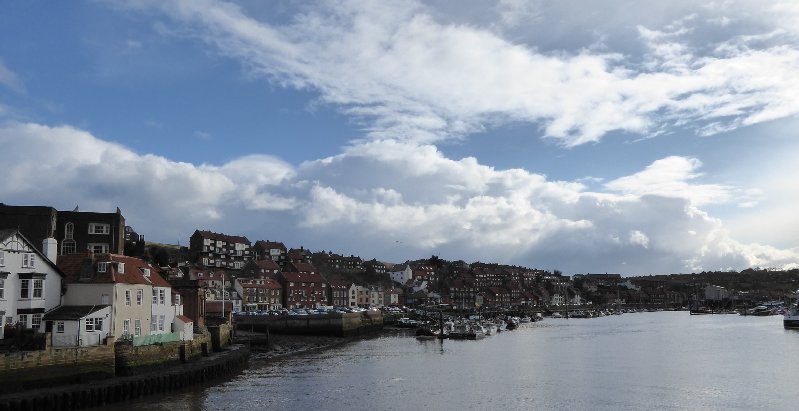
Whitby: the view anyone who's been there would recognise.
Whitby: the view anyone who’s been there would recognise.

Whitby seemed to fit the bill.  Picturesque fishermen’s cottages huddled round the quay.  A clutter of narrow cobbled shopping lanes – a tourist mecca to rival Las Ramblas.  A sandy beach with donkey-rides, and the chance to find fossil remains etched into the cliffs or a morsel of jet washing about on the sands.  A ruined Benedictine Abbey high above the town, the inspiration for Bram Stoker’s ‘Dracula’, and the focus of a twice-yearly Goth music festival.  And fish and chips.  Always fish and chips at an English seaside destination.  Emily and Miquel explored the lot.

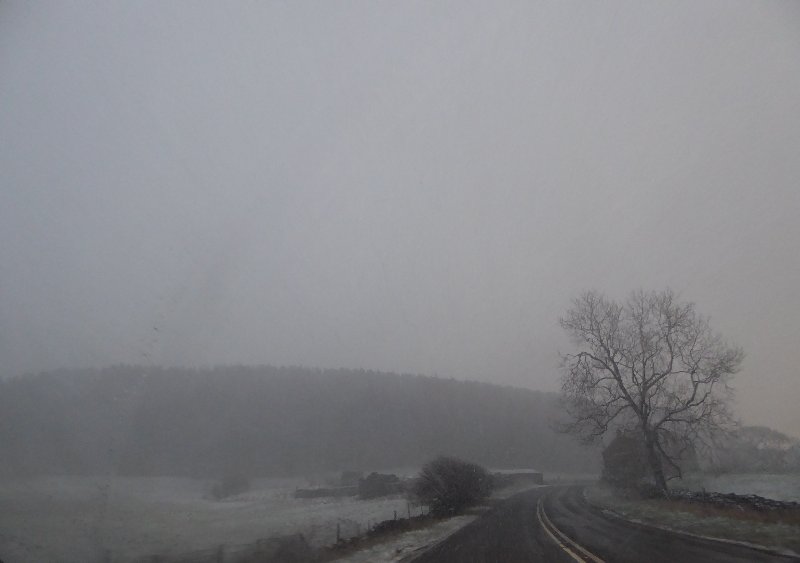
And Miquel, windblown and chilled to his fingertips, declared that it had been a fine day out, with the added bonus of being firmly inside the car when we journeyed home across the North York Moors as the snow began to fall.

Best to be back in the car when the weather's like this.
Best to be back in the car when the weather’s like this.

Korea Kalling

We did something like this in 2011. We kissed our daughter Emily ‘Goodbye’ and waved her off as she set off for Barcelona, to become a teaching assistant for a year in a Catalan primary school. She ended up spending more than four years there, and now she’s a fully-fledged English teacher with a flat in Barcelona, fluency in Spanish, a circle of friends, and a happy life .

But this morning, after her three week break in the UK, we waved her off again. She’s off to South Korea this time, to its second city, Busan. She’ll be teaching English in a school there, for one year only. Or so she says…. Read what she has to say about it in her blog, currently called ‘Speaking Spanglish’ – I imagine it will have a name-change quite soon.

savagearts's avatarSpeaking Konglish

Four years ago, I moved to Spain. In the UK, I had wanted to become a teacher. Applying for jobs and schemes usually had the same result though – ‘looking for someone with experience’. How can you get that experience if you can’t get the job in the first place? However, I soon saw a light shining at the end of a tiny tunnel. A conversation assistant in a Spanish school: great! That’ll give me something to pop on my CV. I’ll go back after a year.

Four years later, and there I still was. TEFL-qualified, experienced, and loving it. Barcelona is full of charms, and I am incredibly glad of my decision to move there. It helped me learn a language, blend into another culture, and taught me so many things.

Four years ago, I was also looking down other small tunnels, in the maze of life. One such…

View original post 316 more words

From Jervaulx to Jervaulx – in the mud


Jervaulx9thFeb2016 072

I first walked from Jervaulx to Jervaulx last April, and wrote about it here.  However, I failed to lead my fellow ramblers along the same route later that month as I’d said I would, because it rained…. and rained.  I’d promised them the walk though, and today was the day: bright, sunny, blustery – a perfect winter hike.  Except for one thing.  Those floods that have dominated British news this winter are still making their presence felt.

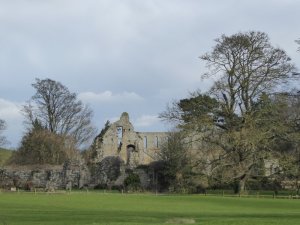
The ruins of Jervaulx.

Our route today didn’t take us through pastureland.  Sheep aren’t very good at being knee-deep in mud. It took us through soggy fields, and past lake after lake after lake: waters that simply were not there last time I took this route.  It was all very pretty.  Less pretty was the scene at stiles.  Look at us skidding and sliding, trying to pick the shallower puddles as we waited out turn to get from one field to another.

We’re British though, always plucky in adversity.  We soldiered on, sometimes a little weary of heaving mud-crusted boots along sticky, sludgy paths.  But nobody fell over, nobody lost their sandwiches in the mud.  Everybody enjoyed those vistas over the Dales, the starkly beautiful skeletal outlines of winter trees, the blue skies, dappled with characterful cloud.  Were we glad to have made the effort?  Well, I was, and I think my steadfast and dependable companions were too.

Happy Christmas!

Christmas in January.

It was Christmas Day last Saturday (30th January).  You hadn’t realised?  Were you having a fairly normal-for-January sort of day?  I expect you were.  You’re not a member of our family, who this year, felt entitled to celebrate the festival on a day that suits us, even though we’d ‘done’ Christmas in December, just as you did.   We take our cue from the Queen , who has an official birthday in June in addition to her actual birthday in April.

We had our reasons.  The London Team had spent their Christmas in Gloucestershire with Sarah’s parents.  The Barcelona Team had spent Christmas in Barcelona with Miquel’s mum.  The Ripon team had spent Christmas In Bolton with  Ellie, Phil and the twins.  Now we wanted to have Christmas with each other.

So we did.  The Christmas tree was pressed into service.  The Christmas cards re-appeared.  Father Christmas briefly came back on duty and made sure that stockings were filled with gifts.  Presents materialised under the tree.  We even perpetuated a new tradition, begun only last year, of being ill for the duration.  Last year, Malcolm and I had flu.  This year, Sarah took to her bed within two hours of arrival, though she managed to surface on ‘Christmas Day’.  William streamed with cold and was generally off-colour the whole time, and Emily and I coughed and wheezed.

Christmas dinner featured all the trimmings … but no turkey, no goose, nothing like that. The English teams had already done all that on December 25th, and Team Barcelona was pining for a really good British banger.  So that’s what we had.   Thanks, Geordie Banger Company.

The crackers featured appalling jokes, just as they should, and even more appalling novelties (floppy plastic golf tees, anybody?).  William was entranced by the flaming of the Christmas pudding.  And in the best tradition of all family Christmases with a baby in tow, playing with noisy, rustly wrapping paper and discarded ribbon offered the best fun of all.  There’s a lot to be said for doing good things twice.

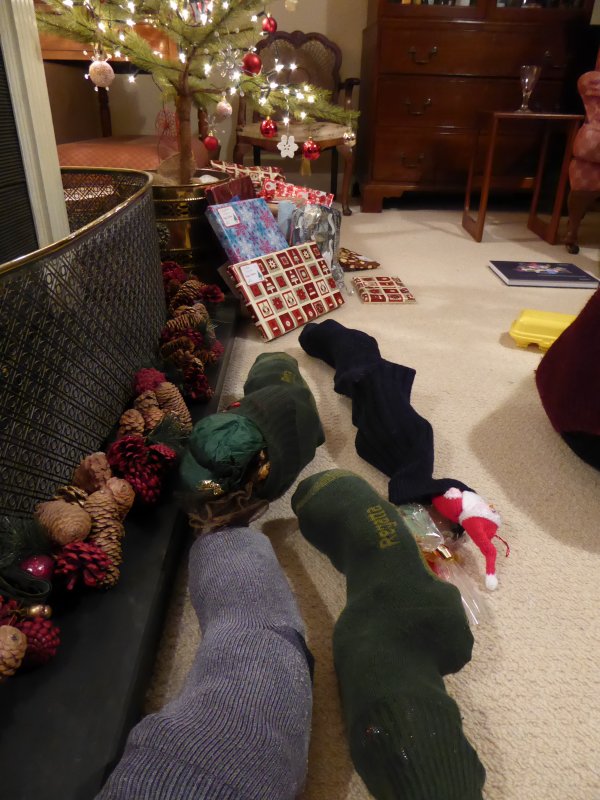
Father Christmas appears to have dumped all the stockings in rather a hurry.

Let Nature take its course

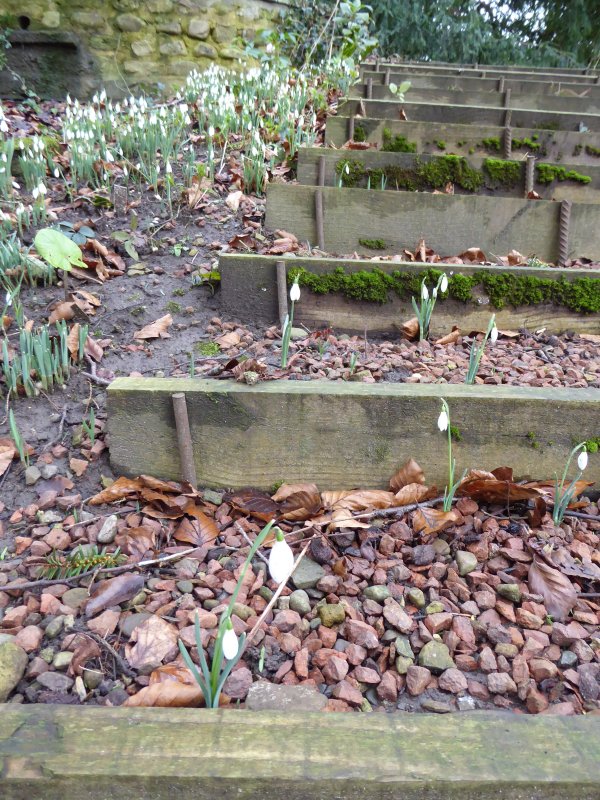
Step out into the garden, and the countryside beyond at the moment, and you’ll find snowdrops doing what they do best in January – piercing the barren earth, colonising grassy patches, nestling under trees and marching across gladed hillsides.  Untroubled by unseasonal weather, their inner clocks direct them to grow, multiply, and cheer us all up in an otherwise gloomy, un-festive sort of month.  That’s Nature for you: ordered, seasonal and predictable.

A farmer's field? Or Sleningford-by-the-sea?
A farmer’s field? Or Sleningford-by-the-sea?

But Nature has another face.  Come with me beyond the garden, past the fields slickly shimmering with surface water, to the banks of the River Ure.  Just two minutes walk from here, it makes a wide sweeping curve away from its route from West Tanfield, and (normally) meanders gently into Ripon. That was before this winter, this rain, this unending water.

Once the rains came, and once it reached town, the River Ure rather wanted to swamp people’s gardens and make a bid to enter their houses.  Recently-built flood defences put paid to that idea.  The River Ure took its revenge on us, or more specifically, on the farmer whose fields adjoin us.  Up in the hills, waters from streams and rivulets in the Dales cascaded into the Ure, which gushed and surged along its course, rising higher and higher, tearing at the banks, ingesting great clods of earth and forcing them downstream.  The water levels are falling now.  The damage remains.

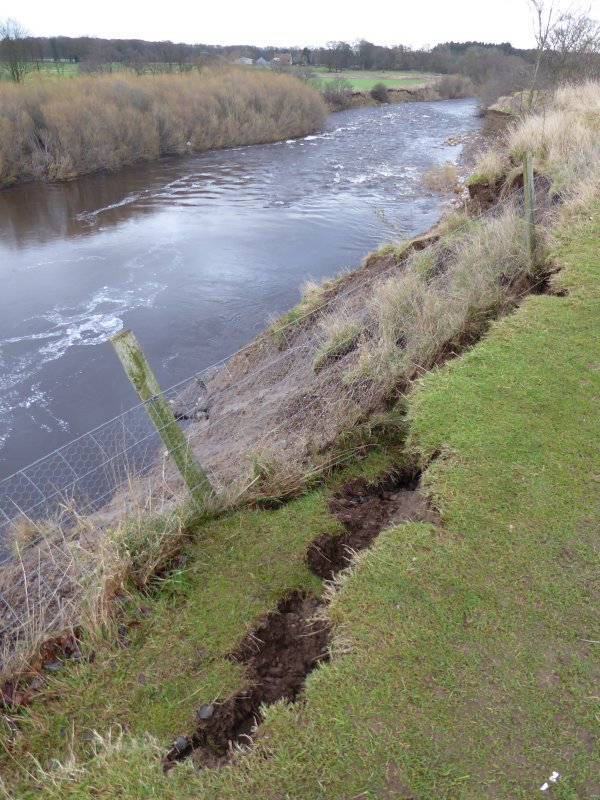
The River Ure seizes the land.

Look.  Here’s a chain link fence which marks  a pathway running along the edge of the farmer’s field.  It should be on terra firma, with a nice grassy margin between the fence itself and the river bank.  Now it has nothing to hold onto.  The bank has been snatched away, and the fence is hanging crazily and directly over the swelling waters below.  The earth has slipped, and continues to slip.  The farmer is losing his field, and the river is changing course.  There’s not much anybody can do about it.

We’ll watch the water awhile, and frighten ourselves witless at the prospect of falling in and being swept mercilessly away. Then we’ll wander back though the woods, and enjoy the snowdrops and aconites once more.  Nature takes its course.

The steps through the woods.