A wander in the Washburn valley – and a diversion to a New York branch library

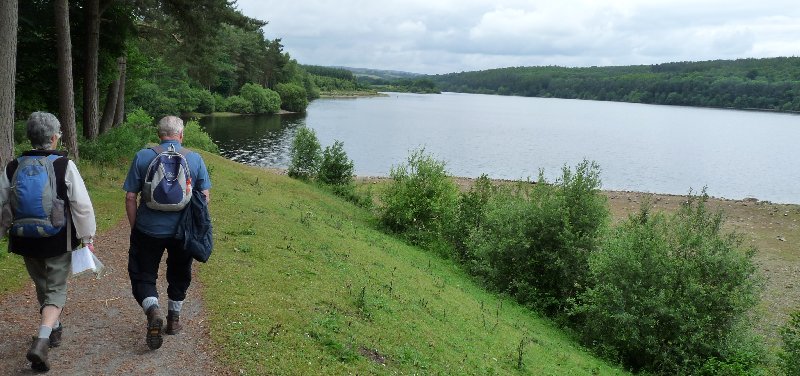
Starting round Swinsty reservoir.  It's not raining yet......
Starting round Swinsty reservoir. It’s not raining yet……

Reservoirs.  If you live in the city, you’ll be dependent on one, almost certainly.  Every time you turn on the tap, the water that come gushing out will have started out in some far-flung and distinctly rural part of the area.

These days, reservoirs aren’t just – er –  reservoirs.  They’re playgrounds for all of us – walkers, dog-walkers, fisherfolk, bird-watchers and naturalists of all kinds.  They’re protected and protective habitats for all kinds of wild creatures.  And in their watery depths, they conceal their history.  Those reservoirs built between the 1860s and 1960s conceal drowned ancient villages, mills, factories, farms and country estates, leaving almost no trace behind. It’s hard to believe that the 4 reservoirs of rural Nidderdale hide a once-industrial area, where iron smelting, woollen fulling (a process something like felting) and flax-making took place, and where, in the early 19th century,  the demand for labour was so acute that pauper children as young as nine were recruited from London to keep the factories working.

We Ripon Ramblers went off yesterday to walk a figure of 8.  Park at Swinsty Reservoir, walk all the way round adjacent Fewston Reservoir, back to Swinsty again and walk round there. You can see from the pictures that the early promise of the day was not maintained.  It rained and showered a lot.  But rain and showers make for picturesque views.
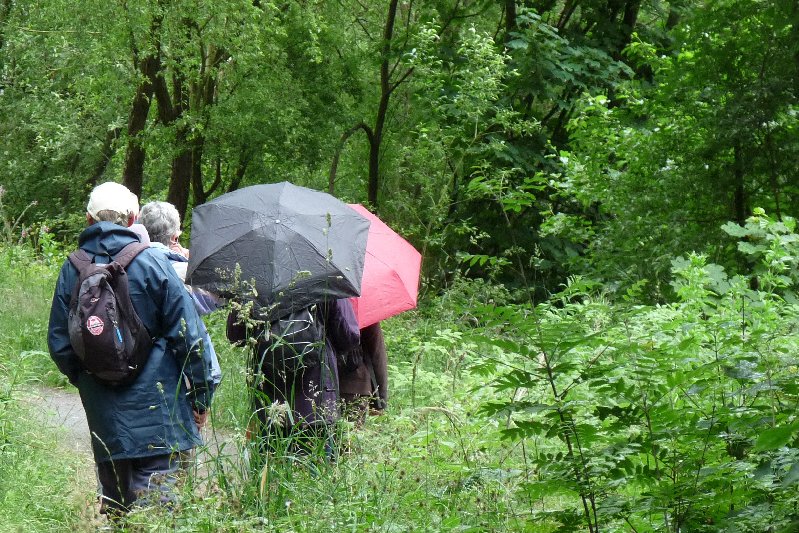
An umbrella or two: the ideal accessory for an English walk.

Oh, and at the end, we took a small diversion to visit the old and picturesque village of Timble.  It may seem like many a charming Yorkshire village, but it has a bit of extra history on the side, in the form of the Robinson Library.  This building was the gift of Robinson Gill of New York, in 1892.  He’d left Yorkshire in 1851 for America to seek his fortune.  He found it: he had two successful stone yards on the Hudson River and was president of two New York banks.

His ancestors were prosperous yeoman who had lived in nearby Swinsty Hall, and he himself had been born and raised in Timble.  From his adopted home in the States he arranged an endowment of £2000 to  pay for a teacher for the school and for the upkeep of the building, and laid out £100 for books.  The library provided the villagers with not only a library, but a free school, a Sunday school, a social centre and a reading room.  The endowment failed with Robinson’s death: his descendents weren’t as astute about money as he had been, so the library fell on hard times for a while. The children now travel elsewhere for their schooling – after all, the village only has 100 inhabitants – but a recent programme to restore and re-invigorate the building means it is once more an active social centre for the community and beyond.
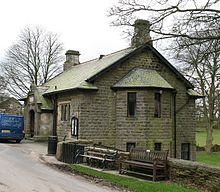
The Robinson Library, Timble. (Wikimedia Commons)

So, dear American readers, come and discover the area for yourselves, with its unexpected link to your part of the world.  You could stay at the Timble Inn, an 18th century coaching inn, and then discover not only those reservoirs and their hidden history, but the towns, villages, dales and moorland of Nidderdale.  You’ll be glad you did.
In which Saint Swithin fails to keep his promise.

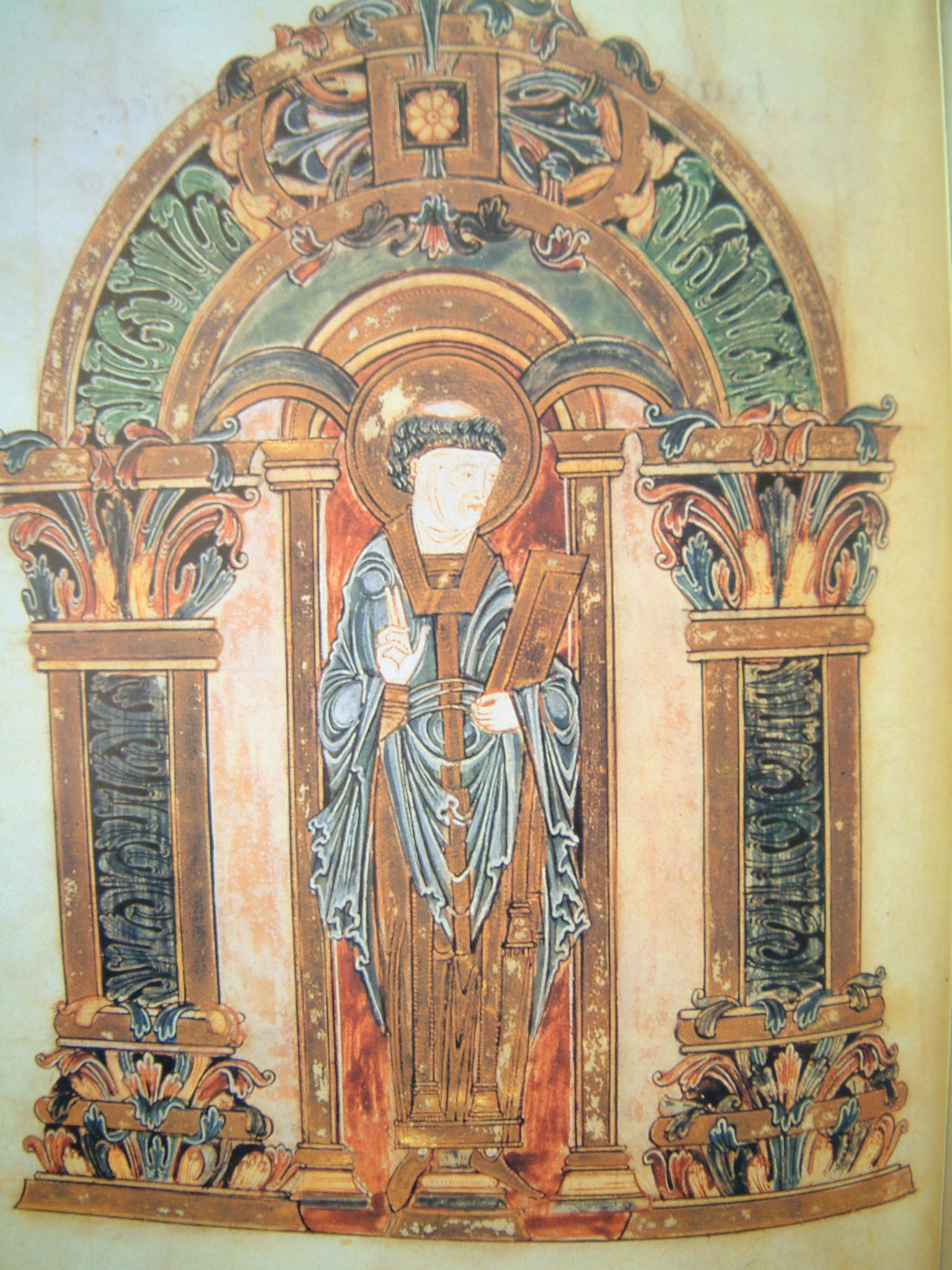
Swithun, Benedictional of St. Æthelwold, Winchester, 10th century, British Library (Wikimedia Commons)
Swithin, Benedictional of St. Æthelwold, Winchester, 10th century, British Library (Wikimedia Commons)

It was Saint Swithin’s Day last Wednesday (15th July).  I thought everyone knew that.  But when I mentioned it to a group of younger people I was chatting with that morning, they looked at me with blank incomprehension.

St Swithin’s day if thou dost rain

For forty days it will remain

St Swithin’s day if thou be fair

For forty days ’twill rain nae mare

Yes, apparently the weather we get on Saint Swithin’s day is the weather we can expect for the next forty days.  Nobody really knows why this blameless 9th century Bishop of Winchester is responsible for his apparent hold over the climate in high summer. He seems to have been a nice chap.  He held banquets to which he invited the poor, not the rich.  He miraculously restored a basket of eggs that workmen has maliciously broken.  He asked that on his death, he should be buried outside the cathedral, rather than inside, so that passers-by would tread on his grave, and so that it should be regularly watered from the skies. But in 971, he was moved to a new indoor shrine.  And lo!  The heavens opened.  Perhaps this is where the legend originated.

But it has a measure of truth. Round about mid July, the jet stream settles into a pattern that holds good until round about the end of August.

Not this year.  Saint Swithin’s day was pretty good: warm, fresh and sunny.  Since then though, we’ve had cold days, hot days, or like this morning, woken up to driving rain. As this picture sort of shows.

Looking out of the window at breakfast time today.

Here are some pictures of a walk I took yesterday, a day on which Saint Swithin kept his promise made on Wednesday.  It was a day of high summer, with the crops ripening fatly in the fields, the verges crammed with tall plants that often obscured the view, and a warm refreshing breeze in the air.  That’s what Saint Swithin is supposed to deliver. He’s got some 36 days left to remember to keep his promise – every day.

A holiday in Herefordshire

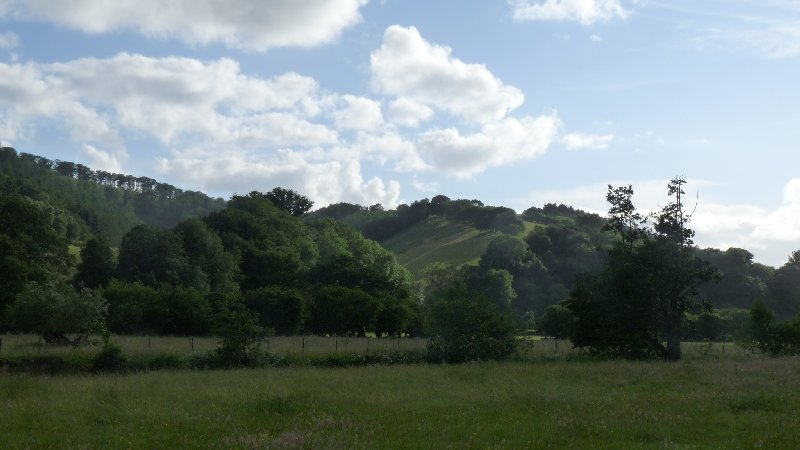
The local landscape.

We’ve just come back from Herefordshire, where we’ve been helping our friend Hatti celebrate a Big Birthday.  She and her family have a cottage there – it’s been in their family for decades now – in the back-end of nowhere, alongside the River Lugg.  If you don’t like fishing, or walking the hills and vales, or mooching along woodland paths, best not go there.  If you’re in a hurry, don’t go.  You’ll only meet a tractor on a narrow single-track road and be forced to reverse all the way back to the last junction.  There’s no nightlife, no shopping malls, no nearby towns, not much of any evidence of 21st century life – the family cottage doesn’t even have electricity, for goodness sake:  gaslight in the evening is a reposing and rather nostalgic experience.

History, though.  The area has history.  It’s part of the Welsh Marches, that border territory between Wales and England that was fought and skirmished over pretty constantly  from the time of the Romans, by Angles, Saxons, Normans and countless ancient tribes, right up to the time of the Tudors.  Offa’s Dyke, that 8th century earthwork which largely defined the Welsh border for centuries can still be seen not too far from here.  This was frontier territory, crammed with motte-and-bailey castles, and garrison towns such as Hereford and Shrewsbury.  An area of gently undulating hills, deep and wooded secret valleys, it’s a territory that must have lent itself to scraps, battles and long-drawn-out tit-for-tat fighting between the area’s war lords.

It’s hard to imagine now.  Those hills and valleys are patchworked with fields where cattle and sheep browse the meadow grass, and where crops are maturing, ready for the summer harvest.  The woods are still there though, and there are trees so old that they may have seen some of those ancient conflicts.  There’s an interesting story surrounding the gnarled and twisted sweet chestnuts and oaks in the parkland of Croft Castle, just down the road from where we were staying.  It’s said the sweet chestnuts trees were planted in 1588, in the formation of the Spanish Armada.

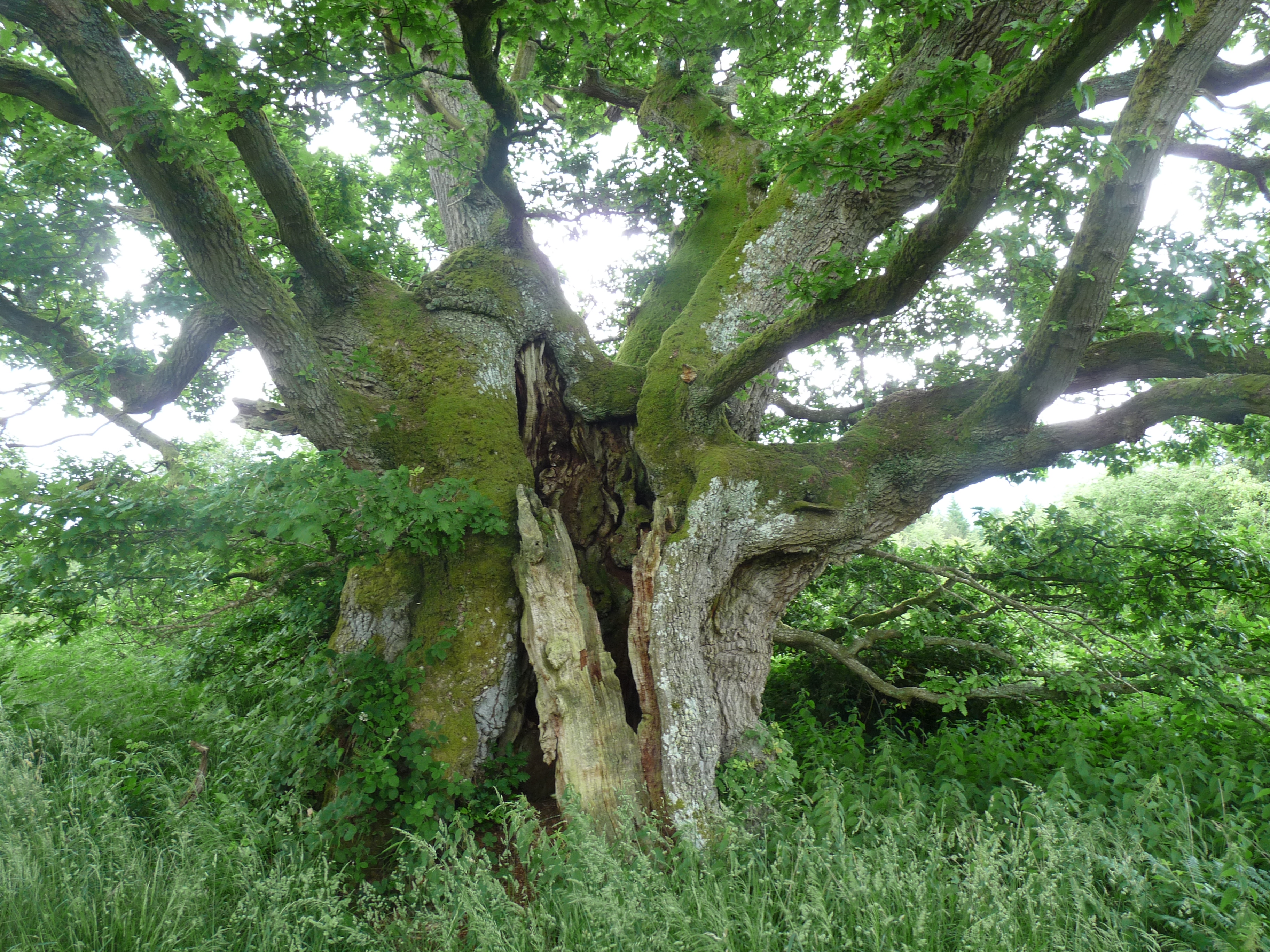
Oaks represented the English navy.  Though some trees are even older.  This oak tree is thought to be 1000 years old.

The 1000 year old Quarry Oak at Croft Castle.

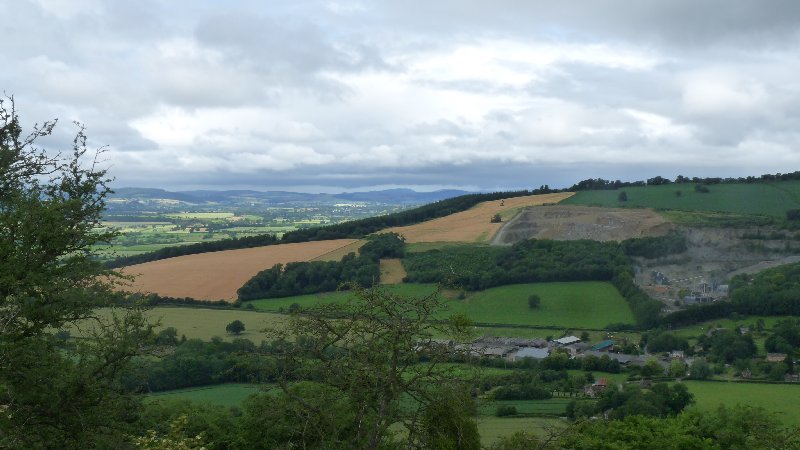
Carry on walking though, and you’ll climb upwards and find yourself on the site of an Iron Age hill fort.  Recent excavations there have found evidence too of Romano-British fire ceremonies, animal sacrifice and feasting.  Nowadays, it’s enough to marvel at the views across to England one way, Wales the other.  It’s said you can see 14 counties on a clear day.  We couldn’t, but that may say as much about our command of the local geography as anything else.

Commanding views of several counties, in England..... and Wales.
Commanding views of several counties, in England….. and Wales.

We had a wonderfully satisfying break: peaceful, lovely countryside to explore, with the added bonus of parkland, gardens, ancient churches.  And while Herefordshire remains rather difficult to get at from just about anywhere else in England, it’ll probably go on being one of the country’s best kept secrets.

Croft Castle seen from its walled garden.

A welcome to William.

We went to London yesterday.  We didn’t visit Tate Modern or take a trip on the London Eye.  We didn’t look at the Tower of London or visit the Wren Churches, or wander round Spitalfields, or Petticoat Lane market. We had no interest in galleries, palaces, parks, museums, shops or going for a meal

We went straight to the home of my son and daughter-in-law, Tom and Sarah, and we arrived shortly after Sarah’s parents, Brian and Sue.  They hadn’t been sight-seeing either.

All any of us wanted to do was to play ‘Pass the Parcel’.  All day.  Because we had a very special parcel indeed.  This one.

Just....William.
Just….William.

Meet William Francis, born a whole fortnight early, last Tuesday.  We grandparents all raced to London the first moment we could, and spent the whole day quite simply passing him round….. and round.  You may disagree if you’ve had babies of your own, but to us, he’s the very best baby in the world.

There have been other ‘best babies’ of course.  Those twins, Alex and Ben, born 10 years ago fitted the bill then.  Sarah and Tom’s nephew Lucas claimed the title five years ago.  But this is William’s moment.  Here he is, all 7 lb. 2 oz. of him, being passed from granny to grandma, back to Sarah to be fed, to grandad,and step-grandad then back to Sarah to be fed again.  Through all of this, he slept contentedly, only waking occasionally to stare fixedly at whoever was cuddling him at the time…. or to demand yet another feed.  We thought it was a pretty fine way to pass a summer Sunday.

A midsummer garden

I’ve got some good news to share.  But I plan to do so in another couple of days…. you’ll see why.

So today I’ve decided to follow American blogging friend Clay’s suggestion, and share a few pictures of an English garden in midsummer.

We are lucky.  We rent a property attached to a large house. Surrounding this house is a large garden, which we’re encouraged to enjoy.

Here you are.  Enjoy it with us.

Saint-Valery-sur-Somme

Here’s a town we Brits should know.  It’s where 1066 And All That really began.  William of Normandy and his troops set sail from here, landed on the English south coast and won the Battle of Hastings.  William became King of England, introduced a whole new French vocabulary into the English language (‘Pork or beef, madam?’), and his brother Odo commissioned the first strip cartoon, the Bayeux tapestry, to record and commemorate the event.  Later though, in 1431, the English held Joan of Arc captive here, before conveying her to Rouen to be burnt at the stake.

En route from France to England: a detail from the Bayeux Tapestry (Wikimedia Commons)

Even without those compelling reasons to make a pilgrimage, Saint Valery is worth a detour.  It was and is a harbour and a fishing town with a picturesque mediaeval centre.  Like many pretty towns on the coast, it’s popular with writers and artists: Victor Hugo, Jules Verne, Alfred Sisley and Edgar Degas  all had homes here, and we spent a pleasant day exploring, poking round the (rather touristy) Sunday market, choosing a restaurant-stop, and generally enjoying the pleasures of a seaside town.

While we were there, something special happened.  After lunch (moules, what else?) we wandered down to the beach.  There, on the other side of the estuary, were sheep, paddling.  Dozens of sheep, scores of sheep, hundreds of sheep.  They’re unique.  They’re bred from English Suffolk and Hampshire sheep, and they spend their lives grazing the salt marshes., which gives them a highly regarded flavour, rich in mineral salts, and the name ‘Estran salt meadow lamb’.  The life of those sheep, and their shepherds, and sheep dogs, is an energetic one.  They have to keep moving each and every day to avoid getting stuck in the damp and boggy sand.  Their shepherds keep an eye on them, oiling their feet to prevent foot rot, and every night the flock returns to pens with fresh straw via a special tunnel under the road.

Sheep grazing at the estuary.

Before we left, we wandered through the harbour, and up to the Chapelle des Marins, a neo-Gothic building, built on the site where the hermit-saint Gualaric, who gave his name to the town, once lived.  It’s a good place from which to say ‘Goodbye’ to the town and get some final views of the bay.

Farmland outside Saint-Valery-sur-Somme.

‘Very flat, Norfolk.’ *

No it’s not.  But before we went there last week, we were inclined to agree with Noel Coward’s judgment.  We’d decided to go to north Norfolk for a week off from the twenty-first century: no wi-fi, no TV, no motorways, but instead wide open countryside and sea, small uncluttered villages with a parish church worth exploring, market towns, and a night sky unspoilt by light pollution.

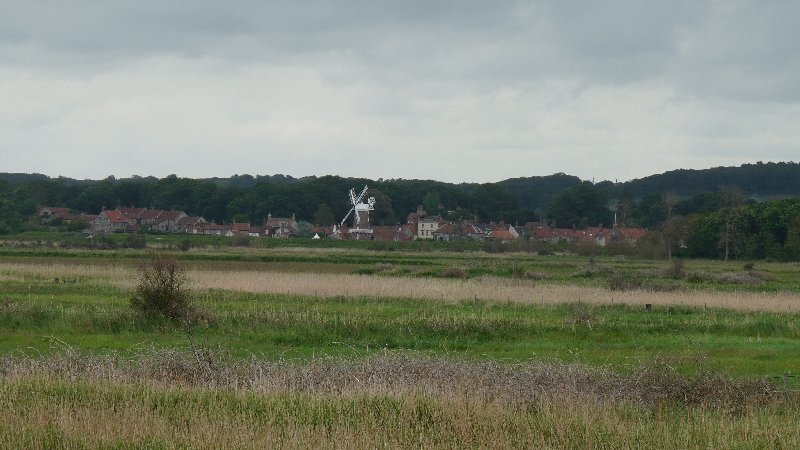
The village of Cley-next-the-sea, seen from the nature reserves on the marshland between the village and the sea.

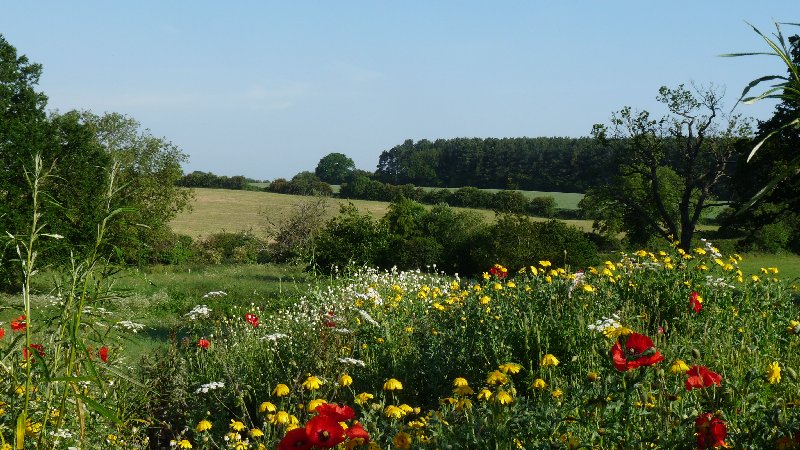
We stayed near South Creake in North Norfolk, in the delightful bed and breakfast accommodation of Sara and Bob Freakley.  Here is the view from their front gate.

Leicester Meadows: the view from the garden.

You can see that it’s not flat.  It’s quietly, comfortably, gently hilly, with woodland and meadowland nearby.  South Creake is the kind of village where any number of ducks raise their families on the village green.

And like so many Norfolk villages, it has a grand church far in excess of its apparent needs.  We loved St. Mary’s church, as so many in the area.  Landowners spent money outdoing their neighbours when it came to church commissioning and building.  Get it right, and royalty might come to stay – they never did.  But wooden angels soar among the rafters of splendid wooden-vaulted roofs.  Some churches are tall and stately, others rustic, with flinty walls.  A few have chunky cylindrical towers, because flint doesn’t lend itself to crisply finished corners.

And then there are the stately homes.  Oxburgh Hall – once seen, never forgotten.  It’s a romantic, moated 15th century manor house which almost came to the end of its life in the 1950s.  This was a period when many landowners, crippled by debt,  felt they had no option but to throw in the towel, and dozens of ancient manor houses in Norfolk alone were quite simply pulled down.  The auctioneer charged with disposing of Oxburgh declined to allow the winning bid from someone who wanted only the sturdy roof timbers, proposing to leave the rest of the house to tumble down.  Members of the family came to the rescue, as did the National Trust.  Now it’s one of Norfolk’s best-loved tourist attractions.  Here’s why….

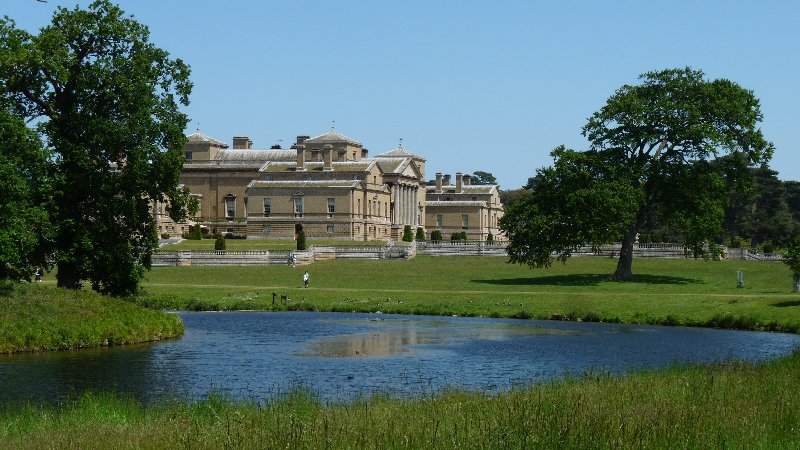
Holkham Hall is overwhelmingly big.  We decided we couldn’t do it justice and confined this visit to its four-acre walled kitchen gardens, with its vines, peach trees, vegetable gardens sufficient, back in the day, to support everyone who lived and worked in this sizeable community.  Many English readers probably remember all about school history lessons featuring Coke of Holkham, early 19th century politician and agricultural reformer, credited with promoting crop rotation and pioneer experiments in sheep and cattle breeding.  Holkham Hall was his home and family seat.

Holkham Hall.
Holkham Hall.

I’d tell you about Peckover House, suggested by friend and fellow-blogger Sharon and her husband Andrew.  But it’s just over the border in Cambridgeshire, so not this time.

And then there’s the sea…and the wildlife.  But I’ve told you about them already.

*Noel Coward, ‘Private lives’.

The sea, the sea

We’ve just had a brilliant few days away.  First of all in Norfolk, then the Baie de Somme.  I’ve realised I love the sea.  Not sun-kissed beaches, though.  Not  ‘miles and miles of golden sand….’ *.  Definitely no lying around sun-bathing for me, and building sandcastles is only fun for the first ten minutes.

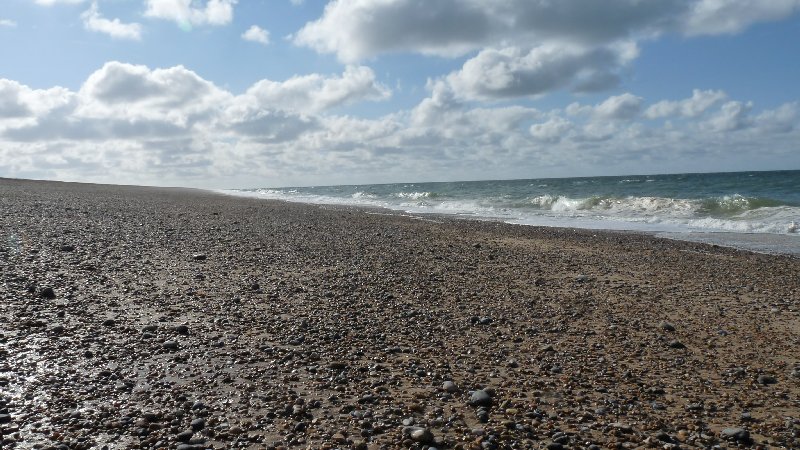
No, I love the kind of seaside we’ve enjoyed this week.  In north Norfolk, we seemed to be on the coast whenever it was low tide, squinting at the distant sea in retreat, as it left behind belts of shingle, mud, scrubby dunes and sand.  We’d get a convincing work-out crunching along a stony,pebbly beach, taking in the views across a flat but ever-changing landscape in subtle shades of mossy greens, grey and beige, and across a sea foaming white as it crashed to the shore, but with its own varied palette of bands of blue and grey from the shore to the distant horizon. The sky went in for moody tones, too, rather than clear summery blues, with feathery scudding clouds chased along by the rather challenging winds.P1200181

We weren’t there just for the landscape though. Birds come here to live and breed, and as birds of passage too.  There are supposed to be as many as 420 species here.  We knew that while the birds are nesting they are less visible than at some other times of the year.  Though we’ve just got ourselves pairs of binoculars, we haven’t yet got the skills to identify everything we see.  But we still wanted to be down on the seashore, every chance we got.

Then it was the Baie de Somme, a mere 90 minutes from Calais.  We all know about the Somme and the bloody, ceaseless, pointless battle that took place some distance inland during WWI, in 1916.  But the Somme estuary is a peaceful place.  Like north Norfolk, it’s an area of marshland, water and sky.  It offers fresh, brackish and salted water as a rich habitat for a huge variety of birds – and seals. We weren’t very successful bird watchers here either, but it didn’t stop us trying.

*’…in Whitley Bay, Northumberland’.  Travel slogan, Whitley Bay,   February 1964

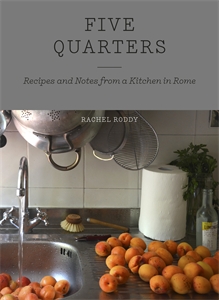
Five quarters

five-quarters

I’ve just bought a cookery book.  This is not a newsworthy event in this house, despite the fact that I turn increasingly to the internet when trying to come up with something fascinating to do with a handful of leftovers discovered at the back of the fridge.

In fact it’s the internet that’s brought me into a relationship with this recipe book.  No, actually, it’s this blogging business.  You know how it is.  You discover someone’s blog.  And through that, you discover someone else’s.  And you end up following it (whilst trying to hang on to a sense of proportion: following blogs is not a substitute for real life).  Kath, the far-from-ordinary The Ordinary Cook was responsible, quite a few years ago now, for introducing me to racheleats.

I love Rachel’s bogs.  She’s an Englishwoman who found that a short visit to Rome turned into a longer one.  Then she found that she was no longer visiting, but living there.  She had the luck to live in a busy, ordinary, un-touristy district with a bustling market just down the road.  This market in Testaccio became central to her life there.  I guess she’s always cooked.  But she made it her business to buy local ingredients, to ask questions, to get thoroughly in touch with the ingredients and recipes of her new life in Rome.  And she started her blog.

There’s always a story to be told in her posts.  She’ll write about shopping for the ingredients, or how her version of the dish she’s writing about has come into being, or some other anecdote.  She has the knack of making you feel you’re sitting at her kitchen table, watching and learning while she chats as she assembles her ingredients and starts preparing the vegetables.  Because then there’s the recipe.  After I’ve read it, I want to dash into my kitchen and cook immediately. There’s just a small matter of not having that market to hand, with all its local stallholders and ingredients….

I wasn’t alone in loving her writing.  A couple of years ago, she was approached to write a cookery book, using the same personal lively style that characterises her blog posts.

And last week, the book, written whilst juggling her busy life as a mother, teacher, partner, recipe-chooser-and-tester, was published.  I ordered a copy immediately, from The Little Ripon Bookshop, and as soon as I got it, I started to read….  It’s a page turner.  She explains how it is that the book got its title ‘Five Quarters’..  She writes about the path that led her from London to Rome, from a career as an actress to the one she has now.  And she writes about the food she cooks.  Simple food, food made tasty by careful cooking of (to her) readily available ingredients: the dishes of the working people who lived –  and live –  in Testaccio.  The stories she weaves round the dishes she writes about make you want to cook, and eat, and go on reading this inspirational book.  If you like Italy, or food, or eating or cooking – or even better, all of these things, you’ll love this book, and want a copy to read and use and make your own.

An edible forest garden

If you’re English, of rather mature years, and of a rural disposition, you won’t turn down the chance to snoop round somebody else’s garden.  That’s what Open Gardens is all about.  And early summer is open season for Open Gardens.

The other day we chose to go to Old Sleningford Farm, only just down the road from here.  We knew we’d get the chance to stroll round a country house garden, with informal parkland and rather more formal borders and flowerbeds.  We knew there would be a productive kitchen garden.  We knew we’d be offered afternoon tea, with far too many delicious home-made cakes to choose from.

What really interested us, though, was the Forest Garden.  A what?

Here’s what they say on their website:

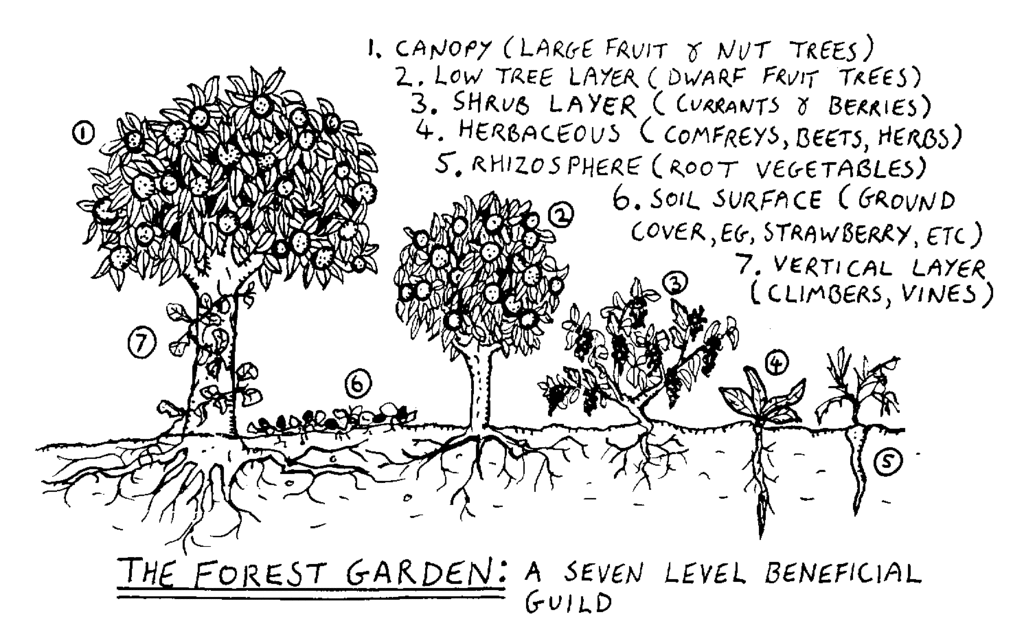
‘A Forest Garden is a planting which mimics an immature woodland, in which everything is edible or useful. Plants are grown using every available space – under the ground, on the ground, as bushes, trees and climbers. It requires minimal maintenance once established as all the plants are perennials or self seed easily and the ground is permanently covered.’

As you approach it, it seems you’re just going to enter a patch of woodland, albeit well-gated against pesky rabbits.  Simple paths mown through the undergrowth send you on a winding route that meanders through the two acre site.  Gradually we realised that there were things to eat here: fruit trees, certainly – apples, plums, gages, pears and so on – but also fruit bushes growing hither and yon.  Raspberries; currants red, white, pink and black; gooseberries.  Strawberries extended their runners along the ground.  Then we noticed herbs, and then some vegetables: chard, kale, leeks, onions…..

This is a garden that has required hours of work from everyone at Old Sleningford, from volunteers who come one Sunday every month and from wwoofers.  But over time, the garden will to an extent manage itself, as the desirable, productive plants take proper hold and leave no room for any plant not prepared to earn its keep.

We didn’t have long enough to explore as much as we’d have liked.  But we found a moment or two to relax in the summer-house at the forest garden’s centre.  Here was a simple wooden structure, with a roof of sempervivum  –  house leeks – equipped with a chair or two, a book or two.  Here, with only bird song for company, surrounded by productive woodland, was the perfect place to spend a summer’s afternoon.

Forest Gardens, via Graham Burnett, Wikimedia Commons.