Bamberg-Garden-City

The north-east of the city of Bamberg is known as Gārtenstadt – Garden City – as it has been since the Middle Ages. Now, as then, market gardening rules supreme.

Since 1386, these gardeners have supplied the citizens of Bamberg and beyond with fresh produce: they were the biggest craft guild in town. Then they supplied root vegetables, onions and liquorice – and milk too from the cows who also pulled wagons and ploughs. These days the growers sell more flowers or herbs.

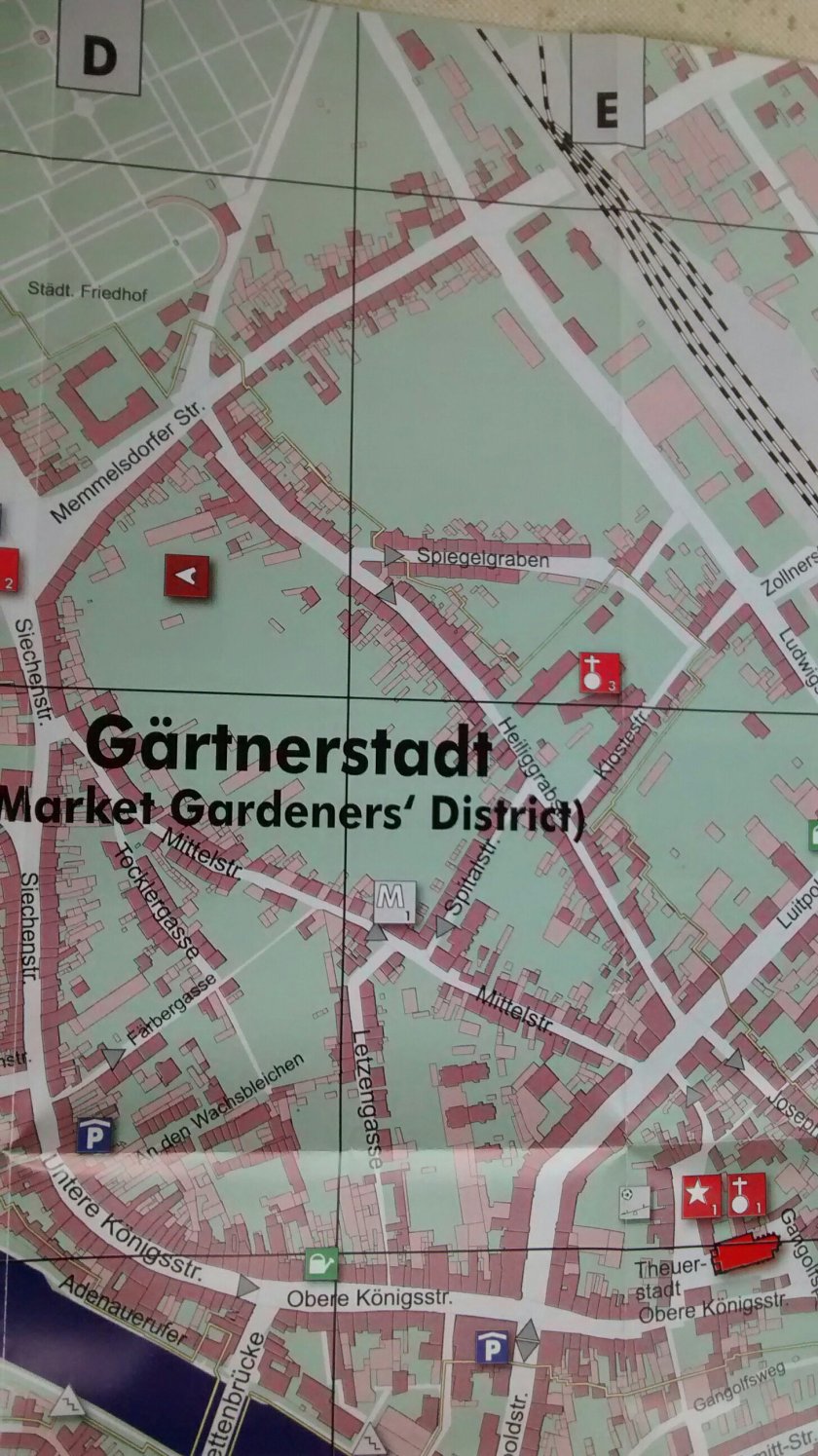
Look at this map. It clearly shows acres of land hidden behind the long narrow streets.
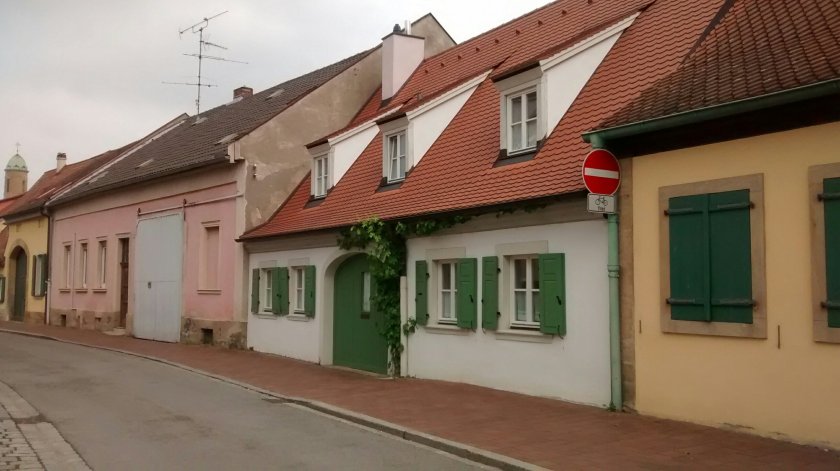
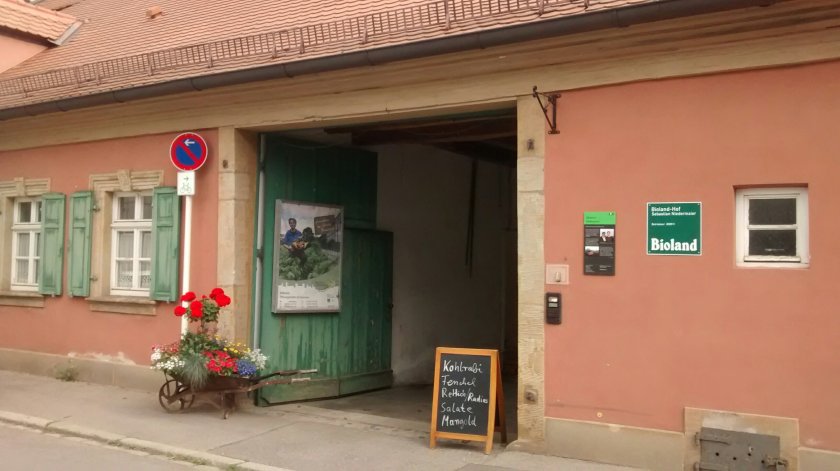
Here is a typical house. That wide entrance door is to allow wagons to drive through the house and into the garden. The barn is in the attic.
Here’s a market gardening business advertising its wares.
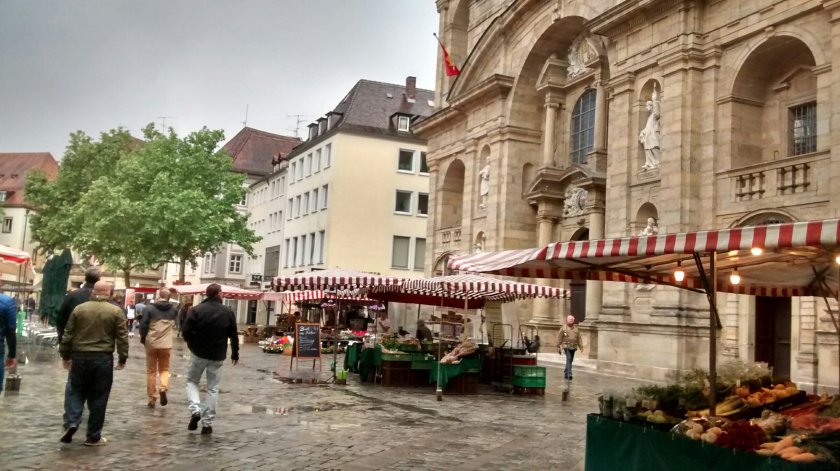
And here’s the Grüner Markt in the city centre. These days it’s no longer the exclusive market place for the Gärtnerstadt. But it is still a busy fruit and veg. market.
Isn’t that pretty special?
Postcards from Bamberg

We’ve fallen for Bamberg, a city so steeped in history that it’s a UNESCO World Cultural Heritage Area. The River Regnitz flows in two branches through the town, dividing the city into three and forming much of its character. It’s busy, but not besieged by tourists. Here are four postcards from Bamberg.

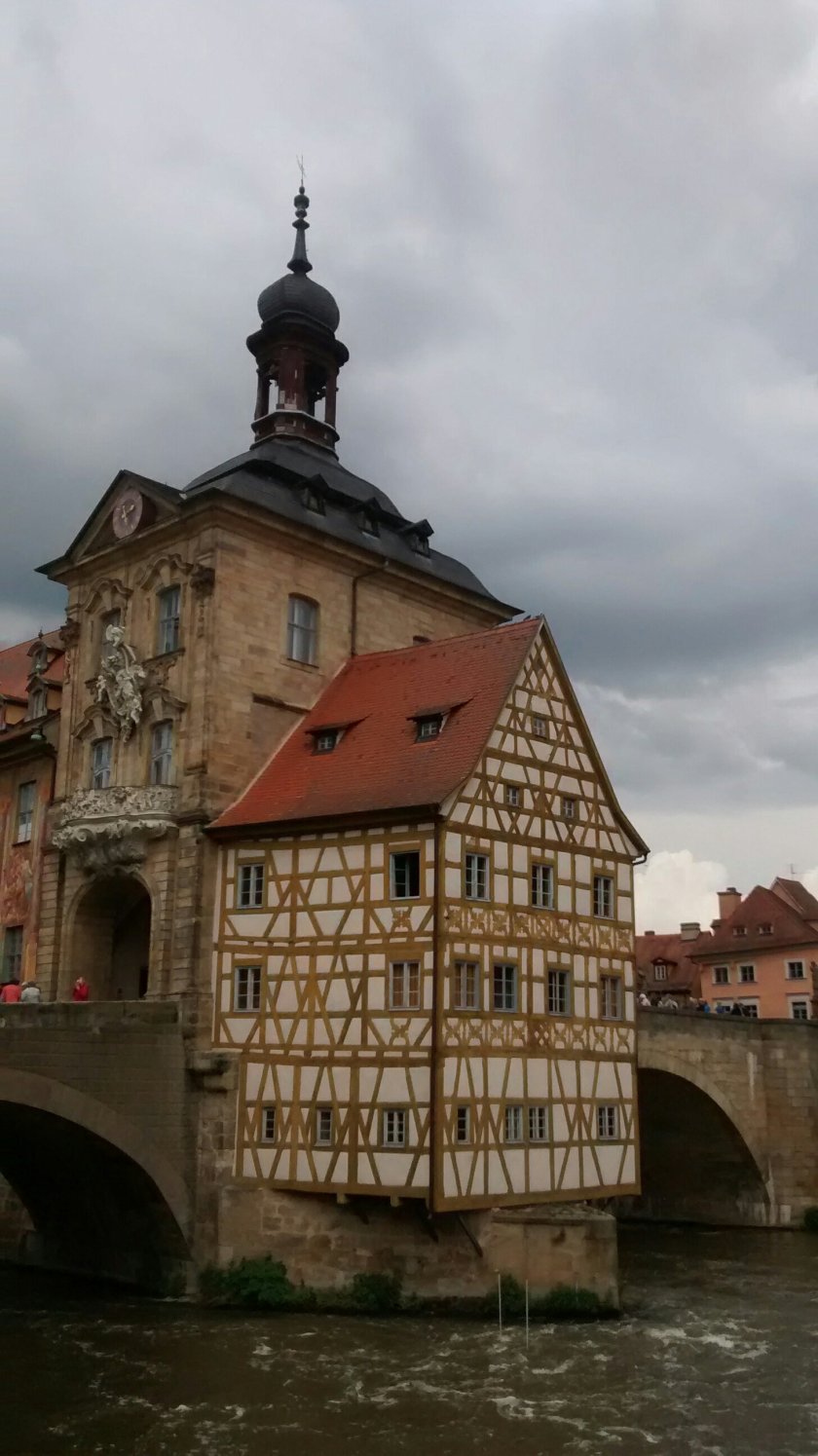
The Old Town Hall. Denied any building land by the Bishop of Bamberg, the citizens created an island in the river to build their town hall at the end of the 1300s.

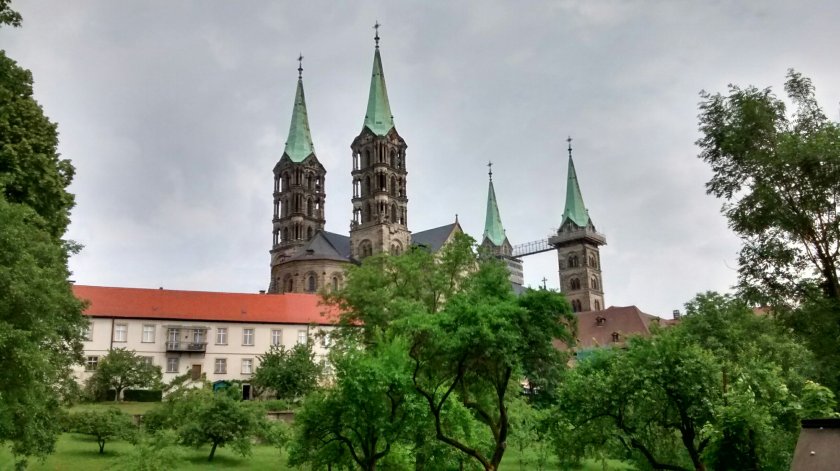
The Cathedral, consecrated in 1237 is the third on the site. The first two burnt down.

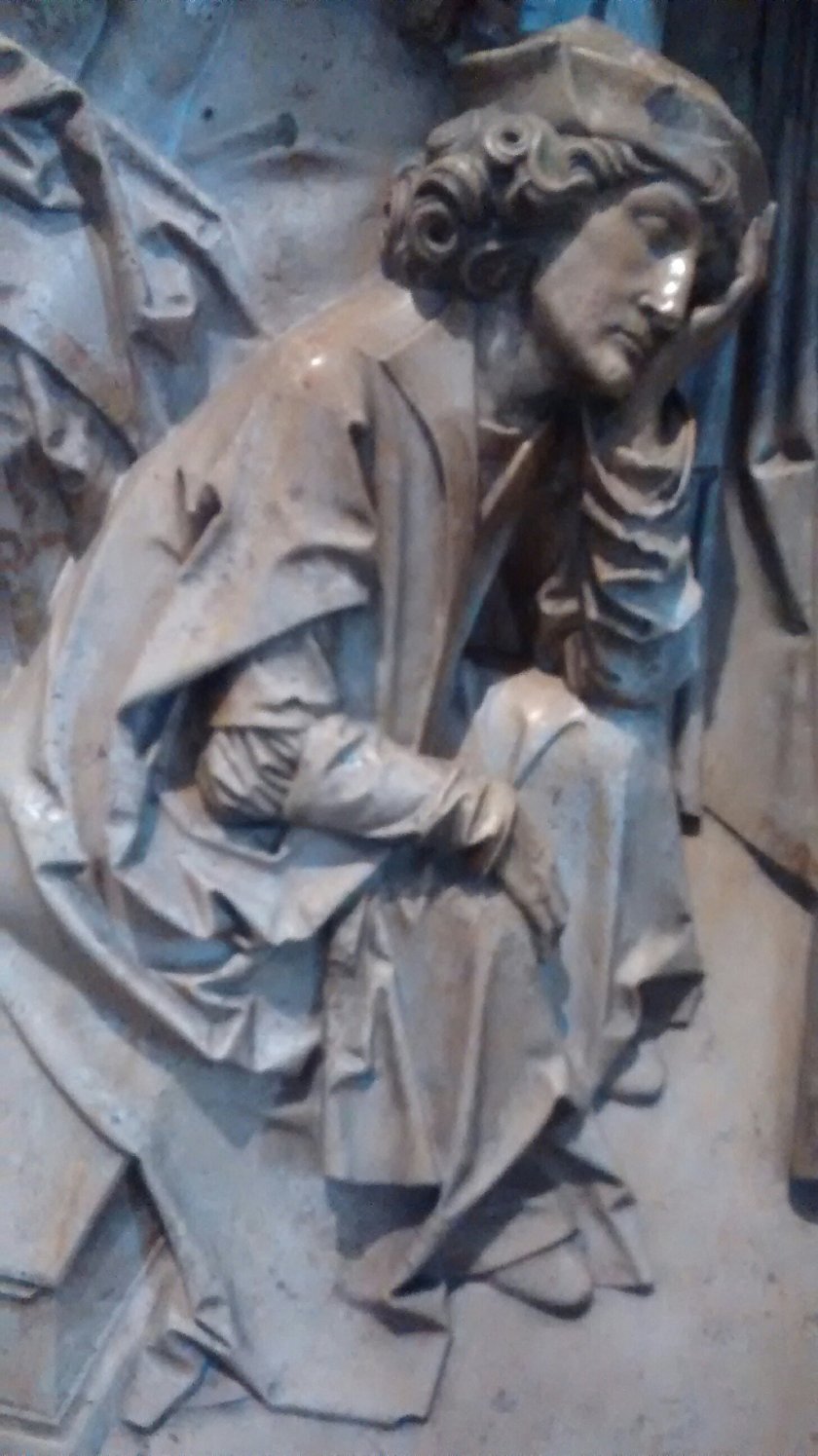
Tillman Riemenschneider, the sculptor and woodcarver who died in 1531 has works in many of the churches we’ve visited. Here’s a detail from Heinrich II’s tomb in the Cathedral.

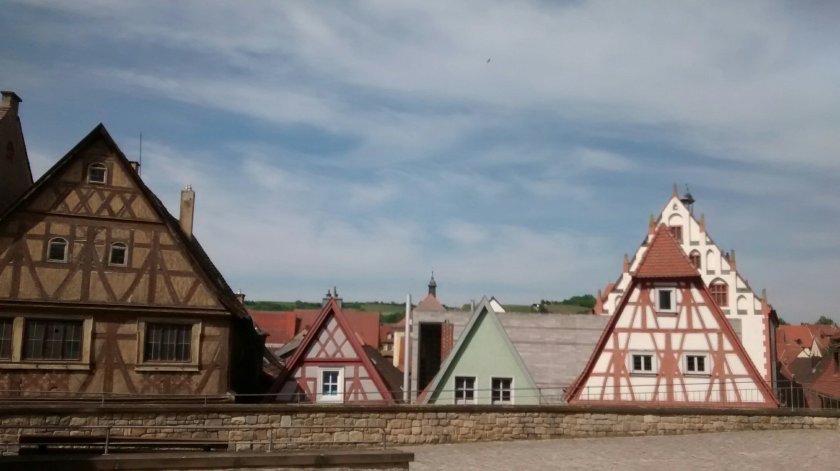
These were once fishermen’s cottages. No fishermen now.

‘There is a green hill far away …’*

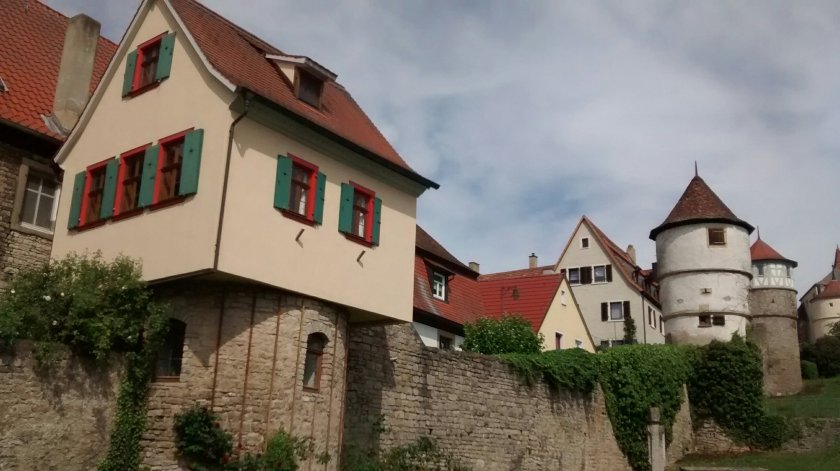
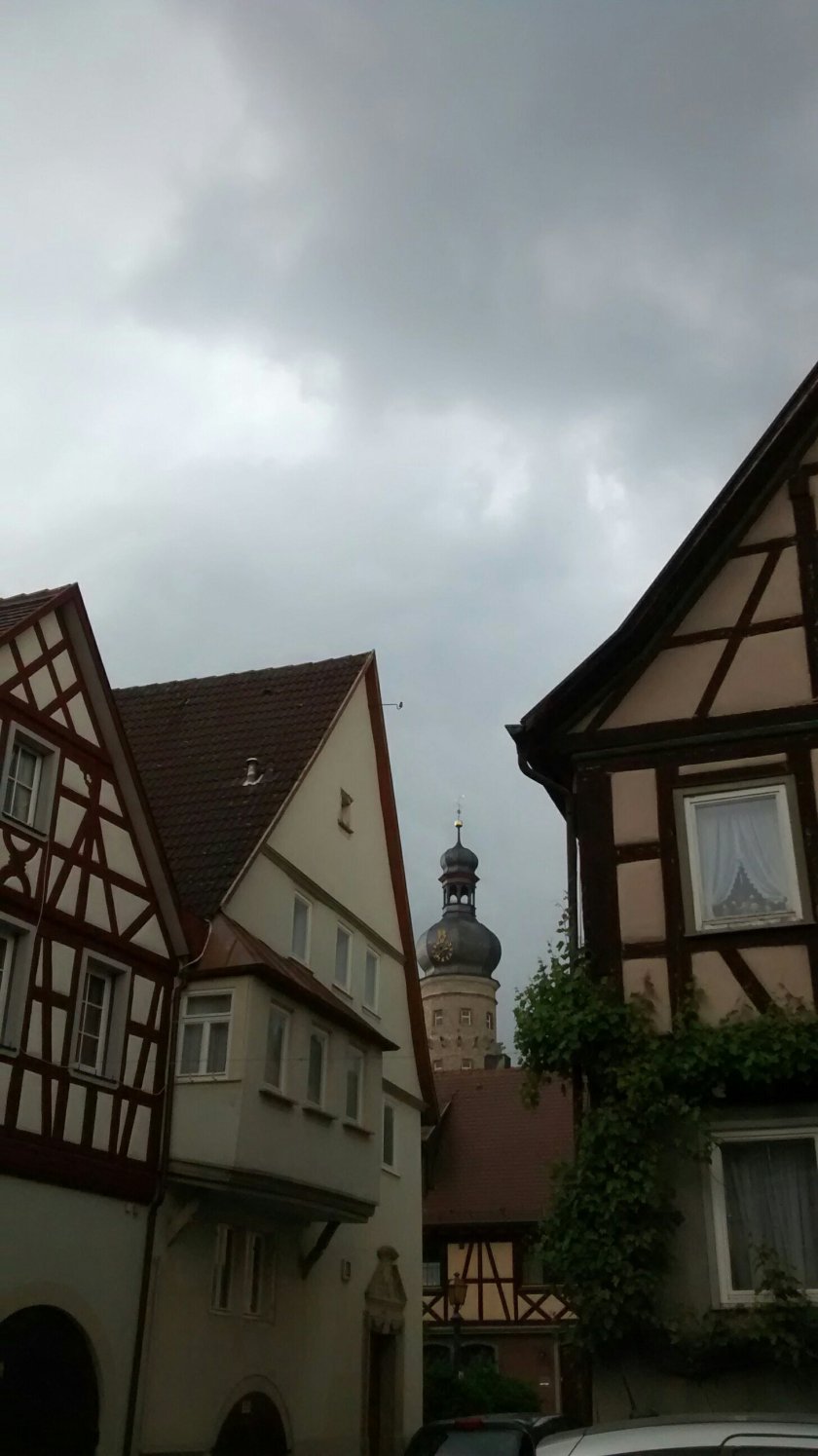
Franconia is full of green hills. It’s also full of charming small mediaeval towns girdled with tall mediaeval defensive walls.

With the need for defence long gone, this house in Dettelheim has been built on the remnants of a redundant mediaeval watch tower.

*An allusion to the popular English Victorian hymnThere is a green hill far away/Without a city wall

A day at the hospital, and a Prince-Bishop.

We went to the hospital today, to buy some wine. Yes, that’s right …. let me explain.

In 1573, an exceptional young man, Julius Echter von Mespelbrunn was elected Prince-Bishop of Würzburg. He was well-connected and well-educated. By 1582 he had founded the University of Würzburg, which flourished and became a model for other seats of learning.

He was a skilled administrator who reduced taxes, improved the economy, and the administration of justice (unless you were thought to be a witch or a Jew: he fought hard for the purity of the church as he saw it).

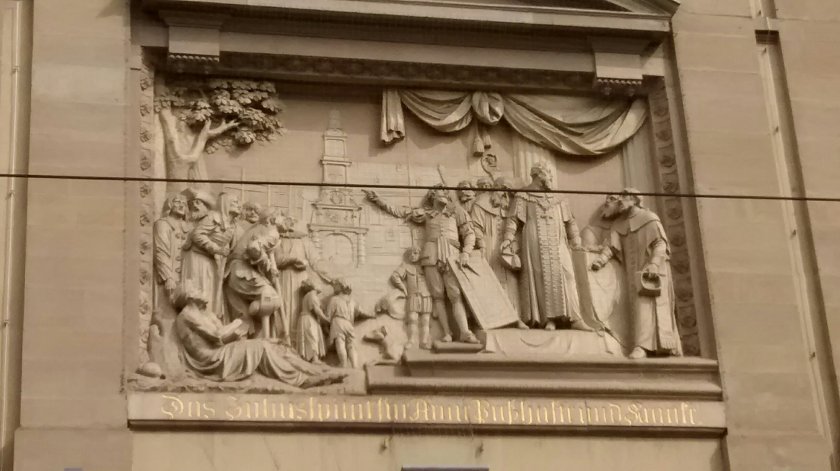
But he had a lasting monument, aside from the University, and that was the Julius Hospital. Here is the legend.

When his niece married, he sent her a present: a casket, and three valuable fruits – lemons – symbolising the bitter, hard lives so many had, in contrast with her life of ease. Disgusted, she sent it back. He returned it. Three times in all. Then he gave up.

Silly young woman. Had she opened the casket, she would have found the deeds to lands and vineyards guaranteeing solid riches in perpetuity.

Julius used these riches rejected by his niece to found a hospital. This hospital was open to all citizens, rich and poor. It includes a poor house, an orphanage, an old people’s home. His clever investments have allowed the hospital to continue into modern times, though now it is a state-run institution.

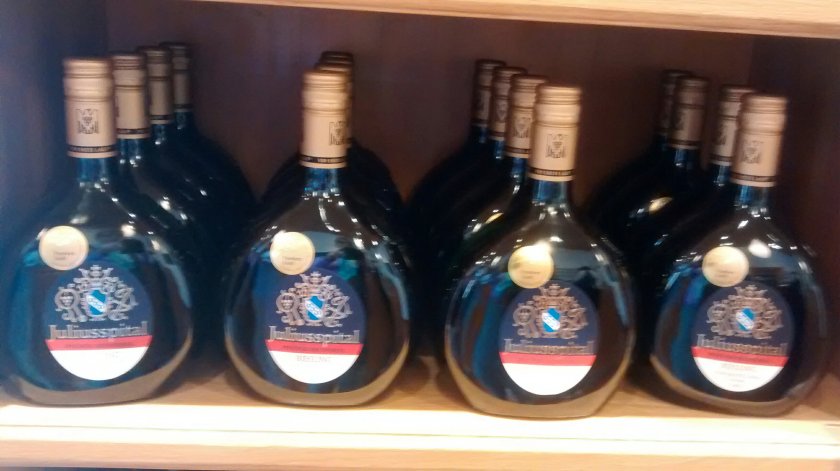
But it has a restaurant, and it has a shop where the wine produced in its vineyards may still be bought. And that is where we went today, and tried a few samples before buying a few bottles. ‘Zum Wohl!’

Schlossgarten Weikersheim

Today we went to the Tauber Valley. We were off for kaffee and kuchen with Stephan and Gina’s family, and we planned to be tourists on the way.

Here is Weikersheim. It’s a mediaeval town. It’s a musical town: every summer it welcomes an international cohort of young musicians keen to work and play together.

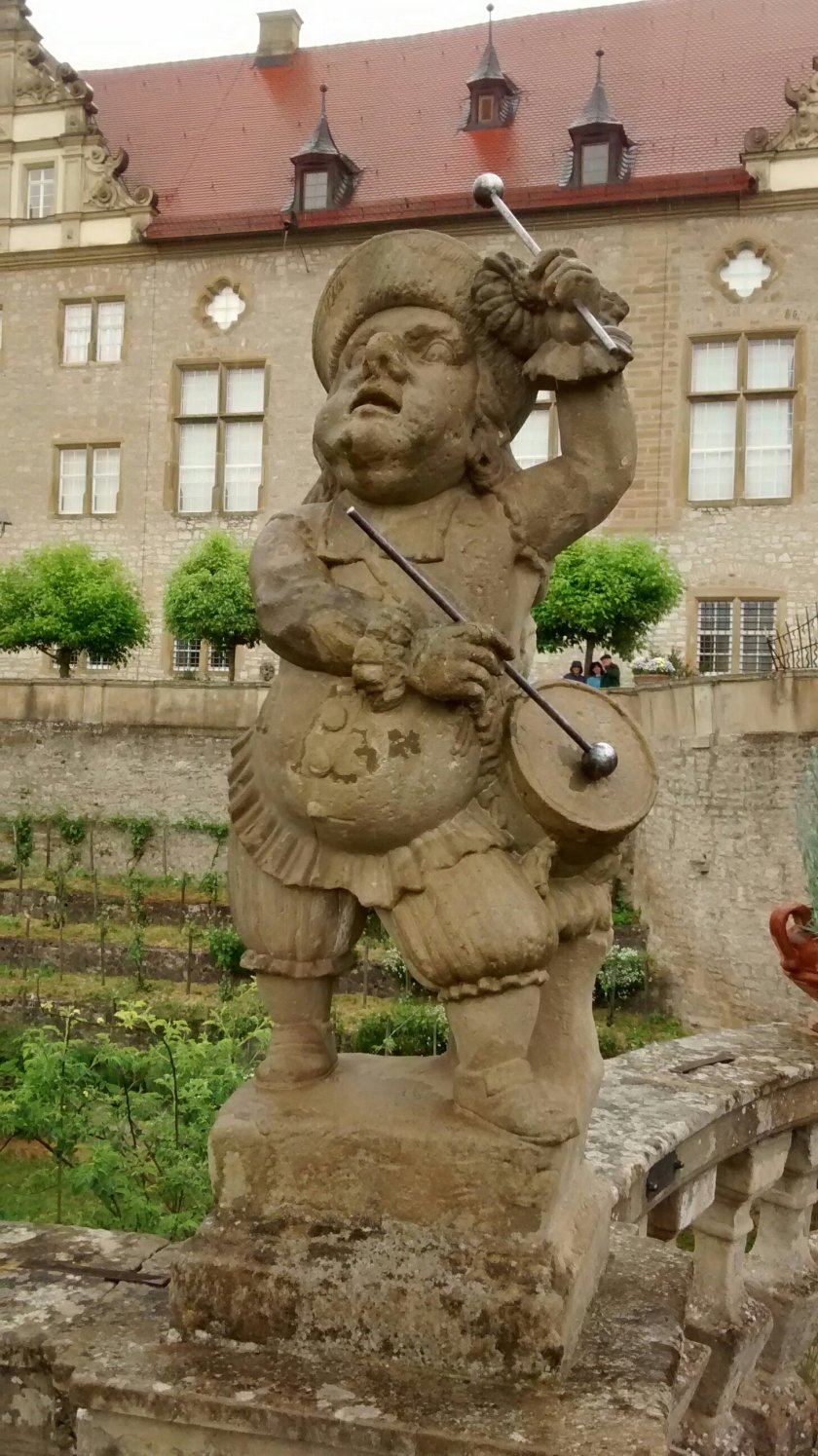
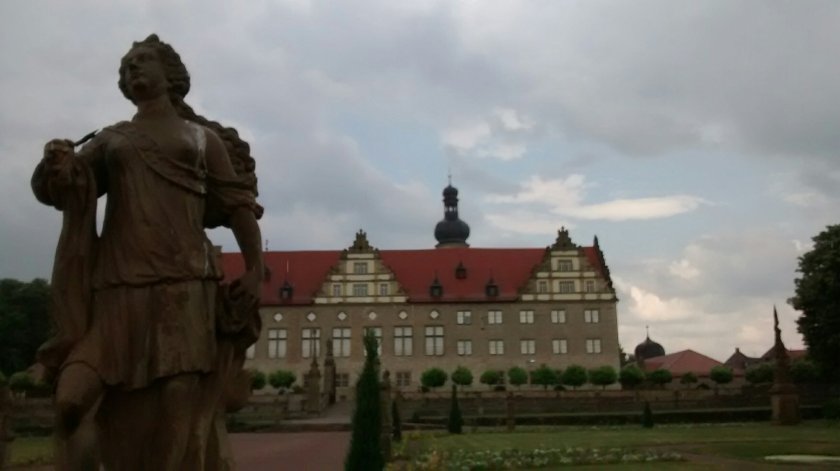
It’s a town with a fine castle and gardens. And as we arrived, the long promised deluge arrived, so we only briefly glimpsed its fine Renaissance exterior, its Baroque statues, and its whimsical little dwarfs that populate the garden.

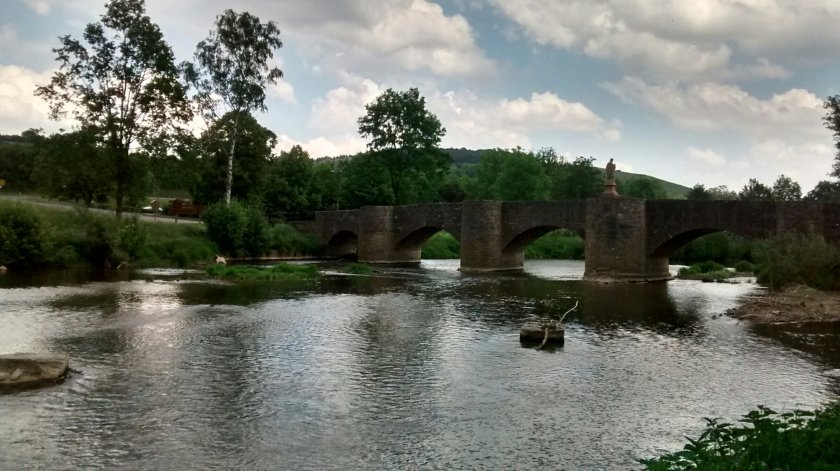
Earlier, we’d visited Tauberrettersheim, a town boasting a bridge designed by the architect of Würzburg’s Residenz, Balthazar Neumann.

After hail and driving deluge, we visited a church high up on a hill, the Bergkirche at Laudenbach, a pilgrimage destination for those en route for Compostela in Spain.

Later still, there was cake in excellent company. Three kinds of cake. A good day.

Würzburg

I had no idea that Würzburg was a tourist destination till today. Now I know that it is, and it’s worth it. If you haven’t visited yet, put it on the list. It’s a lovely city.

But we had our own personal Tour Guide, our friend Gina: knowledgeable, informative and fun.

Today, I can’t show you the Residenz, the extraordinary project of two 18th century prince-bishops. Photos not allowed.

I’ll tell you instead the shameful story of how Würzurg was all but destroyed at the very end of World War II. By us. In March 1945, Würzburg was one of the cities identified as a target of the Baedeker Raids – designed to decimate culturally significant communities. Twenty minutes of bombing on 16 March destroyed 80% of the town’s buildings and killed 5000 citizens in an attack that can only be described as a vindictive act of vandalism.

That Würzburg in general and the Residenz in particular has rescued and restored its rich heritage owes much to an American soldier, John Skilton, who worked indefatigably with both Germans and not-very-enthusiastic Allies to protect what remained of the Residenz.

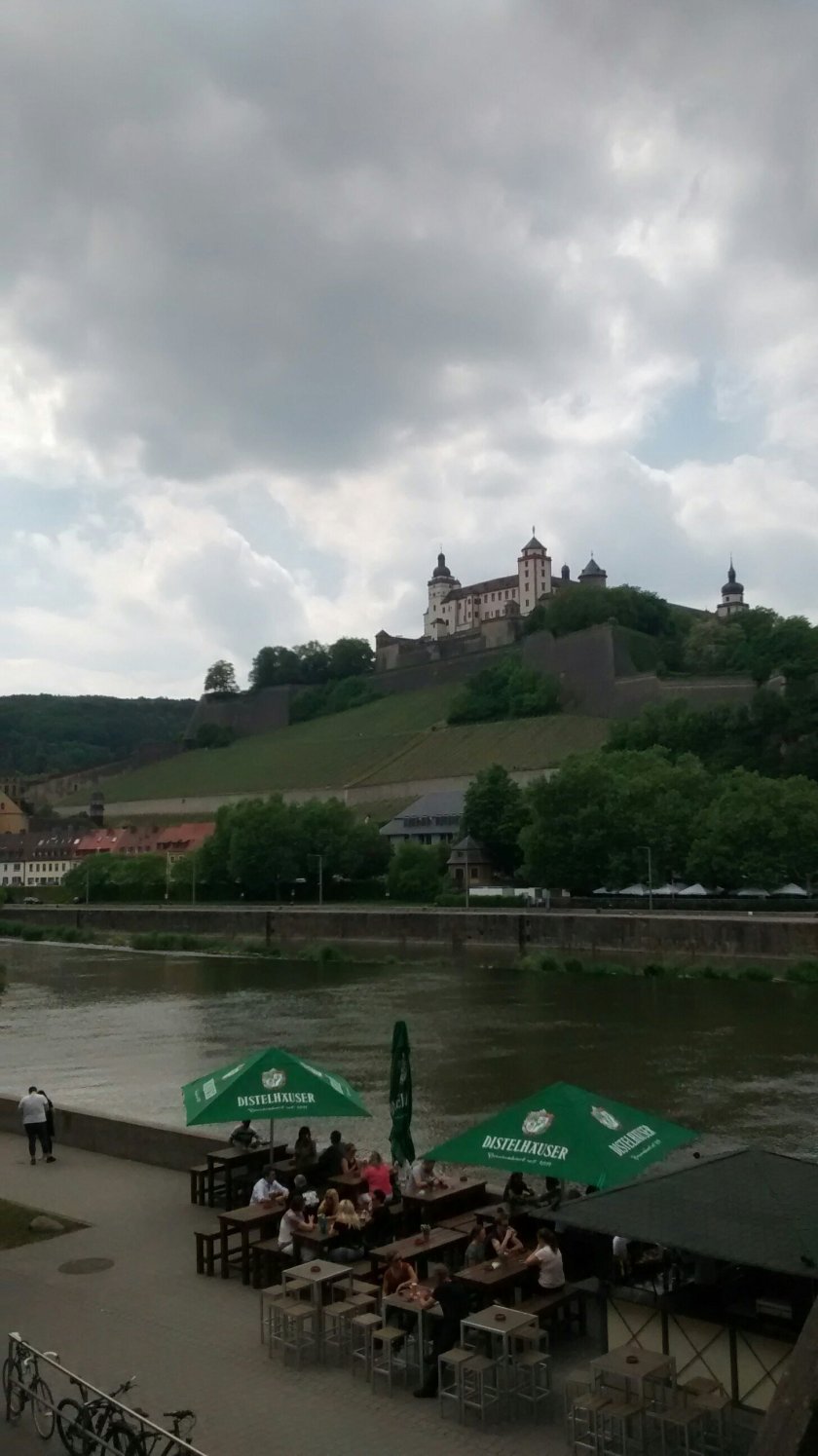
I shan’t give you a conducted tour now. That may come later. Here are a few pictures: of the Marienburg Fortress above the town

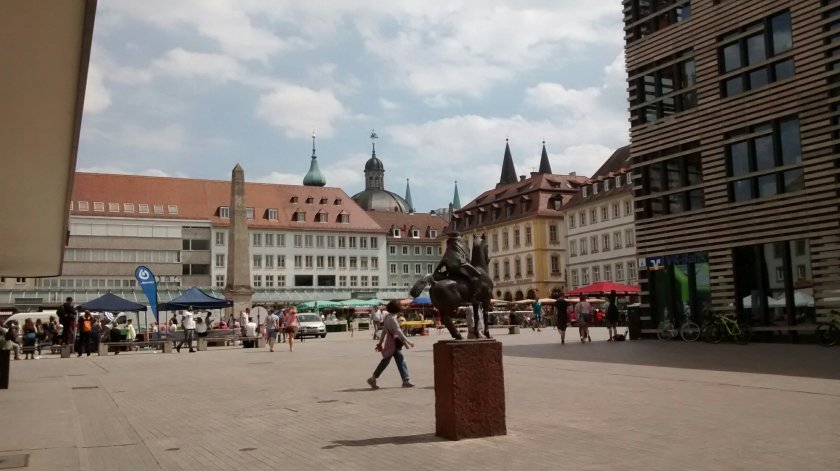
looking over towards the Market Square…

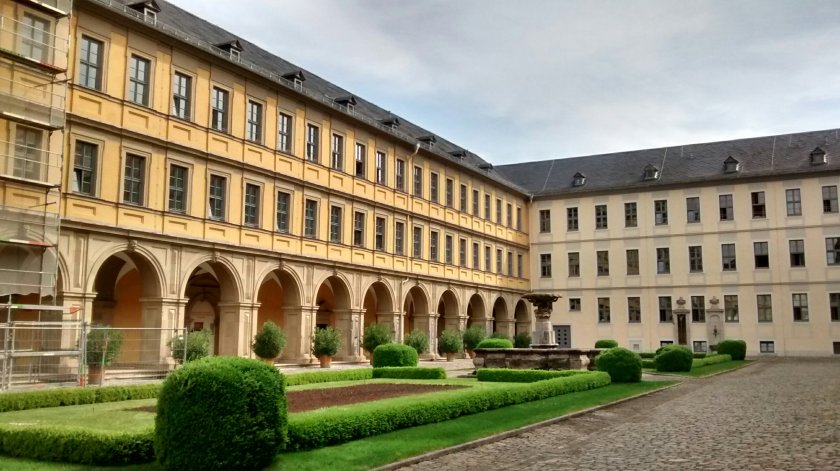
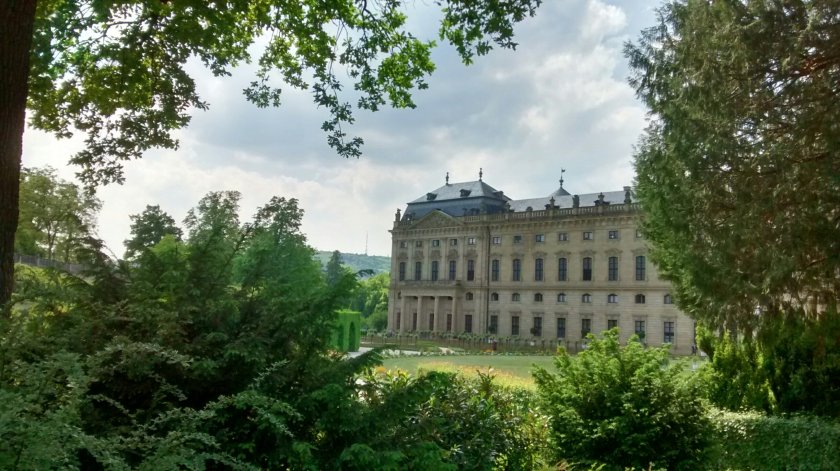
….. and from the gardens of the Residenz.

Plastic free Friday

A night on a ship. A day on the road, speeding through through the Netherlands (very flat) and then Germany (increasingly hilly as we approached Franconia, our destination).

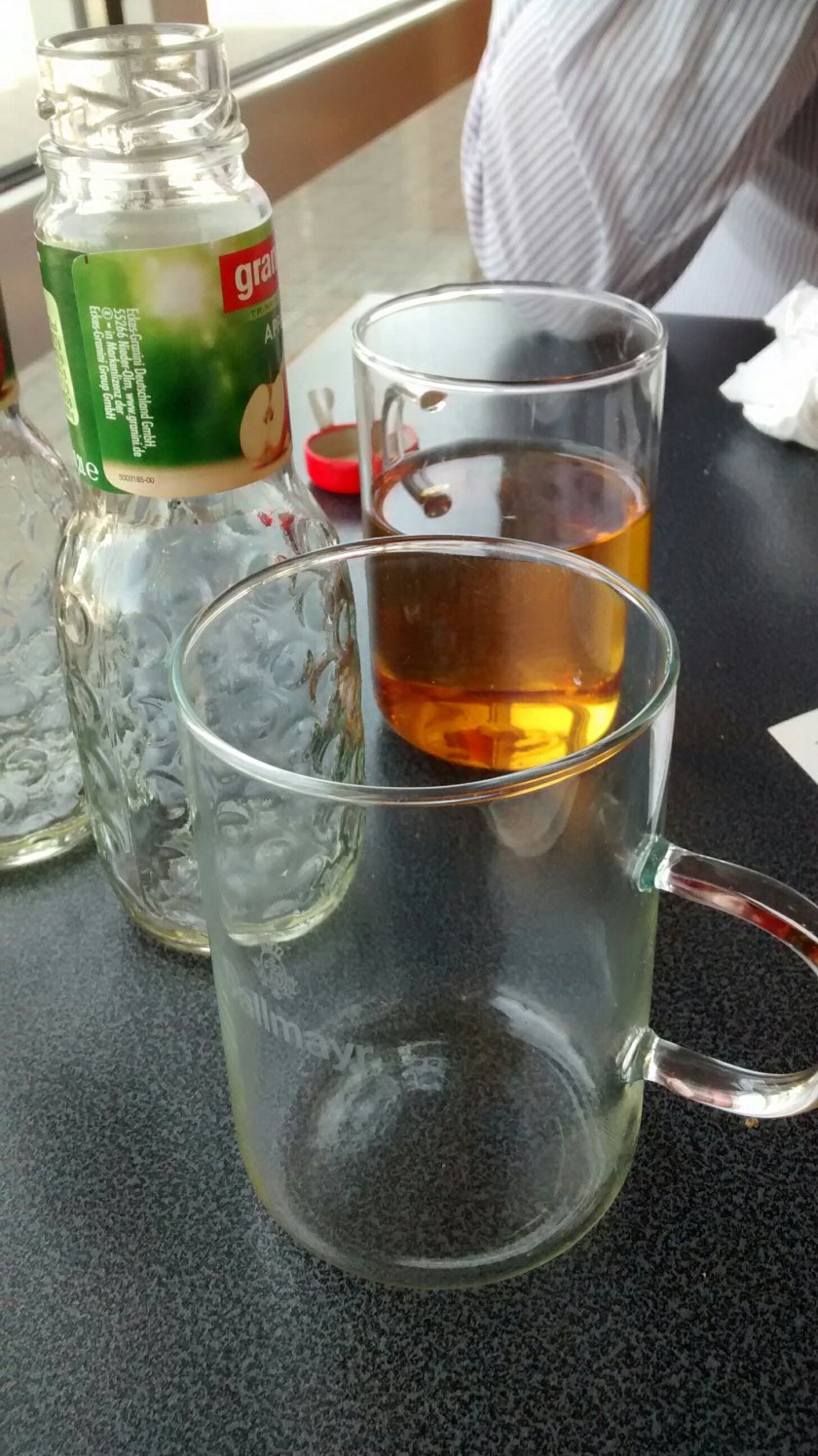
This is what German motorway service stations have to teach us. Plastic free is possible. Sandwiches are wrapped in paper. Food is served on ceramic plates with metal cutlery. Proper coffee cups. Drinks (from glass bottles) are served in glasses. Paper straws.

All the concessions we saw danced to the same tune. Apart from Burger King and Costa. There it was disposable everything as usual.

From Hull, Hell and Halifax ….

… this is an allusion to the mediaeval Yorkshire thieves’ prayer when facing justice. I can’t elaborate when blogging on a smartphone. Google it.

We’re just on board the Pride of Rotterdam, heading for …. Rotterdam, on our way to Germany.

So we spent the afternoon in Hull, a city with a proud history as a port, but these days suffering a bit from being on the road to nowhere much. Andrew Marvell, William Wilberforce and Philip Larkin were all sons of Hull, and the city makes much of them.

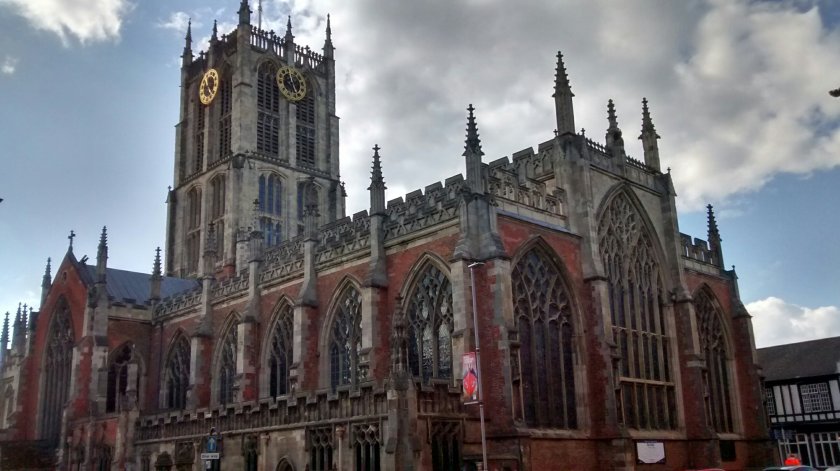
We plan to come and explore this city properly, when we’re not in transit. It deserves closer inspection. For now, I’ll share two views of England’s largest parish church, Holy Trinity, built in the 13th century. One is a conventional view. The other is the same church as seen in the windows of the office block opposite.

Now is the month of Maying …..

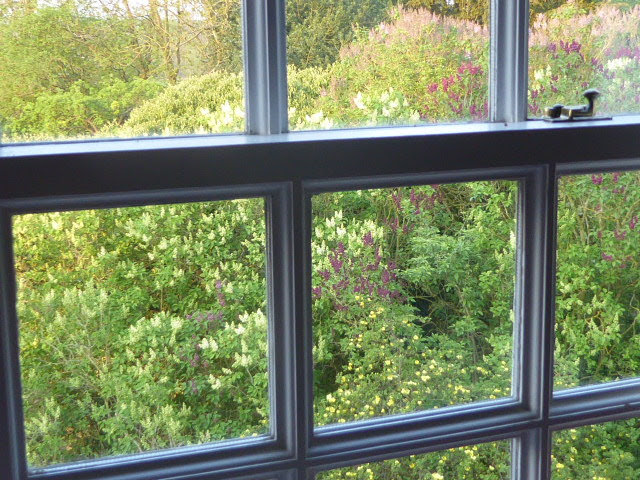
It’s been quite a treat to stare out of our kitchen window these last two days.  We have three lilac trees, one purple, one mauve and one white, which put on a spectacular and perfumed performance for one week only in May.  Two mornings ago, there was not a bud in sight.  By the evening, tight little green buds had appeared.  Yesterday they were bigger.  Today they’ve revealed their colours.  Tomorrow they’ll be out.  Then we go on holiday ….. and miss the rest.

Here’s what these hot few days in early May have produced in the garden.  A few early flowers: narcissi , primroses still survive – just.

Naked trees have suddenly unfurled tender young leaves. Blossom blossoms. Bluebells and dandelions and poinsettia have appeared.   The first wisteria flowers shyly peek from behind their delicate leaves.  Spring has sprung.

And here is some May time music:  Thomas Morley’s ‘Now is the month of maying’, sung by the Beaumont Singers.

Snapshot Saturday: an unlikely pie

We’d never heard of Coniston Pie before. Best head over that way then, and find out all about it.

Coniston’s a tiny village in North Yorkshire, wedged into the glorious limestone scenery between Kettlewell and Grassington. We couldn’t go there without exploring a bit and working up an appetite for that pie.

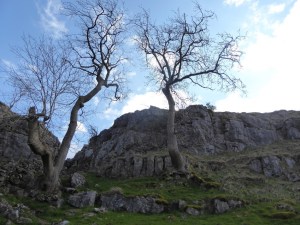
The rocky path lies between those two trees.

We began with a bit of a scramble, a bit of a climb before hitting a steadily climbing path leading us upwards between dry stone walls and statuesque and wind-shaped trees. Sheep were our constant companions as we continued to plod ever upwards, 1000 feet in all.

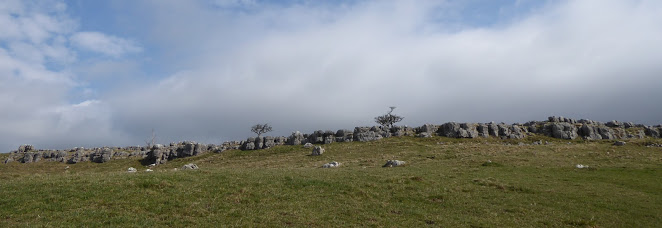
Wind-stunted trees tucked behind dry stone walls.
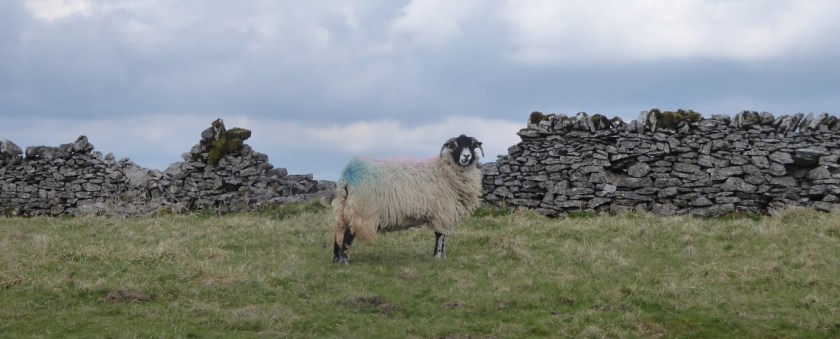
Sheep. Always sheep.

We rested at the top. We had a snack (just a biscuit, no pie for us), before taking the winding turfy track downwards towards the valley bottom, then turning sharp left to join the Dales Way back to Coniston.

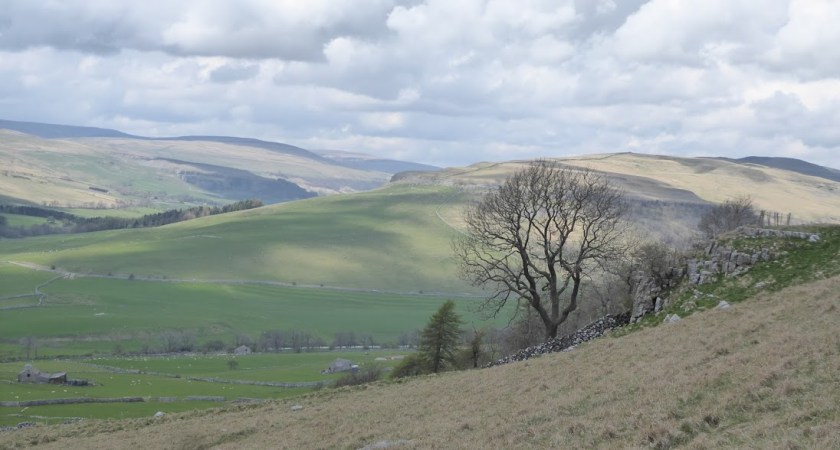
Our view as we trecked downwards.

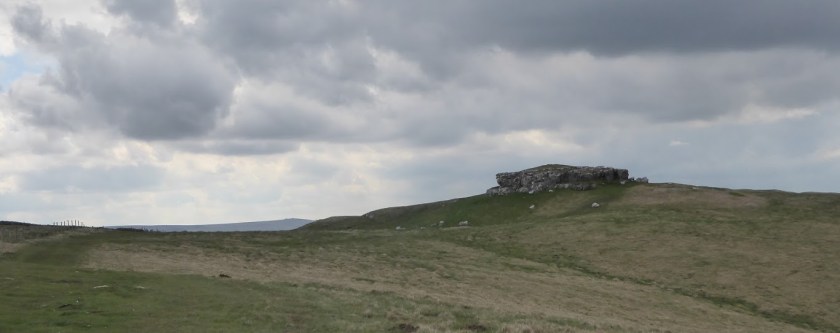
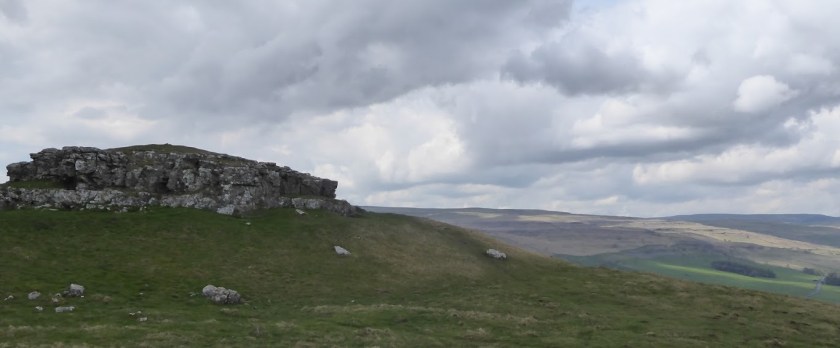
And that’s when we saw it. Coniston Pie. It’s not hearty fare to be tucked into after a hard day’s lambing apparently, but this: the view the shepherd sees as he does his daily round.

Coniston Pie.
Coniston Pie.

Still, it does look exactly like a pie, filled with good things and topped off with a thick pastry crust, doesn’t it?

This week’s WordPress challenge asks us to post something unlikely.