Were you a collector as a child? I was. Stamps; seashells; those evocative sheets of fine tissue that they used to wrap individual citrus fruits. Another month, another collection. By the time I was ten, I’d abandoned the lot.
Not Frederic Marès though. You may not know him, but he’s Catalonia’s foremost 20th century sculptor, and you’ll find his work on public buildings and in churches here.
How he made time for his work is a mystery. He was an obsessive collector. He collected sculpture to inform his own studies, and …. stuff, because it was interesting.
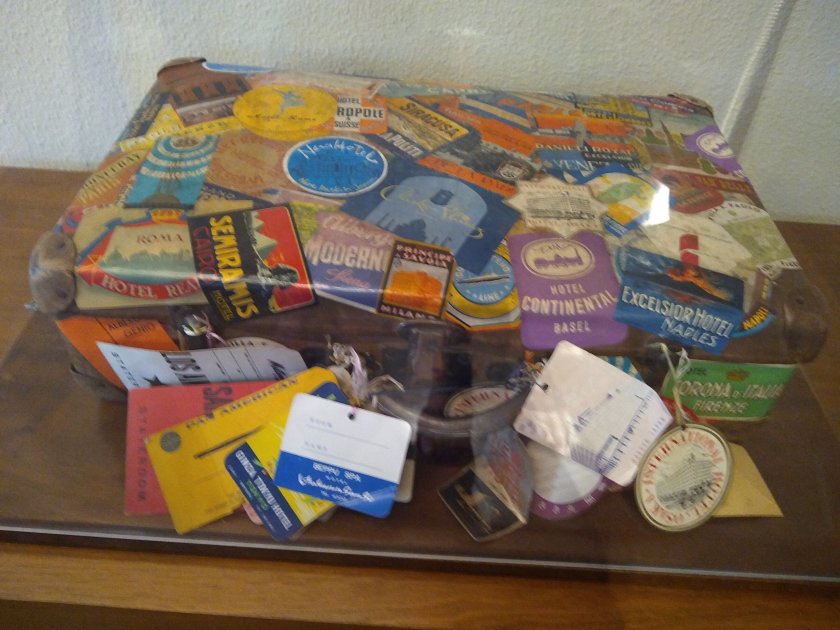
ThisisMarèssuitcase. He seems pretty well-travelled.
By 1947, his collection was so large that he made it public. On his death in 1991, he bequeathed it to the City of Barcelona. It fills an entire museum.
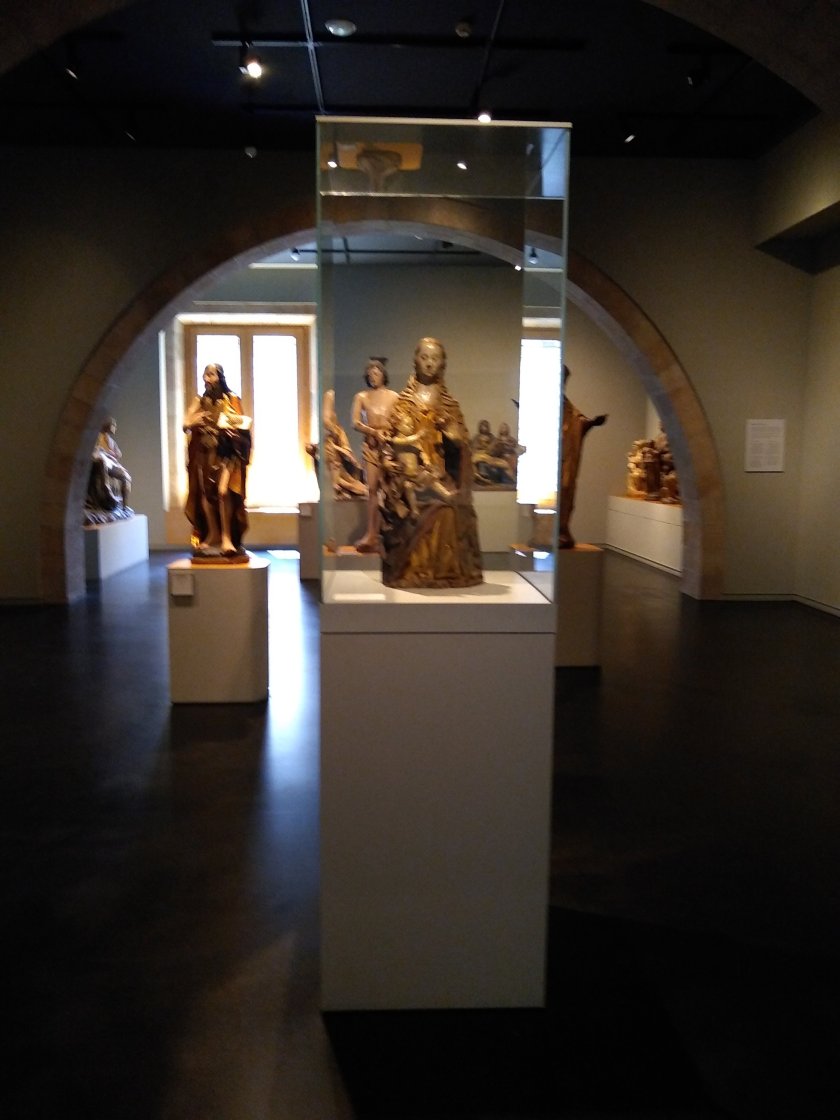
Here’s the place to come to find an eclectic mix of religious sculpture: crucifixions and Pietàs by the score, as well as Christmas crib figures from the 19th century. It sounds dour, but it’s not. His personal choices make for fascinating viewing…. but if it all gets a bit intense, pop upstairs.
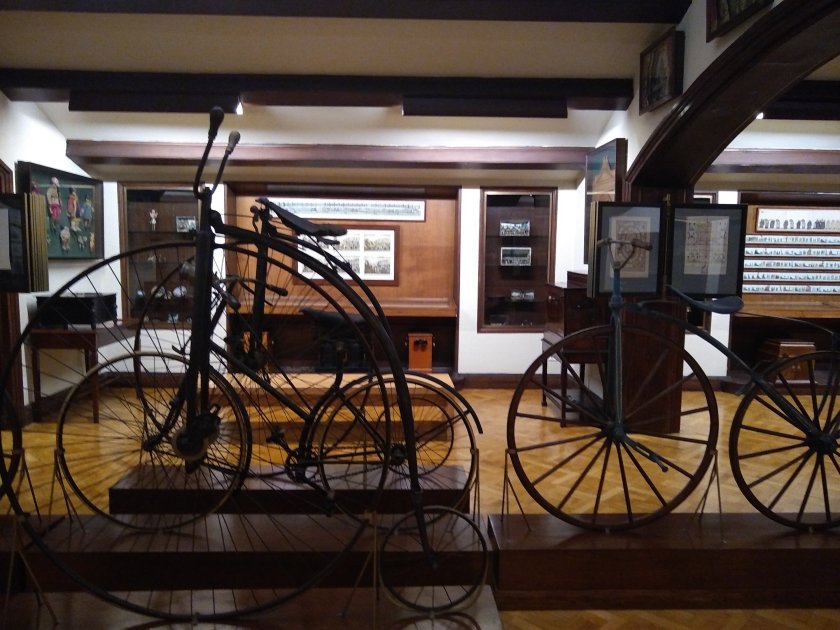
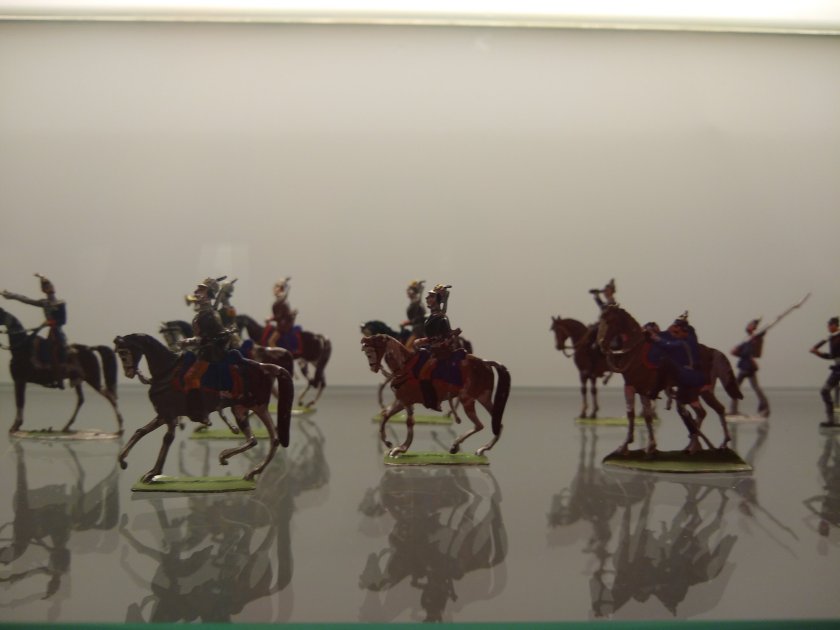
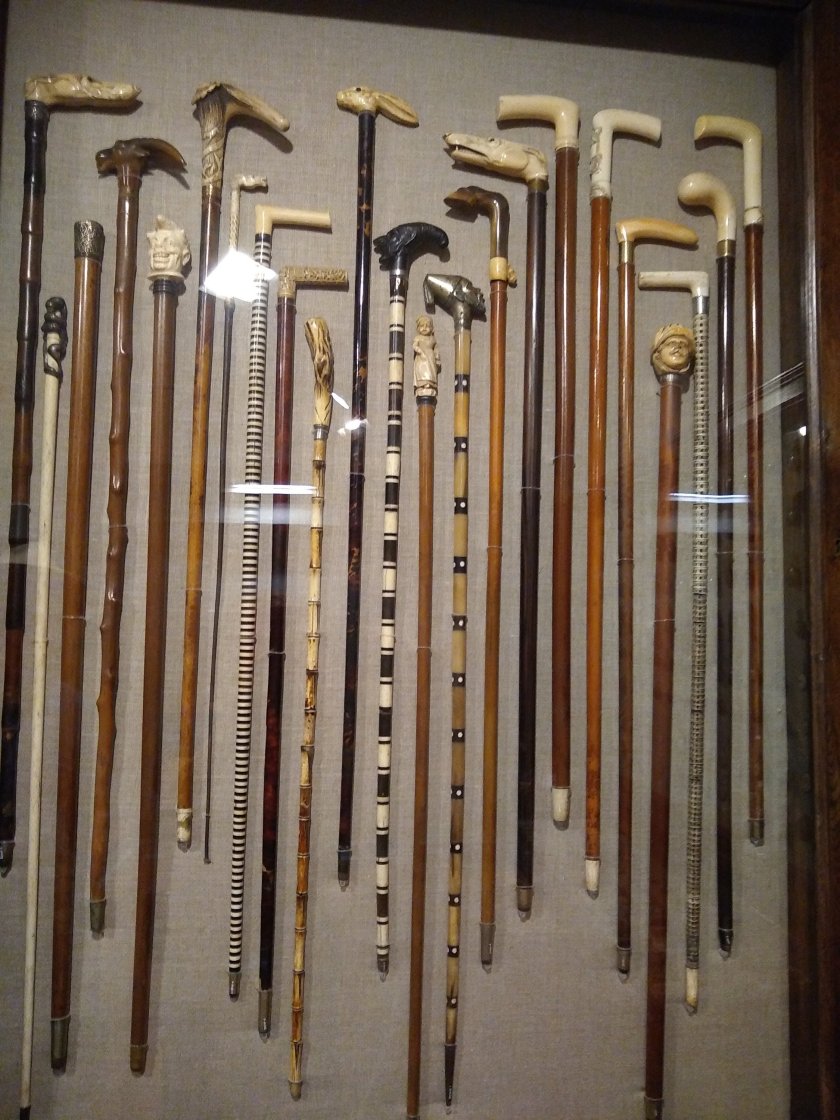
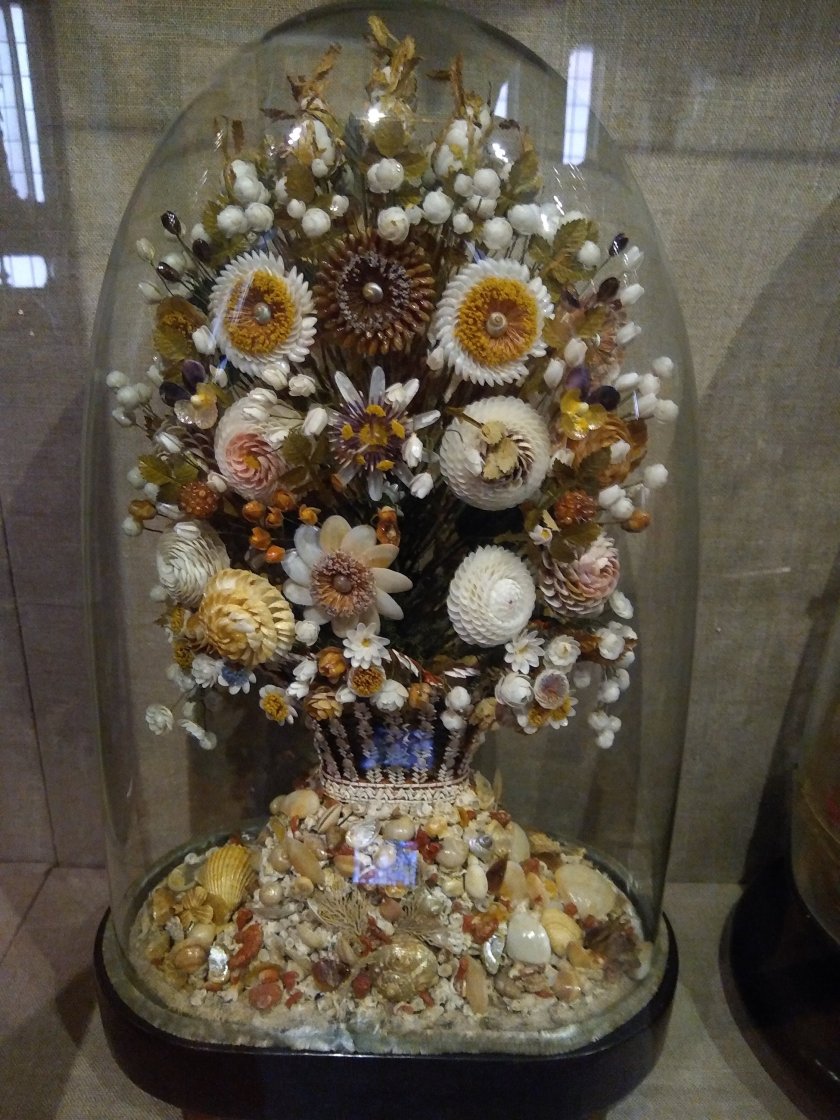
Here are tin soldiers; toy theatres; pairs of spectacles; early bicycles; pipes; dolls; door keys; clocks: walking sticks; extraordinary glass domes that seem to be full of dried flowers – look again. Each flower is made from dozens of shells – this was 19th century seaside art.
This museum, in the heart of Tourist Barcelona, is not crowded. Which was fine by us. But those tourists who amble past, never noticing it’s there, are missing out.
Three days. Three days to build memories and new connections. Ellie’s partner Ed has three children, and the two youngest made an instant Gang of Three with William, sharing a bedroom and every waking moment together. Adults and older children mucked in and just had fun.
There was a snag, and it was a big one. Poor Ben woke up on Friday with tonsillitis, had to see s doctor for drugs and advice, and vanished to his room to feel rotten for two whole days. Day three had him making up for lost time.
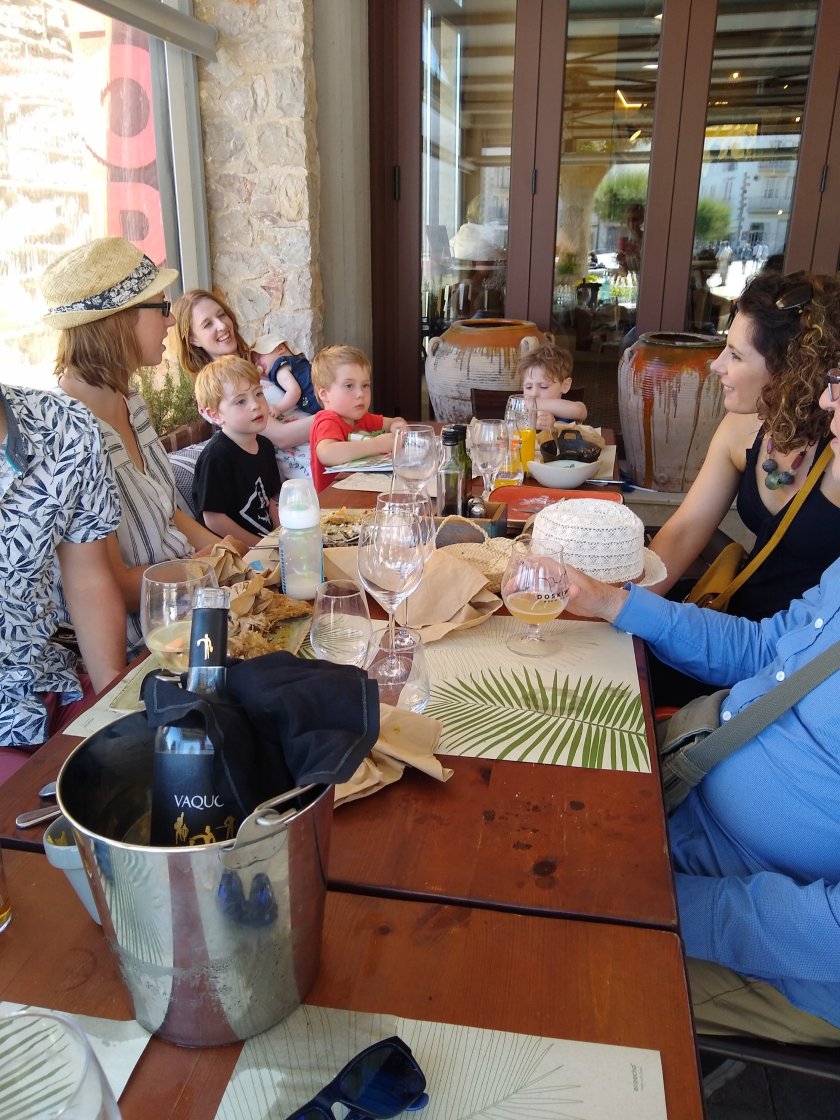
We spent lots of time sharing meals.
Aside from that there were praying mantises to admire…
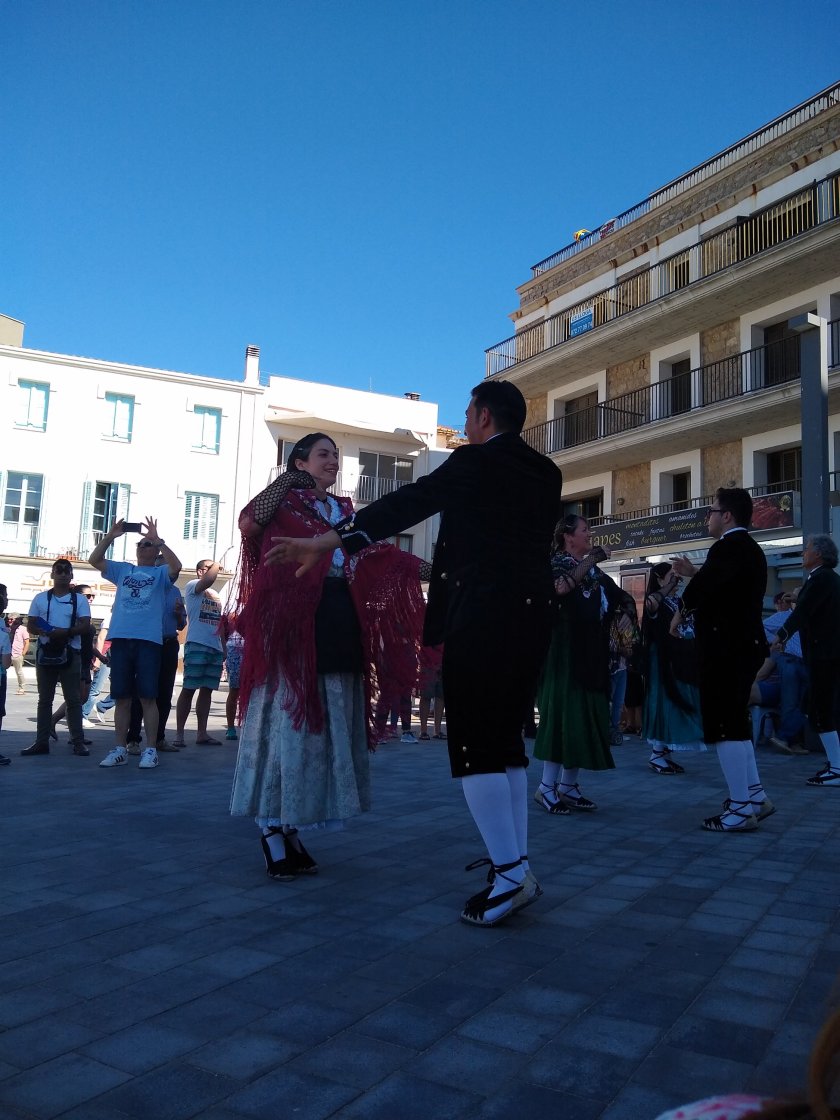
We’re in Spain. Emily and Miquel had invited us to celebrate her 30th birthday with them, so off we went to Barcelona on Thursday. Where they immediately announced ‘Some friends have lent us their holiday home near the coast for the weekend. Don’t unpack. We’re off in an hour.’
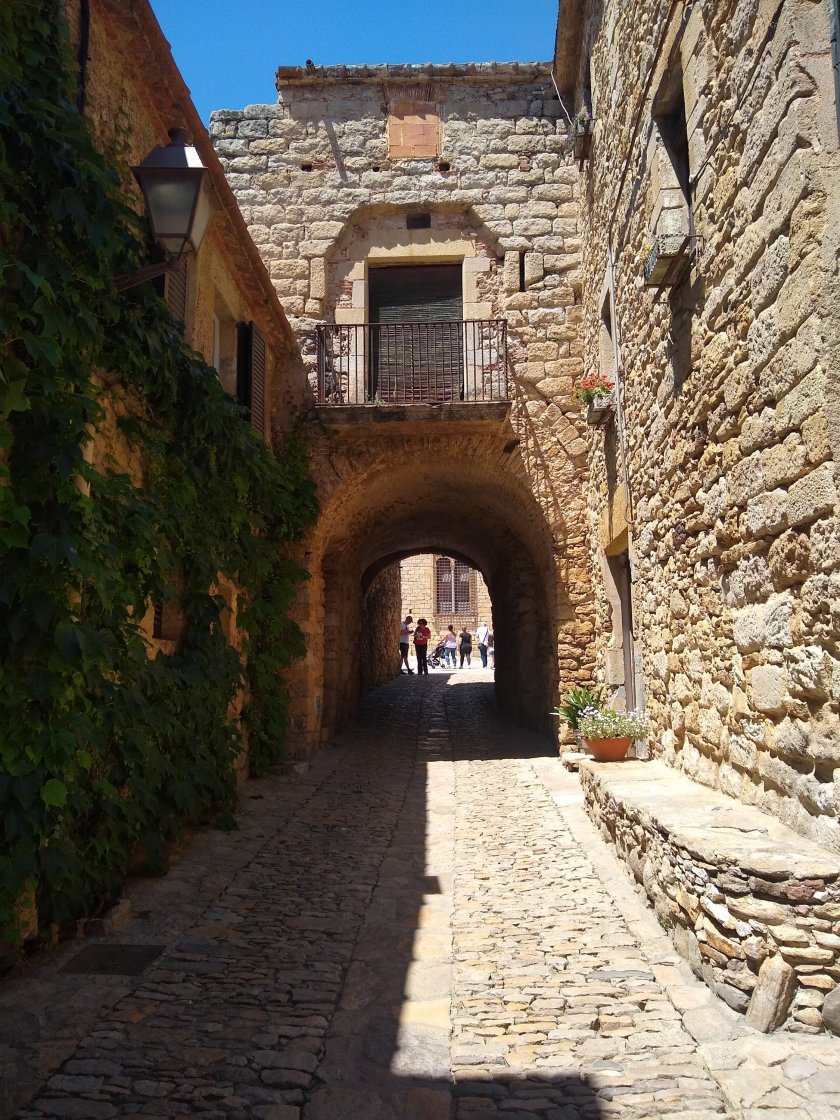
The sun was setting as we arrived at a village, somewhere near Girona. As we arrived, I was sure it must be the wrong place – there were cars in the drive, and this was no small holiday cottage. We got out anyway…. and a line of people appeared on the balcony singing ‘Happy Birthday’…. to me.
It was my family. My whole family. My three children, their partners and children, who had all secretly plotted and contrived to come here for a long-delayed 70th birthday celebration, just for me, here, this weekend. And I hadn’t suspected a thing.
On the actual day, two years ago, Ellie was in the middle of chemotherapy and celebrations were in short supply.
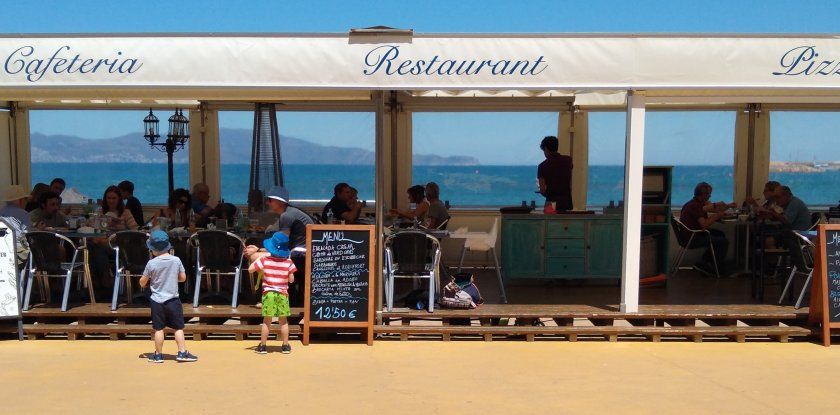
So here we are, all 15 of us, all in the same place at the same time – something that almost never happens. For a whole long weekend of glorious weather, spending our days playing with the children on the beach, and our evenings on the terrace outside eating, drinking and talking, always talking…..
Lunchbythebeach
Emily’s birthday hasn’t even had a mention yet. That’s on Monday. We’ll celebrate that then, back in Barcelona.
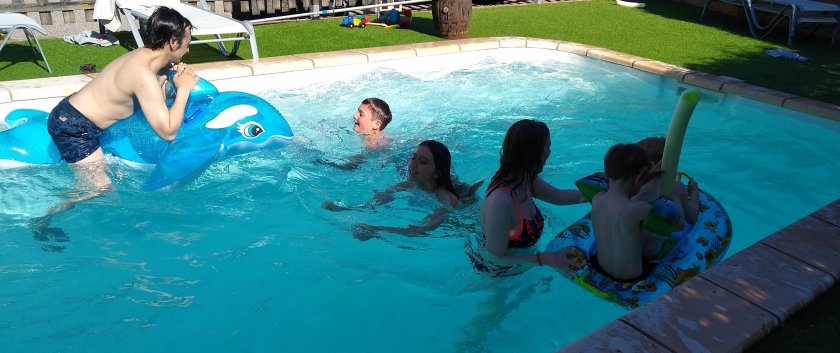
Phone photos are hard to come by in bright sunshine. Here’s some fun in the pool at our weekend home.
I’m an indifferent housewife and Malcolm is worse. What’s the point of dusting until you can actually see a result from doing so? Malcolm would probably say ‘What’s the point of dusting? All it does is re-arrange the dust.’ Hoovering happens when it has to.
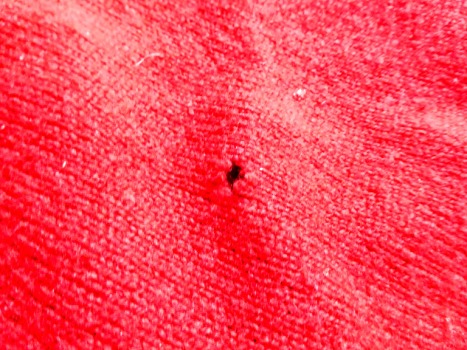
So last week it was a terrible shock when I decided to have a really good spring-clean, hoiked the edge of a rug out from under the radiator where it’s normally firmly wedged, and found this…..
…….. the corner of our Persian rug chewed to a fragment. By clothes moths. Of whom I could see not a single sign.
Well, we cleared up the mess and left it at that. Until today. Malcolm had a little sort out of the jumpers in a drawer, and found this….
….. and this ……
Well. Spring cleaning it is then. With a vengeance. We’ve ransacked the shops for nasty chemicals, packaged for the most part in plastic (so much for our eco-credentials), and set to with the vacuum cleaner, dusters, scrubbing brushes, mops. It’s either that or face the world with every item of clothing interestingly decorated with a filigree of little holes.
Will it make us less indifferent housekeepers? Probably not. It’ll take more than that to change the habits of a lifetime. But then, it turns out that both Harrogate and Ripon are suffering from a serious Invasion of the Clothes Moth. Even Houseproud Housewives are not exempt.
Overlooking the lake at the Himalayan Gardens, Grewelthorpe.
I couldn’t be doing with pink when I was younger. I thought it was an itsy-bitsy sort of colour, suitable to be worn by annoying little girls of the Violet Elizabeth Bott persuasion (You do know who I’m talking about here, don’t you? Violet Elizabeth was the lisping, spoiled creature who tormented Richmal Crompton’s delightfully grubby-kneed and accident-prone Just William, as popular now as when he was first created in 1922).
I declined to dress my young daughters in pink, or to wear it myself. I despised its sugar-sweet prettiness.
These days I’m rather less hardline. I even have a raspberry pink shirt.
All the same, I think pink is happiest in the garden. It’s here that flowers can celebrate the colour in all its variety, from the softest most delicate shades of baby pink through to vibrant, vivacious flamingo pink. Pastel pink. Shocking pink. And pinks that use flower names: cherry blossom; rose; fuschia; carnation; cyclamen; dogwood.
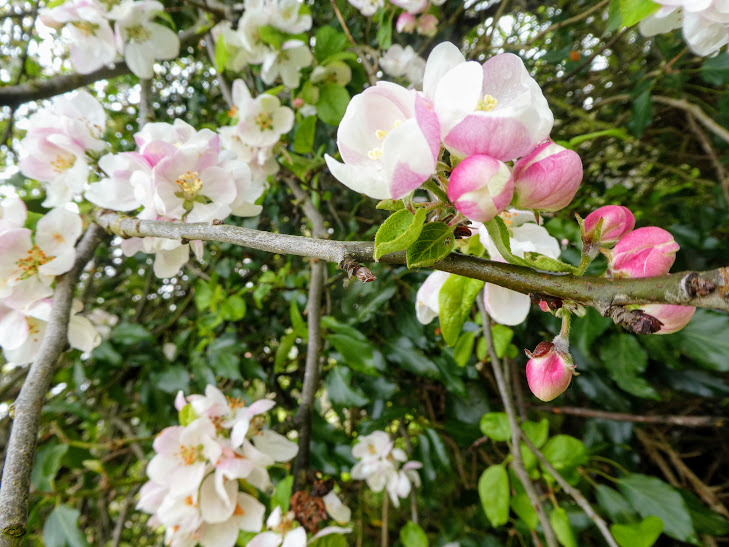
Here’s a picture gallery of May time flowers taken over the last few years. All of them are pink. And I like every single one.
Many of these pictures were taken in our garden; in our village; at Newby Hall; and at the Himalayan Gardens at Grewelthorpe. It’s my entry for today’s Ragtag Challenge: pink.
Several of you commented on my coastal pictures from Northumberland, remarking on how relaxing the whole thing must have been. Well …. it recharged the batteries alright … but not by lying down on the beach with a good book. Certainly not.
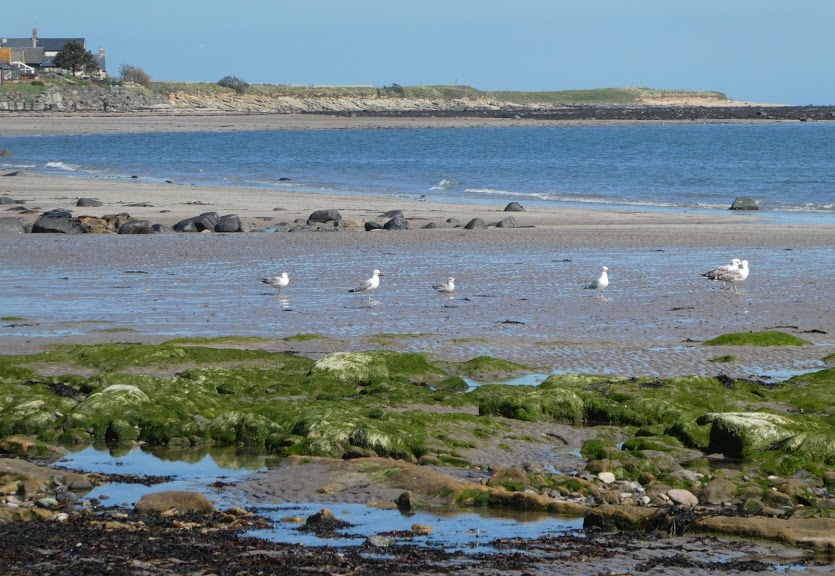
Only birds sunbathe here……
We were at Nether Grange, an HF hotel, with our walking group. And we were there with other walkers – some in groups, others not. At Nether Grange, walking is what you come for. That and good food eaten in good company. We’d opted for guided walks. Three levels of difficulty are offered each day so there’s no excuse not to get involved. I chose one of each, so finished the week with 15.3 km, 12 km and 17 km. walks under my belt.
Moorland near Etal.
This is hill country. The Pennines, the backbone range that bisects northern England becomes the Cheviots as it marches towards Scotland. In the car you’ll swoop thrillingly up and audaciously down those hillsides. They provide a backdrop to the area which is at once dramatic and bucolic.
On foot, you’ll get to know about those slopes….. actually, we weren’t often faced with gradients that had us gasping, panting and begging for mercy. But we rarely had a long level stretch either. And our leaders were there to encourage, chivvy along, provide good humour and background notes on all kinds of topics … as well as read the maps, so we didn’t have to.
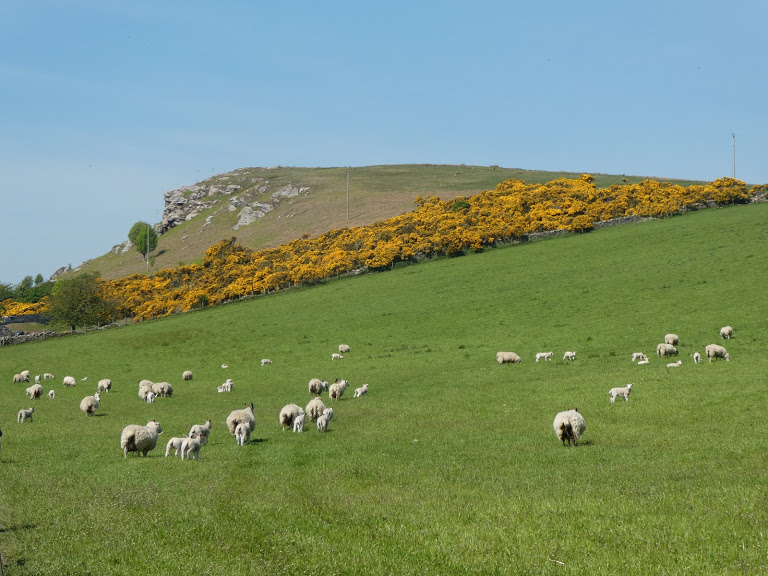
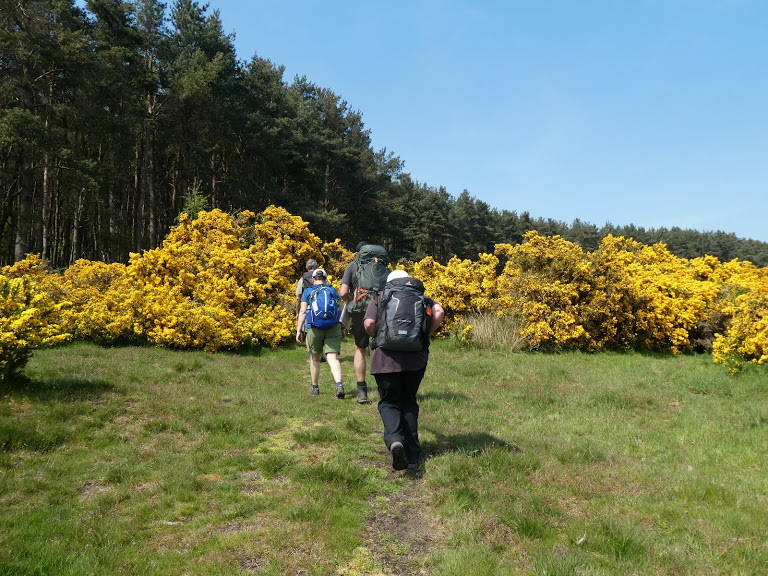
We walked moorland tracks, bouncy with springy turf nibbled short by sheep. We crossed hillsides bright with golden gorse. We tracked through woodland carpeted with bluebells.
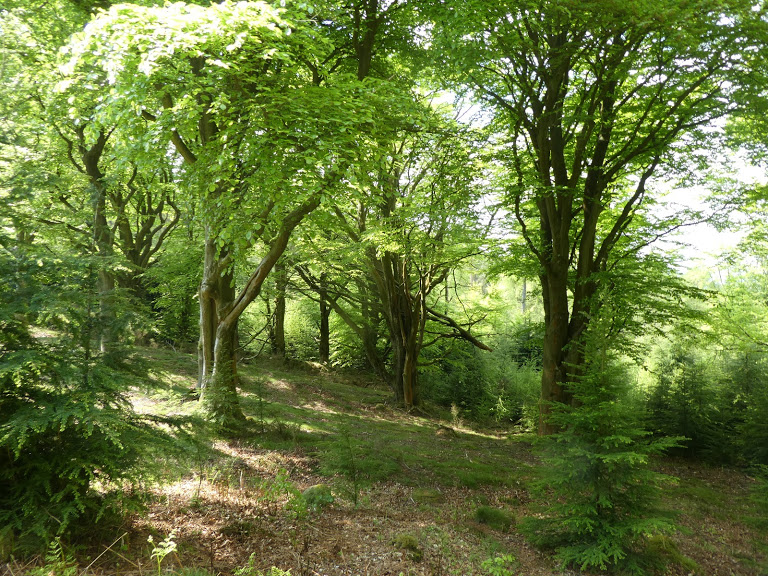
A woodland glade … no bluebells this time.
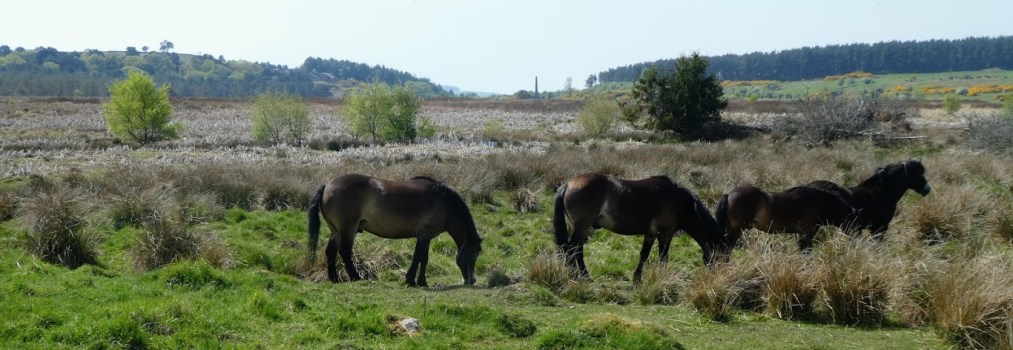
We passed Ford Moss, an extremely ancient raised peat bog where we excited the residents: Exmoor ponies charged with grazing the vegetation and keeping it in trim.
Exmoor ponies going for a gallop.
We passed farms with shire horses and hissy geese.
Shirehorse and foal.
Hissing goose.
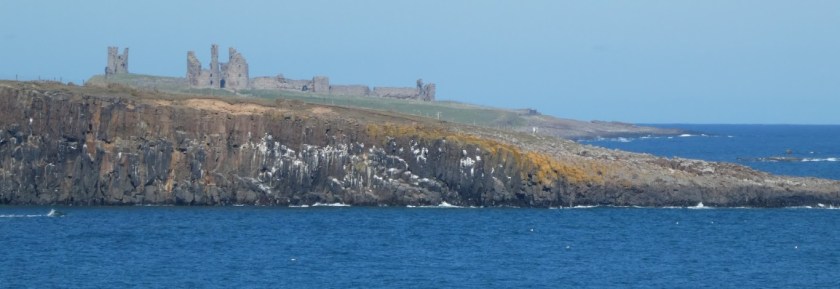
And on the last day, we walked the local coastal path: St. Oswald’s Way. The section between Alnmouth and Craster-where-the-kippers-come-from is characterised by craggy cliffs, and are home, like the nearby Farne Islands, to many thousands of seabirds such as kittiwakes and fulmars. Here’s what the zoom lens on my new camera can do.
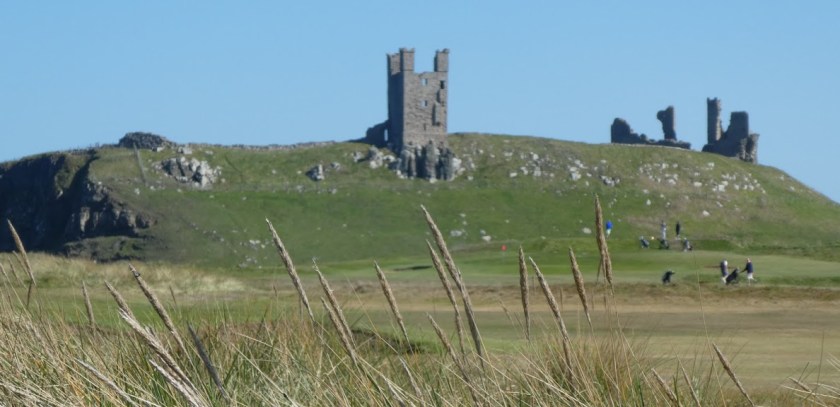
Cliffs and Dunstanburgh Castle seen from afar. The next three shots zoom in ….
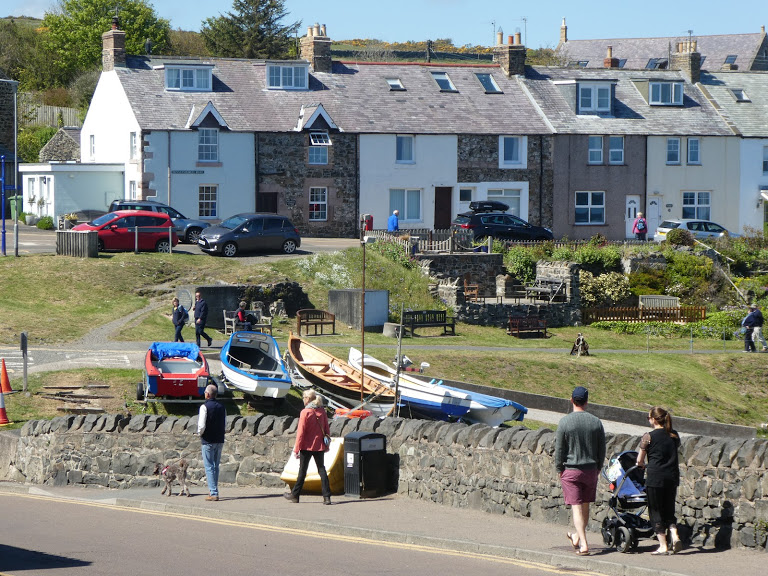
Craster: cottages, a safe harbour, and a few tourists.
Our group, the 17 km one (10 1/2 miles to the non-metric) finished just beyond Dunstanburgh Castle. It was built in the 14th Century by the Earl of Lancaster, who was openly hostile to King Edward II – never a good idea, because the king had him executed in 1322. This fortification was built to make a bellicose statement, in an area crowded with castles. Now it’s a ruin, and an impressive one. We slogged to the top of the keep for the views, marvelling at the extra-thick walls as we climbed.
Leaving the castle behind us.
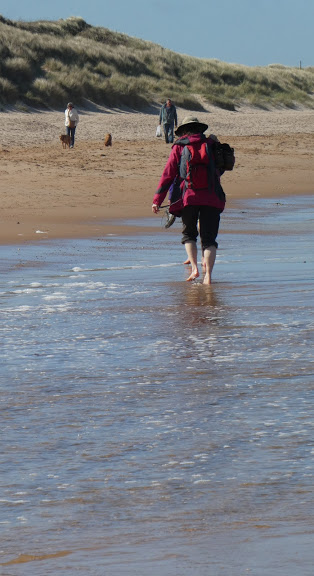
We finished the day, and our three days of walks, with a paddle. Gotta have a paddle. Or ‘plodge’ as the locals call it.
Plodging towards home….
With thanks to our walk leaders Chris, Helen, Paul, Richard: to Reuben and Team Nether Grange, and to our own Mike and Angela for organising the holiday.
I could take a walk on the beach every morning of my life.
We’ve just come back from four days in Northumberland, staying in the coastal town of Alnmouth. Each morning before breakfast, I’d walk down to the sands to be both stimulated and calmed by the dragging, pulsing action of the sea.
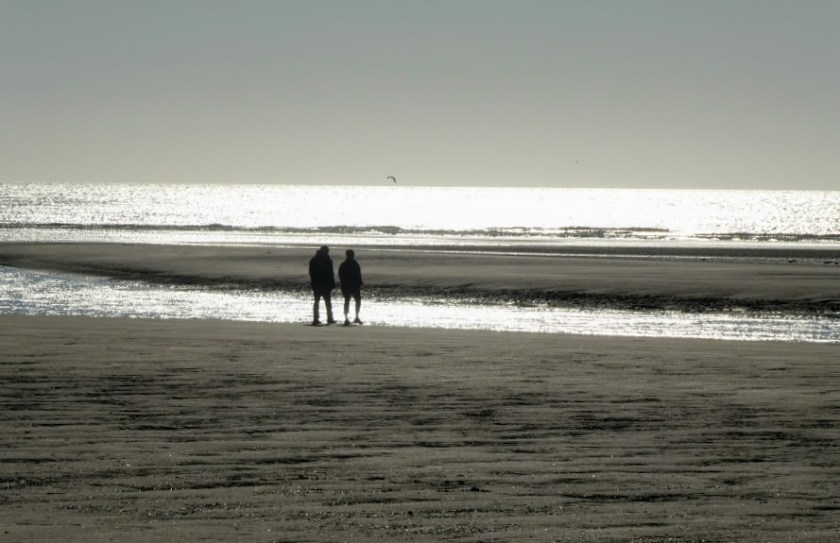
There was the patterning of the sands to enjoy. Those banks of undulations extending as far as I could see. The designs etched in different coloured sands upon the newly-flattened beach. Shadows and reflections in shallow pools. The changing colours of the sea and sky towards the horizon.
Other beach lovers walked in contemplative silence too. Their dogs preferred to celebrate the long, wide space, and simply ran and ran.
Herons seem to be a part of our lives. It’s a rare week when we don’t spot one flying languidly along the river, or waiting on an exposed rock for the next snack.
Wherever we travel, we can go heron spotting. We’ve seen them in Dordrecht in the Netherlands, Córdoba in southern Spain, l’Albufera near Valencia, and Busan in South Korea. Town and country: herons are there.
Fishing in the canal at Dordrecht, the Netherlands.
A heron at sunset on the Guadalquivir, Córdoba.
L’Albufera, Valencia
Flying along the river at Dongnae, Busan, South Korea.
We see them as we walk along the path towards West Tanfield, and spot them on the garden pond.
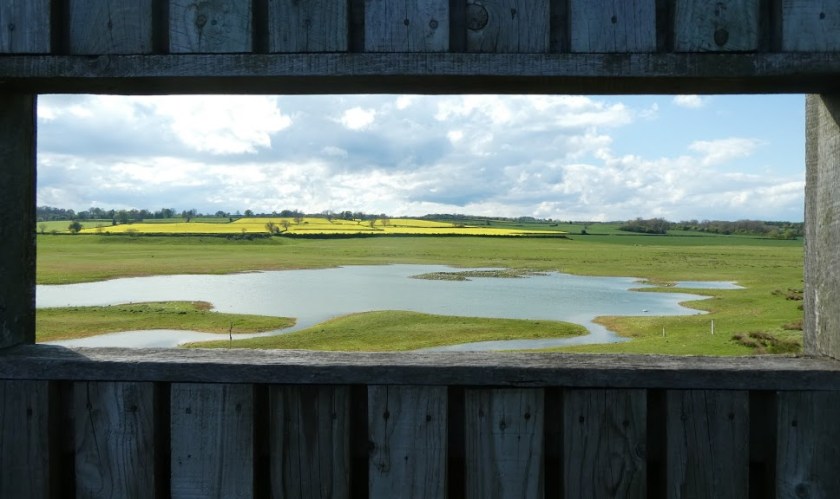
The other day after a stressful week, I needed a bit of space. Nosterfield Nature Reserve just up the road was the answer. I walked along the wetland paths watching water birds courting, feeding, simply being there, standing motionless or swimming peacefully. Quiet fields formed the backdrop.
Nosterfield Nature Reserve, spotted through a hide.
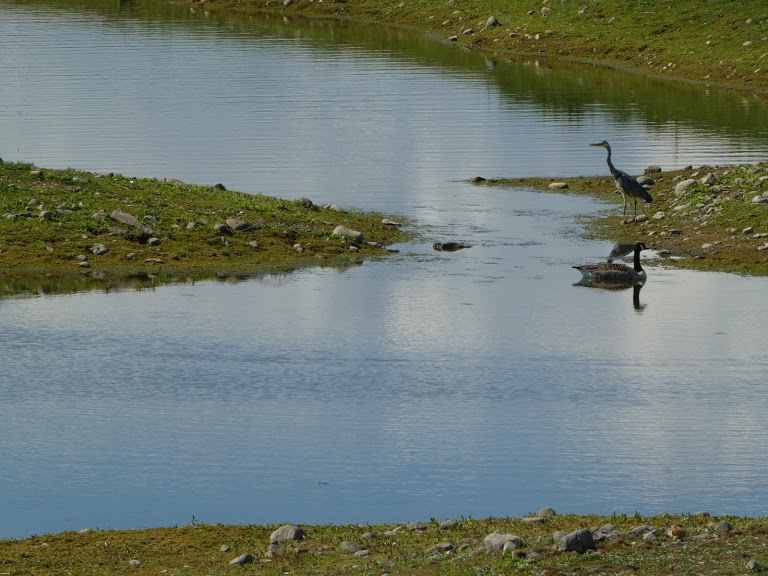
I went to the farthest hide. I became transfixed by the under-stated drama being played out between a heron and two or three egrets. They were fishing. All plodded gracefully in and out of what humans might see as each other’s personal space. They didn’t care or even seem to notice one another. They simply co-existed, fishing.
This is what first caught my eye….and then I zoomed in closer…..
This series of pictures might not seem that different one from another. They’re a record of a simple afternoon in the lives of a heron, three egrets ….. and me.
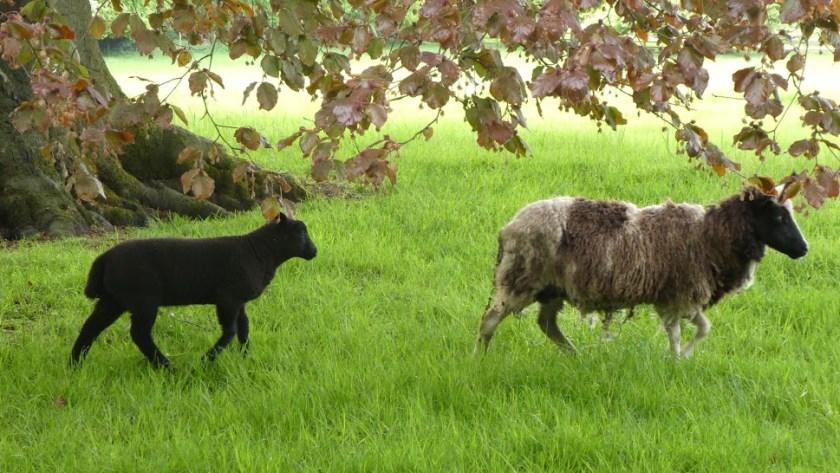
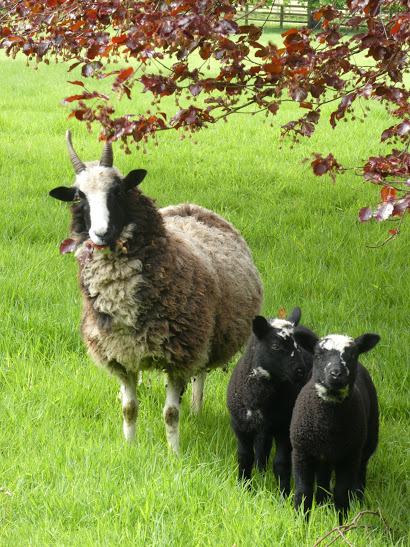
There are sheep at the bottom of the garden. Jacob sheep, three of them. And not so long ago, they gave birth to lambs – five between them. We didn’t see this domestic drama. They visit a neighbouring farm for ante-natal and delivery services. But a fortnight ago, they all returned home, and relished the fresh grass, newly lush after the winter.
Last week, the large and spectacular copper beech at one end of their field virtually overnight burst into leaf. Naked twigs produced swelling leaf buds, and then…. almost instantly, delicate pinky-crimson leaves, practically translucent. The Jacob sheep eyed them with interest. Grass is all very well, but …. young beech leaves? Oh yes! Well worth craning your neck for!
Yesterday afternoon, one of the ewes and her two lambs popped over to inspect me as I walked down the drive. They thought I might be John with a bucket of food (I had neither a beard nor a bucket, and it wasn’t the right time of day, but well, it was still worth a try). I was, as ever, a big disappointment. But it did remind the ewe that the copper beech was there beside me, its lowest branches just about reachable. She reached up. She selected bunches of young leaves, chewed them, ate them. Moved on a few yards and repeated the process. Again and again.
In a few days, those leaves will toughen up. Got to take your pleasures while you can. I hope her gourmandising didn’t give her a tummy ache.
We’re fond of our garden birds. Little by little, we’re getting to identify them. But their songs and calls? Not so much.
On Saturday though, we had an opportunity. Just along from here at Old Sleningford Farm, Linda Jenkinson whom we first met some five years ago on her bird watching course at Nosterfield, was exploring Bird Song. We knew we had to sign up.
A morning in the classroom. We learnt about blackbirds:
And chiffchaffs: think ‘chiffchiff’ rather than ‘chiffchaff’
and coal tits, and all the other kinds of garden tit.
We tackled about sixteen kinds of bird and their songs, listened, looked, did quizzes, and finished the morning feeling fairly sorted.
Then we had lunch. Home made frittata and bread, freshly gathered salad leaves, locally pressed apple juice, deliciously damp cake – that’s the sort of nourishment you get when you come to Old Sleningford Farm.
And afterwards it was The Great Outdoors. Well, I’m sorry birds, but you ought to get organised, form an orderly queue and sing, one by one. We wandered through woodland, along the river, explored the Forest Garden. And as we sauntered, ears cocked at the ready, willow warblers; marsh warblers; blackcaps; kingfishers all cacophonously introduced themselves, quite drowning out our carefully revised memories of bullfinch, chaffinch and the like. It was wonderful. We learnt, we listened, we enjoyed simply being in this peaceful place, shared only with the birds and other unseen wildlife. Thank you Linda. So glad to Start Birding with you!
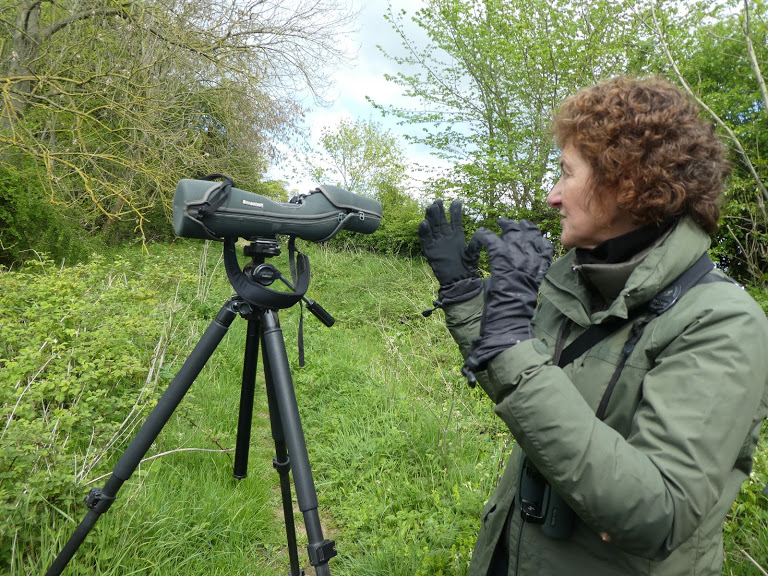
Linda helps us get close and personal to the birds we’ve been learning about.















 From Pyrenees to Pennines
You must be logged in to post a comment.