Do you prefer this first kind of image … or the second one?
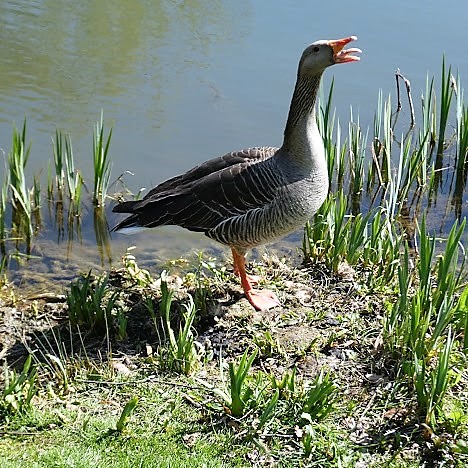

#Kinda Square


… or a bluer shade of blue …
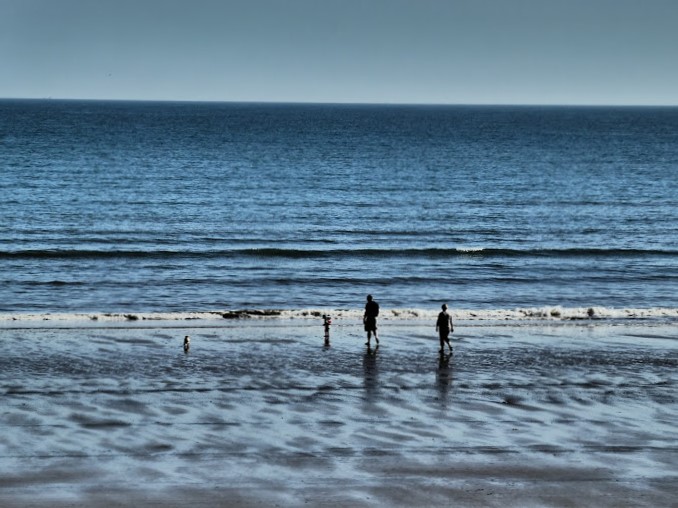
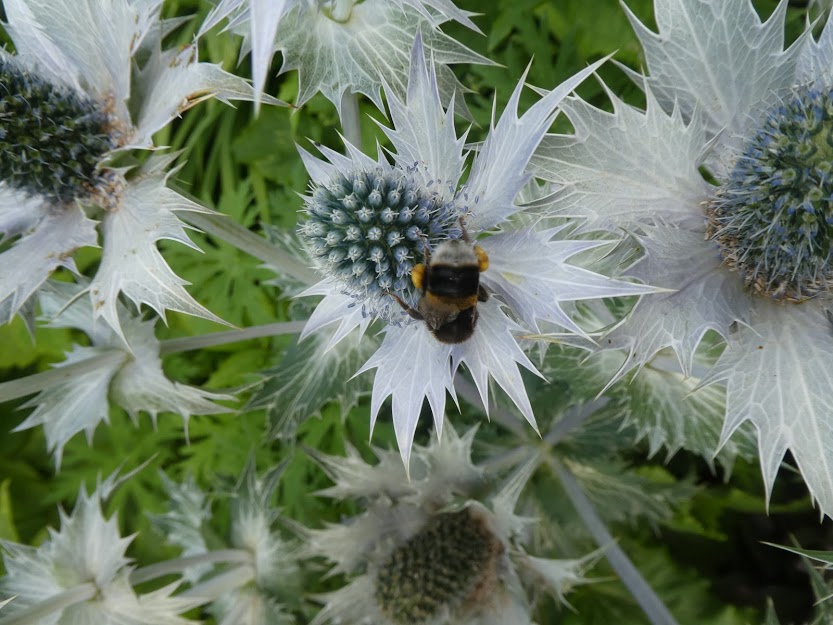
… or a whiter shade of pale …
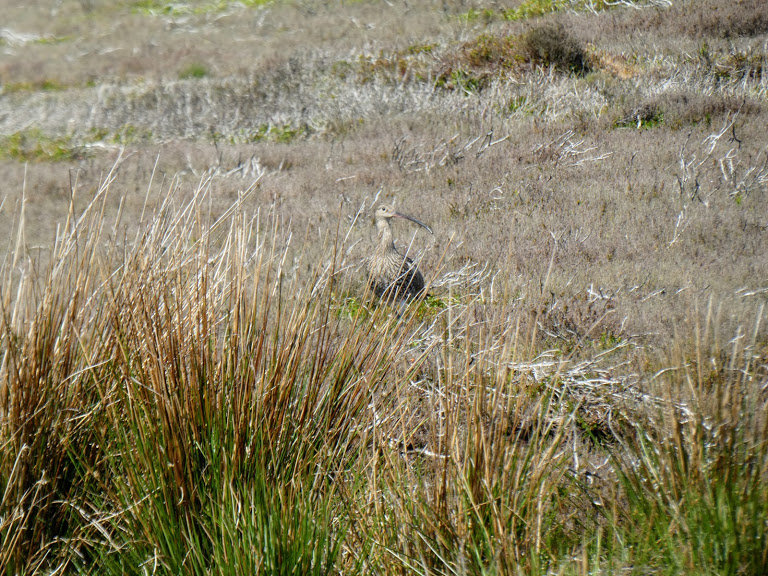
… or simply hoping to look exactly like the surrounding grasses.
That’s Jude’s Photo Challenge this week:
This week's assignment - Find a monochromatic scene consisting of varying shades of a single colour.
All of these shots were taken under a Yorkshire sun.
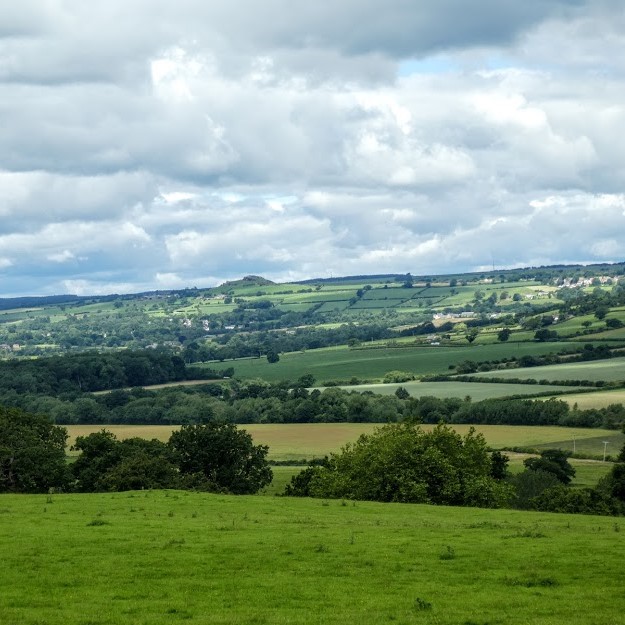
We went for a walk in Wharfedale yesterday. We saw a verdant landscape.
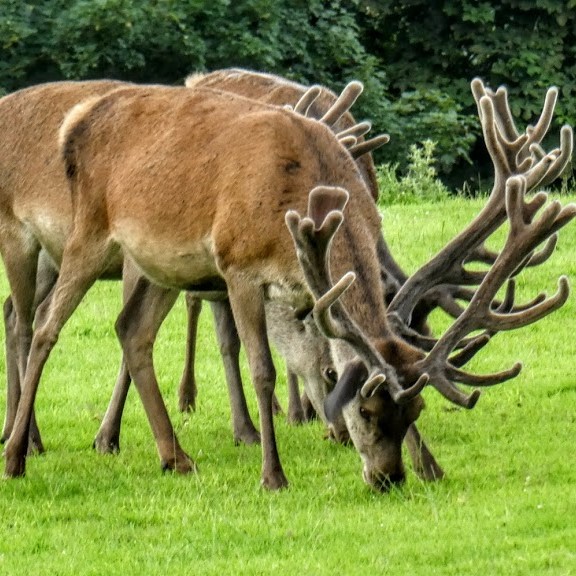
 These handsome young stags saw their daily meal.
Monday’s walk was along the edge of some local woodland. Suddenly, there on the path in front of me, I spotted … a fledgling. A tottering, tumbling ball of fluff, cheeping plaintively and stumbling uncertainly on its large ungainly clawed feet.
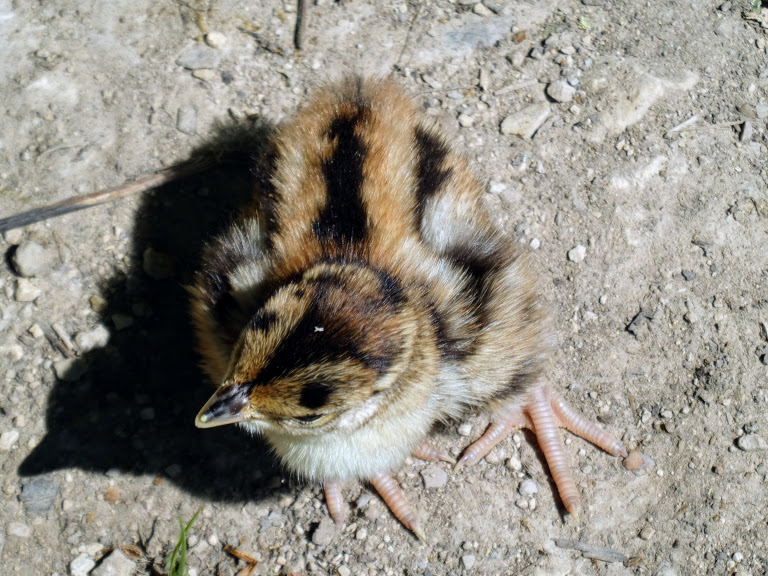
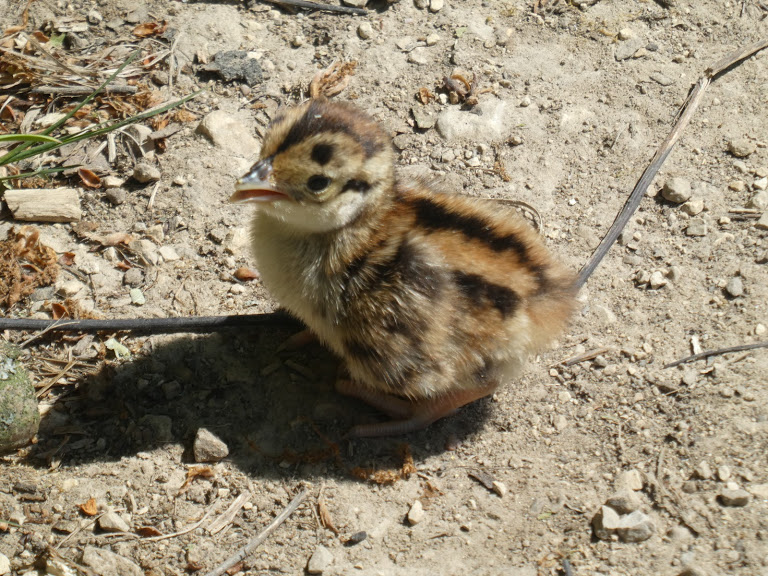 I knew enough not to interfere and attempt a rescue, but this little foundling upset me and I felt guilty leaving him to what I assumed would be certain death – especially when, heart-wrenchingly, it tried to follow me. Was the robin perched in the branch above its parent? Later, paging through bird books, I decided not.
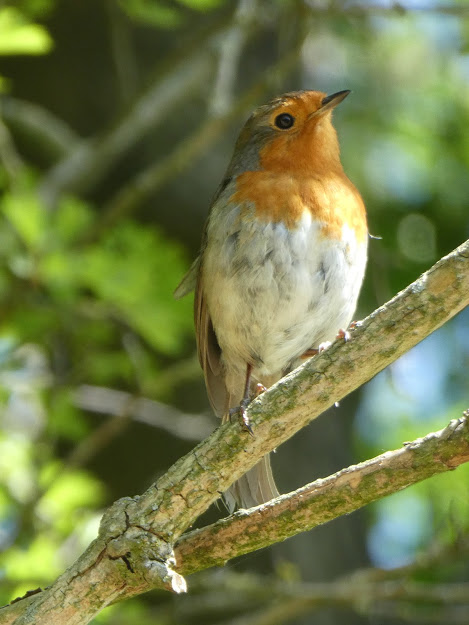
Back home, Google was my friend. This article from the RSPB assures me that the parents were probably practising tough love, and beginning the little bird’s preparations for an independent life.
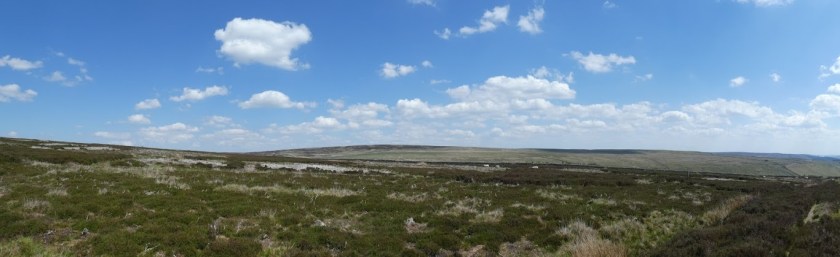 We went to Colsterdale on Sunday. It’s nearby, but feels remote and isolated, because the only road through leads nowhere very much and so it remains one of North Yorkshire’s best kept secrets. Perfect for a Day Out whilst maintaining that all-important Social Distance.
Edged by the pastoral views of farming country, it climbs to become stark, treeless, commanding views to the distant North York Moors, and to the higher parts of the Pennines. Its ascetic bleakness is what appeals to me.


We’d almost reached the area where we planned to park and begin our walk, when I saw them. There! There on the roadside! Look! Two curlews, almost within touching distance. These are shy, beautifully camouflaged birds normally only seen and heard as they quarter the sky, calling the evocative plaintive sound – ‘cur-lee, cur-lee’ – which gives them their name. These two were probably drawing a would-be predator away from the nest.


Whatever the reason, it was such a privilege to watch these birds at close quarters, with their mottled, camouflaging plumage, and their distinctive long downward-curving beaks.
YouTube RSPB video
They flew away after a couple of minutes, and we began our walk, relishing the space, the wild emptiness and the only sounds those of distant curlews.
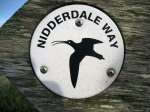
Addendum: several commenters have expressed surprise about the curlew frequenting moorland. Just to show how very much at home the bird is in these surroundings, here is proof. It is the symbol for the nearby long distance walk, the Nidderdale Way. FAO Jude, Agnes
I was out in the garden reading (Bernardine Evaristo’s Girl Woman, Other since you ask). Absorbed, I hadn’t noticed, but suddenly I did… A bird’s call – loud, imperious, by turns chiding, whistling, chirruping or tuneful. And incessant. A mistle thrush was responsible, and he wasn’t hard to find. He had found a high perch, as he’s supposed to do, in the top branches of a copper beech.

Once noticed, he was impossible to ignore. He called and he sang until after half past nine that night. The next day he began at ten past four, as the sun was rising. Since then, during daylight hours, he’s barely stopped. Not for him a tea break or a spot of down-time. He’s claimed his territory, and he’s not letting it go.
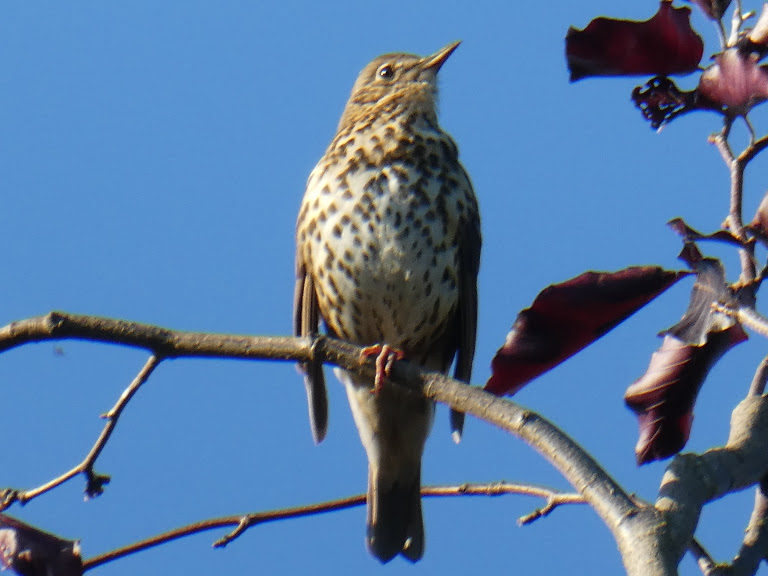
Today it’s raining for the first time in ages. He’s still at it … and the video gives no idea at all of the volume of sound produced.
I’ve made discoveries on my doorstep:
Woodland
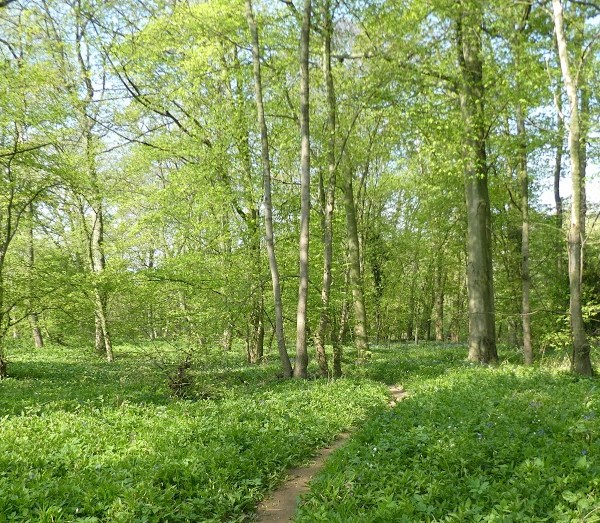
Farmland

River bank
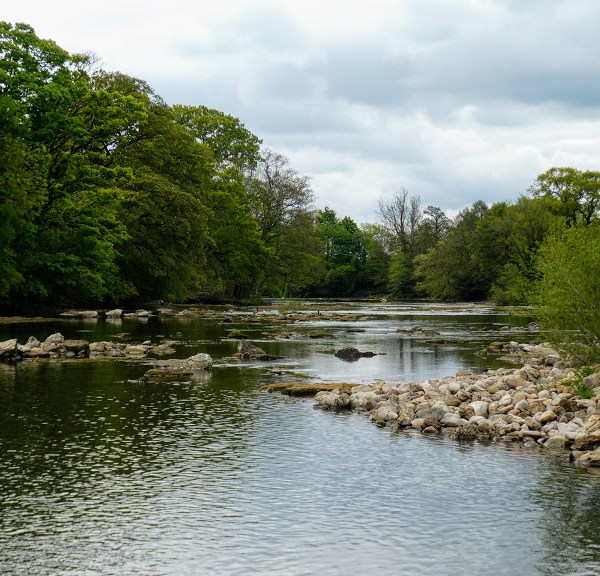
Lakeside
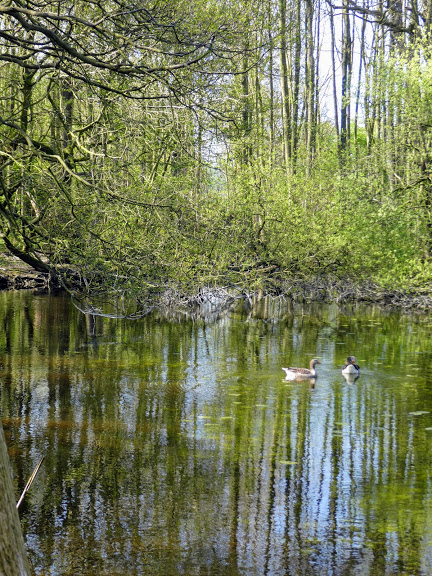
Pasture

Wildlife


A new walk, every single day.
A composite walk for Jo’s Monday Walk
Just in time for Easter, there they were on the village pond. Mr. and Mrs. Mallard had produced eight little balls of fluff. We’re used, every year, to seeing Mrs. M shepherding her little brood across the road, causing dustbin lorries and gravel-haulage lorries to shudder to a halt – Mrs. M never uses the Pelican Crossing. We’re used to seeing her fussing after her babies as they learn to feed and dive and explore. We’re less used to Mr. M being part of the picture. He’s usually lounging round the edge of the pond with his mates, his head tucked under his wing. Boring, child-rearing.
But yesterday, he was in Proud Dad mode, busying himself round his new babies while Mr. M flew off for a while to … I don’t know. Have a bit of R&R I hope, leaving Dad in charge.
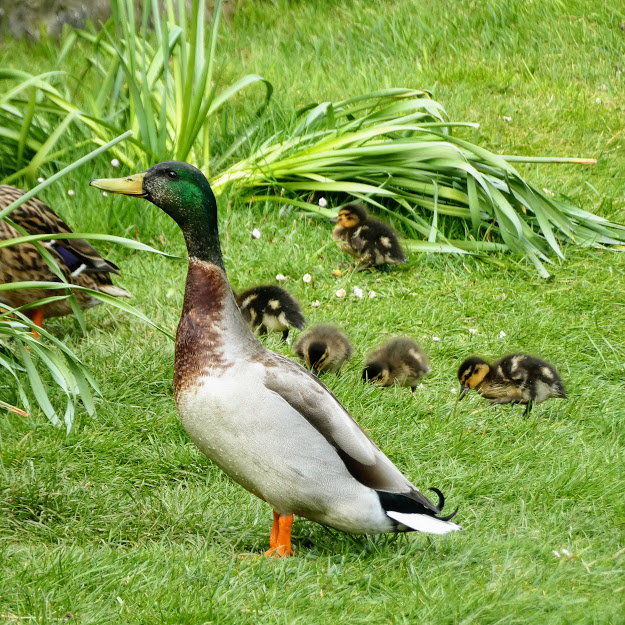
Top Dad.
You didn’t need a crystal ball to know that my walk yesterday, reached by car rather than directly from home, might be my last for a while. The thought of impending Lock Down made my hours alone near Masham, walking by the River Ure and through the nature reserve of Marfield Wetlands, special, memorable and something to be savoured, even if it’s not actually a Great Yorkshire Walk.
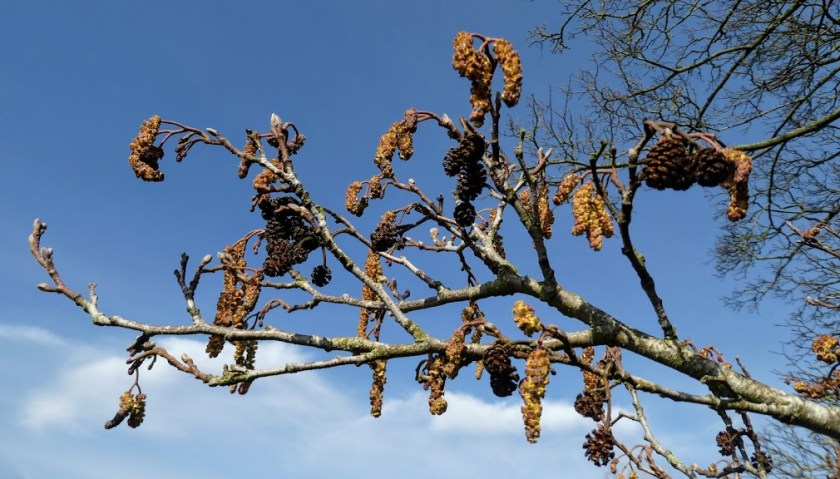
After a couple of miles there’s some pasture land. Some trees there are dead or dying. Ancient trunks have actually fallen. They were demanding to be centre stage for Jude’s Photo Challenge this week, mixing textures with other colours and patterns.
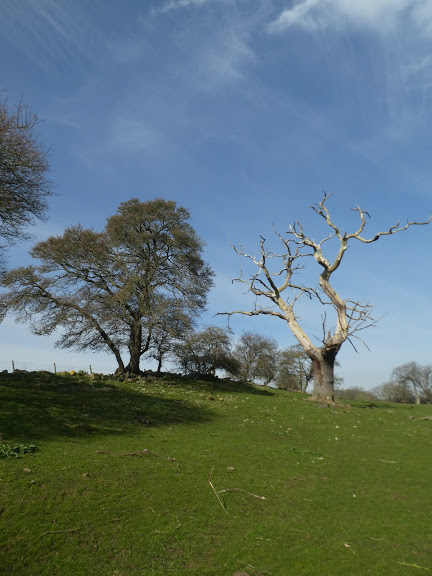
See? Lichens have cunningly introduced themselves into the regular fissures of a fallen log. Lush young nettles complement the bleached dry bark of a different trunk. Peep though knotted holes to spot the greenery beyond. Wisps of white wool wander across the surface of moss encrusted ancient branches.


Then I met stones, originally smoothed and polished by the River Ure as it hurried and bustled noisily along. Now they’re covered again: not by water, but by springy mosses and young creeping plants, and pert little celandine squeezing between them.


Then though it was time for sheep. Not just sheep, but their lambs, endearingly new-born, in their two-sizes too big overcoats. Who could resist?


Keen not to abandon Jude’s assignment, I found two last shots. A row of fat cattle, chewing away in their barn, contrasted with the diagonal and vertical lines of their shelter. And then a rusted old bit of farming machinery provided a perfect picture frame for a view. A fine use for a bit of tackle that’ll probably be on the scrap heap any day now.


The Wetlands were surprisingly quiet (lunchtime…). But I had a bit of fun with a teasel, getting up close to get a shot of its spiny plump body.


A good walk. Lots of memories to store up for a long, odd summer ahead.
2020 Photo Challenge #12: Texture: ‘mix your texture with other colours and patterns.’
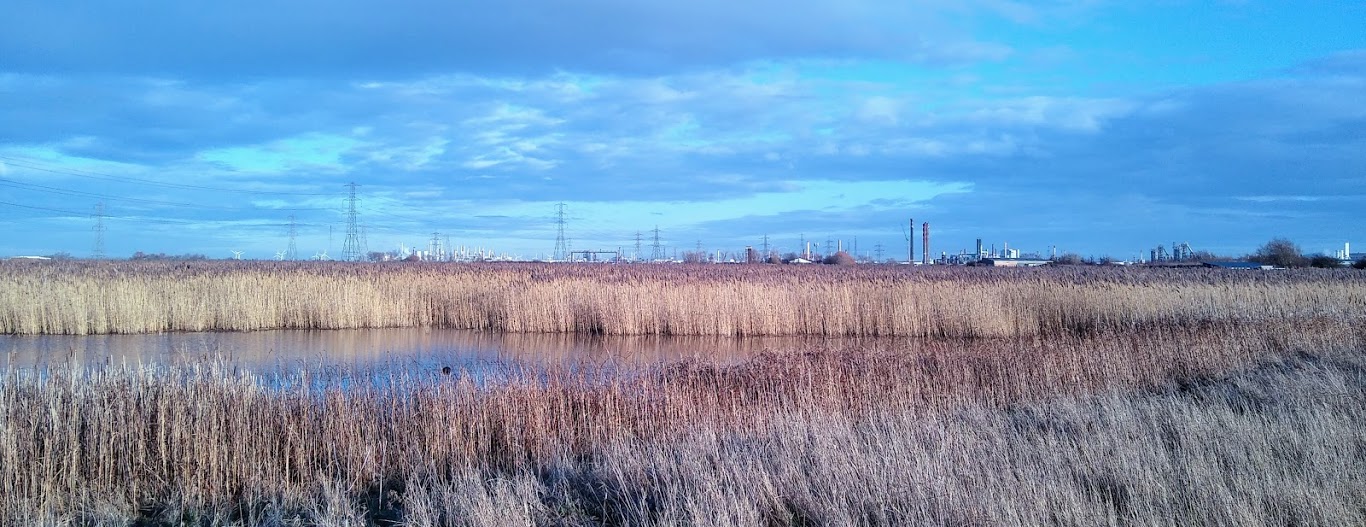
We had to go to Middlesbrough for an appointment the other day, so we thought we’d stay and explore.
Middlesbrough is what’s known as a ‘post-industrial town’. Once, its steel and other heavy industry and its port brought wealth (to some), employment, and attendant grime and looming industrial architecture. Now, it’s reliant on newer technologies, engineering and the presence of the university developed in the 1990s from the older Polytechnic.
But its landscape is still an industrial one, as is that of the surrounding towns: Billingham, Stockton, Redcar. Could it be true that the RSPB had developed a Nature Reserve here, on its outskirts?
It could. RSPB Saltholme. Though it was hard to believe, as we navigated along roads edged by towering chimneys, great metal hangars, clattering unseen machinery.
But in the end, there it was, among the industrial flatlands – wetlands actually, punctuated by shallow lakes and pools. We’d arrived.
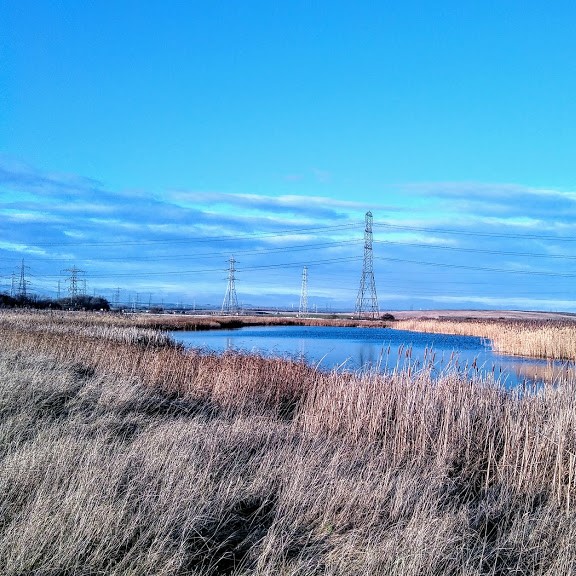
But the birds had left. How silly of us not to remember. At our local nature reserve, Nosterfield, the birds regularly knock off at lunchtime, only reappearing towards dusk. Who knows where they go?

Never mind. We enjoyed a peaceful walk. We got a moment of drama when flocks of birds DID appear, swirling and swooping above the lake. It was quite likely that they were taking evasive action from a resident peregrine falcon hunting for a meal. Drama over, they disappeared once more.


We enjoyed our time in this peaceful oasis. We explored trails that ended in well-equipped hides.
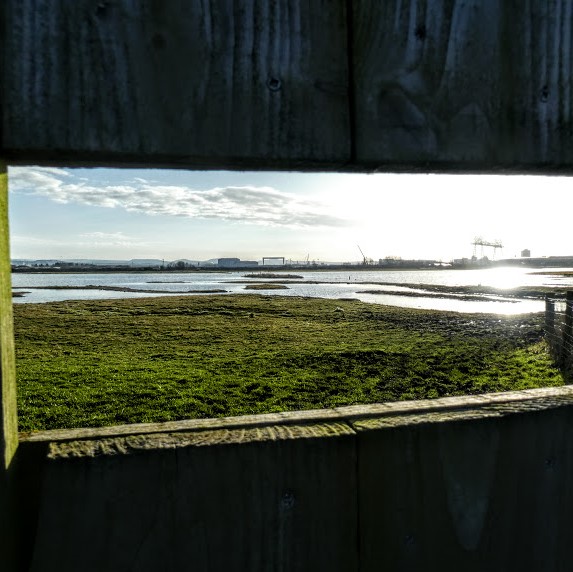
We studied noticeboards with information about what better-informed visitors had spotted that very day. We passed fields with the inevitable large numbers of greylag geese. And towards the end, we were rewarded with just a few sightings: some shelducks feeding; a shoveler or two; a few swans and a very distant heron.


But we enjoyed our afternoon. A near-empty wetland, with its unusual backdrop of an industrial past and present, and the never-out-of-sight Tees Transporter Bridge made for a fine afternoon’s walking … and there was even a café.

This multi-tasking post is for Six Word Saturday, January Light (January Squares), and Jo’s Monday Walk.


You must be logged in to post a comment.