It’s nearly rutting season. Stags begin to gather their harems, display their fine antlers. In a week or two … let battle commence.


My contribution to Six Word Saturday.
It’s nearly rutting season. Stags begin to gather their harems, display their fine antlers. In a week or two … let battle commence.
My contribution to Six Word Saturday.


An entry for Six Word Saturday.
You’ve had a taste of my long-gone-month-long stay in India. From here to here. But I’ve not been entirely honest with you. I told you it was a holiday I took alone. That’s largely true. But for just over a week, right at the beginning, I was part of a small experimental tour put together by my ex-brother-in-law Simon. An Organic Adventure. About eight of us travelled through rural Karnataka and Kerala, looking at local ventures into organic and sustainable agriculture. If that sounds dull … well, you can’t have been there.
I have stories to tell. But it was the wildlife that always remains in my mind … even urban wildlife is so very different from good old English pigeons and magpies. In Bangalore it was wheeling and circling eagles. In Mysore it was enormous fruit bats coming out at nightfall, to find food; and by day there were the gossiping bovva- boy hornbills.
And in rural Karnataka it was frogs. We could see them constantly in the ponds near our lodgings, burping away by day and by night . The only thing that shifted them one morning was a rat snake, slithering around and looking for breakfast .
I used to go outside as darkness fell at 6 o’clock and listen. A complex symphony played out. First, a group of frogs would start their chorus, the noise intensifying until gradually becoming quieter again: then others would take over with their own ever-swelling sound. Crescendo … diminuendo. All through the night. Quite wonderful.
One day at a tea plantation at the edge of the woods (another story for another day) we suddenly – and I do mean quite suddenly – heard cicadas in the trees. From low beginnings the sound grew and grew, peaking at a crescendo so loud we had to raise our voices to make ourselves heard.. Then, just as suddenly , it died smoothly away to nothing.
My favourite sound? This. Every morning. Just as dawn broke, a whistling thrush – just the one – broke into song. It sounded just like some contented man, hands in pockets, ambling slowly down the street, whistling happily and aimlessly. And it made me happy too, every time.
And on our very first night in the rainforest, as I was unpacking, a whirring, clattering clockwork toy appeared from behind my rucksack. Only it wasn’t a clockwork toy. It was a very cross hawkmoth, complaining vociferously about being disturbed.

Then there was our stop off in Nagarhole National Park with its snowy-headed Brahminy kites, its kingfishers and eagles: its bison, its warthogs, its spotted deer, its mongooses and – of course – its elephants.
But more than these I remember the simpler pleasures: watching cattle egrets on the backs of cattle, benefitting from the insect life that definitely did not benefit the cattle. Glimpsing a water snake surging across a placid pond. Going on a trek across the empty paths of the Western Ghats, spotting vine snakes, parakeets, macaques, rufous-bellied eagles…. and for some of our unfortunate team – not me for some reason – leeches, which left angry red welts behind when they’d loosened their grip.
No hornbill was going to wait around for me to take a snapshot. I saw no cicadas. I wasn’t clever enough to snap a Brahminy kite or an eagle. So my pictures don’t match the text. It’s just too bad. I can enjoy both and I hope you can too: souvenirs of memorable rural India. Tales of what we actually did there are for another day.


We’ve just come back from a long weekend in Gloucestershire. The highlight was to spend time with William, Zoë and their parents at the home of Sarah (daughter-in-law)’s parents, who had invited us all: the highlight of this particular highlight was watching Zoë discover strawberries…
Another highlight was to visit Slimbridge, the Wildlife and Wetlands Trust site founded and developed by Sir Peter Scott.
So much to see: water birds of every kind. But I’ve come away with memories of three in particular: three species of wading bird who spend much of their lives fossicking in the shallows for the small creatures on which they depend for their diet.
All three of the birds that so engaged me shared similar characteristics. Impossibly long, fragile-looking legs, giving them a delicate and graceful appearance: impossibly long, unmissable beaks.
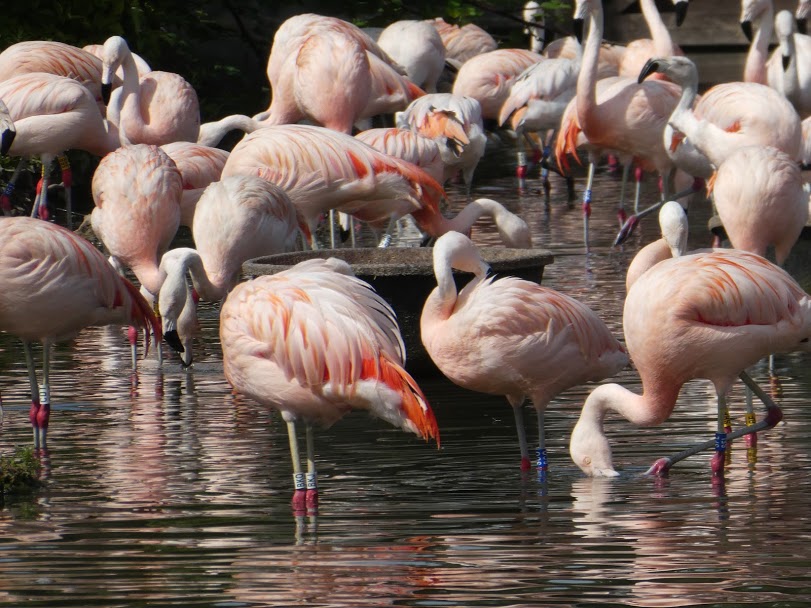
Ladies and gentlemen, I present to you various varieties of flamingo….. Who can fail to be entranced by their pink plumage, sometimes almost embarrassingly vivid, at other times delicately pale?


….black tailed godwits ….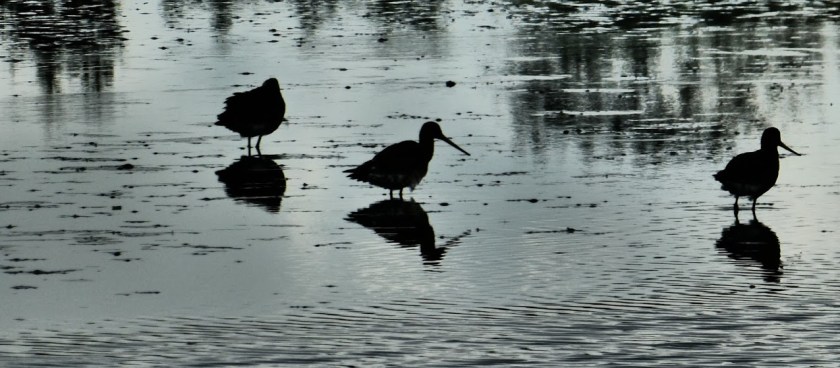


… and the distinctively patterned black and white avocet.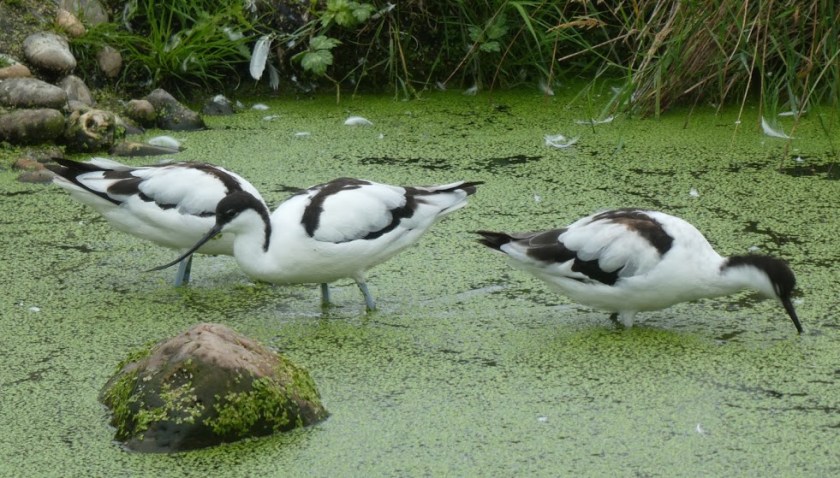


Follow the links for a natural history lesson. For now, enjoy as we did simply observing them.
Click on any image to view full size.
It’s that time of the month: the time when I reblog a post from our years in France. This time, I’m celebrating our much-missed garden friends the lizards. I do wish they’d consider a move to North Yorkshire, if only because back in 2012, I had nowhere near mastered the art of getting a decent photo of them.
June 27th 2012
Summer’s arrived: well, this week anyway. So from before breakfast until long after the evening meal we’re spending as much time as we can out in the garden. And we have plenty of company. Lizards. Common wall lizards, podarcis muralis. They are indeed spectacularly common here. We have no idea exactly where they live, but there are plenty who call our garden ‘home’. We’re beginning to get to know a few.
Easily the most identifiable is Ms. Forktail, she of the two tails. She’s the only one we’ve been able to sex conclusively as well, because we caught her ‘in flagrante’ with Mr. Big behind the gas bottles recently. And then the next day she was making eyes at a younger, lither specimen, and the day after that it was someone else. She’s lowering the moral tone of our back yard.
Then there’s Longstump, who’s lost a tiny portion of tail, and Mr. Stumpy, who hasn’t got one at all, though it seems not to bother him. Redthroat has a patch of crimson under her chin. There are several youngsters who zip around with enthusiasm and incredible speed.
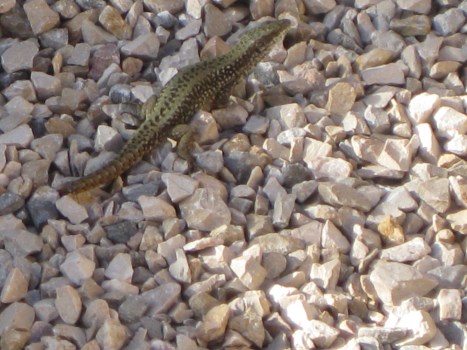
In fact they all divide their time between sitting motionless for many minutes on end, and suddenly accelerating, at top speed and usually for no apparent reason, from one end of the garden to the other, or vertically up the wall that supports our young wisteria. On hot days like this (36 degrees and counting) they’ll seem to be waving at us. Really they’re just cooling a foot, sizzled on the hot wood or concrete. Sometimes you’ll see them chomping their way through some insect they’ve hunted, but often they’ll step carelessly and without interest over an ant or other miniature creepy-crawly in their path.
Mainly they ignore one another, but sometimes there are tussles. These may end with an uneasy standoff, or with the two concerned knotted briefly together in what could scarcely be described as an act of love.

We could spend hours watching them, and sometimes we do. But there is still a bathroom to build, a workroom to fit out, and a pergola to design. The kings and queens of the yard have no such worries. They can do anything: they choose not to.
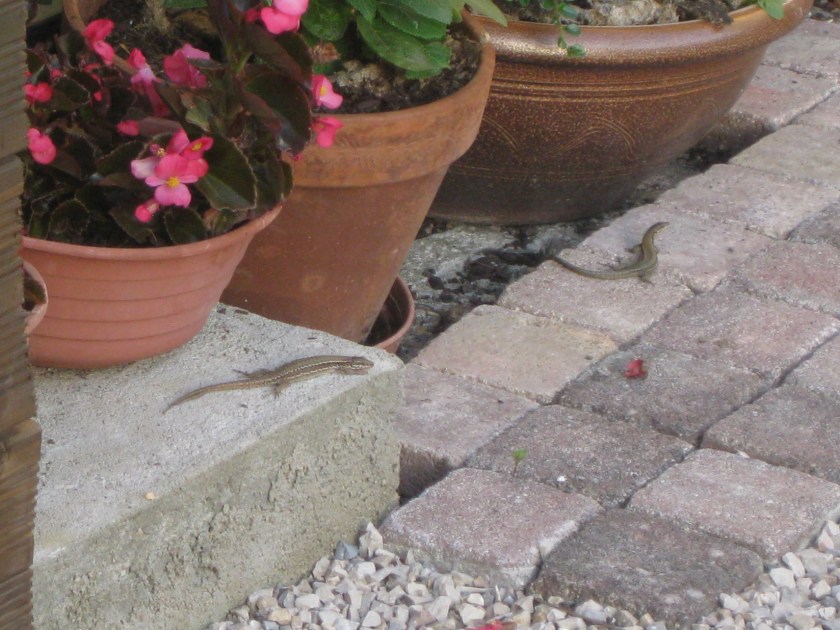
*Jim Morrison, 2008
When I stay with my children in London, in Barcelona and in Bolton, come bedtime the streets are as silent as a monastery. Though to be fair, in London we can sometimes hear the foxes in their lairs near the railway line yelping like very cross babies.
I live at the edge of a village some distance from Ripon. That’s usually a pretty silent place to sleep too. But for the last few nights I’ve been woken at about 3.00 o’clock by this…..
It’s a Little Owl. He (she?) is extremely persistent. He sits on the roof, I think, and keeps up a constant calling: sometimes measured, sometimes more agitated. The other night, after an hour or more I fell asleep again. Little Owl didn’t.
I’ve never seen him. It’s not surprising. He’s probably only about 22cm. long, and weighs in at perhaps 180 grams. The farmland which surrounds us will suit him very well, supplying insects and small mammals. He’s probably breeding now. I wonder if he’s found a place in the old barn which is currently home to a young family of rather messy blackbirds?
This species was only introduced here at the end of the 19th century, though his kind are widespread throughout Europe Asia and North Africa. Despite his being a noisy blighter, he’s very welcome here.
I have no photos of my own. Enjoy these images from contributors to the Unsplash collection.


This is my contribution to the Ragtag Challenge: Night.
Click on any image to view full size.
Several of you commented on my coastal pictures from Northumberland, remarking on how relaxing the whole thing must have been. Well …. it recharged the batteries alright … but not by lying down on the beach with a good book. Certainly not.
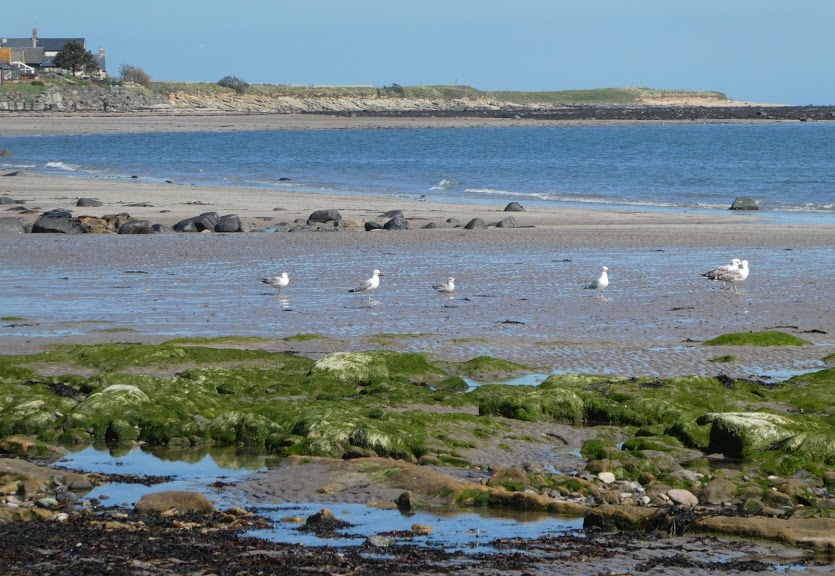
We were at Nether Grange, an HF hotel, with our walking group. And we were there with other walkers – some in groups, others not. At Nether Grange, walking is what you come for. That and good food eaten in good company. We’d opted for guided walks. Three levels of difficulty are offered each day so there’s no excuse not to get involved. I chose one of each, so finished the week with 15.3 km, 12 km and 17 km. walks under my belt.
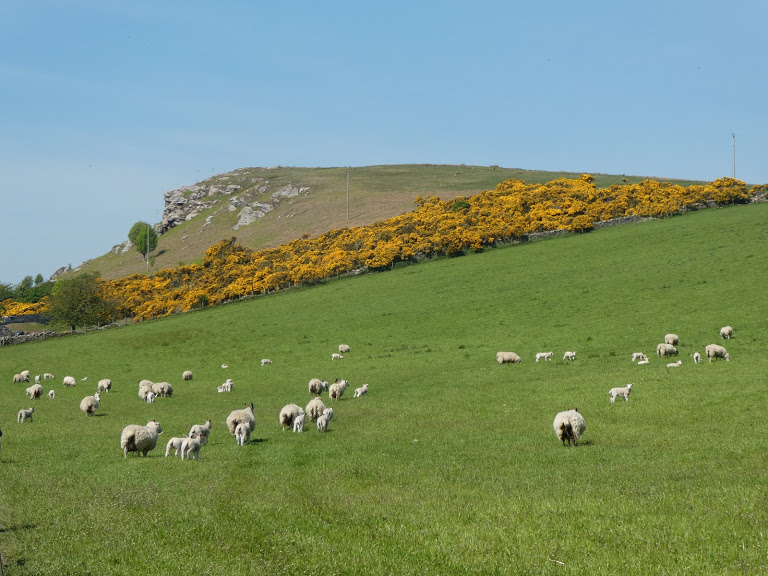
This is hill country. The Pennines, the backbone range that bisects northern England becomes the Cheviots as it marches towards Scotland. In the car you’ll swoop thrillingly up and audaciously down those hillsides. They provide a backdrop to the area which is at once dramatic and bucolic.
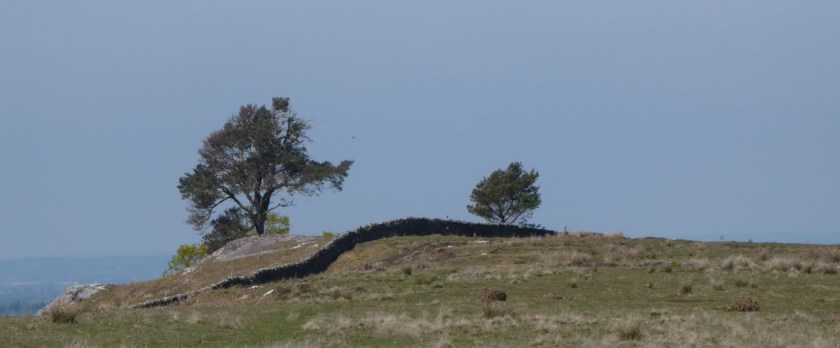
On foot, you’ll get to know about those slopes….. actually, we weren’t often faced with gradients that had us gasping, panting and begging for mercy. But we rarely had a long level stretch either. And our leaders were there to encourage, chivvy along, provide good humour and background notes on all kinds of topics … as well as read the maps, so we didn’t have to.
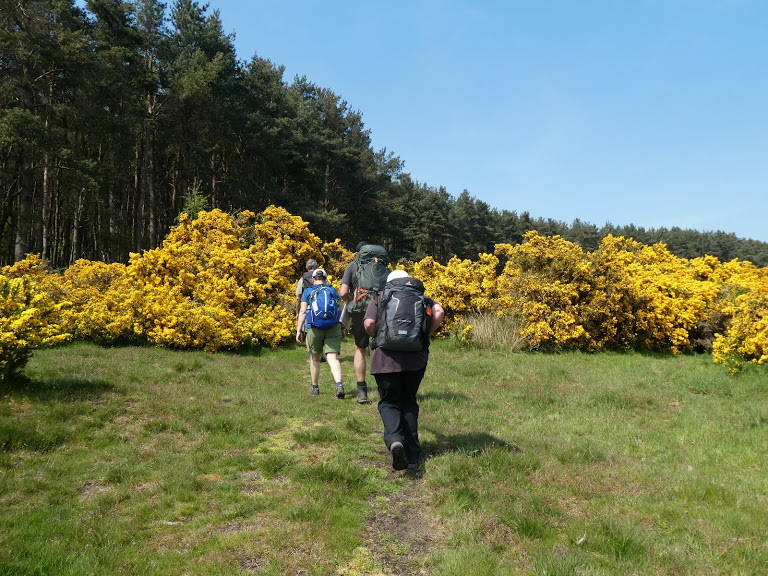
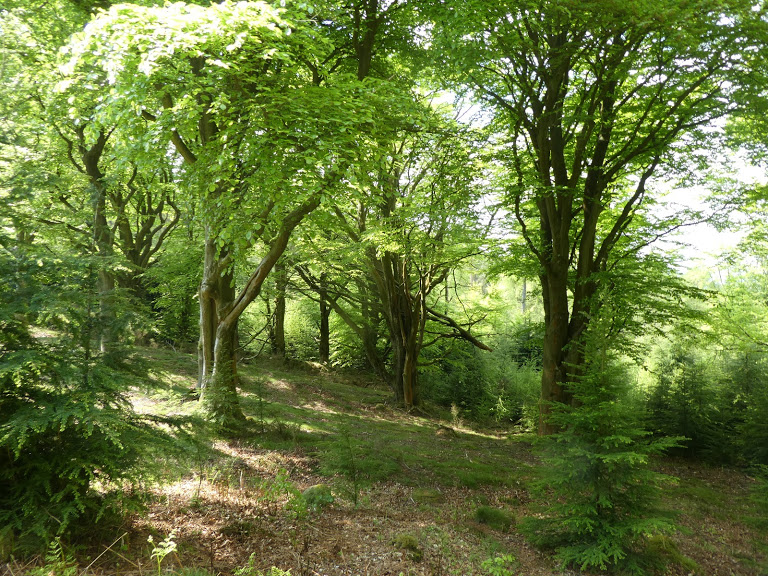
We walked moorland tracks, bouncy with springy turf nibbled short by sheep. We crossed hillsides bright with golden gorse. We tracked through woodland carpeted with bluebells.
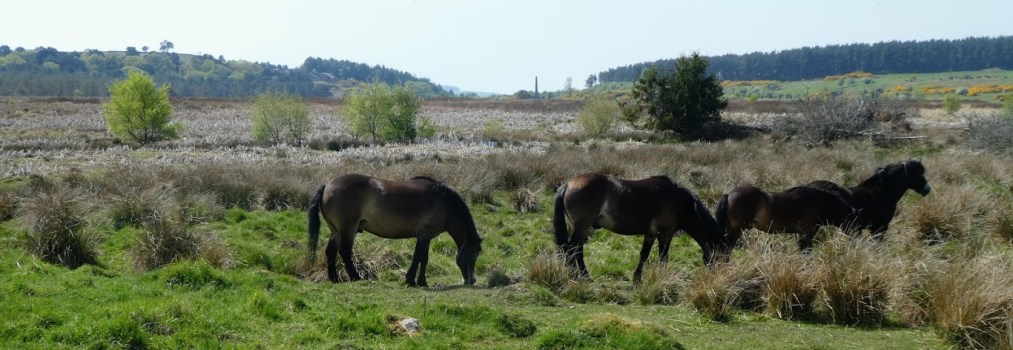
We passed Ford Moss, an extremely ancient raised peat bog where we excited the residents: Exmoor ponies charged with grazing the vegetation and keeping it in trim.
We passed farms with shire horses and hissy geese.


And on the last day, we walked the local coastal path: St. Oswald’s Way. The section between Alnmouth and Craster-where-the-kippers-come-from is characterised by craggy cliffs, and are home, like the nearby Farne Islands, to many thousands of seabirds such as kittiwakes and fulmars. Here’s what the zoom lens on my new camera can do.
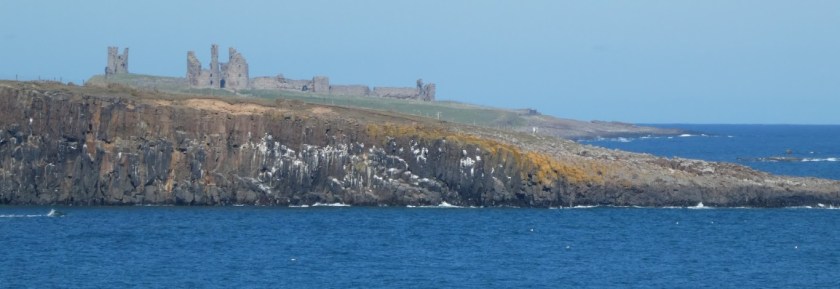


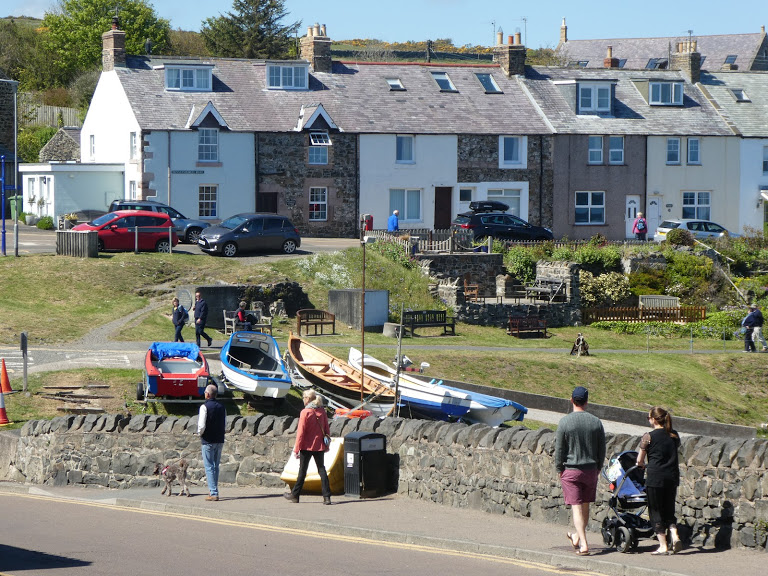
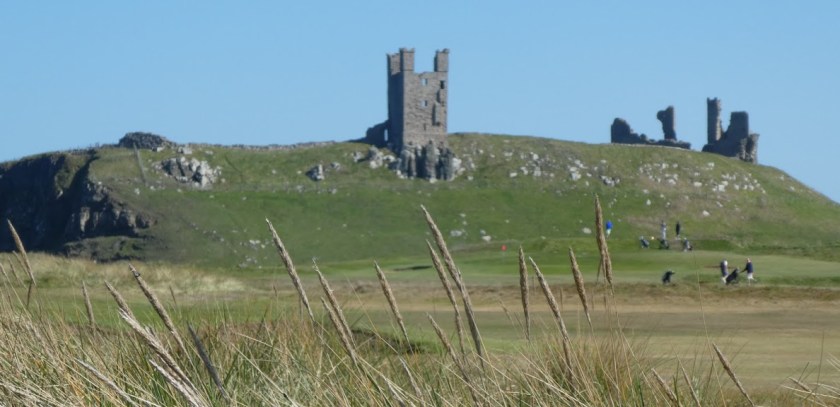
Our group, the 17 km one (10 1/2 miles to the non-metric) finished just beyond Dunstanburgh Castle. It was built in the 14th Century by the Earl of Lancaster, who was openly hostile to King Edward II – never a good idea, because the king had him executed in 1322. This fortification was built to make a bellicose statement, in an area crowded with castles. Now it’s a ruin, and an impressive one. We slogged to the top of the keep for the views, marvelling at the extra-thick walls as we climbed.
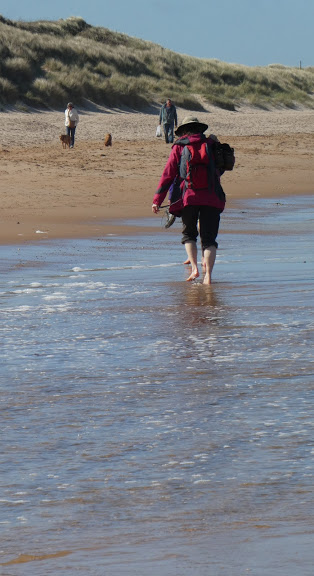
We finished the day, and our three days of walks, with a paddle. Gotta have a paddle. Or ‘plodge’ as the locals call it.
With thanks to our walk leaders Chris, Helen, Paul, Richard: to Reuben and Team Nether Grange, and to our own Mike and Angela for organising the holiday.
And this is also an entry for Jo’s Monday Walk.
Herons seem to be a part of our lives. It’s a rare week when we don’t spot one flying languidly along the river, or waiting on an exposed rock for the next snack.
Wherever we travel, we can go heron spotting. We’ve seen them in Dordrecht in the Netherlands, Córdoba in southern Spain, l’Albufera near Valencia, and Busan in South Korea. Town and country: herons are there.


We see them as we walk along the path towards West Tanfield, and spot them on the garden pond.


The other day after a stressful week, I needed a bit of space. Nosterfield Nature Reserve just up the road was the answer. I walked along the wetland paths watching water birds courting, feeding, simply being there, standing motionless or swimming peacefully. Quiet fields formed the backdrop.
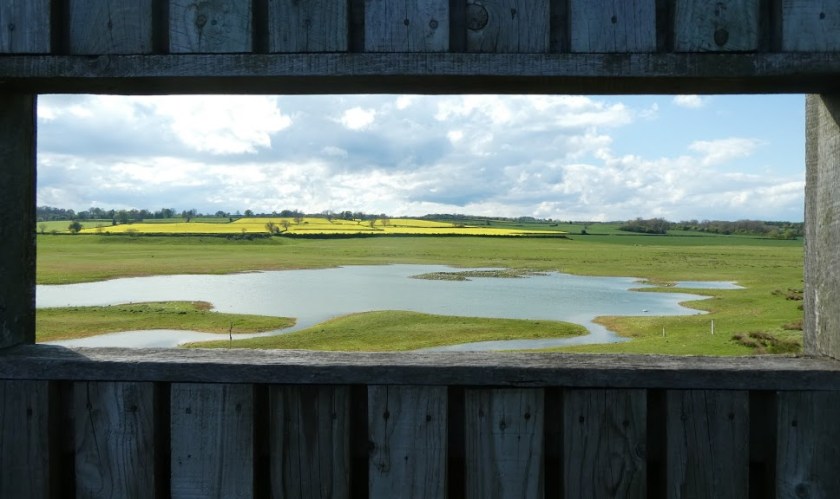
I went to the farthest hide. I became transfixed by the under-stated drama being played out between a heron and two or three egrets. They were fishing. All plodded gracefully in and out of what humans might see as each other’s personal space. They didn’t care or even seem to notice one another. They simply co-existed, fishing.
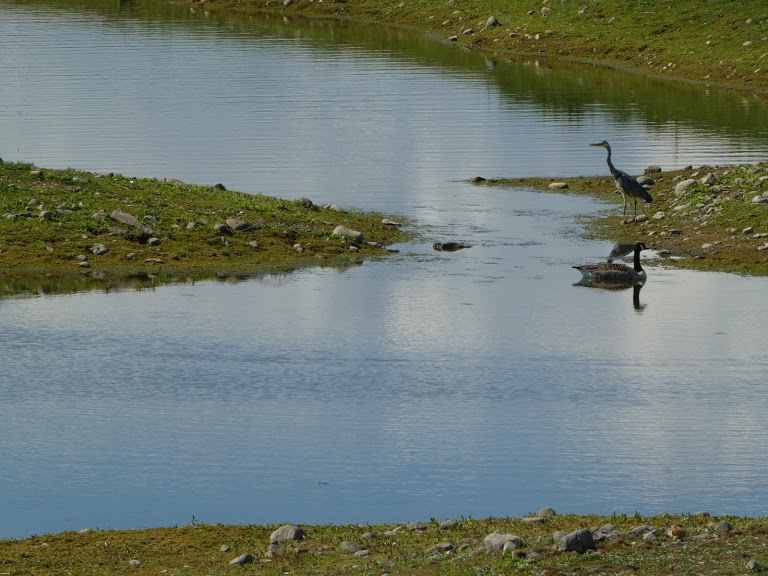


This series of pictures might not seem that different one from another. They’re a record of a simple afternoon in the lives of a heron, three egrets ….. and me.
Click on any image to view full size.
* The Crow Road: Iain Banks
We’re fond of our garden birds. Little by little, we’re getting to identify them. But their songs and calls? Not so much.
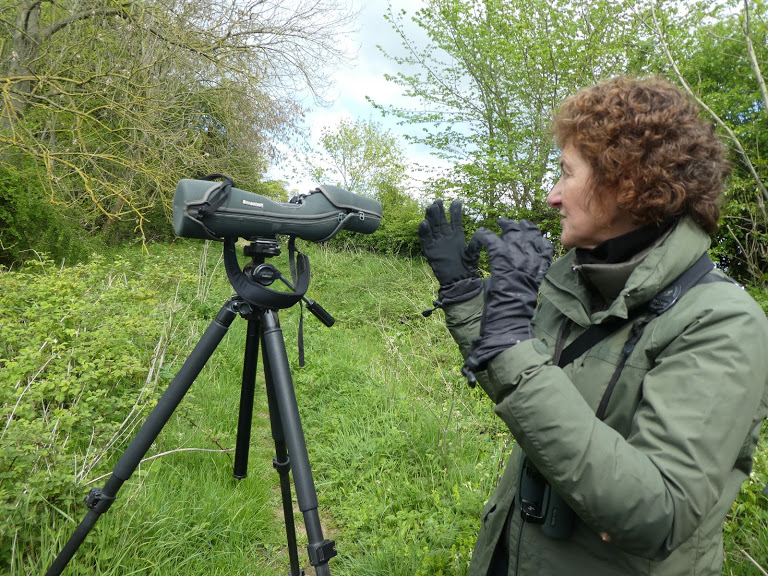
On Saturday though, we had an opportunity. Just along from here at Old Sleningford Farm, Linda Jenkinson whom we first met some five years ago on her bird watching course at Nosterfield, was exploring Bird Song. We knew we had to sign up.
A morning in the classroom. We learnt about blackbirds:
……and chaffinches…..
….and bullfinches (just think ‘rusty gate’ apparently….)
And chiffchaffs: think ‘chiffchiff’ rather than ‘chiffchaff’
and coal tits, and all the other kinds of garden tit.
We tackled about sixteen kinds of bird and their songs, listened, looked, did quizzes, and finished the morning feeling fairly sorted.
Then we had lunch. Home made frittata and bread, freshly gathered salad leaves, locally pressed apple juice, deliciously damp cake – that’s the sort of nourishment you get when you come to Old Sleningford Farm.
And afterwards it was The Great Outdoors. Well, I’m sorry birds, but you ought to get organised, form an orderly queue and sing, one by one. We wandered through woodland, along the river, explored the Forest Garden. And as we sauntered, ears cocked at the ready, willow warblers; marsh warblers; blackcaps; kingfishers all cacophonously introduced themselves, quite drowning out our carefully revised memories of bullfinch, chaffinch and the like. It was wonderful. We learnt, we listened, we enjoyed simply being in this peaceful place, shared only with the birds and other unseen wildlife. Thank you Linda. So glad to Start Birding with you!
Ah, could I see a spinney nigh,
A paddock riding in the sky,
Above the oaks, in easy sail,
On stilly wings and forked tail.
John Clare (c. 1820)
Paddock is an old English name for the Red Kite

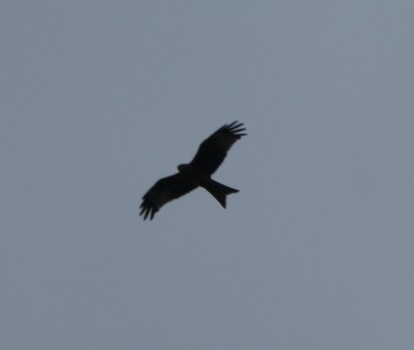
Red kites, coasting lazily across the skies on gentle thermals – floating, free-wheeling, gliding – command our instant attention. When we spot them as we’re walking, we can’t help but stand and stare, and relish their easy command of an immense sky. It’s that forked tail that gives them away.
And yet these noble-seeming creatures exist mainly on carrion. They’ll swoop quickly down to snatch roadkill – after the crows have helped themselves – and take it off to perch on some quiet tree to dismember and eat. Sometimes we’ll watch numbers of them wheeling above just-ploughed fields, questing for worms and small mammals.
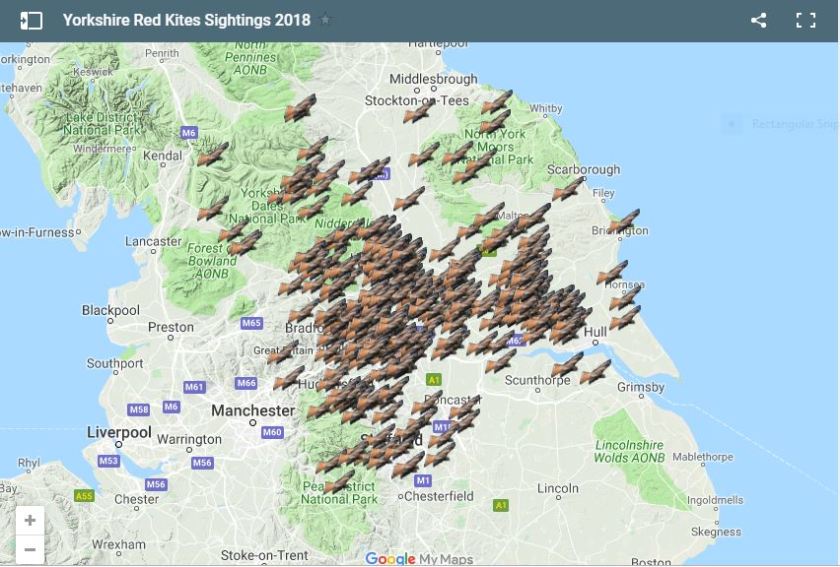
They used to be a very rare sight indeed. But about twenty years ago, and thirty miles from here, some red kites were released onto the Harewood Estate as part of a conservation initiative. We lived in Harrogate at the time, and got so excited if we were near Harewood, by very occasional sighting.
Fast forward a few years, and the kites reached the outskirts of Harrogate: we’d even spot them above the town centre. Later still, they spread onwards and outwards – north, south, east and west.
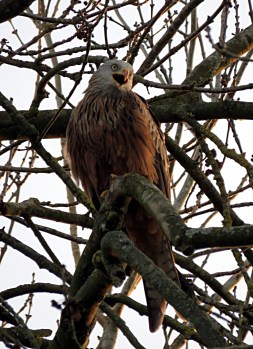
And this week, just this week, for the very first time, this is what I saw, above the house, keeping an eye on me as I hung out the washing. I’m very excited by our new neighbour.


You must be logged in to post a comment.