Snapshot Sunday: a resilient spider’s web

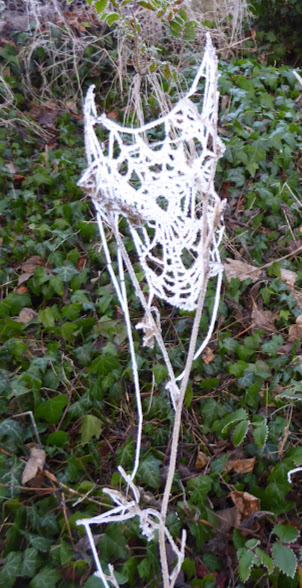
Google spiders’ webs and you’ll find any number of scientific articles celebrating the resilience of the silken strands that spiders produce   Not only is the silk stronger than steel, it’s springy and elastic.  The design of the web ensures that even when a strand is broken, the overall formation remains sound.

I found a spider’s web on a recent cold and frosty morning.  By rights such a delicate structure should have collapsed under the weight of its coating of thick icy rime.  It hadn’t.  It’s the perfect candidate for this week’s WordPress photo challenge: resilient.

sleningforddecembercobweb

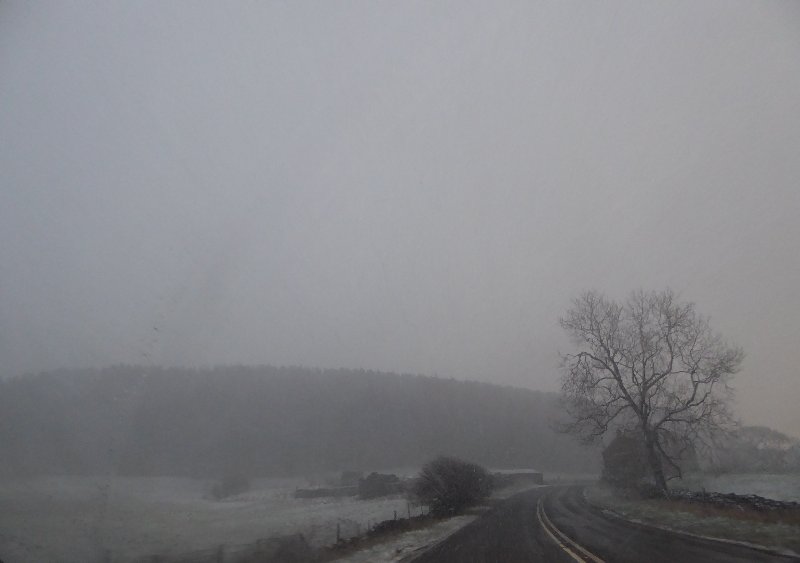
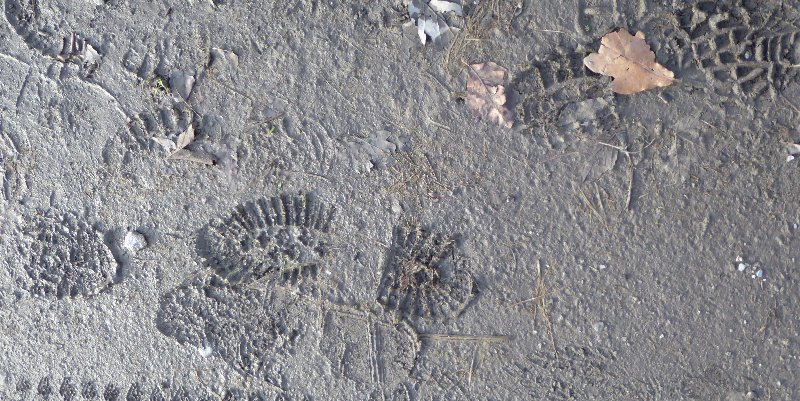
And here are a few more shots from a cold and frosty morning in North Yorkshire:

What a difference a year makes

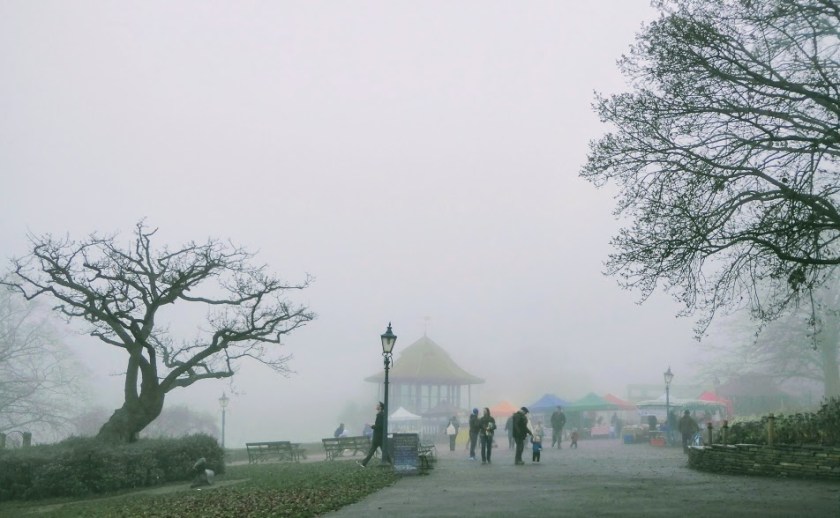
The Horniman Farmers' Market, glimpsed through the gloom.
The Horniman Farmers’ Market, glimpsed through the gloom.

It’s just over a year since I first blogged about the Horniman Museum. Last Saturday we were there again.  It couldn’t have been more different, even though so much was still the same.  William is no longer a cheerful little bundle to be toted about in the arms of a willing aunt or granny.  He’s a running, jumping talking live-wire of curiosity, demanding to be taken to see the ‘dugong’ (yes, really), or the owls, insisting on commentating, as far as he can, on everything he spots.

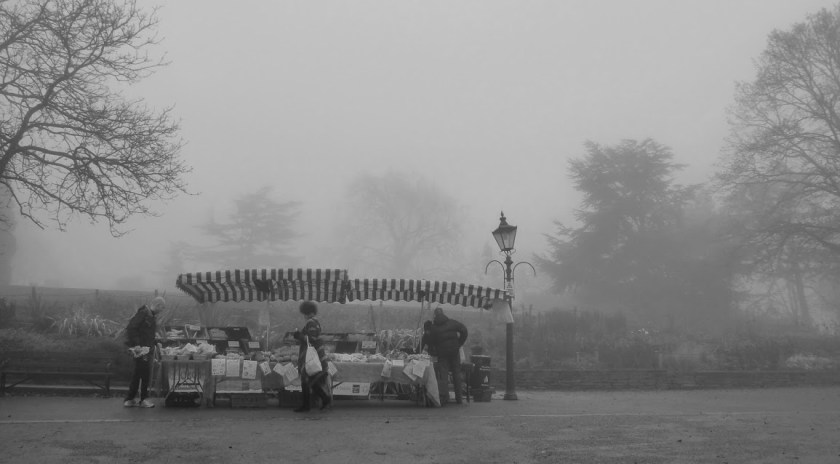
Last year, after our museum visit, we enjoyed strolling outside in crisp winter sunshine.  This year there was heavy mist, obscuring the views of London.  Instead of strolling round the gardens, or visiting the farmyard creatures, we settled for the small farmers’ market that’s there on Saturdays. horniman-farmersmarket-cheese-event-image There were stalls selling vegetables, and cheeses, or locally cured meats. There was street food. Tom and Sarah bought a goose for Christmas.  We sampled spicy Iranian tit bits.  And best of all, we had an early lunch.  Look at this from the Smeltery.  Tasty, chewy sourdough toast, topped off with melted raclette, bacon, chimichurri and some onion chutney, together with a handful of toasted walnuts.  It’s perfect winter picnic fare.

Buying winter vegetables.

But all the same, enough was enough.  Next time, we’ll go when the sun is shining.

Snapshot Sunday: It’s not this time of year without ….. a bit of weather.

Photo challenge: ‘It’s not this time of year without…..’.  It’s holidays and celebrations that WordPress seems to have in mind in setting this challenge, but this is November, and we don’t do Thanksgiving in England.  We do dark nights that begin at four o’clock.  We do gusting rain that snatches the remaining leaves from the trees.  We do fog that rises from the river.  Nothing much to celebrate at all.  Except …. except that it can turn out differently.

Read on.

Sunshine after rain at Studley Royal

I was in a bad mood when I got up.  My shoulder hurt – a lot.  The sky was steel-grey, the temperature steel-cold, and I was supposed to be leading a walk.  This was going to be No Fun At All, because although no rain was forecast, we’d had two days of full-on deluge.  I just knew that virtually the entire circuit would be a mud-bath.

I trudged off to our rendez-vous with ill grace.  Once there though, I started to cheer up. The prospect of good company for the day is always a positive start.  We set off.  The ground was unexpectedly firm, the clouds started to lift and the sun to shine.  Soon we were making a coffee-stop outside 14th century Markenfield Hall.

Coffee stop in front of Markenfield Hall.

Then it was through woods and across open fields (still no mud) to find a lunch spot overlooking Fountains Abbey, still framed with russet Autumn leaves.

Sandwiches, sunshine and Fountains Abbey.

After lunch, a muddy farm, where we attracted the interest of the locals.

Calves closely inspected us as we squelched past. Yes, this farmyard was muddy.
Calves closely inspected us as we squelched past. Yes, this farmyard was very muddy indeed.

And an uplifting final couple of miles, with grazing red deer, light-reflecting ponds and surrounded by a final burst of Autumn colour.

Here is the parkland of Studley Royal. Can you see the red deer in the distance?

Am I glad I went?  You bet.

Home straits. Crossing the weir at Studley Royal.

Free cycling

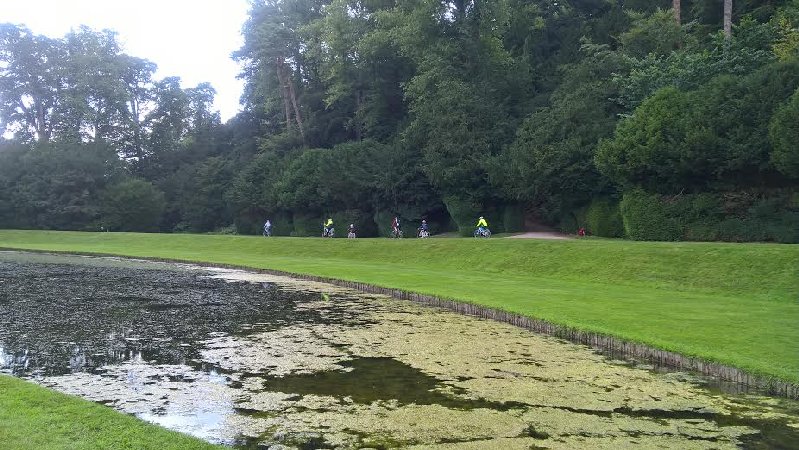
That's where I spent my evening, near the Temple of Piety. Can't complain at that. (geograph.org.uk)
That’s where I spent my evening, near the Temple of Piety. Can’t complain at that. (geograph.org.uk)

I was volunteering at Fountains Abbey and Studley Royal yesterday evening.  I wasn’t sure I wanted to be there.  It was raining – and how – as I drove there, and the evening looked very unpromising.

A small team of us were there to make an evening’s Family Bike Ride round the Abbey and Studley Royal grounds run smoothly.  Apparently I was going to be stuck near the Temple of Piety and Moon Ponds preventing riders from disappearing up into a woodland path, with only my two-way radio for company.  I hadn’t even got an umbrella.  Anyway, who would bother to turn out with their families, and all the family bikes, to trundle round Fountains Abbey in the rain?

Baby coot (Tim Felce: Airwolfhound)

I was wrong.  Of course.  The rain stopped.  Families turned up, and lots of them.  At first though, I had many minutes of peace to stand and absorb the views of the very special Georgian water garden.  I spent time enjoying the company of a new family of coots: I suspect the three little spherical balls of fluff I saw with their solicitous parents had hatched that very day.

This was my view for much of teh evening. Those coots are out there somewhere.
This was my view for much of the evening. Those coots are out there somewhere.

And then the bike riders came.  There were confident teenagers relishing the chance to get up speed in this tranquil setting.  There were primary-aged children enjoying family time with their parents.  There were little ones, able to wobble along on their bikes, their parents confident that they were utterly safe from passing traffic.  Open Country, a local charity working to help people with disabilities access the countryside had brought along a team and several tandems.

Some people went round the circuit once, some twice, a few as many as five times.  I took lots of photos with lots of cameras for family souvenirs of the evening.  Sadly, I hadn’t brought my own camera.  These not-at-all impressive photos are taken with my camera phone.

I’ll volunteer again sometime for this event.  But not next time.  Next time I’ll want to be there with my own family, trundling around this very special site with my own grandchilden (first though, I’ll have to learn not to fall off a bike).

One of the last families of the evening finishes the last lap.


What a difference six months make…..

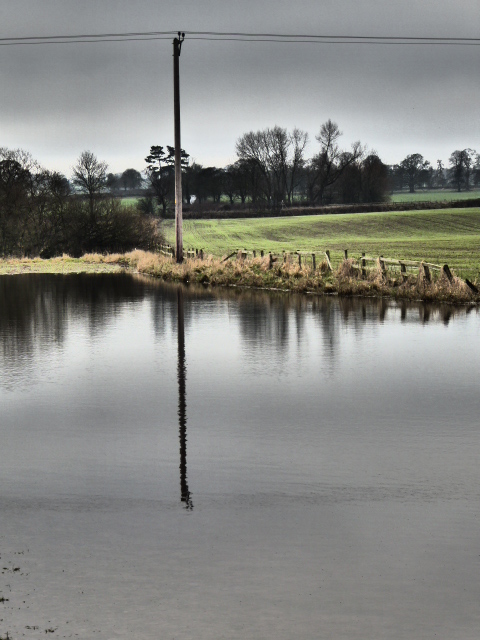
Look.  Here was the scene in the field near our house, in January this year.  Fields and roads flooded, impassable pathways, rocks and earth tumbling into the River Ure.

Near Old Sleningford, January 2016.

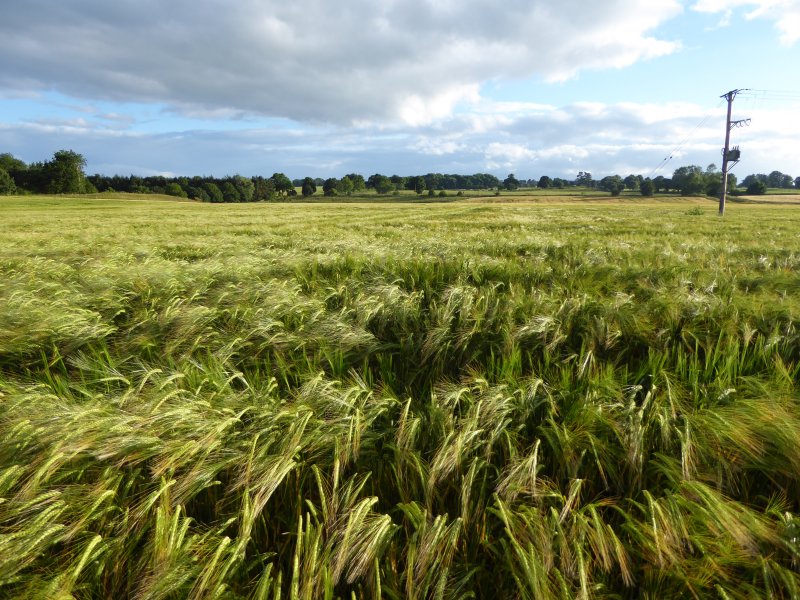
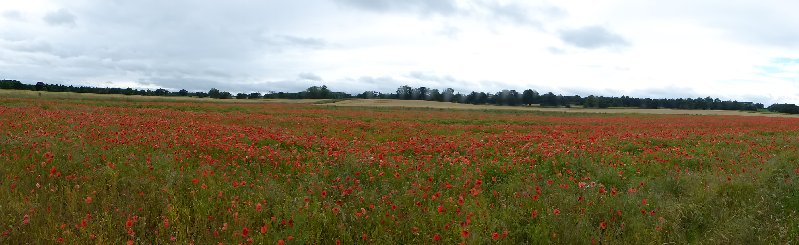
This was the same field yesterday.  Barley, barley everywhere, all fattening up nicely for the harvest.  Nearby, fields of poppies.  Really hopeful, cheery sights on a sunny and blustery day.

The same field, July 2016

Will all our present political crises end so well?  I wish I could feel more optimistic.

PoppyFieldsJuly2016 013

A day beside the seaside

You’ll know that we waved ‘Goodbye’ to Emily this week.  She’s arrived in South Korea,  jet-lagged and exhausted, but not so much that she can’t send snippets of up-beat information about her new life as Emily-in-Busan.

While she was with us, Emily-in-Barcelona briefly became Emily-in-London, Emily-in-Bolton, and Emily-in-Yorkshire. And while she was with us, Boyfriend-from-Barcelona came to visit.  What should we show someone from a vibrantly busy city, one of whose attractions is several kilometres of golden, sunny, sandy beaches?  Well, on a frosty, gusty February day, with more than a threat of snow in the air, what could be better than a day beside the seaside?

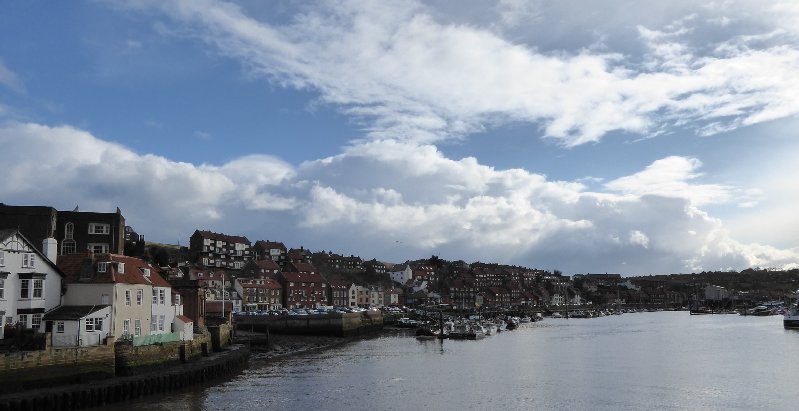
Whitby: the view anyone who's been there would recognise.
Whitby: the view anyone who’s been there would recognise.

Whitby seemed to fit the bill.  Picturesque fishermen’s cottages huddled round the quay.  A clutter of narrow cobbled shopping lanes – a tourist mecca to rival Las Ramblas.  A sandy beach with donkey-rides, and the chance to find fossil remains etched into the cliffs or a morsel of jet washing about on the sands.  A ruined Benedictine Abbey high above the town, the inspiration for Bram Stoker’s ‘Dracula’, and the focus of a twice-yearly Goth music festival.  And fish and chips.  Always fish and chips at an English seaside destination.  Emily and Miquel explored the lot.

And Miquel, windblown and chilled to his fingertips, declared that it had been a fine day out, with the added bonus of being firmly inside the car when we journeyed home across the North York Moors as the snow began to fall.

Best to be back in the car when the weather's like this.
Best to be back in the car when the weather’s like this.

From Jervaulx to Jervaulx – in the mud


Jervaulx9thFeb2016 072

I first walked from Jervaulx to Jervaulx last April, and wrote about it here.  However, I failed to lead my fellow ramblers along the same route later that month as I’d said I would, because it rained…. and rained.  I’d promised them the walk though, and today was the day: bright, sunny, blustery – a perfect winter hike.  Except for one thing.  Those floods that have dominated British news this winter are still making their presence felt.

The ruins of Jervaulx.

Our route today didn’t take us through pastureland.  Sheep aren’t very good at being knee-deep in mud. It took us through soggy fields, and past lake after lake after lake: waters that simply were not there last time I took this route.  It was all very pretty.  Less pretty was the scene at stiles.  Look at us skidding and sliding, trying to pick the shallower puddles as we waited out turn to get from one field to another.

We’re British though, always plucky in adversity.  We soldiered on, sometimes a little weary of heaving mud-crusted boots along sticky, sludgy paths.  But nobody fell over, nobody lost their sandwiches in the mud.  Everybody enjoyed those vistas over the Dales, the starkly beautiful skeletal outlines of winter trees, the blue skies, dappled with characterful cloud.  Were we glad to have made the effort?  Well, I was, and I think my steadfast and dependable companions were too.

Let Nature take its course

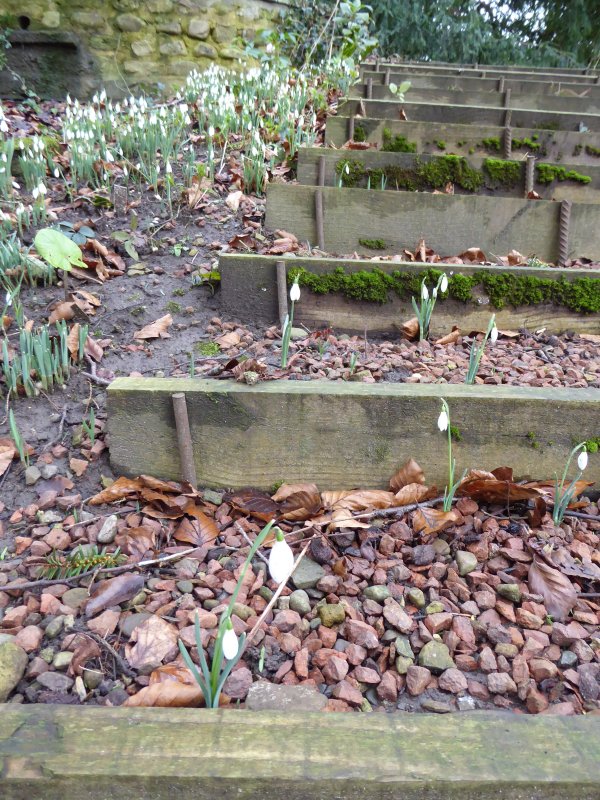
Step out into the garden, and the countryside beyond at the moment, and you’ll find snowdrops doing what they do best in January – piercing the barren earth, colonising grassy patches, nestling under trees and marching across gladed hillsides.  Untroubled by unseasonal weather, their inner clocks direct them to grow, multiply, and cheer us all up in an otherwise gloomy, un-festive sort of month.  That’s Nature for you: ordered, seasonal and predictable.

A farmer's field? Or Sleningford-by-the-sea?
A farmer’s field? Or Sleningford-by-the-sea?

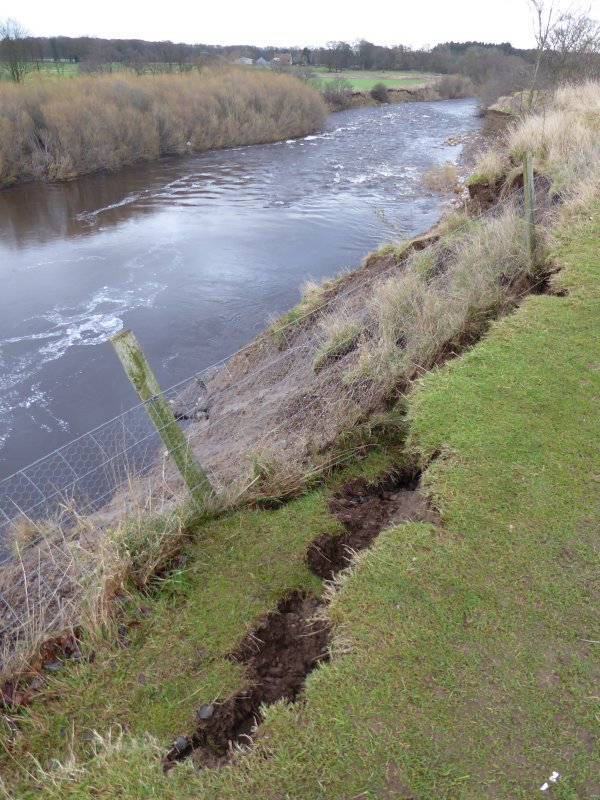
But Nature has another face.  Come with me beyond the garden, past the fields slickly shimmering with surface water, to the banks of the River Ure.  Just two minutes walk from here, it makes a wide sweeping curve away from its route from West Tanfield, and (normally) meanders gently into Ripon. That was before this winter, this rain, this unending water.

Once the rains came, and once it reached town, the River Ure rather wanted to swamp people’s gardens and make a bid to enter their houses.  Recently-built flood defences put paid to that idea.  The River Ure took its revenge on us, or more specifically, on the farmer whose fields adjoin us.  Up in the hills, waters from streams and rivulets in the Dales cascaded into the Ure, which gushed and surged along its course, rising higher and higher, tearing at the banks, ingesting great clods of earth and forcing them downstream.  The water levels are falling now.  The damage remains.

The River Ure seizes the land.

Look.  Here’s a chain link fence which marks  a pathway running along the edge of the farmer’s field.  It should be on terra firma, with a nice grassy margin between the fence itself and the river bank.  Now it has nothing to hold onto.  The bank has been snatched away, and the fence is hanging crazily and directly over the swelling waters below.  The earth has slipped, and continues to slip.  The farmer is losing his field, and the river is changing course.  There’s not much anybody can do about it.

We’ll watch the water awhile, and frighten ourselves witless at the prospect of falling in and being swept mercilessly away. Then we’ll wander back though the woods, and enjoy the snowdrops and aconites once more.  Nature takes its course.

The steps through the woods.

A post for a fellow-blogger.

I’m at university this week. The University of Blogging. This seat of learning, which has no rector, no library and confers no degrees, runs a programme regularly hosted by WordPress,and aims to bring together people who from all over the world, keen to hone their writing and presentation skills, and to help each other to Write a Better Blog.

Today’s assignment:  
Publish a post you’d like your ideal audience member to read.
I’ve chosen to write for one of you.  We haven’t met. We don’t live on the same continent.  But we’re ‘blogging friends’ who enjoy one another’s posts and often say so. You say you like the posts I write about walking in the Yorkshire Dales.  I like the posts in which you too describe your walks, often more extensive than mine, taking place over several days. You stride beside me – virtually of course – as I tramp along the leaf mould paths of a dappled English woodland.   I stop to gaze across the green and undulating hills  at the lattice work of ancient fields, divided by drystone walls, and share the view with you courtesy of my camera.
Except… I haven’t.  Not lately.  Those floods I wrote about a couple of weeks ago are an ever-present danger to some.  And even for those who haven’t had flooded homes  to contend with, the weekly rhythm has changed.  Walking is quite simply not on.  The other day, fed up with the lack of exercise, I took myself off to walk along country roads instead.  I’d not been going ten minutes when I met a deep trough as wide as the road, as deep as my ankles, and as long as… well, I don’t know.  It went beyond the next bend, anyhow, and I went home.  The fields are home to seagulls who bob about on the choppy waters.  The paths are streams.  The streams are rivers.  And the rivers are seas.
i) Quiz question: which is the path, and which the brook?
ii) This, I’m afraid, is a path.
iii) Brian-from-Bolton simply can’t stand getting his paws muddy.  He’s urging me home – NOW.
But I’m keen to get out and about again as soon as I can.  And I hope you’ll come with me, in a virtual sort of way, when I report back.
Bolton&BrianJan2015 048
A typical field. And not half as bad as some.

Flood

December in the north of England has been the month of the flood. Until Boxing Day, it was Cumbria that saw all the action, with some communities flooded out not once, not twice, but three times.  They were told to stand by for more on Boxing Day.  They readied themselves…. and nothing happened, because the torrential rains prophesied swept south and east of them, firstly into Lancashire, and then Yorkshire

We were staying with my daughter’s family in that part of Greater Manchester that used to be in Lancashire.  They live near a Nature Reserve through which Bradshaw Brook passes.  I’d say ‘flows’, but such a phrase is normally far too active a description for this narrow little watercourse.

This was Bradshaw Brook yesterday.

ChristmasBolton2015 029
Bradshaw Brook, Boxing Day 2015

We were due to travel home from their house to ours, in Yorkshire.  Highways England, the BBC, and motoring organisations all had conflicting information on their websites.  But they all agreed that our usual route, a scenic drive over the Pennines, was largely impassable.

It would have to be the motorway.  Longer, duller, but surer.  We’d not long been travelling when we noticed that traffic on the other carriageway was at a complete standstill, for miles…and miles.  It was only when we got home that we found out that a 20′ sinkhole had opened up near Rochdale.  So much for safer-by-motorway…..

Where to leave the motorway though, for the final few miles home?  There were floods in Leeds, floods near Harrogate – there were sure to be floods in Boroughbridge too.  What about Knaresborough?  It turned out there were floods near there too, as we discovered when warning notices turned us back on the road we’d come on, and sent us back by several miles to look for another route.  Familiar fields had turned into lakes, deep and almost unfordable road-side puddles were unavoidable.

ChristmasBolton2015 045
This doesn’t look too bad. Trust me. It’s deep.

We’re lucky.  We were flood-tourists on our journey home, gawping at rivers-become-seas, and roads-become-rivers.  Our home wasn’t flooded, nor will it be.  Others aren’t so fortunate.  They’re either contemplating the devastation of their own home or business – or both, or anxiously shoring up the front door with as many sandbags as they can lay their hands on, in anticipation of the days ahead, when the forecast continues to be grim.  We could all do with a bit of an old-fashioned winter cold snap, with a touch of frost, but positively no rain.

FASR&Ripon27Dec2015 025
You see that bridge, centre left? That’s a bridge over the River Ure, in Ripon. This lake in the foreground is not a lake, but open ground at the edge of the city, favoured by dog-walkers and children.