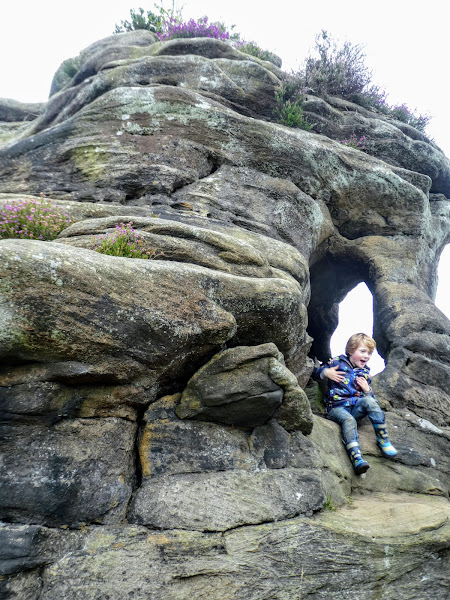
This week, for the Lens Artists Challenge, Amy asks us to consider ways of framing our shots. So my featured photo doesn’t do that. The frame shown here, at Brimham Rocks IS the subject of the shot.
Sometimes, the photographer finds a frame has been fortuitously laid on. Here we are on the Regents Canal in London, in maritime Barcelona and at Harlow Carr Gardens in Harrogate.
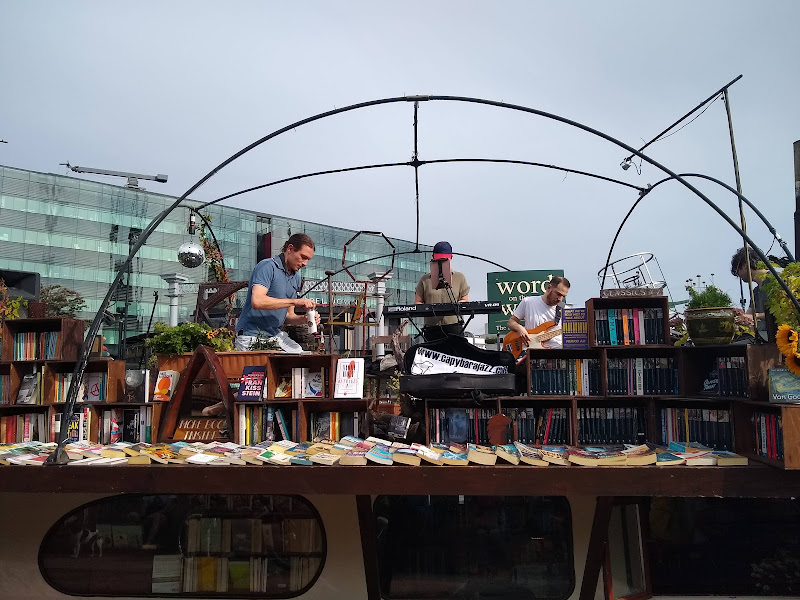
A band plays on the floating bookshop, Word on the Water, on the Regent’s Canal, London
Sometimes a window – an actual window, or a suitably-shaped hole-in-the-wall provides that frame. Here’s the South Bank in London, a shot taken while sailing to Bilbao, another view at Harlow Carr, and a convenient window overlooking the River Thames near Blackfriar’s Bridge.
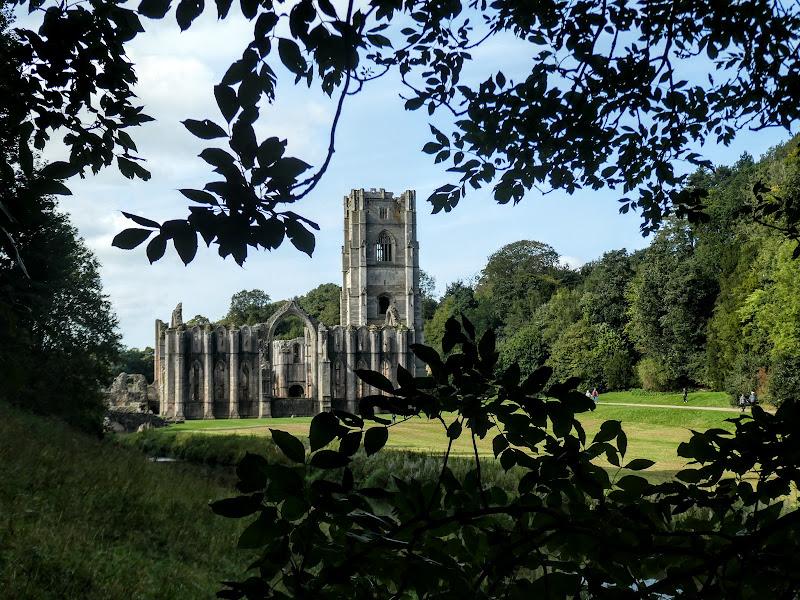
In her post about framing, Sarah of Travel with Me fame took us to Fountains Abbey and Studley Royal. We’ll go there too, but wander through the wooded area of the High Ride, and into the parkland of Studley Royal, allowing the trees themselves to frame the picture.
Fountains Abbey in autumn.
And lastly, another view which didn’t work as well as I hoped, through a chink in a drystone wall in the Yorkshire Dales.
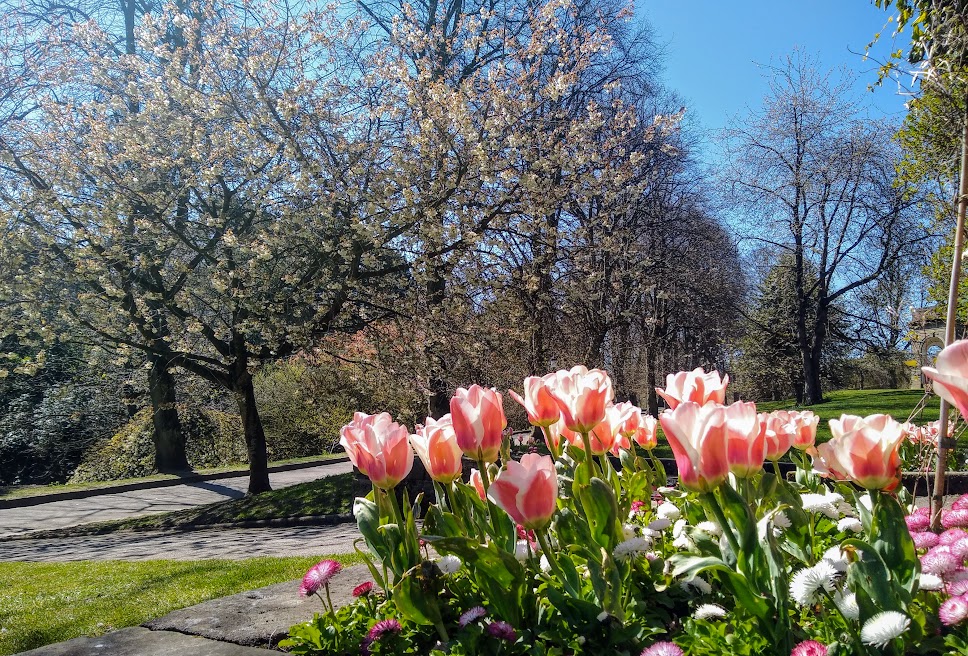
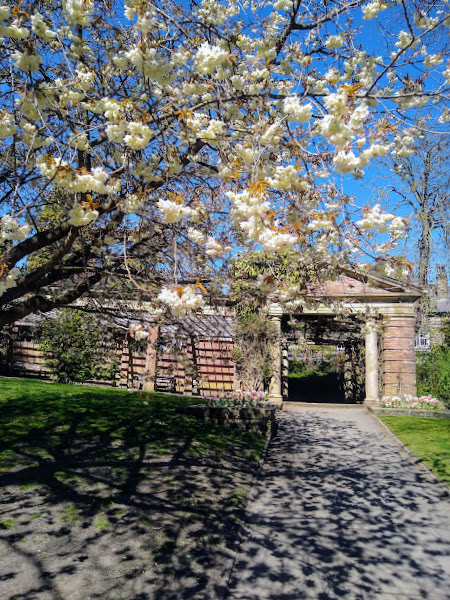
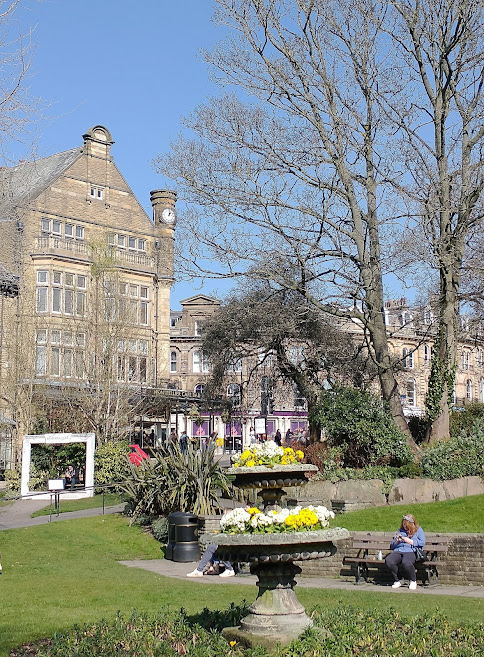
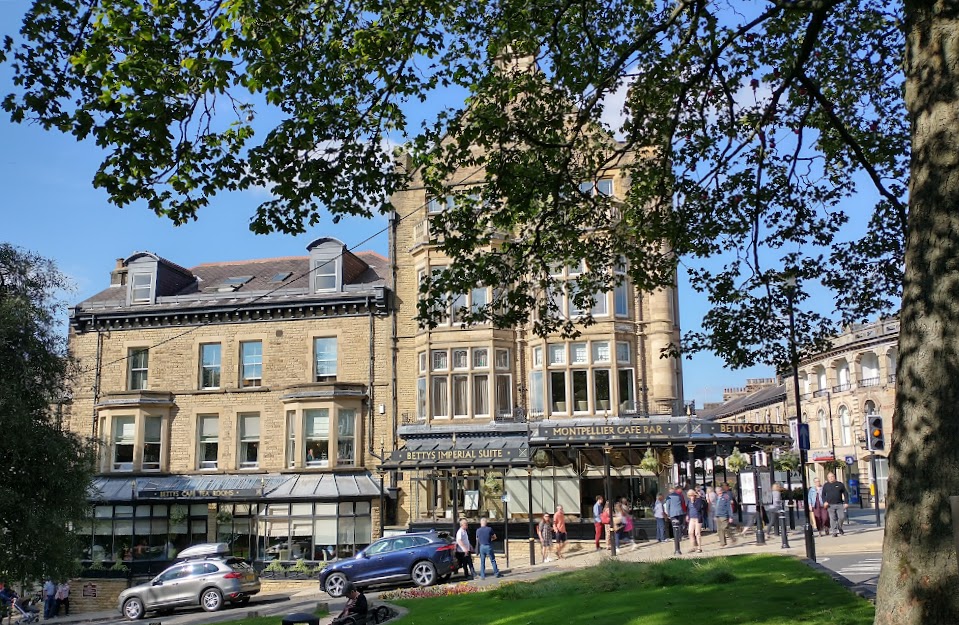
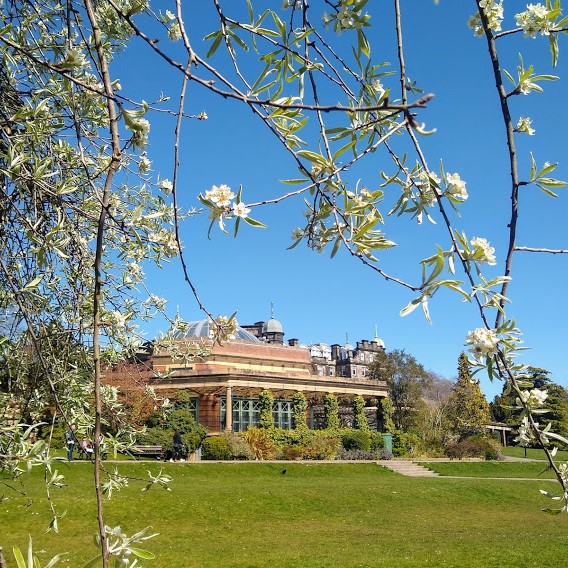
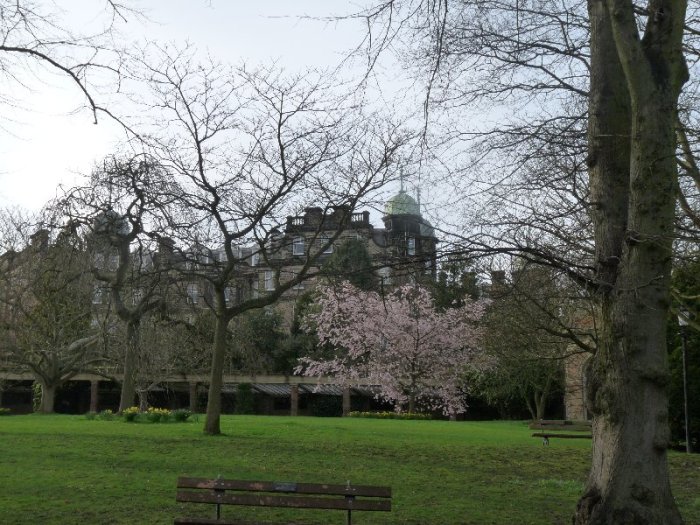
Here’s Harrogate yesterday, enjoying the first true week of spring.
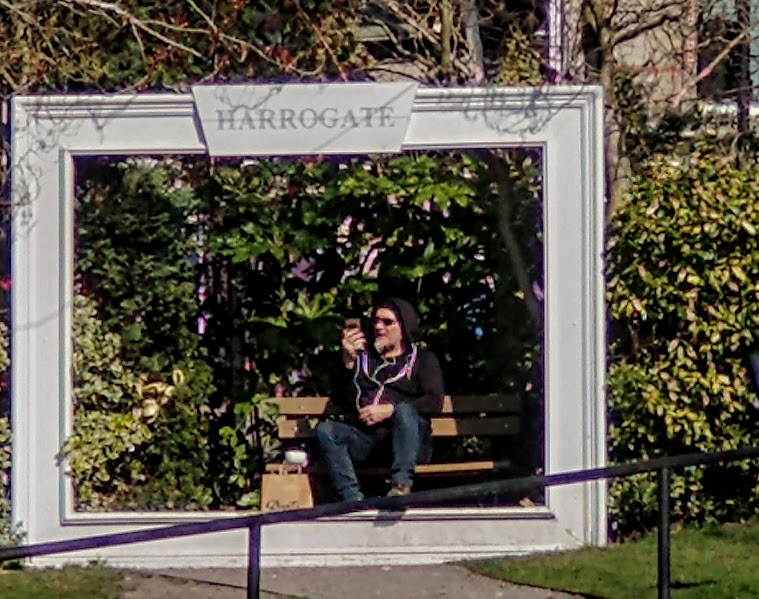
The building with the turreted clock is the famous Betty’s Tea Room. But we won’t go there today. Instead, we’ll have a picnic later, in the Valley Gardens. That white rectangular frame you can see is a favourite family-photo spot. If you haven’t got your family with you, best take a selfie …
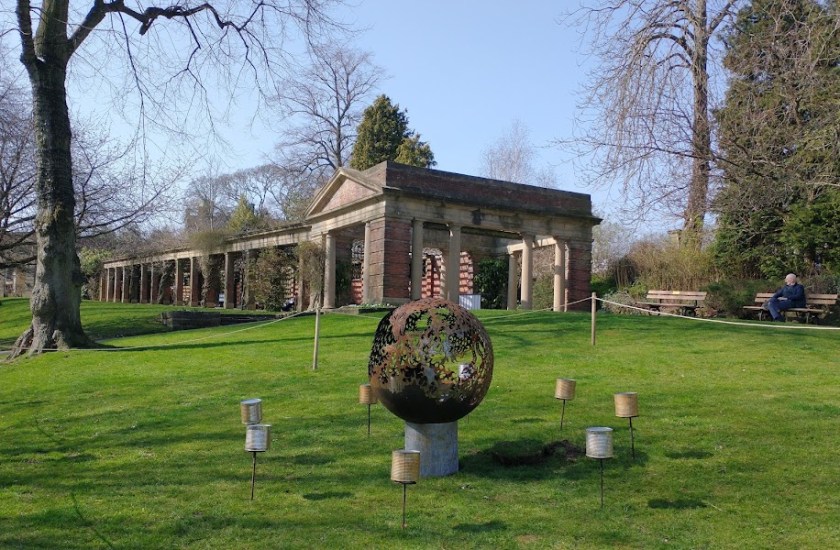
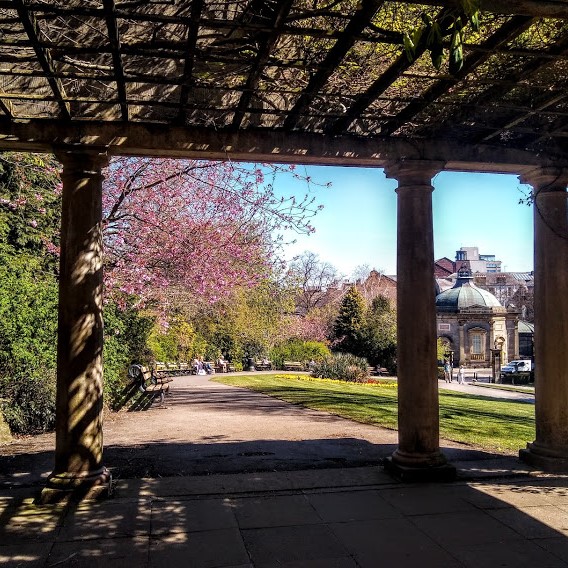
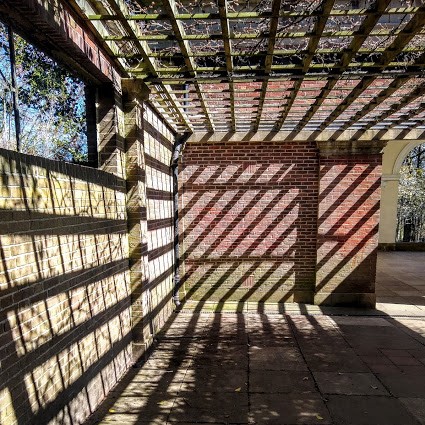
Next stop, Valley Gardens. It’s all tricked out at the moment for a Fire and Light Experience. We’ve been to one of these festivals before, in 2016, and it was fabulous. But we’re still too post-covid flattened to feel like an evening out. So we’ll just enjoy the braziers and installations set in place …
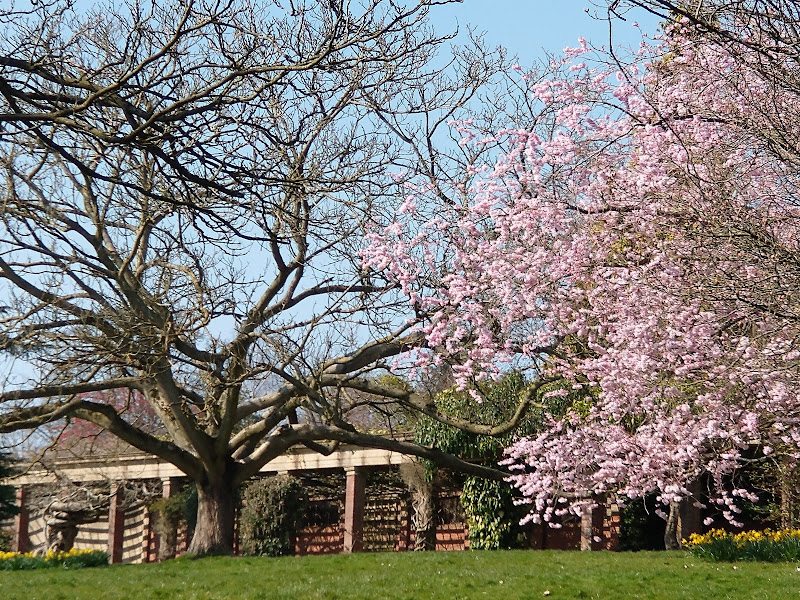
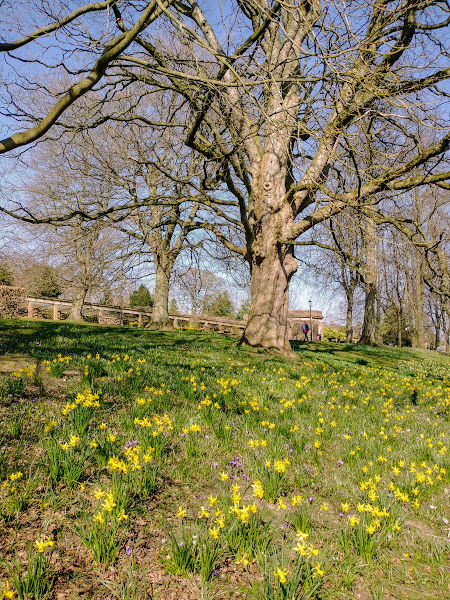
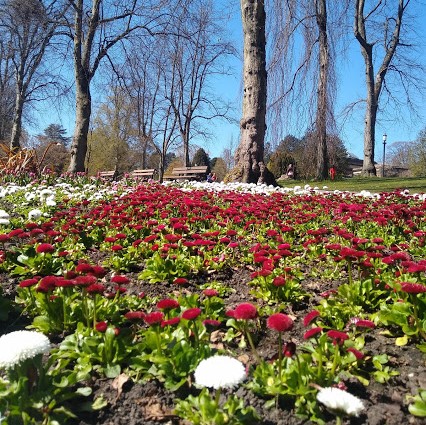
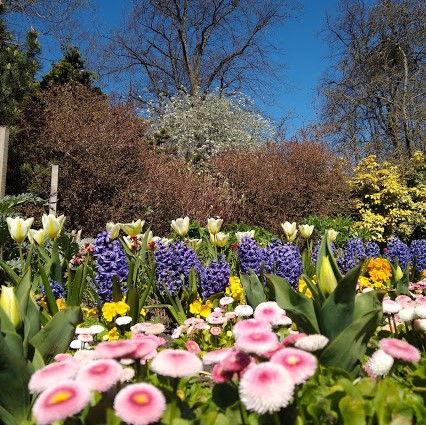
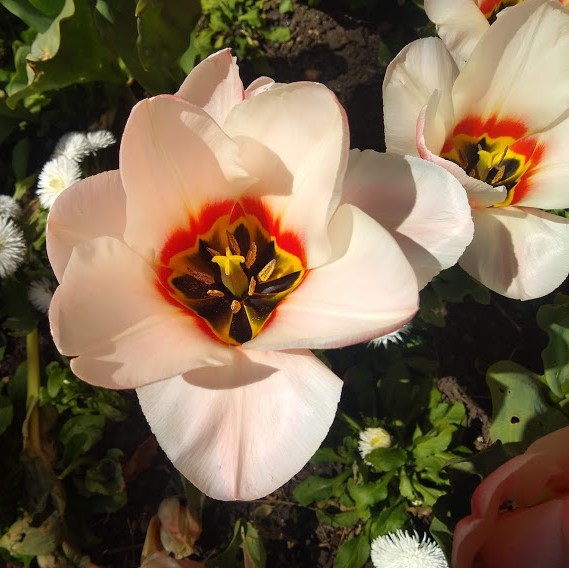
… and focus on the blossoms and spring flowers instead.
Just a short walk. But it’s enough to change our mood and lift our spirits.
For this week’s Lens-Artists Challenge, Ann-Christine asks us to think about curves. What a big subject! Flicking through my photos, almost every one has a curve in it somewhere or another. How to limit it? In the end, I decided to go with curves-as-frames.
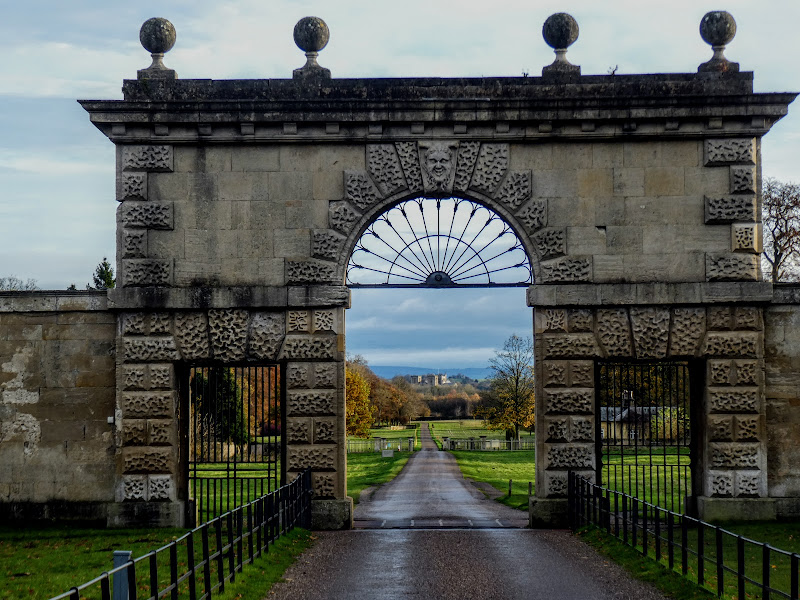
There are deliberate curves as framing devices, as here in Studley Royal, where the estate gates are placed to emphasise the view straight down towards Ripon Cathedral.
Or here where the band on a bookshop barge on the Regent’s Canal in London has organised an arch above the musicians.
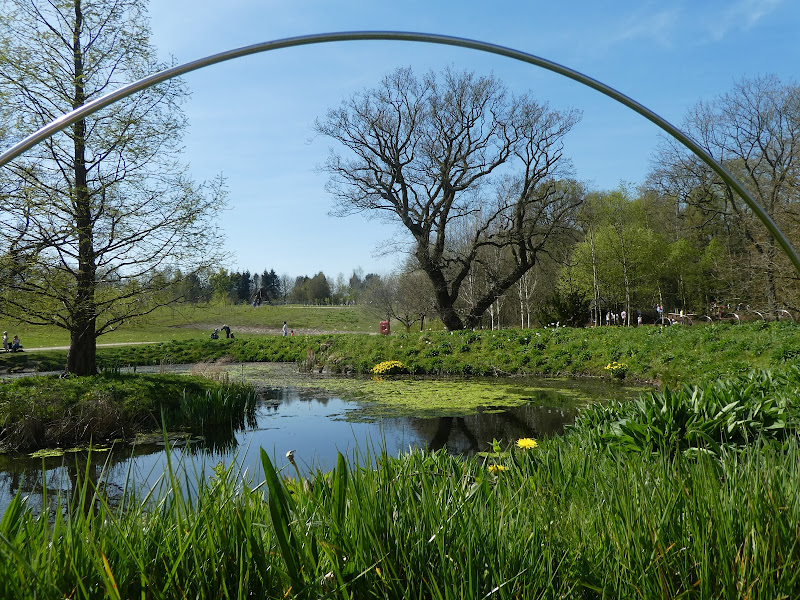
Or here, where a metal arch has provided an impromptu frame, so long as you choose your point-of-view. This is Harlow Carr Gardens, Harrogate ….
… or here, where a handy metal arch can be encouraged to frame the Maritime Museum in Barcelona.
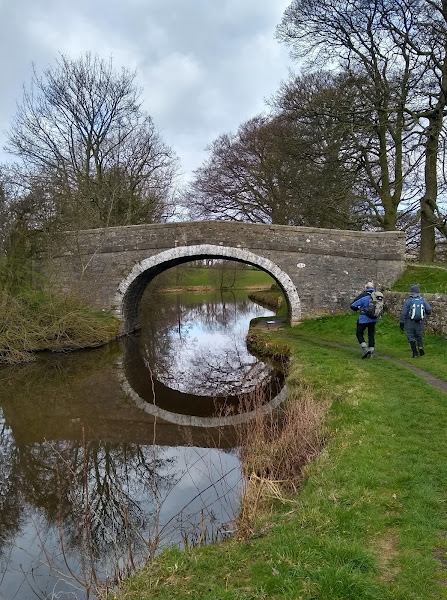
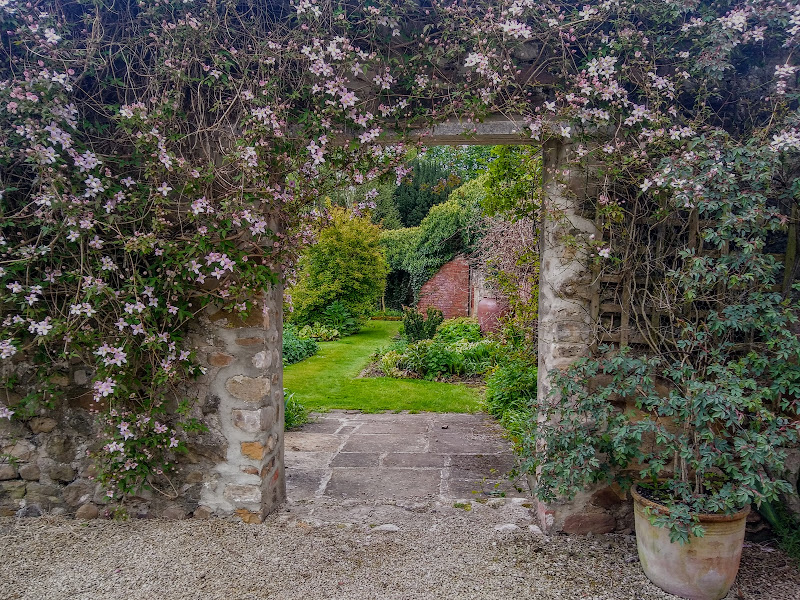
Bridges may be arched, and garden entrances, even if not curved themselves, are often softened by climbing plants.
Leeds-Liverpool Canal near GargraveWalled garden with clematis.
Let’s go to more serendipitous framing in the natural world. Here’s my grandson at Brimham Rocks.
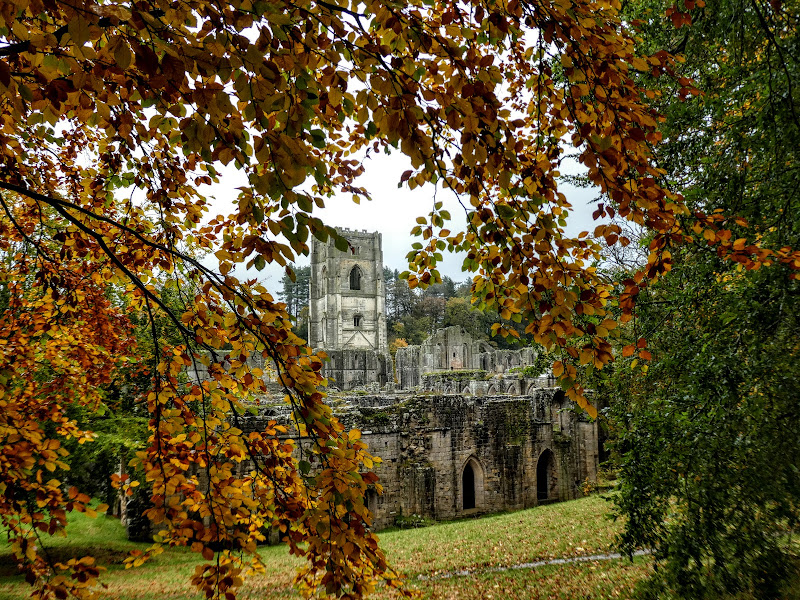
And finally, we’ll go to Fountains Abbey, where I spend so much time. I’ve chosen two different views of the Abbey, one taken in high summer, then the other, shown as the featured image, in autumn. In each case, Huby Tower has been framed by leaves cascading in gentle curves.
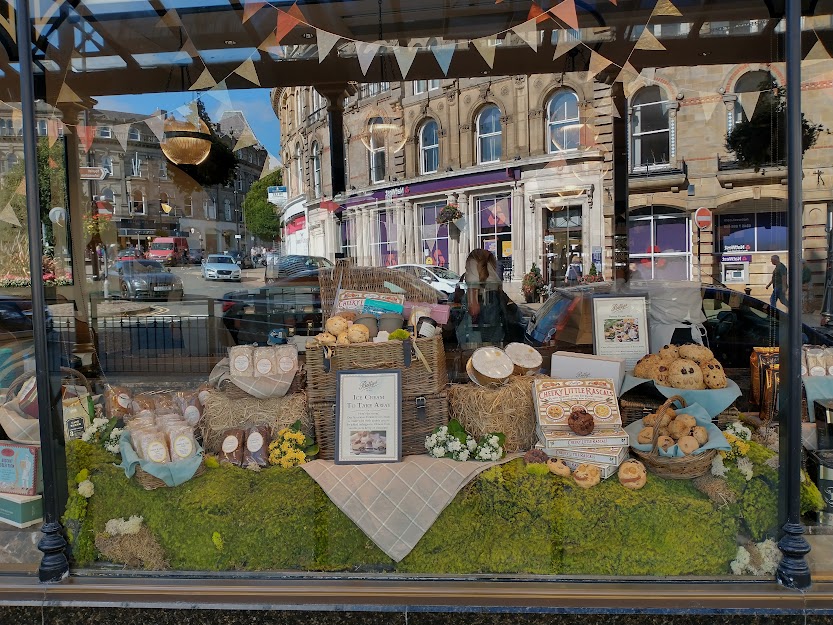
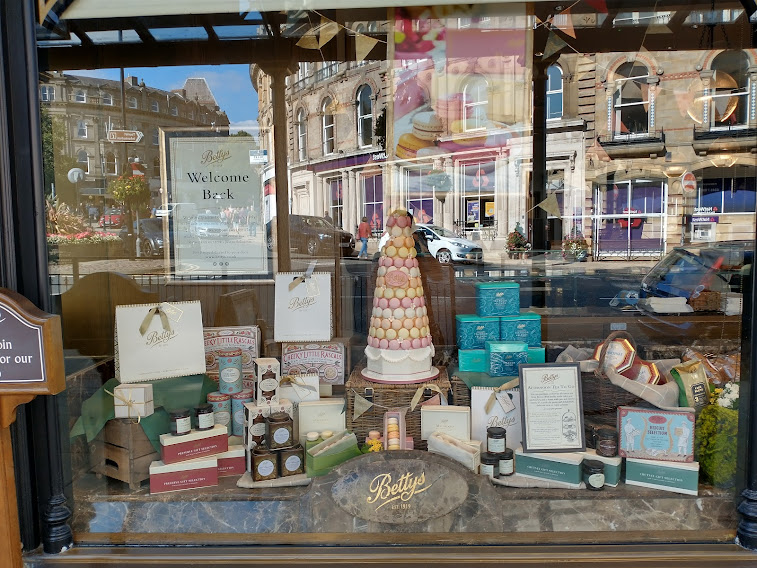
When Sheree read my post about window shopping last week, where I’d included a stop-off in Harrogate, she was disappointed I hadn’t included the windows of tea shop and bakery extraordinaire, Betty’s. I was in Harrogate again last week, and realised I had to put this right. But the sun was so high, and the light so bright that my camera got clearer views of Parliament Street behind than of the window display. Never mind. Two for the price of one.
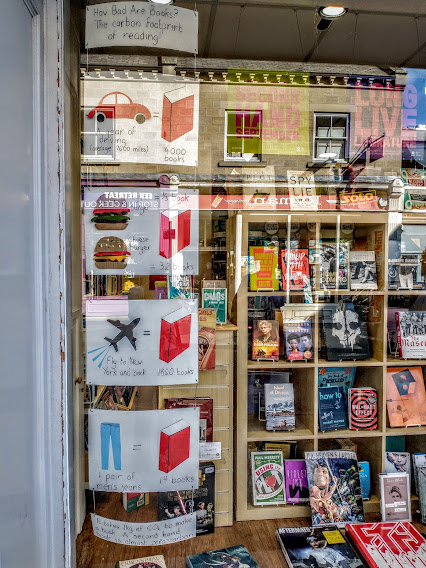
My favourite display was in the Oxfam second hand bookshop. Here’s what the signage says:
‘How bad are books? The carbon footprint of reading. A year of driving (average 1600 miles) – 4000 books. Veggie burger – 1/3 book. Cheese burger 3.2 books. Fly to New York and back – 1800 books. 1 pair of men’s jeans – 19 books. It takes 1kg of CO2 to make a book. A second hand book is almost zero carbon.’
Oxfam Books, Harrogate.
I can’t comment on the scientific observations, but I hope it’s true: I’d sooner have a book than a burger, any day. And I liked the reflections in the window too.
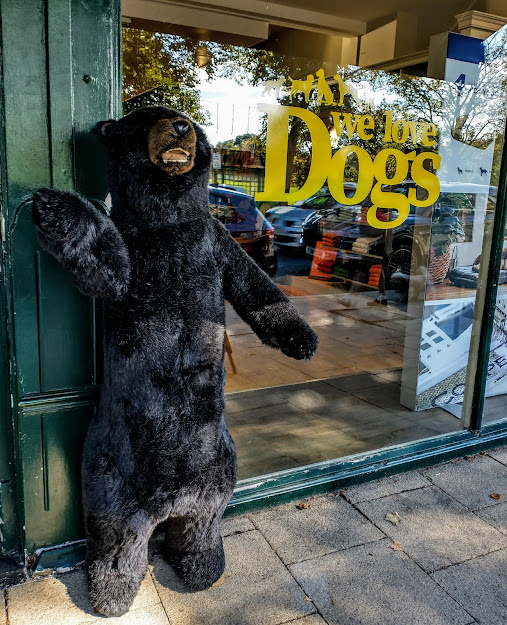
I think I’ll leave it at that – or no, let’s just look at this antique shop, where dogs are apparently welcome. Why the bear?
West Part Antiques, Harrogate
Farewell Harrogate, for the time being. Back soon.
We turned up early – though not half as early as some – to help get things ready and to join a short choir rehearsal.
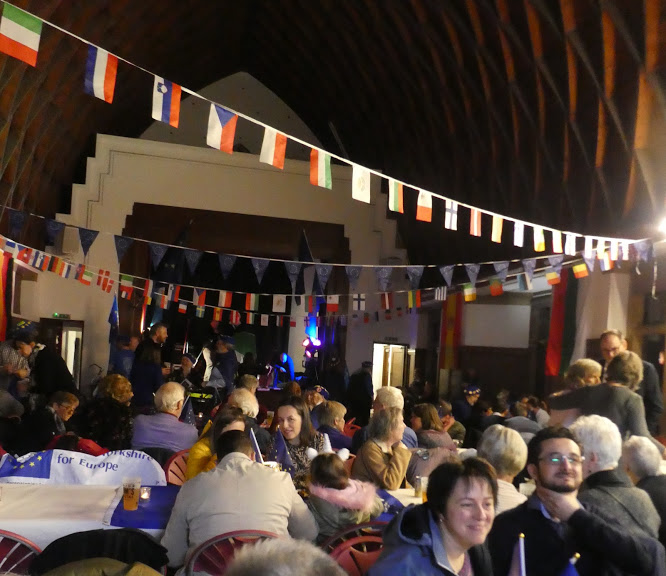
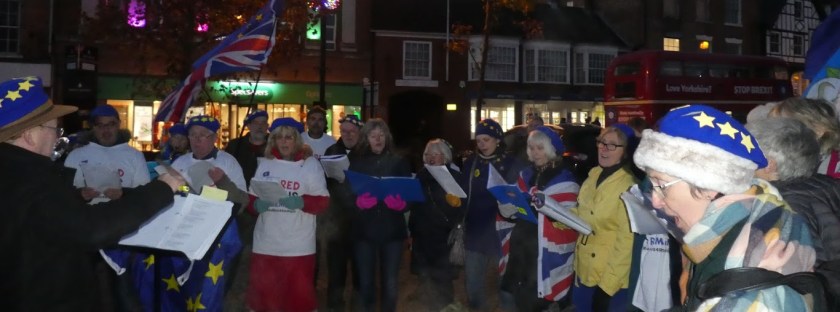
This was January 31st, Britain’s last day in the EU, and the occasion for North Yorkshire for Europe’s ‘Thank EU for being here’ party: a celebration for EU citizens who’ve made their homes here.
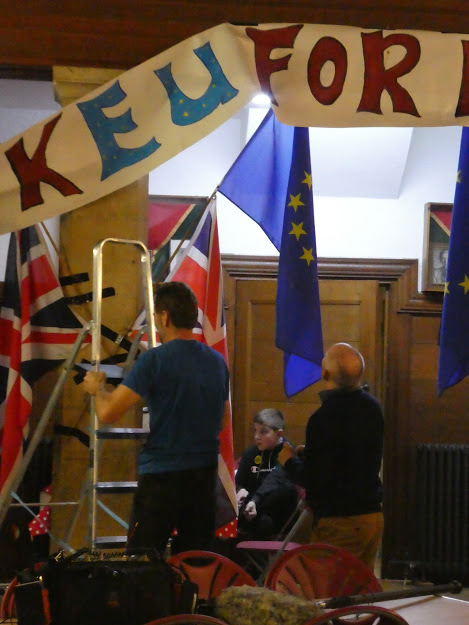
Richard Sadler, our energetic ideas-and-Chair-man, organises the banner.
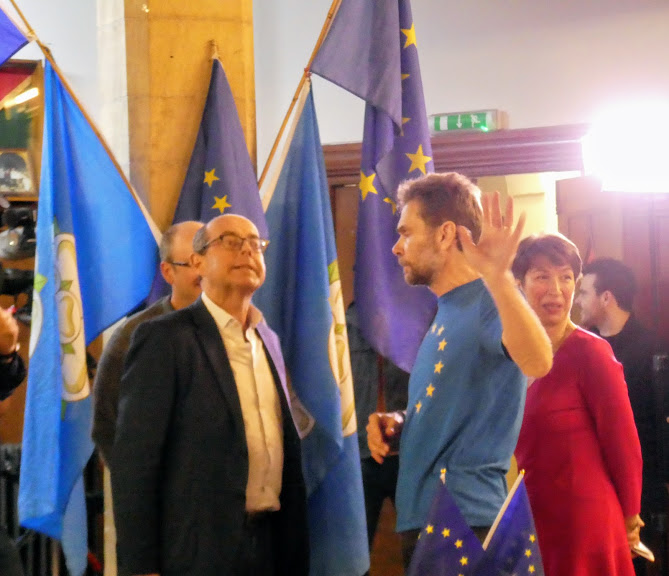
There were tables and chairs in place, enough for about 120 people. There was Richard up a stepladder wrestling to get the home made (thank you Phil) banner up. And there were the cameras and reporters. BBC Look North were already busy interviewing and ITV News at Ten was due too. But look! Isn’t that Nick Robinson from the Today programme? Yes. He stayed and listened to the choir rehearse, and did a few short interviews, which were transmitted on Saturday’s programme at about 8.15.
Nick Robinson talks to Richard Sadler.
Then it was 7.30. People started arriving – slowly at first, then in a busy queue. A Polish nurse who’d been part of the team when Malcolm was in hospital came, with two Spanish friends. As we sat down, we found ourselves with, apart from them, Italian and Ukranian guests. I chatted to a French woman. We heard German, Dutch. We puzzled over quiz sheets. Where ever in Europe had all these pictures been taken? There was music from our very own The Raisers.
Getting to know each other.
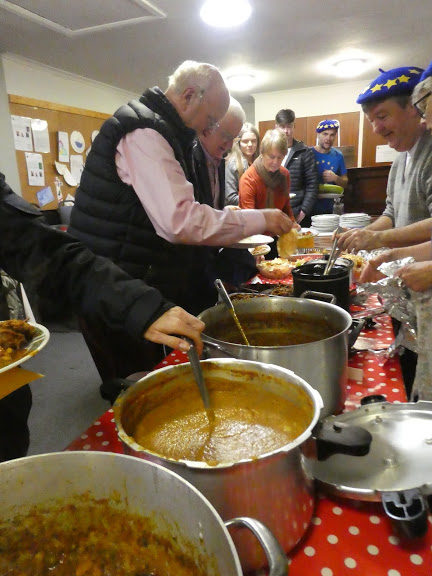
Supper was only partly European. There were pizzas. But besides them were vats of Indian vegetarian curries, breads and sweetmeats. Feeding us all took quite a while, but gave the chance for lots of talking and getting to know one another.
Form an orderly queue.
Speeches of course. You’ve got to have speeches: but they were short, and though full of regret, positive and forward-looking.
And the choir sang. No longer the Remain Voice Choir, we’ve become the Reunion Chorus. Some of our old favourites have been brought up to date (‘Brexit is a form of Madness’ – you may know it as ‘Bread of Heaven’); and others are new (‘Europeans all are we..’ – ‘Bobby Shaftoe’).
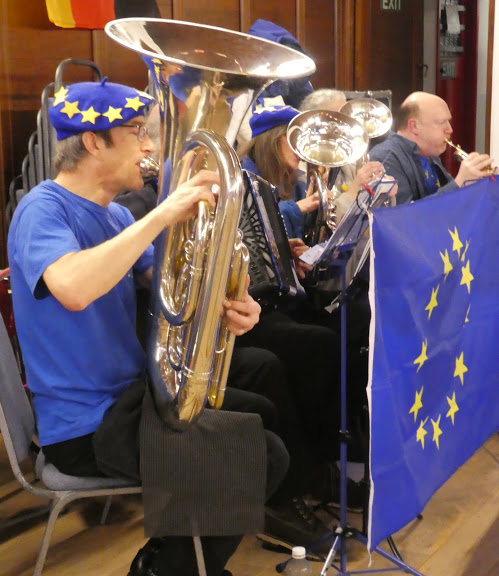
Here are some of the band. As I was singing, I haven’t got any of the choir. I think Nick Robinson has.
The hands of the clock kept turning. It was getting late. We stopped out chatter. At exactly 11.00 o’clock, we stood up for a minute’s silence: reflective, saddened, angry. And then the choir and everyone in the room joined in singing Ode to Joy. After which, many of us turned to our neighbour for a comforting hug as we wept for what we had lost.
The evening was over. But not our movement. We’ve made new friendships in Yorkshire and beyond. One day, we’re sure, Britain will be part of the EU once more.
ITV News at Ten at work.
The Raisers raise the roof.
The evening’s over. Charlie and team tidy up.
Europeans in conversation.
Multi-tasking Arnold. Instrumental in organising the evening. Part of The Raisers. And crucially, our Choirmaster. Also known as the Messiah.
Richard Wilson, Chair of Leeds for Europe, and Vice Chair of the European Movement.
A crowded hall.
Richard Wilson, Chair of Leeds for Europe, and Vice Chair of the European Movement.
Last Friday night was the first real winter’s night. Temperature of minus four. Saturday morning saw intrepid members of North Yorkshire for Europe climb into every bit of warm clothing they could round up, and head for Harrogate …..
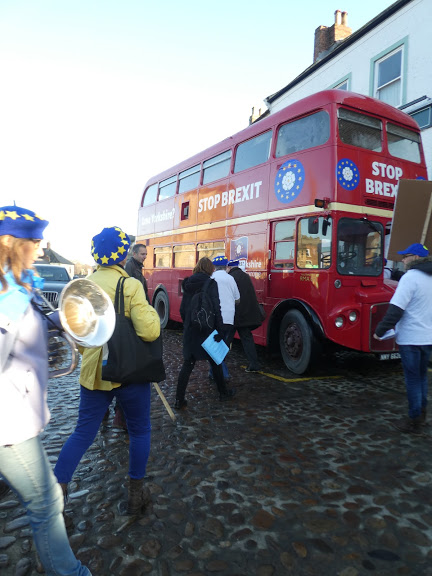
The Big Red Bus parked up in Harrogate.
…. and the Big Red Bus for Remain. For one week only – this week – if you live in Yorkshire you’ve a chance of seeing this re-badged Routemaster bus parked up in a town square near you. Parking place secured, members of the Yorkshire Remain Choir, plus assorted brass instrument players (with a tuba, a euphonium, a saxophone to name but a few) and guitar-players clamber off the bus, secure a vantage post, and sing.
Getting all that brass back onto the bus in Richmond.
It’s the Christmas period now, so in addition to all our tried and tested favourites:
What shall we do with this Rotten Brexit? (What shall we do with a drunken sailor)
We’ve had quite enough of Brexit, it’s a con. (She’ll be coming round the mountain)
Glory, glory, what a helluva mess we’re in. (Battle hymn of the Republic)
and about thirty other numbers –
we have adapted seasonal fare:
Away in Westminster, where Johnson resides….
The Twelve days of Brexit.
Hark the Leavers shout and wail…
Goodness, we were cold as we sang in Harrogate. We were freezing in Richmond, 37 miles north. And by the time we reached Ripon at sunset, 26 miles south, we’d lost all sensation. Only singing warmed us a little. That and having raucous sing-songs on the bus between venues.
Twilight in Ripon.
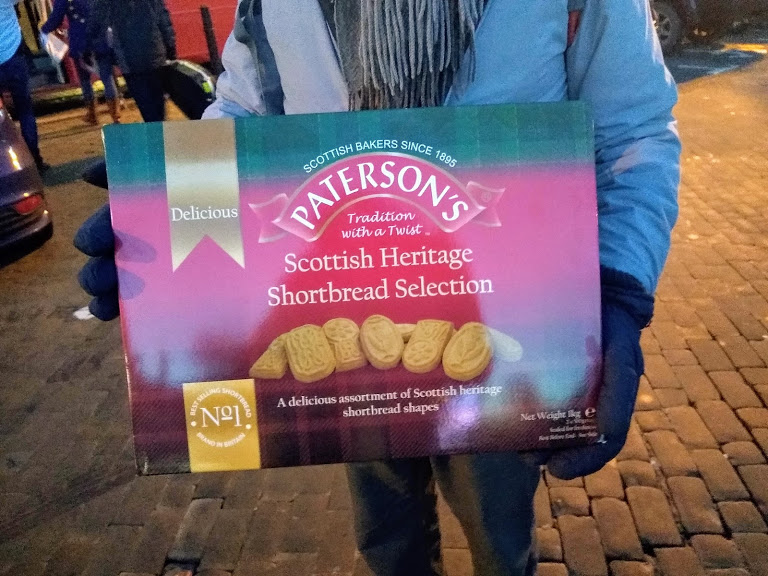
We were generally well received. Obviously we weren’t always appreciated. But in Ripon, a dyed-in-the-wool Leaver approached us with a huge box of shortbread: ‘I don’t agree with you at all.’ he said. ‘But that’s no reason why we shouldn’t be friends.’
A Leaver’s generous gift.
Hardly any photos of course. 1. I was busy singing. 2. Nobody in their right mind would want to take gloves off, just to take a photo. Brrr.
At this late stage, most of us have difficulty in believing we’re making a difference. But it takes our minds off the prospect of being led into an uncertain future by a serial liar with no moral compass, or interest in anything beyond his own ambition.
Read all about Saturday’s visit to Richmond in The Northern Echo, and about today’s visit to Leeds – sadly we weren’t there – in Leeds Live, and in Yorkshire Voice, where you can actually hear a few moments of song
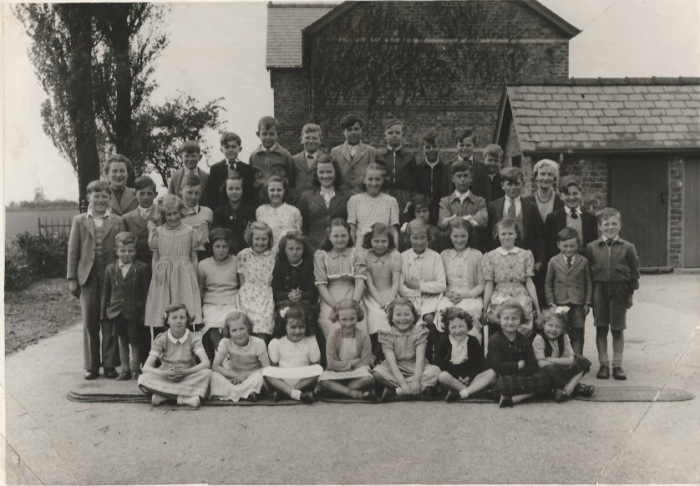
My life has come full circle. Many of my earliest memories come from Sandhutton, current population 260, where my mother was head teacher of a two-teacher school which educated all the village children between five and fifteen years old. These days I visit the village weekly – it’s less than ten miles away. The school no longer exists, but my Spanish teacher lives there.
There we are. Sandhutton School, c.1951, just before I started there.
When I was five, my life changed a bit. We went to live in London (current population 8.13 million).
A trip down the Thames: nearly at Westminster now.
I was a student in Manchester (538,000). Then I went on to live in Portsmouth, in Wakefield, in Sheffield, in Leeds: all cities numbering their citizens in the tens,or even hundreds of thousands. I loved city life. I relished the opportunities only a city could usually offer, and the diverse populations living in them.
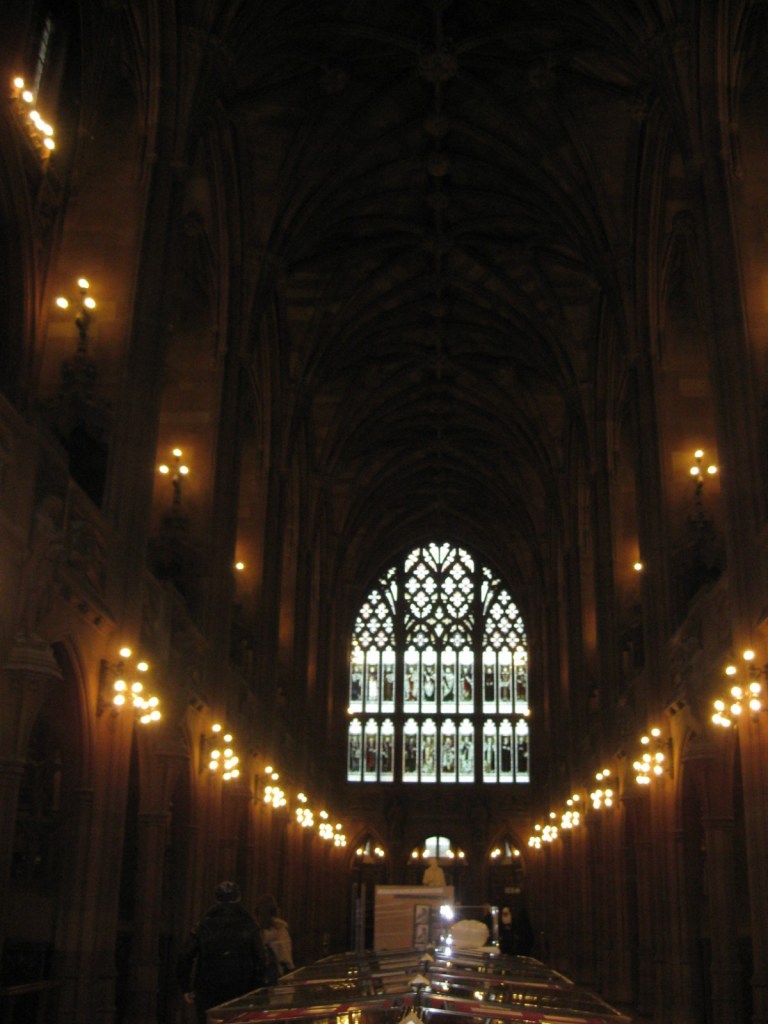
One of my favourite places in Manchester: The John Rylands Library. Who wouldn’t feel a real scholar in these surroundings?
Thornton’s Arcade in Leeds.
No, just …don’t. A shoe shop in Leeds.
When we moved to Harrogate, some twenty years ago, I announced we were moving to a small town. A mere 75,000 people lived there.
Harrogate: one of its many open spaces: the Valley Gardens.
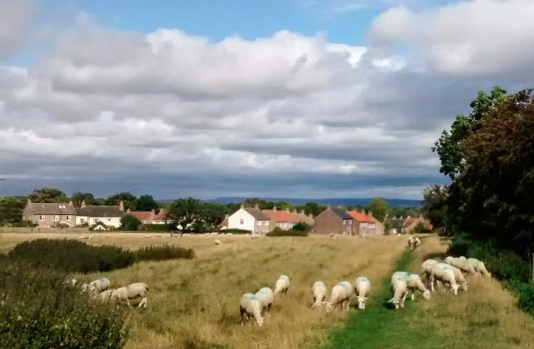
But that was before we went to France. Laroque d’Olmes has a population of some 2,000 people, and its county town, Foix, has only 10,000. We came to appreciate small town life: its neighbourliness and our sense of belonging – the space to appreciate the countryside and mountains beyond.
The street near the church in Laroque, with the Pyrenees in the distance.
When we came back to England, that small town of Harrogate suddenly seemed horribly large, traffic-infested and in every way untenable, despite its green spaces and lively community life. So here we are in North Stainley, population 730.
In fact we’re not even in the village, but in a little enclave just outside, with that walled garden I showed you last week. Population 8. It’s perfect.
We’ve had Team London here this week: an engagingly exhausting three year old and his baby sister make great company, but we’ve had a tendency to disappear to our beds not long after they do, and be snoring sweetly by 10.00 o’clock at the latest. However, in among exploring York, farmyard life, a canal, and the Wild Woods at the bottom of the garden, we had a day at Harlow Carr, the RHS gardens in Harrogate.
It provided William with plenty of Things to Do Before he’s 11 3/4: roll down a hill; go barefoot; watch a bird and have fun with sticks for instance. He and Zoë were very happy.
But for us, despite their bright enthusiasm for all there was to see and do, it was a green oasis, a haven of peace. We were content, strolling along the quiet paths, or beside a stream, sharing our space with bees, butterfies and birds.



























You must be logged in to post a comment.