November: Depressing? Or with Hidden Gems?

I really don’t like November.  It’s dank, dismal, dreary and depressing, despite being my elder daughter’s birthday month (my Bonfire Night baby).  I need a project to cheer me up.

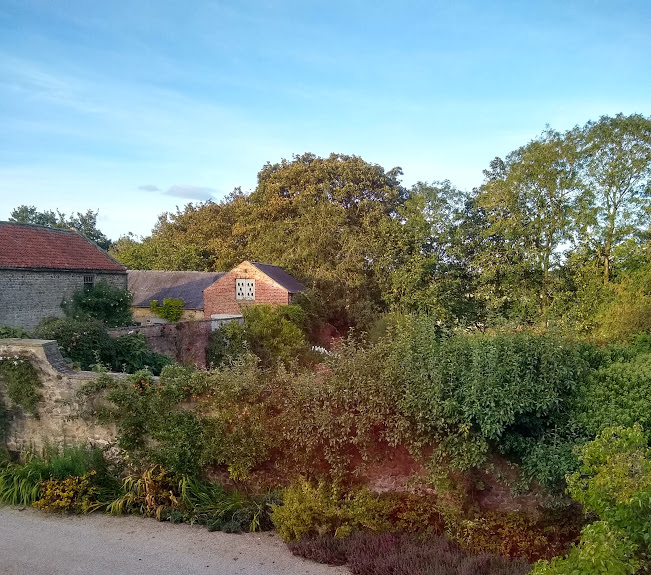
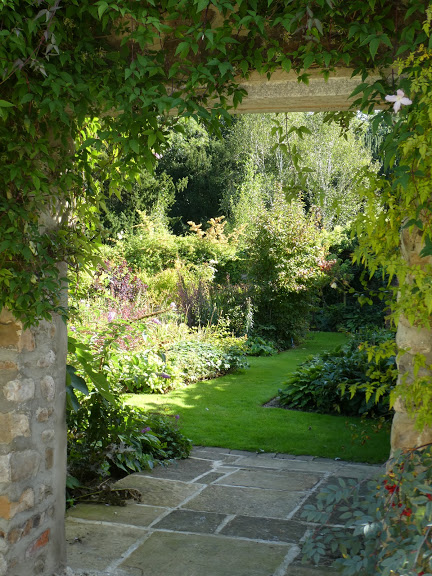
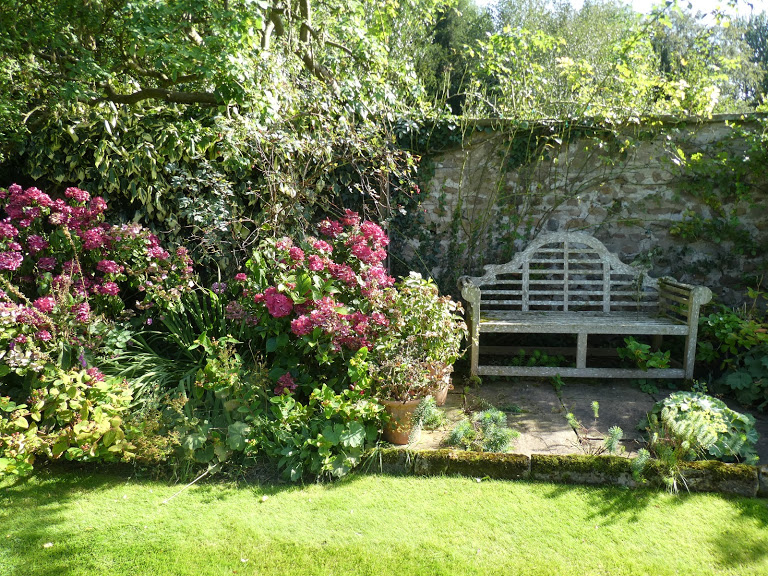
I’ve found one.  I’ll take at least one photo in the walled garden, every single day throughout the month, come rain, come shine.

Then on Thursday I read Amy’s blog post in which she celebrates the changing season in Yosemite with a glorious gallery of photos.  She’s joined Sue’s blogging challenge called, of course, Changing Seasons.  That seems to be a perfect peg to hang my photos on.

My shots today show the garden on a thoroughly Novemberish sort of Friday: raining, of course.  Later on this month, I’ll post again.  Whatever the weather, I hope it’ll show that even in November, beginning with the final vestiges of summer, and winter setting in towards the end of the month, that the walled garden is a fine place to be.


This is also an entry for Six Word Saturday.

Autumn lines

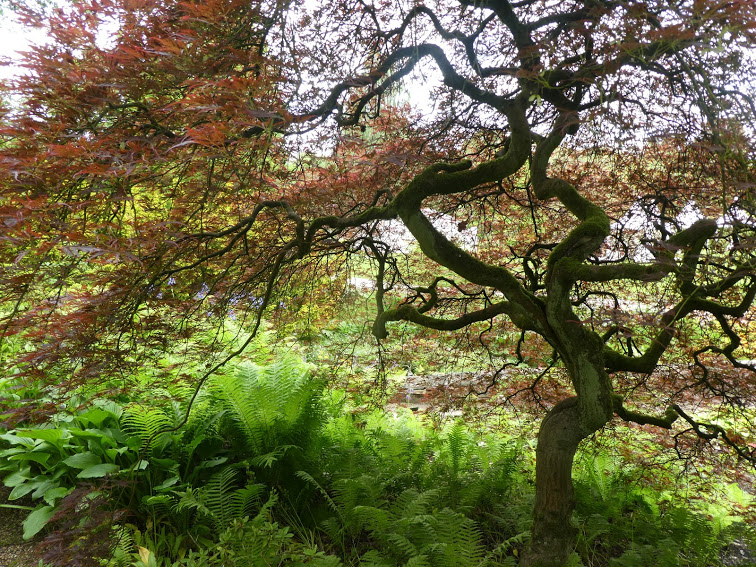
I’m looking for lines.  Most obviously, they call to mind buildings, railways, pavements, washing lines, power lines: man-made kinds of things.  But Mother Nature does lines too, as we observed yesterday at Harlow Carr Gardens in Harrogate.  Lines of still-summery oak leaves edged against the sky.  Veins, dark against the now-glowing colours of the leaves.  A  tree trunk  reflected into the water as one long sinuous line.

So Becky, here are some more lines for your October Challenge: Lines and Squares.

An Apple a Day….

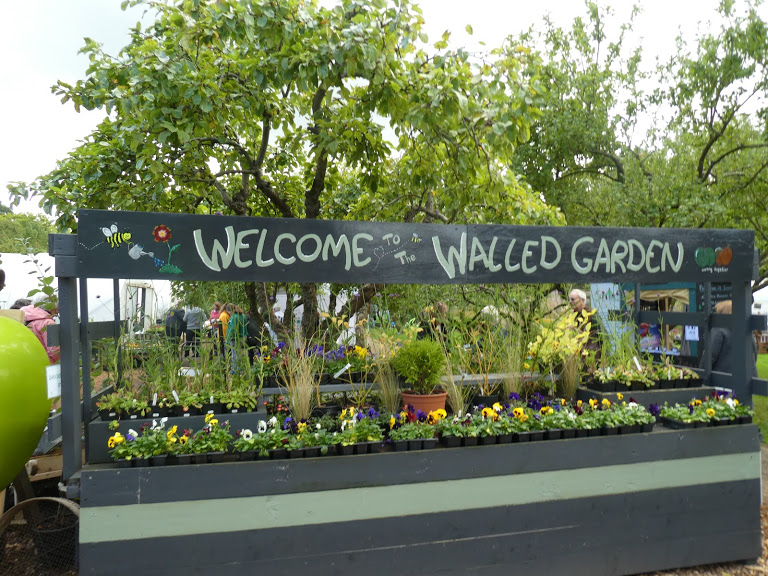
It was Apple Day at Ripon’s Walled Garden on Saturday.  We went along.

For me, it was a chance to revisit my childhood. Every Saturday, I’d go shopping with my mother to the Tachbrook Street Market.  My favourite stall was the greengrocer’s.  I’d try to add to my collection of prettily-decorated tissues used by the citrus fruit growers to wrap their produce.  I’d wonder at expensive exotica such as lychees or passion fruit.  But really, we’d come to buy.

And my mother taught me that apples aren’t simply apples.  There was something new to look forward to every month in autumn.  The eagerly anticipated first apple of all – the bright red Discovery, quickly followed by Beauty of Bath.  The Cox’s Orange Pippin of course, which we had to shake: it wasn’t ripe unless the pips rattled.  Blenheim Orange Laxton’s SupremeLaxton’s Superb. Worcester PearmainCharles RossJames Grieve. Egremont Russet, which I always associated with Bonfire Night, but which nowadays is already in the shops. Ribston PippinEllison’s Orange.  I learnt to love them all: some sharp and juicy; others more mellow, slightly less crisp; white-fleshed; creamy-fleshed; small; large; knobbly; oval; round – such variety.

Many of these have all but disappeared from the shops.  It’s all about large, white-fleshed, crisp apples.  Jazz, Pink Lady, Granny Smith – even Cox all seem much of a muchness. And half the time, when apple season is at its peak in England, they aren’t even from the UK.  Cookers these days are Bramley Seedlings.  Excellent of course, but where are the Lord Derbys, the Newton Wonders, the Grenadiers?

In places like Ripon’s Walled Garden, that’s where.  Look at my Rogue’s Gallery of all the varieties they still grow.
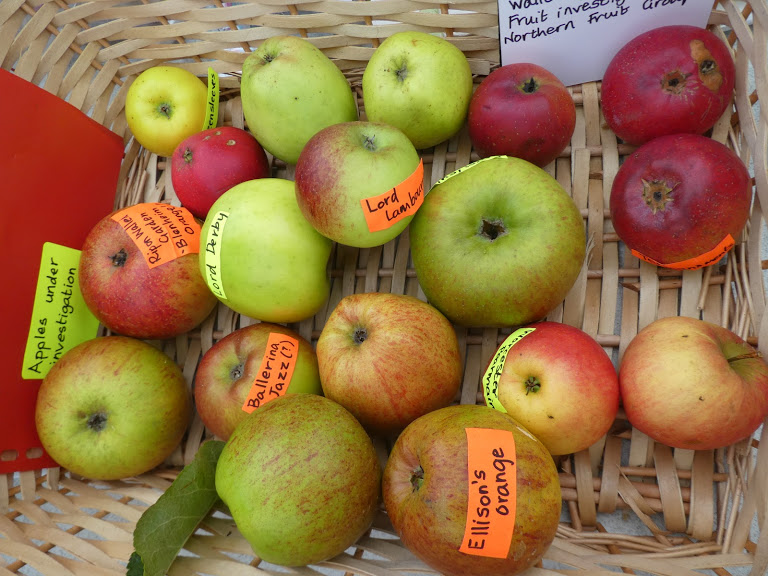
This display below piqued my interest.  I recently read Tracey Chevalier’s At the Edge of the Orchard, a partly-true story which begins in Ohio in Pioneering days.  A bit-part in the tale is played by an apple variety, Pitmaston Pineapple, that had been carefully brought over from Herefordshire. I’d never preciously heard of them, but … they’re still grown in Ripon.  I tasted one.  The so-called pineapple taste eluded me … but I was still glad to have eaten a little bit of history.
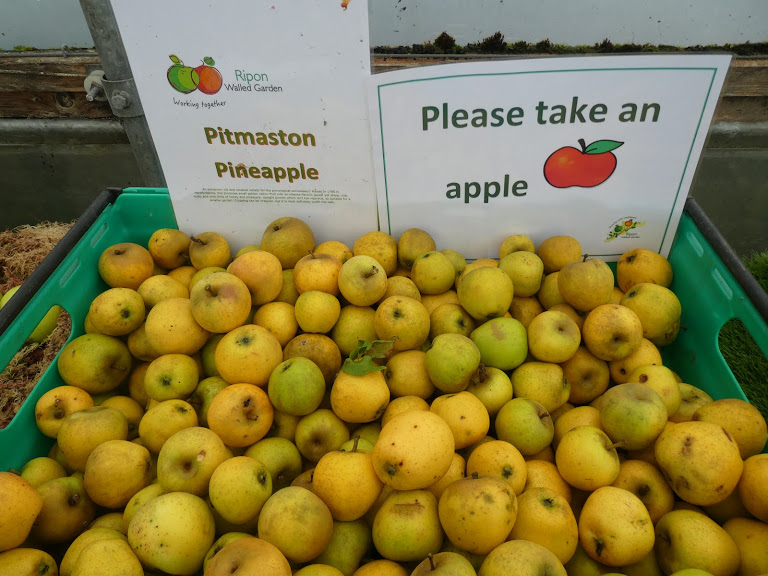
 

Ripon Walled Garden is Ripon’s best kept secret.  It’s a  a charity supporting young people and adults with learning difficulties to learn horticultural and catering skills in a sheltered environment.  Come here for a delectable tea-and-cake moment or a light meal, made using their fresh garden produce: sit at a table in the shade of the old apple trees in the well-tended and colourful garden. You’ll go home refreshed and happy.
Magical Meditative Moments

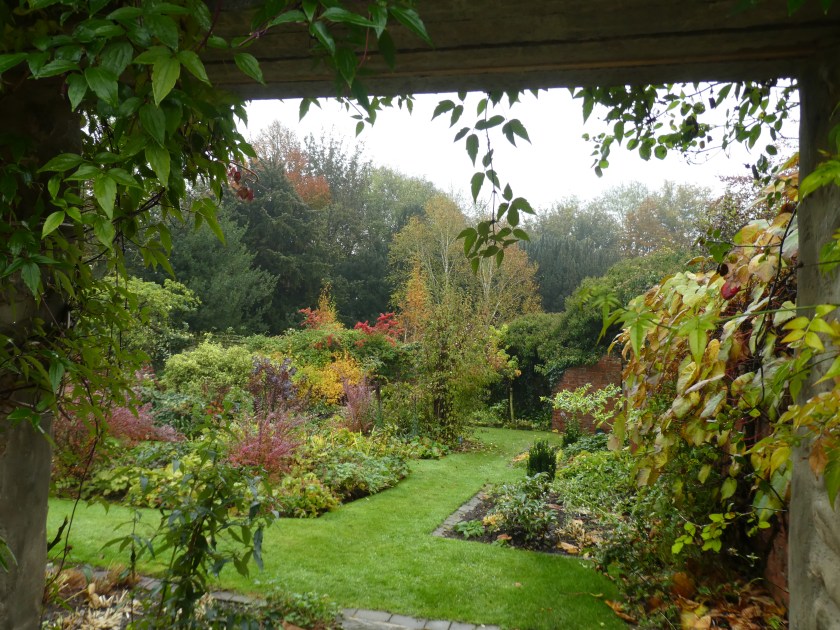
Come with me.  Come with me into the walled garden.  It doesn’t belong to us – it’s our landlord’s.  But it’s his joy, and his joy to share it with us.  We can see it – look – from our kitchen window.

So whenever the weather’s on our side, as it is today, that’s where we’ll be.

Where shall we sit?  Here? Right in the centre, where there’s space for friends as well?

Maybe here at the side.

Or tucked away at the very back.

Here there is utter peace: the flowers and shrubs, the main events changing now from high summer to autumn: the bees, fuzzing and humming in the background: the background birds – perhaps a skein of geese will fly squawking overhead on their way to our local nature reserve, then onward, onward to their winter residence.

It’s our magical place.  It’s where all thoughts of the dire state that our country is in are banished, and we live in the moment.


My entry for Lens-Artist Photo Challenge #63: Magical

The Secret Garden

We’ll still be able to get our weekly bunch of flowers come the Revolution (Brexit).  We shan’t need to worry about just-in-time-deliveries via the Dutch flower trade.  We’ll carry on just as we are, strolling to The Secret Garden, just outside Ripon, to choose a bunch of just-picked seasonal blooms.

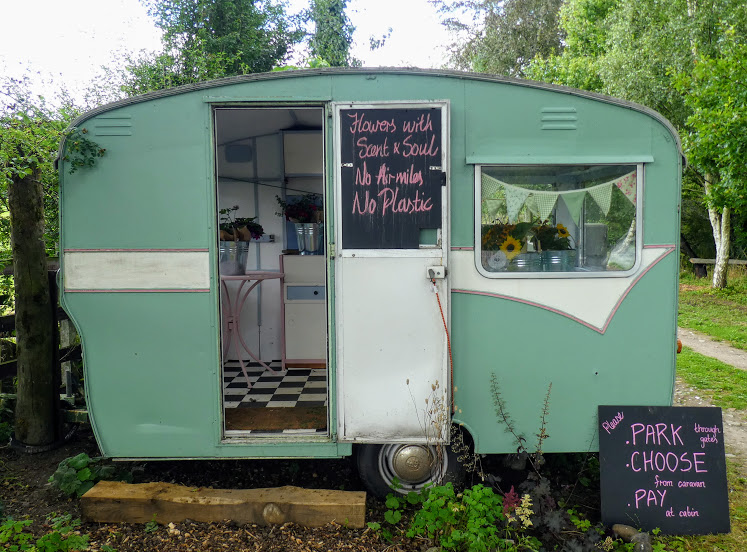
On Saturdays, as you arrive there, you’ll find a somewhat retro caravan – this one.

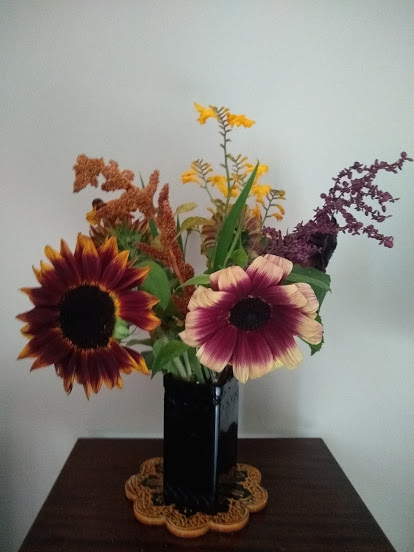
Look inside, and there are jugs and buckets crammed with bunches of flowers chosen and gathered by the Secret Garden’s owner, Victoria Ramshaw.  Every bunch includes a mix of varieties that complement and enhance each other.  Every bunch was picked the previous day and plunged into water overnight to be ready to arrange, tied with raffia and presented in a twist of brown paper. Pick one up… then another …. it’s hard to choose….

Now you’ll need to go and pay.  Wander up the garden to Victoria’s hut, and enjoy a chat with her.  Listen to the River Laver as it tumbles and jostles alongside.  Watch the butterflies and listen to the bees.  Spend time looking at the flowers.  Enjoy the moment, even though the garden’s now just past its best and a bit end-of-termish. Take your flowers home, and as you look at them, you’ll remember the pleasure you had choosing them, and taking a few moments out from the daily round.

It sure beats cramming a bunch of chrysanthemums into your trolley as you do your weekly shop.

This is an entry for  Fan of….. #9


Le Jardin Extraordinaire: a late summer treat

In this most dreadful of weeks for British politics, I think we all need a distraction. Just now, this is it. Back in France, one of the regular pleasures of our late summer was a visit to Le Jardin Extraordinaire, open for just a few days every year as the holiday period drew to an end. Let’s go there now, courtesy of a post I wrote in 2013 …..

September 4th, 2013

Le Jardin Extraordinaire, 2013 version

Le Jardin Extraordinaire is always comfortingly familiar, yet always surprising. If you’ve been once, you’ll go again, on this one weekend of the year, to enjoy strolling round this very special wild, yet bewitchingly tamed garden. The members and volunteers of Artchoum have been working for months to create this space, just for your pleasure.

You’ll want to explore the riverside walk and exclaim at the enchanted place they’ve created with stones, trees and flower petals. You’ll go on to wander through the leafy tunnels and arches tumbling with gourds. Then you’ll amble off into the woods, where more fantastical experiences await you.

People come from miles around to explore, smile and wonder at this very special place. But although you won’t be alone, there’s a relaxing feeling of space and of peace too. You’ll go away refreshed, invigorated and joyful.

Click on any image to view full size.

An entry for Jo’s Monday Walk. It’s an old walk Jo. But sometimes the old ones are the best. And I hadn’t ‘met’ you then.

The changing face of the gardener’s toolshed

One of the pleasures of the garden is that it changes – every single day. Walk there daily, and you hardly notice as one plant quietly ends its moment in the sun, while another comes into vigorous life.

Visiting a garden less often, you notice those changes. Back in June at Harlow Carr, we walked among banks and beds crowded like this…..

A month later, they were gone. Instead, we meandered among beds thronged with these……

But I escaped the sights of the garden for a few moments in the Victorian potting shed. Looks at how these tools have changed over the years! Once sparkling and sturdy, now they’re dulled by rust and years of use. And yet ….. if I set out to buy a set of garden tools today, I’d be choosing ones that look very much like these. You can’t beat a functional design that’s stood the test of time. My plant labels might not look half so elegant though, nor my pots so characterful.


My contribution to today’s Ragtag Challenge: change.

Click on any image to view full size.

Peace in the Garden

We’ve had Team London here this week: an engagingly exhausting three year old and his baby sister make great company, but we’ve had a tendency to disappear to our beds not long after they do, and be snoring sweetly by 10.00 o’clock at the latest.  However, in among exploring York, farmyard life, a canal, and the Wild Woods at the bottom of the garden, we had a day at Harlow Carr, the RHS gardens in Harrogate.

It provided William with plenty of Things to Do Before he’s 11 3/4:  roll down a hill; go barefoot; watch a bird and have fun with sticks for instance.  He and Zoë were very happy.

But for us, despite their bright enthusiasm for all there was to see and do, it was a green oasis, a haven of peace.  We were content, strolling along the quiet paths, or beside a stream, sharing our space with bees, butterfies and birds.

Click on any image to view full size.

My entry for today’s Ragtag Challenge: Peace

Pretty in Pink

Overlooking the lake at the Himalayan Gardens, Grewelthorpe.

I couldn’t be doing with pink when I was younger.  I thought it was an itsy-bitsy sort of colour, suitable to be worn by annoying little girls of the Violet Elizabeth Bott persuasion (You do know who I’m talking about here, don’t you?  Violet Elizabeth was the lisping, spoiled creature who tormented Richmal Crompton’s delightfully grubby-kneed and accident-prone Just William, as popular now as when he was first created in 1922).

I declined to dress my young daughters in pink, or to wear it myself.  I despised its sugar-sweet prettiness.

These days I’m rather less hardline.  I even have a raspberry pink shirt.

All the same, I think pink is happiest in the garden.  It’s here that flowers can celebrate the colour in all its variety, from the softest most delicate shades of baby pink through to vibrant, vivacious flamingo pink.  Pastel pink.  Shocking pink.  And pinks that use flower names: cherry blossom; rose; fuschia; carnation; cyclamen; dogwood.

Here’s a picture gallery of May time flowers taken over the last few years.  All of them are pink.  And I like every single one.

Many of these pictures were taken in our garden; in our village; at Newby Hall; and at the Himalayan Gardens at Grewelthorpe.  It’s my entry for today’s Ragtag Challenge: pink.

Click on any image to view full size.