Two of my three children and their families are down with Covid and their Christmas plans are in disarray. Our third child’s partner is newly arrived from Spain with some horrible lurgie that’s not Covid. The car is hors de combat in a public-transport-lite village. In some ways, this Christmas is more taxing than last. But on the bright side, each branch of the family is together with their own part of the clan, and on the way up from their illnesses: the car – unexpectedly -comes back today: and we’ve had so much practical and unasked for help from thoughtful friends. We’re all going to hunker down and jolly well enjoy ourselves anyway.
And I hope you can too, whether you’re having the Christmas you’d planned for or not. Thank you, all of you, for taking the time to read my posts, and for so often commenting. You are what makes blogging an enjoyable part of my daily round.
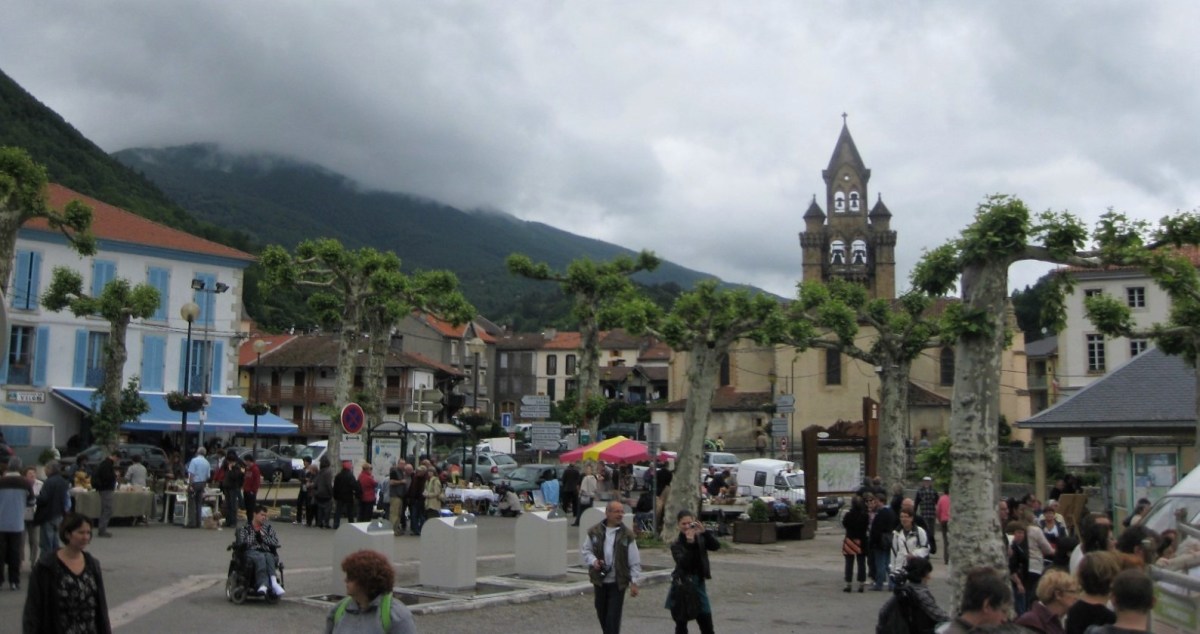
We’re asked to celebrate celebrating this week, in the Lens-Artists Challenge. I’ve decided not to focus on Christmas, but instead take us to a small town in France, in the Pyrenees – to Seix – in June, where every year, like so many other mountain settlements, they celebrate Transhumance. Here’s what I wrote in June 2011:
CELEBRATING TRANSHUMANCE IN THE HAUT-SALAT
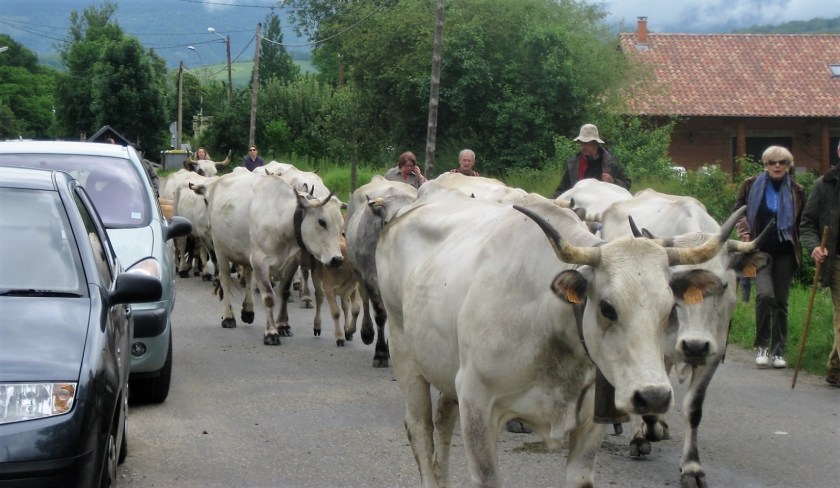
Transhumance. It’s that time of year where here in the Pyrénées, the cattle and sheep are moved from their winter quarters down on their lowland(ish) farms up to the lush summer pastures in the mountains. They’ll stay there till Autumn, and then be brought down again. And each time, it’s the excuse for a party.
On Saturday, we joined in, and went over to Seix to meet friends who live there. The Transhumance celebrations in Haut Salat last three days, but we made do with Saturday morning. We nearly arrived late – very late – because we found ourselves behind a herd of cattle making their steady way along the road. Overtaking’s not an option: the cows commandeered this route hundreds of years ago. But we managed to zip down a side road and make a detour. A whole hour later, after coffee with our friends, the herd reached the edge of Seix and passed their door….
…and finished their long walk into town. We went too, and arrived just as the last flocks of sheep were arriving, to be corralled like the cattle, at the edge of the town square. For a while, and probably much to their relief, they were no longer centre stage.
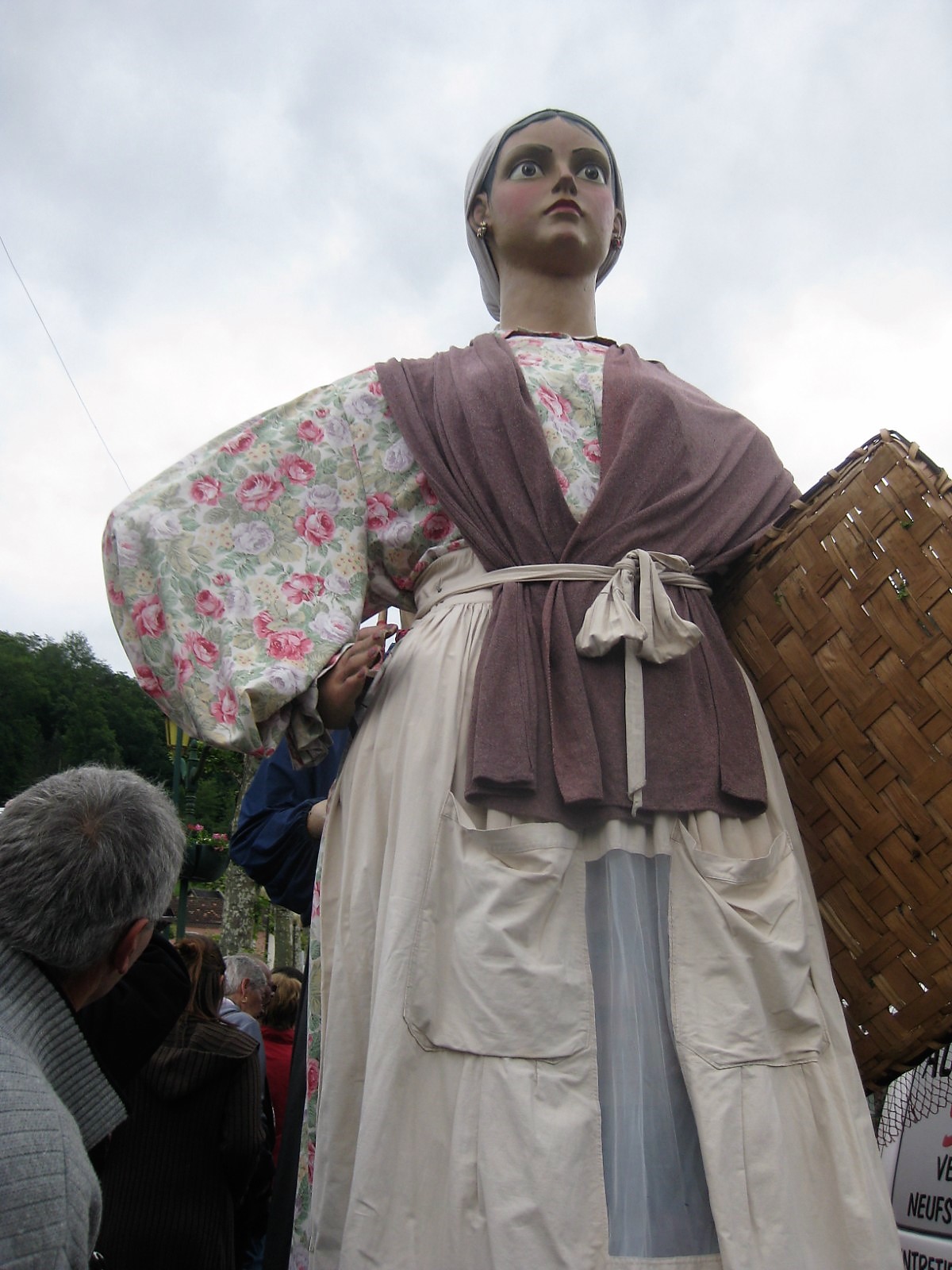
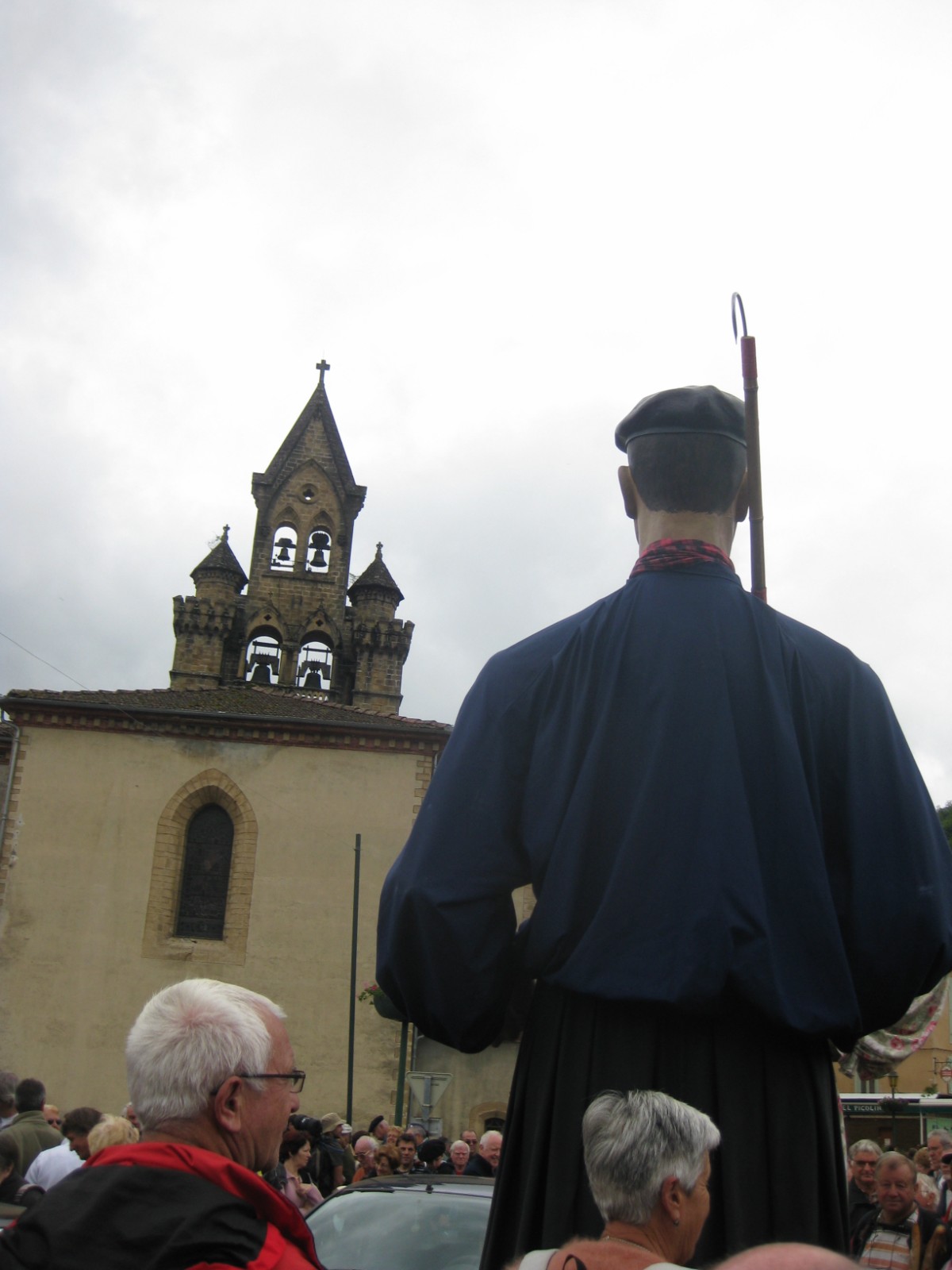
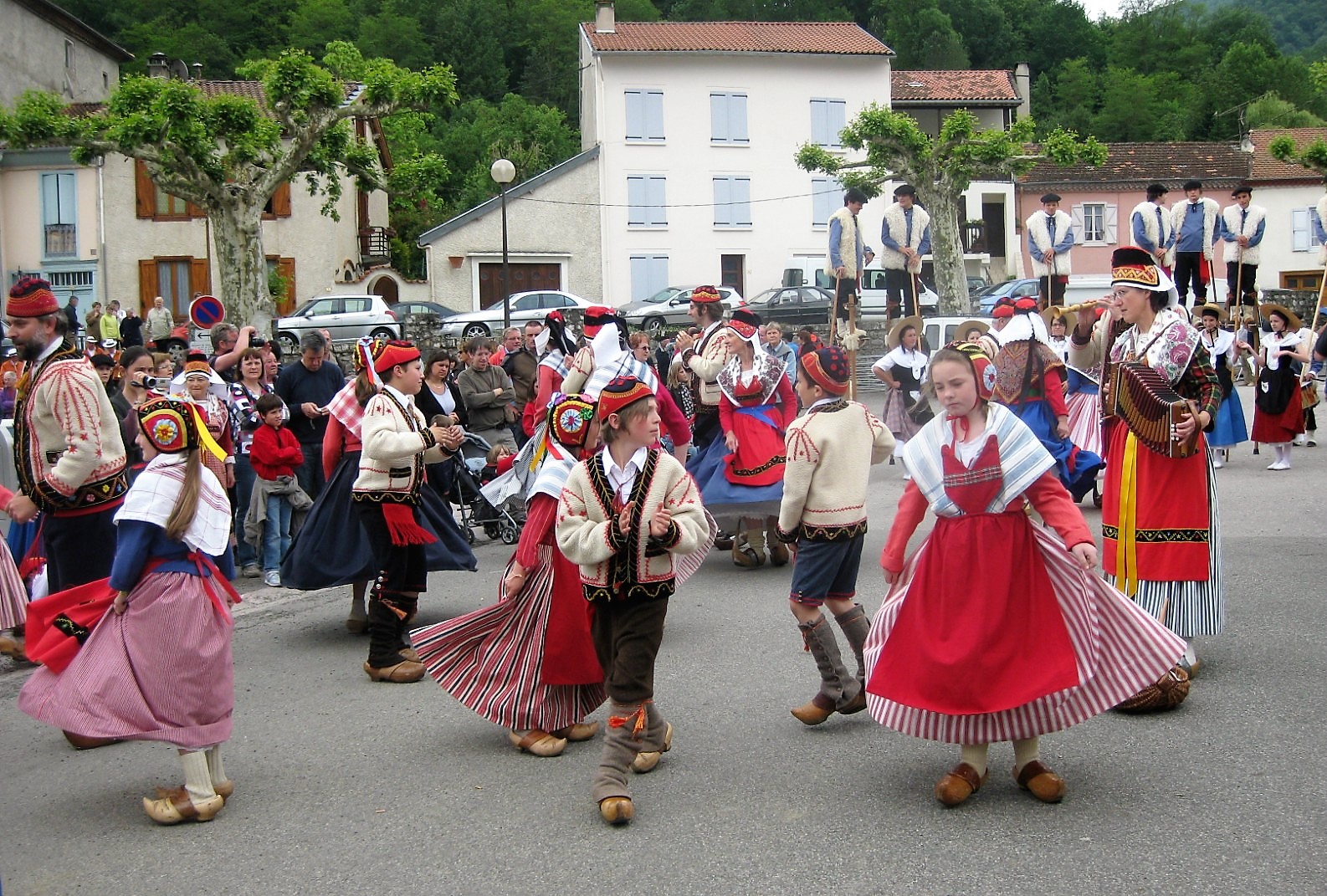
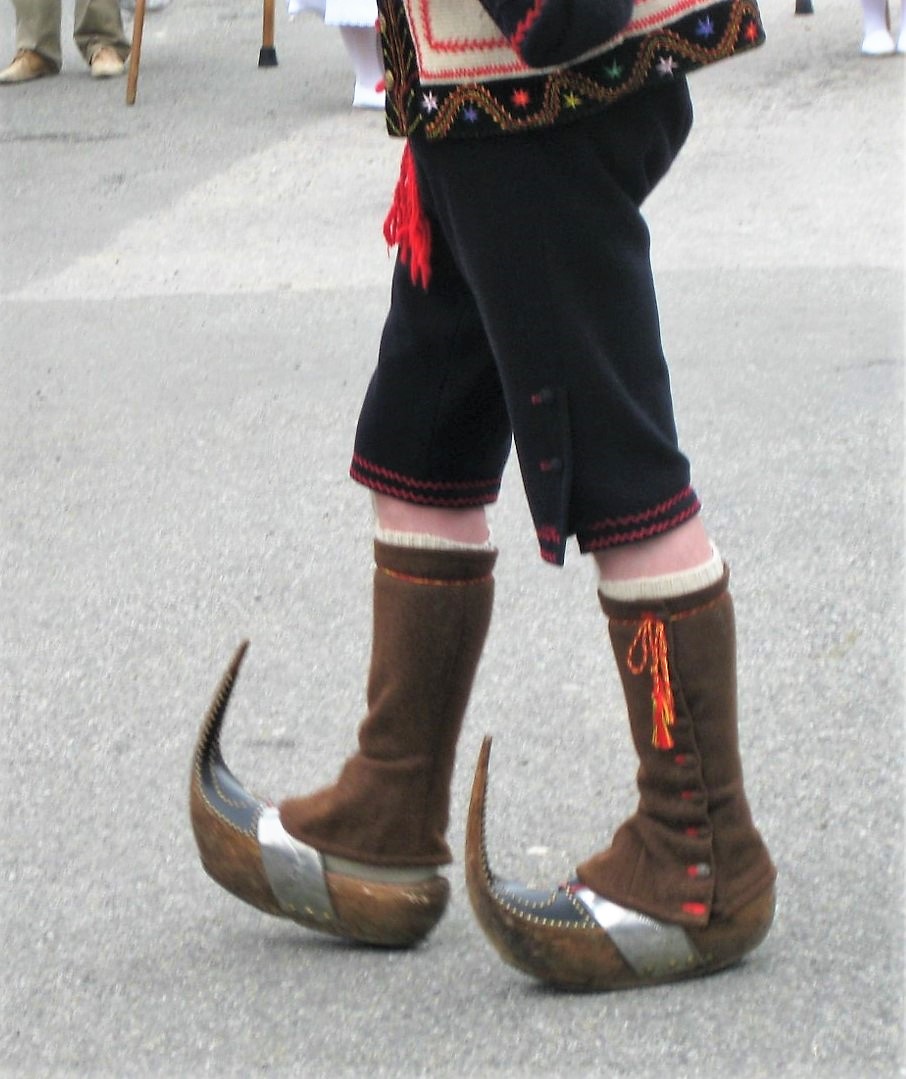
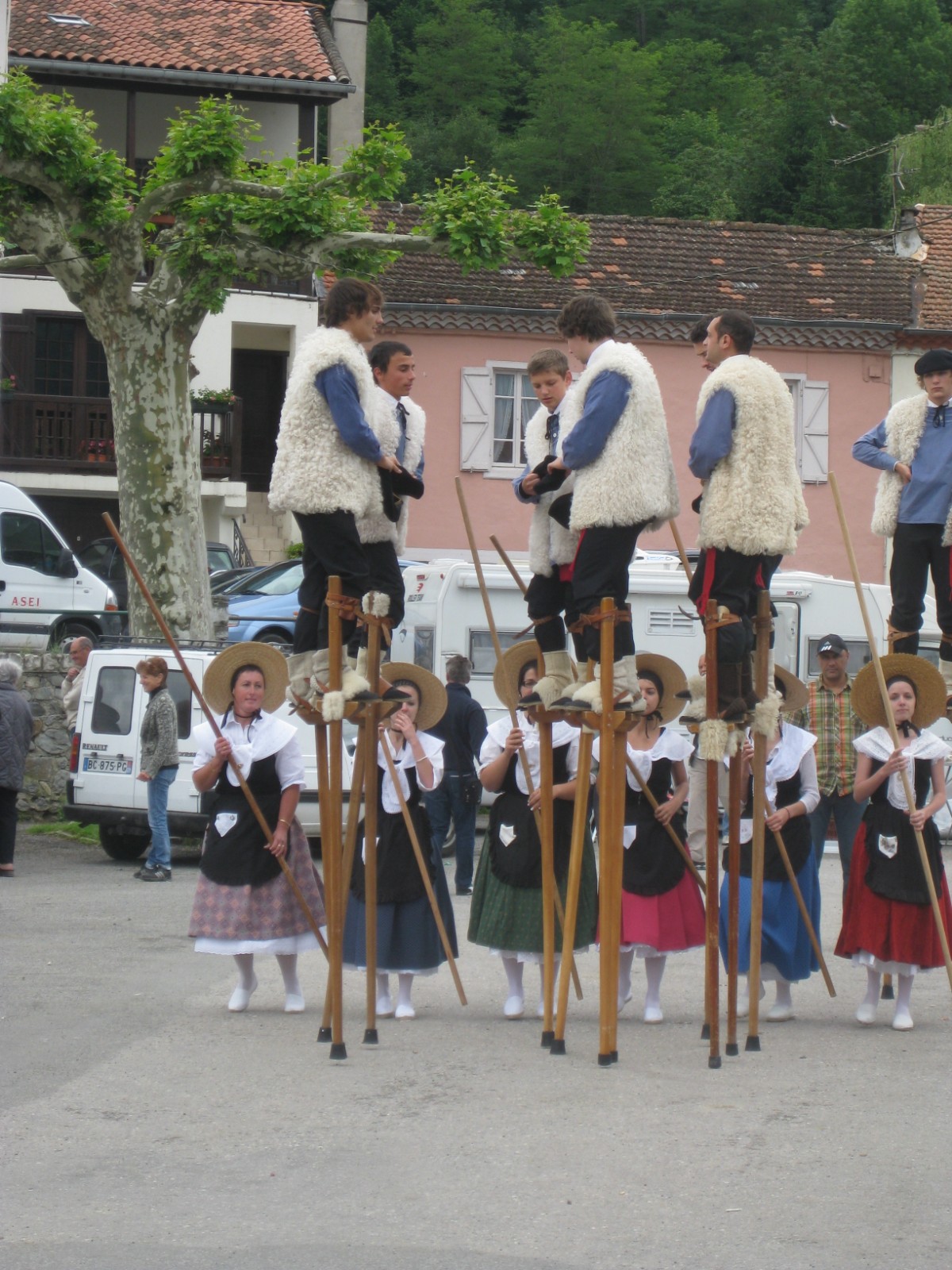
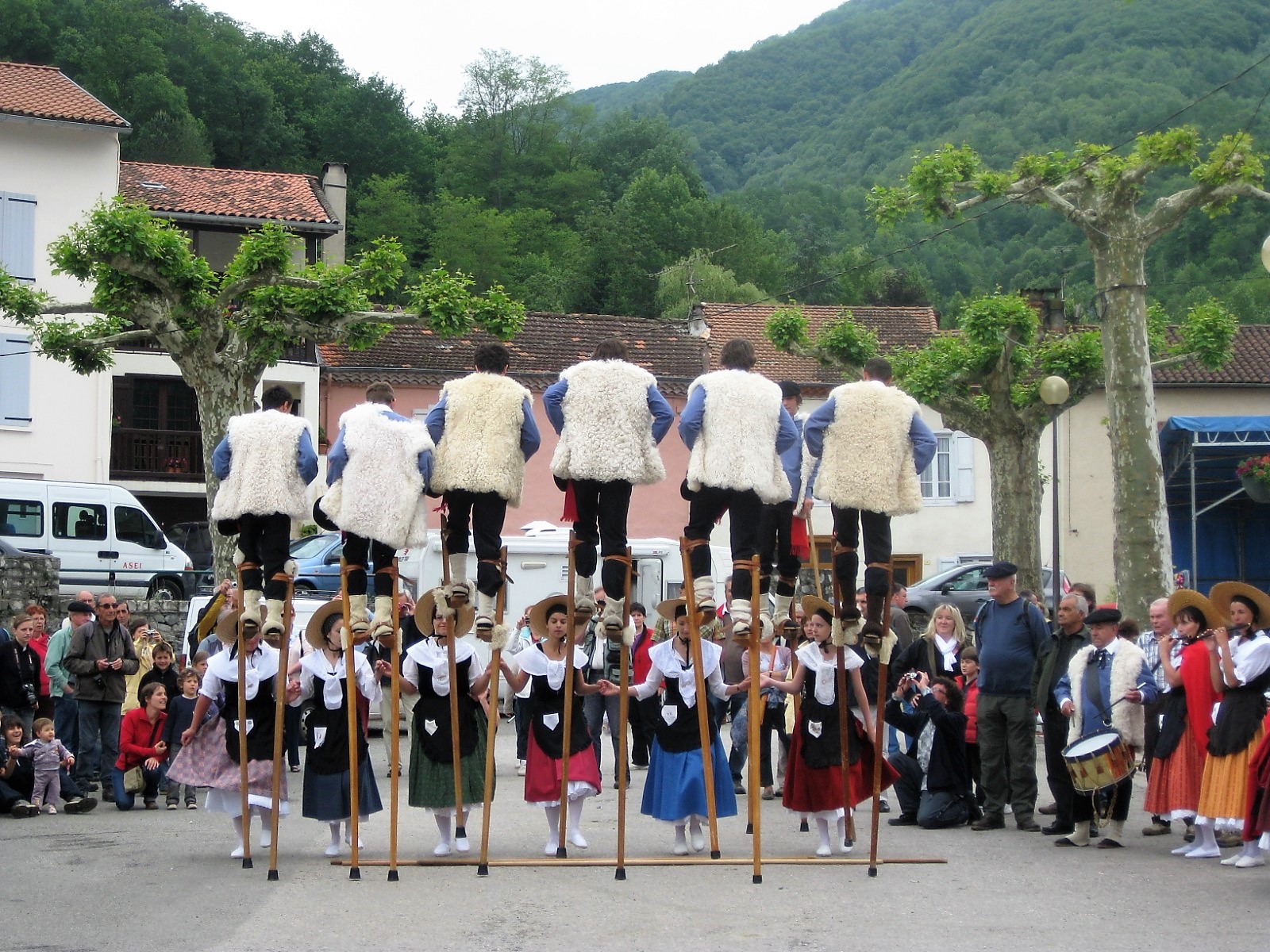
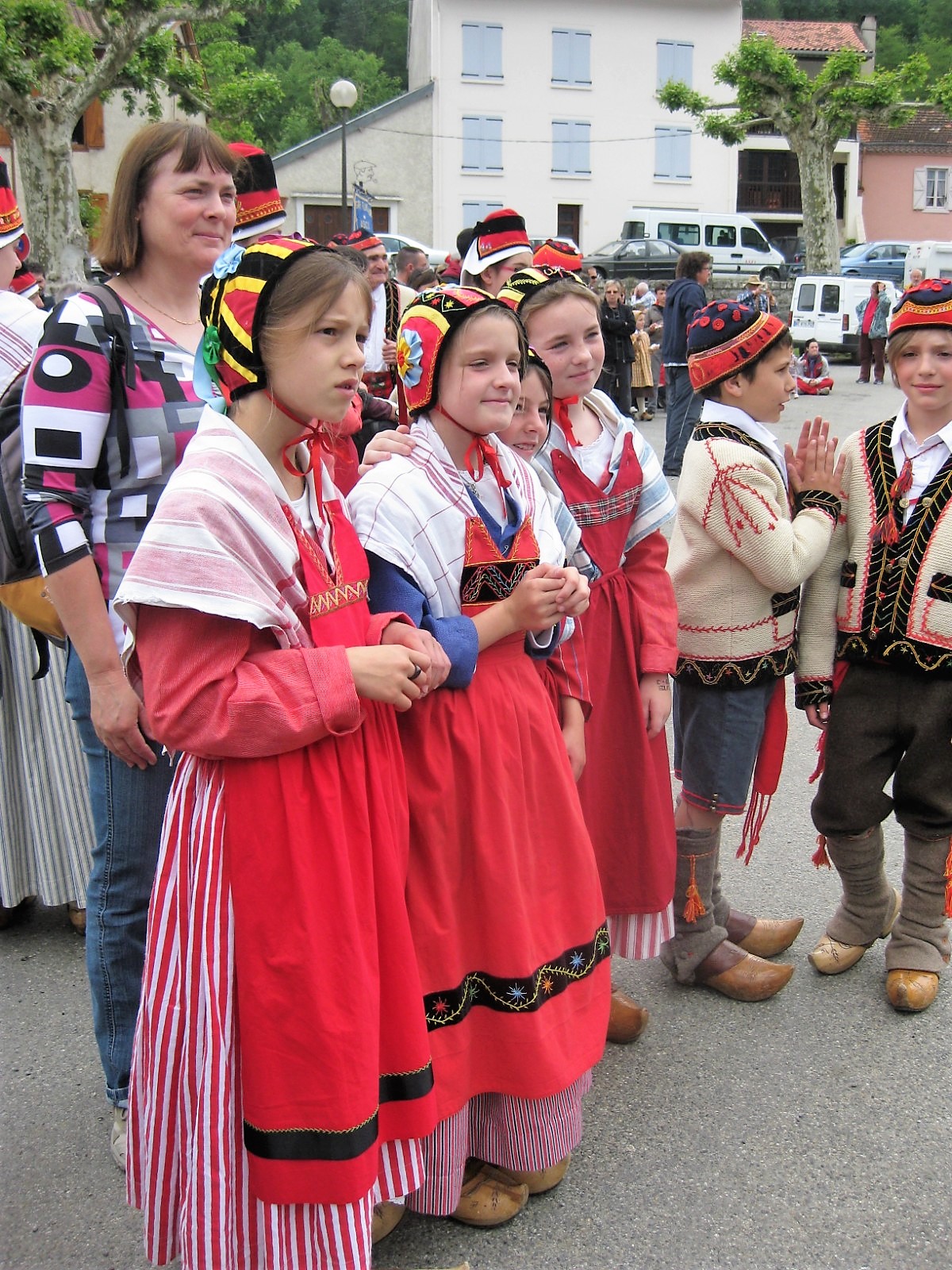
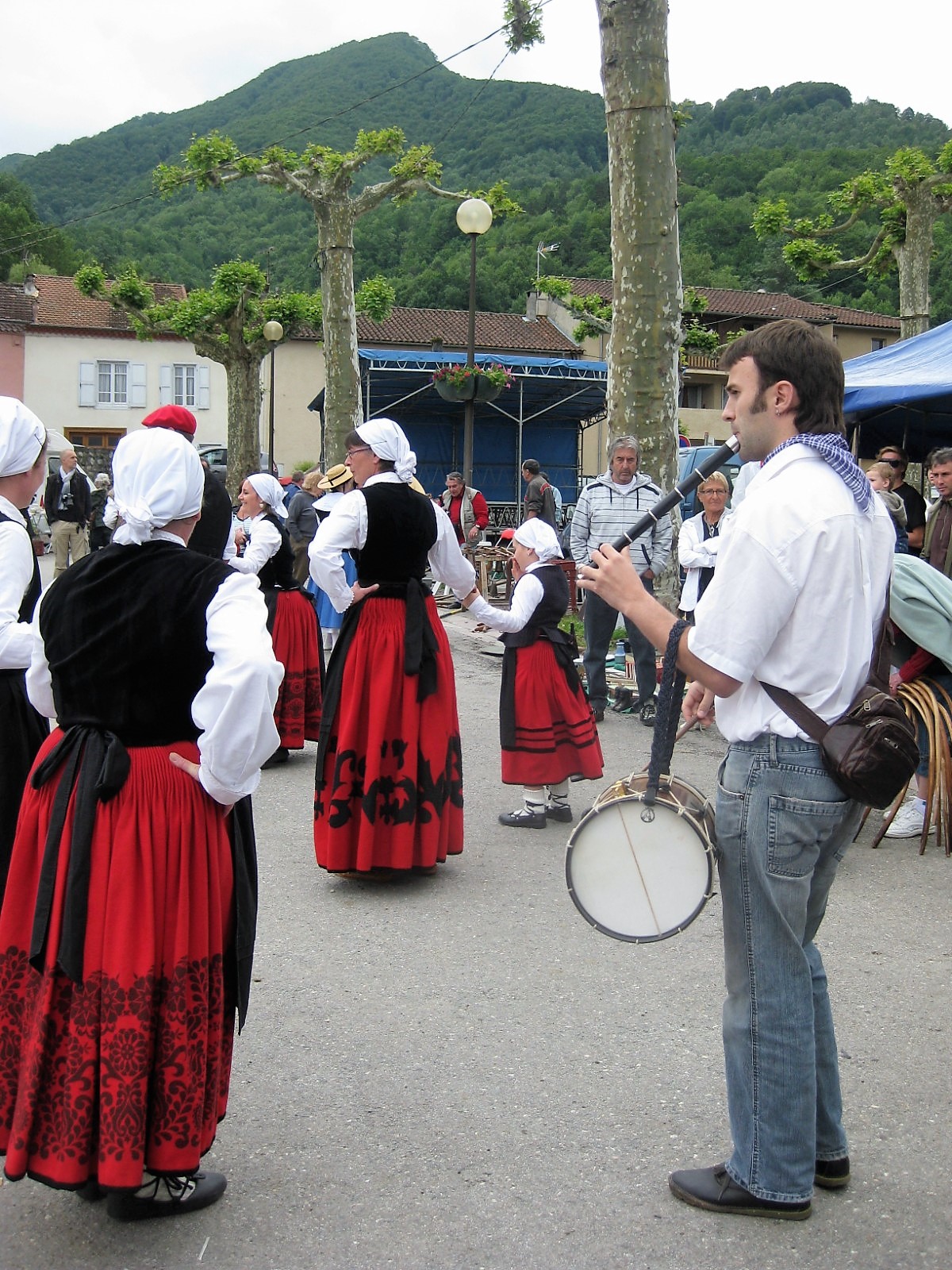
Instead it was jollity of the traditional kind. There were processions of large solemn plaster effigies, local bands. Dancers from Gascony, the Basque country, the Landes made sure we all had fun, and Malcolm and I even joined in some Basque dancing. Stars of the show for us were the shepherds from the Landes. Theirs is flat, marshy country, and they used to keep their eyes on their roving flocks by ranging round on stilts. But this was a day for dancing, and that’s just what they did, up high on those stilts. Have a look at the photos.
We went off for lunch at the end of the morning. But there was more celebrating, more meals to be shared, particularly by those farmers and country people who over the centuries have welcomed the fellowship of Transhumance as a break from the routines of an often lonely life.
Somehow, we forgot all about Masham Sheep Fair last weekend. We forgot about the dozens of different breeds of sheep on show; the sheep-shearing demonstrations; the sheep dog competitions; the children, some really quite young, demonstrating their knowledge and prowess as sheep-handlers. There’s no help for it. We’ll have to revisit this post from October 2014 instead. And by the way. Please don’t show yourself up. Pronounce Masham correctly. Mas-ham. Anyone who lets the side down and calls it Mash’em is immediately recognised as an outsider.
And let’s include this blast-from-the-past in Becky’s Past Squares, as well as including it in Fandango’s Flashback Friday, a celebration of past posts which deserve another outing.
A SHEEP IS A SHEEP IS A SHEEP …
… or not.
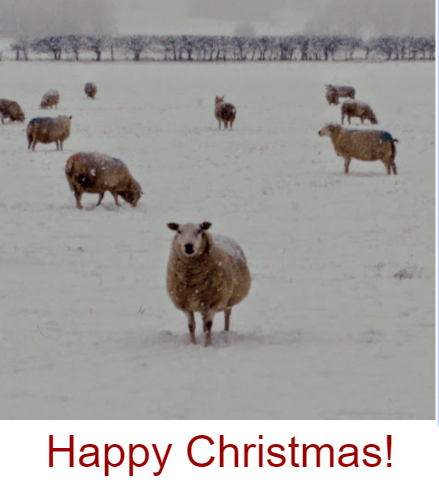
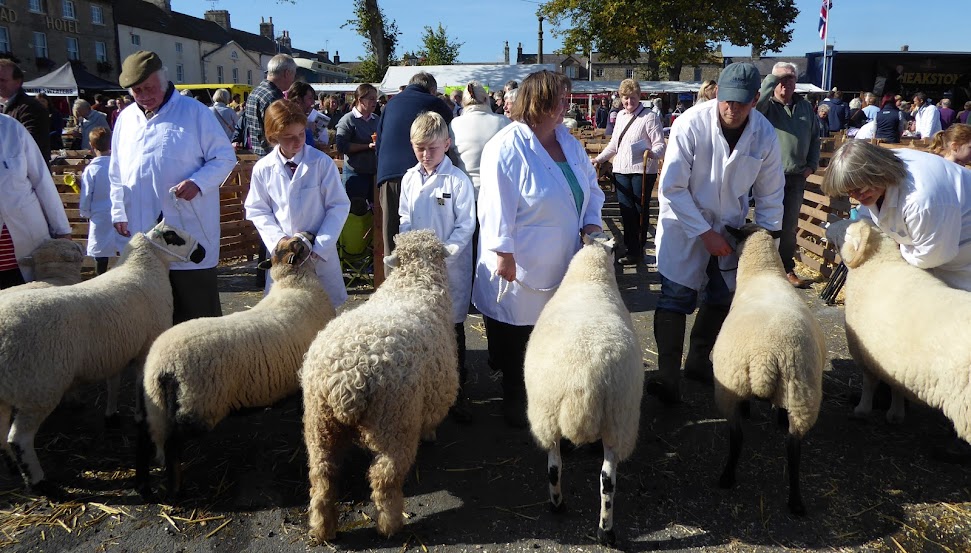
On Saturday we called in, far too briefly, at the annual Masham Sheep Fair. This is the place to go if you believe a sheep looks just like this.
Saturday was the day a whole lot of sheep judging was going on in the market square. Here are a few of the not-at-all identical candidates. And yet they are only a few of the many breeds in England, and in the world. There are 32 distinct breeds commonly seen in different parts of the UK, and many more half-breeds. I was going to identify the ones I’m showing you, but have decided that with one or two exceptions (I know a Swaledale, a Blue-faced Leicester or a Jacobs when I see one), I’d get them wrong. So this is simply a Beauty Pageant for Masham and District sheep.
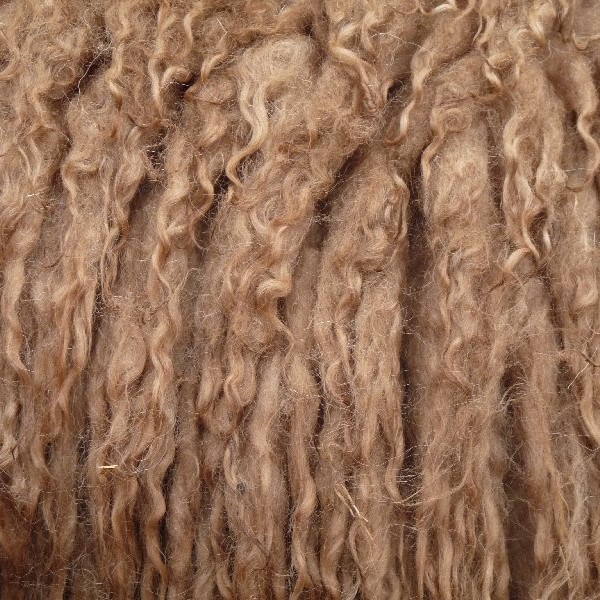
And if you thought wool was just wool, these pictures may be even more surprising. Who knew that sheep are not simply…. just sheep?
We’re less than a week into the month of May. Let’s mark the arrival of this lovely month by celebrating Beltane.
BELTANE AT THE ‘STONEHENGE OF THE NORTH’
May 1st 2016
Not much further than a mile from us as the crow flies, lies Thornborough Henge. It’s a prehistoric monument consisting of three giant circular earthworks. Constructed 5000 years ago by the first Neolithic (New Stone Age) farmers, it was probably an enclosure for their ritual gatherings. The Henge became an important centre in Britain for pilgrimage and trade, although its exact purpose still remains a mystery.
It sends shivers down my spine to think that this ancient piece of our history lies just a short walk from our home.
An ariel view of Thornborough Henges (photo courtesy of Historic England)
We can visit it any time we choose, simply to tramp round and try to imagine it in its heyday, and we’ll have the place to ourselves. Not on May Day though. Today is the Gaelic feast of Beltane, half way between the spring and summer solstices. It’s a day to mark the beginning of summer. Sadly, today is very cold, rather windy and a bit wet.
Back in pre-historic times, rituals were held on this day to protect the cattle, crops and people, and to encourage growth. Bonfires, deemed to have protective powers, were lit. For many centuries these practices died out. But nowadays, at sites like Thornborough, pagans, Wiccans, New-Agers and lovers of history and tradition gather once more to celebrate the renewal of life and growth.
Today I was there too. For an hour at least, for the opening ceremony. Brrr! It was cold.
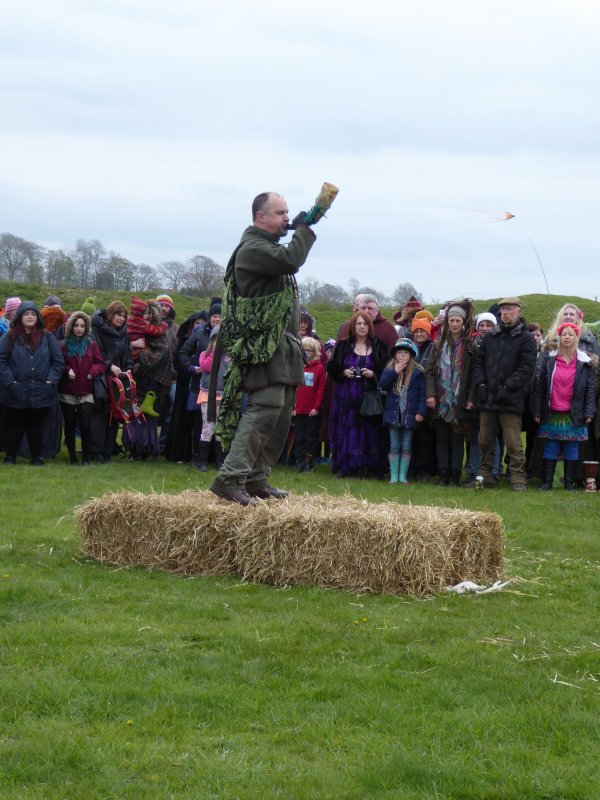
The Green Man and his horn.
I was strangely moved. The Green Man, representing rebirth and the cycle of growth was our Master of Ceremonies. He invited us all to join hands, whether friends or strangers, in fellowship, and shout out three times the invocation to new life. We hailed Brigantia, Celtic goddess of Northern England. Then at his bidding and as he sounded his horn, we turned to the east and welcomed the summer rains. We turned south to welcome the sun (who was coyly absent today), to the west to welcome summer winds, and to the north where the wolves apparently are.
Welcoming the West Wind.
Then a man, naked from the waist upwards save for his covering of woad-coloured paint, leapt among us bearing the flaming torches which would offer us all protection over the coming months.
Protective flames.
And that was the ceremony over. Dancers entertained us. They seemed to me to owe much to flamenco and to middle-eastern belly dancing traditions, but we all cheered them on with enthusiasm.
I shan’t be there this year for the closing ceremony. I’m still thawing out. But weather permitting, I’ll certainly go along next year. Will you come along too?
I’m sorry to say I’ve not been since. I would have gone this year, but … cancelled … Covid.
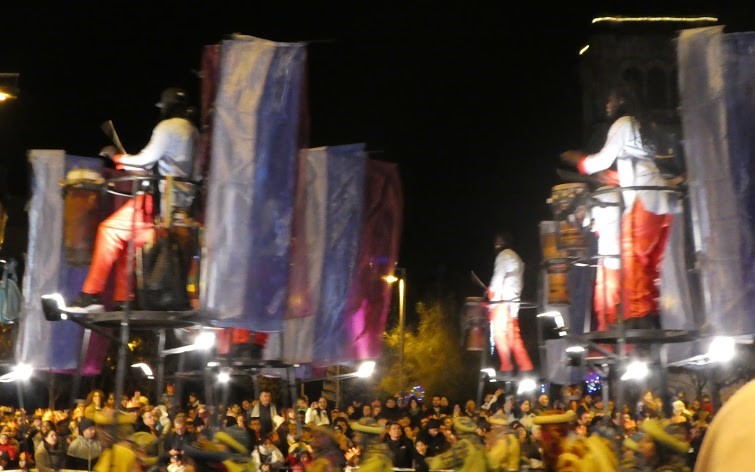
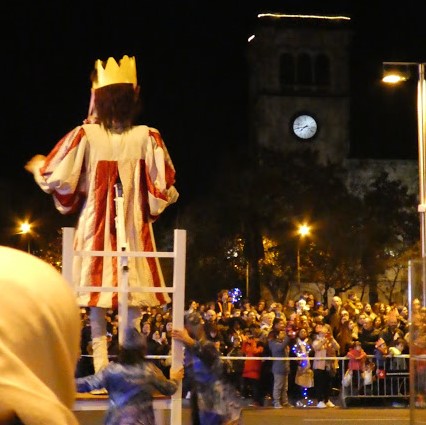
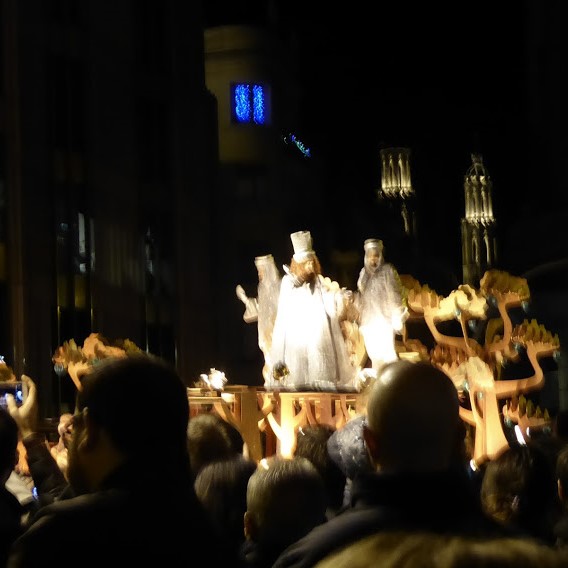
It’s 5th January. Tonight, one of the three kings (Balthazar? Melchior? Caspar? You can choose) will steal into your house and deliver you presents, as once they did to the infant Jesus. That’s if you live in the Spanish speaking world of course. Before that though, they – or their stand-ins – parade through the streets of every city and town they can find. There’s an eruption of lights, gaiety, colour, as the three kings and a cast of musicians, dancers, and hangers on of every kind process slowly through the streets. Joy and delight is uppermost, whether you attend the no-expense spared slickly presented civic offering, as we did in Barcelona in 2018 and 2019, or enjoy a more low-key event put together by your local community as we did in 2020.
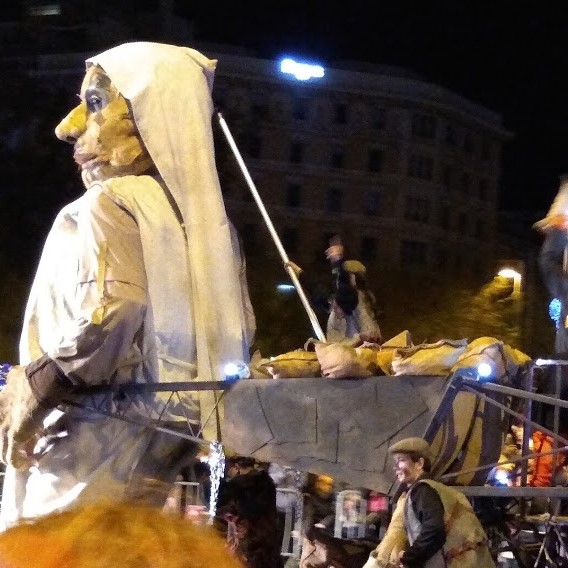
These are not the best photos you’ll ever see of the Cavalcadas, But they might give you a small taste of this upbeat, family focused event. Which sadly, this year, will not be taking place. Of course.
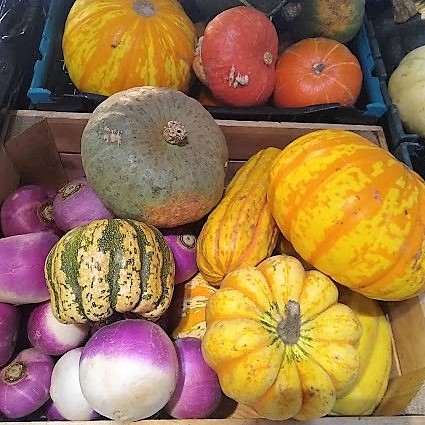
It’s Hallowe’en today. Time to carve those pumpkins into frightening faces, and then tomorrow … throw them away. What a pity. Pumpkins come in all shapes and sizes, they’re good to eat, and it’s a shame you rarely see anything but the good old bog-standard Jack o’ Lantern here. They can be large, small, yellow, red, orange, green, even bluish or black, and on mainland Europe they’re much more appreciated.
Enjoy the pumpkins on display, many of them from Le Jardin Extraordinaire in Lieurac , near where we lived in France. And then have a go at the comforting recipe I offer here because you don’t really want to scare the neighbours with an evil orange face peering out of your front window do you?
An arbour of hanging gourds at Le Jardin Extraordinaire
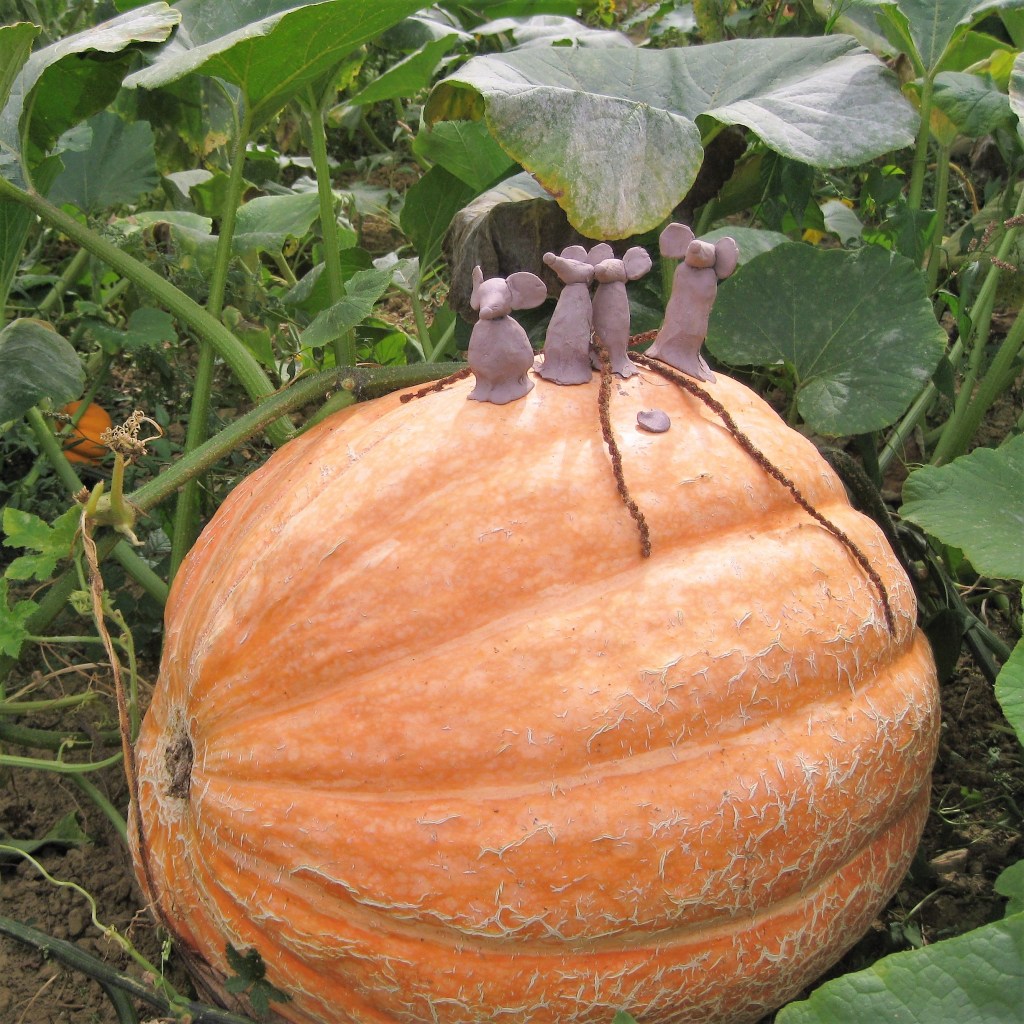
A mouse family atop a pumpkin at Le Jardin Extraordinaire
Scoring patterns on a still-growing pumpkin delivers results like this as it matures. Le Jardin Extraordinaire again.
#Kinda Square.Today is the final square in Becky’s month long squares project. Thank you Becky, and thank you fellow squarers. It’s been fun. I’ve met kindness, had my interest kindled and met – virtually of course – many bloggers-of-a-kind.
I decline to have anything to do with Christmas before December 1st at the earliest. I close my eyes to Christmas decorations in the streets, and scuttle out of any shops belting out Christmas musak. A three month long celebration ain’t our kind of Christmas at all.
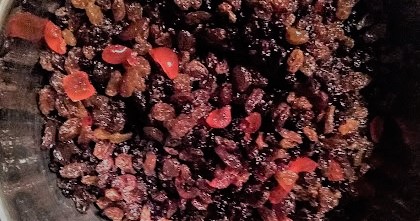
There are just two exceptions. Christmas pudding has to be made on Stir Up Sunday. And since I was a small girl, October half term has been the time to make the Christmas cake. That way, it’s got time to sit and mature, have all those rich flavours get acquainted, and wait for us to feed it with frequent tablespoonsful of hooch. We made the cakes last Saturday – one for each family in the family – and today I’ve got them out again to pour a little whisky on the already sozzled cakes.
That’s the beginning of our kind of Christmas.
#
#Kinda SquareBe sure to read Becky’s post. She has some fine suggestions to make today a better day for you, and for others.
It’s that time of the month when I re-visit a blog post written during our years in France. I’ve chosen this one because of the perspective it offers on rural life there, a hundred or more years ago. Because France – certainly where we were in the foothills of the Pyrenees – had no Industrial Revolution, country life continued more or less unchanged for many until villages devastatingly lost their menfolk during the First World War.
Country life is country life, and some of these occupations would seem familiar to our own grandparents. Others less so. Have a look and see.
Le Cami des Encantats
July 26th 2012
Today we visited Benac, one of those small and almost picture-postcard-pretty villages outside Foix. I think it’s unlikely that too many horny-handed sons and daughters of toil live there these days. Too many freshly painted facades and cheery boxes of geraniums at the windows. Too many sleek and highly-polished cars.
But once upon a time it was a busy working community. For the last few years, every summer the villagers here and in nearby hamlets arrange carefully constructed and dressed figures into appropriate corners of both village and countryside. These figures celebrate the way of life that persisted here – and throughout France – for centuries, and only died out some time after the First World War. They call the route you follow to hunt out all these scenes Le Cami des Encantats: Occitan for something like ‘the Enchanted Path’. Come with me and take a look. Click on any image for a closer look and a caption.
The priest arrives at church.
Un poilu – a WW1 soldier, the French answer to a Tommy.
Then as now, it’s good to sit and watch the world go by.
Here’s the Garde Champêtre, paid by local farmers to keep local crops and stock safely in one place.
Pudding basin haircuts weren’t just for English children.
A colporteur: a hawker, purveyor of books and other good things.
The beekeeper.
The mobile distillery or alambic came round every autumn to distill some of the fruit crops into potent alcohol. It still happens.
An important craftsman: the nailmaker.
This man’s work is indoors. He’s at the forge.
The miller.
Log sawing: always important in this wooded region, for building, fuel, joinery ….
Haymaking.
A woman at the village lavoir, or clothes washing place. Sinks are fed from a natural water source and sheltered by a roof. One of the centres of village life.
The French love to hunt. Then it was a necessity rather than a hobby.
The postman.
Le pelharot: the rag and bone man.
As in England, the pig played an important part in keeping the household nourished through the winter months.
L’estamarron: the tinker dips worn cutlery to bring it back to life
The church bellringer.
If you work in the fields all day you need water. This young woman brings it to you.
This shepherd will spend the whole summer at high mountain pasture with his sheep.
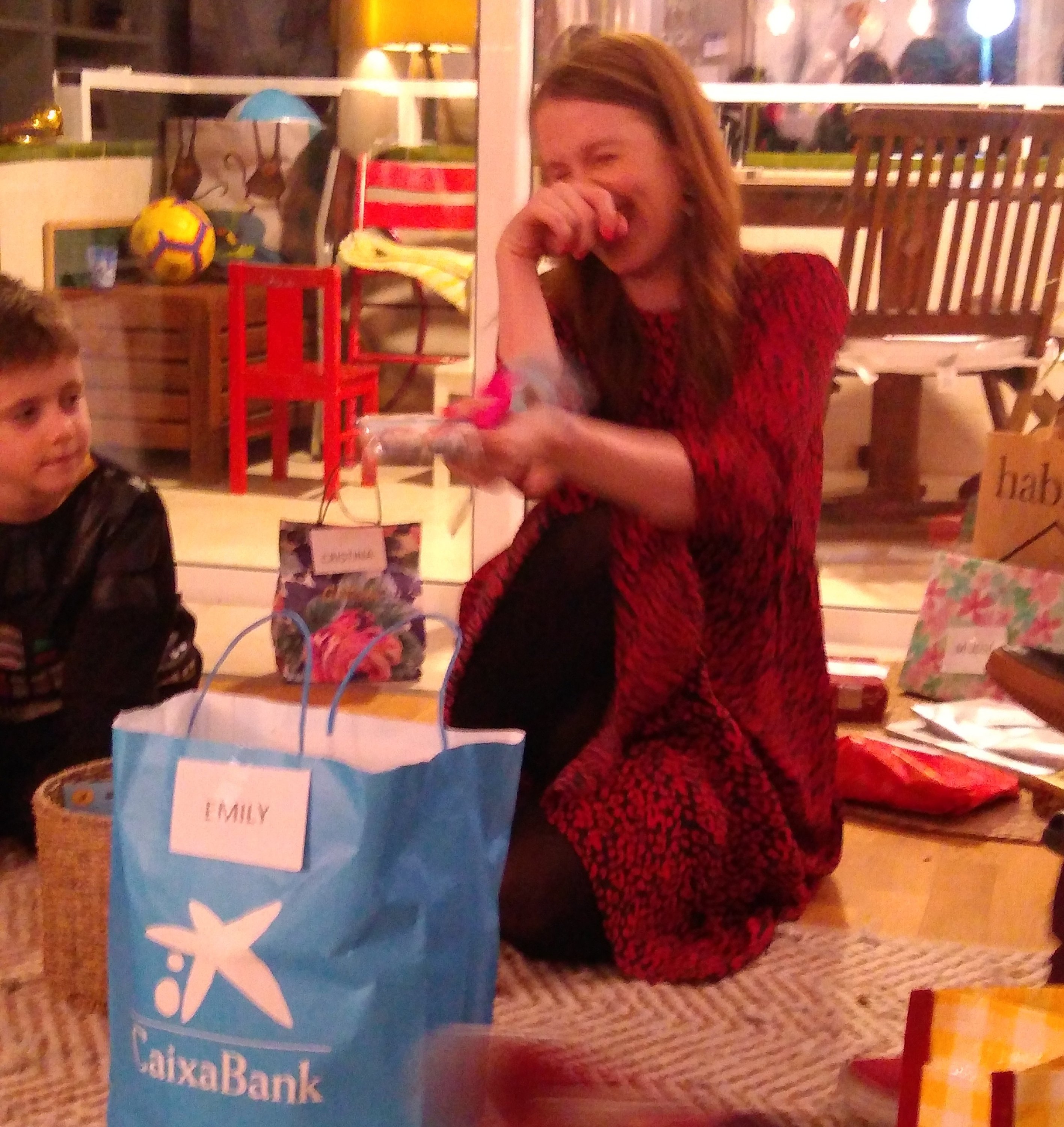
Finally, those kings came. A day of bright delight shared with Miquel’s wider family: feasting, talking, laughing, sharing, and exchanging presents as ‘invisible friends’ – that’s Spanish for ‘secret Santa’.
This photo of my daughter’s reaction to her gift may not be filled with yellow light. But it expresses completely the brightness of heart of a day when Malcolm and I, for all our language limitations, once again felt accepted into the heart of this joyous Spanish family.
Tomorrow, the Three Kings who once visited the infant Jesus will be busy delivering gifts to children all over Spain.
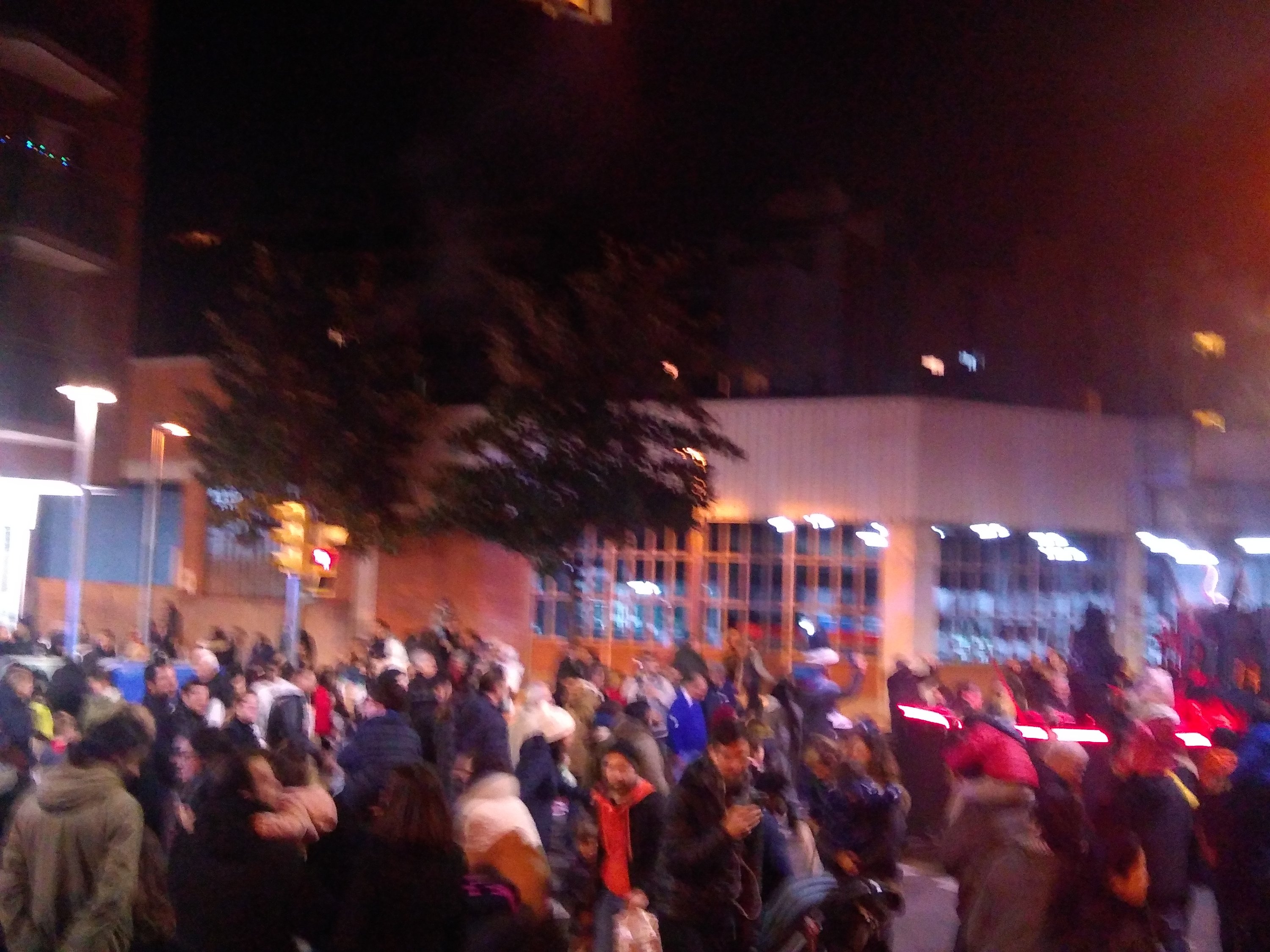
Tonight, they are in exhuberant and joyful processions in just about every community in the land. We’ve been to Barcelona’s spectacularly impressive city offering for several years. But those crowds …
Awaitingthelocalprocession
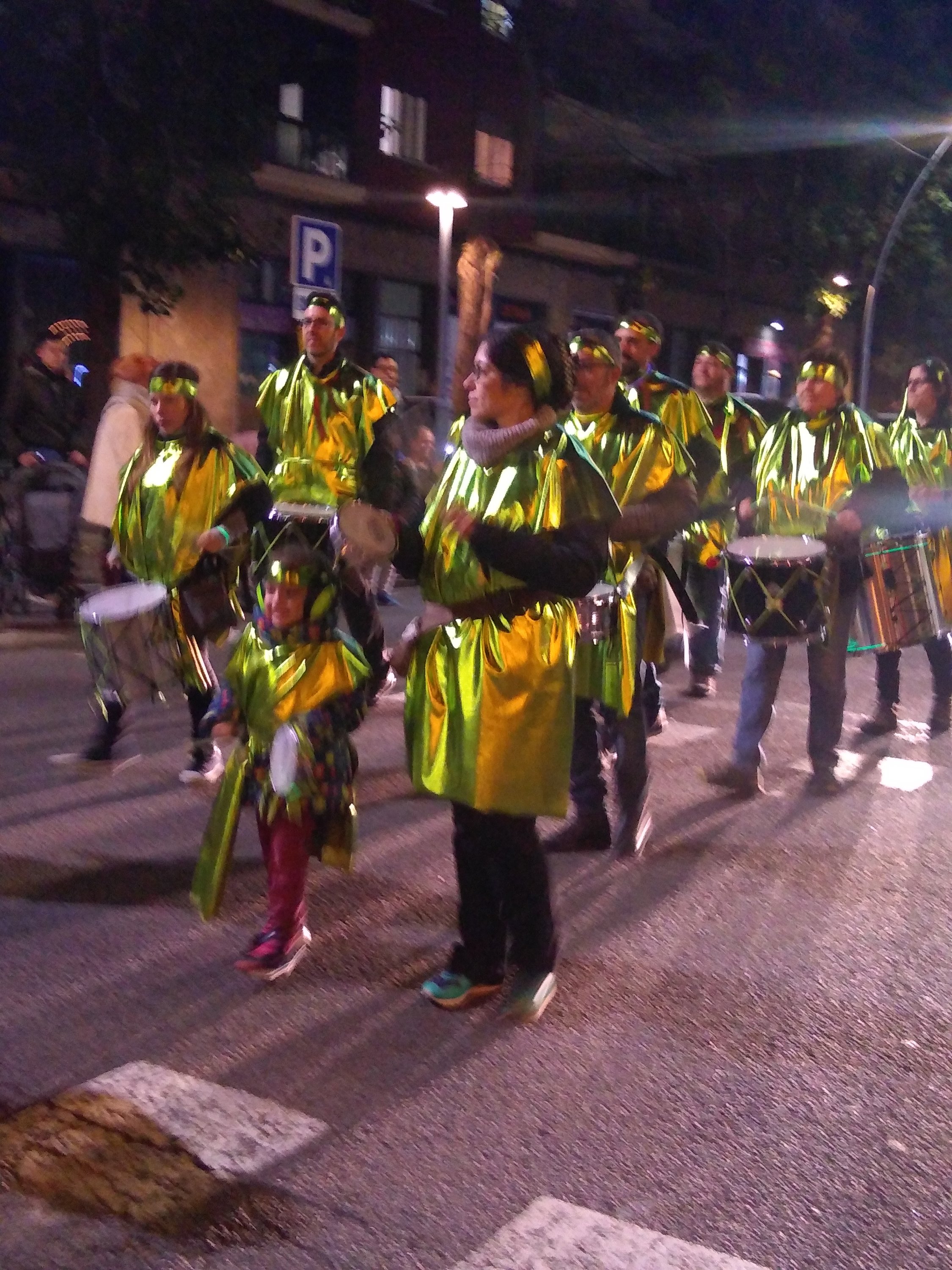
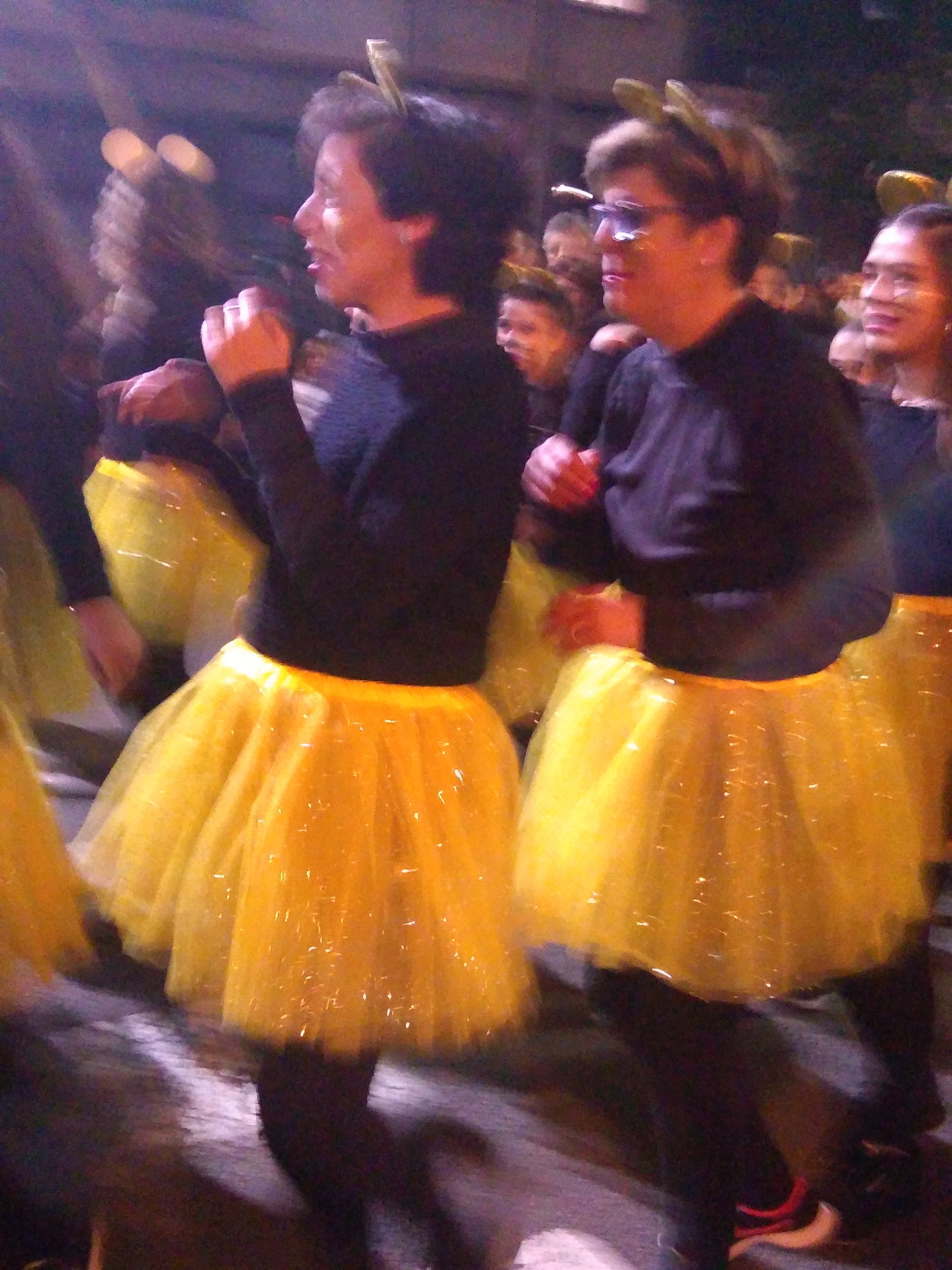
This year, we decided Small is Beautiful. We went to the small community event covering just a handful of streets round Emily and Miquel’s flat. It was cosy, homespun, atmospheric and fun.
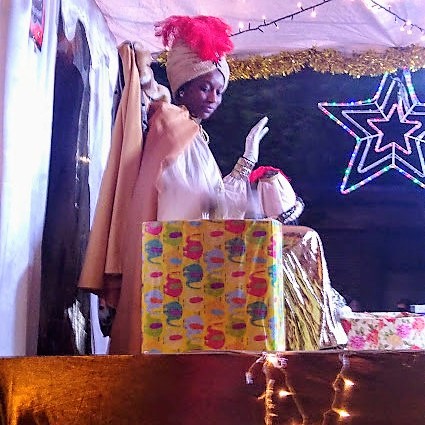
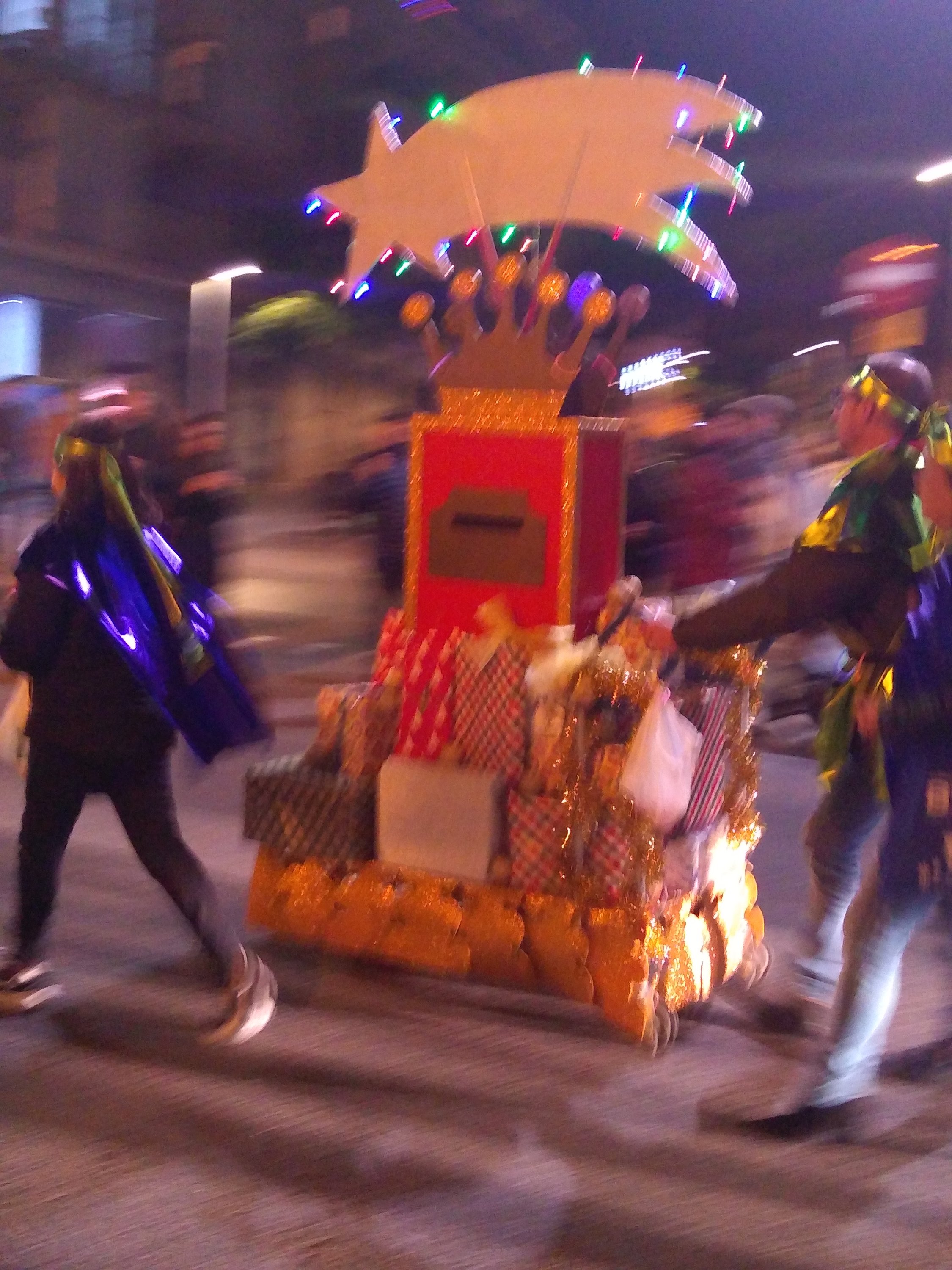
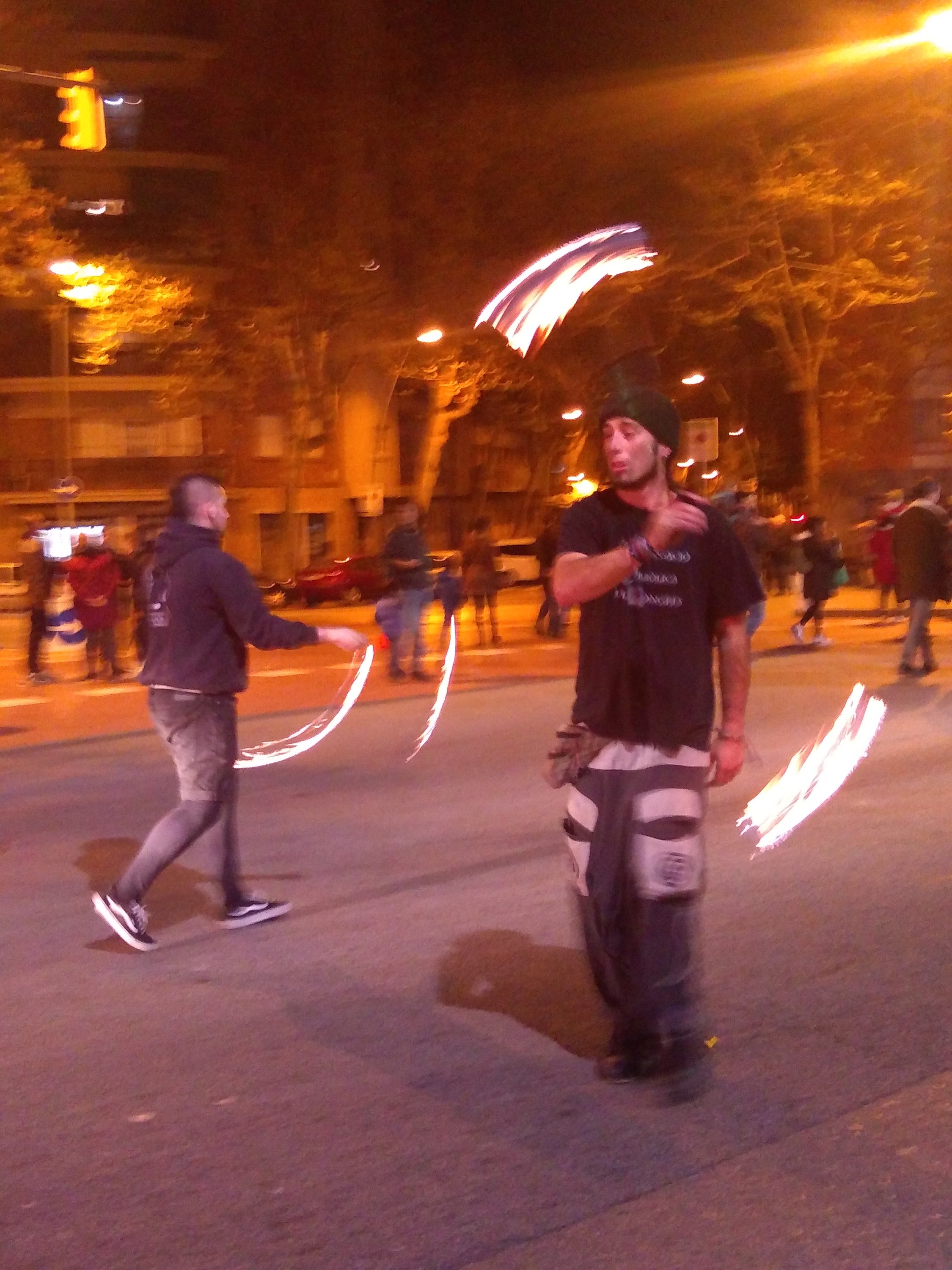
Drummers escorted the kings, dancers too. We worried that Emily’s community wouldn’t be able to deliver King Balthasar, traditionally black. But Queen Balthasar stepped up. There were fire-eaters accompanying a Heath Robinson contraption belching smoke.
And sweets for anybody who could catch them as eager elves and helpers chucked them from the floats. Even we caught some, before wandering off home, relaxed and cheerful.

















 From Pyrenees to Pennines
You must be logged in to post a comment.