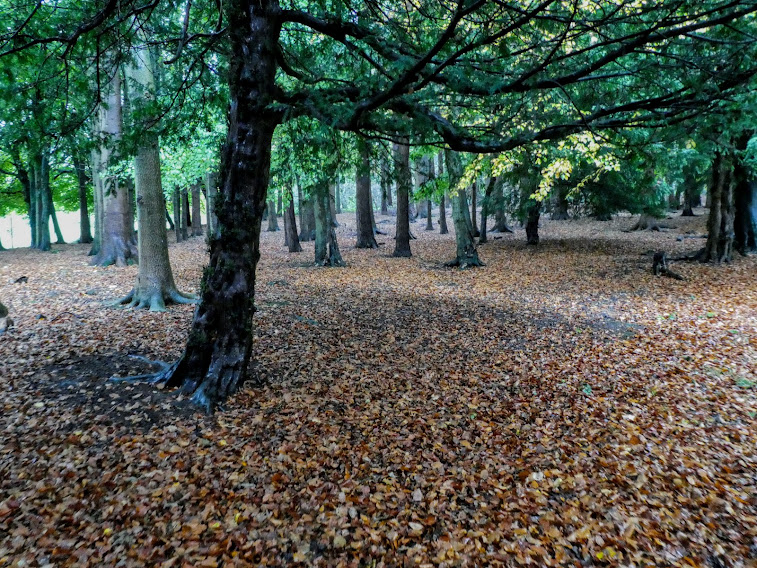
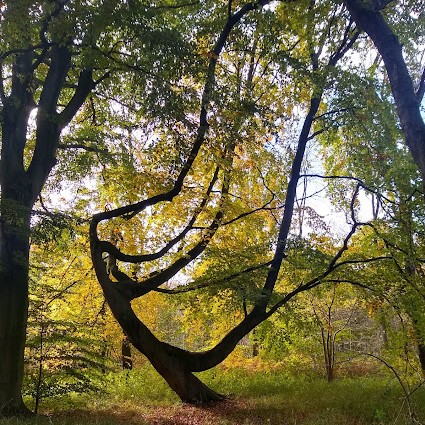
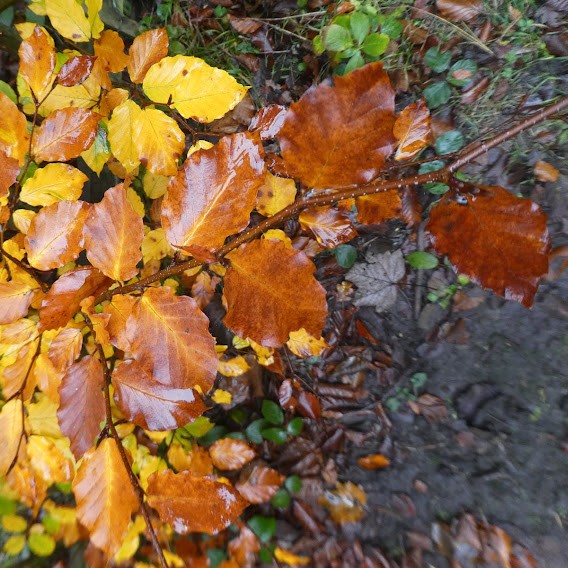
Autumn has only just begun to kick in properly this week: surely that’s quite late? So I’m celebrating the season today for Past Squares, by choosing shots from this week – last year.
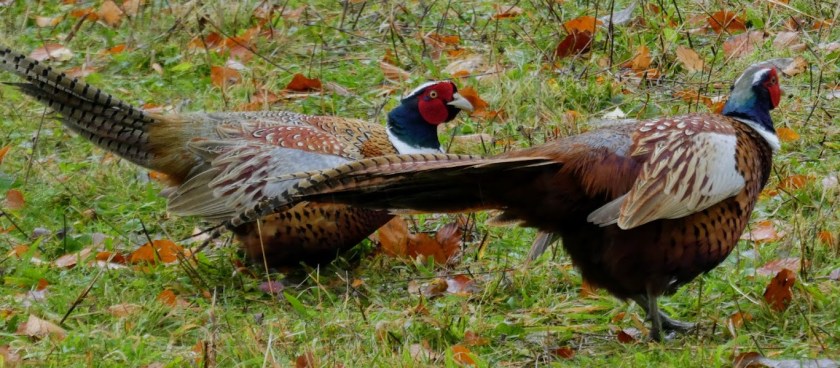

Autumn has only just begun to kick in properly this week: surely that’s quite late? So I’m celebrating the season today for Past Squares, by choosing shots from this week – last year.
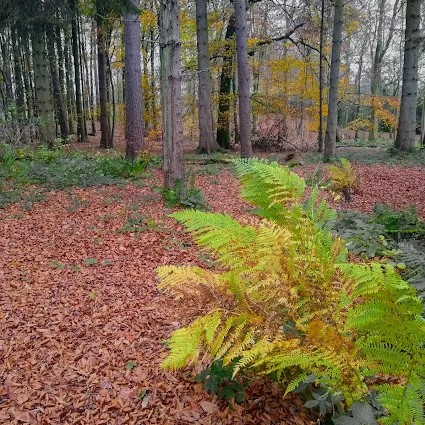
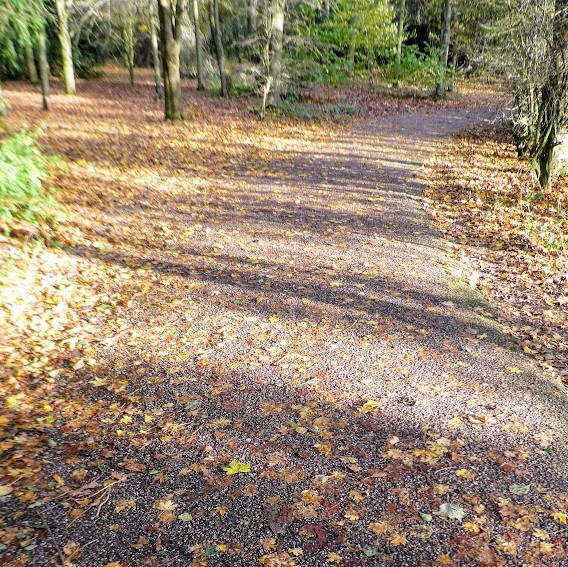

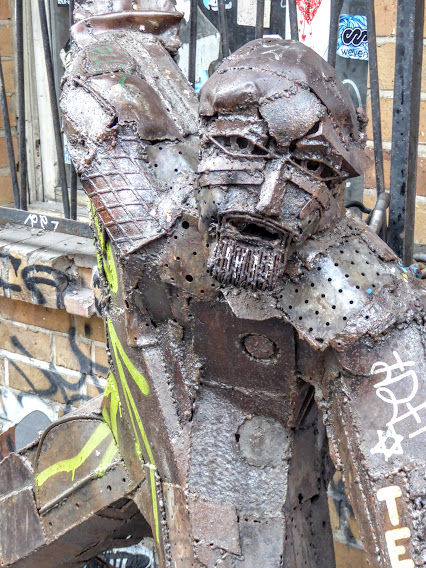
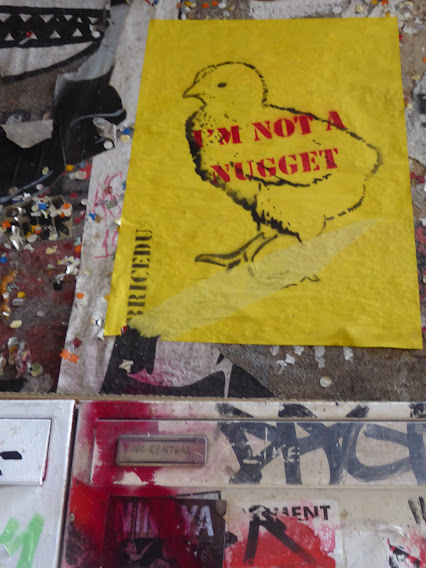
It was in Berlin that I first really discovered a love of Street Art. Maybe it’s because I got some background understanding by going out for the afternoon with Dave, of Alternative Berlin Tours. I learnt the difference between graffiti, street art, stickers and transfers, and something of the political anger and activism that can inform so much of it: particularly near the former Berlin Wall. This has now been re-invented as The East Side Gallery and I don’t show anything of that here because many of its images are so well known. Here are some examples we saw in Dave’s company, or exploring later on our own.

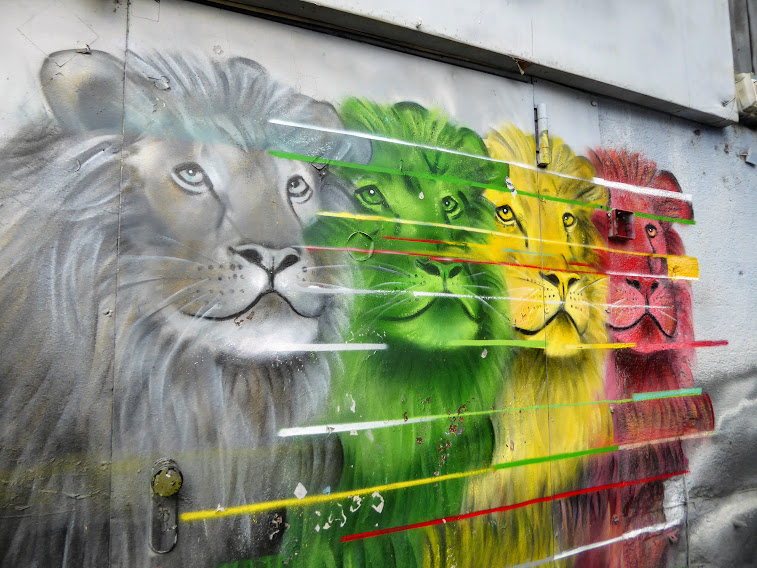
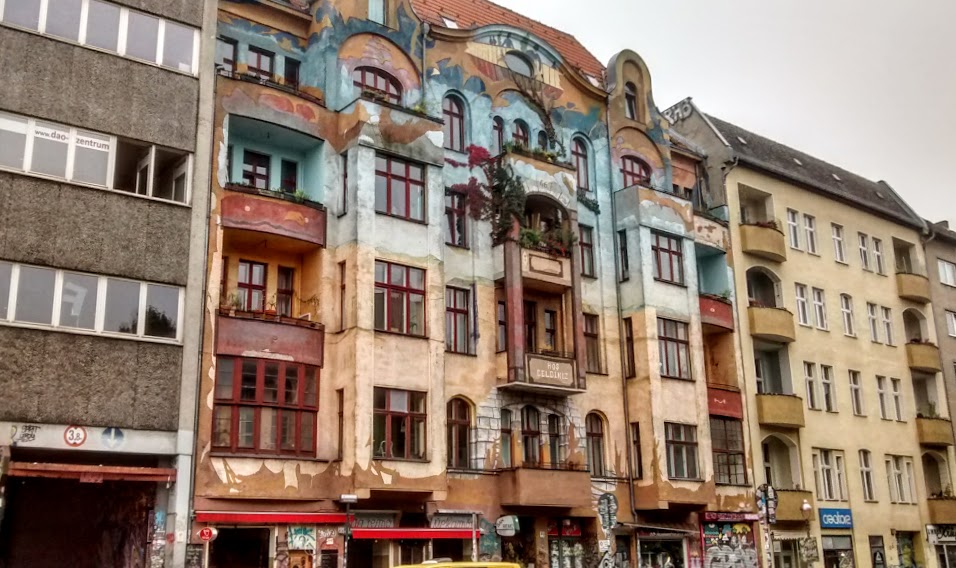
Having done Street Art Module One in Berlin, I was ready a year or so later to do Module Two in Valencia, It was here that I met an irrepressible type who peoples doorways and random bits of street furniture, painted by David de Limón.
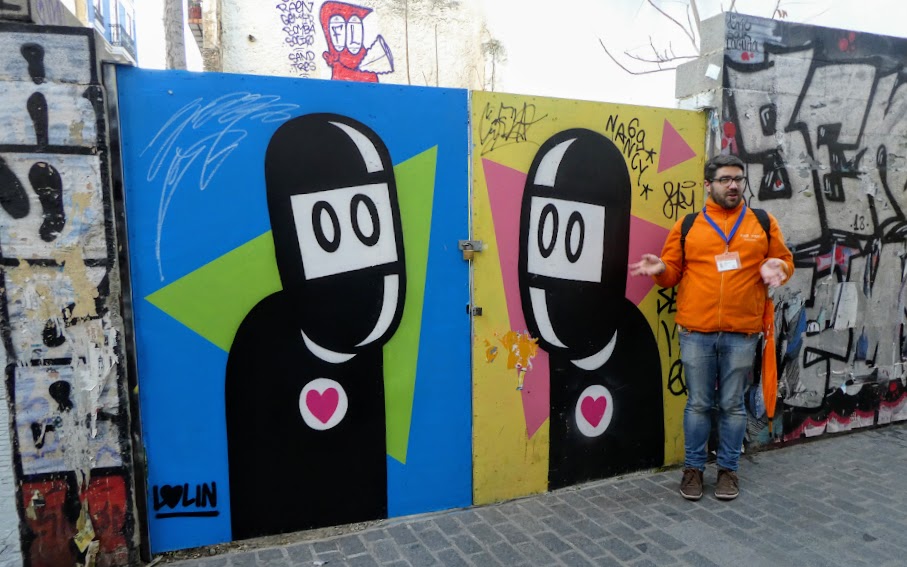
And it was here too, as we once had in Seville, that we encountered street artists doing their day – or occasionally night – job.
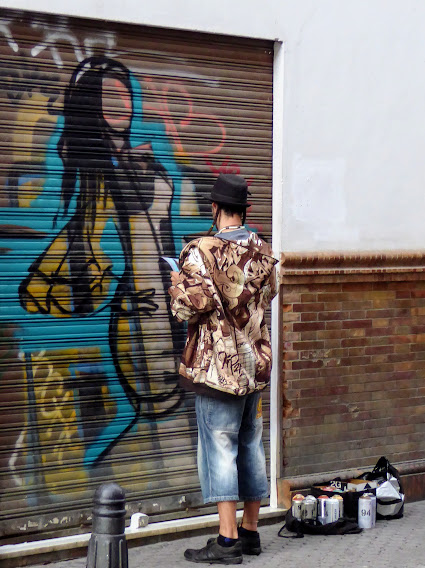

Here are a few more:


And here’s one just for Past Squares …
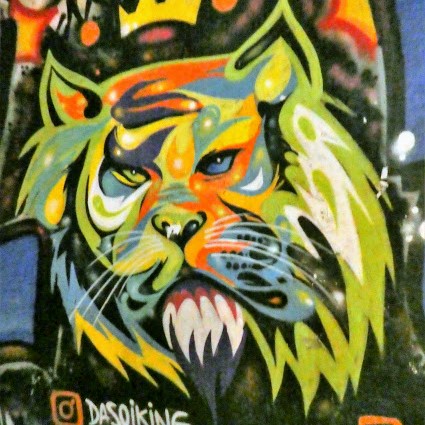
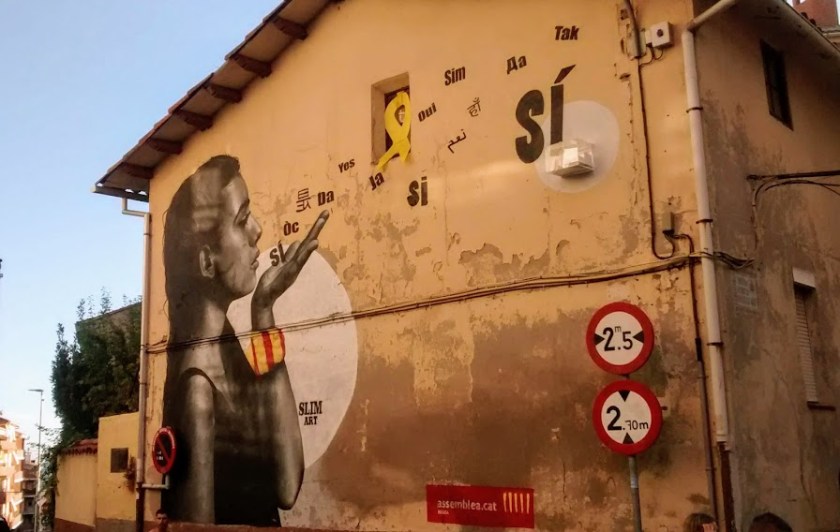
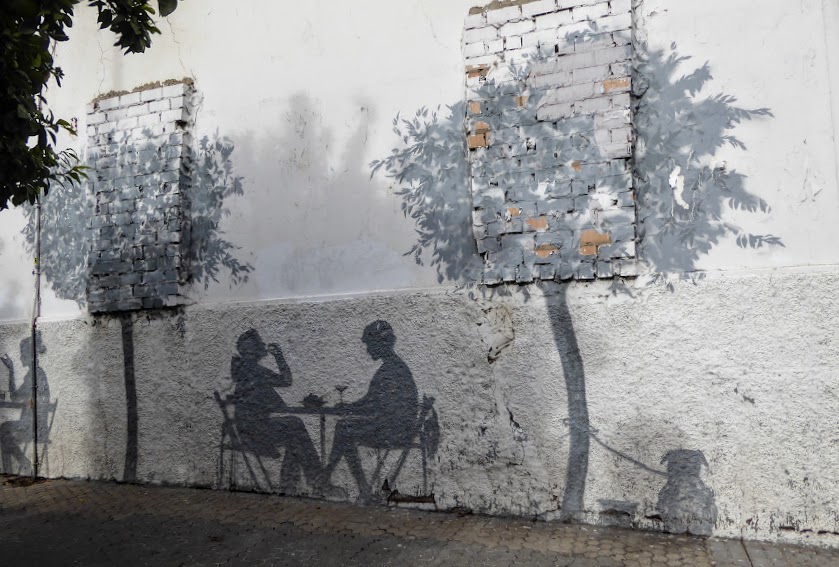
And we’ll have a whistle-stop tour of Spain and view a few more:


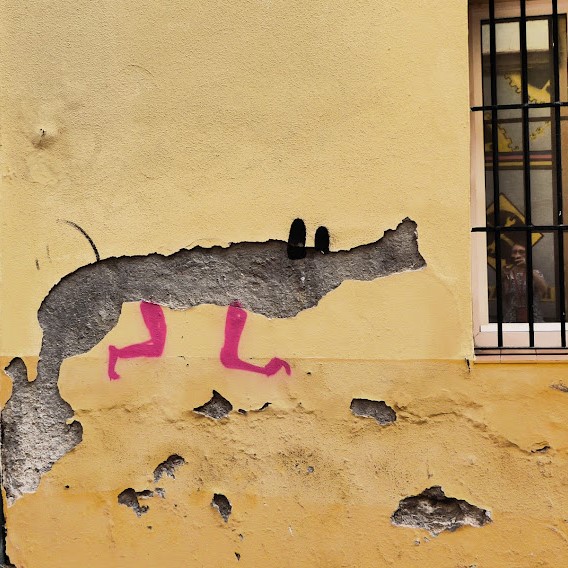
Maybe this is my favourite image of all, a bit of fun created from damaged plasterwork in Seville:
Although – hang on – no. My real favourite has got to be in Manor House Gardens, Hither Green, because the artist appears to have designed this image with my granddaughter in mind.

With thanks to Patti for providing us with a chance to wander city streets this week in quest of images that amuse, provoke and stimulate us. It’s the perfect moment to join the Photographing Public Art Challenge too. As well as Monday Mural. All this and Past Squares and Monday Window too … This is taking multi-tasking to a new level.
The header image comes from the top floor of an apartment block in Málaga.
We seem to have been to Castle Bolton quite often recently. It reminded me that shortly after we came back from France, one of our early walks was here. Maybe it’s time to revisit my blog post about it, to remind myself, if nobody else, about its history.
October 2014
We travelled the road in thick white mist, fearing a dank and gloomy day. But the higher we climbed, the more the mist fell away, and the brighter the sun shone.

As we began walking, Daphne shared some of the castle’s history with us. It has belonged to the Scrope family since the time it was built in the 14th century, and has always been admired for its high walls. It’s a proper castle, looking exactly like the ones you will have drawn when you were eight years old.

Tudor history is largely about the constant religious and temporal battles between the Catholic and the Protestant church, which Henry VIII had made the Established Church, with the king as its head: the Fidei Defensor – Defender of the Faith (unbelievably, Henry hung onto this title, awarded him in his pre-Protestant days by Pope Leo X, in recognition of his book Assertio Septem Sactramentorum which defends the supremacy of the pope). His son Edward briefly succeeded him, and then his daughter Elizabeth, and both were Protestants.
But Elizabeth’s rule was threatened by the Catholic Mary Queen of Scots, and she was held captive first at Carlisle Castle, then at Bolton. Here she was attended by 51 knights, servants and ladies-in-waiting, not all of whom could be accommodated in the castle itself. She also had cooks, grooms, a hairdresser, an embroiderer, an apothecary, a physician and a surgeon, while furnishings fit for a queen were borrowed from nearby Barnard Castle. She went hunting, learnt English – for she spoke only French, Scots and Latin – and spent time with local Catholics. She made an unsuccessful bid to escape from captivity. It’s said she climbed from an upstairs window in the castle, and fled on horseback past the nearby market town of Leyburn. It’s here she dropped her shawl and so was discovered and recaptured. And that is why, so they say, the long escarpment above the town, nowadays a playground for walkers and sightseers, is still called ‘The Shawl’.
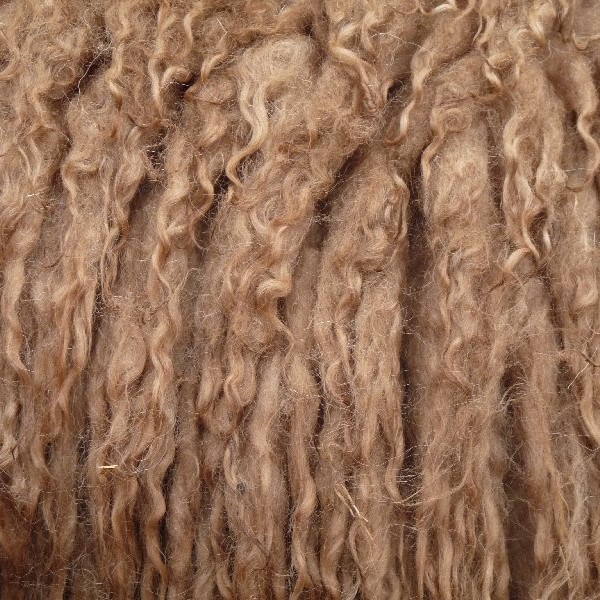
As we enjoyed our history lesson, we passed a field of Wensleydale sheep. We very much admired their sultry fringes.

And onwards. Autumn colours.

A completely pointless stile in the middle of a meadow.

Then Aysgarth Falls. What a wonderful lunch spot. The crashing waters made conversation quite impossible, but we sat enjoying the surging waters, the coppery leaves above our heads, and the all-encompassing percussion of the tumbling River Ure.


And then it was time to turn round and head back by a different route. Another great day’s walking, with an added history lesson.
But wait! This post was all for Fandango’s Flashback Friday, when we’re invited to dig up a Post From the Past. But Becky’s Past Squares demands a look at the past too: here’s Bolton Castle, square style:

Then there’s always Jo’s Monday Walk …
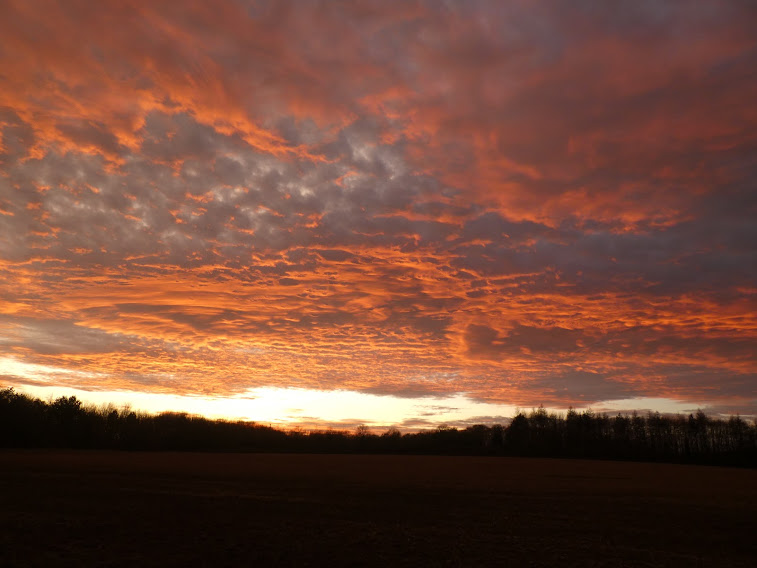
This month’s Life in Colour invites us to look at orange. Happy to help. I’ll grab your attention in the feature photo, with a rather orange sky.
When I got my new phone, my not-at-all top-of-the range, bargain-basement smartphone, I discovered that it had a feature called ‘spot colour’. I tried it out in the garden, and in the woods, making orange my spot colour of choice. Here are some results:


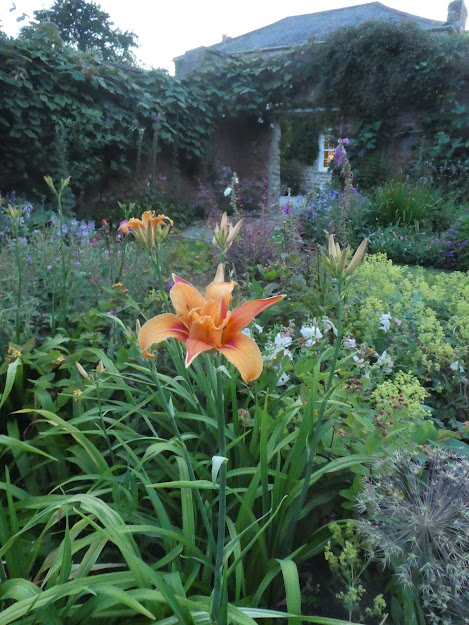
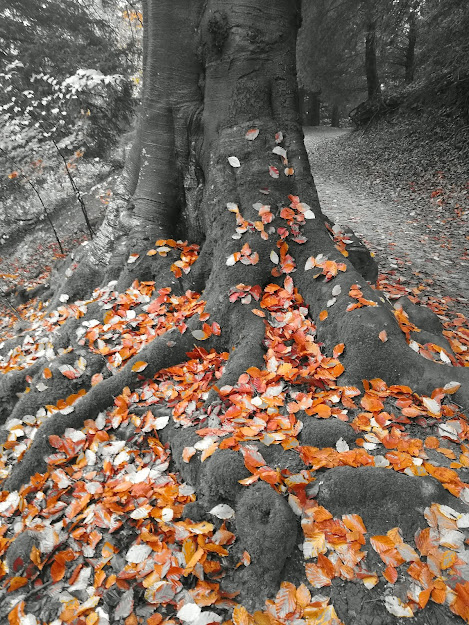
Now let’s abandon the gimmicks, and simply go for a walk along Ripon Canal on this early autumn day:


And let’s remember past moments in Valencia, and in Le Jardin Extraordinaire for Becky’s Past Squares:
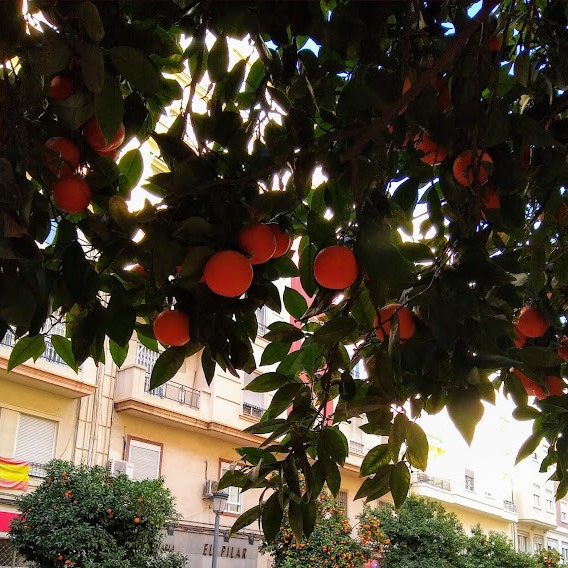
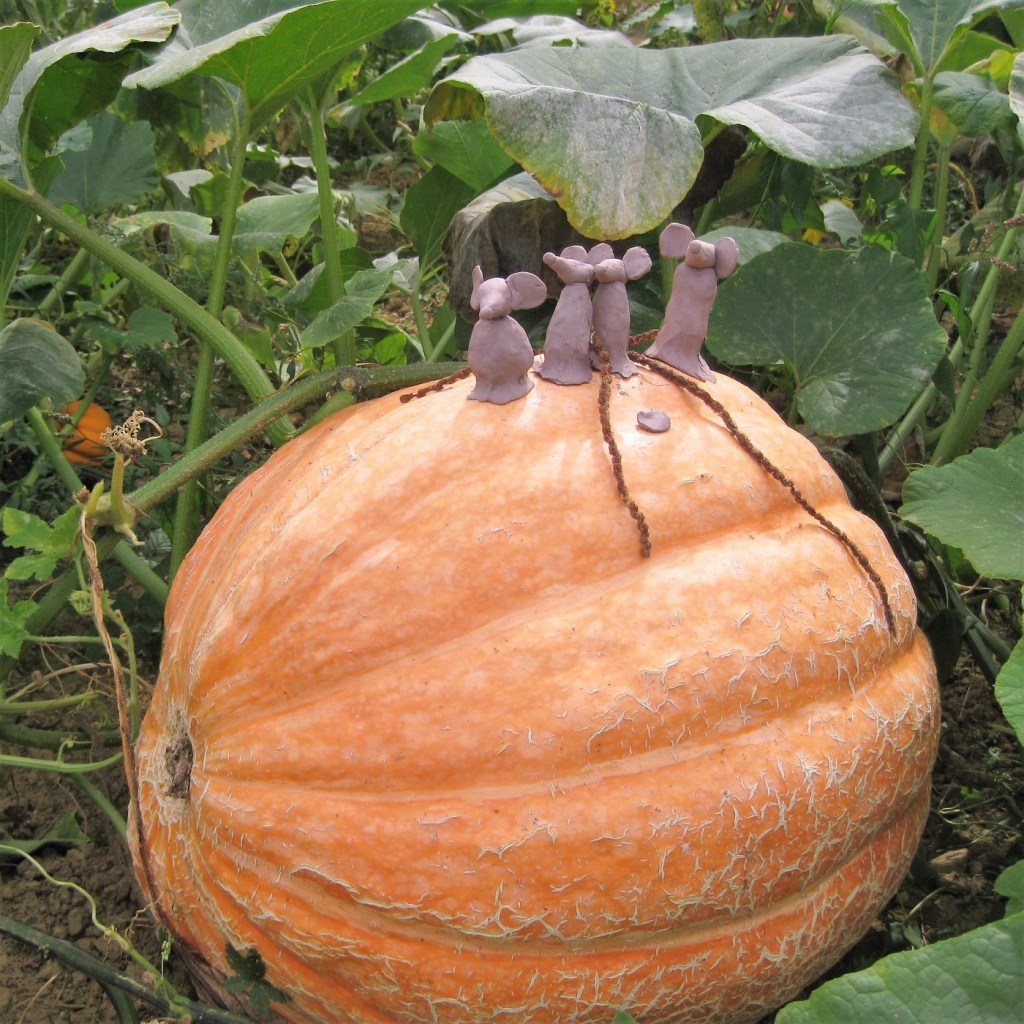

Shall we end with a single perfect rose ….

… or with a bit of fun – the play food I made for William and Zoë’s kitchen?

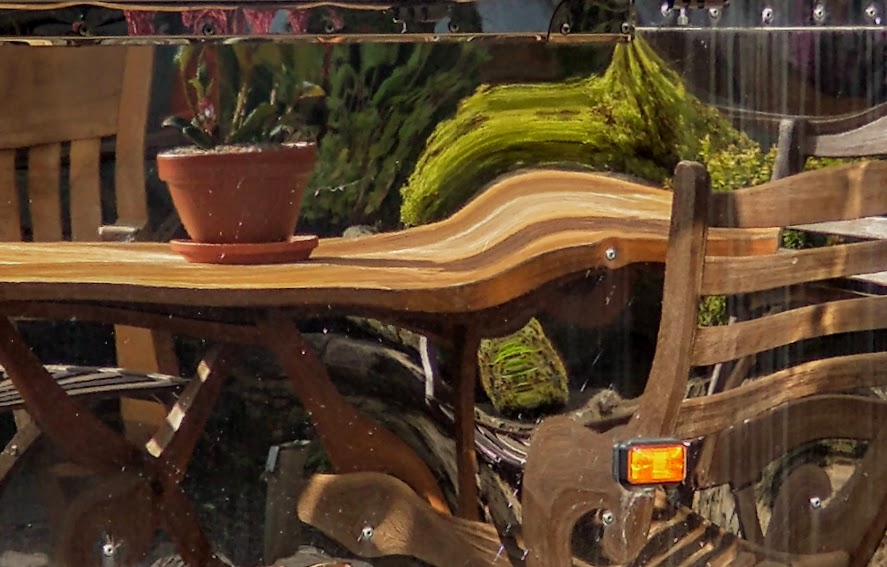
… doesn’t look quite so ordinary when viewed in its reflection in the Airstream trailer which multi-tasks as kitchen, serving hatch and till.
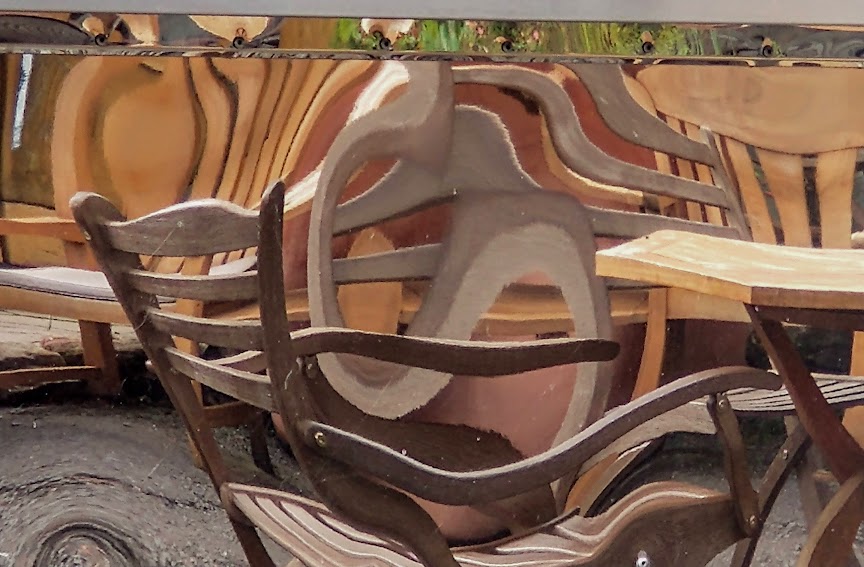
And here’s a view as I walked past – for Past Squares …
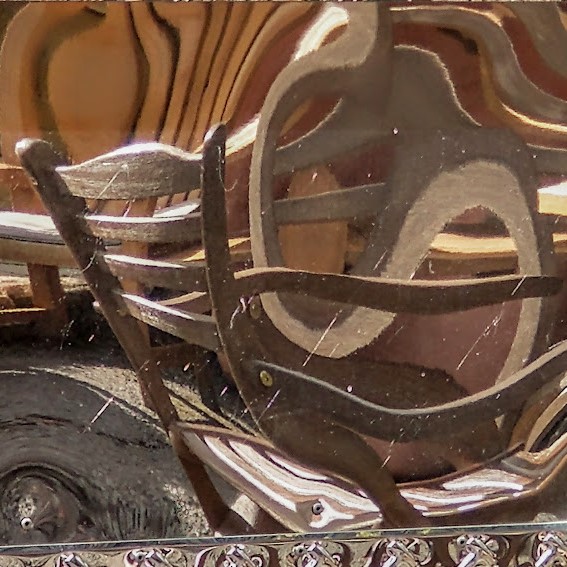
And just to be really cheeky, as there’s not a pane of glass in sight, I’m including it in Monday Window, as it really is a different window on that lunch time pit-stop.
Lens-Artists Photo Challenge #169: The Ordinary

Photos taken at Paradise Food, Daleside Nurseries, Killinghall
Somehow, we forgot all about Masham Sheep Fair last weekend. We forgot about the dozens of different breeds of sheep on show; the sheep-shearing demonstrations; the sheep dog competitions; the children, some really quite young, demonstrating their knowledge and prowess as sheep-handlers. There’s no help for it. We’ll have to revisit this post from October 2014 instead. And by the way. Please don’t show yourself up. Pronounce Masham correctly. Mas-ham. Anyone who lets the side down and calls it Mash’em is immediately recognised as an outsider.
And let’s include this blast-from-the-past in Becky’s Past Squares, as well as including it in Fandango’s Flashback Friday, a celebration of past posts which deserve another outing.
… or not.

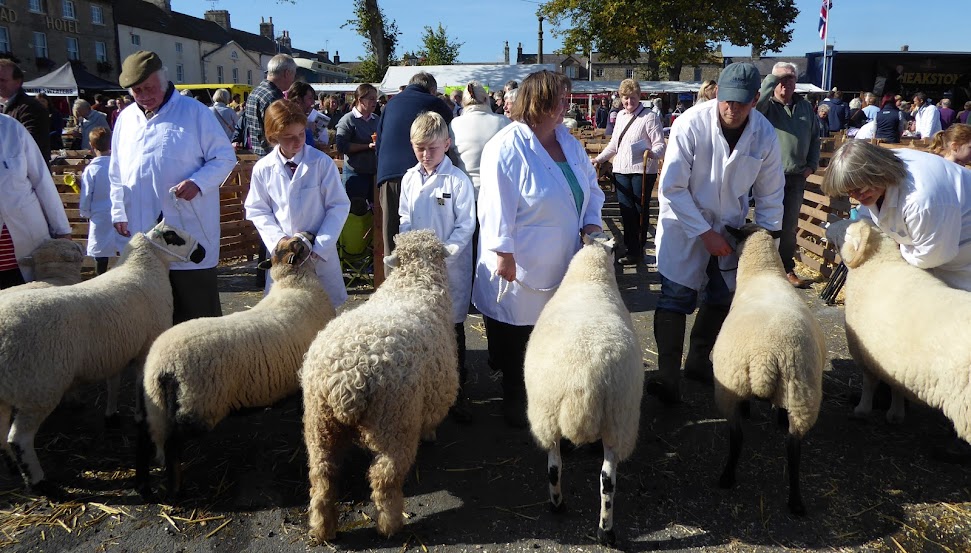
On Saturday we called in, far too briefly, at the annual Masham Sheep Fair. This is the place to go if you believe a sheep looks just like this.

Saturday was the day a whole lot of sheep judging was going on in the market square. Here are a few of the not-at-all identical candidates. And yet they are only a few of the many breeds in England, and in the world. There are 32 distinct breeds commonly seen in different parts of the UK, and many more half-breeds. I was going to identify the ones I’m showing you, but have decided that with one or two exceptions (I know a Swaledale, a Blue-faced Leicester or a Jacobs when I see one), I’d get them wrong. So this is simply a Beauty Pageant for Masham and District sheep.


And if you thought wool was just wool, these pictures may be even more surprising. Who knew that sheep are not simply…. just sheep?


On a morning like this, with rain cascading down outside, and all is gloomy and grey, most things – me included – seem to have seen better days. Let’s go for a walk and see what we can find. A virtual walk. It’s far to wet for anything else.
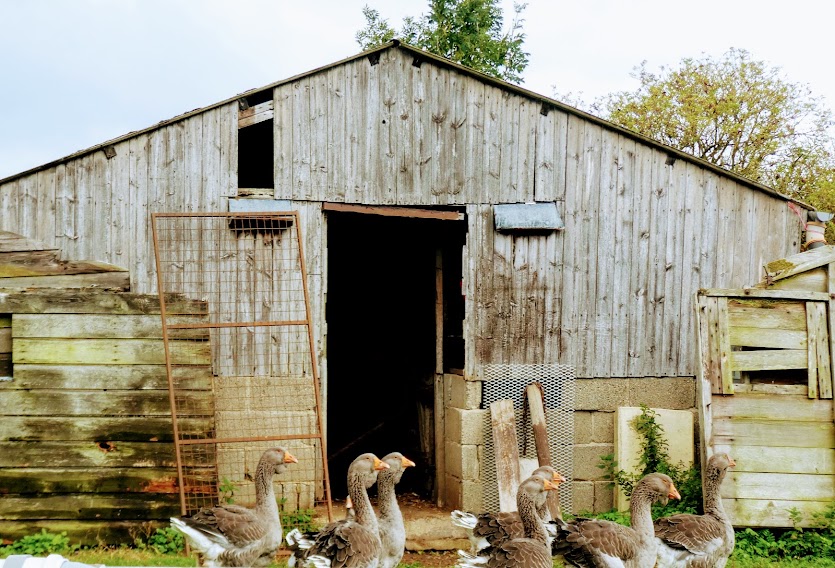
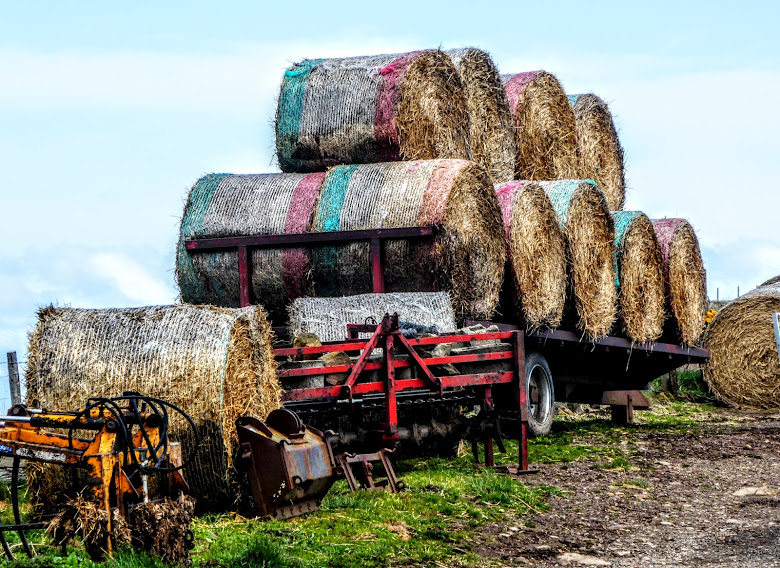
Let’s start off in the farmyard:

Beyond these farms is a country house, with mossy gates.
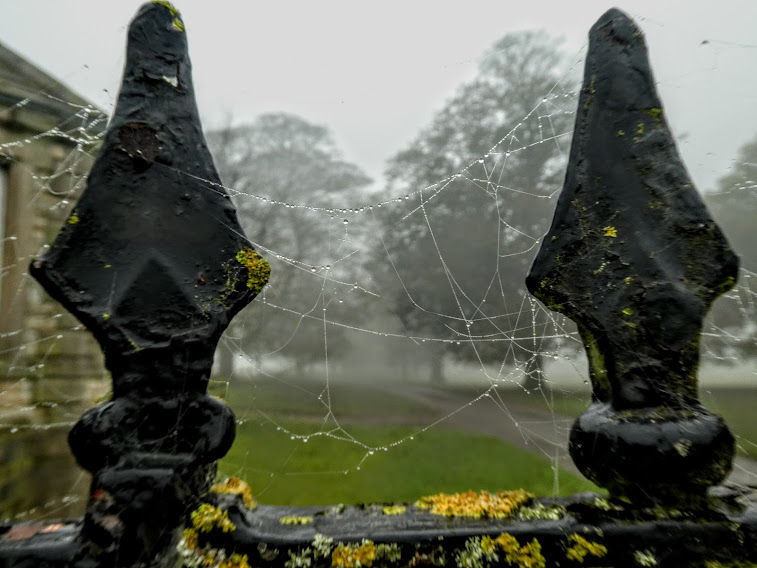
Perfect for Hallowe’en, don’t you think?
OK. Take off your boots now, and let’s go for a city stroll instead.

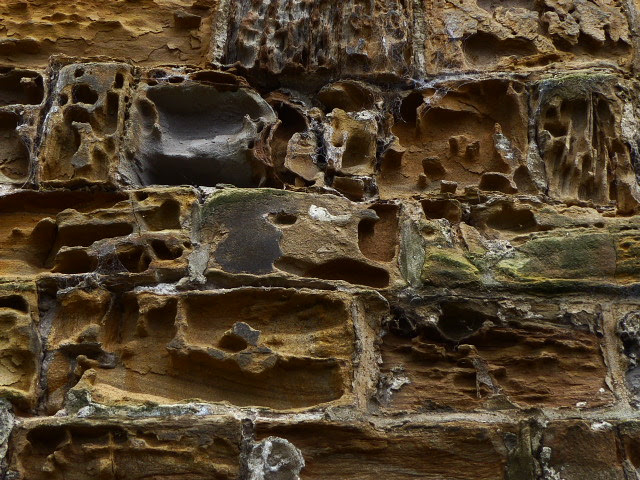
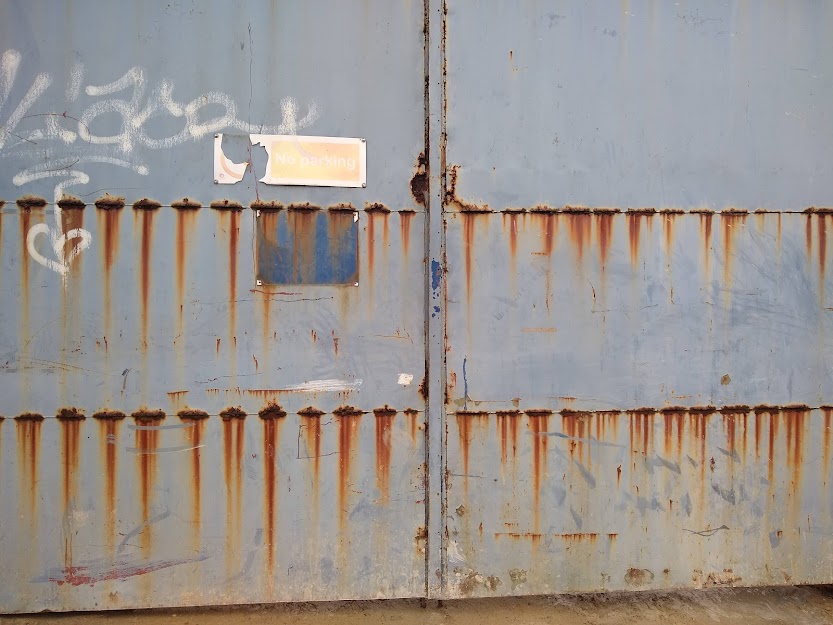
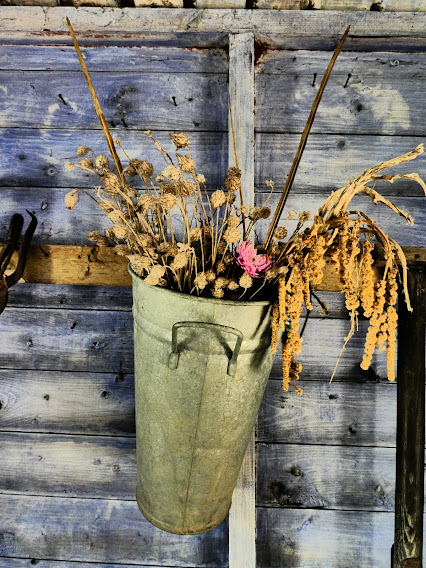
Even towns have gardens. Harlow Carr is a marvellous RHS garden near Harrogate. They keep things immaculately … except in the Edwardian garden shed.


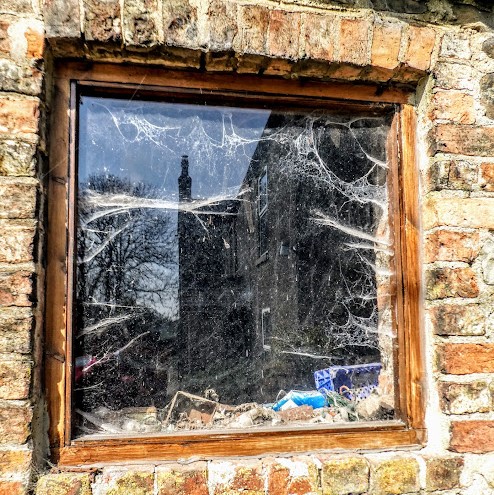
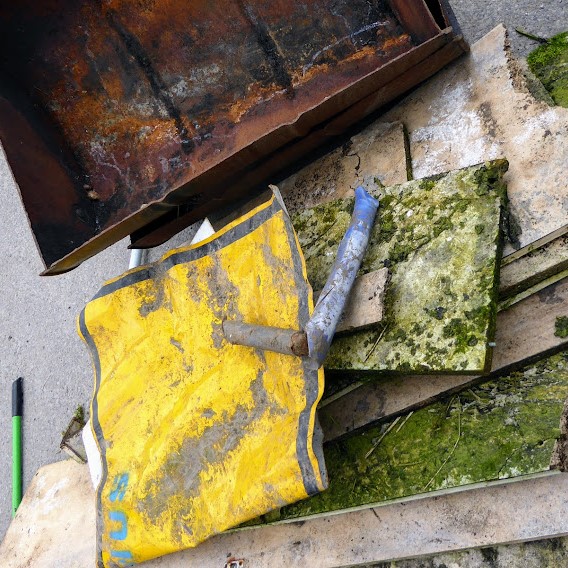
Lastly, let’s have a bit of a clean up. Here’s plenty of rubbish from the past found on a recent litter pick near a factory in Ripon. Perfect for Past Squares. Let’s find it by looking through The Square Window today (anyone remember Play School?)
That’ll do for one day I think. Time to go home and stay out of the rain.
The featured photo was taken in Seville.
Lens-Artists Challenge #168: Seen Better Days
In a past Monday Window, I showcased this winter sunrise, as spotted reflected on one of our windows. It’s too pretty not to share with Past Squares even though squaring it has made it small – but almost perfectly formed.
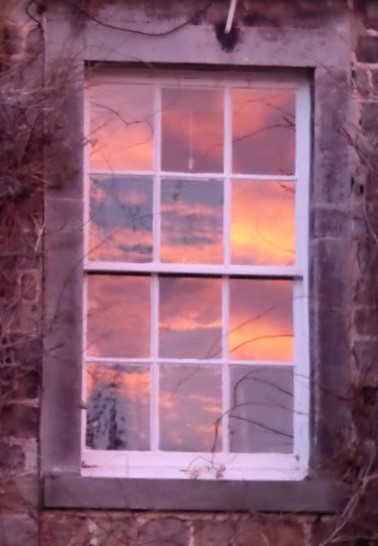
Window Mark Two for Becky’s Past Squares

‘On the first Saturday of every month, a book is chosen as a starting point and linked to six other books to form a chain. Readers and bloggers are invited to join in by creating their own ‘chain’ leading from the selected book.‘
Six Degrees of Separation: Kate W
The Lottery, a short story by Shirley Jackson begins our chain this month. If you haven’t read it yet, you can find it here. If you haven’t read it yet, every single one of my choices will be a Spoiler Alert.
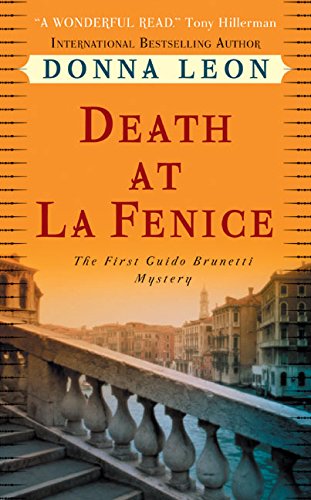
I’ve been accused, perhaps rightly, of making some dark choices for Six Degrees. And my first choice, linked to that short story, involves death, because it is a murder mystery. But I don’t read Donna Leon‘s books because I’m all that interested in the crime perpetrated. I’m more than a little in love with Our Hero, Commissario Brunetti. I’m more than a little in love with the back streets of the city he calls home, Venice: and with his wife Paola, and his adolescent children: the meals that they eat and the family occasions they share. There’s the endlessly clever Signorina Elettra at the Questura too, and a backdrop of Brunetti’s opposition to corruption and back-handers. Against these riches, the murder mystery is just a bit-part in the story. None of Donna Leon’s books disappoint, so let’s take the first one I ever read to stand in for them all: Death at La Fenice.

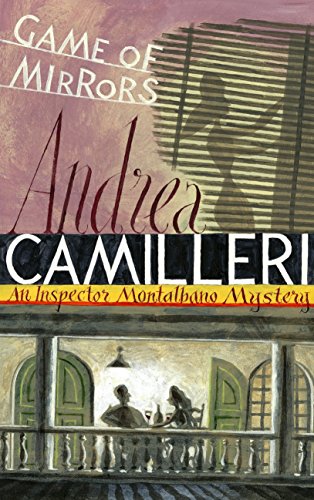
We’ll stay in Italy to meet Commissario Montalbano. Maybe you know Andrea Camilleri‘s detective from the series on BBC 4? I met him in print some years ago, and he’s older and less handsome than his TV alter ego. But still as personable. He’s keen on a good meal, keen on swimming in the sea that laps the beach near his home, and can be funny as well as insightful. I’ve just finished Game of Mirrors: an intrigue involving his neighbour, a bombed warehouse, and a trail of false clues.

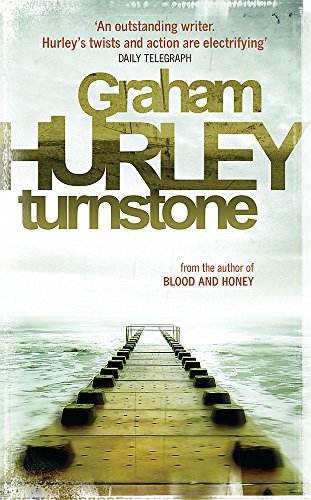
Another detective now, Joe Faraday. He lived, as I did once, in Portsmouth. He’s real enough too. His wife is dead. He has a profoundly deaf adult son, with whom he bonded in his early years of widowerhood by their shared love of birdwatching. Working with gritty crimes involves juggling paperwork and bureaucracy besides solving the conundrum of the offence, and it’s this rounded picture of Faraday’s life that I find so appealing. The first Faraday novel by Graham Hurley that I read was Turnstone. You might like to try it too.

DI Charlie Priest lived and worked in Yorkshire. His creator, Stuart Pawson was my friend and colleague when we both worked as mediators for the Probation Service: sadly he died a few years ago. Priest loved to pound the moors and fells of Yorkshire, as I do. His life involved too much work and too little play , but like the previous two detectives, he’s a rounded and believable individual. I’m choosing The Judas Sheep, because he dedicated this book to me.


Jason Webster is an English writer living in Spain. He’s fairly recently turned his hand to detective fiction, and his hero is Max Cámara. I was interested in A Death in Valencia since this is a city I thought I knew quite well. As ever, it turned out not to be those parts of the city that I’d visited, but a much seamier place, with corruption at the heart of local government a commonplace. Add a murdered paella chef, and even the pope to the mix for another thoroughly readable story.

My last choice isn’t a murder mystery. But deaths occur, and the whole thing, like the short story we began with almost feels like a pact with the devil. Alix Nathan, in The Warlow Experiment tells us the story of gentleman scientist Charles Powyss, who in the eighteenth century sets up an experiment to study the effects on humans of total isolation. Uneducated labourer Warlow is that isolated man. Offered every comfort, decent food, books (he can barely read), all he needs – apart from human company – it all goes horribly, desperately wrong.

I began with a few murder mysteries. And I end with a death or so too. Unnecessary, bleak, as was the death with which our chain began. Next month’s choice promises to be a harrowing one. I’ll have to see whether I’m up to dealing with reading it: Sigrid Nunez‘ What Are You Going Through.
The last photo I took in September was of a disabled dragon. This dragon’s glory days are all in the past. No longer can he roar, belching fearsome flames from his mighty maw. He’s a Covid-era dragon, sensibly equipped with a face mask. Scary dragons are so last millennium.

This photo is a square for Past Squares …
and for Brian of Bushboy’s World Last on the Card.




You must be logged in to post a comment.