‘East, west, home’s best’

When guests come to stay, Malcolm and I often pore over maps looking for some unexplored – by us – corner of our patch.  But in the end, what’s the point?  Our visitors aren’t sickly pale wraiths whose jaded walking appetites have to be tempted by novelty.  They’re happy with the solid day-to-day fare just a mile or two down the road. To them, in any case, everything is new.

We too are happy to revisit favourite walks.  They’re never the same.  The changing seasons bring different flowers, different cloud formations.   Mountains which perhaps were sparkling bluish-white last time we visited, turn green and purple towards summertime with just the odd small patch of snow near their summits.

Today, then, we went with Christine to visit our old friend Roquefixade, just a few miles away.  A steady climb through the juniper-scented woods and along a rocky ridge leads to a ruined château, once far above us, now somewhat below. Here it is.  Enjoy the views.  We did.

Capital Capitelles

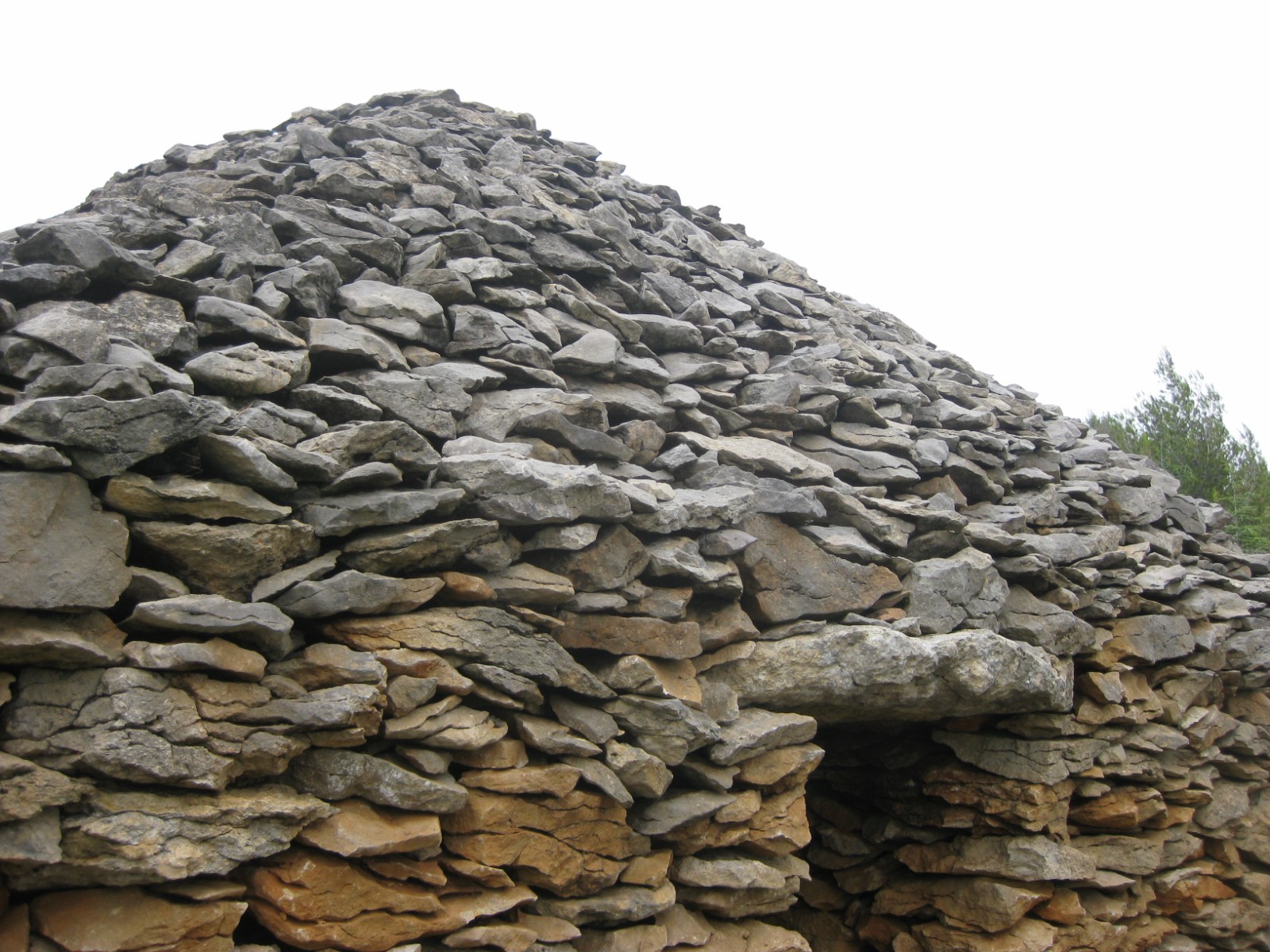
The first capitelle on our walk

We’ve been walking north of Carcassonne today, with our friends Barbara and Tim, holidaying in the Aude from North Yorkshire.  When we decided to go and explore the curious stone huts called capitelles in the scrubby garrigue near Conques sur Orbiel, we assumed they were something like the orris of the Ariège.  These too are small sturdy dry stone wall huts: but orris were used by upland shepherds.

The dry stone walls of the capitelles

Capitelles are quite different.  Following the formation of France’s Second Republic in 1848, everyone wanted something to call their own.  Here in Conques, the poorest members of society looked beyond the village where they lived for some way of acquiring a bit of land  and earning some extra money. They realised that the dry impoverished soils of the garrigue were good for only one crop: vines.  As the peasants started to work the land to plant their vines, they dug up stones – hundreds of stones.  And they used them in the first place to make low stone walls marking the limit of their territory.

That south-facing door’s not very big

After that they built small huts to shelter from bad weather.  These round or square huts are in the form of a dry stone wall rising to a semi-circular vaulted roof also in stone: no mortar, no foundations, a bare earthed-floor and a single small door, always facing south.  They were all built by1880 or so, and the peasants who built the huts and worked the land here would have done so in any spare time left from their ‘day jobs’ as farm labourers.  And this continued till the Fist World War.  Men left to become soldiers, and at much the same time phylloxera struck.  This double blow meant the area returned to uncultivated garrigue, and only recently have the capitelles been restored.  They add interest to a stony landscape characterised by scrubby vegetation, low trees and shrubs and bright ground-hugging summer flowers.  I’d have said distant views of the Pyrenees too, but today was misty and overcast, so Barbara and Tim had to take our word for it.

Close up of a carefully constructed roof

Once upon a time there was a town…

We thought we knew Laroque. An afternoon’s walk round town with local historian Paul Garrigues as part of this weekend’s Journées du Patrimoine has convinced us otherwise.

The bridge near our house is modern and slightly re-sited. But we had no idea that the main road it’s on, leading to one the busiest roads in the Ariège, the D625 to Lavelanet, used not to exist. To go to Lavelanet, you used to go straight up the hill, and down back-street Rue des Pas Perdus.

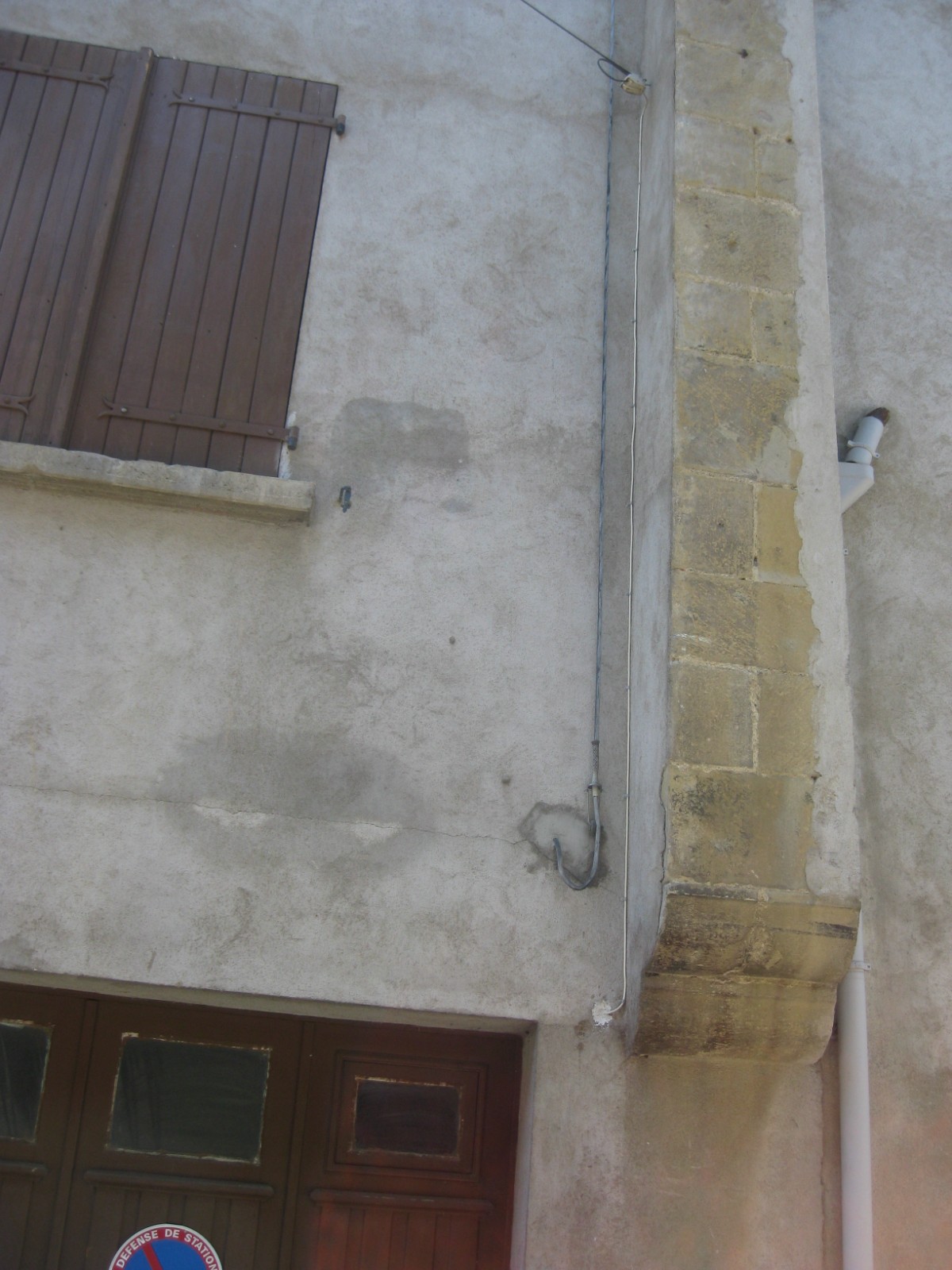
To those in the know, evidence of the former town gates

And here you’d go through one of the town gates. Using this path day after day to reach our garden, we’d never noticed the buttressing that indicated the former presence of these gates. Nor did we suspect that the narrow road and path which is now a way-marked walker’s route which passes past our garden, down to the River Touyre was once a busy thoroughfare. You follow the river to the former railway line, where you turn right and take a shady tree-lined route barred to anything more technical than a bicycle through the next village, Dreuilhe, and on into Lavelanet. Quite different from the lorry-van-and-busy-commuter route now in operation.

Once upon a time the main road to Lavelanet. Now the path past our garden.

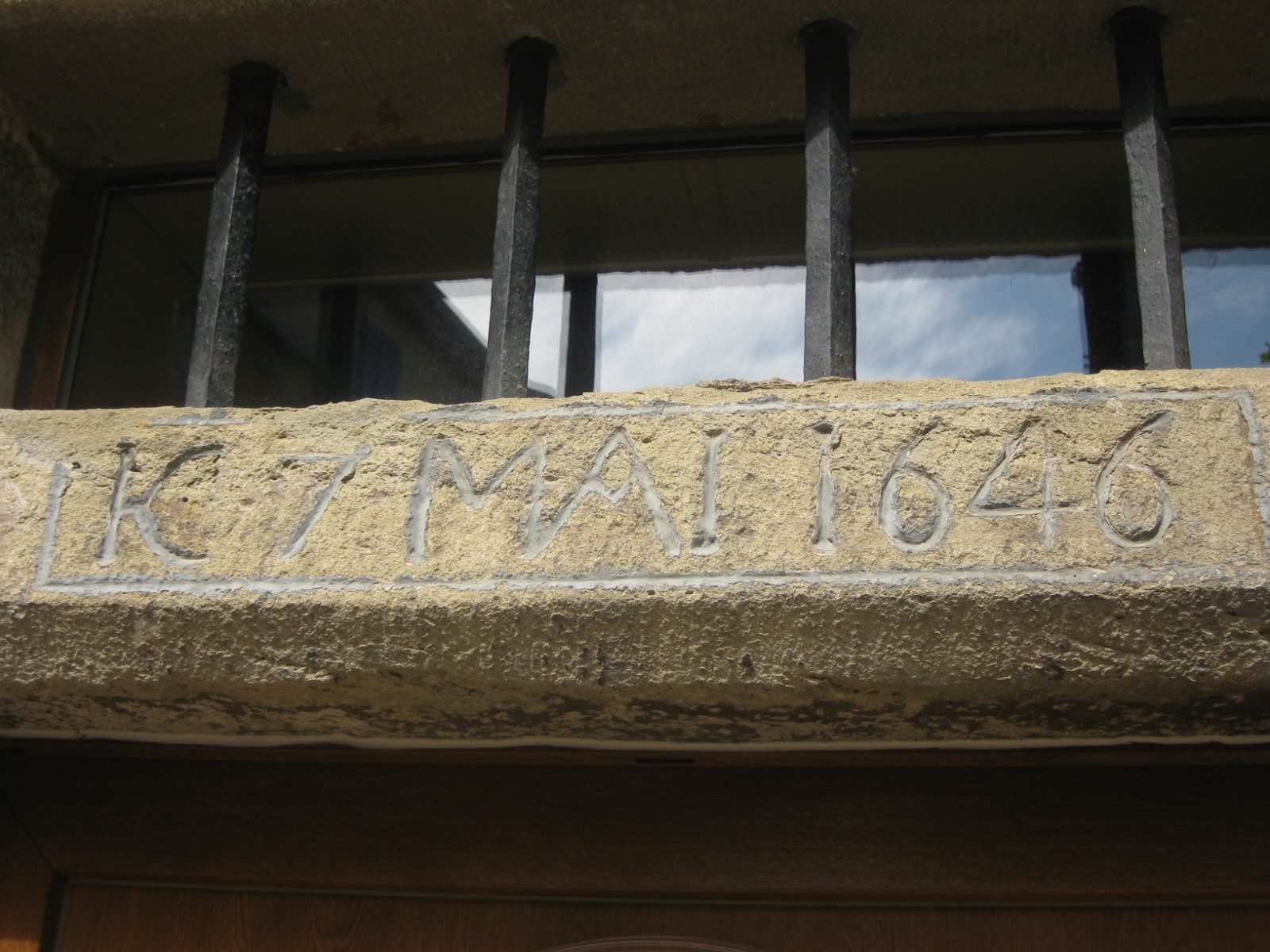
We knew our town is an old one. It’s not uncommon to pass houses whose door lintels are inscribed with a date from the 17th century.

A nearby house announces its d.o.b.

What we didn’t know was that in the old town itself, there are no buildings at all from before this time. This is because every single dwelling was destroyed during the French Wars of Religion (1562 – 1598). The crisis was so grave the King permitted the townspeople an amnesty from paying taxes for several years to give them a chance to rebuild.

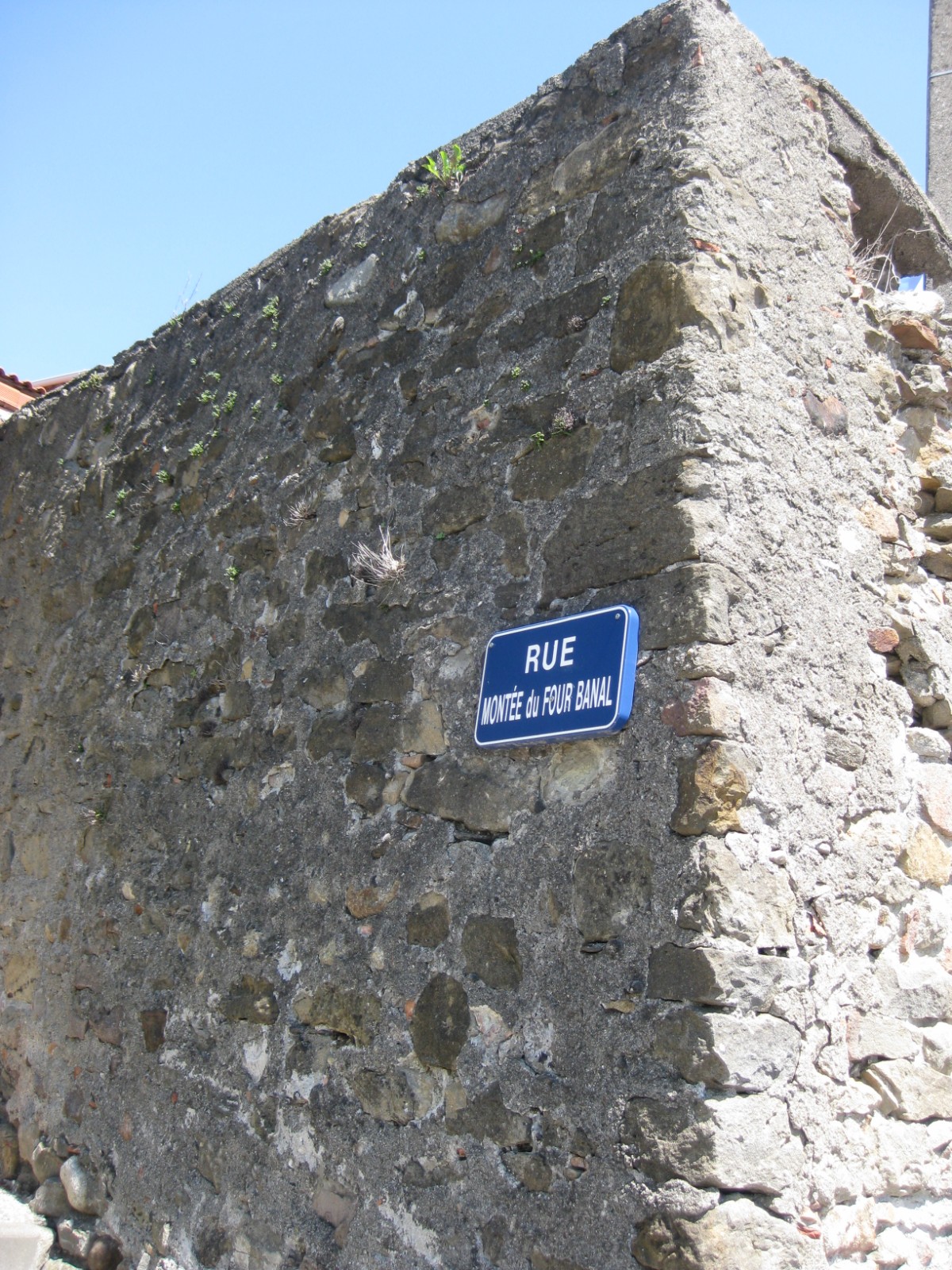
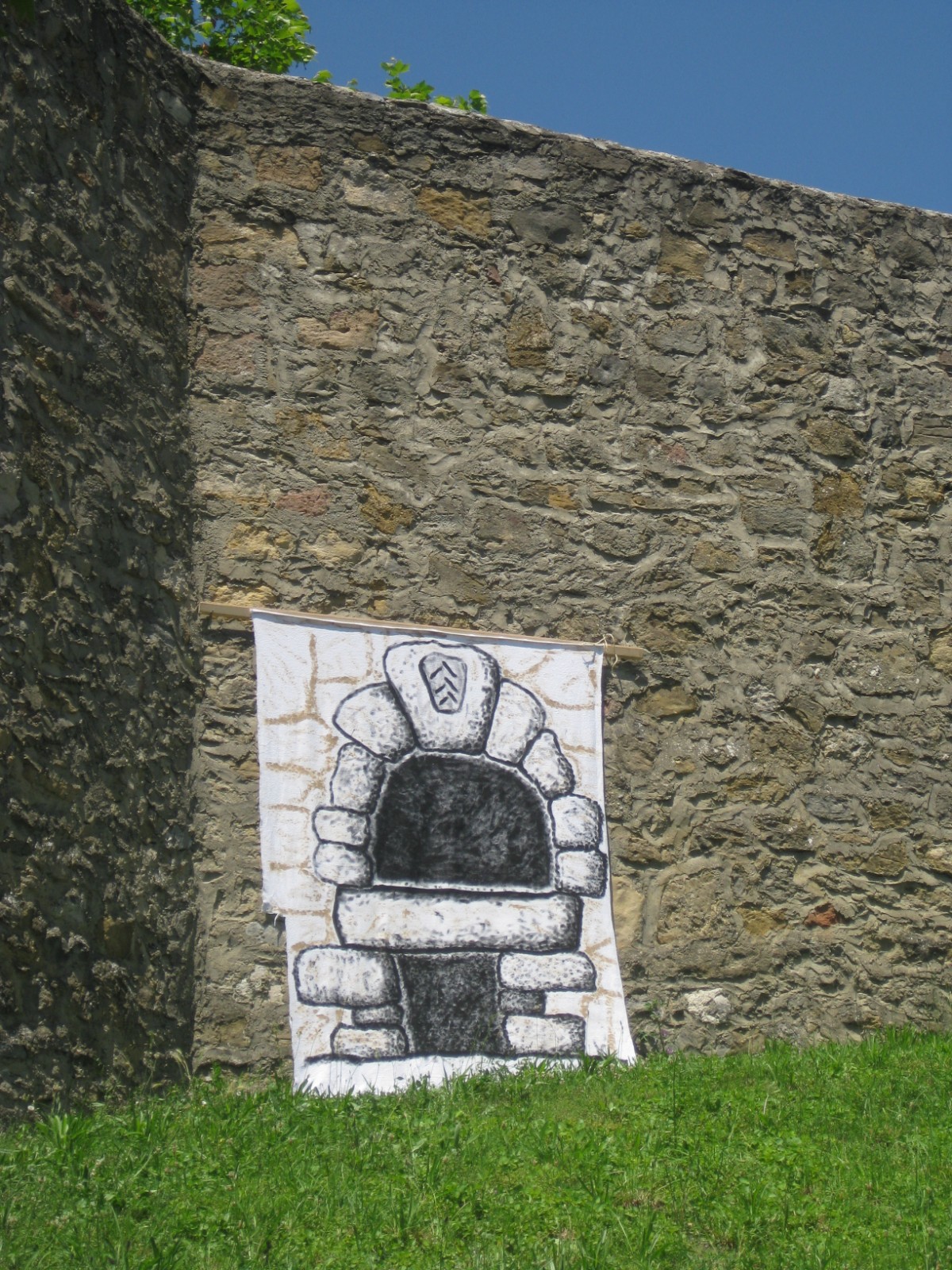
But before all that was …. the Women’s Revolt.  Back in the 16th century, the women of the town would bring their bread to be cooked at the Four Banal, the site of which lives on today as a street name.

Rue Montée du Four Banal: the sign’s fixed to remnants of the old town wall

They paid the local lord to manage this service and the lord paid a baker. Who decided to exact his own charges too – one loaf in every 20. When the women’s angry protests were ignored, some 80 women held a somewhat violent demonstration, and followed up by taking their bread to nearby Esclagne and La Bastide to be baked. It all ended up in an enquiry directed from Carcassonne. Result? It was the baker himself who was found to be at fault: his taxes were illegal, but it was the lord who had to reimburse the women. For their part the women were forbidden to have their bread baked elsewhere. The Four Banal itself is by yet another former town gate, and traces of the old town wall still exist.

Perhaps the Four Banal looked like this?

It was during this period too that several streams ran through the town, forced into culverts between the houses, with little wooden bridges built over. They were useful to all the artisans involved in various aspects of the textile industry and other trades.  Can you imagine the smells you’d have had to endure if you were unlucky enough to live in the same street as the tanner?

More recently, in the late 19th and early 20th centuries, Laroque was a prosperous commercial centre for its then more than 4000 inhabitants (2000 now) and the workers who flocked from a wide area to work in the textile mills. There were three cafés in the market square alone, as well as an hotel. Three abattoirs too, to serve the needs of all the butchers – one was in what’s now our garage. And shops of every description in what are now entirely residential streets. Then as now there was a huge social mix. One fine house, now down on its luck, was built for a successful surgeon and his banker son.

Once a surgeon’s house: now increasingly shabby

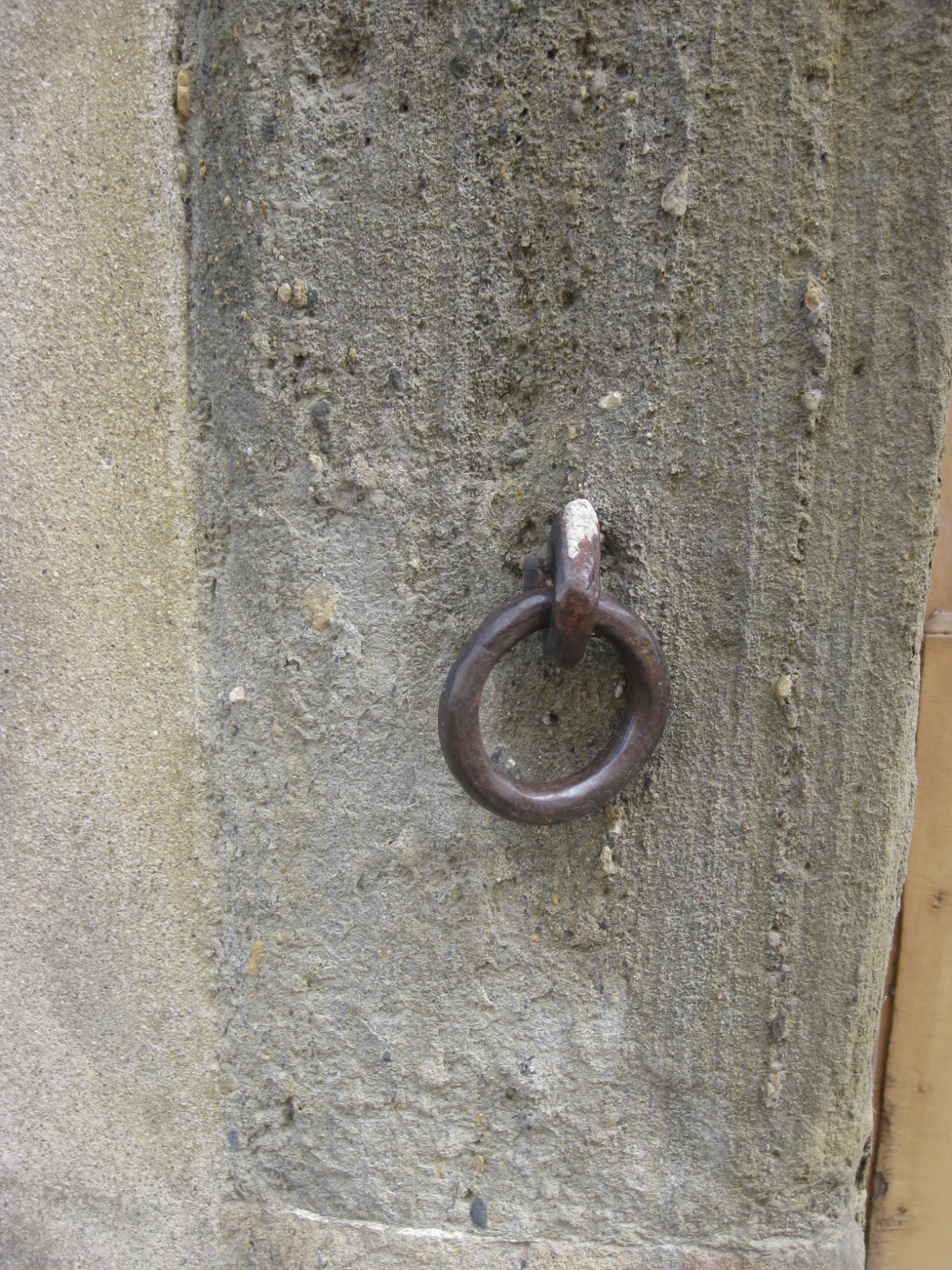
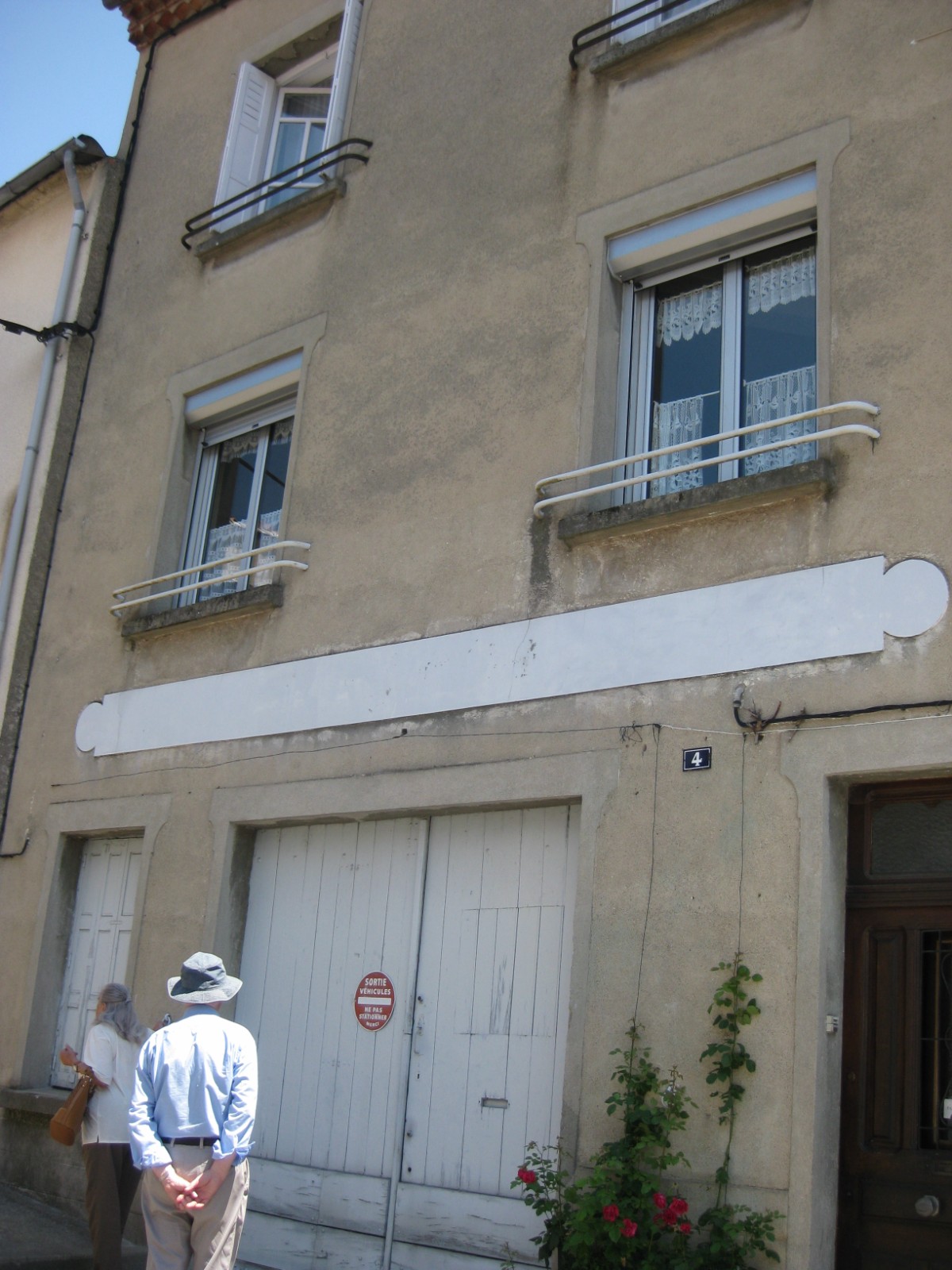
So now we’ll keep our eyes open, and perhaps notice those clues of former commercial activity: a ring set in a wall perhaps, for a trader delivering stock to tie up his horse or donkey, as well as the more obvious painted-over shop signs. I-Spy for residents.

I-Spy a delivery man’s tethering ring

I-Spy a shop front: one of the several vintners in town

Fiesta in Sabadell

We’ve just come back from a weekend with Emily.  Every time we go to see her in Barcelona we’ve stayed somewhere different.  But now we’ve cracked it. Sabadell does it for us.

The accommodation was the first thing that went well: an art deco factory converted into a smart and well-priced hotel, the Arrahona,  not too far from the town centre.

Discontent, even in Sabadell

We liked Sabadell itself straight away.  It’s not Barcelona: there’s not a tourist in sight.  And that’s one of its attractions after the hurly burly and stimulation of a day spent sight-seeing.  We had feared Sabadell might be a bit down-at-heel and depressing, because it is, like many towns in our part of the Ariège, a place whose glory days as a centre of the textile industry are long over.  It seems to have successfully reinvented itself however, and despite Spain’s present undoubted economic problems, Sabadell and some of the surrounding towns like the one where Emily works, Sant Cugat del Vallès, seem to be in some protective bubble.  The bars and restaurants are full, shops are functioning and selling well-made and desirable goods, and this weekend at least, all seemed well with the world.

Drummers prepare the way for the devils

Because on Saturday and Sunday Sabadell had a festival. We’ve struggled to find out why.  It doesn’t seem to have been for Corpus Christi, which provided nearby Sitges with an excuse to carpet the streets in flower petal pictures.  It looks as if perhaps it was just an excuse for the inhabitants to dust off the drums, unpack the ‘gigantes’ – papier maché heads surmounting giant bodies, dig out the costumes, order the fireworks and have a good time.

We happened upon part of the festival by accident on Saturday night when we found hordes of people gathered in the main town square.  Quantities of drummers in red costumes – adults and children – kept up a regular and stimulating rhythm to warn of the approach of whirling dancing devils whose horns disgorged sparks, flames and loud bangs.  These demons leaped in frenzied groups round the church and through the back streets until their ammunition ran out.

Devils run amok near the church

And then, as darkness fell, the crowds who had been watching wandered off to one of the dozens of restaurants in town and sat in large friendly groups at outside tables, laughing and chatting about the evening’s events.

We didn’t find out till later that the festival was happening all the following day too.  We caught up with things again in the evening when children dressed as dragons, dogs and mythical creatures took pride of place in the central square.

Child? Or dragon?

Showers of golden sparks spun into the crowd as the children wheeled and pranced through their routines.  It turned out though that this was the Grand Finale.  Market stalls were beginning to pack up.  The ‘gigantes’ were shrouded in dust sheets and slid ingloriously into workmen’s vans, and once again the crowds finished off the evening in the bars and restaurants.

One of the ‘gigantes’ waits to be bundled off home

The main Rambla had been closed off to traffic, and it seemed as if the entire town’s population was enjoying strolling around, settling occasionally for a drink or some food with friends or family.

A perfect way to end the day: a meal with friends at an outside table in one of the town’s restaurants

We’d chosen to stay in Sabadell because it was near enough to Emily, and seemed to have a hotel that would meet our needs.  We didn’t expect that being there would be such a positive and enjoyable part of our short holiday.  We’d like to go back and explore it again

The Rambla, the main street in Sabadell, taken over by pleasure seekers, just for the weekend

Above us only skylarks

Every Thursday, Anny leads us on a walk. We might go eastwards to the Aude, south towards the higher  Pyrénées….or indeed travel in any direction, certain of a wonderful day’s walking.

Today we met just beyond Foix, and still in our cars, climbed…and climbed…and climbed,  steadily for 9 miles.  And at the highest point of the Col d’Uscla (1260 metres), we parked. Then we laced up our walking boots, slipped on our rucksacks, and climbed…and climbed…. and climbed.

It was steady rather than challenging, and several times, Malcolm and I remarked that if it were not for the  Pyrénées beyond, we could have been on the North York Moors, with added altitude and sunshine.  Endless expanses of bilberry plants added to the illusion. Each hill we climbed promised to be the last: but as we reached each summit, another hillside appeared in view.

Our eventual reward was at the Cap-du-Carmil, at 1617 metres, with a 360 degree panorama of the  Pyrénées. It was quite, but not perfectly clear, yet we could probably see 50 miles or more in any direction. The only sounds were from the skylarks, joyfully singing way above our heads. I’ll let my pictures tell, slightly inadequately, the story.

Down through more wooded paths, there was the town of Massat below. Once the Ariège’s largest town, its isolated position and failing industrial life means it’s slightly forlorn now.  But not when you’re looking down on it, several hundred feet below.

A quick sortie to the Tour Lafont. This was built in the 1830’s, at a time when 12,000 French soldiers descended on the area to fight the ‘demoiselles’, local guerrillas disguised for some reason as women, determined to maintain their rights to collect wood for fuel, rather then allow it to be taken for the industrial economy slowly emerging throughout France. Despite their superior numbers, the soldiers lost the battles, and there are only odd reminders of their presence at the time in towers such as this one.

After lunch, on through the woods, until we rejoined once more our path with its open mountain views. Horses grazed the short grasses, and seemed only mildly curious about us.

And then it was over.  Boots and rucksacks off: cold juice, a moist and squidgy chocolate cake (thanks, Anny!), a final chat…. and back down that narrow uninhabited 9 mile road to civilisation , home and a cool shower.

Freecycling French style

Back in the UK, I was part of the Harrogate Freecycle mafia. The members of this online community offer goods they no longer require for free to other members. One or two members, in difficult circumstances, have managed to find carpets, washing machines, beds and tables courtesy of the generosity of fellow Freecyclers.  Most of us have acquired something for the toolbox or garden, or a child’s toy, bedding for a dog, a director’s chair, a bookcase, or…. or… .  some other thing that another member no longer wants but doesn’t want to see ending up in landfill.  And most of us give at least as much as we receive, and enjoy the relationships we forge as a result.

In Laroque, a small group of us were keen to replicate this success. Outside the main urban areas, Freecycle isn’t as well established here. There were certainly no other local groups, and Freecyle themselves weren’t helpful.  So one of the councillors set up a mini-site on the town’s website. It sort of works, but you couldn’t say we’ve exactly reached critical mass yet. In fact all Malcolm and I have managed to offer successfully have been some odd-shaped pillows which a local puppeteer thought might come in handy for something.

But maybe it doesn’t matter much. Informal Freecycling is alive and well.

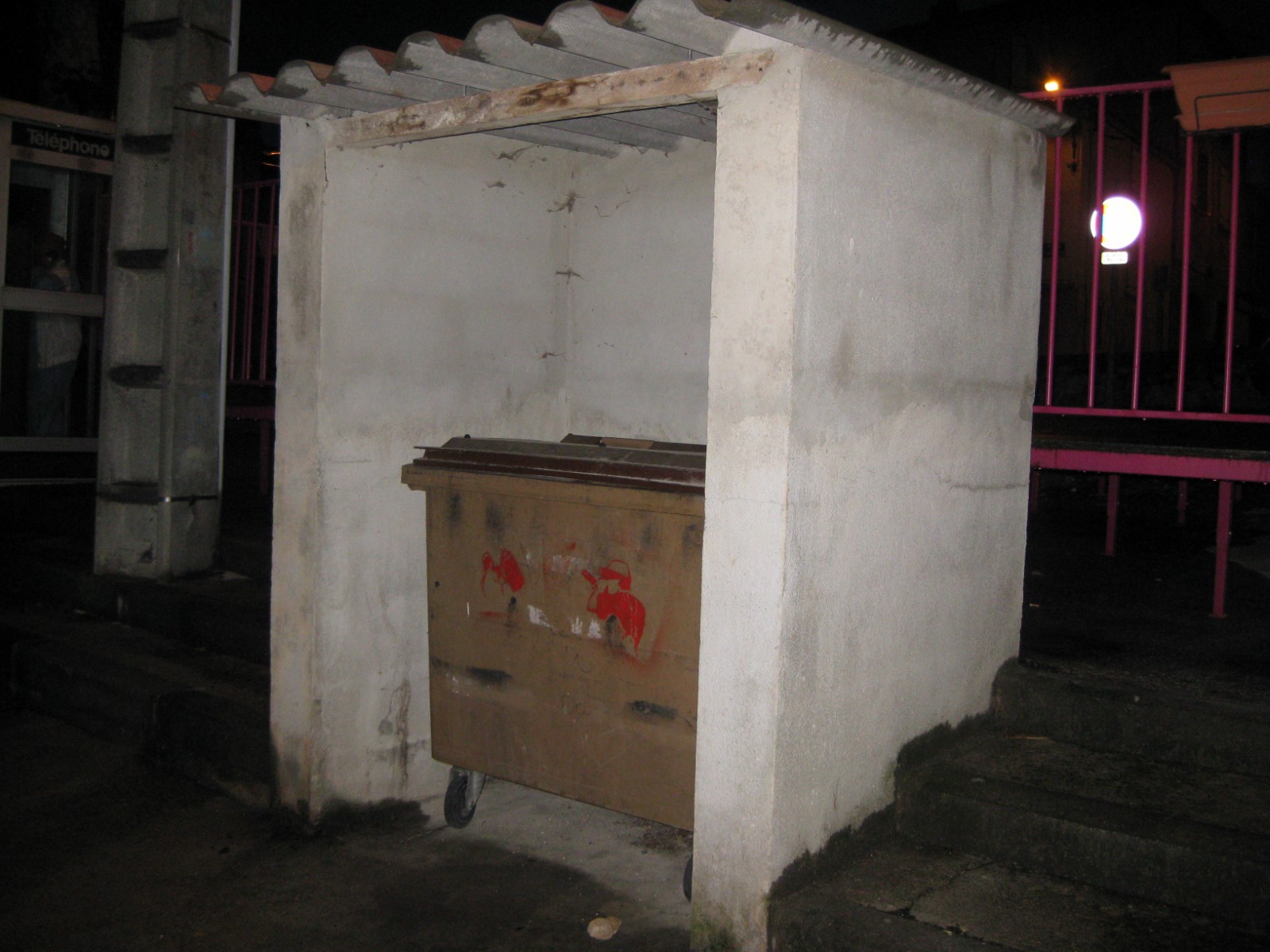
One of those communal rubbish bins: no freebies here

Here, as in most of France, there’s no domestic refuse collection service for every home. Instead, householders take their rubbish to the communal bins situated in almost every street. What we discovered is that people who are discarding something that might still have some life in it place it outside the bin. And it won’t last long there. Last week we put out three old mirrors, a set of crockery (that I’d rescued from a skip in England not because I wanted it, but because I couldn’t bear to see it go to waste) and a bedside light. They were gone within half an hour. We recently acquired a good frying pan and a huge stock pot. As I rescued this last item, Malcolm noticed an indignant woman turn tail and go back home.  She’d clearly been thwarted in her plan to claim that same stock pot.

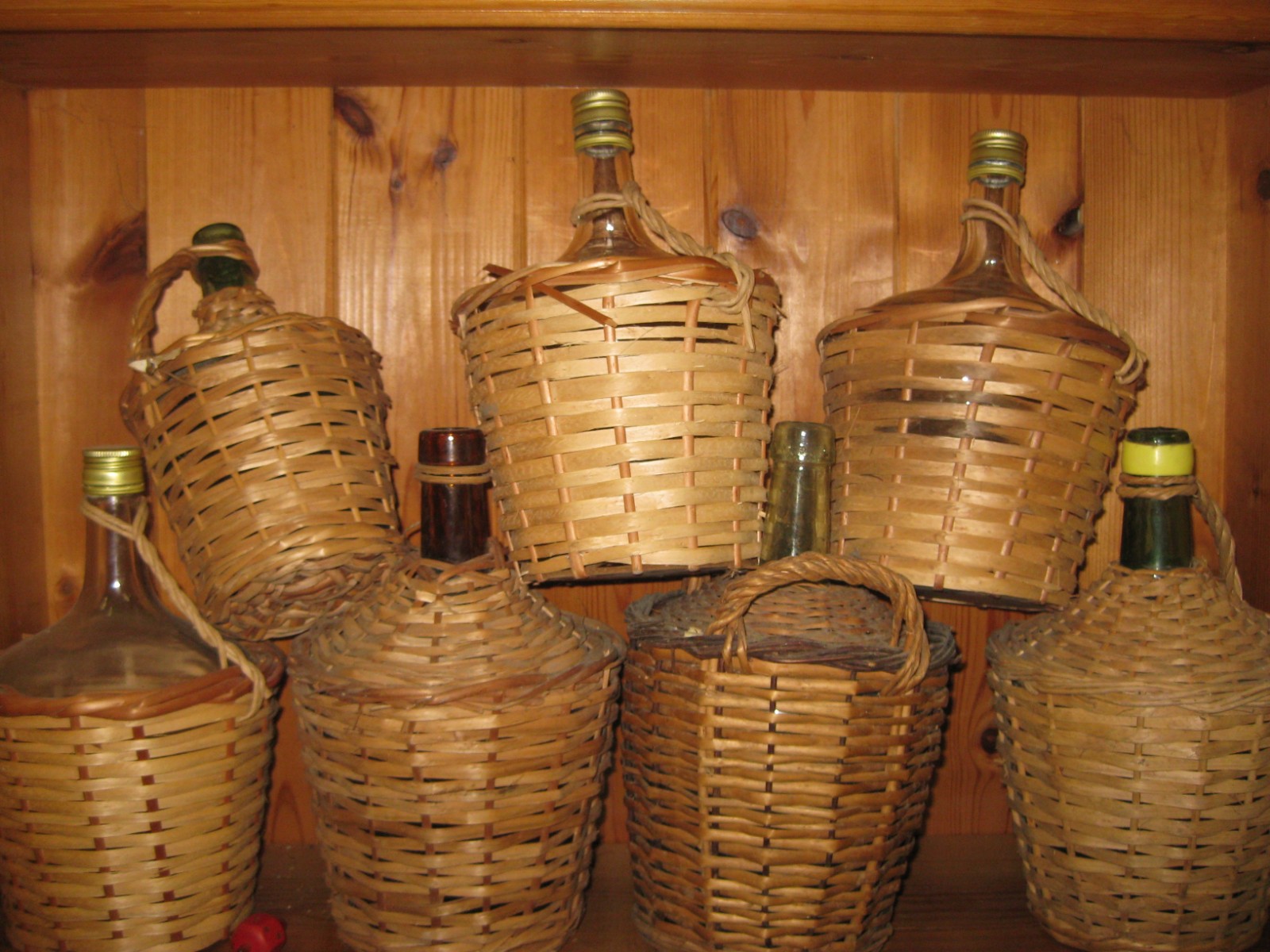
Now then, I’ve just found some of those old raffia covered wine bottles lurking in the atelier.  I think those can go out next.

Tomorrow’s local Freecycling opportunity

Our socially mobile terraced house: or ’génoises’ – a history

You might have thought we were pretty ordinary types living in an ordinary old terrace house – an ex-butcher’s shop for heaven’s sake – in a run-down ordinary little town.

Well, you’d be wrong.  This house, and the neighbouring ones, was built for minor nobility.  We haven’t scoured the archives or talked to the Oldest Inhabitant to find this out.  We just know.

And this is how we know.  Under the eaves of our houses are three rows of génoises, resembling a child’s drawing of ocean waves, but turned upside down.

Three rows of our génoises, underneath carefully picked out in terracotta paint to show them to full advantage

Back when our house was built, some time in the 18th century, the number of rows you were able to have denoted your social status. Artisans were permitted one row, shopkeepers two.  Minor nobility – ahem – three.  And if you were directly in the service of the king, then you could claim four rows.

You’ll see houses with génoises south of a line that runs pretty much from Bordeaux to Lyon.  It’s thought that the technique, which is Italian, was introduced firstly to Provence and then more widely, by artisans from Genoa round about the mid 17thcentury.

Here at Villar Saint Anselme in the Aude is a rare building with 4 rows of génoises. Look carefully: the swallows – no respecters of status – have built their nests on the undersides

By the nineteenth century, the social implication of the number of rows of génoiserie had pretty much disappeared: people contented themselves with one or two rows for decorative purposes.  We’ve seen our house on a late eighteenth century plan of Laroque, so we know the house, complete with génoises, must have been built by then.

And a family with pretensions to nobility lived in a tall, narrow terraced house?  Admittedly with some nice features, but still nothing fancy at all.  Well, inheritance laws in pre-Revolutionary France had estates divided up between all the heirs, so land and property became shared into decreasingly smaller parcels.  Families graced with extensive land and properties were few and far between.  This helps explain too why the agricultural revolution taking place in England from the 18th century took no hold in France.  Tiny farms resulted in small-scale farming and a near-impoverished peasantry.

And at some point, the house passed into the hands of the previous owners’ family and became a butcher’s shop.  Now it belongs to (almost) the only English in town.  Its noble origins are long forgotten.

Posh squash

Fetch up at our friend Peta’s on a summers day, and she’ll have thrust a cool glass of sophisticated, refreshing and home-made elderflower cordial into your hand before you’ve even had time to admire the garden.  Somehow, I’ve never got round to making it myself …. before this year.

Which is silly, because it’s too easy, and you can make several bottles of concentrated cordial for the price of a bag of sugar and a couple of lemons.  Oh, and a small amount of citric acid.  And there’s the rub.  I had a small pack left over from some project in England.  It’s all gone and now I’m trying to replace it.  Every chemist I’ve spoken here to has narrowed his or her eyes suspiciously and offered to order me half a kilo to arrive next week.  What CAN they think I’m up to?

Here’s Sophie Grigson’s recipe:

 Ingredients

20 heads of elderflower, well shaken to remove any insects

1.8 kg. granulated sugar

1.2 litres water

2 unwaxed lemons

75 g. citric acid.

Method.

  • Heat the water and sugar to boiling point and stir till the sugar has dissolved.
  • Meanwhile pare the zest of the lemons in wide strips and put into a bowl with the elderflowers.
  • Slice the lemons, discard the ends and add the slices to the bowl.
  • Pour over the boiling syrup and add the citric acid.
  • Cover with a cloth and leave at room temperature for 24 hours.
  • Next day, strain the cordial through a muslin-lined sieve, and pour into thoroughly clean bottles.  And it’s done.

And if you explore this link, you’ll find lots of ideas for using it.


‘Comment shoppez-vous?’

Stuck in a waiting room with a pile of magazines between me and my appointment time, my idea of hell is a choice between fashion mags and ones about cars.

Less so in France, at least as far as the fashion ones are concerned.  It’s not that I’m more interested in being stylish and chic here.  I simply have fun reading the articles and noting the ‘English’ words and phrases on almost every line.

Are you a sophisticated lady? Cool? Relax et sexyShow-off? Perhaps you aim for le twist sporty-glam, or like le mix et le match, le style ‘street’, or le fun et le trash.

Down at the shops are you looking for un look color block, le style boyish ou girly, arty-trendy, crazy doll, grungy girl?  If you’ve any sense, you’ll have made a shopping list, to make sure you come home with le jean,  le blazer, le trench, le legging, les shoes (with kitten-heel perhaps), and perhaps one or two it pièces.  Then you could really get to show off and expect le red carpet treatment.

When it comes to make-up, I hope you don’t like le make-up too much.  Light is so much more subtle.  If you’re a beauty addict perhaps you should be looking for un effet sixties, or un twist, using liner and shadowing your eyelids en smoky or flashy to achieve le total-look of your choice.  Then you’d look a real star.

It’s pretty exhausting really.  That’s why keeping up with fashion isn’t very high on my to do list.

Le twist sexy-glam as seen in ‘Le Figaro’

A ruined castle above spring flowers

We ‘do’ ruined castles here in this part of France.  And last Sunday we Laroquais from the walking group ‘did’ one that was new to us.

We went off to the Aude, near Rennes-le-Château, for a long morning’s march and a final energetic upward scramble to Bézu and the few castle ruins that are left there.

I was going to tell their story.  But then I found another blog to do the job for me.  Follow the link!  Some of the research here has been fostered by the – to me – unaccountable interest in Dan Brown’s books, but the page on Bézu is mercifully free of his influence.

I’d sooner simply share some of the photos of the day, many of them of the flowers we saw.  May, as in much of Europe, is a glorious time for them.  The dry, thin soil of this part of the Aude nourishes small, bright ground hugging plants: they show themselves off perfectly against a backdrop of alternately red and rather white earth.

I’m going to go on being lazy today.  If you can name the flowers so I don’t have to, I’d love to hear from you.

This slideshow requires JavaScript.