Parys Mountain

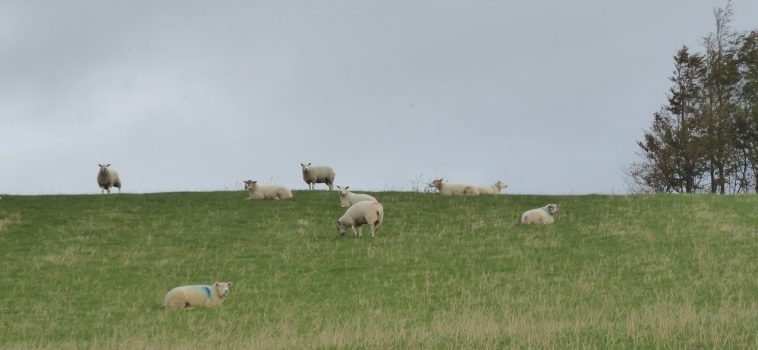
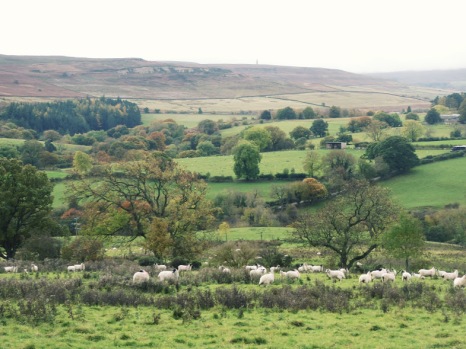
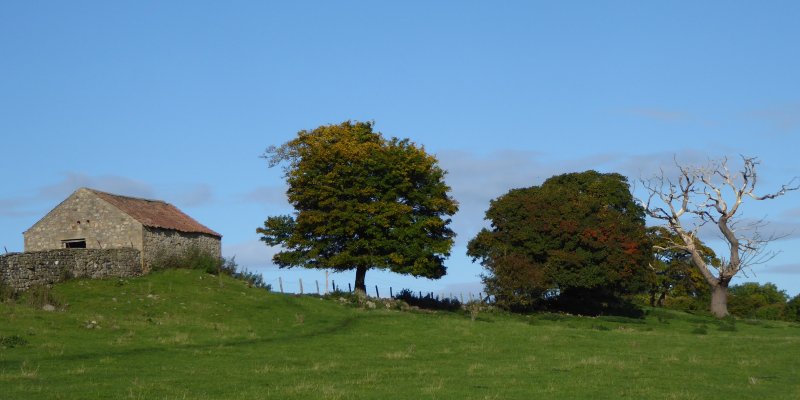
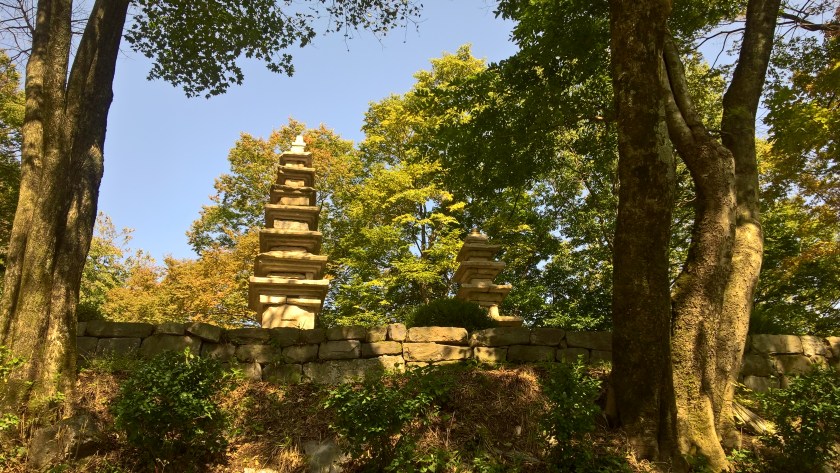
Once, a century ago, Parys Mountain was alive with people: men, women and children hacking deep clefts and canyons into the earth, in search of copper-bearing rock.  Now the area is bleak, desolate, abandoned.  The poisoned sulphurous soil supports little but odd clumps of hardy heather.  Yet this large site, with just a single set of abandoned winding gear, a single ruined mill is strangely beautiful, and we fell under its atmospheric spell.

ParysMountain
Alex inspects a man-made crater at Parys Mountain


PS.  This post was written on a borrowed laptop.  As far as my phone goes, I can access my WordPress site, write and illustrate a post, then it tells me I can’t publish, as  I don’t exist.

PPS.  To add insult to injury, the borrowed laptop automatically spellchecked ‘Parys’ to ‘Paris’.  Grrr

Olympic Fever?

Two posts in quick successsion. Sorry. But this one is topical now, although I first posted it exactly four years ago. And it made me sad. And cross.

Four years ago, England was in the grip of Olympic Fever, and we were in London, sharing all the optimism and the feel-good factor with Londoners from every possible cultural background. Today seems so different. The country seems suffused in post-Brexit economic gloom, post-Brexit immigrant antipathy, often towards citizens who’ve lived here thirty years. Only the headlines from the Daily Express and the Daily Mail promote the fiction that all is well, and all will continue to be well. It’s all very depressing.

margaret21's avatarFrom Pyrenees to Pennines

The Thames at sundown

A fortnight ago, our local paper, La Dépêche du Midi had ‘Londres, capitale du monde!’ as its banner headline.  The story was, of course, the Olympics.  We’re unaccustomed to this particular paper taking much notice of anything that occurs outside south-west France, but ‘les  JO’ (Jeux Olympiques) have been big news.

Not as much as in England though. When we arrived in the UK, we were unprepared for Olympic Fever.  Red white and blue banners and flags hang from houses.  Shops have Olympic-themed window displays, and if you want to buy mugs, some paper napkins, or fancy a new cushion, you’d better want them plastered with the Union Flag.

Across the Thames: a view of St. Paul’s Cathedral

Still, we enjoyed staying with Tom and Sarah in Olympic-happy London, and spent an evening round the South Bank area.  Eat near Borough Market and you’re sure of a tasty…

View original post 239 more words

Smartphone virgin

A whole gallery of smartphones. Aaagh.(Wikimedia Commons)

That’s me. Was I the last person in England not to have a smartphone constantly about my person?  No, actually that’s Malcolm, and he’ll never have one.

Once, some years ago, Ellie and Phil gave us each a cast-off iPhone.  We gave them a go, hesitantly and suspiciously, decided they were far, far too difficult, and thrust them in the back of a drawer.  And continued quite happily to use our outmoded mobiles to phone and text – though we often forgot to take them with us as we simply didn’t use them often enough.

Now though it’s different.  This trip to Korea.  Perhaps it would be useful to have some connectivity in order to check travel details, get tourist information, stay in touch with Emily … and even post occasionally on my blog.

Ellie to the rescue again.  She’d got herself a simple back-up smartphone in case her iPhone, which in her case is a business essential, ever let her down.  She decided in the end she didn’t need it, and gave it to me.

This time I was motivated to Get To Grips.  But it was terrifying.  Icons appeared randomly on screen, and just as randomly disappeared again.  I couldn’t even work out how to start a text off.  Various patient people (all young, obviously) sat me down, and kindly and carefully explained – at least twice – what to do.  And then explained again, three days later.

Slowly I made progress, though I wasn’t convinced I’d ever really be able to use it when it really might matter.

But then, on Thursday, I had a breakthrough.  I loaded an app.  All by myself.  It was the WordPress app.  So this week, when we have a holiday with the twins in Anglesey, I’m going to have a go at doing a simple post – a line of text and a photo maybe.  I hope I’ll be fine.  I shall have two eleven year old techies with me after all, and their affectionate if patronising contempt for my inabilities to cope with all this technology knows no bounds.  Who knows?  I may even return from our holiday with a wind-borne tan and feeling really rather tech-savvy.

An unused smartphone. Mine is now lightly-used.

Free cycling

That's where I spent my evening, near the Temple of Piety. Can't complain at that. (geograph.org.uk)
That’s where I spent my evening, near the Temple of Piety. Can’t complain at that. (geograph.org.uk)

I was volunteering at Fountains Abbey and Studley Royal yesterday evening.  I wasn’t sure I wanted to be there.  It was raining – and how – as I drove there, and the evening looked very unpromising.

A small team of us were there to make an evening’s Family Bike Ride round the Abbey and Studley Royal grounds run smoothly.  Apparently I was going to be stuck near the Temple of Piety and Moon Ponds preventing riders from disappearing up into a woodland path, with only my two-way radio for company.  I hadn’t even got an umbrella.  Anyway, who would bother to turn out with their families, and all the family bikes, to trundle round Fountains Abbey in the rain?

Baby coot (Tim Felce: Airwolfhound)

I was wrong.  Of course.  The rain stopped.  Families turned up, and lots of them.  At first though, I had many minutes of peace to stand and absorb the views of the very special Georgian water garden.  I spent time enjoying the company of a new family of coots: I suspect the three little spherical balls of fluff I saw with their solicitous parents had hatched that very day.

This was my view for much of teh evening. Those coots are out there somewhere.
This was my view for much of the evening. Those coots are out there somewhere.

And then the bike riders came.  There were confident teenagers relishing the chance to get up speed in this tranquil setting.  There were primary-aged children enjoying family time with their parents.  There were little ones, able to wobble along on their bikes, their parents confident that they were utterly safe from passing traffic.  Open Country, a local charity working to help people with disabilities access the countryside had brought along a team and several tandems.

Some people went round the circuit once, some twice, a few as many as five times.  I took lots of photos with lots of cameras for family souvenirs of the evening.  Sadly, I hadn’t brought my own camera.  These not-at-all impressive photos are taken with my camera phone.

I’ll volunteer again sometime for this event.  But not next time.  Next time I’ll want to be there with my own family, trundling around this very special site with my own grandchilden (first though, I’ll have to learn not to fall off a bike).

One of the last families of the evening finishes the last lap.


Balsam bashing

What were they thinking, those Victorians?

During the 19th century, travelling botanists brought seeds of all kinds back from their exotic travels and often gave them to curious gardeners, who would try out these novelties as fashion-statements.  In 1839, Himalayan Balsam was introduced and became Quite The Thing.  It was so invasive (yes, we know) that it was great for making a huge and spectacular pink display at the back of the garden.

Then there was a certain Miss Welch, who in 1948 was so enamoured of the plant that she took seeds from her home in Sheffield and scattered them all over the place on the Isle of Wight.  Or Mrs Norris of Camberley in Surrey who broadcast seeds far and wide, not only in Surrey, but in Ireland, France and Spain, and offered seeds to anyone who would accept them.

Himalayan Balsam (Wikimedia Commons)

Now, apart from a few bee-keepers who recognise that their bees adore its nectar, nobody has a good word for this wretched plant.  It marches along river banks and masses into surrounding woodland.  It smothers any other species it meets on its relentless progress.  It projects its seeds (800 per plant) by entertainingly popping open its seed pods and projecting them several metres away.  It’s a bully.

And bullies have to be stopped in their tracks.  All over England and beyond at this time of year you’ll find bands of Army Cadets, boy scouts, environmental groups, country lovers and villagers gathering in their local Himalayan Balsam Problem Spot to do battle with this tyrannical species.

We were part of one such band this morning.  Our local nature reserve, High Batts, is practically our backyard.  It’s a fantastically diverse small habitat for a whole range of birds, plants and other wildlife, and the River Ure courses through it.  To the delight of Himalayan Balsam, which chokes the river banks before trying to spread itself all over the reserve.  Today, a gang of us got on our dirtiest clothes, found protective gloves, and marched off to show the stuff we meant business.  One of our number strimmed the worst affected areas, and the rest of us pulled out plant after plant after plant by its roots, until our hands were sore and our backs ached.  I used to think breaking the flower heads off was enough.  But no.  These plants are many-headed hydras.  Wound them and they’ll simply sprout forth ever stronger.

Army cadets and  other volunteers had worked hard before us.  Others will need to continue another day.  But we did a pretty good job.  And we were rewarded with elevenses of pork pie and three kinds of home-made cake, and the sight of those exclusively pink-flowered zones restored to satisfying diversity  .  Definitely worthwhile then.

The best Himalayan Balsam is dead Himalayan Balsam.


Mangled Hangul

I’m learning hangul.  Why’s that?  No, stop.  WHAT is that?

It’s a writing system.  It’s the Korean writing system.  And it didn’t just evolve over the years as so many do. A Korean King, Sejong devised it in 1446. He realised that the classical Chinese script used at the time was unsuited to the sounds and grammar of the Korean language, so sat down and invented something more suitable.

It’s a writing system so appreciated by the Koreans that they even have a day off to celebrate it.  Hangul day is in October every year.

I don’t appreciate it much.  I find it quite tricky.  But learn it I must, and  Malcolm too, preferably before September.

Why though? Because in September we’re going to visit daughter Emily.  You may remember she’s working in South Korea for a year, and how could we not go to the other side of the world to visit her in a place she’s so enjoying, where she’s seeing and experiencing so many new things (raw octopus anyone?)?

And if we want to read a menu outside the few tourist areas, if we want to read a few street names, and catch the right bus, and not wander into the gents if we want the ladies, reading hangul might be a good place to start.

There are 40 characters.  Some of them aren’t too bad.

Korean consonants

Can you see the ‘n’ sound?  Well, that sort of looks like a nose. And the ‘h’?  That sort of looks like a man wearing a hat.  And it’s easy enough to get your head round the ‘s’ sound looking like a ‘moustache’.
And once you’ve got the single consonants sorted, their doubles are a doddle.  Though I can’t for the life of me see how they sound different from each other.
That only took a couple of weeks to get to grips with  – please ignore all those internet videos called things like ‘Learn hangul in two days’, which begin by chattering over-excitedly about how easy it all is.  It’s just … not.
Then came the vowels:
Korean vowels
Honestly, these vowels are a nightmare.  I test myself on Memrise every day, and every day I get my yaes, my yeos, my yes, my wos and my wis, to name but a few, totally, totally muddled.
And it doesn’t end there.  Some versions of the script are neat, thin computer strokes, the Korean equivalent of ‘Ariel’.  Others, like the ones shown here, are more painterly, and yet others are positively ebullient. Shall I even recognise my painfully memorised lessons?
And then, these symbols don’t trot from left to right across the page.  Each word is organised in groups ….
 
….. like this.  This is ‘hello’ by the way.
So as to learning the language.  I think that may be an effort too far.  We’ll have to survive on ‘hello’, ‘please’, ‘thank you’ and ‘goodbye’.  And throw ourselves on the mercy of the people we meet.  Emily says everyone is friendly, courteous and eager to help.  They haven’t met us yet.
We understand the way forward is to pack a quantity of card and some chunky felt tip pens.  Then, when we want to catch a bus, or ask directions, we write our proposed destination in hangul on the card, thrust it in someone’s face, and hope for the best.
All the same, I can’t wait.  I’ll be sure to send some ‘Postcards from Korea’ on my blog.

Jarrow Ramblings: part 2

Old Grange Road, Jarrow, c. 19502(?) (geordstoree.com)

What image comes into your head when you think of Jarrow?  If, like me, you’ve only really heard of it  in the context of the Jarrow March, it may be a depressing one.  Grimy desolate streets, a down-trodden and abandoned population, with little hope of change for the better maybe.

Well, Robert Colls, who walked with us on our Jarrow March Mark 2 for ‘Ramblings’ won’t entertain such images  He’s irritated by those commentators, often from the south, who see nothing but the negative.  He could do without the likes of George Orwell painting such depressing, hopeless images about the Industrial North.  He was raised in nearby South Shields.  His memories of the town are of a place that was gritty, maybe dingy, but where there was a rich cultural life, and a warm and supportive community where it was good to grow up.

Jarrow, in the North East of England, had been dependant on shipbuilding since the 1850s, but demand for ships fell throughout the 1920s and became worse during the 1930s.  The main shipyard, Palmers, once the source of Jarrow’s prosperity, closed in 1934 after years of steady decline .  By 1936, there was 70% unemployment in the town.

HMS Duchess, the last ship to be launched from Palmer's shipyard, July 1932 (Imperial War Museum)
HMS Duchess, the last ship to be launched from Palmer’s shipyard, July 1932 (Imperial War Museum)

Town councillors planned a march to London to present a petition to Parliament highlighting the desperate conditions in Jarrow and towns like it.  They secured cross-party support.  They involved local churches and the business community.  They fund-raised.  Socialist medical students volunteered to work as medical attendants along the route.  Nobody in town wanted yet another communist-inspired ‘hunger march’.  No, Jarrow people planned a respectable event, one that would win widespread support.

It rained on and off the day we walked last week.  I suggested to Robert that those marchers, with shabby, worn-out clothes would have had a thin time of it.  I was wrong.  The organisers insisted the men who were chosen to march – and yes, they were chosen – should wear their ‘Sunday best’,  look smart and conduct themselves well.  They had medicals, and only the 200 fittest men were chosen to march, accompanied by a second-hand bus carrying cooking equipment and ground sheets.  A successful fund-raising campaign ensured the march was well-prepared and equipped, and that the men had a little pocket-money.

They started marching at 8.30 each morning of their 25-day journey (with Sundays as rest days). Many marched army style – 50 minutes to the hour with 10 minutes’ rest. A mouth organ band was a great success, ‘keeping the men swinging along all the time’, according to a report in the Shields Gazette, and there was singing – led sometimes by Ellen Wilkinson.  Local papers apart, the only national paper to give the Jarrow Crusade  wide coverage was The Manchester Guardian.  Copy was supplied by the journalist Peter Richie-Calder, who walked much of the way with them.

Photograph of J McCauley, a Jarrow marcher, singing to his co-marchers on their walk to London, taken in October 1936 by Edward G Malindine for the Daily Herald. The caption read ''Croonin' J McCauley, who helps to keep his co-marchers' spirits high, has been out of work for 5 years' (National Media Museum)
Photograph of J McCauley, a Jarrow marcher, singing to his co-marchers on their walk to London, taken in October 1936 by Edward G Malindine for the Daily Herald. The caption read ”Croonin’ J McCauley, who helps to keep his co-marchers’ spirits high, has been out of work for 5 years’
(National Media Museum)
by Elliott & Fry, half-plate negative, 4 June 1940
Ellen Wilkinson, by Elliott & Fry, 4 June 1940 (Wikimedia Commons)

Ellen Wilkinson was one of only four women MPs at the time, and she represented Jarrow. Though from a poor background, she was well-educated – she won a scholarship to Manchester University – and built up an impressive career both in the unions and in parliament.  By the age of 24 she was already National Women’s Organiser for the Cooperative Employees union, and only nine years later, an MP – one of only four women in parliament.  She was a terrific orator, she was passionate, and she believed in the Jarrow marchers and their cause.  She walked with them whenever she could, distinctive with her fiery red hair. Towards the end of the march, Ellen broke away in order to address the Labour party conference and, with tears streaming down her face, exhorted delegates to ‘…tell the government our people shall not starve!’ She failed, however, to win special attention for her cause.

Ellen Wilkinson addresses the Jarrow Marchers (History Today)

The lack of political affiliation helped those marchers.  They were fed and watered and given places to sleep all along their route.  Harrogate, for instance, just south of Ripley, then as now is a true blue and prosperous sort of place.  But the civic authorities greeted them warmly, the Rotary Club fed them, and they were given sleeping quarters by the Territorial Army.

Jarrow March (BBC)
Jarrow March (BBC)

I depend on good boots when I’m walking and wondered about how the marchers were shod.  They had decent shoes, Robert said.  And what’s more, when they arrived in Leicester, the Cooperative Society’s bootmakers stayed up all night to repair all their by now thin-soled shoes, and did so without pay.  The story of the Jarrow march is peppered with such examples of support and kindness.

Ellen Wilkinson marches with the men (Fox Photos)

They arrived in London.  They presented their petition in Parliament, the petition that had 11,00 signatures.  It prompted only the briefest and most complacent of discussions.  And that was that.  The disillusioned marchers returned to Jarrow by train, their fares paid by benefactors.

Astonishingly, many men finished the march healthier than when they had started.  Boosted by regular exercise – and the decent food and accommodation they had received along the route – many put on weight.  This was just as well.  For the duration of the march, their unemployment benefit had been suspended as they were ‘unavailable for work’.

A few modest attempts to bring work to the town resulted in jobs for a few hundred people, but only with the start of World War II did work once more surge back into the shipyards and factories of Jarrow.  For the duration only.

Ellen Wilkinson continue to be a thorn in the side of the Labour party, though she worked tirelessly at home and abroad against fascism.  Perhaps her greatest achievement was in 1945, when as Minister for Education in the Labour Government, she was instrumental in having the school-leaving age raised to 15.  No wonder Helen is an enthusiast for this most dynamic, charismatic and troublesome woman.

So there we are.  One – no two – history lessons, all parcelled up in an agreeable package of a long country walk, following, if not exactly by the same route, in the footsteps of those Jarrow Marchers.

Clare Balding, Lucy Lunt, Helen Antrobus and Robert Coll in the steps of the jarrow Marchers.
Clare Balding, Lucy Lunt, Helen Antrobus and Robert Colls in the steps of the Jarrow Marchers.

Jarrow Ramblings, part 1

Clare, Lucy, Helen and Robert pose for a group photo. None of us asked for selfies-with-Clare

I came in the other day to find a message on the answer phone.  The BBC.  Clare Balding wanted to talk to me.  Well, not Clare actually.  She’s one of Britain’s favourite broadcasters and a bit busy I dare say.  Her research assistant Lucy finally got hold of me, and asked me if I’d be able to lead Clare and team on a walk from Ripon to Ripley for ‘Ramblings’, a popular programme on BBC R4 about walking.

Why me?  Because I’m Hon. Sec. of Ripon Ramblers, our local walking group, and our details are out there, if you care to look.  Yes, but why ME?  Lucy thought, after our chat, that I’d be OK on the radio.

OK then, why Ripon?  Because, it turns out that in October 1936 the Jarrow Marchers walked from Jarrow, through Ripon to Ripley and beyond, all 280 miles to London.  In October, ‘Ramblings’ plans to broadcast a programme to celebrate its 60th anniversary.

Perhaps you don’t know much about the Jarrow March.  Neither did I.  Not till I met Clare and Lucy, cultural historian Robert Colls, and Helen Antrobus, who’s a real Ellen Wilkinson enthusiast from the People’s Museum in Manchester.  The five us walked and talked our way along our eight mile route from Ripon to Ripley, and we barely noticed the rain which threatened constantly, but only delivered occasional short sharp showers.

This is a blog in two parts.  The first is our country walk, the second about the Jarrow March. But Friday wasn’t in two parts.  Every step we took, we remembered those marchers.  Robert and Helen told us the story.  Together, we drew comparisons between their march and our own hike.

I’d already dutifully planned and  walked a route.  The marchers went entirely on main roads, but if you’ve ever driven on the A61, you’ll know this is no longer a good idea.  Country paths were the way to go.

'Do we go this way?' Lucy records Clare getting directions.
‘Do we go this way?’ Lucy records Clare getting directions.

As  we set out together from Ripon, we got our instructions.  Lucy had her furry-muff-on-a-stick.  You’ll have seen those, as reporters rove round town centres talking to likely passers-by about some event that’s happened locally.    When recording, Clare’s always on the right of the person she’s talking to, and Lucy’s  there on the left with her recording gear.  It was slightly odd to walk alongside Clare as she formally introduced to the programme, telling listeners where she was, why she was there, and who we all were.  But soon we forgot about that muff.  We all chatted together easily, about that March, about walking, about each other.  Sometimes we had to repeat what we’d said, in a spontaneous ‘I’ve just thought of this’ kind of way, because some passing noise – RAF jets overhead for instance – had ruined the recording.

This was the scenery of the early part of the walk.

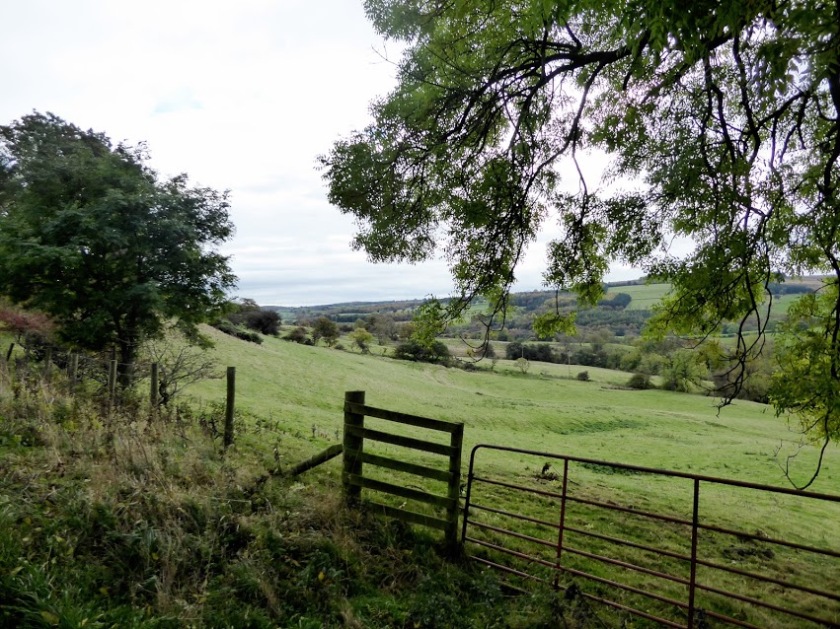
In many ways our walk was a scam.  The A61 passes through rolling hillsides, productive farmland, cows in the pasture, and pretty villages.  It’s all bucolic England at its best.  Our route presented a more hidden countryside.  Isolated farmhouses with dilapidated barn roofs,  ancient pastures, secret dark, damp woodlands, and tiny rather remote hamlets.

If it survives the cut, you'll hear Clare painting a word-portarit of this farmhouse during the programmme.
If it survives the cut, you’ll hear Clare painting a word-portrait of this farmhouse during the programmme.

At first though, we were on a road.  Badly maintained, rather narrow and with tall hedges it’s a bridle path these days, but it is still tarmacced, and perhaps the kind of highway those marchers would have recognised.  Later, on grass-trodden pathways, we passed Markenfield Hall, a 14th century moated country house.

We saw Markenfield Hall nearby as we walked. The Jarrow marchers didn't.
We saw Markenfield Hall nearby as we walked. The Jarrow marchers didn’t.

Those marchers didn’t.  We went through the village of Markington. Apparently the marchers were welcomed here too, though we couldn’t imagine why.  It’s more than a mile or so from the main road and history doesn’t record why exactly they made a detour.  We strode along the edges of barley fields, on woodland paths and across gorsey heath, all without meeting a soul.  Not what the marchers experienced.

This is farming country.

And we talked.  That’s what I’ll remember most.  The sheer pleasure of walking and talking with a group of people thrust together for the day who quickly found themselves to be friends – just for a day.  Thanks you Clare, Lucy, Robert and Helen for a very special occasion.  It was a real privilege.

Clare strides away into the woods.

And the Jarrow March?  More about that in my next post.


What a difference six months make…..

Look.  Here was the scene in the field near our house, in January this year.  Fields and roads flooded, impassable pathways, rocks and earth tumbling into the River Ure.

Near Old Sleningford, January 2016.

This was the same field yesterday.  Barley, barley everywhere, all fattening up nicely for the harvest.  Nearby, fields of poppies.  Really hopeful, cheery sights on a sunny and blustery day.

The same field, July 2016

Will all our present political crises end so well?  I wish I could feel more optimistic.

PoppyFieldsJuly2016 013