Reflections seem generally to be below us – in water.

Or to the side of us – in plate glass windows.
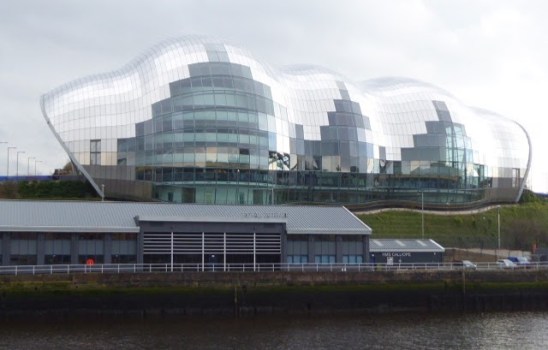
So I was rather taken by these reflections of visitors to the Baltic Centre in Gateshead. Above us.
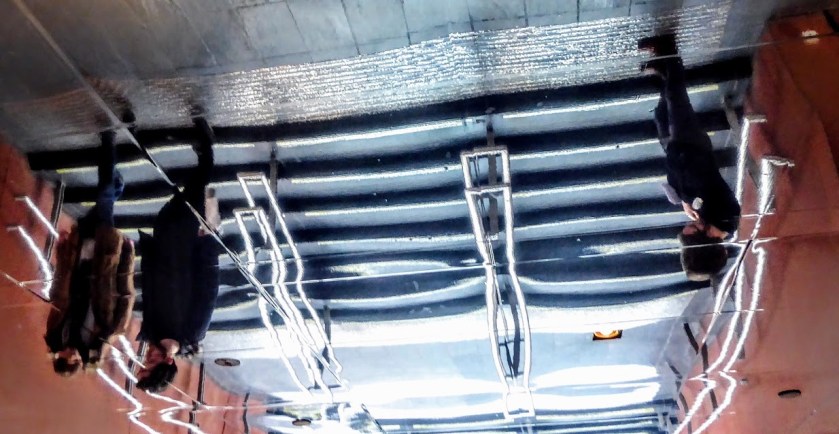
Reflections seem generally to be below us – in water.
Or to the side of us – in plate glass windows.
So I was rather taken by these reflections of visitors to the Baltic Centre in Gateshead. Above us.
It’s been a while since I shared one of my daughter’s posts with you. A tough situation has just got tougher. She’ll get through it, and she’s kept her sense of humour, if not her hair. But it’s hard.
I don’t normally re-blog twice in two days. Exceptional times, though.

I don’t like to do things by halves. If you’re going to have cancer, you may as well do it properly, so I’ve been in hospital these last few days with neutropenic sepsis. Much to the disappointment of our children, who were out playing a football match, they missed a very dramatic ride in an ambulance as I was rushed off to A&E (but not before I’d left a present and card on the kitchen table for one of them to take to a birthday party that afternoon, because, you know, motherhood.) Like most women, I’ve always been fearful of having my jeans whipped off by a handsome paramedic on a hairy-leg day, but the chemo has sorted out that problem for me. My blood count had dropped so low that the common cold I caught last week could very well have killed me, but hey – at least my…
View original post 1,373 more words
Just round the corner from us, on a back road into Ripon, is a fine old manor house, Norton Conyers. It was in such ruinous condition that it was closed for several years while its owners, Sir James and Lady Graham, oversaw its restoration.
Last year, one one of its few open days, we paid a visit, and I failed to blog about our wonderful afternoon out. But now I don’t have to.
Ann Stephenson, in her wonderfully varied blog ‘Travels and Tomes’ not only recounts something of the house and its history, but lets us all into a secret. Norton Conyers, with its secret attic and resident madwoman may have provided the inspiration for Charlotte Bronte’s ‘Jane Eyre’. How exciting is that?
You can read all about it here. Thanks Ann, for letting me share this story.

 The secret attic room at Norton Conyers.
While we are on the topic of the Bronte sisters (or, at least, we were two weeks ago), there’s one more thing I should mention– an especially juicy tidbit. Are you listening? Jane Eyre may be inspired by a true story.
 Norton Conyers
This isn’t news in North Yorkshire and the cozy city of Ripon that I once called home. Just around the corner from Ripon, roughly two or three miles from the roundabout at the edge of town, lies a beautiful old manor house by the name Norton Conyers. It is a handsome medieval squire’s home, dating back to the 1600’s, which has remained in the possession of one family (the Grahams) for nearly 400 years. That’s an achievement!
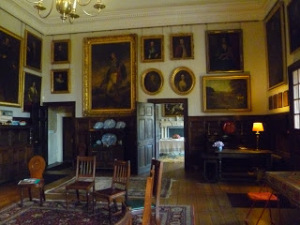
However, the house had fallen into disrepair of colossal proportions: rain poured in, wood-boring beetles swarmed, and very little of the grand house was heated. Thankfully, Sir James and…
View original post 782 more words
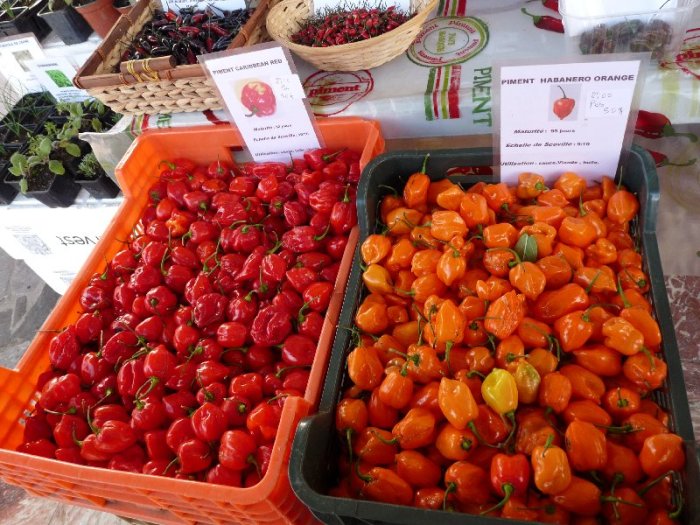
When we lived in France, the easiest way to persuade a French friend that you did not have their interests at heart was to produce a spiced dish, especially one with chillies in.
‘Oh, we love spicy food’, declared Henri and Brigitte when we broached the subject of cooking them a curry. All the same, we were careful. We dished up a korma so mild that it barely qualified as spiced at all. ‘Ouf!’ exclaimed Henri, after the first tentative mouthful – ‘are you trying to kill us?’
With this in mind, it was a huge surprise to us when one Friday in Lavelanet market, we came upon a man with a stall full of chillies. Orange chillies, yellow chillies, green chillies, purple chillies, fresh chillies, dried chillies. He had no customers at all. So he had time to chat to us, and explained that he’d come to love chillies, and to be passionate about seeking out new varieties, growing and using them. He was one of two such growers in France. We bought from him. He had other English customers. The French? Not so much.


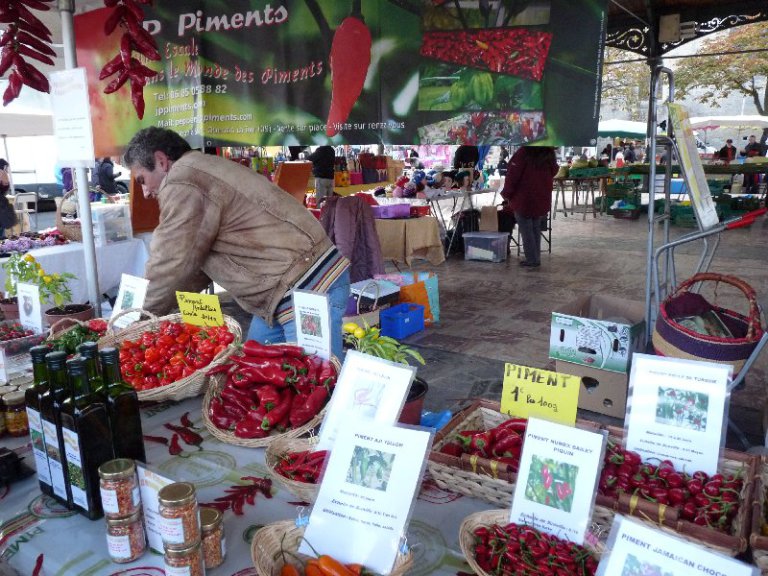
That was five years ago. After relying on northern Europeans to bail him out, slowly but surely he started to attract a few French customers too. He’s still in business. Perhaps, despite the danger represented by a Red Savina chilli rated 500,000 on the Scoville scale, he hasn’t managed to kill anybody off yet.


M. Chilli’s smallholding, devoted exclusively to chillies, chillies, and more chillies.

This post responds to this week’s WordPress photo challenge: ‘Danger!’
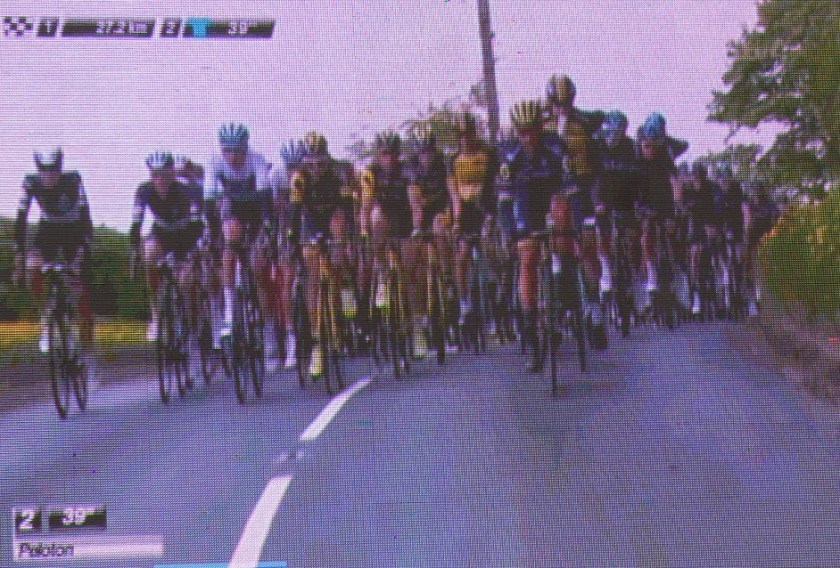
Three years ago, Yorkshire hosted the start of the Tour de France, which I wrote about here, here, and here.
Three years ago, plans were hatched for an annual Tour de Yorkshire.
This year, le Tour once again passed the end of our drive.
We watched the Women’s Race from the end of our road, and had a happy low key morning chatting to neighbours we knew, and neighbours we hadn’t previously met. Police motorbikes sped past, support vehicles, a helicopter above, then the riders themselves, followed by more support vehicles, more police, and finally, a couple of women riders who were never going to make it into the winning cohort, but were giving it their best shot anyway .


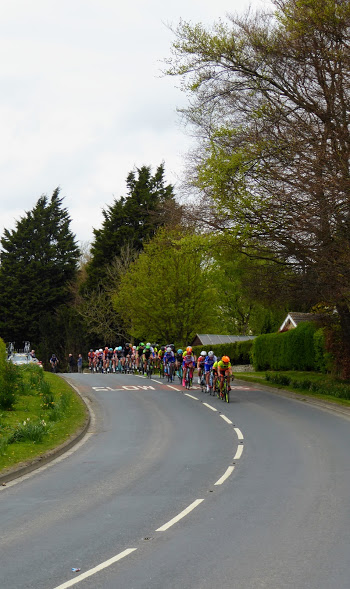
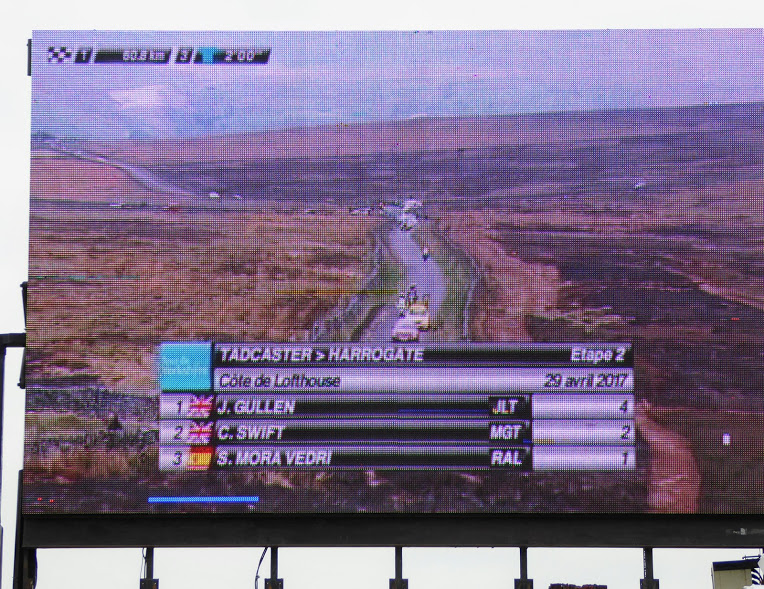
During the afternoon though, I sauntered into West Tanfield to watch the Men’s Race. I arrived to find a party atmosphere. There, amongst all the stalls on the village field, was the Big Screen showing the progress of the Tour in real time. Just look though. Just as in ze Tour de Fraunce, everysing eez in Frainch. ‘Tour de Yorkshire’, ‘Le Côte de Lofthouse’, ’29 avril 2017′. It’s a sweet little homage to the Tour de France, without which …..
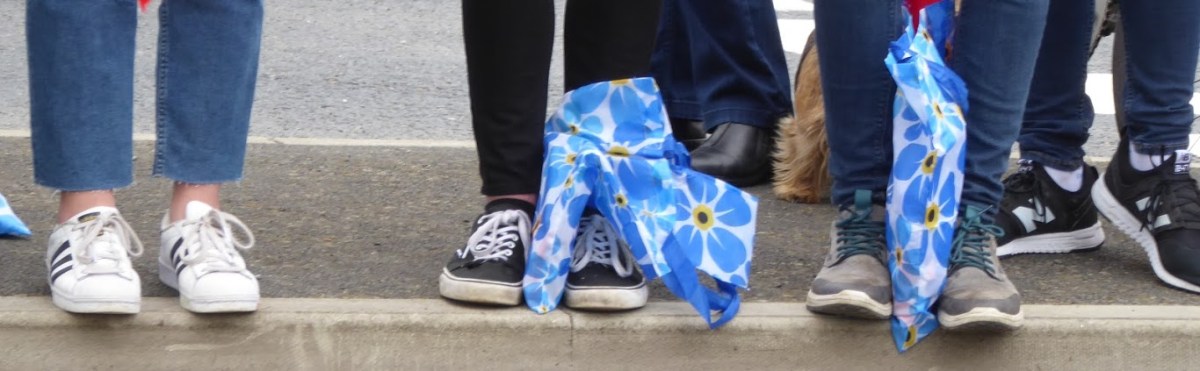
I’d missed the caravan giving out freebies. A friend told me that in Health and Safety conscious England, these aren’t chucked randomly out of publicity vehicles. Instead the vehicles stop, and small teams amble among the crowds, giving out flags, batons, shopping bags. She said it was rather nice and added to the party atmosphere.
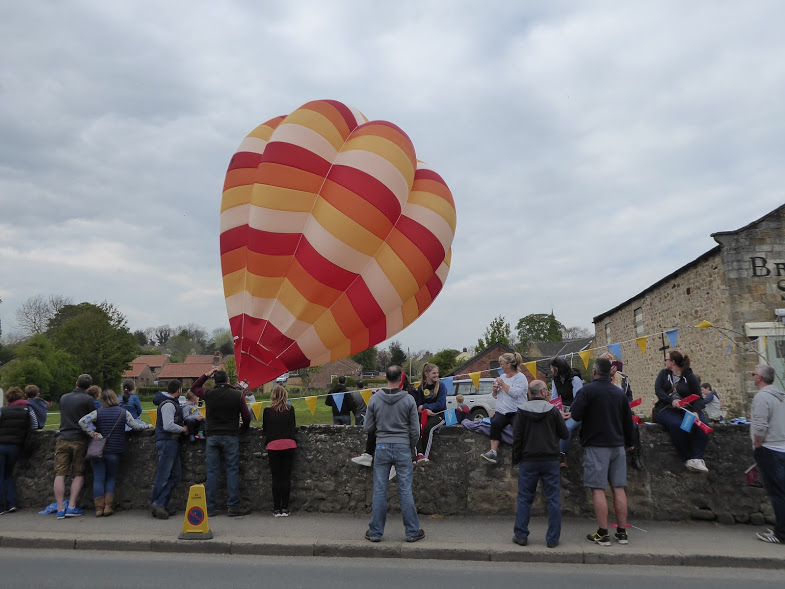
A hot air balloon was moored near the pub. We didn’t find out why, as it never became airborne.
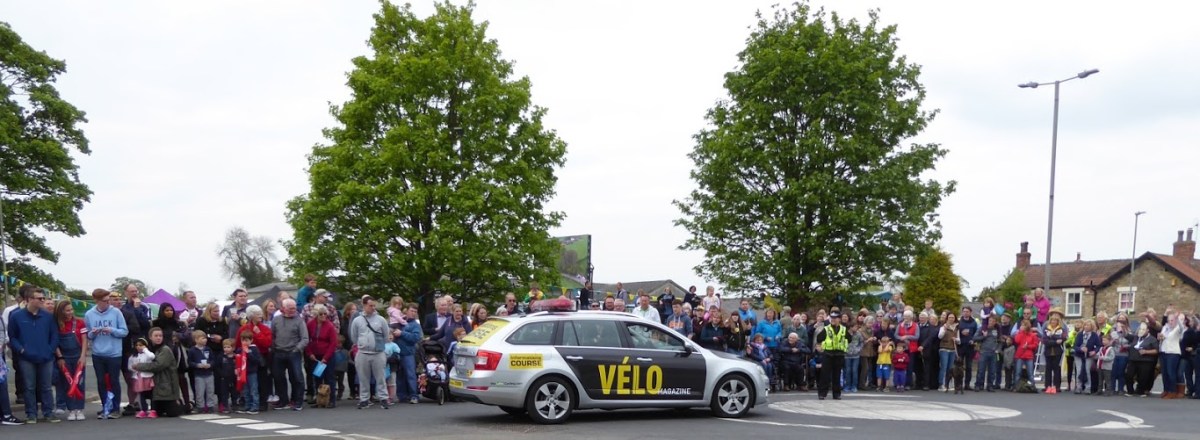
As the Big Screen informed us the riders had reached Masham, we started to line the streets. Volunteer Tour Makers shooed us onto the pavements, and we waited …. First of all, police motor bikes. Then this vehicle, complete with Man with Microphone. ‘Allez, allez allez’, he yelled. ‘Oi! Oi! Oi!’, we yelled back. ‘Allez, allez, allez!’ ‘Oi! Oi! Oi!’. ‘Allez!’ ‘Oi!’, ‘Allez!’ ‘Oi!’ ‘Allez, allez, allez!’ ‘Oi! Oi! Oi!’
Then this, the moment we’d been building up to.


They were gone. More support vehicles, and a final one telling us it was over.
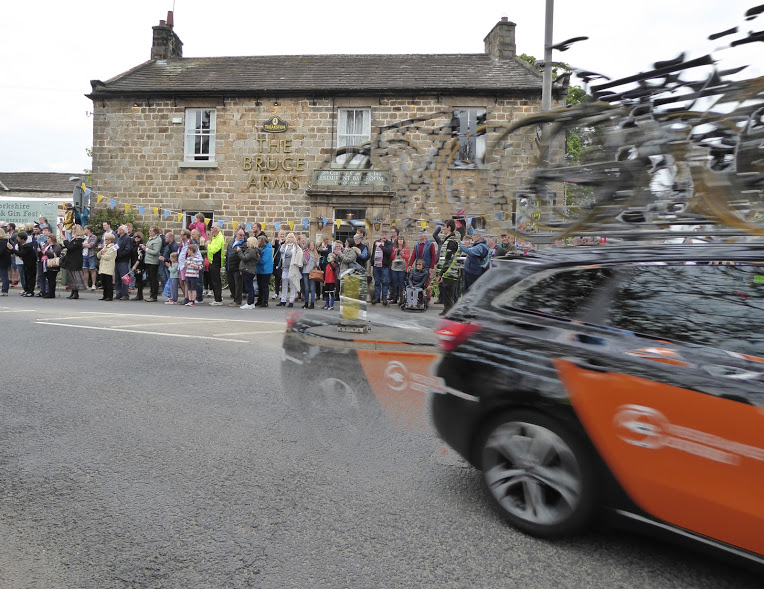
We all wandered off, perhaps to check out the big screen showing the riders going through Ripon. As I left the village, the dustbin men were already clearing the streets. The party was over.


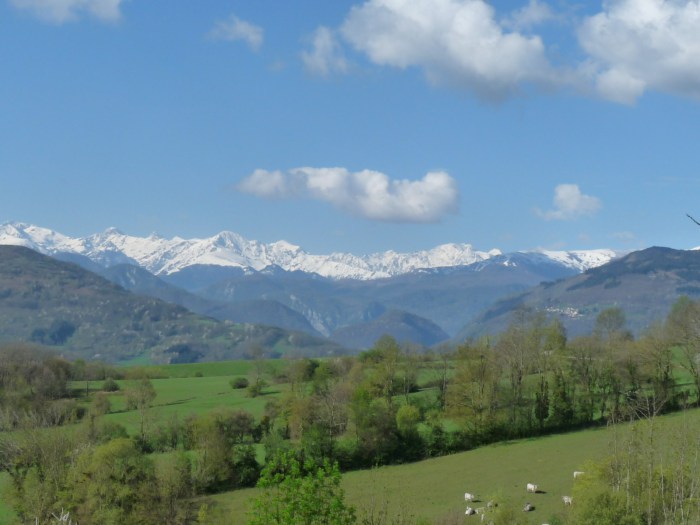
I can’t look at a picture of the Pyrenees without wishing I were there.
When we lived in France, these mountains were the constant backdrop to our lives. They were our playground, where we would enjoy flower-studded meadows in the spring, clear bright summer heat, autumn colours to rival those of New England, and glittering winter snowscapes. Winter and summer, we walked these mountains, climbing hundreds of feet to be rewarded over a leisurely lunch-time picnic by views of valleys, forests and dramatic rocks, before we had to descend to the foothills once more.
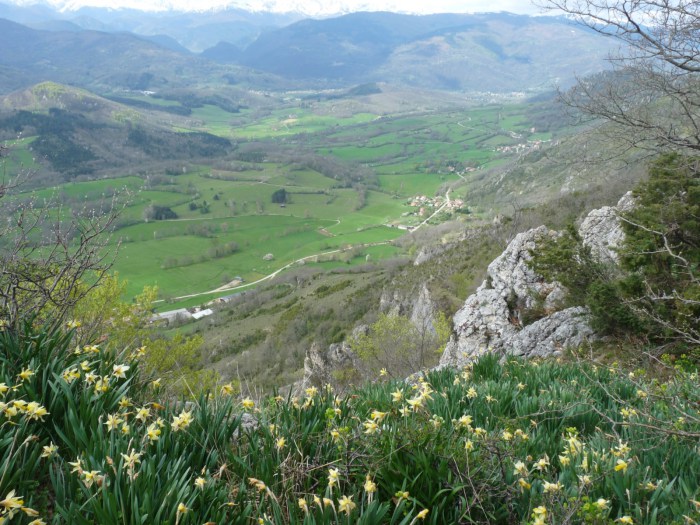
They were a natural boundary – often a barricade – between France and Spain, and the few roads linking these countries make wonderfully scenic journeys in their own right.
Travelling to our French town from England, we always knew we’d arrived ‘home’ when we caught sight of the Pyrenees once more – almost always as the sun was setting. The first glimpse of those jagged peaks, whose shapes and names we came to recognise so well always made me as emotional as if I’d just met once more a long-lost friend.
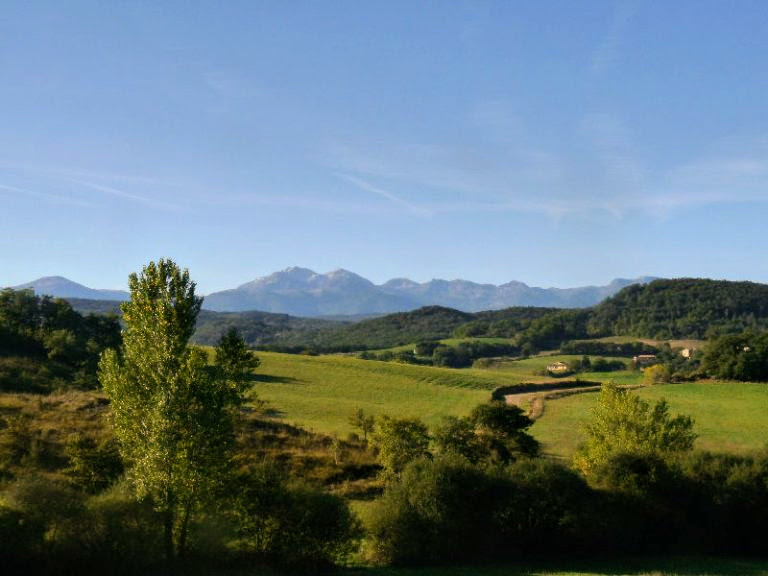
‘Wanderlust’, this week’s WordPress Photo Challenge, means a strong desire to wander, travel and explore. I know I’ve hardly begun to know the Pyrenees. They are where I want to travel, to wander, and above all to explore.
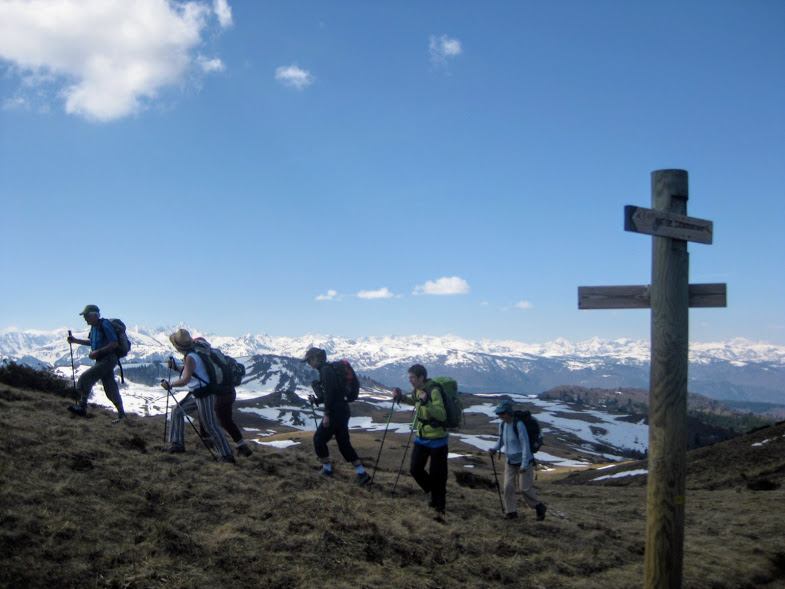
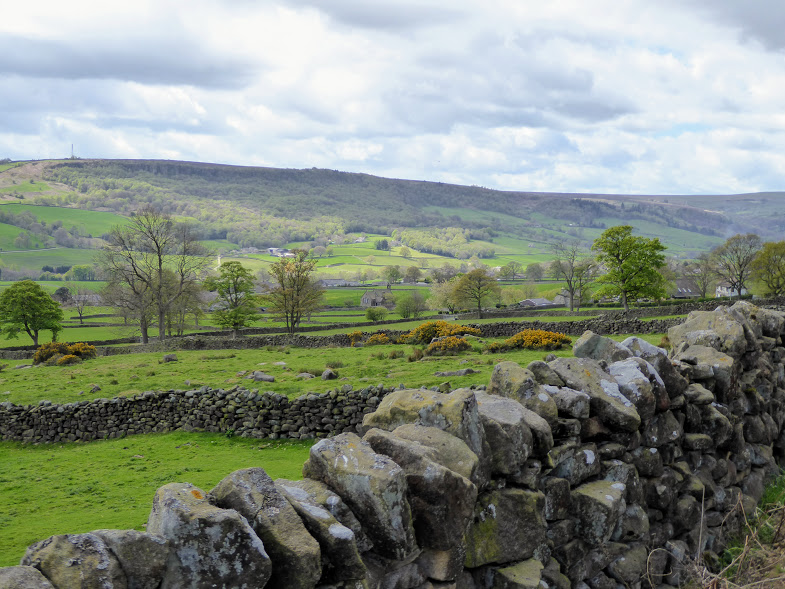
I’ve been out for the day with Clare Balding again, for BBC Radio 4’s ‘Ramblings’ programme. Last time, her producer Lucy was looking for a local rambler to lead the Ripon to Ripley section of the Jarrow March, and she ended up with me. Last time, as the walk finished we fell to talking about local long distance walks, such as The Nidderdale Way.
And lo! Now they have a six-programme series in the bag, waiting to be transmitted in May and June, on …… the Nidderdale Way, all 53 miles of it. She invited me to be part of the last leg, together with Chris and John.
Let me tell you how it works. We walk. We chat. Lucy walks beside us with her muff-on-a-stick, recording little and often. Clare stops from time to time and paints evocative word pictures of the scenery, the sights, smells and sounds, the passers by. She chats to us about everything from geology, to history, to walking, to long-lost industries, to living near Nidderdale.

We see our local landscape through fresh eyes. Instead of its being the backdrop to our daily lives, it becomes vivid again, and we remember the wonder and the intense pleasure we experienced when it was new to us too.
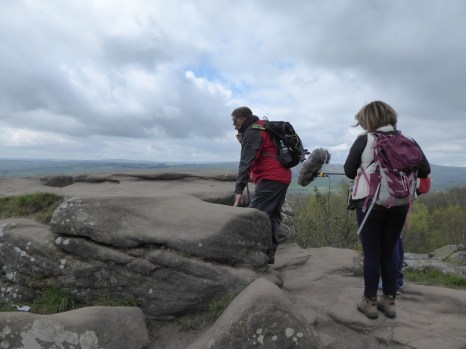
Clare loves people. At Brimham Rocks, where we insisted she take a detour, she chatted to children with their families and took part in their photos. Later, she hung over a drystone walls and talked to a farmer. She patted dogs and enjoyed a few moments with their owners.
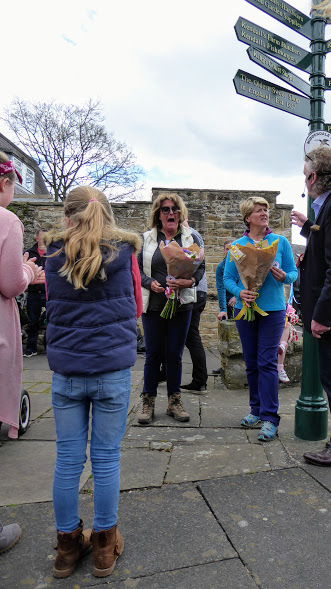
Just as well she’s good at this sort of thing. When we arrived at Pateley Bridge, she became a sort of stand-in for the Queen. She was whisked from shop to shop, always leaving with a little local speciality -a pork pie, some home-made fudge. With Lucy, she was given a newly-minted badge for completing the entire Nidderdale Way. They got flowers, a book by a local historian, hugs and handshakes galore, and repaid all this attention with genuine interest and friendship. Pateley Bridge by the way is in the thick of preparing for the Tour de Yorkshire 2017, which goes through the town – and past our front door – on Saturday 29th April.


Please listen to this series when it comes out: it’s available as a podcast even if you don’t live in the UK. The first programme will be on BBC Radio 4 on 18th May, and the programme featuring our team will be transmitted on Thursday 22nd June. You’ll make immediate plans for a holiday in Nidderdale after you’ve listened.

The Earth. It’s tempting, for this week’s WordPress Photo Challenge, to choose lush woodland, productive farmland, dramatic peaks, crashing ocean breakers, or a charming cottage garden crammed with colourful flowers, and on Earth Day, show it at its striking best.
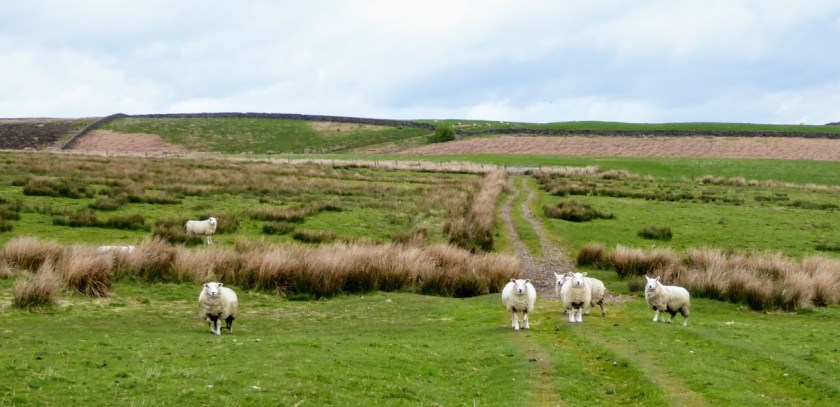
Instead, I want to take you to Colsterdale in Yorkshire. The soil is thin, acid, peaty. Bitter winds scythe across the hilltops, bending to their will those hardy trees that make it to maturity. Brackish ditches lurk below the juncus grass to catch out the unwary hiker. The hills, though beautiful, can look barren, apart from the heather which blushes an extravagant purple every August.


But Earth is clever. This unpromising countryside nurtures thousands of sheep and lambs. Curlews, plover and geese wheel through the sky. Songbirds spring from the heather. There is so much hidden wildlife that much of the area is a Site of Special Scientific Interest.


Today is Earth Day 2017. I’ve chosen to celebrate the hidden dale so close to where we live. Follow the WordPress Photo Challenge link to see what others have chosen.


William’s a London child. His commute to nursery passes railway tracks and city streets, as well as a walk through a rather nice park. The animals my grandson sees on his daily round are dogs-on-leads, cats and urban foxes.
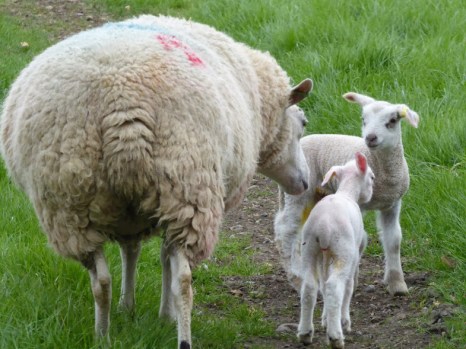
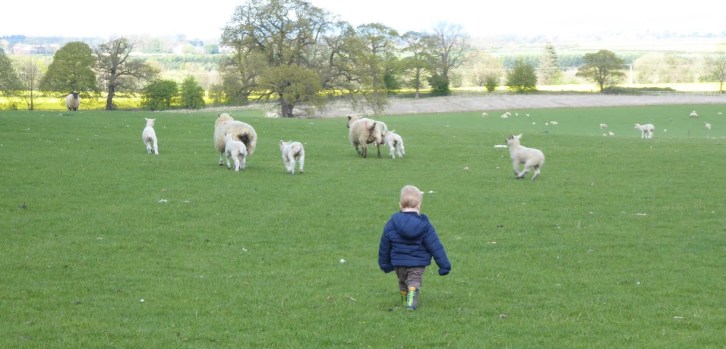
We wanted Yorkshire to offer him something different. On his very first afternoon, we visited two-day-old lambs in the field at the end of the road, wobbly on their legs and clinging to their mothers. Later we’d visit older lambs, confidently running and jumping across a public footpath as William wandered among them.
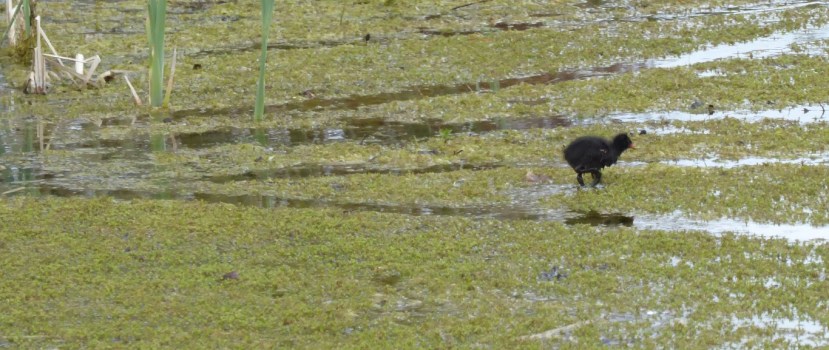
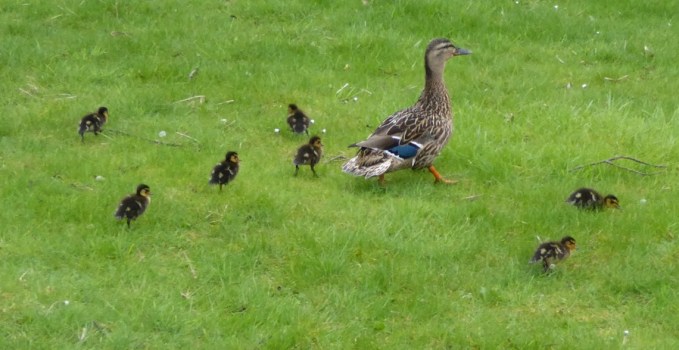
Then it was off to the duck pond. Two Mrs. Moorhens had a chick each, so light that even pond weed could bear their weight: were they walking on water? Mrs. Mallard had eight balls of fluff scuttling from land to pond to rushes – constantly on the move.
The next morning, good friends Gill and David invited us over. There were puppies to pet, dogs and a cat to stroke. And then there was Reggie, their grandson’s very own Thelwell pony. Reggie turned out to be far too scary to ride, but perfectly good to take for a walk.

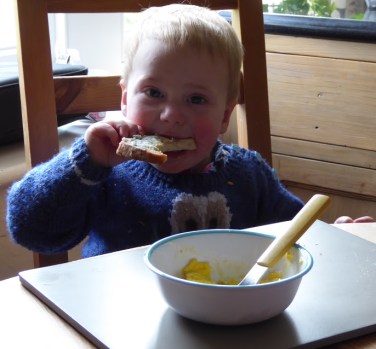
Then William was put to work, collecting eggs. He didn’t break very many as he dropped them none too gently into his collecting basket. Afterwards he fed the hens. And we went home for scrambled eggs on toast. Thank you William. Thank you Gill, David and the hens.


Late one afternoon, William and I went for a walk in the woods and saw rabbits, a dozen or more, grazing the grass on the other side of the fence.
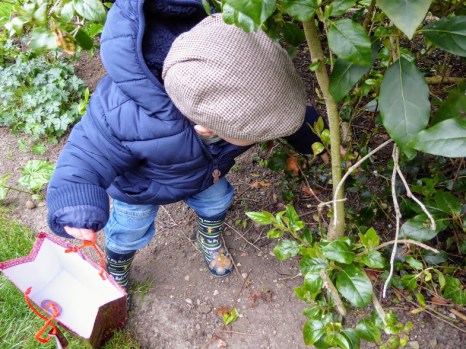
I wonder if it was one of them who left the chocolate eggs that William found in the garden when he went hunting for them on Easter Sunday?
 Well, he’s a fine rooster, and just the kind of handsome fellow you want illustrating an Easter-tide post, doing his bit to father the next generation of fluffy chickens. Not surprising at all to find him here. All the same, these gaudy colours are quite eye-opening, quite a surprise. So this cockerel can do duty this week in the WordPress photo challenge: surprise.


You must be logged in to post a comment.