The tale of a tree house

I love this story.  I hope you do too.

Quite suddenly and unexpectedly, one night in 1961, Berlin became a divided city. At first there was merely barbed wire fencing, then a wall. It was all done in such a hurry that mistakes were made. One tiny part of Kreuzberg that belonged to the Eastern sector got isolated in the West. The Americans – for it was in their zone – could do nothing about this unremarkable patch. It became an unloved and unlovely rubbish dump.

Then along came Osman Kalin, an immigrant Turk. He wanted a vegetable patch. He cleared the land and started to plant seeds.  As his patch became productive, he gave vegetables to schools, to the local church, to anyone in need. He cobbled together a rather ramshackle tree house.  He became something of a local hero.

Initially, the East didn’t mind. But when East Berliners successfully started to tunnel under his patch and escape he came under suspicion. The authorities came to interrogate him, and he welcomed them in his usual hospitable way. They gave up and left him alone.

In 1989, the Wall fell. A newly united Berlin City Council began to see Osman’s ramshackle domain as an embarrassment. They gave him notice to quit. The local and wider community was horrified. 25,000 people signed a petition demanding he be allowed to go on growing his vegetables.

He stayed. He’s 95 now, and doesn’t work so much on his vegetable patch, though his son does. He lives in a flat nearby rather than in the tree house. He’s still a much-loved local hero.
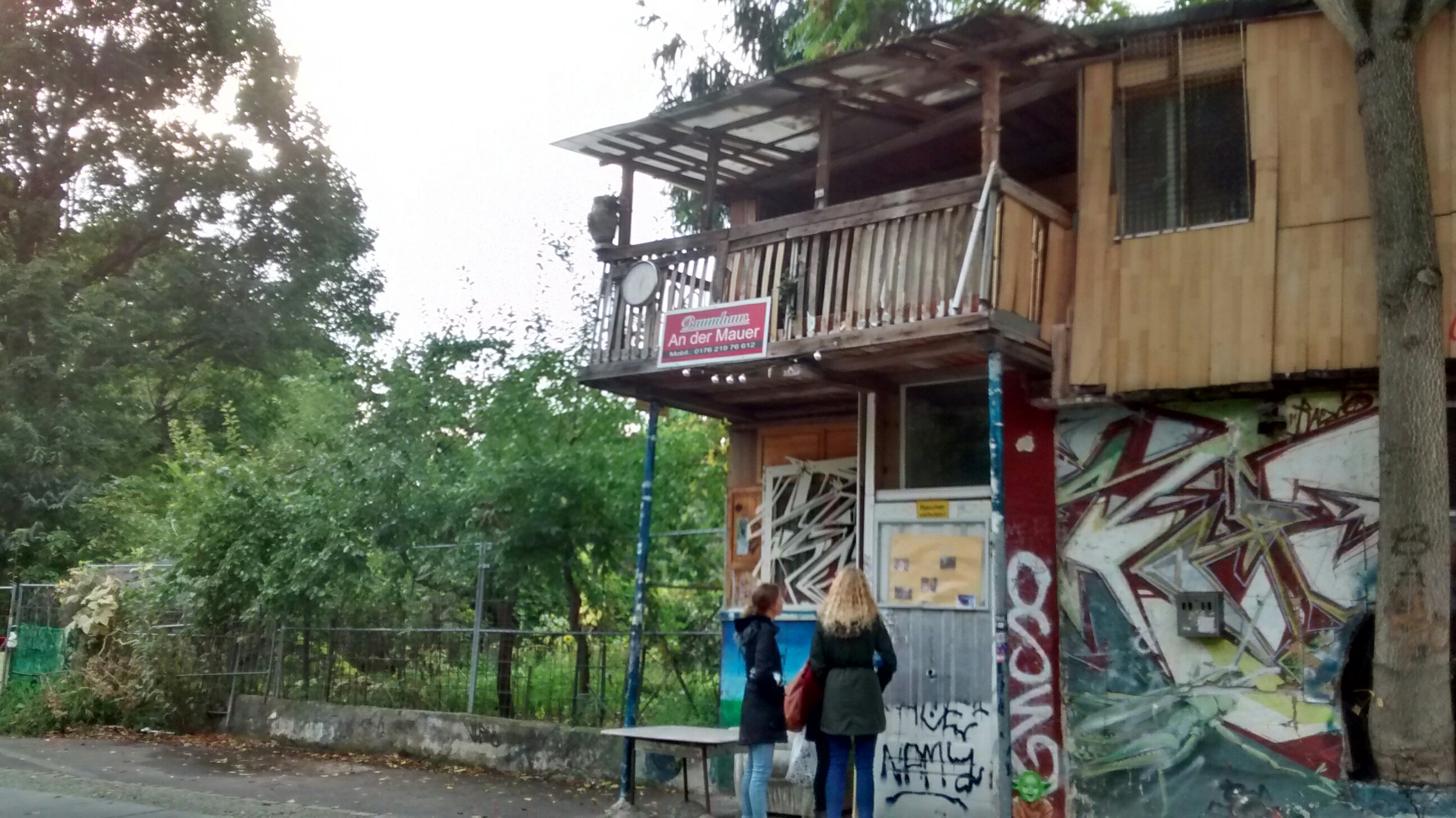
 I heard this story on a walking tour offered by Alternative Berlin Tours, led by the remarkable and endlessly interesting Dave. Very highly recommended.

Berlin: staying on the east side

Here we are in Berlin. Before we arrived, I imagined that even some thirty years after the fall of the wall dividing east from West Berlin, we’d be able to tell which zone we were in. The east would still be full of Stalinist architecture, and look, well, shabbier, surely?

 The Plus Hotel, once a school of textile design.

No. Not at all. We’re staying in a cracking looking hotel and hostel that used to be a textile school. We learnt that we were along the road from the East Side Gallery. An art gallery?  That’s nice.

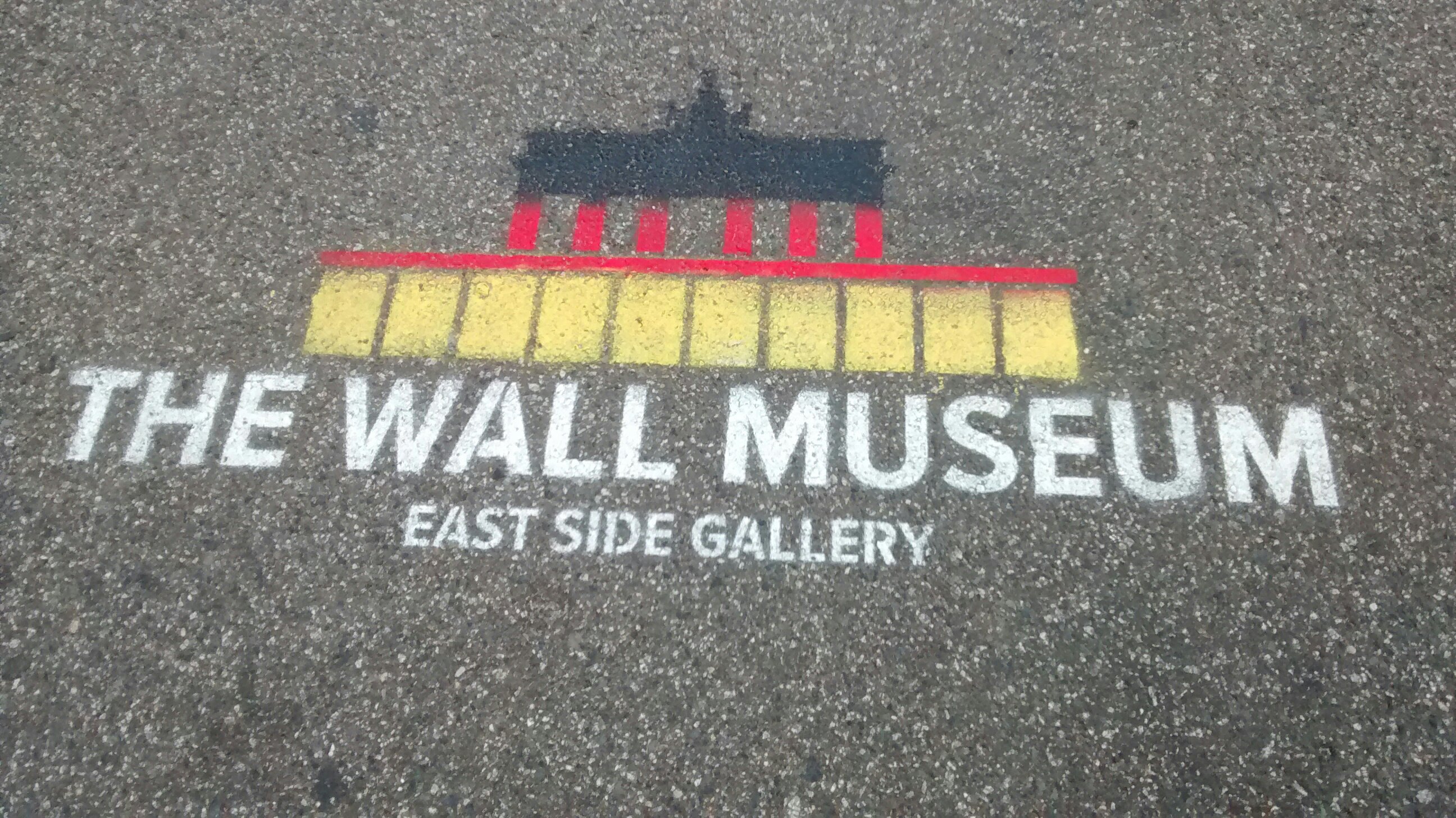
You’ll find your way to the ‘gallery’ by following the stencilled signs on the pavement.

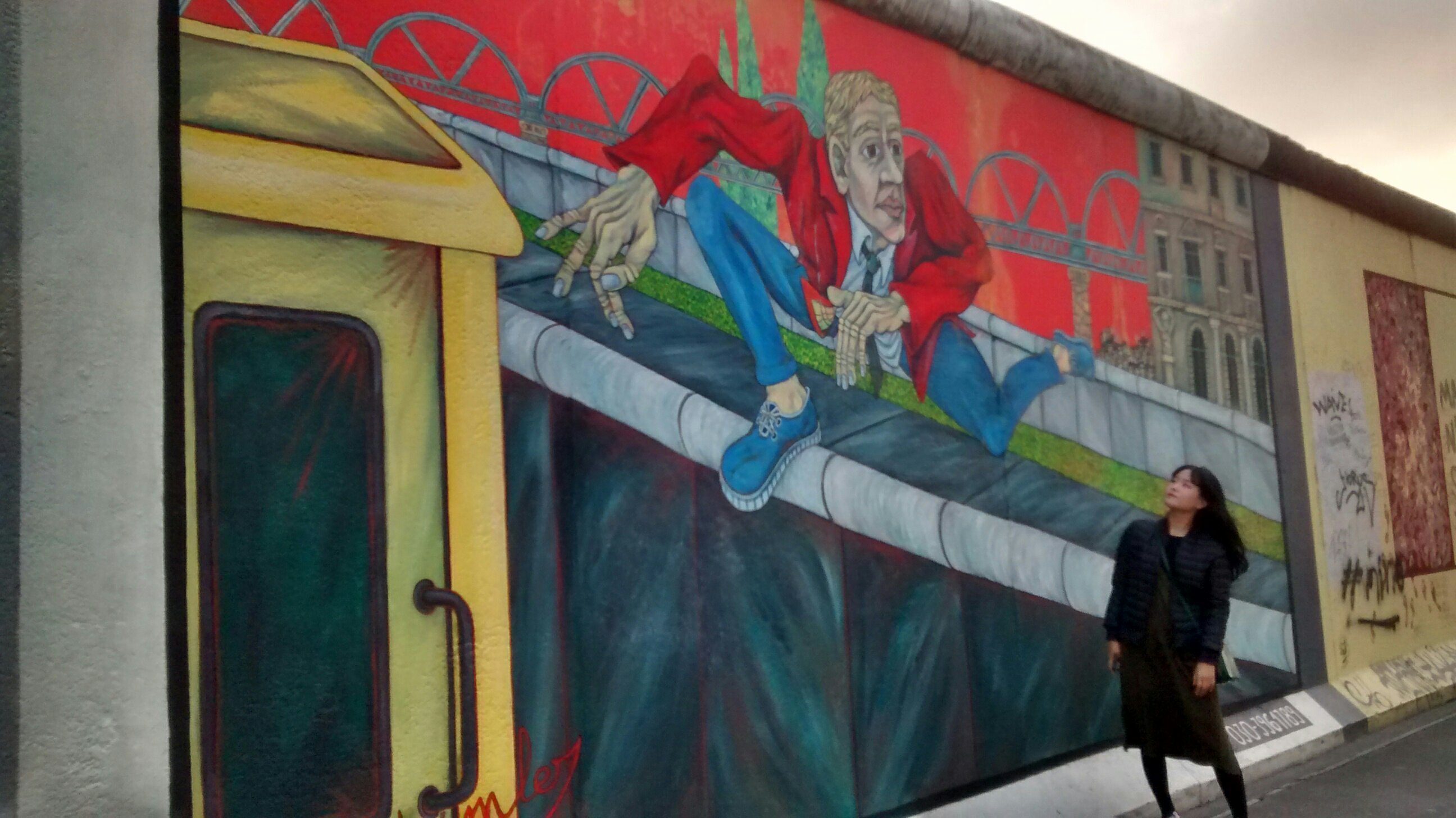
But this is a gallery like no other. The canvas on which the invited artists worked is the wall, the actual Berlin Wall.  Walk along the streets which line the route of what’s left of the wall and you’ll see painting after commissioned painting with the artist’s own thoughts provoked by the wall and its demise. It’s angry, gritty, colourful, and provokes conversation among passers by. We plan to return tomorrow for a more considered visit.

Very flat, Poland.

By train, we’ve travelled from Gdansk to Krakow, from Krakow to Warsaw, and now we’re on the train from Warsaw to Berlin.  In all, that’s some 1400 km.

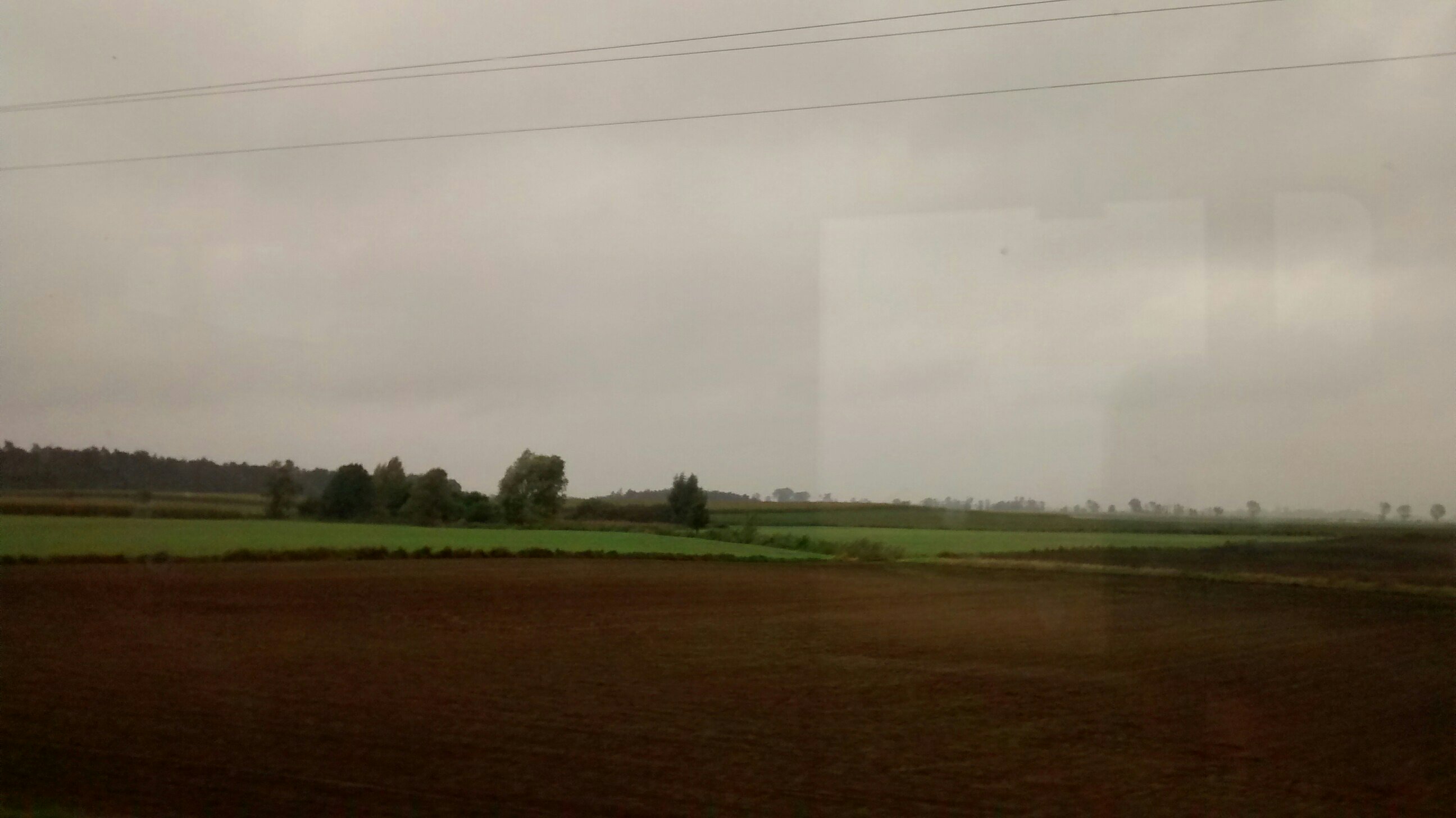
What is astonishing me is that the countryside is almost all the same. It’s flat, flat, flat. Long narrow unboundaried fields – and gosh, Polish cows don’t need fencing in – are interspersed with swathes of forest.

No wonder that that throughout history, invading armies have been able to march unimpeded across the land, conquering as they went. Hitler’s tanks, Stalin’s tanks all had a pretty easy ride here.

Just now, we’ve been passing through flatlands of long, wide peaceful lakes. And we’re drawing closer to Poznan, near to which my father was born, to a farming family.  I feel surprisingly emotional.

View from the train window, almost anywhere in Poland.

Auschwitz and Auschwitz-Birkenau

I’m glad I went to Auschwitz. I’m still processing what I saw, what I heard. Most of you will know the histories of the dreadful death camps.

The weather was appalling today. Double speed windscreen wipers on the way there. I was cold and wet. But I was well-clothed and shod, I’d had a good breakfast, and soon I’d be warm and dry. The inmates of Auschwitz and Auschwitz-Birkenau had their one and only pair of never-washed louse-infested pyjamas and next to no food inside them. They wouldn’t be going somewhere cosy for a change of clothes and a nice hot drink in a couple of hours.

I’ll just share two vignettes. Imagine a long narrow room, with a display case on each side running the length of the room. Each is filled with human hair. This hair comes from the heads of women and girls exterminated in the gas chambers of Auschwitz. A very small proportion of the total. This is the hair of some 80,000 women.

In the next, similar room are shoes. Thousands of shoes. They belonged to some of the thousands of murdered Jews.

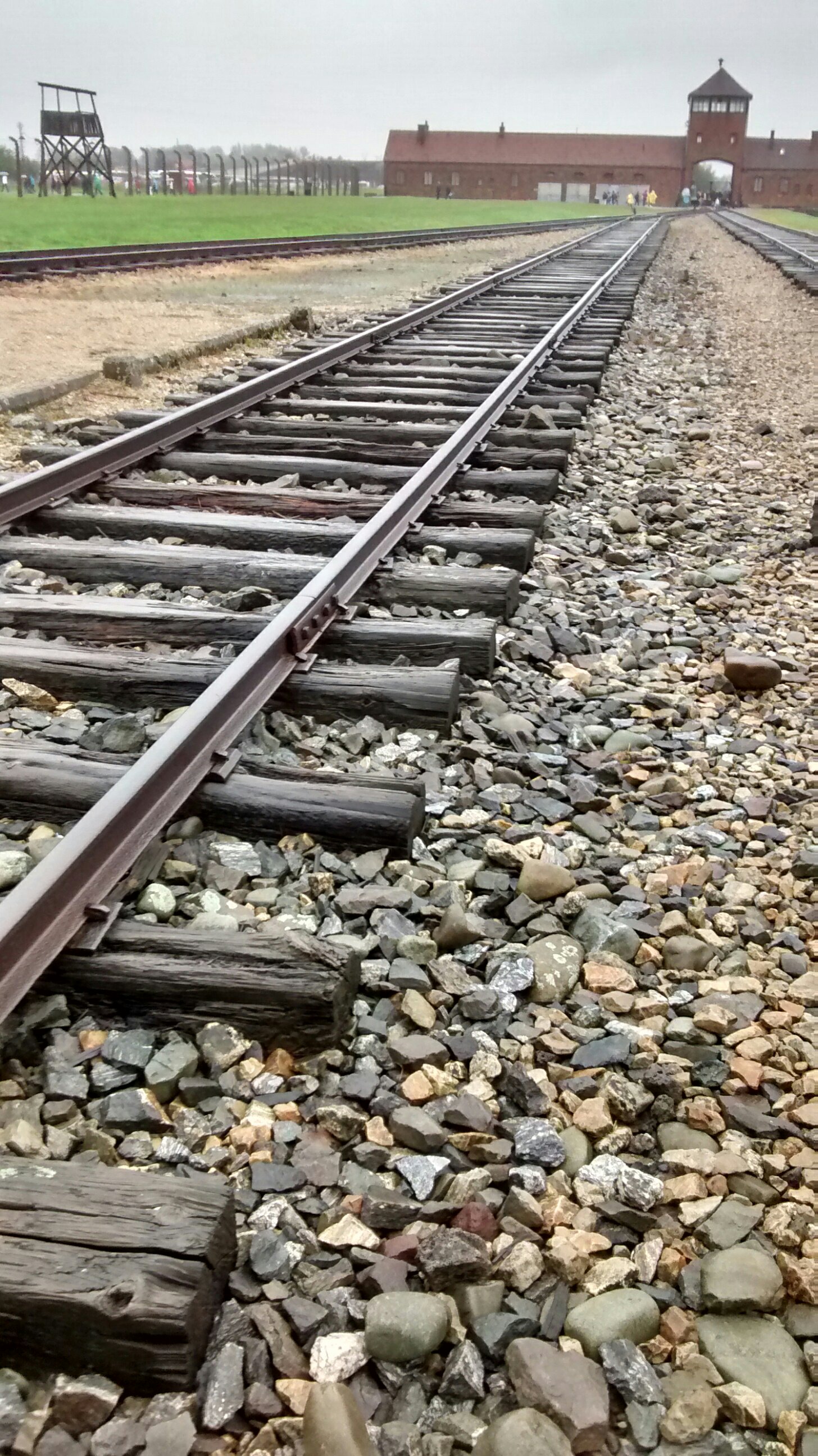
I took no photos in Auschwitz. It seemed disrespectful to take snapshots of those glimpses of real lives, real tragedies. I’ll just include one familiar image of Auschwitz-Birkenau, with the train lines which transported people to their almost certain deaths.

I’m glad to have gone because I left with a certain feeling of optimism. The custodians of these camps and the guides who bring those dreadful days back to life are passionate about sharing the stories, to try to make sure, against the odds, that they are never repeated. Our young guide told us he had been trained by an Auschwitz survivor. He clearly saw his job as no ordinary responsibility.

Today, and every single day, thousands of visitors take these lessons away with them.

My visit there does deserve a more considered post. Just – not yet.

Krakow 1940

It’s a toss-up whether to showcase our simple but delicious lunch – soup, crammed with every veg. known to the allotment patch, eaten in the company of a pile of Polish students and workers, or whether to hark back once more to the war.

All these vegetables were lined up in the café waiting to be transformed into soups and stews.

For positively the last time, the war wins.

My mother always acknowledged that she was lucky and lost nobody she cared about in WWII. She was a young teacher in York and evening fire-watching duties were rather fun. And all those handsome Polish airmen …. reader, she married one.

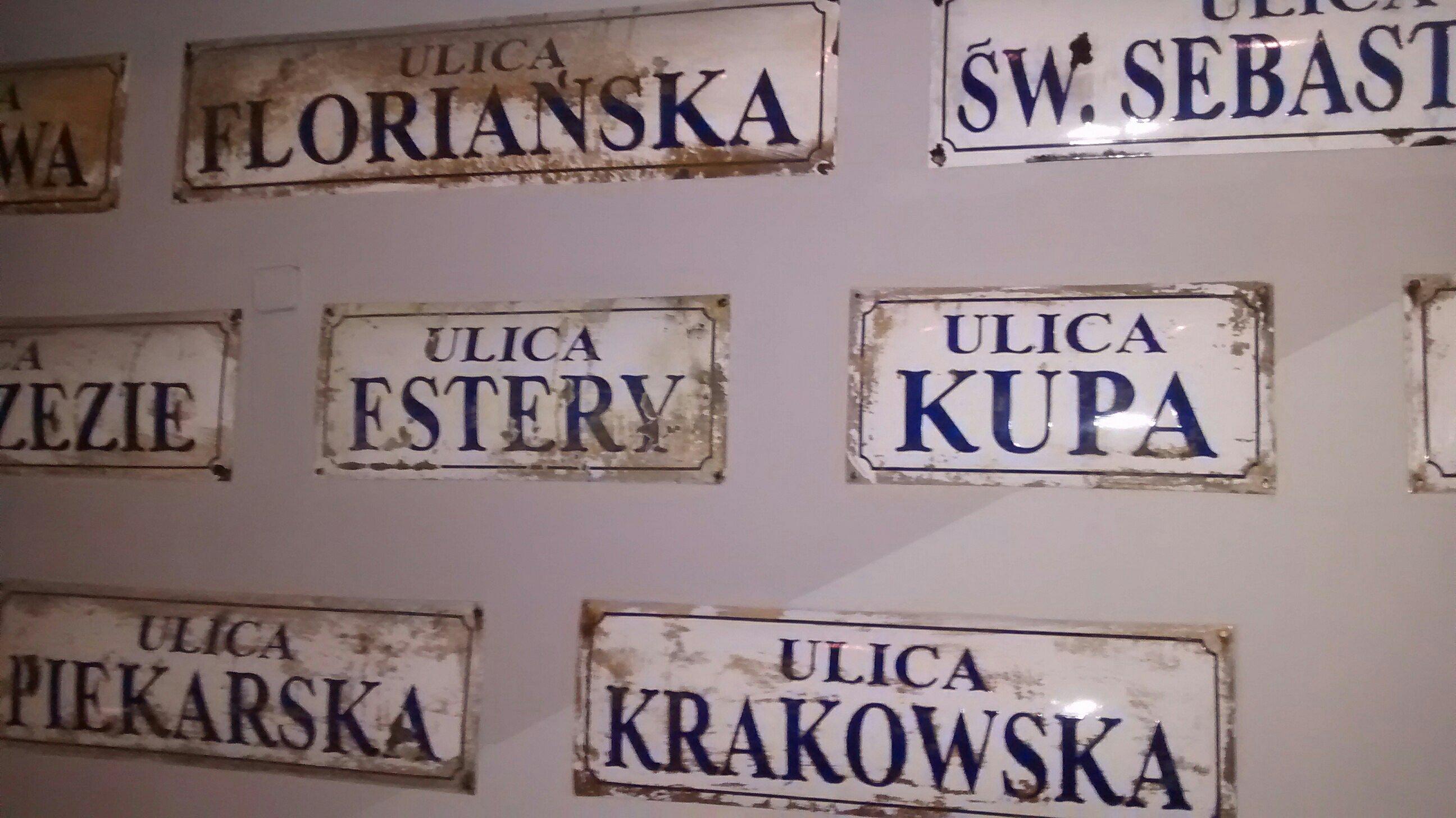
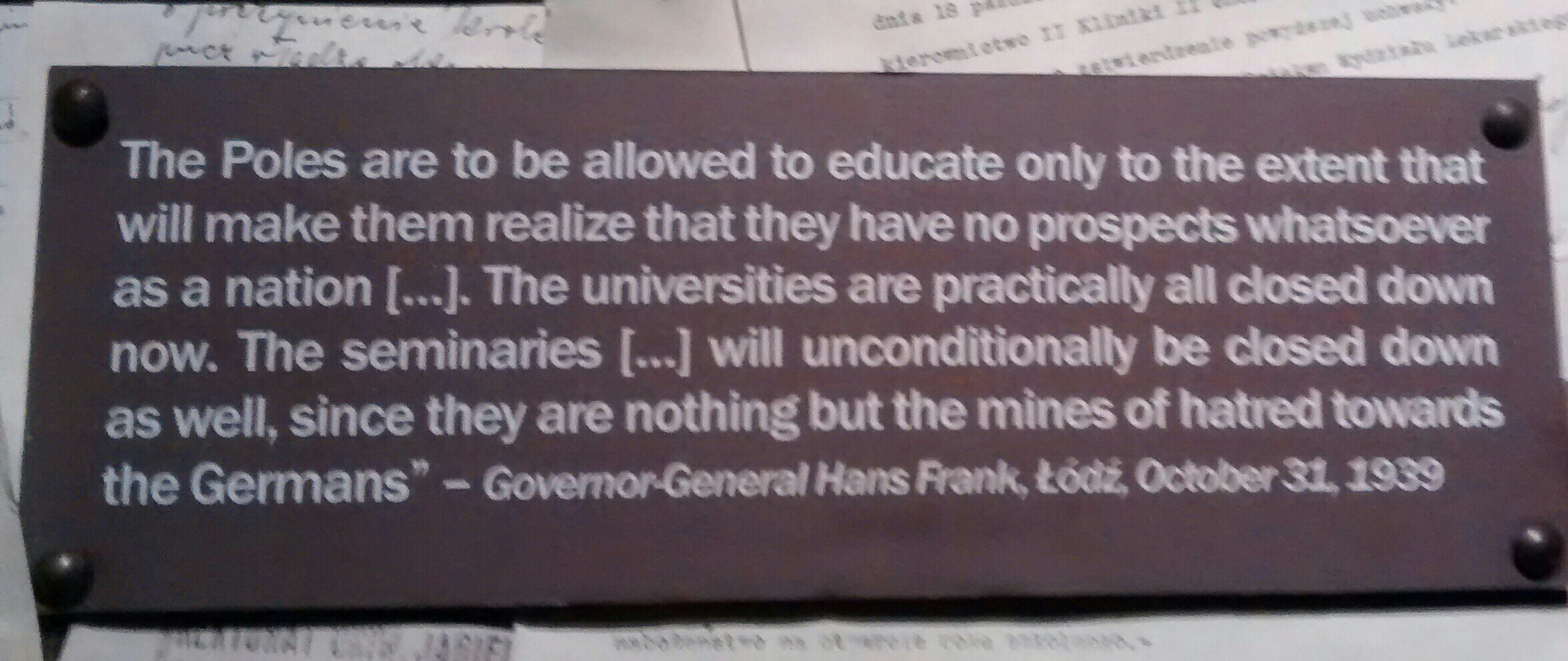
Compare Krakow for the first four years and five months of the war. German troops marched through the city and occupied it. If your house was requisitioned by the army, so were its furniture and contents. You just had to leave. Familiar streets were renamed in German. Polish news sources of all kinds were banned. Secondary and University education was banned, and teachers who taught in secret risked the camps. Foods were in such short supply that Poles and Jews alike subsisted on under 300 calories a day for stretches of the war. Minor infringements, such as boarding a tram intended for Germans, or breaking the curfew resulted in a stretch in a labour camp. And if all that was tough, the Russians who succeeded the Nazis as occupiers were even worse.

I know all this from our visit to Oskar Schindler’s Enamel Factory, now a museum of Krakow under Nazi Occupation.

Polish street names ripped down, to be replaced by different, German names.

I decided to bite the bullet, and tomorrow, I go to Auschwitz. Malcolm’s chosen not to go. I don’t blame him.

A day down the salt mines

We weren’t sure about visiting the salt mines near Krakow. They have over a million visitors a year, so mightn’t they be, well, a bit tacky?

Actually no. It was quite a special experience. And a UNESCO World Heritage Site to boot.

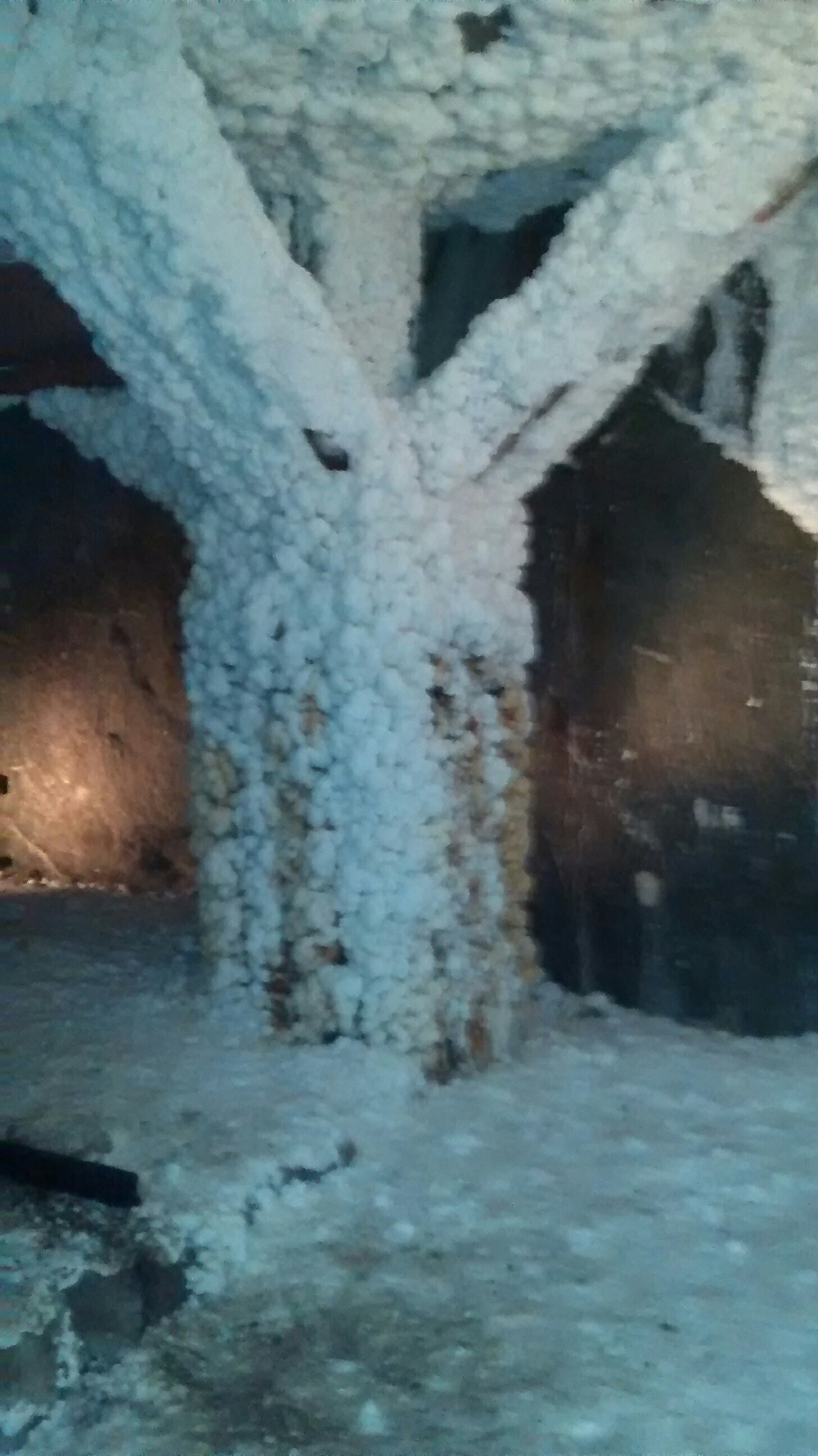
They’ve been mining salt in Wielicza since the 13th century.  We walked down 800 steps to get to a depth of more than 300 feet to see some of the earlier workings. Further seams can plunge to a depth of over 1000 feet.  Miners routinely walked down to their seams, or in the early days, were winched down on precarious rope hoists.

 Salt encrusted wooden pit props.

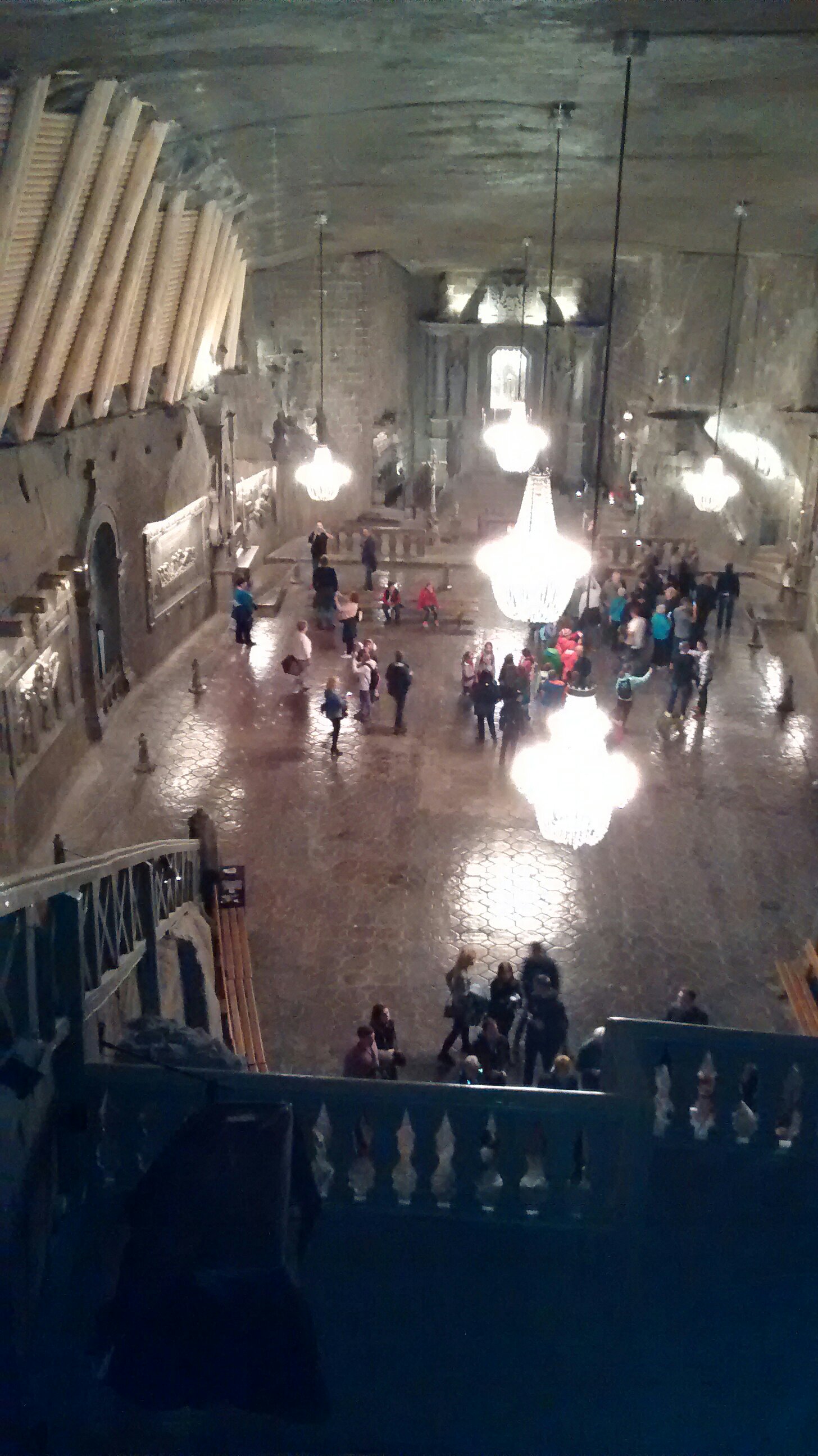
English coal mining is the only mining history I know. So it was wonderful to learn that visiting these mines has been a tourist attraction since the 15th century. There are pictures of elegant 18th century balls being held in the more spacious caverns.

And which English coal mines ever had built in chapels? Miners constructed and ornamented these places of worship so they could give thanks for surviving another day in these dangerous surroundings. They would greet each other ‘God be with you’ (so you survive another day).

A man I talked to at the end said his Fitbit revealed that we had walked 5 km. in our four hours down the mine. Just think how much else I could tell you about this fascinating place if I put my mind to it.

This is a cavern where dancing and other events took place. The walls and floor are made of salt. As are the droplets of the chandeliers.

A mish-mash of a day….

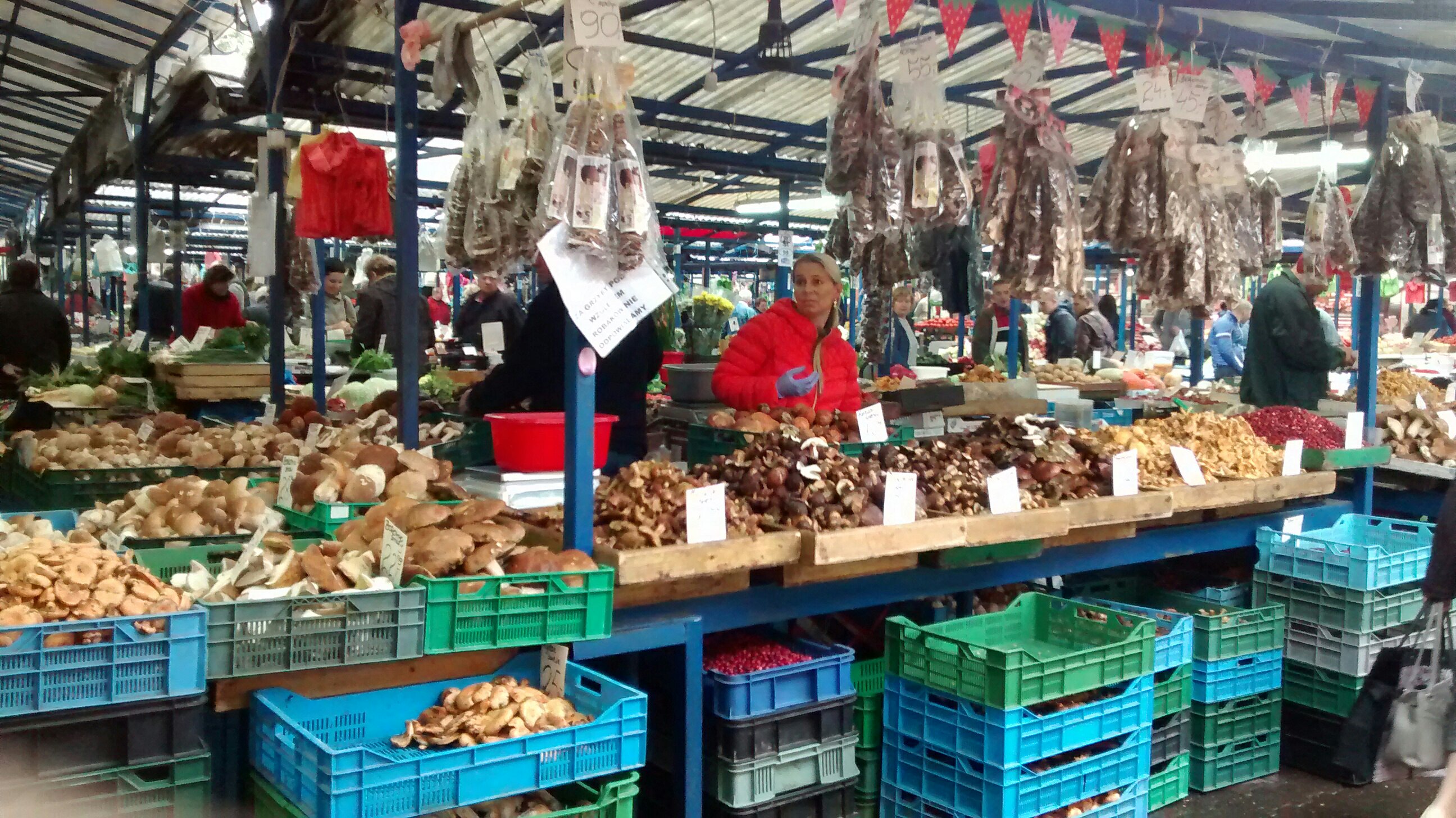
…. At the market at Stary Kleparz. Just look at all those mushrooms.

At Collegium Maius, the oldest part of the Jagiellonian University of Krakow. It’s one of the oldest universities in the world, and my father studied there.

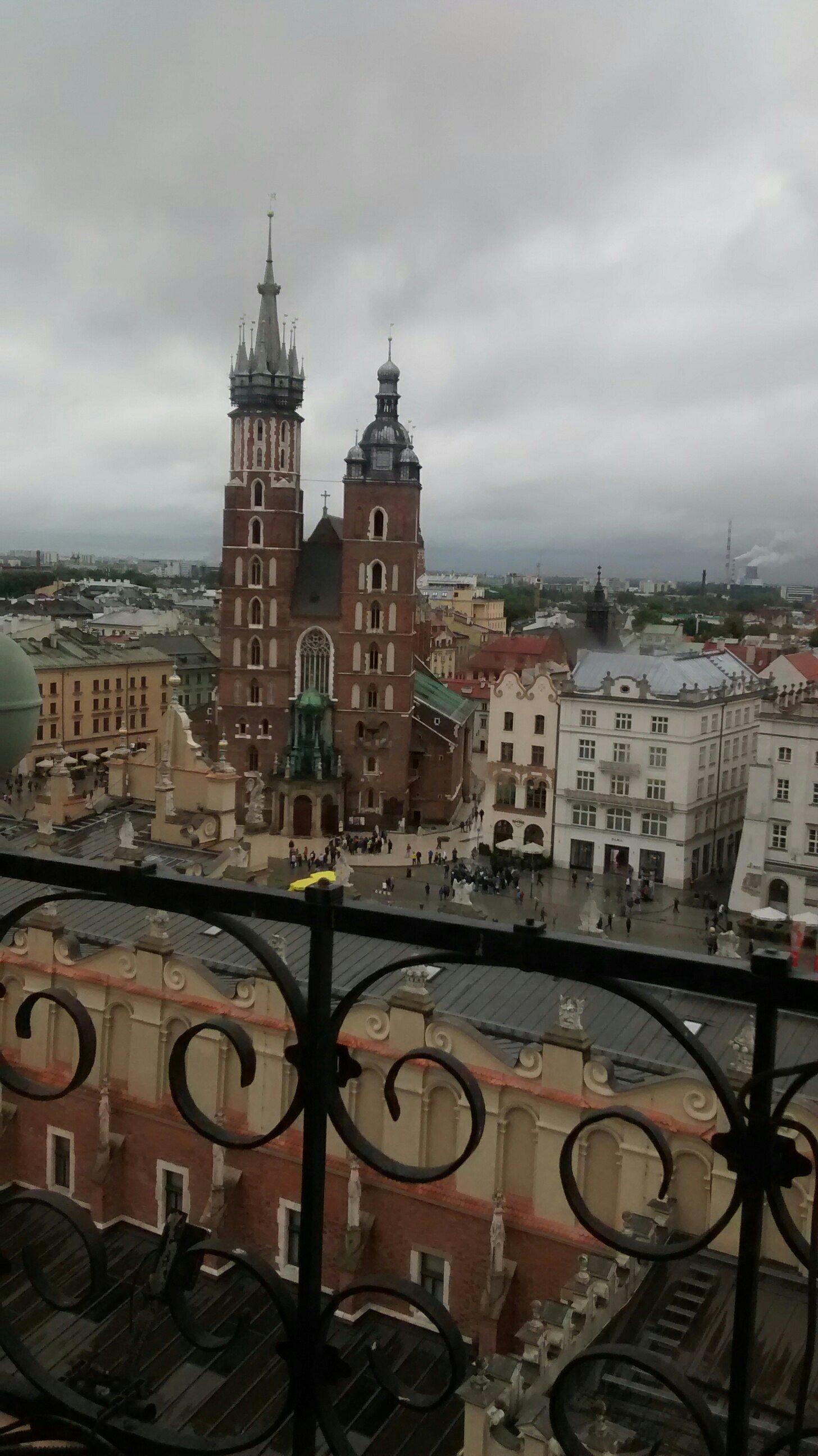
Up the Town Hall Tower in the Market Square …

… from which we could see St. Mary’s Basilica, whose wonderful polychromatic interior seduced me as much as the magnificent altarpiece by Veit Stoss.

All of these deserve posts of their own.  But not just now. I spend my time getting lost. I can’t even walk the 300 metres or so to our favourite café without getting in a muddle. Every single time.

Nowa Huta

That’s where we’ve been today. New Steelworks. It’s the name of a town, now part of Krakow, that was part of the post-war dream of the communist regime. Krakow was seen as too bourgeois, too intellectual. It needed a healthy dose of industrial work. Steelworks.

There was no coal or ore nearby. No matter. Bring raw materials in from miles away.  The site proposed for this industrial powerhouse was fertile agricultural land that had been productively farmed since the Middle Ages. No matter. Destroy the villages and evict the farmers and labourers.

Nova Huta was born. In its heyday it employed more than 100,000 workers.  They benefitted from good facilities for their families, and cultural opportunities, at the same time as they and the Krakow region choked under catastrophic industrial pollution.

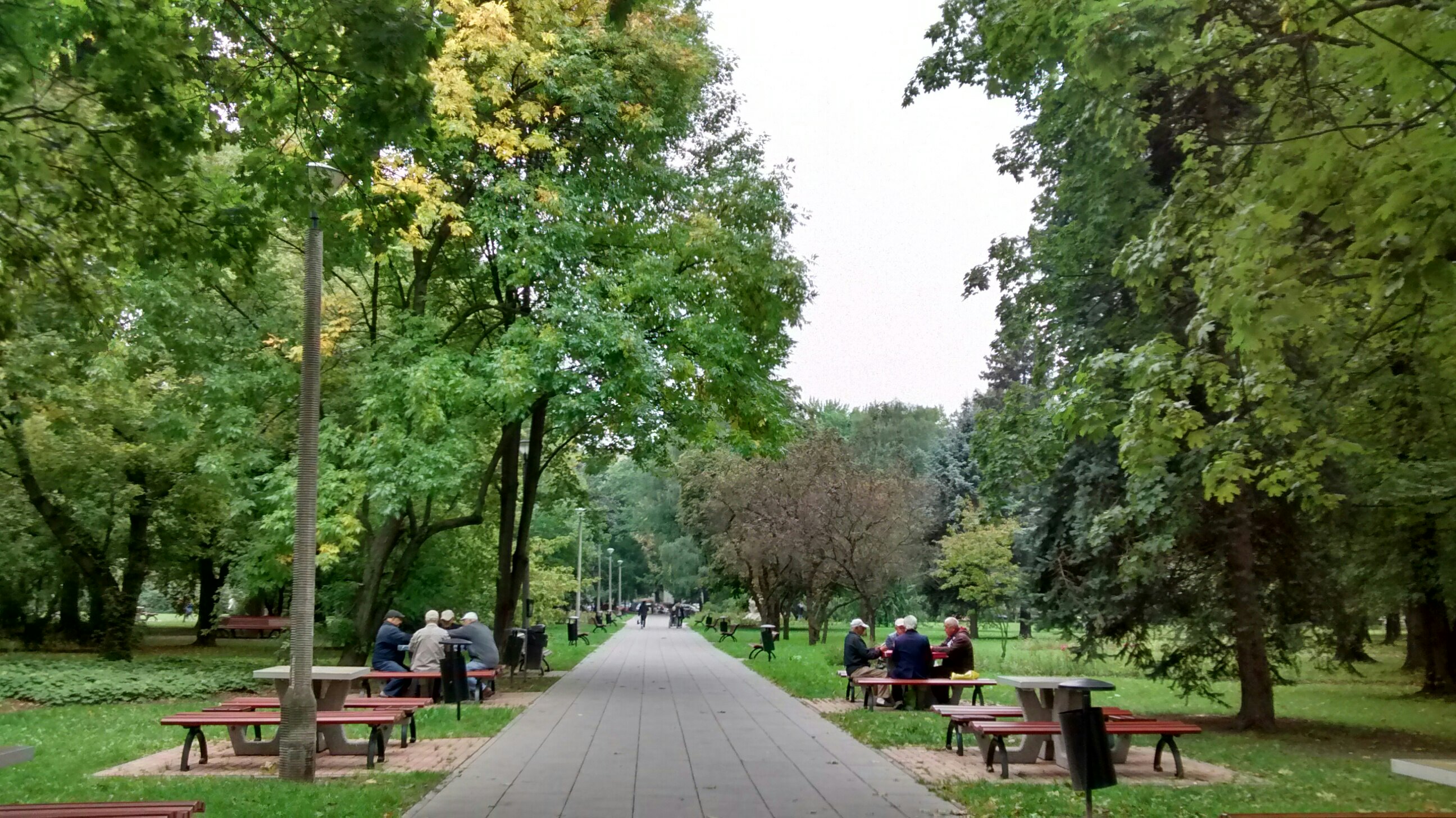
Today the pollution is sorted, but the town of Nova Huta lives on. It was a model of Socialist Realism. Monolithic concrete blocks of flats flank broad grassy tree-lined boulevards, interspersed by parks. We expected to hate it. But we didn’t. The massive blocks of flats are medium-rise, and grouped round communal lawns. Shops and community facilities form the ground floor of blocks along the main boulevards. The parks are spacious and seem to be home to lots of – yes – red squirrels. And groups of tables with inlaid chess boards where we came upon gaggles of men playing cards. Honestly, I’ve seen much nastier social housing all over Europe.

When the Solidarity movement began in Gdansk under Lech Walesa, the workers of Nova Huta, aided by the priests of the churches they had struggled to have built, and by the monks of the nearby Cistercian monastery were eager to join in the fight against communist oppression.

As is now clear. The main streets of Nova Huta are now named after Ronald Reagan, Pope John Paul II and Solidarity itself.

What a day. Such a contrast from historic down-town Krakow, and from the local Cistercian Abbey and ancient wooden church of Saint Bartholomew, which we also called in on. As well as the 1970s church of Arka Pana, which was such a struggle to have built. Luckily for the parishioners of Nova Huta, their bishop was on side. A certain Karol Wojtila, later Pope John Paul II.

Parkland

Social housing

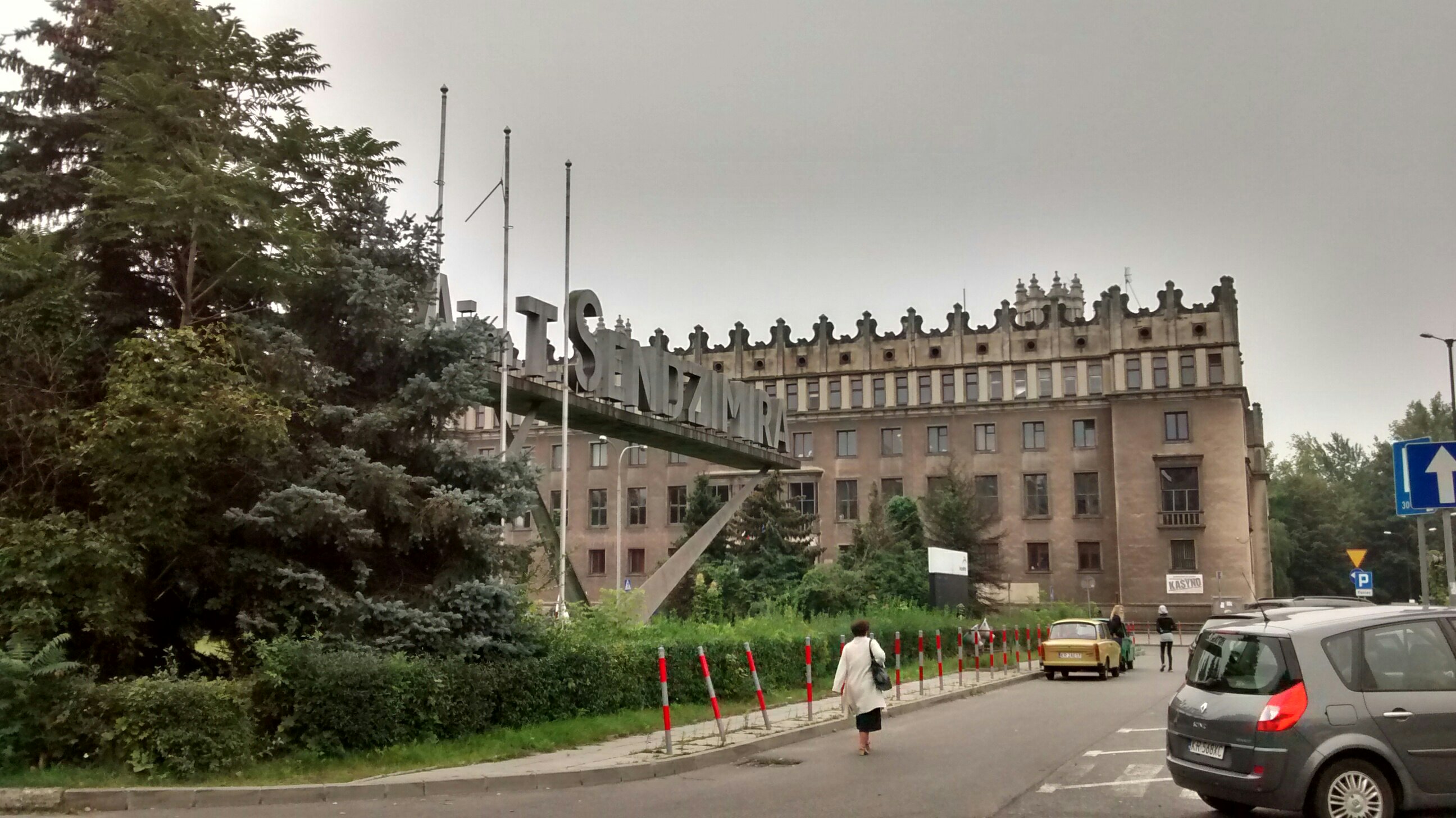
The offices of the steelworks.

The interior of Arka Pana.

Wawel Castle

Poland’s had a tough history. There’s never been a century when it hasn’t been invaded. I found a map that showed the western countries that hadn’t had a go at taking over Poland were few and far between. What with Swedes and Prussians and Austrians and Germans and Russians invading, ruling, dividing and subjugating, it’s a wonder that Poland has a national identity, language, or culture at all.  But it has. And the Polish people are proud of it.

Take Wawel Castle in Krakow. Originally built in the 11th century, then rebuilt, it burned down in 1499. And what a palace Sigismund the Old commissioned in its place! His wife was from Italy, a Sforza, and Italian workmen wrought a Palazzo fit for her to enjoy.

Since then, it was repeatedly sacked by armies from Sweden, from Prussia, and then from Austria. These last razed churches and houses on the site, constructing instead barracks and a military hospital while ruining the mediaeval fortifications.

Poland was once again re-established after WWI. Since then, the castle and the entire enormous site has gone through a period of painstaking restoration to reveal its earlier Polish ancestry. If this means rebuilding, or scaling away later additions by conquerors, so be it.

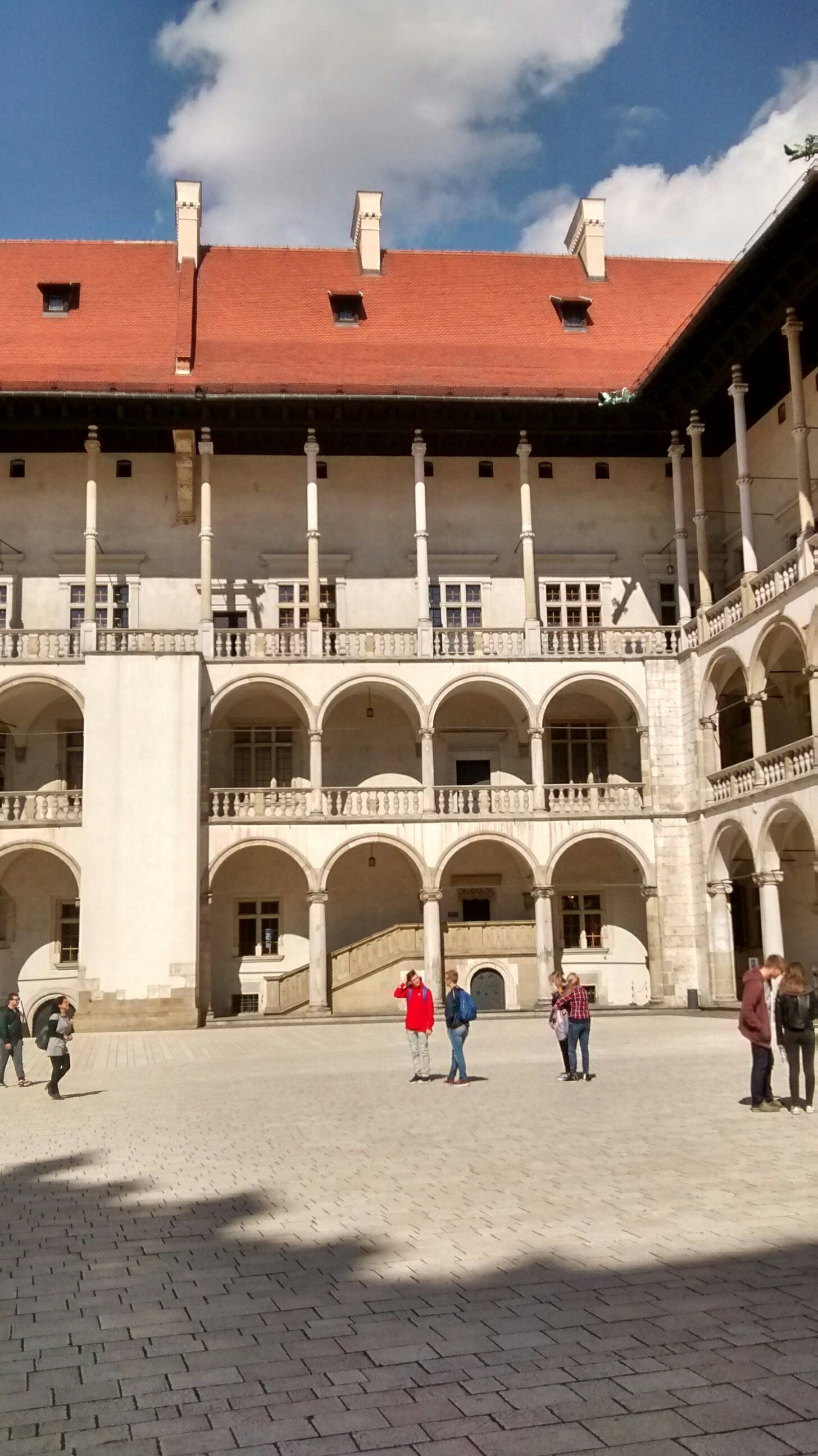
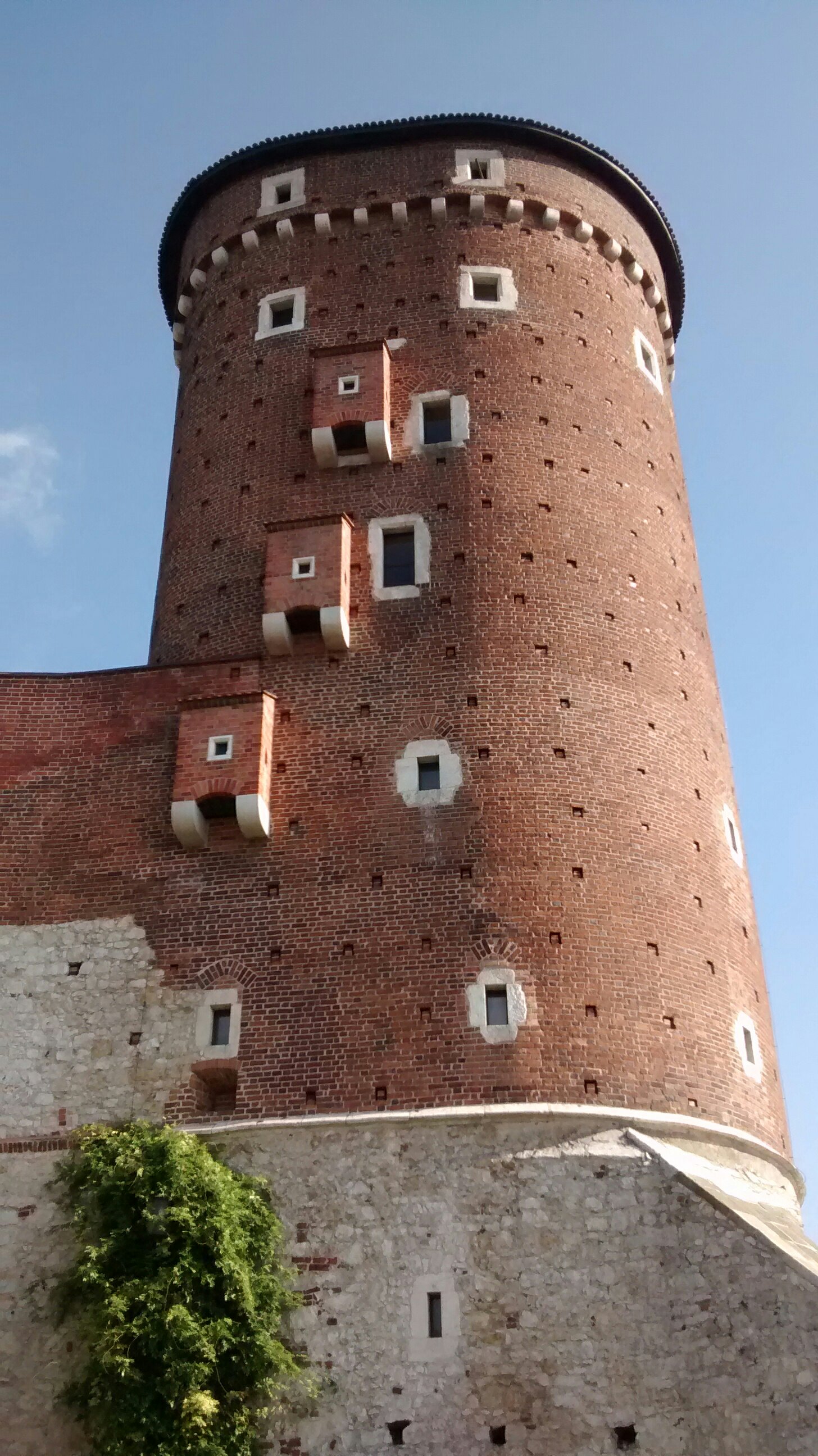
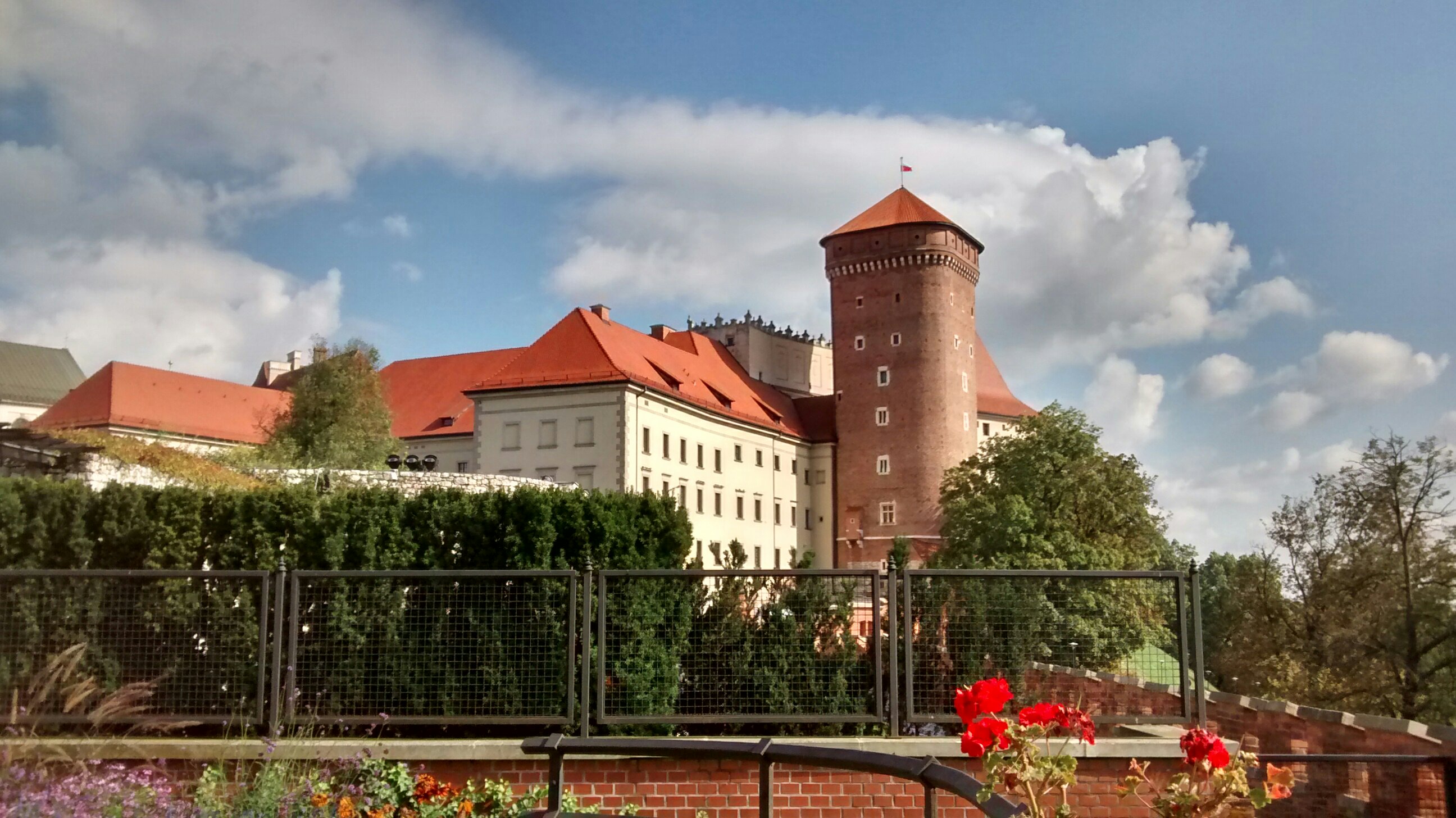
Wawel Hill is an enormous site shared by state and church alike. Here are some pictures to give some idea of this magnificent area of Krakow. The images show the Renaissance courtyard, the Royal Cathedral, the Sandomierska Tower and a view of the site from within the Castle walls.

Comfort food, Polish style

After a couple of emotionally draining days, we had a low-key day exploring endlessly fascinating back streets.

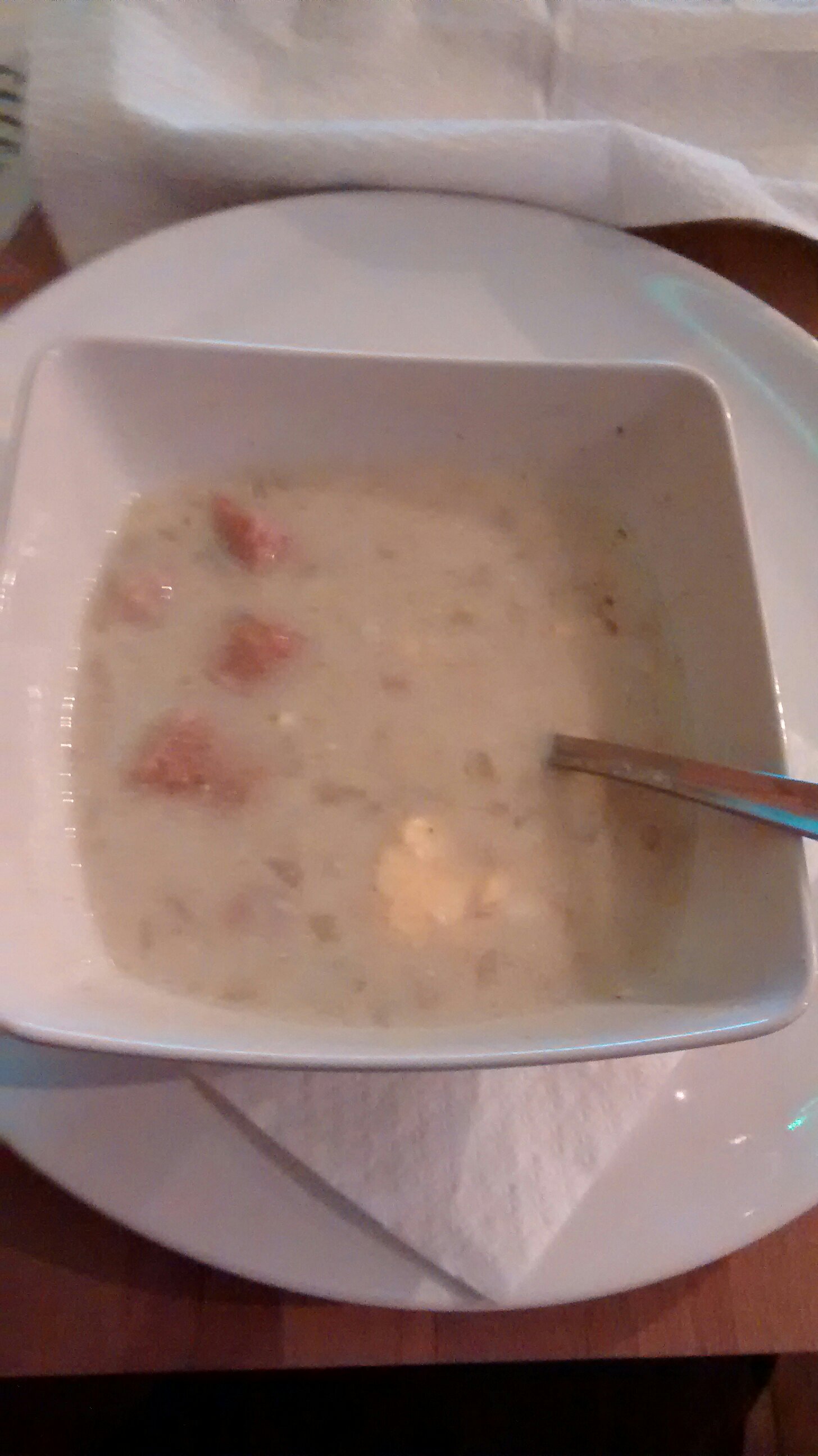
Rain threatened all day, and when it finally came, we knew about it. Deluge. We needed comfort food. This is what I chose at lunchtime: zureck. It tasted slightly sour, slightly fermented. I loved it.

You make a zakwas of rye flour, bread crusts, garlic, and warm water set aside for some days to ferment. Then you make a broth from root vegetables. Then you fry onions, bacon, white sausage, and add it to the strained broth. Add a hard boiled egg. And the zakwas. And you’re done. I’m going to make this at home.

This evening we shared a single portion of potato cakes, goulash type stew, sauerkraut, carrot salad served with sour cream. We almost failed to finish it. And I’ve recently acquired a taste for fruit vodkas. Expect us to have gone up two sizes at least by the time you next see us.