One of the pleasures of the garden is that it changes – every single day. Walk there daily, and you hardly notice as one plant quietly ends its moment in the sun, while another comes into vigorous life.
Visiting a garden less often, you notice those changes. Back in June at Harlow Carr, we walked among banks and beds crowded like this…..
A month later, they were gone. Instead, we meandered among beds thronged with these……
But I escaped the sights of the garden for a few moments in the Victorian potting shed. Looks at how these tools have changed over the years! Once sparkling and sturdy, now they’re dulled by rust and years of use. And yet ….. if I set out to buy a set of garden tools today, I’d be choosing ones that look very much like these. You can’t beat a functional design that’s stood the test of time. My plant labels might not look half so elegant though, nor my pots so characterful.
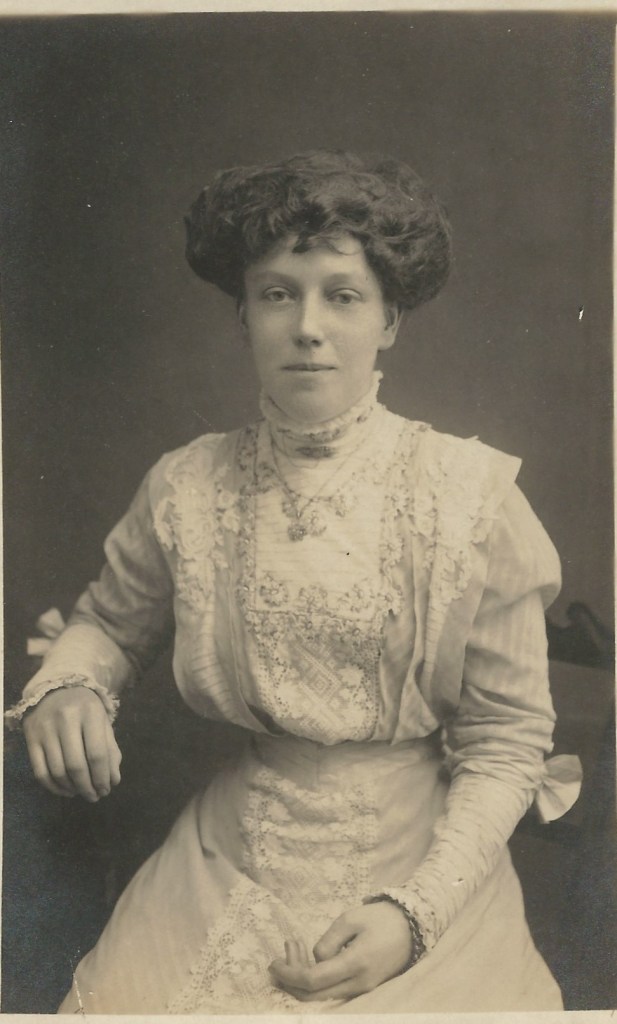
I never knew my grandmother, as she and my mother were estranged, and even though she lived until I was 14, she was never part of my life. All I knew was that on the early death of my grandfather, my grandmother forbade my mother, then eighteen, to take up the scholarship place at Oxford University that she had been offered just before her father died. She was to stay at home and keep house. In the end, my mother lived at home and went to Leeds University: but she never forgave my grandmother denying her the opportunity – still unusual for a young woman of her background – that she’d worked towards throughout her time at Grammar School. I grew up with no warm feelings towards this woman whom I had never met. In this piece, I’ve tried to look at my grandmother with fresh eyes and to see the world as it might have seemed to her.
Annie, the Vicar’s wife: c. 1925
Annie, probably taken in the early years of her marriage.
She sat there: no thoughts, no plans. Just a fog of tiredness behind her eyes, gritty with exhaustion. A thin skin congealed on her breakfast cup of tea. Beside her, a loaded and overflowing laundry basket.
The children had long since disappeared to school. There was the Vicarage to clean. Always there was the house to clean. Mouse droppings in the kitchen, little rodents scurrying behind the skirting boards, day and night. Bats in the loft. Buckets in the bedrooms every time it rained.
Charles didn’t mind. Charles didn’t notice. He’d been brought up poor, but his brains had propelled him through school, won him a scholarship to Cambridge, while his sense of duty and his love of God had sent him to theological college, then to failing parishes, where he preached, visited, networked, did whatever God willed to fill the pews and make the church and parish life the centre of the community.
Where did Annie fit in with this? Fifteen years ago, Annie had been dazzled by the handsome young curate: his charm, his popularity, even his clear-eyed faith. What a privilege when they began to walk out together, and then to marry!
But Men of God earn very little. Men of God live in draughty, ill maintained and ill-equipped vicarages with large unwieldy gardens. Men of God rely on the women in their lives to run their parishes with them. What’s a parish without its Women’s Sewing Group, its Mothers’ Union, its Young People’s Fellowship? What’s a parish without a Summer Fair, a regular diet of church socials and a harvest supper? And who, unpaid and completely taken for granted, manages the fellowships and all these events?
Well, here in Morley, it was Annie, wife and mother. Mother of Betty, brainy Betty, hothoused by her father, top of the class in her grammar school in Leeds, and thinking of nothing but wanting to be the first girl in school to get a place at Oxford. Mother of Arthur, fumbling bumbling clumsy Arthur: a bit of a dunce really. What would he be fit for when he left school? Such a worry…
And besides Charles hadn’t been well, though hardly anybody realised, because he worked every single day. He said his was a calling, not a job: no days off for him. Only Annie knew that he had been diagnosed with diabetes. Only Annie was allowed to help him with his daily injection of the new wonder drug insulin. But he was supposed to be very careful, eating regularly to a strict diet. He did neither. Annie knew Charles could – probably would – die. And Annie knew what happened to vicars’ widows. When the vicar of St Agnes’ died last year, Mrs Atkins, poor Mrs Atkins and her four young children were put out of the Vicarage within the month.
Whatever would she do? Whatever would she, Betty and Arthur do when Charles passed?
Charles: a photo taken in the early years of their marriage, while he was still a curate.
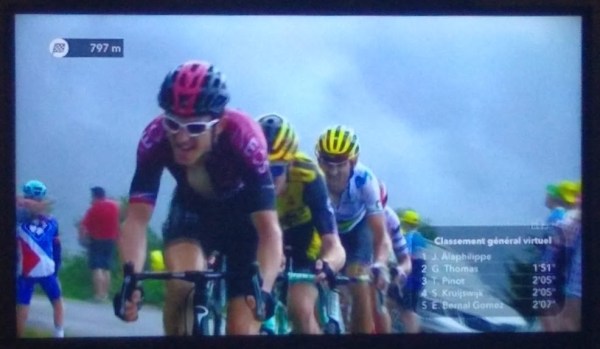
Shock! Horror! Unheard of! Today we could be found (a) watching day time television and (b) it was a cycling programme.
Today’s daytime TV.
The Tour de France, to be exact. Normally we only display an interest in this or any other cycling event if it passes our front door: as it did twice when we lived in France, and once, in 2014, when memorably, the Tour began in Yorkshire.
The Tour de France goes through Laroque, 2012
Today however, stage 15 of this year’s Tour took place in the area we called home, the Ariège. We had to watch. The struggles of the cyclists passed us by as we grew nostalgic, even damp-eyed as familiar roads, familiar landscapes appeared on screen.
Foix: today’s almost-finishing point.
But as I watched, I was reminded of an incident that took place in Laroque, back in 2012.
Every year, just before the Tour, another cycling race takes place in the Ariège: L’Ariégeoise. It’s divided into three levels of difficulty: the Ariégeoise itself (160 km,3,500 m. of climbing), the Mountagnole (118 km, 2,500 m. of climbing) and for wimps, the Passejade, a mere 68 km, and 750 m. of climbing.
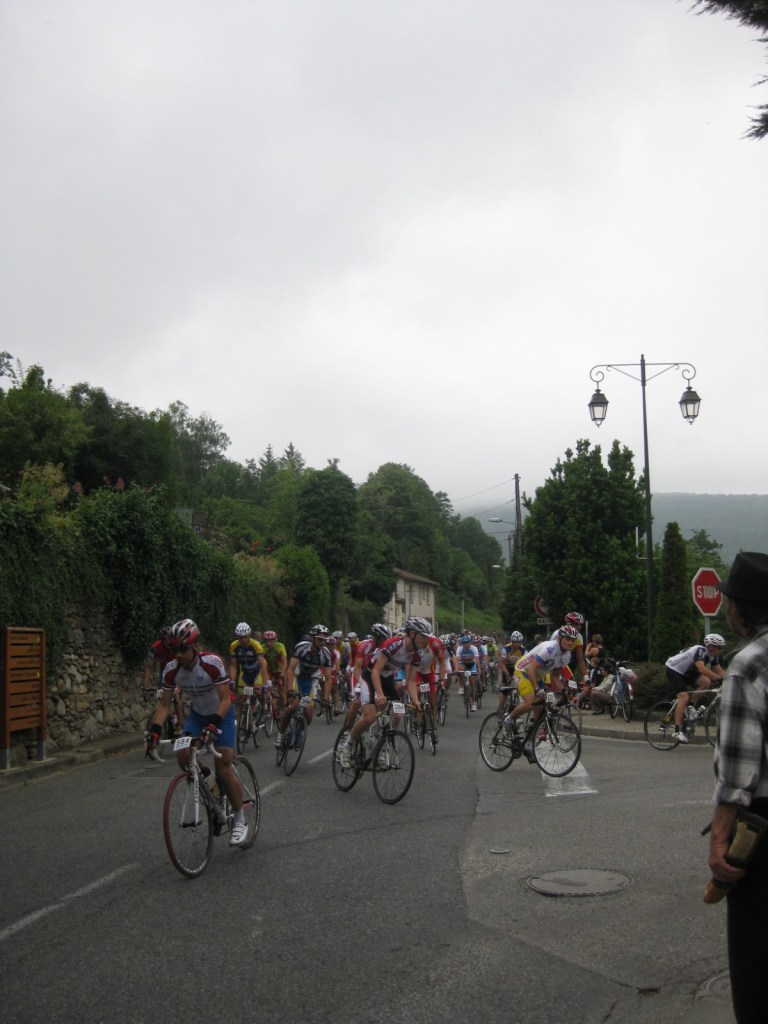
That year, the route passed our way. That year, the routes of the two main races parted company in Laroque. And that year, there were no signs to say so…. and nor were there special marshalls for the Mountagnards.
The unsuspecting riders arrive at the parting of the ways….
As the riders arrived at the crossroads in town , they didn’t know where to go. Ariégeoises followed Mountagnards. Mountagnards followed Ariégeoises. It was hopeless. Riders tried to turn round, collided with those behind them, swore, and swore again as they saw their hard-won perfect timings being swallowed up in the chaos. With extraordinary presence of mind, I shot some video footage.
I heard later that following the event, the race organisers used my little clip for training purposes, to demonstrate How Not To Organise a Cycling Event. I’m guessing it’s part of every year’s Tour de France training too. That’s why it always runs so smoothly.
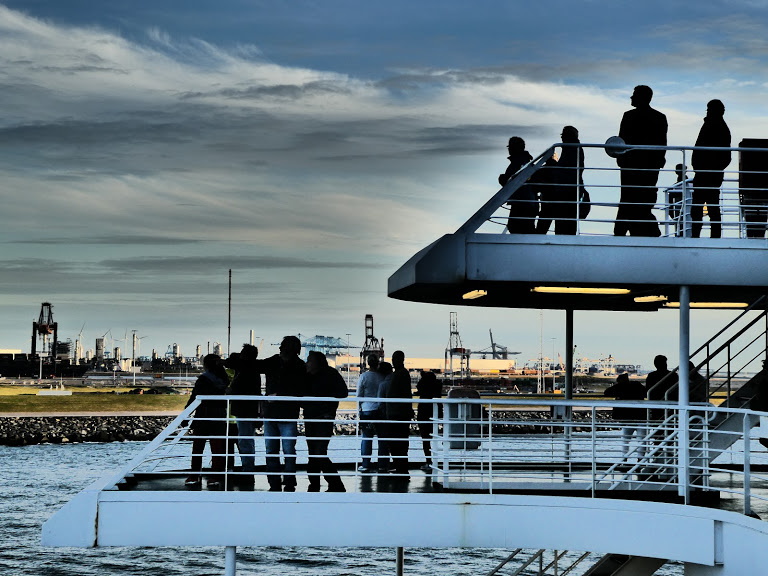
Coming back on the overnight ferry from Rotterdam to Hull last week, I had a lot of fun playing with my camera. Most shots celebrated the sea, the shipping, the grungy industrial shore side, and I’ll share some of those soon.
But as the sun was setting, my eye was caught by these passengers on the decks above. They didn’t know it, but I thought they made quite fine silhouettes set against the angled railings of the deck.
Which of my posts about our time in France to re-blog this month? In the end, it was easy. I fell to thinking about all the wonderful trips we had learning about the history of the area we’d chosen as our home, courtesy of Pays d’art et d’histoire des Pyrénées Cathares. Here’s a memorable day from July six years ago…
July 13th 2013
Tabariane: new light on the Dark Ages
As you explore the site at Tabariane, this fellow expains much of its history.
Meadow flowers on the walk.
The burial ground.
Graves.
Graves.
An information board reveals some of the artefacts found at the site.
View from the burial ground.
Another view.
A local craftsman, Lamande, has made the seating that adds to the site’s interest and charm.
Continue to climb above the site, and this is the view.
…and this….
… and this …
When I was at school (back in the Dark Ages), we learnt in history that the Romans came after the Greeks. They left us a legacy of Romance languages, our alphabet, Roman law, neo-Classical architecture, impossibly straight roads and under floor central heating. As the empire crumbled, so we were told, the continent descended into the Dark Ages. Barbarians, Vandals, and unpleasantly savage descendants of Asterix the Gaul ravaged Europe, raping, pillaging and generally leaving little time for culture and a settled everyday life.
I think we all knew it was a bit less straightforward than that. The Frankish Germanic tribes entering the late Roman empire had a very different culture from that developed by the Romans, and it’s been much harder to research systematically because there are few contemporary written records.
This week though, we went to visit a Merovingian site, Tabariane, recently excavated and interpreted near Teilhet, not far from Mirepoix. The Merovingians were an early Frankish dynasty established by Clovis, and they ruled an area roughly equivalent to much of France and Germany from the 5th to the 8th centuries, and are the kind of tribe that was dismissed as one of those from the very heart of the Dark Ages.
It was a burial site we’d come to see. It has first been discovered in the very early 20th century by Captain Henri Maurel, and had been partly excavated according to the fairly invasive practices of the period. War and economic upheaval meant the site became first neglected, and then entirely forgotten about until recently.
Recent research lead by Nicolas Portet has meant that the burial ground, now carefully excavated, is now, as it almost certainly was then, a burial garden. It’s a large site, on a hillside overlooking the site of the now disappeared Merovingian settlement on the opposite side of the valley. The 166 tombs seem to have been arranged in ‘clans’: loose arrangements of extended families and friends, over a long period of time. It seems to have been a burial ground which held a place in the life of the community for many years, rather than being a cemetery developed as a result of tragedy – war or plague say. Most of the bodies were laid with their heads to the west, their feet to the east. Originally they were clothed, but little remained apart from metal objects: belt buckles, brooches, jewellery and, with some of the men, weapons.
This is where ideas have changed. Early 20th century archaeologists sent excavated objects to museums far and wide, even to America: modern practice which encourages an area’s ‘patrimoine’ (heritage) to remain as far as possible intact did not then exist, but you can find examples of objects found here in the Museum at Mazères, and in Saint Raymond de Toulouse.
Now as then, the tombs are planted with local flowering plants: lavenders, marguerites, herbs. It’s thought that locals would have visited the grounds with their families, spent time there, as we might in a modern park. So it was important to both the living and the dead to make it a pleasant, calm place to be. The burial ground overlooked the village. The village overlooked the burial ground. Each had an interest in the other. Each could intercede for the other.
It’s a tranquil, special place, surrounded by meadows and hilly countryside. A circular walk of some two and a half kilometres , starting and ending in the village of Teilhet gives you a chance to spend a peaceful hour or two exploring scenery that may not be so very different from the way it was when the Merovingian villagers first laid out their burial ground, some 800 years ago. Excellent information boards will help you understand a little more about those Merovingian people who made their lives in this still rural area.
While you’re there, make time to enjoy the facade of the 14th century church at Teilhet. Here are some pictures to whet your appetite.
The village and church of Teilhet seen from above.
Thanks to Wikimedia Commons for the use of this image of the church facade
Stained glass window from “largest stained glass window-manufacturing firm in the world” of the 19th century Louis Gesta.
Every region of France has its own area-organised Pays d’art et d’histoire programme. If you speak French, it’s well worth seeking out the visits that they organise. Always slightly off the beaten track, always interesting, and always inexpensive.
I love wind turbines. I love to see them set against the skyline, and marching across the crest of a distant line of hills. And this week, I loved to see them near the coast, their legs in the sea, a gritty port-side industrial landscape behind them.
These are wind turbines near Zeebrugge, near Rotterdam, and near Hull.
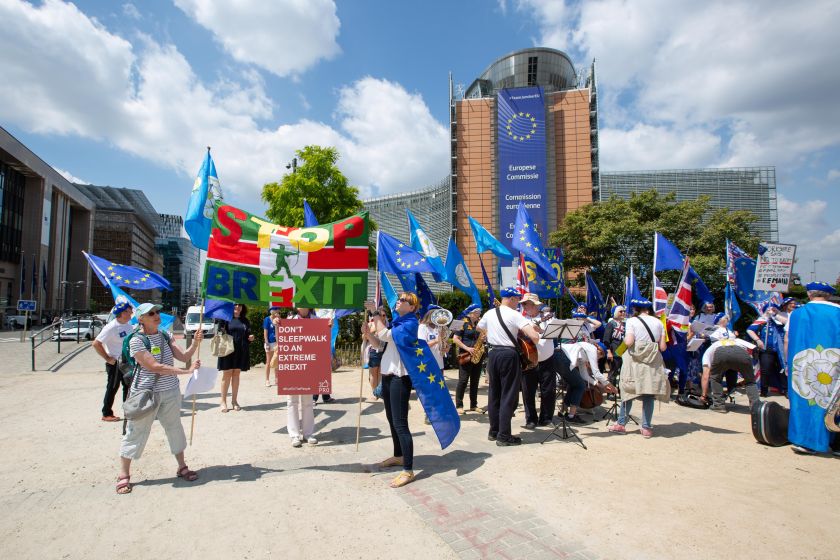
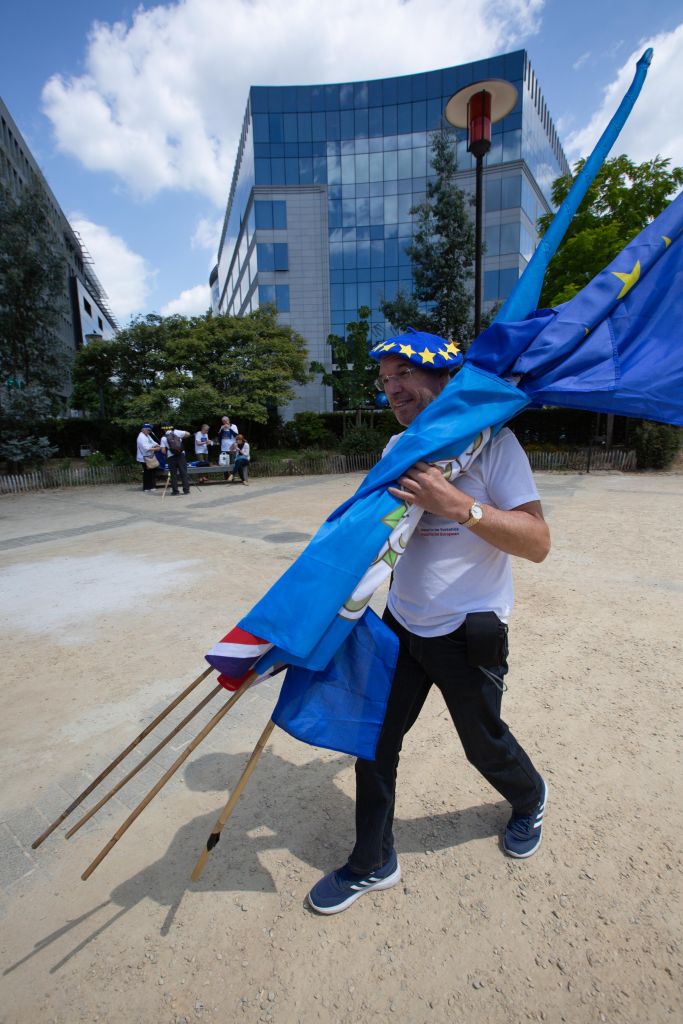
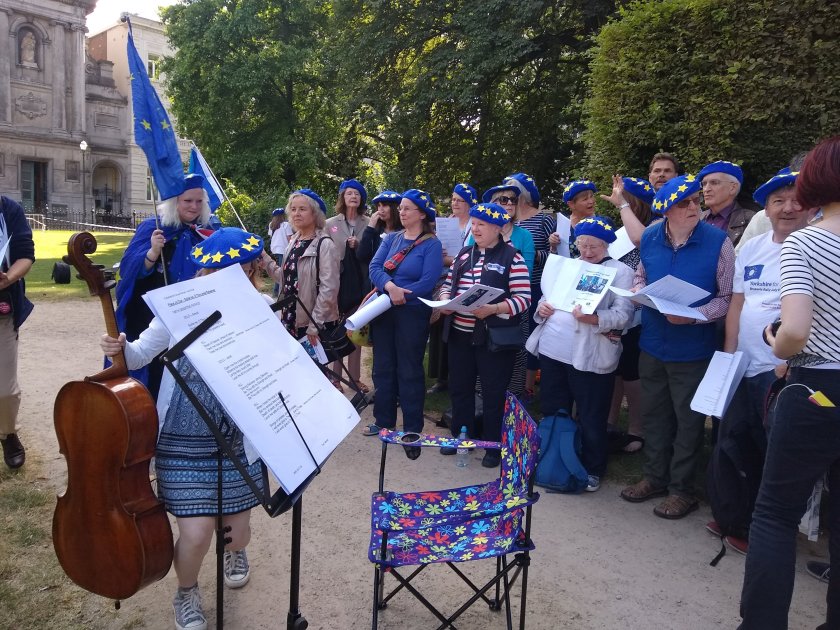
We’re back from Brussels. ‘We’ were a 60 strong group whose members, between us, had birthdates representing every single decade from the 1930s to the 2000s. And we had indeed come from Yorkshire just to say- ‘We’re for ever European’…
…. to ask ‘What shall we do with this rotten Brexit?’….
.. and to assert…..
We were cheered and moved to be tooted supportively by passing cars, told by streetcleaners, policemen, ice-cream stallholders, bar staff, passport control staff, passers-by that people in mainland Europe want us to stay, welcomed our efforts.
Wednesday was the day when we marched round the European Parliament campus singing and waving our European, Yorkshire and Union flags. It was the day when we toured the parliament building, having a question and answer session with Henry Wasung, British multi-lingual member of staff, and in the absence of our own MEP Richard Corbett, who was in London, with Seb Dance, Labour MEP for London. All of which assured us in our knowledge that only staying in Europe makes sense.
Singing on campus (ChiaraMacCall)
In the afternoon we were centre stage. We were at the Schuman Roundabout, focal point of the buildings of many of the EU institutions. So were members of Brussels Light Opera, Women for Europe, EU super girl and Young European of the Year 2018 Madeleina Kay. And we sang (see above!). Madeleina sang. Various British MEPs came to support us and to speak. Our own Shaffaq Mohammed and Magid Magid made speeches too.
Madeleina Kay with Magid Magid (Chiara MacCall)
Then it was four o’clock and time to go. Time to load the flags, the posters, the banners into the coach and make our way back to the ship, and to England.
Packing up at the end (Chiara MacCall)
We feel energised, optimistic, ready to plan the next stage of our campaign. Whatever we do, we’ll continue to make it fun and uplifting. No sour faces here.
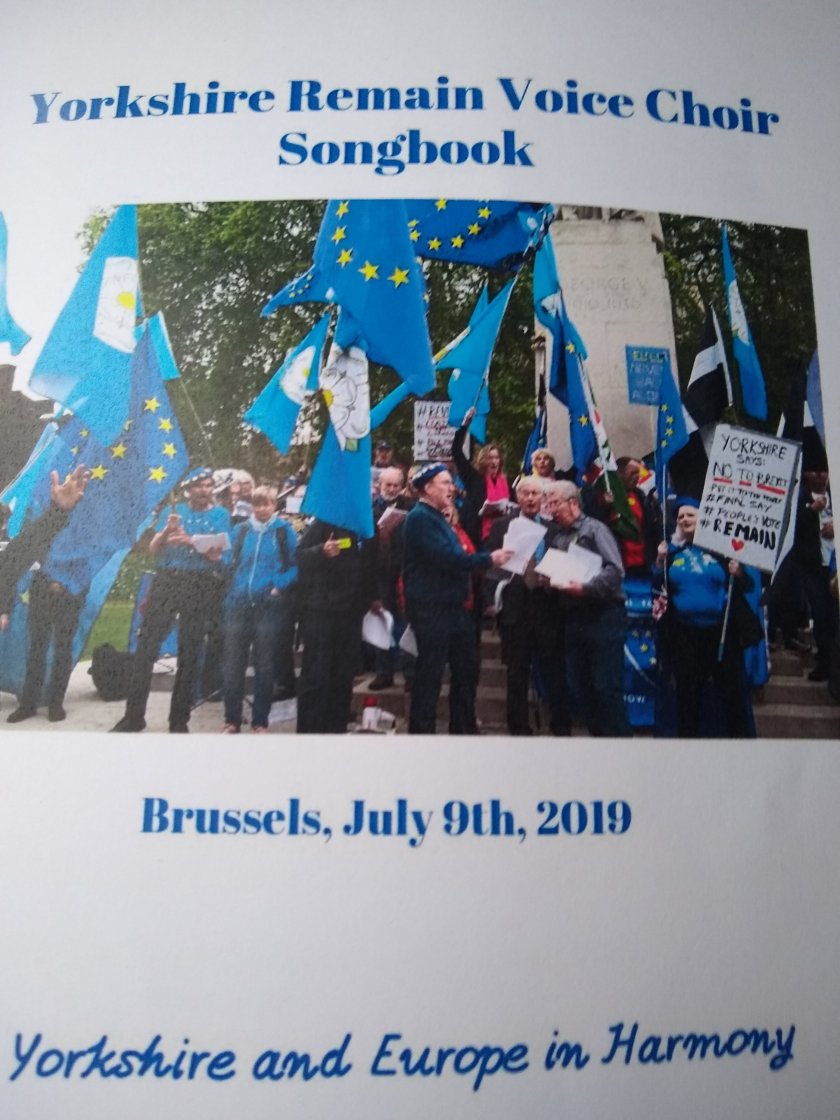
…… all kinds of things about our love of Europe and our wish to remain in the EU. There are a dozen songs in the Yorkshire Remain Voice Song Book, pastiches of traditional songs, popular music staples, sea shanties and even hymns.
Sixty Yorkshire folk, all committed Remainer campaigners have arrived in Brussels to sing every one of them.
We’ve sung our way across on the overnight ferry from Hull to Zeebrugge.
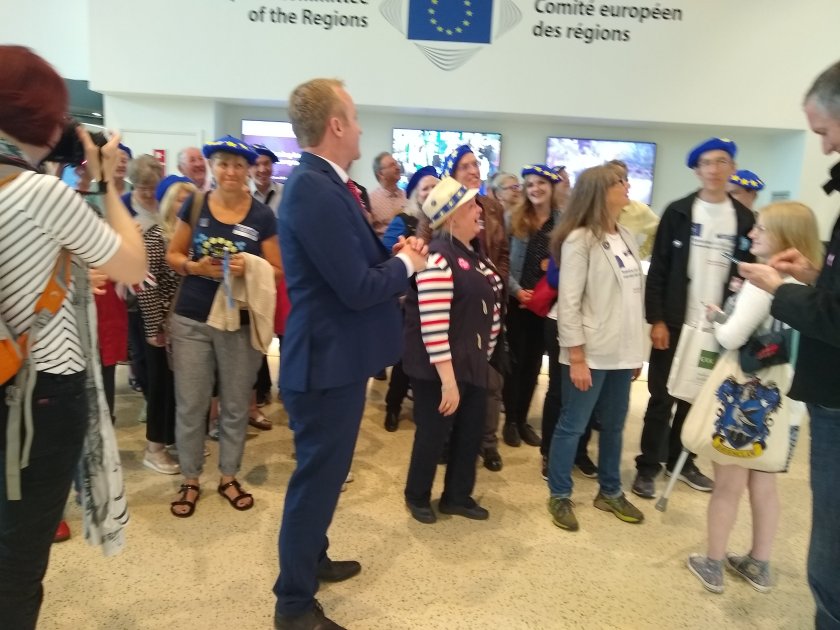
We’ve had an entertaining and informative afternoon at the Comité Européen des Régions, and held an impromptu flash mob there.
Flashmobalert
We’ve practised in the park, and brought gratitude and tears to an elderly Belgian, remembering his youth, with its fascism, division and war.
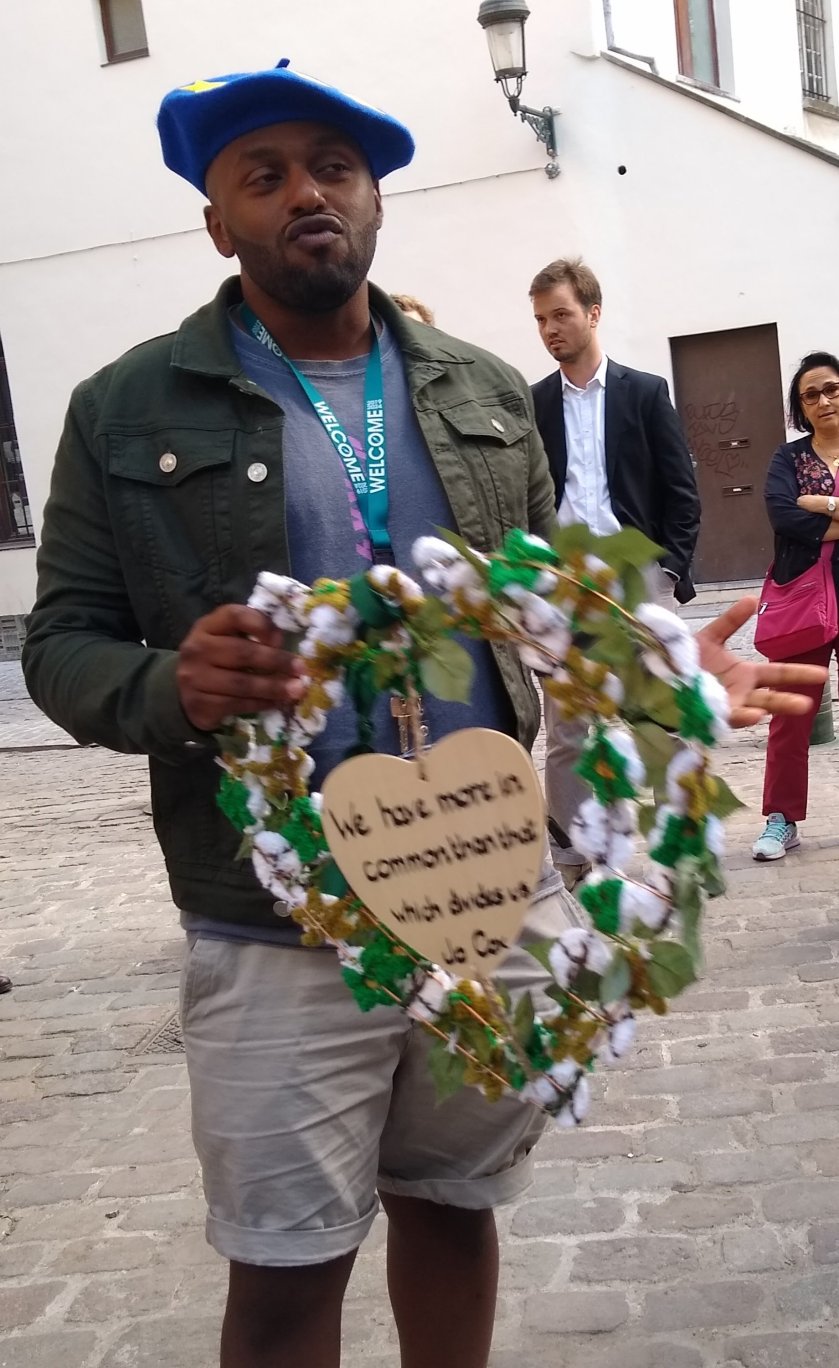
And this evening, we went to Place Jo Cox, laid a wreath of knitted white roses, and sang in memory of the murdered Yorkshire MP. One of our own newly elected MEPs, Magid Magid (Green), who joined us, reminded us of Jo’s hallmark: her compassion.
It was my last day in India. I woke up to driving rain – the first I’d seen – a raging temperature and a sore throat. But there was shopping to be done, packing to be done, general busyness. I forced myself through the day, feeling worse all the time.
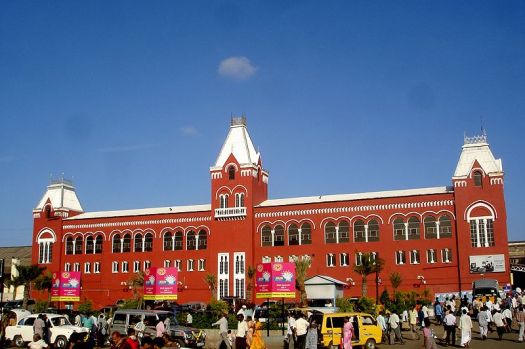
Chennai Station (Wikimedia Commons: PlaneMad)
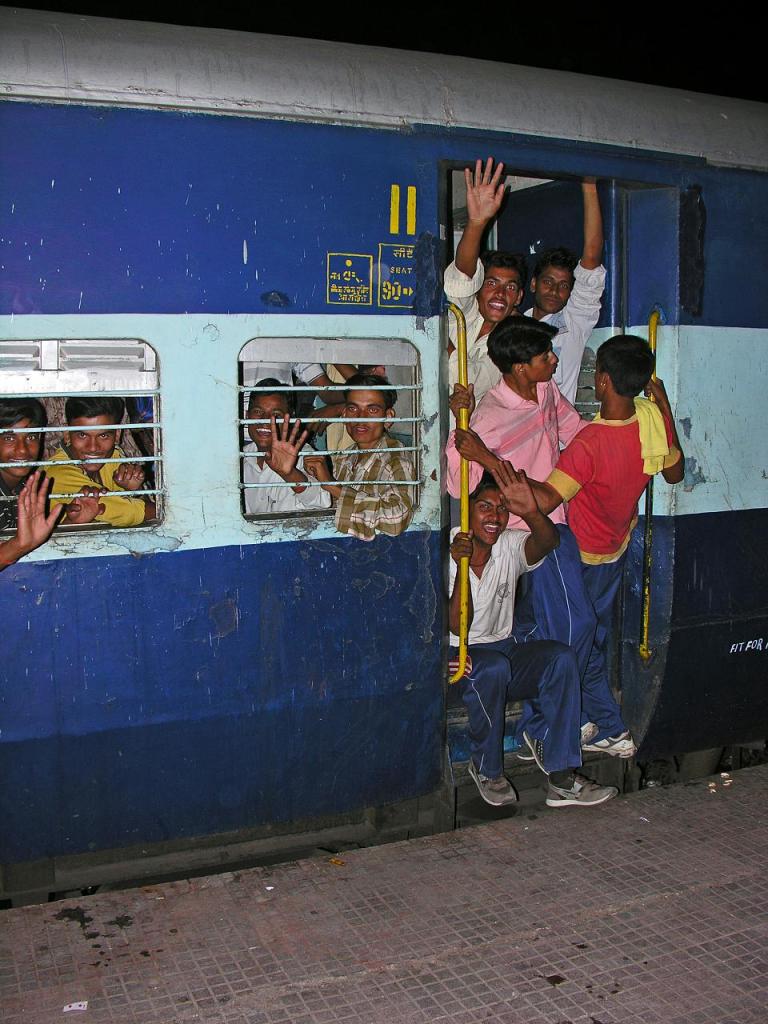
I eventually made it to the station where I planned to catch a train to the airport: a local service with a quick journey time. How was I to know that the train would fill and fill and fill until people were hanging from the doorways in true Indian Travel Documentary style? With me crushed in the very middle of it all, feeling iller by the second. Actually, ‘crushed’ doesn’t even begin to cover it: the only reason I didn’t fall to the floor was that it was physically impossible.
An image from Wikimedia Commons (archer10) gives the general idea…
At a certain point, I couldn’t stand it any more, and somehow forced myself and my luggage off the train, with everyone shouting behind me ‘No! No! Airport is two more stations!’ By then though, I was sprawled across the platform, vomiting and vomiting as the train departed without me. A lovely man tried to help. He brought me water which he poured over me, washing my face and making me drink. A concerned crowd gathered, but by then I had lost all pride as I lay there, being repeatedly sick.
Two policewomen turned up, at as much at a loss as anyone else. Finally, they made a decision. They hauled me quite roughly, as if I were a dangerous demonstrator rather than a rather sick and weak woman onto a train – a fairly empty train, now the rush period was over – and chucked me on the floor.
At the airport station, we were joined by a rather handsome male officer who carried me, ‘Gone with the Wind’ style up the airport steps (a shame I was way too ill to appreciate it), and heaved me into a rickshaw, together with my luggage. Our destination was the airport medical centre. I was examined and at last a decision was made. Hospital. An ambulance appeared and I was dumped on a stretcher. Bang! The ambulance driver revelled in using his siren – who wouldn’t if it meant actually moving in the streets of Chennai? I was at the Sri Balaji Hospital .
I remember little of the rest of the day. But the British Consulate must have been told, and someone there must have dealt with the fact that I was no longer travelling back to the UK that night.
This is the last of my ‘Indian Journey’ posts. I’ll write more about my trip later though. You haven’t heard about the Rainforest Retreat, Gurukula Botanical Sanctuary, French Colonial India, Couchsurfing in Thanjavur, Mamallapuram … or life in an Indian hospital….
This was not my bus. It’s a school bus, and a smarter version. Sadly, I forgot to take a picture of the one I travelled in.
…. was the sort you see in all the pictures. Unglazed windows with bars across, and an engine that had probably been put together c.1953. If this coach had been a human body, you’d probably have called it ‘lived in’. As it was in fact a bus, I’d say it had had a long history of ‘near misses’. Oh, and it may not have been cleaned since 1953 either.
The gear box
The bus to Chennai
Bollywood DVD on the bus to Chennai
But the big excitement was a motorway. Well, perhaps not a motorway, but a toll road anyway, with dual carriageway, a hard shoulder and a central reservation. The road surface was indifferent, but so superior to anything I had met previously that I could understand why everyone described it as ‘the fast road to Chennai’. Here’s what I found out:
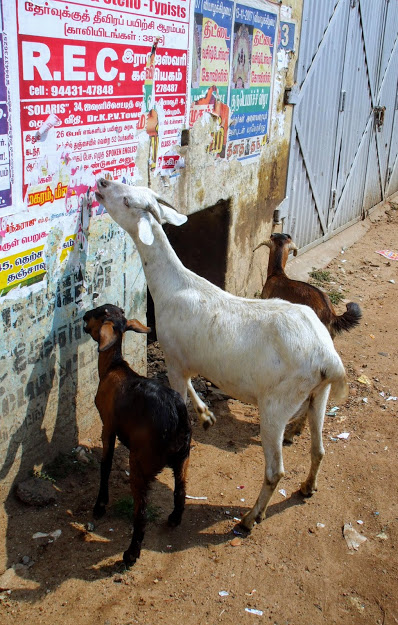
Goats eat breakfast in Thanjavur. They’d have done better on the fast lane of the motorway.
2 lanes doesn’t mean slow and fast. Everyone uses both lanes indiscriminately and over or undertakes at will.
Goats use the ‘fast’ lane.
Cows use the central reservation.
Bicycles going the opposite way to the prevailing traffic use the hard shoulder. As do pedestrians.
Men pushing handcarts use the main highway.
The hard shoulder is also for bus stops.
There are zebra crossings. God knows why, nobody ever uses them.
Pedestrians cross whenever they want to. Not at the zebra crossings, obviously.
A petrol tanker spotted en route.
They don’t usually need reminding to ‘Sound Horn’. This truck is a close cousin of my bus.
















 From Pyrenees to Pennines
You must be logged in to post a comment.