I was out in the garden reading (Bernardine Evaristo’s Girl Woman, Othersince you ask). Absorbed, I hadn’t noticed, but suddenly I did… A bird’s call – loud, imperious, by turns chiding, whistling, chirruping or tuneful. And incessant. A mistle thrush was responsible, and he wasn’t hard to find. He had found a high perch, as he’s supposed to do, in the top branches of a copper beech.
Once noticed, he was impossible to ignore. He called and he sang until after half past nine that night. The next day he began at ten past four, as the sun was rising. Since then, during daylight hours, he’s barely stopped. Not for him a tea break or a spot of down-time. He’s claimed his territory, and he’s not letting it go.
Today it’s raining for the first time in ages. He’s still at it … and the video gives no idea at all of the volume of sound produced.
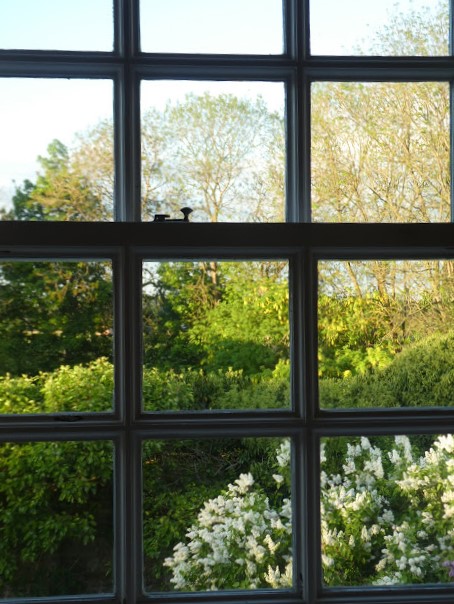
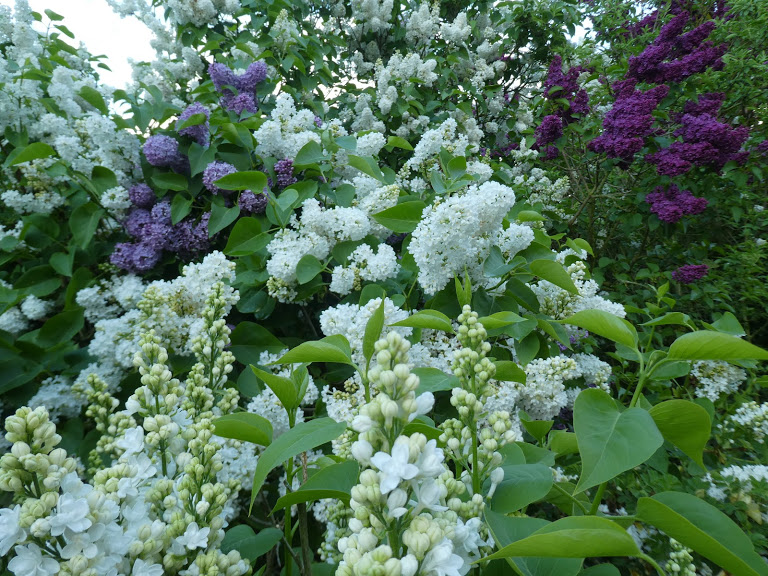
Today, I’m going no further than my kitchen window. The lilac has been glorious this year. Is it because it has been – well – especially spectacular, or have we simply had more time to enjoy its big blowsy blooms and seductive smell? It’s June now, and lilac has no place in the summer garden, so here is the view that has greeted us every breakfast time for about three weeks. Can’t complain about that.
Let’s have a day out. Lockdown’s still somewhat in force, so let’s make it a Virtual Day Out. We’ve got homework to do: it’s time for Jude’s assignment:
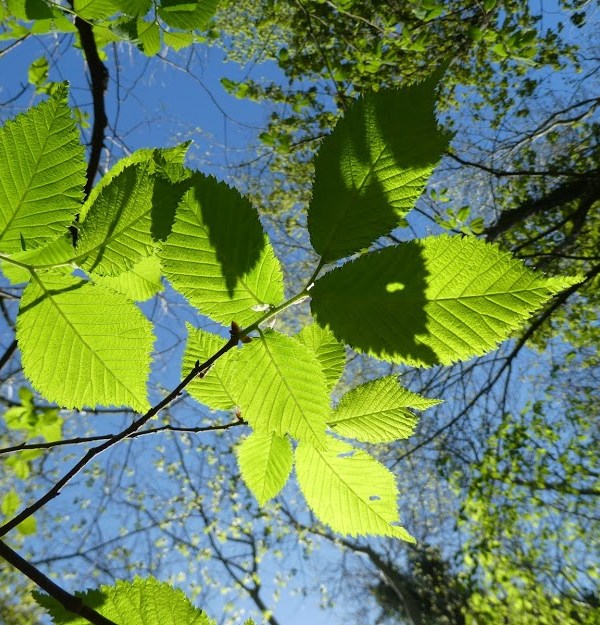
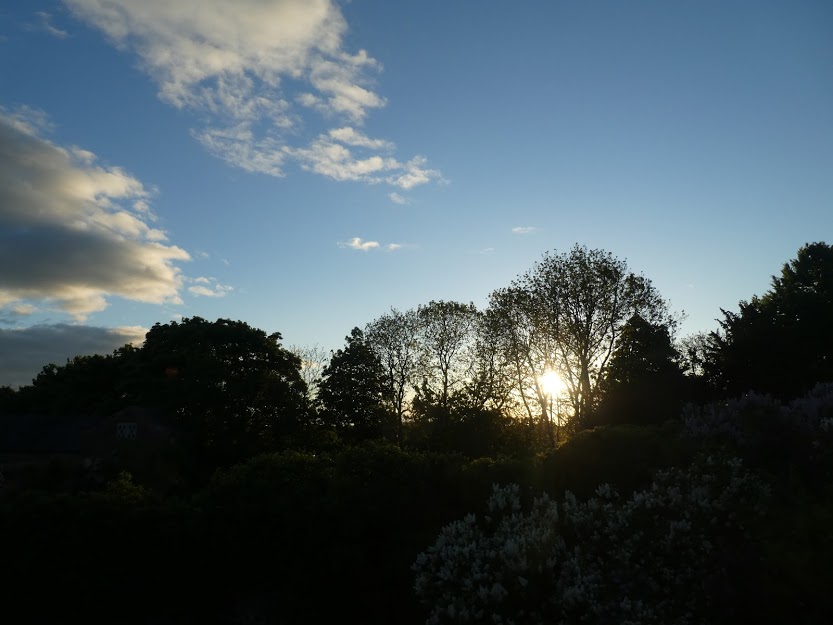
This week's assignment - Use strong backlighting (i.e. shooting towards the light source, but do not look directly at the sun) to create a contre-jour image where the subject becomes a silhouette, OR shoot the light through flowers or leaves creating a transparent effect.
We’ll stay nearby at first: go to the local woods, and quite simply glance upwards.
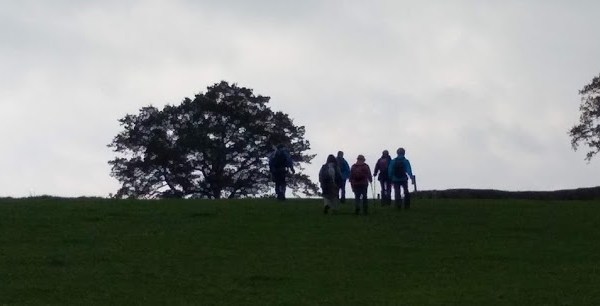
Then we’ll whip over to Fountains Abbey and Studley Royal. There’s a group of hikers beginning their day out, but we haven’t got time to join them …
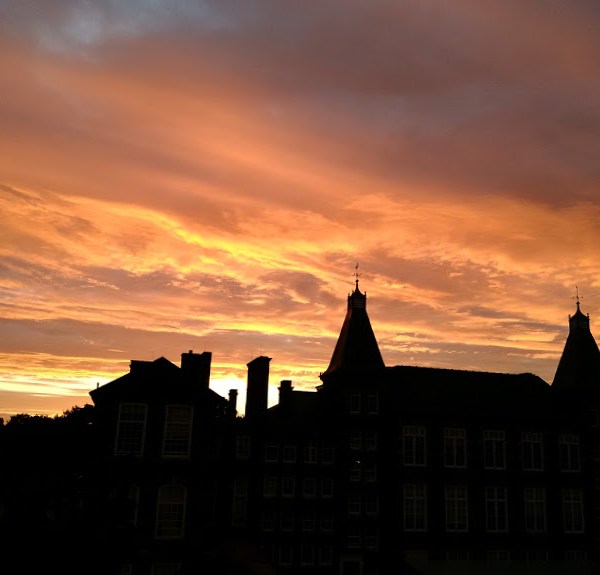
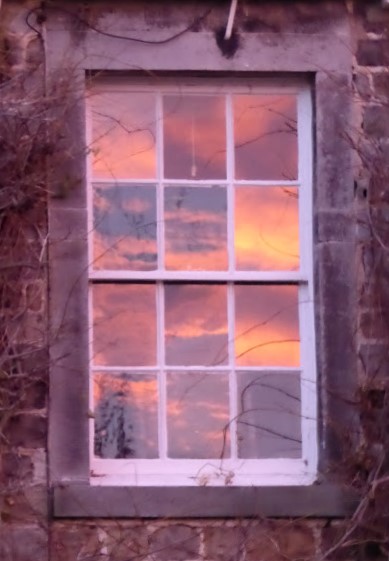
… because we’re off to London. William and I enjoy visiting the Bishop’s Palace at Eltham. Last time we went, the sky turned an extraordinary colour for a while, and I took this photo.
Back at his house in time for sunset, you can see his school from a bedroom window.
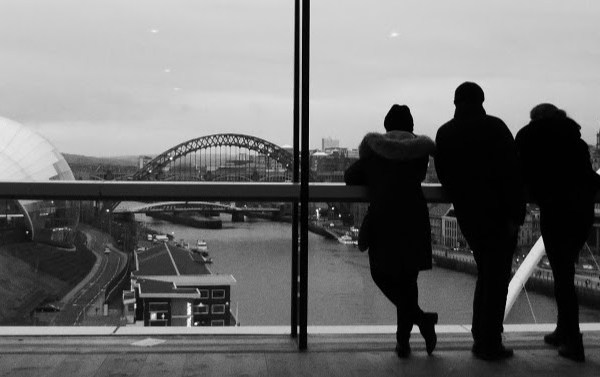
Off to Gateshead now. We’ll join a crowd of sightseers at the Baltic, looking over at the Tyne Bridge.
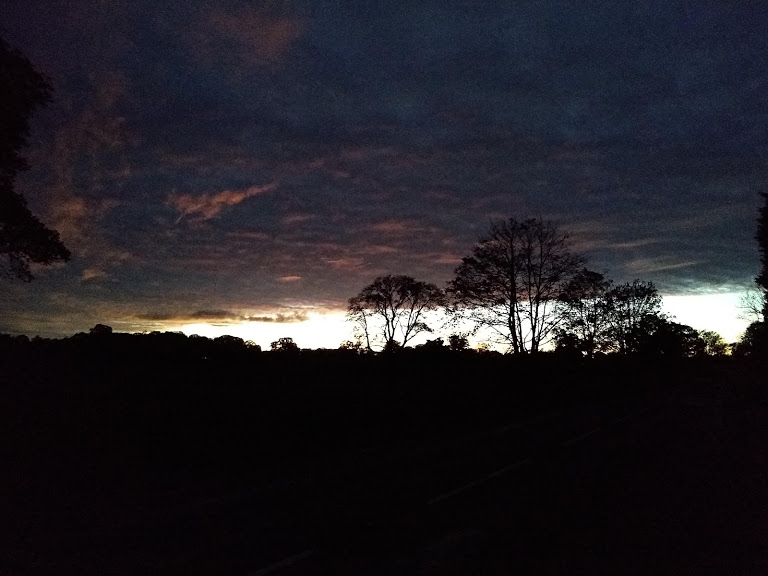
And we’re back home just in time to see another sunset.
Who knows when or if I’ll be posting again? WordPress seems intent on our using block editor to prepare our posts, and currently, I’m flummoxed, and cross.
I just came upon this picture that I took one Christmas Eve. Even though it’s from mid-winter, it seems to be such a positive image, full of promise for the day ahead, that I thought I’d post it while we’re still largely confined in Lockdown.
Playing with light. That’s what we’re doing this week for Jude’s photo assignment. I took each of my shots three times: as a simple automatic shot, in high key and in low key mode.
It’s probably me and the shots I chose, but in each case, working in high key did these subjects no favours, and simply made them look bleached and lifeless. Low key however did add some drama.
I looked at my neighbour’s roses in the morning, took a walk at noon, and enjoyed the first of the petunias to show its face in the evening.
Automatic
High key
Low key.
Automatic
High key
Low key
Automatic
High key
Low key
Here’s a little quiz. Each of these shots is taken in high key, low key, automatic, or in toy – pinhole – mode. But which one? Have a look at the gallery, before bringing up the shot full size to reveal the answer.
I’ve just come across another blog post I wrote while living in France, illustrating that however hard it tries, the Académie Française can’t stop the inexorable march of English words into the French language. Which are your favourites?
Franglais
February 4th 2010
There we all were, at Laroque Chorale last week, singing away, when our Director begged us to sing with ‘plus de feeling’. I tried not to laugh, then realised everyone else was taking her words to heart, and agreeing a bit more ‘feeling’ wouldn’t come amiss.
It sometimes feels as if there really is no need to learn French – so many English words are an everyday part of life here now.
So let’s just imagine……what if, instead of being a retired Englishwoman of a certain age, I were instead a thrusting young 30-something French business woman? What if, instead of being curled up with a gardening magazine, I preferred something more like ‘OK’, with stories of some C list celeb. – ‘un people’? Perhaps my life might be more like this……
‘I always struggle to get up in the morning from the comfort of my kingsize. But it has to be done. I dress quickly, pulling on my teeshirt, my shorts, and my pull, to take the 5 dogs out. Didn’t you know I like dogs? I’ve got a fox terrier, a labrador, a pointer, a setter, a york shire(sic) and a border colley(sic), all pedigree, of course. We go jogging every day, with me plugged into my walkman. At the week-end, when we have more time, I do a bit of cross country.
Un York shire. Fernanda Prado, Unsplash
After a shower, there’s only time for a quick bite: toast, corn flakes, something like that. Just occasionally, for a treat, I’ll have a cooked breakfast, like the English do.
Then I have to get to work. I’m a businesswoman, specialising in marketing, and first thing every morning, I have a briefing with the boss. We’re not doing so well in the recession, and we’re no longer a blue chip company.
I’ve got a very short deadline for an interesting new deal, but we’ve got awful IT problems. E-mail, the internet, we can’t log in or download properly- you name it. IT support’s always here trying to debug things.
We’ve just done a publicity drive via a mailing, but the feedback was awful, and my manager’s not pleased. She’s the one stuck with the cash-flow problems. We all had a meeting, a real brainstorming session, and we’re working on a new business plan with a view to downsizing. I find it hard to offer leadership: I’ve no killer instinct. Frankly, I think I’m a bit of a has-been…..
Towards 12.00, I really need to relax. So off to the gym for a spot of fitness training: stretching, and a bit of a work-out with a punching ball.
I’m starving after that. I ring my manager to ask her to join me at a snack bar, but she’s a snob, and won’t come. But I love fast food! Hamburgers, hot dogs, nuggets – even a sandwich – bring them on! And after that, an ice cream or a banana split, all washed down with a milk-shake. No diet for me!
Le hamburger. Amirali Mirhashemian, Unsplash
I hardly have time to get to the shopping centre. But I prefer self service and luckily the shops here don’t shut at lunchtime – they do non-stop shopping. Sometimes I go to the hard discount stores too, like Aldi, but not today.
Back to work for more of the same, then home for a well-earned break. A cup of tea, some cake, and half an hour with my book, the new science fiction, a best seller.
Then my mobile rings. It’s Marianne! She’s got tickets for the new one man show this evening: she must have been making eyes at the man in the box office. Me, I’d prefer a film, a thriller, or something with a happy end. Or even a night club with a spot of dancing…… Still, a night out’s a night out.
Marianne’ll be looking gorgeous as usual, with her look designer. I get out my vanity case, and put my make-up on, the blush, the eye liner, the lipstick. What to wear with my blue-jean? And I’m not even clean yet. Too much to think about! I can’t stay here to chat to you any longer. Bye-bye.’
It’s that time of the month again, when I re-blog something from our years in France. This one’s probably an odd choice, when shopping for anything but the bare essentials of life is pretty much denied us, but … learning something new is one of those educational opportunities we’re meant to make use of during Lockdown. Though eight-years-old fashion vocabulary may not be all that helpful.
‘Comment shoppez-vous?’
May 18th, 2012
Stuck in a waiting room with a pile of magazines between me and my appointment time, my idea of hell is a choice between fashion mags and ones about cars.
Less so in France, at least as far as the fashion ones are concerned. It’s not that I’m more interested in being stylish and chic here. I simply have fun reading the articles and noting the ‘English’ words and phrases on almost every line.
Are you a sophisticated lady? Cool? Relax et sexy? Show-off? Perhaps you aim for le twist sporty-glam, or like le mix et le match, le style ‘street’, or le fun et le trash.
Down at the shops are you looking for un look color block, le style boyish ou girly, arty-trendy, crazy doll, grungy girl? If you’ve any sense, you’ll have made a shopping list, to make sure you come home with lejean, le blazer, le trench, lelegging, lesshoes (with kitten-heel perhaps), and perhaps one or two it pièces. Then you could really get to show off and expect le red carpet treatment.
When it comes to make-up, I hope you don’t like le make-up too much. Light is so much more subtle. If you’re a beauty addict perhaps you should be looking for un effet sixties, or un twist, using liner and shadowing your eyelids en smoky or flashy to achieve le total-look of your choice. Then you’d look a real star.
It’s pretty exhausting really. That’s why keeping up with fashion isn’t very high on my to do list.
I chose Tuesday as a day to record the changing conditions outside the kitchen window from sunrise to sunset, for Jude’s 2020 Photo Challenge in which she invites us to observe a single view throughout the day. As the day wore on, I wondered why I’d bothered. It was a dull, somewhat gloomy day. Just grey and rather cold, nearly all day. But when I downloaded the pictures and looked at them, I discovered far more had been going on than I had realised. You take a look too.
5.40 a.m.
6.40 a.m.
8.00 a.m.
10.00 a.m.
Midday
2.00 p.m.
4.00 p,.m.
6.00 p.m.
8.00 p.m.
9.45 p.m.
A favourite? Maybe 8.00 in the evening. The weather’s picked up and the light has softened as the evening draws in. And finally, I’ll show you some of the lilac that features in every shot.



















You must be logged in to post a comment.