Top Square

I picked up a copy of  our little-read community newspaper today ….

‘Because of the almost world-wide lockdown caused by Covid-19, Concours Top Squares, due to open in Topcliffe Village Hall between 1st and 30th April, will now be held in camera.

This now internationally acclaimed exhibition has for the last three years brought together arts practitioners from a range of backgrounds working in less conventional materials.  The only requirement is that entries must be entitled ‘Top Square’.

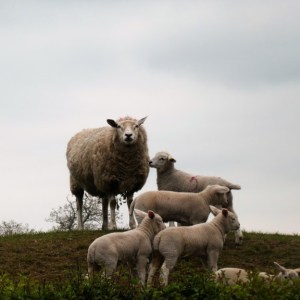
Locally, hopes for a top prize are pinned on a promising new Arts Collective working from Middle Park Farm, near North Stainley, and who call themselves ‘Windewe’. The prevailing wind and local sheep have worked in constructive partnership, winding and weaving wool round the wire fencing surrounding the sheep’s pastureland.  They’ve made dozens of such works, mainly confining themselves to using the sheep’s own wool, though some examples incorporate dried grasses, leaves and small twigs. Apart from those chosen for the exhibition, all other works by Windewe can be viewed from the Ripon Rowel path, and are on permanent display.’

Top Square 8

Sleningford Gazette, 8th April 2020.

For technical reasons beyond the Editor’s control, this article was omitted from the edition of 1st April.


# Square Tops 8

Simplicity

Life in our home has become simpler, pared back to basics.   All the things I cheerfully filled every day with – the volunteering; the classes and choir; the must-get-to-the-shops; the to-do list; even seeing friends – have all vanished.  Astonishingly, I don’t mind. The one thing that is a constant now is Daily Exercise, as prescribed by the Government: ‘People can leave their homes for exercise once a day’.  For Malcolm, it’s a bike ride.  For me, it’s a walk.

Denied trips out to the Dales and wild places, I’m exploring our home patch anew- every ginnel, every bridle way, every woodland and farmland path.  My Daily Exercise sometimes lasts an hour, more often two or three.  I rarely meet a soul.  It’s just me, the ground beneath my feet, the sights I observe, the landscape, the cloudscape, the satisfying rhythm of my feet as I pound my chosen path for the day.  Every day I choose a slightly different route.  Every day things change a little.  Buds, once tightly furled are now tender young leaves: new flowers burst into bloom; lambs grow stockier, more playful.  I have time to notice these things.

I value these hours.  Like everyone else, I want this horrible crisis under control.  I want to meet my family and friends again.  But when that time comes, I want to continue savouring quiet moments like the ones I’ve enjoyed so much over the last few weeks.

For me, these are early April’s Top Flowers, and my walks have given me the chance to enjoy them.  What have I left out?  Wild garlic isn’t flowering yet round here, nor the hedgerow plants.

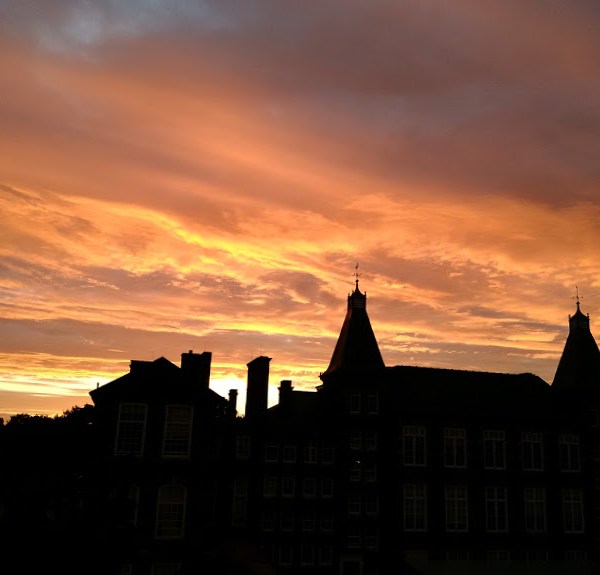
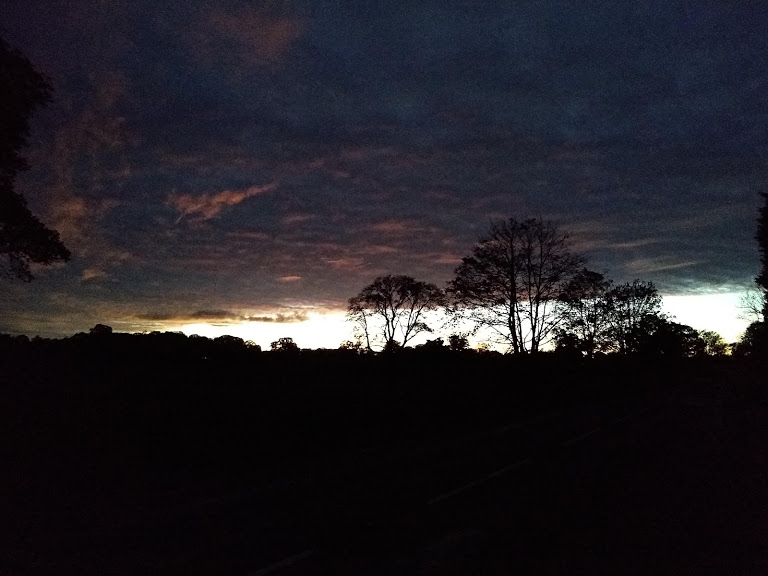
This dramatic cloudscape evolved over the course of my walk, holding my attention.
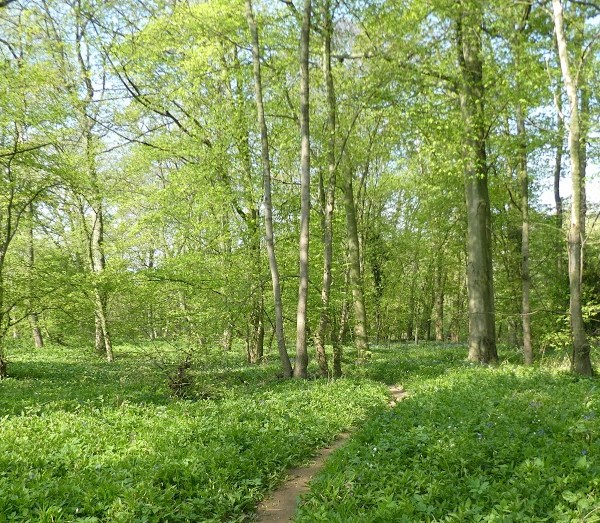
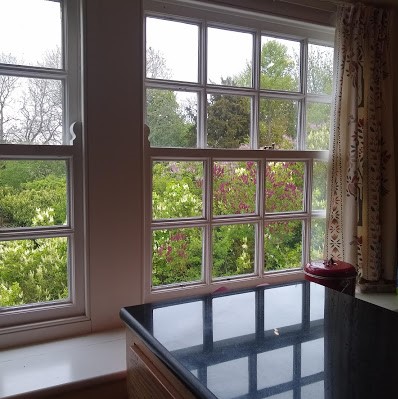
A simple view through trees at the fields beyond.
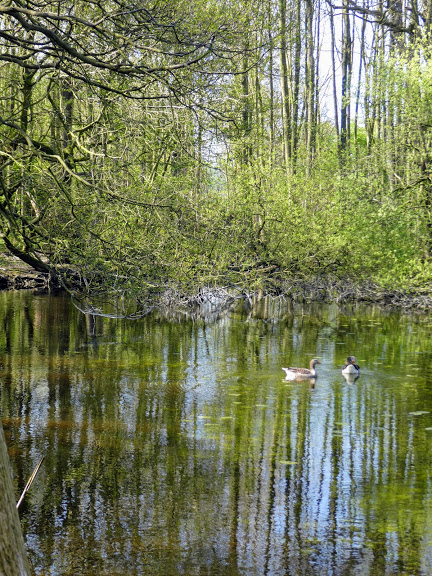
Back in the village, a greylag goose guarded the village pond, hissing at me as I paused to admire narcissi, a magnolia, and beyond these, early cherry blossom.

Lens-Artists Photo Challenge #91: Simplicity

Square Tops #7

Round the Edge of the Village: It’s All About the Texture

Sunday’s walk, on a cold blustery afternoon, along a too-familiar path, could have been a non-event, a means to burn off a few calories and not much more.  Jude’s challenge this week brought me ideas though.  ‘Look for texture’, she said, ‘close in on your subject and capture the texture and not the context’.  Challenge accepted.

Here we are by the village pond.  Here’s Mrs. Mallard.  And here are her feathers.

And – a sure sign that spring has sprung – here’s a dandelion.

Off to the track through the fields now.  I trudge past the sheep, stolidly munching grass and hay, and spot a rusty old shed at the end of the pasture. Lichen on rust.  Perfect.

Well, you can’t wander through the woods without finding a fallen log.  And fallen logs mean knots, nooks and crannies, velvety moss.  I take a couple of shots.

Oh look.  Here’s a muddy bit:  and I haven’t got my decent boots on.  But oh, look again!  Here’s texture a-plenty. A goose-print; a – er – what – squirrel perhaps? print; a different bird print (offers, anyone?); and a dog-print.  And finally a cracked-mud print.  That was good value.

Any walk in our countryside produces any number of long-established oak trees.  So here is some bark – both shots from the same tree.

The last shot of all doesn’t follow the rules.  But here’s a farmer doing his Sunday afternoon ploughing.  Unturned earth, turned earth, and all being thoroughly investigated by a host of sleek white black-headed gulls.  If that isn’t a symphony in textural contrast, I don’t know what is.

And since this is a post for Jo’s Monday Walk too, I’ll just mention that there was tea and Drenched Lemon Cake waiting for me when I got home.

#2020 Photo Challenge 13: Texture.  ‘Get close to your subject and capture just the texture itself, without the context’.

Jo’s Monday Walk.

Roughly the Same Walk as Last Week …

… except the same walk is never the same walk.  Last week, Chris and I walked from Lofthouse to Ramsgill to Middlesmoor and back to Lofthouse.  On Sunday, we did the route again, joined by eight friends from our walking group.

It was less sunny. It was more muddy.  The intervening week had been largely dry and breezy: but before the walk, it had rained all night. It was a day to pick our way carefully through mud, artfully stamped with the outlines of sheep hooves, tractor tyres and farmers’ boots.

It was a day to notice dry stone walks, scabbed with moss and lichen.

Discarded bits of farmyard furniture and buildings.

Swollen streams, tumbling and scurrying.

All of these were subjects for Jude’s 2020 Photo Challenge, requiring us this week to look for texture – rough texture.

But it was  a day too for moody landscape.  Look!  I didn’t take this view over Gouthwaite Reservoir in black and white.  But where’s the colour?

View over Gouthwaite Reservoir.

And here – this rainbow appeared more than once on our walk that day, always elusive, always vanishing as we approached.

Join us.  It’s a virtual walk.  You won’t need to clean your boots at the end.

2020 Photo Challenge #10

A Different Perspective

This is my second response to a photo challenge this week: that’s what happens when you get a bee in your bonnet.  I’ll settle down soon, don’t worry.

This time, Patti invites us to change our perspective when taking a photo.  Don’t just stand, point, shoot, she suggests.  Crouch, squat, get above the action, take a tour round it.

The weather being what it is, I can’t get out much with my camera, so these are all from the archives.

This first one is perhaps my favourite, taken in Gloucestershire.  I had to lie at the edge of a flower bed to get this shot of a house barely glimpsed through the ox-eye daisies.  Photography as exercise class.

Our friends Sue and Brian’s garden at Horton.

Here are some more shots, taken in much the same way, in gardens and fields.

And here are two more.  The back end of a festive lunch, and flags at the EU Parliament in Strasbourg.

Click on any image to view the caption, and to see it full size.

Lens-Artists Photo Challenge # 86: Change your Perspective


Winter Walking in Nidderdale – with Added Mud

Mud. I can’t be doing with it. Viscous, squelchy, squishy, sticky, over-the-top-of-your-boots kind of mud. We’ve had ground slick with treacly mud here for weeks and weeks. But then there’s also Cabin Fever, and the need to plan a walk for our walking group in a fortnight’s time, when spring might have sprung. Walking won out over yet another day indoors.

Just outside Lofthouse, our walk begins.

My friend Chris and I set forth for the Yorkshire Dales, parked up in Lofthouse, and set off. Really, it could have been worse. It was a full twenty minutes before we came upon our first serious mudbath: prior to that we’d only had water-on-the-path to deal with.

Chris paddles across the path previously trodden only by sheep.

But climbing now, we saw what the fields were like: yes, those are fields you’re looking at. Gouthwaite Reservoir’s not here: it’s over there in the distance.

The path between Lofthouse and Ramsgill, with flooded fields down below and Gouthwaite Reservoir in the distance.

We had our rewards though. The views: the remnants of a snowscape: sheep – and oh look! Our very first lambs of the season – a little huddle of black ones, and just one snowy specimen with its mum.

This sheep inspected us as we sat on a log for a snack.

Swaledale sheep make the logo of the Yorkshire Dales National Park.

And then, a pleasant surprise. The café at How Stean Gorge was open – on a weekday in February! Coffee and home-made cake while enjoying the view of the stream jostling and hurrying through its narrow ravine. I forgot to take a photo for Jo, but the website shows the Yorkshire Slice Chris and I shared.

How Stean Gorge seen from the café .
The view of Nidderdale and Gouthwaite Reservoir from Middlesmoor.

We were on the home straights now. All we had to do was struggle up a steepish hill to the now barely-populated village of Middlesmoor. Just outside its church, on the path that plunges down to our starting point are thoughtfully-provided seats. This is one of the best views in England, and despite the wind, we wanted to appreciate it.

And then, half way down the hill- a traffic jam. This herd of cattle blocked our path. The farmer asked us if we’d mind waiting five minutes. He turned out to have a countryman’s clock, but no matter: we weren’t going to argue with all those cows.

Cows make themselves at home.

Finally, the cows moved on, and so did we. We got back to the car just as the rain, and then the sleet, started once more.

It was good to be out walking again.

An entry for Jo’s Monday Walk.

Pay-As-You-Feel, Eat a Good Meal

Let’s begin at the beginning.  A couple of years ago, Alison and her husband were in Saltaire, looking for a late lunch.  They found it at the Saltaire Canteen, and soon realised it was no ordinary café.  Here, the ingredients used were all past their sell-by dates, and had been intercepted from landfill.  They’d been transformed into appetising meals, mainly by volunteers, and customers were encouraged to pay what they thought was fair, or what they could afford.

‘We could do that in Ripon’, thought Alison.

Actually, that’s not the beginning of the story.  We need to go back to December 2013, when The Real Junk Food Project opened its doors in Armley, Leeds,  as a café offering meals made from food destined for the tip.  People ‘paid’ for their meals with money, by offering skills or even food.

It was the brainchild of Adam Smith, who had a Road to Damascus moment on a pig farm in Australia, where the pigs were eating discarded food he’d have been happy to put on his plate.  Back in England,  The Real Junk Food Project was born, firstly as a café: then as an ever-expanding movement helping others develop their own models; as a Sharehouse sourcing and distributing waste food for those cafes; pay-as-you-feel supermarkets of discarded food; Freegan boxes of intercepted food designed for families; for distribution in a school setting (breakfast clubs, or for families in need for instance); even outside catering.  I’d like to get married all over again for the pleasure of having a Junk Food catering team deliver the party!  You can see why Alison needed to talk to Adam.

She found a co-conspirator in her friend Janet, and between them they located premises at Community House, equipment, cookware, crockery, cutlery, napkins… everything you need to feed the masses.  I’ve dismissed that task in a sentence, but I don’t underestimate the achievement.  They found volunteers too.  I wasn’t in at the beginning, but I’m part of the team now, and I wouldn’t miss my stints for anything.

A year ago, the café opened.  It’s on Thursdays, Ripon’s Market Day.  People start to drop in from 11 o’clock for a coffee, maybe a cake.  From 11.30 they’re eager for lunch.  Seating is at refectory-style tables, so whether you come with a friend, family, or on your own, you’ll be sitting with others and soon be talking to those around you.

Look!  Here are a few sample menus.

The cooks for the day will have been to Wetherby the day before to collect supplies, considered the random collection of ingredients and devised and cooked a varied and tasty menu to suit everyone: there are always vegetarian and vegan choices.  There’s nearly always a soup or two, and good old fashioned nursery puddings are hugely in demand.

The volunteers have been in since 10 o’clock, setting tables, chalking up the menu, getting everything ready.  At 11.30, they become waitresses and waiters: taking orders, collecting and serving the food to the diners, taking turns to wash up, and finding time to chat and be welcoming.  Newcomers become regulars: regulars become friends. We have office workers; young families; elderly people who welcome a hot meal in friendly company; visitors to the city …

At the end, people put what they feel in a box by the door.  The point is to save food from landfill, not to make money, so those who can’t pay don’t need to feel embarrassed.  Some offer services instead – there were some electricians in one week ….  There are costs of course – notably the rent: so far donations have kept us in the clear.  Any profits are re-invested in improved services.

Then, for the volunteers, it’s time to wash up, tidy up, put things away, swab the kitchen floor, pack away the tables and chairs, vacuum … and finally go home for a rest and a nice cup of tea.

Wholemeal has become a real asset to Ripon community life. And look at the food that’s been intercepted from landfill!  Win-win.  Thank you, Alison.  Thank you, Janet, thank you Adam … and everyone else who’s made it possible.

Radio York transmitted its whole morning show from Wholemeal last Thursday.  Anyone who’s super-interested can listen here, on BBC Sounds.

A Line of Trees

I don’t know about you, but I need a break from the world and its vicissitudes.  And I’ve got just the thing.  One of our favourite walks, near Masham, near home.  It offers wetlands with waterbirds, calming pastures of sheep, woodland, a stretch along the riverside – all available in a four mile stroll.

This month, Jude of Travel Words invites us to consider Pattern.  This walk has plenty, starting with the skeins of geese often to be seen designing sinuous flight lines across the sky.

Marfield Wetlands.

I’m going to show you a particular line of trees that I’m fond of, towards the end of the walk.  A repeated pattern, tree after tree after tree.  Sometimes, especially in high summer, these are enough to fill my mental screen.  At other times, I notice the pattern echoed.  A line of sheep, maybe.  A different line – of fencing.  Even – and I never manage to catch this in the same shot – a line of snagged sheep’s wool caught on nearby barbed wire.

Stark winter trees.  Fencing edges the nearby field.
Winter again.  I like the shadowy trees lower down echoing the crisper line above.
Another much longer view of those trees. With sheep below following the same horizontal line. It’s still winter.
That line again. It’s summer now, and other stands of trees draw the eye down to the lower edge of the shot.
Sheep again. They just left their wool behind.

I’ve chosen in many cases to echo the linear nature of the pattern by a spot of judicious cropping.

There.  Did you forget the headlines just for a few moments?