….at Sutton Park, North Yorkshire


….at Sutton Park, North Yorkshire
As you travel Britain’s main roads, every few miles or so you’ll pass a convenient lay-by with a caravan, a shack, a portakabin – some less-than-permanent structure which has actually been there as long as anyone can remember. Parked outside it are lorries, vans, cars – all empty, because their drivers are in the Greasy Spoon – that’s what these huts and caravans are affectionately called.
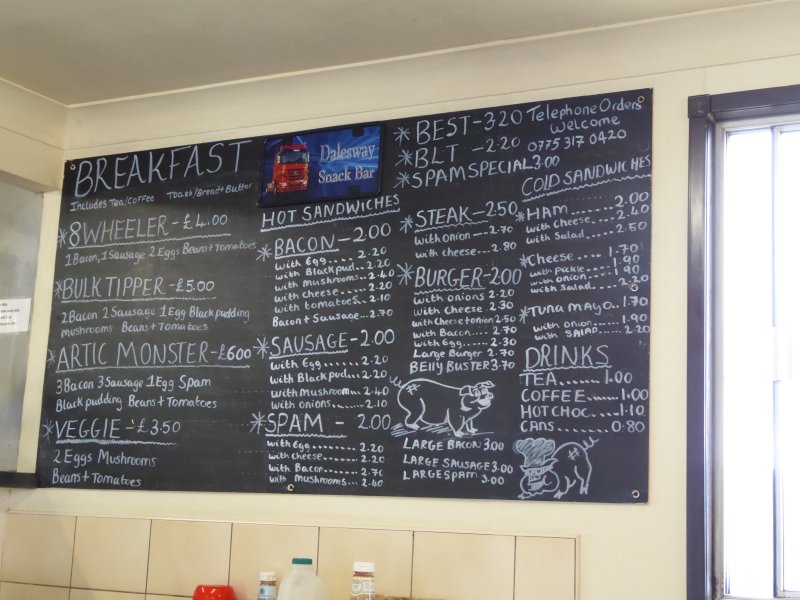
These truckers and travellers have gone in for an all-day breakfast. The menu’s limited. All that’s on offer are various combinations of bacon, sausage, eggs – with baked beans, grilled tomatoes, grilled mushrooms or bread on the side. This is not Fine Dining. The bread served here is not artisan-crafted from some small bakery using speciality organic stone-ground flour from the mill down the road. It’s industrial strength pre-sliced pap. I doubt if the pigs used for the sausages and bacon have truffled around in the woods looking for acorns, or been fed wholesome scraps from the farm. The baked beans come in catering-size cans.
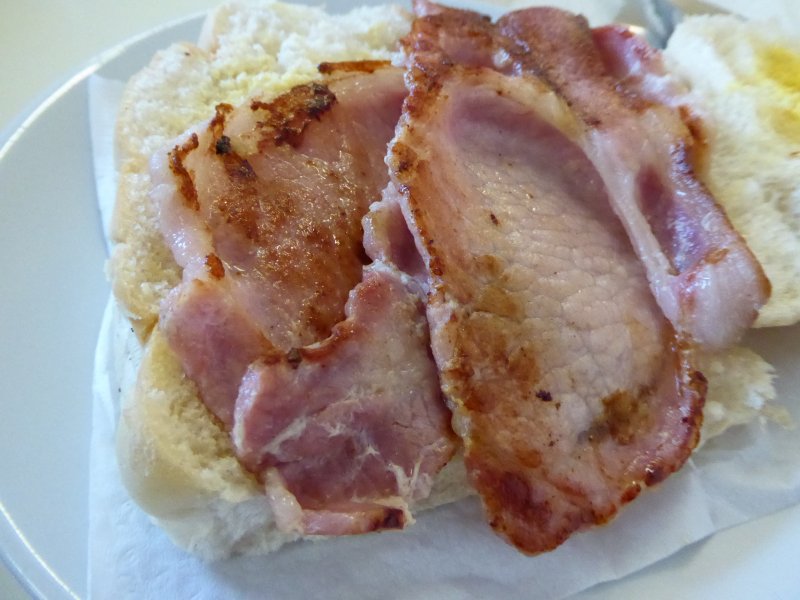
But we’ve got into the habit, when the boys stay with us, of having lunch at a particular greasy spoon near Skipton. What it lacks in finesse it makes up for by offering a really friendly welcome and rock-bottom prices. We make our order, plonk ourselves down at one of the formica tables, and relish a rib-sticking calorie-fest which will keep our stomachs lined for an afternoon of fresh air and fun at nearby Brimham Rocks. It comes under the heading of ‘Naughty but Nice.’*

*Salman Rushdie coined this advertising slogan for Fresh Cream Cakes when he was working as a copywriter back in the 1970s. Warning: Don’t Google this phrase unless you are on the look-out for sex toys or ‘adult-themed materials’. You have been warned.
… at last. I wrote about the Open Gardens day at Old Sleningford this time last year. But if an open day’s worth visiting twice, it’s worth blogging about twice too.
Let’s just have a picture story this time. It was an utterly gorgeous, sunny and hot day, and about time too. I chose to walk there, Malcolm favoured his bike. Here’s the walk, here’s the garden. And as last year, I neglected to take pictures of the tea and cakes. Next year?


And finally …. there.


And here, as last year, are a few shots of the edible forest garden.


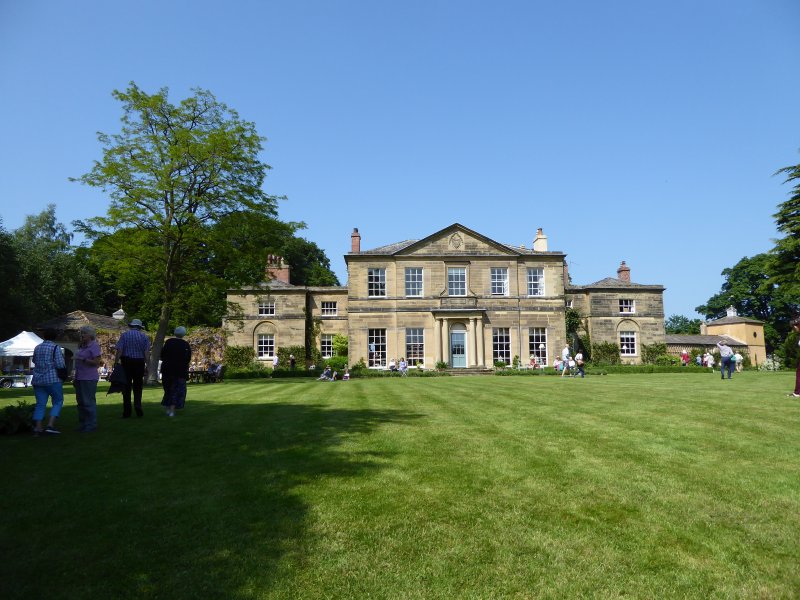
And finally …. Old Sleningford Hall
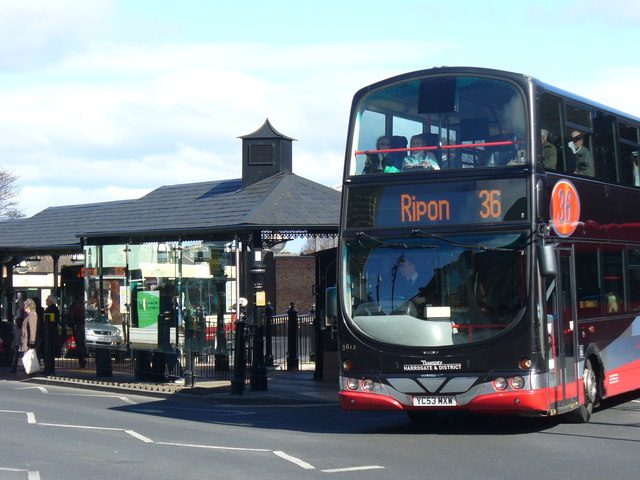
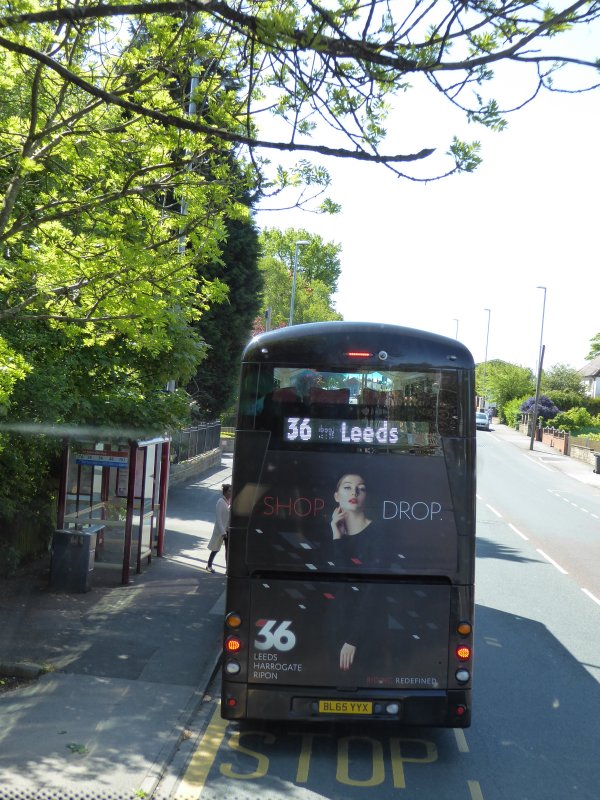
Everyone loves the 36 bus. It’s the one that takes us from out in the sticks of Ripon, via Harrogate to Leeds. It’s the one with plush leather seats, 4G wi-fi, USB points at every seat. It’s the one with a book-swap shelf where I always hope to find a new title to enjoy, while bringing in one of my own to swap. And best of all, we old fogeys travel for free on the 66 mile round trip.
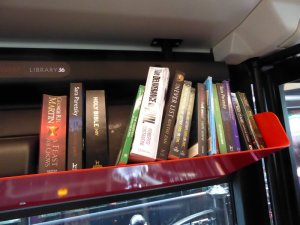
Best get to the terminus early though. Everyone’s jockeying for the best seats, the ones at the front of the top deck, where you can watch as the bus drives through the gentle countryside separating Ripon from Harrogate, via Ripley, a village which the 19th century Ingleby family remodelled in the style of an Alsatian village, complete with hôtel de ville. After the elegance of Harrogate and its Stray, there’s Harewood House – shall we spot any deer today? Then shortly after, the suburbs of The Big City, which gradually give way to the mixture of Victorian and super-modern which characterises 21st century Leeds.
We had lots to do in Leeds today (more of that later, much later) and had a very good time being busy there. But much of our fun for the day came from sitting high up in that 36 bus, watching the world go by. For free.


The view from our kitchen window this morning, 20th May 2016.


‘Now is the month of Maying’ (Thomas Morley, 1595)
Easter holidays. Time to have those ten-years-old grandsons over. Time to keep them so busy they don’t have a chance to realise that ours is not a home stuffed with devices. Not a smart phone in sight.
Let’s get them back to the past straight away, even before we get them back to our house. Are they too old for an Easter Bunny hunt at Fountains Abbey? Apparently not. Not when there’s a chocolate bunny to eat at the end. Are they too cool for egg and spoon races and egg-rolling down the hill? Apparently not.


Would they like to visit ‘Forbidden Corner’? They agreed they would, even though we failed to provide a description of what to expect. We couldn’t. It’s been described as ‘The Strangest Place in the World’. Perhaps it is. It’s a folly. It’s a fantastical collection of follies. It’s woodlands, walled gardens, mazes, tunnels, grottoes, built in the manner of a topsy-turvy collection of fairy tale castles in enchanted grounds. Every stone putto is liable to pee on you as you walk past. Every passage is too narrow, too low, too dark, and may lead nowhere. You just want to try to get along it anyway, because at the end there may be another secret door, with halls of mirrors, or ever-changing fountains, or grotesque stone gremlins, or stepping-stones …. And beyond, in every direction, the glorious countryside of North Yorkshire.


Next day, off to Brimham Rocks. No child can resist the opportunity to climb and jump among these extraordinary tottering towers of balanced rock formations. A visit there is a regular fixture for Alex and Ben.


And finally – yet more rocks. Underground this time. Stump Cross Caverns: limestone caves set about with stalactites and stalagmites, tinted in all kinds of shades from the iron and lead seams that also penetrate the area. Gloomy, dark and mysterious, and guaranteed to fire the imagination. Photographs courtesy of Ben.


In the evenings we sat round the kitchen table and played board games. The London Game brought out everybody’s inner mean streak as we blocked other players in, or despatched them to the end of the line at Wembley Central. Stone Soup gave us the opportunity to lie and lie again in an effort to get rid of all our cards. All very satisfactory. A good time was had by all.
But Granny and Grandad would quite like a rest now. Please.
A sunny walk round Roecliffe on Good Friday brought us face to face with these lambs, doing what lambs do best: feeding, resting and being curious.

Happy Easter!
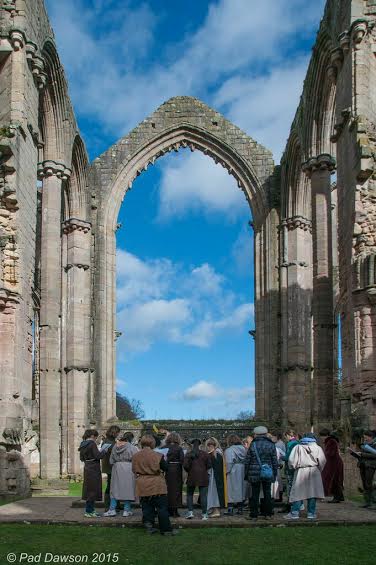
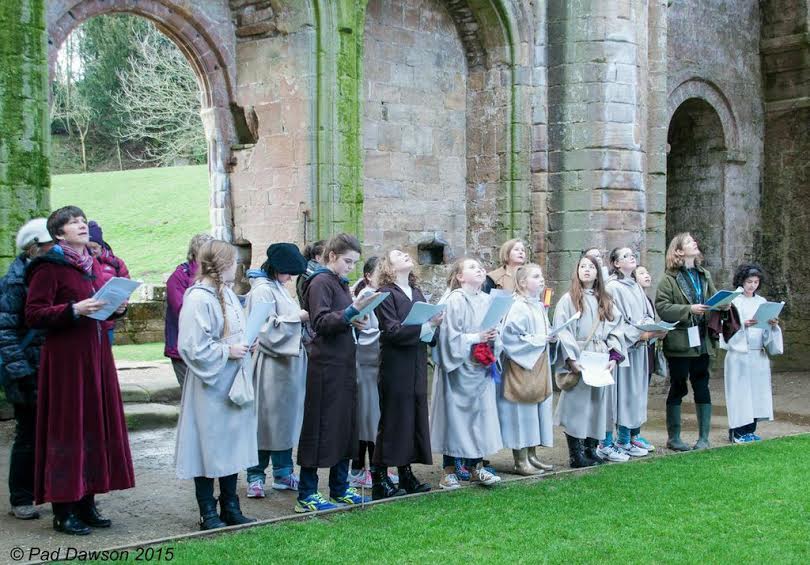
When teachers bring parties of children to Fountains Abbey, we often tog them all up in monastic robes, and explore the site with them .We want them to get a feel of the day-to-day life of a mediaeval monk. What? Prayers eight times a day? No underclothes? No talking? No heating? They’re impressed, in a horrified kind of way.
Then they go away, with only brief notions of the story the Abbey itself has to tell. Or why the place is a roofless ruin.
Until this year. Now they can come with their teachers and ‘Act the Facts’. They’re given props – perhaps a simple cape, a feathered cap, a woollen robe, a crown . These turn them into an early monk, a master mason, an Italian wool merchant, a dastardly baron, or even Henry VIII.
They have a script. It’s a melodramatic pastiche telling the Abbey’s turbulent history. Simple God-fearing beginnings, then powerful prosperity, then war, plague and corruption all leading to the final action. Henry VIII dissolves the monasteries.
The question at the beginning of the play is –
‘Who destroyed the Abbey?’
Acting it out, the children lose their places, stumble over words like ‘Cistercian’ and ‘lavatorium’, and forget which character they’re playing.
Honestly, what’s the point? It’s too complicated. They’re learning nothing.
Then they reach the end. We ask them to line themselves up. Twelfth century characters first, then thirteenth… and so on, through to those who bring the story to an end in 1540. We ask them which century was best.
And that’s when we realise how much they’ve learnt. They talk passionately about the simple piety of the early days set against the laxity of later centuries. They discuss austerity versus comfort. They talk feelingly about the plague, and the reasons for the Dissolution of the Monasteries.
And in telling the story of the Dissolution, they’ve solved the mystery of why Fountains Abbey is a roofless ruin.
Back at school, there’s so much for their teachers to build on. The ruin has brought history to life.
Come and see it for yourselves. We can’t promise you a feathered cap, or a cardboard crown, but you could join one of the regular tours. You’ll get a real taste of history as you soak up the special atmosphere of this special site.
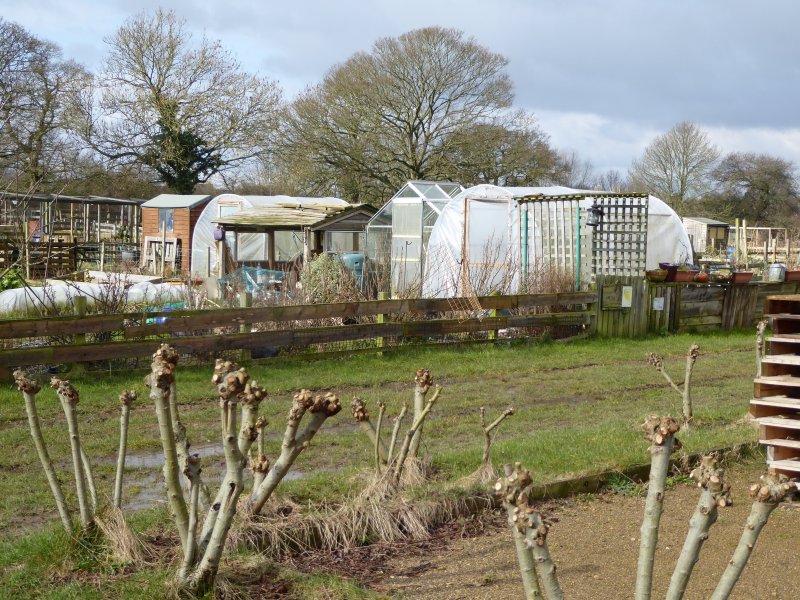
I love allotments. I love those productive shanty towns that you often see at the side of housing estates, edging railway lines, or just beyond the local sewage works. I relish the make-do-and-mend of gardeners’ huts fashioned from lengths-of-wood-and-bits-and-bobs, set alongside neat little cabins bought from B&Q. I enjoy contrasting planting styles. Here – neat meticulous rows of cabbages, beets, carrots and potatoes: there – less organised plots with discarded tyres serving as planters for courgettes and beans set among a hotchpotch of gooseberry and redcurrant bushes. I love the camaraderie of the allotment community – the willingness to share hard-earned knowledge, tips, seeds, cuttings, and even muscle-power. So much more fun that a solitary afternoon battling with weeds.
In Harrogate, I had an allotment. I was the disorganised type, always running from behind, because work and family life got in the way. In France, our vegetable garden was too far away to get the attention it deserved. Here in North Stainley, there are no allotments …..
….. until now.
A few years ago, some villagers decided to initiate an allotment project. They worked hard, but progress was slow. Surrounded by countryside, even identifying a suitable site proved difficult.
I heard about the plans and asked to become involved just as the group reached a turning point. The local landowner has offered to rent out a plot large enough for ten full-sized allotments. An allotment is ten poles (or rods or perches) large. That’s the size of a doubles tennis court. We reckon most people will be happy with a half plot. Twenty allotments then.
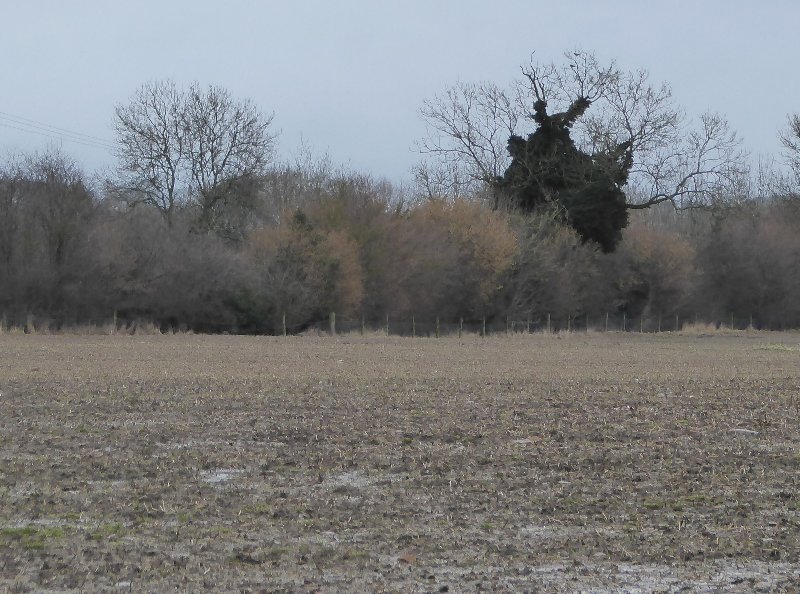
So last Saturday we went to look at the land. It’s a large chunk at the end of a productive field, and it’s currently rather wet, like just about every other field in England. Promising though.
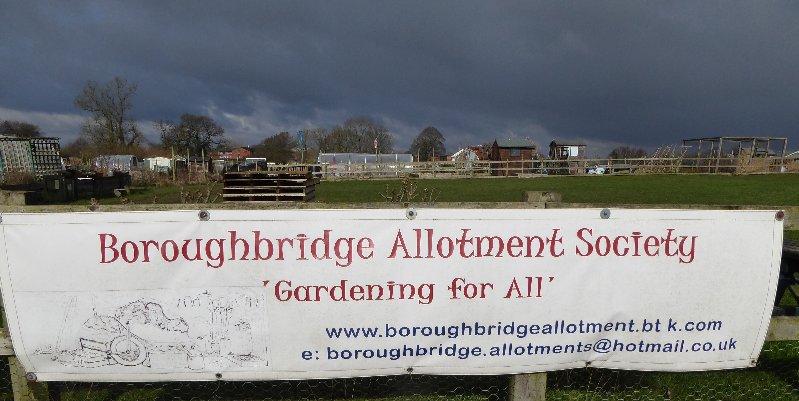
Then we went along to neighbouring Boroughbridge, where they’ve had an Allotments Society for the last 6 years or so. They were friendly and generous with their time. So much to think about though. Paying for water to be piped to the site. Thinking about car-parking and access to individual plots. Keeping pesky rabbits at bay. What to do with allotment tenants who grow only weeds. Establishing a fair rent and knowing what that rent has to pay for. We’ll be lucky to be up and running for next winter. There’ll certainly be no planting before 2017…


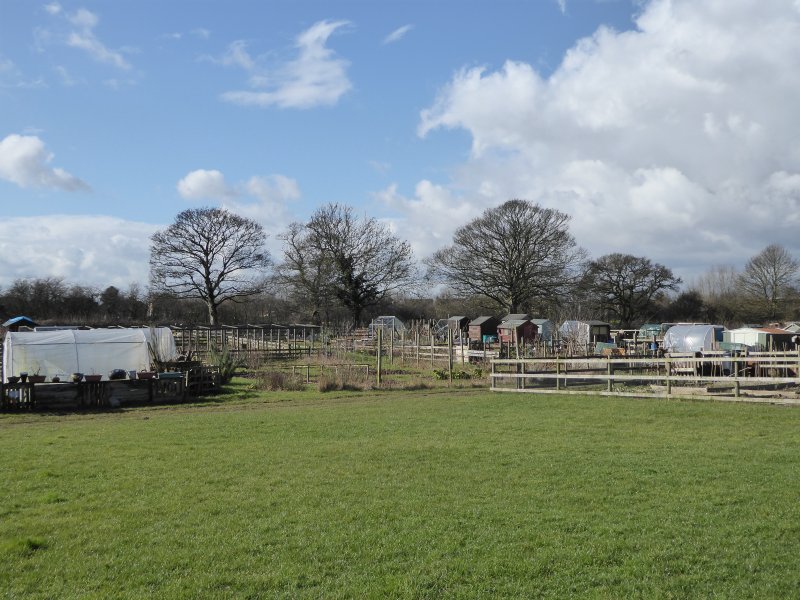
The story is – there is no story to tell about our walk near East Witton.
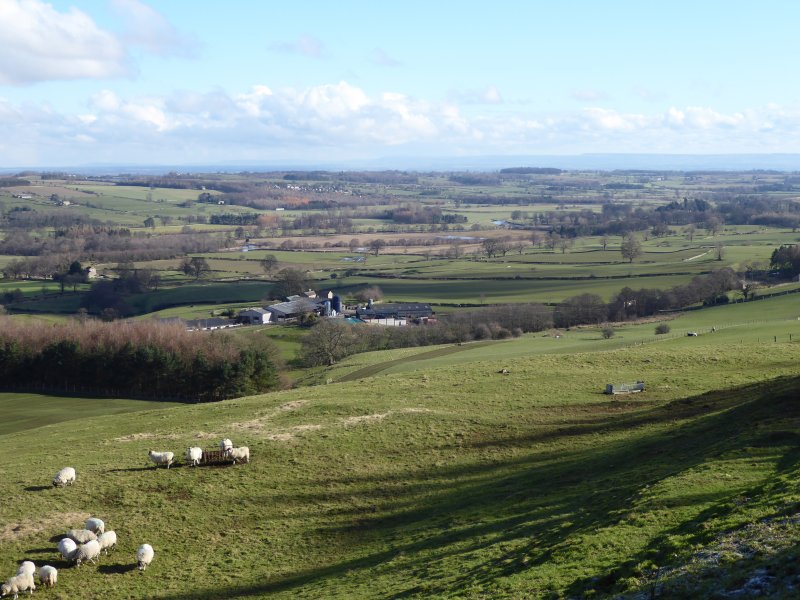
It was cold, frosty but bright so we stepped out energetically. The day went on to be warm, breezy and sunny. There was only one stile to climb over. The ground was firm and frosty, but neither icy nor muddy. Nobody slipped or fell over or got injured.
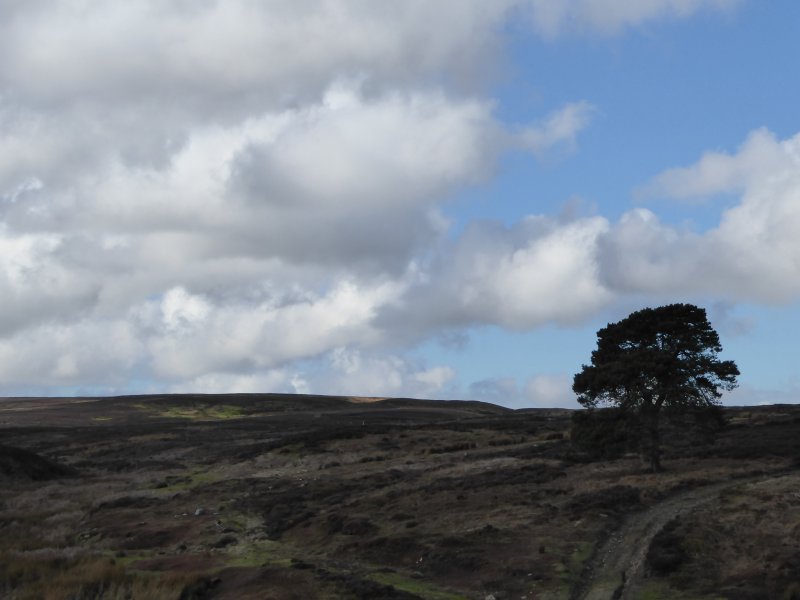
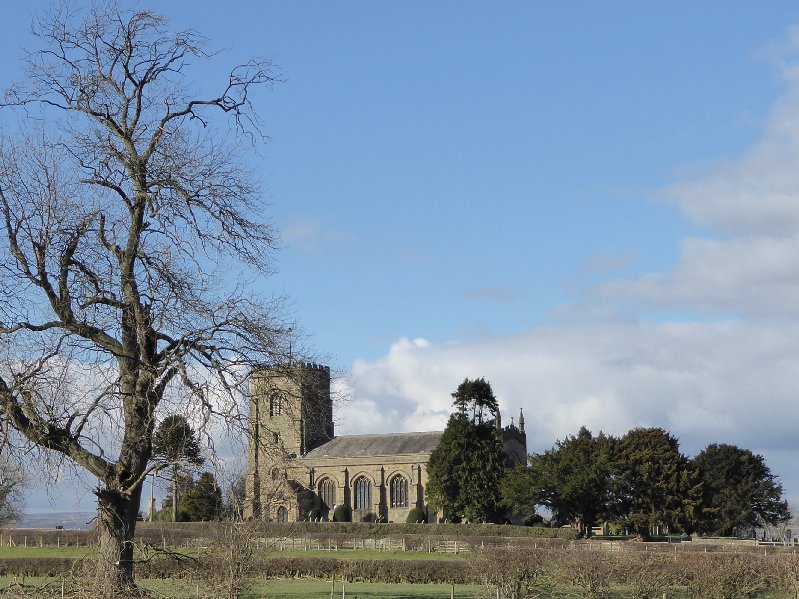
The landscape was just right. The gently undulating farmland of the Yorkshire Dales gave way to moorland whose picturesque bleakness was enhanced by the occasional lonely tree. We’d pause to take in the long-distance views across the Dales. And as we returned through woodland to East Witton once more, there was a proper English parish church just asking to be photographed. Nobody was displeased by the views.
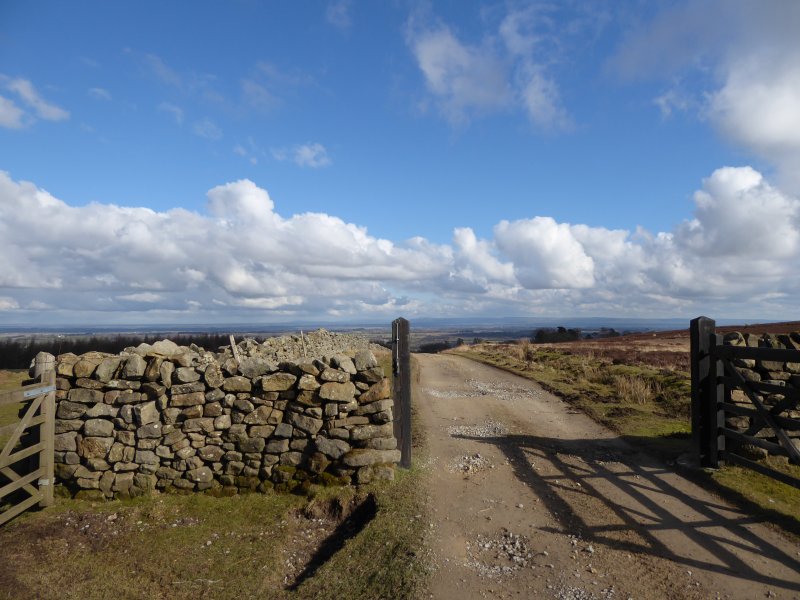
Our two pauses were ideal. Mid morning, we had picture-postcard moorland views in front of us, and the solid protection of a sturdy drystone wall behind. We ate our lunchtime sandwiches in sheltered bosky woodland, with convenient benches in the form of tree trunks. Nobody got cold, or wet, or lost their sandwiches.

The energetic uphill stretches were all before lunch. Our path afterwards returned us gently to the valley floor. So we got back to base after a gently-challenging workout. Nobody was exhausted or fed up.
So there’s nothing at all to tell you.
Oh hang on. This will have to serve as our banner news headline. ‘Hiker loses gloves on Wensleydale walk’. That was me. First one glove vanished, then the other. But as anyone who knows me will tell you, this is not news at all. It’s what I do most weeks during the winter.


You must be logged in to post a comment.