I’ve got lots of readers with Yorkshire connections. With addresses in Australia, southern France, London, Northumbria, Spain and East Sussex, among other places, I bet not one of them has celebrated Yorkshire Day.
Who knew? Not me. Not anyone I know. We all bumbled through life in the 1970s, 80s, 90s, and though the early years of the twenty first century, blissfully unaware until about five years ago that we were supposed to be partying for Yorkshire.
Two Ripon shops take Yorkshire Day seriously.
Now Yorkshire cities take it in turn to host Yorkshire Day, and this year it is Ripon’s turn. This meant a fairground in the Market Square, a procession with a band and civic dignitaries, a service in the cathedral, picnicking in the Park, and all manner of stalls in the town centre, mainly celebrating Yorkshire charities and institutions.
It’s early yet. It’s still quiet round the Town Hall.
If you can’t see the procession, catch it om your phone ….
A fine marching band.
Good old Punch and Judy: ‘That’s the way to do it!’
This bank of flowere was a great place for photo opportunities.
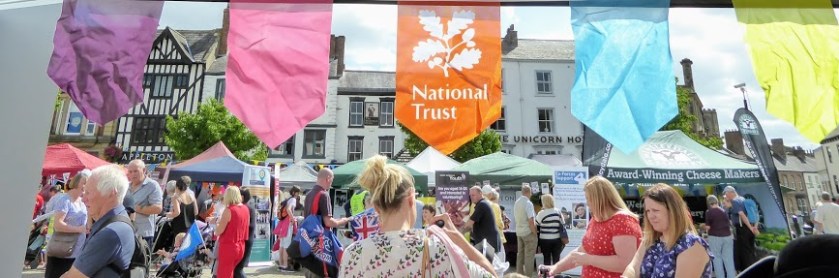
Such as The National Trust’s stall celebrating Fountains Abbey & Studley Royal. I was there. I was one of a small team encouraging mainly families to have fun. A few punters dressed up as monks from the Abbey, or as fine Georgian ladies who might have enjoyed the Studley Royal Water Gardens. Most children – boys and girls – got enthusiastic about using the kind of wool which was produced in abundance at Fountains Abbey to get stuck into simple weaving. They chose their colours with care, threaded their shuttles, and wove, wove, wove. They ended up with nothing more elaborate than a bookmark, but goodness, they treasured them, and handed them carefully to mums, grandads – anyone who would put them safely away till they arrived home.
All that hand-dyed wool! Best get stuck into weaving.
And we all ate Wilfra Cakes. That’s a sort of apple pie cooked with Wensleydale cheese, and a long-forgotten Ripon delicacy, produced thanks to the Workhouse Museum.
If we go back this evening, there are bands playing, and a big firework display. Well, any excuse for a party in God’s Own Country. Why not?
Today was why we came to Barcelona in early January. Emily’s partner’s family invited us to share in today’s traditional family gathering. How could we refuse?
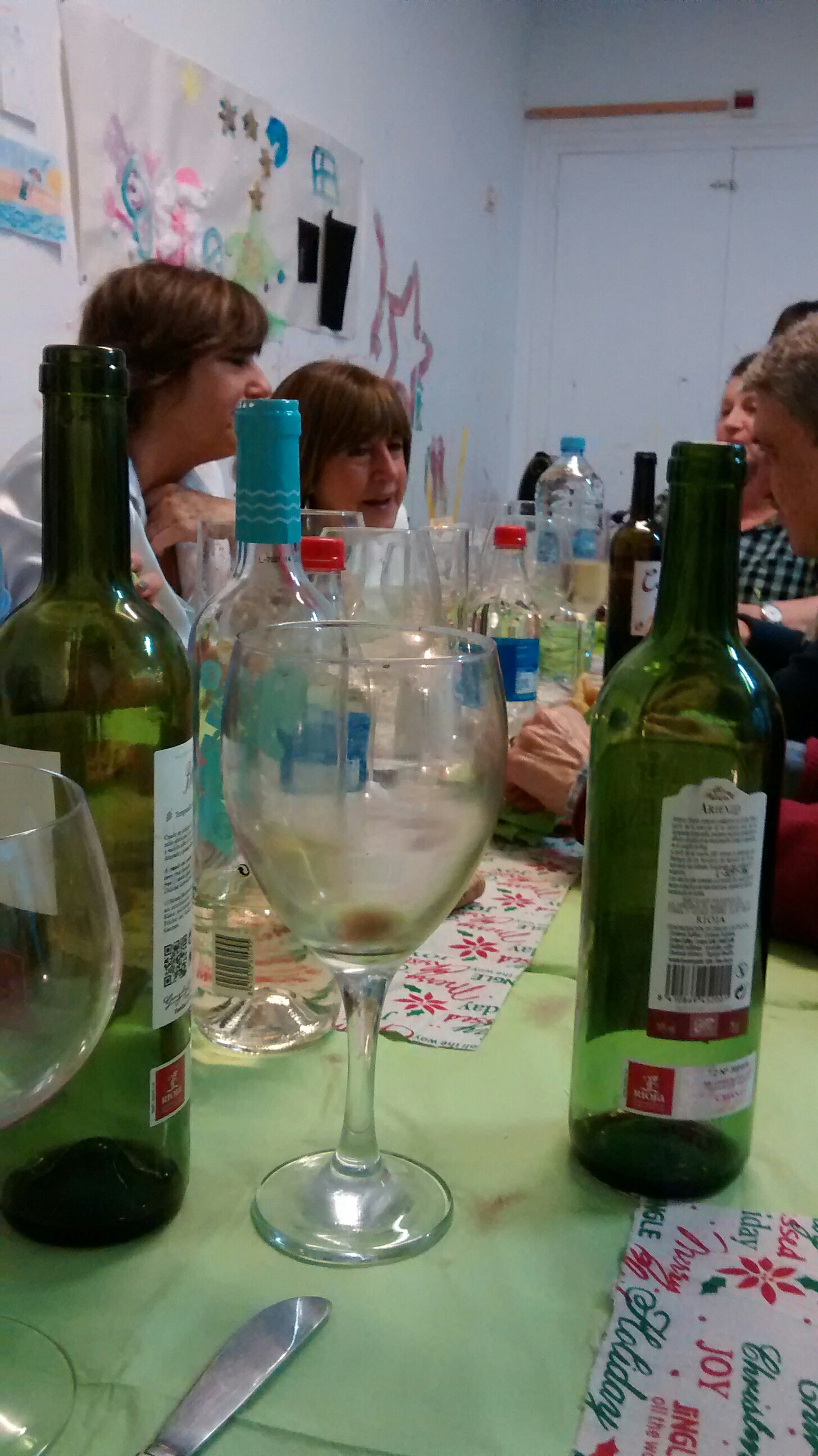
We’ve just had the best of days, with about thirty members of Miquel’s wider family. We’ve muddled through in Spanish, in English, in French. We’ve watched with pride Emily’s integration into this loving and close family group.
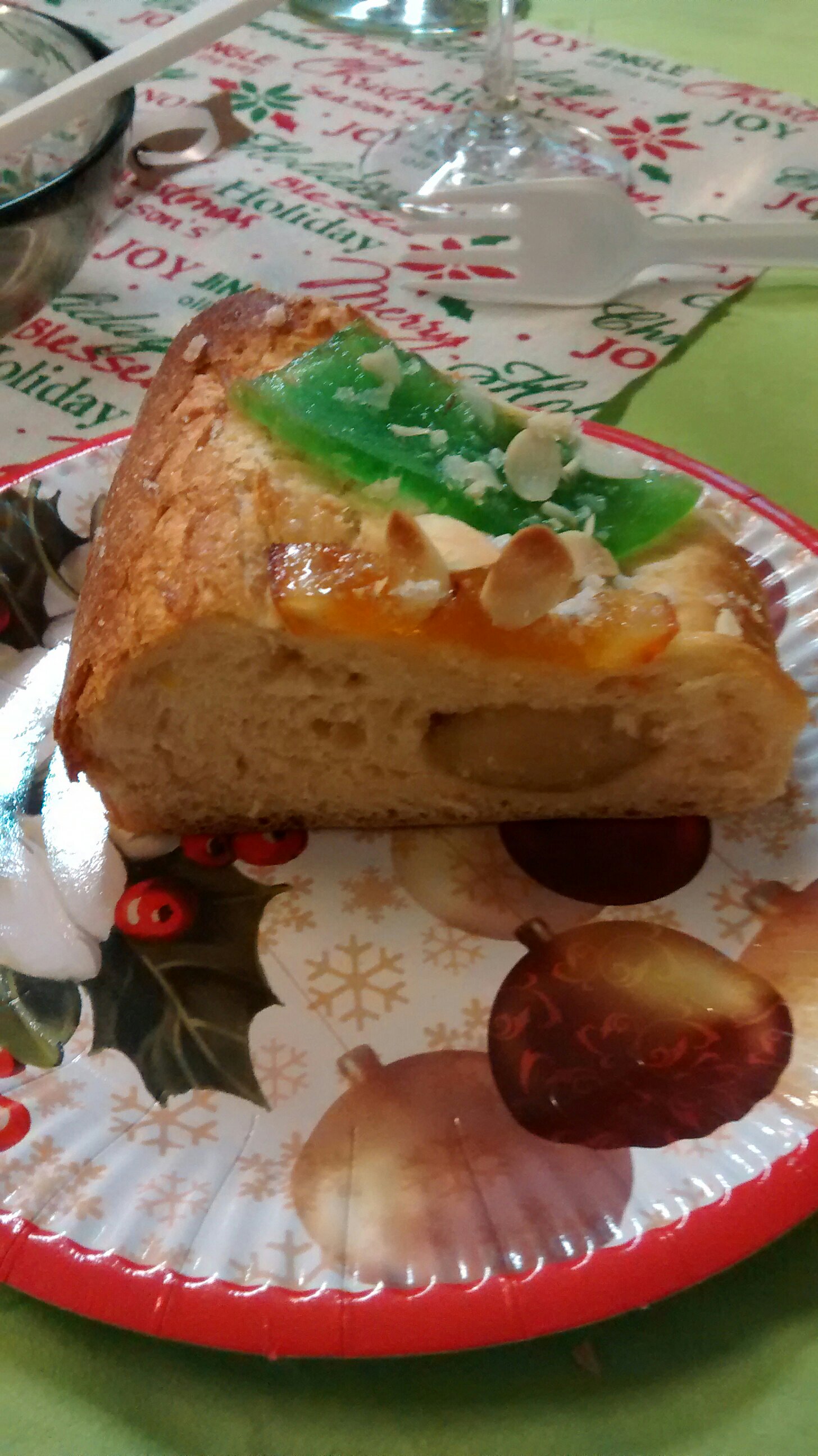
Lots of eating, lots of drinking. Then everyone had to share in eating the traditional Three Kings cake, el roscón de Reyes. We’d all chucked five euros into the pot, and the person who found the little pottery king in their slice won the lot – all but five euros. Miquel won that, for finding a bean in his slice.
Then it was charades. Can you imagine? But this little detail made us laugh. If you need to indicate that the title you’re miming is in English, you drink from an imaginary cup of tea whilst crooking your little finger ….
A very good day has been had by all. Thank you, Miquel’s family, for making us so welcome.
Did Father Christmas come your way the other week? I hope so.
But this year we’ve come to try to spot another team bearing gifts. We’re in Barcelona, where tonight children are waiting eagerly for their Christmas presents from – the Three Kings.
It was at Epiphany that the Magi visited the infant Christ, and at Epiphany that they continue the tradition by bringing gifts to all Spanish and Hispanic children.
We’ve already spotted them. Here they are, slowly winding their way through the crowded streets of Barcelona with their accompanying queens, elves, African drummers and jungle creatures. My phone hasn’t made a good job of recording their visit. I hope my camera will have done better.
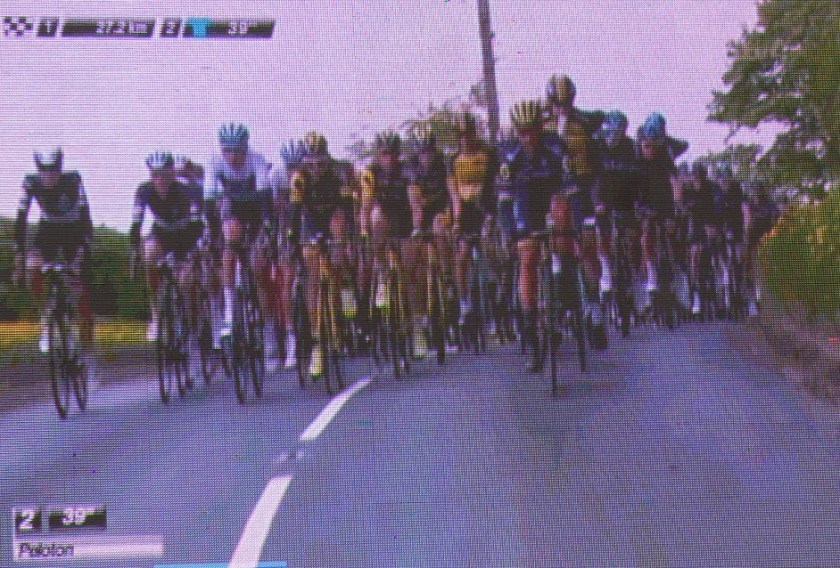
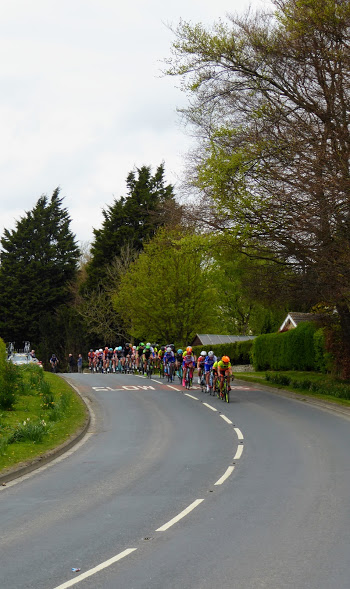
Three years ago, Yorkshire hosted the start of the Tour de France, which I wrote about here, here, and here.
Three years ago, plans were hatched for an annual Tour de Yorkshire.
This year, le Tour once again passed the end of our drive.
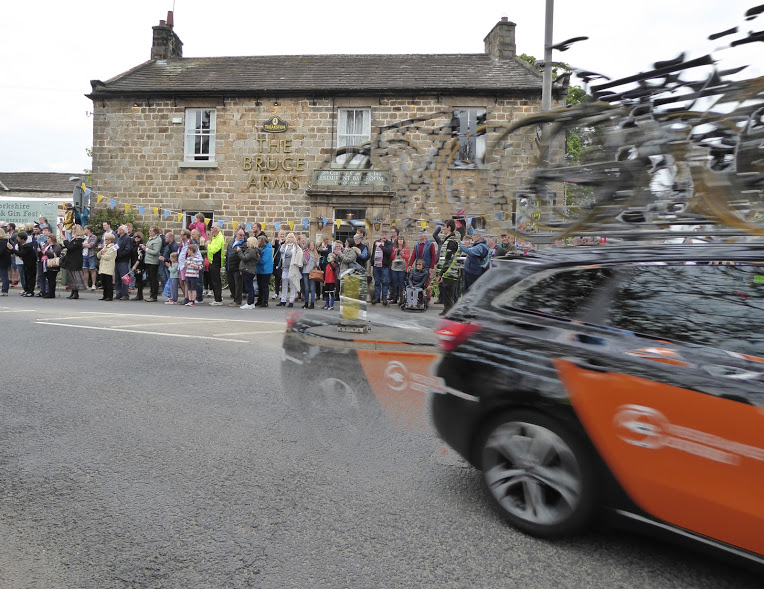
We watched the Women’s Race from the end of our road, and had a happy low key morning chatting to neighbours we knew, and neighbours we hadn’t previously met. Police motorbikes sped past, support vehicles, a helicopter above, then the riders themselves, followed by more support vehicles, more police, and finally, a couple of women riders who were never going to make it into the winning cohort, but were giving it their best shot anyway .
Our neighbours decorated their garden.
Police prepare the way.
The helicopter’s filming the action.
Women riders zooming through North Stainley.
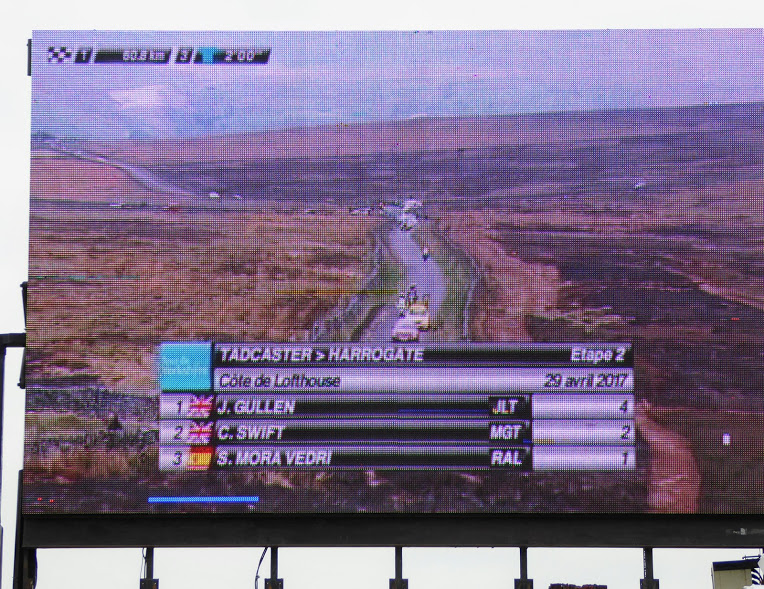
During the afternoon though, I sauntered into West Tanfield to watch the Men’s Race. I arrived to find a party atmosphere. There, amongst all the stalls on the village field, was the Big Screen showing the progress of the Tour in real time. Just look though. Just as in ze Tour de Fraunce, everysing eez in Frainch. ‘Tour de Yorkshire’, ‘Le Côte de Lofthouse’, ’29 avril 2017′. It’s a sweet little homage to the Tour de France, without which …..
The Big Screen explains all, in French.
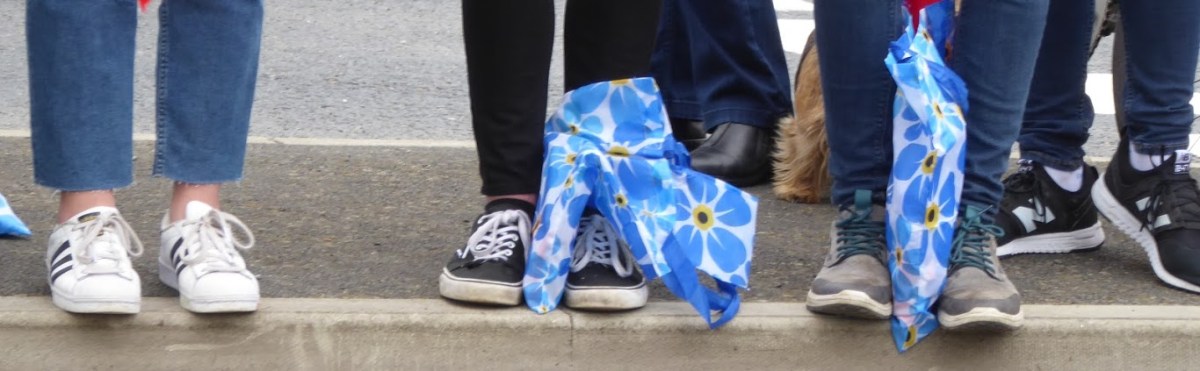
I’d missed the caravan giving out freebies. A friend told me that in Health and Safety conscious England, these aren’t chucked randomly out of publicity vehicles. Instead the vehicles stop, and small teams amble among the crowds, giving out flags, batons, shopping bags. She said it was rather nice and added to the party atmosphere.
Spectators with their freebie shopping bags.
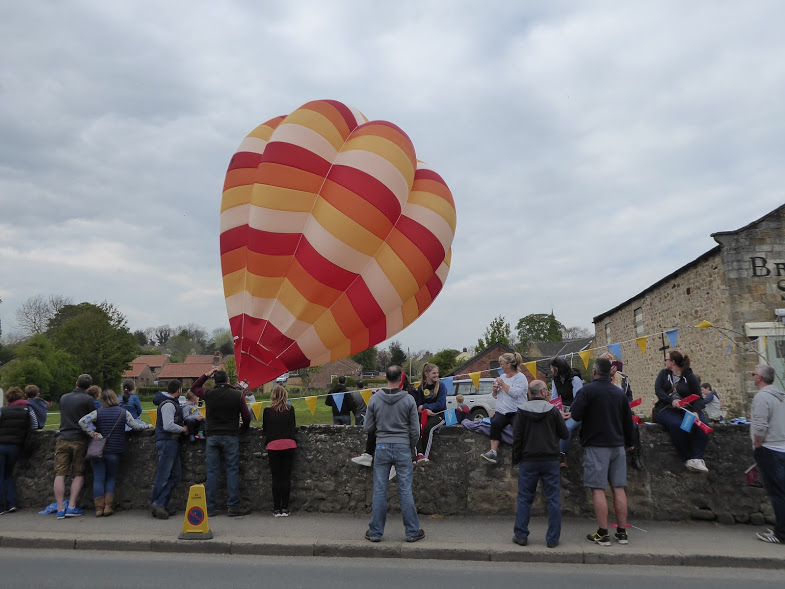
A hot air balloon was moored near the pub. We didn’t find out why, as it never became airborne.
The securely tethered hot air ballon.
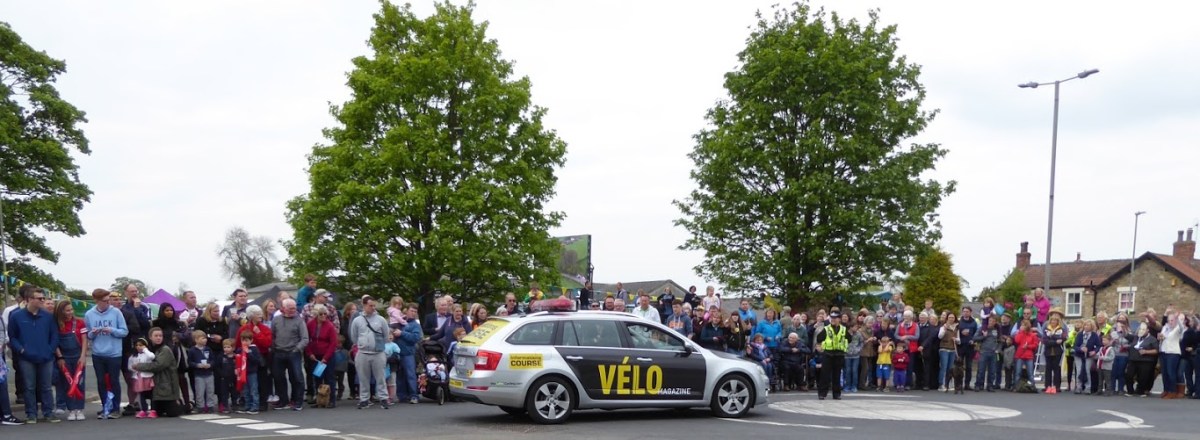
As the Big Screen informed us the riders had reached Masham, we started to line the streets. Volunteer Tour Makers shooed us onto the pavements, and we waited …. First of all, police motor bikes. Then this vehicle, complete with Man with Microphone. ‘Allez, allez allez’, he yelled. ‘Oi! Oi! Oi!’, we yelled back. ‘Allez, allez, allez!’‘Oi! Oi! Oi!’. ‘Allez!’‘Oi!’, ‘Allez!’‘Oi!’ ‘Allez, allez, allez!’‘Oi! Oi! Oi!’
Cheerleader’s vehicle.
Then this, the moment we’d been building up to.
They were gone. More support vehicles, and a final one telling us it was over.
Support vehicles came from all over France, from Belgium, from the Netherlands, from Italy …. and from the UK.
We all wandered off, perhaps to check out the big screen showing the riders going through Ripon. As I left the village, the dustbin men were already clearing the streets. The party was over.
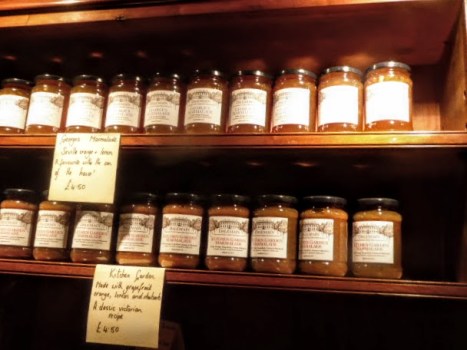
Surely it’s only in England that you would find an annual festival dedicated to marmalade in all its forms? And it’s no surprise to find it hosted in a delightful country house, Dalemain, the family home of the Hasell-McCosh family.
Delmain, Cumbria
Eleven years ago, Jane Hasell-McCosh devised this very British festival, and now in March every year, some 2,000 marmalade makers submit their entries to be judged .
The day kicked off in a rare rain-free moment with local schoolchildren belting out a jolly song about the delights of marmalade. In this ballad, they rejected any treat they were offered, preferring instead a slice of toast, well slathered with this bitter orange preserve. As if.
Marmalade celebrated in song.
Dan Lepard and Jane Hassel-McCosh start the day off.
The judges of 2000 pots of marmalade get their reward.
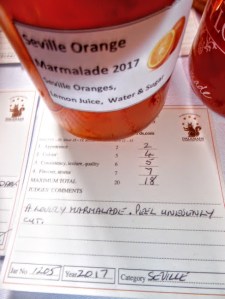
MC was one of my baking heroes, Dan Lepard. He introduced everyone, and announced the winners. And then we went into the house, to visit room after room stuffed with pots of marmalade. Each jar is awarded a series of marks, and is given an individual critical commentary. I was quite cross that I hadn’t in the end made the effort to enter any of my own efforts.
The entrants though are not only true Brits, eccentric or otherwise. In our B&B we had met Chris Brown, a baker from Vancouver, who had come for this one weekend only to enter his marmalade. He’d already won gold medals in previous years. So many Japanese have done well that the Japanese Ambassador himself came to the opening ceremony and made a gracious and witty speech. There were Australians there, and Kiwis, South Africans, Americans, someone from the Czech Republic ….
18 is a decent score: worth a silver medal, I believe.
The competition has categories for Seville orange marmalade of course, for marmalade with a twist, for any citrus marmalade, for dark and chunky marmalade ….. all this could be predicted. But a category for marmalade makers who are also campanologists? Octogenarians? ‘The Establishment’: those redoubtable and upstanding members of society, such as bishops, MPs and judges who used to be the only people who could verify your likeness for a passport application?
This is entirely in keeping with the professional-but-with-a strong-hint-of-the-amateur feel of the festival.
Dan Lepard and Jane Hassel-McCosh open the proceedings.
I paid extra to go to Question Time. Baker Dan Lepard, food historian Ivan Day, marmalade guru Pam ‘the jam’ Corbin, and Martin Grant, MD of Mackay’s Marmalade made the hour whizz past. One conversation stood in my mind. ‘If we sent each of you home with a basket of raspberries, or blackcurrants and asked you to make jam, you’d all come back with much the same product. If we sent you home with a bag of oranges, you’d each come back with something quite different.’ And it’s true. They’d range from dense, dark and treacly with big chunky chewy peel to bright jewelled orange jellies with a delicate filigree of fine strands of zest suspended within. And all stops in between. This immense variety to be had from a product made simply with oranges, a bag of sugar, a lemon, and perhaps a little secret something is what gives marmalade its continuing appeal.
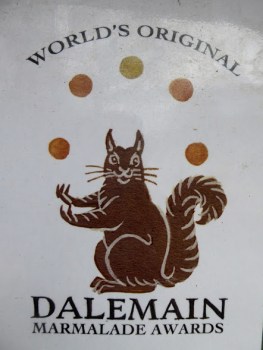
Who knew that squirrels like marmalade?
After lunch, we popped into Penrith. The town had gone orange for the weekend. The face of the town clock was orange: the shop windows were dressed in orange, and there was an orange-themed market in the town square. Marmalade anyone? It was all good fun, despite the unremitting rain.
The town clock turns orange for the weekend
Stall on the market square
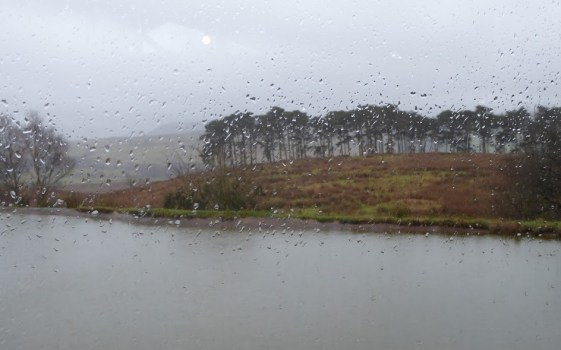
Next morning, we headed home. The rain was so intense that newly established rivers and waterfalls cascaded from the hills. Older-established rivers burst their banks and flooded across roads. Fields developed impromptu lakes. It reminded us of a remark that Malcolm had overheard at the festival: ‘I come every year. But it always rains’
Ripon Cathedral – viewed from High St Agnesgate (geograph.org.uk)
One of the bells of Ripon Cathedral sounded this morning: sonorous, measured and slow. The pancake bell. It’s rung out every Shrove Tuesday for centuries now, just like other bells in other churches, countrywide. It reminds good Christian folk to come to church and confess their sins, before Ash Wednesday. Some also believe it was to remind thrifty housewives to use up their eggs, butter and milk before fasting during Lent.
Gentlemen of the press outside the cathedral to record the action.
Nowadays it’s a signal to gather outside the cathedral and have a bit of fun. Somebody has already cooked a pile of pancakes. No point in making lacy delicate crepes. These pancakes are in for a tough time as props in the annual pancake race. Contestants have to run from the Cathedral, down Kirkgate, pan in hand, tossing as they go …. onto the pavement, as often as not.
I watched teams from the Rotary Club, from local primary schools, from the Italian restaurant down the road.
The lads from Valentino’s Italian Restaurant arrive to run in style.
Sadly though I missed seeing the clergy do their bit: things to do, places to go. It all seemed amiably uncompetitive. Just a chance to chat to the Hornblower (who keeps us safe through the night here in Ripon), to friends, and to take a few snapshots of this happy little Shrove Tuesday tradition.
David from the Rotary Club gets a bit of practice in.
The Ripon Hornblower keeps a friendly eye on the proceedings.
Children from Holy Trinity School tussle it out.
Later, much later, Malcolm and I had pancakes too, delicate lacey ones, served with lots of sugar and lemon juice. We tossed them of course. But we didn’t run down the street with them.
I felt stuck. In my head, I rummaged through my photo collection. I discarded foggy moody atmospheric mornings like this one. I rejected bright summer meadows and crisp snowy winter walks as not quite projecting the ambience I want to think about on this dismal January day.
Here’s what I’ve chosen. It’s an image that’s more than six years old now, but it sums up much of what we loved best about our years in France.
Our walking group had played its part in organising a walk for ramblers from all over the region. We’d arranged signage, helped sponsors set up their stall, marshalled the event, walked ourselves, and handed out certificates at the end before the visiting walkers departed. Now we could relax.
Here we are in the mediaeval town square in Mirepoix, unwinding over a good and copious meal with plenty of wine. The sun is shining. The afternoon stretches lazily ahead of us. We’re among friends. This is an ambiance chaleureuse at its finest.
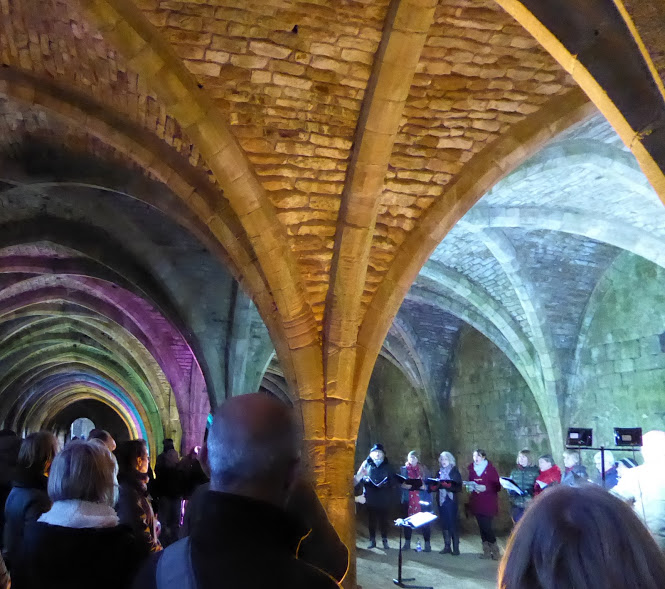
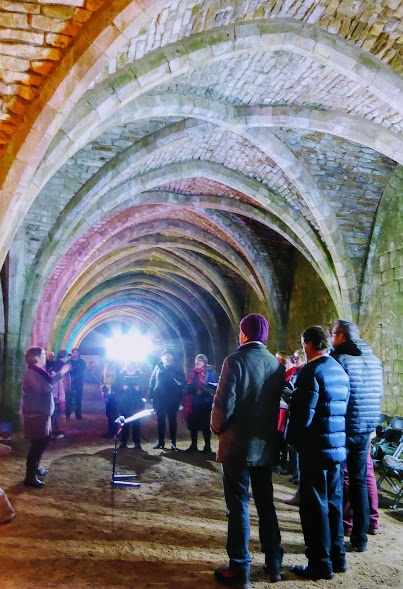
A coldish afternoon. Evening’s drawing in at Fountains Abbey, and our little choir is due to sing there. Not in the roofless ruined abbey, but in their former storage area, their cellarium, as vaulted as any church, and as atmospheric, with its wide colonnaded chamber and its vibrant acoustics. Local choirs vie for the privilege of a singing spot there around Christmas, knowing that audiences will be generously appreciative, and that the cellarium will give the very best account of the choir’s music making. Generally performers choose favourite Christmas carols that the audiences know and love.
Not us. Our director, Nicky, makes interesting choices. We sing early carols that the monks themselves might have known, such as the Coventry Carol and Ave Maris Stella. We sing music known to a secular mediaeval audience – the rousing songs of taverns, feasting and wassailing, such as Gaudete, The Boar’s Head Carol and the Gloucestershire Wassail.
Choir in winter woollies. It’s cold in the cellarium.
We sing winter songs from Lapland – a yoik to call the reindeer in, and a seal woman’s lament. A spiritual, a modern Hungarian take on Alleluia – the variety continues….. but we finish off with a traditional favourite – Ding dong merrily on high.
We’re delighted. We get through with no disasters, and we’re exhilarated at the way the acoustics of the cellarium enhance our music-making. The audience pays us pretty compliments. We want to come back again next year.
Happy New Year to you all. Let’s hope for a better 2017.
Thursday night was brilliant. Brilliant in every way. Apart from anything else, it was an evening of simple joy at being part of an evening’s festivities shared with equal pleasure among both friends and strangers.
The next day we woke up to a Brexit-dominated world, and simple joy has become rather hard to find.
We arrived at Harrogate’s Valley Gardens as dusk fell . These gardens are among Harrogate’s treasures – 17 acres of lawns, of colourful flowers, of pinewoods, a small lake, of historic buildings such as the Sun Pavillion, all beautifully managed and greatly appreciated by locals and visitors alike.
Normally, by dusk, there’s only the odd dog-walker around. Thursday was different – Friday and Saturday too. We spotted lines of flaming plantpots strung on simple metal frames. There were smouldering lampshade-like creations. Then we found spherical braziers suspended from stands of mature trees.. There were eccentric bits of machinery, reminiscent of the work of Rowland Emmett, that played with the idea of juxtaposing showers and jets of water with flickering flames and occasional startling fireballs. There were quantities of men’s vests – yes, vests – re-purposed as lampshades suspended over the lake, which became, as darkness fell, an evermore magical and mysterious venue.
Cie Carabosse was in town. They’re a French street theatre company whose specialist subject is fire in all its forms. Its members are a playful band of people who aim to transform a space that may have long been familiar into … something else. Dressed formally in black, rather in the manner of croque-morts (pall-bearers or undertakers), they wandered round the park, illuminating braziers, attending to some of those hand-cranked machines. We ambled round too. Apart from a band of musicians playing atmospherically over in the back corner, there was no event, no ‘happening’. Everyone enjoyed simply exploring at their own pace, visiting and revisiting this installation, that glade of fires, those vests down at the lakeside, savouring the atmosphere as dusk became black night, as fires grew, damped down, and blazed forth once more.
Cie Carabosse travel all over the world. They’ll be in London in September as part of the commemoration of the Great Fire of London, 350 years ago. They’ll be in Seoul, South Korea in October – so maybe Emily could get to see them. And they’ll be in the Ariège, in Foix, in December. One way or another, I hope many of you will have the chance to have your evening set alight by Cie Carabosse before the year is out.




















 From Pyrenees to Pennines
You must be logged in to post a comment.