ExACTly. Worth a read, I think, as are all posts from Travel Between the Pages, a blog which is ‘the intersection between travel, books, and art’. Always interesting, usually thought-provoking, often funny.
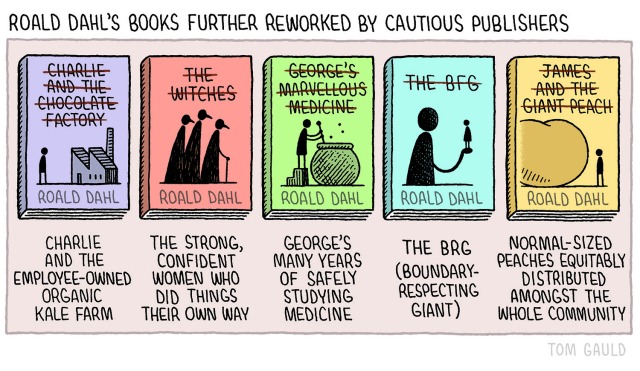
You would have to have been living under a basket to avoid the recent brouhaha over the re-editing of classic books by so-called sensitivity readers and editors. Here in the Colonies we’ve been through this with the books of Dr. Seuss and other popular children’s authors. Now, the UK has gone mad censoring works by Roald dahl and others.
McSweeney’s recently posted a pointed response to this nonsence in an article by Peter Wisniewski aptly titled “FUCK YOU, YOU FAT-HEADED ROALD DAHL-CENSORING FUCKERS.”
Dear Fat-Headed Roald Dahl-Censoring Fuckers,
You’re censors. You’re not editors, and you’re not readers. You’re censors. You are exactly what Orwell warned us about.
So fuck you.
Without the author’s consent, you are changing and omitting words that the author wrote. That makes you a censor. An agent of censorship. Only fascists censor books.
What you’re doing is crazy. See? We said it. Crazy. Crazy. Crazy.
On the first Saturday of every month, a book is chosen as a starting point and linked to six other books to form a chain. Readers and bloggers are invited to join in by creating their own ‘chain’ leading from the selected book.
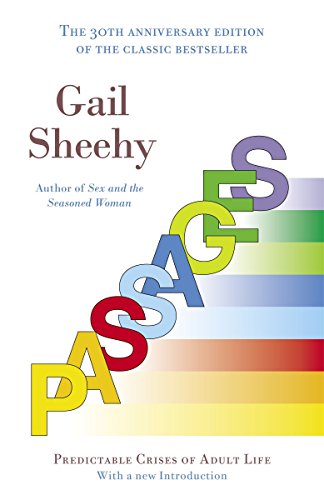
The full title of Passages, this month’s starter book, describes it as being about ‘predictable crises of adult life’ Gail Sheehy’s road map of adult life shows the inevitable personality and sexual changes we go through in our 20s, 30s, 40s, and beyond. And I haven’t read it.
But I have read a book whose female heroine is forced into adapting to a life for which she had been totally unprepared, and for which there was no self-help manual: A room made of leaves, by Kate Grenville. This is an involving story based on the lives of John Macarthur, who has a bit part in Australian history, and his wife Elizabeth, who hasn’t, but who, through her amanuensis Kate Grenville, wrote this book. It’s 1788. After an unwise liaison with a hot-headed and unbalanced soldier, John Macarthur which results in her pregnancy, she is forced to make a new life in Australia where her husband has duties guarding the penal colony in New South Wales. Isolated in this unfamiliar terrain, she has to develop strategies and find strength to navigate her new life and her impetuous and unpredictable husband. This book beautifully evokes the landscape of this part of Australia, and the tough life shared by army personnel, prisoners, and the original Aboriginal population, for whom, unlike most of her fellow countrymen, she develops respect and sympathy. An evocative and poignant story.
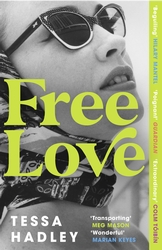
Another book had me reading about a woman who also couldn’t have read Passages: Free Love by Tessa Hadley. We are in the 1960s, and are introduced to Phyl, a middle class housewife with a husband in the Foreign Office and two children. The family is prosperous and content. Then Nick, the son of old friends comes for a meal, and everything changes as Phyl makes choices which up-end this happy and conventional family. I was immediately immersed in this story, where first one twist, then another interposed itself in the narrative. Extraordinary as these twists were, the sixties setting gave them the ring of authenticity, and I had little difficulty in being totally sucked into the worlds which Phyl and her various connections inhabited. I found it a real page-turner.
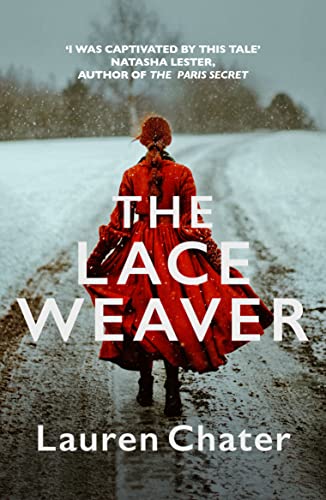
The next two women also had little control over how their lives unfolded:, as told in The Lace Weaver by Lauren Chater. Estonia, 1941. The country is in the grip of a savage conquest and occupation by Russia. Increasingly deprived of a means of scrabbling a livelihood together, for the women of the town where young Kati lives, hanging on to their heritage tradition of shawl-weaving in delicate lacy patterns becomes a way of asserting their commitment to their country. Moscow, 1941. Lydia, a privileged young woman of Kati’s age discovers some unwelcome facts about her parentage and resolves to escape. After several heart-stopping adventures, she finds herself in the same refugee camp as Kati.The two young women tell their stories in alternating chapters, with the leitmotif of the shawl being the device that threads their stories together: stories of danger, love, brutal deaths and the importance of all the women’s support of one another as their men fight the Russian occupiers in under-the-radar resistance groups. Although I found that difficulties were sometimes too slickly resolved, nevertheless the story emphasised the fragility of life, the strength of the human spirit.
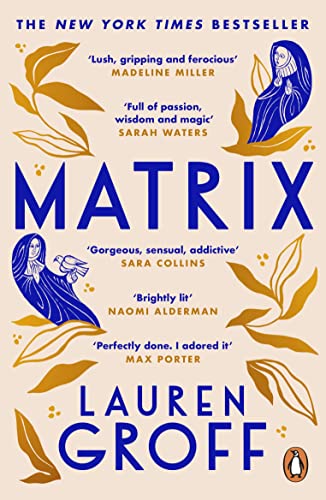
We’ll go back to the 12th century now, to read about a woman who at first had little control over her life- until she learnt how to assume it: Lauren Groff’s Matrix. I expected to enjoy this book far more than I actually did. The hero, Marie de France, is someone known to have existed, but very little of her history is known. Which pretty much gave Lauren Groff carte blanche to write her story as she chose. In short, Marie, a bastard of noble birth, is big and ungainly. Sent as a prioress to an impoverished and unimportant abbey, she successfully devotes her whole life to making it large, beautiful, and extraordinarily wealthy. Groff’s research is impressive: she clearly understands the mediaeval religious life well. Her writing is striking, luminous. But I was entirely uninvested in the life of Marie de France and in the lives of her fellow-nuns. Dramas were quickly resolved: whole years, or even a decade or so passed in a single sentence. I didn’t care for Marie a great deal – for her visions and her acquisitiveness – apparently for the glory of God. And really, it was a matter of some indifference to me whether I finished the book: I did – for the quality of the prose, rather than the uninvolving narrative.
Another woman – in fact The hero of this book is the subject of Elizabeth McCracken’s story. Apparently it’s her mother, but actually it’s auto-fiction, which is fictionalised autobiography. A book that is curiously hard to describe or pigeon hole. The author – American – is playing the tourist in London, re-exploring the haunts she and her recently deceased mother enjoyed together. She moves seamlessly, but never inappropriately between her London adventures, her mother’s life as a woman with life-affecting health issues, and the need to sell the unwieldy and neglected house that was her parents’ last home. Her father also died not too long ago, but he plays no more than a bit part in this story. McCracken’s mother was wilful and opinionated, witty and optimistic – and great fun, despite her very real mobility difficulties. McCracken herself vacillates between protecting her mother’s privacy and wanting to cherish her memories. She wants to write a book that’s like ‘David Copperfield except Jewish, and disabled, and female, and an American wiseacre, but there’s too much I don’t know and I can’t bear to make up.’ This is a funny, unsentimental and vivid book which is impossible to characterise – or to put down.
I seem to have a chain which is all about women, so here’s my last one, and so different from any previous choices. Night crawling by Leila Mottley. 17 year old Kiara’s father, always in and out of jail, is dead, her mother is in a halfway house, and her older brother chases unrealistic dreams of becoming the next big name in the music industry. She’s in charge of their home, and de-facto of her friend and neighbour’s 9 year old child, whom she loves unconditionally. Under-educated and with no training, she has no means of paying the rent and eviction looms. Sex-working provides an answer, but soon she falls into the clutches of a ring of sex-seeking cops from whose grip she has little chance of escape. This is her story: that of a feisty young woman making the best of the rotten hand that life has dealt her. Told in her own words, Kiara paints a picture of a world where racism and poverty and lack of choice are normal and where the choices she must make are impossible. It’s inspired by a true story of corruption in the police department. Kiara is bold, witty and tough, and Mottley gives her a rhythmic, new and exciting langage. An energising read.
Six women, roughly fashioned into this month’s chain. Where will next month’s take us? It’s Bruce Springsteen’s autobiography Born to Run.
PS. Away from home, I am finishing this post off on my phone. Getting the link to Kate’s post to display in the usual way has turned out to be above my pay-grade.
I have just finished reading Eating to Extinction, by Dan Saladino. It’s an ambitious, immersive and important book. Saladino has made a tour of the world’s vanishing foods – its animals, vegetables, crops, and shown us why retaining diversity in the food chain matters so much.
This engaging and readable book takes us with Dan Saladino as he visits Hadza hunter-gatherers in Tanzania in quest of wild honeys – they’re the very last people to be constantly on the move, with no settled place to call home – they have lived successfully with no possessions, no money and no leaders. In Australia, he’s shown murnong, a radish like root once prized by the aboriginal people, and all but obliterated by introduced over-grazing sheep. Bere is an ancient barley adapted to the harsh conditions in Orkneyn Orkney. There are Swabian lentil growers; apple growers in Kazakhstan; Skerpikjøt, the wind-dried mutton of the Faroes …. and so many more. Each adventure, to areas where local custom and traditional ways of life remain strong is full of interest, and leaves me with a desire to try the foods and drink he sampled. It also leaves me with a determination to do what I can to support the remaining foods being saved by passionate and committed producers.
Disease can rampage through a single variety at horrifying speed, and if that variety is all we have, the consequences are obvious. Too many of our foodstuffs are in too few hands. The cultures that are injected into our cheeses worldwide to make them what they are are in the hands of some 5 suppliers. The cattle we breed are – worldwide – largely a single breed. Seeds in every continent are in the hands of just four corporations,. Thousands upon thousands of local varieties, bred over the centuries to suit local conditions have been lost forever. So many of the foods we rely on – animal and vegetable – once developed to suit particular soils and climate have been wiped out or, if lucky, painstakingly recovered from a vanishingly small stock pile by some single-minded enthusiast. Now, most foods are grown as a one-size-fits-all.
Whereas foodstuffs used to be so different and varied from one country and region to the next, now the entire world derives 50 % of its calorie-intake from just three foods: wheat, corn and rice. The fast-food burger is becoming a world-wide phenomenon. Saladino shows us that besides this being so dangerous – an epidemic could wipe away a foodstuff completely – it’s also impoverishing our diets, and the rich variety of local foods. He discusses globalisation, the crippling effects of war and climate change. The good news is: with a lot of hard work and good will, it’s not quite too late to stop the rot.
The most important book I’ll read this year. And one of the most interesting.
On the first Saturday of every month, a book is chosen as a starting point and linked to six other books to form a chain. Readers and bloggers are invited to join in by creating their own ‘chain’ leading from the selected book.
I wanted to read the starter book for this month’s chain, Trust, by Hernan Diaz. But for some reason, the library hasn’t yet satisfied my reservation of it. So I’m working with Diaz’s own comment about his book: ‘there are very, very few novels that deal with the process of accumulation of capital. This, to me, was baffling.’
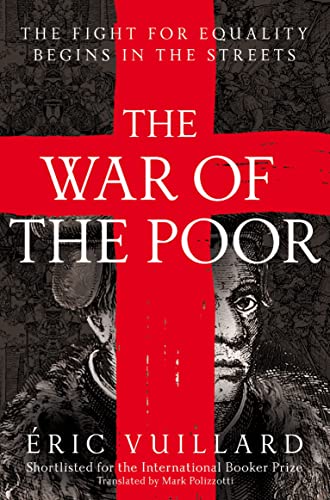
I have to say it doesn’t baffle me. But I thought I’d go with a short book that looks at a world where capital was – for large swathes of the population – in very short supply. A bit like today. The War of the Poor by Eric Vuillard was an International Booker Prize finalist in 2021. This is a vigorous and pacily written appeal for social justice, using the various Peasants’ Revolt type struggles of the Middle Ages, sometimes rooted in religious fanaticism to make its points. His focus is the life and times of Thomas Müntzer, German preacher and theologian, for whom even the likes of Martin Luther were too Establishment.
In a mere 60+ pages, he conjures the atmosphere of discontent of the peasantry with the oppression and poverty which was their lot. It was a fight that could not be won, and in vigorous, emotionally wrought poetic language, Vuillard tells the tale of what he sees as one of history’s great injustices.
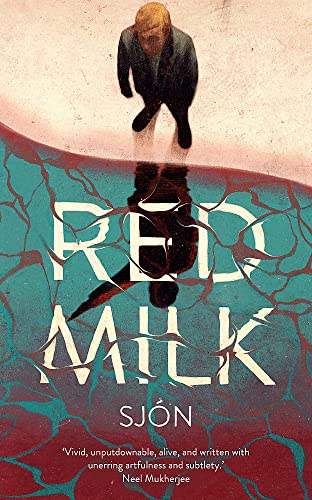
From one political struggle to another. Red Milk by Sjón (translated from the Icelandic by Victoria Cribb). This is the story of Gunnar Kampen, who grew up in Iceland a towards the end of WWII in a family fiercely opposed to Nazi oppression. The story depicts a happy enough conventional childhood which progresses towards his job in a bank. And yet … he comes into contact with Fascist ideas and ideals, and soon becomes a leader of Iceland’s under-the-radar Nazi movement.
The book goes out of its way to portray Gunnar as a young Mr. Average, whose political proclivities are hard to spot in society at large, while pointing out those aspects of Iceland’s recent history that make it possible for Gunnar to entertain the views that he has. An unusual and compelling book, showing the mindset of a young man sucked into a belief system now regaining some political traction throughout Europe.
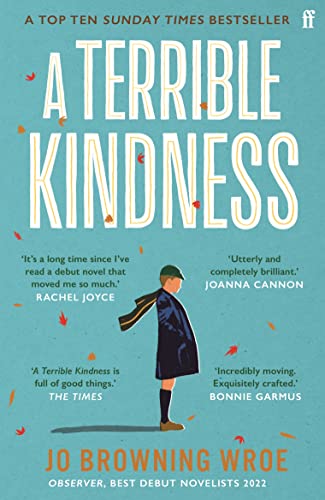
Gunnar is an unusual young man who presents as absolutely average. So does William, the young hero of A Terrible Kindness by Jo Browning Wroe. The tragedy of Aberfan is one that no Brit of my generation or older is likely ever to forget. That 116 children and 28 adults, all from the town’s primary school should lose their lives when a colliery spoil heap collapsed and buried them was shocking, even from afar. For 19 year old William Lavery, just-graduated embalmer who volunteers to go and help prepare the dead for burial it was traumatising, and coloured his life thereafter. It wasn’t the first traumatic event in his life. The first was when he was a boy chorister in Cambridge – and actually, he had trauma to deal with before that too, as a boy of 8. This is the story of how his life unfolds, switching back and forth between the years, unpicking the various strands of his story that depict the damaged young man he becomes, and his eventual slow redemption. Beautifully and engagingly told, this story deals with big, unmanageable emotions, and is one of those books about which I can say ‘ I couldn’t put it down’.
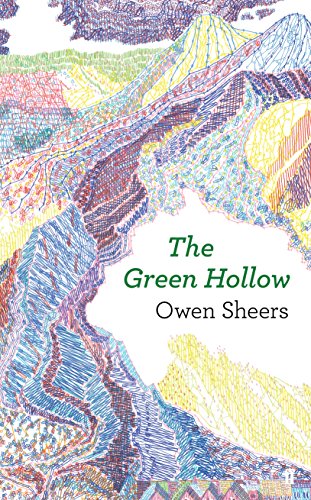
I read another book about Aberfan, several years ago. Owen Sheers‘ The Green Hollow. He paints a scene of ordinary families getting ready for the day, ordinary children chattering their way to school, an ordinary teacher taking the register. A series of letters explain why the Coal Board is taking no action about the slag heaps . And then …. a rumble, a roar develops. That is all.
Then we switch immediately to the rescue. To the young medical student who finds himself unwittingly part of the rescue operation, to the miners, parents, journalists.
Now the town is different. Life goes on. It has to. Children yearn to appear on ‘Strictly’ while every year commemorating what happened all that time go. Scars exist alongside hope. This is a moving, powerful, poetic account. It’s dignified, quiet and respectful, and a fine tribute to a town that’s had to deal with utter despair.
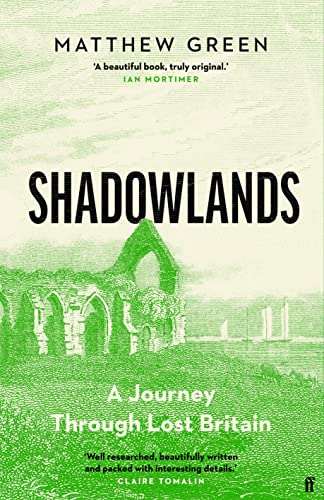
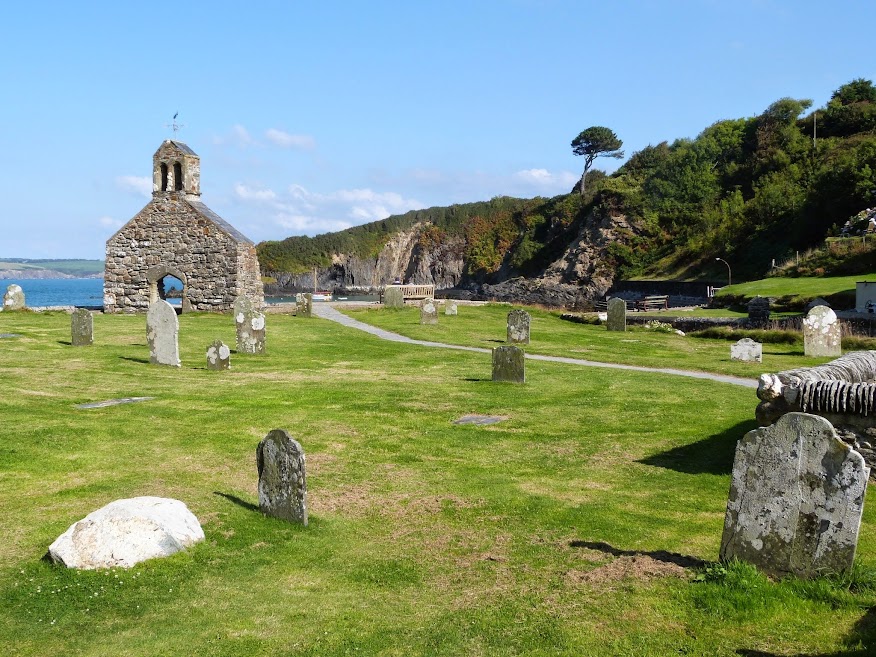
A book now about other towns which have irrevocably changed – because they’ve disappeared: Matthew Green‘s Shadowlands. Here is a totally immersive account of how certain villages and towns in England simply got wiped from the map. By placing his chosen locations in the context of their history, their geography and their climatic or political turbulence, he offers a surprisingly varied set of stories of obliteration, drowning, geological change, historical unrest. Every story is placed in the context of that community’s place in history, and offers a rounded, absorbing and detailed account of why and how these communities disappeared. A moving and haunting set of stories.
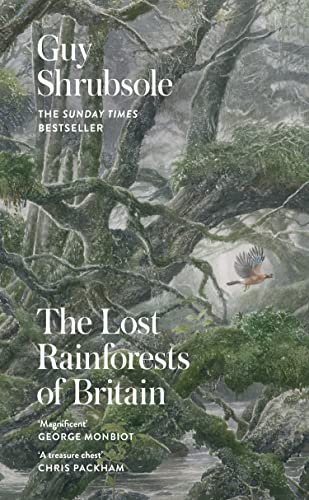
I wrote only a fortnight ago about – not towns and villages – but forests which have disappeared. Guy Shrubsole‘s The Lost Rainforests of Britain. You can read my review here.
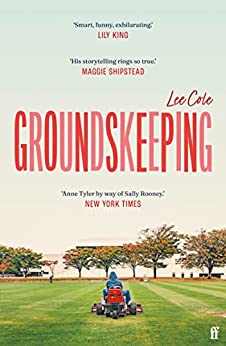
For my last book, I’ve chosen a story where our young hero is a groundsman at an American college, in a small team responsible for its trees and woodlands: Groundskeeping, by Lee Cole. A love story set in 2016-17 at a time when Trump and his ideas were in the ascendant, although he hadn’t yet been elected President. Owen’s from a working class Kentucky family, earning a wage as a groundsman at a college, while still trying to further his education and career as a creative writer. Alma came as a young child from Bosnia, and this refugee family has made good – very good. It’s this tension between their two backgrounds when they catapult into a relationship that informs the whole book, and is painstakingly examined throughout. I turned the pages willingly enough, but felt 400+ pages was far too long to sustain the plot, and was mildly irritated by Owen’s self-absorption throughout.
I seem to have travelled quite a long way from my starting point. Let’s see what we can all make of next month’s: the 1970s self-help classic, Gail Sheehy‘s Passages.
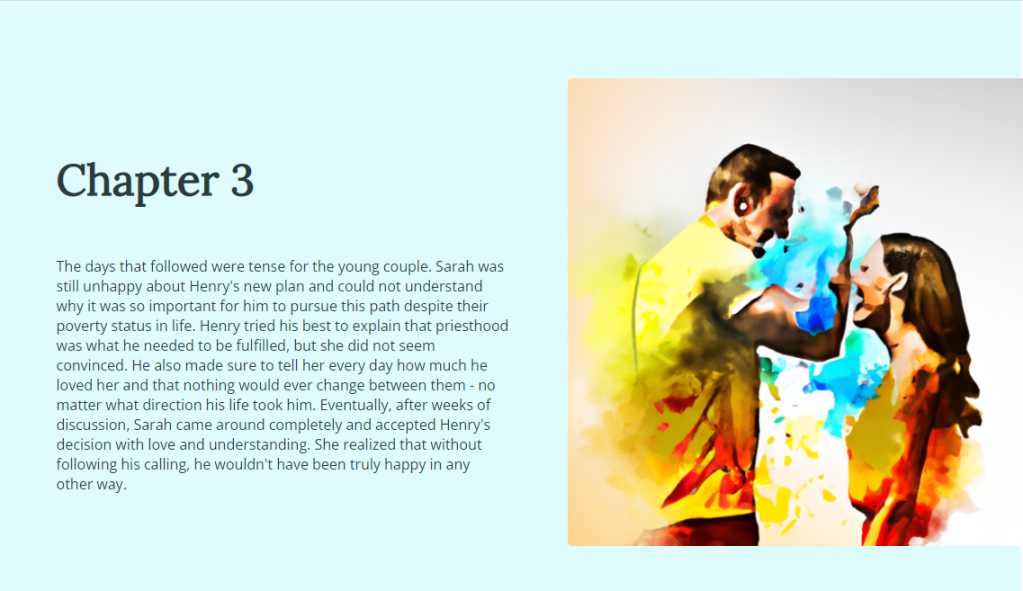
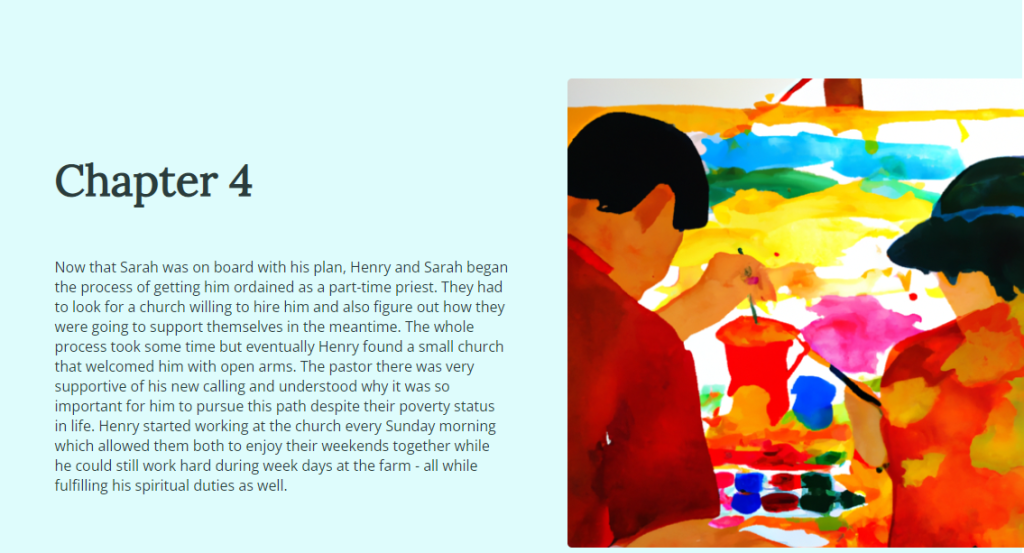
Last week, fellow blogger Brian D Butler who blogs at Travel Between the Pages. published an entire short novel on his site. He had come up with a prompt, but the story was generated by AI at the website InstaNovel. He thought it was awful. So do I. You can read it here. But what could AI do for me? I had to find out.
This was my prompt:
Pretty dire, isn’t it? If that’s the best it can do, perhaps bloggers, writers and illustrators have nothing to fear. But then … those very first cars had people solemnly walking in front of them, waving a flag as a warning. Things do move on.
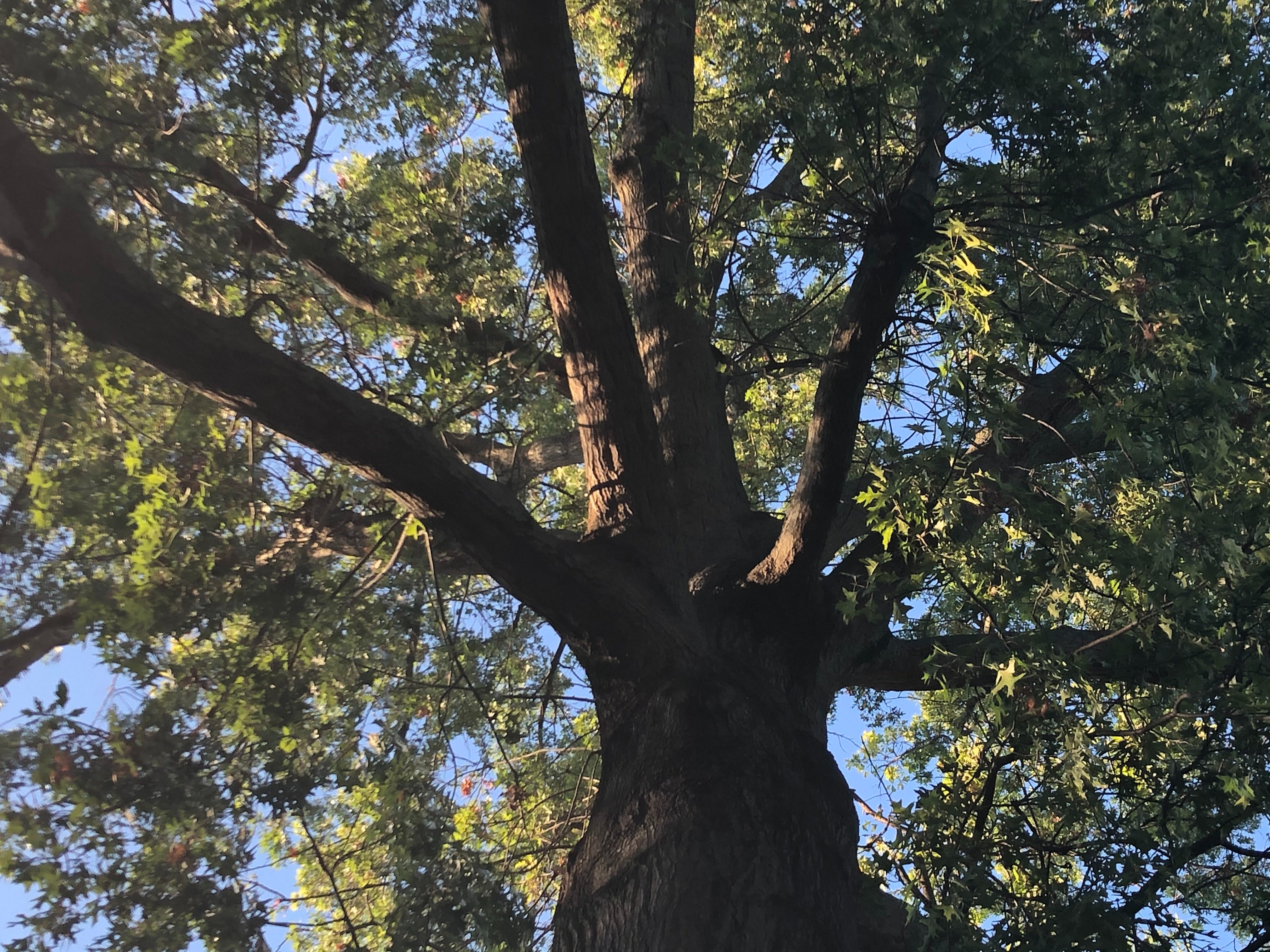
By the way. My feature image? Generated by by AI as an experiment by WordPress. As is the final paragraph of all, printed below. I don’t think AI Mark 2 quite knew what AI Mark I was getting at, do you?
My AI novel is about a world where autonomous artificial intelligence (AI) exists, and people have to find a way to interact and live peacefully alongside it. The story follows a group of intrepid humans who strive to bridge the gap between human and computer-powered life. Despite various struggles, the characters eventually find acceptance and cooperation, building bridges between humans and AI in a post-apocalyptic fantasy world.
This novel explores how machines might change society and how people might react to and embrace technology. The story examines the impact
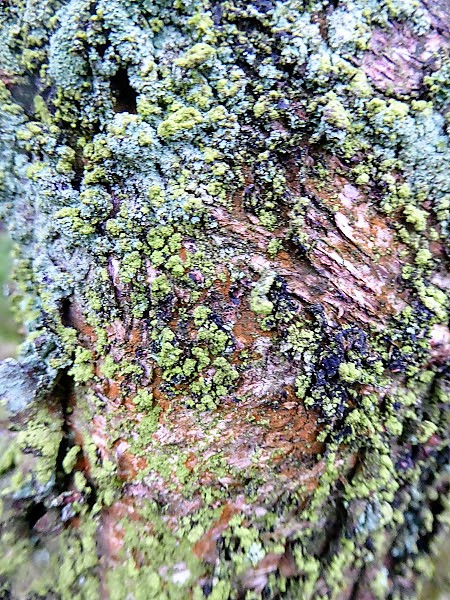
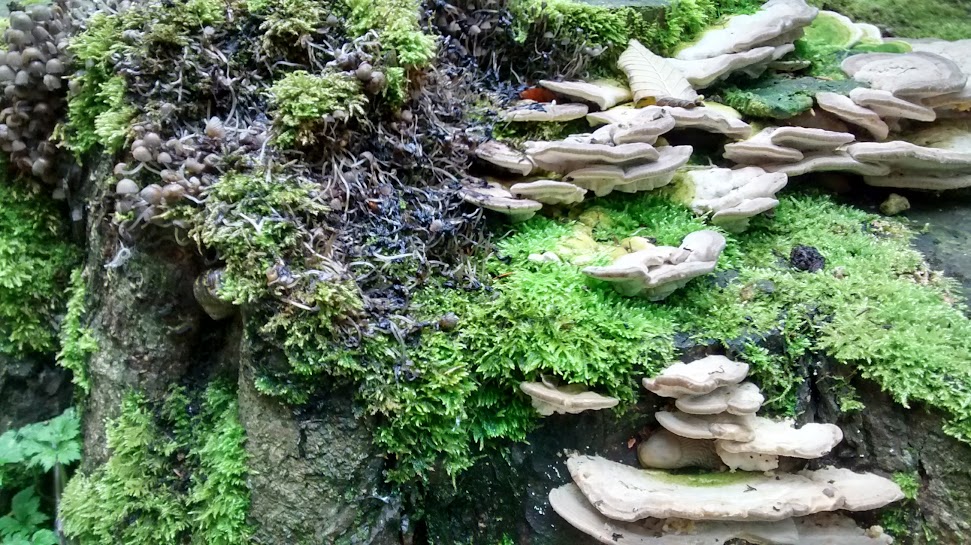
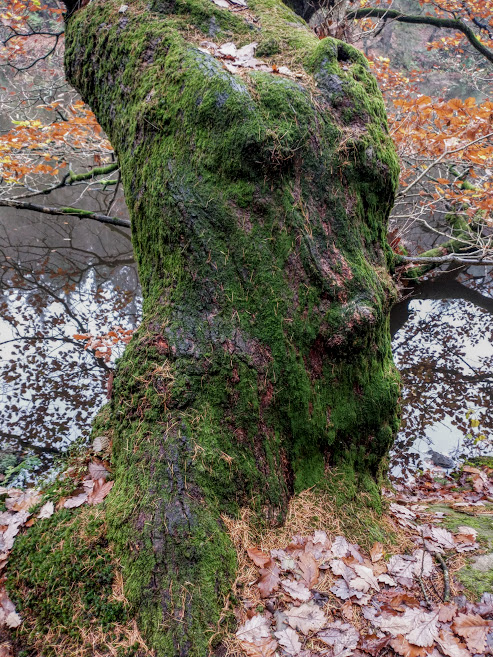
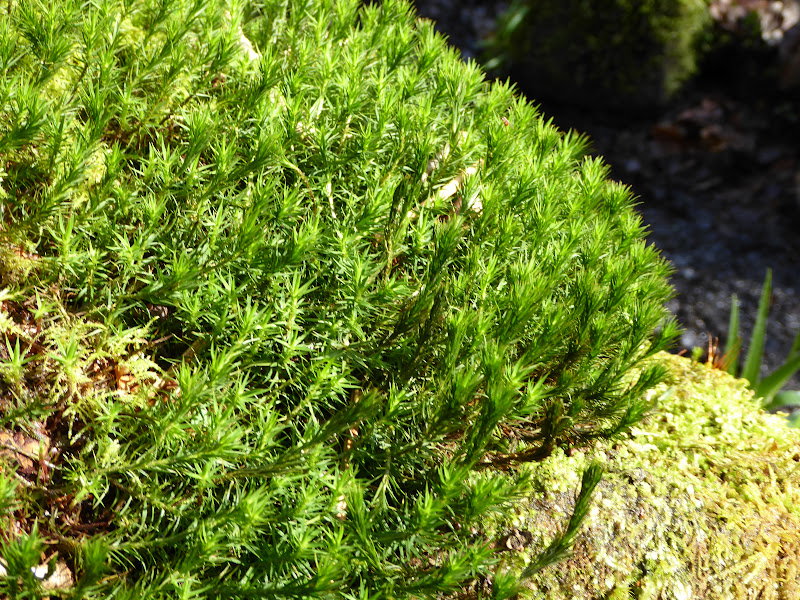
I have just been reading a book about rainforests. In Britain. Not the exotic tropical rainforests seen on television through which, drenched in sweat, you hack your way, attacked by insects and snakes as you wield your machete: but the gentler British version, temperate rainforest. These increasingly rare woods now occupy under 1% of the earth’s surface. No wonder they’re a best-kept secret.
Guy Shrubsole‘s The Lost Rainforests of Britain is an engaging and thoroughly absorbing account of a National Treasure of which most of us in Britain are completely unaware. Our temperate rainforests are spectacular woodlands with ancient, often stunted gnarled trees, draped and and bearded with mosses and lichens, and once marched across the British Isles from Dartmoor in the south to the north of Scotland – most particularly on the more sodden western seaboard. These days this unique habitat is increasingly under threat, and tiny pockets of such forest are now hard to find, and increasingly isolated and encroached upon.
Guy Shrubsole is the evangelist who seeks to protect and save them. To tell the story of this once widespread forest, he discusses geology, farming history, climate, Celtic Druids, the Romantic poets, JRR Tolkein – even Arthur Conan Doyle. He maps the eco-system in detail and calls for immediate political and public support: Shrubsole is a campaigner as well as a writer. This book may sound worthy, and therefore possibly dull. But it’s very readable, elegiac, amusing, entrancing and shocking by turn. It may turn out to be 2023’s Must Read.
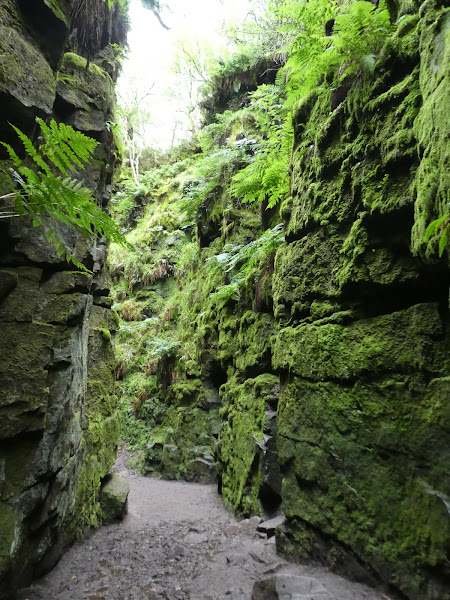
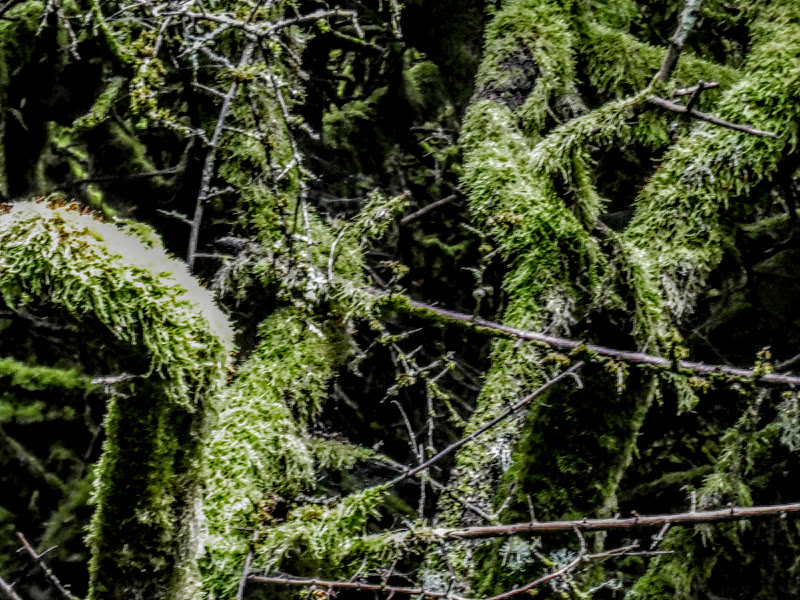
None of these images is from a temperate rainforest: I haven’t – yet – visited one. But the picture shows somewhere I have been: the so-called Lud’s Church, a ferny gorge near Gradbach in Staffordshire, where the cool damp microclimate qualifies it as the very tiniest of rainforests.
It fired my imagination, and reminded me that I may already have explored such a dim, green and shady place, crowded with trees clothed in soft green mosses, and draped with tangles of lichen, evocative of a spirit life with wraiths, witches and goblins. It wasn’t here in England, but in southern France, where even in the foothills of the Pyrenees it’s hot and often dry. I’ll post about that next …
Guilty as charged. I read a book. I thoroughly enjoy it. ‘That was great’. I think. ‘I must read more by her/him’. But then another enticing book by somebody else entirely comes along, and … I don’t.
Cathy of What Cathy Read Next fame has a challenge to help put this right, and she’s called it Backlist Burrow. Choose six authors whom you’ve enjoyed, find two books from their backlist … read them … and report back. I don’t undertake to read two, though I might. But one for sure. And here are my chosen authors.
I read Edith Wharton‘s novella Ethan Frome for Six Degrees of Separation back in December 2021, and immediately vowed to read more from this upper-class New Yorker who, during the last years of the nineteenth century and the early years of the twentieth was able to portray so incisively the characters she created. I still haven’t. Now I have to…
I wonder if this resembles the Massachussetts that Ethan Frome knew? (Ilse Orsel, Unsplash)
Another unforgettable character was Berta Isla. Javier Maríasdescribes her life thoughtfully, discursively. Her husband, working for the secret service is almost constantly absent and unable in any way meaningfully to communicate with her and participate in the marriage. I want to read more from Marías.
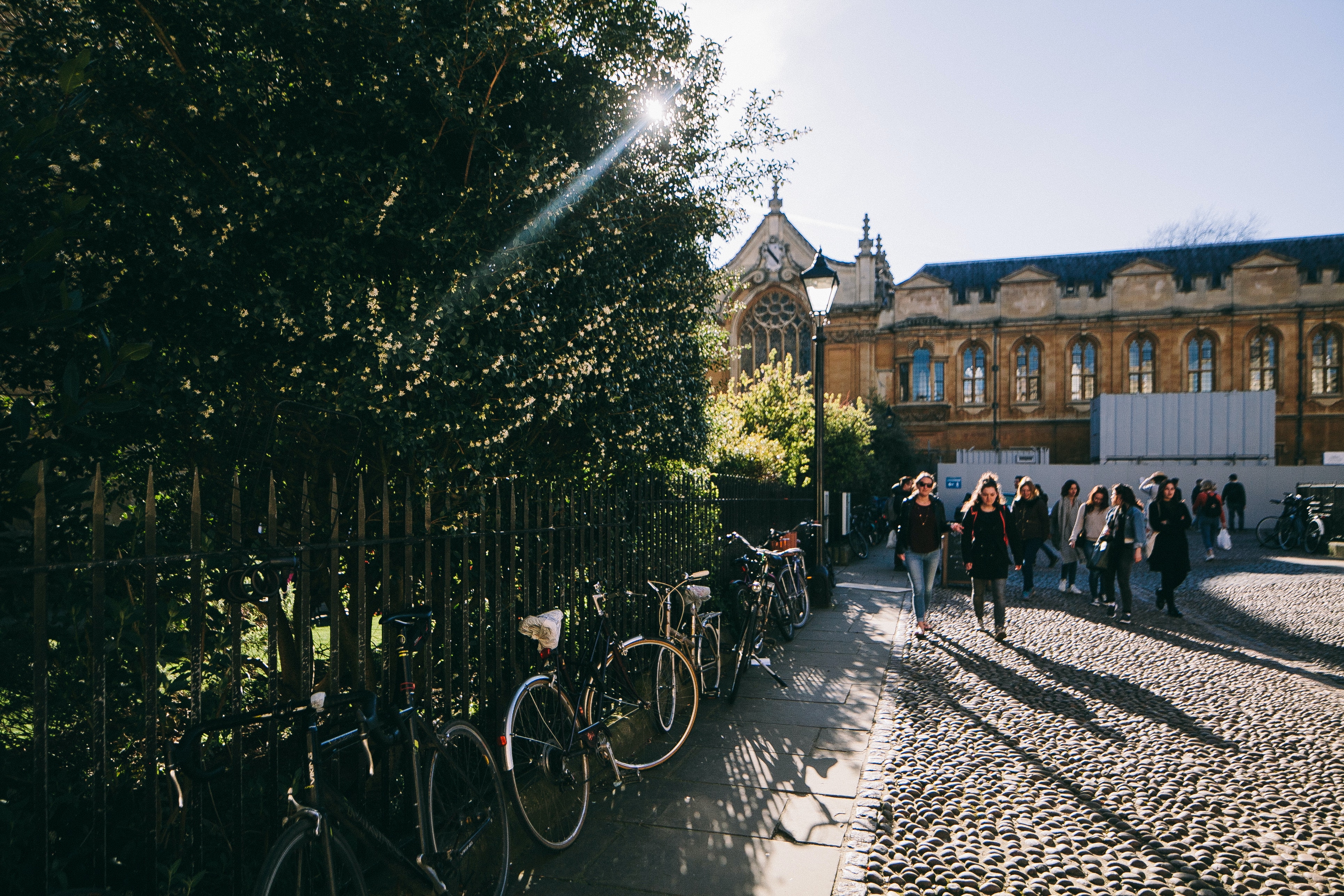
Berta and her husband Tomás grew up together in Spain (though not in Zaragoza where this photo of the Basilica of Pilar was taken). After University in Oxford, his career took him to the mists of she-knew-not-where.(Oxford: Lina Kivaka, Pexels)
I read Mary Lawson‘s A Town called Solace when it was chosen for our local bookgroup. I immediately fell for the complex web of characters she created, and the interest she brought to the life of a small and humdrum Canadian town. So – more please!
I wonder if this is a track near Solace? (Ember Navarro, Unsplash)
When I chose Roy Jacobsen‘s Eyes of the Rigel from the library, I was unaware that this Norwegian tale, set on a small island after WWII was the last book in a trilogy: an immersive story of memory, belonging and guilt. I need to catch up with the first two: The Unseen, and White Shadow.
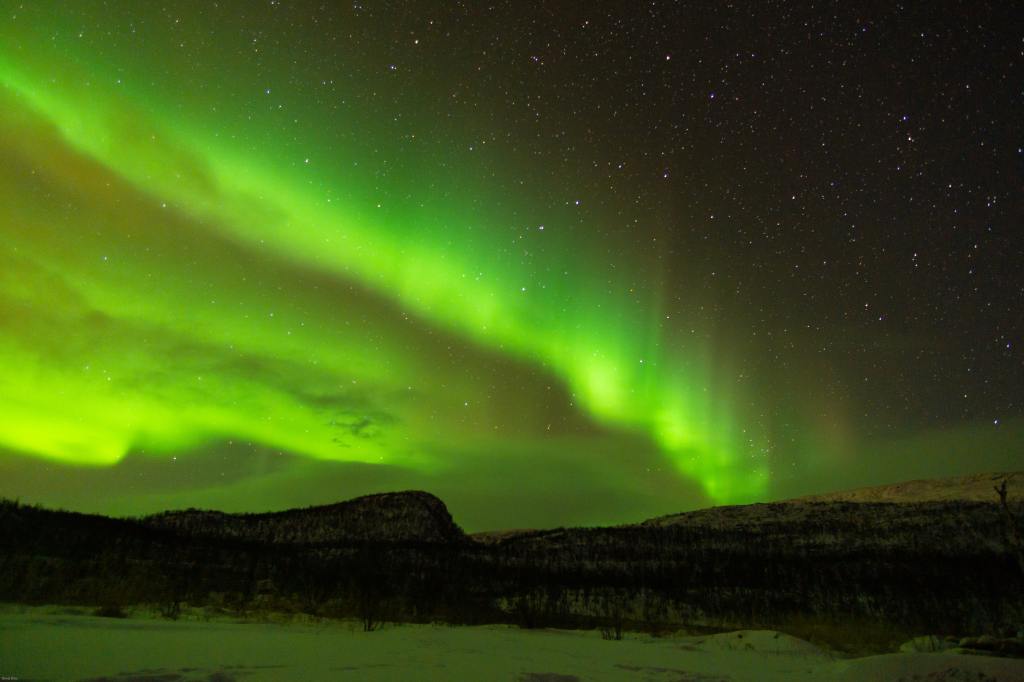
Northern Lights in northern Norway (Dee: Unsplash)
Nicola Upson‘s Stanley and Elsie, a fictionalised telling of the story of the painter Stanley Spencer was a compulsive read. Having a look at her crime novels centred on the life of Josephine Tey seems like a good move to me.
Shipbuilding on the Clyde: Stanley Spencer
Georgina Harding. Here’s another author I want more of, and here’s another instance of my inadvertently starting off with the third book in a trilogy: Harvest. This is a thoughtful picture of a family accommodating itself to an earlier tragedy. I’d like to read the back stories in The Gun Room and Land of the Living.
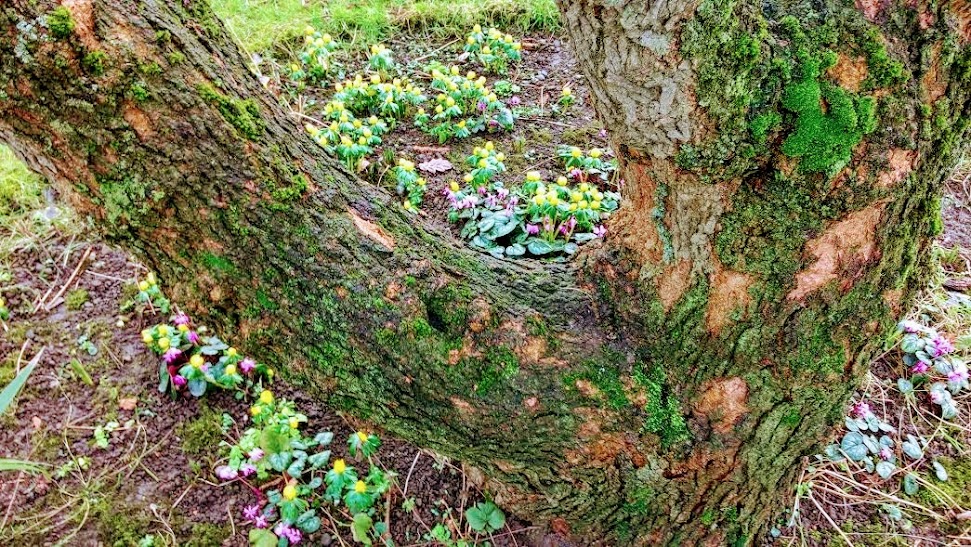
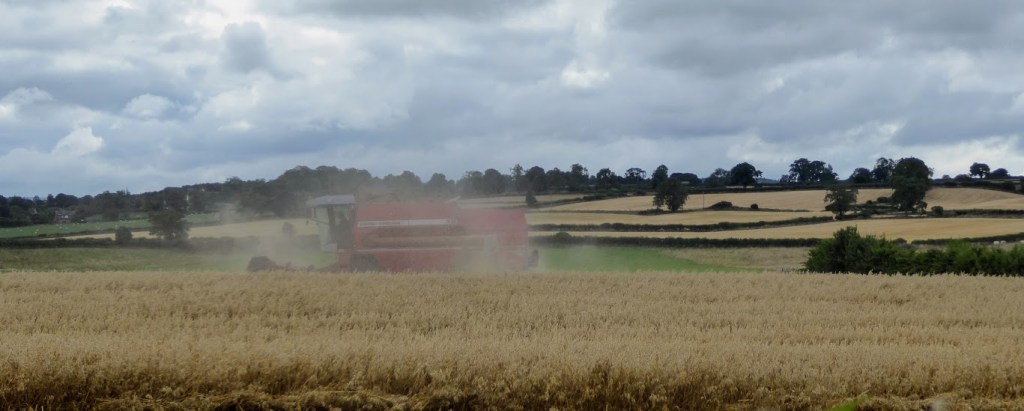
Harvest, not in Norfolk where Harding’s Harvest is set, but here in North Yorkshire.
This of course is in addition to tackling the (largely virtual) tottering pile of books recommended by friends, book bloggers, newspaper reviews. Really, it’s all quite impossible.
On the first Saturday of every month, a book is chosen as a starting point and linked to six other books to form a chain. Readers and bloggers are invited to join in by creating their own ‘chain’ leading from the selected book.
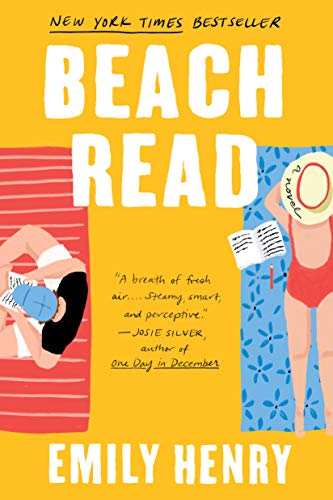
This month’s starter book, Beach Read by Emily Henry is one I had no desire to read. However, one summary I read describes it as being about two very different writers. ‘she pens a happily ever after, he kills off his entire cast‘ Goodreads).
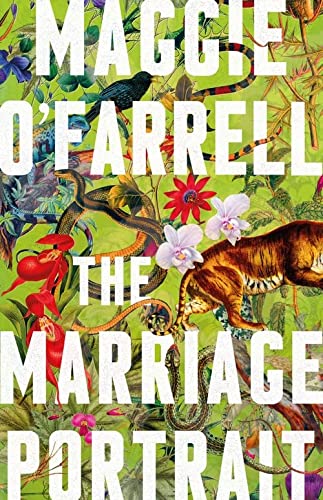
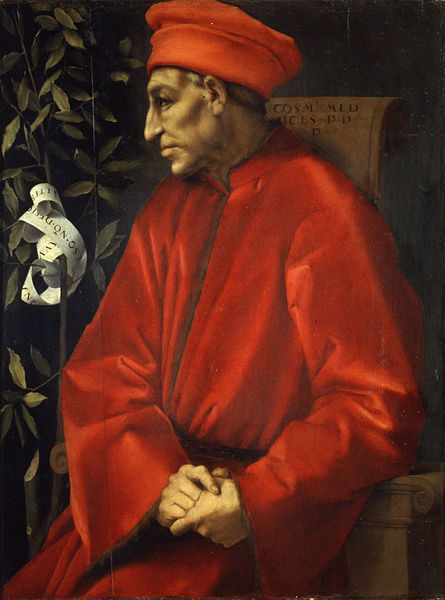
Somehow, that put me in mind of Maggie O’Farrell‘s The Marriage Portrait. In 15th Century Florence, Lucrezia, third daughter Cosimo de’ Medici, finds herself betrothed, then married to Alfonso, heir to the Duke of Ferrara when her older sister, his original choice, dies. The story flits between her early life in Florence and her early married life. Underneath, throughout her marriage, her conviction that she will be killed by her apparently loving husband bubbles away. This is a tale, sumptuously and evocatively told. It’s a mixture of fact, of weaving in allusions learnt from Browning’s poem My Last Duchess, from myth and fairytale and from gothic horror to create an engaging and highly pictorial story, which goes a long way towards helping us understand what it might have been to be Lucrezia: child, noblewoman, wife.
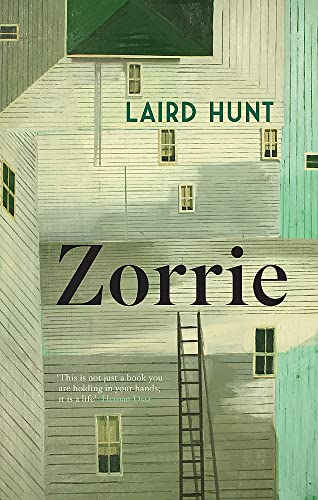
From one woman’s life to another.in this case a wholly fictional one, as told in Laird Hunt‘s Zorrie. This is the story of an ordinary woman living in rural Indiana, born during the 1930s Depression years. It’s quietly, beautifully told, from the days when Zorrie is orphaned and put in the care of a resentful spinster aunt, through the years of her adolescence, marriage and beyond to old age. Zorrie’s is a narrow world, but she has the same struggles with grief, with loneliness that befall most of us at some stage. But she also experiences love, and deep friendships, and reaps the rewards of steadfast hard work. I was moved by and involved in the story told in this short book.
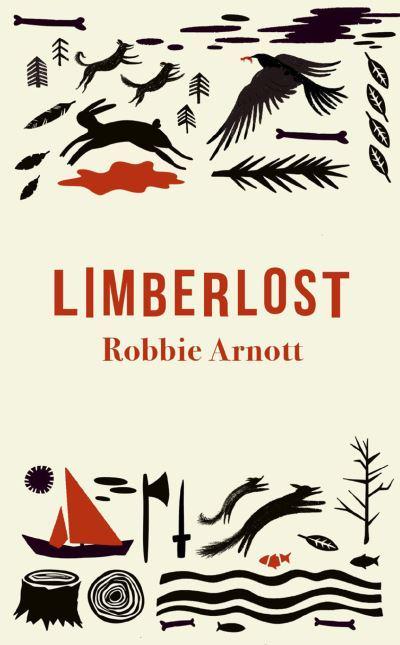
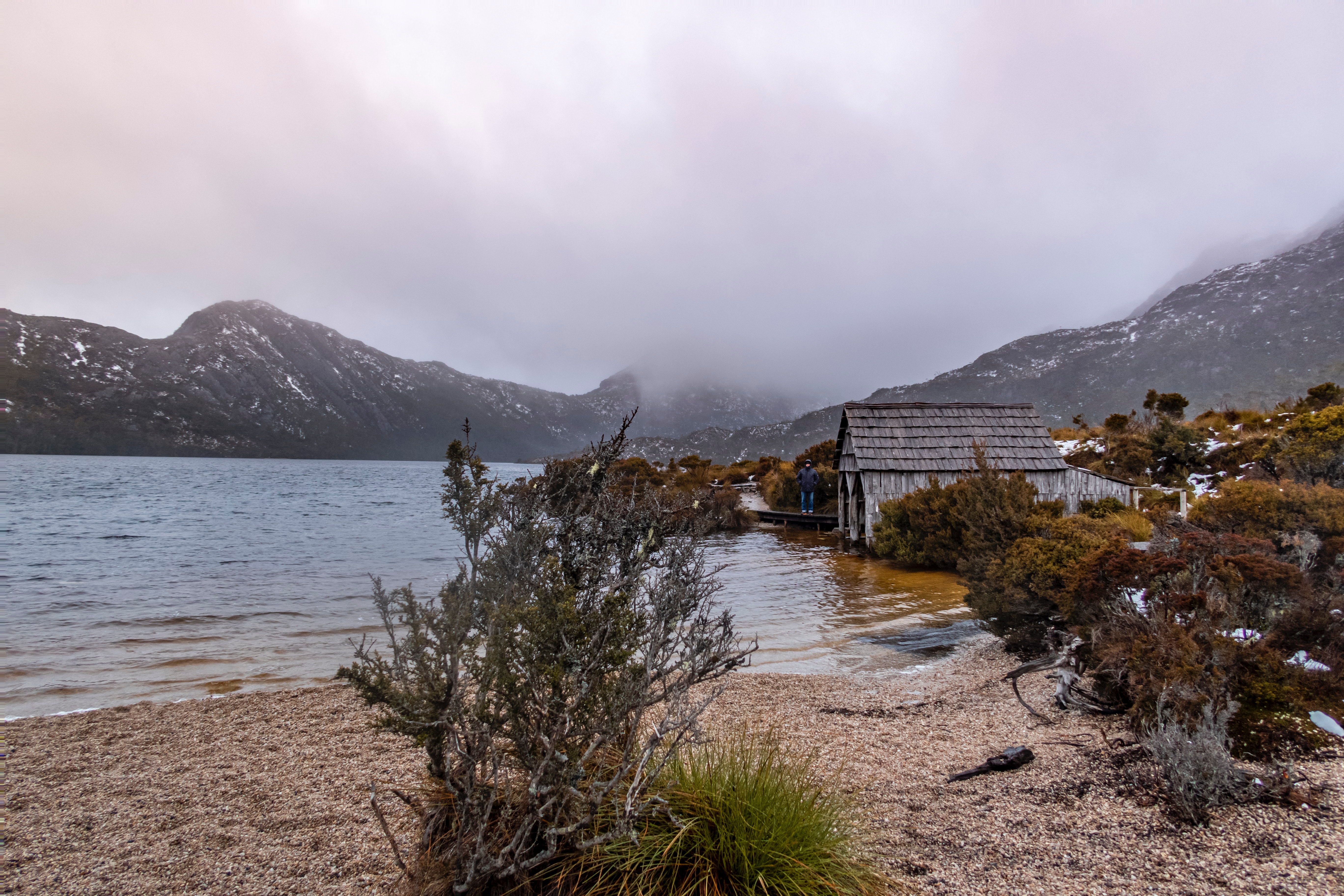
From one simple life to another, in Limberlost, by Robbie Arnott. Set in rural Tasmania towards the end of WWII, , this book ‘s earlier pages chronicle the life of young Ned, son of an apple farmer. As the book moves on, episodes from his whole life interweave the narrative, and indicate how events from his boyhood inform the adult he became. What makes this book special is its sparse yet luminous prose: its ability to make readers care for Ned, who has difficulty articulating his feelings and aspirations. The novel isn’t plot-driven. It relies on various episodes such as his caring for a fierce marsupial, a quoll, whom he has inadvertently trapped to illustrate his character, his inability to trust himself to explain and justify. The one real drama in his marriage isn’t really explored. This quiet, understated book may well be my book-of-the-year 2022.
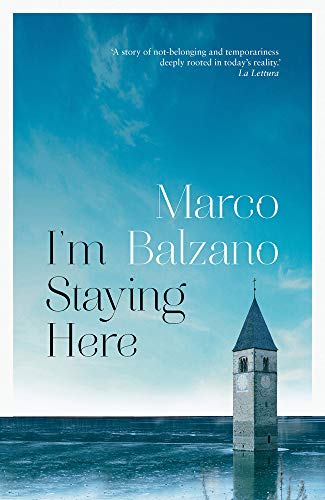
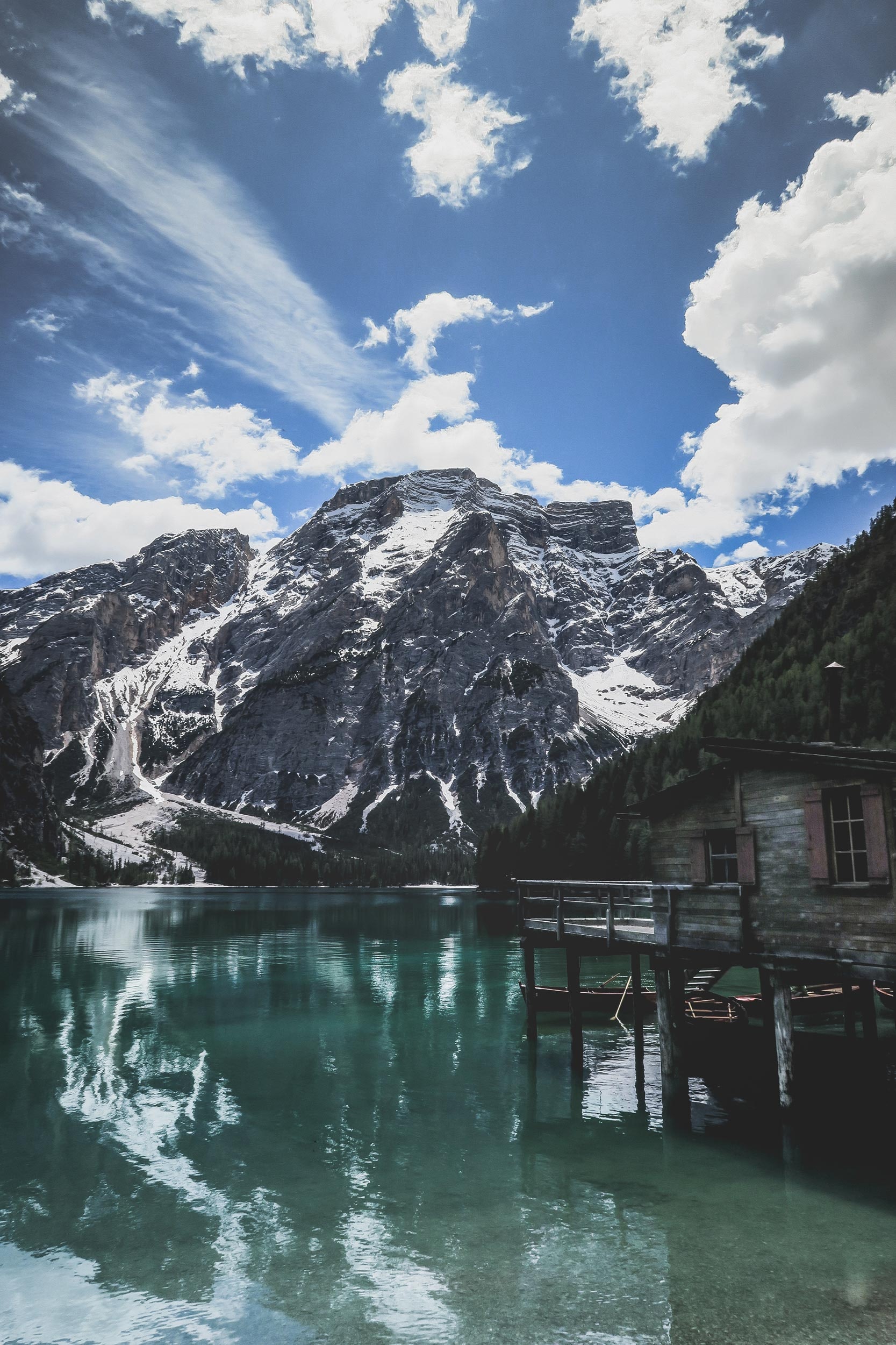
We’re still crossing continents in my next book: to Europe – to Italy. I’m staying here, by Marco Balzano. A powerful, understated novel sweeping us through much of the twentieth century. Trina narrates her story to her missing daughter. She lives in Curòn, in the German-speaking Italian Tyrol, and witnesses Mussolini’s attempts to Italianise it and stifle its German heritage; the impact of the Nazis and war on their lives; and finally sees their community destroyed by the building of a – it turns out – inefficient dam which drowns Curòn and surrounding villages. Important moments of history are told here through the lives of ordinary people, few of whom are described, other than as, for instance ‘the fat woman’, ‘the old man’ – they become ciphers for us all.. That is what makes this book, so simply told, so potent.
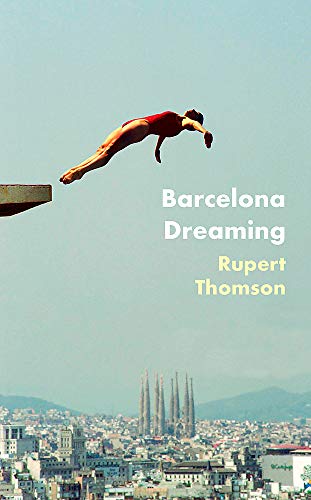
Now we’re off to Spain. I picked Barcelona Dreaming by Rupert Thomson from the library shelves for no better reason than that Barcelona is a city I know well since our daughter moved there ten years ago. Yhis is a book with a strong sense of place. Not Tourist Barcelona, with its must-see monuments, its busy cafes and its omni-present pick-pockets: but the varied city which all kinds of people from dyed-in-the-wool Catalans to ex-pats and immigrants call home. Here are three interlinked novellas, each with a very different character at its heart. They never meet, but are linked loosely through neighbours, colleagues and unconnected events. The book explores themes such as immigration, racism, nostalgia, lack of self-knowledge: old relationships that linger on. Thomson conjures up people whose complicated lives are utterly plausible, and a city that lives and breathes without reference to the tourist haunts so many travellers see. An immersive book.
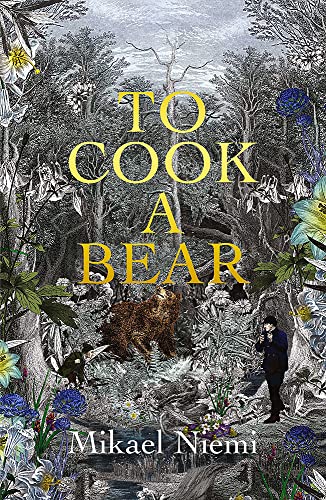
These first five books all have a single character at the story’s heart. My sixth does too in many ways. To Cook a Bear, by Mikael Niemi. But is the hero the narrator, Jusi, or the pastor? We’re in northern Sweden in 1852, within the Arctic Circle – an area where Swedes, Finns and the Sami people all live. Revivalist preacher Laestadius, an avid amateur botanist is pastor in a community here, and takes in an abandoned Sami boy, Jussi, who’s suffered much abuse and poverty. This pastor is astute and observant – more so than the local sheriff, and it’s he who continues his pursuit for the truth when first, a local girl is killed, then another is grievously attacked: the easy, but incorrect answer is – a bear. The pastor teaches Jussi to read, write and use his brain, and it’s largely the boy who tells the story, though he remains, as do the Sami people generally, disregarded and despised by the local community. This is a good story and well told, portraying an isolated community, reliant on gossip, tradition, religion and superstition to get by. There are twists which bring the pastor (who is an actual historical figure) and Jussi into real danger. This is Scandi Noir introduced into the history books, and emphatically not a detective story with added costume.
So I’ve come full circle, by beginning and ending my chain with two stories inspired by the lives of real people. If I’m honest, this was also driven by my wish to include my very favourite book title of 2022: To Cook a Bear. The other factor making this list into a chain is that – quite exceptionally, I read all six of these books straight after one another (though not in this order) since the last appearance of Six Degrees.
And next month’s starter? Trust, by Hernan Diaz. I’ve reserved it at the library already.
There are some fun memes popping up among book bloggers as 2022 ends, All you have to do is answer (almost certainly untruthfully) a questionnaire, using only the titles of books you have read this last year. I’ve chosen two.
2022 was the year of: The sweet indifference of the world (Peter Stamm)⭐⭐⭐⭐
In 2022 I wanted to be: That bonesetter’s woman (Frances Quinn) ⭐⭐⭐⭐
In 2022 I was: Taking stock (Roger Morgan-Grenville) ⭐⭐⭐⭐⭐
In 2022 I gained: Small things like these (Claire Keegan) ⭐⭐⭐⭐⭐
In 2022 I lost: Miss Benson’s Beetle (Rachel Joyce)⭐⭐⭐
In 2022 I loved: My phantoms (Gwendoline Riley) ⭐⭐⭐⭐
In 2022 I hated: Red milk (Sjón) ⭐⭐⭐⭐
In 2022 I learned: To cook a bear (Mikael Niemi) ⭐⭐⭐⭐
In 2022 I was surprised by: Things that fall from the sky (Selja Ahava)⭐⭐
In 2022 I went to: The Underground Railroad (Colson Whitehead) ⭐⭐⭐⭐
In 2022 I missed out on: Midnight at Malabar House (Vaseem Khan)⭐⭐⭐⭐
In 2022 my family were: Between the assassinations (Aravind Adiga) ⭐⭐
In 2023 I hope (for): The romantic .. (William Boyd) … Silver shoals (Charles Rangeley-Wilson). Both ⭐⭐⭐⭐⭐
Because all but four of these books were borrowed from North Yorkshire Libraries, which continues, even now, to buy a wide range of appetising new books, I dedicate this post to Bookish Beck’s Love your Library
On the first Saturday of every month, a book is chosen as a starting point and linked to six other books to form a chain. Readers and bloggers are invited to join in by creating their own ‘chain’ leading from the selected book.
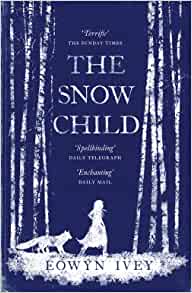
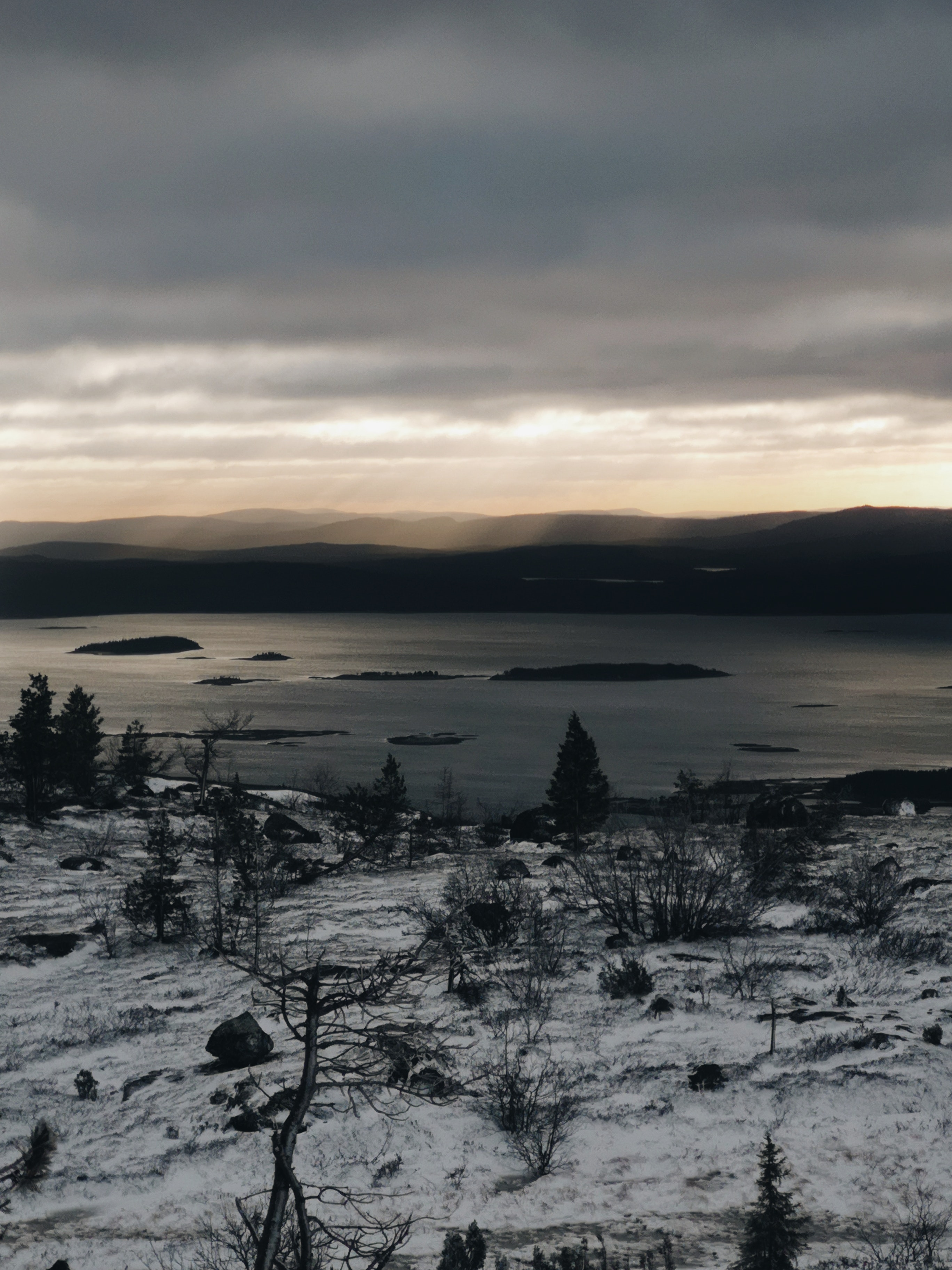
This month’s reading began with Eowyn Ivey‘s The Snow Child. I suspected magical realism and expected to cast the whole thing aside. But this reworking of the traditional Russian fable utterly disarmed me. Set in barely-settled 1920s Alaska, the frozen landscape and the fresh and flower-strewn spring, the tough-because-they-have-to-be characters, the hardships and friendships make this a believable, yet lyrical story which transported me willingly to a different world.
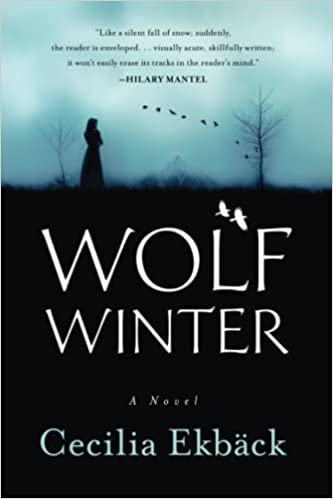
I remembered a book which gave me a similar reaction: Cecilia Ekbäck‘s Wolf Winter. As an evocation of life in an isolated 18th century community of far-flung homesteads in northern Sweden it’s quite wonderful. The sheer drudgery of keeping alive in the long dark days of winter; the isolation; the fear of beasts and evil spirits: in fact the pervasiveness and absolute acceptance of a spirit world was involvingly brought to life. But it’s also a murder mystery, and this pulled me in far less. Nevertheless.five years on, those evocative descriptions of tough lives in a tough place stay in my mind.
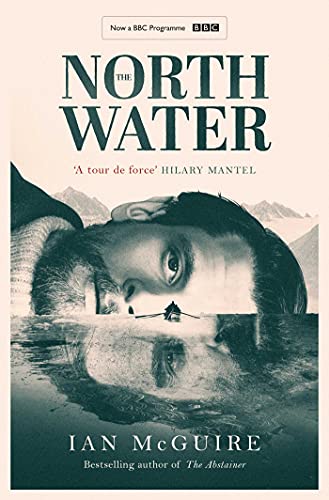
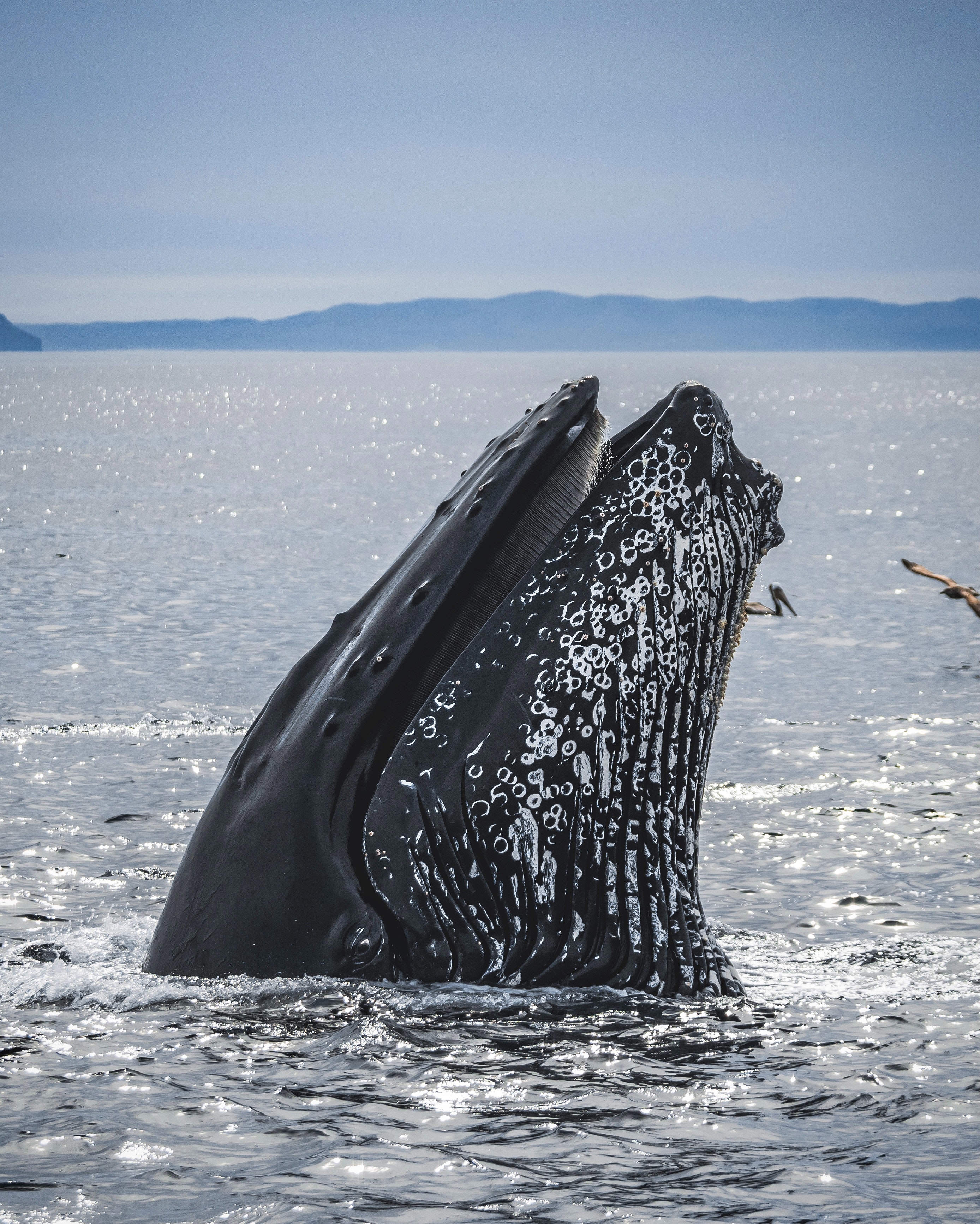
Yet more tough lives in unforgiving conditions. The North Water, by Ian McGuire. This is a gritty story set largely in a 19th century whaling ship. There’s violence, brutality, bad language, bowel movements a-plenty, but it doesn’t feel gratuitous. Patrick Sumner has – we eventually discover – left the British Army in disgrace and his options are few. He becomes a ship’s surgeon on the whaling ship, and finds that a hard and desperate life becomes even worse as the ship and its crew battle against an arctic winter and a particularly brutal and amoral member of the crew. An involving and gripping story that recreates a world I can only be grateful not to be a part of. And – British readers – I’ve just discovered that the book has been made into a five part series available on BBC i-player.
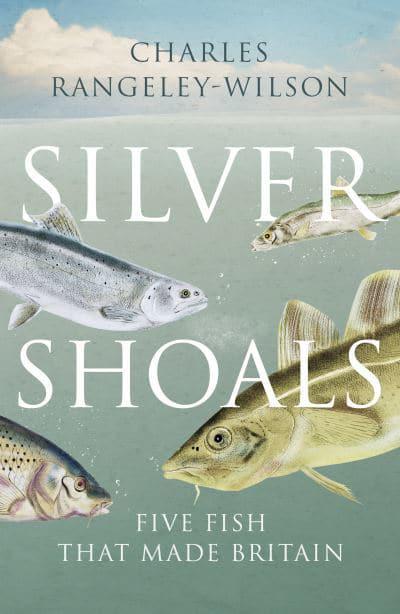
Let’s stay at sea, and with fishing, but let’s lighten the mood – please – by turning to Silver Shoals, by Charles Rangeley-Wilson. I was entirely and unexpectedly engaged by this book, an exploration of our nation’s iconic fish: cod, carp, eels, salmon and herring. This is a story of the fish themselves; of fishermen; of the consequences of greed and the way back from it; of geology; meteorology; our nation’s social history as it relates to food and farming; of corruption and political will. It combines serious discussion of issues with good yarns about the fishermen who took Rangeley -Wilson fishing with them, whether on week-long voyages on trawlers, or half day sorties to the local river bank. He travelled north, south, east and west in quest of fish and their stories, and produced and absorbing account which I read in record time because I was so enthralled by all the threads of the story Charles Rangeley-Wilson told.
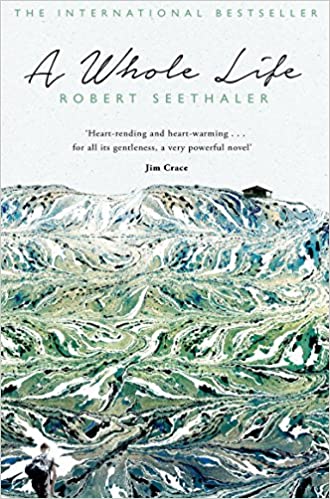
My next book is set not at sea, but in the mountains. However, there is the same attachment to place here that fisherman seem to have to their chosen piece of water.. A Whole Life, by Robert Seethaler. This is a spare and restrained telling of the story of a life. The life of a lonely, but not discontented man living in a small community in a mountain valley, after a chequered and varied early life. This is a man who values solitude, and the landscape in which he lives. His needs are simple, but even these are not always easy to meet. A poetic, satisfying book. It’s a work in translation, but this is an accomplished piece of work which reads beautifully, and deserves re-reading.
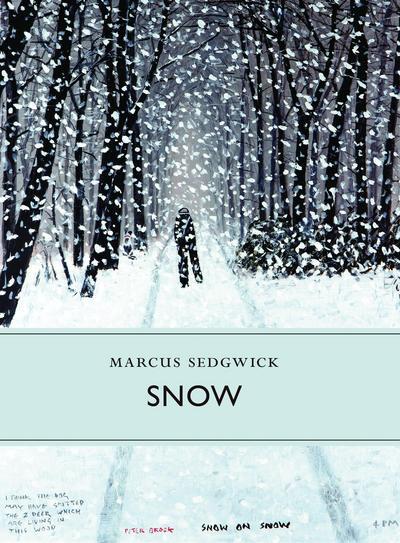
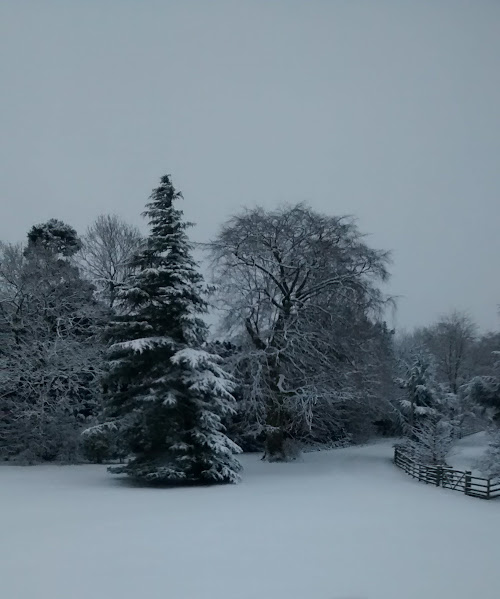
Marcus Sedgwick lives in the Haute-Savoie, not really so very far from Seethaller’s hero. One of his books is Snow. This is a beautifully presented and thoughtful little monograph. Always fascinated by snow, Marcus Sedgwick’s chosen home is one where snow in winter is a daily reality. He’s come to appreciate that there is far more than one kind of the stuff, and that some of it is ‘the wrong kind’, getting in the way of the everyday lives of those who are very accustomed to snow of all kinds. He wanders discursively through science, literature, art, and personal anecdote to build up a vivid picture of this fascinating substance which exercises such a grip on our imaginations and our daily lives when we encounter it. A book to read, to savour, and to continue to dip into from time to time.
Now, let’s lighten the mood. It’s nearly Christmas shopping time. Let’s choose another short book, with winter at its heart. The Mistletoe Murder and other Stories, by PD James. The Guardian describes this book as ‘a box of crackers’, and so it is. These are four short stories of murder most foul that were all originally published elsewhere, all set round about Christmas time. They’re clever, and not at all likely to be mistaken for Scandi-noir. These quickly read little gems, nicely presented by Faber and Faber, would make an ideal stocking filler.
So there we have it. From one murder mystery to four murder mysteries, with four stops in between.
It seems to me that next month’s starting book could hardly be more different. It’s Beach Read, by Emily Henry.

























You must be logged in to post a comment.