Summer used to be a time for postcards. Sending them. Receiving them. Receiving was better. What to say to your friends and relations with only such a small space to play with? ‘Wish you were here’ maybe?
The views were standard, wherever they came from. The castle. The cathedral. The fisherman’s cove. The crowded beach.
Today I’m reviving the tradition, but with a different angle on the standard shots.
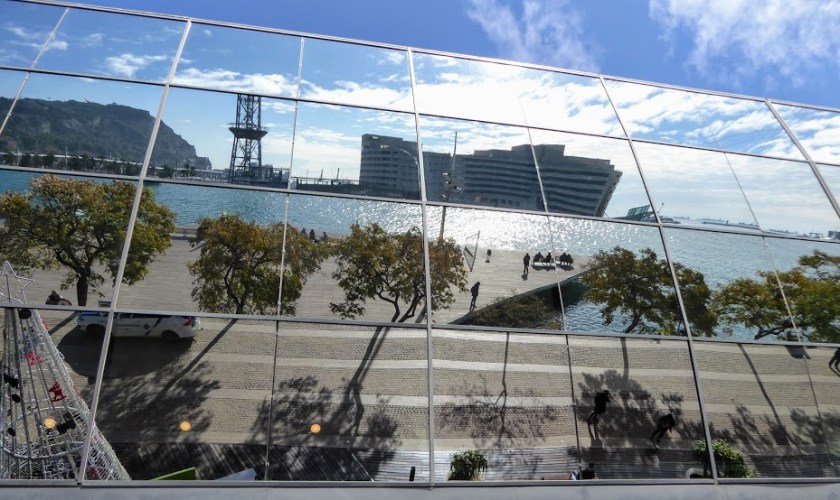
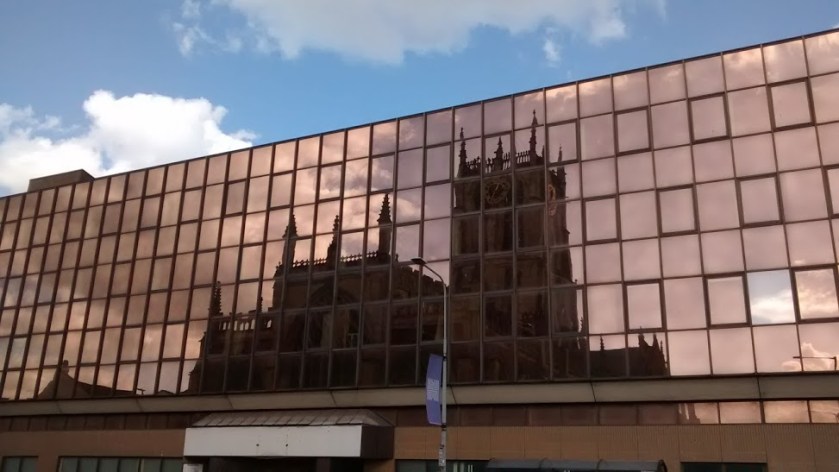
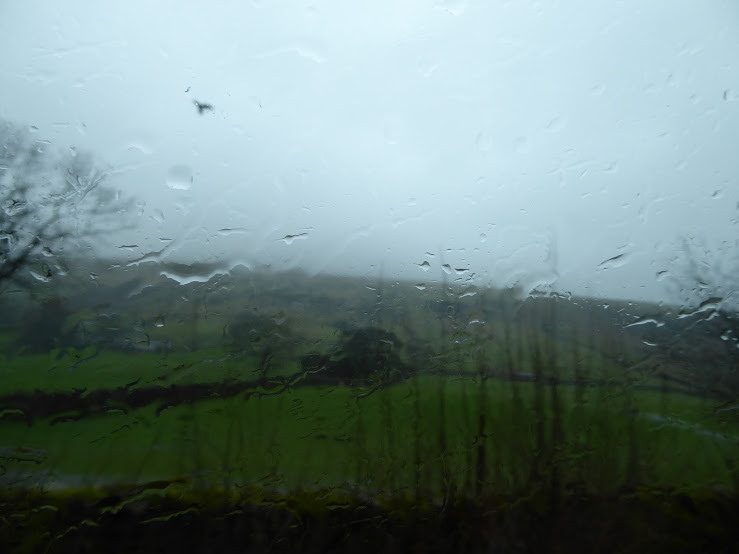
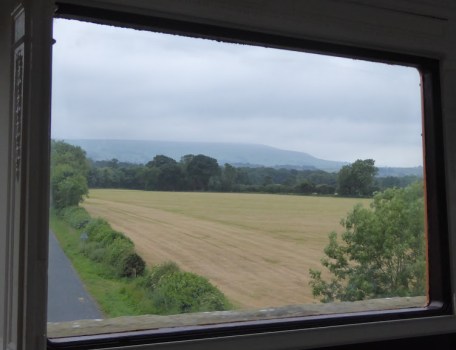
St. Paul’s Cathedral, seen reflected in Angel’s Wing (2000) by Thomas Heatherwick, Paternoster Square, London.The Leeds-Liverpool Canal passing under a bridge near Gargrave.The Port Olímpic area of Barcelona seafront, reflected in nearby buildings.Hull Minster, as seen in a nearby office building.An honest view of a British holiday? The countryside near Penrith on a soggy Sunday.
We’ll visit the Hospital de Sant Pau every time we go to Barcelona. Well, we will while it remains the city’s secret treasure: uncrowded, simply beautiful and offering balm to the soul just as it did to the patients who were – and are – cared for there. I wrote a little about its history last year.
I won’t repeat myself. Instead, I’ll try to convey something of the peace of this city site: something of its space, its lush greenness which was such an important part of its design. Doctors heal the body: gardens heal the mind.
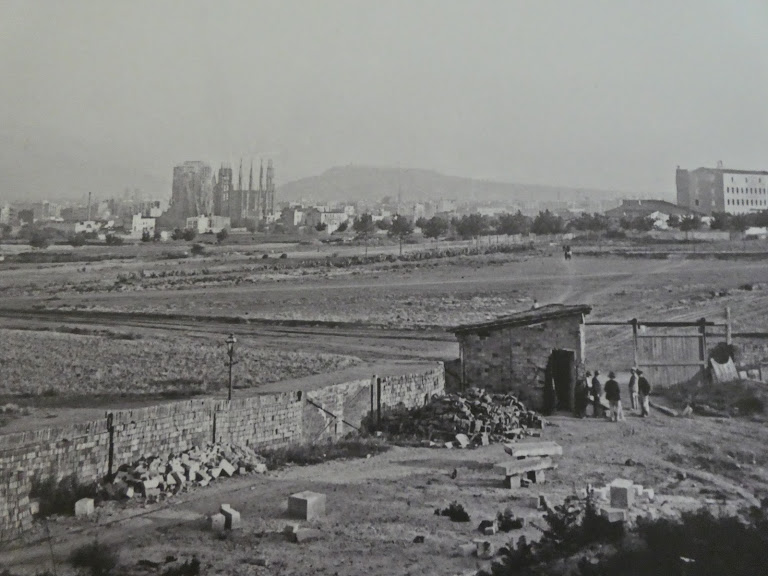
I call it a city site, and these days, so it is, situated on busy main roads surrounded by buses, taxis, cars, shops, city workers, tourists. When it was built, it was outside Barcelona and rather hard to reach, along rutted tracks and surrounded by fields. The area looked like this:
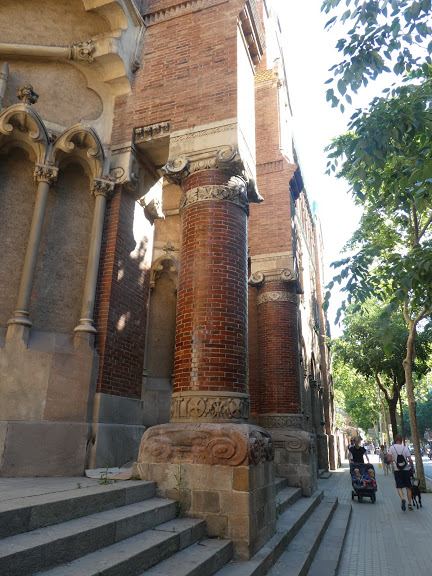
We made another discovery on our visit this time. Nobody seems to mention the church on the site. We stumbled across it by accident, and I’ve had real difficulty finding out anything about it. But the modernista Esglesia de l’hospital de la Santa Creu i Sant Pau is definitely worth a detour. Pillars soar heavenwards. Austerely plain walls are broken up by horizontal bands of blue tiles. Stained glass is in earth-and-sky colours. Most astonishing of all are the two – yes two – pulpits. One is borne aloft by the bull who is the symbol of Saint Luke; and the other by the lion who symbolises Saint Mark. Do visit it. You’ll have the place to yourself.
Most people pass the doors of this church without thinking to pop inside.
Every time we come to Spain, we know we could easily buy a carton of orange juice, a pack of coffee, a box of cereal and some milk and make our own breakfast. But where’s the fun in that?
No, when in Spain we do as Miquel does. We do as so many Spanish do. On our way out to begin the day, we call in at a local bar or bakery-with-café attached.
We sit down, maybe glance at one of the newspapers lying around, and order a coffee and a pastry and enjoy a few quiet moments before launching into action.
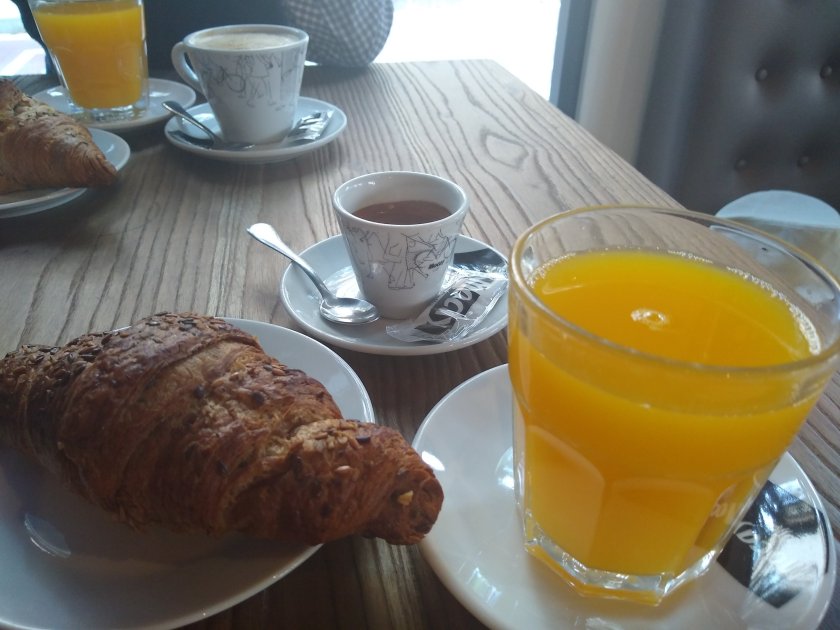
Our breakfast of choice includes a large glass of freshly squeezed orange juice – such a treat. We may choose a wholemeal croissant: I promise you, they’re delicious. Or even better, pan tostada con tomate. Chased down with a café solo, and a few minutes of people-watching, there’s no better start to the day.
Were you a collector as a child? I was. Stamps; seashells; those evocative sheets of fine tissue that they used to wrap individual citrus fruits. Another month, another collection. By the time I was ten, I’d abandoned the lot.
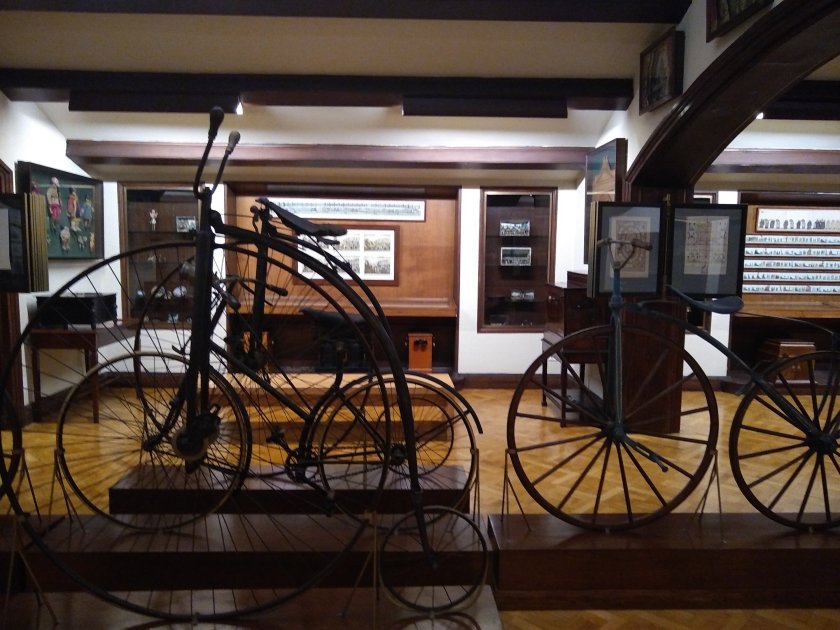
Not Frederic Marès though. You may not know him, but he’s Catalonia’s foremost 20th century sculptor, and you’ll find his work on public buildings and in churches here.
How he made time for his work is a mystery. He was an obsessive collector. He collected sculpture to inform his own studies, and …. stuff, because it was interesting.
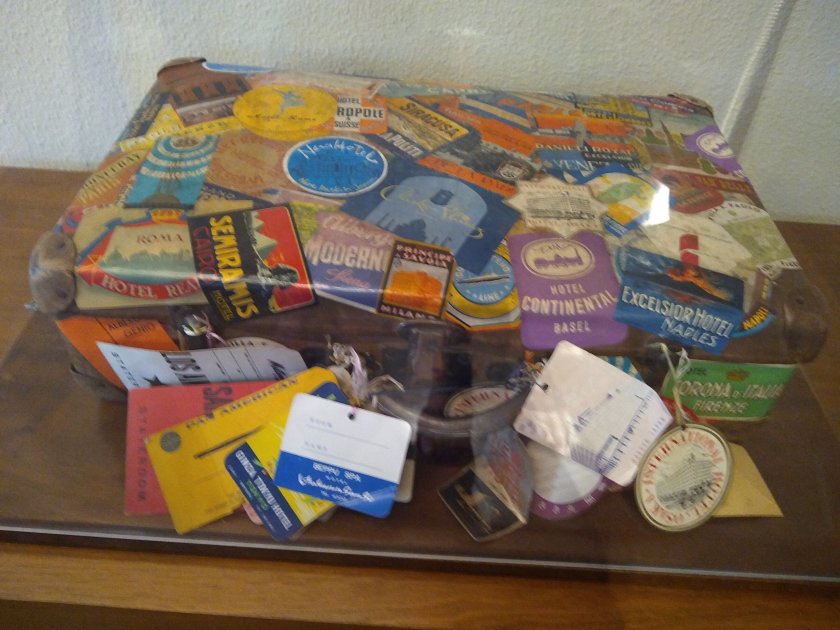
ThisisMarèssuitcase. He seems pretty well-travelled.
By 1947, his collection was so large that he made it public. On his death in 1991, he bequeathed it to the City of Barcelona. It fills an entire museum.
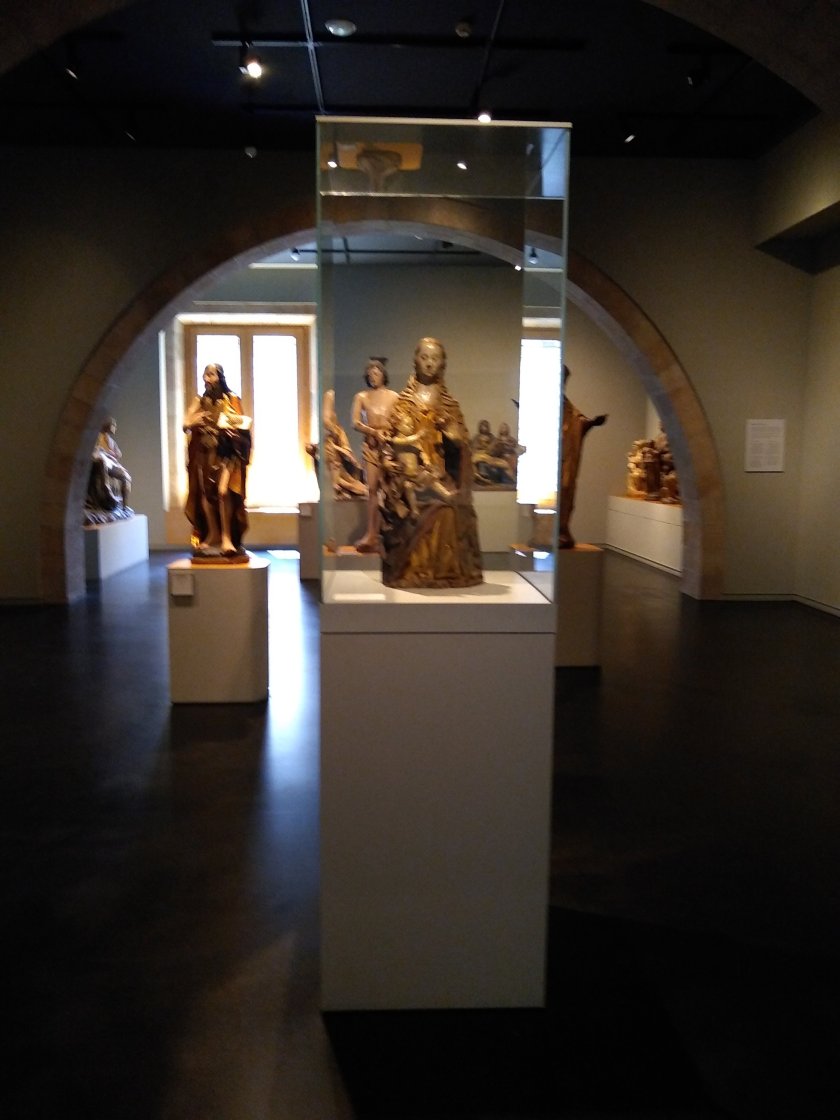
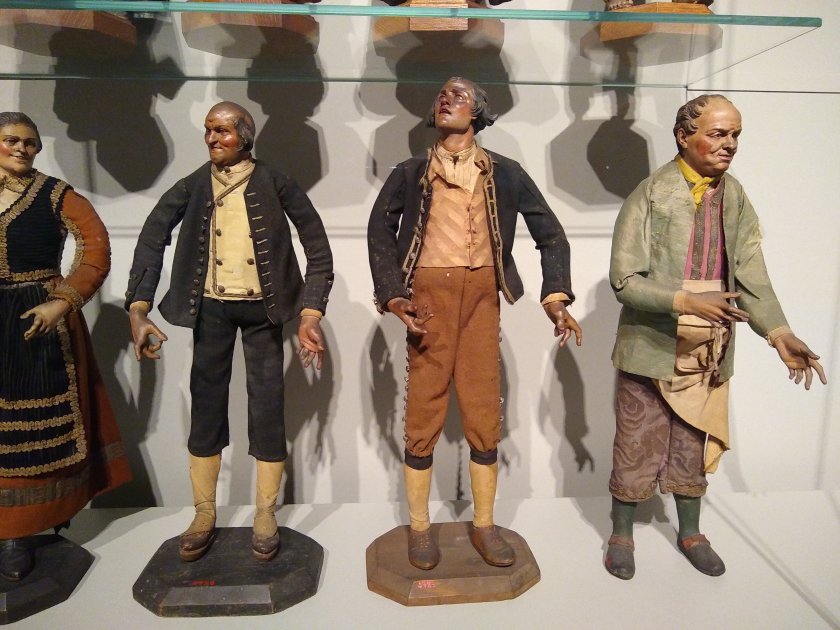
Here’s the place to come to find an eclectic mix of religious sculpture: crucifixions and Pietàs by the score, as well as Christmas crib figures from the 19th century. It sounds dour, but it’s not. His personal choices make for fascinating viewing…. but if it all gets a bit intense, pop upstairs.
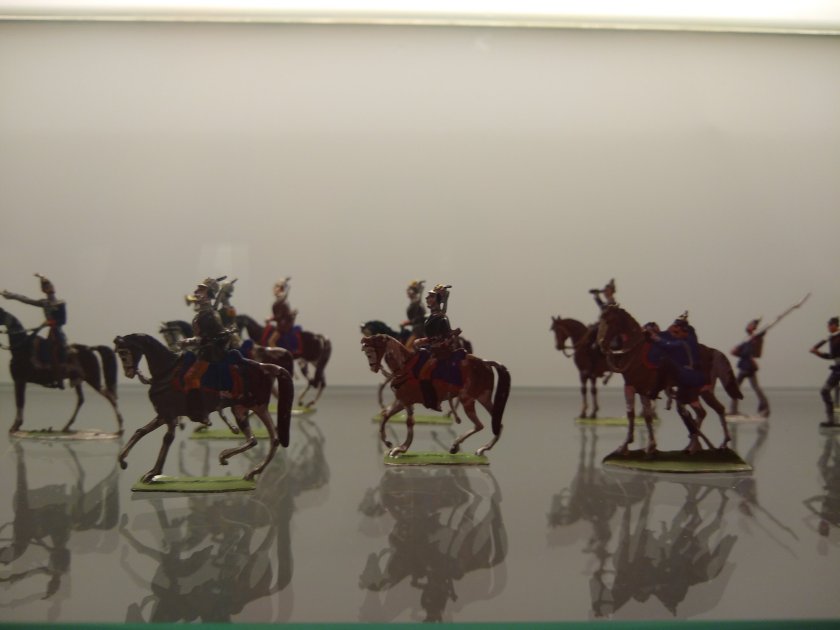
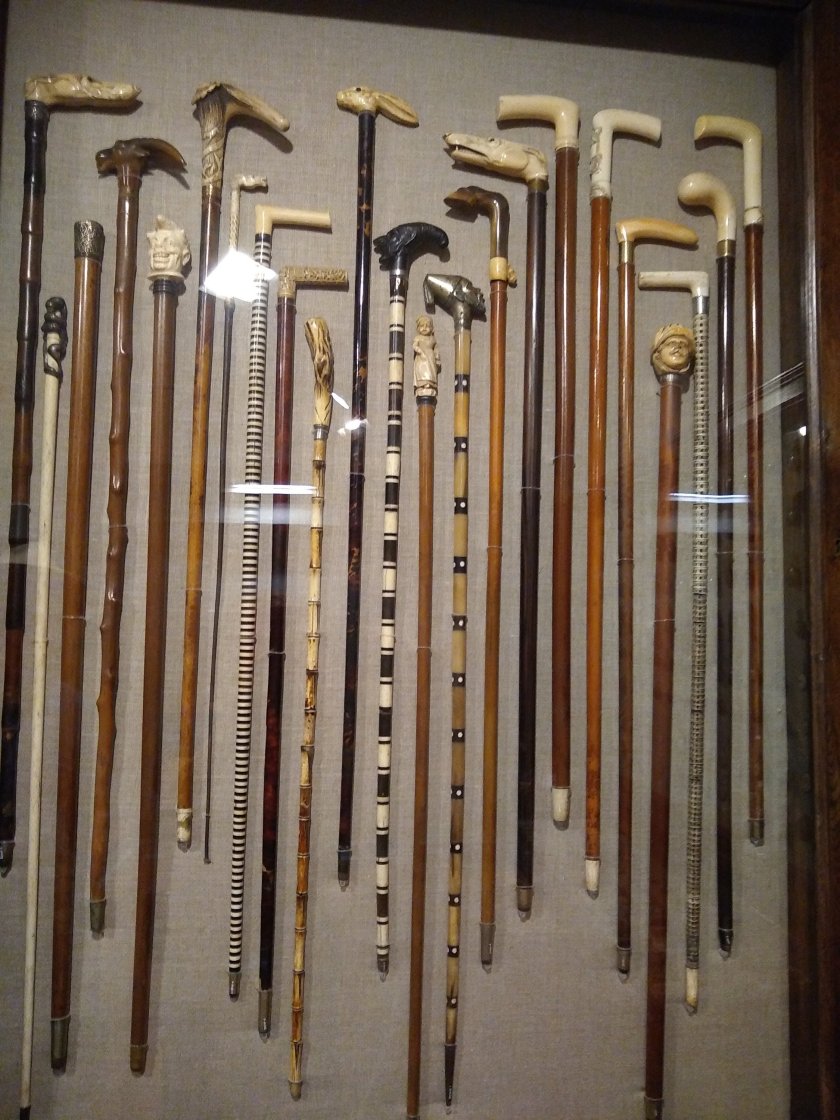
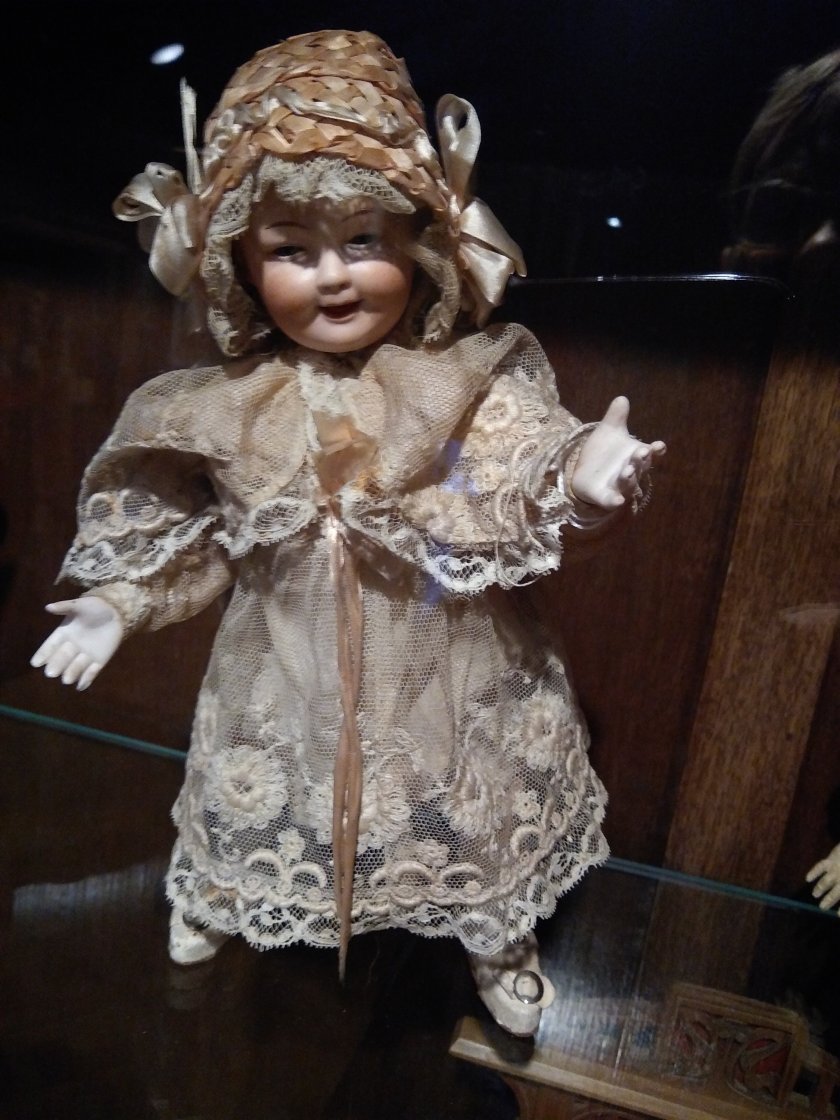
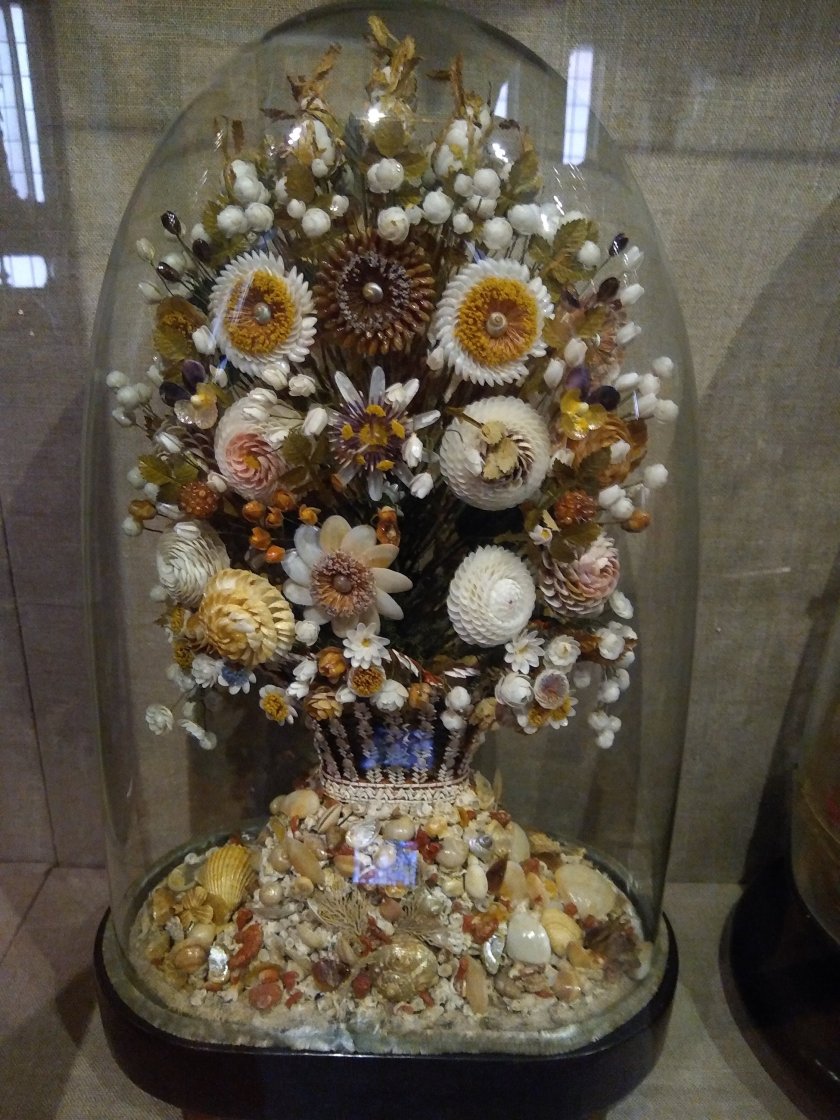
Here are tin soldiers; toy theatres; pairs of spectacles; early bicycles; pipes; dolls; door keys; clocks: walking sticks; extraordinary glass domes that seem to be full of dried flowers – look again. Each flower is made from dozens of shells – this was 19th century seaside art.
This museum, in the heart of Tourist Barcelona, is not crowded. Which was fine by us. But those tourists who amble past, never noticing it’s there, are missing out.
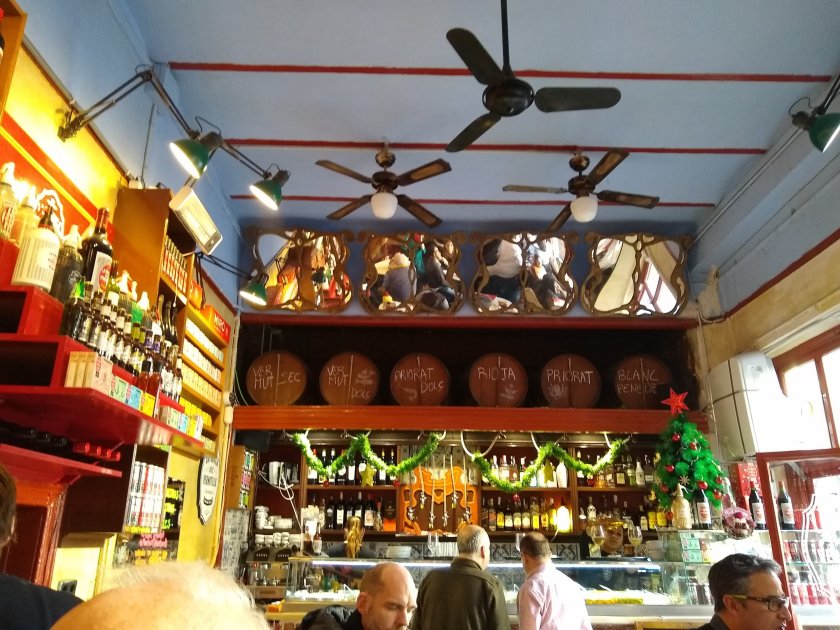
Meeting friends for a meal, with an hour to kill before your restaurant opens? Or linking up with them for an hour after work? Here in Barcelona, you may well head for a vermuteria. There’s vermouth of course, served simply with ice and lemon or in exotic combinations. You can have wine or beer instead if you choose. Order a dish of olives or a simple tapa. But best of all, enjoy the friendly atmosphere, and relish a cosy convivial moment in a place that may well have been around for over fifty years. And will still be here in fifty more.
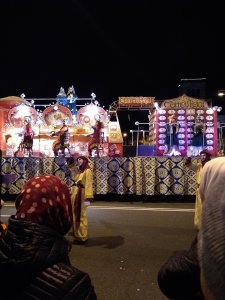
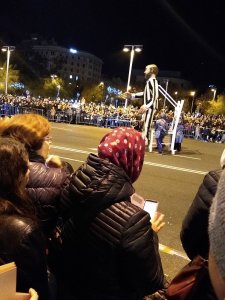
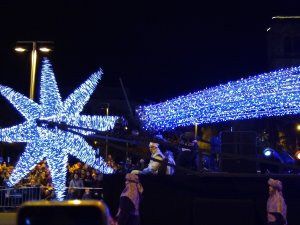
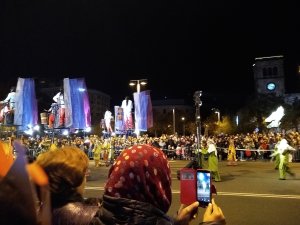
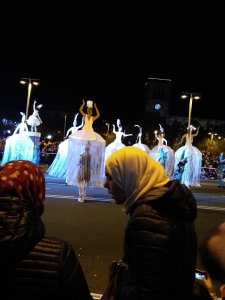
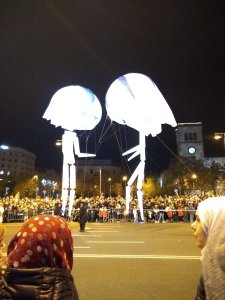
Today is the day when the Three Kings – the same ones who visited the infant Jesus – begin their journey to visit all children in the Spanish speaking world to deliver presents to them. We watched the Carnival parade they brought with them as they passed through Barcelona earlier this evening. Dancing, singing, exhuberant and imaginative displays had us enthralled for an hour or more. It was never like this in biblical times, I’m sure.
Do you remember our last trip to Barcelona? How my bag, my purse and contents, my camera, our passports …. and all that. …. got stolen?
Well, ahead of this trip, I replaced my bag with one with a doughty zip and secret pockets. And off we went.
Our flight accomplished, we met Emily at her office after a couple of bus journeys. I opened my bag. Hang on. Where’s my purse? Someone – and we both think we know who: that amiable woman of middle years who stood near us on the Number 7 – unzipped my bag, removed my purse, and zipped the bag up again. Without either of us noticing a thing.
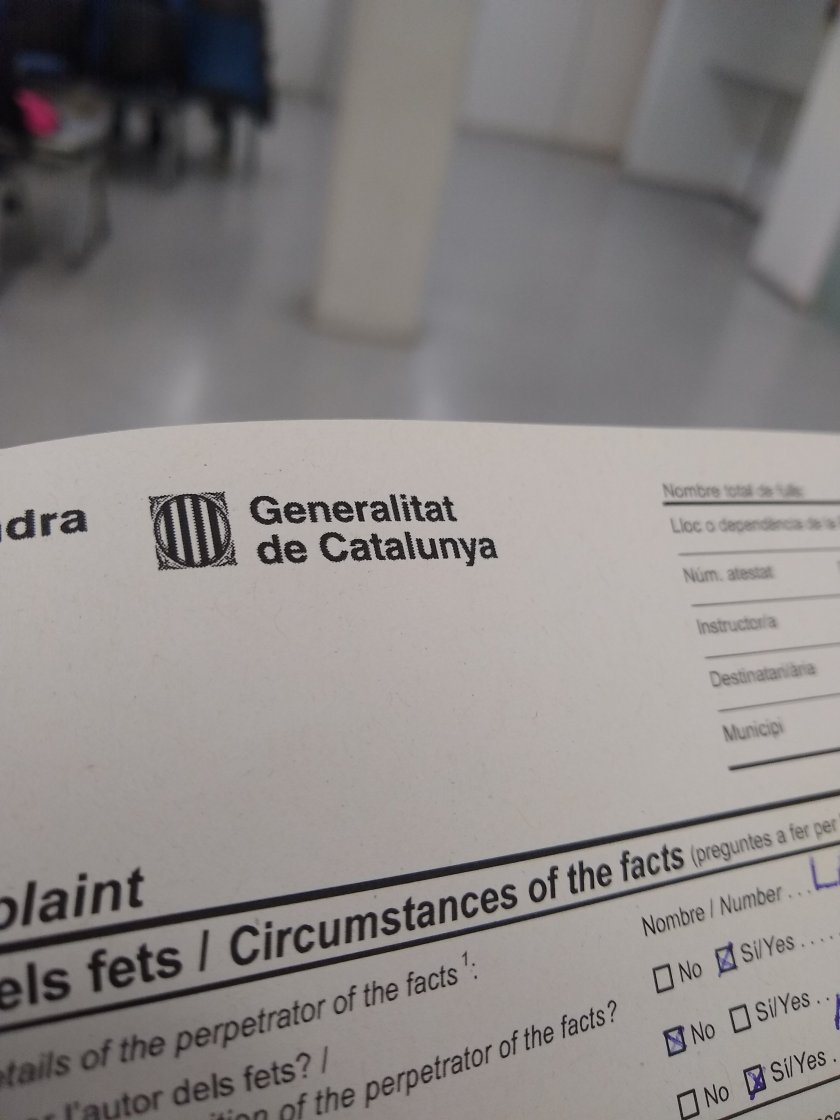
So guess who spent her first morning back here down at the Police Station practising her Spanish?
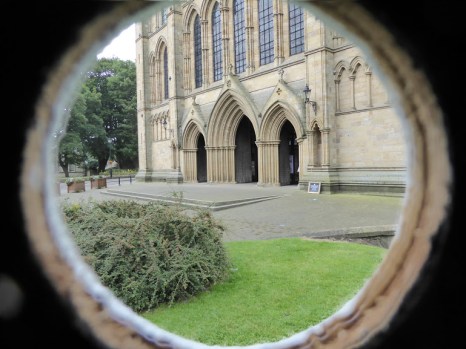
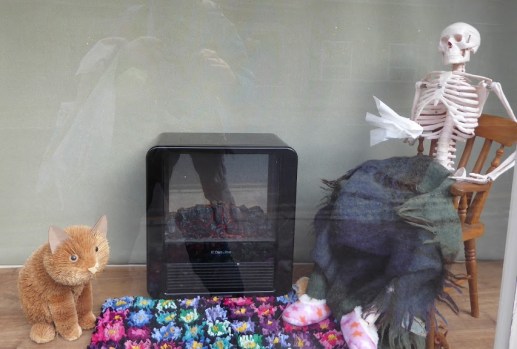
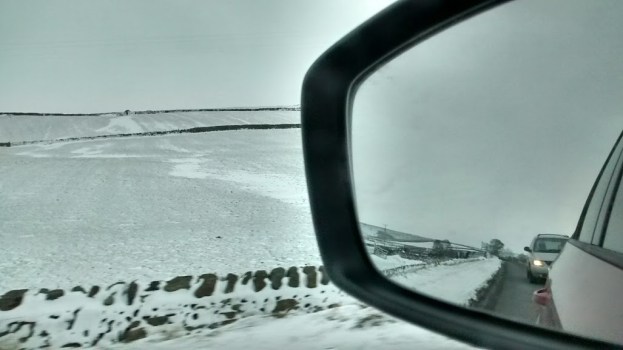
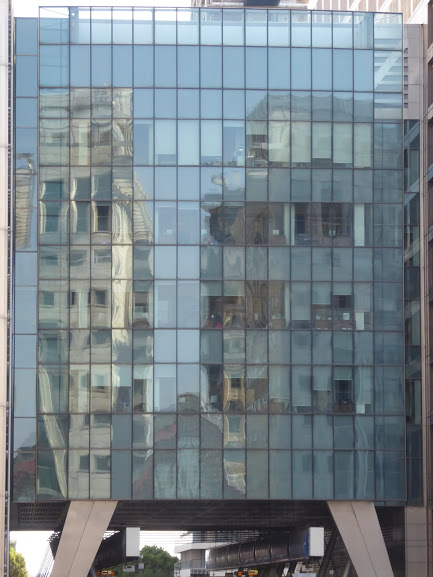
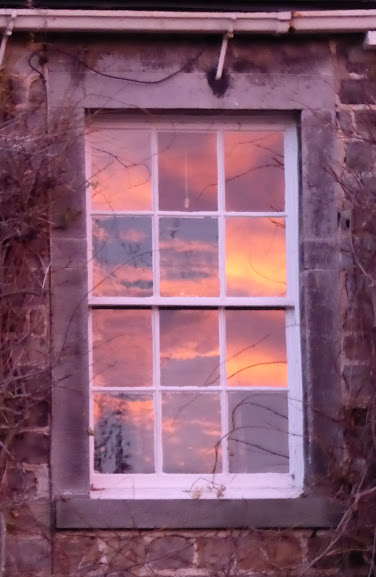
I’ve always loved looking at the contributions to Thursday doors, where bloggers from around the world share images of their favourite doors. Somehow, I’ve never got round to joining in. But looking through my photos for something or other yesterday, I realised that I had the makings of a post about windows. Here it is.
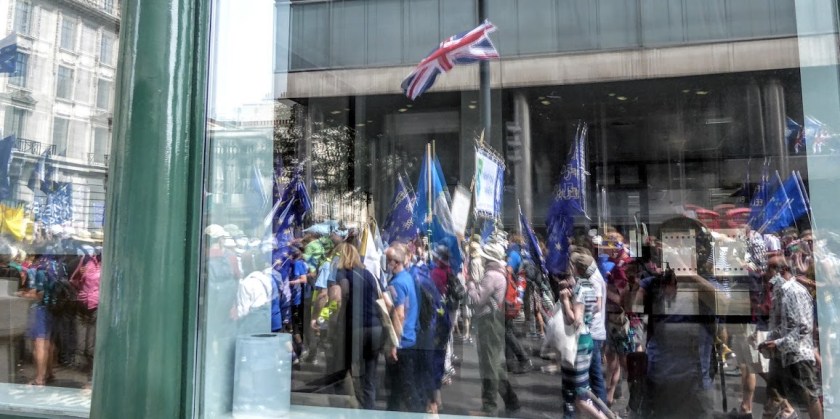
Here’s an image from the last March for Europe in London in June. I’ll be there again, probably as you read this, marching for a People’s Vote on the Final Deal. I’m not sure how much I believe in another referendum, but what other hope have we got to turn the tide against the national disaster that is Brexit?
Happier times, happier pictures. I started off by including images from Europe too. But I’ll do England today, and maybe travel further afield another time.
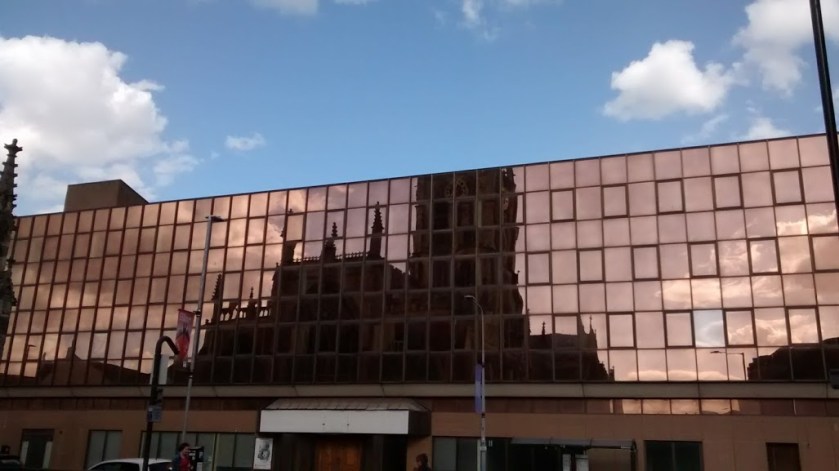
Hull Minster, as seen from the office buildings opposite.
And Ripon Cathedral glimpsed through a camera obscura in early 2017.
There’s an osteopath in Ripon who always has a delightfully quirky window display. Here’s winter.
Through the car window, a snowy winter landscape near Kex Gill in Yorkshire.
Train windows: a view of Canary Wharf through the windows of the DLR line.
I’m lying of course. Even I can’t do a degree in three weeks. But ….. I have been a distance learner at this seat of learning, and I’ve loved it. I’ve exchanged my 1970s student life, putting the world to rights in the refectory or the students’ union bar for on-line discussions with Anglophones with the hugest variety of life experience. I’ve exchanged echoing lecture theatres for my own study, where the lecturer delivers his or her piece at exactly the hour that suits me, and repeats it on demand. I’ve exchanged official reading lists for comments and suggestions from fellow students, based on newly discovered shared interests.
All this is thanks to FutureLearn. They publicise courses on every subject you can think of, and lots that you can’t. Some are paid-for courses right through to professional qualification or degree level. But many of them are not. Universities in every continent run short free courses and they want us to be their students. If only I’d seen Hanyang University’s Introduction to Korean before we went two years ago!
Castellers, or a human tower, in front of La Sagrada Familia (Wikimedia Commons)
A plea for independence alongside the Catalan flag. A common sight all over Barcelona – and Catalonia generally.
It didn’t begin well, and I whinged to Emily that I’d signed up to a piece of propaganda from the Catalan Independence movement (‘What did you expect’?). In fact however, we’ve had an overview of economics, history, literature and the arts and popular culture and it’s a solid grounding for further study.
What’s made it has been the fellow-students. I’m sure some people do what’s set in front of them and are happy to leave it at that. It’s probably all they have the time or inclination for. For a hard core of us though, it’s our colleagues that have made the difference. The civil servant in the Welsh office at the time when their bilingual policies were being developed; the Catalan who observed that there is no ‘standard’ Catalan, so in the media, do you use the language of the Balearics, the North West or the Central provinces, or even (who knew?) the Catalan spoken in Alghero, Sardinia ? The Irish chipped in, and Swiss Germans, and other linguistic minority groups. All this provoked lively discussions about language, and languages that have been suppressed (as Catalan was, unsuccessfully, and as Occitan was in France, largely successfully). Every topic has had us helping each other out. Most of us are woefully badly read in Catalan history and literature, so we share ideas about more accessible material. Away from the lectures, the tutors barely show their faces, and that’s fine. It is a free course after all, and we have proved that self-help works. In just three weeks we’ve established a learning community where we have given something, and taken a lot, and are the richer for it.
I’ll be on the look out for my next free course from FutureLearn soon.
Every time I open the coursework, this is the image I see. An ariel view of a human tower in the making: Catalan cooperation at its finest.
This week’s pictures hint at two or more stories: at that of the life of Jesus, from whose life and teaching spring one of the world’s great religions. And at the building of La Sagrada Familia, Antoni Gaudí’s cathedral celebrating Jesus’ family, created by thousands of craftspeople with special stories to tell, gathered over the last 136 years …. maybe only another eight or so to go.
‘Story’ is this week’s WordPress photo challenge. Click on any image to view full size.











 From Pyrenees to Pennines
You must be logged in to post a comment.