On the first Saturday of every month, a book is chosen as a starting point and linked to six other books to form a chain. Readers and bloggers are invited to join in by creating their own ‘chain’ leading from the selected book.
Kate: Books are my Favourite and Best
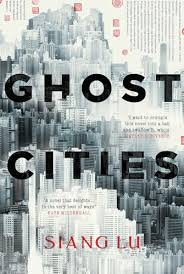
I haven’t read Siang Lu’s Ghost Cities. But I’ve read several reviews, and it seems that this novel is inspired by the vacant, uninhabited megacities of China, and follows multiple narratives many years apart. In the present day, Xiang is fired from his job as a translator at Sydney’s Chinese Consulate after it’s discovered he’s been using Google Translate. This alternates with stories from the past of a dictatorial Imperial Emperor and his escapades.
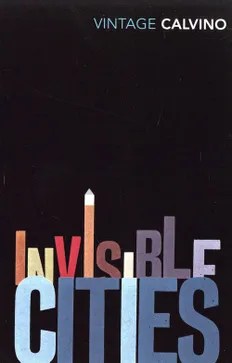

I immediately thought of Italo Calvino’s Invisible Cities, which I read far too long ago to comment on seriously now. But it begins: ’Kublai Khan does not necessarily believe everything Marco Polo says when he describes the cities visited on his expeditions, but the emperor of the Tartars does continue listening to the young Venetian with greater attention and curiosity than he shows any other messenger or explorer of his.’ And here begins Italo Calvino’s compilation of fragmentary urban images.
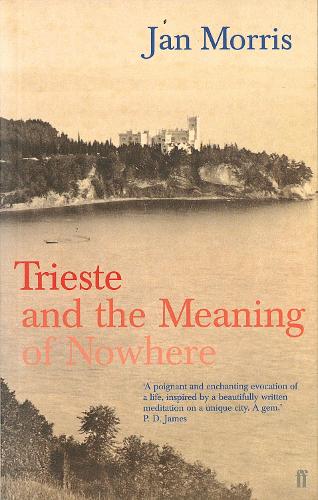
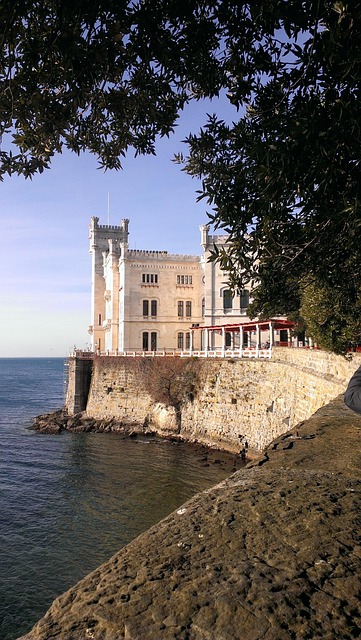
This Italian author made me think of one travel writer’s account of one part of Italy. Jan Morris’ Trieste and The Meaning of Nowhere. I felt a little ambivalent about this book. I wanted to like it more than I actually did. It’s a meditation on, and an exploration of Trieste, a city history has left behind, whose glory days are over, which is top of nobody’s tourist agenda, and which Jan Morris entertains strong feelings for. She discusses its history, its streets, its day-to-day life in a loving, melancholic way, and relates it to her own experience of being outside the mainstream. It’s a book which I’m glad to have read about a part of Italy I don’t know, but which I was happy enough to finish and set aside.
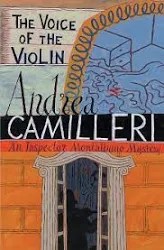
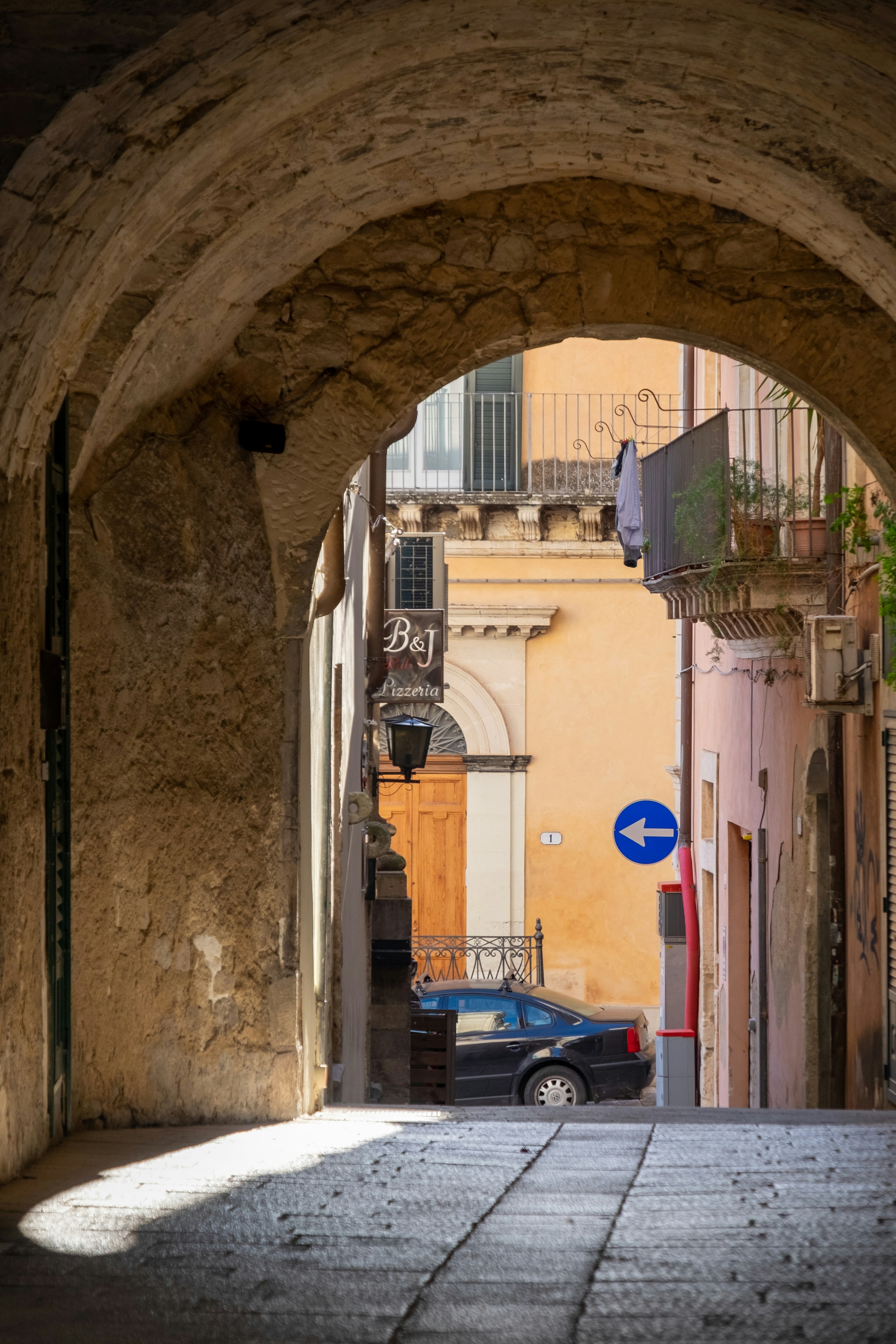
Vigàta in Sicily is another town which time has perhaps forgotten. It’s also imaginary, and the setting for a series of murder mysteries by Andrea Camilleri. Despite the fact that as a detective series, which therefore concerns murder and other crimes, the Inspector Montalbano books are ones I turn to when I need a bit of relief from weightier tomes. I love to meet the people Camilleri describes. I like to accompany Montalbano as he seeks out delicious meals at home or at neighbourhood restaurants. And I like to observe his relationships with his colleagues. The Voice of the Violin doesn’t disappoint. It’s about a murder which might have taken a very long time to have come to light if the police car in which Montalbano was a passenger hadn’t careered into a car parked outside a villa…. And in due course, Montalbano’s curiosity is piqued … He finds a body, of course. And up to five people might be responsible for the gruesome murder. But who? And you’ll need to read this book to find out why the title it’s been given is so apposite.
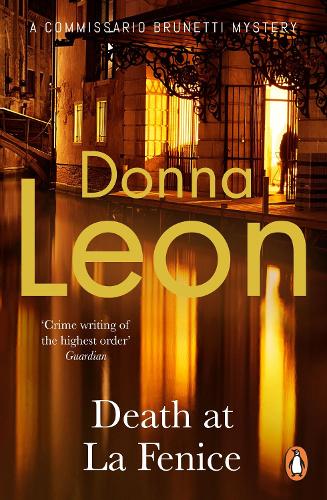
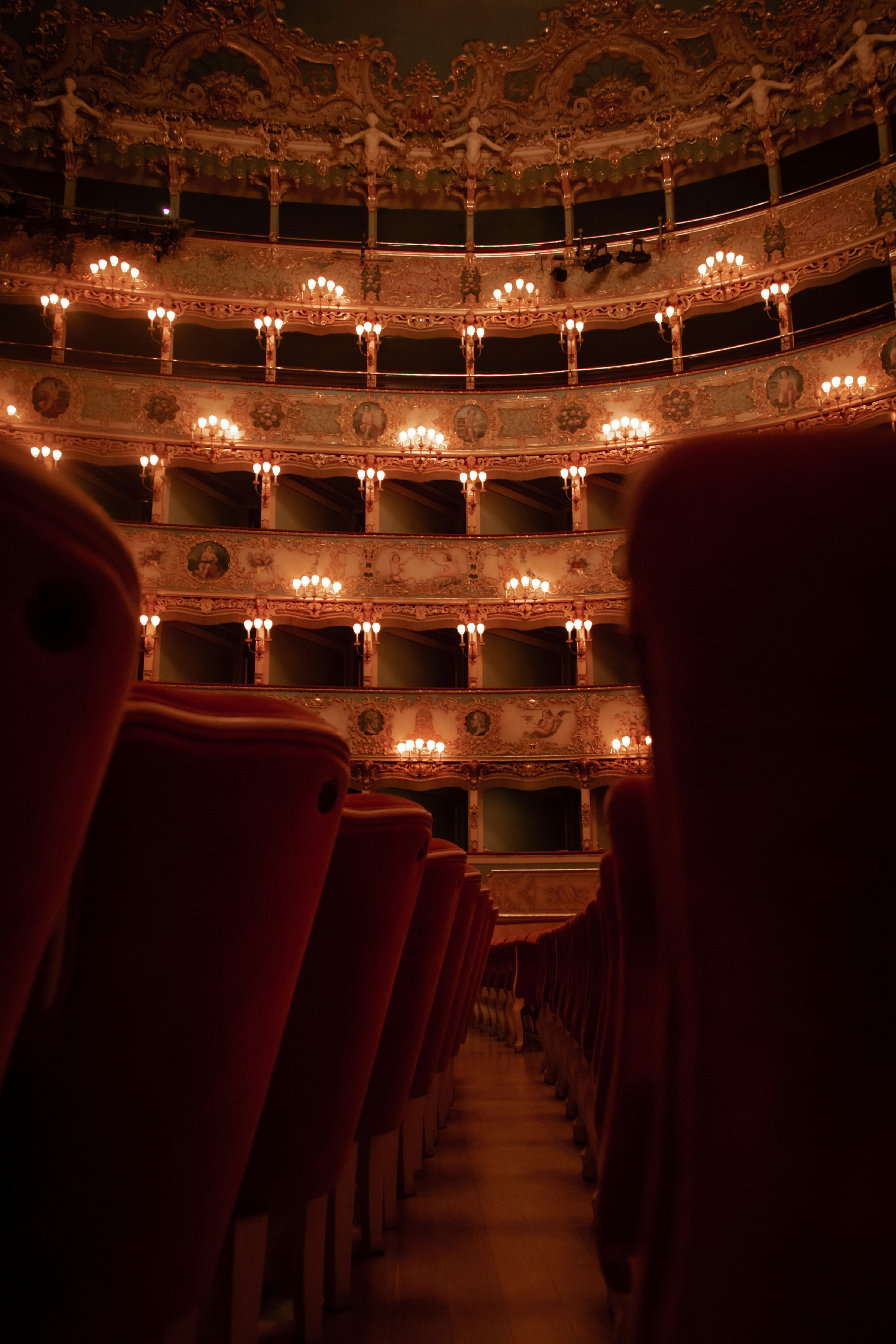
From one Italian detective to another. I love Commissario Brunetti, and I love the picture of Venice that Donna Leon, his creator, always conjures up. The alleys between ancient buildings, those palazzi themselves, the little bars Brunetti frequents…. and so on and so on. So even before I get involved in the plot, I’m absorbed by the ambience she creates. Death at la Fenice is, like all Leon’s tales, a good story. This one features the conductor who’s murdered during the interval at a performance at la Fenice. Whodunnit? His wife? That soprano? Her lover? As ever, the result of Brunetti’s investigation is an unexpected one, and convincing. Read it.
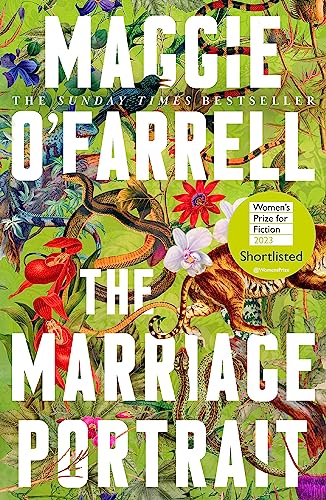
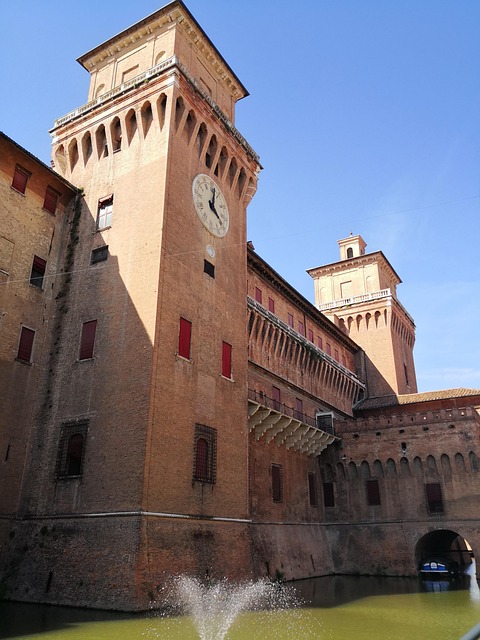
We’re staying in Italy for the rest of this chain. But we’ll leap back several centuries in Maggie O’Farrell’s The Marriage Portrait.. Lucrezia, third daughter Cosimo de’ Medici, finds herself betrothed, then married to Alfonso, heir to the Duke of Ferrara when her older sister, his original choice, dies. The story flits between her early life in Florence and her early married life. Underneath, throughout her marriage, her conviction that she will be killed by her apparently loving husband bubbles away. She’s a Duchess now, her father-in-law having died. She’s only 15, more than 10 years younger than her husband. Although she’s been brought up privileged, her new status brings with it loneliness and challenges. Virtually her only constant friend is her maid.
This book links with the two previous ones by being rich in quotidian detail. O’Farrell paints the pictures of her privileged life in such a way that we can hear, see and smell the scenes that surround her: her father’s exotic menagerie; her husband’s castrati singers; the sumptuous clothing; the simple bowls of fruit which she examines with her painterly eye – she is a talented artist. This rich attention to detail brings an already absorbing story fully to life.
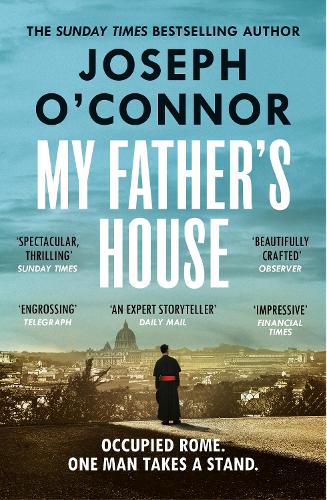
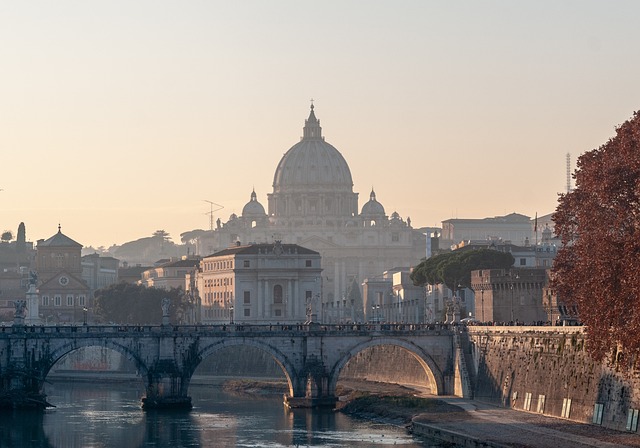
Still Italy, still history, but much more recent in the first volume of Joseph O’Connor‘s Escape Line Trilogy. My Father’s House is an immersive story, taking as its starting point the fact that while Rome was under German occupation in 1942, there was an Irish priest, Hugh O’Flaherty, based at the Vatican who was involved in running an escape line for Jews, escaped POWs and resistance fighters during WWII.
The plan is to evacuate scores of refugees and resistance fighters, all separately hidden, out of Rome on Christmas Eve, when perhaps guard is lowered. Plans take place at the rehearsals of a specially convened Chamber Choir: singing drowns out the mutter of whispered instructions to each singer in turn. Each player in the plot has a role, No one knows what any other individual is required to do. Gestapo leader Paul Hauptmann has his suspicions that a plan is afoot, and O’Flaherty is in his sights.
This is a work of fiction, even though heavily indebted to known facts. It’s told in a series of distinct voices, all characters in the book. Each voice is distinctive, authentic, even funny: Irish, English, Italian, aristocrats and shopkeepers. An often thrilling, always thought-provoking and absorbing story.
My chain seems to owe everything to Italy, and little to the starter book. I won’t do any better next month. I’m unliklely to participate, as we’ll be away, and I don’t like the idea of not responding promptly to comments. But the starter book will be Dominic Amerena’s novel about authors and publishing, I Want Everything. I think I’ll try to read it anyway.
With thanks to the photographers from Pixabay whose photos I have used: LeoLeo (cities); VBosica (Miremare, Trieste); Gianni Cio 10 (Sicily); Filip Filopovic (Ferrara); Davide Cattini (Rome). And from Unsplash, Giusi Borrasi (La Fenice, Venice)

 From Pyrenees to Pennines
I’ve managed to read zero of these! And a note to thank you for giving appropriate credit for the images. It is a perpetual irritation when people either steal images or don’t give creative commons credit/links. I’m getting much stricter about only following blogs these days. That’s my morning rant over with. The Andrea Camilleri sounds like just the thing for an audiobook, When you don’t want deep and complicated!
LikeLiked by 1 person
That should say ‘only following blogs that respect the creativity of others’. …it’s very early lol
LikeLike
It is. All forgiven. I guessed what you meant anyway!
LikeLiked by 1 person
Camilleri would be a good audio choice. Have you ever watched any of the dramatisations on BBC4. The Montalbano there is very different from the one who had resided in my head, but no matter. Thanks for crediting me with crediting my sources. I agree. It’s a small thing, but an important one, I think.
LikeLiked by 1 person
I don’t watch much tv (except when I am ill, that is) and one of the reasons is the one you gave, adaptations never look like I imagined. Although having said that there are a couple coming up which I will be tempted by, the adaptation of Leonard and Hungry Paul which I know you didn’t like, and The Life Inside (Andy West) which is a strong recommend for you btw. I ordered your Benjamin Wood recommendation, but my reading has slowed considerably over August.
LikeLike
I saw that L&HP is being adapted. I shall avoid, but your Andy West recommendation is noted. August is a bad month for reading for many of us, but I hope you enjoy the BW.
LikeLiked by 1 person
Just reserved The Life Inside at the library. It’ll take me back to my V/O days as a mediator.
LikeLike
A great chain. Maggie O’Farrell is such a wonderful writer. I must read The Marriage Portrait.
LikeLiked by 1 person
Do. It will transport you to another era.
LikeLiked by 1 person
I love that!!
LikeLiked by 1 person
A great chain Margaret. I’ve read the last two which are both brilliant! I’m excited to see that Maggie O’Farrell will have a new book out next year and of course I expect the last in The Escape Line trilogy will also be out.
LikeLiked by 1 person
Oooh. It’s clear that both of those will make it onto our ‘must-read’ lists! So glad you enjoyed this chain.
LikeLiked by 1 person
Lovely trip to Italy! Trieste is on my travel list after reading the Morris and I’ve long wanted to visit Sicily.
LikeLike
A friend has just come back from Trieste and was very enthusiastic. Ditto Sicily for me.
LikeLiked by 1 person
I always spot an interesting book or two, note down the titles and authors but never get around to buying and reading them.
LikeLike
The story of my life!
LikeLiked by 1 person
😎
LikeLiked by 1 person
I love your Italian theme this month. I’ve only read My Father’s House, which I enjoyed, but I do have a copy of The Marriage Portrait which I will get to eventually!
LikeLiked by 1 person
I hope you won’t be disappointed. I wasn’t.
LikeLike
A fascinating chain, and I’ve read quite a few of these, including the Calvino, which was some time ago and the sub stance of it eludes me….
LikeLiked by 1 person
Both of us brain dead then …
LikeLiked by 1 person
No, definitely not…Calvino was quite an intellectual andwrote some quite involved allegories – Britannica says “Among Calvino’s later works of fantasy is Le cosmicomiche (1965; Cosmicomics), a stream-of-consciousness narrative that treats the creation and evolution of the universe. In the later novels Le città invisibili (1972; Invisible Cities), Il castello dei destini incrociate (1973; The Castle of Crossed Destinies), and Se una notte d’inverno un viaggiatore (1979; If on a Winter’s Night a Traveler), Calvino uses playfully innovative structures and shifting viewpoints in order to examine the nature of chanceread, coincidence, and change.” So no….Calvino ain’t an easy
LikeLike
Oh definitely. All I meant was that we were brain dead for being unable to call them properly to mid!
LikeLiked by 1 person
Hmm, but I was alluding to the fact that I’m not sure I really understood some of what he was getting at!
LikeLiked by 1 person
Oh, definitely!
LikeLiked by 1 person
😳
LikeLike
I’ve read Leon and Camilerri of your picks. I adore Italy as a setting. I’m intrigued by the last one though – adding the O’Connor to my wishlist.
LikeLiked by 1 person
Oh, please do. I don’t think you’ll be disappointed.
LikeLiked by 1 person
I went with Calvino too:)
LikeLiked by 1 person
Great minds!
LikeLiked by 1 person
What a lovely, gently flowing chain (despite the murder)!
LikeLiked by 1 person
What a lovely thing to say, Davida. Now I must go and read everyone’s chains, including yours. I’ve been out all day …
LikeLiked by 1 person
I haven’t read any of Jan Morris’s travel writing but we read her memoir in book group a few years ago. I found the writing rather pompous if I remember rightly. I loved The Marriage Portrait, even though I had read mixed reviews of it. Big fan of Maggie O’Farrell.
LikeLiked by 1 person
Me too. I saw Maggie O’Farrell at the Virtual Hay Festival during Lockdown and was utterly disarmed by her. And I tend to agree about Jan Morris too.
LikeLike
Yes, the only time I have seen her speak was also virtually in lockdown. Can’t remember which festival, probably Edinburgh. She was talking about Hamnet at the time.
LikeLiked by 1 person
Ditto.
LikeLiked by 1 person
Margaret, I can see how much time and care went into creating your Six Degrees chain — it’s such a thoughtful post. I especially enjoyed seeing Donna Leon included; her detective series is a favourite of mine. I always admire how you weave books together in ways that spark new reading paths. Thank you for putting so much into this. Over time you have given me many great titles to put on the TBR stack of books. Many thanks.
LikeLiked by 1 person
Thank you. This remnds me I have not beeen seeing your posts lately. Either you have been havin a blogging break or WP has divorced us. I’ll find out which ….
LikeLiked by 1 person
We have been divorced, it seems. I was on a blog break traveling in Norway. I just returned a week ago and am catching up. But I did have posts scheduled during my time away. As you know I have about few blogs that I write on depending upon themes and subject matter. Not to worry about connecting. I believe that serendipity will bring us together at the right time. I loved this post. Take care – Rebecca
LikeLiked by 1 person
Thanks so much Rebecca. I’ll be On the Case tomorrow.
LikeLiked by 2 people
I remember seeing a piece on TV about the uninhabited mega cities in China. That was maybe a decade or more ago. Are they still a thing? And the story of the priest getting Jews out of Rome…that sounds facinating.
LikeLiked by 1 person
I don’t know about the mega-cities. But the Rome story is based on real events and is well worth reading.
LikeLike
I love your Six Degrees posts – always interesting and the lovely photos! And Italy is one of my favourite countries. I’ve books by Leon and Camilleri, but not those you mentioned. I have a copy of The Marriage Portrait waiting to be read. I must get round to reading it soon.
LikeLiked by 1 person
Thank you Margaret. Yes, do treat yourself to the Marriage Portrait soon.
LikeLike
It’s funny, dear Margaret, you seem to read and like all the books we like as well, except Siang Lu’s book, which we haven’t read.
The Italian literature has a certain elegance that we like – an elegance of style that has Maggie O’Farrell as well.
Thanks and cheers
The Fab Four of Cley
🙂 🙂 🙂 🙂
LikeLiked by 1 person
That’s great news! And I agree with your comments too. No, I haven’t read the Siang Lu either, and suspect I shan’t.
LikeLiked by 1 person
Great chain! I added Inspector Montalbano series to my TBR list.
LikeLiked by 1 person
Good-oh! I love Montalbano and his family, and I hpe you will too.
LikeLike
Good work! And, you used My Father’s House! I really have enjoyed those books. Now I need to give Inspector Montalbano a try–he’s new to me.
LikeLiked by 1 person
I don’t think Montalbano will disappoint you. And the My Father’s House seies is so good, isn’t it?
LikeLiked by 1 person
Yes to My Father’s House. Anxious for the third one.
LikeLiked by 1 person
Me too!
LikeLiked by 1 person
Good idea taking the Italian road. I took the language link. But it was fun to see your chain. Thanks.Here is mine.
LikeLike
Yes, I’ve already enjoyed yours, and commented on it. Going down the languages route was a good idea.
LikeLiked by 1 person
Mmmmh, looks like that didn’t go through. I checked my spam filter but it’s not there, either. But I’m glad you enjoyed it.
LikeLiked by 1 person
No, the comment was on your comment on Kate’s post. I can’t get to comment on yours.
LikeLike
Of course you did. I just didn’t see it on mine and didn’t think any further. [rolleyes]
LikeLiked by 1 person
🤣
LikeLike
Montalbano and Brunetti are favourites of mine, both books and TV series. In fact I’m always looking out for Italian TV crime / detective programmes. Rocco Schiavone (Ice Cold Murders) is another I liked also available in books by Antonio Manzini.
LikeLiked by 1 person
I never saw Montalbano on TV. I sort of don’t want to. I’m in love with him and don’t want to be disappointed 😉. I’ll look out for Antonio Manzini. Thanks.
LikeLiked by 1 person
Have read zero of these two but loved following the links and might try the lighter detective one. Have heard of that. I never fancied the Marriage Portrait but like her as a writer. But have never been to Italy so must go soon. Not sure will read Jan Morris on this though but did read her Oxford book and that was good. Enjoy your next travels.
LikeLiked by 1 person
Thank you. It’s a bit of a surprise to learn you don’t know Italy at all. I can recommend putting that right! I wionder why you like Maggie O’Farrell’s work, yet don’t fancy this one? I enjoyed it, as I do both ‘my’ Italian detectives.
LikeLiked by 1 person
Think spend too much time in Spain!
LikeLiked by 1 person