Capital Capitelles

The first capitelle on our walk

We’ve been walking north of Carcassonne today, with our friends Barbara and Tim, holidaying in the Aude from North Yorkshire.  When we decided to go and explore the curious stone huts called capitelles in the scrubby garrigue near Conques sur Orbiel, we assumed they were something like the orris of the Ariège.  These too are small sturdy dry stone wall huts: but orris were used by upland shepherds.

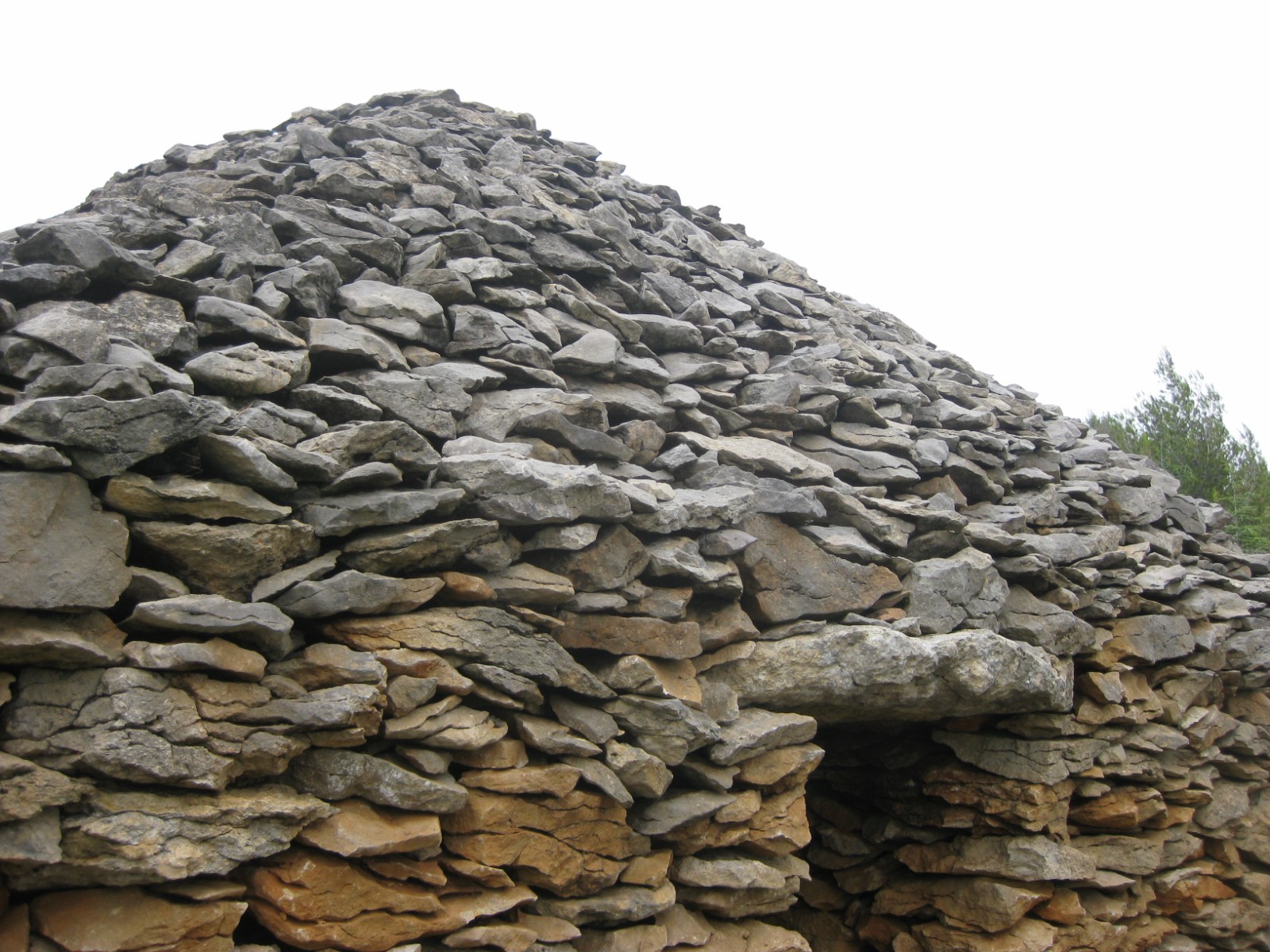
The dry stone walls of the capitelles

Capitelles are quite different.  Following the formation of France’s Second Republic in 1848, everyone wanted something to call their own.  Here in Conques, the poorest members of society looked beyond the village where they lived for some way of acquiring a bit of land  and earning some extra money. They realised that the dry impoverished soils of the garrigue were good for only one crop: vines.  As the peasants started to work the land to plant their vines, they dug up stones – hundreds of stones.  And they used them in the first place to make low stone walls marking the limit of their territory.

That south-facing door’s not very big

After that they built small huts to shelter from bad weather.  These round or square huts are in the form of a dry stone wall rising to a semi-circular vaulted roof also in stone: no mortar, no foundations, a bare earthed-floor and a single small door, always facing south.  They were all built by1880 or so, and the peasants who built the huts and worked the land here would have done so in any spare time left from their ‘day jobs’ as farm labourers.  And this continued till the Fist World War.  Men left to become soldiers, and at much the same time phylloxera struck.  This double blow meant the area returned to uncultivated garrigue, and only recently have the capitelles been restored.  They add interest to a stony landscape characterised by scrubby vegetation, low trees and shrubs and bright ground-hugging summer flowers.  I’d have said distant views of the Pyrenees too, but today was misty and overcast, so Barbara and Tim had to take our word for it.

Close up of a carefully constructed roof

Our socially mobile terraced house: or ’génoises’ – a history

You might have thought we were pretty ordinary types living in an ordinary old terrace house – an ex-butcher’s shop for heaven’s sake – in a run-down ordinary little town.

Well, you’d be wrong.  This house, and the neighbouring ones, was built for minor nobility.  We haven’t scoured the archives or talked to the Oldest Inhabitant to find this out.  We just know.

And this is how we know.  Under the eaves of our houses are three rows of génoises, resembling a child’s drawing of ocean waves, but turned upside down.

Three rows of our génoises, underneath carefully picked out in terracotta paint to show them to full advantage

Back when our house was built, some time in the 18th century, the number of rows you were able to have denoted your social status. Artisans were permitted one row, shopkeepers two.  Minor nobility – ahem – three.  And if you were directly in the service of the king, then you could claim four rows.

You’ll see houses with génoises south of a line that runs pretty much from Bordeaux to Lyon.  It’s thought that the technique, which is Italian, was introduced firstly to Provence and then more widely, by artisans from Genoa round about the mid 17thcentury.

Here at Villar Saint Anselme in the Aude is a rare building with 4 rows of génoises. Look carefully: the swallows – no respecters of status – have built their nests on the undersides

By the nineteenth century, the social implication of the number of rows of génoiserie had pretty much disappeared: people contented themselves with one or two rows for decorative purposes.  We’ve seen our house on a late eighteenth century plan of Laroque, so we know the house, complete with génoises, must have been built by then.

And a family with pretensions to nobility lived in a tall, narrow terraced house?  Admittedly with some nice features, but still nothing fancy at all.  Well, inheritance laws in pre-Revolutionary France had estates divided up between all the heirs, so land and property became shared into decreasingly smaller parcels.  Families graced with extensive land and properties were few and far between.  This helps explain too why the agricultural revolution taking place in England from the 18th century took no hold in France.  Tiny farms resulted in small-scale farming and a near-impoverished peasantry.

And at some point, the house passed into the hands of the previous owners’ family and became a butcher’s shop.  Now it belongs to (almost) the only English in town.  Its noble origins are long forgotten.

A ruined castle above spring flowers

We ‘do’ ruined castles here in this part of France.  And last Sunday we Laroquais from the walking group ‘did’ one that was new to us.

We went off to the Aude, near Rennes-le-Château, for a long morning’s march and a final energetic upward scramble to Bézu and the few castle ruins that are left there.

I was going to tell their story.  But then I found another blog to do the job for me.  Follow the link!  Some of the research here has been fostered by the – to me – unaccountable interest in Dan Brown’s books, but the page on Bézu is mercifully free of his influence.

I’d sooner simply share some of the photos of the day, many of them of the flowers we saw.  May, as in much of Europe, is a glorious time for them.  The dry, thin soil of this part of the Aude nourishes small, bright ground hugging plants: they show themselves off perfectly against a backdrop of alternately red and rather white earth.

I’m going to go on being lazy today.  If you can name the flowers so I don’t have to, I’d love to hear from you.

This slideshow requires JavaScript.

Markets in Toulouse

We went to Toulouse yesterday, to visit the markets.  This wasn’t a trip to stock up the larder though.  This was a history lesson, as offered by Elyse Rivin, long term resident of Toulouse and great enthusiast for the city.  She is a full fledged official guide and art historian, and runs Toulouse Guided Walks.  We’d booked.

Minutes after we met, we found ourselves in front of Victor Hugo market.  You’ll go here for meat or fish, but also for all the other foodstuffs that markets do so well – fruit, vegetables, bread and patisseries, drinks.  At lunchtime you might pop up to the first floor to have a convivial meal at one of the several restaurants up there, all using fresh produce bought only an hour or two before from the stalls below.  This market, like every other in Toulouse bar one, is a concrete horror story.  Back in the late 1950’s and early 1960’s, they demolished the elegant iron and glass Victorian structures: they needed car parking space of course, and somehow contrived to squeeze car-parks-with-added-market onto those old sites.

Toulouse has had markets since way before the 12th century, and most had a speciality.  Victor Hugo’s (I’m guessing it wasn’t called that then) was wood.

We wandered along to the Capitole, the splendid central square of Toulouse.  Usually it’s an an elegant place, airy and inviting.  On Wednesdays it’s inviting for a different reason:  There’s a market: a big one.  Teeming with second-hand books, brocante of every kind, traders from every corner of the world……  And on other days, there’ll be organic food stalls instead.

I remember learning in history lessons how the streets of London were often taken over by particular trades – leather sellers, poulterers, bakers and so on.  So it was in Toulouse.  Many of these trade names have been lost, but there are still streets with the old Occitan names: the cauldron makers for instance.  And some trades hang on, in an unbroken line from the 12th century.  Rue Sainte Ursule for example, then as now, housed textile merchants.  These days that means clothes shops, textile wholesalers, even small scale manufacture.  This area is still named Quartier Bourse after the Bourse des Marchands (a trade association, an antecedent of the Chamber of Commerce).  In the 19th century a fine new neo-Classical building was built, and this is the Tribunal de Commerce, where trading disputes are resolved.

On to Esquirol.  Flour was measured here in a stone basin, by volume not weight, to prevent honest shoppers being short changed.  A beady eye was kept on those who attempted to ‘cut’ their flour with chaff, dustings of rye flour and so on.  Back in the middle ages, as now, white bread was prized.  No market here now, because back in the 19th century, several long straight roads – in this case Rue de Metz – were sliced through the city, laying waste anything in their tracks.  The market hall that was here has been rebuilt piece by piece at Lourdes, so you could go and see it if you liked, unlike all those other lost structures.

Next stop: a walk down down Rue des Filatiers.  I love this narrow street with its tall, elegant houses, many dating from the 16th century.  Take a look at the pictures.  And then we were at Carmes, originally home of the Carmelites.  The order eventually won a long battle with the city to be allowed to have a monastery in Toulouse.  What clinched it was when they assured the pope that their long ministry in the area of Mount Carmel gave them a unique possibility of converting the area’s small Jewish population.  The city fathers had to give in.

Carmes, like the other markets, is now a concrete box, instead of a complement to the smart 19th century character of this historic area.  But we were here to sample cheeses, guided by a local affineur, at a shop called Sena.  What this means is that the shop buys cheeses direct from the maker, and matures and ripens them to what it considers perfection.  Our guide for the occasion wanted to share three fairly local cheeses with us.  We had a young soft goat’s cheese ‘Cathare’, fresh and light, dusted with ash: this was 10 days old.  Our cow’s cheese, yielding, tasty and with a volcanic looking grey crust was 5 weeks old.  Best known was the Ossau-Iraty cheese, made from sheep’s milk from the Basque country and the Béarn, which had the most pronounced taste of all.  He paired these with fruits: raisins, candied kiwi, and almonds.  For tasting purposes, he explained, these are better than bread. We had a glass of the most local wine to Toulouse as well, Fronton.  This was a Négrette, low in tannin and acidity.

I talked to him about English cheeses.  He sells Blue Stilton, but I was alarmed to see, among all his hand-picked artisanal cheeses, a block of shrink-wrapped orange cheddar.  He told me that people bought it for barbecues, to put on cheeseburgers.  He had, he said, little incentive to stock English cheeses, which he knew could be very good, because the French would not buy.  Presented with shrink-wrapped cheddar, are you surprised?

Still, by now it was long past midday.  Back to Carmes to hunt for a lunch-stop, where we could discuss the morning over a leisurely plat du jour.

This slideshow requires JavaScript.
An Everyday History of Country Folk

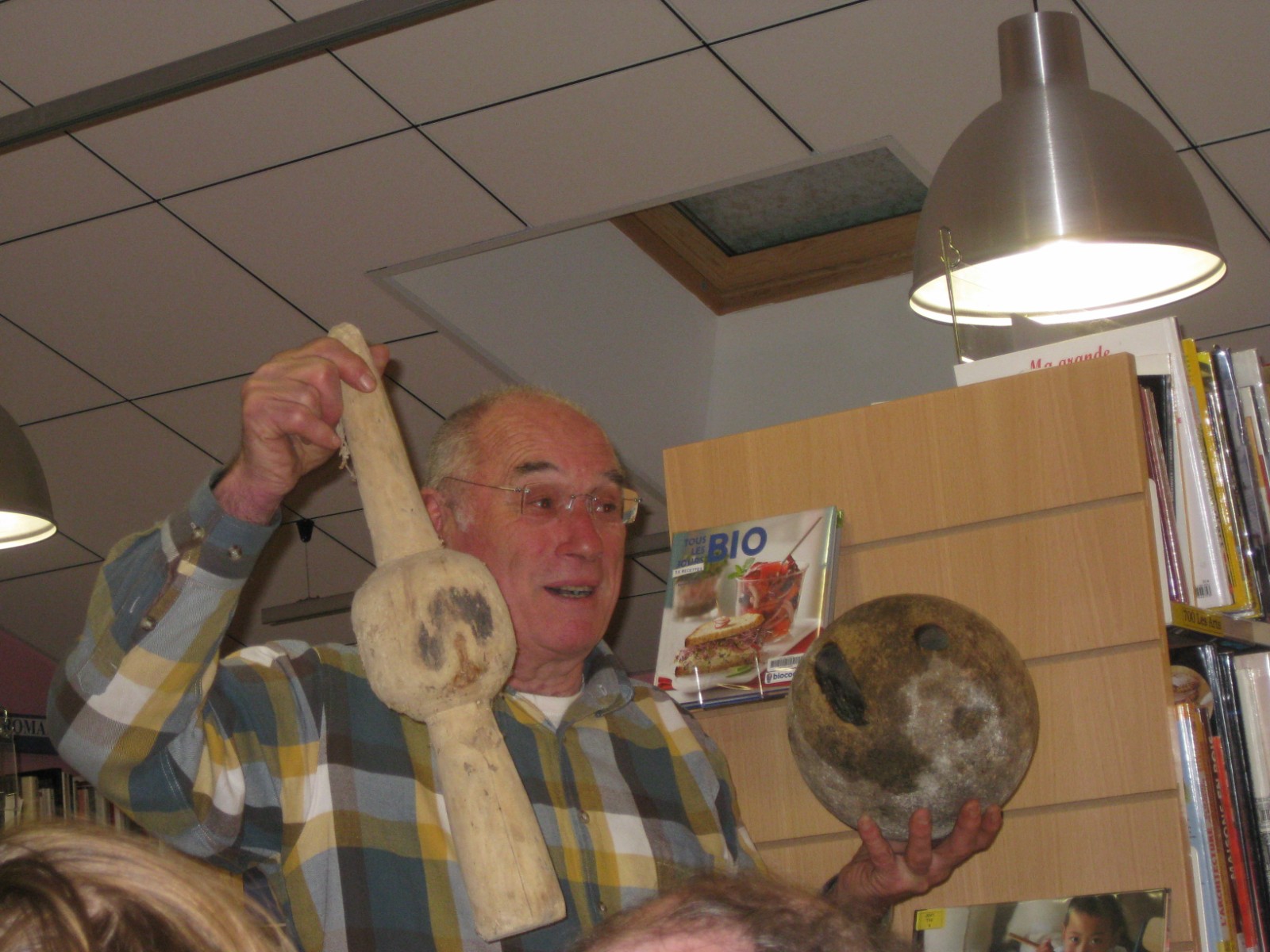
Yesterday afternoon was fascinating.  We went to Belesta library for a talk by Paul Garrigues, a local historian who collects old wooden artifacts. He’s such a good speaker, and gave us an insight into a way of life which only finally drew to a close about 30 years ago.  He’s pretty much my age, but his childhood was spent around ox-drawn farm machinery, distaffs and a host of things that formed no part of my rural infancy.  Now that most Ariègeois farms look pretty much like anywhere else’s, with tractors, silos and irrigation systems, it’s rather hard to believe.

Paul’s childhood was spent in the next village to here, Aigues Vives.  Later, he met and married a young woman from a tiny community in the Couserans, a part of the Département to the west of here.  He was surprised to find how different the tools in his wife’s village often were.  There too, the villagers spoke Gascon, rather than the Occitan traditional in our part of the area.

And so his interest began.  He started to collect mainly wooden artifacts: agricultural items, kitchen tools, playthings.  To him these things tell a story of rural life here as it was lived over many centuries.  Yesterday he came to Belesta Library to talk and show part of his collection.

First of all, a simple wooden torch, looking something like a charred rounders bat.  This interests him because items just like this were in use – almost daily – since man first populated the area in Stone Are times, right up until the First World War, and in a few cases, beyond.

Next, a distaff.  This item too remained unchanged almost from those early days until the early years of last century. Any female over the age of about 8 living over the last 1000 years and more, whether rich or poor, would have recognised it. Spinning would have been a constant part of her daily routine, whether she was managing a fine estate, or supervising a few sheep on the mountainside.  And do you know what?  Constantly licking your finger and thumb as you handled the wool made your mouth dry, so beside you, you might have a little wooden box, filled with snuff, to help your saliva to flow: he showed us samples.

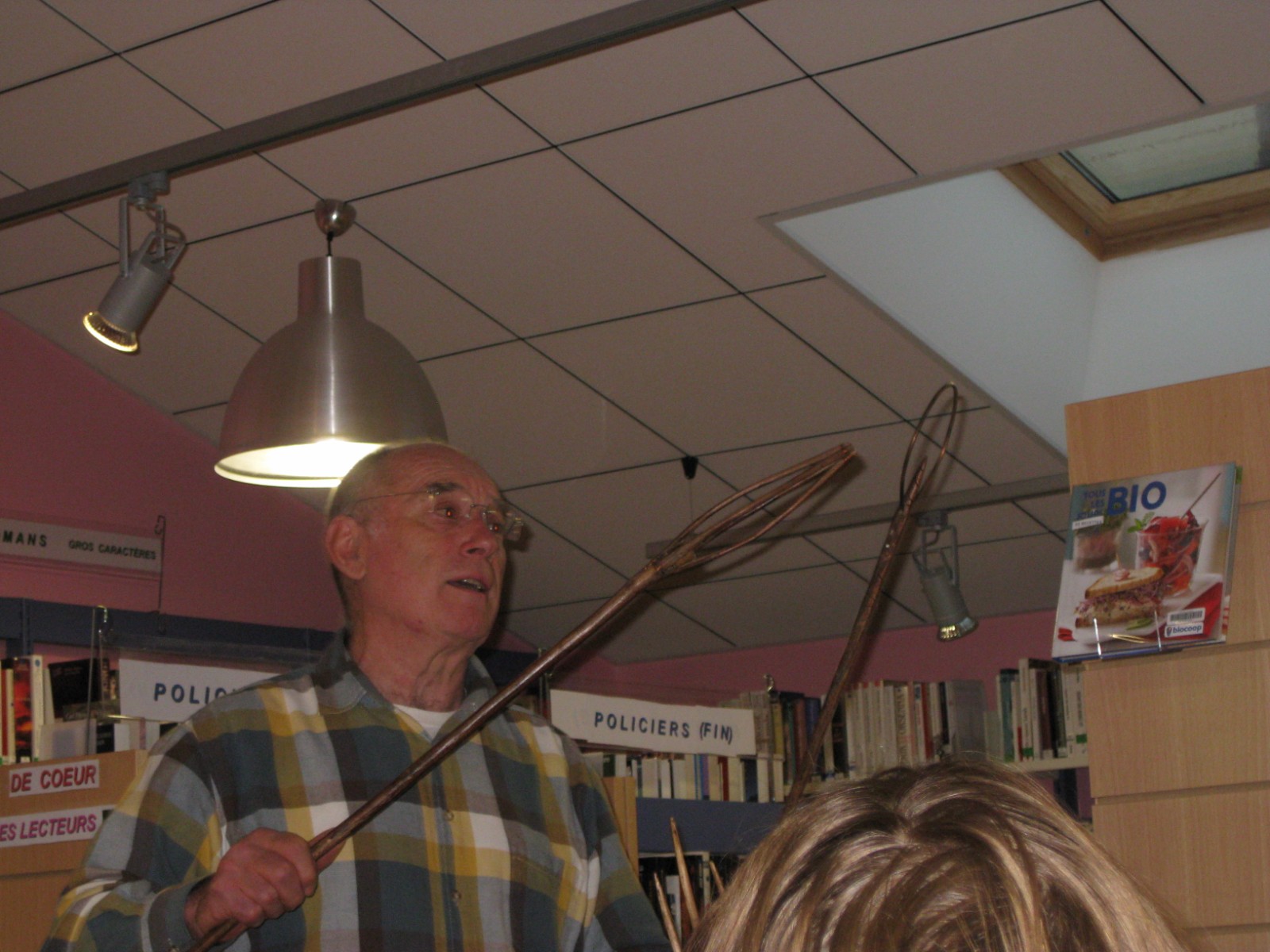
A couple of millas stirrers

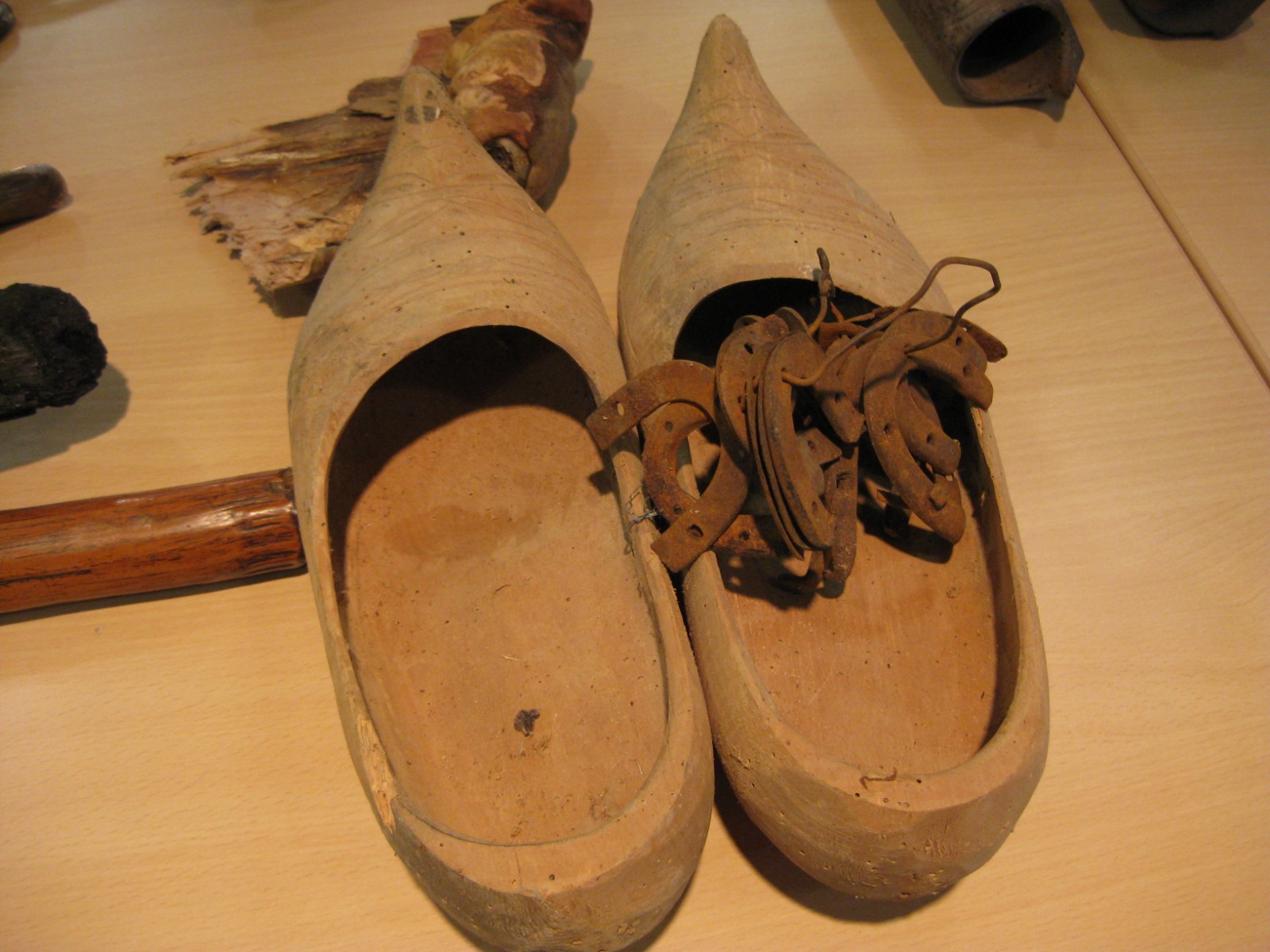
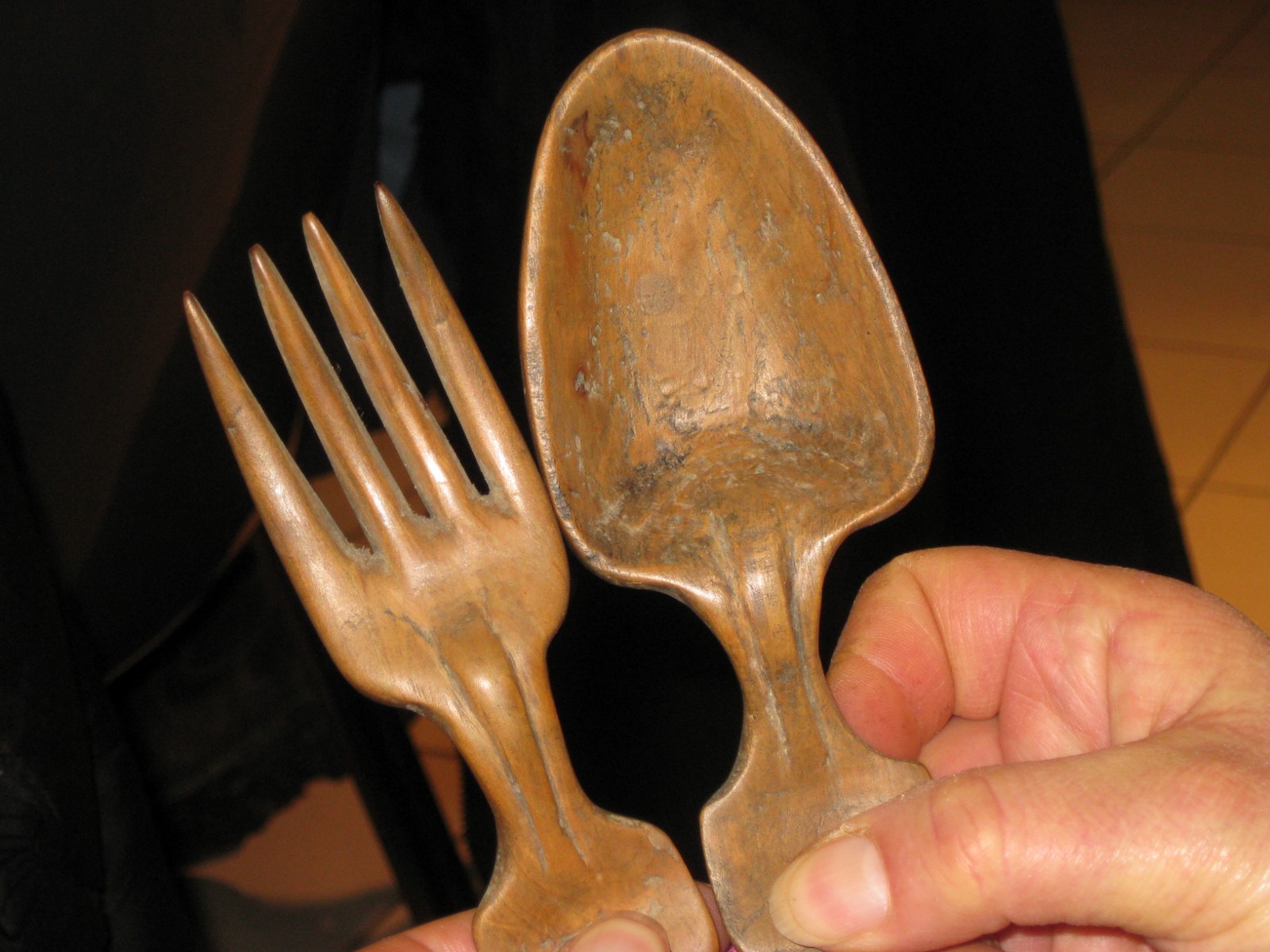
We saw long wooden balloon whisks and three-pronged forks used to stir the great vats of millas (a sort of porridge made from cornmeal) beloved of the Ariègeois, wooden spoons and forks, large wooden bowls.  He showed us wooden clogs.

Wooden clogs with metal horseshoe-style heel strengtheners

We saw wooden roof tiles.  All these things are made from unplaned wood, so the implements can follow the natural grain of the wood and be strong and sturdy.

From the Couserans he had savage long thick knives, looking like swords in their wooden or leather scabbards.  Their design was directly descended from the instruments of war the Gascons often saw in their battle-rich past, but in fact they were used to cut rough grass, crops, and the long straw required for thatching.

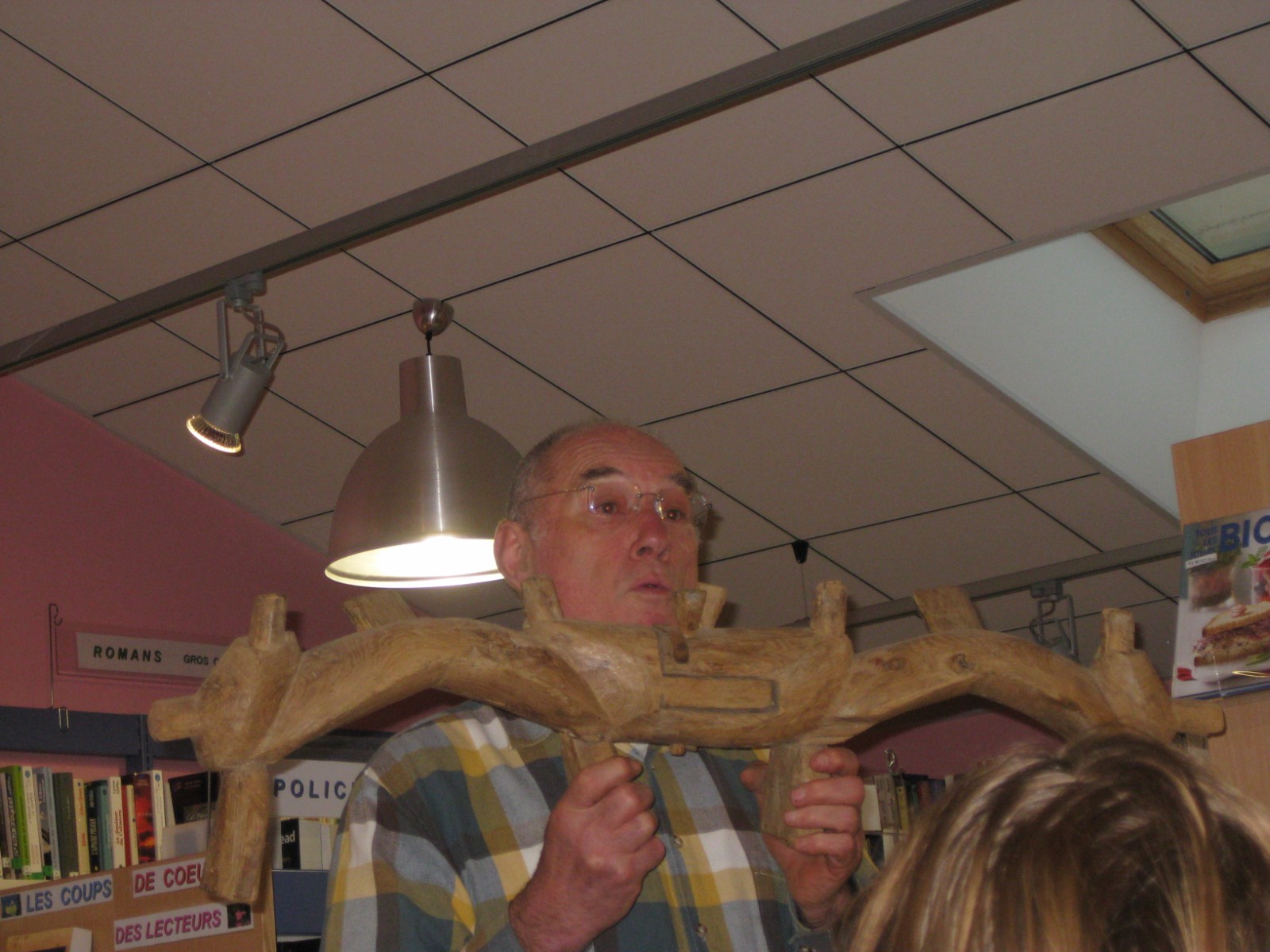
A yoke. For safety reasons, it can quickly be divided in two

There were other differences between that part of the area and ours.  Here, terracing was a feature of upland farms, and it was male beasts who worked the land.  There, the farmers worked directly on the steep slopes: the cows who ploughed the land (it was female animals who did the work here) had to have specially designed wooden yokes so that they weren’t strangled as one worked at a higher level than her work-mate.

But it wasn’t all hard labour.  Anyone who’s ever been to a bowling alley would recognize the bowls and skittles he showed us (made from wood, naturally).  They were a big feature of life round Biert in the Couserans, but inter-village tournaments were rare.  They all played to different rules, which tended to make contests rather difficult.  But it was over here, in nearby Le Sautel, that a game was bought to a sudden end at the end of the 19thcentury.

Wooden skittle and bowl. Confiscated from the church at le Sautel?

One Sunday, the women went obediently to Mass, and as usual, the men played with their bowls outside, getting argumentative and noisy as the morning wore on.  Eventually, the priest in church could take no more.  He stormed out through the church porch, confiscated the bowls, and hid them in the sacristy.  Evidently completely unchastened, the men simply produced other bowls when it came to their next match.

Paul’s keen that we should regard these tools and artifacts as living objects, part of a traditional way of life extending back hundreds, sometimes thousands of years.  He doesn’t want them consigned to the cemetery of history.  If you live round here in some old-style village or town house, you’re almost certain to find quite of few of the things he talked about in your outhouse or attic.  Perhaps I should have another look.

Wooden fork and spoon. A good strong shape. The short handles ensure a long and useful life.

Le Chemin de la Liberté

Good to look at. Less easy to cross

My last post wasn’t entirely serious.  That walk in the Pyrennean mists was fun despite the weather.  We were well nourished (energy bars, abundant picnic food, and a delicious walnut cake that Michel shared).  Thanks to the miracle of Gore-Tex and microfibres, we were warm and dry, and after it was over, we knew we’d be driving back to our cosy homes and family life.

But if you’d asked most of us whether we’d want to submit ourselves to a walk even more gruelling, every day for 4 days, in constant fear for our lives, maybe in the depths of winter, we’d have been certain to answer ‘no’.

Not so the men and women who during the Second World War risked their lives across the Pyrenees along paths such as le Chemin de la Liberté.  On Monday, as part of its Remembrance season, the BBC broadcast its own tribute to those who trekked for 4 days up 4,750 metres of difficult, rocky terrain, in conditions that could change from mist to snow, to dazzling sun, to sleet several times in the course of a single day.  These people – more than a 1000 of them over the whole period – were Allied soldiers and airmen who’d found themselves in enemy territory, escaped POWs and Jewish refugees: and the French and Spanish who helped them across the mountains to Spain.

Escapees had little choice.  They were brave and resourceful from sheer necessity.  But those who sheltered them as they travelled south through occupied Europe, prepared for their journeys, who shared the little they had, who interpreted, forged documents, sourced warm clothing so servicemen could ditch their tell-tale uniforms, those ‘passeurs’ who guided them to the comparative safety of Spain took unimaginable risks.

Would I have been brave enough to put my life on the line for strangers?  Especially if in doing so, I risked the lives of my own family?  I’m glad I don’t have to ask myself this question.  More than a 100 ‘passeurs’ were caught and either executed or deported. 450 Ariègeois who assisted the escapees were deported – that’s one in 330 inhabitants of the region at the time.  And they’re only the ones who were caught.  Many others, somehow, weren’t.

A couple of years ago, a friend in the choir told me a story, a part of her family history.  It didn’t happen in the Ariège, and it’s nothing to do with the passeurs, but it has stayed with me as a telling example of the desperation and bravery often shown in this period.  Her family then lived in an isolated village in the Creuse, and they’d given shelter to a young Jewish girl for the duration.  If  searches were conducted – and they were – this child was inserted into one of those long bolsters the French used to favour, and arranged on the made-up bed.  She simply had to lie there, still as a corpse, till the search was over.  She survived.  They survived.

At least she didn’t have to flee with a miscellaneous band of other inexperienced escapees: soldiers, mothers, underfed and frightened people, led by a series of local guides over often treacherous mountain passes – no waymarks and well-trodden paths here.  At least her mother wasn’t asked to suffocate her because her pathetic cries might alert a German patrol.  These things happened. Those times are over: but the memories live on.

Present day travellers take le Chemin de la Liberté

Coteaux d’Engraviès

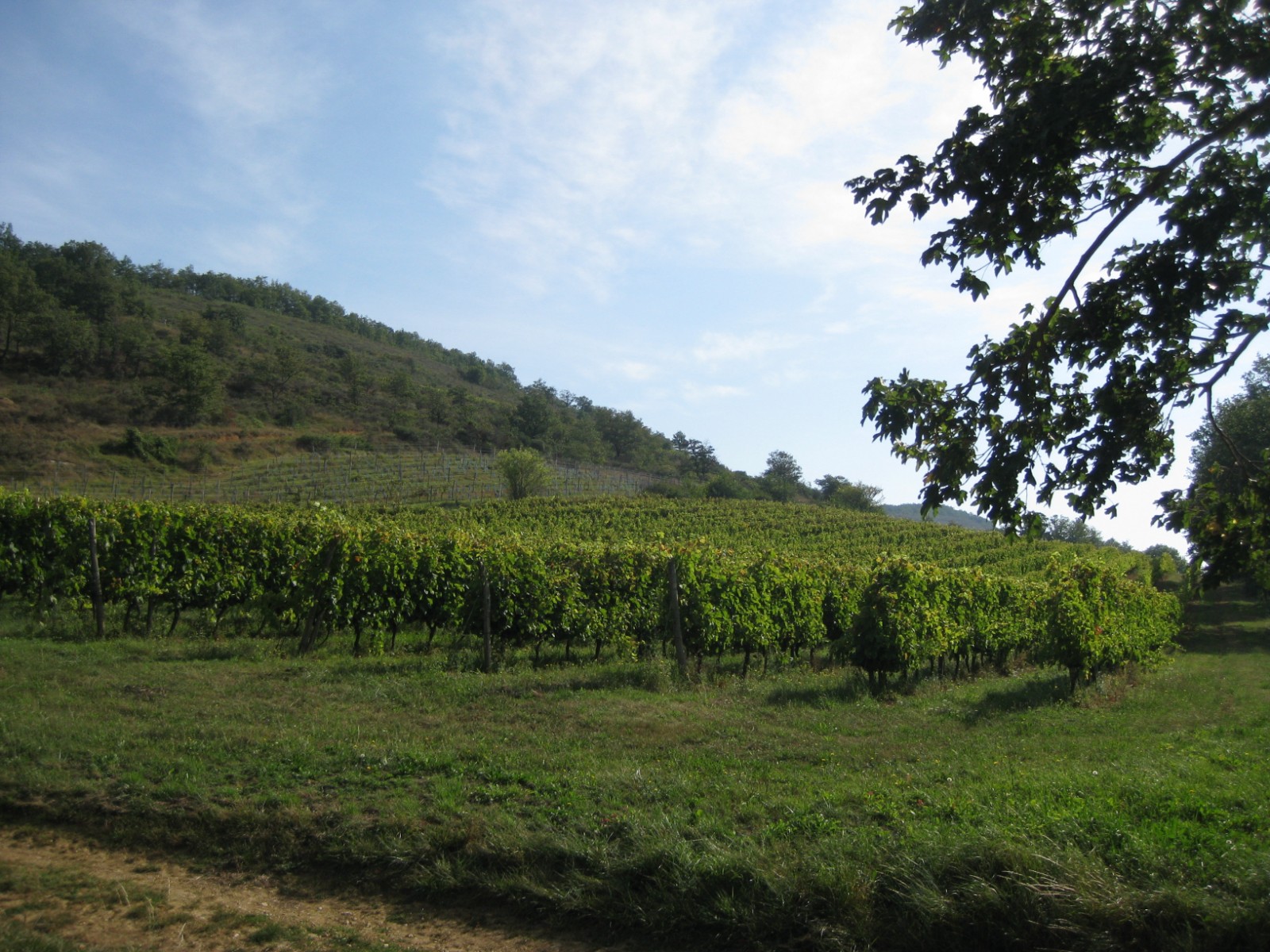
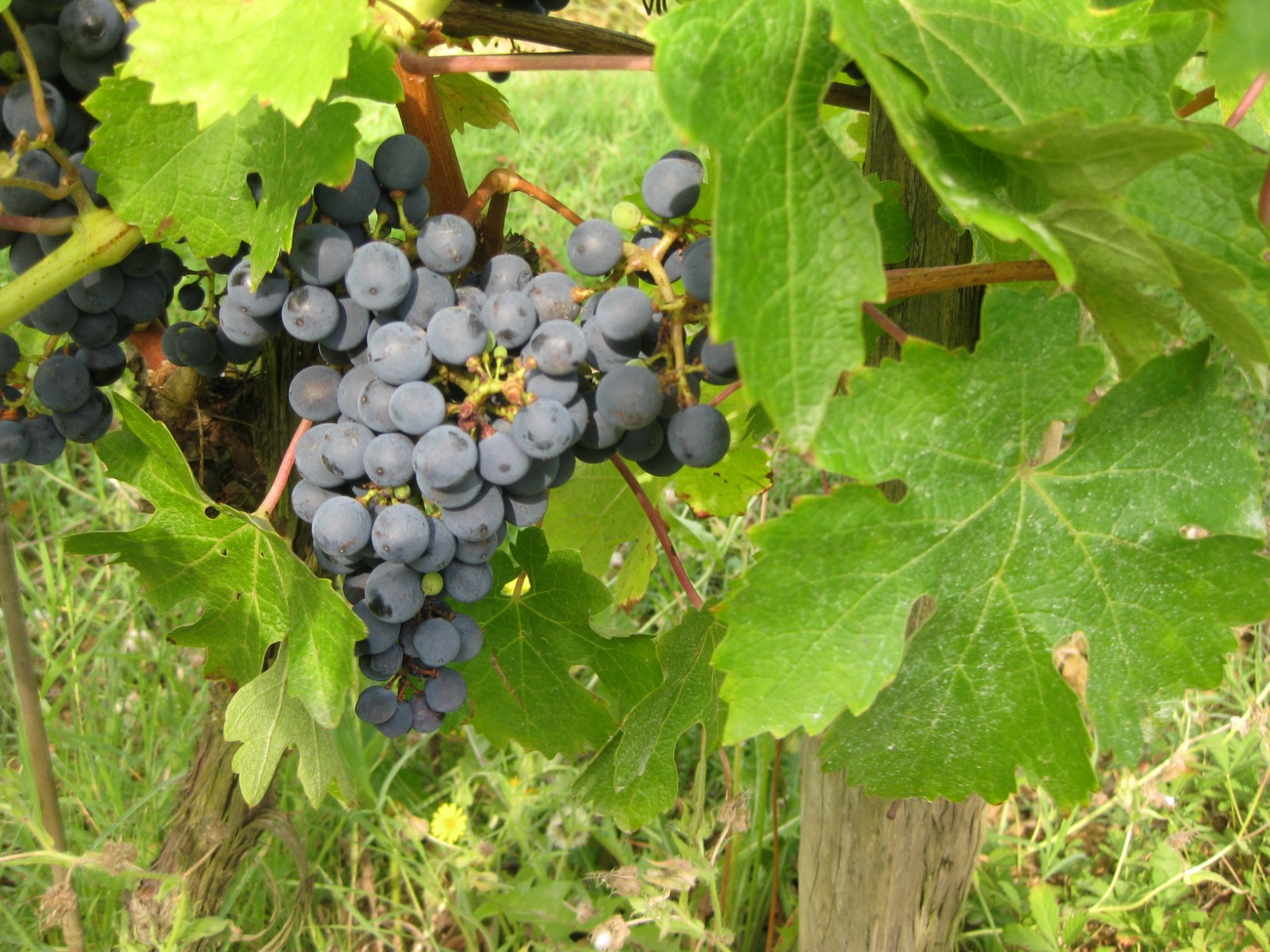
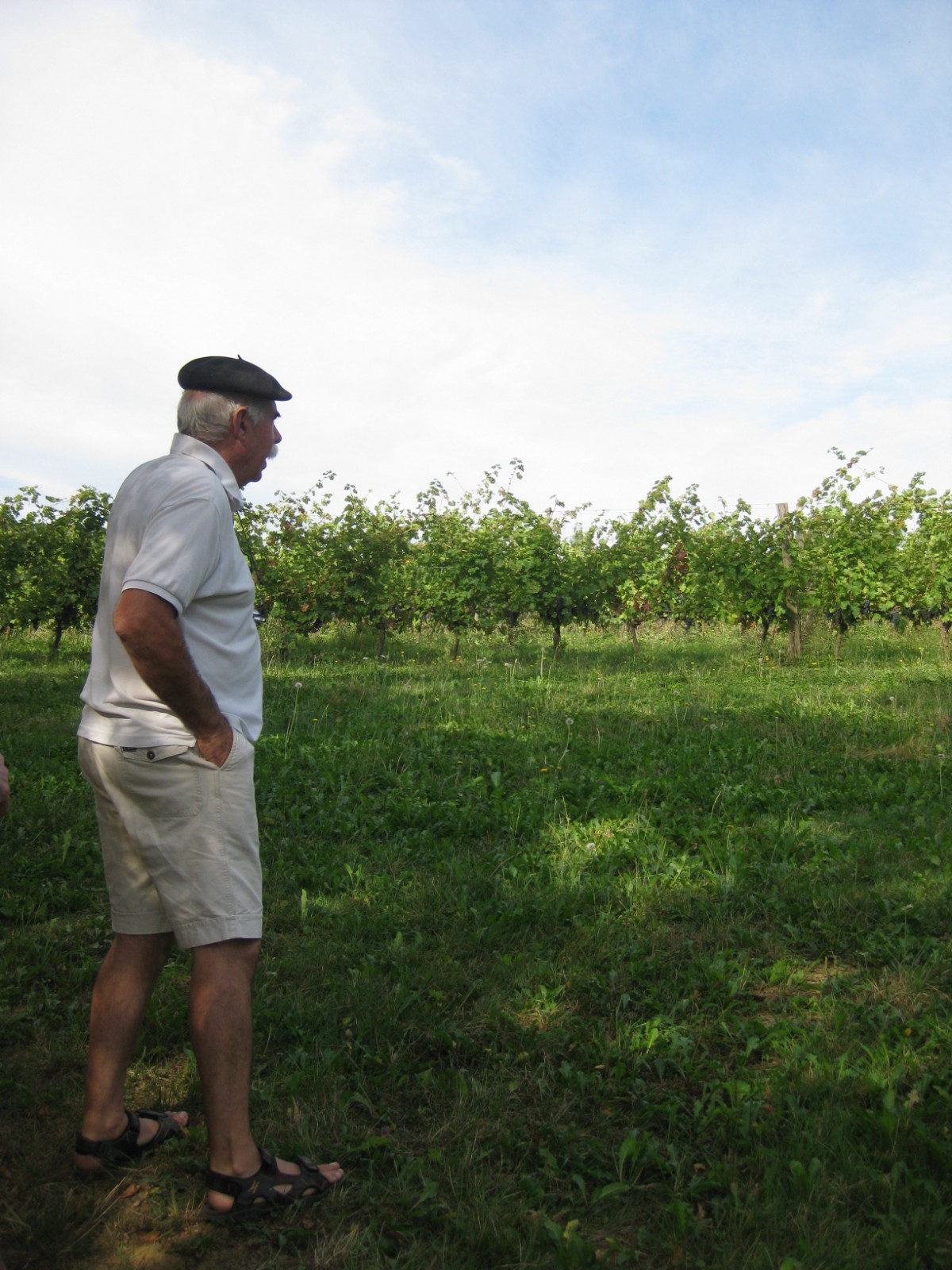
Last week, we had a morning at an organic vineyard, one of only 2 commercial vineyards in the whole of the Ariège.  The vineyards at Coteaux d’Engraviès appeared on maps as long ago as 1310, and on later maps too, though eventually they disappeared.  So the owner of the Domaine, Philippe Babin told us, anyway.  He was the one who decided once again to cover the hillside in vines.

He introduced us to an Ariège from a time we couldn’t recognise.  Now, we’re used to seeing fields of maize, sunflowers, food and fodder crops  in addition to pastureland.  Back in the Middle Ages, when Catharism was at its height, the area was covered in vines.  Everyone produced wine for their own use.  It wasn’t strong, maybe 5% or so, but it provided refreshment and nourishment for men, women and children alike.  No neat rows here, the vines grew unsupported by trellising, higgledy piggledy.  Over in Pamiers, from where any exportable wine was shipped, the notorious Bishop of Pamiers, later Pope, Jacques Fournier, received the taxes he imposed in the form of wine.

The Ariège was prosperous and, for the period, densely populated.  Men made their living from mining and the forges, and their women and children reared stock in the high pastures.  Only the Industrial Revolution, which arrived later in France than in the UK – just before the First World War in fact – put a stop to this, as the small scale of local operations were not suited to large-scale mechanisation.  This, and the de-population that occurred when men failed to return from the trenches, began the Ariège’s descent into a less populated, often deprived area.

Philippe shares his expertise

Phylloxera saw the end of wine production in the Ariège.  Vines, decimated in the 19th century throughout Europe, were gradually replaced elsewhere by resistant American varieties.  The local domestic vines, most of which were fairly low quality, weren’t worth replacing, and people simply walked away from them, leaving them to die.  Only within the last 30 years have a couple of producers recognised that parts of the area are suitable for developing once more a high-quality product, and with modern and traditional savoir-faire behind them, worked towards developing businesses of which they can be proud.  Philippe Babin is one of these.

Philippe went on to tell us more about the vines themselves.  They need rain, and they need sunshine for their leaves to absorb and enable the fruit to mature.   Vines put roots deep down into the soil and rocky earth, particularly in the first 15 years of life. Philippe chooses to grow his vines organically, because he recognises that the particular composition of the soils and rocks beneath in the area – ‘terroir’ – inform the character of his vines: fertilisers and other products would change this balance.  The vines themselves change as they mature, and those plants which are 80 – 100 years old (his are a long way from this) produce little, but what they do is very fine.

Pruning forces the vines to produce grapes, and therefore seeds.  Unpruned, they grow hundreds of metres long, and see no need to seed themselves.  Wild vines are therefore innocent of fruit.

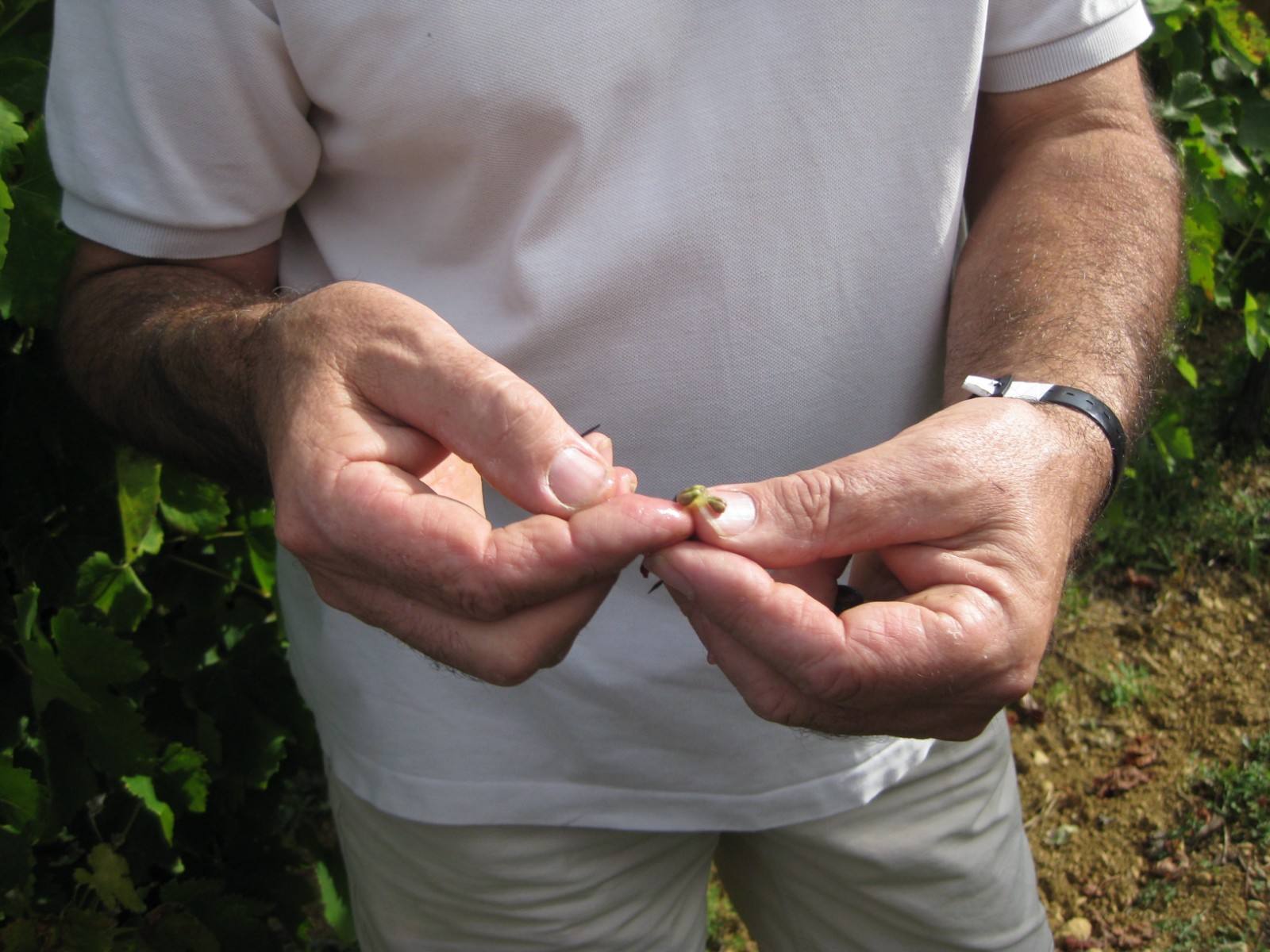
Examining grape pips for maturity

Then he showed us how to research a maturing grape.  Does the skin peel easily from the fruit, and is it loosing its elasticity?  If so, it’s ripening nicely.  Have the seeds broken away from the ‘umbilical cord’ of the stalk and taken on a woodier appearance?  Once that happens, the seeds are nearly ready to fall and have a go at germinating (they have a low germination rate).  From now on, they’ll nourish themselves, like embryo chickens in an egg, from the flesh of the grape, which will wither as the seed digests it.

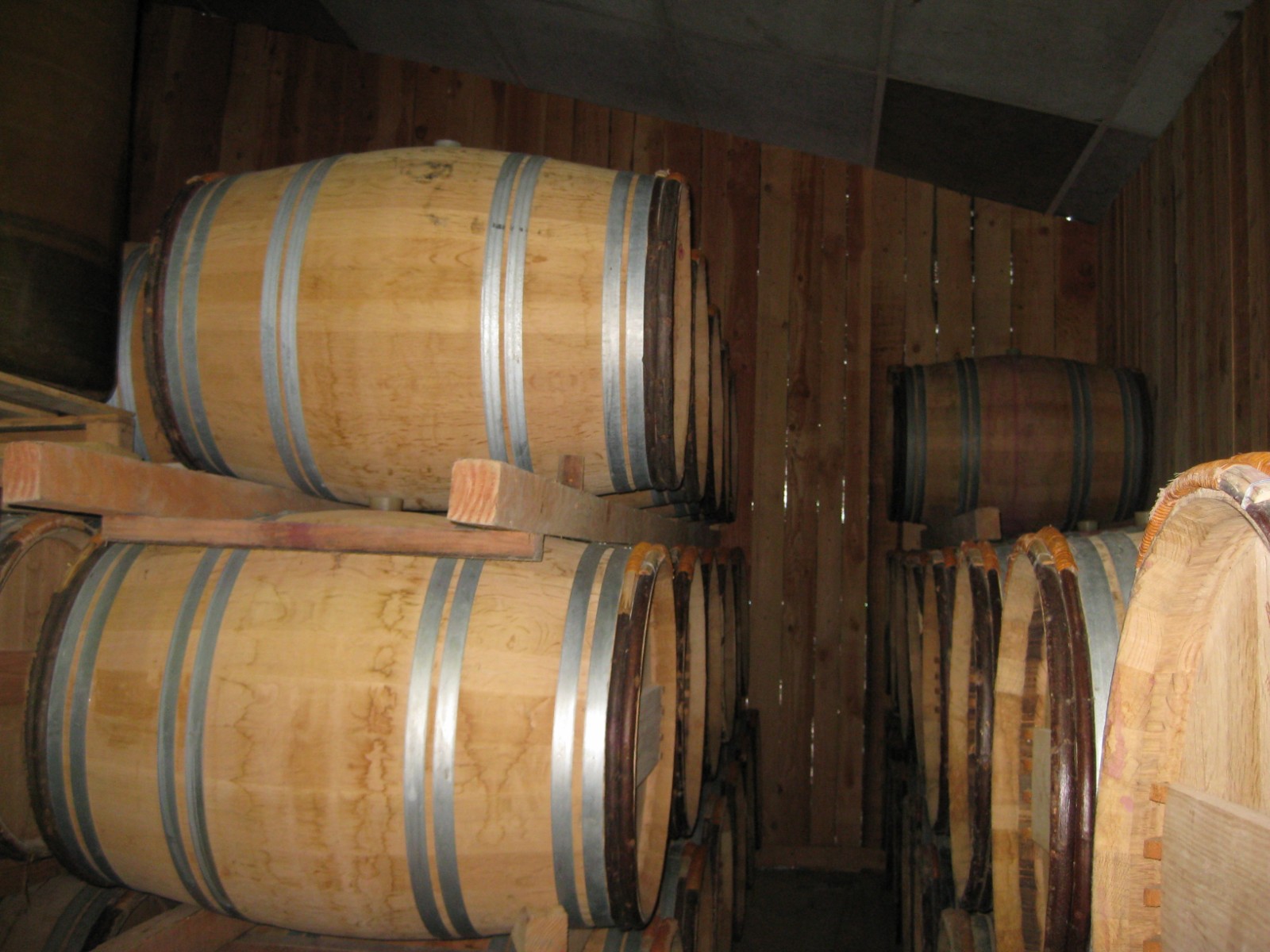
Barrels full of wine waiting to be bottled

Lesson over, we went back to the Cave.  A small band of workers were working to bottle the last of the 2010 vintage to free up space for the harvest which will take place in maybe a fortnight or so.  The barrels in which the wine matures must never be left empty, so this is a last minute job.

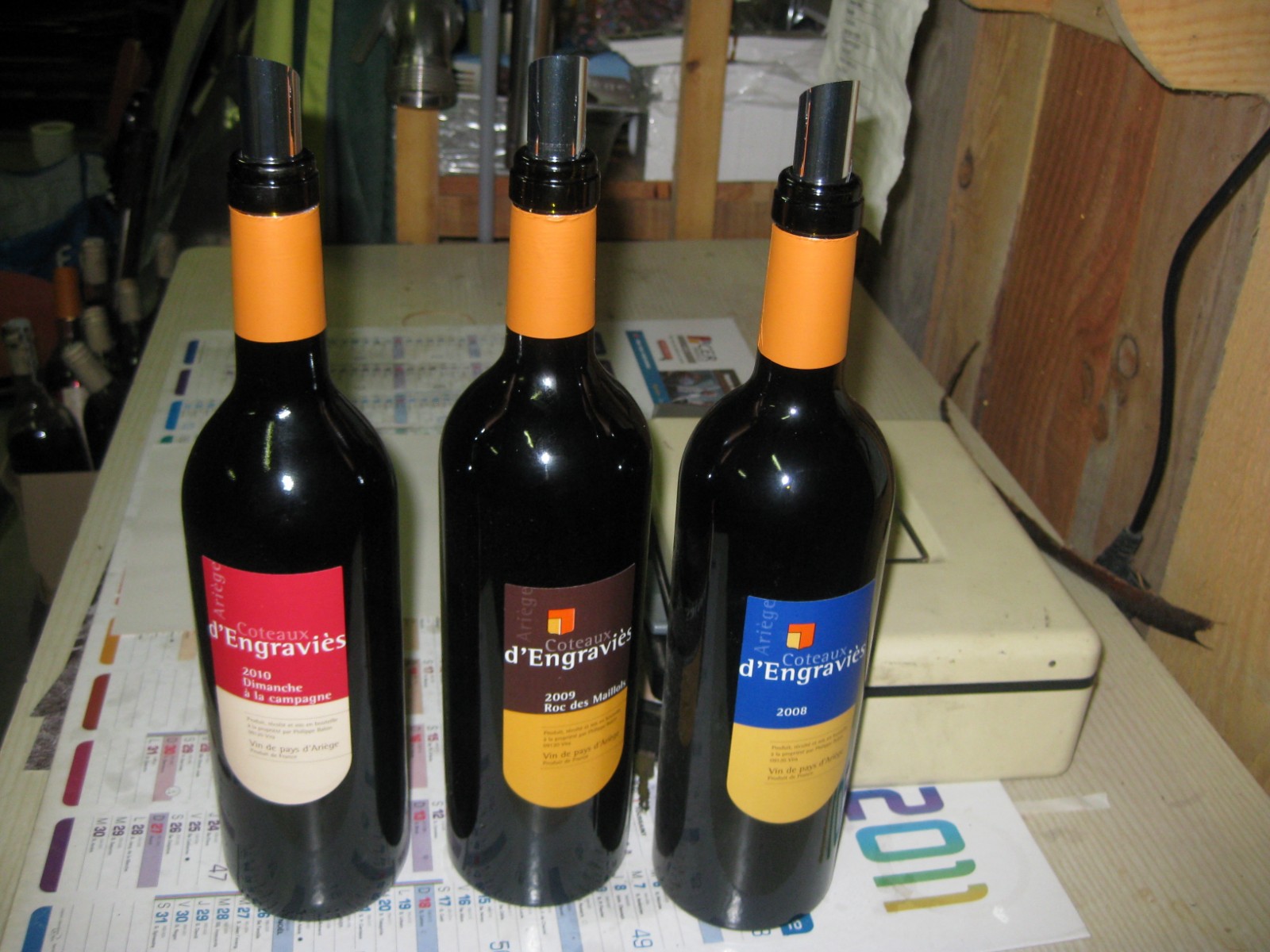
And finally….the tasting.  An opportunity to compare three of the wines he produces.  Every year his blends are slightly different, to arrive at a consistent product.  Syrah, Merlot, Cabernet Sauvignon…all have their part to play in blending wines to make a perfect complement to an enjoyable meal, whether roasted, casseroled or preserved meats, or a plate of local cheeses.

Wine waiting to be tasted

A day of solar energy and soldiers

We intrepid randonneurs from the Rando del’Aubo had our physical workout last Sunday- read all about it in my last post. But travelling to the Cerdagne last Saturday we were tourists, and slightly lazy ones at that.

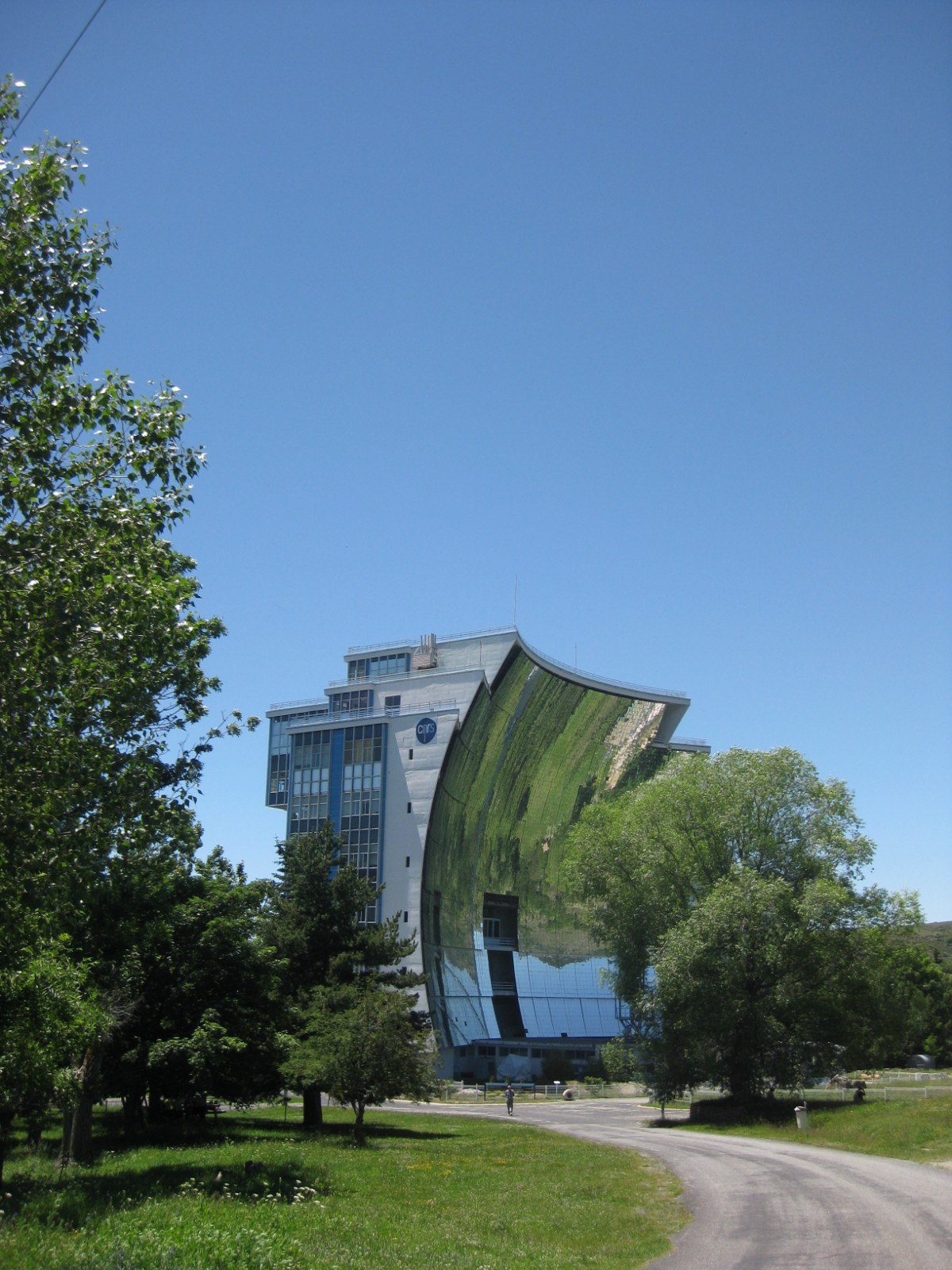
Building? Solar panel? Research centre?…
….or just an interesting view

I’m so used to Patrimoine (Heritage) and the-great-outdoors being the reason to get out of bed on holiday here that I was quite unprepared for Héliodyssée. Built in 1968, it’s a series of gigantic solar panels whose purpose is to enable study of the possible applications of solar power, generating temperatures of up to…..3, 500 degrees. At this stage, it’s the space industry rather than you and me who are likely to benefit from the research, but one day, who knows? We admired the upside-down landscape views reflected in the solar panels, but decided against a scholarly visit.

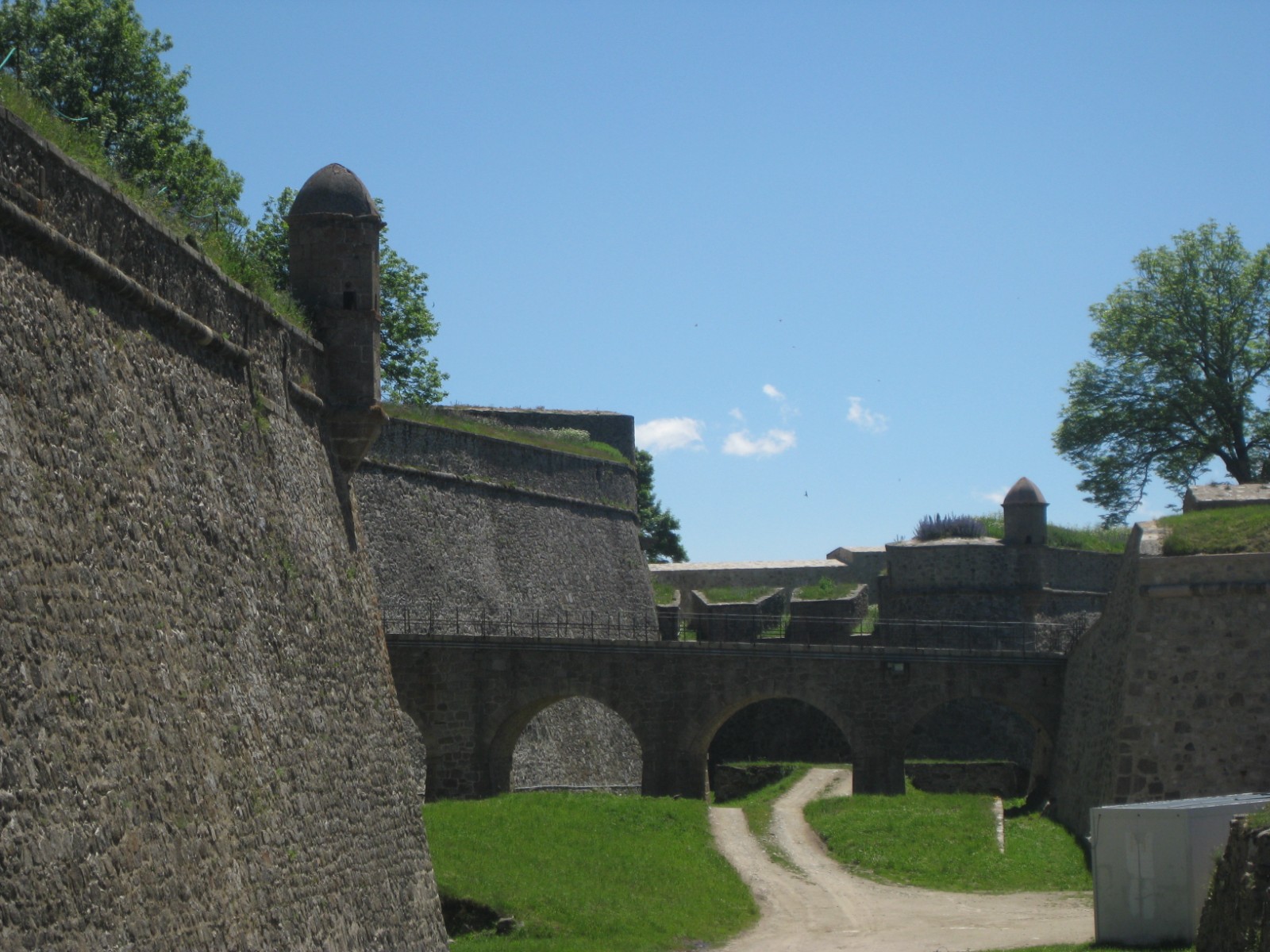
The ramparts at Mont Louis

Off to Mont Louis then, and back to a real dose of Patrimoine. This town was built from scratch for Louis XIV as a military settlement in 1679. Vauban was the man in charge: marquis, engineer, town planner, philosopher, man of letters…and also military architect. 12 of his fortifications, Mont Louis included, were listed as World Heritage sites by UNESCO in 1998, so his significance and importance is in no doubt. This fortress, the highest in France, was needed as a result of the Treaty of the Pyrénées of 1659, establishing the border between France and Spain, although the walls which surround it seem rather low to protect against possible invasion.

It seems as if these ramparts still have their uses

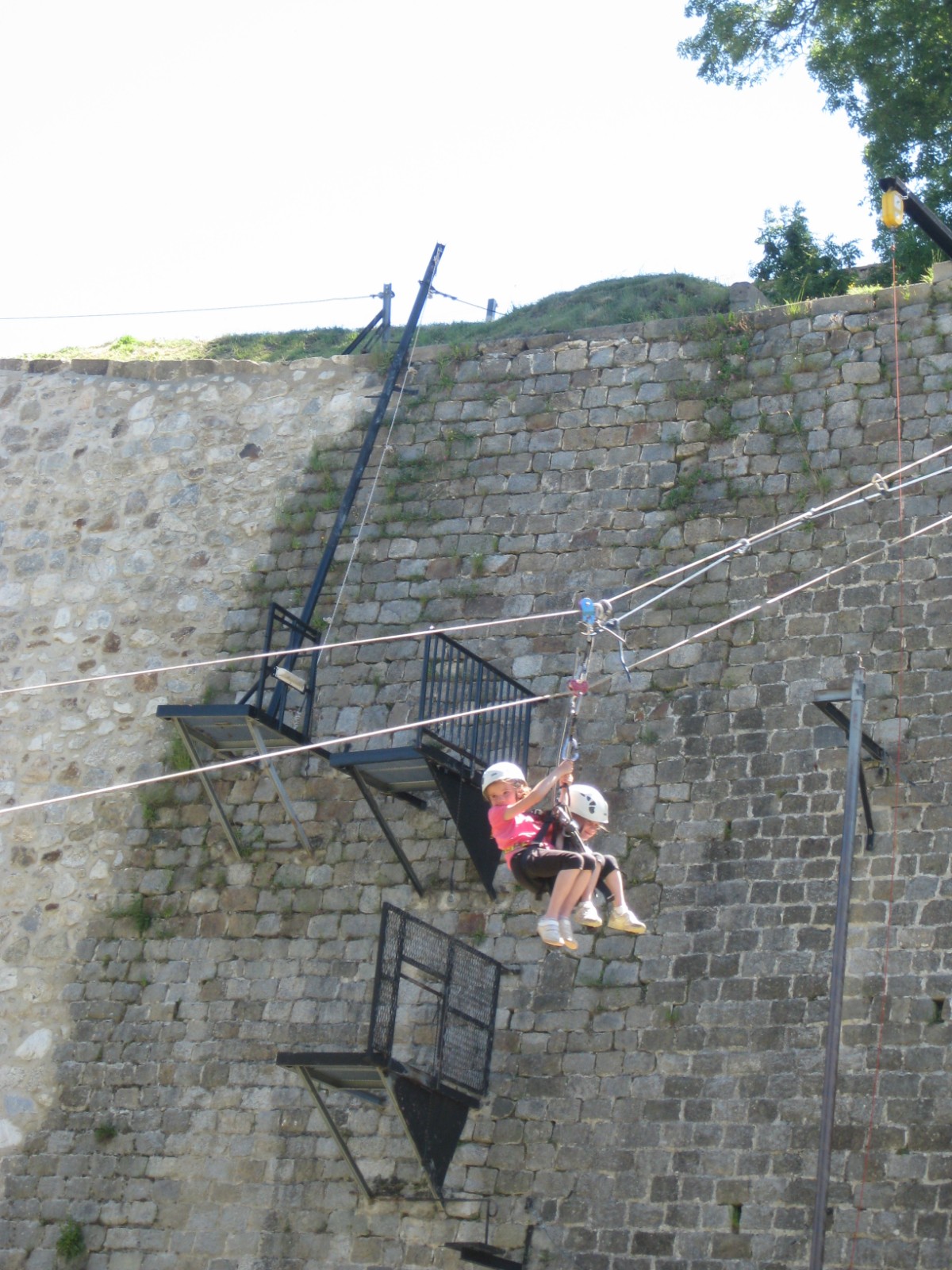
But it was these walls we circuited, enabling us to see from afar the world’s first Solar Oven (this area seems to be Solar Power Central). We watched children abseiling down from the ramparts, instructed by the soldiers who are still a real presence in the town, and enjoyed the contrast between the somewhat severe presence of the barracks, and the lush and mountainous countryside beyond. Many of the town and garrison’s historic buildings can only be visited by pre-booked visits, so we made do with a look in at the simple, rather dour little church which Vauban built for the townsfolk – there were other chapels up at the garrison. Then we retired to a bar for a drink.

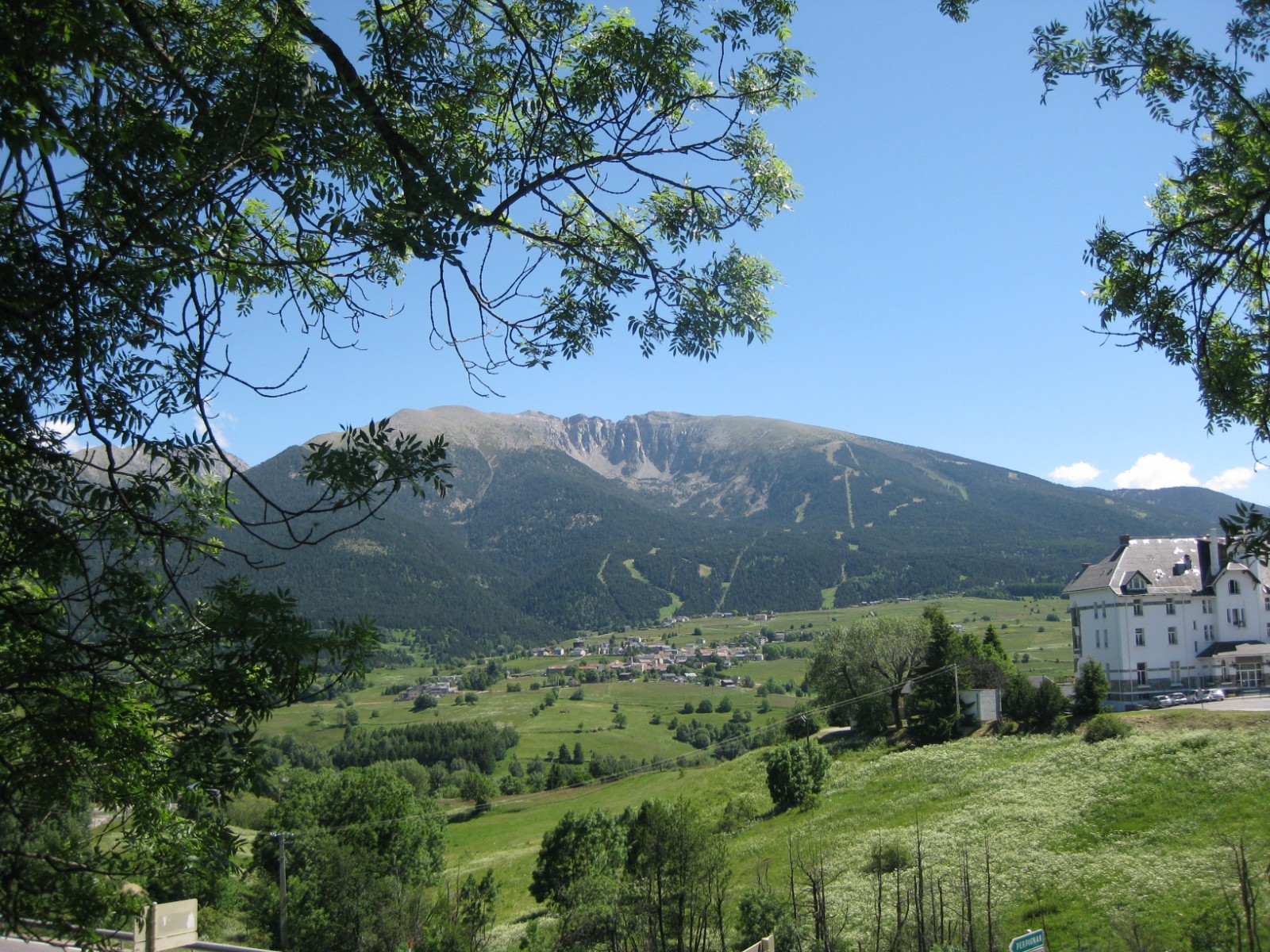
The view from Mont Louis
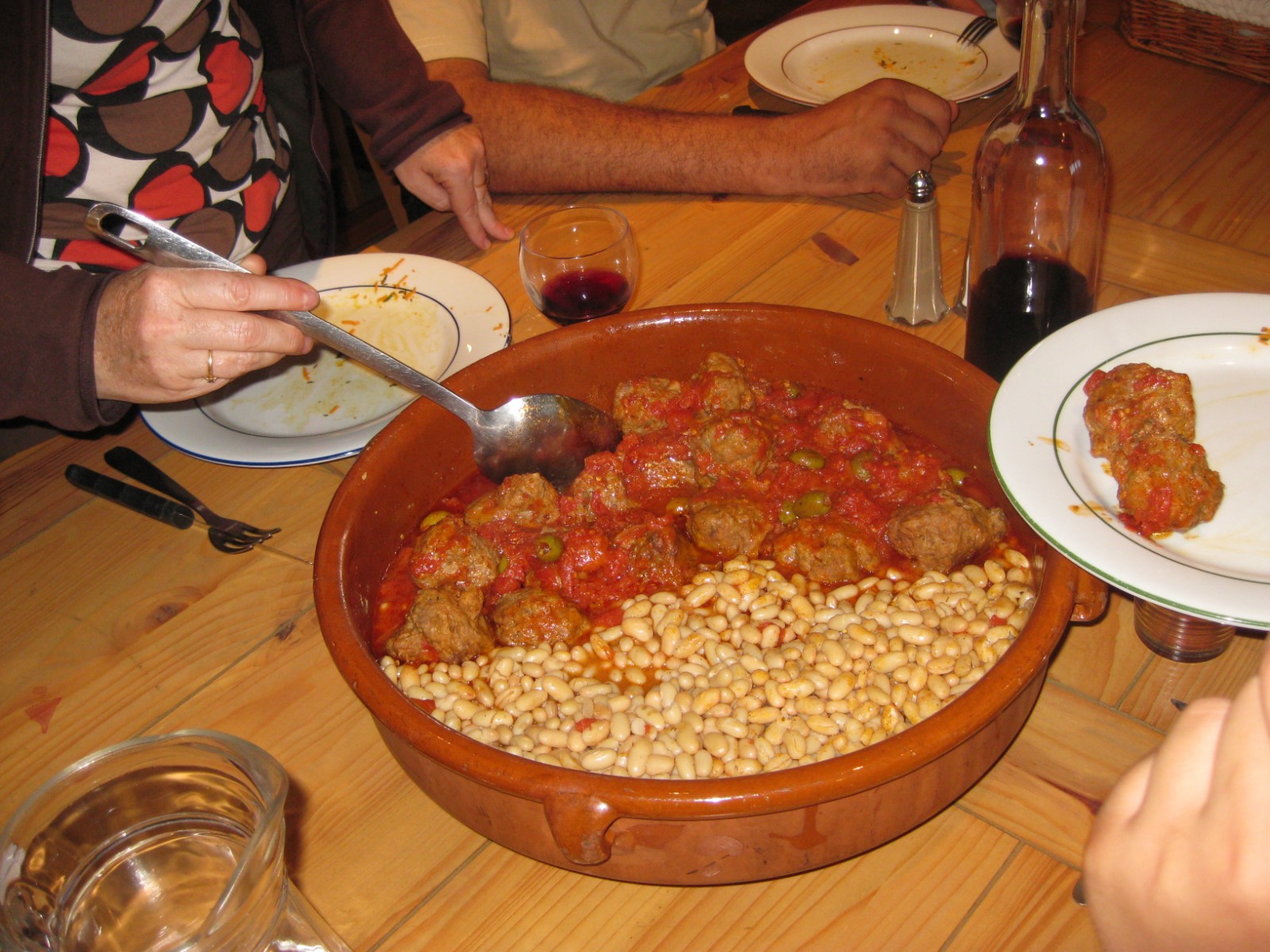
A Catalan take on meatballs, with tomatoes, olives and haricot beans

So then it was off to our lodgings for the night, les Ramiers in Bolquère. This area is popular all the year round – walkers in summer, skiers in winter. Les Ramiers supplies simple but comfortable accommodation to both. Our rooms were often quaint: Mal and I went direct into an en-suite shower room-come-study, and then climbed what amounted to a ladder to our attic bedroom. The welcome was cheerful, the views wonderful, and the food copious and tasty. We relaxed by taking a woodland walk most of the way to Font Romeu, enjoying that meal, and having a very early night. We knew we’d need all our energy at the Gorges next day.

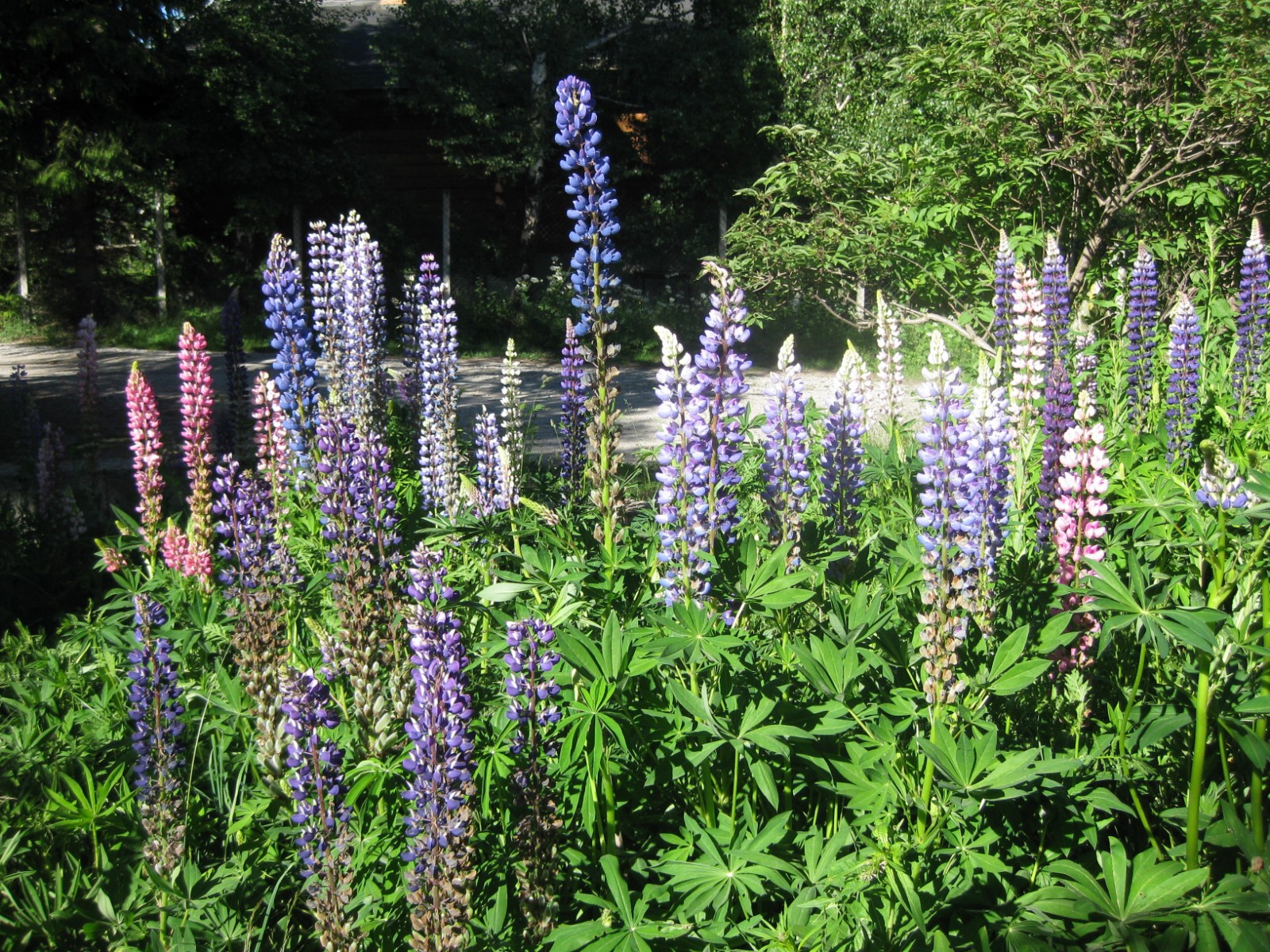
Lupins: these were growing wild everywhere

Summer solstice, Montségur

All this time we’ve been here, we’ve not seen the sunrise over Montsegur.  Today, midsummer day, I decided to change all that.  Me and 99 others……

I arrived at the car park just after 5 o’clock,  at the same moment as a hare which had for at least two frantic minutes been trying to out-run me.  And realised I was not alone.  It was still dark, and quite a difficult business to trek up a steep, slippery rocky path.  Other more provident people had torches, and everybody helped one another.

The route to the top. Still pretty dark

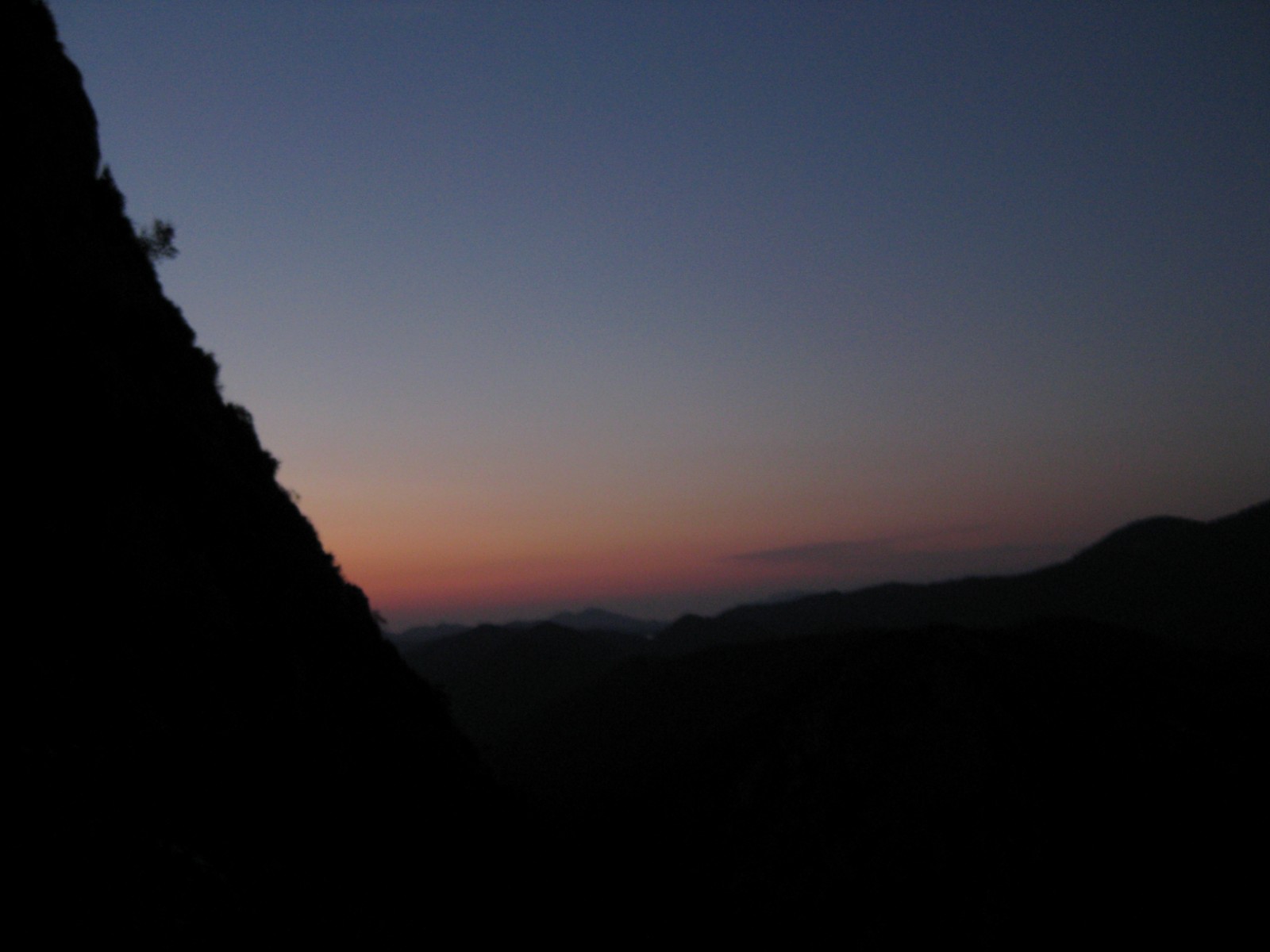
Towards the top, the night sky was slowly washed from inky blue to delicate blues, pinks and greens by the sun which was still well below the horizon.

The sun first appears. It’s just after 6 o’clock

I found a couple of friends there, and a vantage point relatively distant from the crowd crammed into the castle ruins.  They had come to see something special- the rays of the sun as they poured through the ruined windows.  I decided it was too packed with people to feel special in there.  I’ll come back another day soon, to see for myself.

And again, a very few minutes later

What I saw was quite wonderful enough: a rich copper disk slowly mounted above the line of mountains in the distance,  tinting the sky ochre, rusty-red, sugar-pink, finally emerging so fiery bright I could no longer look at it.  Some locals burst – quite beautifully – into song.   Occitan/Ariègeois stalwarts, ‘Quand lo Boièr ven de laurar…’ and,inevitably, ‘Se Canto’.

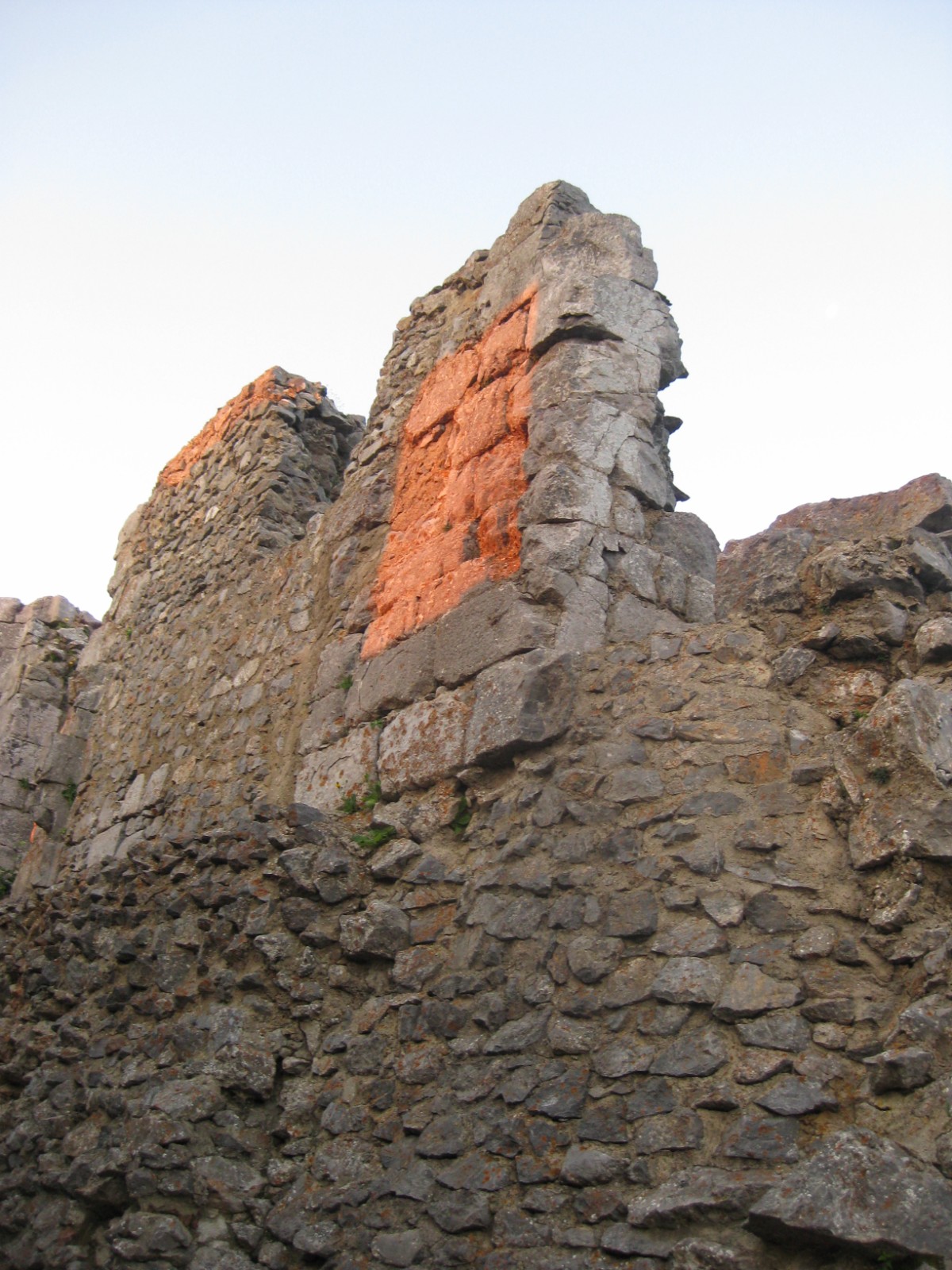
The rising sun, shining through a ruined window, casts an image on the castle wall

Gradually the whole sky lightened and brightened, turning the entire landscape crisply clear.  I strolled round the summit – it was surprisingly easy to get-away-from-it-all, before skidding and climbing my way down to the car park again….

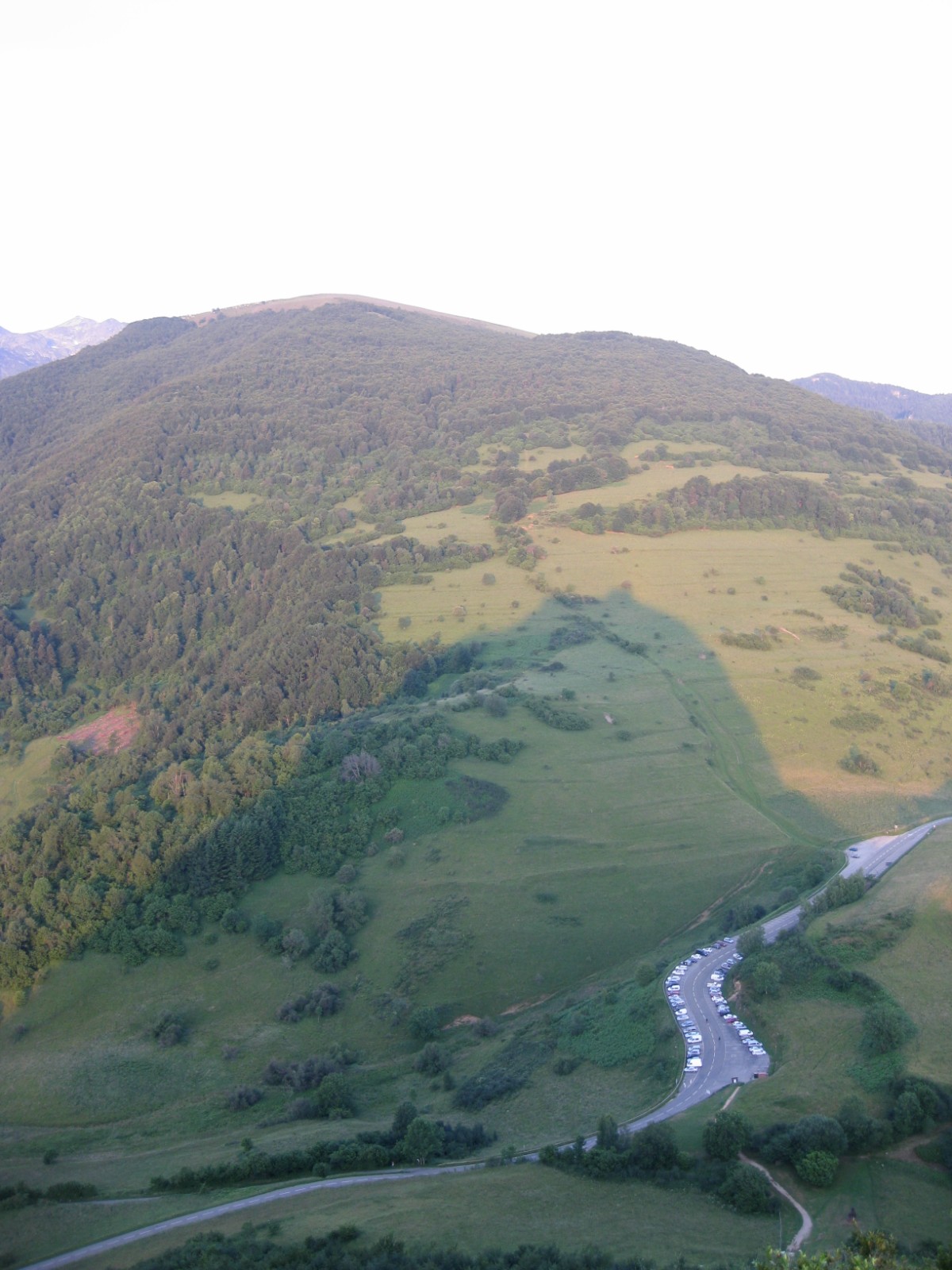
Montségur casts a shadow on the hillsides beyond. The car park’s still full.

….and there were my companions who’d provided torchlight.  They were hitching, because their car had failed to start.  We journeyed back to civilisation together, ready to resume normal service.  It was 7.30 a.m.

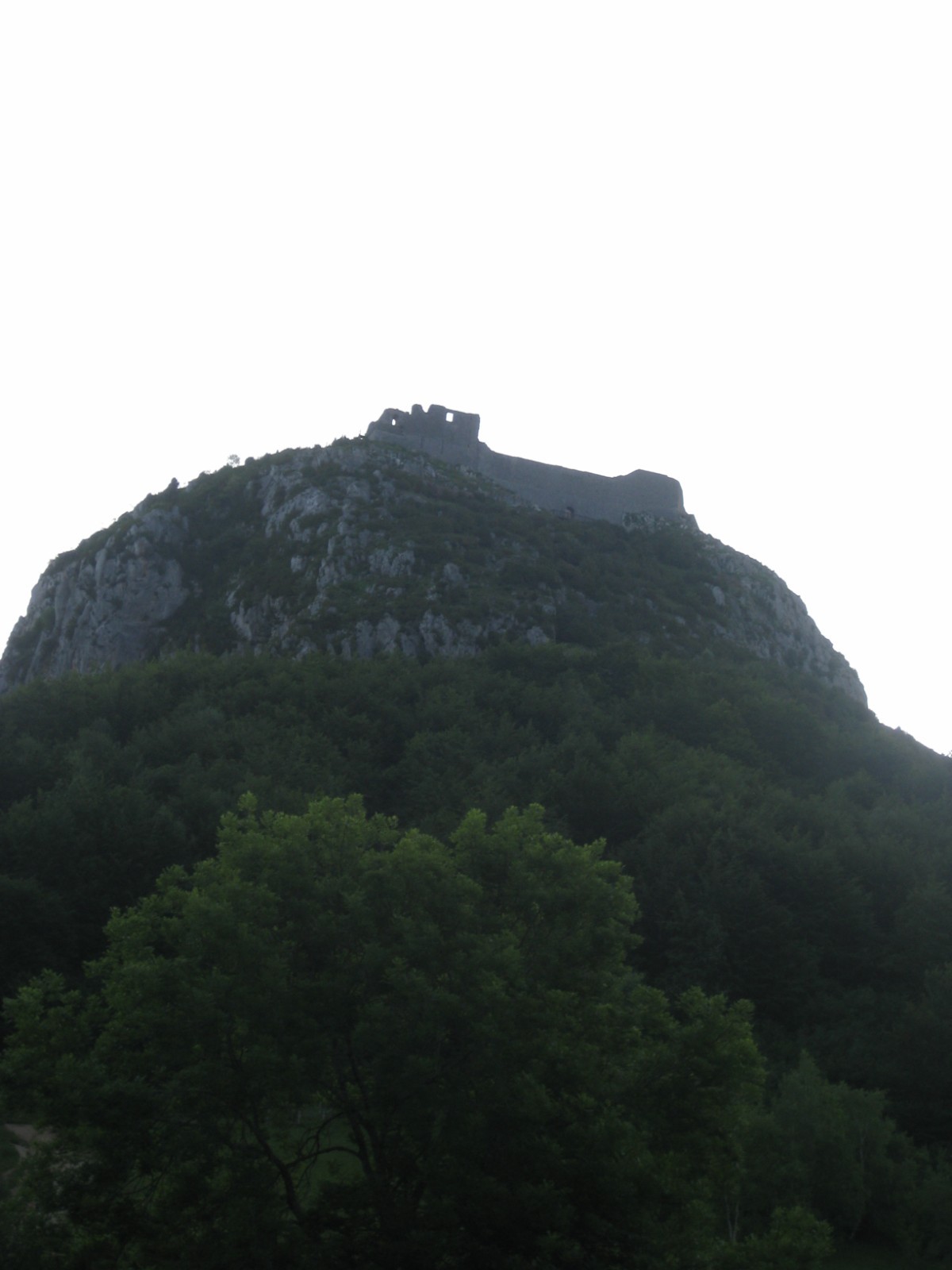
Almost deserted again, Montségur in the early morning light

Transhumance in the Haut Salat

Transhumance.  It’s that time of year where here near the Pyrénées, the cattle and sheep are moved from their winter quarters down on their lowland(ish) farms up to the lush summer pastures in the mountains.  They’ll stay there till Autumn, and then be brought down again.  And each time, it’s the excuse for a party.

On Saturday, we joined in, and went over to Seix to meet friends who live there.  The Transhumance celebrations in Haut Salat last three days, but we made do with Saturday morning.  We nearly arrived late – very late – because we found ourselves behind a herd of cattle making their steady way along the road.  Overtaking’s not an option: the cows commandeered this route hundreds of years ago.  But we managed to zip down a side road and make a detour.  A whole hour later, after coffee with our friends, the herd reached the edge of Seix and passed their door….

…and finished their long walk into town.  We went too, and arrived just as the last flocks of sheep were arriving, to be corralled like the cattle, at the edge of the town square.  For a while, and probably much to their relief, they were no longer centre stage.

Instead it was jollity of the traditional kind. There were processions of large solemn plaster effigies, local bands.  Dancers from Gascony, the Basque country, the Landes made sure we all had fun, and Malcolm and I even joined in some Basque dancing.  Stars of the show for us were the shepherds from the Landes.  Theirs is flat, marshy country, and they used to keep their eyes on their roving flocks by ranging round on stilts.  But this was a day for dancing, and that’s just what they did, up high on those stilts.  Have a look at the photos.

We went off for lunch at the end of the morning.  But there was more celebrating, more meals to be shared, particularly by those farmers and country people who over the centuries have welcomed the fellowship of Transhumance as a break from the routines of an often lonely life.

This slideshow requires JavaScript.