Everyone knows that when a castle or a church tumbles into ruin, it’s an opportunity for the locals. All over Europe and beyond, once majestic buildings have found new uses as humble farm labourers’ cottages, or a house for the local blacksmith, or … whatever’s needed really. Round here there are at least two houses whose builders hadn’t merely appropriated the stone, but also reinstated the windows found in a tumbledown place of worship.
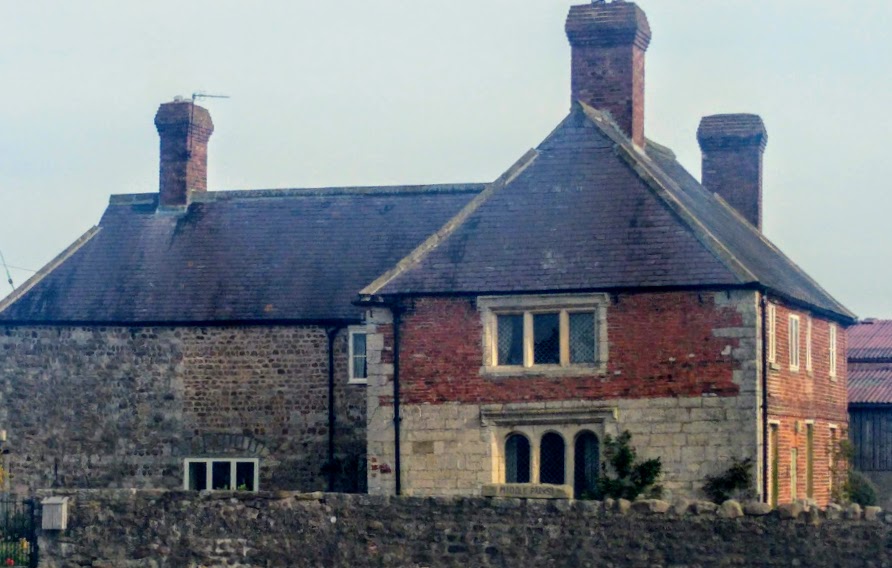
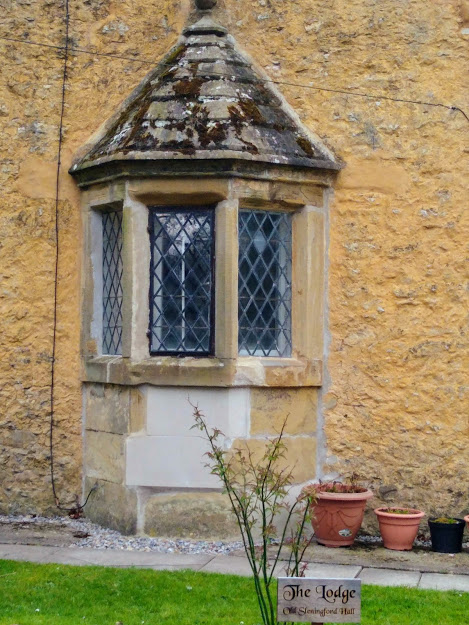
This house is two farm-workers’ cottages knocked into one. The original tiny dwellings have been here for centuries: but being humble didn’t stop them from having fine windows once part of a church that no longer exists.
Not far away is a handsome farm house. That too benefits from a spot of recycling.
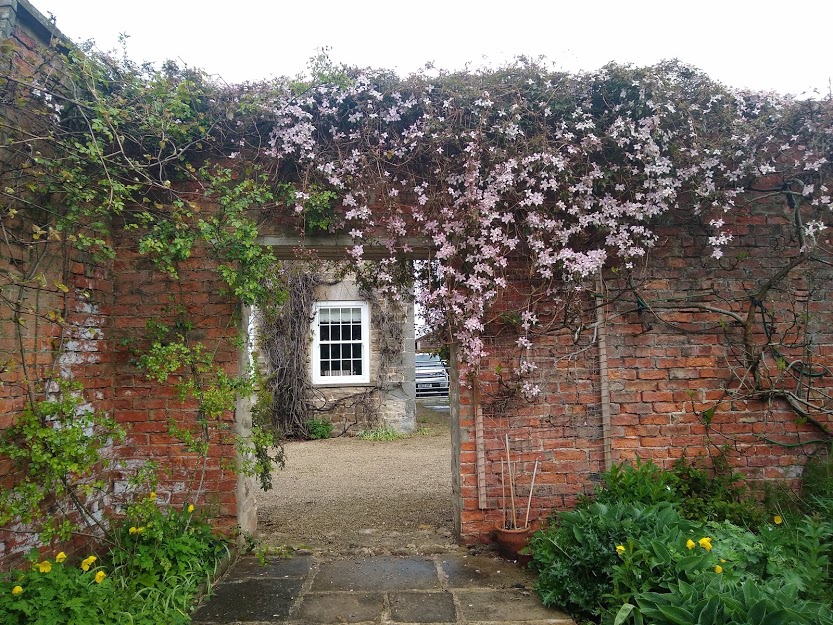
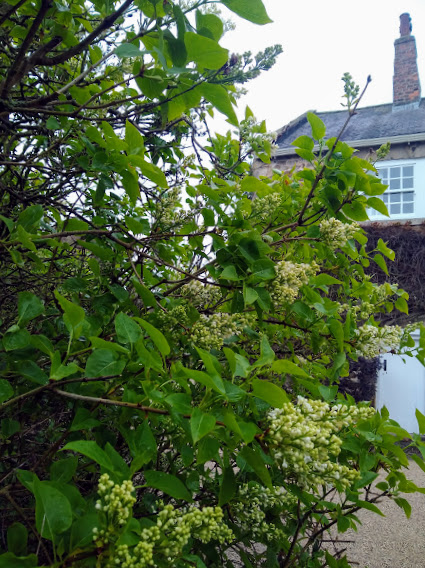
Last week, I showed you wisteria on the front of the house. Today, we’ll sneak into the walled garden and look at the clematis framing one of the windows in our neighbour’s house – there it is in the featured photo. And here’s the lilac, just coming out:
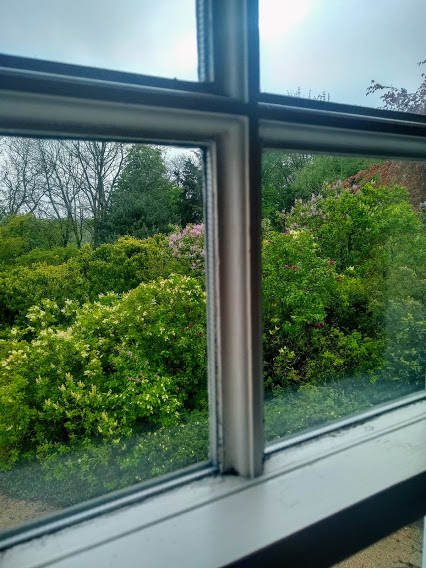
And here’s the view from the kitchen window – the lilac’s still budded, but soon it will be fully out – for one week only – before becoming once more a rather unremarkable shrub.
I may produce more lilac for Jude’s Life in Colour: two shades of purple to go at in just a few days. But I promised another window view for Ludwig’s Monday Window. So here we are.
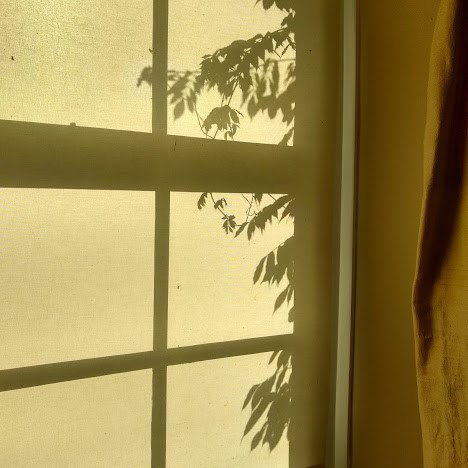
This is the time of year when the outside of our house, and the one to which we’re attached deck themselves in scented clouds of wisteria.
There’s lilac below the kitchen window: that’ll bloom very soon: already the tightly furled buds are loosening and hinting at the soft mauves and purples that will emerge. That’ll be for next week then.
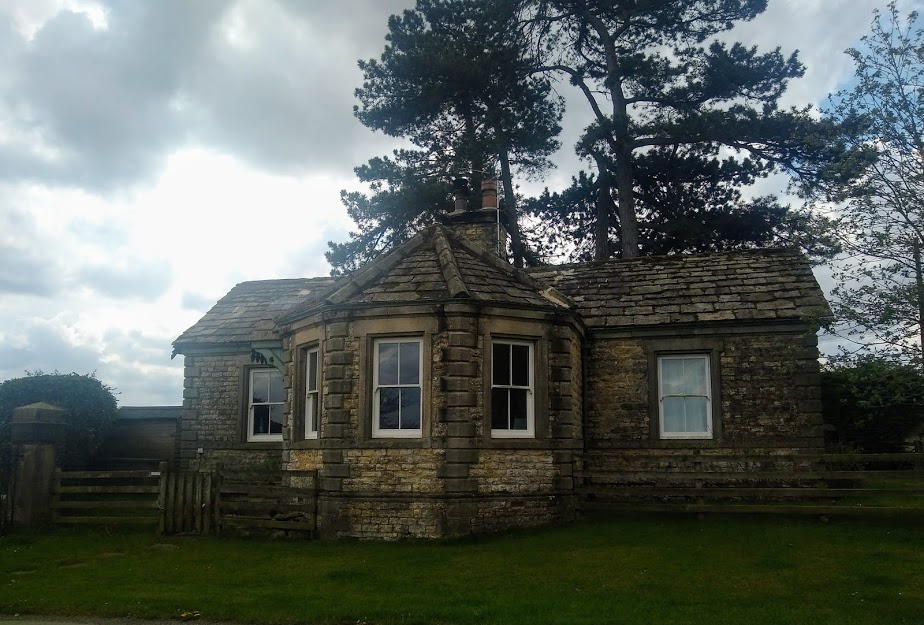
On the last day of April, I took myself for a short walk, from country house to country house near me. They’re all called Sleningford-something-or-other – Old Hall, Hall, Grange – in memory of the village of the same name that was ravaged by marauding Scots in the Middle Ages, never to be seen again. Though they had older antecedents, all these buildings are from the eighteenth and early nineteenth centuries, and they all mark pleasant pauses in our walking routines. Here’s the gatehouse to the first, Sleningford Old Hall, its window enabling the gatehouse keeper to keep his eye on all the comings and goings into the estate. Well, the last actually. I’m showing my last photo first, and working back towards home.
The gatehouse to Sleningford Old Hall
Only the upstairs windows of the house itself were visible over the high wall which maintains the owners’ privacy.
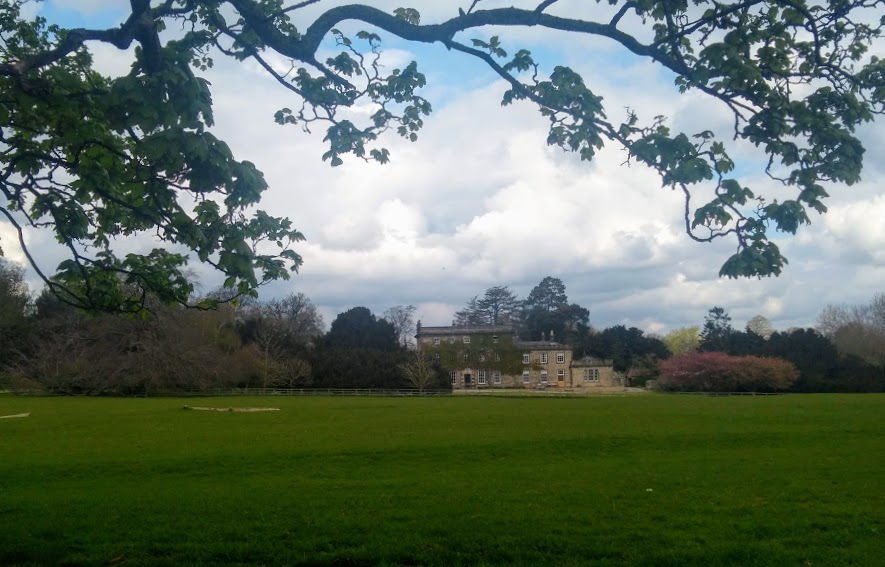
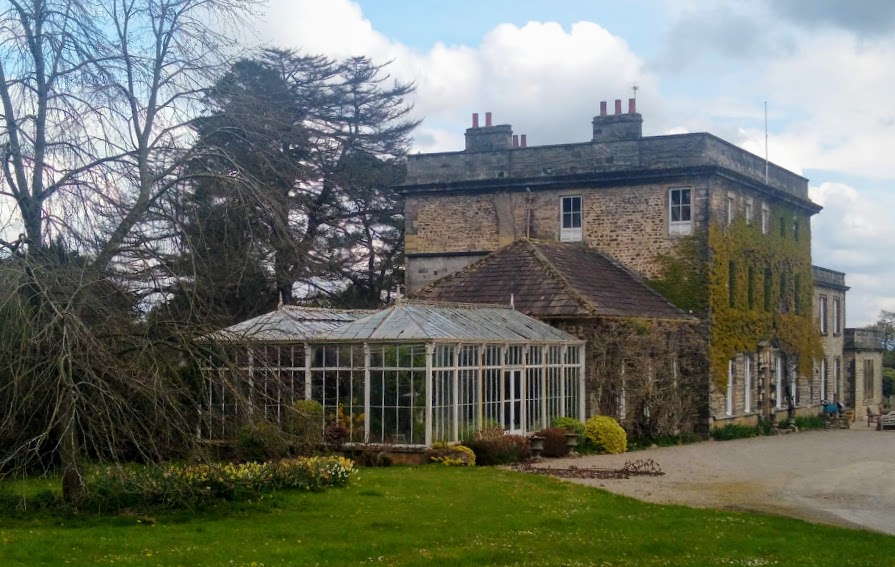
A mile or so beforehand, I’d already passed Sleningford Park and Hall. You can see the house set in its parkland in the feature photo. The conservatory has glass enough, and the gatehouse too has windows pointing in every direction to help the gatekeeper do his job.
I’d started from home of course, less than a mile before that. Not that we live in the house you see here. But we’re lucky enough to live in its grounds, in a rather simpler dwelling, which has its own long history – that’s for another day.
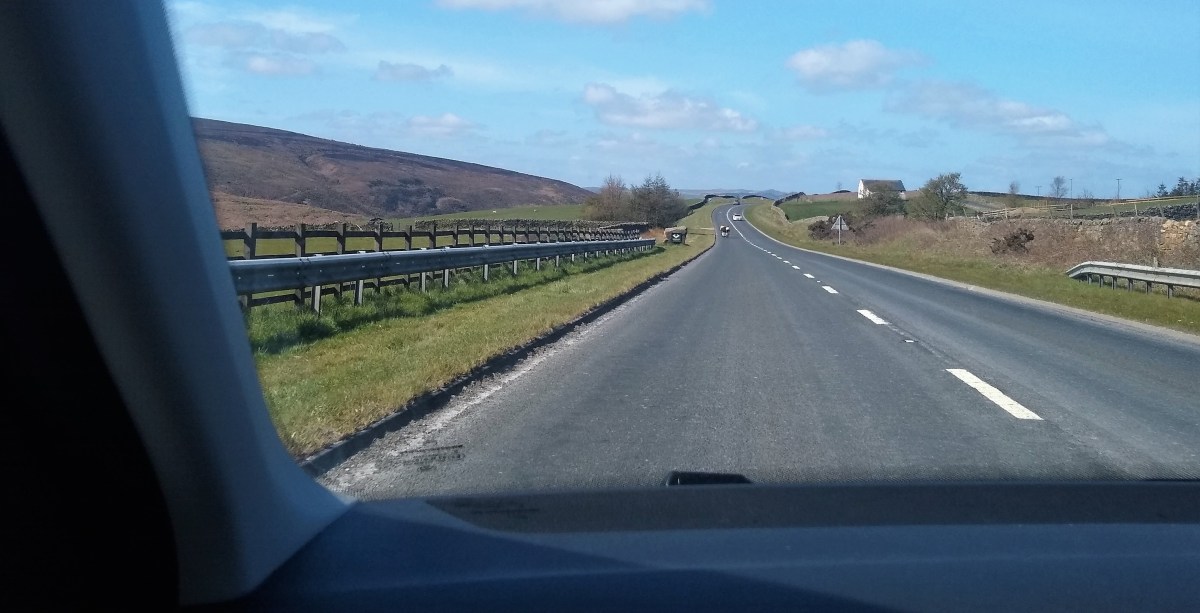
A less-than interesting photo of the main road near Skipton? Who cares? We were off to see my daughter and her family for the first time in about a year. For us it was the very brightest day of the year.
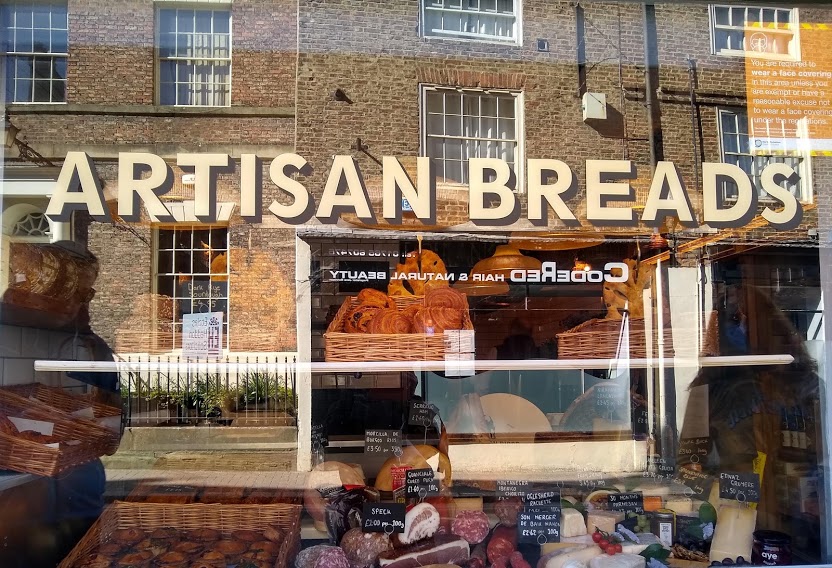
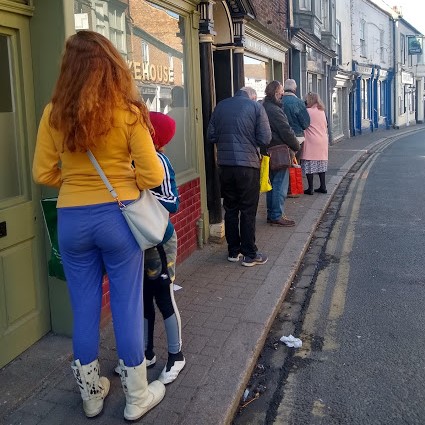
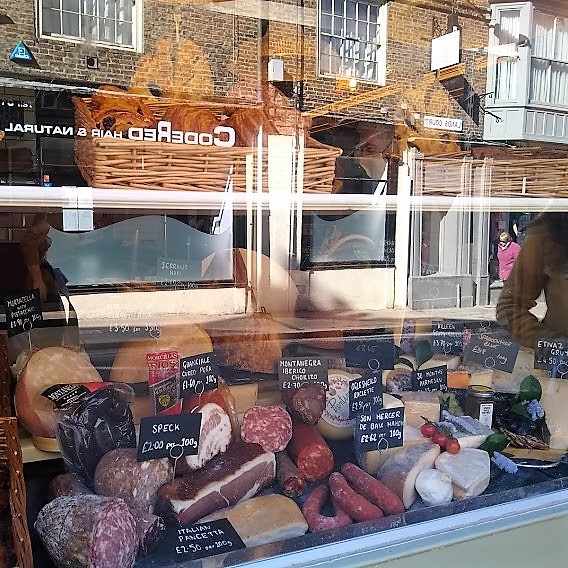
We all started queuing bright and early. We had to. Our local independent bakery and deli has been doing Click and Collect throughout the last lockdown, but now it’s open again, and we all wanted to make sure we got our hands on our favourite sourdough loaf, a croissant or two, or a couple of cinnamon buns maybe. And a few little treats from the deli while we were at it. We’ve missed you, Vanora!
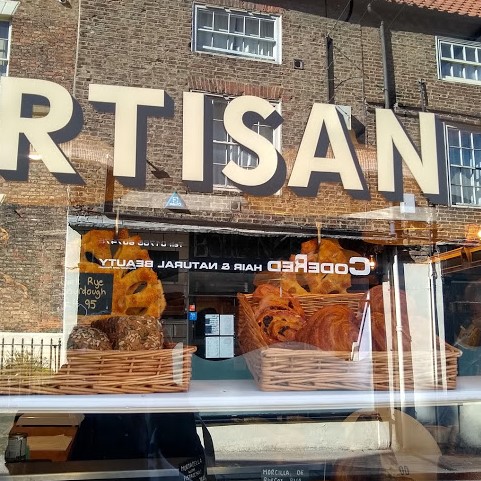
The featured photo shows the shop window. And not just Vanora’s shop window, but all the ones opposite, reflected in the shiny glass.
Local colour. We love it. Washing lines suspended from distressed peeling-paint window frames, or stretched across characterful ancient narrow streets oozing character and Instagram appeal. But life moves on. Families get rehoused into concrete-and-brick tower blocks. But Monday is still washing day. Exchange the battered wooden windows for ones made from metal and pvc, and atmospheric Old Town alleyways for Le Corbusier’s vertical cities – then stick the washing out anyway.
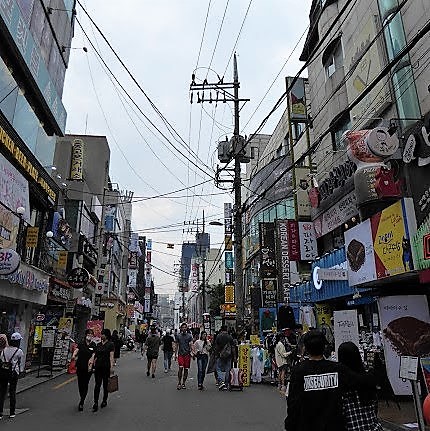
Last Monday in South Korea we went shopping for string, elastic bands and spam – oh, and books.. Today we’ll go instead to one of the large shopping centres – Shinsegae in Seoul maybe (where I was astonished to find a branch of Waitrose) or Lotte Trevi (yes really) in Busan. We could spend the day there, strolling around the sleek and elegant displays. Maybe we’ll stay for lunch in the food hall, and choose from the many outlets featuring foods from around the world, though particularly from the Far East. Out of town shopping centres like these are popular, as in Europe, but the average city shopping street is busy from morning till late into the evening too, with young people toting large carrier bags full of new clothes . ‘Shop till you drop’ seems to be the motto.
Spotted through the large windows of the shopping centre, this version of the Trevi Fountain – minus water – doesn’t have the same vibe as the original in Rome.
Who doesn’t enjoy a bit of window shopping? And perhaps particularly in parts of South Korea, which can offer a few differences from the high streets that many of us are used to. Let’s start in Busan. in Bosu-Dong Book Street (보수동 책방골목 문화관). There are books, and only books on offer – but of little use if you’re as slow as me in decoding hangul script.
Browsing in 보수동 책방골목 문화관
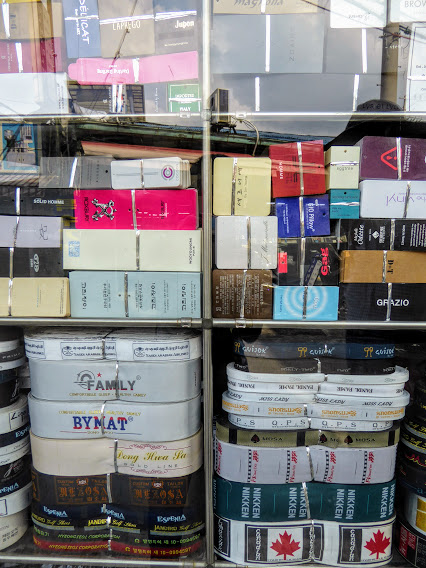
On our first day in South Korea, in Seoul, jet lagged and in need of a gentle day of orientation, we mooched round the markets area. And we found not only whole shops, but whole streets dedicated to shops selling just one product: it might be string. It might be elastic bands, or electric cables, or empty cardboard boxes to be filled with other products. or even gift-packs of a product beloved of Koreans since American soldiers had been part of their lives during the the Korean War – spam. We arrived in time for Chuseok, the festival that’s the time for families to get together and exchange gifts, as we do at Christmas – though historically, Chuseok was more of a Harvest Festival. Trust me, the perfect present for your granny is some gift-wrapped spam. And jumbled in among these workaday products are streets of jewellers’ shops. Come window shopping with me.
That man making his choices from among the books on offer is Just One Person from around the World, enjoying browsing and deciding whether or not to buy, just as we all do, wherever we live.





























 From Pyrenees to Pennines
You must be logged in to post a comment.